CHINA: NEV Sales Rebound, Xiaomi Loses Court Appeal and BYD Shark 6 For Europe | 23 Oct 2025
EV News Daily - Technology and Business of EVs
CHINA: NEV Sales Rebound, Xiaomi Loses Court Appeal and BYD Shark 6 For Europe | 23 Oct 2025EV News Daily - Technology and Business of EVs · Oct 23, 2025
The Su7 Ultra is a car made by Xiaomi, a company better known for electronics. This car has special features that help it perform better, like a hood that helps cool the wheels.
The Hyundai Santa Cruz is a small truck that looks more like an SUV. It's designed for people who want a vehicle that can do truck things but also be comfortable and stylish.
A plug-in hybrid system means the car can use both electricity and gasoline. You can charge it like an electric car, but it also has a regular engine for longer drives.
When the engine works like a generator, it makes electricity while you drive. This helps charge the battery and can make the car go farther without needing to plug it in.
Car
Xiaopeng X9 EREV
The Xiaopeng X9 EREV is a type of car that uses both electricity and gasoline to drive longer distances without needing to recharge as often. It has a battery and a gas tank to help it go further.
An EREV is a special kind of car that can run on electricity and also has a gas engine to help it go further when the battery runs low. This means you can drive longer distances without worrying about charging it all the time.
A 63.3 kilowatt-hour battery is like a big energy storage box in the car that helps it run on electricity. The bigger the number, the more energy it can hold, which means the car can go further before needing to recharge.
A 60-liter fuel tank is the size of the gas tank in the car. It tells you how much gas the car can hold, which helps it go further when using gasoline.
CLTC certified means that the car has been tested in China to see how far it can go on a single charge or tank of gas. It shows that the car meets certain standards for performance.
The Hyundai Ioniq 5 is a modern electric car that looks different from traditional SUVs. It's spacious inside and can charge quickly, making it convenient for drivers.
Car
Xiaopang X9
The Xiaopang X9 is a new type of vehicle that can carry many passengers and is designed to be very practical, like a bus but with a modern look.
All-solid-state cells are batteries that use solid materials instead of liquid for their parts. This makes them safer and able to hold more energy, which is important for electric cars.
Energy density is how much energy a battery can hold compared to its size. A higher energy density means the battery can power a car for a longer distance without being bigger or heavier.
The Geely Galaxy Starship 7 is a type of car that uses both gas and electricity to run. This helps it save fuel and be better for the environment compared to regular cars.
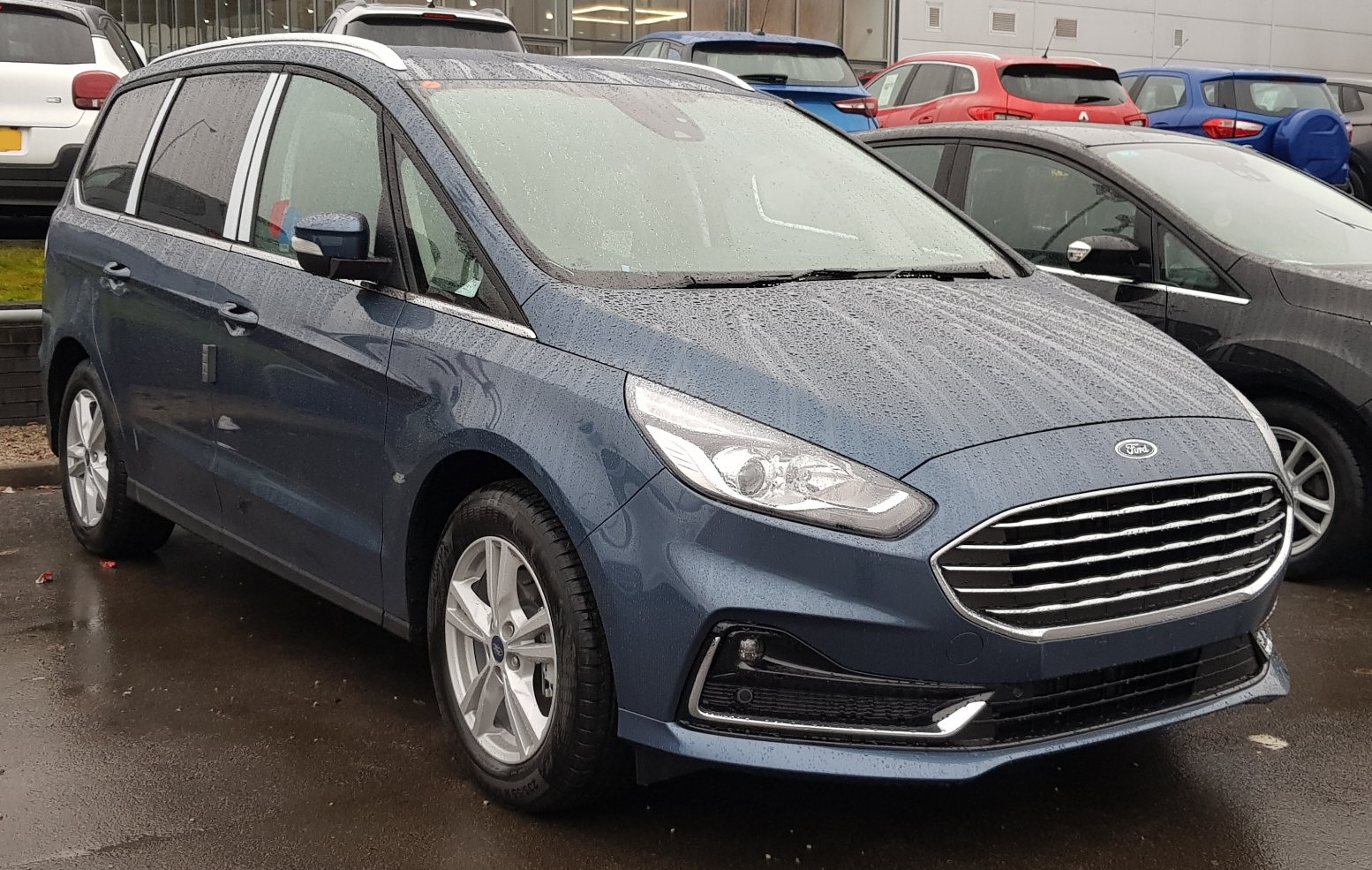
The Ford Galaxy is a big family car that can fit a lot of people and their stuff, making it great for trips or daily use. It's been around for a long time and is known for being comfortable and useful. Recently, there are new versions that use less fuel and are better for the environment.
The Honda CR-V is a type of compact SUV that is popular for being reliable and having a lot of space inside. Many people choose it for family use or everyday driving.
CATL is a company that makes batteries for electric cars. They are one of the biggest battery makers in the world and supply many car brands.
LIVE
Welcome back to the podcast today, NEV sales rebound in China, Xiaomi loses a quarter-peel
and the BYD Shark 6 for Europe, plus they tune later in the show.
I'll tell you about China's CATL scaling back its ambitious plans in Europe.
Welcome to EV News China, the podcast dedicated to the world's largest EV market.
Each day I bring you the latest headlines, insights and analysis from the heart of China's
booming EV industry and decode how fast moving developments in the east are shaping the global
EV landscape.
OK, we'll start with news of China's EV passenger retail sales.
NEV sales in the first 19 days of the month have rebounded.
The China passenger car association reporting 632,000 NEVs sold in the first 19 days.
That's up 5% year on year, up 2% month on month.
Retail sales in the first 12 days were 367,000 units, so slightly down, so we had a really
good couple of weeks.
More recently, there was also the National Day and Mid-Autumn Festival holidays, which
affected sales.
The year-to-date passenger EV retail sales now 9.5 million in China, up 23% year-to-date
last year.
Passenger NEV wholesale deliveries 676,000 in the first 19 days.
That's up 6% year on year, 5% month on month and cumulative wholesale sales year-to-date
11.12 million units.
That's up 30% on the same period from 2024.
Now, moving on, Chinese automakers captured 7.4% of Europe's passenger car market in
September.
It's led by, well, the usual suspects of their SAIC's MG brand, but increasingly so, BYD
and Cherry as well.
BYD's September sales surged and neared a continent-level volume of MG and Tesla.
A year earlier, Chinese brands in Europe had a 3.3 share.
So in a year, September to September, it's gone from 3.3% to 7.4%, so 150% rise, with
Chinese branded vehicles totaling 90,571 vehicles of the 1.2 million cars sold across
the European Union, the EFTA and the United Kingdom in September.
State-owned SAIC, of course, of MG fame, or rather the other way around, I should say,
logged 33,500 European registrations in September.
SAIC acquired MG back in 2007.
They do sell petrol, hybrid and Pure Bev models over here as well.
It's the top-selling Chinese brand.
Well, BYD entered Europe three years ago and set up a European headquarters and has been
preparing local passenger vehicle production before the end of the year.
It sold 25,000 vehicles in September, about five times its level a year ago.
The data from the ACEA, the Carmakers Association for the first eight months of the year, showing
BYD almost at 100,000 vehicles, tripling volumes versus the same time last year, Tesla falling
to 133,000 from 200,000 the year before.
So you can see BYD catching up SAIC, by the way, year-to-date, 192,000.
So SAIC now significantly bigger than Tesla in Europe and BYD chomping on their heels
as well.
I've seen just anecdotally, obviously the data is the data, can't argue with it, anecdotally,
more BYDs just flying around.
And obviously we look at the data points, so we're guided by that, but then there's
also the cars that you see, and that also has an impact, doesn't it?
Now I don't do a ton of miles and I'm not on the road a huge amount, so that factors
into it as well.
I'm pretty much just doing the school run and the shopping these days now that I work
from home, and I'm not road testing vehicles and stuff like so many of my friends and colleagues
in the kind of EV media space, and so I have a different role really, and I'm seeing a
lot of BYDs if I did a lot more miles, I wonder how many more I'd see.
Now, this next case is utterly fascinating.
A Chinese court has reaffirmed a verdict in favour of the consumer in a dispute over
deceptive advertising.
With Xiaomi, now a buyer said the advertised optional extra that he paid for, the replicated
prototype dual duct design of the Su7 Ultra Bonnet or hood didn't deliver what was promised.
And what it said is if you upgrade the bonnet and it's got the air vents in it, it cools
the wheels.
There's more heat dissipation.
Now the buyer took delivery of his Su7 Ultra from Xiaomi, purchased the optional carbon
fibre vented hood for $42,000 that's not insignificant, that's like $6,000, I mean there's some EVs
that don't cost more for the entire car.
So this was an optional extra, marketing claimed and I quote, dual duct direct airflow to
wheel hubs supporting wheel hub heat dissipation.
Sounds interesting.
Sounds like if you are doing some performance driving, maybe track driving and you want to
get temperatures under control, actually having some more airflow sucked in and then directed
through out to dissipate heat of the brakes, that could be a good thing.
But when he got the vehicle and compared it to other Xiaomi's, actually the bonnet didn't
do anything.
It was a fake, it didn't direct air flow anywhere or enhance wheel hub dissipation.
The disassembly showed an internal structure that was identical, well nearly identical
to the standard aluminium hood and was only 1.3 kilograms lighter for his $6,000 equivalent
out of pocket.
So took it to court.
Now the court rejected Xiaomi's appeal and upheld the lower court, which was in favour
of the consumer, ordering Xiaomi to, well there's the financial recompense.
There's $3,000 refund of the deposit, $17,500 in compensation and about $1,400 in legal fees.
But for a while there, Xiaomi could do no wrong.
They came from nowhere, they launched amazing products and now products, had long waiting
lists and really nobody's saying anything bad about them until, well this, there has
also been some negative headlines around an accident, some fires as well.
But really Xiaomi, I think has managed to, I don't mean this to be come across as awful
or anything, but in a way shrug off that negative publicity.
But I think this, being deceptive in terms of what the customer would get for what you're
paying for it because this gentleman who took it to court wouldn't be the only one that did it.
And so clearly there'll be other claims now and there's no understanding what happened here.
Like why did they do it, why would they make the promise, why didn't the engineering follow
through on what was being bought?
We won't know, but a very, very curious case.
All right, let's move on.
Let's talk about a new BYD pickup, quite a compact pickup with a short of bed.
BYD has lodged a European design registration for a shark, a shark pickup, not the Shark 6
that's on sale already in Australia and worldwide actually, previewing exterior styling and
signaling overseas intent.
The EU Intellectual Property Office published the design today, October 23rd,
identifying the model as an entry-level member of BYD's Shark series.
That is currently represented by the Shark 6, which is really fascinating, particularly in
Australia, Ute, which is selling very well.
Previously seen in China in May, doing road tests with heavy camouflage on.
The pickup follows BYD's current design language for the Dynasty series,
like the C-Line 6, Song Plus, CLU, according to Car News China.
The EU filing underscores BYD's plan to export to Europe.
The first Shark series vehicle was the Shark 6, and that's still not in the domestic market,
despite being sold worldwide.
This new pickup, which looks less utilitarian, may I say, more like perhaps a leisure vehicle
with some practicality of having a short bed.
Europe, Latin America and Australia also being the targets for this.
Patent images show a short open bed and proportions similar to something like a
Hyundai Santa Cruz, based on the Hyundai Tucson or the Verizon FX.
Chinese reports say it will adopt or may adopt the DMO plug-in hybrid system, like the Shark 6.
That's a fascinating system.
It's got a plug socket on the side, engine as a generator, but also can drive the wheels,
all be offered with less powerful DMI or DMP.
Powertrains will wait and see.
No timescale on that.
Let's talk X-Pung and the Xiaopeng X9 EREV with its total range of 1600 kilometers.
The extended range version of the MPV is now on sale.
It pairs a 63.3 kilowatt-hour battery and a 60-liter fuel tank.
So that's how they get to the combined 1600 kilometers of range, according to their Weibo post.
Of course, that will be CLTC certified.
It's a seven-seater.
So the X9 is their big MPV, and it looks fantastic.
The best way I can describe it, as I try to sometimes to put an image in your mind's eyes,
listening to this.
Imagine a Hyundai Ioniq 5, but longer and obviously taller in MPV form, not with all
the pixel headlights and stuff, but very similar, straight lines, a crease going at maybe 35, 40
degrees up the side of the vehicle.
I think it looks great, by the way.
I mean, as good as an MPV can look, by the way, like it is a bus.
But either way, it's the global flagship at Xiaopang, and it's the first super extended
range product they're making.
The X9 launched in China in January 2024.
The eREV version is the brand's first eREV in production, and they've submitted four
existing models to go eREV.
The X9 is expected to be the first hybrid, which reaches the market.
Battery-only range of somewhere like 450 kilometers.
It's a big boy battery, isn't it?
63.3 kilowatt hours and the engine as well.
They obviously have a big market to address in China, where people are looking at that
form factor of an eREV powertrain.
I'm not convinced by it, but I might disagree, because plenty of people are buying them.
Now, we'll take a break when we come back.
We'll talk about Shell and Julie Galaxy, and CATL, stick around.
Back in a moment.
All right, welcome back to the podcast.
Now, let's talk about Sun Woda, unveiling a polymer, all-solid-state cell, named the
Shin Bixiao at the 2025 New Energy Battery Industry Development Conference.
They have reported 400 watt hours per kilogram.
So, talking about gravimetric energy density there.
400 is not off the charts, but it's certainly very high on the very high end of current
technology, a 1200 cycle life and operation under ultra-low external pressure.
The company expects to build a 0.2 gigawatt-hour pilot production line by the end of the year,
and a one gigawatt-hour production line for 2026.
Sun Woda says that the laboratory lithium metal super batteries that they're testing
have gone as high as 520 watt hours per kilogram, and they are aiming for lab samples
up around 700 watt hours per kilogram.
That would be game-changing when that gets commercialized.
In July, a VP at the company disclosed 20 amp-hour all-solid-state cells
are here with 400 watt hours per kilogram, which, again, is at the very top end,
or better than most things in what we're driving already with lithium ion technology.
Cherry, separately, as I've mentioned on the podcast, demonstrating their all-solid-state module
last week, that was 600 watt hours per kilogram energy density, which would unlock EV ranges of
12 to 1300 kilometers with initial vehicle integration testing for 2027.
So a little way off, but this is the way we're heading.
Geely's Galaxy Starship 7 is coming.
This is a plug-in hybrid, not an E-Ref.
This is what is almost described as a good old-fashioned plug-in hybrid these days,
almost refreshing to see a plug-in hybrid because so many E-Refs around.
Geely's Galaxy Starship 7 in the Galaxy family brings their super-hybrid system to a compact SUV.
Think of this like a Honda CR-V, if that makes sense, built on their new energy architecture.
It's a 1.5-liter engine and a pretty small set of batteries, either 8 or 19 kilowatt hour.
So, yeah, that's not a very ambitious battery size, but it's a plug-in hybrid, not an E-Ref.
Interior features with premium trim across the board,
some nice fabric on the door panels and seats, two-spoke wheel,
10.2-inch digital cluster, 13.8-inch head-up display, 14.6-inch infotainment screen,
and some nice 14-point massaging heated ventilated seats and a 16-speaker sound system as well,
starting at about $13,700 or $100,000 you want.
Now, Shell is concentrating its EV charging expansion in China,
where more than half of its global charging terminals are now located.
The London-based company Shell operates 70,000 charging plugs globally, 40,000 of them in China,
and the CTO there saying that Shell opened their first Chinese charging site in Tianjin in 2018,
when new energy vehicle sales were tiny, 4.5% of China's total auto sales and what this year
is going to be well over 50, we'll talk about that more on the podcast.
Shell has agreements with BYD, Geely and Xiaomi to extend access for private EV owners across China,
these partnerships and network reinforcements so that Shell have a competitive position and want
a brand focus on China. And finally, nearly three years after CATL announced a 7.3 billion euro
Greenfield project in Hungary, the second largest city there called Debrecen,
the battery maker has been reviewing its scale after the move to EV is happening at a different
speed of which was predicted. The factory will supply BMW, Mercedes and other European brands.
Phase one has increased 20% to now 40 gigawatt hours per year, but there were two subsequent
stages and they're now being rethought, subject to market demand, according to CATL officials,
and China's presence remains visible in Europe, given the volume of investment,
a standoff though with Beijing over European demands for Chinese tech transfers,
and the price of investment is dulling the prospects of a surge of Chinese investment
between now and the end of the decade. CATL's plan to send thousands of workers to Europe
to build and fit out a 4 billion euro plant in Spain in a joint venture with Stellantis
didn't go down well. That raised questions about Chinese firms sharing industrial know-how
when they ship over their own workers to build the thing. And automotive analyst Matthias Schmitt
says, I don't expect much knowledge sharing or tech transfer to take place,
noting that EU manufacturers were forced into local joint ventures a couple of decades ago
in China, which gave China the production skills to end up where they are now.
He says, now the sous chef has opened their own restaurant down the road.
Love it. And many Debrecen workers are coming from China, making Chinese foreigners a common
site now in a city that was once exclusively Hungarian. And that is your podcast for today.
Thanks for listening. See you on the next one.
About this episode
China's NEV sales have seen a significant rebound, with 632,000 units sold in the first 19 days of October, reflecting a 5% year-on-year increase. The episode also covers Xiaomi's court loss over deceptive advertising regarding a vehicle's hood, resulting in a hefty compensation payout. Additionally, BYD's Shark 6 is set to enter the European market, while CATL reassesses its ambitious plans in Europe amid changing market dynamics. The podcast provides insights into the evolving landscape of China's EV industry and its impact on global markets.