Sometimes your car can have problems when you're out driving, like a flat tire or it stops working. Knowing what to do in these situations is important.
Filters are like little nets that catch dirt so your car's engine and inside air stay clean. You need to know where they are and how to change them sometimes.
Air pressure means how much air is inside your car's tires. Keeping it at the right level helps your tires last longer and keeps you safe when driving.
An air compressor is a machine that puts air into your tires to keep them full. Having one at home makes it easy to keep your tires safe and working well.
Caster is the tilt of the steering parts when looking at the car from the side. It helps your steering feel steady and go back to straight after turning.
Camber is how much your tires tilt in or out when looking at the car from the front or back. It helps your car drive better and keeps tires from wearing too fast.
Cars lose value as they get older or have more miles. This is called depreciation. Slowing it down means your car keeps its worth longer.
LIVE
Hey folks, Lenny Lawson here, the Car Guru.
I'm overcoming a head cold, so still the tonal differences are quite obvious.
So let's just get past that and just dive right in to the topic of the day.
The topic yesterday was controversial.
I was not being judgmental.
I was making observations about the driving habits of certain classes of people.
I got some really good feedback from folks and they agreed.
I got no negative feedback, so that was good.
There were no protesters out in front of the dealership today.
That's always a good sign and I decided to take action today in multiple ways.
Let me grab my phone here.
I made a Facebook post, an offer, really, a free offer for life-changing advice, real
good advice from a Car Guru and his team here at Gateway Ford.
Here's my offer, well let me find it.
If I and my Gateway team were willing to hold a free two-hour evening class for new drivers,
soon to be new drivers, or any kids still in high school and include the following topics.
Would you be willing to send your kids, grandkids, friends, kids, some kid walking down the street
that you don't even know?
So the important topics would include, number one, car, truck operation fundamentals with
hands-on experience.
Number two, car, truck maintenance basics, fluids, filters, brakes, et cetera, actually
get up underneath a car and show these youngsters where these things are and what they are.
Number three, how to avoid the most common car accidents.
That's a good one.
That would be a little bit of classroom training, but also maybe even getting out and driving
some cars.
Number four, basic driving etiquette and how to avoid road rage incidents.
And finally, how to avoid and deal with roadside car emergencies.
I continue, we would also feed them.
I figured that that was important, you know, since the only thing that kids eat anymore
are chicken tenders, chicken nuggets, and pizza.
That should be an easy one.
Let's see, what else?
If you would be interested, please message me.
I just got messaged.
Please message me and let me know how many participants you could provide and what evenings
would work the best for you and your family.
And I continue, and I can also promise you this, it will not be boring.
We know how to have an entertaining, safe, and good time with young folks.
Also with old folks, but I did one, let's see, what was it, a women's clinic one time.
Not to be misogynistic or anything, but we just invited women.
And it was a women's clinic.
My mom helped, my wife helped, my daughters, and my mechanics, and we just had the best
little session.
Had about 30 participants.
They got up underneath cars under the hood.
We showed them how to check the oil, how to change the tire, where the filters go, where
the cabin air filter is.
Just think about how much money you could save if you knew where a lot of these things
are and you could do some of that stuff yourself.
Or at least communicate with a service advisor.
Just think about how many people go to a service department and they say, I need this and that
according to my maintenance schedule, and they have no clue what they're asking for.
There's more like that than not like that.
And so the purpose of our women's clinic was just to enlighten them on a lot of things.
Like, for example, how to check the air pressure in their tires.
There's a whole generation of folks that have no clue why that's important or how to do it.
And you know, should they go to Lowe's and buy an air compressor?
Yeah, they should.
It should be in their garage next to their car.
And if their air pressures are low, they just bring the hose over and air them up.
What good is that, Lenny?
Well, at least your tires won't wear out prematurely.
Your car will be safer to drive.
You're going to lose two pounds of pressure on average every month.
So over six months, you've lost 12 pounds of pressure on a tire that takes 32 pounds.
You're down to 20 pounds.
That's not safe.
And plus, with that low of air pressure, you're running on the outside edges of your tires,
not on the center.
And so the outside edges of your tires are wearing out prematurely.
Is that important?
I think it is.
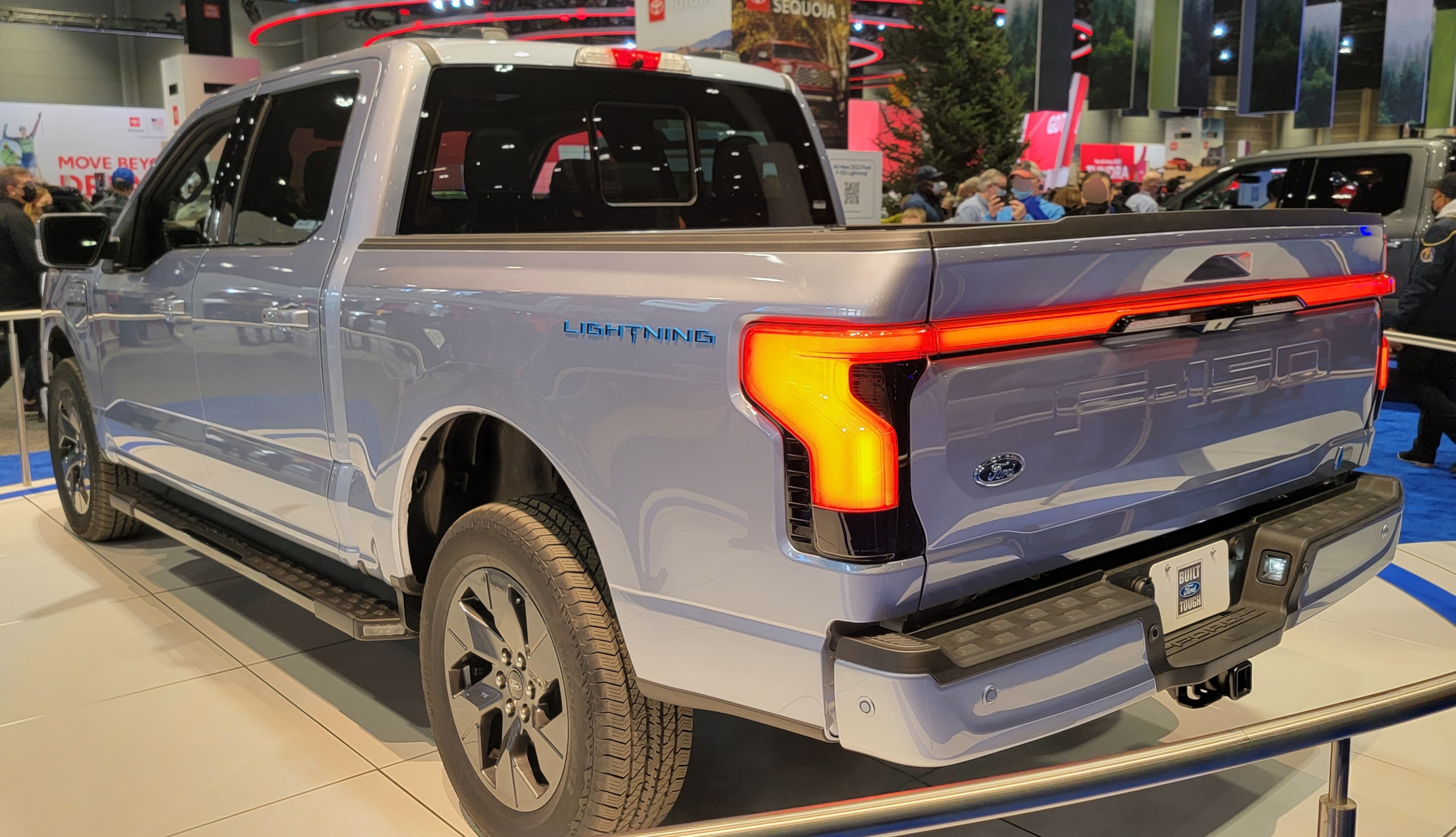
Some Michelin tires, I mean, some of these that we put on these F-150s,
they're $225 apiece.
Some specialty tires are $450 apiece.
Is it worth checking the air pressure?
I think so.
You could buy a whole bunch of little air compressors for the savings that you would have on one set of tires.
You know, if you can take a set of tires and make them last an extra year or two,
just think what that saves your pocketbook.
So it's these things.
Are they important to know?
Yeah.
You know, I don't know if I said this earlier, but the only thing common about common sense is that it's not very common.
But a lot of this stuff is just, it's really not common sense because people have never been exposed to it.
You know, one of my greatest regrets is that I did not take shop class as far as mechanical and electrical classes when I was in high school.
I should have done that.
I would have gotten a much better start in understanding automobiles, which was going to be my career.
But even when I got out of college, I just really, I just really started soaking up all this information from my texts.
And they were, I guess, interested in helping me because not because my dad owned the dealership,
because I was genuinely interested in understanding this stuff.
And I learned how to balance tires and learned how to do a front end alignment on the old style equipment.
But I understood the concepts of camber, caster, and tow in.
Do you need to know that?
No, but you do need to understand the importance of an alignment.
What's really going on there?
What's happening?
Why are your tires wearing out?
What did you do or not do?
What should you pay for that service, among many other services?
I mean, these aren't things that you can necessarily learn in a two hour session.
But you can get a copy of the My Car Guru guidebook, and that will be a good start.
It's free.
Just send me your email address to my phone number, my cell phone number, text it, 423-552-2020, and I'll send you a copy.
You know, that's a really good start for a lot of people.
A lot of the guidebook has to do with buying and selling and trading cars.
But chapter six is about handling maintenance and repairs.
Chapter seven, I wreck my car now, what?
Chapter eight, hey, I think I own a lemon.
Chapter nine, quick checks, what you must do as far as your car is concerned.
So there's a lot of service related stuff in there, but we're going to integrate that into this curriculum.
So I'll let you know how it works out.
I'd like to do it sometime in April, you know, before the kids get out of school and start going crazy during the summer.
You know, some evening we just get them together, we bring them in, we feed them, get them all, fat and sassy, and then start the class.
You never teach on an empty stomach.
I learned that in college.
OK, I'll be back in just one minute.
OK, I am back.
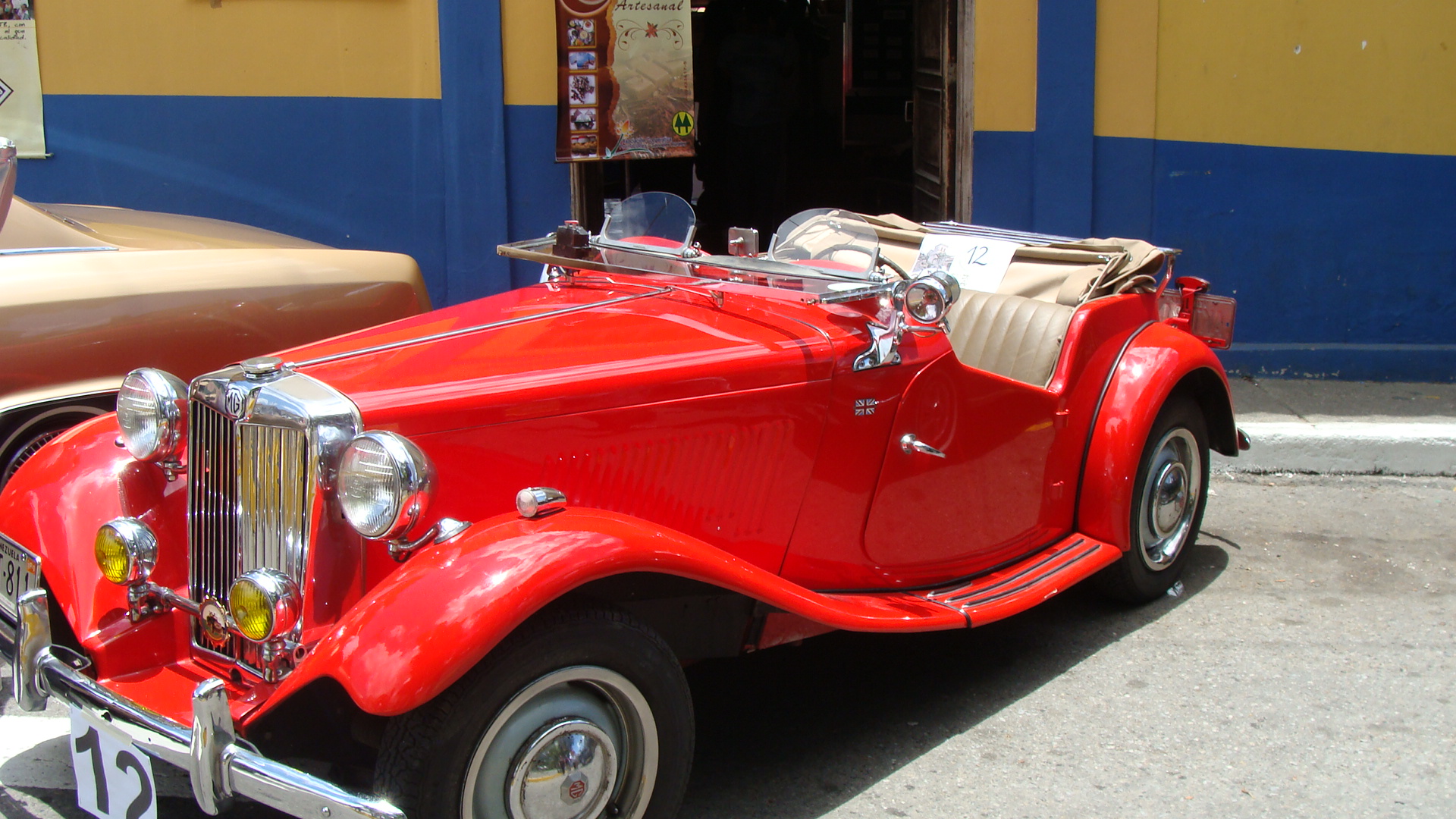
I have to leave in just minutes to head to Johnson City, Tennessee to look at a 1950 MGTD that these folks are wanting to sell.
This is a classic example of what I go through every week.
Well, that's probably an exaggeration.
At least every other week, I'm going out to somebody's house where they're bringing their vehicle here, their old vehicle, that belong to their parents or grandparents, and they want to know what to do with it.
Because, you know, it's there's a nostalgic aspect of this.
I can understand not wanting to sell some vintage vehicle that belonged to a parent that you grew up with.
But I think you have to honor that car as well as your parents.
Cars deteriorate rapidly and they don't like to sit even in a dry garage.
Things just go south.
Mechanical parts just deteriorate.
That's hard for me to say that twice in a row, deteriorate.
But yeah, they go down.
That's easier to say.
They need to be driven.
They need to be serviced.
I just took out, well, yesterday I took out my 1966 Mustang.
Speedometer was jumping all over the place.
So I ordered some new Speedo gears and a new Speedo cable.
Took it to this new shop that I'm using now for my vintage cars.
And they put it on there.
And as I was driving back, I looked up at the sticker and it's been two years since I changed the oil.
The car's probably been driven maybe 50 miles in two years.
Should I change the oil?
Yes, because oil breaks down over time.
I really feel bad.
I should have changed it a year ago.
About once a year for a car you don't drive.
I know that sounds strange, but there are reasons.
There are chemical reasons that that's breaking down.
There's moisture that somehow, I don't know how, it gets into the engine.
And these dry parts start to rust.
It's a problem.
And so I've got it over here in my service department now changing the oil.
So I called the shop just to make sure of something.
I said, Dale, remind me what oil viscosity I need to put in this 1966 Mustang with a high performance engine.
He says, well, you remember it does have solid lifters.
And I said, yes, I remember that.
And they have to have, or the oil has to have zinc in it.
Modern oils do not have zinc.
And so that zinc is essential for lubrication of those solid lifters.
And I said, OK, can you buy an oil that has that in it?
Because I've got a can of zinc or a bottle of zinc that I can add to the oil.
He said, just buy an oil that has that in it.
I said, what brands?
And he told me.
And so I had my service department get that oil from one of the area shops.
I said, I want a motorcraft filter because you know how I feel about using OEM filters on your car.
If you're driving a Honda, it deserves a Honda filter.
Do not go to the fast loop place and let them put on that junk that they put on your car.
They're just trying to sell you the cheapest filter they can.
But you're not going to have that.
If you're driving a General Motors car, you need an AC filter.
If you're driving a Toyota, Toyota filter.
You got the point now?
I guess sometimes I just feel I have to really emphasize those points.
Because people just, it's all about speed, isn't it?
Convenience and speed.
But when you're talking about an investment like your car is, even though it's a depreciating investment,
you can make it depreciate more slowly if you just maintain it properly and keep records.
I mean, if all you do is wad up that repair order and cram it in that overly crowded glove box of yours, that's fine.
I'd prefer you have a little book and you write it down and you keep all the repair orders in a nice neat file.
In your house or in your trunk.
But a lot of people won't do that because to them, the car, the truck is an appliance.
It's just like a refrigerator, you know, and they don't change the oil on the refrigerator.
Yeah, it's just amazing to me that people don't care, take care of their stuff.
We traded, I was looking at it.
What was that Chevrolet Trax that somebody traded in here to dealership.
And I was going to loan it to a customer of mine because we're out of loaner cars.
And I went to my service advisor and he said, we don't have any.
I went to my nephew Max.
He said, well, we traded for this Trax back here, but it's dirty.
I said, well, he won't care.
Then I went back and looked at it, unlocked it, opened the door.
I didn't even want to sit in it to drive it to the service drive.
And I would been far too embarrassed to hand the keys to him and say, here, drive this.
I mean, he probably wouldn't have cared, but I would if it was nasty.
And I think if most of you know the difference between dirty and nasty, a lot of the cars
that get traded into us are of the second variety.
And it just amazes me.
I wonder what their houses look like.
Oh, sorry.
That was probably a little judgmental on my part or wasn't an observation.
And then you'll have the guy that comes in here that his vehicle is actually cleaner
than the one he's buying.
And the one he's buying is new and his is like five years old.
And so, you know what?
He ends up getting rewarded.
You know, if you go to the right dealership, some dealerships will try to, you know, take
advantage of even that situation.
But still, condition matters.
So the three things that determine the value of a used car.
The market value, how are vehicles like that one being traded on the market?
How are they listed online?
Actual transaction prices at the auction and book values.
We look at Kelly Blue Book.
We look at the Black Book.
That what used to be the NADA Yellow Book is now called the JD Power Book.
So that's the market reports.
And then we look at mileage.
How many miles does it have on it?
Is it average, which is about 15,000 miles a year?
Then as long as the condition, the third category is condition.
And as long as all those things are really up there, then they're going to get top dollar
for the trade.
If they shop around, or if they call the guru first and I tell them what their
vehicle is really worth, and then they have some type of negotiating power.
But if they just don't know, then they walk in blind.
They're like those payment buyers.
Walk into a dealership and the salesperson says, how much you want your payment to be?
And they say, long as I can get it about 450 a month, I'm good.
They have no clue what they're paying for the car, what they're getting for their trade,
what's crammed into that monthly payment that they don't know about because it's all printed
out on a flash card.
They get no paperwork.
They just sign here, sign here.
They used to call it the five finger disclosure when people actually signed a document.
You know what that means?
That's when the guy that's selling the car, he uses his hand and five fingers to cover up the numbers.
And all that reveals then is the signature line.
And they say, sign here.
Well, the payment buyer signs there, goes home and a couple weeks later he's saying, what did we do?
And the dealership has had a party, the salespeople.
Well, maybe they fed the whole dealership with the profit that they made on that deal.
All because he went in blind.
And this is happening to first-time buyers.
It happens to people who have been upside down trade after trade.
And they get to the point where they are in some form of financial distress.
And then it's decision time.
Pay the credit card bills, the electric bill, the rent or the car payment because we can't pay them all.
And then it's bankruptcy.
But you know, I don't think a lot of those people listen to AM Talk Radio or podcasts about cars
and financial responsibility.
Or maybe they're too busy driving their Hyundai's and Kia's and stopping at the 7-Eleven to buy
energy drinks.
I don't know.
Okay, I'll be back in just one minute.
I know, I know that last comment.
Very judgmental.
Not even observational.
It's just based on experience.
It's based on people that trade cars and just seeing the condition that they are in financially.
And really, they have no business trading cars.
They're just trying to lower their monthly payment.
They don't care what you do.
I mean, if you have to stretch them from 60 months to 84 months to 120 months, they don't care.
They're just trying to get their budget in line where they can keep feeding this lifestyle.
And what they need to do is put the brakes on the lifestyle.
Get that part fixed first.
Don't do anything else.
Just fix what's broken.
And it's your disciplines.
It's your behaviors that are getting you in trouble.
You know, when I have this little seminar with these youngsters,
I'm going to give them a little bit of a dose of reality.
I'll be happy.
I want to show them what can happen to them.
And how if you walk into a car dealership, new or used, unprepared, with blinders on,
in a lot of different stores, you are going to make a huge financial mistake.
You may be thrilled with the vehicle.
You love it.
It's beautiful.
But then the financial reality hits, and it's not so beautiful anymore.
And then you try to solve it by trading instead of cutting back here and there,
not buying so many energy drinks, not jumping from job to job chasing a dollar extra an hour.
I saw a Facebook post not too long ago.
I think I mentioned on a previous show where a guy says,
anybody know anybody that's hiring that pays more than $18 an hour?
And I just said, that's just sad.
So he's not chasing a career.
He's chasing the dollar probably because he's really upside down.
He can't trade and he can't afford his monthly payment.
I guarantee that has something that, well, I can't guarantee it,
but I would say it's very likely it has something to do with a car payment.
So as far as young people are concerned, it's really about understanding the vehicle
and the responsibilities to that vehicle and ways to maintain the value of it.
At least make it depreciate more slowly or less quickly.
And then the other side of it is the financial thing,
which I would love to do that in the high school itself in a classroom setting.
I don't know.
I've done that before.
I've talked to classes.
I did a bunch of those last year.
Haven't been invited this year.
You know, I think the educators are just, they're too busy.
And so now they don't have drivers head.
They don't really do a lot as far as financial responsibility.
I mean, I understand that there's probably no need to teach somebody how to write a check
because nobody writes checks anymore.
I did the other day.
The guy wanted cash.
I didn't have cash.
I wrote a check and he took it.
I said, can you hold this for a couple of weeks?
He said, no, I really can't.
I said, I'm just kidding.
But it's really just too easy.
I mean, I admit it, but I had zero cash in my wallet the other day.
I went to Powell's ordered a big tea, $1.41 pulled out my wallet.
No money.
That's so great.
I've got to charge $1.41 on a credit card.
So I got up to the window finally and there's this latest.
I normally see her and I said, I'm sorry, but I don't have $1.41.
Here's my credit card.
She said, don't be sorry.
It's a lot easier for me.
You know, she just puts it up against the machine and it goes beep.
And then she hands it back to me.
She said, everybody does that.
I said, okay, I feel better.
But then there's $1.41 on a credit card.
My wife ends up paying the bills automatically, of course.
And, you know, kids, they get no appreciation.
They get that bill.
Most of them, I guess, will have a debit account.
A lot of these folks can't get a credit card, so they get just a debit card.
And I was behind a young lady at a 7-Eleven type place and she was buying,
I think it was an energy drink, believe it or not.
She handed them the debit card.
They ran it.
Sorry, not enough money in there to pay for the energy drink.
Okay, I'll put it up.
You know, that's a lot of our youth.
And the only way that we're going to be able to impact that is through the schools
and through, you know, people in business reaching out and trying to make a difference,
whether it's learning about how a car works, how to be safer on the road,
or just learning basic financial responsibility.
So I'm going to do what I can do.
If you know of anybody that's interested in something like this, any schools,
locally, I'm not going to fly to Nevada, but if you've got somebody in East Tennessee or
Southwest Virginia or something that would like to have a car guru come up and educate
their youngins, then I'd be happy to do it.
And if you want to get in, you're youngin' into this class that I'm going to have,
and I'll be talking about it on the radio show and also it'll be on my Facebook page.
But you can send me a text to 423-552-2020 and I'll get you on the waiting list.
Okay, I'll see you next time.
About this episode
Lenny Lawson shares insights on educating new drivers through a free, hands-on class covering vehicle operation, maintenance basics, accident avoidance, and roadside emergencies. He emphasizes the importance of practical knowledge like tire care and oil changes, especially for vintage cars, and stresses using OEM parts for proper maintenance. Lenny also reflects on the value of keeping cars clean and well-maintained, sharing personal anecdotes about classic cars and dealership experiences. The episode blends practical advice with personal stories, highlighting how better education can save money and improve safety.