Classic Auto Mall - #248 Stewart Howden welcomes Don Weberg, Founder, Publisher and Editor of Garage Style Magazine
Classic Auto Mall SHOW
Classic Auto Mall - #248 Stewart Howden welcomes Don Weberg, Founder, Publisher and Editor of Garage Style MagazineClassic Auto Mall SHOW · Jun 18, 2026
Enzo Ferrari was the founder of Ferrari. He was a major force behind Ferrari’s racing success, and in classic-car talk his name often represents the European side of the old performance rivalries.
“Shelby” is talking about Carroll Shelby, a famous racing and performance-car guy. He’s strongly linked with some of the most iconic classic sports cars, especially the Cobra.
Restoring a car means fixing it up so it looks and works like it did in the past. People do it to preserve classic cars and keep them running for the long term.
The Ferrari 288 GTO is a special, older Ferrari that’s known for being a serious performance car. The host’s point is that it can look similar to another Ferrari, but it’s not the same model.
This is a Ferrari sports car called the Daytona Spider. “Spider” usually means it’s an open-top version, like a roadster or convertible, so you get to enjoy the engine sound and driving with the roof down.
The BMW 3 Series convertible is a BMW 3 Series with the roof that can open like a typical convertible. It’s meant to be fun to drive while also being open-air.
The Ford Explorer is a common SUV you can see on lots of roads. Here, it’s mentioned as the normal car they’re driving while they go look at and photograph much more expensive cars.
The Mercedes-Benz SL is a fancy convertible/sports-luxury car. “SL 500” is a particular version of that model, and the speaker is saying it was seen as a big status symbol.
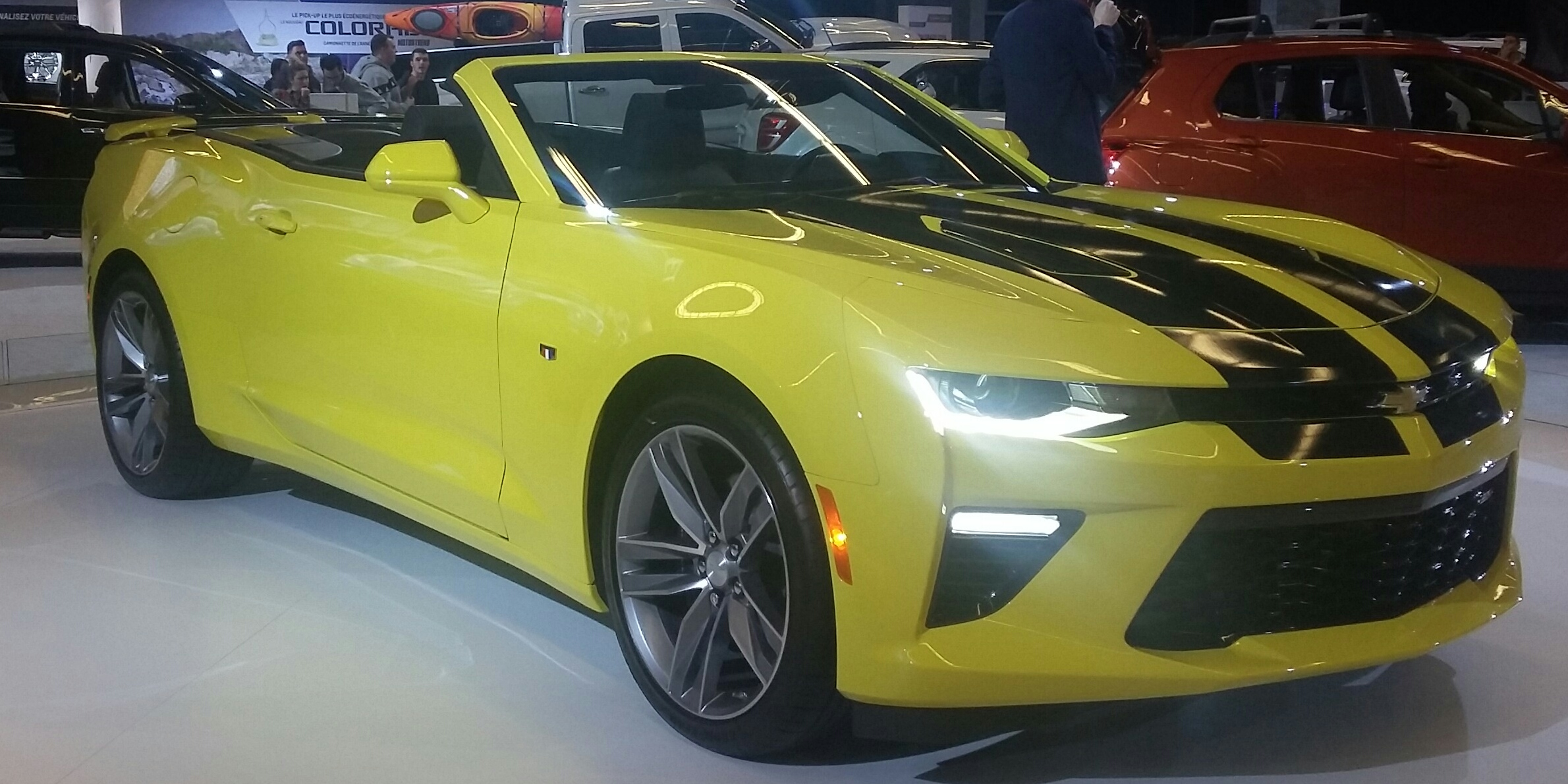
The Chevrolet Camaro is a sporty car made by Chevrolet. People talk about it a lot because it’s known for performance and a distinctive look. In the podcast, it’s mentioned as something personally important to the speaker.
They’re talking about how the car is for normal everyday driving. The point is that a car can be built for racing, but still be frustrating or unreliable when you use it like a regular car.
A drag strip is a track made for straight-line races. Cars race to see who accelerates fastest, so a car might be awesome for racing but still be a pain to live with day-to-day.
Bonneville is a famous salt-flat area in Utah where people try to set speed records. It’s more about going fast for a long distance than racing around corners.
The Volkswagen up! GTI is a small hatchback that’s been tuned to feel more sporty. It’s basically a regular up! but with upgrades meant to make it quicker and more fun to drive. The speaker is using it as an example of a “better version” of a normal model.
Detailing is the careful, thorough cleaning of a car—usually more than just a quick wash. People do it to make the paint and interior look their best. In the story, it’s how the host got really interested in cars.
Audi Quattro is a type of all-wheel-drive setup used on certain Audi cars. All-wheel-drive means the car can send power to more than one set of wheels, which can help with grip. The podcast mentions it to describe the kind of drivetrain a car has.
The Ford F-150 Lightning is an electric version of the F-150 pickup. Instead of using gasoline, it runs on electricity stored in a battery. The podcast mentions it to emphasize that it’s meant for normal driving, even in bad weather.
The Cadillac Escalade is a large luxury SUV. People often buy it for comfort and a more upscale look, and it shows up a lot at car auctions because it’s popular with mainstream buyers.
A “barn find” is a car that’s been sitting unused for years, usually in storage. The host is saying this car is in much better shape than something you’d expect to be rough and needing restoration.
This is the name of the venue where the host says they’ve been running events for several years. They’re describing how often cars get damaged during those outings.
The Studebaker Avanti is a classic car made by Studebaker. It’s known for its unusual, eye-catching design and for being a performance-style vehicle. In the podcast, it’s mentioned alongside a racing team, linking it to motorsport.
USAC is a big American racing organization. If someone is a “USAC National Champion,” it means they won the top championship in their USAC racing category for that year.
This is a classic British open-top sports car. The important part here is that it has a 1,725 cc four-cylinder engine and two SU carburetors, which are older-style fuel systems that give it a very “classic” driving feel.
Carburetors are older fuel systems that mix air and fuel before it goes into the engine. “SU” is a specific carb brand/design, and “dual” means two of them, which can make the engine feel more responsive.
This means the car has a manual gearbox with four gears. You use a clutch and shift lever yourself, which often makes the driving feel more connected and “old-school.”
This is a 1999 Jeep Wrangler in the Sahara trim. “Four by four” means it drives all four wheels, and the dark green Rhino Liner is a tough coating that helps protect the body for rough use.
Rhino Liner is a tough, spray-on protective coating. It’s meant to help prevent scratches and dents, especially on vehicles that see rough roads or off-roading.
The Mercury Marauder is an older car model made by Mercury. It’s known for its distinctive look from that time period. The podcast mentions it because of a specific styling detail the speaker remembers.
A supercharger is a device that pushes extra air into the engine. More air means the engine can make more power, which helps the vehicle feel stronger when you need it.
Term
inline
“Inline” means the engine’s cylinders are lined up in one row. It’s just a way of describing how the engine is built.
A long arm lift kit raises the Jeep and changes the suspension so the wheels can move more effectively over bumps and ruts. It’s a common upgrade for better off-road handling.
Rhino Line is a protective coating sprayed onto parts of the vehicle. It helps prevent dents and scratches and can make the surface easier to live with off-road.
Car
1957 Oldsmobile Super 88
This is a classic 1957 Oldsmobile Super 88. It’s known for a large V8 engine and an automatic transmission that makes it feel smooth and easy to drive.
A “continental kit” is a styling add-on that was popular on some 1950s luxury cars. It usually adds distinctive trim around the rear area, often including a spare-tire cover.
“Rocket V8” is a name Oldsmobile used for its V8 engines. It’s basically saying this car has a big, powerful V8 that was meant to feel energetic and smooth.
The host mentions Corvette because it’s a famous American sports car. They’re basically saying the Oldsmobile looked almost as striking as a Corvette when parked together.
This is a 1973 Plymouth Road Runner, a famous American muscle car. The host is talking about a particular one that’s been restored and kept as close to original as possible, including the original engine/drivetrain details.
“Numbers matching” means the car still has the original big parts it left the factory with. Collectors like it because it proves the car hasn’t been swapped around.
Term
340
Here, “340” is the engine size designation—about 340 cubic inches—so it tells you what kind of engine this Road Runner has.
The Buick Model 27 is an early Buick car from the 1910s. It’s a touring-style vehicle, meaning it was built for longer drives rather than just short trips. The podcast brings it up as part of a group of early Buick models.
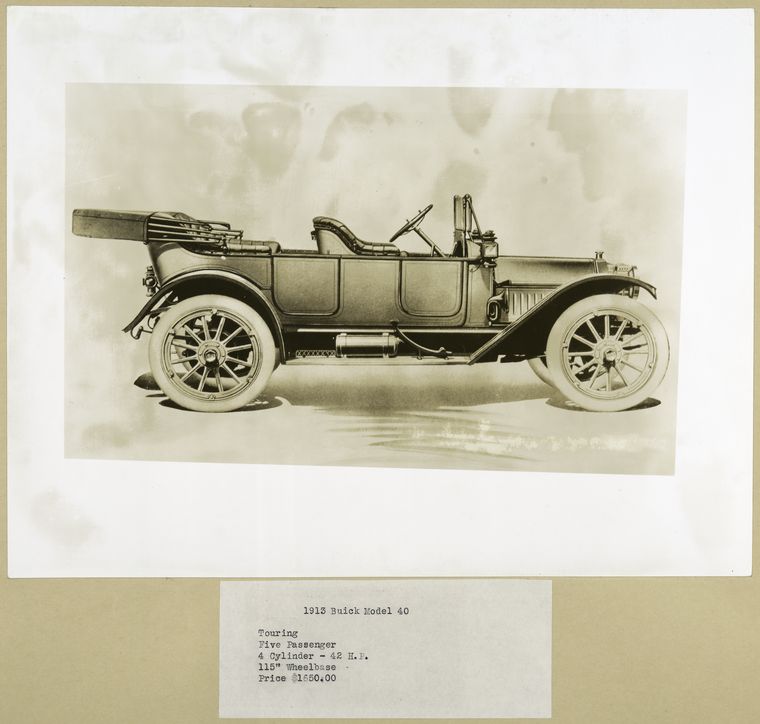
This is a 1913 Buick touring car from the very early days of automobiles. The host is saying it’s a top award winner, which usually means it’s been restored carefully and kept historically correct.
AACA is a classic-car club that holds judging events. If a car is an AACA national first place winner, it means it won the top award at a major classic-car show judged by experts.
“Brass era” is what collectors call the earliest age of cars—when you often see lots of brass trim and a very old-school look. It’s basically a label for cars from the early 1900s.
LIVE
This is the Classic Auto Mall Show.
Broadcast from the studios inside the Classic Auto Mall in Morgantown, Pennsylvania.
Just one hour west of Philadelphia at Pennsylvania Turnpike Exit 298.
Featuring nearly 1,000 classic vintage and barred fine vehicles for sale under one climate controlled roof.
Now, here's your host, Classic Auto Mall president and the man with all the toys, Stuart Howden.
And here we are, welcome to show number 248.
For those who are keeping score at home.
Yes, 248 shows.
I can't believe it.
It's insane.
That is many.
That's a mini, that's a whole lot.
We had to have a party when we hit 250.
I think that's a great idea.
We hit it right when the country turns 250.
Isn't that it?
Yeah, that's right.
We are going to hit that.
Wow.
Irony.
I don't know if it's ironing, but call it what you call it.
Maybe ironing.
Yeah, or something to do with that.
The 250 thing is pretty cool though.
Yeah.
That's an awesome milestone.
And we've got some other great milestones.
We've got, we're at almost, how many shows have we put out so far?
1966 videos we have on YouTube.
We've got 269,347 subscribers.
A year ago today we had 28,000.
Wow.
And 17 million views.
Unreal.
Yeah.
You're a star.
It's hard to fathom.
You're on fire.
It's hard to believe, isn't it?
So how many cars in inventory?
Steve, go first.
I am, it's about four day coming in.
Yeah, okay.
Probably the same amount going out.
I'm going to guess the same thing I did last week.
770.
Alright.
781.
780.
I was going to say 780 because I hate the people that go one over.
One over.
That's always the worst.
Oh God.
So let's get right to our guest here, joining us via Zoom.
Founder, publisher, editor of Grunge Style magazine, Mr. Don Wieberg.
Don, good morning, afternoon, evening, whatever it is, wherever you are.
Yeah, we're only an hour away.
It's not that bad.
Good morning.
Thank you for having me.
I appreciate it.
Absolutely.
Absolutely.
I was on your old show last, was it last week?
Yeah, I think it was last week.
Yeah, gosh.
Funny how time sort of flies or doesn't fly.
I don't know anymore.
I can't believe half a year is already over, right?
You know, it's people don't realize.
My kids never realized what I meant when I said time went faster as you got older.
And what they didn't realize is that what makes it go faster is when you have deadlines
and rent.
You know, that's what makes time go faster.
You realize, oh my God, the rent's already due.
Is it already the 31st?
Or as you who publish a magazine know that the deadlines come, whether you want them
or not, or whether you're ready or not, it's coming.
Yeah.
They're always right on top of you.
It's funny.
And you mentioned time flying.
I didn't know how quickly time flew until I went to work in the newspaper business.
And you're doing daily newspaper and it's click, click, click.
I mean, there's no time to breathe.
There's no time to nothing.
And when we started, when I started my own magazine, I became really succinctly aware
because you're not planning this quarter's issue.
You're planning two quarters ahead.
And so you're always thinking, if you're in December, you're already thinking, you know,
You're thinking July, you're thinking August.
So you're already planning for Monterey car week, et cetera.
And it was always really weird for me because somebody would say, you know, oh Christmas
is coming up.
And I think to myself, oh my God, I completely forgot.
Well, how can you forget?
It's like a week away.
But in my mind, I'm in July.
So Christmas is already over.
You know, it's really, really trippy sometimes.
But I'll tell you, when you're thinking ahead like that, you really do.
You really, the time just, it just goes away.
Yeah.
It's amazing how that happens and how often we will reflect on, we can't believe that
it's one month into the year, two months into the year, six months into the year.
Oh, the year's almost over.
And it just, more and more, it just goes like that.
And that's why it's so important.
You know, this hobby is a great way to, to cherish time, you know, to, to be involved
with old cars and to take some time for yourself and do things and kind of slow things down
just to hair, just enough so you can kind of smell the roses, if you will.
No, it makes perfect sense.
It does.
I mean, how many times have you, I mean, I'm looking at that cobra behind you and I'm just,
I'm salivating over that thing.
It's just gorgeous.
And yet you look at it and you think to yourself, you know, real or not, your imagination takes
over the era that that car lives, the era that that car ruled in, you know, and you
think to yourself, you know, Shelby, he was king of the hill and you had Enzo Ferrari
with the battle.
We've all seen the movie, we've all read the books, et cetera, and, and it can slow you
down.
You know, it really, really can.
You work on an old car and I don't care if you're detailing it or if you're actually
working on it, restoring it.
At least for me, you know, the memories, the, the imagination takes over and you do, you
slow down and then you start to think, where was this car in 1968?
Where was I?
And it's same with music.
You know, when you hear a song and you think, oh, I remember that was on my way to, you
know, we were on our way to Myrtle Beach for a vacation or we were on our way to somewhere
and you hear this particular song and, you know, it's, it's talking about how important
of all of our lives cars and the automobiles and, you know, all of that were because there
was everything that's really has ever happened in your life somehow, some way a car touched.
It's, it's pretty amazing whether you, you know, and then when you're born, when you're
married, when you went on your first date, whatever it was, it was always a car involved
in it.
And that's why it's funny how it becomes, to us, they were passionate to the kids today
or to the younger crowd today.
It's more utility.
You know, it's a refrigerator, just it has four wheels.
And when it's no good anymore, you just throw it away and get a new one.
Yeah, it is, it is interesting to watch that.
I have a 17 year old daughter, Caitlin.
She helped me run kind of the technology side of the magazine because I don't understand
any of that.
But I pick her up from school pretty often.
And sometimes I'll bring one of the old cars to pick her up in.
And it's amazing to look at the younger people, you know, just milling by it.
You know, as I sit there in my car, they're just kind of walking by on their way to wherever
they've got to go.
And it is kind of interesting to look at them.
You can tell some of them might be a little shy, but you can tell they want to ask something.
They just don't know what to ask.
They have no idea, you know, what to talk about.
Right.
So it's up to us sometimes to just kind of engage that conversation.
And, you know, it's a little hard because what do you say?
Right.
The guys walking by, what do you say?
It's a fiat.
You know, I mean, do you like my car?
Do you like my car?
But I mean, here's a case in point that fiat again, big shock.
I know this will shock you, but there was a time it was broken down.
It didn't run.
You're kidding me.
Yeah.
I know it floors people.
Yeah, it's hard to believe.
I had to push it out of the garage and had two very, very low tires.
So the car weighed as much as a tank, you know, and I'm pushing and pushing.
And the neighbor sees me.
So he comes over.
I've never met this guy, but he's a big young, you know, strapping young lad.
Right.
So he gets in, he grabs the front bumper and start pulling.
So now we're pushing and pulling on the car to get it out.
Well, he's looking right at that little red badge fiat.
And he says, this is a fiat.
And I said, yeah.
And now the fiat is 79 spider.
Right.
So it looks a little bit like the Alfa Romeo that dominated the 80s and 70s.
And I said, yeah, it's a fiat.
And he says, is this the new one?
Oh, no, no.
This is a 79.
He says, 79.
How long has fiat been in business?
Oh my God.
Yeah.
And I'm like, oh, wow.
No, they started in 1899.
You're kidding.
Right.
No, no.
They were there and old little company.
So the next thing you know, I'm talking to this guy about the history of fiat.
Not what, you know, what I know about it and telling him about the cars.
And actually, you know, he's getting all into it.
He's getting all into it.
A couple of years later, I see him and he has a fiat.
Wow.
Yeah.
That little circle.
Yeah.
That little conversation inspired him to go learn more about fiat.
He got all inspired by it.
And actually, you know, he bought one.
So pretty interesting the way that worked out.
Well, we tell people when we tell our guys here, when a person comes in, there is no
stupid question because a lot of people don't understand it.
And you don't want to, to push somebody away from the hobby because
they don't know something.
You, we want to be able to say, hey, let me show you this and let me show you why
it's this or let me show you, you know, it's showing the difference between to some people,
maybe a plain Jane Corvette versus a ZR1.
It's the difference between a Ferrari 288 GTO and a Ferrari 308.
They kind of look the same, but they don't.
And so when people make the mistake of saying, oh, is that a 308?
You know, the tendency is, oh, you dummy, you don't know what you're talking about.
And we shouldn't do that because I can remember going into classic car or
exotic car dealerships out in California when I was younger and treated like, you
know, just get out.
You know, we don't want you here.
We don't.
And I'm thinking, you know, when I have money someday, I'm not coming back to your
place and you'll never know it, but I'll know it.
Right.
Right.
You know, it's funny.
We went to, I'm from Los Angeles originally, a little town called Glendale.
I know Glendale.
I lived on Colorado Boulevard, off of Colorado Boulevard in Pasadena, just right next to
the tour.
Yeah.
You gotta go through Eagle Rock.
Yeah.
It's a great area.
Yeah.
It's a fun area.
There's a lot to do there.
A lot of great restaurants.
And, you know, Glendale was kind of the epicenter of hot rod building and drag racing, etc.
So it was a great place for us, you know, to live.
But just a few years ago, you know, every year in Beverly Hills, they have the Rodeo Drive
Father's Day show and I used to go, you know, every year.
And this one year I had a friend from out of town and we met at Beverly Hills, went to
the show, had a great time and he wanted to walk down to Wilshire Boulevard and go see
the Ferrari dealer and go see the Audi dealer and all the car dealers that are right there.
So okay, fine.
So we go walking down there.
And I'll never forget, we walked in the Ferrari dealership and bright yellow Daytona Spider
was sitting right there in the showroom and I'm a Daytona junkie.
I don't know much about them.
I admittedly, I really don't.
I just, I know the shape and I know that.
I love that.
Right.
Yeah, they're gorgeous.
So I'm walking around this thing and there's this sales guy who's dealing with this woman
who, you know, dropped in gorgeous typical Beverly Hills socialite.
And I get it.
She's a customer.
I'm, you know, just looking.
Don't bother with me.
Go, go take care of your customer.
I'm fine with that.
But you can tell he was irritated.
You know, he didn't like me and my friend being there.
And it's not like we look like homeless people.
I mean, you know, we weren't Donald Trump, but we weren't homeless.
Your shirts were tucked in, right?
Yeah.
So we're looking around the car or whatever and we go look at some of the new stuff and
you can tell this guy just getting more and more irritated the longer we're there.
So I got to find whether we can tell he's not happy.
Right.
We'll just leave.
Now, the funny thing is, the friend I was with, he probably could have bought the whole
showroom that day if he wanted to.
He's got that much money.
It's just insane how much money that guy's got.
And we get outside.
He puts on his glasses and he looks at me and he goes, well, see, if I ever go to that
dealership for my business, I'm like, yeah, I know.
Did you notice?
I go, notice it.
It was, it was so thick, you know.
Well, years later, I meet a guy up in Monterey and it turns out, I guess he's one of the
owners.
Really?
And he's a subscriber of Garrosh magazine.
Yeah.
So we talk for a little bit.
And I tell him the story.
And he's just deadpan.
He's just looking at me.
He goes, I think I know that guy.
I'll have a talk with him.
Yeah.
After all these years.
I didn't mean to, you know, it was just a long time ago.
Let it go.
It's what?
Nope.
Nope.
We got to treat everybody better.
But you're right.
I mean, how many, how many stories do we all have about somebody younger who wants to know
something, but they don't even know it to ask.
Golf courses, you know, pro shops that are golf course used to be like that.
You walk in there and if you weren't one of the guys or the members or whatever, they just,
you know, they, there's an air about them back in the seventies that they've long since
gotten past.
Thank goodness.
Because, you know, it doesn't matter.
You want everybody to be involved, especially for a hobby like ours where there's perpetuation
of everything, you know, all of these cars have to go somewhere and they have to be well-maintained
and they have to be well-maintained, well beyond me and you being gone from this planet.
And if we don't have people into it, then, you know, God forbid there'll be Duesenbergs
and junkyards, which, you know, prey will never happen, but it could.
It's not out of the realm.
It could.
So what got, it was Southern California had to be the thrust of getting you into cars.
I mean, you had to see cars that you dreamt about when you were a kid and thought, one
of these days I'm going to somehow be something with those, right?
Yeah.
It wasn't, it's not far from the truth.
Growing up in Southern California, you definitely see everything dreamy.
I mean, you really do.
I didn't realize how good we had it, you know, in the auto sphere until I was married and
my wife had relatives in Kansas and they came out to Los Angeles.
So we picked them up to the airport and if, for those of you who don't know the LA area,
we lived in a little town in Orange County, which is right next to LA and it was called
La Habra.
It's a town about the size of my computer and there's a straight shot from La Habra into
the heart of Los Angeles International Airport and that was where they were coming in.
So we drove out there, picked them up and we had all agreed, we being the people from
California had all agreed, okay, don't get on the freeway and come right back home.
Let's take them the long scenic route to get them back home because that too is a straight
shot, but you got to go up a little bit to Santa Monica and then straight down Wilshire
Boulevard and you go in through Beverly Hills, you go through Westwood, you go through, you
go through the LA areas and there's tons of scenery, tons of restaurants, tons of distractions,
it's great.
So her cousin is sitting next to me shotgun and I'm driving the car and he's got his
phone out and he's taken pictures of, forgive me if you have one, I'm not making fun of
it, I like these cars.
To be honest, I like every car.
Right.
There's not a car out there, there seriously isn't, there's not a car out there that I
don't like.
But he's taking pictures of SL 500s.
Right, right.
And he's taking pictures of BMW 3 Series convertibles and I'm like, yeah, odd.
Why are you taking pictures?
I mean, I'm sorry, if you like them, that's great.
I just, I've never seen anybody get excited over an SL 500 or a 3 Series BMW convertible.
What gives?
And he pauses for a second and I think he was absorbing the question.
He looks at me, he says, Don, you got to thank in Kansas, we don't have any of these
cars.
Yeah.
And he's a car guy.
Right.
So he likes cars a lot.
It would be looking cool.
Yeah, yeah.
But all he's ever seen with these cars, he's seen them in TV, he's seen them on movies.
That's it.
There are not that many of them where he lives in Kansas.
Well, we hit Beverly Hills.
Holy cow.
Now he's going crazy.
Could you get the Lamborghinis, the Ferraris, the McLaren.
I mean, we're and we're in this little Ford Explorer, you know, just buzzing along.
You need quick, quick.
We're taking pictures of everything.
So I'm like, I stop, we're going to pull over.
We're going to get out.
We're just going to walk the Rodeo shopping district and then you'll get good pictures
and have fun and we'll do the touristy thing.
So so yeah, growing up in California, we I never realized how good we had it
until that trip, you know, until he came out to visit us.
And then I realized, wow, I never ever thought about ever living in an area where
yeah, Don, we don't have these cars.
You don't see those cars.
I just it never entered my mind.
Well, now go ahead.
You know, just you look at the the when I grew up in East Tennessee in Knoxville.
I mean, there was one Rolls Royce in the whole town.
I mean, you know, and SL 500s were the barometer or 560 SLs or 450 SLs, you know,
the earlier versions were all symbols of if you had one of those, wow, you you'd
beyond made it, you know, you were in that next stratosphere and people in East
Tennessee and in Kansas and Missouri and those areas didn't flaunt their wealth back then either.
You know, in Beverly Hills, you drive down and see you can drive down
Wilshire Boulevard in the early 80s and there'd be 50 Rolls Royces parked on the
side of the road, you'd count between three or four traffic lights and people
were flaunting their wealth.
But boy, you go to East Tennessee.
I don't care if you're the richest person in town.
You would never consider driving a Rolls Royce or even a Mercedes or a BMW.
You drove a Buick or an Oldsmobile.
Right. Right.
Yeah, absolutely.
Absolutely.
Yeah, it was it was very different, you know, in Beverly Hills, especially.
And, you know, Glendale was a little bit more, I mean, not East Tennessee totally.
Right. Glendale was a very conservative.
It was it was wealthy.
It was, but it was very conservative.
Like you say, the big shot, you know, if you were a real big shot,
you had a Lincoln or a Cadillac, you know, and then as as the 70s evolved
in the 80s, we started seeing more Mercedes.
We started seeing more BMWs, more, you know, we had the dealerships too,
right there, Bramble of Articards.
That's right.
And literally when I was a kid, almost every Saturday, I'd hit my bike.
I had a little backpack that I played because this is the before, you know,
phones and all that.
So I had a backpack that carried a tape recorder and I'd play a tape, you know,
I listen to music and I rode my bike through town, irritating everybody, I'm sure.
But I go dealership to dealership to do.
I knew all the salesmen.
I knew the general managers.
I knew everybody by the time I was like 13, you know, and the funny thing is
having grown up in a car family, both my parents were car keeper, both of them.
They both race cars.
They both built cars.
They both were stored cars.
They, you know, they were car.
So legend has it that my second word in life was Camaro, which had to be a real
insult to my dad because he was, he was one of the guys you've taught him.
He's going to bleed Ford blue.
Right.
So here's this little boy right around saying Camaro, you know, and I still
have yet to own a Camaro.
So.
Wow.
What does that tell you?
Yeah, there's, there's some deep dive we need to do there, but we're not.
But yeah, it, but yeah, I was a car guy from birth.
My, my mom and dad were and.
What kind of cars did they race?
What were they racing back in the day?
You know, my dad was all hot rubs, so I really don't know what he had.
And I know that my mom was a Chrysler person when they met.
So she had the early Hemmys, the early, she had a Chrysler, I'm sorry, a Dodge
D 500, which was really, really fast.
But I guess it was actually one of the most unreliable cars she ever had.
Yeah, well, so for like day to day use, it was terrible.
But on the drag strip, that car knew exactly what it had to do.
And that was to kill.
Yeah.
You know, that was its whole, it was, that's its whole point.
But they were at Bonneville.
They were at El Mirage.
They were at all these places.
And whether they were racing or just enjoying, it really didn't matter.
They were just there for the spirit.
They had fun with it.
So I came along.
I kind of inherited everything and that I can't turn a wrench to save my life.
Right.
I can't, I can't fix a car.
I can't do any of that stuff.
I hire mechanics all the time to do, you know, a few to blue.
I got to call George, you know, a few blue.
I got to call Brandon, a few blue.
I got to call Chris.
I got, you know, I got all these mechanics.
I don't know what to do with a few.
I have no idea.
Something's not working.
Call somebody.
Right.
I got into detailing.
I had an uncle who he owned the Bosch distributorship on the West Coast.
And so because you know, Bosch, German, he always got Audi's.
He always drove Audi's.
I always make the joke.
I loved Audi's before they were popular.
Right.
And I did.
I had so many friends.
Wonder, what is that car your uncle has got the circles on the grill?
Oh, yeah.
That's an Audi's.
Never heard of him.
Most people never heard of him.
Yeah.
I never heard of him.
So I'd tone it down and I'd tell him it basically a souped up Volkswagen.
I mean, that's really what it is.
It's just Volkswagen.
Exactly.
Yeah.
So, yeah, we were all into Audi's.
They that was kind of the foreign car that we had.
We had some wealthier relatives out in Arizona.
They always had Mercedes speaking of, you know, the Mercedes.
So cars were all around me.
And I got into detailing where I couldn't turn around.
I could run a rag.
And that was my uncle Howard's Audi.
He always had this bright red Audi coupe GT.
If you know what those are, kind of like a Quattro.
And my uncle, he loves cars, he loves money even more.
A car wash, you know, that took time and money.
Time is money.
So in his mind, it wasn't worth going to car wash.
It was better to come over to our house, have a few drinks and cigarettes
with my dad while I slaved over, making the Audi look good.
Yeah, absolutely.
So, yeah.
So that was, you know, I got into detailing.
Detailing led to collections and taking care of other people's cars.
And then, of course, I got into the journalism side of it later on,
where I was doing freelance for various car magazines.
And of course, when you do that, you get to know all the owners of the different cars
and they all have different garages.
And you start kind of putting this together that there's something here.
There's something really cool here that nobody's talking about.
And the funny thing I saw about the garage when we started garage,
well, when we started the concept of garage style, which is let's start collecting
pictures and stories of garages.
And let's just let's just see where we can go with this.
We noticed one thing as a freelancer for the car magazines,
I go up to you and let's say that's your Cobra behind you.
And I'd say, hey, I'm Don, I write for so-and-so magazine.
I'm curious if we could do a feature story on your Cobra.
And the response was usually the same from every single person who owned a car,
which was, yeah, sure, that'd be fun.
Yeah, yeah, not really.
Yeah, not nothing to it.
Just OK. Yeah.
Yeah, just OK.
But when I saw their garage and then I said, OK, thanks for letting us do your Cobra.
I'm curious, this is going to sound like and I would.
Stuart, I would put it out there like this.
I would say this is a really weird request,
but we're thinking of starting a new magazine.
It's all about garages, car collections.
You've got a beautiful garage here.
Would you mind if I photographed it and got your story?
I've got to tell you, do you remember being like 56 years old
and you made a new friend at school and that new friend is going to come over
and visit and this is the coolest thing in the world.
And here comes your friend up the walk and you open the door
and there's his mom or his dad.
And you say, you know, hi, Billy, I see my room.
All right. That's the first thing they all said, right?
Right. You want to see why?
Because that's our little slice of the world.
That's what we made, you know, with mom and dad's help,
but that's what we made for our world.
And what I found out about the car guys, the Cobras, the Corvettes,
the Jags, the Mercedes, whatever you want to talk about, they're all great.
We love them all, but we really didn't make any of them.
Right. But that garage, we made that.
Yeah, we built it. You put your garage together, Billy put his garage together.
I put my garage together and we're all really, really happy with them.
That's our happy place. That's where we really get down.
You know, that's where we really have fun.
And that's what I found was these guys just light up when you want to talk about
the garage. Because nobody ever wanted to talk about that before.
You know, not until they.
Well, they always say about my office that it's just a five year old version
of me with money, the way I lost stuff to cover in the walls
and every square inch and all that.
But you're right.
You want to see my room was the first thing you asked the kid to go see when
you were because you had your posters up of what you thought was cool.
And, you know, whatever era you grew up, it might have been the Farrah Fawcett
poster next to the car poster next to the right.
So, you know, I love the concept of the magazine garage style just says it all
because it doesn't. It's not exotic garages.
It's not, you know, enormous garages.
It can be a one car garage and we have an equally fascinating story as a hundred
car garage. Absolutely. Yeah, they're actually, you know, it's funny.
They're when we first got rolling with the magazine, you know, we had maybe two
or three issues under our belt.
We started happening upon regular garages, two car, three car, even the one car.
We had a couple of we had a couple of one car garages up in San Francisco.
And if you know San Francisco, it's as tight as New York, you know, real estate
is very, very small.
So so they would usually have these what they call tandem garages where your
cars part bumper to bumper instead of fender to fender.
They're bumper to bumper.
And there's a few of them up there that are really, really nice.
And what the little hurdle that we ran into was we had already published so
many as I call them so many Jay Leno style garages that the regular car guy
was like, oh, no, I can't compete with that.
And I'd have to do this whole speech.
This this big brother speech of it's not a competition.
We're all brothers in this and we're all having fun and we're all enjoying ourselves.
And, you know, Jay Leno can write bigger checks.
You know, God bless him.
He had all that success and that luck and whatever and the talent.
And he's able to do that kind of stuff.
Now, we normal people, we can have all the art he has.
We just have to scale it down to fit our garage.
That's the trick is knowing how to scale these things down.
And I always tell him, you know, what you've got is possibly even more
interesting than a Jay Leno style garage because it's more relatable.
Right. It's something more people can look at and say, hey,
that guy did this with a two car garage.
Maybe I can do that with mine.
And yeah, that was something.
I mean, this is how this is really how dumb I am, Stuart.
This this is really, you know, I was I was studying law and journalism
at the same time.
I was going to be a lawyer or I was going to be a reporter.
Right. Most normal people would say, you know, go the law route.
Yeah, or money.
Yeah. No, no, no, not me.
I like the writing and so there I go down the wrong path because
writers get all the big checks, right?
Absolutely. Absolutely.
Yeah, I have typewriter, you know, will travel. Yeah.
Yeah. But when we started the magazine, it was one of those things
where I really thought this is just going to be fun.
This is something everyone's going to be relate to.
What doesn't belong in the garage?
That became our catchphrase.
What doesn't belong in the garage?
Because think about it, everything is welcome in the garage.
That which is not welcome in the house, even in the garage, it's fine.
Yeah, no problem, you know, everything goes out there.
What I didn't getting onto why I'm so stupid,
but I never ever anticipated.
I mean, really, I didn't.
And yet it happened years later.
I get people coming up to me at car shows.
Sometimes they bring the magazine and inspired them
and they'd show me the article in the pictures and they say it was this.
It was this garage. I read this and I just knew I could do it.
So I did. I went and I painted my walls and I did the floor and I did this.
Stuart, I never realized we were actually going to be influencing.
Right. Just sharing information was what you were doing, right?
You thought, yeah, I was just, just connecting dots for people.
Look, here's what this guy did. Here's what this guy did.
And I never, ever thought we'd be influencing people.
But what became really fun?
I mean, I love shooting garages any, any time or place.
But it was really special when you had to some guy call you and say,
hey, can I send you pictures of my garage?
I got inspired by this issue and this article.
I'm wondering if it's good and you talk about humbling.
Is it good enough to be in your magazine?
Right. And so they'd send pictures.
Of course, it's good enough. Let's go do it.
You know, absolutely.
And yeah, that that was really, that was really humbling.
That really was because that wasn't, I don't know.
I don't know why they expected when we started it.
I just thought I've got an idea. Let's run with it.
Let's see what happens.
You know, I grew up around guys like Jay Leno.
I grew up around guys like Bruce Meyer, et cetera.
So I have a lot of encouragement from some of those people.
We're not best friends, but I had access to them.
And when I told them, I have this weird idea, what do you think?
Yeah, that that because there's nothing like it.
Sure. Take it, run it, go go see what happened.
You know, more relatable than, yeah, more relatable than you even realized.
And that's a great. Yeah, it really was.
And in Bruce Meyer's collection, just amazing.
Oh, my God, it just it's not overwhelming in size and scope.
And it's overwhelming in how you get to it.
And once you get to it, what you see.
And it's really an amazing thing.
And what a nice guy, you know, talk about a great perpetuation of this hobby.
He alone has probably done more for this hobby than anybody we can count 10 times.
Yeah, absolutely. Now, Bruce is great. He really is.
We we we love seeing collections of cars.
And like you said, when we get a phone call here at Classic Automall,
we get somebody who calls them says, hey, I got my husband passed away
and there's three or four cars in our garage that we go see.
I don't care what the cars are.
I don't care how disinterested I am and what they have
and what the actual car she's talking about or he's talking about are.
I'm going to see it because I'm always inspired by either something
they did in their garage.
I'm always inspired by how they made something a little bit better.
I'm always inspired by, you know, just the the they're all the camaraderie
and just the niceness of the people in the hobby.
It's like you meet the nicest people in this hobby.
And it's so true.
Mm hmm. No, you really do.
Yeah, it's hard to turn.
I can only imagine your your business there.
I would go crazy because I want to buy everything to bring home for myself.
That's the problem. I have trouble flipping it, you know.
But yeah, I I can't tell you how many times and this is sad,
but you meet somebody who's maybe a bit older and they've got a great garage.
And you want to we would immediately put them to the front of the line of publishing
because we don't know when their time clocks are going to be touched.
We don't know when they're going to be called home.
We don't know, you know, whatever you want to call it.
They die. Right.
The one thing that always terrified me was how many people we would meet
who had no plan in place.
No idea.
And their wives, their children, no clue, you know, what to do with this stuff.
You mean there's a car down and down the street at the shop getting a restoration.
We didn't know anything about it.
You mean there's a hard top in the in the attic.
You mean there's documentation in dad's file folder that's got the build sheet
of a 1970 Hemi Kuda, you know, I mean, the list goes on and about that.
And that's one of the things we've been focusing on is is saying either do this
ahead of time or plan it well enough so that when you are gone,
that there's a clear path of what to do and how to just to make these things go
to the right home and all the right information stays with the car.
And we're just, as we said, stewards of these cars.
Yeah, you know, one of our columnist Rodney Kemmerer is his name.
And he just he had a column in the magazine called Tales from the Garage.
And when the magazine went out of print and went full digital,
he didn't want to continue, you know, writing for garage style.
He wanted to go somewhere else.
And that was fine.
There was no there's no bad blood between us.
But he took all of his tales from the garage stories
and he turned them into a book called Tales from the Garage.
Now, one of the stories that he had in there was fantastic.
And I believe it was.
I don't remember the title of the story, but Point was a point
and automotive trustee. Right.
And it was a fabulous idea.
He's done it.
And it literally is that one person in your life.
And I mean, if you want to get it off the personal level,
you could make it a lawyer.
You could make it a CPA, some professional financial planner or whatever.
Yeah. Yeah.
And and their whole purpose, but they got to be a car guy.
It's really going to help with their car guy because they'll understand the market.
They'll understand the vehicles.
And that's their whole point is when you pass away,
your wife or your husband or whoever it is and call on this person
and they take care of the cars, they take care of the garage,
they take care of everything you don't have to worry about signs.
You know, the whole nine yards of stuff is valuable.
The book collection that's, you know, got value to it.
I mean, so often you hear and see that and you think, you know,
it's such a shame because even guys, it's funny.
There's a lot of guys who are very, very smart guys,
been very successful in business who have done everything by the book
as far as their life and their career and all of that.
And they have zero plan with their cars.
And they say, I will just let the family deal with it.
That's so unfair because they want to honor your legacy of these cars
that were part of the family most of the time.
And you didn't give them a clear roadmap to do that.
And they've got false numbers in their head of what the things are worth.
Yeah. Yeah, they really do.
It is scary.
It is downright scary.
Some of these people, and you're right, some of these people,
some of these collections, the people that own them, you know,
the first people, if you will, it's insane.
They run businesses.
They're very organized and very, but when it comes to planning this
estate or this part, I think it has to do with a lot of these people.
At least in my experience, the ones I've met, a lot of them
really don't think they're going to die.
Yeah, the mortality thing is, you know, plays a ace card for them 100 percent.
So, well, you know what?
You know what is interesting about collections and cars?
And you see nowadays, too, is the celebration of the garage.
Like you see houses with glass doors.
And you think it used to be that the garage was the place that you kept hidden.
It was like your junk.
It's like your junk drawer in your kitchen.
You didn't show somebody your junk drawer in your kitchen.
Now, my God, that would be embarrassing.
Same with your garage. You didn't show your garage.
Now they have car elevators that take your car up to the 80th floor
and they have glass doors on the garages where people can drive down the street
and drive past your house and see what you got.
Different world we live in with stuff like that, right?
It is. Yeah, it is.
You know, it's funny when we would do shows, you know, we go to shows
with a booth and try and sell subscriptions or just have a presence at a show.
And it was always interesting.
And we saw this early on. We really did.
You've been to shows. You've been in a booth.
And, you know, you got the people milling back and forth.
And, you know, what was funny is we always saw like couples and they'd stop
and they're looking right at the booth and they're talking amongst themselves.
And they'd spend maybe two minutes.
Now, you think about that. It doesn't sound long.
It's a long time out. Two minutes. That's a long time.
Finally, she would come over.
He would stay back.
But she would come over and she'd want to know who are you?
What is garage now? What are you doing?
You know, so we'd give her a magazine and we talked about the magazine
and how it showcases people who have done great things with their garage.
And she thinks this is a fabulous idea.
So she goes running back to her husband, boyfriend, brother,
whoever that man is shows the magazine and they're talking about it.
Then they'll both come back over.
Now I got to say the whole thing over again because he's wondering what this is.
You know, so I give him a magazine and now we're talking the same thing.
So then he tells us about his garage and it's so great and blah, blah, blah.
What we learned.
And I honestly, I don't.
Somebody once told me that garage child had a lot to do with this.
Now, true or not, I don't know, but somebody told me.
So I'm going to hold on to that and say, yes, we did it.
The women come first because it's their nest.
You know, men can pretty much live in a pit and they're OK.
As long as we have cable television and video games, we're good.
And a barca lounge.
Yes, exactly.
So it's like some form of comfort.
We're OK. We don't care what the house looks like.
But somehow when the spouse comes in, it's got to be nicer.
And I think that's one of those things where I want to make it nice for her.
She wants to make it nice for me.
We both work together to try and make that house nice.
Well, when it comes to the home, women don't really feel the garage is their venue.
Right. They want their husband, boyfriend, whatever this guy is,
or, you know, whatever their relationship is.
They want them to fix up that garage.
Even though they know nothing about cars, they don't care about cars.
You know, the significant other could even care less about cars.
So let's just fix up that garage. Well, why?
Well, have you ever thought about raising the value of your home?
Right. Not just for the real estate agent who opens that door and says,
oh, wow, you've done something floor and you've done this.
That's fabulous.
That's good.
Aside from that, your family comes over for Thanksgiving dinner
and you can leave that door open because it looks nice in there.
Now, it's a big room that looks sorry.
It's finished. It's done.
And that's a lot to a lot of homeowners.
It really, really does.
And, you know, us as car guys, yeah, we're going to decorate it
to the hill with all of our car stuff.
And I've noticed that to most most wives, that's fine.
Sure. As long as it looks sharp, as long as it's finished,
as long as it's done because, A, it forgive the word,
but it impresses other people who come over to visit.
But it also does boost up your real estate value.
It's a lot easier for a realtor to show a house that had a big garage
because then you also have the husband or the boyfriend
looking at this particular house saying, whoa, that's the house I want.
It's done. I don't have to do much of anything.
Honey, if you like this house, I'm good.
Yeah, we're here. Let's face it.
She's looking at everything else.
She's looking at the kitchen, the bathroom, the bedroom.
She's looking at everything else.
And, you know, again, we could live in a pit.
We really don't care.
But that garage is done.
Yeah, that's right.
And that's what keeps it going.
And I don't know if garage style had anything to do with it.
I really don't.
Well, let's hope so.
And I'll perpetuate it with you as well.
I can tell you this, when I look at real estate listings for houses,
I always start at the last picture because the garage is because it's usually
the garage in the basement and the stuff that I care more about
than the crown holding in the living room and the bathroom and all that.
So the last pictures are the ones that are the most interesting to me.
And it'll show.
And there's nothing that makes me matter than to go look at a real estate listing
and there's no picture of the garage.
But, you know, whether it's good or bad, I need to see these things.
I can't make a decision when I don't know what the garage looks like.
So that's 100 percent what I do.
And probably more guys like me than we want to admit, right?
Oh, I bet there are. Yeah, I bet there are.
And I think, honestly, too, I do. I think the women,
they might not start at the back picture like you and I do,
but I think they get to it and I think they consider it.
And when they don't see a garage picture, I think the same thing goes to the mind,
which is, OK, the garage must be unfinished.
It must not be a good garage.
It must just be a pit, you know.
But when they see it, I think women see it, too.
I mean, let's face it, even a single woman, you're trying to sell her a house.
She looks at that garage and she think, boy, that's nice.
That's a nice garage to pull into.
She might never put anything on the wall.
She might never. Nothing.
But it's painted.
It's got good lighting.
The floor is sharp.
Everything is very, very nice.
She can pull her car in there at the end of the day.
And I mean, let's face it.
How many of us go home at the end of the day?
You hit that button, the door goes up.
It's a great feeling.
You're home. It's a great feeling.
You've made it. Yeah.
You know, you can go in the garage, turn your car off.
And when you turn that car off, you've turned off your day.
You're home. You can go make your dinner.
You can go watch your favorite TV show.
Go do your workout, whatever it is you enjoy.
And and and it's you time, you know, it's it.
But it starts at the garage.
It's good to see that garages aren't the storage room of the house anymore,
like they used to be either.
Used to be that the garage is nobody parked in the garage.
They parked in the driveway or on the street.
And I never understood that I always, you know, the garage was
I have the ultimate garage set up.
I have a garage in my house that I drive to a garage at work.
That's that's nirvana to me.
That was forget the SL Mercedes.
That was making it having the garage at work to home.
So I don't have to get out of the elements.
I can't tell you it was rain and snow and thunder and lightning.
It doesn't matter. I'm going from garage to garage.
Right. Yeah. You definitely have a good.
Yeah. I'm not complaining, trust me.
So the website is where to find the garage.
Oh, boy, we could do this all day.
GarageTileMagazine.com and we'll put that up on the screen
for people to know about and put some pictures up.
I know that we had talked about before we went on the air.
There's a amazing garage in this house in Vale, Colorado that you featured
in I think episode volume number 69,
which this house that had this underground subterranean garage
and this beautiful home in the in the mountains of Vale.
And it was it was like a car lever's dream.
And you talk about inspirational and motivational
to see those kind of things. It's absolutely amazing.
Yeah, that that place was interesting.
It was a garage for sale and it it was really interesting.
It came to me out of the blue.
I ended up with an email and it was a lady trying to sell a custom home
in Vale and it had a really cool garage.
And would it be interesting to feature?
Could we advertise this in the garage?
And I took a look at it and I thought, yeah, we'd love to see that.
You know, so I contacted the lady who's selling it.
And it turns out the lady who's selling it was the sister of builder slash owner.
So it's it's all in the family, so to say.
So yeah, we ran and had on it and then we did a feature on it
because it was such a cool place.
And, you know, just trying to help her find a buyer because, you know,
when you get to Canada, yeah, it gets harder to find buyers.
But yeah, that was a very, very interesting place.
I would have loved to have seen it in its heyday when it had decorations
and cars, etc.
Unfortunately, when we saw it would just, you know, an open blank hand the switch.
That can be good, too.
Because again, if you're a buyer, you're looking at that like, hmm,
I could hang this here in this area.
That was a lot of fun.
Yeah, there's two schools of thought to that, right?
Of having something decorated or not decorated.
The space looks different when it's empty versus full.
And I see a lot of real estate agents will show the garage full of cars
and then empty of cars.
So you get that that better feeling.
Don, as we said, we could do this all day.
Two car guys talking about cars.
It doesn't get much better than that.
But we really appreciate you being on the show and having us on your
all show the other last week and continued success with the digital magazine.
And I'm sure we'll see you at one of the events coming up soon.
Don Weeburg, everybody.
Thank you, Don.
Thanks very much.
And we'll be back with the Classic Auto Mall show in just a couple of minutes.
We'll see you then.
Whether you want to buy or sell a classic, collectible or special interest
vehicle, you need to visit the Classic Auto Mall website for more information.
If you're looking to buy, you can easily search our inventory of more than
1000 vehicles on the web at ClassicAutomall.com.
And if you'd like to know all the advantages of selling your car through
consignment, the information is available on our website.
Or you can talk to a classic car specialist who can answer all your questions.
It's easy, safe and convenient.
Plus we sell worldwide.
We're always adding new vehicles to our inventory.
So make sure you subscribe to our YouTube channel.
Follow us on social media and check our website, ClassicAutomall.com.
This is the Classic Auto Mall show.
If you have questions or comments, write podcasts at ClassicAutomall.com.
By the way, if those of you don't realize, this is a car show
and we've been talking music in the studio with us.
Obi O'Brien, who has done a lot of work with John Bon Jovi.
Obi is a car guy, too, and has been for a long time.
Here's a picture of you and on Jovi on the cover of We Were Together on Rod and Custom.
Talking to our special guest of the day, Scott Pruitt.
Good morning. How are you guys doing?
Mark Lieberman, Tucker Wiz Guru.
Is that fair?
I'm going to ask, sure.
Corky Coker, how are you this morning, Corky?
I'm great. How are you, brother?
Brock Yates Jr. How are you, sir?
From somewhere in North Carolina, Ray Evernham.
How are you, sir?
I'm doing great.
John Clark with the Ford Motor Company.
This is a great honor.
Our name is Lynn St. James, and you're all the way across the country, I guess, right?
Yeah, I'm in Phoenix, Arizona right now.
Tony Angelo, YouTuber, influencer, drifter, one point TV host.
Talking race cars, classic cars, movies, music, or just having fun.
It's the Classic Automall Show on YouTube at wherever you get your podcasts.
This is the Classic Automall Show.
If you'd like to get more information on vehicles or anything else,
contact us by email or phone.
All the info can easily be found at classicautomall.com.
And we're back with the Classic Automall Show from the Classic
Automall Studio, Morgan Town, PA.
On a day, you'll be seeing this after we've done with our auction.
Done with the auction, yeah.
500 bidders, apparently.
Yeah, over 500.
Wow.
Our new stuff showed up this morning when I came in.
72 or 73 cars, I think, total for the sale, which is not huge,
but it's the right number for what we do.
Yeah, there is a.
We have full-time jobs around here.
There's a Cadillac Escalade out there.
There's an Escalade, Escalade, Escalade.
As I walk to our pit stop here, for the last several weeks,
I've looked at it and it's like, wow, that's really clean.
It's not, you know, like a barn fine type.
No, it's not.
It's not.
And my Porsche was in there and let's hope it's sold.
All right.
You know, but it's the perfect signs for us.
We don't, you know, to get into a larger auction,
if we were going to do 200 cars and do a full day of auctions,
then we're going to bring another company in who can help us manage this
because it's too much to add on to everybody.
And to do 100 is not enough to add a, you know, new staff to work in.
So we're in that kind of that that tweenced.
The Twilight Zone.
How much was it?
How many cars were in the last hundreds?
And 10 or 111 or something, I think was the total.
And, you know, it makes a huge difference.
I mean, it's a lot of work and then we have a lot going on.
And, you know, it's not like we shut down for a couple of weeks.
Right. The regular business.
We're still full throttle.
Well, and the first one where we actually had the stage and drove each car.
And what that took a lot of men and our, especially when the opening was just
barely wide enough to get a car through.
Yeah. Oh my God.
My heart just every time a car left the block, I'm like, is this going to be the one?
Knock on wood.
Knock on wood.
We have done very well with, I hate that I'm jinxing this with not tearing up
cars here at Classic Golf Club in the eight year, nine years we've been here.
We've torn up a couple.
And sorry.
It's, yeah.
And but, but it's amazing the percentage wise of how little we have.
Very low, very low, very low.
So when I came in, there were all these race car haulers.
I just wanted to do a quick shout out if you don't mind.
There's, I was talking to a lady coming by and it's the Avanti Petty Performance
Racing Team, Kyle Cummins.
He's the 2025 USAC National Champion trailers out here in a parallel.
I said, well, where are you racing this weekend?
She said Bridgeport.
I said Connecticut.
So what is that? Four hours.
Yeah, this is her stopping point.
But she said this is a good central location for a lot of the tracks.
Yeah.
And that's, there must be like 10 haulers out there and people are working on the cars.
Well, what they love about this place is how easy it is to get in and out of.
Yeah.
I mean, you think about it, when you have a long truck and trailer,
40, 50 foot truck and trailer longer, it is you better plan your head.
You better be knowing where you're going and what you're doing and where you're
getting into.
Because there's nothing worse than going down a dead in road at a 50 foot
enclosed trailer behind a dually and having to realize you got to back up and
it's getting dark and there's nobody around to help.
And does this sound like I've done this before?
Yeah, it does.
Or, you know, some motel parking lot where you just get so and then you're
going through yards and shrubberies and you don't care.
You just want to get out of there as quickly as you're possible and never
make that mistake again.
Yeah.
Because a lot of times to get diesel fuel for a dually truck,
you're in an area that doesn't have a truck stop.
And so you got to go to a regular gas station and that can be tricky too.
Sure.
Sorry, am I griping?
No, we have good space here.
A lot of lots of space.
It's the point of this.
So where do we sell cars?
You wear or how about Charleston, West Virginia?
How about Honeybrook, Pennsylvania, Haddon Heights, New Jersey,
Downingtown, Pennsylvania, Santa Clara, California,
Monahawken, Manahawken, Manahawken, New Jersey,
Okeechobee, I got that right.
Florida, Stafford, Virginia, Montville, New Jersey, Crestkill, New Jersey,
Westchester, Pennsylvania, Edgewater, New Jersey, Hudson, Florida,
Melbourne, Victoria, Australia.
Wow.
Yeah.
How cool is it?
We sold a motorcycle to Australia.
No kidding.
Oh, yeah.
Cheaper to ship, I'm certain.
Why is it?
All right, it's going to be out amongst the Wallaby, eh?
That was almost worstest ever I've ever heard of in Australia.
Work on that.
Get back to it.
You know that Don Weeberg does impressions and I forgot to add.
Oh, he does?
Yeah, I don't know what he does them up.
But some of the new inventory this week.
How about the 1965 Sunbeam Alpine Convertible?
Oh, yeah, like get smart.
Glenn Green over Fawn.
It's a great entry level sports car.
It looks like a tiger, but it's the Alpine.
It's the more pedestrian version of those two, but they look very similar.
Most people would not be able to tell the difference.
That's right.
Yeah.
And this one is got a 1725 cc four cylinder with dual SU carbs.
And why is my computer talking to me over here?
Sorry about that.
You shut up.
Messages left and right.
We don't care.
Four speed manual transmission and a very nice driver, this is.
Other new arrival is the 1999 Jeep Wrangler Sahara four by four.
This is funny.
The exterior color is dark green rhino liner.
Yes, it is.
You never had to polish it.
You never had to work before you did, have you?
I told you the story of when we had a mercury marauder.
We had the flat black trunk deck.
Remember those that had the flat black and my detail guy came in and he goes,
ah, Mr.
Stewart, he goes, I got that thing polished finally.
And I'm like, what?
Oh, no.
It's supposed to be matte.
Oh, it's supposed to be.
It's supposed to be.
This one, this Wrangler Sahara has got three built 4.3 liter supercharged inline
65 speed manual, Dana axles, four inch long, long arm lift kit.
And this rhino line body is crazy.
It is.
You see it more and more.
Yeah, I really do.
Because it really is carefree.
Yeah, really.
You don't have to wash it.
You don't have to do much of anything.
It's rough.
Other new arrival.
I love this color combination.
This car, 1957 Oldsmobile Super 88, two door hard top.
It's Alken wide over white red.
Just got that one little red stripe that is very subtle, but very effective.
Beautiful car.
Is that the one with the continental kit?
It's got a continental kit, 371 cubic inch, 277 horsepower rocket V8, four speed
hydramatic transmission, four speed automatic back in the day.
It was parked next to a Corvette when I saw it.
And it was like almost like two Corvettes on.
Yeah, yeah, it's amazing.
Power steering and brakes and a great fun cruiser.
Next on this is something a little bit unusual.
A 17.
Yes, I said 1721 Luciam fire truck.
Fire engine red over black museum quality.
It's an exacting replica made by our buddy up in Connecticut, who is a fanatic.
And I say that fanatic was, you know, with all due respect.
He is museum quality stuff for sure.
He does the craziest stuff.
The first of one of one, the first air dirigible, the first.
And you make a motorcycle out of wood, you know, just unbelievable.
Wild stuff.
He's a master craftsman.
Really is an amazing guy and a neat guy to get to know.
He and Garrett are buddies.
Oh, yeah.
Yeah.
Other new arrivals, the 1973 Plymouth Roadrunner Coupe.
This one's been sold.
I think so.
Lemon twist over black numbers matching 340.
You could have had it if you got near sooner.
And beautifully restored with tons of documentation in this car,
which is great.
And what you want on any muscle car, the more documentation, the better.
And last but not least on our list is the 1913 Buick model 25,
24, 25 series touring car, wine and black over black,
AACA national first place winner in this car.
165.7 cubic inch four cylinder with three speed manual.
This is just true Americana.
I mean, that is a true antique.
Brass era at its finest.
It's a Buick.
It's a Buick, which is unusual.
Mostly you see forts of that era.
So as we said earlier, the auction has come and gone.
Thank you, everybody, for your participation, including the staff.
It's a lot of work.
It's a lot of extra descriptions to be written.
It's a lot going on, but it's fun too.
Yeah.
It's kind of like something that's fun, but that you dread, huh?
Look forward to it.
And then glad it's over.
Glad it's over.
Like, oh boy.
But if I can get the audio, the podcast posted by tomorrow.
Yes.
How can someone register?
They would go to classicautomall.com and click on the auction widget on our website,
and it'll give them a bidder registration form.
And they can fill that out.
If they're going to bid online, they need to bid through proxy bid or guyer auctions.
If they're going to bid in person, then they would just fill out the form on our website.
And they would.
We require a $2,000 refundable, either cash or credit card deposit in order to bid,
unless you've got an irrevocable bank letter of guarantee,
which is about as hard to get these days as anything.
Usually you could get them, but they're tricky now.
Because it's basically guaranteed that you're not going to pull all your money out of your account.
The bank's got to honor your check no matter what.
So that makes it a little tricky, because it's a different world than it was.
You might have to actually meet with the banker.
10 or 15 years ago.
Are there such things?
I don't know.
Can you walk into a bank?
I don't know.
Yeah, they're pretty.
They're pretty.
They actually like customers.
They do they.
We just go through the drive-thru all the time.
Oh, OK.
Every day.
Anyway, thanks for joining us on the show today.
And we'll be back next week with another fantastic guest.
I'm sure.
Oh, actually, it's Jim Hall, the son.
It is Jim Hall, who have Chaparral fame, his son who has his own career doing carding programs
and all kinds of interesting stuff.
And we'll get into with him and talk a little bit about Chaparral as well, too.
Thanks.
And we'll see you then next week on the Classic Automall Show.
And thanks for stopping by.
The Classic Automall Show with their host, Stuart Howden, executive producer, Steve Sefair.
Produced and engineered by your truly JR Russ video editor, Randy Lambie.
Available on ClassicAutomall.com, YouTube, or wherever you get your podcasts.
Music courtesy of the Pat Travers Band for tour dates, contact, and stuff,
visit pattravers.com.
Produced by CarSmart's media copyright all rights reserved.
Learn how thousands of smart homeowners are investing about a dollar
to avoid expensive home repair bills.
John, a former non-customer, said,
my air conditioner broke and I had to spend $1,900 to fix it.
Jeff, a customer, wrote,
my air conditioner broke and I got a new one at no out of pocket cost.
Mary, a former non-customer, wrote,
my heating system stopped running.
I had to spend $3,000 to get a new one.
Lisa, a customer, wrote,
my heater stopped working.
I got it fixed at no out of pocket cost.
800-814-5615.
800-814-5615.
For about $1 a day,
you can have all the major appliances and systems in your home,
guaranteed, fixed, or replaced.
Call now.
If the lines are busy, please call back.
Call the home already hotline now at 800-814-5615.
That's 800-814-5615.
About this episode
Broadcast from the studios inside the Classic Auto Mall in Morgantown, Pennsylvania, the show celebrates hitting show 248/250 and dives into the mall’s big inventory and online growth. Stewart Howden and Don Weberg (Garage Style Magazine founder, publisher, and editor) talk about why garages and car stories matter, how magazine deadlines shape planning, and why welcoming newcomers keeps classics preserved. The conversation ranges from Shelby vs. Enzo Ferrari to Fiat anecdotes, plus practical auction and bidding details.
Show #248 airdate 06-17-26 Stewart Howden welcomes Don Weberg, Founder, Publisher and Editor of GarageStyleMagazine.com. Discussion includes his early life around #LosAngeles, his magazine concept, how a garage is often a "happy place" why good salespeople should not be too quick to judge customers, his nickname #Camaro and why collectors need an "automotive trustee". Steve stops by and discussion includes new arrivals, departing vehicles and visiting race teams including that of #KyleCummins, 2025 @USAC. #NationalChampion #Avanti, #PettyPerformanceRacing. @K_Cummins3c, @USAC, @_PPR3c, @Fiat, @Ferrari, @Mercedes, @BMW, @McLaren, #Lamborghini, @Ford, @Dodge, @Chrysler, @Bosch, @Audi, #Pasadena, #BeverlyHills, #Bonneville, #Glendale, #ElMirage, #JayLeno, #BruceMeyer, #Cobra, #San Francisco,, #Vail Colorado,
CONTENT NOTE: Contests, Prizes, Offers, Vehicles & other items may no longer be available or offered after each show's original broadcast or posting date.
Recorded in our Showcase Studio just inside the entrance of the Classic Auto Mall in Morgantown, PA, Host Stewart Howden, Classic Auto Mall President and Classic Car Specialist Steve Saffier talk about this unique and amazing place often with amazing guests.
YES...Classic Auto Mall is a REAL former shopping mall that covers almost EIGHT football fields with an average of nearly ONE THOUSAND classic vehicles under one, climate controlled roof and they're all FOR SALE!
Be sure to LIKE and SUBSCRIBE to be informed of new episodes and SEE them on the Classic Auto Mall YouTube Channel. We also invite you to VISIT US IN PERSON at Classic Auto Mall, one hour west of Philadelphia at PA Turnpike Exit #298, VISIT us online at ClassicAutoMall.com or talk to real, live people about visiting, buying or selling your classic on consignment at 610-901-3804.
GET OUR FREE APP: https://ClassicAutoMall.appimize.app When it opens click on the ORANGE button to install on your phone or computer for DIRECT ACCESS to our VIDEO and AUDIO shows and our website.