Classic Auto Mall - #252 Stewart Howden welcomes Jeff Lane, Founder and Curator of the Lane Motor Museum in Nashville, TN plus Keith Martin of Sports Car Market
Classic Auto Mall SHOW
Classic Auto Mall - #252 Stewart Howden welcomes Jeff Lane, Founder and Curator of the Lane Motor Museum in Nashville, TN plus Keith Martin of Sports Car MarketClassic Auto Mall SHOW · Jul 16, 2026
They’re recording this episode in Morgantown, Pennsylvania. It’s just a short drive from Philadelphia, so it gives you an idea where the show and car activity are centered.
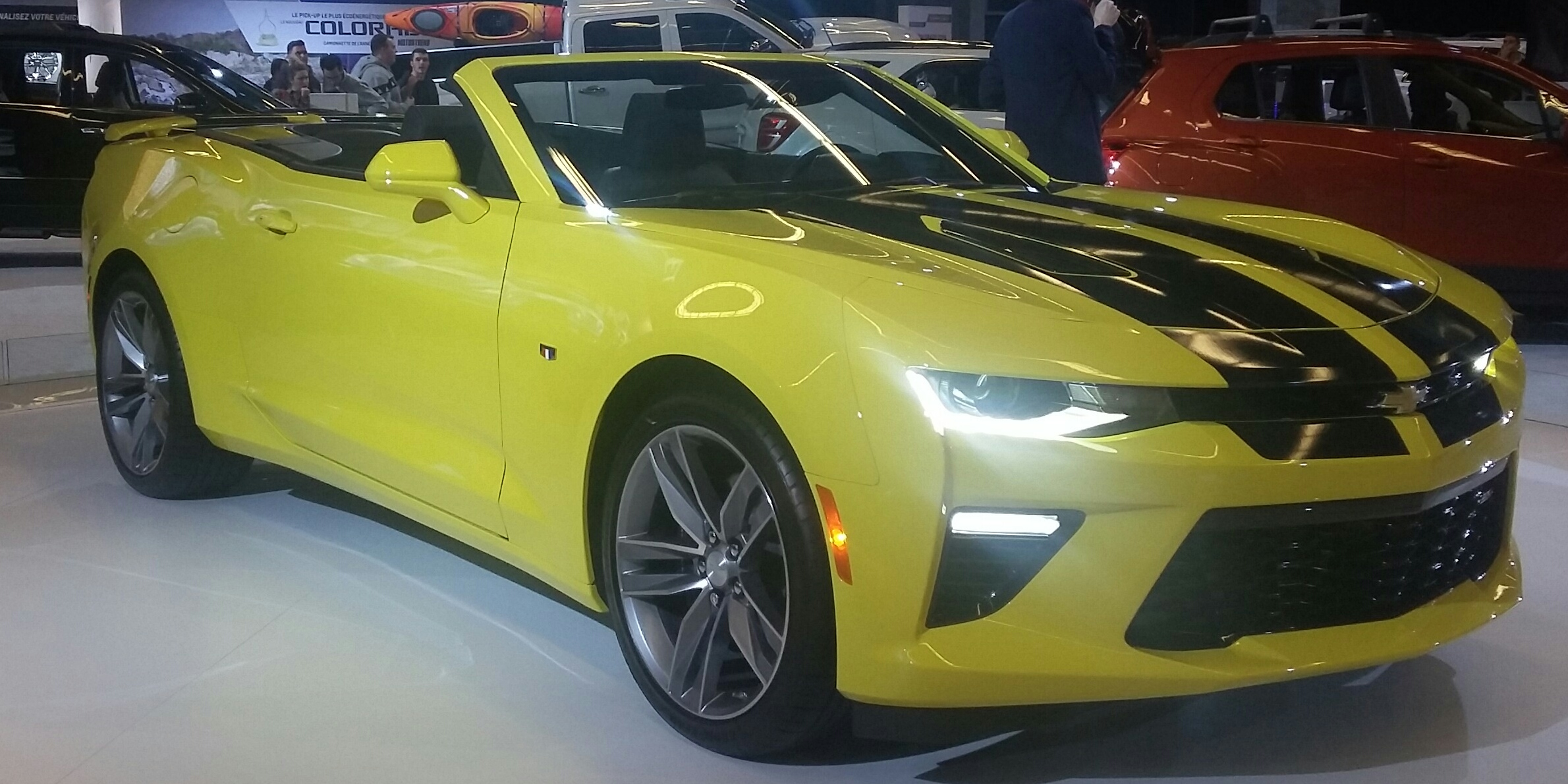
The Camaro Nationals is a special car event centered on Chevrolet Camaros. The host says it’s a big turnout and that there’s a separate ticket for the charity event area.
“SS 396” is Camaro enthusiast shorthand for a Camaro with the 396 V8 and the SS performance trim. People use it to quickly identify a particular kind of classic muscle car.
“427 Copos” refers to a special kind of classic muscle car built around a 427 V8. Enthusiasts use “Copo” to mean a factory high-performance package, so it’s a specific collectible configuration.
“Yankos” is a collector nickname for Yenko Chevrolet performance cars. People use it to mean a classic muscle car that was prepared by Yenko for extra performance.
A 1959 Cadillac El Dorado is a classic Cadillac luxury car from the late 1950s. The host is using it as an example of a specific model/year—showing that if you collect one kind of car, you can end up with a lot of them in the same space.
Micro cars are extremely small vehicles—often lightweight and designed for tight urban spaces—so they take up far less room than typical cars. Collectors like them because you can store more of them in a limited garage or museum building.
Car
58 Lincoln
A “58 Lincoln” means a Lincoln from 1958. Those older Lincolns are big and heavy, which is why it was hard to move the car by hand or with limited help.
Car
Messerschmitts
Messerschmitts are very tiny German cars—so small they can feel more like a motorcycle than a normal car. People talk about them because they’re surprisingly street-legal even though they’re extremely small.
They’re talking about a rule that depends on how old the car is. Once a car is old enough (like 25 years), it may face fewer legal requirements than newer cars.
The Lotus Europa is a classic Lotus sports car with the engine set behind the driver. People sometimes call it a “bread van” because its rear shape looks a bit like a small delivery van compared to more traditional sports-car body styles.
NSU was a German car and motorcycle brand that made some unusual, lesser-known vehicles. When someone mentions NSU in a “weird and rare” context, they usually mean a niche classic.
Brand
Autobionc
This sounds like a car brand name mentioned as an example of something obscure. The transcript spelling isn’t clear, so it may not be the exact name.
A prototype is an early “test” car made to see if a new design works. Since it’s part of development, it usually doesn’t end up as a normal production car you can buy.
They’re describing a strategy where they don’t just keep buying cars forever. Each year they review what they have and decide what still belongs in the museum versus what they should sell.
MGTF is a classic British open-top sports car from MG. People restore them a lot because they’re fun to drive and there’s a big community around fixing them up.
Romeo is the small town they grew up in. They took their driver’s training test there using the MG TF, which shows how early they got involved with the car.
Place
old Hickory
“Old Hickory” is a local name for a road or area where people drive. The host is basically saying it used to feel more open and less risky than it does now because of traffic.
A manual transmission is a gearbox where you choose the gear yourself. You use a clutch pedal to switch gears, so you have to drive it more actively than an automatic.
The Buick Le Sabre is a big, older-style Buick sedan. In the episode, it’s the car the speaker was driving when they braked while turning and the car started sliding.
“Plowing forward” means the car won’t turn the way you want and keeps going straight. It usually happens when the tires don’t have enough grip, like on wet roads.
“Lift off the brakes” means taking your foot off the brake pedal a bit. If the car is sliding, easing off can help the tires grab the road again.
Car
1960 Borgward Isabella
This is a classic German car called the Borgward Isabella. The 1960 version is from the era when Borgward was still making cars, but today these cars are uncommon, so collectors get excited when one shows up.
Here, “project” means a car that needs a lot of work. They’re saying it might be too much work to fix up compared to what it’s worth or how much time they want to spend.
Car
Citroen 2CV
The Citroën 2CV is a classic French “people’s car” that was designed to be tough and easy to live with. It’s famous for being simple and for being produced in huge numbers.
The Volkswagen Beetle is a very famous classic car, known worldwide. Here it’s mentioned as an example of a classic you can keep running with regular upkeep instead of doing full restorations.
“Running condition” just means the car actually starts and drives under its own power. It’s the difference between a car you can’t move and one you can keep going with upkeep.
“Leaking oil” means oil is coming out of the engine somewhere. The host is saying that if a car is leaking oil, it at least has oil in it—so it’s not totally neglected.
Drip pans are little trays you put under a car to catch leaking oil or other fluids. They help keep the garage clean and can buy time while you figure out what’s leaking.
The Chevrolet Corvair is an older Chevrolet model. The podcast mentions it in the context of a problem like a leak, which is something people might notice on older cars.
“Rotary powered” means the engine makes power using a spinning part, not the usual piston-and-cylinder motion. It’s a different engine design, and people often associate it with Mazda’s rotary engines.
A kill switch is a safety button that quickly turns the machine off. The idea is to stop it immediately if something goes wrong or if it can’t be used safely.
Car
1924 auto red bug
The Auto Red Bug is a very small, early car from the 1920s that was known for being cheap and unusual. The point here is that people were drawn to it just because it was rare and different, even compared with much more expensive cars.
The Ford Model T is an old car from the early days of automobiles. People used it as a benchmark for price, and the podcast mentions it in a comparison about how another car was marketed as cheaper.
Car
Mercedes-Benz did and recreated the 1886 Benz Patent Motor Wagon
This is an extremely early car from 1886, tied to the first practical gasoline engine designs. It matters because it shows what “cars” looked like at the very beginning—very simple compared to modern vehicles. It’s often recreated so people can understand how early motoring worked.
The BMW 328 is a well-known older BMW that many enthusiasts recognize. The point here is that people often know the big-name model, but miss the other related versions BMW made.
The BMW Bavaria was a bigger, more comfortable BMW from back in the day. The speaker says it still had real mechanical substance under the skin, not just a fancy badge.
Term
E9
“E9” is BMW’s internal code for a particular generation of chassis/platform. They’re saying the Bavaria used the same basic mechanical foundation as those E9-era 3.0 models.
The BMW 2002 is an older BMW that people love because it drives in a fun, sporty way. It’s a small car, but it has a reputation for being enjoyable to drive.
The Datsun Bluebird Sedan is an older sedan from Japan. The podcast says it’s the kind of car that has a special appeal to car fans, even if it’s not widely understood by everyone.
Car
Citroen SM
The Citroën SM is a special, expensive-feeling classic French car that uses a Maserati engine and drives the front wheels. It also has a hydraulic suspension, which rides great, but older cars can be costly to keep working properly.
Front-wheel drive means the front wheels do the work of moving the car. It affects how the car feels to drive, including steering and traction behavior.
Hydraulic suspension uses pressurized fluid to control the suspension’s movement and ride height. On cars like the Citroën SM, it can provide a very smooth, controlled feel, but the system’s components can age and require ongoing maintenance.
This is a very rare, unusual little car/vehicle from the early 1960s. The hosts explain it’s difficult to sell because most people have never heard of it, and it was only made for a short time after Crosley shut down.
The Farmo Road sounds like a farm-focused vehicle with a long wheelbase. The hosts say people thought it could be used for plowing and that it even had snow-plow setups.
Car
1957 Cyclops
The Cyclops is a weird-looking car concept from the 1950s that’s famous for having just one headlight. Even though it started as a playful idea, people ended up building versions of it.
Bonneville Salt Flats is a well-known place in the U.S. where people try to go as fast as possible on land. The ground is basically a huge flat salt surface, which helps cars and bikes build speed.
Car
1933 Dimaxian
The 1933 Dimaxian is a rare, early-1930s specialty vehicle associated with a specific builder (Mr. Fuller in the discussion). The episode highlights its scarcity and survival status, which is a big deal for classic-car collectors and museum curators.
Norman Foster is mentioned as someone in England who made a copy (replica) of the Dimaxian. That’s relevant because it shows how people keep these rare designs alive.
Car
Moto Compo
The Moto Compo is a tiny Honda motorcycle that was made to fit in the back of a small hatchback. The concept was: drive to work, park, then ride the little bike the last part of the trip. It was also light enough that one person could lift it in and out.
Car
Amphicar
An Amphicar is a vehicle that can drive like a car on land and also float like a boat in water. It’s fun, but it’s not built for high-speed boating. The hosts point out that it doesn’t behave like a real fast boat, and water speed is limited.
Percy Priest is a local lake/reservoir near Nashville where they launch the Amphicar. It’s the spot they go to so the car can get into the water and be used as intended.
Car
Morgan Arrow 8
The Morgan Arrow 8 is a rare Morgan sports car. Because most people don’t know it exists, it can fly under the radar—then later become more collectible as more enthusiasts learn about it.
The Alfa Romeo 4C is a small, lightweight sports car. People like it because it feels fun and “special,” even if it’s not the kind of car most people drive every day.
They’re talking about a one-wheel vehicle concept. The idea is you sit in the middle on top of a single wheel, and the whole thing rotates as you move.
This is a 1963 Pontiac Tempest, a classic American car. The hosts are calling it a “sleeper,” meaning it looks pretty normal, but it has a big engine and can be surprisingly quick.
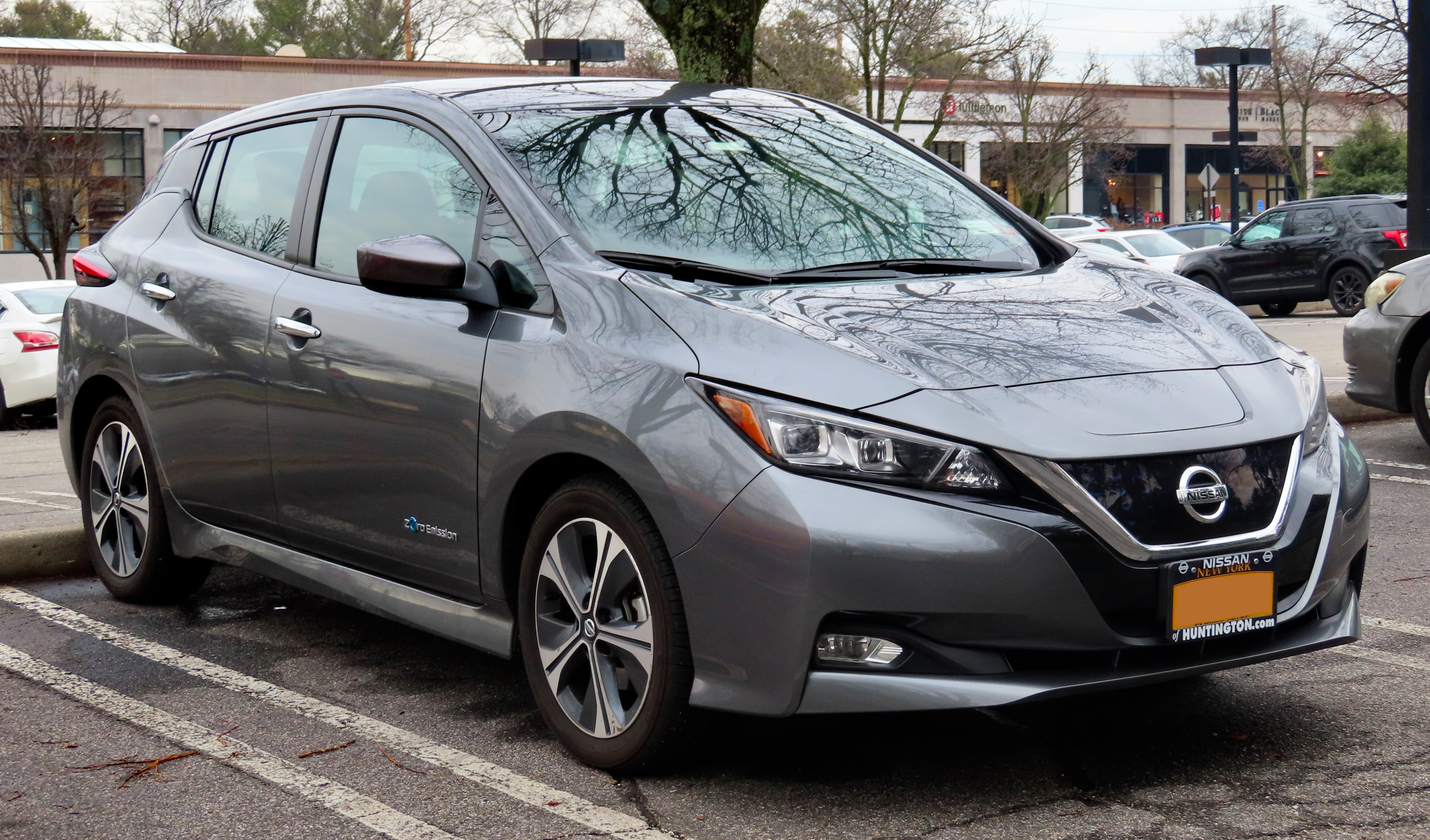
The Nissan Leaf is an electric car, meaning it runs on electricity instead of gasoline. The podcast mentions a specific Leaf and describes how it looks and what it’s like.
This means the car has a big V8 engine—462 cubic inches. In simple terms, that usually translates to strong pulling power and acceleration compared to smaller engines.
A “sleeper” is a car that seems ordinary at first glance, but it’s actually quick. It doesn’t look like a race car, but it can surprise you.
Term
Dual Edebrock forbra
This refers to the engine using two carburetors (the fuel-mixing devices). More carburetors can help the engine breathe better, which often improves how it accelerates.
Dog-dish hubcaps are the classic small, bowl-shaped wheel covers you often see on older cars. They’re a distinctive look that can give away what kind of car you’re looking at.
A four-link rear suspension uses four arms to hold the rear axle in the right place. It helps the car keep better control of the rear wheels over bumps and during hard driving.
An “overhead valve” engine is one where the valves sit in the top of the engine head. That’s a common older design, and here it’s describing a four-cylinder engine layout.
This is a 1969 Chevrolet Corvette, and it’s being described as a very specific, enthusiast-focused build. They mention the 350 V8, a manual transmission, and performance rear-axle gearing, plus special factory-style parts like aluminum heads.
“Numbers matching” means the car’s key parts are the original ones (or at least the ones that match the car’s documented identity). Collectors like it because it suggests the car hasn’t been heavily changed.
The Muncie M24 is a specific kind of four-speed manual gearbox used in some GM performance cars. Mentioning the exact “M24” helps show what transmission the car has and whether it matches the original build.
“Posi” is shorthand for a rear differential that helps both rear wheels work together for better traction. It’s meant to reduce wheelspin compared to an open differential.
Car
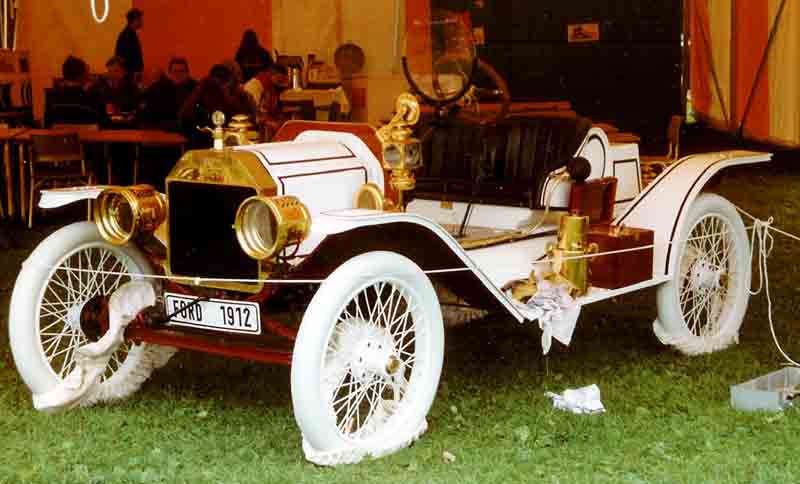
1912 Flanders 20 series Roadster
This is a 1912 Flanders “20 series” roadster, an extremely old car from the brass-era. They point out the big early engine and the three-speed manual, plus how unusual it is to even see one.
An “L-head” is an older engine design where the valves are in the block instead of the cylinder head. Here it’s describing a four-cylinder engine, which was typical for early cars.
This describes the engine size and how it feeds fuel/air. A “four barrel” setup means the engine has a carburetor designed to flow more mixture for more power.
“Dana 44” is the brand/model of the axle and differential hardware. It matters because it helps determine how strong the drivetrain is and how the car behaves when you accelerate.
Disc brakes stop the car by squeezing pads against a metal rotor. They tend to work better and more consistently than older drum brakes, especially when you brake a lot.
The Ford Model A is an early classic Ford that many people start with when they get into old cars. The host is talking about a 1934 coupe with a simple four-cylinder engine and a manual transmission—so you learn how older cars drive.
A “three speed manual” means you shift through three forward gears using a clutch. It’s an older style of driving that makes you more involved with the car.
A “two speed Columbia” is like an extra gear range for the rear axle. It helps an older car keep up better on faster roads by giving you more usable gearing.
“Harley” is referring to Harley-Davidson, a famous American motorcycle company. The speaker is saying the new brand they wanted didn’t have to appeal only to Harley fans.
“Sports Car Market” is a collector-car publication focused on pricing, buying/selling, and market trends for enthusiast vehicles. In this segment it’s used as the show’s sponsor and as the source of the “Wall Street Journal” style coverage of the collector car world.
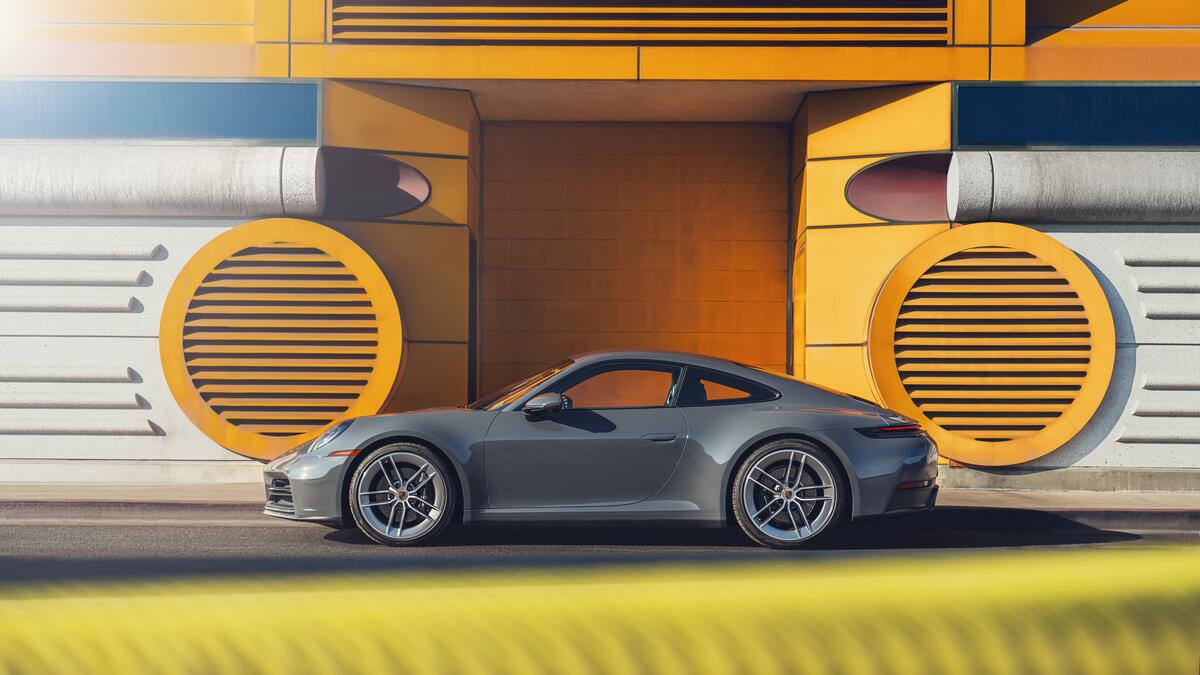
This is a Porsche 911 from the 996-era, and “C4S” means it’s an all-wheel-drive 911 with the more performance-focused “S” trim. It’s basically the “sportier” version of the Carrera 4.
“C4S” is a nickname for a Porsche 911 Carrera 4S. It’s a Porsche 911 with all-wheel drive and a more performance-focused setup. The speaker says it feels quicker and more comfortable than the older cars they were selling.
HVAC is the car’s heating and air-conditioning system. It controls how warm or cool the cabin feels and how air moves around inside. The speaker is using it to explain why the newer Porsche feels more comfortable.
Range anxiety means feeling nervous that your electric car’s battery won’t last long enough to get where you’re going. People worry they’ll run out before they can find a place to charge.
A charging station is where you plug in an electric car to refill its battery. The host is talking about the cost and hassle of getting one set up for home charging.
The Hyundai Elantra is a compact car meant for everyday driving. The podcast talks about how far it can go on a gallon of gas, comparing a couple of model years.
Miles per gallon (MPG) tells you how far a gas car can go using one gallon of fuel. Here it’s used to show how efficient the Elantra is compared to charging an electric car.
A hybrid car uses two power sources—gas and electricity. The point here is that hybrids can be easier for people who don’t want to depend on charging stations all the time.
Inductive charging means you charge an electric car without plugging it in. You pull up near a charging pad, and the car charges through the air using magnets.
The point here is that electric cars are usually heavier than gas cars. That extra weight can matter for parking garages and ramps that weren’t built for it.
The Mustang is Ford’s iconic American sports car. The host says Ford keeps it fresh by offering lots of different versions and special editions over the years.
LIVE
This is the Classic Automall Show.
Broadcast from the studios inside the Classic Automall
in Morgantown, Pennsylvania. Just one hour west of Philadelphia
at Pennsylvania Turnpike Exit 298. Featuring nearly
1,000 classic vintage and barbed-fine vehicles for sale
under one climate-controlled roof. Now, here's your host,
Classic Automall President and the man with all the toys,
Stuart Howden.
Show number 252, and I'm sitting here looking at my parking
line on a beautiful sunny day, and they're setting up for the
Camaro Nationals. We've got the Camaro Nationals coming
here this weekend, which will be passed when you hear this,
so sorry about your luck.
Still be happening?
Yeah, it'll still be happening. Yeah, so 700 Camaros are
going to be here in addition to the 7,800 cars that we have
in inventory. It's quite the car show, and of course there's
no admission to Classic Automall ever, although the Camaro
Nationals, there is a $10 admission that goes to charity
to go into their event area, which they have a couple of rooms,
and they have the cream of muscle car, Camaros, SS 396s,
427 Copos, and Yankos, and the whole nine yards, so if you get
a chance, come check it out, and if you can read my mind,
you can come tomorrow and check it out.
I will try to post the audio as fast as possible.
All right, there you go, so hopefully we'll get in.
We'll put it on our other social media sites.
All right, so let's get, did I miss something that I was
doing today?
We usually do the guests, but you can go right to the guest.
Okay, let's go right to the guest then.
Yeah, so, oh, no, no, let's guess how many cars in inventory.
All right.
All right, JR, go quickly.
822.
I'm going with the date that this show airs 718.
755.
Oh.
The exact same as last week and the week before, so.
Let's get right to our guests, though.
Joining us today is our new friend.
Joining us from Nashville, Tennessee, Jeff Lane, the founder
and president of the Lane Motor Museum, arguably the coolest
most unique museum in the whole wide world.
Hello, Jeff.
How you doing?
We're doing great, man.
We're excited to talk to you.
I've been going, I've been deep diving into your website and
the cars that you have, just absolutely amazing and located
in Nashville in an old Swans, or Sunbeam, Swans with Knoxville,
Sunbeam Bakery building.
You know, white bread is religion in the south.
How long ago did you buy the building?
We bought the building in 2002.
Oh, wow.
So, God, you know, that sounds like yesterday until you do the math
and you go, wait a minute, that's 24 years ago.
24 years ago, yeah.
So you were collecting these oddball European smaller version cars
and decided, hey, I need a building to put them in,
and how did that all work?
Yeah, kind of, you know, I was a big MP enthusiast growing up.
My dad had an MBTF and we worked on MBT series and went to all
kinds of MP shows.
And then as I got older, I just started collecting cars and time,
you know, time goes by right now.
I'm like a car collector and I never really focused on how many
cars I had until somebody said, well, how many cars do you have?
And I'm like, I don't know, maybe 20 or something like that.
My work runs around and Councilman says, you know, you got 75 cars.
Really?
Well, you know, probably going wild.
Yeah, exactly.
But I liked it.
I like the philosophy of collecting.
It's like motorcycle collectors.
When you collect smaller cars, you got room for more inventory.
So, you know, if you collected all 1959 Cadillac El Dorado Brits,
you could probably have like 20 in the same building, right?
Yeah, I tell people that.
I said, start collecting micro cars, right?
Because you can get, you know, BMW, IZ as a Messerschmitt.
Sure.
Because you can get like 10 of them in your garage.
You can start a garage, right?
Yeah.
Then when they break, you can push them yourself.
Right.
Don't need help pushing, right?
But like the Cadillac thing, if you collect Cadillacs and they break down,
I mean, you're not going to be able to push the thing back in the garage by yourself.
We have a 58 Lincoln out in the parking lot that we were trying to move inside.
And nothing could pull it.
It was like a stubborn mule.
It just wasn't going anywhere.
But in addition to, I mean, you've got about 150 on display at any given time, right?
But you've got close to 500 or more than 500 cars in inventory now.
Or is that another one you haven't done the count for a while?
You know, we have about 515 cars in the collection and we display about, it depends on the displays,
150 to 170 cars at a time.
Right.
And then we rotate, you know, yearly we change some exhibits so the cars rotate, you know,
every year.
So not all 150, but a significant part of them.
Sure.
Well, and 150 is probably the right number.
Any more than that and you start losing interest with people, you know,
you can only see so many different, you know, cars and go,
okay, wow, there's something I've never seen.
Wow, there's, after a while, it's a lot.
We were at the Metropolitan Museum of Art in New York City and, you know,
it's like another Picasso.
Not quite the same, but you know what I mean.
So obviously strong focus on European cars because European cars were small before small hit here
in the U.S. and of course some of the cars are crazy small.
I mean, the Messerschmitts and what we were talking about is just those cars are tiny,
tiny, hard to even believe they can be registered on the road.
Well, being 25 years old now, I mean, there's no regulations, right?
Obviously, I mean, like the PLP-50 and the Messerschmitt and the BMW, I said,
I mean, there's like, you know, people are like, aren't you worried about, you know,
safety and I'm like, it's like riding a motorcycle, right?
Yeah, yeah, exactly.
Be careful and just assume nobody sees you, right?
Right.
Yeah, the greatest lesson that I taught my kids is don't just look right in front of you.
And if you're turning onto a road, make sure that somebody's not passing somebody on the side of the road
that you're turning into and look ahead and all that.
And they all appreciate that, you know, because people have this tunnel vision when they drive
and now with cell phones and all that just in probably with you crazy Nashville.
Nashville's become Atlanta with traffic.
My God, what a change that area has gone through.
Yeah, it's become horrible.
But you know, in a microcar, you're a little right?
People can't, even if you drove a Lotus Alon.
Right.
Pull up next to an SUV in the roof of a Lotus Alon, it doesn't go halfway up the door.
Right.
It's a lot of people pick up on an SUV, right?
Yeah, or a Lotus Europa, which I always loved.
I thought those were called the little bread van.
You got one of those, right?
We do.
We do.
Yep.
Every decent Lotus collection.
Yeah, I've got to have one of those, right?
So, I love that somebody called it the Louvre of the weird car world is a description of your place.
I love that.
That, you know, just stuff that, I mean, I've been in the car business for a long, long time
messing with classic cars from back in the mid 90s.
And you've got stuff that I did.
I mean, yes, there's stuff that NSU and Autobionc and those I've heard of, but there's stuff
that is just so off the charts.
And it'll be, you know, I'll read about it and say one of one or one of three built.
Yeah, that's when, you know, one of our specialties is one-off cars, either prototypes or one-off,
you know, in the collection, we have more than 40 vehicles that are one-off.
You know, a lot of people, times people come and say, what's the rarest car you have?
And it's like, well, we have 40 cars that are one-off, right?
So, I mean, you pick one of those, right?
Yeah, exactly.
But that's our niche.
You know, weird and different that people typically have not seen other places.
And the good thing about being in that and being visible in what you're doing is the fact
that I imagine you get a phone call almost every day with something new and interesting
that somebody's got for sale or they know of a neighbor who has something or somebody knows
somebody that's got something that would fit in your world.
Is it hard to say no when you have to, you know, or do you just say yes to everything?
No, you know, there's no way, you know, people complain that, oh, you bought 500 cars, right?
There's probably been 10,000 cars they said no to.
Right, right.
But, you know, being a museum, it makes us a magnet, right?
Right.
And so people understand, you know, what we're collecting, and if they see it and they're
somewhere in Europe or wherever, right?
You know, a lot of times people will contact us and say, hey, I saw this, I thought it would
fit in your collection, you might want to take a look at it, type of thing.
We just had an incident where a Bernay streamliner, a Crosley, it's an English car that made 25
up in 1934, there's only two left, Julie has one, and this other one came up for sale
on this obscure auction site in England that I'd never heard of, right?
Right.
But a friend of mine over there that knows of us, he saw it and he said it to him and
he said, hey, you know, this looks like it would fit in your collection.
So, you know, it's really, being a museum really helps us.
I mean, we, we hunt on our own.
Sure.
But also we have a lot of people that help us.
Yeah.
And are you still adding to, I mean, you're not, you know, going crazy and buying 10 cars
a week, right?
But you're, you're still, I mean, the right car comes along, you're going to probably
buy it, right?
And that's, we just bought the Bernay, right?
Because it's a streamliner, we have a nice streamliner collection, it's one of two.
So, we still are, you know, we're basically out of room.
So, our philosophy is every year we kind of refocus a collection and look at all the
cars and say does this car have a future here or we get rid of it because we're, we're
still getting about 20 cars a year.
Right.
I mean, we have to kind of sell 20 cars a year.
Oh, it's got to be tough.
Yeah.
It is tough in a way, but, but, you know, the thing is, even you don't have unlimited
room, right?
No, no, no.
At some point, when we had 1,100 cars in the building, we ran out of space.
We were, we were too full.
We had too many cars and, and I hate saying no.
I'm not good at saying no to somebody that's got a car for sale because, you know, it's
just not in my nature.
And, and because this was a dream build, and I mean, it got to be this kind of the same
for you.
And people don't realize.
I mean, my business is, is a different business model, even though we have the appearance
of a museum to some degree.
But the museum business is a very difficult business.
It's hard to make money.
It's hard to get ticket sales.
It's hard to do a lot of things.
It's hard to meet all the requirements that you've got to do.
It's not an easy task.
Yeah.
It takes, takes a lot of effort and it takes, you know, and like anything you have to have
the proper funding.
Right.
And long term funding.
I mean, not just like, okay, we got funding for this year.
I mean, you got to have a long term plan to make that work.
Yeah.
Absolutely.
I think that, you know, if you look at like the LeMay Museum out in Washington, they don't
have an endowment.
They have to raise every penny that they need every year.
And I can only imagine the cost of that building and what it cost to operate and run it.
And you know, with you and older building, just like our building was built in 1985,
you know, it's not perfect.
It's not going to be that warm in the winter and it's not going to be that cold in the
summer.
It's going to be cool enough and warm enough and keep your jacket on in the winter if you
have to.
Yep.
Yep.
Absolutely.
So, and, and you're open five days a week.
Is that?
That's right.
We're open Thursday through Monday, so we're closed on Tuesday and Wednesday.
And it's nice to take a break, although I imagine you're still talking cars and taking
phone calls and still working anyway, right?
And a lot of our staff works Monday through Friday.
I mean, all the, you know, the curatorial staff, all the education staff, the restoration
staff, they work Monday through Friday.
So there's people here seven days a week.
It's just, it's nice to have a two day break.
Like if we want to do a media events or something like that, or if we want to move cars around
or we need to do some stuff for the building.
So to have a two day break where the public's not here, typically, it really works out good.
And of course, Nashville is in a growth spurt like nobody's ever imagined that it would
be.
Has that been good for your business or doesn't change it a whole lot?
I think it's been good for the business.
I mean, you know, Nashville gets, I think 10 million tourists a year now.
And although we get a very small raw off that, we still, definitely see a lot
of tourists.
So I mean, it's a, a really good thing.
Well, you're, you're well known.
I mean, if, if most people that are in the car business have, if they haven't been to
your place, those of us who are in the hobby and then whatever we want to call it, are
familiar with your place and know that when we go to Nashville, it's a place you got
to go to, right?
Yeah, absolutely.
And you know, we get a lot of, it's funny, I was out in the floor one time and there's
these two ladies, they're all wandering around and they were here for a work, you know, work
convention where they work there from California.
And they weren't really car people, but, you know, they like the colors and the shapes
and everything.
And they were telling me, our husbands are car nuts, but they, you know, they work,
they did more for the same business.
So they weren't here, right?
Sure, sure.
They were like, you're going to be so jealous that we got to come to the museum and they
didn't do that.
I thought that was kind of funny.
I love it when people that, I love when people walk through the door of our place or your
place or any place, any car related thing and say, well, I'm not into cars.
You want the, you know, kind of folded arms.
And, and when they leave, they go, wow, I didn't imagine that that existed.
I didn't remember that my grandfather had one of those and that's our first date we
had in that one.
We had, you know, we, we'd seen this and, I mean, you know, so many great stories about
the automobile, because as we always say, everything that we've done in our lives, pretty
much the automobile has been somehow focused on or been part of it.
Yeah.
Yeah.
And you know, I tell people it's not, I mean, the cars are an artifact and it's the stories,
you know, and the connection that are important to people, right?
And just like you say, people remember, you know, this, that when I was a kid, I rode
in the back of this car, my mom was driving me to school or, you know, all kinds of stories
like that.
So that's, that's the most important part.
And you got your start with the, with the European car, you, you, you got to restore
a 19, was it a 1955 MGTF that came in, not one piece, right?
Came in pieces.
So my dad, you know, my dad had a TF in 54.
He was in the army in Germany for a couple of weeks and he bought a new 54 MGTF then.
And then he moved back to Michigan and then soon, you know, he got married, started a
family.
He said, okay, I'm going to co-climb it.
I got a family MGTF, totally impressed.
So, you know, he sold his TF and then fast forward to 60, 70, decided he wanted to get
another one.
You know, he missed it and everything.
So we bought one and, and we, you know, we, it was a pretty bad shape.
We worked on it.
We took it to a few shows and then we restored it.
And then when I turned 12, my dad said, you know, what do you want for Christmas?
And I said, well, since I helped you restore your TF, I want one of my own, right?
I mean, I was a kid.
I never thought.
Right.
But for Christmas, I got a TF that was in pieces, right?
But I had four more years to restore it.
And I took my driver's training test in it in the little town I grew up in Romeo.
So it's, it's, it kind of started a long time ago.
Sure.
Yeah.
And an unusual path, not the same path that most people would go down.
Most people don't get a car when they're 12.
Right.
Right.
It was, and you know, we had a shop and, you know, at that point, my dad was an accountant.
So his mechanical skills were okay, but, you know, and, but as a kid, you know, we had
a shop and I spent hours and hours out there in the summer, right?
I mean, I had tons of time.
Right.
Exactly.
You know, work away.
And of course, a lot of things I did two or three times.
But that's the way it was before YouTube.
Yeah.
Oh my God.
You know, like tying a bow tie, if you're going to a fancy event, nobody knows how to
tie a bow tie anymore.
You got to go on YouTube and find out how to do it, right?
Well, so how did, how'd you end up in Nashville?
How did that whole progression happen?
I went to Vanderbilt from 78 to 82 and got my degree in mechanical engineering.
And, and actually like, you know, I liked Nashville at that time and I wanted to stay
here, but I couldn't find a job when I graduated in 82, there was somewhat of a recession going
on.
Nashville didn't have that much industry yet.
I mean, they do now they have Nissan and Bridgestone.
Right.
So I moved, I moved around for a couple of years, but 89 and moved back here permanently.
Yeah.
It's Vanderbilt.
Great, great school.
And my son was born there, great, great medical facility there.
Not a great football.
Well, they've had it some years of good football, but I think it's always funny to in Nashville
on a Saturday morning, you're watching all the cars going from Nashville to Knoxville
to go see the University of Tennessee for all the, all the traders, right?
So Nashville football when I was in Vanderbilt was four.
Oh yeah.
They were like, oh, oh, one game a year, the homecoming game, that was the only one.
Right.
Oh, great.
So I think it's fantastic that you took your driver's test in the car, though.
I mean, in the car that you built, I mean, that's, that's a testament that you knew
enough and had enough direction from dad, I guess, too, to be able to put it together
where it was safe and, you know, not cobbled together.
And the instructor said, no, I'm not getting in that thing.
Well, it's a neat little story because there was one in the little town grew up.
There was one lady that sold license plates and did all the drivers test.
And she had seen my dad driving around in his car and she always wanted to ride.
And he said, well, my son gets his license.
And so I went, you know, my dad drove me down there and he got in and she said,
he said, I want you to drive over to my neighbor's house so she can see the car.
They drove over there.
I already knew how to drive.
I've been driving a dune buggy for a year, you know, so.
And then we just drove back to the office and she gave me my license.
Wow.
Probably for a different time.
Yeah, probably forgot to check off all the boxes of parallel parking.
And that's all right.
That's fine. I think she knew I knew how to drive.
Yeah, I think so, too.
I think, you know, most of us, I mean, I was born in 62.
My dad taught me to drive.
I think I was five or six years old.
We go down to the polo field and down on the boulevard and he'd let me drive
and teach me how to drive.
And I can't even really understand why he did that.
But I'm I'm thankful that he did because it became made me become.
Well, that's why I'm sitting right here right now, right?
Yeah. So and and did you do some sports car racing?
I read as well, too.
Didn't you?
Yeah, I raced in SCCA from probably 1980 to the mid 90.
Right. Yeah.
Yeah, that's that's so glad that that's an organization that continues on
and continues to be relevant and still has a great following
and a great amount of membership to it.
I think that's wonderful.
I, you know, there's nothing wrong with being a race car driver
and there's only a few of them, they're going to get to that level.
But it's nice that, you know, we can all have our moment to get out there
and enjoy it in a safe environment and controlled environment and not,
you know, racing like maybe some of us did back in the day on the street.
So yeah, I had a lot of fun.
A lot of good times, a lot of good people.
And I think I learned to be a really good driver.
And probably the best thing is I don't really drive that fast on the roads
because I've had the opportunity.
I mean, I still do track tape, right?
Sure. A member of the Corvette Club track up there.
So I have the opportunity to drive as fast as I want on the course.
So, you know, I had some friends, they still drive like maniac.
Yeah, I know, especially with more traffic, right?
It's just more dangerous.
Yeah, it's just, you know, old Hickory is, you know,
not just a wide open expressway for you like it was in the old days, right?
Well, and, and, you know, dry learning to drive properly.
I wish that we could have a driver's ed in this country
that really taught people how to drive a car.
And I don't even think they have drivers ed anymore.
I don't think that even existed in most places.
Maybe I'm wrong, but I would like to see somebody know how to control a skid
and what the difference between ABS brakes and non-ABS brakes
and how to drive a manual transmission.
And I know it's probably wishful thinking, right?
But no, you're right. I mean, the thing is the bad first time
you learn how to control a skid is probably when it's raining
and a hydroplane or something like that, right?
You're going too fast because they don't teach any of that stuff, you know,
on drive training.
I mean, every would be really good if every like the poor driving experience
in those kind of schools they have, right?
I mean, those are great schools.
It would be really nice if people would go through that first.
Of course, the problem with that is it's expensive.
Yeah, that's that's the problem.
I remember the first time I was driving, my mom had a big Buick Le Sabre
and I hit the brakes going around a corner and the car started plowing forward.
And their natural reaction is to not let off the brakes,
which is exactly what you should do.
And so I buried right into a mailbox.
And, and, you know, my dad said, you know, I guess I didn't teach you
that part about you should lift off the brakes when you're plowing forward like
that. I'm like, that sounds illogical, dad.
Some of us are logical.
No, no, and that's OK.
Illogical is, you know, all right as well, too.
So we just sold a car that would probably be of interest to you.
We just sold a 1960 Borgward Isabella.
Yeah, it was white with a red stripe down it.
It was like it was such a good looking car.
It does. I didn't even know they existed.
I'd never seen one before and I've been doing this a long time.
Yeah, Borgward was, you know, in the 50s and 60s in Germany was a pretty
prominent brand, right?
But they really didn't, you know, they really didn't branch out and they kind
of faded what we used to have in Isabella, but it was in really bad shape.
And that's one of those years we went through and kind of called.
We're like, OK, this car is really not all that nice.
Right.
We're not core of the collection, but they really are.
They're really a pretty beautiful car.
They really are.
And but I got to imagine that you get a lot of in denial moments
where you're like, no, we could fix that. That's OK.
And deep down, you know, better than, you know, that that's going to be
too much work and too much of a project.
Yeah, we've kind of, you know, because we have a lot of unique one
off, we try to focus on that.
Right. And, you know, cars, I don't want to say common cars,
but like a Citroen 2CV. Right.
Not really common in the US, but they made 8000000 of them.
Well, we have a Volkswagen Beetle, right?
And our view with that kind of stuff is to buy something really good.
So we don't have to restore it, right?
Because we already have, I mean, we have three restoration guys.
We have 500 cars and, you know, about 400 of them are running condition.
So just just the maintenance.
Yeah. Keep it. Keep in the tires.
And you know, keeping the tires aired up as a chore, you know,
you've got to have one guy who just does that and mopping up the, you know,
the leaks and people say, well, there's something wrong with that car.
It's leaking oil. I said, that's a good thing.
That means it has oil in it. Right.
None of our cars leak oil.
Really? Yeah.
I tried.
I tried. Yeah, we went and bought those silver trays from Walmart.
We bought everyone they had in a five state radius from here.
And we have thousands of these trays because, and of course,
the mistake that we make, we have to remember is when you remove a tray
from one car to the next, clean it off because maybe you're going to give
the bad rap to the car next to it that doesn't leak.
So. Right. Yeah.
Well, it's funny because when we bought the building, they were still,
they were still using it for offices and for their step bands.
They weren't baking here. Right.
But when they cleaned it out in the basement, they had a couple of pallets
of pans that were obsolete.
They're brand new that they never used.
But and they were like drip pans.
They were probably two feet by three feet.
They had, I don't know, probably 500 of them.
And they're like, Hey, could you leave like 50 of those for us?
For your pants or like it?
Because they were, they were basically, they weren't throwing
in a dumpster, but they're going to recycle with the recycling. Right.
So they left us 50 of them and we, you know, we use them under cars that leak.
They all leak. Yeah.
But the ones that leak a lot.
Well, like somebody said about a Corvair, they go, that's leaking.
I go, that's the best sign on the Corvair you'll ever find.
If it's not leaking, it means it's out of oil and you don't really want to drive it.
That's what we say. But it's not leaking.
That's because there's nothing in it.
There's nothing in it. There's there's your problem.
So, um, so some of the, I mean, you've got cars, you've got airplanes,
you've got motorcycles, you've got bicycles, you've got boats or some kind of
version of a boat. Um, the coolest thing I think I saw is the ski.
What was the ski thing that you got there?
It's, uh, what is the rotary power?
I love that.
So that was made in Germany and it's interesting because it was really
the first rotary powered vehicle ever made.
It was before that anybody made a car, right?
A couple of years before that it was a little single rotary thing.
And it's like you had a long handle on it and you stood behind it and it was
like a self-propelled water skier, right?
It had a throttle on the, on the handlebar.
So you, you started it up and then you gave it throttle and it would put,
supposedly pull you out of the water and you'd ski behind it.
But we've never actually, I was going to ask that.
No, but the interesting thing about it is that the handle's probably 15 feet long.
It's pretty long actually. So I'm wondering how do you,
there's really no way to steer the thing pulling, right?
I mean, motor and a head, but there's no rudder on that.
So I'm wondering how you turn because the skier would have to turn the whole
map. I think turning would be very difficult.
Well, and apparently that you couldn't get them.
They were hard to get legalized in the U.S.
because you had to have a spotter when somebody was in the,
was water skiing in the water.
So I think they had to figure out some way for it to have a kill switch or something.
You know, there's that,
I think it has a thing goes around your wrist and if you fall,
then it pulls the ignition on the thing and it'll stop the boat.
My wife asked me about that on our boat the other day.
She goes, what do you put that thing around your arm?
I go, if I go flying out, what are you going to do?
She goes, hope that the boat stops.
And of course you got one of the,
the most talked about cars that we've ever sold in here, a 1924 auto red bug.
Those things are just, the people just flock to that thing.
It could be next to a gazillion dollar Bentley or a Duesenberg.
It doesn't matter. People are going to go to the red bug.
Yeah. It's cute and it's simple and it's kind of, you know,
people never probably seen one on the street, never used one.
The interesting thing about the red bug was, you know, when it came out,
they advertised it as cheaper than a Model T, which it was, but, you know, about a red bug.
I mean, it's got no windshield. It's got no body. door.
It's got no weather protection. It's like, you know,
it's kind of like a goat car. You build as a kid.
Sure. Absolutely. Absolutely. Well, it's, you know, I had the,
when my first goat or my first mini bike was a JC penny, three and a half horsepower.
And there was, there was welds on it. They would probably slice your leg open.
If you happen to just rub up against it the wrong way, right?
And I lusted, I lusted for a motorcycle that you have as a QA 50 Honda,
that little teeny tiny bulbous looking Honda. Man, to me, that was like a Rolls-Royce when I was a kid.
Yeah. It's funny because it's also become, because I think they only made the QA a few years.
Yeah. You know, the mini trail they made forever.
Ever. Yeah. The QA, I think was just a three or four years thing. And it's become very collectible.
Yeah. Those in the, then the one, I had some XR 75 Hondas back in the day in 73, 74, 75 era.
And those things are hugely popular. I'm thinking, why didn't I save any of this stuff?
Of course, I guess we could say that in just about everything that we ever owned in our lives,
toy wise, or baseball cards, or anything like that.
Yeah. And to keep something for 50 years, it takes some effort, right?
Yeah. I've been divorced twice. I mean, I bought like seven vacuum cleaners. I have no idea where
any of them are. And I tell you the one that I love that, that Mercedes-Benz did and recreated
was the 1886 Benz Patent Motor Wagon. I had it so cool that Mercedes built however many of those
that they built back in the day and gave them, I guess, to all the dealers. And those are so cool.
Yeah. They are. They are. They're very interesting. People can see how rudimentary, you know,
early cars were. I mean, we do a demonstration with that. And, you know, after you look at that,
you can understand why when cars started coming out, people didn't get rid of their horses right
away. Because they're like, no, it's really cute. It's neat. But, you know, it really wasn't all
that practical to get it. Sure. You know, that's where we started. Well, we didn't have paved roads
until, you know, many, you know, many years. There was cars way before there was paved roads and
trying to go down a rut with a narrow skinny tire and all of that. I mean, it was quite the chore.
To read about people that drove cross-country in the early 1900s is like, I just can't even fathom
what that trip must have been like. Yeah, I agree. I mean, they were definitely pioneers.
Yeah. Very, very tough people. And you've got a great little, I haven't seen one in a while,
a 1958 Berkley Sports. Those Berklis are so cool. Yeah. Yeah. The Berklis are neat. And then,
you know, it's funny because we used to have one when you come into our museum, there's glass doors
that, there's first the doors that come in the lobby, then there's glass doors that go in the
museum. And we used to have a Berkley kind of on the back wall, which, you know, would be a couple
hundred feet away. But people would come in and say, is that a Jagdy type? Really? Wow. Yeah.
Because it was far away, they couldn't see how much smaller it was. It's kind of got,
you know, it's got a little bit of those lines. Yeah. I mean, up close, you can obviously tell
the shape. I mean, it's half the size of the detail. Right. Right. But no, it's a pretty cool car,
actually. Yeah, they really are. And you've got some BMWs that I've never even heard of. I mean,
it seems like about every year at an auction, you'll see a BMW that's some 317.5 and you go,
I've never heard of one of those. How did I miss that? But BMW made some
interesting cars along throughout the years. Yeah. A lot, you know, a lot of their pre-war stuff
was really, you know, very well done. Not, you know, the volumes weren't really good because the
economies weren't all that great. Right. But the technology was good. And with those cars,
you know, they, a lot of them stayed in Europe and very few of them came here. So people really
don't, you know, I mean, the 328 is kind of famous, right? So people know about that. But
there was a lot of little different iterations that went around the 328. Right. Right. And of
course, BMW is still strong today. And I'm still so surprised that, that BMW and Mercedes make a
lot of passenger cars. And yet, you know, the American manufacturers don't make any cars anymore.
Chevrolet doesn't even, I don't think they make, except the Corvette and the Camaro
are going to stop. And then Ford, I don't think makes a car per se. It's interesting how they've
gotten away from that with the advent of SUVs and trucks. Yeah. I think it's a little sad that all
the, you know, it could be right. The US has moved to SUVs and pickups almost exclusively. So the
number of cars available is really, really limited now. Yeah. I tell you, one of the ones I loved
and I was familiar with back in the day, because the really cool people in the neighborhood would
know what it was or have one was the BMW Bavaria. Yeah. Those were great. And it had that, all the,
you know, the underpinnings were all the E9, the 3.0s and stuff. And so it was, it was not,
no slouch back in the day. Yeah. Yeah. Most everything BMW did was pretty, even if, you know,
think of the 2002, which was kind of a, you know, family car, but those were still pretty, you know,
there were rocket chips that went pretty well and they handled well. Yeah. It's funny how it's
hard to explain to a non-car person the appeal of a 2002 BMW or a 510 Datsun. They both are those
oddball, boxy looking things and you go, well, I thought you were a sports car guy. Well, I am,
but then how do you like this boxy car? Well, because it's cool. Yeah. Yeah. That's kind of what
started the hot hatch here, I think. Yeah. I think so. Absolutely. And you were, we were,
previously, you were talking about the Citroen 2CVs, which are everywhere over in France and
Europe and, but you've got like 13 different variants of a 2CV in your collection. Yeah,
we do. We have a 2CV exhibit going on now, you know, because the 2CV was made from about 1950
to 90. So it was, you know, it was like the Beetle had a really long, you know, they came out with a,
with a, you know, a kind of a sports car version. They came out with a version with two engines.
They came out with a little version with like a trucket body, you know, a truck body on the back.
Right. So like, you know, like everything else that's made for years and years that came out with
multitude of variants, you know, to try to make it fit everybody's needs.
And I'll tell you another car that you have that, that people don't quite understand or get completely
is the Citroen SM with the Maserati power and front wheel drive and the handling that they say,
I've never actually driven one, but everybody I've talked to says it handles like it's on rails.
It's a fantastic car. It really, you know, I mean, we have one and I've driven, we had two and,
you know, as we, as we ran out of room, we sold one, but we still have one. And it's a fantastic
car. It drives real well. You know, the problem, the problem in Maserati engine, right? So it's
pretty powerful. Sure. The problem is with the hydraulic suspension now 50 years later,
all the tubes, all the valves, all the diaphragms, they're a high maintenance vehicle, but they really
are a wonderful vehicle. And they were doing, I mean, you've got poor fuel mileage and, and,
you know, they were expensive back in the day. They didn't, they were, they didn't leave themselves
much room for success. Good timing. Yeah. Cause that's what you're saying. The mileage was,
you know, if you took an easy 15 and hammered it seven, right? So that, that made them pretty
expensive. Yeah, especially expensive car to buy. Yeah. And especially when you're paying at that
time, gas prices went up to, you know, 70, 80 cents a gallon, which I mean, gotta remember,
most of those, most people that were paying at some point in time, 25 and 26 cents a gallon,
all of a sudden it's three times that much. 75 cents doesn't sound like much today,
but it's a different world today. It's certainly a whole. And, and you've got a 19, we, we just,
we have one, we haven't sold ours. We have a 1963 Crofton Brawny bug.
Okay. And we, we, nobody knows what it is. It's one of those cars that's really difficult to
sell because the person goes, I have no idea what that is. Well, it's such an obscure thing.
Cause when Crosley went out of business, Crofton and San Diego bought the tooling,
right, to continue to make those, you know, little vehicles. But I, and I think they only
did it for three or four years or something like that. So it's a very obscure vehicle.
Well, and they had the Farmo Road, which is going to, what a 63 inch wheelbase or something.
Right, right. That was, I mean, we have a Farmo Road and it's so crazy that they
thought farmers were going to plow their fields with it and then dig stuff up and, you know,
there's this tight, uh, you know, they had snow plows for them. But you know, I mean,
the vehicles, what, what, it's a 20 horsepower race, 300 pounds. And you have to plow a lot of
snow with that thing. Yeah, exactly. I think you're going to have to get a plow to plow the
bit out of those. Well, the way, but the coolest car I think you have,
it's a replica, but that's okay because there ever really was one built and it's the 1957 Cyclops
two, that's, that's Cyclops. I'd, I'd remember reading about that in Road and Track. I think
back in, you know, they had done in later years, uh, when I started reading Road and Track late
sixties and they had talked about the Cyclops, which is just kind of a tongue in cheek article
written. And it became this unique following of a car with a single headlight, like a Cyclops
with a single eye and people actually built them. Yeah. And actually this one was a donation
and there's a gentleman in Ohio. I can't remember his name right now,
but he, he's built about 15 of them, different sizes. He built one kind of as a dragster. This
one, he actually, him and a couple other people went to the Bonneville salt flats like about
10 years ago and they took their Cyclops and they ran them and let them run them.
And I think the speed, and it's got the Bonneville sticker on it. I think it was, uh,
it was like 20.3 miles an hour or something like that. Yeah. So, um, you know, there's,
there's crazy people that, you know, they get interested in this stuff and they just keep going.
Yeah. You know, you got to love that. I mean, and then of course, another one that you have
that's a replica because there was only, I think there's only one left is the Dimaxian,
but Mr. Fuller's, uh, 1933 Dimaxian. One of them, I guess is in, in Reno at the Museum. I guess
that's the only one that's even still in existence, right? That's the only original one. And then we
have a replica and then Norman Foster in England also built a replica. I mean, to build a replica
that, I mean, did you have to go just off the wing and then kind of off pictures or did somebody
have to get all the, did they get the plans for it or how did that come, come to be?
You know, Fuller actually published a book with a fair amount of the plans in it. Right. So it's
about 50 or 60 drawings in there. Um, so we, you know, we got that book. Uh, we went to Reno and
measured the one existing car. Um, and then some of it was by pictures, right? So the Dimaxian was,
I mean, they built three, but they were all different. Right. And, and, and even the first
one Fuller crash, like the very first one had no opening windows and only the doors on the right
side. And then after he crashed it, they put doors on both sides and the windows,
they made it so the windows would open. Right. So every, you know, every one is different. Um,
because he was always kind of trying to approve it. Sure. Sure. Well, it's that kind of tinkering
mentality. I'm sure you have a little bit of that with your engineering degree.
But, uh, and some of the motorcycles you have, the ones that are most interesting to me, I kind
of want one. I don't know if I, after I wrote it, I'd want it, but the Moto Compo scooter,
Honda's, uh, are really, really cool as well as the, uh, uh, the Moto Compacto,
which are just suitcases that were little mini bikes or scooters.
Yeah. Yeah. Those are pretty cool. And you know, the, the Moto Compo is interesting because it came
in the, in a Honda, uh, hot hatch car from the, I think the mid 80. Right. And the theory was in
Japan because traffic was so bad that this fit in the back of the hat. And if you ran into a
traffic jam going to work, you just parked in the parking lot right there. You took that out
and you rode that the rest of the way to work, which wouldn't be that far anyway, right? Sure.
A couple miles or something. They go 25, but the craziest thing about it is it weighs about 80
pounds. Right. So regular, I mean, I couldn't lift it by myself in and out of the back of the car.
Sure. Good people could, but, uh, but you know, that was the theory. Sure. And of course, no small
car collection would be complete without a, uh, an Amphicar, a 770, which is a bad boat and even
worse car. Right. I mean, we use our Amphicar a lot. It's a lot of fun. We get rides to members
twice a year. Oh, awesome. Do you take them up to the Percy priest or do you take them? We take
them to Percy priest because there's a launch, maybe 10 minutes from, we meet them out there
with it. Right. But even from the museum, I mean, the launch is only depending on traffic.
Sure. 10 to 15 minutes from here. Yeah. Percy priest. So it's, it's a fun car. I mean, it's not,
um, I mean, cause it doesn't plane. So you don't go real far into water or real fast, right? And
uh, on land, you know, they, they claim they went 70, but anything about 55 is right. Right.
Pretty shaky. So, but it's really a fun car. Oh, there are a lot of, yeah. People love it. I've had
many instances where you'd pull up to somebody and say, uh, I'm sorry, I'm lost.
Can you tell me the way to I 95 or I 40 or whatever the local interstate is?
Well, I tell you, we could do this all day because I have tons of, you know, just things. I know you
got a book out that was, uh, uh, written by Ken Gross, our friend, uh, called, uh, Lane Motor Museum,
a hobby gone wild. And, uh, with a forward by some guy named Jay Leno, I think we've heard of him
on a few things. Uh, I bet, I imagine he loves your collection.
Yeah. He's been here a couple of times and he, he, he does. I mean, he, he likes weird stuff
and he's got some, you know, some of the things we have, he has, um, so he's a great guy. Sure.
Well, and you can buy your book off your website, right? Which is, uh, and then the website address
is Lane Motor Museum.org. That's awesome. So my last question I like to ask everybody is
what's your daily driver? Uh, so I have a couple of daily drivers. I have a Morgan Arrow 8.
I love that. Yeah. Yeah. And then, uh, Alpha 4C and a Volvo C 30. Nice. Nice. That Morgan Arrow,
man. Those things are really cool. I, they are underappreciated. I think at some point in time,
they're going to become quite collectible. Yeah. Yeah. It's, you know, it's funny. Everybody
sees it now. Hardly anybody knows what it is. Right. A lot of people think it's a kid car,
right? Right. So, and then when you tell them, no, it's a production car from Morgan. Of course,
a lot of people don't know what Morgan is, right? But they love it. You know, it's pretty.
It's, it's one of those cars that attracts your eye, even if you don't really know what it is
you're looking at or why you're looking at it. It's just one of those ones that, that it's there
and it catches your attention. Absolutely. So, well, we could do this all afternoon. I really
enjoyed having you on the show today. And, uh, if anybody's in the Nashville area, get a chance,
go see them. And I'll, I'll definitely come see you sooner rather than later. I still got some
family down in that part of the world and, uh, we'll come, we'll come visit you one of these days.
Absolutely. Jeff Lane, everybody. We'll be back with the classic automobile show in just a couple
of minutes. The classic automobile has more than 1000 vehicles for consignment in our huge eight
acre climate controlled showroom. It's a real indoor mall. If you'd like to know all the advantages
of buying and selling a car through consignment, the information is available on our website
or you can talk to a classic car specialist who can answer all your questions. It's easy,
safe, convenient, and it doesn't matter where you are, we sell worldwide. See our huge selection
of classic and collectible vehicles at classicautomall.com. Now, more of the classic automobile
show with your host Stuart Howden from our showcase studio just inside the classic automobile
mall, Morgantown, Pennsylvania, Just Off Turnpike Exit 298.
And we're back with the classic automobile show, classic automobile studio, Morgantown PA.
Yeah, you got to go to that place if you're in Nashville. I guess so. Put that on the list.
Collection of cars. That's wild. And just, I mean, things that you've never seen and never heard
of and that's almost impossible in this hobby, you would think, but lots of European cars that were,
you know, maybe, you know, like he said, he likes one of one stuff, you know, that's, I mean,
then you get to set the market, you know, what if you... The stuff you talk about, I didn't hear,
I didn't hear of them. Yeah, I've, you know, of course, BMW's and Fiat's. I was looking at the
website when you were mentioning things and there were like some really spacey looking stuff from
like this early fifties. Well, what about the mono wheel that we didn't even talk about? Just
one big wheel and it just... Sit in the middle of it? Sit in the middle and it just get rotated
around. I don't know. And the Dimaxian is really cool by Mr. Fuller's take on what would be this,
you know, most aerodynamic and safest and all this and it turned out to be none of that. I made
three of them. By the way, you guys were talking about, you mentioned, I wish there was a driving
school that taught you. Right. There actually is a Philly SCCA does these tire rack street
survivals. Oh, that's awesome. For kids that are 16 to 20 or something. I think it ought to be
mandatory. I think you ought to just figure it out. Can't we figure out in our government a way
to make people drive better? I mean, listen, cars are so much better now that it's, it doesn't
require the skill set that it used to require. But, you know, it's like getting in a car today
after you've gotten out of a brand new car and you get into something that's 10 or 15 years old,
it doesn't have the same stuff. It doesn't have the lane warning stuff. And you think, well,
you know, you should be better driver than that to not rely on lane warning and actually look over
your shoulder or look in your mirror. But the problem is you get used to it and you get used
to it being away. And I think that kids should learn, you know, how ABS braking works and all
the different things that probably sound boring, but it would be nice for them to know how to
change the tire on the side of the road. Yeah. How do you still have to be a defensive driver
no matter what? And that's 100% defensive. Yeah. Yeah. If you get tunnel vision driving,
you're going to end up in a wreck. Yeah. You know, you got to look 23 cars ahead to see
what's going on. I learned that just from watching racing, right? That you watch, they have the
driver cam in car, right? And you see a wreck happen in three cars ahead. Now, you know,
all of a sudden you know what to do. You see brake lights when you're on the highway and the same
thing, you know, they're slowing down. Yeah. Maybe I should think about slowing down. And
you see guys that never even hit touch their brakes. And then all of a sudden the last minute,
they do. So new arrivals this week. How about the, oh, no, no, no. Before we do that, let's
where do we sell cars? Where? Where did we sell cars? Where? How about Lake Dallas, Texas? How
about Littitz, Pennsylvania? How about Whitehall, Pennsylvania? Little River, South Carolina,
Alleghen, Michigan. Allagan. Allagan. I knew you were going to chime in. You got it. Hampton,
Square, Pennsylvania. Midlothian, Virginia. Edison, New Jersey. Porter, Maine. Greenwich,
New York. Allentown, Pennsylvania. New Holland, Pennsylvania. Oof. Yeah.
How many cars left? Yeah. So we had had the same number come in, I guess, because the number
is the same as last week. Exactly the same as last week. And the week before it was the same
number. So this perfection is starting to drive me crazy. And flow. And flow. Ebb and flow. In
and out. Ingress and egress. That's right. How about the new arrivals this week? How about the
1963 Pontiac Tempest two-door sport coupe? I love this car. We, when this came in, we both said
this was a great car. Yeah, I like that car. Silver leaf, leaf green poly over black. It's got a
462 cubic inch V8. A sleeper. Yeah. Dual Edebrock forbra. It's a sleeper unless you know,
because the telltale signs of this car are the dog dish type hubcaps. You know, you,
you look at cars like this and you, if you know cars really well, then you would know that there's
something different about this one. The tires are a little wider than you would see on a normal
tempest. Plus there's a hood scoop on it. Yeah. I think I put a hood scoop on it. That might give
it away a little bit. That might take that off. Turbo hydromax 353 speed automatic with four to
eight inch rear axle and a four link rear suspension. And then how about the aforementioned that we
talked about with Jeff Linden in 1960, Borgward Isabella sport coupe, which we actually have
now sold. Yes. Ivory and flamingo red over red, 87,902 actual miles, 1493 cc overhead valve four
cylinder with a four speed manual transmission. It's got independent suspension. And this is one
that you rarely see. They don't have one at the Lane Motor Museum, which is surprising. I thought
for sure when I was going through the list that we'd see a Borgward. He said he had one that was
in bad shape to restore one of these. I can't imagine what you're probably talking about
$100,000 for a $40,000 car. Yeah. And the parts are unobtainable.
Unobtainable. Making parts. Yeah. Like 3D printing. Here I come.
How about another new arrival, the 1969 Chevrolet Corvette Coupe Marlboro Maroon, one of my favorite
names of a color over black 350 cubic inch four barrel V8 GMPP aluminum heads. It's got
numbers matching Muncie M24 speed manual trans and the 336 posi rear M. Marlboro cigarettes were
red and Marlboro Maroon is Maroon. How come? I think that's like the British racing green
Duke of Marlboro. I think it's in the description. I think it's named after a track that was formerly
Marlboro. If I remember right in Michigan, maybe. That could be in Michigan. Yeah. And they renamed
that the track. Or as we like to say, Michigan. Don't put the wrong silo emphasis on the wrong
silo. Yeah. Or as the play by play coach or the play by play guy for the University of Michigan
used to go, Michigan. Just like Stuart Howden. Another new arrival is the often seen 1912
Flanders 20 series Roadster. Flanders. Flanders. White over black. Man, this is a cool brass
era car. And you don't, I mean, I've never seen one to begin with. So I don't know how many they
made, but I can't imagine a whole lot. Striking in the white and brass configuration. I like white
on brass era cars. Yeah. 154.8 cubic inch L head inline four with a three speed manual transmission.
Stunning presentation on this car. Really, really, really well done. And of course, our next new
arrival is the 1950 Mercury 82 door lead said sleds sedan full on custom flame red over
white and red 350 cubic inch four barrel V8 with a turbo hydrometric 350 Dana 44 axle power front
disc brakes. These things are as iconic as they come. They're like a 55 six or seven bell
error. They're just they're just something that screams collectible, classic, whatever you want
to call it car. And these cars were all custom, most of them were all customized. You find one
that's not customized. It's pretty rare. Yeah. My sister's first husband had one when I was like
five years old. Right. I remember driving around in the literally led sled. Yeah,
it was quite the car. So if you get a chance, check those out. Also, last but not least,
the 1934 model a coupe, Kawani green and light Kawani green. That's right. Over brown 201 cubic
inch four cylinder with a three speed manual, great driver and honest model a show ready.
This is entry level into the hobby. You know, you get something like this and and you know,
it it's not fast. It's not it doesn't handle great. It's not but it just it gives you that
feel of what it was like to like like we were talking with Jeff Lane previously about how,
you know, you get the feel of things and driving and they don't drive maybe great or they don't
drive like you expect them to drive. Right. But it teaches you how to drive something that's
doesn't have power steering brakes. It's good to know those things are very
few bells and whistles. But you won't be alone because the model a clubs are still big, big,
popular and they drive all the way. We had a meteor years ago, they drove from Michigan
on the road, took three weeks. But you know, yeah, yeah, right, you know, all the back roads,
all the back roads. Yeah, you don't want to get on the turnpike on those unless you got a two
speed Columbia rear end. And then you still probably don't want to get out on the back roads.
And again, I love Model A's and Model T's. I think they're cool. And I think they serve a
significant part of the history of our country. And it's important that they that they're being
maintains a following for the sell it on and we sell tons of them. Even the Shea Model A replicas
that's right. So when we return, we'll begin our conversation with our friend Keith Martin,
publisher of sports car market magazine. We'll be back in just a minute. Now another classic
automobile show. Here's Stuart with Eric Buil of Buil motorcycles who talks about leaving Harley
Davidson, starting his company and then receiving a call from his old boss made the first fuels
that were all on my own. 10 years later, Vaughn Buil's called me and started talking to him and
he goes, well, we're interested in buying your company. He said, last year, I went to all the
road races and I talked to people there and I realized what you were all about. You have a
totally different mindset. Those people aren't going to buy Harley's. I need a brand that doesn't
have to run on that cashier, deeper, more affordable, also sporty, but also stop for entry level
riders. And I need you to keep the corporation growing. And I went, I'm here. Here more of
Stuart's conversation with motorcycle builder Eric Buil in episode 205 from August of 2025.
Here's a special offer from sports car market magazine. Get a six month subscription for just
1995 by going to sportscarmarket.com slash test drive at the number six that sports car
market.com slash test drive six. If you're a buyer, a seller or just general classic car enthusiast,
publisher Keith Martin says we've been around almost 40 years. It's the Wall Street Journal
of the collector car world. Activate your six month trial of sports car market magazine by
going to sports car market.com slash test drive six that sports car market.com slash test drive
and the number six offers for a limited time. Be in the know with sports car market. This is
the classic automobile show. If you have questions or comments, write podcast at classicautomall.com.
And we're back with a classic automobile show, classic automobile studio. Camaro Nationals
are setting up in the parking lot as we speak. 700 Camaro's coming to our facility this weekend.
Joining us via zoom is Keith Martin, publisher of sports car market magazine. Hello, Keith.
Hello, Stuart. Glad to be here. Glad to have you. And I see on your blog this week that you're finally
bonding with your 996 C4S. What? You just turned me down or off.
Yeah. Don't do that again. Sorry, Keith. We're having technical difficulties if you hadn't heard.
So you didn't, you've taken delivery of this C4S back in December, but you haven't had much of a
chance to spend any time with it. But you did over the weekend. Last Friday, my editor and chief
just have a teeny and I took a editor's day off. Nice. So you went and had a couple martinis and
talked about the world or? Well, four martinis. That's a four martini. I have a good martini
joke I'll have to tell you off air. It's not quite appropriate for our listeners. We found that we made
a lot more sense and got along better by the fourth drink. That's usually the way it is, right? It's
Can you imagine those guys back in the day, those business ad executives on Madison Avenue
having two and three martinis and going back to work? I can't. You know, I am,
when I have alcohol at lunch, it just slows me down in the afternoon and I really like my job.
I like what I do and I don't like being slowed down like that. Yeah. I like to start drinking
and not stop drinking. I can't have people that will go to a movie and have a glass of wine before
they go. I'm out in 15 minutes. I completely knocked out. So I don't see how they do it. So
you got to, so it was your 75th birthday present was this C4S. Yeah, you know, it was up in Seattle
and I found it and it looked good and the price was right. And Bradley took the train up,
Amtrak up and picked it up in the morning and drove it home to me and said, here, Dad, happy
birthday. How great is that? So you spent some time with Jeff in it on Friday. What were you
driving impressions and overall feel for the car? You know, it's interesting because the
reason I haven't gotten to it is we've been busy selling cars to make room for it. We sold the
71 Jag and each 12 and we sold the 75, 9, 11 s. And they were both really good cars,
really good, but they were raw. Right. And the C4S is faster than they were.
It's more comfortable. You know, it has HVAC, has sound. So we were just relaxing and having a
great time. And I, do I miss those other cars? I missed like the steering on that G-body 911
just like a Lotus. Right.
Precise. And the steering on the all wheel drive car with power steering is more dead.
Right. Yeah, like a Honda almost and not, not, I don't mean that negatively towards Hondas. It's
well, Porsches, all new cars have gotten that those other cars were 50 years old.
Right. Exactly. Cars have gotten really good over the past 50 years.
Right. Even the worst cars are really good.
Yeah. Isn't that funny? It's hard to be car and driver or road and track these days and
find fault in cars because there's just not many of them that have many faults anymore.
What they write about in those magazines is what's the range on your battery.
Right. Well, it's kind of, kind of like the driver's test, you know, they, they focus.
You never see an electric car tested and they say, well, through the turns it was this.
Right, right. So it was, well, I got range anxiety at about 180.
That's my biggest fear. I think I could, I would constantly be anxious with an electric car.
And there's some ones out there that I think are kind of cool that, you know, there's some,
there's some trucks that are kind of cool. The Rivian is kind of cool.
There's stuff that's kind of cool, but I don't know that comfort level for me.
I want to be able to know that there's somewhere I can get gas within 50 miles or wherever I am.
You know, I agree with you 100%. And that, that's my, I mean, I, if, if I wanted to buy an electric
car here in my condo, it would cost $7,000 to put in a charging station.
Oh my God. My, my 2005 Hyundai Elantra, 2010 Hyundai Elantra gets almost 40 miles per gallon
on the freeway. Right. So how, you know, how would I ever save $7,000?
Not to mention that the cost of entry is going to be more expensive for an all-electric car than
it would be for a hybrid seat. You know, the next gen may be there, but I'm with you. I,
I want to be in a situation where if I'm down to a quarter tank, I can pull over to the next chevron
and 10 minutes later, I'm back on there. I don't want to say, oh, well, we stopped and had dinner
while we charged the car. Yeah, I don't like doing that. And when I'm on a road trip, I don't like
to have prolonged stopping. I'm not, I'm not the guy who's going to Cracker Barrel and eating a big
meal. I want to get a hamburger and go. I'm, I'm, I like being going, you know.
I agree. So, but I, but I, that'll solve over generations as the car, as the range gets longer
and as they get three more charging stations. I would venture to guess that somebody's good
to come up with a way, we've talked about this before and we should patent it right away,
is that somebody's going to come up with a way somehow for the friction off the road to charge
a battery that it's somehow going to have some kind of metal in the tire or something that's
going to create battery that, that, that charges more than it uses. My, my daughter is the brand
manager for Western Star Trucks. Right. And one of the things that she and I have been talking about
is the inductive charging where that you just pull up next to the curb. Right. So you don't have to
have a separate charger. The thing I wonder about, in Portland, they're building a lot of apartment
buildings now without any parking at all. Right. But in theory, you have to take the bus to go to
the store and groceries. Well, but I wonder how are they going to charge those cars? Right. Well,
here's the thing about electric cars that people don't really discuss is that parking garages weren't
designed for the weight of an electric car, which are heavier than a normally aspirated car or a,
a CGE, but or ICB, whatever, ICB. Never mind me. I think I've been drinking already. Maybe I had
some martinis for lunch too. So you're thinking about those Camaros out there. Yeah. Those 700
Camaros. It's crazy. These Camaros come from all over the country and they are, you know, the cream
of the crop of SS 396s and, and 427 Copos and Yankos and Baldwin Motions and, you know, all the,
the hierarchy of the top tier Camaros. And of course, my favorite that has been here that I love
the most that comes here is the second gen SS 396 four speed cars that come here, 70, 71s.
Good looking car to me. I always thought those were the best looking Camaros. I know the
purists will hate me for saying that, but I think General Motors should be spanked for giving up on
the Camaro. I think they should too. I think absolutely. The Mustang is still here. Ford's
cars and they've gone through the Mustang. They've gone through their stages, Mustang,
two different things. But, but they stuck it out. And I think the Camaro is a worthy,
has a worthy place in the pony car marketplace. And for some reason, Chevrolet just gave up.
Well, we were talking about with Jeff Lane from the Lane Motor Museum, just on the show to hear
a little bit ago is, you know, why don't the American manufacturers make cars anymore?
Germans make car BMW makes cars Mercedes makes cars that they sell over here. They make sedans
and coups and convertibles. And Chevrolet, I don't think they make it except for the Corvette.
Is there and the Camaro's done. I don't think they make any other car. Do they that we know of?
Well, I don't think so. And the I accept the fact that the SUV is popular. I mean,
you look at the Porsche, McCann is the most popular Porsche they sell. Right.
And I've gone on a couple of Porsche SUV runs and they say, well, off road means
loose gravel. Some impediments on the road that you come around a corner and you know,
you know, that's right. But so I accept the popularity of the SUV. But that doesn't mean
there's not a niche where you can sell 50 or 100,000 cars a year and own that niche the way
Ford has owned Mustang. Yeah, look at the Mustang. I mean, if you look at every generation,
there have been so many variations and special editions and that's okay. That's not I'm not
saying that negatively. I think it's great that they have all these different versions and shall
be this and shall be that and, you know, dark horse and GTD, whatever all that. I mean, the Mustang
E we'd probably take a pass on. But but the rest of them are really cool. And like I said a minute
ago, every generation for the past almost since I don't know, since the 5.0s came out back in the
early 80s, they've all been good looking cars. You know, some of us aren't true Mustang fans,
but they look they're nice looking cars. Yeah, and they're still right sized. Yeah, yeah,
absolutely. And popular, my goodness, everywhere you go, you'll see a bunch of Mustangs more so
than just about any other later model Corvette. You don't see the Corvettes nearly as much,
although you do see them. But and like you said, the Camaro's Camaro needed a restyle. They needed
to go back to some more retro look like the Dodge Challenger or, you know, some of these others
that they've done a better job in bringing back from the dead. I got when I remember when I was
I know 17 or 18 when the Camaro first came out. And it was just breathtaking. All rounded lines
instead of kind of the angular stuff that the Mustang had. Right. Yeah. I still think those
first gen cars are just beautiful. Yeah, they're great looking cars. And, you know, we have a
tendency to overlook cars that are popular because you just see them so often that you
have a tendency to not gravitate towards them to really look at them and appreciate them. But
when you get 700 here, it certainly gives you an opportunity to peruse them and compare them and
look at the difference between year after year. So the 996 C4S is a keeper.
You know, it did everything. I needed a car that had power steering, power brakes,
you know, AC. It's got an upgraded sound system. When I went back through the
Minroni sticker that came with the car and I fed the Minroni sticker into ChatGPT.
And ChatGPT said, oh, look, you have a car full of Porsche executive options. The dial faces are
painted body color. That was $800. Of course. Why wouldn't you check that box? $800?
The center stack is painted to match the dash instead of being a contract. That's $800, $700.
You know, it has the sport exhaust, so you push the button that it does the exhaust cut out. Yeah.
So you can be like a teenager. Yeah. I really rev it up and go. And that was another $2,000.
Yeah. It's quite amazing what the options add up to these things. And then, of course,
they have bespoke stuff where you can get paint colors that don't exist. I know.
Well, Porsche has done the best job of any manufacturer in terms of optioning out and
charging for it. Yeah. Look at the 911 variants that they have come out with now. The GT3 and
all the different versions of the 911. And it's still, and the new GT3 CS is a damn good-looking
car. And they did a great job on it. And I think it's one of those ones that'll, I'm sure they're
instantly collectible, the low production ones. Yeah. Yeah. Anyway, so the C4, it meets my needs.
The thing that I found interesting is it's got an upgraded Bose system. I'm sound system. I'm
thinking I'll put an Apple CarPlay in it because I found when I put Apple CarPlay in a car like that,
like I did in my SL55, it makes it like a modern car. Exactly. Exactly. No. But Jeff and I never
turned the stereo on once. We were so busy talking. Right. And it made me want, now I've got a stack
of Jimi Hendrix CDs to put in there. You know, it's a front-mounted magazine. So you have to stop
the car, get out. So practical, right? And you know, even if you have six CDs in there, pretty
soon you're listening to the same songs again. Yeah. I'm really tired of, you know, Elton John's
Greatest Hits or whatever else is on there. The British Invasion. Exactly. Well, it does
everything I need. I paid 33 for it, which is about right. Yeah, that's on the money. It's affordable.
The car would be 150 now if you took the sticker and put it on modern prices. Yeah. So it's really,
it's really working out well. I'm looking forward to spending more time in it. So I ended up getting
in my 2006 CL55. I got the little plug in the cigarette lighter thing that plays through the
stereo on an AM radio station. And it actually works pretty good. Now, the key is you got to
turn the volume all the way up on your phone and you turn it way down on the system. Otherwise,
you get static. But if you get the dosage right, then it's really, it's pretty darn good.
Yeah, you know, I've got one of those here and I just have to remember where I put it.
They don't have a finder thing on it? Or are you collecting help by following and I can't get up?
One of those. So we've gone way over on our time as usual. So anyway, well, I'm glad the C4S is
meeting your needs. It's a grand car, you know, it's a modern car, but it's still a sports car.
Absolutely. And that's a nice combination, the older we get.
All right, everybody, Keith, thanks so much for being on the show this week. We'll catch you next
week on The Classic Automall Show. Take care. And thanks for stopping by.
Have someone in your family lost a job recently? And now you can't afford your mortgage payment?
Or do you have a rental property and your tenants aren't paying you? We can come to the rescue and
pay you cash for your home immediately. Yes, sell your home and get cash all over the phone
without dealing with real estate agents or having to waste time showing your home to
lukewarm buyers. You don't need to lose your house to foreclosure. If you have equity in your home,
we'll buy your home and give you cash within days, all in a simple over the phone and virtual
process. Call now before your situation gets worse. 800-378-3502. 800-378-3502.
Sell a home you can't afford or just need anymore and get the cash you need today.
Call this number now. 800-378-3502. That's 800-378-3502. Paid for by want to sell.
About this episode
Stewart Howden and Jeff Lane, founder and president of the Lane Motor Museum in Nashville, talk collecting philosophy, space limits, and why tiny European microcars fit the museum’s rotation model. Lane explains one-off prototypes, how rare cars come via leads, and the yearly refocus that balances adding and selling. The hosts also cover Classic Auto Mall’s Camaro Nationals event and share practical driving and ownership takeaways—plus Keith Martin of Sports Car Market on his Porsche 996 C4S.
Stewart welcomes Jeff Lane, Founder and President of the Lane Motor Museum in Nashville, Tennessee. Jeff shares the story behind one of the world's most unique automotive collections, explaining how a personal fascination with unusual vehicles evolved into what has been called a "hobby gone wild." The conversation explores the museum's remarkable assortment of rare, unconventional, and often very small automobiles, along with motorcycles, aircraft, and other mechanical curiosities.
Jeff highlights some of the museum's most fascinating exhibits, including the Alfa Romeo, BMW, Berkeley, Citroën, Crosley, Honda, Isetta, Lotus, MG, Messerschmidt, Red Bug, Sunbeam, Volkswagen and others with the museum's strong emphasis on distinctive European automobiles. He recounts taking his first driver's test in a car he built himself and reveals his current "daily driver".
Later in the program, Keith Martin, publisher of Sports Car Market magazine, joins Stewart for an entertaining discussion covering the future of electric vehicles, the enduring appeal of Mustangs and Camaros, Keith's "new" Porsche 996 Carrera 4S, and the problem with car CD changers.
Featured Topics
The origins of the Lane Motor Museum
The museum's diverse collection of cars, motorcycles, aircraft, and more
CONTENT NOTE: Contests, Prizes, Offers, Vehicles & other items may no longer be available or offered after each show's original broadcast or posting date.
Recorded in our Showcase Studio just inside the entrance of the Classic Auto Mall in Morgantown, PA, Host Stewart Howden, Classic Auto Mall President and Classic Car Specialist Steve Saffier talk about this unique and amazing place often with amazing guests.
YES...Classic Auto Mall is a REAL former shopping mall that covers almost EIGHT football fields with an average of nearly ONE THOUSAND classic vehicles under one, climate controlled roof and they're all FOR SALE!
Be sure to LIKE and SUBSCRIBE to be informed of new episodes and SEE them on the Classic Auto Mall YouTube Channel. We also invite you to VISIT US IN PERSON at Classic Auto Mall, one hour west of Philadelphia at PA Turnpike Exit #298, VISIT us online at ClassicAutoMall.com or talk to real, live people about visiting, buying or selling your classic on consignment at 610-901-3804.
GET OUR FREE APP: https://ClassicAutoMall.appimize.app When it opens click on the ORANGE button to install on your phone or computer for DIRECT ACCESS to our VIDEO and AUDIO shows and our website.