
Classic Auto Mall - #252 Stewart Howden welcomes Jeff Lane, Founder and Curator of the Lane Motor Museum in Nashville, TN plus Keith Martin of Sports Car Market
About this episode
Stewart Howden and Jeff Lane, founder and president of the Lane Motor Museum in Nashville, talk collecting philosophy, space limits, and why tiny European microcars fit the museum’s rotation model. Lane explains one-off prototypes, how rare cars come via leads, and the yearly refocus that balances adding and selling. The hosts also cover Classic Auto Mall’s Camaro Nationals event and share practical driving and ownership takeaways—plus Keith Martin of Sports Car Market on his Porsche 996 C4S.
Show #252 airdate: July 15, 2026
Stewart welcomes Jeff Lane, Founder and President of the Lane Motor Museum in Nashville, Tennessee. Jeff shares the story behind one of the world's most unique automotive collections, explaining how a personal fascination with unusual vehicles evolved into what has been called a "hobby gone wild." The conversation explores the museum's remarkable assortment of rare, unconventional, and often very small automobiles, along with motorcycles, aircraft, and other mechanical curiosities.
Jeff highlights some of the museum's most fascinating exhibits, including the Alfa Romeo, BMW, Berkeley, Citroën, Crosley, Honda, Isetta, Lotus, MG, Messerschmidt, Red Bug, Sunbeam, Volkswagen and others with the museum's strong emphasis on distinctive European automobiles. He recounts taking his first driver's test in a car he built himself and reveals his current "daily driver".
Later in the program, Keith Martin, publisher of Sports Car Market magazine, joins Stewart for an entertaining discussion covering the future of electric vehicles, the enduring appeal of Mustangs and Camaros, Keith's "new" Porsche 996 Carrera 4S, and the problem with car CD changers.
Featured Topics
- The origins of the Lane Motor Museum
- The museum's diverse collection of cars, motorcycles, aircraft, and more
- Collecting unusual and microcars
- Rare European automobiles and automotive history
- Electric vehicles and the collector car market
- Mustang and Camaro enthusiasts
- Keith Martin's Porsche 996 Carrera 4S
- CDs versus modern digital media
Featured Website
- Lane Motor Museum: lanemotormuseum.org
CONTENT NOTE: Contests, Prizes, Offers, Vehicles & other items may no longer be available or offered after each show's original broadcast or posting date.
Recorded in our Showcase Studio just inside the entrance of the Classic Auto Mall in Morgantown, PA, Host Stewart Howden, Classic Auto Mall President and Classic Car Specialist Steve Saffier talk about this unique and amazing place often with amazing guests.
YES...Classic Auto Mall is a REAL former shopping mall that covers almost EIGHT football fields with an average of nearly ONE THOUSAND classic vehicles under one, climate controlled roof and they're all FOR SALE!
Be sure to LIKE and SUBSCRIBE to be informed of new episodes and SEE them on the Classic Auto Mall YouTube Channel. We also invite you to VISIT US IN PERSON at Classic Auto Mall, one hour west of Philadelphia at PA Turnpike Exit #298, VISIT us online at ClassicAutoMall.com or talk to real, live people about visiting, buying or selling your classic on consignment at 610-901-3804.
GET OUR FREE APP: https://ClassicAutoMall.appimize.app When it opens click on the ORANGE button to install on your phone or computer for DIRECT ACCESS to our VIDEO and AUDIO shows and our website.
Morgantown, Pennsylvania
"Broadcast from the studios inside the Classic Automall [9.0s] in Morgantown, Pennsylvania. Just one hour west of Philadelphia"
They’re recording this episode in Morgantown, Pennsylvania. It’s just a short drive from Philadelphia, so it gives you an idea where the show and car activity are centered.
Morgantown, Pennsylvania is where the Classic Auto Mall Show is being broadcast from in this segment. It helps listeners place the event geographically relative to Philadelphia.
Camaro Nationals
"and they're setting up for the [35.1s] Camaro Nationals. We've got the Camaro Nationals coming [37.7s] here this weekend"
The Camaro Nationals is a special car event centered on Chevrolet Camaros. The host says it’s a big turnout and that there’s a separate ticket for the charity event area.
The Camaro Nationals is a dedicated event within Classic Auto Mall’s larger car-show schedule, focused specifically on Chevrolet Camaros. In this segment, the host describes it as a major gathering with hundreds of Camaros and a separate charity admission.
SS 396
"and they have a couple of rooms, [62.6s] and they have the cream of muscle car, Camaros, SS 396s, [69.7s] 427 Copos, and Yankos"
“SS 396” is Camaro enthusiast shorthand for a Camaro with the 396 V8 and the SS performance trim. People use it to quickly identify a particular kind of classic muscle car.
“SS 396” refers to the Chevrolet Camaro SS package associated with the 396 cubic-inch V8 engine. It’s a specific enthusiast shorthand for a high-performance Camaro configuration from the muscle-car era.
427 Copos
"and they have the cream of muscle car, Camaros, SS 396s, [69.7s] 427 Copos, and Yankos"
“427 Copos” refers to a special kind of classic muscle car built around a 427 V8. Enthusiasts use “Copo” to mean a factory high-performance package, so it’s a specific collectible configuration.
“427 Copos” is shorthand for classic muscle cars built around the 427 cubic-inch V8, commonly associated with the “Copo” (factory high-performance) option. It’s a collector-focused term for specific high-performance Camaros.
Yanko
"427 Copos, and Yankos, and the whole nine yards, so if you get a chance, come check it out"
“Yankos” is a collector nickname for Yenko Chevrolet performance cars. People use it to mean a classic muscle car that was prepared by Yenko for extra performance.
“Yankos” refers to Yenko Chevrolet–prepared performance cars, most famously Yenko Camaros. It’s a collector term for cars modified or built by the Yenko brand to deliver higher performance than standard models.

1959 Cadillac El Dorado
"So, you know, if you collected all 1959 Cadillac El Dorado Brits, [209.4s] you could probably have like 20 in the same building, right?"
A 1959 Cadillac El Dorado is a classic Cadillac luxury car from the late 1950s. The host is using it as an example of a specific model/year—showing that if you collect one kind of car, you can end up with a lot of them in the same space.
The 1959 Cadillac El Dorado is a late-1950s full-size American luxury coupe from Cadillac, famous for its big styling and “personal luxury” positioning. In collector talk, it’s a specific, recognizable model year that helps illustrate how many similar cars can fit in one collection.

Cadillac El
"...nventory. So, you know, if you collected all 1959 Cadillac El Dorado Brits, you could probably have like 20 in ..."
The Cadillac ELR is a Cadillac model that uses both electricity and gas. The podcast mentions it while talking about Cadillac cars in general.
The Cadillac ELR is a luxury plug-in hybrid model from Cadillac, designed to combine electric driving with a gasoline engine. In the podcast context provided, it’s mentioned alongside a separate discussion about 1959 Cadillac Eldorados, but the ELR itself is a modern-era Cadillac model. That makes it relevant as a name listeners may recognize when the show discusses Cadillac history and variety.
micro cars
"[214.0s] I said, start collecting micro cars, right? [216.1s] Because you can get, you know, BMW, IZ as a Messerschmitt."
Micro cars are extremely small vehicles—often lightweight and designed for tight urban spaces—so they take up far less room than typical cars. Collectors like them because you can store more of them in a limited garage or museum building.

58 Lincoln
"We have a 58 Lincoln out in the parking lot that we were trying to move inside. [238.6s] And nothing could pull it."
A “58 Lincoln” means a Lincoln from 1958. Those older Lincolns are big and heavy, which is why it was hard to move the car by hand or with limited help.
A “58 Lincoln” refers to a Lincoln from the 1958 model year, which would be a large, heavy American luxury car. The host’s story about trying to move it inside highlights how big and cumbersome full-size classics can be compared with microcars.
Messerschmitts
"So obviously strong focus on European cars because European cars were small before small hit here in the U.S. and of course some of the cars are crazy small. I mean, the Messerschmitts and what we were talking about is just those cars are tiny, tiny, hard to even believe they can be registered on the road."
Messerschmitts are very tiny German cars—so small they can feel more like a motorcycle than a normal car. People talk about them because they’re surprisingly street-legal even though they’re extremely small.
Messerschmitts refers to small German microcars built by Messerschmitt, known for their tiny dimensions and unusual, lightweight designs. They’re often discussed in the context of how they can be street-registered despite being barely larger than a motorcycle.
25 years old
"Well, being 25 years old now, I mean, there's no regulations, right? Obviously, I mean, like the PLP-50 and the Messerschmitt and the BMW, I said,"
They’re talking about a rule that depends on how old the car is. Once a car is old enough (like 25 years), it may face fewer legal requirements than newer cars.
The “25 years old” reference is about classic-car age rules that can reduce regulatory burden compared with newer vehicles. In practice, it’s often used to explain why certain tiny European cars can be legally registered and driven today.

Lotus Europa
"Yeah, or a Lotus Europa, which I always loved. I thought those were called the little bread van."
The Lotus Europa is a classic Lotus sports car with the engine set behind the driver. People sometimes call it a “bread van” because its rear shape looks a bit like a small delivery van compared to more traditional sports-car body styles.
The Lotus Europa is a small, mid-engine Lotus sports car (with the engine mounted behind the driver) that became famous for its compact size and distinctive “wedge” look. In this segment, it’s also referenced with the nickname “bread van,” which points to its practical, hatch-like rear shape compared with typical sports cars.
NSU
"I mean, yes, there's stuff that NSU and Autobionc and those I've heard of, but there's stuff [412.2s] that is just so off the charts."
NSU was a German car and motorcycle brand that made some unusual, lesser-known vehicles. When someone mentions NSU in a “weird and rare” context, they usually mean a niche classic.
NSU was a German automaker known for innovative engineering, including early rotary-related work and later motorcycle and small-car history. In classic-car collecting, NSU name-drops often point to unusual, niche vehicles rather than mainstream models.
Autobionc
"I mean, yes, there's stuff that NSU and Autobionc and those I've heard of, but there's stuff [412.2s] that is just so off the charts."
This sounds like a car brand name mentioned as an example of something obscure. The transcript spelling isn’t clear, so it may not be the exact name.
“Autobionc” appears to be a brand name being referenced alongside NSU, in the context of obscure classic cars. The exact spelling is unclear from the transcript, so this annotation is low-confidence and may be a transcription error for a different marque.
one-off cars
"Yeah, that's when, you know, one of our specialties is one-off cars, either prototypes or one-off, [425.3s] you know, in the collection, we have more than 40 vehicles that are one-off."
A “one-off” car is a car that exists in only one example. It’s not mass-produced, so collectors treat it like a unique piece of automotive history.
“One-off cars” are vehicles built as a single example, rather than as part of a normal production run. In collector circles, they often include prototypes or special coachbuilt/commissioned cars, which is why they’re so rare and valuable.
prototypes
"Yeah, that's when, you know, one of our specialties is one-off cars, either prototypes or one-off, [425.3s] you know, in the collection, we have more than 40 vehicles that are one-off."
A prototype is an early “test” car made to see if a new design works. Since it’s part of development, it usually doesn’t end up as a normal production car you can buy.
A prototype is an early version of a car (or component) built to test ideas before full production. Prototypes can be rare because they may never be sold to the public and are often replaced or destroyed as development continues.
refocus a collection
"So, our philosophy is every year we kind of refocus a collection and look at all the cars and say does this car have a future here or we get rid of it because we're, we're still getting about 20 cars a year."
They’re describing a strategy where they don’t just keep buying cars forever. Each year they review what they have and decide what still belongs in the museum versus what they should sell.
“Refocus a collection” describes a museum/collector strategy of periodically reassessing what cars still fit the collection’s goals. Instead of endlessly acquiring, they evaluate whether each car has a future there or should be sold.

MGTF
"And you got your start with the, with the European car, you, you, you got to restore [809.2s] a 19, was it a 1955 MGTF that came in, not one piece, right? [814.9s] Came in pieces."
MGTF is a classic British open-top sports car from MG. People restore them a lot because they’re fun to drive and there’s a big community around fixing them up.
The MGTF is a British roadster from MG (a classic British sports-car brand). It’s known for its lightweight, open-top driving feel and for being a popular car to restore because many parts and restoration guides exist.
Romeo
"And I took my driver's training test in it in the little town I grew up in Romeo. [865.9s] So it's, it's, it kind of started a long time ago."
Romeo is the small town they grew up in. They took their driver’s training test there using the MG TF, which shows how early they got involved with the car.
Romeo is the little town the speaker grew up in, where they took their driver’s training test in the MG TF. It’s a personal origin detail that explains how the car became part of their life early on.
old Hickory
"Yeah, it's just, you know, old Hickory is, you know, [1124.3s] not just a wide open expressway for you like it was in the old days, right?"
“Old Hickory” is a local name for a road or area where people drive. The host is basically saying it used to feel more open and less risky than it does now because of traffic.
“Old Hickory” is a nickname for a road/area the speaker associates with driving conditions. In this context, it’s contrasted with modern traffic and described as less “wide open” than it used to be.
skid
"I would like to see somebody know how to control a skid [1145.1s] and what the difference between ABS brakes and non-ABS brakes"
A skid is when your tires lose traction and start sliding. It often happens when the road is wet or when you brake or turn too hard.
A skid is when a tire loses grip and slides instead of rolling as intended. It usually happens during hard braking, aggressive cornering, or sudden steering inputs, especially on low-traction surfaces like rain or ice.
ABS brakes
"I would like to see somebody know how to control a skid [1145.1s] and what the difference between ABS brakes and non-ABS brakes"
ABS is a safety system that helps you brake without locking the wheels. That keeps the car more controllable so you can steer instead of sliding.
ABS (anti-lock braking system) brakes prevent wheel lock-up during hard braking. By rapidly modulating brake pressure, ABS helps maintain steering control and reduces the chance of skidding.
manual transmission
"and how to drive a manual transmission. [1149.9s] And I know it's probably wishful thinking, right?"
A manual transmission is a gearbox where you choose the gear yourself. You use a clutch pedal to switch gears, so you have to drive it more actively than an automatic.
A manual transmission requires the driver to select gears using a clutch and gear lever. It changes engine speed to match road conditions, and it’s often more engaging but demands correct clutch and throttle coordination.
hydroplane
"the bad first time [1155.8s] you learn how to control a skid is probably when it's raining [1159.3s] and a hydroplane or something like that, right?"
Hydroplaning is when water builds up under your tires and they lose traction. When that happens, steering and braking can feel much less effective.
Hydroplaning (often called “hydroplane”) is when tires lose contact with the road and ride on a film of water. This can drastically reduce braking and steering grip, making the car feel unresponsive.

Buick Le Sabre
"I remember the first time I was driving, my mom had a big Buick Le Sabre [1184.7s] and I hit the brakes going around a corner and the car started plowing forward."
The Buick Le Sabre is a big, older-style Buick sedan. In the episode, it’s the car the speaker was driving when they braked while turning and the car started sliding.
The Buick Le Sabre is a full-size American sedan from Buick, known for its comfortable ride and traditional V8-era driving feel. In this story, it’s used as an example of how a driver can panic-brake and lose control when cornering on low traction.
plowing forward
"I remember the first time I was driving, my mom had a big Buick Le Sabre [1184.7s] and I hit the brakes going around a corner and the car started plowing forward."
“Plowing forward” means the car won’t turn the way you want and keeps going straight. It usually happens when the tires don’t have enough grip, like on wet roads.
“Plowing forward” describes a loss of front-end grip during braking or turning, where the car continues straight instead of following the corner. It often happens when the front tires lock up or exceed available traction, especially on wet or slippery roads.
melt off the brakes
"my dad said, you know, I guess I didn't teach you [1197.5s] that part about you should lift off the brakes when you're plowing forward like"
“Lift off the brakes” means taking your foot off the brake pedal a bit. If the car is sliding, easing off can help the tires grab the road again.
“Lift off the brakes” means easing off the brake pedal to reduce braking force when the car is losing traction. In many skid situations, reducing brake pressure can help the tires regain grip and improve steering control.

1960 Borgward Isabella
"We just sold a 1960 Borgward Isabella. [1221.5s] Yeah, it was white with a red stripe down it. [1224.0s] It was like it was such a good looking car."
This is a classic German car called the Borgward Isabella. The 1960 version is from the era when Borgward was still making cars, but today these cars are uncommon, so collectors get excited when one shows up.
The Borgward Isabella is a classic German compact car from the 1950s–60s, and the 1960 model is part of the car’s late production era. It’s notable among enthusiasts because Borgward was a prominent European maker in that period, but the Isabella is relatively rare today—so seeing one in good condition (or learning it exists at all) is a big deal for collectors.
project
"deep down, you know, better than, you know, that that's going to be too much work and too much of a project. [1266.5s] Yeah, we've kind of, you know, because we have a lot of unique one"
Here, “project” means a car that needs a lot of work. They’re saying it might be too much work to fix up compared to what it’s worth or how much time they want to spend.
In collector-car talk, a “project” usually means a car that needs significant work before it’s presentable or drivable. The hosts are implying this Isabella wasn’t just rough—it was likely too far gone to justify the effort.

Citroen 2CV
"Right. And, you know, cars, I don't want to say common cars, but like a Citroen 2CV. Right. Not really common in the US, but they made 8000000 of them."
The Citroën 2CV is a classic French “people’s car” that was designed to be tough and easy to live with. It’s famous for being simple and for being produced in huge numbers.
The Citroën 2CV is a famously simple, lightweight French car built around practicality and durability rather than speed. It’s known for its basic engineering and long-running production, which is why the host notes how many were made.

Citroen 2CV
"...don't want to say common cars, but like a Citroen 2CV. Right. Not really common in the US, but they mad..."
The Citroën 2CV is a small, unusual-looking car from France. The podcast says it’s not very common in the U.S., which is part of why people notice it.
The Citroën 2CV is a quirky, lightweight French car that became famous for its simple design and unusual character. The podcast notes it isn’t really common in the U.S., which is exactly why it stands out in a classic-car discussion. Cars like the 2CV often get mentioned for their distinctiveness and dedicated fan base.

Volkswagen Beetle
"Well, we have a Volkswagen Beetle, right? And our view with that kind of stuff is to buy something really good."
The Volkswagen Beetle is a very famous classic car, known worldwide. Here it’s mentioned as an example of a classic you can keep running with regular upkeep instead of doing full restorations.
The Volkswagen Beetle is an iconic air-cooled, rear-engine compact that became one of the most produced cars in history. In this segment, it’s used as an example of the kind of classic the museum keeps in running condition rather than constantly restoring.
running condition
"We have 500 cars and, you know, about 400 of them are running condition. So just just the maintenance."
“Running condition” just means the car actually starts and drives under its own power. It’s the difference between a car you can’t move and one you can keep going with upkeep.
“Running condition” means the car can start and operate under its own power, as opposed to being a non-running display or parts car. For a collection, it implies ongoing maintenance so the vehicle remains usable.
leaking oil
"mopping up the, you know, the leaks and people say, well, there's something wrong with that car. It's leaking oil. I said, that's a good thing. That means it has oil in it. Right."
“Leaking oil” means oil is coming out of the engine somewhere. The host is saying that if a car is leaking oil, it at least has oil in it—so it’s not totally neglected.
“Leaking oil” refers to engine oil escaping from seals, gaskets, or other components. The host’s point is that oil leaks can be a sign the car has oil in the system (and is being maintained), even if the leak itself is undesirable.
drip pans
"But and they were like drip pans. [1359.5s] They were probably two feet by three feet."
Drip pans are little trays you put under a car to catch leaking oil or other fluids. They help keep the garage clean and can buy time while you figure out what’s leaking.
Drip pans are trays placed under a car to catch leaking fluids. They’re a practical way to protect floors and prevent mess while you diagnose or park a vehicle with known leaks.

Chevrolet Corvair
"...that leak a lot. Well, like somebody said about a Corvair, they go, that's leaking. I go, that's the best s..."
The Chevrolet Corvair is an older Chevrolet model. The podcast mentions it in the context of a problem like a leak, which is something people might notice on older cars.
The Chevrolet Corvair is a classic American compact car that’s often remembered for its distinctive engineering and enthusiast following. The podcast includes a comment about “leaking,” followed by “that’s the best s…,” which suggests the conversation is about a particular Corvair’s condition or quirks. That kind of talk is common when discussing older cars and what to expect from them.
rotary powered vehicle
"It's, uh, what is the rotary power? I love that. So that was made in Germany and it's interesting because it was really the first rotary powered vehicle ever made."
“Rotary powered” means the engine makes power using a spinning part, not the usual piston-and-cylinder motion. It’s a different engine design, and people often associate it with Mazda’s rotary engines.
A “rotary powered vehicle” uses a rotary engine concept, where power comes from a spinning rotor rather than pistons moving up and down. In automotive history, rotary engines are most famously associated with Mazda’s Wankel design, and the speaker is using “rotary” to describe that kind of power source.
kill switch
"So I think they had to figure out some way for it to have a kill switch or something."
A kill switch is a safety button that quickly turns the machine off. The idea is to stop it immediately if something goes wrong or if it can’t be used safely.
A kill switch is a safety control that immediately shuts off the engine or power system. The speaker is saying the water-skiing rotary device likely needed one to meet legal/safety requirements in the U.S., especially because it was hard to regulate without additional safeguards.
1924 auto red bug
"And of course you got one of the, [1505.5s] the most talked about cars that we've ever sold in here, a 1924 auto red bug. [1511.6s] Those things are just, the people just flock to that thing."
The Auto Red Bug is a very small, early car from the 1920s that was known for being cheap and unusual. The point here is that people were drawn to it just because it was rare and different, even compared with much more expensive cars.
The 1924 Auto Red Bug is a tiny early-1920s microcar-style vehicle that became famous for being inexpensive and easy to market to everyday buyers. In this segment, the hosts highlight how people flocked to it even when bigger luxury cars like a Bentley or Duesenberg were nearby.
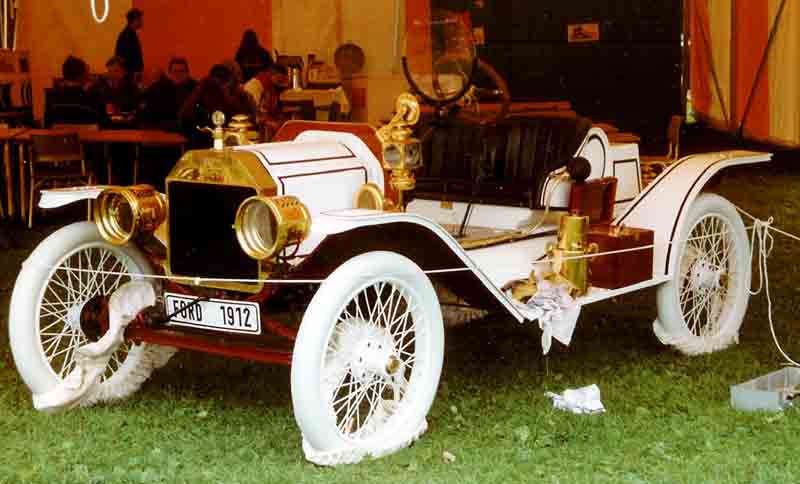
Ford Model T
"...it came out, they advertised it as cheaper than a Model T, which it was, but, you know, about a red bug. I ..."
The Ford Model T is an old car from the early days of automobiles. People used it as a benchmark for price, and the podcast mentions it in a comparison about how another car was marketed as cheaper.
The Ford Model T is an early mass-produced car that helped make automobiles affordable and widely available. In the podcast, it’s brought up in a historical comparison about pricing and how another car was advertised as cheaper than a Model T. That kind of reference is typical when discussing automotive history and how the market evolved.
Mercedes-Benz did and recreated the 1886 Benz Patent Motor Wagon
"And I tell you the one that I love that, that Mercedes-Benz did and recreated [1624.5s] was the 1886 Benz Patent Motor Wagon. I had it so cool that Mercedes built however many of those"
This is an extremely early car from 1886, tied to the first practical gasoline engine designs. It matters because it shows what “cars” looked like at the very beginning—very simple compared to modern vehicles. It’s often recreated so people can understand how early motoring worked.
The Mercedes-Benz 1886 Benz Patent Motor Wagon is an early gasoline-powered vehicle credited to Karl Benz’s 1886 patent. It’s notable because it represents the start of practical internal-combustion motoring, long before modern cars and paved roads existed. In a museum context, it helps show how rudimentary early vehicles were compared to today.

BMW 328
"So people really, you know, I mean, the 328 is kind of famous, right? So people know about that. But there was a lot of little different iterations that went around the 328."
The BMW 328 is a well-known older BMW that many enthusiasts recognize. The point here is that people often know the big-name model, but miss the other related versions BMW made.
The BMW 328 is a famous pre-war BMW sports car known for its engineering and racing pedigree. In this segment, the host notes that people recognize the 328, but may not know the many smaller or less-famous BMW variants that existed around it.

BMW Bavaria
"I tell you, one of the ones I loved and I was familiar with back in the day... was the BMW Bavaria. Yeah. Those were great. And it had that, all the, the underpinnings were all the E9, the 3.0s and stuff."
The BMW Bavaria was a bigger, more comfortable BMW from back in the day. The speaker says it still had real mechanical substance under the skin, not just a fancy badge.
The BMW Bavaria is a large, luxury-oriented BMW from the era being discussed, and the speaker highlights that it wasn’t a “slouch” despite its more upscale positioning. They also connect it to BMW’s 3.0s-era underpinnings, implying shared mechanical DNA with the smaller, more performance-focused models.
E9
"And it had that, all the, the underpinnings were all the E9, the 3.0s and stuff."
“E9” is BMW’s internal code for a particular generation of chassis/platform. They’re saying the Bavaria used the same basic mechanical foundation as those E9-era 3.0 models.
“E9” refers to BMW’s E9-series platform/chassis family used for certain 3.0-liter-era models. In this context, the speaker is saying the BMW Bavaria shared underpinnings with the E9/3.0s mechanical base.

2002 BMW
"think of the 2002, which was kind of a, you know, family car, but those were still pretty, you know, [1839.3s] there were rocket chips that went pretty well and they handled well."
The BMW 2002 is an older BMW that people love because it drives in a fun, sporty way. It’s a small car, but it has a reputation for being enjoyable to drive.
The BMW 2002 is a classic “compact sport sedan” from BMW that became famous for its fun, tossable driving feel. In enthusiast circles, it’s often remembered as a gateway car that proves you don’t need huge power to have a great time.

Datsun A510 Datsun
"there were rocket chips that went pretty well and they handled well. Yeah. It's funny how it's hard to explain to a non-car person the appeal of a 2002 BMW or a 510 Datsun. They both are those oddball, boxy looking things and you go, well, I thought you were a sports car guy. Well, I am,"
The Datsun Bluebird Sedan is an older sedan from Japan. The podcast says it’s the kind of car that has a special appeal to car fans, even if it’s not widely understood by everyone.
The Datsun Bluebird Sedan is a classic Japanese sedan that’s often appreciated by enthusiasts for its design and driving character. The podcast mentions it in the same breath as other “oddball” enthusiast favorites, emphasizing how hard it can be to explain the appeal to non-car people. That makes the Bluebird a good example of a less-mainstream classic that still has a devoted following.

Citroen SM
"another car that you have that, that people don't quite understand or get completely [1912.1s] is the Citroen SM with the Maserati power and front wheel drive and the handling that they say,"
The Citroën SM is a special, expensive-feeling classic French car that uses a Maserati engine and drives the front wheels. It also has a hydraulic suspension, which rides great, but older cars can be costly to keep working properly.
The Citroën SM is a rare grand tourer known for its Maserati-sourced engine and distinctive front-wheel-drive layout. It’s also famous for its hydraulic suspension system, which delivers a very smooth ride—but can become high-maintenance as the car ages.
front wheel drive
"is the Citroen SM with the Maserati power and front wheel drive and the handling that they say, [1918.6s] I've never actually driven one, but everybody I've talked to says it handles like it's on rails."
Front-wheel drive means the front wheels do the work of moving the car. It affects how the car feels to drive, including steering and traction behavior.
Front-wheel drive (FWD) means the engine’s power is sent to the front wheels to propel the car. It can package the drivetrain efficiently and influence handling feel, especially in cars like the Citroën SM where the layout is part of the appeal.
hydraulic suspension
"The problem in Maserati engine, right? So it's [1937.9s] pretty powerful. Sure. The problem is with the hydraulic suspension now 50 years later,"
Hydraulic suspension uses pressurized fluid to control the suspension’s movement and ride height. On cars like the Citroën SM, it can provide a very smooth, controlled feel, but the system’s components can age and require ongoing maintenance.
1963 Crofton Brawny bug
"we have one, we haven't sold ours. We have a 1963 Crofton Brawny bug. [2004.1s] Okay. And we, we, nobody knows what it is."
This is a very rare, unusual little car/vehicle from the early 1960s. The hosts explain it’s difficult to sell because most people have never heard of it, and it was only made for a short time after Crosley shut down.
The Crofton Brawny bug is an obscure, small vehicle from the early 1960s, and the hosts are discussing why it’s hard to sell. They mention that when Crosley went out of business, Crofton (and San Diego) bought the tooling to keep making these little vehicles for a few years.
Farmo Road
"Well, and they had the Farmo Road, which is going to, what a 63 inch wheelbase or something. [2032.7s] Right, right."
The Farmo Road sounds like a farm-focused vehicle with a long wheelbase. The hosts say people thought it could be used for plowing and that it even had snow-plow setups.
The Farmo Road is a specialized small vehicle mentioned as being intended for farm work, with a very long wheelbase (the hosts estimate “63 inch wheelbase”). They also describe how it was thought farmers would use it to plow fields, and that it could be fitted with snow plows.

1957 Cyclops
"the coolest car I think you have, it's a replica, but that's okay because there ever really was one built and it's the 1957 Cyclops [2062.1s] two, that's, that's Cyclops."
The Cyclops is a weird-looking car concept from the 1950s that’s famous for having just one headlight. Even though it started as a playful idea, people ended up building versions of it.
The 1957 Cyclops is a quirky, niche vehicle known for its single headlight design—an intentionally “tongue-in-cheek” concept that later developed a real following. The hosts describe it as a car that people actually built, inspired by coverage in Road and Track.
single headlight
"And it became this unique following of a car with a single headlight, like a Cyclops [2084.2s] with a single eye and people actually built them."
Most cars have two headlights. This one is special because it has only one headlight, which is why people compare it to a Cyclops (one eye).
A single headlight is exactly what it sounds like: one primary front lamp instead of the usual two. In this context, it’s the defining visual feature of the Cyclops concept, described as looking like a “Cyclops” with one eye.
Bonneville Salt Flats
"one, he actually, him and a couple other people went to the Bonneville salt flats like about 10 years ago and they took their Cyclops and they ran them and let them run them."
Bonneville Salt Flats is a well-known place in the U.S. where people try to go as fast as possible on land. The ground is basically a huge flat salt surface, which helps cars and bikes build speed.
The Bonneville Salt Flats are a famous salt flat racing venue in Utah where people set land-speed records. Because the surface is very flat and low-friction, it’s ideal for testing how fast experimental or unusual vehicles can go.
1933 Dimaxian
"another one that you have that's a replica because there was only, I think there's only one left is the Dimaxian, but Mr. Fuller's, uh, 1933 Dimaxian."
The 1933 Dimaxian is a rare, early-1930s specialty vehicle associated with a specific builder (Mr. Fuller in the discussion). The episode highlights its scarcity and survival status, which is a big deal for classic-car collectors and museum curators.
Norman Foster
"And then we have a replica and then Norman Foster in England also built a replica. I mean, to build a replica that, I mean, did you have to go just off the wing and then kind of off pictures"
Norman Foster is mentioned as someone in England who made a copy (replica) of the Dimaxian. That’s relevant because it shows how people keep these rare designs alive.
Norman Foster is mentioned as a person who built a replica of the Dimaxian in England. The reference matters because it ties the car’s preservation story to specific builders beyond the original creator.

Moto Compo
"Yeah. Yeah. Those are pretty cool. And you know, the, the Moto Compo is interesting because it came in the, in a Honda, uh, hot hatch car from the, I think the mid 80. Right. And the theory was in Japan because traffic was so bad that this fit in the back of the hat."
The Moto Compo is a tiny Honda motorcycle that was made to fit in the back of a small hatchback. The concept was: drive to work, park, then ride the little bike the last part of the trip. It was also light enough that one person could lift it in and out.
Honda’s Moto Compo is a compact “mini-bike” designed to be stored in the back of a small Honda hatchback. The idea was practical for Japan’s dense traffic: you could park, then ride the Moto Compo the rest of the way to work. It’s known for being very light for a rideable bike—around 80 pounds—so it could be handled by one person.

Amphicar
"And of course, no small car collection would be complete without a, uh, an Amphicar, a 770, which is a bad boat and even worse car. Right. I mean, we use our Amphicar a lot."
An Amphicar is a vehicle that can drive like a car on land and also float like a boat in water. It’s fun, but it’s not built for high-speed boating. The hosts point out that it doesn’t behave like a real fast boat, and water speed is limited.
The Amphicar is a rare amphibious vehicle—part car, part boat—built to drive on land and float in water. In this segment, the hosts emphasize its limitations: it “doesn’t plane,” so it won’t perform like a fast powerboat, and top speed on water is closer to the mid-50 mph range than the higher claims. It’s remembered as a fun novelty rather than a serious watercraft.
Percy priest
"Oh, awesome. Do you take them up to the Percy priest or do you take them? We take them to Percy priest because there's a launch, maybe 10 minutes from, we meet them out there with it."
Percy Priest is a local lake/reservoir near Nashville where they launch the Amphicar. It’s the spot they go to so the car can get into the water and be used as intended.
Percy Priest is a reservoir near Nashville, Tennessee, used here as the water-launch location for the Amphicar. The hosts mention a short drive from the museum and meeting at the launch, highlighting how the vehicle is used in real-world amphibious outings.
Morgan Arrow 8
"Uh, so I have a couple of daily drivers. I have a Morgan Arrow 8. [2374.0s] I love that. Yeah. Yeah. And then, uh, Alpha 4C and a Volvo C 30."
The Morgan Arrow 8 is a rare Morgan sports car. Because most people don’t know it exists, it can fly under the radar—then later become more collectible as more enthusiasts learn about it.
The Morgan Arrow 8 is a niche Morgan model known for its distinctive, old-school roadster styling and rarity. It’s the kind of car that many people haven’t seen before, which is why it often becomes a future collectible once word spreads.

Alpha 4C
"I love that. Yeah. Yeah. And then, uh, Alpha 4C and a Volvo C 30. Nice. Nice. That Morgan Arrow,"
The Alfa Romeo 4C is a small, lightweight sports car. People like it because it feels fun and “special,” even if it’s not the kind of car most people drive every day.
The Alfa 4C (Alfa Romeo 4C) is a lightweight, performance-focused sports car built around a small, high-revving character. It’s known for feeling agile and special, even though it’s not a mainstream daily driver choice.

Volvo C 30
"I love that. Yeah. Yeah. And then, uh, Alpha 4C and a Volvo C 30. Nice. Nice. That Morgan Arrow,"
The Volvo C 30 is a compact Volvo with a unique, stylish body shape. It’s not as common as other Volvos, so it’s a memorable daily-driver option.
The Volvo C 30 is a compact, distinctive Volvo hatchback/coupe-style car that’s remembered for its quirky shape and European styling. It’s a less common choice today, which makes it stand out as a “daily driver” pick.
mono wheel
"Well, what about the mono wheel that we didn't even talk about? Just [2534.2s] one big wheel and it just... Sit in the middle of it? Sit in the middle and it just get rotated [2538.2s] around."
They’re talking about a one-wheel vehicle concept. The idea is you sit in the middle on top of a single wheel, and the whole thing rotates as you move.
A “mono wheel” refers to a one-wheel vehicle concept where the rider sits above a single large wheel. In automotive history, these designs are often experimental and focus on balancing and packaging rather than conventional multi-wheel stability.
ABS braking
"And I think that kids should learn, you know, how ABS braking works and all [2601.6s] the different things that probably sound boring, but it would be nice for them to know how to"
ABS is a safety feature that helps stop the car without the wheels locking up. It can help you steer while braking hard, instead of sliding.
ABS braking means Anti-lock Braking System braking, which prevents the wheels from locking up during hard stops. That helps drivers maintain steering control while still achieving strong braking performance.

1963 Pontiac Tempest two-door sport coupe
"“How about the new arrivals this week? How about the 1963 Pontiac Tempest two-door sport coupe? I love this car.”"
This is a 1963 Pontiac Tempest, a classic American car. The hosts are calling it a “sleeper,” meaning it looks pretty normal, but it has a big engine and can be surprisingly quick.
The 1963 Pontiac Tempest is a classic American muscle-era compact that’s notable here because it’s described as a sleeper—an unassuming body style hiding a big V8. In this segment, the hosts highlight its 462 cubic inch V8 and period details like the dog-dish hubcaps to show how it can fly under the radar.
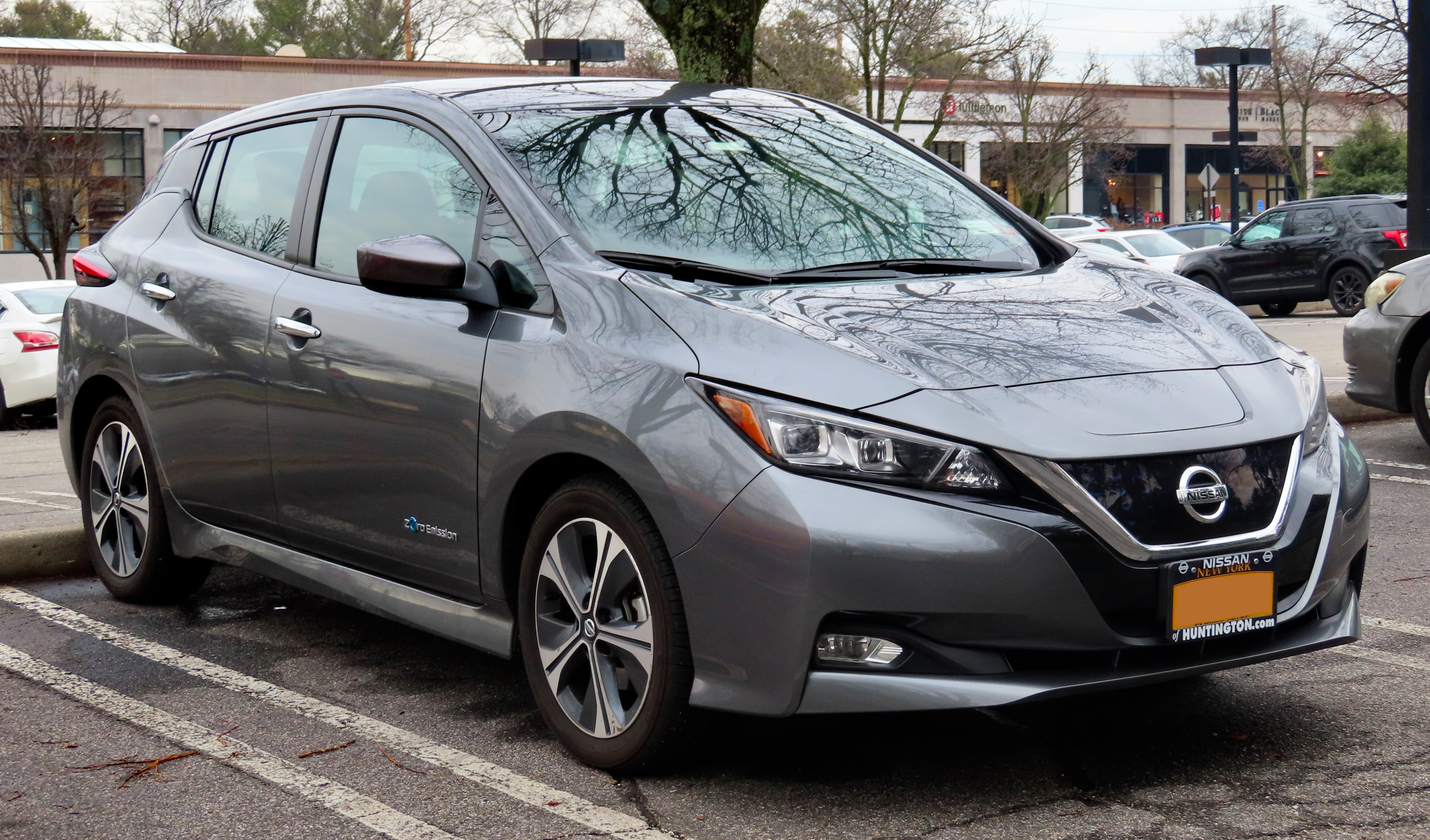
Nissan Leaf
"...is was a great car. Yeah, I like that car. Silver leaf, leaf green poly over black. It's got a 462 cubic..."
The Nissan Leaf is an electric car, meaning it runs on electricity instead of gasoline. The podcast mentions a specific Leaf and describes how it looks and what it’s like.
The Nissan Leaf is an electric car that became one of the most recognizable mainstream EVs. In the podcast, it’s described with specific color and a “462 cubic…” detail, which suggests the conversation is focused on a particular Leaf and its setup. That makes it relevant for a show that covers both classic and enthusiast vehicles.
427 cubic inch V8
"“Silver leaf, leaf green poly over black. It's got a 462 cubic inch V8.”"
This means the car has a big V8 engine—462 cubic inches. In simple terms, that usually translates to strong pulling power and acceleration compared to smaller engines.
“462 cubic inch V8” refers to a large-displacement V8 engine measured in cubic inches, with 462 in³ of total displacement. Bigger displacement generally means more potential torque and power potential, especially in classic American V8s.
sleeper
"“Silver leaf, leaf green poly over black. It's got a 462 cubic inch V8. A sleeper. Yeah.”"
A “sleeper” is a car that seems ordinary at first glance, but it’s actually quick. It doesn’t look like a race car, but it can surprise you.
A “sleeper” is a car that looks modest or stock, but has performance upgrades or a strong engine that makes it faster than you’d expect. Enthusiasts often use it to describe cars that don’t advertise their speed with obvious styling cues.
Dual Edebrock forbra
"“...because the telltale signs of this car are the dog dish type hubcaps... It's got a 462 cubic inch V8. A sleeper. Yeah. Dual Edebrock forbra.”"
This refers to the engine using two carburetors (the fuel-mixing devices). More carburetors can help the engine breathe better, which often improves how it accelerates.
“Dual Edebrock” (likely referring to dual Edelbrock carburetors) means the engine uses two carburetors to mix fuel and air before it enters the cylinders. Using dual carburetion is a common performance setup on classic V8s because it can improve airflow and throttle response.
dog dish hubcaps
"“...because the telltale signs of this car are the dog dish type hubcaps.”"
Dog-dish hubcaps are the classic small, bowl-shaped wheel covers you often see on older cars. They’re a distinctive look that can give away what kind of car you’re looking at.
Dog-dish hubcaps are small, concave, “shallow bowl” style wheel covers commonly seen on certain classic American cars. They’re a recognizable visual cue that can help enthusiasts spot a particular era or configuration at a glance.
four link suspension
"That might take that off. Turbo hydromax 353 speed automatic with four to eight inch rear axle and a four link rear suspension."
A four-link rear suspension uses four arms to hold the rear axle in the right place. It helps the car keep better control of the rear wheels over bumps and during hard driving.
A “four link rear suspension” uses four control arms (links) to locate the rear axle and control how it moves under acceleration, braking, and bumps. It’s commonly used on cars where the rear axle needs precise control for traction and handling.
overhead valve four cylinder
"Ivory and flamingo red over red, 87,902 actual miles, 1493 cc overhead valve four cylinder with a four speed manual transmission."
An “overhead valve” engine is one where the valves sit in the top of the engine head. That’s a common older design, and here it’s describing a four-cylinder engine layout.
“Overhead valve” (OHV) describes an engine design where the valves are located in the cylinder head, operated by pushrods from the camshaft. Pairing that with an inline four-cylinder layout means the engine is relatively compact and smooth for its era.

1969 Chevrolet Corvette Coupe Marlboro Maroon
"How about another new arrival, the 1969 Chevrolet Corvette Coupe Marlboro Maroon, one of my favorite names of a color over black 350 cubic inch four barrel V8 GMPP aluminum heads. It's got numbers matching Muncie M24 speed manual trans and the 336 posi rear M."
This is a 1969 Chevrolet Corvette, and it’s being described as a very specific, enthusiast-focused build. They mention the 350 V8, a manual transmission, and performance rear-axle gearing, plus special factory-style parts like aluminum heads.
The 1969 Chevrolet Corvette is a classic American performance car, and this specific “Coupe” is highlighted by its small-block V8 setup and period-correct drivetrain details. The hosts call out the 350 cubic-inch four-barrel V8, GMPP aluminum heads, a Muncie M24 four-speed manual, and a 336 posi rear end—key enthusiast identifiers for authenticity and how it drives.
numbers matching
"It's got numbers matching Muncie M24 speed manual trans and the 336 posi rear M."
“Numbers matching” means the car’s key parts are the original ones (or at least the ones that match the car’s documented identity). Collectors like it because it suggests the car hasn’t been heavily changed.
“Numbers matching” means the major components (like the engine and transmission) have identification numbers that match the car’s original records or factory markings. For collectors, it’s a strong indicator of originality and can significantly affect value.
Muncie M24 speed manual
"It's got numbers matching Muncie M24 speed manual trans and the 336 posi rear M."
The Muncie M24 is a specific kind of four-speed manual gearbox used in some GM performance cars. Mentioning the exact “M24” helps show what transmission the car has and whether it matches the original build.
The Muncie M24 is a specific four-speed manual transmission used in late-1960s Corvettes and other GM performance cars. Enthusiasts track it because the Muncie gearboxes are known for their feel and because the exact model (like M24) helps confirm a car’s originality.
posi rear
"It's got numbers matching Muncie M24 speed manual trans and the 336 posi rear M. Marlboro cigarettes were red and Marlboro Maroon is Maroon."
“Posi” is shorthand for a rear differential that helps both rear wheels work together for better traction. It’s meant to reduce wheelspin compared to an open differential.
“Posi” refers to a positive-traction rear differential, typically a limited-slip differential that helps both rear wheels provide drive. That improves traction when accelerating, especially on uneven grip surfaces.
1912 Flanders 20 series Roadster
"Another new arrival is the often seen 1912 Flanders 20 series Roadster. Flanders. Flanders. White over black. Man, this is a cool brass era car."
This is a 1912 Flanders “20 series” roadster, an extremely old car from the brass-era. They point out the big early engine and the three-speed manual, plus how unusual it is to even see one.
The 1912 Flanders 20 series Roadster is an early brass-era American car, and it’s notable here for its distinctive white-over-brass presentation and rarity. The hosts also highlight its 154.8 cubic-inch L-head inline-four and a three-speed manual transmission—details that define how these early cars made power and drove.
L head inline four
"Striking in the white and brass configuration. I like white on brass era cars. Yeah. 154.8 cubic inch L head inline four with a three speed manual transmission."
An “L-head” is an older engine design where the valves are in the block instead of the cylinder head. Here it’s describing a four-cylinder engine, which was typical for early cars.
An “L-head” engine (also called a flathead) has valves located in the engine block rather than in the cylinder head. In an inline-four configuration, that means the engine’s layout is four cylinders in a row with a simpler, early design that was common in the brass era.
390 cubic inch four barrel V8
"white and red 350 cubic inch four barrel V8 with a turbo hydrometric 350 Dana 44 axle power front [2883.7s] disc brakes."
This describes the engine size and how it feeds fuel/air. A “four barrel” setup means the engine has a carburetor designed to flow more mixture for more power.
“350 cubic inch” refers to engine displacement (about 5.7 liters), and “four barrel” describes a carburetor setup with four throttle bores. Together, this points to a classic American performance configuration aimed at strong airflow and easy power delivery.
Dana 44 axle
"350 cubic inch four barrel V8 with a turbo hydrometric 350 Dana 44 axle power front [2883.7s] disc brakes."
“Dana 44” is the brand/model of the axle and differential hardware. It matters because it helps determine how strong the drivetrain is and how the car behaves when you accelerate.
A “Dana 44 axle” refers to a specific rear/front differential axle assembly made by Dana. Enthusiasts mention it because axle/differential hardware affects strength, gearing options, and how the car handles under load.
disc brakes
"Dana 44 axle power front [2883.7s] disc brakes. These things are as iconic as they come."
Disc brakes stop the car by squeezing pads against a metal rotor. They tend to work better and more consistently than older drum brakes, especially when you brake a lot.
“Disc brakes” use brake pads clamping onto a spinning rotor to slow the car. Compared with older drum brakes, discs typically offer more consistent stopping performance, especially with repeated use.

Model A
"Also, last but not least, [2913.7s] the 1934 model a coupe, Kawani green and light Kawani green. That's right. Over brown 201 cubic [2920.8s] inch four cylinder with a three speed manual, great driver and honest model a show ready."
The Ford Model A is an early classic Ford that many people start with when they get into old cars. The host is talking about a 1934 coupe with a simple four-cylinder engine and a manual transmission—so you learn how older cars drive.
The Ford Model A is a landmark early-1930s Ford that’s often treated as the gateway car for classic restoration and hobby driving. In this segment, the host highlights a 1934 Model A coupe build with a four-cylinder engine and a three-speed manual, emphasizing how it teaches basic driving feel even without modern power aids.
three-speed manual
"inch four cylinder with a three speed manual, great driver and honest model a show ready. [2925.4s] This is entry level into the hobby."
A “three speed manual” means you shift through three forward gears using a clutch. It’s an older style of driving that makes you more involved with the car.
A “three speed manual” transmission has three forward gears that you select with a clutch. On early cars like the Model A, it’s part of what makes the driving experience feel slower and more involved than modern automatics.
power steering
"driving and they don't drive maybe great or they don't [2944.9s] drive like you expect them to drive. Right. But it teaches you how to drive something that's [2950.4s] doesn't have power steering brakes."
Power steering helps you turn the wheel with less effort. Without it, steering takes more strength, especially when parking or turning slowly.
“Power steering” is an assist system that reduces the effort needed to turn the wheel. The host contrasts cars without it to explain why older vehicles can require more physical input at low speeds.
two speed Columbia rear end
"Yeah, yeah, right, you know, all the back roads, [2968.7s] all the back roads. Yeah, you don't want to get on the turnpike on those unless you got a two [2971.8s] speed Columbia rear end."
A “two speed Columbia” is like an extra gear range for the rear axle. It helps an older car keep up better on faster roads by giving you more usable gearing.
A “two speed Columbia rear end” refers to an aftermarket/period auxiliary two-range unit used with the rear axle to provide an extra set of ratios. It’s mentioned here because it helps early cars handle highway speeds better than a single-ratio setup.
Harley
"Here's Stuart with Eric Buil of Buil motorcycles who talks about leaving Harley Davidson, starting his company and then receiving a call from his old boss"
“Harley” is referring to Harley-Davidson, a famous American motorcycle company. The speaker is saying the new brand they wanted didn’t have to appeal only to Harley fans.
“Harley” is shorthand for Harley-Davidson, the major American motorcycle brand. In the conversation, it’s used to contrast a traditional Harley-focused audience with a different, more entry-level and sporty rider base.
Sports Car Market Magazine
"Here's a special offer from sports car market magazine. Get a six month subscription for just"
“Sports Car Market” is a collector-car publication focused on pricing, buying/selling, and market trends for enthusiast vehicles. In this segment it’s used as the show’s sponsor and as the source of the “Wall Street Journal” style coverage of the collector car world.
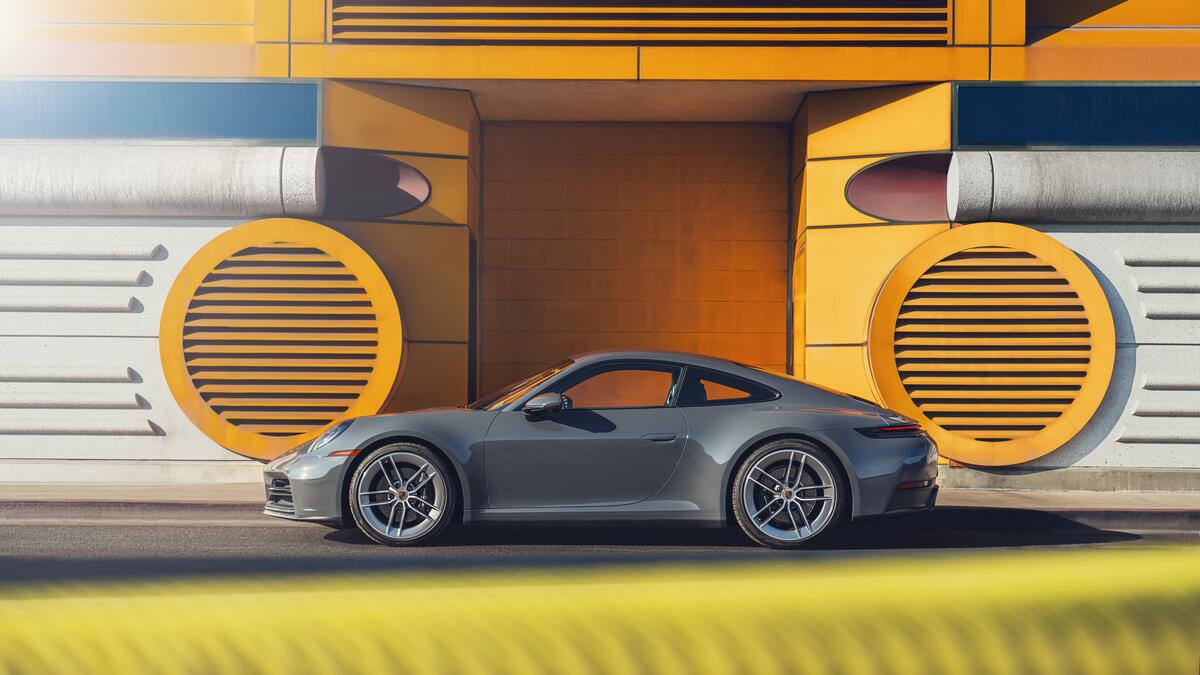
996 C4S
"And I see on your blog this week that you're finally bonding with your 996 C4S. What? You just turned me down or off."
This is a Porsche 911 from the 996-era, and “C4S” means it’s an all-wheel-drive 911 with the more performance-focused “S” trim. It’s basically the “sportier” version of the Carrera 4.
“996 C4S” refers to a Porsche 911 Carrera 4S from the 996 generation. The “C4S” indicates all-wheel drive (“Carrera 4”) with the “S” specification, which typically means a more powerful engine and sportier equipment than a base Carrera.
C4S
"“So you got to, so it was your 75th birthday present was this C4S. Yeah, you know, it was up in Seattle…” … “And the C4S is faster than they were. It’s more comfortable. You know, it has HVAC, has sound.”"
“C4S” is a nickname for a Porsche 911 Carrera 4S. It’s a Porsche 911 with all-wheel drive and a more performance-focused setup. The speaker says it feels quicker and more comfortable than the older cars they were selling.
“C4S” is shorthand for the Porsche 911 Carrera 4S, a 911 variant known for combining the 911’s rear-engine layout with all-wheel drive and a sportier “S” specification. In this segment, the host contrasts it with older 911s and other classics, focusing on how it feels faster and more comfortable.
HVAC
"“And the C4S is faster than they were. It’s more comfortable. You know, it has HVAC, has sound.”"
HVAC is the car’s heating and air-conditioning system. It controls how warm or cool the cabin feels and how air moves around inside. The speaker is using it to explain why the newer Porsche feels more comfortable.
HVAC stands for Heating, Ventilation, and Air Conditioning. In cars, it refers to the climate-control system that manages cabin temperature and airflow, which the speaker points to as part of why the Porsche 911 Carrera 4S feels more comfortable than older cars.
range anxiety
"[3322.0s] Right, right. So it was, well, I got range anxiety at about 180."
Range anxiety means feeling nervous that your electric car’s battery won’t last long enough to get where you’re going. People worry they’ll run out before they can find a place to charge.
Range anxiety is the worry that an electric car won’t have enough battery charge to reach the next destination or charging station. It’s driven by real-world factors like speed, weather, terrain, and how much charge is left.
charging stations
"[3348.3s] You know, I agree with you 100%. And that, that's my, I mean, I, if, if I wanted to buy an electric [3354.0s] car here in my condo, it would cost $7,000 to put in a charging station."
A charging station is where you plug in an electric car to refill its battery. The host is talking about the cost and hassle of getting one set up for home charging.
A charging station is the infrastructure used to recharge an electric vehicle’s battery. The discussion focuses on the practical cost and convenience of installing one at home versus relying on public charging.

Hyundai Elantra
"... charging station. Oh my God. My, my 2005 Hyundai Elantra, 2010 Hyundai Elantra gets almost 40 miles per ga..."
The Hyundai Elantra is a compact car meant for everyday driving. The podcast talks about how far it can go on a gallon of gas, comparing a couple of model years.
The Hyundai Elantra is a compact sedan known for being practical and cost-conscious. The podcast references fuel economy—mentioning a 2005 Elantra and a 2010 Elantra getting close to “40 miles per ga”—which is the kind of detail people often bring up when discussing everyday ownership. That makes it relevant for listeners comparing real-world running costs.
miles per gallon
"[3358.5s] Oh my God. My, my 2005 Hyundai Elantra, 2010 Hyundai Elantra gets almost 40 miles per gallon [3365.5s] on the freeway."
Miles per gallon (MPG) tells you how far a gas car can go using one gallon of fuel. Here it’s used to show how efficient the Elantra is compared to charging an electric car.
Miles per gallon (MPG) is a measure of how efficiently a gasoline car uses fuel—how many miles you can drive per gallon. The host uses MPG to compare the day-to-day economics of gas cars versus electric cars.
hybrid
"[3371.1s] Not to mention that the cost of entry is going to be more expensive for an all-electric car than [3375.3s] it would be for a hybrid seat."
A hybrid car uses two power sources—gas and electricity. The point here is that hybrids can be easier for people who don’t want to depend on charging stations all the time.
A hybrid vehicle uses both an internal-combustion engine and an electric motor/battery. In this segment, “hybrid” is used as the alternative to all-electric ownership, implying less reliance on charging infrastructure.
Chevron
"[3379.9s] I want to be in a situation where if I'm down to a quarter tank, I can pull over to the next chevron [3385.2s] and 10 minutes later, I'm back on there."
Chevron is a gas station brand. The host is saying they want to be able to pull into a familiar place quickly, instead of waiting to charge.
Chevron is a major gasoline brand and fuel retailer. The host uses it as an example of familiar, fast refueling access—contrasting it with the time needed to charge an electric car.
inductive charging
"Right. And one of the things that she and I have been talking about is the inductive charging where that you just pull up next to the curb. Right. So you don't have to have a separate charger."
Inductive charging means you charge an electric car without plugging it in. You pull up near a charging pad, and the car charges through the air using magnets.
Inductive charging is a way to charge an electric vehicle without plugging in a cable. The car and a pad near the curb use electromagnetic fields to transfer energy, so you just pull up and park over the charging area.
EV
"Well, but I wonder how are they going to charge those cars? Right. Well, here's the thing about electric cars that people don't really discuss is that parking garages weren't designed for the weight of an electric car, which are heavier than a normally aspirated car..."
The point here is that electric cars are usually heavier than gas cars. That extra weight can matter for parking garages and ramps that weren’t built for it.
The speaker is pointing out a real-world constraint for electric vehicles: their mass. Electric cars tend to be heavier than many gas cars because of the battery pack, which affects how well parking structures can handle them.
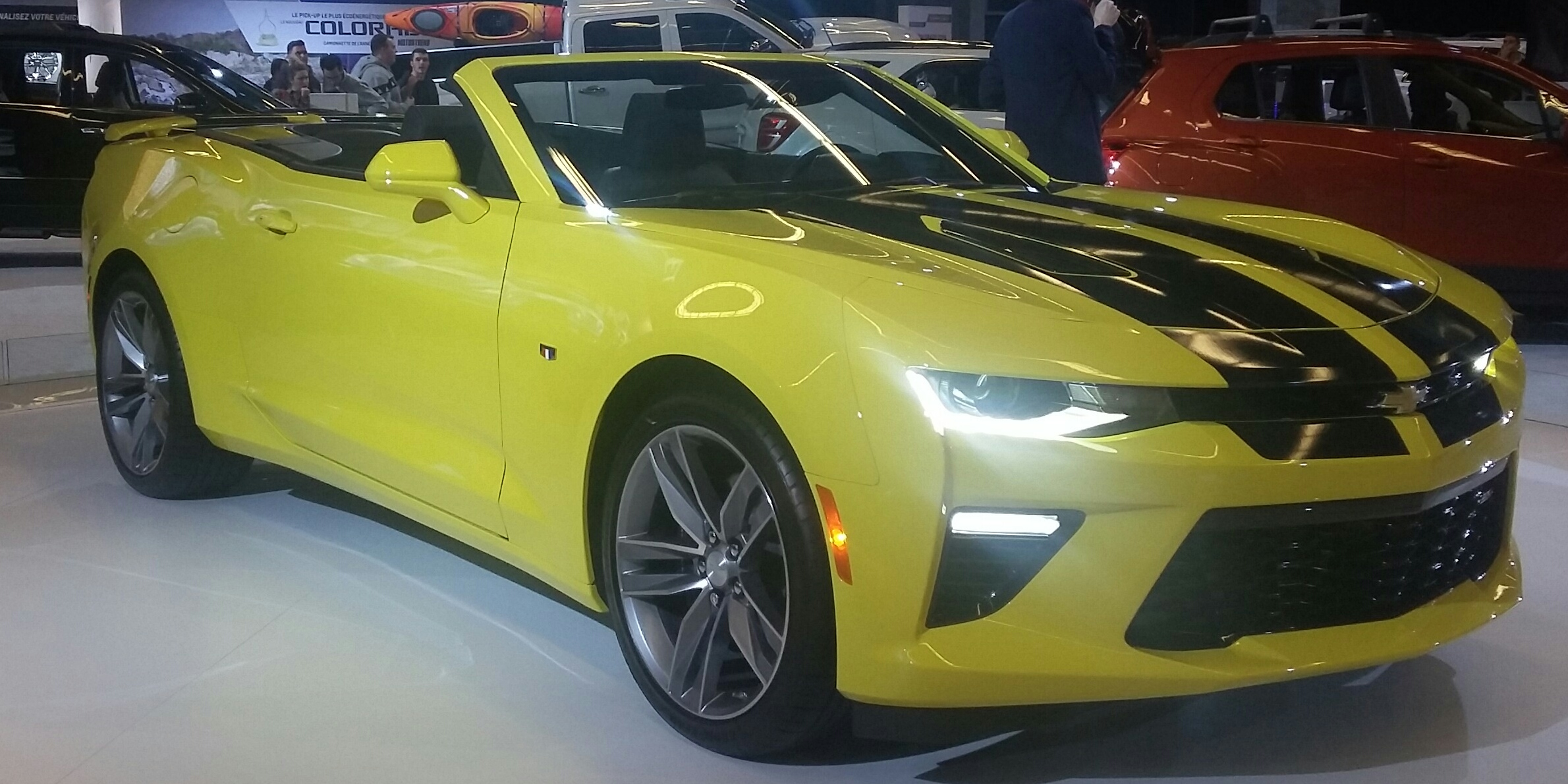
Camaro
"Is there and the Camaro's done. I don't think they make any other car. Do they that we know of?"
The Camaro is a classic American sports car from Chevrolet. The host talks about it needing a redesign to look more like the older, retro style.
The Chevrolet Camaro is an American muscle-car/pony-car model that competes with the Ford Mustang. The speaker argues that the Camaro “is done” (i.e., not currently being offered the way it used to), and later discusses how it needed a restyle with a more retro look.

Mustang
"and own that niche the way Ford has owned Mustang. Yeah, look at the Mustang."
The Mustang is Ford’s iconic American sports car. The host says Ford keeps it fresh by offering lots of different versions and special editions over the years.
The Ford Mustang is a U.S. pony-car that has stayed popular by constantly evolving across generations with many variants and special editions. The host compares Ford’s Mustang strategy to other brands’ niche-selling potential and lists examples like Dark Horse and GTD.
Request an Explanation
Heard something you'd like explained? We'll add it to this episode.
Sign in to request explanations for terms you heard.
Want to learn more?
Browse our glossary for plain-English explanations of automotive terms, jargon, and concepts.
Help improve this episode
See something that's not quite right? Our annotations are AI-generated and can sometimes miss the mark. Click the flag icon on any annotation to suggest a correction.