
Classic Auto Mall - #251 Stewart Howden welcomes Bruce Canepa, former Race Driver, Car Dealer and Owner of Canepa Restoration and Canepa Motorsports Museum plus Keith Martin of Sports Car Market
About this episode
Bruce Canepa—race driver turned dealer and restoration/museum owner—talks with Stuart Howden and Keith Martin about building a world-class collection and why he prefers driving over “wall art.” Canepa explains how he repurposed a former Seagate building into an automotive facility, and why used-car work beats new-car sales for personal relationships. The conversation also dives into Canepa’s involvement with the Gordon Murray T.50, praising its lightweight, high-revving, driver-focused design and even the role of its fan for grip. They connect that philosophy to Canepa’s approach to restoring cars so buyers face no surprises.
Show #251 airdate 07-08-2026 Stewart Welcomes Bruce Canepa owner of Canepa Restoration and Canepa Motorsports Museum, a former race car driver and car dealer who has raced at Sears Point, Watsonville, Pomona and even Pikes Peak, Gordon Murray and his T50 and partnering with the legendary Parnelli Jones. He has competed in IMSA, GT, sprint car, super modifieds, the Trans Am Series and the 24 Hours of Daytona with co-drivers Rick Mears and Monte Shelton, and raced with Bobby Rahal in the first March GTP car.
He discusses dealing with notable car enthusiasts like Paul Allen and Bill Gates of Microsoft, Zack Todd. Bruce Meyer, Jerry Seinfeld, working with D.C. lobbyists to get rules relaxed for importing collector cars and the amount of man-hours it can take to expertly restore one.
Later, Keith Martin of Sports Car Market joins with his special offer to CAM Show listeners, updates his "Healey hunt" and notes how to spell "FAKE".
www.Canepa.com, www.rodeodrive-bh.com/past-events/the-rodeo-drive-concours-delegance, Scotts Valley, CA, Seagate, Warren Dean, Watergate, Porsche 959, hypercars, Ford Raptor, Ford Bronco, Gordon Murray, T50, McLaren, F1, Pagani, Bugatti, MOMO, Interscope, Acura NSX, 1967 Cadillac Eldorado, Porsche 934 RSR, Gullwing.
CONTENT NOTE: Contests, Prizes, Offers, Vehicles & other items may no longer be available or offered after each show's original broadcast or posting date.
Recorded in our Showcase Studio just inside the entrance of the Classic Auto Mall in Morgantown, PA, Host Stewart Howden, Classic Auto Mall President and Classic Car Specialist Steve Saffier talk about this unique and amazing place often with amazing guests.
YES...Classic Auto Mall is a REAL former shopping mall that covers almost EIGHT football fields with an average of nearly ONE THOUSAND classic vehicles under one, climate controlled roof and they're all FOR SALE!
Be sure to LIKE and SUBSCRIBE to be informed of new episodes and SEE them on the Classic Auto Mall YouTube Channel. We also invite you to VISIT US IN PERSON at Classic Auto Mall, one hour west of Philadelphia at PA Turnpike Exit #298, VISIT us online at ClassicAutoMall.com or talk to real, live people about visiting, buying or selling your classic on consignment at 610-901-3804.
GET OUR FREE APP: https://ClassicAutoMall.appimize.app When it opens click on the ORANGE button to install on your phone or computer for DIRECT ACCESS to our VIDEO and AUDIO shows and our website.

Ford Gts
"You know, everything from the 959 Porsches to Ford GTs to, you know, all of your stuff is..."
The Ford GT is a high-end supercar from Ford. It’s known for being a serious, track-focused car that collectors really want.
The Ford GT is Ford’s modern supercar, built around a mid-engine layout and track-bred heritage. Mentioning “Ford GTs” alongside the Porsche 959 frames these as top-tier, high-value collector cars rather than everyday performance vehicles.
used car business
"Not used car is a terrible thing, but is it better to be in that business than the new car business?"
A “used car business” is when a dealer sells cars that have already been owned. The discussion is basically about whether that kind of work is more enjoyable than selling brand-new cars.
The “used car business” refers to selling previously owned vehicles, typically with a focus on sourcing inventory, refurbishing it, and matching it to buyers’ budgets. In the segment, the speaker contrasts it with the “new car business” and suggests the used-car world can be more relationship-driven.
new car business
"Not used car is a terrible thing, but is it better to be in that business than the new car business? ... I had new car dealerships and I mean, they are what they are."
A “new car business” means selling brand-new cars at a dealership. The point here is that the guest feels it can be less personal than the used-car side.
The “new car business” is selling brand-new vehicles directly from manufacturers through dealerships. The host and guest contrast it with used-car work, arguing that new-car sales can feel more like selling a “commodity” than building long-term relationships around specific cars and owners.
lowrider muscle car show
"Whatever you go, whether you're at a hot rod show or a lowrider muscle car show"
This is a car show focused on two kinds of fan favorites: lowriders (cars that sit very low and often have flashy custom details) and muscle cars (powerful classic performance cars).
A “lowrider muscle car show” refers to events centered on lowriders (cars set very low, often with distinctive styling and hydraulics) and muscle cars (V8-era performance cars). The phrase is used to illustrate the variety of enthusiast communities the speaker encounters.
hot rod show
"Whatever you go, whether you're at a hot rod show or a lowrider muscle car show"
A hot rod show is a gathering where people show off modified classic cars. It’s a place where car fans meet and talk about their builds.
A “hot rod show” is an event where enthusiasts display modified classic cars—often with engine swaps, custom bodywork, and period-style upgrades. The speaker uses it as an example of the kind of community you meet around cars.
hypercars and supercars
"or the most extreme hypercars and supercars, you meet so many really great people."
Supercars and hypercars are very expensive, very fast cars. The speaker is saying that even at the top end, the community and conversations are a big part of the experience.
“Hypercars” and “supercars” are categories for very high-performance, high-cost cars, with hypercars generally being the more extreme end of the spectrum. Here, the speaker uses them to emphasize that regardless of the car tier, you meet passionate people.
camaraderie
"Whatever you want to call it is that the camaraderie between different socio-economic background."
Camaraderie in car culture refers to the friendly bond enthusiasts form through shared interests—showing up, talking shop, and supporting each other regardless of background. In this segment, it’s used to emphasize that classic-car conversations can be intense even between people from very different economic situations.

1934 Duesenberg
"You can have the poorest guy in the room and the richest guy in the room having an intense conversation about a 1934 Duesenberg and it doesn't matter who's got money or doesn't."
Duesenberg was a top-tier luxury car maker in the early 1900s. A 1934 Duesenberg is a very rare, special classic that collectors talk about because it was built to be both fancy and extremely fast for its time.
The Duesenberg name is famous for ultra-luxury, high-performance American cars from the 1920s–1930s. A 1934 Duesenberg is especially notable in classic-car circles because it represents the peak of that era’s big, powerful, coachbuilt luxury—exactly the kind of car that sparks serious enthusiast conversations.
Pomona
"We went on Father's Day weekend. We went to Pomona for the Hot Rod Show and I think Bruce and I have gone there together 25 years in a row or more."
Pomona is in Southern California and it’s known for big car events. If someone says they went to Pomona for a hot-rod show, they mean a major gathering of classic-car fans.
Pomona is a city in Southern California that hosts major automotive events, including large classic and hot-rod shows. When enthusiasts say they went to Pomona for something like the Hot Rod Show, they’re usually referring to a well-known event venue and crowd that’s heavy on traditional American cars.
Rodeo Drive
"And then Sunday we're at Rodeo Drive for his other event which is, I can't even explain that event."
Rodeo Drive is a very famous luxury shopping street in Beverly Hills. Mentioning it in a car context usually means a high-end event where cars and wealthier audiences overlap.
Rodeo Drive is a famous shopping street in Beverly Hills, California, known for luxury brands and high-end events. When the hosts mention being there for a car-related event, it highlights how car culture can intersect with high society and premium automotive experiences.
restore a car
"And I love your philosophy and when you do or restore a car is that, you know, by the [322.9s] best to restore and then after you do everything you're going to do to it, the new owner has [328.3s] to do nothing to it."
Here, “restore a car” means fixing it up and bringing it back to the condition the owner wants. The idea is that after the work is done, the car should be ready to drive without needing more repairs right away.
In this context, “restore a car” means returning a vehicle to a desired condition—typically correcting wear, damage, and aging components—so it feels right to drive and own. The host frames it as a philosophy where the restoration should be thorough enough that the next owner doesn’t need to immediately do additional work.
cars were meant to be driven
"Well, first of all, I believe cars were meant to be driven. [340.3s] Sure. [340.6s] And I'm a perfectionist, but I want to drive my car."
They’re saying classic cars are meant to be driven, not just looked at. Instead of keeping it untouched like a decoration, you should enjoy it as a car.
This is a “use it, don’t just display it” ownership philosophy—treating classic and collectible cars as real machines meant for regular driving rather than static collectibles. It contrasts with the idea of preserving a car primarily as wall art or a museum piece.

F-150 Raptor
"... you know, one hour and then I go back and get my Raptor. Yeah."
The Ford F-150 is a large pickup truck made by Ford. It’s designed for hauling, towing, and general daily driving. In the podcast, it’s mentioned as part of a conversation about trucks the speaker uses.
The Ford F-150 is a full-size pickup truck built for work and everyday use, and it’s one of the most popular trucks on the market. In the podcast context, it’s mentioned alongside a “Raptor,” suggesting a discussion about truck ownership and swapping between vehicles. The F-150 name is used as a baseline for what the speaker drives or cycles through.
Gordon Murray designed T50
"And then of course, the new Gordon Murray designed T50 is the whole nother, it's a whole nother light year thing. And you're heavily involved in that."
The Gordon Murray T50 is a supercar designed by Gordon Murray, famous for making cars that are very light. The idea is that less weight helps the car feel quicker and handle better, while still having lots of power.
The Gordon Murray designed T50 is a modern supercar built around Gordon Murray’s “lightweight first” philosophy. It’s known for extreme focus on low mass and high performance, aiming to deliver a complete driving experience—fast acceleration, strong handling, and confident braking—without relying on excess weight.

Gordon T50
"...nd then of course, the new Gordon Murray designed T50 is the whole nother, it's a whole nother light ye..."
The Gordon Murray Automotive T.50 is a rare, high-performance supercar made by a company founded by Gordon Murray. It’s meant to be very fast and very light compared to many other supercars. The podcast is highlighting it as something especially different and impressive.
The Gordon Murray Automotive T.50 is a modern, limited-production supercar designed by Gordon Murray. It’s discussed as a “whole nother” car in the podcast, emphasizing how different and advanced it is compared to older classics. The T.50’s significance is tied to its lightweight, performance-focused approach and its status as a new collectible supercar.
McLaren T50
"We took half a dozen of the T50s on the California Millet. McKeel led us in. Made bumper stickers for everybody's T50. They said, my other car is old. And we did a thousand miles."
The McLaren T50 is a high-end supercar that’s designed to put the driver in the best possible spot. Here, they’re saying it’s not just a show car—you can actually drive it a long way and it still feels good.
The McLaren T50 is a modern track-focused supercar built around a driver-first layout, and it’s especially known for its center driving position. In this segment, the hosts emphasize that the T50 can be driven for long distances—“all day long”—and even mention a real-world thousand-mile run to prove it.

Mclaren F1
"You know what I love about the T50, same with the McLaren F1 is that center driving position. And the thing that I didn't think about that I saw on a video the other day is"
The McLaren F1 is a legendary supercar known for putting the driver in the middle. The host brings it up because the T50 uses a similar idea, which changes how the car feels to drive.
The McLaren F1 is famous for its center driving position, where the driver sits between the front wheels. The host compares that layout to the McLaren T50 to explain why the driving feel is so distinctive and focused on the driver.
center driving position
"You know what I love about the T50, same with the McLaren F1 is that center driving position. And the thing that I didn't think about that I saw on a video the other day is that there is no offset to the pedals when you have that center position."
“Center driving position” means the driver sits in the middle of the car instead of being offset to the left or right. The idea is that your feet line up more naturally with the pedals, which can make the car feel more precise and intuitive.
A center driving position places the driver in the middle of the car (between the front wheels), rather than offset to one side. This can change pedal geometry and steering feel so the driver’s feet can be “dead straight on,” which the host argues is a key part of the car’s driving sensation.
open wheel Formula One cars
"And of course, it goes back to open wheel Formula One cars, but it's the ultimate driving position. And really, that car is comfortable."
Formula One cars are race cars where the wheels are exposed, and the driver sits in a very driver-focused layout. The host is saying the center driving position idea goes back to that kind of racing design.
Open-wheel Formula One cars are race cars with exposed wheels and a cockpit designed around the driver’s central placement. The host uses them as historical precedent for why a center driving position is considered the “ultimate” driving setup.

Porsche A918 Porsche
"And nobody could have imagined what we see today, whether it's a Bugatti Chiron or a Bugani or a 918 Porsche or Laferra, who would ever imagine nobody would have been able to find a crystal ball and said, this is where we'd be"
The Porsche 918 Spyder is a rare supercar made by Porsche. It uses both an electric system and a gasoline engine to deliver very high performance. The podcast mentions it as an example of a car that seemed unimaginable before it existed.
The Porsche 918 Spyder is a limited-production plug-in hybrid supercar built by Porsche. It’s significant because it helped define the modern era of high-performance hybrids, pairing strong power with advanced efficiency. The podcast mentions the 918 Spyder while talking about how future-looking cars can be hard to predict—“who would ever imagine” we’d see what’s possible today.
clutch
"...when you get in the car, you shift it and it's got a clutch and [533.8s] it's got manual steering after a certain mile per hour."
A clutch is the pedal you press to change gears. It lets you smoothly switch between gears instead of the car shifting automatically.
A clutch is the component that connects and disconnects the engine’s power from the transmission so you can shift gears. Mentioning a clutch here signals a more traditional, driver-involved setup rather than an automatic.
manual steering
"...it's got a clutch and [533.8s] it's got manual steering after a certain mile per hour. [537.3s] And it's a real driver's car."
Manual steering means you’re doing more of the work yourself when turning the wheel. The car feels more connected to the road because it’s not using power help as much (or at all).
Manual steering means the steering effort is generated by the driver rather than relying on power assistance. In this context, it’s part of why the car feels more “mechanical” and engaging to drive.
normally aspirated engine
"It's normally aspirated engine with a 12,000 RPM red line. [542.6s] That's crazy."
A normally aspirated engine doesn’t use a turbo or supercharger to force air in. It breathes naturally, and that often means it can rev freely and feel more “pure” to drive.
A normally aspirated engine makes power without a turbocharger or supercharger, relying on atmospheric pressure and engine design. The speaker highlights it because a high-revving naturally aspirated setup is often associated with a sharper, more immediate driving feel.
red line
"It's normally aspirated engine with a 12,000 RPM red line. [542.6s] That's crazy."
The red line is the top RPM limit the engine is designed to reach. If you go past it, you risk hurting the engine.
The red line is the engine’s maximum recommended RPM range, beyond which the engine can be damaged. A 12,000 RPM red line indicates a very high-revving engine designed for performance.
exhaust
"...I thought the big hole in the back was the exhaust. [556.9s] And then I realized it's a fan for aerodynamics, right?"
The exhaust is where the engine’s spent gases go out of the car. The speaker thought the rear opening was for exhaust, but later realized it’s for airflow/aerodynamics instead.
The exhaust system routes burned gases out of the engine and can also be shaped to influence airflow and pressure. Here, the speaker initially assumes the rear opening is an exhaust outlet, then corrects that it’s actually related to aerodynamic airflow.
aerodynamics
"...I thought the big hole in the back was the exhaust. [556.9s] And then I realized it's a fan for aerodynamics, right?"
Aerodynamics is how air moves over and around the car. If the car is shaped and vented well, it can be faster and more stable.
Aerodynamics is how air flows around a car and how that affects drag, downforce, and stability. The speaker connects the “big hole” to airflow management, suggesting it’s there to improve aerodynamic efficiency rather than just for exhaust.
Laguna Seca
"When we were driving the Prototype Starry on I at Laguna Seca, I did a lap with it with the fan turned off."
Laguna Seca is a famous race track in California. It’s the kind of track where you can really feel when a car has more (or less) grip.
Laguna Seca is a well-known road course in California used for motorsport testing and racing. It’s also a common venue for evaluating traction and downforce changes because its corners and elevation shifts make grip differences obvious.
fan turned off
"I did a lap with it with the fan turned off. And, oh my God, it's a huge difference in terms of grip."
They’re describing a system that uses a fan to pull the car down onto the track. When the fan is off, the car loses some of that “stick,” so it feels less grippy.
This refers to a fan-assisted downforce system where the fan’s operation increases the car’s grip by generating strong suction/downforce. Turning it off removes that extra aerodynamic force, so traction drops noticeably.
aerodynamic-wise
"...which had those fans in it from, you know, doing various things aerodynamic-wise."
They’re talking about how the car’s shape and devices affect the air flowing around it. That matters because it can change how much the car “sucks” to the road and how much resistance it creates.
“Aerodynamic-wise” is shorthand for how a design affects airflow around the car. Here it’s used to describe how the fans and body shape manage aerodynamic forces like downforce and drag.
appendages on the car
"...it doesn't have a bunch of appendages on the car. It doesn't have a big wing up in the air."
They mean extra parts stuck onto the outside of the car for aerodynamics, like wings or other add-ons. The point is that this car looks cleaner and probably wastes less energy pushing through the air.
“Appendages” here means extra aerodynamic add-ons like wings, splitters, canards, and other protrusions. The speaker contrasts a “clean” design (fewer appendages) with more cluttered aero packages, implying better efficiency and less drag.
big wing up in the air
"It doesn't have a big wing up in the air. Sure. It's really, really clean."
A “big wing” is a large spoiler-like surface that helps press the car down onto the road. They’re saying this car doesn’t rely on a huge wing, so it must be getting grip another way.
A “big wing” is a high-mounted aerodynamic surface that produces downforce by redirecting airflow. The speaker says this prototype avoids a large exposed wing, suggesting it achieves downforce/grip through other aerodynamic methods (like the fan system and clean bodywork).
zero to 60
"Gordon's intention was not to see if he could build the fastest car or the quickest from zero to 60."
“Zero to 60” is how fast a car can go from standing still to 60 miles per hour. They’re saying the car wasn’t built only to be quick in a straight line.
“Zero to 60” is a common performance metric measuring how quickly a vehicle accelerates from a standstill to 60 mph. The speaker says the design goal wasn’t just straight-line acceleration, but broader on-track competitiveness and driving feel.
seat of the pants experience
"And with the T-50, I said, I say this statement, this is the car that has the ultimate seat of the pants experience."
“Seat of the pants” means the car’s feel you notice through your body while driving. It’s about feedback and how the car responds, not numbers on a screen.
“Seat of the pants experience” is a driving-enthusiast phrase for how a car feels through the driver’s body—seat, steering, and pedal feedback—rather than what you’d measure with gauges. It’s often used to describe cars with strong feedback and predictable behavior that you can “read” without looking at data.
sim racing
"And that's why a sim racing doesn't quite replicate it like it's real, you know?"
Sim racing is racing in a video game with a steering wheel and pedals. They’re saying it’s fun, but it doesn’t feel exactly like driving a real car.
“Sim racing” is competitive driving using a video game and steering/pedal hardware to mimic real cars. The host argues it can’t fully replicate the real-world physical sensations—like how your spine and body interact with the car’s motion and feedback.
homologated for the United States
"At that point, they weren't homologated for the United States. And as it turned out, that car, that car was a white car with navy blue leather and white wheels."
Homologation is the government’s way of saying a car is approved to be sold and driven legally in a country. If it’s not approved for the U.S., importing it and registering it like a normal car can be difficult or impossible.
Homologation is the official approval process that a car must pass to be legally sold and registered in a specific country. If a car isn’t homologated for the United States, it typically can’t be imported and titled for normal ownership without special handling or exemptions.
Paul Allen
"So when it was time to leave, Paul Allen had called me. Right, from Microsoft, yeah."
Paul Allen was a famous tech entrepreneur from Microsoft. Here, he’s involved because he ends up purchasing the car the speaker had imported.
Paul Allen was a Microsoft co-founder who also owned and collected cars. In this story, he buys the speaker’s car after learning it had to leave the country due to import limits.
all wheel drive
"It's easy to drive. It's all wheel drive."
All-wheel drive means the car powers more than one set of wheels. That usually helps it grip the road better, especially when the surface is slippery.
All-wheel drive (AWD) sends power to more than just the rear or front axle, improving traction in low-grip conditions like rain, snow, or uneven surfaces. It can also make a car feel easier to drive because it reduces wheelspin when accelerating.
emissions legal
"We will figure out how to make them emissions legal."
“Emissions legal” means the car’s exhaust has to meet government pollution limits. If a car doesn’t already meet those rules, specialists have to modify it so it can be approved for street use.
“Emissions legal” refers to meeting a jurisdiction’s legal limits for exhaust pollutants (like hydrocarbons, carbon monoxide, and nitrogen oxides). For imported or modified cars, it usually means engineering changes and documentation so the vehicle can be certified to comply with local environmental regulations.
shore display regulation
"But when the law got passed, which was the shore display regulation, and that took a long time, we started out a writer on a bill"
This sounds like a specific set of rules for how certain cars can be brought in or shown legally. The host is saying the paperwork and approval process took a long time, which slowed things down.
This appears to refer to a specific U.S. regulatory framework for importing or displaying vehicles, likely tied to how nonconforming cars can be brought into the country. The key point is that the regulation process took a long time and affected how the Porsche 959 could be handled legally.
Senate transportation bill
"He said, we need to get on that Senate transportation bill in 98."
A “Senate transportation bill” is a proposed law in the U.S. Senate about transportation rules. Here, they’re talking about trying to get the right kind of legal approval for importing or certifying special cars.
A “Senate transportation bill” is a piece of U.S. federal legislation that can include rules affecting vehicles, road safety, and transportation policy. In this context, the speaker is describing how advocacy and legal strategy were aimed at getting a path for these cars into law.
values
"And can you believe, I mean, the values of these things. [950.1s] And I think one no sale on Bath the other day for north of 3000000"
Here, “values” means what collectors are paying for these cars. The hosts are talking about how the prices have gone up a lot.
In this context, “values” refers to market prices for collectible cars, not the everyday idea of “value” in general. The discussion is about how certain supercars and rare 911 variants have appreciated to multi-million-dollar levels.

Ferrari F40
"And all the Ferraris and F40 is three and a half million to five now."
The Ferrari F40 is one of the most famous old Ferraris. It’s collectible because it’s rare and has a strong reputation, so good ones can become very expensive.
The Ferrari F40 is a legendary 1980s supercar built around lightweight construction and a race-inspired attitude. It’s widely used as a “value barometer” in the classic market because demand for clean, original examples tends to push prices upward quickly.

Ferrari 288 GTO
"And two and eight GTOs are approaching 10."
The Ferrari 288 GTO is a rare, fast Ferrari from the 1980s. Because it’s so desirable and hard to find, collectors often pay huge money for it.
The Ferrari 288 GTO is a homologation-style supercar from the 1980s, known for its turbocharged performance and motorsport pedigree. It’s also a classic-market favorite, so the host’s “approaching 10” comment reflects how aggressively values can rise for the most desirable variants.

Ferrari F50
"Yeah. And F50s and all these cars are way up. The 959 with all i..."
The Ferrari F50 is a rare, very fast sports car made by Ferrari. Because it’s limited and special, it’s often expensive and sought after. The podcast is bringing it up in the context of prices and collector interest.
The Ferrari F50 is a high-performance, limited-production supercar built by Ferrari. It’s significant because it represents an era of naturally aspirated, driver-focused engineering and is widely recognized as a collectible modern classic. The podcast mentions F50s as being “way up,” which points to their strong collector value and desirability.

Porsche 959
"The 959 with all its technology and how timeless it is, [981.9s] it should be a $10 million car right this minute."
The Porsche 959 is a very special older Porsche known for being ahead of its time. Collectors think it deserves extremely high value because it was technologically impressive when new.
The Porsche 959 is famous for bringing advanced technology to a road car, including sophisticated all-wheel-drive and high-performance turbocharging for its era. The host’s point is that its tech and design have aged so well that it should command top-tier collector pricing.
speculators
"And do you worry about that with the T50, about speculators and things? Or do you just can't think about that?"
Speculators are people who buy something rare hoping to sell it later for more money. The worry is that they may not be buying it to drive—it’s more of a flip.
Speculators are buyers who purchase an asset (here, a rare car) primarily expecting to sell it later at a higher price. The concern is that limited supply can drive up prices and distort who actually ends up using the car.
auction
"So that car, we resold at an auction, you know, with broad arrow. Right."
An auction is a sales process where buyers bid against each other, and the highest bid wins. In collector-car markets, auctions are often used to establish a market-clearing price when demand is uncertain or rapidly changing.
broad arrow
"So that car, we resold at an auction, you know, with broad arrow. Right."
Broad Arrow is an auction company that sells expensive collector cars. They’re mentioned because the resale happened through a specialist auction.
Broad Arrow is an auction house brand associated with selling high-end collector vehicles. Mentioning it here signals the car was resold through a specialist channel rather than a private sale.
emissions test requirements
"There's an example, a car that was originally in dollars about 3.2 million or 3.25 million before the emissions test requirements and stuff."
Emissions test requirements are government rules about how clean a car has to be. If a rare car has to be modified or certified to pass those rules, it can cost more and take longer to get it ready to sell.
Emissions test requirements are regulatory rules that determine what a vehicle must meet to be certified for sale or import in a given market. For rare cars, meeting these requirements can add cost and delay, affecting the final “all-in” price.
all in
"That car, let's say it was 3.8 all in. Well, that car sold for over 8000000 dollars right out of the box."
“All in” means the total price after you add everything—fees, compliance, and other costs. They’re saying the final cost was higher than the starting number.
“All in” is shorthand for the total cost including everything needed to get the car ready and legally in the buyer’s hands. In this context, it’s contrasted with the original price before emissions compliance costs.
car fax
"And the car today is worth, I mean, one owner probably got a clean car fax. So, you know, you got that going for it."
Carfax is a report that tells you a car’s past, like accidents or title problems, based on records from different databases. People look at it to help judge whether a used car has been treated well.
A “Carfax” is a vehicle history report service that compiles data from sources like insurance claims, registrations, and reported accidents. Enthusiasts use it to spot red flags such as prior accidents, title issues, or inconsistent mileage history.
IMSA
"I've had that car since 79. And I drove it in IMSA until Moretti hired, Momo hired me to drive for them, so I didn't end up not racing it as much as I thought we would..."
IMSA is a big professional sports-car racing organization in North America. If a driver says they raced in IMSA, it means they competed at a high level in sports-car events.
IMSA is the International Motor Sports Association, which runs major sports-car racing in North America, including endurance events. When someone says they drove in IMSA, it usually means they raced in a top-level professional sports-car series.
historic races
"So, you know, that car stayed original and it's got more miles in historic races than it ever had in pro racing because I did long distance races with other people also."
Historic races are track events for older classic cars. Instead of being driven normally, these cars are raced on track in a way that tries to keep them true to their original era.
Historic races are motorsport events where older cars (often period-correct or preserved classics) compete under rules meant to keep them historically authentic. Because these cars are used for competition rather than daily driving, “more miles in historic races” highlights active track use while still preserving the car’s original character.
long distance races
"So, you know, that car stayed original and it's got more miles in historic races than it ever had in pro racing because I did long distance races with other people also."
Long distance races are endurance races that last a long time. Drivers typically rotate, and the car has to keep running reliably for the whole event.
Long distance races are endurance-style events where cars run for extended periods and often involve driver stints and teamwork. In the context of classic cars, this can mean the car accumulated significant track mileage while still being maintained for racing use.
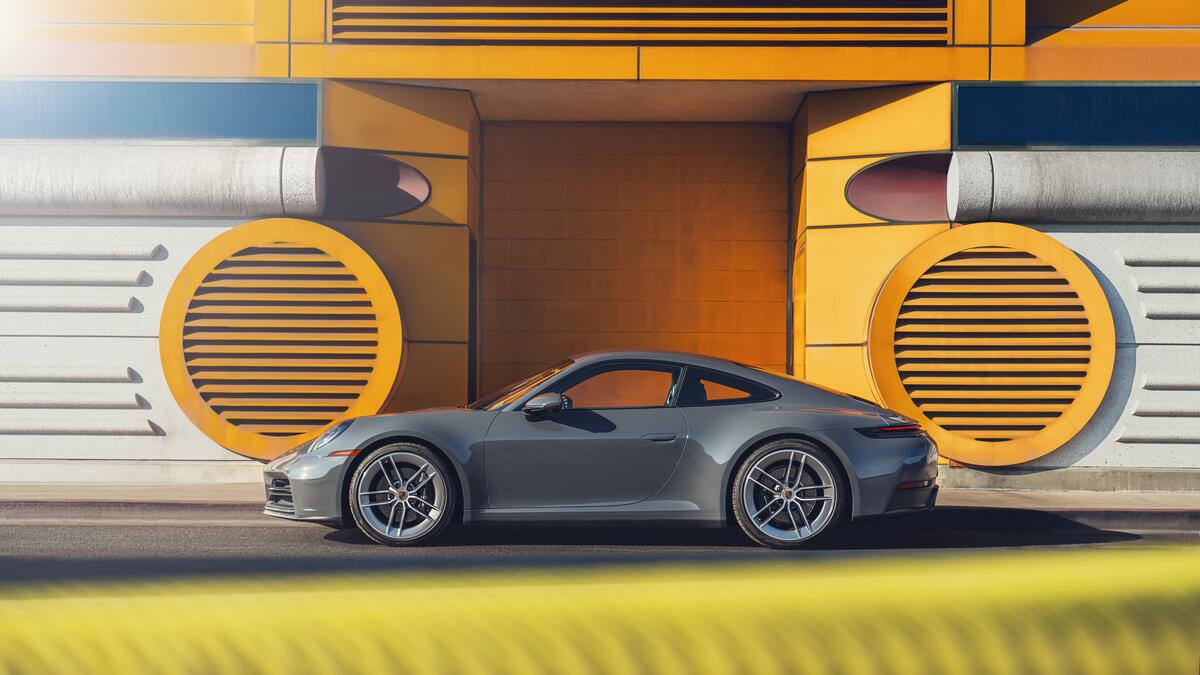
Porsche 911 T
"But, I mean, look at like the 911 T just went double in price from sticker to, you know, a resale retail in six weeks, it seemed like."
The Porsche 911 T is a more basic, driver-oriented 911 variant. They’re using it to show that some Porsche models can jump a lot in price very quickly.
The Porsche 911 T is a stripped-down, more driver-focused version of the Porsche 911 lineup. In this segment, it’s used as an example of how certain modern Porsche models can spike dramatically in market price.
resale price spike
"But, I mean, look at like the 911 T just went double in price from sticker to, you know, a resale retail in six weeks, it seemed like... everything GT2 RS is 911 RS, STs, Sport Classics, all the contemporary, and it's across the board contemporary cars."
They’re talking about a sudden jump in used-car prices. The idea is that certain special cars can become much more expensive in a short period of time.
The segment is describing a rapid resale price spike—cars that jump dramatically in value over a very short time. The speaker frames it as a market trend affecting multiple contemporary models, not just one car.
sticker
"But, I mean, look at like the 911 T just went double in price from sticker to, you know, a resale retail in six weeks, it seemed like."
“Sticker” means the original price printed on the car when it was sold new. They’re saying the resale price can end up being much higher than that printed number.
In car pricing, “sticker” refers to the manufacturer’s listed retail price shown on the vehicle’s window sticker. The speaker contrasts that original price with a much higher resale retail price.
resale retail
"But, I mean, look at like the 911 T just went double in price from sticker to, you know, a resale retail in six weeks, it seemed like."
“Resale retail” is what the car costs when you buy it again after it’s already been sold new. They’re saying the resale price can jump a lot, fast.
“Resale retail” describes the price a car sells for in the retail resale market (typically dealer or dealer-like pricing), not the original “sticker” price. The segment uses it to show how quickly certain cars can become worth far more than their original list price.

Porsche 935
"The 935 is 46, 47 years old. [1289.5s] And I don't think of that as an old car."
The Porsche 935 is a famous Porsche race car from the late 1970s and early 1980s. People love it because it was built by Porsche for racing, but it still traces back to the 911 you can picture on the street.
The Porsche 935 is a late-1970s/1980s race-focused version of the 911, famous for its dominance in endurance racing. It’s known for being a “factory race car” that was closely related to a road-going base, which is why it comes up in debates about what counts as a true purpose-built racer.

Porsche 3.0 CSL
"You know, the 935s and the 3.0 CSLBMWs were two of my favorite race cars at the time."
The BMW 3.0 CSL is a legendary BMW race-inspired car from the 1970s. It was made so BMW could race it, but it still had a real street-car connection.
The BMW 3.0 CSL is a classic homologation special from BMW, built to compete in touring car racing. It’s especially remembered for its lightweight, race-bred character and for being a road car that was closely tied to a successful race program.
factory cars
"people will give me grief about that and say, well, they're not purpose-built race cars. [1305.5s] They're, you know, they were factory cars that became race cars."
A “factory car” is a race car that the automaker itself built or directly supported. The point here is that some cars were made for racing by the manufacturer, even if they weren’t one-off custom race prototypes.
“Factory cars” means vehicles built or heavily supported by the manufacturer (like Porsche) for racing, rather than being privateer conversions. In this context, it’s used to argue that some cars were effectively race cars even if they started from a road-car platform.
purpose-built race cars
"people will give me grief about that and say, well, they're not purpose-built race cars."
Purpose-built race cars are made specifically for racing, not modified from a regular street car. The debate here is whether a car counts as “real” racing if it started life as something else.
Purpose-built race cars are designed from the start for competition, rather than being adapted from an existing road car. The speaker is responding to the idea that cars like the 935 don’t count because they weren’t “purpose-built,” even though they were manufacturer-developed race entries.

Porsche 962
"They're not a 962. [1310.1s] I don't know."
The Porsche 962 is a purpose-built Group C endurance race car that became one of the most successful cars of its era. Mentioning it in the same breath as the 935 highlights a common enthusiast argument: whether a car’s “race pedigree” is defined by being purpose-built from the start or by being a factory road-car-derived racer.
Riverside
"A 935 at Riverside back in the late 70s, early 80s, was the coolest car of any livery."
Riverside is a well-known race track in California that hosted big racing events decades ago. Mentioning it helps place the Porsche 935 in a real historical race setting.
Riverside refers to Riverside International Raceway in California, which hosted major sports car and endurance events in the late 1970s and early 1980s. It’s a notable venue in American racing history, so referencing a Porsche 935 there signals a specific era and level of competition.
livery
"A 935 at Riverside back in the late 70s, early 80s, was the coolest car of any livery."
A livery is the car’s paint and graphics for racing—basically the “look” of the car. Different teams and races can have different liveries even with the same underlying car.
In motorsport, a livery is the car’s paint scheme—colors, graphics, and sponsor placement—used for a team or race entry. Enthusiasts often judge how iconic a car looks based on its livery, especially in historic eras.

Porsche 356
"And it goes back to 356s, everything. Sure."
The Porsche 356 is one of Porsche’s earliest famous sports cars. They’re mentioning it here because it’s part of the historical roots behind later Porsche race and road cars.
The Porsche 356 is the early Porsche sports car that predates the 911 and helped establish the brand’s lightweight, performance-focused identity. In this segment, it’s mentioned as part of the lineage leading into the 911 family and race-car development.
Porsche 935
"Well, and they rebuilt the 935s. And was that 2019 or right around that area when they, oh, those, and that one, speaking of Interscope, that was in that Interscope livery, probably one of the, to me, one of the greatest livers."
The Porsche 935 is a track-only style Porsche based on the 911. It’s known for being built for racing, and here they mention a newer 935 that can also be driven on the street.
The Porsche 935 is a race-focused evolution of the 911 platform, built for endurance and customer racing. In this segment, they’re talking about rebuilding 935s and referencing a modern “new 935” that’s also street legal, which highlights how the 935 name can refer to both historic race cars and contemporary builds.
street legal
"There's a lot of great liveries, but that Interscope racing one with that new 935 was a great looking car and street legal."
“Street legal” means the car can be driven on public roads, not just a track. It has to meet rules like lights and safety requirements so it’s allowed by law.
“Street legal” means a vehicle is approved to be driven on public roads under applicable regulations (typically lighting, emissions, safety equipment, and documentation). In this context, it contrasts with a pure race car, emphasizing that the referenced 935 build can be used like a normal car.
air conditionings
"when it got to 30 years old, we started seeing the air conditionings failing, the plastic and the foam and the wiring harnesses"
They’re talking about the car’s A/C system. Over time, the parts inside can wear out or crack, so the A/C stops working even if the car hasn’t been driven much.
This refers to the car’s air-conditioning system, which uses refrigerant, a compressor, and airflow controls to cool the cabin. In older cars, the system can fail as seals, plastic components, and wiring degrade over time.
wiring harnesses
"the plastic and the foam and the wiring harnesses and, you know, just the normal things"
A wiring harness is the car’s main bundle of electrical wires. As cars age, the insulation and connectors can break down, which can cause electrical problems.
A wiring harness is the bundled set of wires and connectors that routes power and signals to every electrical component. In classic cars, insulation can become brittle and connectors can corrode, causing intermittent faults or total failures.
mileage
"just the normal things have nothing to do with mileage. You could have a 200 mile car or a 50,000 mile car and they're just aging out."
Mileage means how many miles the car has been driven. The point here is that some problems happen because the car is old, not because it was driven a lot.
Mileage is how far a car has been driven, but the speaker is emphasizing that many failures are age-related rather than mileage-related. Rubber, plastics, foams, and electrical insulation can degrade even on low-mile cars.
completely disassembled it down to a bare tub
"We took one car completely disassembled it down to a bare tub and it was a 1200 kilometer car."
They’re describing a full teardown restoration. The car gets stripped down to just the body shell so they can rebuild everything from the ground up.
A “bare tub” restoration means stripping the car down to the body shell, removing drivetrain, interior, wiring, and most components so everything can be inspected and rebuilt. This approach is common when the goal is a near-new condition and when age-related failures (like wiring, HVAC, and seals) are expected.
power steering pump
"we looked at every single thing and said, do we rebuild it? Do we replace it? Do we upgrade it? And that's how the sport canopy addition car came to be."
The power steering pump helps you steer with less effort. Over time, its seals and internal parts can wear out, leading to leaks or heavy steering.
The power steering pump is the hydraulic (or sometimes electric) component that provides assist to make steering easier. On older cars, seals and hoses can harden or leak, and the pump can wear out or fail.
HVAC system
"and then we did stuff in the clutch assembly and we upgraded the HVAC system. We upgraded certain bearings"
HVAC is the car’s heating and A/C system plus the fan that moves air. In older cars, parts can wear out, so upgrading it can bring back proper climate control.
HVAC stands for heating, ventilation, and air conditioning—the full system that controls cabin temperature and airflow. Upgrading HVAC in a classic car often means replacing aging components so the system works reliably and efficiently.
bearings
"We upgraded certain bearings that were a bearing they found to use, but there was a better bearing now. I mean, every single component in the car."
Bearings are small parts that help moving components spin smoothly. They can wear out over time, so replacing them can prevent noise and failures.
Bearings are precision components that reduce friction between moving parts. The speaker is describing replacing or upgrading specific bearings because a newer design can last longer or run smoother than the original.
horsepower
"And what's the horsepower from, it was stock 444, right, or something in that range? [1518.9s] It was exactly that."
Horsepower is a way to measure how much “work” the engine can do. Higher horsepower usually means the car can accelerate harder, especially at higher speeds.
Horsepower is a measure of how much power an engine produces. In this segment it’s used to describe how much the car’s output increased from stock to a much higher tuned figure.
torque
"It was 444 and 370 foot-pounds of torque and now we're right at 850 horsepower and about [1527.2s] 600 foot-pounds of torque."
Torque is the engine’s twisting force. More torque generally means the car feels stronger when you accelerate, especially at lower speeds.
Torque is the twisting force an engine makes at the crankshaft. This segment contrasts stock torque (444 hp / 370 ft-lb) with the upgraded setup (about 600 ft-lb), which strongly affects how hard the car pulls from low to mid rpm.
Group B
"If you look back at the car, it started out it was going to be a group B car. [1538.4s] Right."
Group B was a rally racing rule set that allowed very extreme, powerful cars. It was later shut down, so plans based on it had to change.
Group B was a high-performance rally racing category (popular in the early 1980s) known for extremely powerful, lightly regulated cars. This segment notes that the original plan was for a Group B car, but the class was eliminated before that direction could be completed.

Porsche 961
"And that class was eliminated and then Porsche took it to Le Mans and Daytona as the 961. [1545.9s] It was the road car just with a bigger body and stuff and bigger tires."
The Porsche 961 is a special Porsche built for top-level endurance racing. It’s based on the 911, but it was developed to be faster and more race-capable—then a road version followed.
The Porsche 961 is a race-bred Porsche built for endurance racing, derived from the 911 platform and associated with the Group B era. In this segment, the host explains how Porsche took the concept to Le Mans and Daytona as the 961, and then produced a road car version with a larger body and tires.
dyno
"And so we learned a lot with the first engine on a dyno because we noticed the lag because"
A dyno is a test machine that measures how much power an engine makes. It lets people see problems like delays or power losses while the car is under load.
A dyno (dynamometer) is a machine used to measure engine output and behavior under controlled load. It helps teams spot issues like power drop-offs, lag, and how changes affect horsepower and drivability.
sequential turbos
"of the sequential turbos and I'll never forget the conversation with one of the guys."
Sequential turbos are two turbo setups that come in one after the other. That helps the engine build boost sooner, but switching between them can cause a brief power dip.
Sequential turbos use more than one turbocharger in a timed sequence so the engine gets boost earlier and more smoothly. The tradeoff is that the transition between turbos can cause a noticeable power lag or drop.
straight twin turbo
"And then I said, we're just thinking of making it a straight twin turbo."
A straight twin-turbo setup typically means two turbochargers feeding the engine in a more direct, simultaneous way rather than switching sequentially. Compared to sequential turbos, it can reduce transition losses, but the best approach depends on engine size and target response.
gearbox
"So the gearbox, the differential, the drive line, the axles, the control arms, that was"
The gearbox is the transmission that changes gears. It has to survive the engine’s torque, especially on high-horsepower cars.
The gearbox is the transmission that selects gear ratios to match engine speed to vehicle speed. In high-power builds, the gearbox must handle torque loads without failing or overheating.
differential
"So the gearbox, the differential, the drive line, the axles, the control arms, that was"
The differential is a gear system that lets the wheels turn at different speeds, like when you corner. It also has to handle the power being sent to the wheels.
The differential is the gear unit that allows the driven wheels to rotate at different speeds while still receiving power. It’s critical for traction and durability, especially when torque levels are very high.
drive line
"So the gearbox, the differential, the drive line, the axles, the control arms, that was"
The drive line is the set of parts that sends power from the transmission to the wheels. If it’s not strong enough, it can fail when the engine makes a lot of torque.
The drive line is the drivetrain hardware that transfers power from the transmission to the wheels (commonly including shafts and related components). When teams say they want “no failures in the drivetrain,” they’re usually talking about the drive line’s strength and reliability under load.
axles
"So the gearbox, the differential, the drive line, the axles, the control arms, that was"
Axles are the shafts that deliver power to the wheels. With big horsepower, they can become a weak point if they’re not built to handle the load.
Axles are the shafts that transmit torque to the wheels. High-power racing builds often need stronger axles (or better materials and design) to prevent bending, cracking, or driveline vibration.
control arms
"So the gearbox, the differential, the drive line, the axles, the control arms, that was"
Control arms are suspension parts that hold the wheels in the right position. They help the car stay stable and keep the tires working well, especially under hard driving.
Control arms are suspension links that locate the wheels and control their movement. On a high-power race car, they’re part of how the chassis manages traction and keeps geometry stable under acceleration and braking.
grip
"Because that thing is just unbelievable how well the grip is in it."
Grip is how well the tires can stick to the road. If the car has good grip, it’s easier to turn, stop, and accelerate without the wheels sliding.
In driving terms, grip is how well the tires can hold the road without slipping. More grip generally means better acceleration, braking, and cornering confidence.
OEM
"And he said, when an OEM recommends your services, you know you're doing something right. [1709.3s] Because Porsche told him to call you."
OEM stands for “original equipment manufacturer,” meaning the company that built the car (or its major components) in the first place. When an OEM recommends a shop or service provider, it’s a strong signal that the work meets the manufacturer’s standards.
Porsche 959
"But they were asking him each a question. [1733.7s] And when you asked him his favorite car, he said the 959."
The Porsche 959 is a very famous older Porsche supercar. People love it because it was packed with cutting-edge technology for its time and it was designed to be driven, not just looked at.
The Porsche 959 is a landmark Porsche supercar from the 1980s known for advanced engineering and all-weather capability. It’s famous for its sophisticated all-wheel-drive system and for being one of the first “tech-forward” performance cars that still feels usable today.
all day long
"But the key to the car is that it's drivable. [1750.6s] Yeah. [1753.3s] You can drive it for all day long and no fatigue."
They’re talking about how easy the car is to drive for a long time. It’s basically whether you can do hours behind the wheel without getting tired or annoyed.
In this context, “drivable” and “for all day long” are describing long-distance usability—how comfortable and fatigue-free a car feels over extended driving. Enthusiasts often use this as a practical measure of chassis refinement and ergonomics, not just speed.
tire noise
"No fatigue. [1757.3s] Yeah. [1758.2s] That's the key. [1759.4s] No tire noise, no harshness in the chassis, not uncomfortable seats, great visibility,"
Tire noise is the road-sound you hear from the tires. If a car has low tire noise, it feels quieter and more comfortable, especially on long drives.
Tire noise is the sound the tires generate while rolling, especially on certain road surfaces or at highway speeds. Reducing tire noise usually points to better tire choice, tread design, and overall noise/vibration/harshness (NVH) refinement in the chassis.

Acura Nsx
"Well, it's kind of like, you know, Honda did that with the Acura NSX, you know, they made it a real drivable and easy to drive car..."
The Acura NSX is a sports car with a layout that helps it handle well. The point here is that it’s not just fast—it’s also practical and easy to drive compared to some harder-to-drive performance cars.
The Acura NSX is a mid-engine sports car known for being unusually easy to drive for its performance level. In this segment, the host compares it to the idea of a “real driver’s car” that you can use day-to-day without it being overly difficult.

1967 Cadillac El Dorado
"It was the, this is going to sound goofy, but it's one of my favorite body styles of a car, the 1967 Cadillac El Dorado."
The 1967 Cadillac El Dorado is a famous classic Cadillac from the late 1960s. It’s remembered for its bold styling and comfortable, cruiser vibe—so it makes sense the speaker loves the body style.
The 1967 Cadillac El Dorado is a classic American personal-luxury/flagship-style coupe known for its big, distinctive styling and comfort-focused character. In this segment it’s called out as one of the speaker’s favorite body styles, highlighting how classic Cadillac design can be a “favorite” even compared to modern sports cars.

Cadillac El
"...one of my favorite body styles of a car, the 1967 Cadillac El Dorado. Oh my God."
The Cadillac ELR is a luxury car from Cadillac that uses both electricity and a gasoline engine. It’s shaped like a coupe, meaning it’s designed more for style than for a big back seat. The podcast mentions it while talking about Cadillac’s different body styles.
The Cadillac ELR is a luxury plug-in hybrid coupe from Cadillac. It’s significant because it brought an electric-assist concept to a more traditional luxury body style. In the podcast, the ELR is mentioned in the same breath as the 1967 Cadillac Eldorado, indicating the discussion is about Cadillac body styles and design appeal.
Group C cars
"he's got, he's got some of the best F1 cars in the world, Group C cars, GT cars, owned at any one time for McLaren F1's different models of them."
Group C cars were purpose-built race cars made for long-distance endurance racing. They were designed with special rules that pushed teams to be both fast and efficient.
Group C cars were race cars built for the FIA Group C sports-prototype category, which emphasized endurance racing and fuel/efficiency rules. They’re known for purpose-built aerodynamics and engineering that often influenced road-car technology.
GT cars
"he's got, he's got some of the best F1 cars in the world, Group C cars, GT cars, owned at any one time for McLaren F1's different models of them."
GT cars are race cars that are based on real production cars. They’re built for racing, but they keep a closer connection to the look and basic idea of road cars.
GT cars are grand touring race cars based on production-car platforms, typically competing in GT classes. They’re usually less “prototype” and more closely related to real-world car shapes and components than pure prototypes.
less is more
"all my design history is less is more. I'm never, you know, I'm never the guy that's going to, you know, put two spare tires on the deck lid, right? I'm, I'm less is more."
“Less is more” is a design idea that says simpler usually looks better. In car terms, it means keeping the styling clean instead of adding extra details that don’t help the overall shape.
“Less is more” is a design philosophy meaning you achieve better results by removing unnecessary elements rather than adding more. In automotive styling, it often translates to cleaner lines, fewer visual distractions, and more intentional proportions.
deck lid
"I'm never, you know, I'm never the guy that's going to, you know, put two spare tires on the deck lid, right? I'm, I'm less is more."
The deck lid is the rear hinged panel that opens to access the trunk. Its shape matters because it helps define how the back of the car looks.
The deck lid is the hinged panel on the rear of many cars that covers the trunk opening. In custom design discussions, it often comes up because its shape and proportions affect the rear-end styling.
one-piece grille
"extending the bumpers here, changing the shape of this, you know, machining all new parts for a one-piece grille and changing the front bumper."
A one-piece grille means the front grille is made as one continuous piece. Custom builders do this to make the front look cleaner and more unified.
A one-piece grille is a grille design where the main grille section is formed as a single integrated piece rather than multiple separate sections. In custom bodywork, it can improve visual continuity and make the front end look more cohesive.
Request an Explanation
Heard something you'd like explained? We'll add it to this episode.
Sign in to request explanations for terms you heard.
Want to learn more?
Browse our glossary for plain-English explanations of automotive terms, jargon, and concepts.
Help improve this episode
See something that's not quite right? Our annotations are AI-generated and can sometimes miss the mark. Click the flag icon on any annotation to suggest a correction.