Crossed a Continent - A Lifetime Motorcycle Travel Dream
Adventure Rider Radio – Motorcycle Podcast
Crossed a Continent - A Lifetime Motorcycle Travel DreamAdventure Rider Radio – Motorcycle Podcast · Jul 17, 2026
Annotations will appear as you listen
0:00
57:02
Car
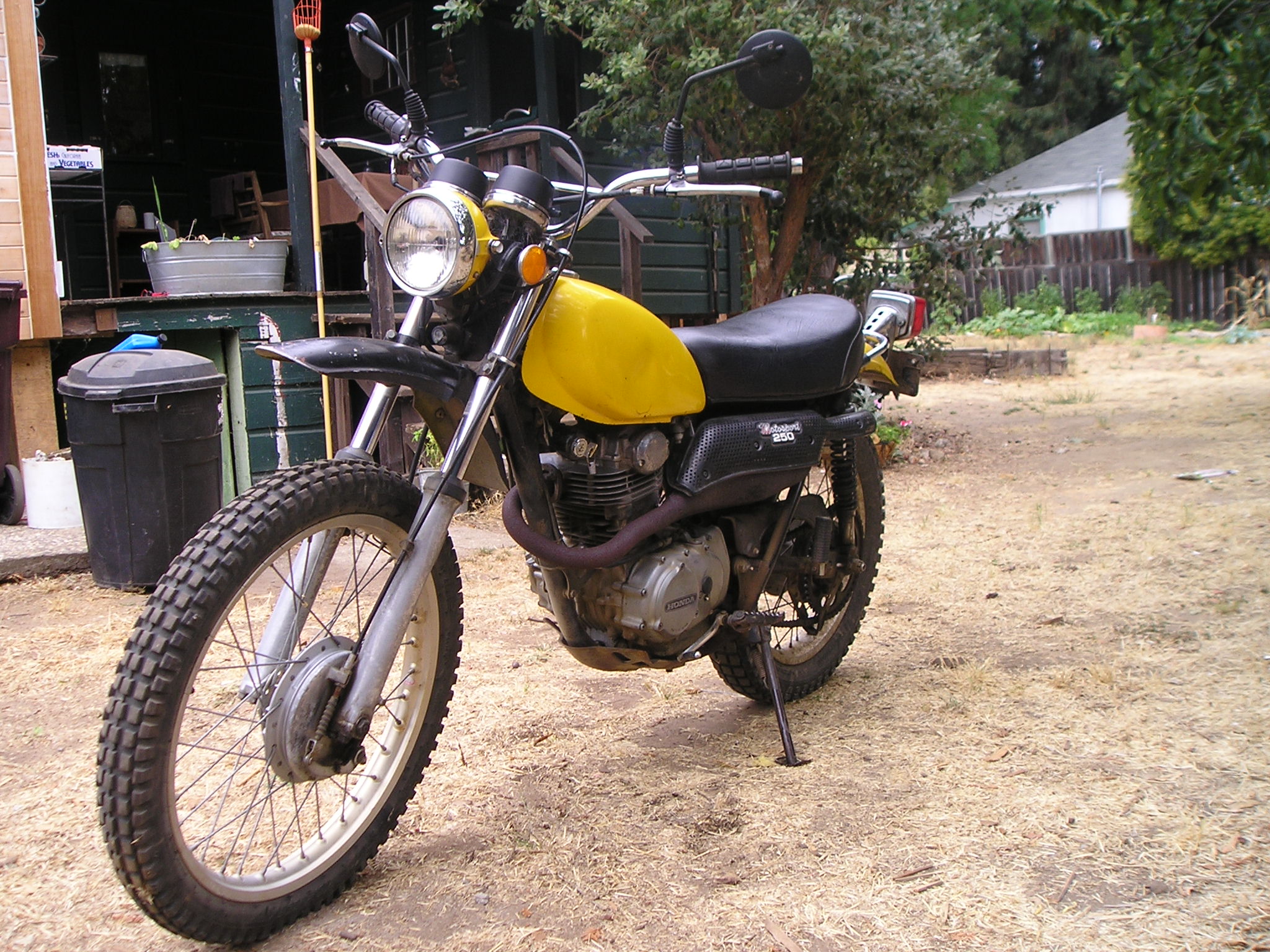
Honda XL250
The Honda XL250 is a small motorcycle made by Honda that can handle both paved roads and dirt trails. In the episode, it’s the exact bike that sparked the travel dream.
Dual-sport motorcycles are made to ride on both regular roads and dirt trails. That’s why they’re a good choice for a big trip like crossing a country.
A quagmire is basically deep, muddy ground that’s hard to get through because it’s soft and slippery. The rain turned the clay road into that kind of mess.
Horsepower is how strong the engine is. “27 horsepower” means the bike doesn’t have a lot of power, so it won’t feel very quick compared to bigger bikes.
Suspension is what helps the bike absorb bumps. If it’s not set up for your weight, the ride can feel harsh or unstable, so you may need changes to the front and rear suspension.
A dirt bike is a motorcycle made for riding off-road on dirt trails and uneven ground. It’s usually built to handle bumps and traction changes better than a street bike.
The Nullarbor Plain is a huge, mostly flat area in southern Australia. People mention it because it’s a common “straight across” route when traveling from one coast to the other.
Place
Gibbson Desert
This is a very remote desert area in Australia. Riding through places like this usually means lots of rough terrain and long stretches with few services.
“Coast to coast” just means going from one side of the country to the other. For riders, it can sound simple, but the inland part can be very long and rough.
A “donger” here means a temporary, prefab room used for work camps. It’s basically a small metal cabin that can be moved and used like a place to sleep.
GPS files are saved route directions for your navigation system. Instead of guessing roads, you follow the track so you don’t get lost in remote areas.
A “fuel crisis” means gas stations may be unreliable or fuel may be hard to find. So the riders had to bring extra fuel to make it across long stretches.
Wheel bearings are small parts that help your wheel spin freely. When they wear out, the wheel can feel rough or loose, which is why riders replace them before a long trip.
Brake shoes are the replaceable friction surfaces that slow the bike down. If they’re worn, braking can feel weaker, so riders swap them before a big trip.
Tubes are the inner inflatable rubber components used in some motorcycle tire setups. If a tube fails (puncture/slow leak), it can leave you stranded, so carrying spares and replacing worn ones is common for long-distance travel.
The front tire is the one that steers the bike and helps with braking. If it gets worn, the bike can feel less stable, so riders swap front tires when needed.
The rear tire is responsible for traction when you accelerate and for keeping the bike stable. If it wears too much, grip drops, so riders replace it before it becomes a problem.
The chain is what transfers engine power to the back wheel. If it wears out or stretches, it can slip or wear other parts faster, so long-distance riders replace it.
Sprockets are the gears the chain wraps around. If the chain and sprockets wear unevenly, the drivetrain can feel rough or fail sooner, so riders often replace them as a set.
Lock tight is a sticky chemical you put on bolt threads so they don’t loosen from shaking. It’s a common trick for long trips where the road is rough and vibrating.
Corrugated roads are bumpy, ribbed surfaces that make the bike shake a lot. That shaking can loosen bolts and make parts wear faster, which is why riders prep for it.
A carburetor is the older-style way motorcycles mix fuel and air. The speaker is noting that this bike was one of the last versions that still used that system before newer ones changed.
D606s are a particular off-road tire model. The tread pattern is designed for dirt, and the rider is saying it worked well in dry conditions but felt different in mud.
Term
modest desert rally
“Desert rally” describes a tire meant for dry, loose terrain like desert dirt. It can be great on dry ground, but mud is a different challenge and tires can perform differently there.
Concept
forward drives chop the roads up
They’re explaining that when roads are wet and muddy, vehicles tear them up and form ruts. When it dries, those ruts become hard and bumpy, which makes riding on the road risky.
An Atlas throttle lock is a gadget that lets you set the throttle so you don’t have to keep gripping it. It can make long rides more comfortable because your hand and arm get less tired.
Factory cruise control is built into the bike and helps it keep a steady speed without you constantly controlling the throttle. If your bike doesn’t have it, you may use a throttle lock instead.
Overland Expo Mountain West is an event focused on overlanding and adventure riding, with on-site camping and hands-on activities. The host highlights it as a place to see real bikes and gear setups and talk to experienced riders.
Overlanding is traveling for a long way with your own setup—usually camping and being prepared for places that don’t have services nearby. Here it’s about motorcycle trips and gear.
Roadside repairs are fixes you do when you’re broken down or stopped on the side of the road. The point is to learn practical steps so you can handle problems in the field.
GPX importing is how the app loads a saved GPS route file. It’s useful because you can plan a trip on your computer or another app, then load it into your phone for navigation.
CarPlay support means the app can show up on your car’s screen if your car supports Apple CarPlay. It helps you use navigation without constantly touching your phone.
The Flinders Ranges are mountains in South Australia. They’re known for really dramatic scenery—lots of valleys and dry, desert-like areas—which makes them a memorable place to ride through.
Cell reception is whether your phone can connect to towers. In remote areas, it can be so weak or nonexistent that you can’t rely on live maps or streaming directions.
The hosts emphasize that when Wi‑Fi and cell reception are often unavailable, you must prepare navigation ahead of time. This includes loading GPS routes and offline maps before entering remote regions.
Term
maps in the track
It means downloading the route and maps ahead of time. Then you can follow your planned path even if your phone can’t get signal.
Place
Udna data track
They planned to ride a specific track, but it was flooded. In remote areas, storms can turn dirt tracks into impassable routes overnight.
The Jeep Compass is a small SUV made for regular driving, like errands and road trips. It’s designed to be comfortable and useful, and some versions include features that help on rougher roads. People mention it when they want a vehicle that can handle different kinds of driving.
Term
250 kilometres
Here, “250 kilometres” is how far they expected to ride on dirt. Long dirt sections are harder and you need to plan fuel and timing carefully.
“Local advice” means asking people who live there what the road is really like. In remote areas, that can be the difference between a safe ride and getting stuck.
Topic
fuel planning
Fuel planning means making sure you have enough gas to get where you’re going—or to turn around safely. It’s especially important on remote roads.
Top gear is the highest gear your bike has for faster cruising. If you can’t go fast enough—like when riding into strong wind—you might not be able to use it.
Western Australia is the large state on Australia’s west side. The speaker mentions it because they heard a warning about how rough a road there would be.
Gears are different “speeds” your bike can use. Third gear is usually a middle gear that helps when you’re going uphill or moving through rough terrain.
Pre-planning is figuring out your route and logistics ahead of time. For long rides, it helps you avoid getting stuck because you didn’t know what roads you’re allowed to use or where you can stay.
“Bogged down” means the bike loses power and slows because it can’t keep moving effectively. On soft sand, the tires may not grip, so the engine struggles to pull you out.
This is the group that controls permission to use certain roads on Aboriginal land. It means you can’t just show up and ride—you may need approval first.
Foot pegs are the platforms you stand on and rest your feet on while riding. On rough roads, the peg design can change how stable you feel and how easily you can control the bike.
IMS Products makes aftermarket parts for motorcycles. Here they’re talking about their foot pegs, which are designed to help you grip better and feel more in control off-road.
A “watershed design” on off-road foot pegs refers to a shape intended to channel mud and debris away from the rider’s contact area. The goal is to keep traction consistent even when the peg gets dirty.
A lifetime warranty means the company promises to stand behind the product for a long time—typically for the life of the item—if it breaks under normal use. The exact rules can vary, but it’s meant to reduce your risk buying it.
Stainless steel is a metal that resists rust. Using it for foot pegs helps them last longer, especially when you ride in wet, muddy, or salty conditions.
Term
shipping on one end
If you ship your bike to the wrong place, a delay or problem can ruin your trip. The idea here is to ship it so you’re not stuck without your bike for most of the ride.
Fork seals are the seals in the front suspension that keep the oil where it belongs. If they leak, the front suspension doesn’t work as well and the ride can get bouncy or rough.
“Taco” is slang for the tachometer, the gauge that tells you how fast the engine is spinning (RPM). They’re saying they’d glance at that gauge while riding.
Car
DRZ 400
The DRZ 400 is a dirt-capable motorcycle that’s also street-legal in many places. Here, it’s mentioned as a smaller bike that can still handle long trips.
A winch is a motorized cable tool used to pull something out when it gets stuck. Here, the rider is saying they didn’t rely on that kind of recovery help.
LIVE
When a guy named Alan Walden was growing up in Australia, he stumbled across this magazine
article. It was about 1974. The article was about a guy who wrote a Honda XL250 all the
way around Australia. Now at the time, Alan's brother owned the exact same motorcycle. That
got Alan to thinking. That story planted an idea with him. Not really a plan, but one
of those ideas that sits somewhere in the back of your mind that you never really let
go of. Because nearly 50 years later, at age 68, Alan decided it was time. He and a
friend set out to ride from the Pacific Ocean to the Indian Ocean, more than 6000 kilometers
or 3700 miles across Australia. Now they weren't taking the quickest route or the easiest route.
In fact, they were taking the long way through the interior and they were riding two small
dual sport motorcycles. They planned it carefully. They worked out the tracks, the fuel stops,
permits, food, water, where they were going to sleep, all the things that you need to think
about when you're traveling through country where there might be hundreds of miles or kilometers
between services. And they chose May. They chose May for a reason because May is supposed to be
dry. But on day two, it started to rain. Pretty soon, roads were closed. Some of the tracks they
planned to ride were underwater. The desert was cold instead of hot. They ran into deep sand,
punishing corrugations, relentless wind. And that red clay road that's so nice to ride when
it's dry became a slippery quagmire that was almost impossible to get through. In fact,
150 kilometers stretch took them three hours. It wasn't the trip they planned. In fact, it wasn't
even close to the trip that they planned. But when they finally reached the other side of Australia,
when they finally completed it, Alan said that if somebody had serviced his bike and told them
that he had to ride the whole thing again backwards, he would have happily done it. Today,
Alan Walden's story. I'm Jim Martin. This is Adventure Rider Radio. Stay with us. We get a good one for you.
Experience Riders choose the Cycle Pump Tire Inflator made by Bestress products for one reason,
because they can count on it when they pull that out of their pannier no matter what. They're so
tough. They're warrantied for life. Bestress has loads of other motor-specific products like the
Hex Wrench, which is a combination tire iron slash wrench, and they're known for their top quality
tire plugs and patch kits. More at CyclePump.com. And Green Chili Adventure Gear offers American
Made heavy-duty luggage systems for all types of motorcycles. You can turn any dry bag into
luggage using their strapping system. And of course, Green Chili Adventure Gear is tested
in extreme weather and terrain to withstand the abuse that Adventure Riding gives it. Tough,
reliable gear, GreenChiliADV.com. Hello, I'm Alan Walden. I lived in New South Wales, Australia.
Retired 10 years ago and now live at a place called Barrington, which is a world heritage
area.
Alan, welcome to Adventure Rider Radio. Thank you. How long have you been riding for, Alan?
Probably since I was trying to work that out last night. I think it was probably about 1972.
I started on a little Dexter mini bike, which was basically a glorified lawn mower with a full
start, and then progressed and had a few more bikes and probably had somewhere around 30, 35,
maybe 40 bikes over the years. All basically small dirt bikes had one road bike in my life.
So how old were you when you got your full licence?
I got it about four years ago, five years ago, when I got my full licence.
So how old were you then?
I'm 68 now, so yeah, 63 or 4.
So you live in a sort of an adventure area, do you?
Yes, we're on a 150 acre farm, probably about 70 cattle on it. And it's at the base of the
Barrington tops. I can ride out my back door here and within eight kilometres I'm on dirt and then
I'm on dirt all day. So dirt is in where you can drive before we drive.
And it's beautiful, like we're at, Barrington tops is over 5,000 feet high. It'll snow up
there in winter where we are here, we're about 350 or 400 feet above sea level. So it's quite
hilly for Australia, sort of quite mountainous and it's quite beautiful. You've got the
the rainforest and that up there. It's a really nice part of the world.
So where do people come from to go there?
Generally, so we're an hour from the coast and that coast in New South Wales is stunningly
beautiful. And you've got Newcastle, which is an hour and a half down the road. There's a
million and a half people there. So and there's the town where it's only quite small. It's only
two and a half thousand people. Oh, right. And so is it quite busy? Like when you head
up to these dirt roads, do you see a lot of people? No, that's the thing. I've been lucky
enough to travel the world a little bit. I've probably done about 30 countries, I think.
I still haven't found anywhere that says where you can find nothing like Australia,
where you can go and just be by yourself. And I can go up and ride here all day and probably
only see half a dozen cars. What kind of riding do you do with your bike?
Dirt. I'm terrified of the tar. I've just been on dirt bikes all my life. When I got my license,
I brought a little Honda 300L. And then some time after that, I wanted the rally and I couldn't get
one. And my mate, who I actually ride with a bit, rang me up and he said, there's one at the bike
shop over here. He said, it's just been cancelled. So I jumped straight on the phone. I know the
people and I said, I didn't even ask him how much it was. I said, just put my name on that. Oh, bye.
And in that time since then, I sold the other one on them two little bikes. I've done about 40,000
cars now. And they're just the little 300s. They're not fast. They're only 27 horsepower.
They're a nice little bike to ride, but that's definitely not quick.
So you've got the rally now, do you?
I've got the rally now.
What's the difference between the rally and the L?
No, the suspension on them is not good. You have to put suspension on if you're going to ride dirt
on them by it. The suspension on them set up to 70 kilo riders, I think, basically on road.
So you've got to put suspension in them and I weigh 100 kilos. So we had to do the front and
back suspension. But the difference is that the size of the tank, the rally tower on the front,
the headlights, mainly just the plastics and things, but it's got you go from 210
kilometer range on the fuel tank to 380. So it just gives you that extra distance.
Apart from that, they're basically the same bike.
So you've done other trips like you've flown to other countries and done motorcycle trips. Is
that what you've done before? Because I know we're about to talk about a trip right now that
is the result of another trip getting canceled. And I'm kind of wondering where that comes from.
So I haven't done other motorbike trips in other countries. I've wanted to.
I've done a lot of other trips to other countries. We do a lot of forward driving in New Zealand,
because it's so close here. I've traveled a fair bit of Africa over the years,
but mainly just traveling, not on a motorbike. And there's restrictions in life, what we can do.
I'm married, my wife doesn't get up, go on the motorbike. So that limits your time somewhat.
You can't be away for six months. There's other things in life that sort of regulate
what you can and can't do, I suppose. But yeah, this trip that we did was definitely a result
of another trip that I really wanted to do. So we'll talk about this trip. You booked,
I mean, we don't want to get into details about the trip, but you booked a trip in the US.
Yeah, I booked, I think it was, so we booked, it was a seven-week holiday. The bike ride itself,
from memory, I'm going to say it was 18 days, that might have been 20. My wife was the travel in
the support vehicle. So it was a supported ride with six riders. And it was about two weeks before
we were going, everything was in order, all our accommodation was forward accommodation was booked
after the ride because we're doing the ride first. And I just had sent a WhatsApp message just to
find out a little bit about gloves, what sort of pants, just bits trying to load what I needed in.
And I just got a very brief message back that the trip's cancelled. And to say I was upset was
probably an understatement. And the thing that upset me even more, I did send them, I waited
two days, I'm always like, wait two days before you absolutely rip into people and think about it.
And I sent them quite a detailed, non abusive, but straightforward message about reasons. And I
never ever got a reply, which really upset me. I did get my money back. I still dropped a few
thousand dollars because some of the flights we had to cancel on at that stage, we couldn't get
money. And because we canceled, we couldn't get insurance. But the trip to us, I will say,
was probably one of the best trips I've ever done as a car trip. I just took the scenery,
blew me away. The people were fantastic. I just loved the US. I'm not following. So you went
anyway? Yeah, we still went because it was a seven week trip. And we only had 20 days of the bike
ride in that seven weeks. There was only 20 days of the bike ride. And everything had all been
paid for. So yes, we still went and the trip turned out to be fantastic. So how did that trip
then turn into this trip across Australia? Well, I've got a good mate that I ride with,
and he's a good mate, a really good mate. He's 20 years, he's young enough to be my son.
And he was here. We're sitting out having a coffee. And I said, why don't we just get our
bloody bikes? And I said, ride from here to Perth. I said, I always wanted to do it when I was a
kid because I read an article when I was young about a guy that rode a 250 round Australia.
And I thought, I'm, I'm gonna, you know, the old thing, I'm gonna do it. I said, I'm gonna do that
one day. And so my surprise, he said, yeah, he said, you do all the planning. And he said, we'll
do it. Okay, so let me back up here. You, you read an article? What was that?
1974, probably it was. And this is long before internet or anything. It was just
magazine you'd buy. And it was dirt bike or one of them. And a guy had a XL 250, the old
Silver Honda. And he rode it around Australia. Now in them days, that is a mammoth trip. Like
that was a mammoth trip. And I remember reading it. And he said, and again,
he hung it up on the wall in his garage, the bike. And yes. And at the same stage,
my brother had one of them bikes. And he used to let me write it to work. So I'd ride this 250
to work. And I thought I was king of the road. I thought this is the most powerful bike ever made.
And I thought one day I'm going to do that. And I'm going to ride around Australia.
And then my mates said, well, if we're going to do it, we'll start over on the coast on the
beach at the Pacific Ocean. It just an hour east of us. And he said, we'll ride to the Indian
Ocean. I said, yep, sounds like a plan. And that's how it started. But it was the long way. We
weren't doing the trip the short way. The short way is straight across and across the famous
Nullarbor Plain. We were trying to do as much dirt as what we could do. So that meant we're
out past the Uluru Weirs Rock through the Gibbson Desert and out through the Great Victorian Desert.
And there was probably 4,000 K's of desert country we went through.
Okay. So for those who don't know Australia very well, when you just say we're going to go coast
to coast, it sounds fairly easy, but try and give us a perspective on that. How big of an area are
we talking here? So Australia is a big country. And most people live on the coast. So it took us,
so one thing, if we go back to the United States, the thing I noticed in the United States, your
states are really tiny. You drive all day and you can drive through a couple of states. Well,
here to start with the first five days, we're still in New South Wales. And we spent five days
in South Australia and then two days in Northern Territory. And then you get to Western Australia
and you think, God, we're nearly there. And it's another week before you get to the other side.
And that's averaging 340 kilometers a day or 350 kilometers a day.
So 350 kilometers is 200 miles. So 200 miles. But you're not talking asphalt here,
you're talking this is dirt.
So the original plan was 6,000 kilometers. The original plan was four and a half thousand of
dirt. And you know how when you plan everything, nothing ever goes wrong, does it, until it rains.
And because we went in May, it never rains in May. And we left here on day one and it was beautiful.
And we'd done our 360 kilometers and got to a little town. And then we woke up to heavy rain.
And that was about the extent of the trip for the next 10 days was just wet.
Well, hang on. Let me back up here before you before you leave here. So we've got a country
that is huge as a continent, absolutely huge to cross. But not only is it huge, you just said
most people live on the coast. So when you start to go inland, when you're making your crossing,
the population density drops way down. So we left for instance, at one stage,
we left a place called Port Augusta in South Australia. We rode 1200km in a straight line
before we turned left ahead to the deserts. And I think it was something like there was one small
town at Ayrs Rock, which is a tourist town, which is, but no one really lives there. But there's
a tourist town where you'll pay triple the price of anywhere else in Australia. And
there's little garages, roadhouses and things like that. But there's not really towns as
you have Aboriginal community should go through and you can get fuel, accommodation, food,
but like, you're not going to buy a motorbike, tire or tube or anything.
Right. These are great distances with very little in between. You said over 1000km,
a stretch there in that one spot your time with us. So this is like 600 miles.
1200km. And I think there was like 700 miles and a couple of roadhouses.
But you just said prep. So your buddy says, yeah, you go ahead and do all the prep.
What sort of prep are you doing to do this trip?
So we tried to do it, which we did in the end,
accommodated. So I had to find out where we could get accommodation. Now, this accommodation might
just be what we call a donger, which is a transportable like a mining. It's just an aluminium
thing they put on the back of a truck that's just got a bed in it, basically.
Or pubs, we'd get pub accommodation, which would just be a basic room and a feed.
And we did get that the whole way through. We were lucky, I'd book ahead and we'd get it.
But I had the other planning was the tracks, where we were going, what roads we're taking,
because you're doing dirt. So we've got to do GPS files to find where the roads go.
The other thing was what distances there between towns, how much food do we need to carry,
how much water do we need to carry? Most days we couldn't get lunch, so we could get breakfast
somewhere. But then we'd have to buy our lunch. And you don't have a lot of room on the bike to
carry that. Because of the fuel crisis, we had to carry extra fuel. So we're carrying enough fuel
to do 600 kilometres. So my side bags in each side, I had a five litre container in each side bag
with fuel and it just in case we needed it. Well, what about the bikes themselves though,
as far as prepping the bikes? Do you have to do anything to get the bikes ready to go?
Yeah, so basically my bike had 17,000 kilometres on it before I left. I put in new wheel bearings,
new brake shoes, new tubes. We got a tyre on day three at the last decent town on the back.
We put new front tyres on and tubes. Just because I didn't think one tyre would do the whole trip,
so we waited until we were about 1200km from home or 1400km and we put new back tyres on both bikes.
I put on new chains, or we both put on new chains and sprockets. So we did all the things that we
thought are likely to fail. So there was a fair bit of like just I suppose normal prep,
where you make sure that everything was as good as you could get it. Went over every
nut and bolt and lock tighted a lot of things because most of the roads are corrugated.
So you're going to be shaking screws and bolts out and even that, my mate's bike and his was
much newer than mine on the first day. The bolts came out of the exhaust and he had the door
repair on it. So do you end up taking all the bolts out? Like everything you can think of
out in lock tighting it? Or do you actually know from other people riding it saying, hey,
you better do the exhaust on this one, the tower, the instrument panel on this one?
That was basically what we did, the stuff that you know is going to fail. And that was his
exhaust one that failed. And it's, yeah, it's just the tower, all the GPS things. The revision
mirrors on my bike are only standard, they come loose, so I lock tighted them. Just the simple
things, it was just simple preventative maintenance. No mods? You didn't do any mods to the bike?
My bike's got a lot of mods. It's got different handlebars. Mine's got suspension upgrades,
racks. It's very personalized to how I ride. So it's, yeah, it's like my wife said one day,
I don't know how you buy such a cheap bike and spend so much money on it. But yeah, it's just
modified to the way I like it. Like no mechanical mods really, I just try to run the best X-ring
chains I can get. Because you're on corrugation, standard chain stretch, you end up just adjusting
chains all the time. So you spend the extra money and it just pays dividends down the line.
What about tools and stuff? Do you take a bunch of tools with you?
We took a, yeah, so we went through all the tools like in very fine detail before we left
and made sure we had every tool we needed and we didn't double up on tools just trying to keep
the weight down. You're both riding the same bike? No, no, my friend was on a DRZ400 brand new one.
So he's getting his tools sorted and you're getting your tools sorted, right?
And he's was the last of the carburetor models before the new one came out.
So yeah, both pretty basic standard-ish just off-road bikes, I'd say single cylinders. And
that was the idea of it, to do it on a single cylinder bike that's not fast, that is a dirt bike.
Most of the guys that'll do this, and a lot of people will do these trips,
most of them will do it on like a GS or a nice KTM or an African twin or something with a bit of
comfort. Ours have just pretty bulk standard dirt bikes, 80% dirt tires on them. Something
you don't really want to sit on the highway for more than two hours. Right. You said you put new
tires on. Are they D606s? Is that what you're running? 606s on the back, we both run. Yeah.
I ran a modest desert rally on the front, which is usually terrific. I didn't like it as much in
the mud. That was a different story. But yeah, but the tires were good. Right. And when you were
left though, you weren't expecting a ride mud, were you? When we left here, we booked in May
because it doesn't rain in May. Right. And day two, they predict. So what happens in outback
Australia, and that's pretty much from say the middle of New South Wales, once you get five
mil of rain, all dirt roads are closed. Why is that? Because they're slippery, they're clay,
and you chop the roads up. The forward drives chop the roads up. So you get the big ruts in it,
then it dries, and you've got these really dry ruts, which are deadly on the road. Oh,
they're ruined in season sort of thing. Yes. Right. So we left here day two, the rain started,
and we were still on dirt roads at that stage, and we just ran into one closed dirt road after
another, trying to backtrack to get where we're going. So you leave at a time when it's supposed
to be dry. Dryest month of the year. But you pull out and it starts to rain. What runs through
your head at that point? We knew the rain was coming, and we'd sat down and had a big conversation
before it. My riding partner, he has to work for a living. And he said, look, we can put it off to
next year. And I'm a bit of a realist. And I just said, you know, next year, sometimes never happens.
And I'm like, you know what, we've got, we're all geared up, you know, we've got wet weather gear.
Let's just do it. If we don't do it now, that I'm 68. I said, if we leave it at the next year
or the year after, it might happen. And I'll tell you, I hate riding in the rain, probably more than
80% of riders. So I just had to reset my brain a bit. I don't particularly like riding on Asheville.
I'm not a road rider by any stretch of the imagination. I'm an old dirt rider. And I'm just
an average rider. I'm just an average hack rider. Like there's nothing, I've never been anything
fantastic. But I just reset my brain. I'm like, we're doing this, it is the bloody trip of a lifetime.
And it, and it rained that second day, it rained the third day, it rained,
and they were predicting five mil a rain. And we ended up getting 50, so two inches.
So what happens when you get 50 mil of rain?
You just get on the bitumen and ride the, ride the Asheville.
What's, what's it do to the roads there? What's it look like on the, the land?
That country holds water. So, so 50 mil a range, two inches. You're talking about
country that's got between a 12 and 18 inch rainfall. The bitumen itself is quite okay.
It's just when you get on the gravel, because a lot of amount gravel, they'll be red clay.
And that's not real good in the wet.
Some of the best things you can add to your motorcycle solve a problem you didn't fully
realize that you even had. And for me, that's what I experienced with the Atlas throttle lock.
I didn't realize how much tension I was holding in my throttle hand until that first time I engaged
the Atlas, then my fingers relaxed, then my wrist, my forearm, right on up into my shoulder,
I could feel the difference immediately and it was market. The Atlas holds your throttle position
with the press of a button. If you need a little more, a little less throttle, you just twist
normally and it holds the new position. Then press the other button and it's off.
It's simple, smooth and so natural to use that it really quickly becomes a part of how you ride.
And once that happens, when you get on a bike that doesn't have it,
honestly, it's going to feel like something's missing. It's beautifully made, installs in
minutes and it's easy to swap from one bike to another. If your bike didn't come with a factory
cruise control, have a look at the Atlas throttle lock, atlasmoto.com. Make sure you tell them that
you heard them here on Adventure Rider Radio, atlasmoto.com. Overland Expo Mountain West is
coming up this August 21st through 23rd at the Ranch in Loveland, Colorado for Adventure Riders.
It's one of those weekends that you can ride in, camp on site and immerse yourself in a whole world
of motorcycle travel and overlanding. Motorcycle village, moto camping, ADV rider classes and
workshops, an ADV skills area with practical lessons on all things from motorcycle maintenance,
roadside repairs, tire changing in the field. And I think the real, the best part of this is that
you're looking at real bikes, real camping setups, real luggage systems. You're talking to people
who are actually out there riding, traveling, building bikes, solving problems, doing the
kind of trips that many of us think about. You can scroll online forever and still not know what
works. At Overland Expo Mountain West, you can see it, you can ask people about it, compare it,
and come away with a much cleaner idea of what you want for your own riding. That's August 21st
to 23rd in Loveland, Colorado. Get trained, get outfitted, get inspired, get going. Tickets are
at overlandexpo.com. Make sure you tell them you heard them here on Adventure Rider Radio,
that's very important, overlandexpo.com. One of the problems with checking the weather before
you head out on a motorcycle trip is that the forecast tells you very little about where you
might be in three or four hours down the road. I've left in perfectly good weather, as I'm sure
you have too, and ended up riding in conditions that I definitely would have planned around
if I'd only known they were coming. Well, here it is. This is a solution for this. It's an app
called Weather on the Way. It's an iPhone app built to solve this exact problem. You enter your route,
you enter your departure time, and it shows the forecast for the places that you'll be passing
through at the approximate time you should reach them. That's key, it's amazing. You can change
your departure time, so if you look at it and you think, well, I'm going to hit some heavy weather
there, you can slide your departure time back and forth, and maybe if you back it up for two
by two hours, you'll end up missing the whole thing. I mean, it could be just a game changer for a
ride, and it updates while traveling. It includes motorcycle routing, GPX importing, scenic integration,
and carplay support, so you can use it in your vehicle as well. Weather on the Way is what the
app is called. It's free to download. You just open the app store and search for weather on the way.
And of course, when it asks you where you heard about it, you say adventure ride or radio,
weather on the way. And are you expecting when you started off on the ride, you said you knew
the rain was coming. Were you expecting that the rain will go after a couple of days?
That was my prediction. And then when we get into South Australia, this is where it all started to
really change. We get into South Australia, and you've got, I don't know if you've heard of it,
but there's a mountain range in South Australia's 80% desert. So you're basically in the desert
country. You've got a thing called the Flinders Ranges. They are just so dramatic, so beautiful.
It's actually my third trip there on a motorbike. It is probably one of my favorite places in
Australia. It is stunningly beautiful. Flinders Ranges, what is so great about it?
It's probably a bit like desert country, probably a bit like the climate of Arizona.
But it's just got this amazingly beautiful mountain ranges and pine trees and gorges and gullies.
One minute you're riding in a gorge with these towering millions and millions of years old
mountains, and you come out and you're on just a flat plane that goes for 3000 kilometers. It's
dramatic, I suppose. It's the best word for it. It's a bit of a tourist destination, is it?
Oh, yeah. Yeah, four-wheel drive, like not standard vehicles, four-wheel drive tourist
destination. But before we get there, this is just Australia. Go to the iconic pubs,
like they all talk about the Aussie pub. And there's a pub there I've stayed in a few times.
And it's a bit of an outback, well, it is an outback pub, but a bit of a pub in the middle
of nowhere, probably 10 people in the town. And we pull up and I say to my mate, we'll go around
the back and go in. And I know Shane at the pub a bit. I said, we'll go in and park the bikes at
the back. We walk right through past all the rooms, get to the door in the bar slot. And I'm like,
that's funny. We go around the front and the pub's closed. I've got the rooms booked and there's no
one there. So we ring him up. And he's got this great story about how there's someone sick and
whatever. And then we find out he's run out of money and he couldn't find it, couldn't buy any
beer. It was the pub with no beer. So anyway, we got, we got a bed for the night and a shower,
which was good. And then you look on the internet and it's got these two roads I wanted to do open,
get there and the roads we want are all closed. So we ended up with another 100 kilometer detour,
which was on dirt, which didn't matter. And one of the things you find when you do get in a lot
of these places is Wi-Fi and cell phone reception is quite often zero. You don't have it. So you've
got to pre-plant things and have it in your GPS and have the maps in the track. And this is part of
why you prep before you go. That's why you do all the prep before you go. I have traveled a lot of
these areas before. So I do have some on the bike, some not on the bike, but I do have some
knowledge of where you can do alternate routes and different things. We thought we're out of
the rain at this stage. We get to the Flinders Ranges for two days. And we said, then, oh,
we'll do the Udna data track. And then I found out that was a meter underwater that night with
another storm. So we ended up having to do another 600 kilometer detour. One of the things that
really caught us out on the trip. We were expecting 30 degree days in the desert. We were damn cold.
We were up to five layers or six layers of clothing on. And that was all we had. There
wasn't anything else to put on. And a lot of the days are under 12 or 13 degrees with winds,
with southerly winds. And our southerly winds, if you probably like your northerly winds,
it was quite cold. It was quite chilly. Your hands were, I know a couple of times,
and my mates, his gloves went as good as mine. His hands would be blue.
Because we didn't have heated grips or cruise control or any of that modern stuff.
I had a day two. I had a day three. I had my heated jacket on. And I kept getting this
pain in my arm. And I thought it was a burr and it ended up at shorted out and it burned a hole
in the side of my eye. And again, I could only laugh about it, but it looked like someone had held
a cigarette on my arm. So I folded that up and I put it away and I haven't been game to use it since.
So yeah, it sort of was all really well planned. And then all started to fall to bits,
but then it all came back together again. And once we crossed the Northern Territory border,
it was just like the sun came out and everything changed. And these roads in Western Australia
that we were heading to, they went in with a bulldozer and a compass in 1960s.
Anyone else that went out prior to that was usually in a camel, camel wagon or horses.
So it is still pretty remote. And it was one of them mornings we got up at 4.30 in the morning,
got away an hour before daylight, which was probably a bit dangerous riding with the rules and
things on the road. But we planned it so that if we couldn't get through, because if local advice
told us not to take the road, it was too rough and it was 250 kilometres once we got on the dirt.
You asked for local advice about the road. Why? Because of the weather? You mean,
or just to find out the condition of the road? Yeah, because of the weather.
I see. And what were they saying? So we rang people at that place that were staying at a
station that night, the cattle station. And we rang them up and they said, oh, we never take
that road. It's really rough. There's been lots of rain. Don't do it. And if we didn't do it,
it meant we'd already done 150 kilometres of dirt to pitch them in that morning,
as felt. And I didn't want to do 400 kilometres. And we said, look, we'll leave early and we've
got enough fuel. If it gets bad, we can turn around and come back. So anyway, we hadn't seen
another motorbike. And this was, again, I think because how short fuel was and the weather,
and there was no motorbikes on the road, we hadn't seen another adventure bike for three or four days.
And we decided to do this road and we get 10 kilometres up the road and there's two bikes
coming the other way. So we just pulled up, jumped off, waved them down, really excited.
And the bikes pulled up and they were clean. There was no mud on them. And we're like,
did you come through from Curtin Springs, which is out near Ayrs Rock? And they said,
yeah, we did. And he said, oh, the road's all right with his sand. And that went like,
how, and it was one of the best, best days we had, we rode through. There was some
deep sand and you wouldn't have wanted to be a novice, but it wasn't, it wasn't hard. It was,
it was really enjoyable riding beautiful scenery. And I think we've seen three cars for the whole
day. It was just sensational. Right. So the other two bikes, what were they doing?
They'd come from Perth and we're doing a lap back down and we're going to do the nullable plane back.
And that, that's the thing a lot of people don't understand about, about the outback. Once you
get west of the Flinders Ranges. So you've got this range and then it's probably three or four
thousand cars dead flat, basically to the Indian Ocean. And you get a lot of wind. I was riding the
bike there some days in the wind. It wouldn't pull top gear. You're in fifth gear sitting it on 7,000
revs and just trying to lean into the wind. And it was hard. And a fuel consumption, not that
you're worried about the price of fuel. And we did pay up to four dollars a liter for fuel in some
communities, but we were more worried about just trying to get through the wind and not kill the
bikes. That was, I think on the whole trip, I only got into over a hundred kilometers an hour once
on the whole trip on that bike. And then once, once we got into the Northern Territory, you've
got Ayers Rock, which is a tourist community or a tourist town, I suppose for better word.
Once you get there, there was about two and a half thousand cars of what I think only 300 was
bitumen. And you've got corrugations, sand, deep gravel. And the information you get is
really sketchy. So we asked some people and they said, Oh, a docker river at Western Australian
Board is really rough. Be really careful. We got the docker river and the road was beautiful. It
was just, I thought it was really good. We were sitting on 60, 70ks an hour on the bike.
So why is that? Why would they tell you that? Well, probably the graders had been through since
they had been through that they have people grading the roads. But then when we left the next morning,
and they said the road's really good and it would have been in the car, the gravel was four inches
deep. Now, my mate is a lot fitter than me. He goes running with a backpack on. I walk up the hill
and I'm puffing. We get to the gravel and we do about 30 kilometers and I'm like,
this is third gear. And I look down, I'm sitting on 8,000 revs on the bike and I'm like,
this is going to kill it. And I pull up and he looks at me, he says, You're all right.
And I'm in a lather of sweat puffing. And he says, Was it hard? And I said, Hard. I said,
I'm dead. And he said, And then he said, So am I. And that made me feel better because I knew how
he was. And it was funny when I'd done my pre-planning, I'd planned a 450K stretch there
in one day and I brought it back to our two shortest days because we could get accommodation there.
And I was glad I did because the next day when we left, we hit some corrugations that would have
been jumps in the mini bike club. They were that big. And they were about six inches of sand and
we hit that. And that was probably only for about 10 kilometers, but that was hard.
Talk about what that's like to ride through.
So your third gear on my bike, standing up, I have a theory with sand and that is I'll ride
as fast as I can that I'm happy to fall off at. So I'm not going to do 90Ks an hour because I'm
not that good of a rider. I'll do that my 30 or 40 and ride through. But the sand at that stage
was deep enough that you weren't stopping. If you stopped, you probably would have had trouble
getting started again. You can't put the bike on the stand. It had struggled to take off because
it had just bogged down. So you've just got to grit your teeth and keep going. And as soon as
you can get somewhere that's hard enough to stop, you stop and have a rest. And that was funny.
You get to them communities. Now, these are roads you can't just turn up and ride. You have to get
permission from the Aboriginal Land Board to go on these roads.
Right. So this was part of your planning process that you had to do before you left?
Yes. So you've got to get, you get, it's called a permission to, what's it called, a permit to
transit. So you're allowed to transit through on the road, stop overnight and whatever. You're not
allowed in the communities. So this is indigenous land that you have to get a permit from them
to cross it, right? Yes. And the permits really, and the permits, they don't cost anything.
I think they just like to know who's there. And the roadhouses that you stay at are not
in the community. Generally, they'll be 12345 kilometers out of the
community. You're not permitted to go into the communities. You stay outside. The one thing
we're worried about on the whole trip everywhere we went was security for the bikes. Because it's
not like a car where you can just lock the door. But it's amazing, the people you meet,
that's what I call the real outback. There's the outback, which is a nice bitumen road
to another town. And most in New South Wales and Queensland's like that. And when you get in
that western part of Northern Territory or that part of Western Australia, you're in the real
outback. You're a long way. You're in the Gibson Desert and then the Great Victorian Deserts.
And it's, look, I think it's some of the most beautiful country. There was one spot we left
one morning and we rode. It was funny, we met a bloke and he said, you've got to go to the Bat
Caves. And this is just typical Australia. And I said, you're in the desert, where are the caves?
And he said, oh, 30 kilometers out, you just turn left. He said, there'll be a track, you'll see it.
And he said, then when you get to the burnt car, just turn left. And he said, just follow that,
you can't go any further. And he said, walk down the galley, you'll find it. And we did.
And there's these stunning caves. But on the way out, the only way I could describe the ride for
that 30 kilometers. And it was there was a little bit of asphalt out through there. So you could
actually look around, you weren't, you could actually relax on the bike a bit. And it was
like you were riding into a National Geographic book. It was so beautiful. stunning.
And I didn't take a photo. I couldn't believe I didn't take a photo after I'd finished that section.
I said, I was just mesmerized. It was beautiful. And we got to the caves and they were beautiful,
too. These beautiful red rock caves in the desert were just stunning. And again, no wheel tracks
in there. No one had been in, no signs up. But you found the spots you find. Yeah, just talking
to people. They're the spots you find. And it's, it's quite amazing. Like, I find the space in
Australia, like when you get right out in Australia, I find the sky so big, you can get on that big
open plains and see the curvature of the earth. I just find that amazing. And for the most part,
if you're careful, it's safe. If you just, it's, it's a pretty safe place. So when you say safe,
you're talking about theft problems, or problems with getting lights. Right. We put locks on the
bike. The main things we didn't want to be doing was taking the bags off. My bags are on the,
on the side of quite a process to get off. They're not like just any of boxes that could
rain. Yeah. So we just, where we could, we'd get lockup garages or whatever.
And some of the times even that became a problem. We left once we got out of,
we got out of the Gibson and Great Victoria Desert, we got to a little town called Lovetton,
which is, it's a, it's what they call the Western Australian Cold Fields area. So I was mostly
mining and I picked some back roads for our next trip. It was 360 kilometers or 355 it was.
And these were back roads. And I think nobody uses them. I think they're going probably going to be
the most actually remote, if something went wrong on, on this day. And Western Australia
had put a warning out for a once in a generation storm with gusts of wind up to 160 Ks an hour
for Perth. Now we were 600 Ks from Perth, but we were still in the wind warning.
So we hummed and hard, hummed and hard. What are we going to do? And we, we were really enjoying
being on the dirt. So, and my mates like, he's just gone home like, yeah, we can do it. Let's do it.
What can go wrong? So we get down these roads and, and, and that basically they were tracks.
They weren't roads. They were, they were beautiful adventure riding dirt bike stuff, but
you're standing up on the pegs. It's rough. It's rocky. It's sandy. And it was a hell of a lot of fun.
And then we head down into what I call no man's land. And there's only, I think, two stations
along there. So stations like a big farm. And there's two stations, I think in the next 250
kilometers. So you don't see anyone. And we get down and then the rain starts and we're on red
clay. And we think this isn't real, real good. And we pull up for lunch. And we can see the
rains cause coming and going. And it was windy probably up, I'd say 80, 80, 90 Ks. Now that was
strong. And when you say red clay though, what is that like? What's red, the red clay like when
It sticks to everything. So we stopped and we had a rest. And then we start again. And we've seen
the rain squalls in front of us. And also we got wet. And they're also behind us. And at this stage,
we decided we were too far in to turn around. We just had to keep going because I think behind
us would have had as much rain. And we probably only went, I don't know, a kilometer, maybe two,
a couple of miles. And then I'm standing up trying to balance 30 or 40 Ks an hour, maybe 50.
And then you get that beautiful feeling when the back wheel starts to have to take the front wheel
and you know, you're gone. And I'm on the, in the mud and it's up my back down my pants.
I get the bike up anyway, that night we get into town. The last 50 kilometers took us three hours.
I was in first and second gear crawling along. I booked a place there. I've got an Airbnb and
I booked a little like a little townhouse. And when we got there, I said, look, I can't go to
anyone's place. We've got that much mud. We're going to have to wash the bikes.
This was a bigger town. We got to the car wash and wash the bikes and got all the mud off them.
And then he looked at me and he said, get your back, back off and stand here. And he's got the
water blaster blast and the mud off me. They're trying to get some of the mud off me.
Covered. You know, I was, I was that much of a mess. And again, all you could do, like it was just
one of them days, all you could do was laugh. Like it was every bit of my riding, plus I probably
needed another 20% of experience, but it was good, you know, and from then we rolled on and
again, it rained. It had rained. It just rained and again that night. And we
picked up, I think the next day we picked up about 200k of dirt roads and the dirt roads
were graveled there. So it was better. They were okay. You could get across them. And we went and
seen something. I've always wanted to see which was waved off and then we rolled on into Perth the
next day. And I think we'd done that on about 75% dirt and gravel, which was good. And by the time
we'd got there, by the time is from beach to beach was just over 6,000k. And with the running
round was nearly 6,200k. 6,200k's. Yeah. I'm just thinking miles wise. 4,000k tries enough. Right.
You can spend thousands chasing better performance for your motorcycle and completely
overlook one of the places where you actually control it. That's your foot pegs. IMS products
builds engineered pegs specifically for adventure riding with different models to suit the way you
ride. They give you more leverage and grip, but without screwing up the relationship between your
boot, your shifter and the brake, their watershed design, sheds debris and mud and the cast certified
17 for stainless steel is incredibly tough without becoming dangerously brittle, made in the USA and
backed with a lifetime warranty against broken pegs. Get more from the motorcycle that you
already own by using IMS products foot pegs. IMSproducts.com and make sure you tell them
you heard them here on Adventure Rider Radio IMSproducts.com.
Here's the funny thing was five weeks later, we're home. I love the way things work sometimes.
We booked both bikes in so we flew back to Sydney. We didn't ride the bikes home. We had the bikes
booked in on a truck to come back to, sorry, back to where we live. They're now from where we live
to the Honda dealers place. You said you can drop the bikes here. We booked them in on the one
booking sheet both under my name and the one booking number. They turned up 10 days apart.
So how did they manage that? I've got no idea, but I said,
isn't that a good reference for when we go next time to really have a think about what you're
doing? Because if we'd forward sent the bikes to meet them somewhere, can you run a schedule?
Yeah, it makes sense, doesn't it? You're better off to, if you're going to ship on one end or the
other, at the end is always your better spot. Obviously, if you ship it there and you have a
problem, then your whole trip is scuttled. You're in trouble then, aren't you? You're there with one
bike and 90% of riders are probably on a holiday schedule where they've got to get back to work.
So we learned from that. And I thought my bike, how rough the track was, I thought my bike was
pretty good. The Honda dealer, when I went over, he said the steering bearing's gone on it. I knew
the fork seals had just started to leak. So it was in there for another week going forward,
putting new steering head bearings in it and new fork seals and whatever else and a bit of a
rebuild. And I'm like, well, that track was probably a bit harder than what I thought.
Yeah, the corrugations have to be extremely hard and stuff. I mean, if you're talking about it,
shaking bolts out of everything, shaking everything loose, it's got to be hard on the
whole bike. Like you said, steering head bearings, that makes sense. Fork seals make sense. I'm
surprised you didn't have a serious problem with your suspension. I have had that before
where I've replaced the rear suspension, not on this trip, but I have had it before on that bike.
But there's the other thing too, you can check all that, what the roads are like.
And someone will go through two weeks ago when the roads were terrible. And then you get there
and they're good because the grade has been over or vice versa. They go through the day it's graded
and say it's like a highway. You get there a few weeks later and it's all corrugated and rough.
And if you get rain and it does wash it out, it could be two weeks before they get to fix
them ruts up. Right. And we did hit a couple of tracks where we'd come around the corner and
there'd be two foot deep through the center of the road, we'd have to get up in the bush and get
around it. And that's the thing. You've just got to be on your game all the time. You can't
not be on your game. Well, that's where the small bike really comes in handy too. It's more
maneuverable. I mean, even like you said, we went down in the clay, that small bike is a heck of a
lot easier to pick up than a big adventure bike. And the thing, Jim, but the funny thing was I
really felt a big sense of achievement doing it on a small bike. Had I done that on a 1290 or an
African twin, I don't think I would have felt the same sense of actual achievement because I
wouldn't have been in fifth gear offered hours on the road in the wind. And I wouldn't have been
reduced to 80 kilometers an hour most of the time, you know, we would have saved three hours
some days on a big bike. You know, on that little bike, it's just it is an adventure. It is, it is
just a big and I felt sorry for the bike at times. I'm like, this is really tough. I'd look down at
the taco and the bike sing and then I'm like, God, I feel sorry for you.
Alan, you talked a lot about huge distances there, riding huge distances. You're both riding small
bikes. The DRZ 400, the 300L or 300Rally rather, small bikes that most people will, a lot of people
will say they don't want to ride long distances. Did you have any tricks or did you do any mods or
anything like that to make it better for riding those big long stretches?
A lot of people said put another seat on. You know, I thought the seat was fine, you stand up,
you stretch. I think the biggest thing, the biggest modification I had was the way I thought.
I'm on a trip of a lifetime, don't winch, grit your teeth, enjoy it and smile because a lot of
people are at work and they're not doing this. They're thinking about it and you're doing it,
just have fun. I've seen a lot of people say, how did you do it and how did you sit on the bike?
I chose, no one had it under my head. I had to do it and it was fun. You know the thing I missed
more than anything when we got back on the plane, the next day I missed the bike. We were at one
place in the desert and there was a young bloke there and he looked at the bike and he asked what
it was and he looked at me and he said, I bet you're regretting that now and I looked at him and
I said, are you joking? I said, I'm having the time of my life. I said, I haven't got the smile
off my face for the last two weeks. I'm like, I'm having a ball. There is something to getting
up in the morning, isn't there? And saying, where are we going today? The thing that I find is, and
I've spent a lot of time in the bush and the outback and whatever, it's a different type of
freedom. You can do it in a car and it's different in the bike. It's a very different type of freedom.
It's, I don't know, it's like you're a free spirit. It's you and the bike are like you're
connected together. It's like an extension of your body. Even on their big straights, when you're
looking, you just see it goes into the horizon and it's gone. And I'm like, this is fantastic.
Like, we're just getting across the landscape and it's, and you're more in the landscape, I think,
than like in the car, you've got the radio, the air conditioner, whatever on the bike. It's just
you and the wind and we hit Plakers where we had locust plagues, which is grass office. And now
bashing into your helmet and splattering on your windscreen, getting in the body. And they're big
and I'm thinking in the car, these are just making a mess on the windscreen. These things are
really building me. It's just a different freedom. You're like, yeah, in nature. I just love it.
You mentioned about riding in desert. I think for a lot of people, the picture of riding,
if you haven't been to a desert, you haven't ridden in a desert, I think the image of riding
these huge dunes comes up. Can you just talk a bit about what it's like to actually ride in the
desert for you? The deserts are all different. They're all different sand. They're different
colors. There's a lot of reds and oranges and it depends where the sun is or what the clouds there
is. And sometimes you'll just get the greatest photo. You'll pull up and think, I've got to stop
and take a photo of that. The colors are just stunning. Most of the road you're on in the
desert or roads, tracks, whatever you want to call them. Most of the ones I've ridden run
parallel with the dunes. So you're not actually going across dune after dune. You're going parallel.
So if you look at a desert in Australia, so a desert in Australia is made up of a series of
sand dunes. They're usually quite often them series of sand dunes are flood channels. So
deserts can also be quite wet as they are this year. But I don't know, it's just
riding in the desert is amazing. You've got the wildflowers, you've got the colors,
you'll see, well, like we've seen mobs of camels, wild camels, lots of dingos.
It's just beautiful. You'll get little mountain ranges sometimes, like quite small, but
and not very often, but when you see them and they might only be 100 feet high, but it's like,
wow, it's just different. How much of what you did on this trip was desert?
Well, it depends what your class is desert. Australia or anything under 10 inch rainfall is
desert. I would say that would have been 60%, maybe more. For instance, South Australia is 80%
desert. It's just tough country, very sandy. And that's why they line a lot of the roads with
that red clay. So you're not in the sand, but and that's good when it's dry. It's just not so good
when it's wet. There's a bit of a saying with them roads, if you stick to them in the dry,
they'll stick to you in the wet. I like that. I haven't heard that before. That's good.
Yeah. And that's a bit of a saying. And it's pretty true. I can tell you.
Right. So Alan, you're, you're what, 68?
Yeah. 68. So what have you learned that you would pass on to somebody who might be
considering something like what you've done? Look, I was, I was very close to my dad and
he died when I was nine and he worked hard. And I've always looked at and I had this
theory in my life and I've worked damn hard. Don't get me wrong. I've retired at 58. I've
worked really hard in my life. I worked seven days a week, 12 hours a day, but I'm a great
believer in if you're going to do it, do it. Don't, don't say I'm gonna just do it.
Because life's not a rehearsal. This is the real deal. And if there's something you want to do and
just do it, you're only here for a short time. And that's the thing I found about old age. It's
come around a lot, bloody quicker than I thought it would. I thought it'd take longer than this.
So I'm just a believer in, you know, just try and live your dreams and it doesn't matter what that
is, but try and live the dreams because no one else is going to do it for you.
I was speaking with Alan Walden from his home in Barrington, New South Wales, Australia. Now
you can find those at adventureriderradio.com this episode was brought to you in part by Green
Chili Adventure Gear at greenchiliadv.com, Best Rest Products at cyclepump.com. Anytime you're
dealing with these companies or anything you hear on Adventure Rider Radio, let them know you heard
them here. And this show is built on a model of advertising and Lister support. The combination
of the two, we'd really appreciate it if you go to adventureriderradio.com and click on support.
Well, that about wraps up another episode of Adventure Rider Radio. Special thanks to our
producer, Elizabeth Martin. And thank you for being a part of it by listening to the show. If
you got an idea for the show or something you'd like to hear, we'd love to hear from you. Shoot
us an email or contact us through our website adventureriderradio.com. Now it's time to get
out there and ride your bike. But before you do, let me just ask you to drop by the website
adventureriderradio.com because there's a couple of different reasons. One is every episode that
we've done for over 12 years now is at the website and available for you to listen to. You can go
through all the archives of Adventure Rider Radio and the other show that we do that we've been
doing well over a decade is Adventure Rider Radio Raw. That comes out of the 21st of each month.
That's also there. There's all kinds of things to see on the website. There's also a link there
for support. We would really appreciate it if you would consider supporting the show. It can be
any amount that you want to support. It can be a one-time thing, whatever you want. But the show
is built on a model of advertising and listening support. We need you to drop by the website and
click on that support button. Anyway, time to get out there and ride your bike. My name is Jim
Martin. Thank you so much for listening and I will talk to you next week.
Hi, this is Janelle Kaz, aka MotoGipsey, and you're listening to Adventure Rider Radio.
About this episode
A childhood magazine article about a Honda XL250 sparks a decades-later dream: crossing Australia from coast to coast on small dual-sport bikes. The plan leans inland for dirt, but weather and terrain keep forcing changes—roads close after rain, tracks go underwater, and wet red clay turns into sticky, slippery mud. Along the way, they rely on GPS files, offline navigation, extra fuel, and careful prep like threadlocking fasteners and fresh drivetrain parts.
Nearly 50 years after a magazine story planted the dream of crossing Australia by motorcycle, Allan Waldon finally set out to make it happen. Riding unsupported with his mate Adam on two small motorcycles, he faced more than 6,000 kilometres of remote desert, flooded roads, deep gravel, fierce winds and slippery red clay. This is the story of two riders crossing a continent—and one man proving it’s never too late to pursue a lifelong dream.
🔗 Show Notes & Links: Find photos, links, and resources related to this episode on our website at Adventure Rider Radio.
🎧 Subscribe & Never Miss an Episode: We release new episodes of ARR every week on Thursday and of RAW on the 21st of every month—full of inspiring stories, expert advice, and insight from the world of adventure motorcycling. Hit subscribe so you never miss out!
💡 Got an Idea? Have a guest suggestion or topic you’d love us to cover? We’d love to hear from you! Drop us an email through our website.
⭐️ Leave a Review: Enjoying the show? A 5-star review on Apple Podcasts or your favorite podcast app goes a long way in helping others discover the show.
📱 Follow Us: Join our growing community on Facebook and Instagram. Let’s stay connected!
🙌 Support the Show: Love what we do? Help keep the adventure alive by supporting us. Your contribution allows us to keep bringing you great content week after week.
📤 Share the Show: Know someone who would enjoy this episode? Share it with them! Word of mouth helps us grow and reach more riders around the world.
📬 Join Our Newsletter: Be the first to hear about new episodes, bonus content, and more! Sign up for our newsletter at Adventure Rider Radio.
🙏 Thanks for Listening! We truly appreciate you being part of our adventure community. Until next time—ride safe and keep exploring!