Crossed a Continent - A Lifetime Motorcycle Travel Dream
About this episode
A childhood magazine article about a Honda XL250 sparks a decades-later dream: crossing Australia from coast to coast on small dual-sport bikes. The plan leans inland for dirt, but weather and terrain keep forcing changes—roads close after rain, tracks go underwater, and wet red clay turns into sticky, slippery mud. Along the way, they rely on GPS files, offline navigation, extra fuel, and careful prep like threadlocking fasteners and fresh drivetrain parts.
Nearly 50 years after a magazine story planted the dream of crossing Australia by motorcycle, Allan Waldon finally set out to make it happen. Riding unsupported with his mate Adam on two small motorcycles, he faced more than 6,000 kilometres of remote desert, flooded roads, deep gravel, fierce winds and slippery red clay. This is the story of two riders crossing a continent—and one man proving it’s never too late to pursue a lifelong dream.
🔗 Show Notes & Links:
Find photos, links, and resources related to this episode on our website at Adventure Rider Radio.
🎧 Subscribe & Never Miss an Episode:
We release new episodes of ARR every week on Thursday and of RAW on the 21st of every month—full of inspiring stories, expert advice, and insight from the world of adventure motorcycling. Hit subscribe so you never miss out!
💡 Got an Idea?
Have a guest suggestion or topic you’d love us to cover? We’d love to hear from you! Drop us an email through our website.
⭐️ Leave a Review:
Enjoying the show? A 5-star review on Apple Podcasts or your favorite podcast app goes a long way in helping others discover the show.
📱 Follow Us:
Join our growing community on Facebook and Instagram. Let’s stay connected!
🙌 Support the Show:
Love what we do? Help keep the adventure alive by supporting us. Your contribution allows us to keep bringing you great content week after week.
📤 Share the Show:
Know someone who would enjoy this episode? Share it with them! Word of mouth helps us grow and reach more riders around the world.
📬 Join Our Newsletter:
Be the first to hear about new episodes, bonus content, and more! Sign up for our newsletter at Adventure Rider Radio.
🙏 Thanks for Listening!
We truly appreciate you being part of our adventure community. Until next time—ride safe and keep exploring!
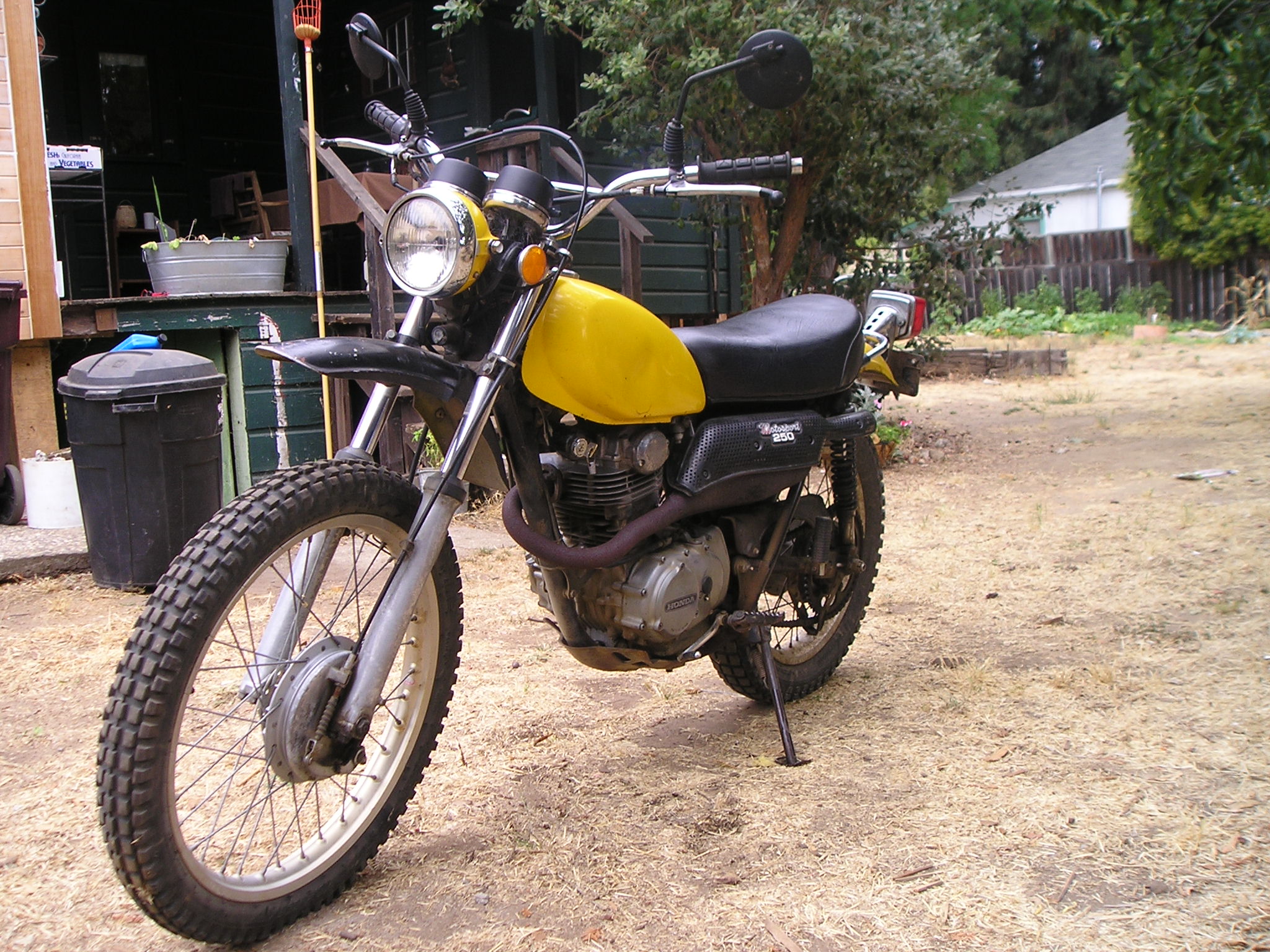
Honda XL250
"The article was about a guy who wrote a Honda XL250 all the way around Australia. Now at the time, Alan's brother owned the exact same motorcycle."
The Honda XL250 is a small motorcycle made by Honda that can handle both paved roads and dirt trails. In the episode, it’s the exact bike that sparked the travel dream.
The Honda XL250 is a small-displacement dual-sport motorcycle (Honda’s “XL” line) known for being simple, durable, and capable on both pavement and dirt. In this story, it’s the bike that Alan Walden’s brother owned and that inspired the long-distance ride idea.
dual sport motorcycles
"they were taking the long way through the interior and they were riding two small dual sport motorcycles. They planned it carefully."
Dual-sport motorcycles are made to ride on both regular roads and dirt trails. That’s why they’re a good choice for a big trip like crossing a country.
Dual sport motorcycles are street-legal bikes designed to work on both paved roads and unpaved trails. They’re commonly used for long-distance overland travel because they can handle rough surfaces while still being able to connect routes on public roads.
fuel stops
"They planned it carefully. They worked out the tracks, the fuel stops, permits, food, water, where they were going to sleep, all the things that you need to think about when you're traveling through country where there might be hundreds of miles or kilometers between services."
Fuel stops are where you plan to stop for gas. When you’re far from towns, you can’t just “find gas later,” so planning them matters a lot.
Fuel stops are planned refueling points along a route, especially important when traveling through remote areas with long distances between services. The episode highlights that they had to map these carefully because they could go hundreds of miles or kilometers without access to fuel.
quagmire
"And that red clay road that's so nice to ride when it's dry became a slippery quagmire that was almost impossible to get through."
A quagmire is basically deep, muddy ground that’s hard to get through because it’s soft and slippery. The rain turned the clay road into that kind of mess.
A quagmire is a thick, unstable, mud-like area that traps tires and makes forward progress extremely difficult. Here it describes how the red clay road turned slippery and nearly impossible to cross after rain.
dirt roads
"So and there's the town where it's only quite small. It's only [327.5s] two and a half thousand people. Oh, right. And so is it quite busy? Like when you head [332.3s] up to these dirt roads, do you see a lot of people?"
Dirt roads are unpaved roads. They’re usually bumpier and have less grip than pavement, so riding gear and bike setup matter more.
Dirt roads are unpaved surfaces that change traction and bump behavior compared with pavement. The rider’s question about seeing people on “dirt roads” sets up the later discussion about riding style and why suspension matters when you’re off-road.
tar
"What kind of riding do you do with your bike? [358.5s] Dirt. I'm terrified of the tar. I've just been on dirt bikes all my life."
“Tar” here means regular paved road. The rider is saying they’re nervous about riding on pavement compared with dirt.
In Australia, “tar” commonly means asphalt/pavement. The rider says they’re “terrified of the tar,” which signals they prefer off-road surfaces and may not feel as confident on street tires and traction.
27 horsepower
"I've done about 40,000 [391.8s] cars now. And they're just the little 300s. They're not fast. They're only 27 horsepower."
Horsepower is how strong the engine is. “27 horsepower” means the bike doesn’t have a lot of power, so it won’t feel very quick compared to bigger bikes.
Horsepower is a measure of engine power, and “27 horsepower” describes how much work the bike’s engine can do. Lower horsepower usually means slower acceleration and less top-end speed, which matches the host’s point that the 300s “aren’t fast.”
suspension
"What's the difference between the rally and the L? [404.6s] No, the suspension on them is not good. You have to put suspension on if you're going to ride dirt on them by it."
Suspension is what helps the bike absorb bumps. If it’s not set up for your weight, the ride can feel harsh or unstable, so you may need changes to the front and rear suspension.
Suspension is the motorcycle’s spring-and-damper system that controls how the wheels move over bumps and how the bike stays stable. Here, the rider says the rally model’s suspension isn’t set up for their weight, so they had to adjust both the front and rear suspension to ride dirt more comfortably and safely.
dirt bike
"It was just magazine you'd buy. And it was dirt bike or one of them."
A dirt bike is a motorcycle made for riding off-road on dirt trails and uneven ground. It’s usually built to handle bumps and traction changes better than a street bike.
A dirt bike is a motorcycle designed primarily for off-road riding on dirt, trails, and rough terrain. They typically prioritize lightweight handling and suspension travel over comfort and highway refinement.
Nullarbor Plain
"The short way is straight across and across the famous Nullarbor Plain. We were trying to do as much dirt as what we could do."
The Nullarbor Plain is a huge, mostly flat area in southern Australia. People mention it because it’s a common “straight across” route when traveling from one coast to the other.
The Nullarbor Plain is a vast, mostly treeless limestone plateau in southern Australia. In rider/travel context, it’s often referenced as the “straight across” route when people talk about coast-to-coast crossings.
Gibbson Desert
"So that meant we're out past the Uluru Weirs Rock through the Gibbson Desert and out through the Great Victorian Desert."
This is a very remote desert area in Australia. Riding through places like this usually means lots of rough terrain and long stretches with few services.
The Gibbson Desert (likely referring to the Gibson Desert) is a remote desert region in Western Australia. It’s the kind of terrain that makes a motorcycle crossing much more about navigation and endurance than just covering distance.
Great Victorian Desert
"So that meant we're out past the Uluru Weirs Rock through the Gibbson Desert and out through the Great Victorian Desert."
The Great Victorian Desert is a big dry, remote part of Australia. Mentioning it signals the trip went through very isolated inland country.
The Great Victorian Desert is a large arid desert region in southern Australia. It’s commonly used as a reference point for long-distance inland routes, emphasizing how remote and dry the riders’ path was.
Uluru
"So that meant we're out past the Uluru Weirs Rock through the Gibbson Desert and out through the Great Victorian Desert."
Uluru is a famous big rock in Australia’s interior. It’s a well-known landmark that helps show the trip went deep inland.
Uluru is a massive sandstone monolith in Australia’s Northern Territory, and it’s a major landmark for overland routes. Mentioning it helps listeners visualize the riders’ inland path rather than a simple coastal run.
coast to coast
"Okay. So for those who don't know Australia very well, when you just say we're going to go coast to coast, it sounds fairly easy..."
“Coast to coast” just means going from one side of the country to the other. For riders, it can sound simple, but the inland part can be very long and rough.
“Coast to coast” is a travel framing for crossing a country from one coastline to the other. In motorcycle touring, the phrase often hides the reality that the inland route can be thousands of kilometers and mostly unpaved.
donger
"So I had to find out where we could get accommodation. Now, this accommodation might just be what we call a donger, which is a transportable like a mining. It's just an aluminium thing they put on the back of a truck that's just got a bed in it, basically."
A “donger” here means a temporary, prefab room used for work camps. It’s basically a small metal cabin that can be moved and used like a place to sleep.
In this context, a “donger” is a transportable, prefabricated accommodation unit—often used in mining camps. The host describes it as an aluminium module mounted on the back of a truck, functioning like a small bed/room setup.
GPS files
"But I had the other planning was the tracks, where we were going, what roads we're taking, because you're doing dirt. So we've got to do GPS files to find where the roads go."
GPS files are saved route directions for your navigation system. Instead of guessing roads, you follow the track so you don’t get lost in remote areas.
“GPS files” are route data (like waypoints and tracks) loaded into a GPS device or app to navigate. For motorcycle travel on remote dirt roads, having the correct GPS track helps you stay on the right roads when towns are far apart.
fuel crisis
"But you don't have a lot of room on the bike to carry that. Because of the fuel crisis, we had to carry extra fuel. So we're carrying enough fuel"
A “fuel crisis” means gas stations may be unreliable or fuel may be hard to find. So the riders had to bring extra fuel to make it across long stretches.
A “fuel crisis” is a period when fuel availability and/or pricing becomes unstable, leading travelers to plan for shortages. In this trip planning, it directly affects how much fuel they must carry between remote stops.
wheel bearing
"Yeah, so basically my bike had 17,000 kilometres on it before I left. I put in new wheel bearings, new brake shoes, new tubes."
Wheel bearings are small parts that help your wheel spin freely. When they wear out, the wheel can feel rough or loose, which is why riders replace them before a long trip.
Wheel bearings are the sealed components that let the wheel spin smoothly while supporting the bike’s weight. If they get worn, you can get roughness, noise, and eventually unsafe play in the wheel.
brake shoes
"I put in new wheel bearings, new brake shoes, new tubes. We got a tyre on day three at the last decent town on the back."
Brake shoes are the replaceable friction surfaces that slow the bike down. If they’re worn, braking can feel weaker, so riders swap them before a big trip.
Brake shoes are the friction pads used in drum-brake systems. They wear down over time, so replacing them helps ensure consistent braking performance on a long ride.
tubes
"I put in new wheel bearings, new brake shoes, new tubes. We got a tyre on day three at the last decent town on the back."
Tubes are the inner inflatable rubber components used in some motorcycle tire setups. If a tube fails (puncture/slow leak), it can leave you stranded, so carrying spares and replacing worn ones is common for long-distance travel.
front tyres
"We got a tyre on day three at the last decent town on the back. We put new front tyres on and tubes."
The front tire is the one that steers the bike and helps with braking. If it gets worn, the bike can feel less stable, so riders swap front tires when needed.
Front tyres are the tires on the bike’s front wheel, which do most of the steering and braking work. Replacing them during a long trip helps maintain grip and predictable handling as tread wears.
back tyres
"so we waited until we were about 1200km from home or 1400km and we put new back tyres on both bikes."
The rear tire is responsible for traction when you accelerate and for keeping the bike stable. If it wears too much, grip drops, so riders replace it before it becomes a problem.
Back tyres (rear tires) handle traction for acceleration and stability under load. On long corrugated-road trips, rear tire wear and heat build-up can be significant, so replacing them before they’re fully worn is a safety move.
chains
"I put on new chains, or we both put on new chains and sprockets. So we did all the things that we thought are likely to fail."
The chain is what transfers engine power to the back wheel. If it wears out or stretches, it can slip or wear other parts faster, so long-distance riders replace it.
Motorcycle chains transfer power from the engine to the rear wheel via the sprockets. Over long distances, chains stretch and wear, so replacing them (and matching sprockets) helps prevent skipping, poor acceleration, or premature failure.
sprockets
"I put on new chains, or we both put on new chains and sprockets. So we did all the things that we thought are likely to fail."
Sprockets are the gears the chain wraps around. If the chain and sprockets wear unevenly, the drivetrain can feel rough or fail sooner, so riders often replace them as a set.
Sprockets are the toothed gears that the chain rides on. When chains wear, the sprockets wear too, so replacing them together helps keep the drivetrain smooth and reduces the chance of uneven wear.
lock tight
"Went over every nut and bolt and lock tighted a lot of things because most of the roads are corrugated."
Lock tight is a sticky chemical you put on bolt threads so they don’t loosen from shaking. It’s a common trick for long trips where the road is rough and vibrating.
Lock tight (threadlocker) is a chemical compound applied to bolt threads to prevent them from loosening due to vibration. It’s especially useful on long rides where corrugations and engine vibration can back bolts out.
corrugated
"Went over every nut and bolt and lock tighted a lot of things because most of the roads are corrugated."
Corrugated roads are bumpy, ribbed surfaces that make the bike shake a lot. That shaking can loosen bolts and make parts wear faster, which is why riders prep for it.
Corrugated roads have a repeating ribbed surface that causes sustained vibration and impacts. That vibration can loosen fasteners, shake components, and accelerate wear on tires and drivetrain parts.
carburetor models
"And he's was the last of the carburetor models before the new one came out."
A carburetor is the older-style way motorcycles mix fuel and air. The speaker is noting that this bike was one of the last versions that still used that system before newer ones changed.
Carburetor models use a carburetor to mix fuel and air before it enters the engine. The speaker is saying the DRZ400 they’re referencing was the last of the carbureted versions before a newer fuel-injection update.
single cylinders
"So yeah, both pretty basic standard-ish just off-road bikes, I'd say single cylinders. And"
Single-cylinder means the engine only has one cylinder. That usually makes the bike simpler and lighter, which can be helpful for long dirt trips.
A single-cylinder engine has one combustion chamber, which typically makes it lighter and simpler than multi-cylinder setups. The speaker is describing their bikes as basic off-road machines with single-cylinder engines, chosen for durability and dirt capability rather than speed.
D606s
"Right. You said you put new tires on. Are they D606s? Is that what you're running? 606s on the back, we both run."
D606s are a particular off-road tire model. The tread pattern is designed for dirt, and the rider is saying it worked well in dry conditions but felt different in mud.
D606s refers to a specific tire model (commonly associated with Dunlop’s D606) used for off-road traction. Here, the riders confirm they run D606 tires—important because tire choice strongly affects grip in mud versus dry conditions.
modest desert rally
"Yeah, I ran a modest desert rally on the front, which is usually terrific. I didn't like it as much in the mud."
“Desert rally” describes a tire meant for dry, loose terrain like desert dirt. It can be great on dry ground, but mud is a different challenge and tires can perform differently there.
A “desert rally” is a tire category aimed at loose dirt and dry conditions, typically prioritizing rolling efficiency and traction on sand or hardpack. The speaker says they used that style on the front and liked it until they hit mud, where the tire’s behavior changed.
forward drives chop the roads up
"Why is that? Because they're slippery, they're clay, and you chop the roads up. The forward drives chop the roads up. So you get the big ruts in it, then it dries, and you've got these really dry ruts, which are deadly on the road."
They’re explaining that when roads are wet and muddy, vehicles tear them up and form ruts. When it dries, those ruts become hard and bumpy, which makes riding on the road risky.
The speaker is describing how vehicle traction and wheel action in wet clay can damage unpaved roads, creating deep ruts. Those ruts then dry into hard, uneven grooves that are dangerous to ride on because they can upset the bike’s line and grip.
wet weather gear
"we've got wet weather gear. [1288.5s] Let's just do it."
Wet weather gear is rainproof riding clothing. It helps keep you dry and warm so you can ride safely and not get worn out by wet conditions.
Wet weather gear refers to motorcycle clothing designed to stay waterproof and windproof during rain. It typically includes waterproof jackets/pants and sometimes waterproof gloves and boots to keep you comfortable and reduce fatigue.
bitumen
"You just get on the bitumen and ride the, ride the Asheville. [1336.2s] What's, what's it do to the roads there?"
Bitumen is the paved asphalt road surface. In rain, it tends to be more predictable than loose gravel, which can get slippery.
Bitumen is asphalt (the tar-and-stone road surface) used for paved roads. The speaker contrasts it with gravel, noting that the pavement itself handles wet conditions better than loose, clay-rich gravel.
gravel
"It's just when you get on the gravel, because a lot of amount gravel, they'll be red clay. [1357.4s] And that's not real good in the wet."
Gravel is loose rock on the road. In the wet—especially if it’s mixed with clay—it can get slippery and harder to control than pavement.
Gravel is loose aggregate on the road surface, and it behaves very differently from asphalt in wet weather. When gravel is mixed with red clay, it can become slick and reduce traction, making cornering and braking less predictable.
Atlas throttle lock
"that's what I experienced with the Atlas throttle lock. [1385.1s] I didn't realize how much tension I was holding in my throttle hand until that first time I engaged"
An Atlas throttle lock is a gadget that lets you set the throttle so you don’t have to keep gripping it. It can make long rides more comfortable because your hand and arm get less tired.
An Atlas throttle lock is a device that holds the motorcycle’s throttle at a set position. That reduces constant hand pressure, which can lessen rider fatigue and help you maintain steady speed over long stretches.
throttle position
"The Atlas holds your throttle position [1401.42s]"
Throttle position just means how much you’ve opened the gas. More opening usually means more power, and keeping it steady can make riding easier.
Throttle position is how far the throttle is opened, which directly affects engine airflow and power delivery. On a motorcycle, keeping a consistent throttle position helps smooth out speed and reduces workload on the rider.
factory cruise control
"If your bike didn't come with a factory cruise control, have a look at the Atlas throttle lock, atlasmoto.com. Make sure you tell them that you heard them here on Adventure Rider Radio, atlasmoto.com."
Factory cruise control is built into the bike and helps it keep a steady speed without you constantly controlling the throttle. If your bike doesn’t have it, you may use a throttle lock instead.
Factory cruise control is a motorcycle feature built into the bike that automatically maintains a set speed or throttle position. On bikes without it, riders often use alternatives like a throttle lock for similar comfort on long rides.
Overland Expo Mountain West
"Overland Expo Mountain West is coming up this August 21st through 23rd at the Ranch in Loveland, Colorado for Adventure Riders. [...] At Overland Expo Mountain West, you can see it, you can ask people about it, compare it, and come away with a much cleaner idea of what you want for your own riding."
Overland Expo Mountain West is an event focused on overlanding and adventure riding, with on-site camping and hands-on activities. The host highlights it as a place to see real bikes and gear setups and talk to experienced riders.
Loveland, Colorado
"Overland Expo Mountain West is coming up this August 21st through 23rd at the Ranch in Loveland, Colorado for Adventure Riders."
Loveland, Colorado is where this overlanding event is happening. It helps you understand where the weekend takes place.
Loveland, Colorado is the host city for Overland Expo Mountain West in this segment. The location matters because it frames the event’s regional riding community and timing.
overlanding
"It's one of those weekends that you can ride in, camp on site and immerse yourself in a whole world of motorcycle travel and overlanding. Motorcycle village, moto camping, ADV rider classes and workshops, an ADV skills area with practical lessons on all things from motorcycle maintenance,"
Overlanding is traveling for a long way with your own setup—usually camping and being prepared for places that don’t have services nearby. Here it’s about motorcycle trips and gear.
Overlanding is long-distance, self-reliant travel—often off-road or far from services—using prepared vehicles and gear. In this segment, it’s tied to motorcycle travel, camping, and outfitting for remote conditions.
roadside repairs
"ADV rider classes and workshops, an ADV skills area with practical lessons on all things from motorcycle maintenance, roadside repairs, tire changing in the field."
Roadside repairs are fixes you do when you’re broken down or stopped on the side of the road. The point is to learn practical steps so you can handle problems in the field.
Roadside repairs are maintenance or fixes performed when you’re stopped away from home, often with limited tools. In an adventure-riding context, this usually means learning practical procedures for common failures so you can keep moving.
tire changing in the field
"ADV rider classes and workshops, an ADV skills area with practical lessons on all things from motorcycle maintenance, roadside repairs, tire changing in the field."
Tire changing in the field means changing your tire while you’re out on a trip, not at a garage. It’s important because flats can happen anywhere.
Tire changing in the field refers to swapping a motorcycle tire outdoors during a trip, typically with portable tools and limited space. It’s a key overlanding skill because punctures or tire damage can happen far from shops.
GPX importing
"It includes motorcycle routing, GPX importing, scenic integration, and carplay support, so you can use it in your vehicle as well."
GPX importing is how the app loads a saved GPS route file. It’s useful because you can plan a trip on your computer or another app, then load it into your phone for navigation.
GPX importing means loading route files in the GPX format (GPS Exchange Format) into the app. That lets you bring in a planned track/route from another source and follow it while traveling.
motorcycle routing
"It includes motorcycle routing, GPX importing, scenic integration, and carplay support, so you can use it in your vehicle as well."
Motorcycle routing means the navigation is designed for bikes, not just cars. It can choose roads that are more appropriate for riding.
Motorcycle routing is route planning tailored to how motorcycles travel, such as preferring suitable roads and accounting for rider-relevant constraints. In practice, it can produce a different route than standard car navigation.
CarPlay support
"It includes motorcycle routing, GPX importing, scenic integration, and carplay support, so you can use it in your vehicle as well."
CarPlay support means the app can show up on your car’s screen if your car supports Apple CarPlay. It helps you use navigation without constantly touching your phone.
CarPlay support means the app can display and be controlled through Apple’s CarPlay system in compatible vehicles. This is handy for navigation while keeping your phone functions integrated with the car’s screen and controls.
Flinders Ranges
"We get into South Australia, and you've got, I don't know if you've heard of it, but there's a mountain range in South Australia's 80% desert. So you're basically in the desert country. You've got a thing called the Flinders Ranges."
The Flinders Ranges are mountains in South Australia. They’re known for really dramatic scenery—lots of valleys and dry, desert-like areas—which makes them a memorable place to ride through.
The Flinders Ranges are a mountain range in South Australia, known for dramatic landscapes and arid/desert-adjacent terrain. For riders, that combination of gorges, gullies, and long flat stretches can strongly shape route planning and weather expectations.
four wheel drive
"Oh, yeah. Yeah, four-wheel drive, like not standard vehicles, four-wheel drive tourist destination."
Four-wheel drive means the vehicle can power all four wheels. It helps when roads are rough or slippery, like in desert or off-road conditions.
Four-wheel drive (4WD) is a drivetrain setup that can send power to all four wheels for better traction on loose surfaces. The speaker contrasts it with “standard vehicles,” implying the area is rough enough that 4WD is often preferred for tourists.
cell phone reception
"And one of the things you find when you do get in a lot of these places is Wi-Fi and cell phone reception is quite often zero."
Cell reception is whether your phone can connect to towers. In remote areas, it can be so weak or nonexistent that you can’t rely on live maps or streaming directions.
Cell phone reception is the ability of a phone to connect to nearby cellular towers for data and calls. In remote outback regions, weak or absent reception forces travelers to rely on offline navigation and pre-planned routes.
prepping navigation for no-signal areas
"So you've got to pre-plant things and have it in your GPS and have the maps in the track. And this is part of why you prep before you go."
The hosts emphasize that when Wi‑Fi and cell reception are often unavailable, you must prepare navigation ahead of time. This includes loading GPS routes and offline maps before entering remote regions.
maps in the track
"So you've got to pre-plant things and have it in your GPS and have the maps in the track."
It means downloading the route and maps ahead of time. Then you can follow your planned path even if your phone can’t get signal.
“Maps in the track” refers to having offline navigation data loaded ahead of time so your route can be followed without an internet connection. For motorcycle travel, this usually means downloading map layers and route files before you enter areas with no reception.
Udna data track
"And we said, then, oh, we'll do the Udna data track. And then I found out that was a meter underwater that night with another storm."
They planned to ride a specific track, but it was flooded. In remote areas, storms can turn dirt tracks into impassable routes overnight.
The “Udna data track” is referenced as a planned route segment that became unusable due to flooding. The key takeaway is that track-based routes in remote regions can be cut off quickly after storms.
heated grips
"Because we didn't have heated grips or cruise control or any of that modern stuff."
Heated grips are special warm handlebar grips. They help keep your hands from getting numb when it’s cold.
Heated grips are motorcycle handlebar grips with built-in heating elements. They warm your hands to reduce cold fatigue in freezing or wet conditions.
heated jacket
"I had a day two. I had a day three. I had my heated jacket on. And I kept getting this pain in my arm."
A heated jacket is a jacket with built-in heating. It keeps you warmer on cold rides, especially when the air is freezing.
A heated jacket is motorcycle riding gear with integrated heating elements, usually powered by the bike’s electrical system or a battery. It helps maintain core warmth in cold weather to prevent hypothermia and numbness.
shorted out
"And I kept getting this pain in my arm. And I thought it was a burr and it ended up at shorted out and it burned a hole in the side of my eye."
“Shorted out” means the electricity went the wrong way through the wiring. With heated gear, that can make it get dangerously hot and cause burns.
A shorted-out electrical connection happens when current takes an unintended low-resistance path. In heated gear, that can cause overheating or burns if the circuit fails.

Jeep Compass
"...e heading to, they went in with a bulldozer and a compass in 1960s. Anyone else that went out prior to that..."
The Jeep Compass is a small SUV made for regular driving, like errands and road trips. It’s designed to be comfortable and useful, and some versions include features that help on rougher roads. People mention it when they want a vehicle that can handle different kinds of driving.
The Jeep Compass is a compact SUV built for everyday driving with available off-road-oriented features. It’s often discussed because it’s a practical size for commuting while still offering Jeep-style capability and options. In a podcast, it may come up when talking about choosing a versatile vehicle for trips and varied terrain.
250 kilometres
"But we planned it so that if we couldn't get through, because if local advice told us not to take the road, it was too rough and it was 250 kilometres once we got on the dirt."
Here, “250 kilometres” is how far they expected to ride on dirt. Long dirt sections are harder and you need to plan fuel and timing carefully.
In this context, “250 kilometres” is the planned dirt-road distance after leaving pavement. It matters because long stretches of remote gravel/dirt affect fuel planning, fatigue, and risk.
local advice
"But we planned it so that if we couldn't get through, because if local advice told us not to take the road, it was too rough and it was 250 kilometres once we got on the dirt."
“Local advice” means asking people who live there what the road is really like. In remote areas, that can be the difference between a safe ride and getting stuck.
“Local advice” is the practice of consulting people who know the area before committing to a route—especially in remote regions. It’s used here to assess road roughness and weather impacts that can make a track impassable.
fuel planning
"So anyway, we hadn't seen another motorbike. And this was, again, I think because how short fuel was and the weather, and there was no motorbikes on the road, we hadn't seen another adventure bike for three or four days."
Fuel planning means making sure you have enough gas to get where you’re going—or to turn around safely. It’s especially important on remote roads.
Fuel planning is the decision-making process of ensuring you have enough range to reach your goal or turn back safely. In remote rides, it directly affects route choice and whether you can afford delays or detours.
Curtin Springs
"did you come through from Curtin Springs, which is out near Ayrs Rock? And they said, yeah, we did."
Curtin Springs is a remote stop in the Australian outback. In the story, it’s the place the other riders started from on their route.
“Curtin Springs” is a remote outback stop in Australia, commonly used as a waypoint for long-distance travel. Here, it’s used to describe the riders’ route and where the other bikes came from.
Ayers Rock
"did you come through from Curtin Springs, which is out near Ayrs Rock? And they said, yeah, we did."
Ayers Rock is a famous landmark in Australia’s outback. The hosts mention it as a reference point for where they were riding.
“Ayers Rock” (Uluru) is a major tourist landmark in Australia’s Northern Territory. In the episode, it’s referenced as a nearby region that riders pass through on their outback route.
deep sand
"There was some deep sand and you wouldn't have wanted to be a novice, but it wasn't, it wasn't hard. It was, it was really enjoyable riding beautiful scenery."
Deep sand is sand that’s thick and soft, so your tires can sink and lose grip. It makes riding harder because the bike can slow down or feel unstable.
“Deep sand” refers to loose, thick sand that can slow a motorcycle dramatically and make traction unpredictable. In sand riding, it’s the difference between cruising and getting bogged down or losing control.
Indian Ocean
"So you've got this range and then it's probably three or four thousand cars dead flat, basically to the Indian Ocean. And you get a lot of wind."
The Indian Ocean is the ocean on Australia’s west side. The speaker mentions it to explain how the outback becomes very flat and windy.
The “Indian Ocean” is referenced as the direction the outback terrain stretches toward. The speaker uses it to explain how the landscape is flat and exposed once you get west of the Flinders Ranges.
Top Gear
"I was riding the bike there some days in the wind. It wouldn't pull top gear. You're in fifth gear sitting it on 7,000 revs and just trying to lean into the wind."
Top gear is the highest gear your bike has for faster cruising. If you can’t go fast enough—like when riding into strong wind—you might not be able to use it.
“Top gear” is the motorcycle’s highest transmission ratio, used for cruising at higher speeds. When wind is strong and the bike can’t maintain speed, you may be forced to stay in a lower gear instead of reaching top gear.
fifth gear
"It wouldn't pull top gear. You're in fifth gear sitting it on 7,000 revs and just trying to lean into the wind."
Fifth gear is one of the higher gears on a motorcycle. If the bike can’t go fast enough, you stay in a lower gear (like fifth) instead of shifting up.
“Fifth gear” is a mid-to-high gear on a multi-gear motorcycle, typically used when you need more engine torque than top gear provides. The speaker’s point is that wind prevented the bike from accelerating to the highest gear, so they stayed in fifth.
fuel consumption
"And a fuel consumption, not that you're worried about the price of fuel. And we did pay up to four dollars a liter for fuel in some communities, but we were more worried about just trying to get through the wind and not kill the bikes."
Fuel consumption is how much gas your bike uses. On a long trip, it matters because it determines how far you can ride before you need fuel.
“Fuel consumption” is how much fuel the motorcycle uses over a given distance or time. Even if fuel price isn’t the main concern, consumption matters on long outback stretches because it affects how often you can refuel.
Northern Territory
"And then once, once we got into the Northern Territory, you've got Ayers Rock, which is a tourist community or a tourist town, I suppose for better word."
The Northern Territory is a big region in Australia. The rider says that once they got there, the roads and surfaces around Ayers Rock got rougher.
The “Northern Territory” is Australia’s large central-northern region. The speaker notes that once they reach it, they encounter different road conditions around Ayers Rock, including gravel and corrugations.
corrugations
"Once you get there, there was about two and a half thousand cars of what I think only 300 was bitumen. And you've got corrugations, sand, deep gravel."
Corrugations are bumpy, wavy grooves in the road that feel like a washboard. They can make the bike shake and make it harder to stay in control.
“Corrugations” are repeating ripples or washboard-like bumps in the road surface. They can make a motorcycle bounce, reduce traction, and fatigue the rider, especially at higher speeds.
Western Australia
"So we asked some people and they said, Oh, a docker river at Western Australian Board is really rough. Be really careful."
Western Australia is the large state on Australia’s west side. The speaker mentions it because they heard a warning about how rough a road there would be.
“Western Australia” is referenced as the state where the speaker heard about a rough road. It provides regional context for the route and the warning they received before riding it.
third gear
"We get to the gravel and we do about 30 kilometers and I'm like, this is third gear. And I look down, I'm sitting on 8,000 revs on the bike..."
Gears are different “speeds” your bike can use. Third gear is usually a middle gear that helps when you’re going uphill or moving through rough terrain.
“Third gear” is the transmission ratio that sits between second and fourth. On a motorcycle, it’s often used for climbing or steady acceleration because it keeps the engine in a usable power band.
17,000 revs
"And I look down, I'm sitting on 8,000 revs on the bike and I'm like, this is going to kill it."
Revs tell you how fast the engine is spinning. When you’re at 8,000 revs, the bike is working hard—often because the terrain is demanding.
“Revs” (revolutions per minute) is how fast the engine’s crankshaft is spinning. Higher revs generally mean the engine is working harder, which can happen when you’re lugging through sand or climbing.
pre-planning
"And it was funny when I'd done my pre-planning, I'd planned a 450K stretch there in one day and I brought it back to our two shortest days because we could get accommodation there."
Pre-planning is figuring out your route and logistics ahead of time. For long rides, it helps you avoid getting stuck because you didn’t know what roads you’re allowed to use or where you can stay.
In motorcycle travel, “pre-planning” is the process of mapping the route, timing, and logistics before departure. It matters because remote terrain and access rules can determine whether you can ride certain roads at all.
bogged down
"You can't put the bike on the stand. It had struggled to take off because it had just bogged down."
“Bogged down” means the bike loses power and slows because it can’t keep moving effectively. On soft sand, the tires may not grip, so the engine struggles to pull you out.
“Bogged down” means the engine loses momentum and can’t keep turning fast enough to maintain power. In sand, this often happens when traction drops and the bike can’t accelerate without spinning or stalling.
Aboriginal Land Board
"Now, these are roads you can't just turn up and ride. You have to get permission from the Aboriginal Land Board to go on these roads."
This is the group that controls permission to use certain roads on Aboriginal land. It means you can’t just show up and ride—you may need approval first.
The “Aboriginal Land Board” is referenced here as the authority that controls access to Aboriginal land roads. For riders, it’s a reminder that some routes require formal permission rather than being open public roads.
foot pegs
"You can spend thousands chasing better performance for your motorcycle and completely overlook one of the places where you actually control it. That's your foot pegs. IMS products builds engineered pegs specifically for adventure riding…"
Foot pegs are the platforms you stand on and rest your feet on while riding. On rough roads, the peg design can change how stable you feel and how easily you can control the bike.
Foot pegs are the rider’s contact points on the motorcycle, mounted to the bike’s frame or footpeg brackets. For adventure riding, peg shape and surface matter because they affect leverage, grip, and how well you can control the bike while standing or shifting weight.
IMS products
"That's your foot pegs. IMS products builds engineered pegs specifically for adventure riding with different models to suit the way you ride."
IMS Products makes aftermarket parts for motorcycles. Here they’re talking about their foot pegs, which are designed to help you grip better and feel more in control off-road.
IMS Products is an aftermarket motorcycle parts brand known for adventure-focused upgrades, including foot pegs. In this segment, they’re presented as engineered pegs designed to improve leverage and grip for off-road riding.
watershed design
"…their watershed design, sheds debris and mud and the cast certified 17 for stainless steel is incredibly tough…"
A “watershed design” on off-road foot pegs refers to a shape intended to channel mud and debris away from the rider’s contact area. The goal is to keep traction consistent even when the peg gets dirty.
lifetime warranty
"…made in the USA and backed with a lifetime warranty against broken pegs. Get more from the motorcycle that you already own by using IMS products foot pegs."
A lifetime warranty means the company promises to stand behind the product for a long time—typically for the life of the item—if it breaks under normal use. The exact rules can vary, but it’s meant to reduce your risk buying it.
A lifetime warranty is a manufacturer-backed promise to cover a product for the duration of the product’s life (often with specific terms and exclusions). Here it’s used to back the claim that the pegs are durable and resistant to breaking.
stainless steel
"…the cast certified 17 for stainless steel is incredibly tough without becoming dangerously brittle…"
Stainless steel is a metal that resists rust. Using it for foot pegs helps them last longer, especially when you ride in wet, muddy, or salty conditions.
Stainless steel is a corrosion-resistant metal alloy commonly used for durable motorcycle components. In this context, it’s referenced to support the claim that the pegs can handle harsh off-road conditions without failing quickly.
shipping on one end
"…if you're going to ship on one end or the other, at the end is always your better spot. Obviously, if you ship it there and you have a problem, then your whole trip is scuttled."
If you ship your bike to the wrong place, a delay or problem can ruin your trip. The idea here is to ship it so you’re not stuck without your bike for most of the ride.
Shipping a motorcycle to the start or end of a trip affects risk management because a problem at the wrong time or location can disrupt the whole ride. The speaker’s point is that if you ship to the end, you’re less likely to lose the majority of your riding time to a logistics failure.
steering bearing
"The Honda dealer, when I went over, he said the steering bearing's gone on it."
The steering bearing is what helps the front end turn smoothly. If it’s worn out, the bike can feel loose or not steer as easily.
A steering bearing lets the motorcycle’s fork and handlebars rotate smoothly as you turn. If it’s worn or damaged, steering can feel rough or develop play, especially after hard impacts and vibration.
fork seal
"I knew the fork seals had just started to leak."
Fork seals are the seals in the front suspension that keep the oil where it belongs. If they leak, the front suspension doesn’t work as well and the ride can get bouncy or rough.
Fork seals are the seals inside the front suspension fork that keep fork oil from leaking. When they start leaking, the fork’s damping performance drops, which can make the ride harsher and less controlled.
steering head bearings
"So it was in there for another week going forward, putting new steering head bearings in it and new fork seals and whatever else and a bit of a rebuild."
Steering head bearings are the parts that let the front of the bike turn. If they’re worn, the bike can feel less stable and harder to steer.
Steering head bearings support the motorcycle’s steering axis at the frame’s head tube. Replacing them restores smooth, precise steering—important on rough tracks where vibration and impacts can accelerate wear.
shaking bolts out of everything
"I mean, if you're talking about it, shaking bolts out of everything, shaking everything loose, it's got to be hard on the whole bike."
On very rough roads, vibration can loosen bolts. That can lead to rattles or parts not staying tight.
This describes how sustained vibration can loosen fasteners and cause components to shift or rattle. It’s a common concern on rough roads because motorcycles have many exposed bolts and brackets.

African twin
"Had I done that on a 1290 or an African twin, I don't think I would have felt the same sense of actual achievement..."
The Africa Twin is Honda’s larger adventure bike. Compared with a smaller bike, it’s usually harder to maneuver and pick up when the trail gets rough.
“African Twin” refers to the Honda Africa Twin adventure motorcycle line. It’s typically a bigger, heavier bike than a smaller dual-sport, so it can feel less nimble when you’re dealing with deep ruts or needing to dab/pick it up.
taco
"just a big and I felt sorry for the bike at times. I'm like, this is really tough. I'd look down at the taco and the bike sing and then I'm like, God, I feel sorry for you."
“Taco” is slang for the tachometer, the gauge that tells you how fast the engine is spinning (RPM). They’re saying they’d glance at that gauge while riding.
“Taco” is rider slang for the tachometer, the gauge that shows engine RPM (revolutions per minute). In this context, the speaker looks at the tachometer while riding and feels empathy for the bike during tough stretches.

DRZ 400
"You're both riding small bikes. The DRZ 400, the 300L or 300Rally rather, small bikes that most people will, a lot of people will say they don't want to ride long distances."
The DRZ 400 is a dirt-capable motorcycle that’s also street-legal in many places. Here, it’s mentioned as a smaller bike that can still handle long trips.
The DRZ 400 is a dual-sport motorcycle associated with long-distance dirt and backroad riding, known for being relatively light and durable. In this episode, it’s brought up as one of the “small bikes” used to cover huge distances.
winch
"I'm on a trip of a lifetime, don't winch, grit your teeth, enjoy it and smile because a lot of people are at work and they're not doing this."
A winch is a motorized cable tool used to pull something out when it gets stuck. Here, the rider is saying they didn’t rely on that kind of recovery help.
A winch is a powered cable-retrieval device used to pull a motorcycle or vehicle out of mud, sand, or stuck situations. The speaker specifically says “don’t winch,” framing it as a mindset choice to avoid relying on recovery gear.
Request an Explanation
Heard something you'd like explained? We'll add it to this episode.
Sign in to request explanations for terms you heard.
Want to learn more?
Browse our glossary for plain-English explanations of automotive terms, jargon, and concepts.
Help improve this episode
See something that's not quite right? Our annotations are AI-generated and can sometimes miss the mark. Click the flag icon on any annotation to suggest a correction.