CVT means the car uses a transmission that can smoothly change “gears” without distinct steps. It’s designed to keep the engine running efficiently, but it can have issues if it isn’t maintained.
Ball joints are suspension joints that allow controlled movement between the steering knuckle and suspension arms. Pothole impacts can accelerate wear, leading to looseness, vibration, or uneven tire wear.
Control arms are part of the suspension that holds the wheel in the right position. If they’re bent or worn from a pothole, the car can handle poorly and tires can wear faster.
The CVT constantly “decides” what ratio to use based on how hard you’re pressing the gas and how fast you’re going. That’s how it stays smooth while you accelerate.
This is a simple way to check suspension health. If you push down and the car keeps bouncing or doesn’t settle smoothly, the shocks or struts may be worn out.
Changing the fluid means replacing the transmission’s working fluid. For a CVT, clean fluid helps it shift smoothly and can help prevent expensive problems later.
A circuit is the car’s electrical “wiring network” for a feature. If one button doesn’t do anything, the problem is often in the wiring or the switch that sends the signal.
A key fob is the remote you use to control your car from a distance. If the remote works but one button or feature doesn’t, the issue is usually inside the car—like a switch or wiring—not the remote itself.
A Mazda CX-70 is the vehicle being discussed. They’re saying the coolant level drops and they have to add coolant after driving a while, and they want to know if that’s normal.
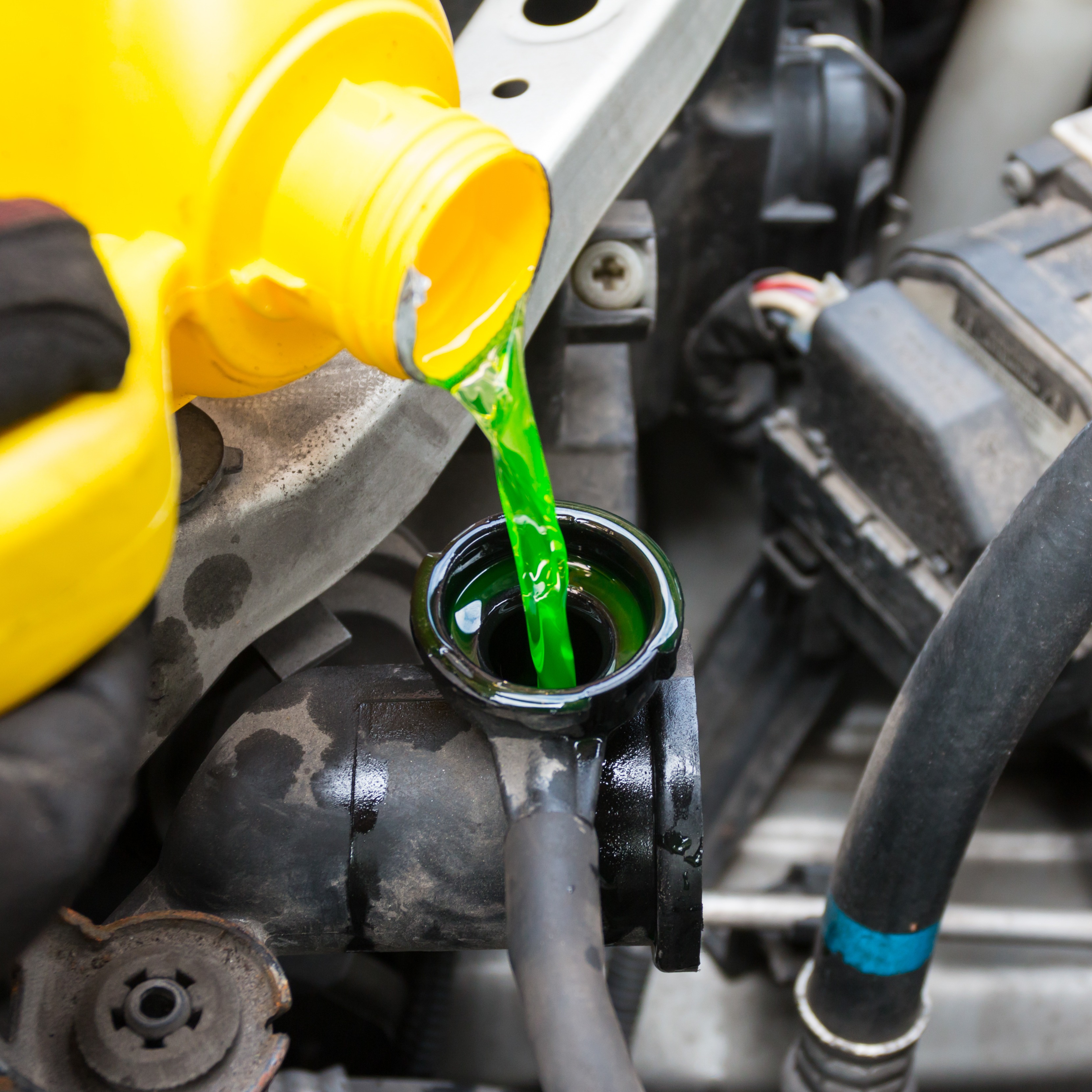
Coolant is the fluid that keeps your engine from getting too hot. It also helps protect against corrosion, and it can wear out or change over the years.
The battery stores the electricity that powers the car. Keeping it at the right temperature is important, and that’s one reason EVs can be more complex to service.
Even if you check one fuse, the radio might still be powered through another fuse. That’s why it helps to check all the fuse spots listed for the radio in the owner’s manual.
The owner’s manual tells you which fuse goes with which system and where that fuse is located. It saves time because you don’t have to guess which fuse might be responsible.
Noise diagnosis often focuses on suspension and body mounting points where rubber bushings, grommets, and pivot joints allow movement. If rubber dries out, wears, or loosens, it can create clinks, squeaks, or rattles—sometimes without major part failure.
Transmission fluid lubricates and helps control hydraulic functions inside the transmission. When it’s low due to a leak, the transmission can overheat and suffer internal wear, which is why topping it up after fixing the leak matters.
Viscosity is basically how thick the oil is. Thicker and thinner oils behave differently, especially when it’s cold, and that affects how well the engine protects itself and how much fuel it uses.
Another texture wants to know they have a, they don't say what, what type of vehicle
it is. They just say it's about 10 years old with a hundred thousand miles on it.
I can't find, they say anything in the maintenance about changing shocks.
How do you know when to change shocks on my vehicle?
That is a great question because it's not going to be in the maintenance schedule
because it really based on driving habits, the types of roads you go down,
all those types of things, the age of the vehicle, the wear and tear.
So when you go in for service, as we've talked recently,
people always ask about the oil change.
That's just one piece of it.
You need to inspect the vehicle.
That's going to include the steering suspension, which is the shocks and struts.
I would tell you that 10 year, a hundred thousand miles, it's probably due.
The other thing you don't realize is that they slowly deteriorate.
You don't realize each day you drive, they change just a little bit.
But over the course of, like I said, a decade, they become worn out.
You go and have them inspect and see if they're leaking.
See how the bounce return is.
If you push down on the corner of the vehicle, does it just suddenly come back
up and smooth or is a little more of a jostling to it?
If it's bouncing where it's going to the worn out, that'll affect how the tires wear.
So I would say next to me for service mentioned my car is 10 years old.
I've never done anything with the shocks or struts.
Have your mechanic, your shop dealership inspect them and make a recommendation.
Excellent. Let's grab a couple of phone calls this morning.
Mike, first up, calling in from Lakeville, I believe.
Good morning, Mike. What is your question for Nick?
Hey, good morning.
Hey, I've got a CVT transmission in my 2024 Mirage
and they recommend 30,000 miles changing the fluid.
Isn't that kind of, kind of still in?
You know, personally, I think that might be a little bit early,
but I would read a little bit further into that maintenance interval.
Is that the standard or the extreme?
Because sometimes it's two different intervals you can follow.
You know, we've, like I said, they've been around for more than a decade.
They get better each year.
I think some of the earlier ones, we had more issues
or a little more sensitive to the fluid services.
Maybe it's something where they want the first interval a little bit earlier,
getting that break in and period out of the way.
But I would do a little more research.
I would even inquire with the dealership.
So this is saying 30,000 miles, does that seem right?
You know, I would think maybe 60 be more typical,
but I would definitely follow with the recommending
because if they're recommending it 30, there's a reason.
Yeah, good point.
Thanks, Mike. Interesting.
Mary's on the horn calling in from Chaska this morning.
Hi, Mary. What is your question for Nick?
Hi, this isn't an engine thing or anything.
I have a SUV and on the back tailgate.
If you want, there's like a button you can press
versus using the fob or anything.
And then the tailgate raises.
That is not working.
Is that an electrical thing or is that a fuse?
I call it a bubble because it feels like a little bubble.
Do they just wear out?
So that soft tab button does wear out.
You know, it's on the back of the vehicle,
you know, salt and snow and stuff works its way into it over time.
The test for the owner there, though, is to see if the fob works.
If the fob does work, but that button doesn't tell you,
it's something with that part of the circuit.
If neither one of them works, well, now we have a bigger issue.
So I would do a little testing if it's working with the key fob
or if there's a button inside the vehicle, some vehicles have that also.
If those systems are working, we're not worried about a fuse.
Most likely it's something related to that switch itself.
Make a note of it.
Next time you're in for service, have them take a look.
I don't think you have any worries of the vehicle opening
accidentally.
Incidentally, I think it's likely related to that switch.
All right. Interesting. All right. Very good.
Thanks, Mary. I'll tell you what, Nick, we're going to take a quick break.
Let's invite our listeners to join in on this conversation.
If you have any kind of a car care question, we would love to hear from you.
You can phone it in if you want to chat with Nick or make it a text.
Either way, 6514619226.
I can tell you right now we're at 40 degrees in the Twin Cities.
We're going to hit about 50 today.
But then overnight, unlike normally, we would have temperatures will be rising
overnight to about 58 by five o'clock tomorrow morning.
The high tomorrow for your Sunday here in the Twin Cities is going to be about 82.
It's going to be kind of a breezy day.
But right now, mostly cloudy, 40, some showers on the way here.
Stay with us.
Newstalk 830W CCO.
And good Saturday morning to you.
Welcome back to CCO's car care show.
Denny Long here, along with ASC certified technician Nick Stoffel from Lloyds Automotive.
Nick, we always like to find out from you.
If folks need some help from Lloyds, where do we find you guys?
Absolutely.
As you know, we're in St. Paul.
We're on the corner of Grand in Chatsworth, which is 982 Grand Avenue.
Stop and say hi, stop and ask a question, whatever you need.
You can also call us at 651-228-1316.
And finally, if you need more information, check our website, which is LloydsAutomotive.net.
We will let you know that information before Nick leaves this, which is about 745 this morning.
In the meantime, if you have any kind of a car care question, you can call us or text us.
651-4619-226.
Let's grab a text this morning, Nick.
Here's a 2025 Mazda CX-70.
Textor says, I have needed to add a little coolant after about 10,000 miles.
Is that normal?
It's a 3.5 engine with the turbo.
What do you think?
No, it's a sealed system.
It shouldn't consume any or lose any coolant.
Likely there's a small leak or likely somehow it's starting to burn a little bit.
So once again, document how much you truly do add over a course of a period of time,
so they can kind of gauge how much or where, have them do a pressure test,
try to assess the source of the leak, make a recommendation.
And based on that, you can be a little more informed and decide how soon you have to get that repaired.
As good as the question I have is, has coolant changed over the years?
Oh, absolutely.
And not just the coolants, the way they build the engines, a lot less blow by,
meaning a lot less exhaust gases making its way into the clean system,
which is allowed it to go from every other year thing to maybe a five or six year interval.
I think we mentioned a few weeks back that hoses don't blow out anymore.
That's because the materials that they're making the hoses out of.
Yeah, products are so much better that these things really do last a lot longer.
You know, you can't, if you're old enough, you remember that a car at 100,000 miles
was pretty much worn out.
Well, it's nowhere near that now that the cars are just breaking in at this point.
That's a good point.
Again, not only the hoses, but it's something you and I talk about.
You we tend to forget, at least I do, we take our cars so much for granted
that it's going to, you know, we hit the button to return the key and it starts and it goes
and and they there's there's so reliable
so much more so than way back when.
All right, I'll grab another text here.
2009 GMC work truck.
Is there a way to turn off the quote service airbag warning?
You need to fix what's wrong.
The safety systems are not to be messed with it.
You're not allowed to eliminate them or bypass them.
If there's if it's seen as an issue where there's an airbag and there's a fault on
and keep in mind that there might be on a on that make vehicle up in the by the mirror,
there might be on and off for an airbag light.
That's also because there's a weight sensor on the passenger seat.
So if there is somebody sitting in the passenger seat,
it knows to have that airbag activated versus not, it's shut off as a default.
So there's that systems also designed to work as it should.
If you have a warning, keep in mind that there's any warning in the event of an accident.
That system's not there to help you.
So those one of those things you don't want to ignore it or support it off
because the less we want is have an accident, obviously, and let alone
not have her safety systems protect us.
I'm looking at a tech snake that kind of jumps around.
So let's see if I can't piece this puzzle together.
Texter says, I have a 2024 Honda Ridgeline.
I've taken an end to be looked at with the dealer for lane departure.
The truck goes over lines.
Anyway, is that a Honda problem?
The texture wants to know the camera has been replaced and still have issues.
Is it just a Honda problem?
Texter questions, not that I'm aware of, you know, a lot of these newer
technologies, the lane departure, the lane correction, the adaptive cruise control,
a lot more automation, there's a lot more sensors, a lot more calibration too.
And that's what it sounds like in this situation where if something's
not behaving as its design, because it doesn't see what it's supposed to,
it doesn't see how it's supposed to see it, meaning it's out of calibration.
So I'm sure, you know, the dealerships have all the tools and equipment
to approach this or take this on, but might be worth asking
is something out of calibration to get it all lined back up so it'll work properly.
And then we get questions once in a while about electric cars
and does Lloyd's work on, of course, you guys do.
But what are some of the toughest jobs these days
that to repair?
To first of all, do the detective work to find out what's wrong?
Is are the electronic problems or what would you say is the most difficult
to to work on these days?
Well, the the full EV vehicles becoming more common.
It's it's the newest technology, but we've had hybrid vehicles for a very long time.
And it's, in theory, very similar, very much the same thing.
The battery is not as big, but it still has electric motors.
It still has cooling systems, which I would say is probably one of the bigger issues
that we see is it isn't set and forget it with an EV vehicle.
There's a lot more heat generated there, those cooling systems and have
a lot more sensors to manage things.
So there's a lot more technology involved there.
But I wouldn't say it's any it's any harder.
I think it's maybe more intimidating because it's different.
But there's a lot of training for the technicians out there.
Once you practice what you do, you get better at it, like everything.
So we're taking the challenge out.
We love it. I love emerging technologies.
I love when we find ways to get more out of what we have.
You know, skip the fuel economy, the best it can be.
Let's eliminate emissions the best that we can.
And, you know, the EV has a piece of a piece of that also, you know,
maybe it's not the right vehicle for everyone.
But if you're a you live in the in the city and your commute is very short
and you don't, you know, it's a it's a second vehicle by all means.
You don't do as you please.
But I wouldn't say there's any one thing that we're seeing that's really frightening.
And you bring up a good point, too.
I would imagine how much the training for young technicians has changed
over the years, too, at the some of the various schools.
Here's a Technic service report on a 2014 Mazda 5 indicates
a valve cover gasket was replaced to fix a fluid leak.
Do you think this is a red flag for a potential purchase at a 66,000 miles on it?
No, I don't think that at all.
I would say a cleaning sister of a valve cover gasket,
which is an oil cover, those gas rubber gases will dry out to tear it with time.
If anything, the person was doing what they're supposed to do by repairing it.
So I see it as a good a good sign that they'd ignore it.
They fix the problem.
So that wouldn't shy away from that at all.
I would say most vehicles in the course of their life is going to have gasket leaks
that were required to repair.
Well, here's one we definitely have to repair.
Texture says they have a 2008 Honda pilot.
Could there be some sort of electrical interference?
WCIR radio seems always full of static.
Well, AM signals get that.
But I mean, if that's a constant thing, there's got to be some issue there
with the vehicle, right?
Because I don't have that here in my car.
No, I would say there's definitely some interference there.
You know, in the years ago, you know, when the radios were designed differently,
they had to have different antenna because they didn't want an interference
from the engine affecting that noise.
So I would say, you know, you're going to have to take it in,
have someone look at it, figure out if we have good connections, good grounds,
good power sources, but something something's not right there.
So that should definitely be addressed.
Yeah, let's do that today.
Get that done.
All right, hang on, Nick.
We're going to take a break for that forecast, that warm forecast.
We'll come back with Nick right after that.
In the meantime, if you have a question, a car care question, call us or text us.
Six five one four six one nine two two six from Newstalk A3O WCCO.
Good morning.
Welcome back to this portion of CCO's car care show.
Denny Long here along with Nick Stoffel from Lloyd's Automotive in St.
Paul answering any kind of a car care question that's on your mind this morning.
Nick, we still have a bunch of text messages.
Let's see how many folks who can help out before you take your leave.
Here's a 2016 Dodge Van.
Another radio question.
The radio stopped working.
Check the fuses.
They were fine.
What's the next step?
That's a good question.
We have good power.
We need to check ground and a lot of these radio control heads
are multiple multi-use items, navigation, those other systems,
and there could be other fuses.
So I'm not saying that the text is wrong, saying that to check the fuses,
but oftentimes there's more than one.
So I would probably look in that oftentimes owners manual will have a
description and location.
Check all those fuses.
If that doesn't do it, you're probably going to have to ask for a little more help.
Yeah, I'm looking at another text, Nick, about thinking about a technician
trying to track down this noise.
Noises.
I don't know how difficult noises are to run down, but this Honda CR-V 2010
says, I've got a clinking sound in the front center of the car.
Any ideas what it could be?
Well, what would the technician do?
First of all, the first thing I'm going to do is test drive the vehicle.
Obviously try to find the source of that noise, depending on what and how we hear it.
A lot of times we try to duplicate that inside the bay, which can be difficult,
but if you get it up in the air or get a couple of people involved,
you can try to isolate that rubber bushing, that grommet, that pivot point.
You know, something's dried up, something's a little bit worn or loose,
making that noise, which can be extremely annoying, but not necessarily expensive either.
A lot of these things just take a little adjustment.
So if you have an odd noise, next time you're in, don't be afraid to mention
something, let them at least figure out what it is, then you can make a decision.
Yeah, and give them all the information you can, I mean, tell them everything.
Well, maybe not everything, but everything with a car anyway.
Twenty sixteen Nissan Rogue, 250,000 miles on it.
Check engine light indicates catalytic converter.
Very expensive to replace.
So how long can a car be driven or what will happen if I keep driving it?
Well, that's a great question and they are, they can be very expensive to replace.
My advice is, you know, haven't assessed, estimated, make sure it's not
one of the sensors misreading and also keep in mind that that light is your only warning.
So if something else is going on with the vehicle, similar failure or some sort of issue,
you won't know because the light's already on.
So, you know, that's something you need to get in the budget, try to plan for it
sooner than later.
Is what I would like to suggest doesn't even have to do it today, but just don't wait too long.
What give us a general cost?
I mean, every vehicle is going to be different.
But what would a new catalytic converter cost these days?
Well, it depends on the make and model, obviously, but they're they're well over a
thousand dollars can even be a couple thousand dollars, depending on the make and model.
So they are very expensive, but they're very important also because they're keeping the
exhaust clean as it leaves the vehicle.
So there's a trade off.
Obviously, you need to live within your means, make a plan.
The vehicle in the short term is drivable.
It's not going to create any kind of drivability issue.
Initially, things can happen, things do happen.
So it's not one of those things you can forget forever.
Yeah, for sure.
All right, looking at a text to Nick.
Good morning, Nick and Denny.
I have a 2016 Honda Pilot.
The transmission slips a tiny bit once in a while.
Should I bring in into Lloyd soon?
What do you think?
I would say yes, right?
Yes, somebody needs to look at that soon.
If it's maybe it's just a little bit low on fluid.
And if we get that repair or that leak fix and get the fluid topped up, you can save the transmission.
If it's something that you ignore and put off and put off, you can create permanent damage,
which means once you do take it in, fixing the leak and topping the fluid isn't the only issue at that point.
So definitely get it in somewhere.
Have somebody assess it.
We appreciate you wanting to bring it to us.
But you can obviously, but you can also go to somebody closer to you.
You know, there's a lot of good repair shops around.
A lot of good shops out there.
Another text in a 2014 Honda Accord, 135,000 miles on it.
Occasionally, Texter says, when the ignition button is pushed, the engine will not start.
And instead I hear an electrical whining.
I repeat the push will sometimes start, sometimes repeat the sound.
It has always started.
This is occasional, not daily.
What do you think could be going on there?
My first suspicion is something with the starter motor itself.
You know, I don't know without hearing it.
You know, I oftentimes talked about getting a journal, making notations.
It doesn't happen all the time, which is the most frustrating instrument to
problems, drive us nuts, obviously.
But if there's a routine or if you notice it's the first start of the day, or
after you've been driving for a while, if it's hotter or colder, any of those
little clues you can give the shop really helps them to try to duplicate that and
try to get to the bottom of what's going on.
But my suspicion based on this is there's something with the starter, which is
starting to this point, but at some point it may not.
So keep that in mind.
All right.
Texter says this, good morning.
I have my Mustang parked in a heated garage for the winter.
I went to start it this week and it appears the battery is drained.
Do you think I need to get a new battery or can I just charge the one I have?
The battery is about five years old.
I think I know what you're going to say.
Yeah.
If five years is probably close to end of life, you can have somebody test it.
Obviously there's any risk of the battery having frozen over the winter months.
At that point, it has to be replaced.
The battery will not survive that a quick visual test.
You can look at the battery.
If you see, um, it's swelled up or you can see that it appears that it looks
different than it used to.
I would say yesterday that battery will should be replaced, but like you
mentioned any at five years, um, it probably is due.
It's time.
2002 Toyota Tundra had the transmission overhauled, took home, drivers fine, but
the check engine light came on, went to back up, it hesitated, then dropped it,
jumped a little, uh, I called and he told me to bring it back.
What do you think could be going on with that?
That's hard to say from this information.
That is, um, you know, definitely bring it back.
You know, just as they suggested, uh, get to the bottom of it.
Um, you know, during the course of repair, something might have gotten
locked, not loosed or out of alignment.
So it doesn't mean there's something catastrophic.
It could be a simple put something back in, clean a connection.
Uh, but definitely get it back and have him figure out what happened there.
Okay.
Uh, texture wants to know, this is our final question probably.
Why does oil viscosity keep changing over the years?
And we talk about this once in a while.
We do, um, I think they're finding ways to make things more precise, uh, which
is better, better fuel economy, less emissions, less drag.
There's a lot of things going on, a lot of science and chemistry happening there.
So I do think it's getting better.
It does make me pause also, you know, there's like zero W eight out there,
which essentially looks like water to me.
Makes me a little bit nervous personally.
You know, we've done this long enough that you start to think I need to
feel like oil, right?
But, um, you know, you got to trust the process.
Um, I assure you that these manufacturers need their vehicles to work.
They need to warranty them.
They're not going to put something in the vehicles and cause it to fail.
So, um, you know, this, you know, look at the owner's manual.
A lot of times it'll have a range of recommendations.
If you're not comfortable with one, you can try the other, but as always do with
the recommended or the manufacturer recommends, I wouldn't want you to
jeopardize any kind of warranty coverage.
You know, along with that, Nick, uh, and we talk again about not only oil,
but the filters, uh, given the changes in viscosity over the years, have you
seen a change in the oil filters?
That is, are they making them better?
Again, you get what you pay for usually, but what about the quality of oil
filters?
Has that changed?
That's a great point.
I do believe they've evolved like, like everything, but I wouldn't say there was
a, um, a day in time or how we changed.
I thought we went the full synthetic where the interval became longer.
I feel like the filters have gradually changed, but that's one of the main reasons.
We also like that 5,000 mile interval, you know, with the heating and cooling,
our climate, a lot of debris, a lot of stuff makes its way into the oil.
Once that filter is full, it's full.
It's going into bypass and that, that, that debris is floating around with the oil.
So we feel very strongly about that 5,000 mile interval, the filter being one of
the reasons.
Well, I know we have to head out of here, Nick, but before we do that, and folks
may need the help of Lloyds on a more, again, tell us how we find you guys.
Yes, sir.
You can always call and ask a question.
We will answer 651-228-1316.
If you're in St. Paul, you can find us on the corner of Grand and Chatsworth,
which is 982 Grand Avenue.
And if you need more information, check the website, which is LloydsAutomotive.net.
We'll do that very thing, Nick.
Have a great week and we'll talk to you a week from today.
Thank you, Danny.
Thank you, Nick.
Next helpful from Lloyds Automotive.
About this episode
Nick Stoffel, an ASC-certified technician from Lloyds Automotive, breaks down common car issues and what to watch for before a shop visit. CVTs get a reality check: they’re efficient and improving, but still need fluid service at the manufacturer interval. Shocks/struts aren’t on fixed schedules—at ~10 years/100k miles they’re likely due, based on bounce/leak and tire wear. Coolant loss usually means a leak or burning. The show also covers tailgate button failures, lane-departure calibration, EV cooling complexity, radio/static troubleshooting, catalytic converter warnings, and why ignoring transmission slip or check-engine lights can get expensive.
What to know about CVT Transmissions. How often should shocks be changed? Identifying electrical issues. How has coolant changed over the years? Airbag alerts. How mechanics handle electric cars. AM radio interference. Finding the cause of strange sounds in your vehicle. Why oil viscosity continues to change. Ask our car care expert Nick Stoffel of Lloyds Automotive. Visit lloydsautomotive.net 651-228-1316.