DAILY: BMW EV Models Leak, Tesla Berlin Running at 40% and Local Batteries Lower Costs | 02 Mar 2026
EV News Daily - Technology and Business of EVs
DAILY: BMW EV Models Leak, Tesla Berlin Running at 40% and Local Batteries Lower Costs | 02 Mar 2026EV News Daily - Technology and Business of EVs · Mar 3, 2026
The BMW iX3 is a fully electric SUV, meaning it runs only on battery power instead of gas. It's like a regular SUV but without the engine noise or gas tank.
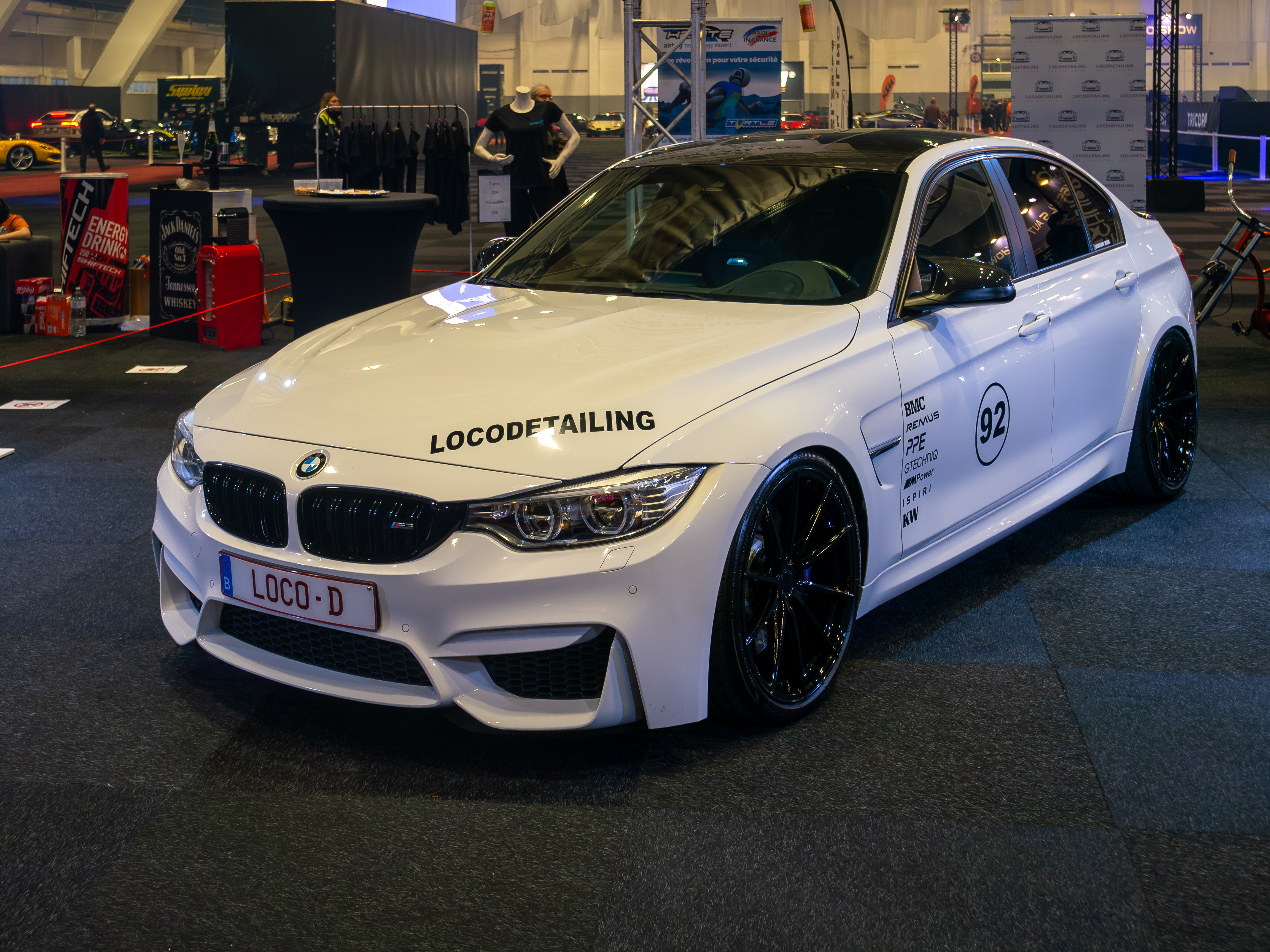
The BMW M3 is a fast and sporty car made by BMW. They are now making a new version that uses only electricity, keeping the same exciting driving feel as the older models.
The Tesla Model Y is an electric car shaped like a small SUV. It runs only on electricity and is very popular because it can go far on a single charge and has cool tech features.
The Chevrolet Corvette is a famous fast car from America. People talk about it because it’s powerful and has gotten better with new technology over time.
The Citroën C5 X is a new kind of car that mixes features from different types of cars to be very comfortable and easy to drive. It uses both gas and electricity to help save fuel.
The Ford Cougar is an older sporty car that people liked for how it looked and drove. It’s being compared to newer cars that use both gas and electricity to save fuel.
The Mercedes-Benz 300 SEL 6.3 is an old but very fancy and powerful car from many years ago. People remember it because it was one of the best cars of its time.
BYD is a big car company from China that makes electric cars. They are becoming popular around the world.
LIVE
Dating apps? Easy!
Online shopping? Simple.
Banking app? Sorted.
Life admin? Ugh.
That's what a digital ID could change.
And the government is opening a conversation to make it work for you.
Your voice will shape the final product.
So search digital ID consultation to have your say.
Dating apps? Easy.
Online shopping? Simple.
Banking app? Sorted.
Life admin? Ugh.
That's what a digital ID could change.
And the government is opening a conversation to make it work for you.
Your voice will shape the final product.
So search digital ID consultation to have your say.
Digital ID. Making it work for you.
Let's get into it.
The details listed include the Gen6 batteries, the 800V architecture, and an iDrive X interior with panoramic vision.
The iX3 itself was also in the configurator.
The 40S drive, so not X drive, but rear wheel drive would be interesting.
That would be enormous range with a bigger battery, but it's the 40 spec.
There's also the 40X drive and the 50X drive.
It launches in North America this summer.
BMW will add the first ever iX4.
So the iX4 is a coupe-like SUV, and with its kind of coupe roof, the iX4 would have the XDrive 40 and XDrive 50 designations.
It'll serve as the alternative to the iX3.
Less rear headroom and boot space, a bit more aero.
Now BMW's bigger SUVs keep a foot in the old world when the electric iX5 joins the lineup.
There'll be combustion versions, but also electric iX5.
That one was designated XDrive 60, and BMW insiders noticed the i3M60, that'll be pretty special,
and the all-electric M3, a spiritual successor to the M3 competition.
The website has since been removed and taken down.
Oops, someone hit go too early.
Now let's move on.
Tesla's Berlin Gigafactory in Grunheide built 211,000 vehicles in 2024.
We know that because Tesla put it in their manufacturing report.
And yet the annual capacity, according to Tesla's investor relations, is 375,000.
And so that would put the utilization rate at 56% according to official data.
The factory only makes the Model Y.
That dependence looks less comfortable as demand now cools off for Tesla.
Data Force says the European Model Y sales were 151,000 last year, down from 210,000 in 2024.
Now Berlin supplies Canada, Turkey and parts of the Middle East including Israel.
But those volumes don't make up for the quarter-plus drop in European deliveries.
And rivals aren't waiting.
BYD sold more EVs in Europe than Tesla in January 2026.
And rivals refreshed their crossovers far faster than Tesla, even after they introduced the standard Model Y.
And the Model Y still leads some of the European Bev charts, but Tesla's EV share has halved over the last two years.
Against that backdrop in Europe, Labour politics are taking the front seat.
A dispute between Tesla and the union, IG Metall, led headlines ahead of the Works Council elections,
which happened on the 4th of March, with around 11,000 employees voting.
Tesla filed a complaint against a union member.
They claimed, secretly recorded, a Works Council meeting.
IG Metall responded by taking legal action against the plant boss Andre Tirig, who suggested this, for spreading false allegations.
Tesla backed down on their allegations, and they've agreed to move on until after the vote.
Well, IG Metall wants collective wage agreements.
And that's normal in Germany, and well, Tesla knows this because they've owned German businesses far longer than they built Berlin for.
And so they knew this about operating in Germany, a bit like operating in Sweden, but Tesla famously pushes back against unions.
They operate at Volkswagen, BMW and Mercedes-Benz.
These union leaders hold seats on things like supervisory boards and can even intervene in strategic decisions.
The chief executive, Elon Musk, has spoken out multiple times against workers uniting, collective bargaining, bargaining, things like that,
and has made clear that he wants sole control.
Musk has said that the site in Berlin could become the largest factory complex in Europe.
But he did warn that won't happen if outside organisations get their way.
Not specifically naming the union, but everyone knows what he was talking about.
Now, a new report argues that if you make your batteries locally, then you shrink the gap from what China prices are,
which are very low, and to what they are at the minute.
Now, this is particularly a European thing.
It's the transport and environment group putting out a report.
And the timing of this will be music to the ears of Brussels regulators and lawmakers.
The EU executive wants to unveil their Industrial Accelerator Act in two days' time.
And the draft of that points towards local content.
You're going to hear people talk about local content with EVs.
In other words, 70% of the bits that go inside a car coming from Europe.
And the act aims to prioritise locally manufactured goods, not just EVs, solar, wind and even nuclear.
Some car makers oppose local content because they say that these requirements make batteries more expensive,
and that hurts, as a proportion of the total cost of the car, smaller, cheaper cars.
But that extra cost is manageable according to TNE.
And besides, if European battery makers can scale, will scale reduce costs.
TNE says higher manufacturing efficiency, lower scrap rates and more automation cuts the cost gap.
To $14 per kilowatt hour by 2030 between locally made cells and Chinese made.
At the moment, it's a potential $41 difference.
And its figures imply a cost difference of around €500 or $530 on an average EV.
They say that public incentives could remove that gap, and buyers could even treat it as a bit of an insurance premium against buying Chinese.
China has imposed export restrictions on critical minerals in the past.
Julia Polisko-Nova of TNE calls local content rules the only policy tool that can prevent a repeat of the north vault collapse
and describes the added cost as the sovereignty premium worth paying.
Interesting, isn't it?
There's a whole argument around sovereignty at the moment.
There's a whole argument around protectionism, which is one thing.
And then a whole argument around sovereignty.
People ask me why I use Proton for my email and why I pay it's only a few pounds per month.
Well, why do you pay for Proton mail?
Like you can get Gmail for free, you know, you can get Outlook for free.
Yeah, I do have a Gmail address and I do have an Outlook address.
But if you're not paying for it, then you are the product.
And I was just sick of the idea that as I grew EV News Daily and the business that all of the emails and the documents that I was storing with Google.
Well, a couple of things.
First of all, all of them accessible to Google.
And so, yeah, I could have moved over to Apple.
I'm deep into the Apple ecosystem and they have, you know, encryption and things like that.
But in the past, equally, Apple have succumbed to things like, you know, law enforcement requests.
Now I'm doing nothing wrong, but it still makes you wonder, doesn't it?
And so I moved it to a Swiss email provider.
I tend to use European AI these days.
If I have a question about how to do something or if I'm looking for suggestions for, I don't know, homework questions with the kids.
I'll tend to use something like, well, Proton have their own AI, but it's not very good between you and me.
But I'll use something like Mistral.
They have a one called Luchat.
And is it as good as Google's Gemini or Perplexity?
Probably not at the edges, but it's good enough.
And so the idea of data sovereignty is important.
Also, battery sovereignty.
A question that more and more people are asking, not just at the sort of fringes of tech nerds anymore.
Still got all the old email accounts and stuff.
And they just all forward into an email account that now I pay for, that no one's scanning and reading my inbox and training their AI models on it.
So that's just, you know, it's a small cost.
It's really important.
So sovereignty is increasingly something I think generally we'll be talking about maybe as a, you know, as a wider group in terms of electric vehicles, a little bit more in the future.
All right, let's move on.
This is a fascinating story.
This is fascinating for my UK listeners and maybe for where you're listening as well, because you might not realize.
So if we pay, if we charge our cars publicly here, we pay 20% tax on top of that.
And yet if we charge our cars at home, we pay a 5% tax for charging our cars.
And you might think, that's really unfair.
Why does the UK government do that?
Yeah, I completely agree with you.
So a charge point operator, one of the smaller ones actually called Charge My Street.
Decided to take the government to court.
I didn't know this was going through, but the ruling came through today.
A UK tax court has ruled against HMRC.
So HMRC is His Majesty's Revenue and Customs.
In other words, the government's collector of money.
They ruled it's unfair for VAT to be charged 20% on the electrons that are exactly the same that you might pay on a public charge point at the end of your driveway.
On a AC charger, there's a lot of on street charging over here, sort of a lamp post charging and stuff.
And yet if you charged on your boundary, it would be 5%.
That's unfair.
The split came about because Charge My Street and Deloitte actually, Deloitte's tax team read through the VAT Act of 1994
and found that it says if you supply less than a thousand kilowatt hours per month to somebody, it's domestic.
And so unless you're charging more than a thousand kilowatt hours outside your house on the street,
and you might be if you're charging overnight every single night and doing loads of miles,
but most people would fall under that, then it's a domestic supply.
And therefore you should be billed by the charge point operator, not at 20, but at 5%.
It's actually a massive ruling.
The government say they're now considering their position.
Many charge point operators have public sector contracts and fleet contracts written over years, assuming this.
So it's not the work of a moment to suddenly plug in tonight and you find your charging got cheaper.
It would be a renegotiation of contracts and things like that.
The ruling also opens the door to how you game the system.
The rule links eligibility to, like I say, a thousand kilowatt hours a month.
And so this is tax laws from 1994 to do with VAT.
And so networks could end up splitting the sites.
They could even split each individual charger down to its own individual thing.
So one of that charge point is its own business, as it were.
It's grown premises.
And how do they govern that?
There's things to work out, but I think it's the first shot across the bow of fairness.
I think if fairness was applying, rather than the country being skinned
and needing to fleece us all of as much money as possible, then they would have done away with this a long time ago.
And people talk about, well, maybe they'll charge 20% to charge at home.
Well, then they're going to start monitoring home charging.
And then they want to start monitoring what comes out of your home charger
because they can't put it on your home bill for a start.
And so how do you then split out making a cup of tea to charging your EV?
And if they say, well, every EV charge point is connected as they all are now.
And then we want to have government control over your charge point.
Well, I'm just going back to a three-kilowatt granny charger plugged into the wall.
I'm not.
But I'm being facetious.
But in that case, I'll just plug it, you know.
I don't want to be monitored on charging my EV.
My energy company does that already.
So yeah, it's interesting.
We'll take a break.
We'll come back.
Lots more to discuss.
Stick around.
Your life's already digital.
From banking and shopping to streaming and learning.
So why does sorting government stuff still feel like such hard work?
The government is introducing a new digital ID
to make access to services quicker and more secure for everyone.
But we need to hear from you.
Your voice matters.
Search digital ID consultation to have your say.
Digital ID making it work for you.
Your life's already digital.
From banking and shopping to streaming and learning.
So why does sorting government stuff still feel like such hard work?
The government is introducing a new digital ID
to make access to services quicker and more secure for everyone.
But we need to hear from you.
Your voice matters.
Search digital ID consultation to have your say.
Digital ID making it work for you.
Google Cloud becomes the first Volkswagen Group site in Europe
to do sell-to-pack systems at scale.
And it's also LFP chemistry as well, lithium-ion phosphate.
They make 1,100 battery systems a day.
And they want to make over 335,000 battery systems a year.
Those packs not only for Skoda but VW Group brands as well.
MG say they're narrowing their search
for a European production site for MG.
Down to five countries, they want a factory running by next year
to sidestep EU tariffs.
MG's owned by SAIC.
They got hit with a 45% levy because their Chinese made EVs.
The MG European Bev sales fell 33% last year.
And that's awkward because MG's been on a rip in the region.
The biggest seller of Chinese built cars in Europe, MG.
A head over here, William Wang,
wants to recast the brand as a locally built brand.
They acquired MG in 2007 after the brand went bust.
And since then, they have successfully used MG's heritage
in the UK particularly to set themselves apart
from the likes of BYDs and Cherries and Leap Motors.
Now Citroën has refreshed the C5 Aircross plug-in hybrid.
They say chasing efficiency and output and EU missions compliance.
The battery pack gets bigger to 21.5 kilowatt hours
or 17.8 usable.
And they quote,
70 miles on the urban cycle WLTP.
60 miles overall WLTP combined.
That's almost 100 kilometers.
And that figure is a 33% gain over the old Citroën C5 Aircross plug-in hybrid.
They say it's more than a Peugeot 3008
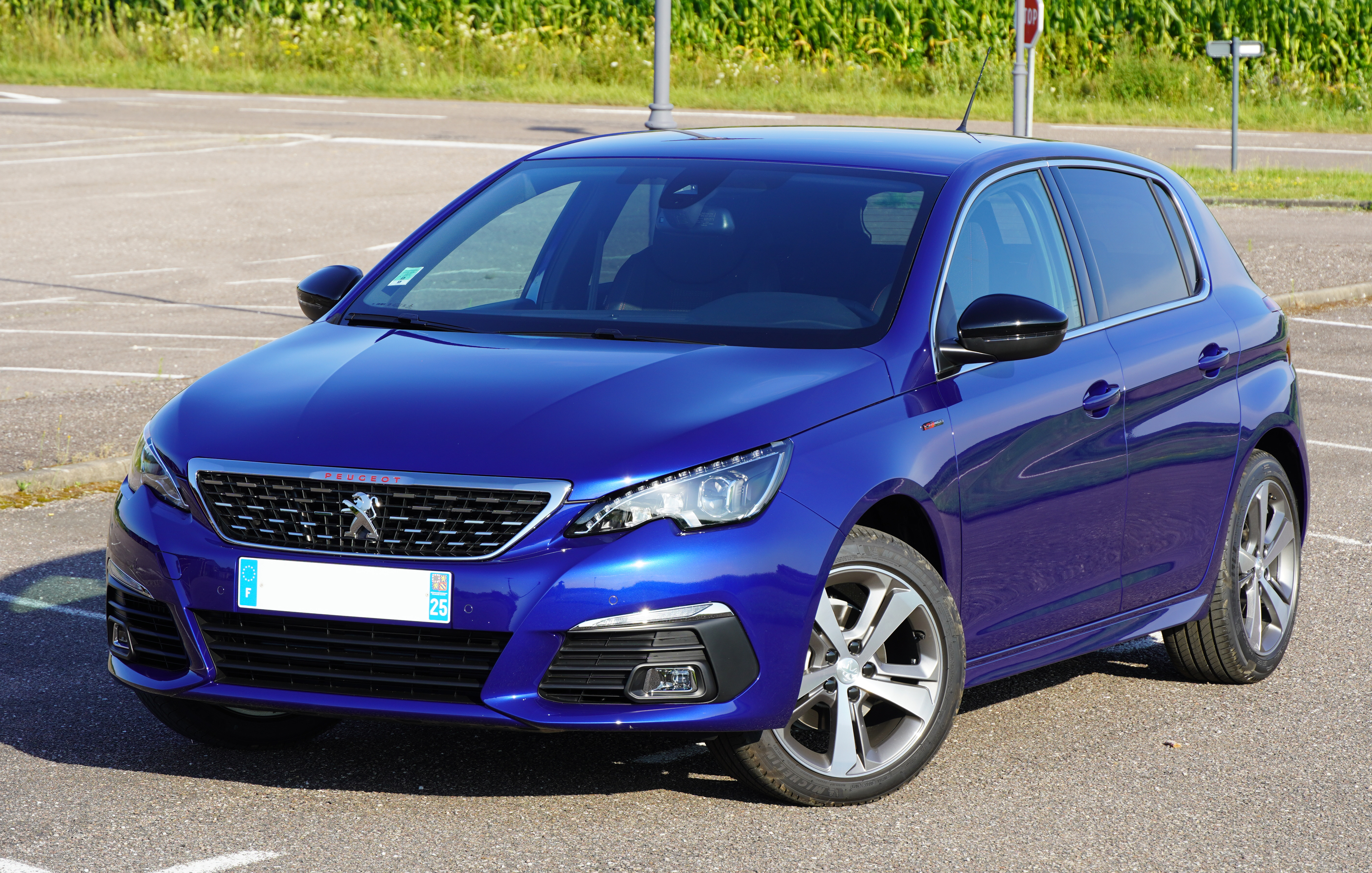
or a Ford Cougar plug-in hybrid.
And 100 kilometers of range, they say,
is equivalent to some premium offerings
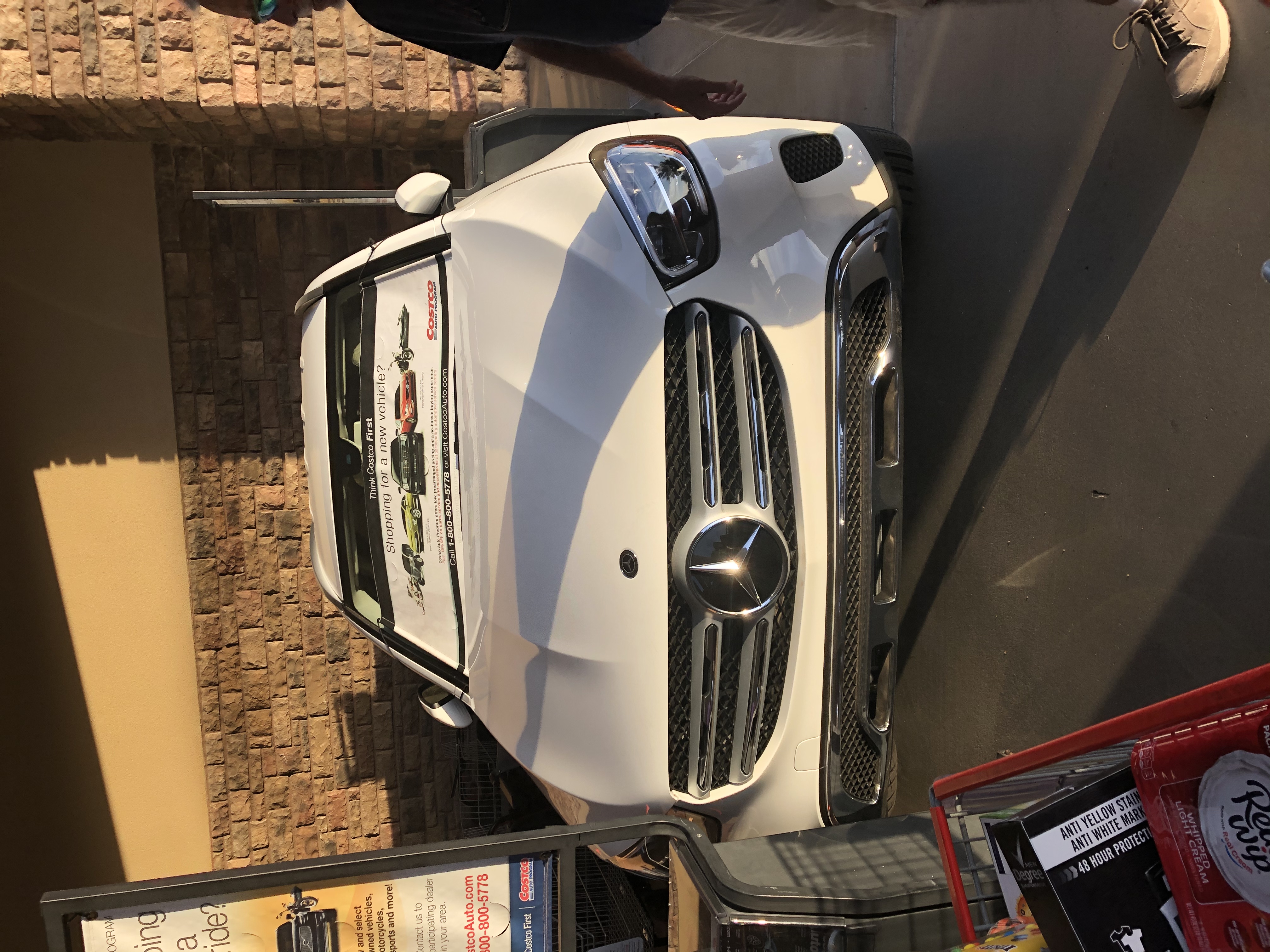
like a Mercedes-Benz GLC 300E plug-in hybrid.
Now, a Canadian real-world trial of trucks, semi-trucks, class-8 trucks,
projected savings of $157,000 Canadian dollars
per truck over a six-year operational life.
They ran the work tracking two commercial fleets
over 12 months and 200,000 kilometers in the Montreal area.
Researchers say this is the most comprehensive data set of its kind.
The core comparison narrowed the Freightliner Cascadia diesel
and the Freightliner E-Cascadia Bev.
And they narrowed it out by fuel type.
And the E-Cascadia, albeit more expensive to buy,
they said with more maintenance costs, I'm surprised about that.
And lower residual value, even so, a six-year saving of $157,000 per truck.
You operate a big fleet.
It's a no-brainer to go full electric if you can.
Now, Denzer has launched the electric MPV called the D9 in Australia,
priced from $86,000, that's $61,000 US,
both versions of the Denzer D9.
Use the Denzer E-Platform with the 103-kilowatt-hour pack.
It's got 200 and plus, really, 200-kilowatt DC fast charging
and vehicle to load inside, napper leather, white ash wood trim,
soft touch surfaces, premium suede roof liner,
double-layer acoustic glass, power sliding doors,
a 2 plus, 2 plus, 3.
So big captain's chairs in the second row, ventilated seats, massage seats,
powered leg rests, position memory, 900 millimetres,
almost a metre of leg room,
and individual screens for each of the second row captain's chairs.
I simply do not like my children enough to put them in the second row of this.
But I'd happily be chauffeured around.
It's got a dual-node fridge and a hot box and a 14-speaker system as well.
Cell-to-body battery technology.
Ah, Australia.
Right-hand drive.
Denzer D9.
Bring it over here.
Now, let's finish off by talking about a Cox Automotive study
that found that 38% of Americans will consider a Chinese car brand
if they were available, and 39% say they would not,
and the remainder are sitting on the fence.
Gen Z, though, Gen Z, shows 70% would cross-shop a Chinese vehicle
if they were available.
They asked 802 people who are buying a car in the next two years.
China leads global car production, sales, and exports,
but the U.S. blocks them.
U.S. buyers will see BYDs and Neos and Geelys
if they go just north or south of the border in Canada or Mexico.
Cost drives demand.
Alongside an average new car price of over $50,000,
Chinese options, if they enter the market,
almost 70% say they would expect lower prices,
and 50% ask would expect good value from these Chinese cars.
And that's your podcast for today.
Thanks to our premium partners, National Car Charging
on the U.S. mainland and the low-high charge in Hawaii,
and Test EV, Avalos' trusted partner
for independent EV battery health testing
in Australia and New Zealand.
Have a good and cinema, and remember there's no such thing
as a self-charging hybrid.
The government is introducing a new digital ID
to make access to services quicker and more secure for everyone.
But we need to hear from you. Your voice matters.
Search Digital ID Consultation to have your say.
Digital ID, making it work for you.
About this episode
BMW's leaked EV lineup reveals new models like the iX4 coupe-SUV and the electric iX5, alongside updates to the iX3 and a special i3M60. Tesla's Berlin Gigafactory produced 211,000 Model Ys in 2024 but operates at just 56% capacity amid cooling demand and union disputes. A report highlights how local European battery production could narrow cost gaps with China, supporting EU policies favoring local content for energy sovereignty. In the UK, a tax court ruled that VAT on public EV charging should be reduced from 20% to 5%, challenging current government policy and potentially lowering charging costs. The episode also touches on digital ID initiatives and data sovereignty.