DAILY: BMW Upgrades iX1 & iX2, Norway’s Cold Weather Test and America Adds Plugs | 30 Jan 2026
EV News Daily - Technology and Business of EVs
DAILY: BMW Upgrades iX1 & iX2, Norway’s Cold Weather Test and America Adds Plugs | 30 Jan 2026EV News Daily - Technology and Business of EVs · Jan 31, 2026
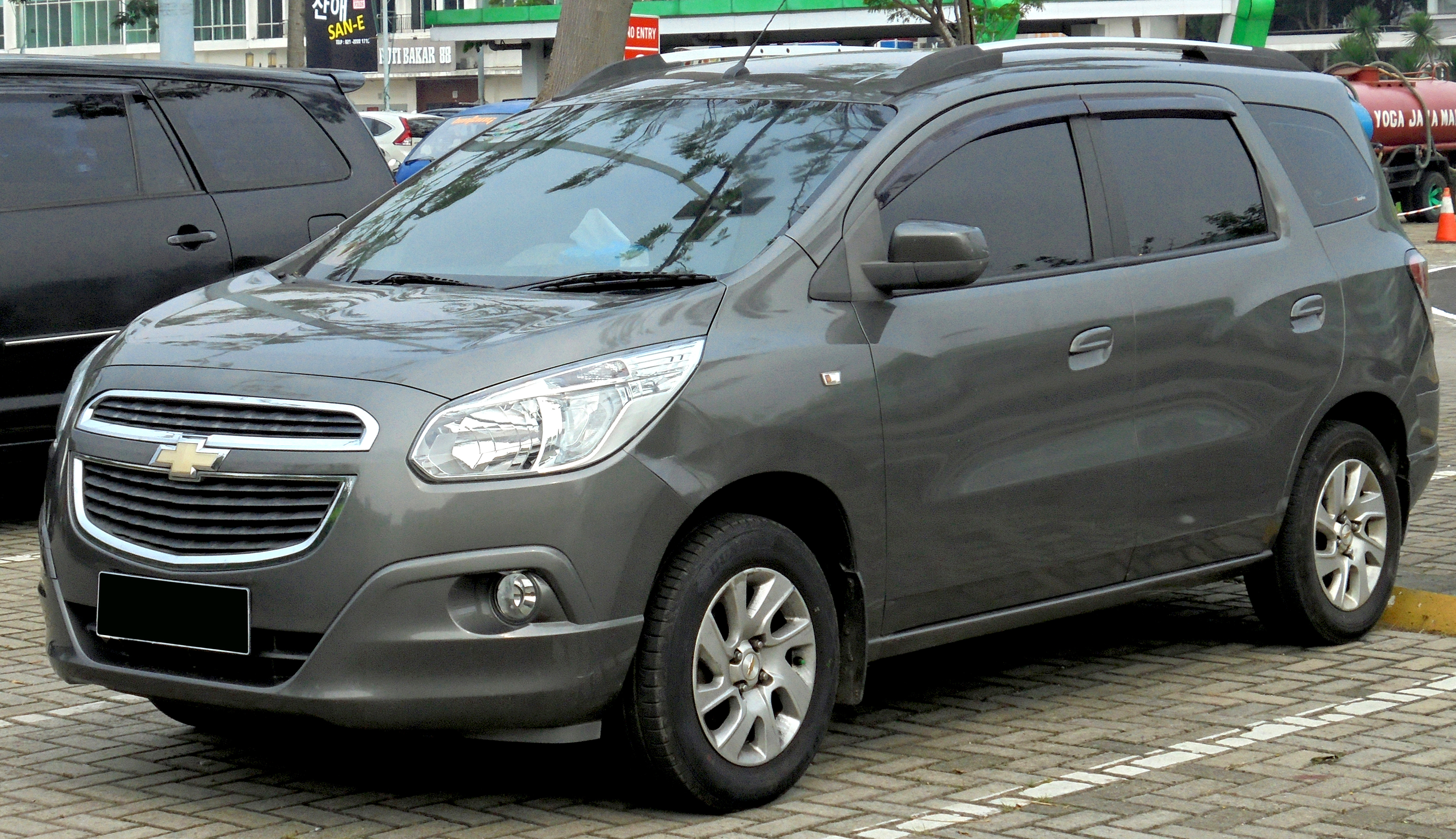
The Chevrolet Spin is a roomy car that’s great for families because it can fit a lot of people and stuff. It's popular because it’s practical and usually affordable.
Car
BMW IX1
The BMW IX1 is a small electric SUV made by BMW. It's designed to be efficient and easy to drive, making it a good choice for city driving.
Silicon carbide inverters are special parts in electric cars that help them use energy more efficiently, allowing them to go further on the same battery charge.
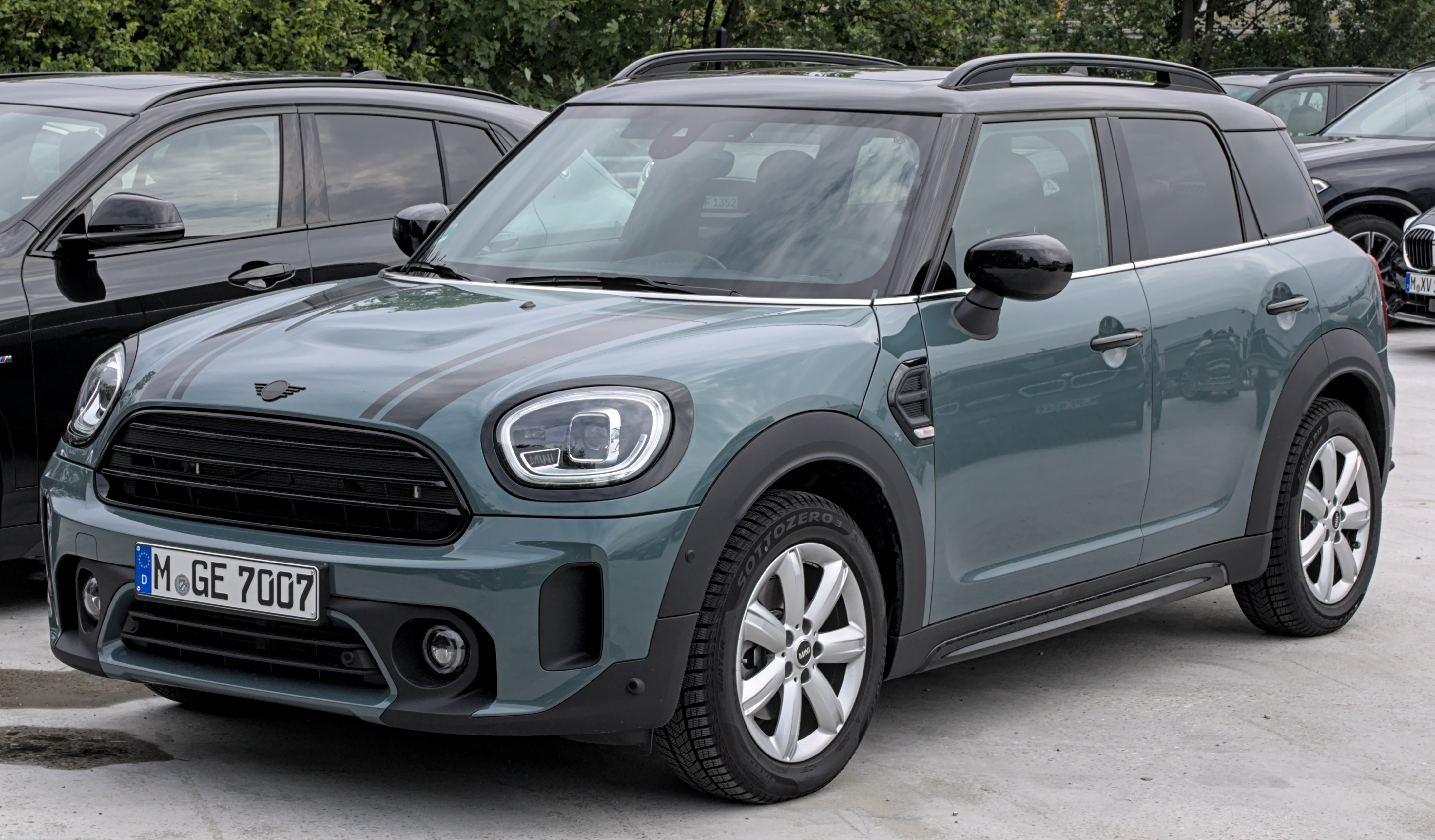
The Mini Countryman is a small SUV that looks cute and is fun to drive. It's special because it offers more room than a regular Mini car while keeping the fun style.
A 108kWh battery is a type of battery used in electric cars. It tells you how much energy the battery can hold, which affects how far the car can drive before needing to be recharged.
Vehicle to load means that an electric car can provide power to other devices, like charging your phone or running a small appliance, using its own battery.
The Lucid Air is a fancy electric car that can go really far on a single charge. It's important because it shows that electric cars can be luxurious and have lots of high-tech features.
WLTP is a testing standard used to measure how far a car can go on a charge or a tank of fuel. It helps consumers understand the real-world performance of vehicles.
The Mercedes-Benz CLA is a small, fancy car that looks really sleek and has lots of cool features. It's popular because it makes luxury cars more accessible to younger people.
Car
MG S6
The MG S6 is an electric car that promises a good driving range. It's made by MG, a brand that has become popular for offering affordable electric vehicles.
The Audi S6 is a fast and fancy car that can be used every day but also feels exciting to drive. It’s important because it mixes luxury with performance in a practical way.
Cold weather tests check how well cars work in very cold temperatures. This is important because cold can affect things like batteries and engine oils.
Aerodrag is the force that makes it harder for a car to move through the air. The faster you go, the more this force affects how much fuel the car uses.
The EPA is a U.S. government agency that tests cars to see how much fuel they use and how clean they are for the environment. They give ratings that help buyers understand how efficient a car is.
CCS is another type of plug used for charging electric cars. It allows cars to charge quickly at certain stations, making it convenient for long trips.
NACS is a type of plug used for charging electric vehicles in North America. It helps different brands of electric cars use the same charging stations, making it easier for drivers.
Adapter hell is when electric car drivers have to use different adapters to charge their cars because there are many types of charging plugs. It can be confusing and annoying.
Dual cables are charging stations that have two different plugs so that more than one type of electric car can charge at the same time. This makes it easier for drivers to find a place to charge.
Electrify America is a company that builds charging stations for electric cars. They help people charge their cars while traveling, making it easier to use electric vehicles.
Public charging is when electric car drivers use charging stations that anyone can access, usually found in places like shopping centers or parking lots. It helps people charge their cars when they're out and about.
ChargePoint is a company that provides charging stations for electric cars. They have a network that helps drivers find places to charge their vehicles.
BYD is a Chinese company that makes electric cars and batteries. They are becoming more popular around the world as more people look for electric vehicle options.
400 kilowatt DC charging is a fast way to charge electric cars. It helps drivers recharge their vehicles quickly, making it easier to use electric cars for long trips.
A plug-in vehicle is a car that you can charge by plugging it into an outlet, just like you would charge your phone. It can run on electricity and sometimes has a gas engine as well.
The Mitsubishi Outlander is a medium-sized car that can hold a lot of passengers and cargo. It's popular because it's practical for families and can even be a hybrid, which means it uses both gas and electricity.
A plug-in hybrid is a car that can use both electricity and gasoline. You can charge it like an electric car, but it also has a gas engine for when you need to drive further.
Car
BYD C-Line 6
The BYD C-Line 6 is a type of car that can run on both electricity and gasoline. BYD is a Chinese company that makes many electric and hybrid cars.
The Tesla Model X is a large electric car that can carry a lot of people and has cool doors that open upwards. It's important because it shows how electric cars can be both practical and exciting to drive.
Welcome back to EV news daily today, BMW upgrades the IX1 and IX2, Norway's cold weather test and
America ad plugs plus stay tuned later in the show. I'll tell you about the latest from the
tiny truck company Slate who gave us an update this week on EV news China today our spin off
podcast that's analyzing what happens in the east and how it affects the global EV industry.
BYD rolls out Godseye 5 to millions of vehicles. Battery makers turn to sodium
and China scrubs online attacks. Let's get into it. BMW smallest electric SUVs now go further.
The IX1 and IX2 now get silicon carbide inverters. The same efficiency upgrade I told you about
recently with the Mini Countryman EV. The new inverters cut losses when they turn DC from the
battery into AC for the motors so more energy actually arrives at the wheels. BMW puts the
gain at 40km of extra range using the same battery pack. The change looks modest next to the
Mini Countryman update. Mini paired its own silicon carbide inverters with friction optimized
wheel bearings they say. Aero tweaks and a rise in usable battery capacity on the Mini. So that
does go a little bit further than the outgoing one. Attention now turns to the IX3 though.
Those vehicles have just started to be delivered either to staff or certainly long time maybe
buyers in Munich. So home territory for BMW. March the 7th is the official European launch
date with all the dealers on Neue Classe. That's the big hardware story that's being updated.
108kWh battery, high voltage architecture, vehicle to load, 3.7kW to pull out of it as well to power
your devices. So that's the big one coming from BMW. Now Lucid's air grand touring again went
furthest in Norway's cold weather test, the LPRI. In the winter 2026 test run by the Norwegian
Automobile Federation and Motor.no the sedan managed 520km at minus 30 degrees Celsius.
They tested 24 electric vehicles. The figure is a long way from the official 960km WLTP,
not 520km which they got. That's a deviation of 45.8% in extreme cold weather. Rivals didn't fare
a huge amount better. So Lucid came top with the real world range of 323 miles
followed by the Mercedes-Benz CLA. That was only a 41% difference between its claimed WLTP
in perfect conditions which is 440 miles and 261 miles in extreme cold. So you might be wondering
which one did the best in terms of the smallest difference or deviation,
which is the least deviant car. So in terms of what the promised mileage is
at extreme cold weathers and I'm never going to drive in minus 30 degrees. I need to worry
about battery loss but which one did the best? It was an MG. Actually it was a Chinese car.
The MG S6 did best. It promises 301 miles. It asked you drove 214. Only 29% deviation. But
driving at the speed limit at minus 30 degrees, counts as punishment for any car. Let's face it.
At that point the question is not about electric vehicles. Many observers treat
cold weather tests as one of the verdicts on electric vehicles. Well yes, it's important
work to be done and we're very appreciative of everybody who did in Norway that does these amazing
cold weather tests. And I think they probably get it more right than wrong in terms of their
testing procedures. But remember that dense freezing air affects all cars. Freezing stiff
tyres, thickened lubricants in petrol and diesel cars, make things more sticky. Cabin heating
applies regardless of powertrain. The laws of physics don't grant exemptions just because you're
not driving an EV. Aerodrag at motorway speeds rises. The air thickens. Rolling resistance
climbs as your tyres are harder. Oil in gearboxes and bearings flow more slowly.
Everything, engines, motors and inverters can all run below ideal temperatures and needing
more energy to deliver. In an EV, the energy cost is just much more measurable because every EV
has a range, whether that's WLTP, EPA, China Cycle, whatever, a number on a page that it's
meant to go. And you're looking at a digital readout and you're seeing it drop in real time.
Yet the narrative pins the blame on batteries in cold weather. And people maybe use it as a stick
to hit EVs with. I don't know. I don't know. But remember, it affects not only kilowatt hours,
but internal combustion cars as well. But the fuel gauge doesn't move like a digital readout.
Now, Electrify America will add its J3400 plugs, that is the NACS standard,
now to its fast charging network. Its stations offer the standard alongside CCS, turning one of
America's biggest non-Tesla networks into a dual standard operations. So the shift matters more
for the future car sales than it probably does for drivers today. Although it's all, it's very
welcome if it means that you can use more charging stations. Big car makers selling in North America
are all going NACS and putting fitting NACS ports on their new cars. Without matching plugs in the
ground, those cars fall into what I've often called adapter hell. And I think my American
listeners, you're going to be an adapter hell for a period of time. So you've either got a NACS car
or a CCS car, and you're going to be turning up to charges and plugging in sometimes with an adapter
and sometimes not. More and more charges are adding dual cables, dual heads, and you can choose,
or even four. So if it's a charger that can serve two vehicles at once, some networks are putting
in two cables one side, two cables the other. And so two CCS and two J3400. Expensive, but they're
doing it for drivers. It supports the current owners, but also backing the new standard.
Technical details on Electrify America's rollout are thin. They've not published exactly the rollout,
all the rated powers of their future connectors either, nor has it committed to adopting
Tesla's software stack, ease of integration. They use all their own membership systems apps and
plug and charge, of course, where the cars allow it as well. But it's an interesting
direction of travel. Well done, Electrify America. Now talking of charging, two stories about stopping
at charges. Stick this one in the bank. Next time someone complains about charging or something like
that, or you see a crazy relative on Facebook talking about electric vehicles, two thirds of EV
drivers now choose public charges for the amenities, not the killer what's delivered.
That's the claim from Attender. Now Attender is a ChargePoint software firm whose latest survey
suggests 66% of users pick locations based on toilets, seating, Wi-Fi, and refreshments.
That matters for anyone planning to build or fund charging hubs, hardware, and headline
charging speeds no longer suffice. Attender says 67% of its existing EV drivers that they surveyed
would be more likely to use a charging station co-located with things like shopping centres,
comfortable seating areas where they can relax. The firm argues that hubs which feel like modern
service areas, not a car park round the back with some cables, pulls in more users. Evidence from
the same research supports the case. 72% of respondents say they would be more likely to
use a site with free Wi-Fi, 69% favouring charges with onsite food and drink options.
And that kind of feeds into the next story which is even more optimistic. This is 9 out of 10
electric car drivers, so 90% of people when they stop to charge buy something else. That simple
habit is starting to reshape economics of where charges go and the amenities found are charges.
The data which I've reported on similar data points over the years, last eight years of this
podcast, and maybe you have felt something instinctively. I've kind of felt it in my gut,
even though I maybe always couldn't put data points to it. But when you stop somewhere that
also sells anything from light refreshments, maybe just a quick coffee, to larger things like some
food and whatnot, I'm more often to think, well, I'll time charging with a little toilet break,
a coffee stop, and I'll grab a snack. The figure comes from a survey by four court
trader in Great Britain, which polled EV motorists at public charging sites. It suggests the charging
bay now doubles as a retail channel. Drivers stay longer than petrol users, and unlike at home,
can't walk to their own fridge. For site owners, the sales margin on a coffee is huge,
and it easily beats the margin on a kilowatt hour, if there even is one.
Four courts face hard sums, grid upgrades might be needed, that's expensive,
charger uptime has to improve, and pricing must look fair. Because people will go where it's
cheaper, yet the survey undercuts the idea that public charging stands apart as this kind of
low margin utility thing that's a nice to have. But if you're on a petrol or a diesel
four court, and I did take this from some four court retail media, by the way,
called fourcourttrader.co.uk. Now, it wasn't clear exactly how they did the research.
They said 2000 drivers commissioned to do this, so we'll wait and see. But yeah,
that's really fascinating. Now, Ford's China battery gambit is facing more heat.
When is it not, by the way? Ford's write down, recently of $19.5 billion,
and cull of its EV plans hasn't ended its troubles in EVs, because they want to use
Chinese intellectual property to build cells on American soil. And now, fresh scrutiny this week
in Washington about their tie up, John Muthner, the Republican who chairs the House Committee,
has written to Ford's boss, Jim Farley, about its plans to build a factory that uses Chinese
intellectual property to make lithium ion phosphate cells. Again, Ford employing everybody,
it's an American factory built by American firms, employing Americans. But the actual cells they're
building, the intellectual property behind LFP, that's Chinese. There will be some Chinese boots
on the ground, if you like, to build the lines and then they'll leave. The facilities in Kentucky
and Michigan, once aimed at EVs, will move to things like energy storage as well,
within the next 18 months. Ford insists they'll qualify for tax credits and says expanding the
LFP output in the United States is an investment in American energy security, thousands of high
skilled jobs. But this politician has now demanded to know how he wants to know if Ford has either
updated, expanded or altered its original licensing terms to cover this new focus on
energy storage systems and the even data centers that are going to need some battery
storage and whether this shift tracks the new eligibility restrictions under this new foreign
entities of concern thing in America. He also presses Ford on whether it plans a joint venture
with BYD. I don't know why he would be writing about that. Maybe I've missed that piece of news
possibly. He says China has shown it will weaponize the auto supply chain. The row comes as
Ford readies their battery plant in Marshall, Michigan due to start production. I think this
year, possibly starting this year, it'll certainly supply cells when they do get around to making a
$30,000 midsize electric truck. It'll go into those. Right, we've got to talk about GM.
Mary Barra has been vocal about China and we'll talk about fast charging in Australia. Stick
around, back in a mow. January is when we recommit to the habits that support our health
and well being. Naturally, we start looking at what can support those goals, including supplements,
but choosing the right supplements can be confusing because not only are there so many
brands out there, the supplement industry itself is a low trust category. It's lightly
regulated, products are easy to make and companies don't even have to list everything on their label.
Now there's momentous. They've become the high trust brand and a low trust category.
They weren't satisfied with the industry standard. So they built the momentous standard,
their commitment to doing things the right way, not the easy way.
Momentous sources the highest quality ingredients on the planet. Their whey protein comes from grass
fed European dairy cows. Their creatine uses the purest form of creatine monohydrate and every
formula is made with clinically backed, highly bio available nutrients with no fillers and no
artificial sweeteners. Right now, momentous is offering listeners up to 35% off your first order
with promo code audio boom head to live momentous.com and use promo code audio boom for up to 35%
off your first order. That's live momentous.com promo code audio boom.
Okay, welcome back. Now General Motors picked a fight with Canada this week. Mary Barra,
its boss attacked Canada's new tariff deal with China where Canada removed 100% tariffs down to
6% and allow 49,000 EVs that are made in China, not Chinese EVs, although they'll be allowed in,
but Tesla's built in Giga Shanghai. Lotuses, Volvos, Pulse Stars, anything that's made in China,
they all count as well as obviously the likes of the BYDs that might want to be sold there as well.
That number was picked because 49,000 is how many Chinese made EVs were being sold in Canada before
these 100% tariffs. So we're not entering into a brave new world. Canada's just rolling back to
where it was a couple of years ago, but still everyone's very upset about it. And now GM has had
it say. So Mary Barra told staff that the decision risks protecting jobs and national security,
that it's a slippery slope that politicians in both countries echo her concern. Ontario's premier
Doug Ford has called the deal an attack on Canada's auto industry and warned it could strain vehicle
trade with America, Canada's biggest export market. America's Commerce Secretary Howard
Ludnick has said that the Accord complicates this year's renegotiation of trade agreements.
The US Transportation Secretary Sean Duffy predicted Canada would look back at this decision and
regret it. The row comes as GM moves ahead with 750 layoffs at its Oshawa plant, a further 1500
jobs expected to go across its supply chain too, despite earlier delays. GM has halted bright drop
assembly at its Kami plant, affecting a thousand posts. Both factories sit in Ontario. So far it
sounds like anything harming the Canadian auto industry has been GM. Detroit still leans on
Canada for GM Stalantis sold over at 700,000 vehicles there last year. And by the middle of
last year, 30% of vehicles entering the US market were Mexican or Canadian made. Ms. Barra
also complained about the Chinese car makers enjoying a good time in China and that high tariffs
and curbs keep the rivals out. And yet, maybe I will remind you, the General Motors did sell
nearly 1.9 million vehicles in China last year, 30% of its global total. So,
you know, don't poke China too hard. Let's talk about 400 kilowatt DC charging now running in
Australia. Okay, so it's the fastest public EV plug you can get. No other operational public
hardware is that fast. The figure also sets a new benchmark because network operators have just
finished rolling out some 350 kilowatt hardware and now must decide whether they need to start
putting 400 stuff in the ground a little bit quicker. Car makers face pressure too.
Let's face it, not many cars can actually charge at 400 kilowatts, but remember,
a lot of Chinese EVs are in Australia and more to come as well that can make use of those speeds.
BYD is one of them. They even have megawatt charging back in China. It's a thousand kilowatts,
but they're pickup truck, the Shark 6, which is sort of an e-rev, but the engine can drive the
front wheels at high speeds, but otherwise the engine's decoupled and it charges the battery.
The Shark 6, really fascinating ute, actually. It's now Australia's best-selling plug-in vehicle,
not pure Bev, but plug-in. It shifted 18,000 utes last year and it knocked the Outlander from
Mitsubishi off its perch. The Chinese vehicle needed just 12 months to beat a total of 12 years of
Outlander sales in Australia. I've been talking about this a lot last year. Little Shark 6 in
Australia has gone down very, very well. Yeah, it might get bested in some cases by payload and maybe
by towing at the extremes, but for many Aussies that want a capable ute that can do most things,
that Shark 6 can be plugged in, big battery, very efficient. You can still add gas to it if you want
to. And the reshuffle doesn't end there. BYD C-Line 6 is a plug-in hybrid. That's lining up to push
things like other plug-in hybrids in Australia further down the rankings. BYD sold 9,000 C-Line 6s
over the last year, I think. Mitsubishi sold like 4,000 Outlanders. And so plug-in hybrids
do some good business in some places. Now, two more stories. Let's talk about the tech journalist,
one of the most famous people on YouTube, has tens of millions of subscribers,
as Marques Brownlee, MKBHD. He is huge in the tech world, if you didn't know. So Tesla will
stop building its Model S and Model X next quarter. We found the news out this week,
they're killing off the original Model S and then Model X that followed it, that really the
whole company was built on. Elon Musk wasn't nostalgic. He said they'll use the space at
Fremont to make robots with the long-term goal of a million units a year that he thinks everybody
will want to buy to do its washing and laundry and folding. Maybe. But the retreat from two key
models comes as Musk again talks up a car that doesn't yet exist, and that's the second generation
roadster now ten years over Jew. And I went back to check this, and they launched it in 2017.
So they were definitely working on the car in 2016, which is ten years ago.
Oh, holy moly. Replying on Twitter to the tech journalist, Marques Brownlee,
who commented when he heard that the Model S and Model X had been killed, he replied,
oh, the roadster is so cooked. After the discontinuation news, Mr. Musk pushed back
and said, no, this car will be incredible. On Tesla's Q4 earnings call, he backed away, though,
from the previously and recently promised roadster launch date. I didn't mention it yesterday on the
podcast. There were many things I could have mentioned, and that one unfortunately didn't
make the cut. But I'll mention it today. He said that hopefully the roadster will debut,
and it'll be the only car left that isn't really designed for autonomy. It'll be a driver's car.
Yet it was only two months ago that he gave a Tesla's annual shareholder meeting a firm date
of the 1st of April, and the way car companies work, that if you know in November you're launching
a car on the 1st of April, it's because it's done. So he said, nah, promise you, 1st of April.
And it wasn't an April Fool's joke. And now he went, well, it might not be April,
but hopefully, that was the word, hopefully, he says it's something special beyond a car.
It'll be unforgettable. The roadster program has been around in gestation. I said for a year,
a decade. It might be more than a decade. The old roads to sign off in 2012, they might have
immediately started sketching it. It might be 15 years into this. The second generation version
was officially debuted, though, to the rest of us in 2017, when Tesla took deposits of $250,000
for the foundation series, full amount, banked it, and never delivered. Incredible. People
don't mind. They just love Tesla so much. They're like, that's okay. Have quarter of a million dollars
on me. In December, Tesla posted some job adverts related to Roadster and three of them. They were
looking for technical managers and manufacturing engineers. Right. Finally, Slate Auto is publishing
some details this week to update on what they're going on. Slate Auto has yet to sell a single
truck, yet the EV startup already promotes its factory refit in Indiana in its latest video
update. Slate walks us through the reconfiguration of their plant chosen as the base for its electric
truck. The former facility, now in mid-overhaul, sits in the centre of their bet that it can scale
fast. The firm says they are transparent. Regular dispatches from the factory floor are trying to
reassure suppliers and would be customers and investors as well in a market where many EV
newcomers stumble between the prototype stage and mass market manufacturing. Each step in
an assembly line counts. The current update focuses on stripping and rearranging the plant,
mapping the layout for the truck assembly, and laying the groundwork for its tooling.
It's not very hyped up. It's just really about proof that the heavy industry is going in and
that it's a serious attempt to make the truck. For now, though, the only thing rolling out of the
plant is some social media video. And that's your podcast for today. Thank you for listening.
Thanks to our premium partners National Car Charging on the US mainland and the Lo Ha Charge
in Hawaii and Test TV. Avalu's trusted partner for independent EV battery health testing in
Australia and New Zealand. Have a good one. Remember, there's no such thing as a self-charging hybrid.
About this episode
BMW has upgraded its iX1 and iX2 electric SUVs with silicon carbide inverters, enhancing range by 40 km. Norway's cold weather tests reveal real-world performance discrepancies for EVs, with Lucid's Air Grand Touring leading the pack. Electrify America is adding NACS plugs to its network, addressing the dual-standard charging landscape. A survey shows EV drivers prioritize charging locations with amenities. Ford faces scrutiny over its battery plans involving Chinese technology, while GM criticizes Canada's tariff changes favoring Chinese-made EVs. The episode also discusses Tesla's discontinuation of the Model S and X, and updates from the startup Slate Auto.