DAILY: Duracell Launches UK Charging Network, Polestar Sales Rise and Cybertruck Sales Reported | 14 Oct 2025
EV News Daily - Technology and Business of EVs
DAILY: Duracell Launches UK Charging Network, Polestar Sales Rise and Cybertruck Sales Reported | 14 Oct 2025EV News Daily - Technology and Business of EVs · Oct 14, 2025
The Tesla Cybertruck is a new type of electric truck that looks very different from regular trucks because of its sharp, boxy shape. It's important because it's trying to change how we think about trucks by being electric, which means it runs on batteries instead of gas. People talk about it a lot because it's so unique and many are excited to see how well it sells.
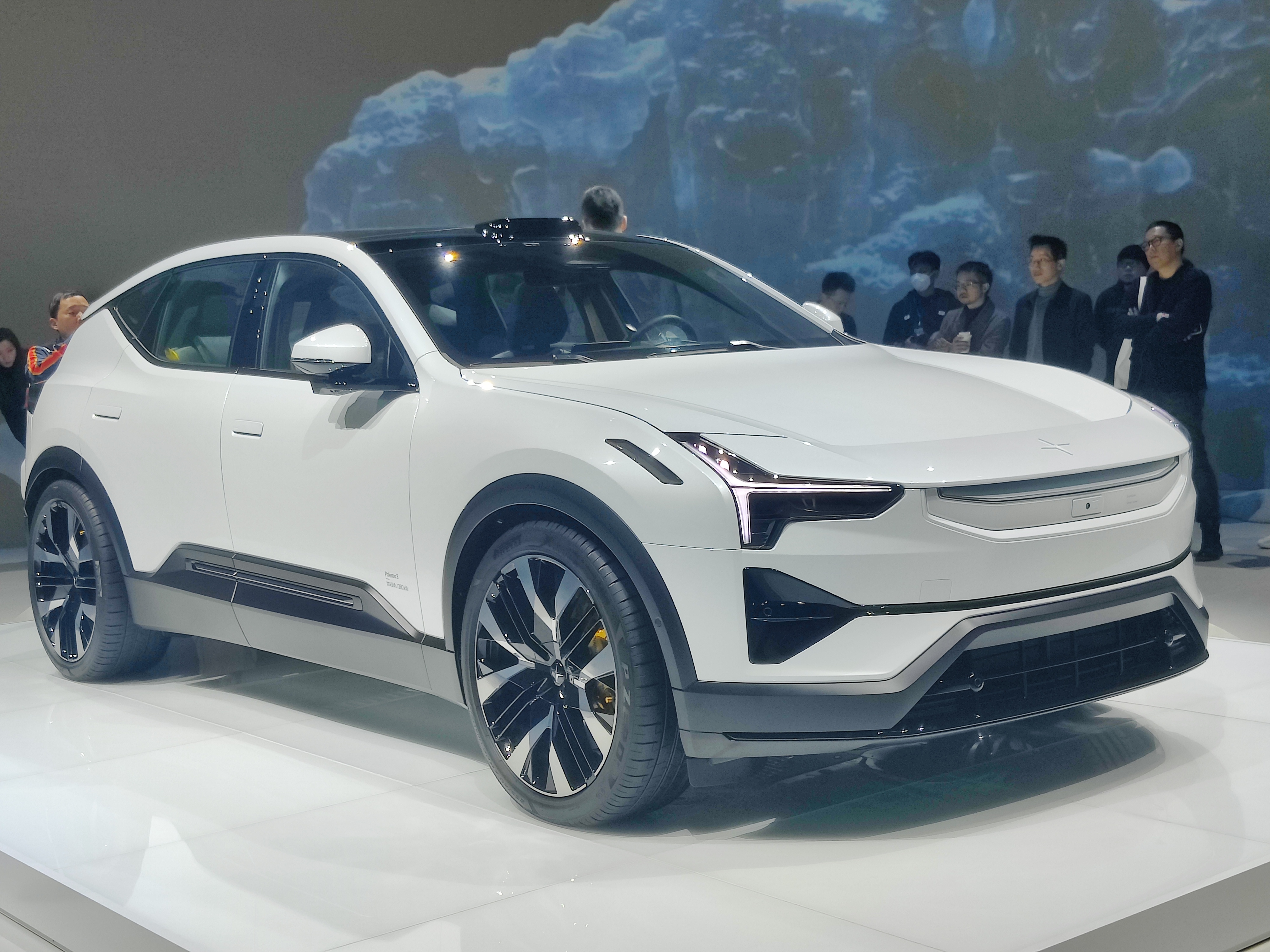
The Polestar 4 is a new electric SUV made by Polestar, which is a brand that focuses on electric cars. It's now available in the United States and is part of their lineup of eco-friendly vehicles.
Car
Polestar 7
The Polestar 7 is a new electric vehicle that will be made in Slovakia. It's part of Polestar's plan to offer more electric cars in Europe.
The Tesla Model Y is a smaller SUV that runs on electricity instead of gas, making it more environmentally friendly. It's popular because it has a lot of space inside and can go a long distance on a single charge. People often talk about it because it's one of the best-selling electric SUVs right now.
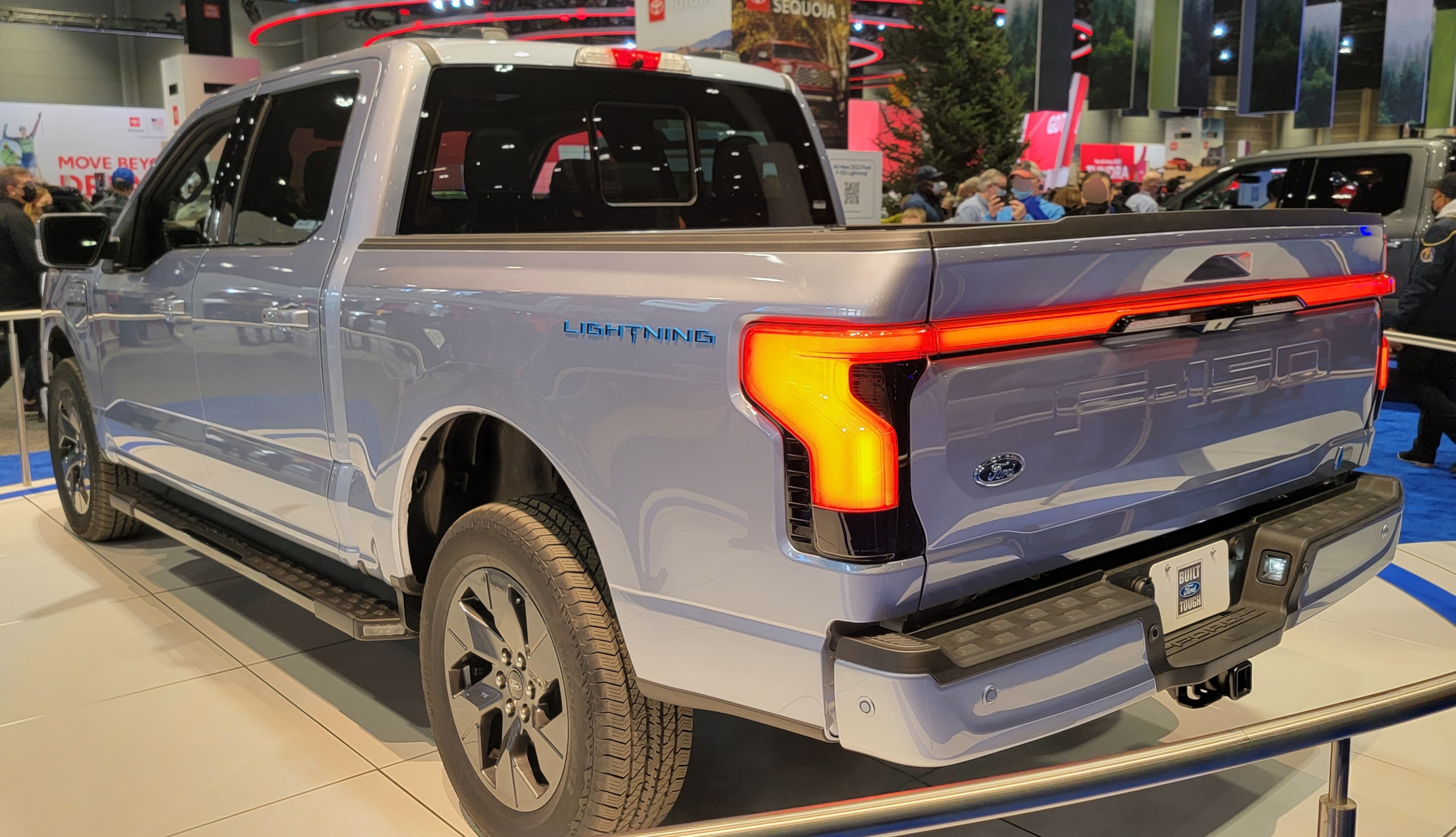
The Ford F-150 Lightning is the electric version of Ford's best-selling truck, the F-150. It offers the same utility as a regular truck but runs on electricity instead of gasoline.
Battery electric vehicles are cars that run only on electricity, using batteries instead of gasoline. They don't produce any exhaust fumes like regular cars do.
Thermal runaway is when a battery gets too hot and can start a fire. It's a serious issue for electric cars, and manufacturers are working hard to prevent it.
Plug-in hybrids are cars that use both gas and electricity. You can charge them like an electric car, but they also have a regular engine for longer trips.
EV range is how far an electric car can go before it needs to be recharged. It's important because it tells you how practical the car is for daily use.
An E-rev is a car that usually runs on electricity but has a gas engine to help it go further when the battery runs out. It's a way to get more range without worrying about charging all the time.
The Hyundai Ioniq 5 is a new electric car that looks very modern and cool. It's special because it can charge really fast and can drive a long way on a single charge. People talk about it because it's one of the latest electric cars that offers a lot of great features.
The Hyundai Genesis is a luxury car that focuses on being very comfortable and packed with cool technology. It's known for being a good deal because it offers a lot of features that you would find in much more expensive cars. People talk about it because it's a great option if you want a fancy car without paying a huge price.
The Nissan Leaf is a car that runs only on electricity, which means you don't need to buy gas for it. It's one of the first electric cars that many people bought because it's affordable and easy to use. People mention it because it's a good choice for those looking to try an electric car without spending too much money.
Battery swapping lets you quickly change a dead battery for a charged one at special stations, similar to how you might fill up a gas tank. It makes driving electric cars more convenient by reducing wait times for charging.
Ceylon is a company that sets up places where you can quickly swap out a dead battery for a charged one, making it easier to use electric cars without waiting for them to charge.
A monthly battery subscription means you pay a set amount every month to use a battery for your electric car instead of buying it. This can make getting an electric car cheaper at first.
E-mobility means using electric vehicles, like electric cars or scooters, instead of ones that run on gasoline. It's a way to travel that is better for the environment.
Car
Ceylon's NanoCar S4
The Ceylon's NanoCar S4 is a small electric car that you can buy without the battery, which makes it cheaper. You can subscribe to a service to use the battery separately.
Car
Lyoto L9 Extended Range EV
The Lyoto L9 is a new electric car that can drive longer distances on a single charge, which is great for people who travel a lot.
The Jaguar I-PACE is a stylish electric SUV that offers a smooth and powerful drive. It's known for being a luxury car, which means it has a lot of nice features and looks great. People recommend it as a good choice if you're looking for a used electric car that still feels fancy.
The BMW 7 Series is a fancy car that is very comfortable and has a lot of high-tech features. It's known for being a top-of-the-line model from BMW, which means it's one of their best cars. People often talk about it because it can lose value quickly, so if you're thinking of buying one, you might want to consider that.
LIVE
Welcome back to the podcast.
Today, Duracell launches a charging network,
Polestar sales are on the increase,
and Cybertruck sales are reported.
Plus, stay tuned.
Later in the show, I'll tell you which EV
has suffered the very worst depreciation.
We'll kick us off with Duracell's news,
launching their eCharge network.
They're gonna start in the UK,
and the ultra-fast DC fast charging stations.
When I first saw the picture of this,
it's a charging station looking like
that little Duracell battery.
You know, you can picture it in your mind's eye right now
with the gold top on,
and I honestly had to look at my watch and check the date,
because if I didn't believe it, looking at these pictures,
that look, well, not Photoshopped,
but you know, the charges look like
a little Duracell battery.
I thought it was April the first,
but definitely not an April Fools.
They are launching their own charging network.
The initial stations are due this year,
and the first six nationwide sites
are gonna be live by the end of the year.
Duracell will invest more than 200 million pounds
over the next decade,
and expect rapid expansion throughout 2026 and beyond.
Duracell has licensed the ElectraCharge,
a newly founded CPO charge point operator
to run the network,
while a company called the EV Network EVN
is funding and developing
the actual charging hubs themselves.
EVN operates 43 locations
and 300 charging stations already,
including what it describes
as the largest charging hub in the UK at the NEC,
the National Exhibition Center.
Reported peak charging capability for the hardware
that they're using will be 1,000 kilowatt,
that's megawatt charging,
enabling fast charging and broader access
to public charging across the UK.
Duracell's model they're using
is some funding from the Duracell brand,
the ElectraCharge CPO, but licensed to Duracell,
and delivery by EVN.
They say bringing those things together
means that public charging can be quickly
and reliably scaled.
Fascinating, just didn't expect to see the news today,
like little Duracell battery charges
popping up everywhere with a little gold top on,
but these look really cool and just fantastic news
that another new name is entering,
such a famous name as well.
My obvious first thought,
and your first thought as well,
might be cool.
So these are battery enabled chargers,
like whether they have the integrated battery
to absorb the grid and use a lower powered connection
and then dump all the juice into the EV.
No, no, no, it's just a Duracell charger,
just rebranding some existing hardware,
but hey, I'm not complaining,
this is a great story, right?
Well, launching it here in the UK as well,
I'm sure they have big plans, right?
We'll move on until Polestar next,
reporting retail deliveries of 14,192 Polstars in Q3 2025.
They're up 13% on the year,
and in the first nine months of the year,
they've sold almost 45,000 vehicles.
At the same time, this week,
they closed their last retail store,
not a dealership really, in China
and dissolved their joint venture,
Polestar Times Technology in China.
The CEOs stepped down of that business
and the Polestar China CEO recently changed,
but they still remain the production bases in China,
and there was some more investment back in June,
controlled by Li Shufu,
now the $200 million coming into Polestar,
so as a direct stake of 60% now in the business,
Polestar still sells even the closed down China,
but they're made in China.
28 markets, North America, Europe, Asia Pacific,
models available in France now,
they weren't before, they went on sale this year,
and they use the Volvo dealer network,
and the Polestar 4 launched in the United States now.
Production will expand in Europe with the Polestar 7,
if we missed that news recently,
that's gonna be made in Slovakia,
that's a Euro built vehicle, Polestar 7.
Polestar 3 and 4 just starting to see
some action on the used car market,
which is why I get a little bit excited,
and we're seeing some half decent prices,
I reckon low 30s now for the Polestar 4,
that's the cheaper one, even though it's a higher number,
that's the one without the rear screen,
but a lot of action happening now
after sort of those cars being out for maybe a year or so,
and starting to get a bit more competitive,
still a very expensive vehicle,
but if you are out cross shopping,
something like, what else is low 30s
that's nearly new, that's a year old, oh, I know,
a Cupra Taviscan, that's also about low 30s
for a nearly new vehicle, maybe a couple of thousand miles,
X Demonstrator, that kind of thing,
big battery, interesting styling,
I think you've gotta be a certain type of person,
if you're driving a Cupra or a Polestar,
but either way, yeah, Polestar 3 is the expensive one,
that's not seeing so much action at the minute
in the used market over here,
prices are starting to come down a little bit though,
now let's talk Cybertruck,
Tesla's Cybertruck saw US sales fall in Q3,
as strengthening competition in the EV pickup segment
is harming the Cybertruck,
Cox Automotive reporting the data,
this isn't Tesla data, of course,
reporting only 5,385 Cybertruck sold
in the three months July to September,
that would be down 63% on the same time last year
and year to date sales, first nine months of the year,
compared to the same time last year, that's down 38%,
so for the first nine months of the year,
they sold 16,000 Cybertrucks,
well, Tesla introduced the lower price Cybertruck trim
in the United States and Canada,
but then promptly discontinued it,
and despite recent incentives,
Cybertruck deliveries are well below expectations,
of course, I've mentioned a few times over the years,
Elon Musk projecting the production rate
would be 250,000 units annually,
so an annual production rate of 250K,
sometime in 2025, and that prediction was made in 2023,
well, clearly, selling 5,000 Cybertrucks in three months
and maybe 15,000 of them year to date,
16,000 year to date, is some way off his prediction,
probably of a bigger issue,
is that they built the facility in Austin
to make a lot of Cybertrucks,
and that is probably the bit of it
that's never talked about, really,
and that's massively capital intensive,
and one of the reasons, I imagine,
that probably guided their thinking,
I mean, who am I, nobody really,
but I imagine that guided their thinking on that
when they came to launch the new cheaper models,
which we know he got rid of a couple of years ago
in favor of just cheaper versions of the three and Y,
which we had recently, there's the standard range ones,
they can be made on the same production line
as the three and the Y,
so hence the glass roof of the Y,
which they then cover up,
because it's cheaper to use exactly the same suppliers
and production lines and processes
and tooling and machinery than they've got for the Model Y,
stick the glass roof on,
and then cover it over on the inside with a headliner,
because that's not a premium option,
then actually retool and re-engineer for a metal roof,
which would probably be long-term cheaper to do
if they thought they were gonna sell
a ton of the standard editions,
but again, if they think it's gonna be a bit like
the Cybertruck low-priced one,
like when we might bring it off sale,
if no one buys that, or it's there to do a job,
to push you into the higher-priced ones,
that's why the Model Y has a glass roof, for instance,
but yeah, Cybertruck having a lot more production capacity
than is being used is kind of killer for a car company.
In Q3, the Cybertruck was 1% of the US market,
the Ford F-150 Lightning was 2.2,
Ford F-150 Lightning's 10,000 of those registered in Q3,
so some deals on that at the moment.
General Motors reporting 4,000 Silverado EVs in the quarter,
nearly double the year ago figure,
and the GMC Sierra launched a year ago,
3,500 units in Q3.
Rivian up 13% to 2,500 R1T pickup,
so the pickup market in EV is interesting,
but obviously not driving huge numbers.
Ooh, by the way, as an aside,
I saw a Denali on sale, for sale over here.
What was it on?
110,000 pounds if you want a Sierra Denali edition EV.
Left-hand drive, obviously, has been imported to the UK.
What's 110K, 130,000 US dollars equivalent?
Anyway, it's, have a look at Auto Trader,
if you fancy buying one of those.
Now, Tesla and Sweden have had a difficult couple of years.
Tesla and the unions, not best friends,
but they worked out their differences recently,
and we thought it was all behind us,
and now Tesla is once again facing escalating labor action
in Sweden as another protracted conflict
with the workers union's approaches their second anniversary.
The IF Metall Union said action begins today
and will stop all duties for Tesla, including off-side work.
Now, there's a major Swedish truck company,
Linda, L-I-N-D-E, Linda provides servicing
and deliveries for Tesla Sweden.
IF Metall contract secretary, Simon Peterson Peterson
said the move stops everything that Linda does for Tesla
and described Tesla as a small player in their portfolio
and not really a big deal for them.
The stoppage remains until Tesla signs a collective agreement
and October the seventh next week,
week after, we'll mark two years since the first strike
against Tesla in Sweden.
A long bit of industrial action.
We thought we'd seen it resolved recently.
There were sympathy strikes in the Nordic countries as well.
Talks with Tesla and Sweden's mediation office
didn't really resolve everything.
Tesla's been importing vehicles in bulk via German ferries
to work around disruptions as well.
Sweden, a very unionized country,
it's part of their culture.
And Tesla, obviously, they don't want to back down
to those union demands there in the fights.
The fight looks like it continues.
We thought that was resolved.
Now, China is tightening their rules on getting subsidies.
China will apply stricter technical benchmarks for EV or NEV,
as they are described there, new energy vehicle,
tax incentives from the first of January next year.
Narrowing which models qualify
and encouraging higher efficiency?
The Ministry of Industry and Information Technology,
the Ministry of Finance, and the tax authorities
publishing a new catalog, the Titans eligibility
for the subsidies and tax benefits for buying an EV
or for EREVs.
Now, for plug-in hybrids and the electric only range
rises from 43Ks to 100Ks, that's a big deal.
There's a fuel consumption that must not exceed 70%
of the conventional vehicle standard.
And electricity consumption may exceed the pure
bev value by no more than 40 to 45% on the plug-in version.
Battery electric vehicles face new efficiency standards,
11% stricter than the previous ones.
You are accessed to the tax incentives and subsidies,
so manufacturers must improve drive train efficiency
to retain their incentives.
Prior exemptions for vehicles over 3.5 tons
have been removed, meaning the largest vehicles
will also be subject to the new rules from 2026,
accelerating efficiency improvements.
What's happening in China is fascinating
because they just keep tweaking things around the edges
and this new set of rules from January next year
alongside things like the battery rules,
which come in next summer,
so the batteries must be non-combustible.
They wanna put an end to any talk around EV battery fires
which are very, very rare, but when they happen they're bad.
So new battery rules from next year
in terms of zero thermal runaway
and now bringing forward these efficiency rules
to ensure that E-Revs and plug-in hybrids
are properly decent range
and China seems to be able to do this
with a degree of urgency which other places don't.
I remember the UK quite famously under our old government
before Labour got in said they were bringing forward
the combustion ban to 2030, then they pushed it back,
trying to win voters at the last,
the last throes of our old government
and they were desperately just trying to grab votes wherever.
They became very anti-EV at the end,
but before that was a very green,
well they talked very green.
Had a couple of prime ministers,
there was Cameron and Boris Johnson
and then some others afterwards, this is sort of pitted out
and then they were quite green,
at least talking about very green things
and they talked about banning EVs in 2030
if a car could do a decent amount of EV range
and that was great.
And so that allowed plug-in hybrids
and we all said back in this post pandemic, I guess, great.
So what's the threshold?
So we know what it is.
I asked the press office
and obviously the car industry have much deeper connections
and we're like, great.
So what's that?
Well, we don't know, we'll get back to you.
And at the time I suggested 100 miles
because I thought by 2030,
it would be utterly reasonable
to have 100 miles of EV range
on a plug-in hybrid or an E-rev.
That was eight years runway maybe.
That just seemed utterly reasonable
but they never decided on an actual number.
And I think that would have been, I think very fine
because they weren't actually banning engines.
They just had to have everything,
had to have a degree of battery power that you could plug in
and you know, I think by then anyway,
most people would have gone EV
but then it's not a combustion van.
No one's taken away my diesel car
as I'm sure the front pages of certain newspapers
would have gone with.
Now we'll take a quick break,
we'll come back, we'll talk about
high power charging in Ireland
and the Hyundai Ioniq 3.
Stick around, back in a mow.
All right, welcome back to the podcast.
Now let's talk about Ireland.
Now the Department of Transport there
has confirmed sites for 90 high-powered recharging hubs
and allocating 10 million euros to support them.
The hubs will add 192 high-powered charges
to the network, 250 kilowatts each,
along more than 3000 kilometers of national primary
and secondary roads in Ireland
to ensure drivers are always within 30 kilometers
of a DC fast charger.
Opening by the end of Q1, 2026, these sites complete.
The initiative run by the Zero Emission Vehicles Ireland,
ZEVI and the Light Duty Vehicle Initiative
delivered by the Transport Infrastructure Ireland.
Following the three phases that installed 149 high-powered
points at 19 motorway and dual carriageway sites
and 175 fast and ultra fast chargers
at 53 other locations,
funding was awarded through a grant process
open to fuel retailers, car park operators,
hotels, supermarkets, even other businesses
at a publicly accessible site.
This fills remaining gaps in Ireland's
national charging network to support EV adoption.
Spy shots of the new Hyundai Ioniq 3
revealing some really interesting unique headlights.
Spy photos revealed the distinctive pixel style
LED headlight signature that pulses
when the car is at rest,
previewing Hyundai's design language for the new Ioniq 3.
Now, the car was entirely covered in camouflage,
but the concept version that we saw of that
was a very interesting and bold style.
We've seen some really bold styling from Hyundai Kia
and even Genesis, that group,
and then they've tended to deliver on those actually
when the cars finally arrive.
So, Ioniq 3, two battery sizes, 58 or 81 kilowatt hours,
lots of connectivity, drive resistance systems,
global launch will be early 2026,
starting in Europe and then reaching markets like the US
and that would be a $30,000 vehicle, for instance.
If confirmed, the Ioniq 3 would deliver loads of range
and some advanced features at very mainstream pricing,
which I'm all here for,
because I think that the US needs a shot
in the arm around 30K.
I think the US needs a shot in the arm around 25,
but never mind.
But at 30, by next year, you'll have vehicles like
new Chevy Bolt, new Nissan Leaf, new Hyundai Ioniq 3,
and all of a sudden, hopefully,
a bit more competition around there,
working some decent monthly offers
and you're talking about some very decently cheap EVs.
Now, Vinfast, remember them.
Vinfast, Vinfast are still trying,
backed by a huge amount of money.
So there is definitely, you know,
where there's a will, there's a way
and where there is a check, Vinfast can certainly afford
to keep bankrolling the operation.
Now though, they're pivoting to commercial vehicles
at Bus World Europe last week, Vinfast unveiled
two BEV buses.
The full-size EB-12 is a three-door, low-floor vehicle,
12.1 meters long, 19,000 kilograms,
gross vehicle weight, 90 passengers on board,
and that has two 125 kilowatt in-wheel,
so hub motors, with a 422 kilowatt hour battery.
It'll do 400 kilometers of range
and charge at 140 kilowatts using CCS-2.
Then there's a smaller EV-8.
That is 8.6 meters long, seat 60,
200 kilowatt motor on that,
and a smaller 359 kilowatt hour battery,
available next year.
Vietnam's largest domestic automaker,
positioning these models to expand
their global bus business.
They keep trying different models and countries
to try and sell their cars as well,
which I haven't gone down massively well,
but we continue to wish them the best.
And let's talk, let's go to France, actually,
and battery swapping in Paris.
And Ceylon's opened 14 battery swap stations there,
letting users exchange a depleted battery
in about 30 seconds,
offering a monthly battery subscription
that lowers the vehicle up front.
The company wants to expand along the French Riviera.
Now, these are interesting little
battery swap stations as well.
And the rollout follows the Spanish network
for Ceylon's, more than 160 stations,
and a June announcement that the parent company,
including Nissan, will do battery swap trials in France.
The system supports two and four-wheeled electric vehicles,
so either, well, as you can imagine,
with various e-mobility forms of two and four wheels
with a removable trolley-style battery pack.
Now, most power stations are installed at ESO service stations.
Additional sites in car parks and Ceylon's dealerships
to simplify access, the monthly subscription,
available in Spain already.
Now, in France, let's buyers purchase a Ceylon's vehicle
without the batteries, taking the price down by 30%,
and you can get one for the little NanoCar S4.
And I think that subscription also gives you
a certain amount of miles or battery cycles
per year, so like 1,500 kilometers of range
before you pay any more.
Lyoto, unveiling their new Lyoto L9 Extended Range EV,
and then thought, how far can we drive on it
to get some headlines?
Can we do like a million-mile drive?
Let's go for a drive and see what stops on the car.
See if we can make it a million miles,
and how long it'll take,
and that'll be a good set of headlines.
Well, it's an E-rev to start with,
and I'm often saying that the E-rev's in China,
50, 60, next year, 70 kilowatt hour batteries.
At that stage, if you live somewhere
with half-decent recharging,
or you charge at home overnight,
why are you carrying around the oily bits?
And that's exactly what just blew up.
So the Lyoto L9 went for a big old drive,
and after 190,000 miles of driving,
or 307,000 kilometers,
it was the oily bits that went bang.
Russian dealership and car content creator,
Faker Auto Group bought it,
and started to do the world record attempt
of a million kilometers, or 600,000 miles,
to log it, to log their record attempt.
Inspectors reported that was the timing chain tensioner,
which failed.
Yeah, that sounds pretty terminal.
If a timing chain tensioner fails,
there would be piston to cylinder head contact.
Valve cover and cylinder head gets filled
with little bits of metal and camshaft fragments,
and the whole thing just kind of implodes, really.
The engine was replaced and the vehicle returned to service,
adding about 24,000 miles after the repair.
By North American plug-in standards,
reaching 190,000 miles before a nice failure,
well, it's not unusual,
but how interesting that they drove this car until failure,
but it was the mechanical bits,
and nothing to do with the EV that went pop first.
Another reminder that why on earth,
if you've got a massive battery in an E-rev,
and you're buying a car,
that you will have to do timing belts
and catalytic converters,
and I get that it's attractive today
when you see them advertised.
In China, they are quite,
the E-rev thing's pretty popular,
and you've got a 2,000 kilometers headline,
I get it, totally get it, I totally understand it,
but if you're leasing the vehicle for two, three years,
you're giving it back whatever,
but if you are having that vehicle down the road,
remember, these are just combustion vehicles
with the big battery, they will go wrong,
and they will need service.
Just get a full bev.
Couple more stories.
JQ confirmed the JQ-8, that's a family SUV,
arriving in the UK next year,
online dealers have been posting online about it,
so there's the JQ-5 and 7 already,
the 8 is a full combustion or a plug-in hybrid model
with two or four-wheel drive,
with adaptive suspension, high-tech, big screens,
loads of infotainment stuff,
the same Qualcomm processors,
the latest Volvo and Polestar,
so head-up display, massaging seats, all the toys,
the JQ-8 should arrive next year.
No pricing, but we just see some of the UK dealers
posting about it.
And finally, the Jaguar I-PACE is one of the best used EVs
that you can go and buy.
I'm not saying that they haven't had their technical issues
and please don't send me a build if you go and buy one now
and they have had some recalls
and they have had some tech issues,
maybe get a warranty or something.
Jaguar's I-PACE posts a five-year depreciation rate
of 72.2%.
That's the largest amongst EVs
in the US's IC cars study
and well above the EV average of 58%.
And the overall industry of 45%.
No other model exceeded 70%.
The next one down in the late 60s was the BMW 7 series
in terms of depreciation.
Kelly Blue Book lists the 2019 I-PACE EV400 first edition
for a purchase price of about 21,000 US dollars.
MSRP on that five years ago, six years ago,
was $87,000.
The I-PACE has faced some recalls around battery overheating,
recall for NHTSA back in May 2023.
There's been I think about five more.
Jaguar's paused vehicle production
while it repositions to be an all-electric automaker
famously made by Magna
who are a very good contract manufacturer.
They know what they're doing.
They can put vehicles together.
I had an HSE on a 19, 69 plate, I think it was,
or yeah, it was for a little bit of a small amount of time.
We were sent one for a month or two as a review vehicle
and fabulous, absolutely wonderful vehicle.
I can't imagine.
I think it was maybe an 80,000 pound car.
I came straight from the factory,
came off the boat and came to my house.
Absolutely beautiful.
And I would happily have one now.
But probably if you're making a saving on the purchase price,
make sure you get a really good comprehensive EV warranty
just in case the worst happens.
But boy was that a quick car, apparently.
And that's your podcast for today.
Thanks to our premium partners, Portia of the Village
in Cincinnati, Audi of Cincinnati East,
Volvo cars of Cincinnati East,
National Car Charging on the US mainland,
Andaloha Charging Hawaii and Octopus Electroverse.
Global public charging made simple with one app and one map.
Have a good and see you tomorrow.
And remember, there's no such thing as a self-charging hybrid.
About this episode
Duracell is entering the EV charging market with its eCharge network in the UK, featuring ultra-fast charging stations designed to resemble their iconic batteries. Polestar reports a 13% increase in sales, despite closing its retail store in China. Meanwhile, Cybertruck sales have plummeted, with a 63% drop in Q3 due to rising competition in the EV pickup market. The episode also covers new charging initiatives in Ireland, updates on the Hyundai Ioniq 3, and the depreciation woes of the Jaguar I-PACE, which has seen a staggering 72.2% drop in value over five years.