DAILY: Ford’s Frunked-Up Options List, Hyundai Targets Pickup and Polestar Adds Grid Rewards | 27 Feb 2026
EV News Daily - Technology and Business of EVs
DAILY: Ford’s Frunked-Up Options List, Hyundai Targets Pickup and Polestar Adds Grid Rewards | 27 Feb 2026EV News Daily - Technology and Business of EVs · Feb 27, 2026
The Ford Mustang Mach-E is a new electric car that looks like a Mustang but runs on batteries. It has extra storage space in the front where the engine usually is, called a front trunk or frunk.
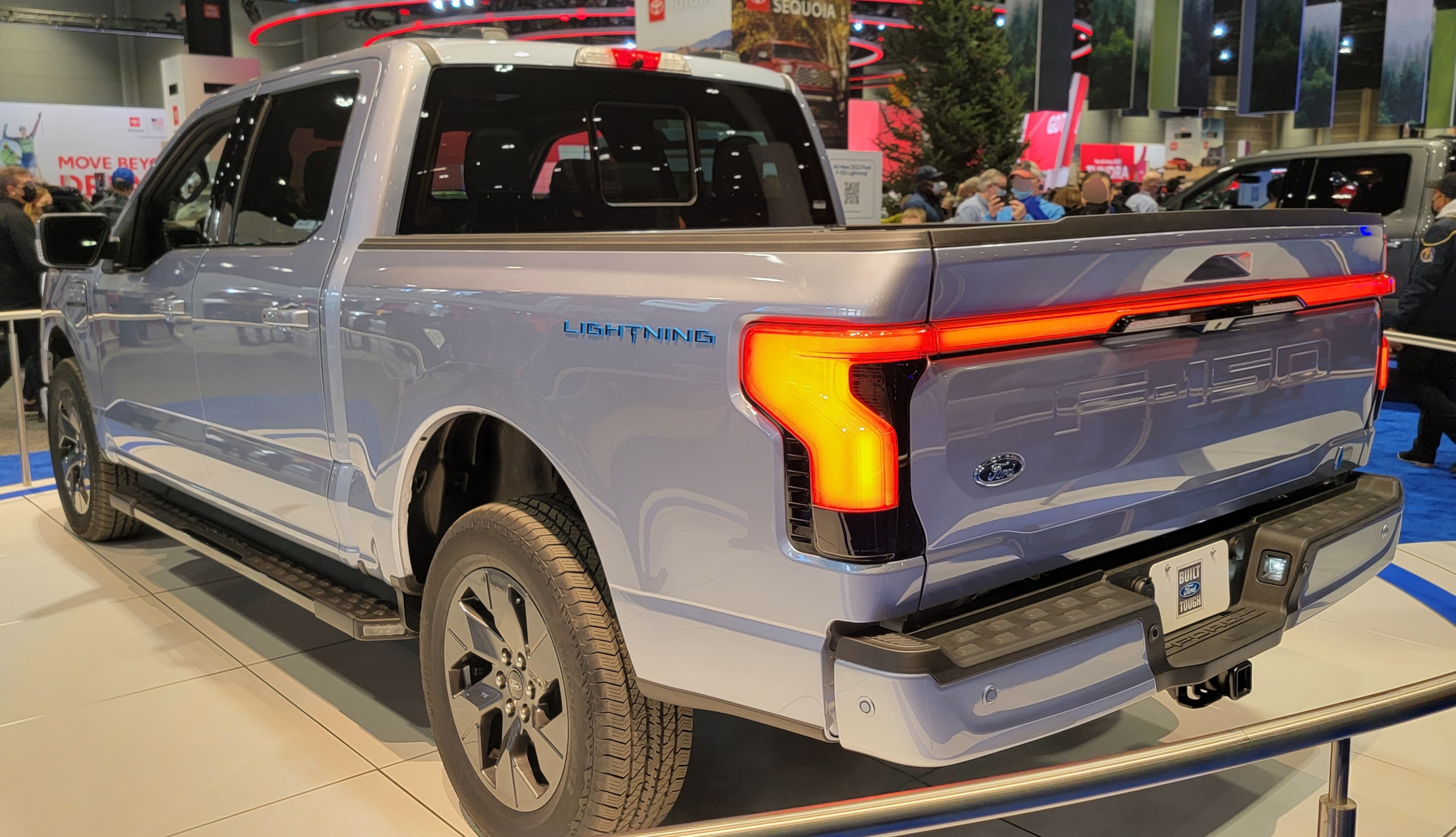
The Ford F-150 is a very popular big truck that many people use for work or carrying heavy things. It’s known for being tough and reliable. Sometimes people talk about canceling orders if they change their mind or if the truck isn’t available.
The Ford Explorer is a medium-sized car that can fit a family and their stuff comfortably. It’s good for trips and everyday driving. People often compare it to other similar cars from Ford.
The Ford Puma is a small SUV that’s easy to drive in cities and looks sporty. It’s good if you want a car that’s not too big but still has space for people and things.
Body-on-frame means the car's body and its strong frame are made separately and then put together. This makes trucks tougher and better for carrying heavy stuff or driving on bumpy roads.
The Hyundai Ioniq is a car that uses electricity or a mix of gas and electricity to save fuel and help the environment. Hyundai is planning to make a bigger electric truck version called the Ioniq T7.
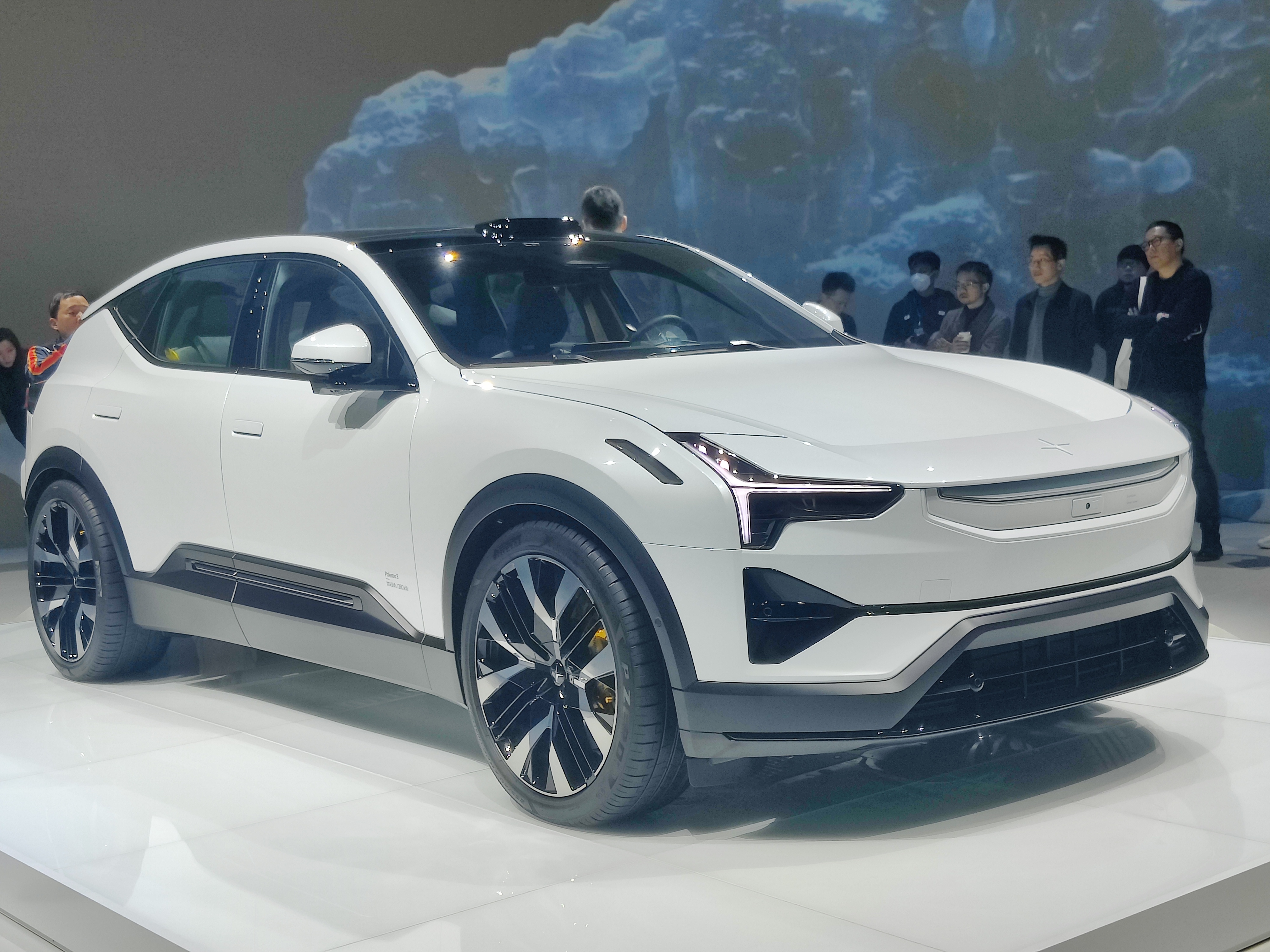
The Polestar 3 is a new electric SUV that can not only drive using electricity but also send power back to your house or the electric system. It’s like a smart car that helps save energy.
Most cars have a small battery that helps start the car and run things like lights and radios. Even electric cars often still use this kind of battery.
Think of a wiring harness like a big bundle of electrical wires in a car that connect all the parts needing electricity. It can be heavy and expensive because there are so many wires.
A self-charging hybrid is a type of car that uses both gas and electricity, and it charges its battery by itself while you drive, without needing to plug it in. But really, it still needs gas to keep going.
LIVE
Potential. Potential can sometimes feel daunting, scary, but today's the day you decide to act on it
with a higher technical qualification. Designed with employers, it will give you the skills you
need to land the job you want, because today is your day. When anything is possible, if you make
it happen. It all starts with skills. See how you can get started. Search skills for life.
Whether you're flying to London, New York or Dubai, you can reach global business hubs in style
with Emirates. Arrive ready for your next meeting in over 140 destinations in the Emirates network
and connect to hundreds more with their airline partners. You'll experience all the world-class
comfort and service along with show for driven airport transfers and lounge access. It's a better
way to do business. Book now on emirates.com Potential. Potential can sometimes feel daunting,
scary, but today's the day you decide to act on it with a higher technical qualification.
Designed with employers, it will give you the skills you need to land the job you want,
because today is your day.
When anything is possible, if you make it happen.
It all starts with skills.
See how you can get started, search skills for life.
It's the ultimate business trip,
flying in Emirates first class.
With your own fully enclosed private suite,
you can order from an extensive international menu
along with premium drinks.
There's even a bar and an exclusive shower spa
on the Emirates A380.
Along with chauffeur-driven airport transfers
and the Emirates lounge,
it's a better way to do business.
Book now on emirates.com.
Welcome back to EV News Daily.
Today, Ford's frunked-up options list,
Hyundai target to pick up,
and Polestar adds grid rewards.
Plus, stay tuned.
Later in the show, I'll tell you why Mexico
just did what the USA dismantled.
Link air quality to health
and push EVs to benefit everyone.
Over on EV News China today,
our spin-off podcast,
we dive into NEO's two million holiday swaps,
BYD's 2.1 megawatt charging
in their next generation chargers,
and the Hongguang Mini gets a refresh.
Let's kick off the news with Ford.
They're gonna drop the front trunk
from the standard equipment list
on the Mustang Marquee,
and it'll become a paid option.
Access to the underbonnet storage
now costs you $495.
Ford says an internal review
found many Mustang Marquee owners
rarely use the front compartment.
Product planners class the front
as low-use hardware,
and therefore delete it to cut costs,
or sell it to buyers as an option.
He want extra storage.
Ford says removing standard hardware
reduces build cost and complexity,
and charging for it can lift margins
without denting demand.
The move lands awkwardly.
Given how Ford pitched the car initially,
the front featured heavily in the original sales pitch
for the Mustang Marquee,
part of the idea that the EV packaging
would offer flexible cargo.
The original one was five cubic feet of space
with a drain plug.
I remember them stacking it full of ice
and saying, have a party.
At the front of your car,
owners would stash luggage or a hose out cooler
for ice and drinks.
Then in 2024,
a new heat pump design
reduced the front volume by half.
Even then, it was enough for a gym bag or a carry-on case.
Honestly, the one on my Polestar is pretty tiny,
but I use it for the charging cables
because I always want to make sure we have an AC charger
because over here it's untethered AC charging in Europe.
And so always have my Type 2 to Type 2
and always have the home slow charger,
which looks like it's still new six years later
in the first owner.
I don't think used it either.
And so always for emergencies, you'd want that in there.
And then when I have needed to,
I've used it for other things,
but it's not part of my day-to-day because it's not easy
because you've got to pull the bonnet release on the Polestar
and lift up the bonnet like you're refilling the water
or something on the washer fluid.
So it's not as convenient as a Tesla, but I do still use it.
But if Polestar were profiling me as a potential customer,
they'd say, well, use it once every three months,
we'll take it out.
But it is very useful.
And that's the thing.
Ford's decision sits in a wider trend
with EVs charging for features that used to be standard
from software unlocks to subscription features
and BMW found out very quickly
when they tried to rent you heated seats
on a monthly subscription basis.
People say no.
The bigger risk for Ford is the perceived value of this.
Ford's on the back foot right now.
They keep talking about the stuff they've coming,
the new UEV platform, the new $30,000 truck,
and that's great, but it's jammed tomorrow.
I've canceled F-150, the trans, it's a pretty good van.
And apart from over here,
where we've got the Puma, the Explorer, or the Capri,
many places just have the Mustang Mach-E.
And so, well, they're doing things to put people off.
Charging 2026 buyers for a feature
that earlier owners received as standard,
made jar with potential buyers.
Moving on, Hyundai plans to enter
the mid-size pickup segment in 2028
with a body-on-frame utility vehicle
that's gonna be different from something like a Kia Tasman.
The timeline traces back to September's CEO Investor Day
in New York, where Chief Executive Jose Munoz
said Hyundai would launch the truck
before the end of the decade.
The COO of Hyundai Australia, Gavin Donaldson,
said the project is a work in progress,
development proceeds alongside the American market.
The truck needs a body-on-frame chassis
to go head-to-head with things like Ford Rangers
and Toyota Hiluxes, but he ruled out
a rebadged Kia unibody type thing.
Branding hints to the electric angle
because trademarks for the Ioniq T7,
truck seven, suggest the pickup would be an Ioniq sub-brand,
though powertrain details are obviously not confirmed,
maybe it would be an E-rev.
Well, the platform may stretch beyond a pickup.
Hyundai may use it as a rugged four-wheel drive SUV,
going head-to-head with the Ford Bronco.
Now, they did show off the crater concept
at last November's LA Auto Show
and did wink-wink say that would be coming.
That was a pretty stunning concept
and they've got actually form
in bringing their concept vehicles to life,
so we'll wait and see.
Next up, Polestar will widen its energy program,
adding grid rewards in Germany and France.
The scheme runs in Belgium, Netherlands, Switzerland
and here in the UK already with Octopus Energy.
When I had to repair my Octopus Intelligent Go tariff recently,
it said, oh, by the way,
you now do this through the Polestar Charge app.
All right, another app, deep joy.
Polestar Energy pays drivers
who let the system shift charging
into cheap low-carbon off-beat windows in Germany.
They will, with Octopus Intelligent Go tariff,
cut home charging bills by 50% per session, they say.
Polestar flags annual savings of around 300 euros
for a typical German user.
Framing the rewards is a hedge
against high European energy prices.
Polestar's pushing the program beyond tariff
and into the car, rolling out car-controlled smart charging
for the Polestar 2 and the 4
across all 12 of its European markets via the app
that removes the requirement for the smart wallbox.
Yeah, because until now with Octopus,
I've had my energy wallbox be kind of the gateway to Octopus.
I've got a Zappi too.
And then obviously Polestar can use the car
to be the smart bit and treat the charger as dumb,
using price signals and household demand
to decide when to charge your car.
Polestar casts hardware complexity
as being one of the brakes on EV uptake
with drivers stuck sourcing
and integrating a compatible home charger.
It also claims smart charging cuts the use
of the carbon footprint of vehicles
by charging in windows when carbon emissions are the lowest.
Polestar Energy ran the UK pilot in 2024
and launched it last year here.
After launch, 12 more European countries scaled to
focusing on app-based scheduling,
coordinating with tailored tariffs as well.
I remember in California as well, late last year,
Polestar turned on vehicle to grid
and vehicle to home in California for Polestar 3,
allowing the energy to go back from the car to the grid.
All right, let's talk about Rivian
and putting the pieces together here,
but moving to a 48 volts low voltage architecture
is something that Tesla have been driving with Cybertruck.
Many reasons to do this, Ford say that they will move
to 48 volts ditching the old 12 volt battery,
which is a relic these days in electric vehicles,
but it's there for a reason.
In fact, there's a special podcast in your feed,
one of my bonus shows about why do our high tech cars
have 12 volt batteries?
And there are good reasons for that, by the way,
but moving to 48 volts is not the work of a moment,
but it should be done.
Rivian's job listings, including electrical distribution
system integration engineers,
say you must have experience in 48 volt DC architecture.
Rivian hasn't referenced 48 volt
in any public facing documents,
but the owner and enthusiast Chris Hilbert on X
posted this job role, duties like low voltage backbone,
looking for somebody who can tie all together
with 12 volt systems and cables and grounding
and things like that.
On its own, it's just a job ad,
but there have been other job ads previously
with people who are experts in steer by wire,
and that was based on 48 volt, I think,
and also autonomy ads that have come out,
mentioning this as well, taken together.
It does look like Rivian moving towards a 48 volt system
with steer by wire, rear wheel steering,
and a higher voltage, low voltage system.
If that makes sense, I think it does.
So a 48 volt system delivers the same power
as the conventional 12 volt batteries
that we have in all of our cars,
at a quarter of the current,
and that opens the door to thinner wiring harnesses
that cuts weight.
Oh, and the car makers love it,
because it cuts cost.
Wiring harnesses are some of the most complex,
heaviest, most expensive components in some vehicles,
apart from the battery itself,
and so, at least the traction battery,
and so anything that slims that down is a good thing.
All right, let's talk about Volvo refreshing the EX30
with a really nice new feature.
Adding software powertrain and trim,
the headline feature, though, vehicle to load.
EX30 needs a bit of good press,
because I told you in the last week or so,
how about a quarter of all the ones made,
that's 40,000 EX30s are having to be recalled,
a problem with the early ones, and their battery supplier.
This is not a Volvo problem, it was their battery supplier,
of which their parent, Geely, is invested in,
but still, customers don't care.
It's a Volvo, it's a Volvo, it's a Volvo.
That's the badge on the front,
and so, really bad press around that,
and nobody at the company will have wanted
to go through this, but it's a safety thing.
The risks are tiny, but they exist there,
so they're telling owners to park your EX30s outside,
not near a house, and don't charge it over 70%.
So, they need a bit of good publicity for the EX30,
great little car that it is,
and now you can power external equipment
from the traction battery via an adapter.
Volvo says vehicle to load will come via over the air
to new and existing owners, no dealer visit needed,
the same update reworks the portrait touchscreen interface,
adding a new customizable content bar,
and simple access to its core functions.
Volvo keeps the hardware unchanged,
the refresh also widens the powertrain.
The choice of powertrain,
Volvo will add a new 148 horsepower single motor
to the kind of below the existing 268 horsepower rear drive,
and that dual motor one is properly quick as well,
but anyway, the bottom of the range,
you can now get the small motor
with a 51 kilowatt hour battery,
or a 70 kilowatt hour version.
So, WLTP range between 180 and 250 miles,
depending on spec.
If Volvo brings it to the UK,
that would undercut the current's 33,000 pounds entry price,
probably under 30,000 pounds,
given where the competition lies,
and that would narrow the gap to small EVs,
like the Alfa Romeo Junior and the Mini Aisman.
Volvo not confirming though.
Chief Commercial Officer Eric Severinson
says the new powertrain aims to grow Volvo's
addressable market and move more customers
into fully the ownership,
rather than plug in hybrid, sell more cars to people,
account the pennies, don't be all back in a minute,
and we'll talk about Mercedes' baby G
and the GLEX5, stick around.
Potential, potential can sometimes feel daunting, scary,
but today's the day you decide to act on it
with a higher technical qualification.
Designed with employers,
it will give you the skills you need
to land the job you want,
because today is your day.
When anything is possible, if you make it happen.
It all starts with skills.
See how you can get started, search skills for life.
It's the ultimate business trip,
flying in Emirates First Class.
With your own fully enclosed private suite,
you can order from an extensive international menu
along with premium drinks.
There's even a bar and an exclusive shower spa
on the Emirates A380,
along with chauffeur-driven airport transfers
and the Emirates Lounge.
It's a better way to do business.
Book now on emirates.com.
Potential, potential can sometimes feel daunting, scary,
but today's the day you decide to act on it
with a higher technical qualification.
Designed with employers,
it will give you the skills you need
to land the job you want,
because today is your day.
When anything is possible, if you make it happen.
It all starts with skills.
See how you can get started, search skills for life.
All right, welcome back to the podcast.
Good news here, the UK government
is extending the electric vehicle charge point grant
and lifting it from 350 pounds to 500 pounds
from the 1st of April, no joke.
The grants launched in 2023 covers renters, flat owners,
home owners with no off-street parking and businesses now,
and the 500 pounds covers the installation cost
of your home charger,
including if you need it, cross-pavement gullies.
And this seems to be the settled upon solution
for the many, many people,
I'll get onto that in a minute,
who live in the UK without a driveway.
Like we're a pretty old country
in terms of the built up areas that we live
and many people park on the street.
And if you can get a parking space either outside,
your house, or perhaps like one or two spaces either side,
it does seem like these pavement gullies,
which are sunken into the pavement
for you to drop your cable into,
means it's not a trip hazard.
And it means that if with a long enough cable,
I've got a 10 meter cable on my charger
because we've got a quite long driveway.
And so that was quite expensive one,
but really handy to have a longer cable.
So maybe you could get your charge point
put in the front garden or on the front of your house,
and then enough cable to get to your EV
to charge it from home.
It's not a perfect solution,
but we do have to think about these solutions.
The politics hinge on who can charge at home.
The minister for aviation, maritime and decarbonization
as a job title, Keir Mather,
says the package will make EV ownership affordable
for everyone, not just those with driveways.
And I absolutely echo that and endorse his comment there.
That pushes many drivers back to the curb though.
Charge UK head of policy, Gerald Birch said,
most drivers rely on a blend of home and public charging
with the public charging network at 88 and a half thousand
charges, a separate 600 million pound fund
referenced in two tranches last year,
supports the government's pledge
to move public charger rollout across the UK as well.
Now Mercedes-Benz has dropped its EV only plan
for the baby G, although the baby G
is not the official name.
It's the G class, but put on a hot wash.
Oh, you shrunk it at 90 degrees.
It will now sell a hybrid version
as well as the pure Bev version.
Also car speculates, it'll use the CLA's hybrid powertrain.
So that's a 1.5 liter engine from horse powertrain
and an electric motor integrated
into an eight speed dual clutch transmission.
So a plug-in hybrid, not an E rev,
remains unclear whether Mercedes will tune it upwards
for the G class brand.
Mercedes will fit four wheel drive as standard
on both the Bev and the hybrid.
Baby G will ride on bespoke platforms,
not a reskinned existing model.
Mercedes insists the smaller model
will match the full size G class for capability,
just being smaller and cheaper.
Production penciled in for early next year
for the full Bev version.
Now, leaked pricing from the industry guide Redbook,
suggests Geely's EX5 lands down under
with an E rev variants priced at $1,000
over current models.
Redbook lists the EX5 extended range at $41,990
before on-road costs
and the Inspire extended range at $45,990.
Geely Australia is not officially confirmed either figure
nor official pricing, specs or on sale date.
The change centers on the LFP battery pack.
This is a 68.4 kilowatt hour Lithium Iron Phosphate battery pack.
That's eight kilowatt hours bigger than the outgoing pack.
14% more, WLTP range rises to 475 kilometers
for the complete extended range vehicle.
Wow, that's huge range and a massive battery as well
for $46,000 depending on trim.
Right, we'll finish off with talking about Mexico
going in the opposite direction of its neighbor.
Mexico doing what the USA is not.
In fact, what the USA is doing all it can to unwind
which is link emissions and pollutants to health quality.
Mexico needs to cut its transport emissions on two fronts.
It's gonna expand air quality monitoring
under the Ministry of Health and it needs to electrify
its medium duty fleet and heavy duty fleet.
On the 16th of February,
the Ministry of Health officially linked air quality
to respiratory and cardiovascular disease.
It's specifically named children, the elderly,
pregnant women and people who have to live
with chronic illness as the group's most at risk
from emissions.
It told residents to consult the Air and Health Index
and follow public guidance
if there are periods of high pollution.
Mexico already runs permanent air quality monitoring networks
during the dry, cold season,
particulate matter concentrations can spike,
prompting authorities to issue preventative advisories
and encourage protection of green spaces.
The public health message now sits closer
to transport policy.
Whether or not the agencies share the same building
or even sit at the same table in Mexico's government,
that matters because medium duty vehicles
and heavy duty transport are 25% of Mexico's vehicle fleet
but they generate more than a half of all the emissions.
We've talked about this countless times on the podcast
and if you knew, well, you haven't heard my riff on this one
and I won't bore you with it now.
Trust me, I will.
But it's the vehicles that drive the most
that we need to electrify
and it's particularly in the countries and places
and often communities where the poorest live
that get the worst of it and it's simply not right.
Cleaning up trucks and buses shifts the national totals faster
than persuading the everyday Joe, or should that be?
Joe's A, thank you, I'm here all week.
Two, move privately
because I don't know if I drove my car
any time in the last 24 hours.
I don't think I did.
My wife went to get our little girl from nursery
but that's actually walkable from our house
but I'm not having that fight with my wife.
And so our cars haven't really moved
but I can tell you that today was bin day
and the bin lorry would have been working all day.
I mean, like that, the bin van works all day every day,
doesn't it?
We certainly got a post delivery
and that would have been a van that is a working van.
These are the vehicles that can be electrified,
are cheaper to run in fleets.
You can charge them at the depot.
It's just that initial cost can be a little bit higher
but there are some really innovative finance schemes
and some capital coming into the markets that help,
I don't know, local areas, councils,
authorities, countries, towns and cities square the budget away
because you get the money back in the long term.
And so electric truck sales in Mexico
are surging 800% over the past three years up.
25 brands now offer more than 60 commercial EVs in Mexico.
Last mile van, city buses, heavy duty trucks,
some of them range is almost 300 miles.
Mexico has started to close the back door too,
introducing new rules to restrict the import
of used diesel vehicles and capping the engine age
at 10 years.
They're serious about this.
You link emissions to health and pollution
to a hard cost to the country.
Australia did this recently.
Melbourne University, but a hard figure of this
is the cost to our country on health-related illnesses
because of emissions and it becomes a no-brainer.
Like, let's depoliticize the whole, you know,
take out the never-bevers that hate EVs for whatever reason.
I don't know because they're political idol
or whoever has told them you must hate EVs.
Take out those people, right?
Take all the politics out of EVs.
It just makes financial sense.
And for a country, you'll spend so much less on health care
when people aren't suffering from these horrific illnesses
because of emissions.
I said I weren't going to give you the full spiel.
I think I gave you the greatest hit set at the end of that.
I'm sorry about that.
I'm rubbish at keeping to my word.
That's your podcast for today.
And thanks to our premium partners,
National Car Charging on the US mainland
and Aloha Charging Hawaii and Test EV.
Avalu's trusted partner for independent
EV battery health testing in Australia and New Zealand.
Thanks for listening.
I'll see you tomorrow.
Have a good one.
I want to remember there's no such thing
as a self-charging hybrid.
Potential.
Potential can sometimes feel daunting, scary.
But today's the day you decide to act on it
with a higher technical qualification.
Designed with employers,
it will give you the skills you need to land the job you want
because today is your day.
When anything is possible, if you make it happen.
It all starts with skills.
See how you can get started.
Search skills for life.
About this episode
Ford is making the front trunk on the Mustang Marquee a paid option, sparking debate about value and EV feature pricing. Hyundai plans a rugged, body-on-frame midsize pickup by 2028, possibly under the Ioniq sub-brand, aiming to compete with established trucks. Polestar expands its smart charging and grid rewards program across Europe, promoting cost savings and lower emissions. Rivian appears to be shifting to a 48-volt electrical system, which could reduce wiring complexity and weight. Volvo refreshes the EX30 with vehicle-to-load functionality and new powertrain options, aiming to improve its market appeal after a major battery recall.