The Jaguar Type 00 is a new electric car from Jaguar. It's designed to be a high-performance vehicle with four doors, making it both sporty and practical.
The JEA platform is a special base that Jaguar created to build their electric cars. It helps them design cars that work well with electric motors and batteries.
Kilowatt hours tell you how much energy a battery can hold. More kilowatt hours usually mean you can drive further before the battery needs to be charged again.
WLTP is a test that checks how much fuel a car uses and how much pollution it produces. It helps buyers understand how efficient a car is in real driving situations.
Torque split is about how power from the engine is shared between the front and back wheels of a car. Changing this can help the car grip better in different weather conditions like rain or snow.
'800-volt architecture' means the electrical system in the car uses 800 volts, which helps it charge faster and perform better than cars that use lower voltages.
The Dodge Charger is a big car that looks sporty and can go really fast. It's been around for a long time and is liked by many people because it combines being useful for everyday driving with a fun driving experience.
Stability control tuning means adjusting a car's system that helps it stay stable and not skid, especially when driving on slippery surfaces like ice or snow.
Thermal management is about keeping a car's engine and other parts at the right temperature so they work well and don't get too hot, which can cause problems.
The Jaguar I-PACE is a fancy electric SUV that doesn't use gas, making it better for the environment. It's known for being stylish and high-tech, but it's getting a bit old compared to newer electric cars.
HMI means how drivers use and control their cars, like touchscreens and buttons. It's important for making the driving experience better, especially in expensive cars.
The Porsche Taycan is a high-end electric car known for its speed and modern features. It's designed for people who want a luxury car that doesn't use gasoline.
The Mercedes-Benz AMG EQE is a fancy electric car that offers a powerful driving experience. It's made for those who want a stylish and fast electric vehicle.
The Mercedes-Benz AMG GT is a super-fast sports car that looks really sleek and stylish. It's made for people who love driving and want a car that stands out and performs exceptionally well.
An EV, or electric vehicle, runs on electricity instead of gasoline. This means it produces no exhaust emissions and is generally better for the environment.
A blanked-off grille is when the front part of a car where air usually goes in is covered up. This is common in electric cars because they don’t need as much air to cool an engine.
The Scout is an old type of SUV made by a company called International Harvester. It was popular for its ability to go off-road and is now seen as a classic vehicle.
Petrol is what many people call gasoline, and diesel is another type of fuel used in some cars and trucks. Both are made from oil and are used to power traditional vehicles.
The Porsche Cayenne is a fancy SUV that can go really fast and is designed for people who want a mix of luxury and performance. It's like having a sports car but in a bigger, more comfortable package.
Ultra-fast charging is a way to quickly charge electric cars. It means you can fill up the battery much faster than usual, so you don't have to wait long to get back on the road.
The Jeep Wrangler is a tough-looking car that can drive over rocks and through mud. It's popular with people who love outdoor adventures and want a vehicle that can handle rough roads.
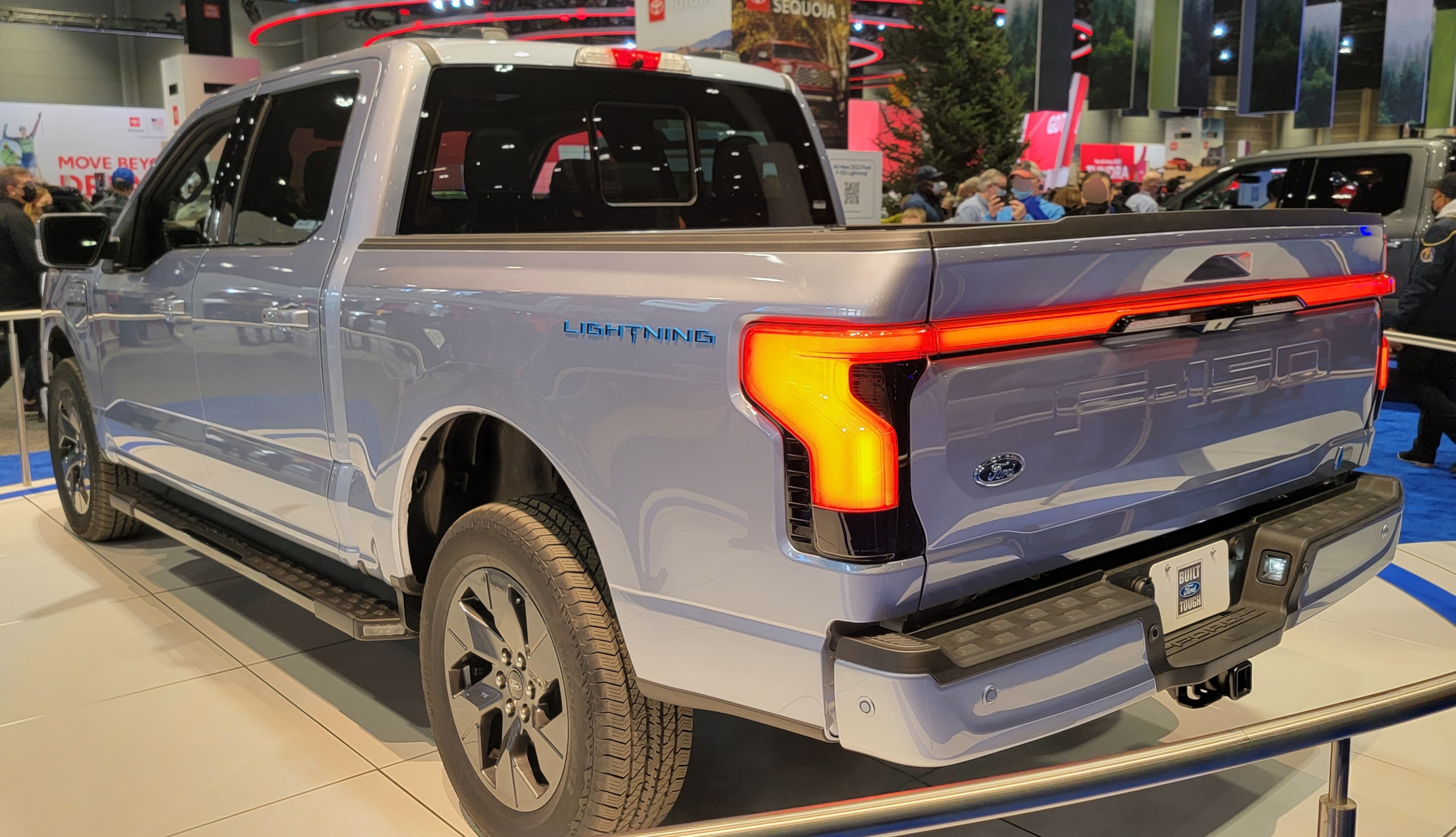
The Ford F-150 Lightning is an electric truck that can do everything a regular truck can do, but it runs on electricity instead of gas. It's great for people who need a tough vehicle but also want to be more environmentally friendly.
LIVE
Let's do the 60-second savings challenge.
Step one, download rocket money.
Step two, link your accounts and see every subscription you're paying for.
Tap one you don't use and cancel it.
That's money back every month.
Step three, create a financial goal.
$50 every paycheck or let the app automatically move small amounts of cash when you can afford it.
In a week, you'll forget you set it up.
In a month, you'll see real dollars piling up.
In a year, you'll be shocked at how much money you've saved.
Bonus challenge, upload an internet or phone bill and let rocket money try to lower it.
You only pay if they find you savings.
On average, rocket money members can save up to $740 a year when using all the app's premium features.
Users love the app with over 186,000 five-star ratings.
Make saving money the resolution you actually keep.
Start the 60-second savings challenge at rocketmoney.com slash cancel.
That's rocketmoney.com slash cancel.
Rocketmoney.com slash cancel.
It's so weird.
This app shows that my credit score is pretty good, but I couldn't get the car loan.
Are you using myFICO.com?
No, it's some other company.
Oh, you should get up my FICO account instead.
FICO scores are the ones used by 90% of lenders,
and other credit scores can vary up to 100 points.
That would have been helpful yesterday.
Get the scores lenders use.
Get the right FICO credit score for your credit goal,
including your FICO scores used for mortgages, auto loans, and credit cards.
Visit myFICO.com or download the MyFICO app to get started today.
The number one resolution for people last year was to save more money,
but nearly half gave up by February.
Don't let that be you.
Download rocket money to reach your financial goals this year.
Track your spending, cut waste, and automate savings in one simple app.
Rocket money shows you all your expenses and categorizes them,
so you know exactly where your money's going and where you're overspending.
From there, the app cuts waste by cancelling your unused subscriptions
and lowering your bills.
No customer service needed.
With that money freed up,
the app will automatically set some cash aside for your goals.
Whether it's an emergency fund, paying off debt, or saving for vacation,
rocket money's got you covered.
Users love the app, with over 186,000 five-star ratings.
And on average, users can save up to $740 a year
when using all the app's premium features.
Make saving money a priority this year.
Go to rocketmoney.com slash cancel to get started.
That's rocketmoney.com slash cancel.
Rocketmoney.com slash cancel.
There I was, scrolling my phone,
then someone cracked open a Mountain Dew Baja Cabo Citrus.
Next thing I know, I heard a rip.
My friend tried the splits and jeans, but not a drop was spilled.
Have a blast with Mountain Dew Baja Cabo Citrus,
a punch of tropical citrus flavor.
Welcome back to AV News Daily.
Today, Jaguar tests its model 00.
Scout costs spiral and EVs erode the oil business.
Plus, stay tuned.
Later in the show, I'll tell you why a new hydrofoil is setting records on AV News China.
Today, we're talking about 1,500 kilowatt DC fast charging from BYD
and sodium ion batteries.
Well, let's kick off with news of Jaguar,
which sent its new four-door electric GT to the frozen North.
The car is internally dubbed Type 00,
sits on Jaguar's bespoke JEA platform,
developed in-house because as the chief engineer puts it,
there was not an existing architecture that we could use.
The firm avoids the usual skateboard design, which is common these days.
120 kilowatt hours of battery cells have to go somewhere,
so they've split them in two.
19 kilowatt hours, which is a 32-cell module,
somewhere ahead of the cabin,
and then four stacks of 42 cells behind,
which allows for a low seating position and a low roof.
Jaguar claims WLTP provisionally 700 kilometers,
that's 430 miles plus or minus.
Look, 120 kilowatt hours is a big pack.
EPA cycle, probably be around 400, wouldn't it?
So power comes from three permanent magnet motors.
We've got the specs on it today.
350 brake horsepower at the front,
950 brake horsepower from two motors at the rear,
combined because sometimes people just kind of add it all together,
but you'd often don't want to apply power like that,
but at least 1,000 horsepower in this vehicle.
Some earlier prototypes used a dual motor setup,
and somewhere around 600 horsepower.
So the production car moves to a three-motor configuration.
The rear pair would obviously do talk vectoring,
so digital analysis of grip and braking required
a thousand times a second, they say.
The front axle uses the brakes to trim its share, though.
Drive models will vary torque split from being more
rear biased in things like rain ice or snow
to more dynamic modes as well.
At speed, the car can run on the front motor alone
for efficiency.
Jaguar hints 0 to 62, sub four seconds.
So we're getting an idea of how high they want to drive
the performance of this car now.
800-volt architecture underpinning the faster charging,
engineers speaking to the media,
and there's loads of articles about this new Jaguar today,
which always means an embargo got lifted,
and they can all talk about it.
So engineers talk of true 350 kilowatt DC charging.
I don't know what true 350 kilowatt DC fast charging
means.
False?
Anyway, I'm sure they know what it means.
They talk about depends on the charger that you find,
and they said more likely you'll be charging at a peak of
around 250 kilowatts in day-to-day use.
Again, I'd just show us the charge curve if you want,
and we'll work it out.
The firm promises a 10 to 80 in 20 minutes,
so find a suitable high power charger,
a 20-minute stop, you're 80% charged off you go again.
Arctic testing has been concentrating on powertrain durability,
thermal management, and stability control tuning
on things like ice and packed snow.
Stability systems manage rear axle traction
with the unusual finesse, say the journos.
Engineers want the car to slide like a Jaguar.
Is that a thing?
I don't know.
And save itself at the limit.
Not feel dragged by the front end.
This is an enormous car with, yes, stylistically,
a huge bonnet out front.
So wait and see what people do with this.
I don't think they'll be sliding it too much,
but either way, a small digital instrument cluster
sits behind the steering wheel.
We are now told a central touchscreen
and a separate strip for climate.
We are told we'll be in the car.
Jaguar plans a cleaner cockpit than the iPace.
Now the iPace is an old vehicle now, and it's still a very,
I love the iPace, very high power, by the way,
and a fabulous vehicle.
Quite busy, a button for everything.
If you love buttons, you're like the iPace.
You can jab at things all day long.
We had one for a little bit,
and this is going to be much simpler, they say,
a wide central screen
and materials concentrating on leather alternatives,
but real metal trim.
And that's nice.
You know, obviously Jaguar is moving up market with this.
They're after Bentley buyers now.
And so yes, the HMI is very important at that price point
of, you know, 100K, 150K.
And so, yeah, things do have to be metal
and feel wonderfully machined
and should make you feel good and smile if you want.
Over-the-air updates will play a bigger role.
The firm aims for more rear space, they say,
than a traditional 2 Plus 2,
but stops short of being a full five-seater.
Boot capacity rule will rival large GTs.
Obviously, there's a large compartment at the front for cables.
Production will take place in the UK.
Solihull, the production design,
will appear in late summer.
Order books open in the autumn.
First deliveries are due in the spring next year.
Jaguar hints at a price of around £100,000 beginning there.
So maybe they're hoping that somebody
would possibly shopping for a Porsche Taycan
or Mercedes-Benz AMG EQE,
or they're killing off the Model S,
but, you know, until now Model S performance.
So the four-door layout, they say,
is a nod to practicality,
but this isn't going to be a volume practical vehicle.
It's the first part of the three-car EV range
that the firm trails as all-electric and all-jaguar.
Part of its wider shift away from combustion,
production will be limited, they say,
at first as their balancing margins, battery supply,
and the risk that its boldest EV yet
may prove its most polarizing.
Up the front, slim LED headlamps,
and a blanked-off grille that you may have seen
in the prototype vehicles, the camouflage vehicles,
that's all still there.
That long shape, really long,
that rear that tapers down that fastback-style tail.
Yep, all looks the same as what we've seen so far.
They say cameras may replace mirrors
if regulators allow where you buy the car.
Despite the rebrand noise,
this big, long, low EV lines up
as a direct successor to an XJ,
rather than being something all new,
looking forward to getting more details,
but nice that they've given us some more details.
Car's going to be made here,
battery will be made here in the Southwest,
and not a million miles away from me.
And so, yeah, I hope that all goes well.
Now, let's move on.
Scout Motors will spend $3 billion
on its new American plant for EVs,
50% more than Volkswagen budgeted,
the extra billion plus.
Sharpen's some doubts over Volkswagen's strategy
for its revived rugged brand
in a market in the United States,
which is slowing down,
but obviously we'll speed up again.
Production of the truck, the terror,
and the SUV, the traveller.
We'll start next year in Blythewood, South Carolina.
Scout, last built by international harvester,
between the 60s and the 80s,
was revived by Volkswagen in 2022.
For a new line of electric trucks and SUVs,
Scout says the $2 billion that VW were flagging
was only a minimum investment anyway,
and the key driver of the higher figure
is its new onsite supplier park,
that costs $300 million,
whose construction the firm trialled in September last year.
The company says it's always aimed
for a world-class facility.
Its sales model now draws fire, though,
because EV makers face dealer protection bans
in America on direct sales in many states in Colorado,
where Tesla, Lucid and Rivian sell direct.
Volkswagen, Audi and Porsche dealers,
are suing over the state's decision
to let Scout also sell directly,
arguing that it's part of Volkswagen
and that it should follow the same rules.
Okay, let's talk about EV's eroding oil core business.
Electric cars had been nibbling away
at oil demand for a long time now,
but every time an EV is sold,
it's just another little nibble away at the oil business.
As they spread oil and gas firms,
I'm gonna have to find new ways to grow
or watch revenues ultimately slip
if you're in the petroleum business.
But the shift has begun.
EV's cut fuel use in private cars,
but where they can make a really big difference
is fleet and working vehicles, delivery vans, buses.
Each electric model removes four-court sales.
For now, petrol and diesel obviously
dominate the global car park,
but rising EV adoption points one way.
Lower volumes for oil refiners
and fuel retailers in the long term.
Oil and gas companies are in an awkward spot.
Bless them.
They face pressure to cut emissions,
but they're defending cash flow from hydrocarbons.
Growing EV uptake is nibbling away,
but it's not an overwhelming thing at the moment.
Retail fuel margins rely, though, on consistency.
Retail fuel margins are pretty slim,
to be honest with you, for retailers themselves,
and they need the market to be steady.
As more drivers are plugging in at home or at work,
more and more filling stations are less bankable,
some of them are just being closed.
In fact, over the last few years,
there is an increasing rate of four-court closing.
Firms are responding by possibly investing
in EV charging infrastructure.
Some of the oil companies have done that,
adding it to their four-courts, their networks,
their experience in logistics can give them a head start.
They've often got the land.
Sometimes that land can be near the grid connections
that are needed, so they can bundle fast charging with shopping.
The margins are much higher on a cup of coffee inside the shop
than the EV that's charging outside.
But the same for the petrol as well.
Margins for four-court retailers are certainly here, very, very slim,
and it doesn't take much to disrupt that whole model.
Will it be an overnight thing where all of a sudden prices start to go up?
Petrol drivers realise, hang on, prices are increasing
as petrol retailers have to make more money.
Or will they just notice that the place they've always filled up
is now closed down and it's becoming harder and harder
to find a four-court to fill up?
Your petrol or diesel in years to come.
Now that is the very definition of range, anxiety, how ironic, right?
We'll take a break.
We'll come back and lots more to discuss on the podcast,
Norway and Polestar and the police stick around.
$50 every paycheck.
Or let the app automatically move small amounts of cash when you can afford it.
In a week, you'll forget you set it up.
In a month, you'll see real dollars piling up.
In a year, you'll be shocked at how much money you've saved.
Bonus challenge, upload an internet or phone bill
and let Rocket Money try to lower it.
You only pay if they find you savings.
On average, Rocket Money members can save up to $740 a year
when using all of the app's premium features.
Users love the app with over 186,000 five-star ratings.
Make saving money the resolution you actually keep.
Start the 60-second savings challenge at rocketmoney.com slash cancel.
That's rocketmoney.com slash cancel.
Rocketmoney.com slash cancel.
If you're the purchasing manager at a manufacturing plant,
you know having a trusted partner makes all the difference.
That's why hands down, you count on Granger for auto-reordering.
With on-time restocks, your team will have the cut-resistant gloves
they need at the start of their shift.
And you can end your day knowing they've got safety well in hand.
Call 1-800-GRANGER, click Granger.com or just stop by.
Granger for the ones who get it done.
Don't start the new year off with bad money vibes.
Download Rocket Money to stay on top of your finances.
The app pulls your income, expenses, and upcoming charges into one place
so you can get the clearest picture of your money.
It shows how much to set aside for bills
and how much is safe to spend for the month
so you can spend with confidence.
No guesswork needed.
Get alerts before bills hit, track budgets,
and see every subscription you're paying for.
Rocket Money also finds extra ways to save you money
by canceling subscriptions you're not using.
And negotiating lower bills for you.
On average, Rocket Money users can save up to $740 a year
when using all the app's premium features.
Start the year off right by taking control of your finances.
Go to rocketmoney.com slash cancel to get started.
That's rocketmoney.com slash cancel.
Rocketmoney.com slash cancel.
If you're the purchasing manager at a manufacturing plant,
you know having a trusted partner makes all the difference.
That's why hands down you count on Granger for auto-reordering.
With on-time restocks, your team will have the cut-resistant gloves
they need at the start of their shift.
And you can end your day knowing they've got safety well in hand.
Call 1-800-GRANGER, click Granger.com, or just stop by.
Granger for the ones who get it done.
Okay, welcome back to the podcast.
Let's talk Norway's car market.
It just slammed on the brakes
as buyers adjust to new financial rules.
In January last month, only 2,218 cars were registered in all of Norway.
That's down 76.7% from the same month last year.
Two months earlier, buyers would have been surging the other way.
In fact, November and December set records.
December topped 35,000 vehicles in Norway.
The country that's gone EV more than anybody else.
The swing stems less from a demand change.
Don't worry, everyone's not gone off EV all of a sudden.
More than the tax office.
New VAT rules took effect at the start of 2026.
Stealers and buyers have been registering cars before the change,
pulling sales into last year,
and then leaving a vacuum in the first month of the year.
The Norwegian Road Traffic Information Council, the OFV,
calls the drop a normal response to taxes,
not evidence that buyers are losing interest.
Even in a thin month, you won't be surprised to hear
all the cars that were sold were still electric vehicles.
Bevs were 2084.
Pure Bevs of the 2200.
So that's 94% of the entire market,
albeit a much smaller market,
and down a bit on where it has been 95, 96, 97% diesel.
There were a couple of those sold.
98 of them, actually.
So if you've got a very specific use case in Norway,
you can still get them.
Petrol-only cars, even hybrids, and plug-in hybrids
taking a sinking share of the market, less than 1%.
Now, Polestar has secured $400 million
as an equity injection,
as demand for electric cars in America softens
in the short term because of the federal tax credit going.
And capital is a little more scarce
than it used to be in the world of EVs.
I quite like it because there's less heat around EVs right now.
I find that the market I commentate on and analyze every day
is a little more stable, and it makes sense a little.
There's still many things that are entirely bonkers,
if you ask me, but it's a lot of it.
Like the used markets, it's not ideal.
Every country is different, but that feels like,
in some places, it's a little less wild westy.
And there's a lot less money flying around.
Here's looking at you, Fisker, of people throwing money
at something that had the words EV.
And these days, it's AI, isn't it?
But anyway, let's move on.
The cash comes to Polestar from existing shareholders.
It buys them more time, and it cuts any kind of near-term risk.
It doesn't solve the hard task
of actually making the business profitable.
The new funds will support Polestar's push
as they expand their sales footprint,
the firm leans on contract production in many places,
and a very capital light model.
Investors now debate whether 400 million even buys them.
Enough of a runway.
For now, the company has what many EV rivals lack,
which is a fresh injection of money on market terms
rather than any kind of rescue financing.
Now, police here in England are tracking gangs
stealing electric vehicle charging cables
with a mix of smart water and GPS,
after a sharp rise in theft over the last couple of years.
I think the low-lifes and scumbags
realised there was an ounce of copper in cables,
and because they'll do anything for a buck,
started cutting cables off of EV chargers,
and that is not the smartest thing to do for many reasons.
But either way, the EV industry had to react
over the last couple of years,
and these cables are only going to one place,
which is scrap yards,
and they're part of the illegal supply chain as well.
Obviously, there's good ones.
Obviously, there's bad ones.
However, police forces in this country now begin
marking cables with what's called smart water.
That's a forensic liquid that glows under UV light
and links any kind of metal to a very specific...
It's like DNA.
Sites.
Officers have also been hiding GPS trackers inside charging leads,
and they've been following the cables in real time,
tracing them to the scrap yards
that are involved in this illegal supply chain,
or even storage depots.
The move has followed a spike in reports
from ChargePoint operators and councils
that thieves have been cutting cables.
Sometimes live cables.
Well, no one ever said that these people
were the sharpest tool in the box.
However, they strip out the copper,
and a single rapid charging cable can cost.
The extra CPOs, the ChargePoint operators,
several thousand pounds in overall costs to order the parts.
I'll just make it if they're one of the larger ones,
more vertically integrated,
but just order the part from their suppliers
and then have to have it fitted and all the costs.
And there's obviously the lost revenue,
which is significant as well.
One operator told the BBC it had dozens of incidents
in the same route and repeat attacks on one location.
Police say the gangs work fast.
They work at night.
They target clusters of charges on main roads.
They wear high-vis clothing to look like their engineers.
Others use battery-powered cutters
that slice through the thick DC cables in seconds,
and then the solar metal ends up in the scrap trade.
Now, Porsche's quickest production car
is the Cayenne Turbo Electric,
unveiled last November,
and in series production now in Bratislava.
850 kilowatts, that's 1156 horsepower.
It runs down the same line as their hybrid Cayennes,
even production Cayennes,
a somewhat of a hedge for a brand
that wants electric growth
but doesn't want to bet the house on it.
The electric Cayenne draws power
from a new 113 kilowatt-hour high-voltage battery
and built around large pouch cells,
800-volt architecture.
Porsche says WLTP, 600 kilometers,
ultra-fast charging at 400 kilowatts,
and an innovative new cooling setup.
They call it a double-sided cooling setup
with plates above and below the actual battery pack,
keeping the cells in its narrow, optimal temperature band.
Porsche has pulled battery know-how in-house.
Modules for the Cayenne come from the Porsche Smart Battery Shop
and the aim is tighter control over the performance of the Cayenne,
a vehicle that does look to be utterly spectacular
and will not sell as many units as it deserves to.
Let's talk about Great Wall Motor.
GWM has set Australian pricing for its new Tank 300.
This is a plug-in hybrid vehicle, by the way,
and it claims 300 kilowatts of power.
And this is a $60,000 Aussie vehicle
that is squarely wanting cheap Wrangler buyers
to have a little look at this.
The Tank 300 plug-in hybrid goes after buyers
who want off-road stances and straight-line punch,
but without the expense of a Wrangler
by starting at least below $60,000 Aussie dollars.
It moves into a pretty tiny corner of the market, actually.
Ladder frame four by fours with high power
and the plug-in a battery, like I say.
This is a plug-in hybrid, very much a utility,
utilitarian looking vehicle.
But let's see if they sell many of those down under.
Jeep's Wrangler, by the way, is pretty much the only
and there's other vehicles around,
but it's the default in the niche is what I'm trying to say.
But it leans on its image and its brand and its,
well, frankly, its petrol engines and so
GWM, Great Wall Motor, wants to combine that combustion
with a big hit of electric power.
Okay, let's talk about Washington State.
They just approved $12.1 million for new
electric vehicle charging stations after a federal delay.
The Washington State Department of Transportation
chose 11 projects along highways and underserved areas.
The money comes from the State's Climate Commitment Act,
a carbon pricing scheme that has proved politically fraught,
but quite rich in cash.
Officials had planned to lean more on federal money
from the NEVI program, but repeated hold-ups
pushed the state to move first.
Private firms will actually do the building,
owning and running of the charges.
The grants cover part of the upfront cost.
Firms, though, must finance the rest
and then earn it back in time on charging fees.
The stations must offer fast-charging hardware,
have targets for uptime, and stay open to all vehicles
and all payment systems.
And finally, Candela, maker of hydrofoil electric ferries,
the Candela P-12, just set a new record
that will no doubt irk some people,
as it cheers climate fans.
The Swedish-built craft builders the world's
first electric hydrofoiling ferry
just did 160 nautical miles.
They went from Gothenburg to Oslo,
the longest voyage by an electric passenger vehicle.
The P-12's trick lies in its foils.
They lift the hull clear of the water
when it's up at its correct speed.
That cuts drag, and Candela says,
slashes energy used by 80%.
The ferry cruises at a service speed of 25 knots,
tops out at 30 knots,
while offering a usable range of 40 nautical miles
normally on a single charge.
This, though, was 160 miles.
The firm used the record run
to challenge the orthodox approach to electric ferries.
And the P-12 is the same hardware
that actually some cars are built on.
Standards CCS-2 DC fast chargers.
On the Gothenburg to Oslo run,
it relied on a portable DC charger.
That was towed around Norway on a Ford F-150 Lightning,
by the way.
Now, for Norway,
which wants to electrify busy coastal and inland routes,
obviously the job on-road is done with Norway,
but now we move to other modes of transport.
There is quite a bill, actually,
as in a check to be written
for the maritime industry to go electric,
so this will be a different beast.
But they say, if you put the chargers in the right place
and have the right vehicles,
the debates over how to wire up the northern waters
would all fall into place.
And that's your podcast for today.
Thanks for listening to our premium partners.
They get to show on the air every day,
National Car Charging on the US mainland
and the Low Heart Charge in Hawaii.
And Test EV, Avalu's trusted partner
for independent EV battery health testing in Australia
and New Zealand.
Have a good and sit-amora.
And remember, there's no such thing
as a self-charging hybrid.
That's why now I use RocketMoney
to manage my subscriptions for me.
The app gives you a list of all your subscriptions
and reminds you of upcoming payments
so you're not hit with any surprise charges.
On top of that, it also sends you alerts
when subscription prices go up,
so you always know the price you're paying.
If you decide you no longer want a subscription,
you can cancel it right from the app.
No customer service needed.
And the best part is,
RocketMoney even reaches out
and tries to get you refunded
for some of the money you lost.
On average, people that cancel their subscriptions
with RocketMoney save $378 a year.
And overall, RocketMoney has saved its members
$880 million in canceled subscriptions.
Stop wasting money on things you don't use.
Go to rocketmoney.com slash cancel to get started.
That's rocketmoney.com slash cancel.
Rocketmoney.com slash cancel.
About this episode
Jaguar's new electric GT, the Model 00, is making waves with its innovative design and impressive specs, including a 1,000 horsepower output and a 700 km range. The episode dives into the car's unique architecture, which avoids the typical skateboard design, and discusses the ambitious plans for production and market positioning. Additionally, the show covers Scout Motors' significant investment in a new EV plant and the ongoing impact of electric vehicles on the oil industry, highlighting how EV adoption is gradually reshaping fuel demand.