DAILY: Kia Facelifts Niro EV, Porsche Plug & Charge and Bentley’s First EV Takes Shape | 25 Jan 2026
EV News Daily - Technology and Business of EVs
DAILY: Kia Facelifts Niro EV, Porsche Plug & Charge and Bentley’s First EV Takes Shape | 25 Jan 2026EV News Daily - Technology and Business of EVs · Jan 28, 2026
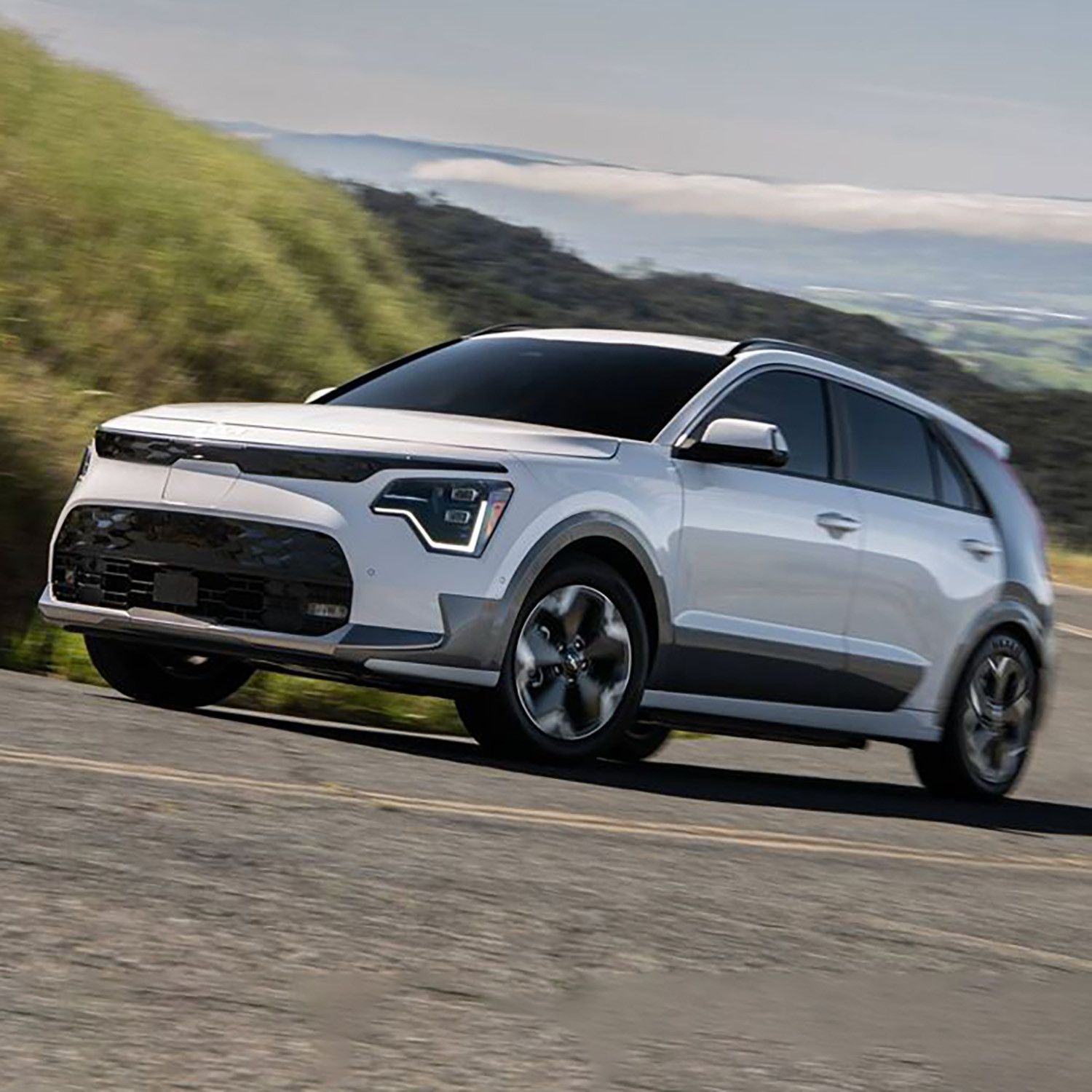
The Kia Niro is a type of car that can run on electricity or gas. It has a new look that makes it more stylish and modern, with features like taller headlights and a different grille.
A plug-in hybrid is a car that can use both gas and electricity to drive. You can charge it by plugging it into a wall outlet, which helps it go further on electricity alone compared to regular hybrids.
The Kia EV3 is a new electric car that looks cool and is designed to be easy to drive. It's part of Kia's plan to make more electric vehicles for people who want to go green.
The Kia EV9 is a new electric SUV that's big enough for families. It's designed to be eco-friendly while still offering lots of space and tech features.
Electric range is how far a car can go using just electricity before it needs to be charged again. It's important for knowing how much you can drive without using gas.
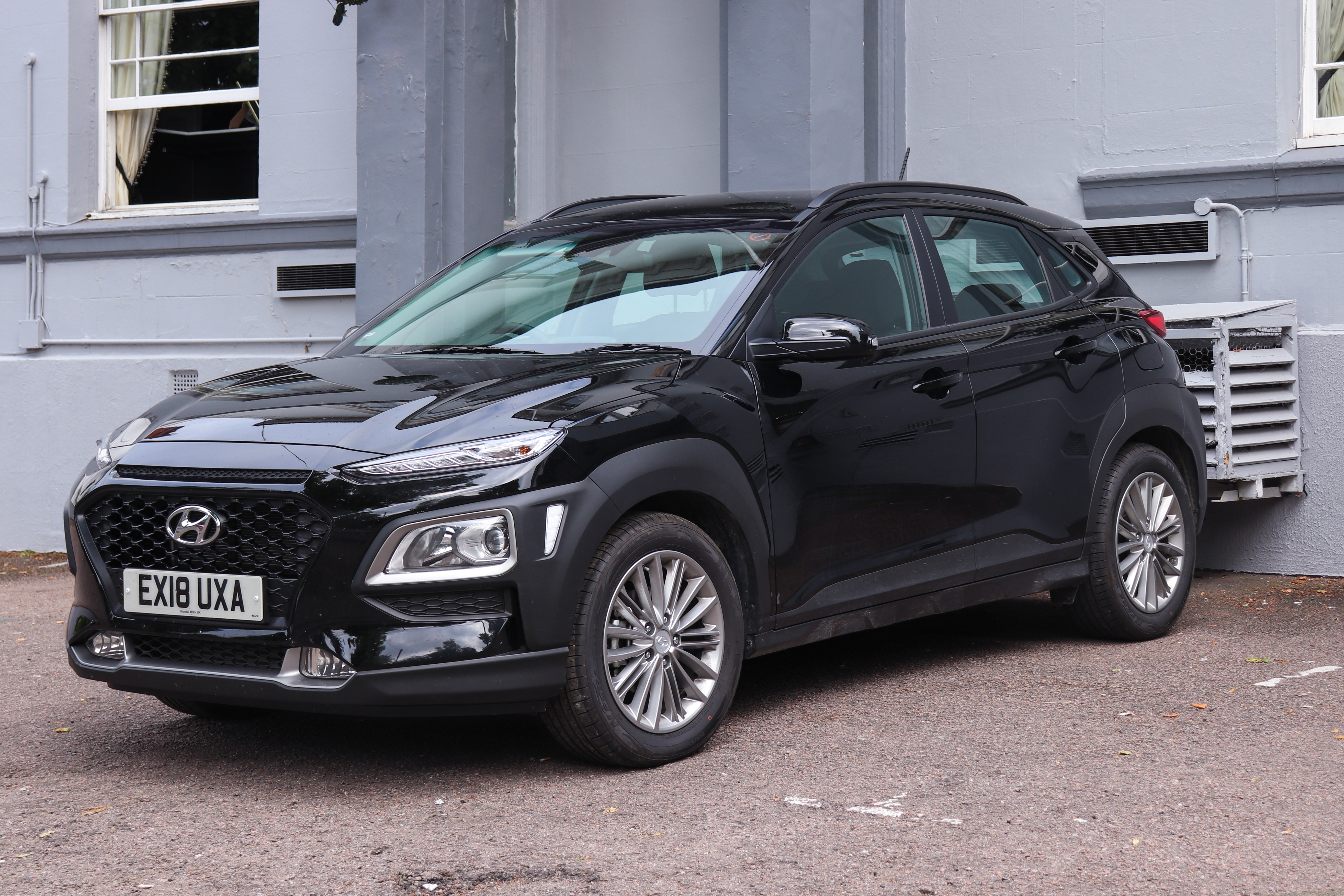
The Hyundai Kona is a small SUV that's great for city driving and has a lot of space inside. It's known for being fuel-efficient and comes with many features that make it easy to use.
Plug-and-charge means you can just plug your electric car into a charger, and it will automatically start charging without needing to use a phone or card.
The Porsche Macan is a smaller SUV from Porsche that is known for its sporty performance. It will also have new charging features that make it easier to charge at stations.
The Porsche Cayenne is a fancy SUV that drives like a sports car. It's popular because it gives you a lot of space and comfort while still being fun to drive.
The Porsche Taycan is a high-performance electric car that looks and drives like a sports car. It's known for being really fast and having a lot of cool tech inside.
CCS DC adapters help charge electric cars faster than regular chargers. They're important for drivers who want to quickly get back on the road after charging.
The electric vehicle market is all about cars that run on electricity instead of gasoline. It's growing because more people want to drive cars that are better for the environment.
Car
Volvo EX60
The Volvo EX60 is a new electric SUV from Volvo. It's designed to be safe and stylish while also being good for the environment.
WLTP is a testing method used to measure how much fuel a car uses and how much pollution it produces. It helps buyers understand how efficient a car is in real-world conditions.
The PPE platform is a special design used by Volkswagen and its brands to make electric cars. It helps different car models share parts, which saves money and time when building them.
The Audi Q6 e-tron is a new electric SUV that Audi is planning to release. It will be designed to offer a luxurious ride while being environmentally friendly.
Intellectual property is a legal term for ideas and inventions that people or companies create. It helps protect their work from being copied by others.
A federal tax credit is money the government gives back to you when you buy an electric car, making it cheaper. This part mentions that this credit ended, which affected sales.
EV sales mean how many electric cars are being sold. This part talks about how sales have gone up and down based on government incentives and how people are buying these cars.
DC fast charging is a quick way to charge electric cars. It fills up the battery much faster than regular charging, which is why it's popular. This part mentions how exciting it is but also points out that we need to think about other charging methods.
Off-peak charging is when you charge your electric car during times when less people are using electricity, usually at night. This can save you money on your electricity bill.
A kilowatt hour is a way to measure how much electricity you use. It's like counting how many hours you run a light bulb to see how much energy it uses.
EV means electric vehicle, which is a car that runs on electricity instead of gasoline. They are better for the environment because they produce less pollution.
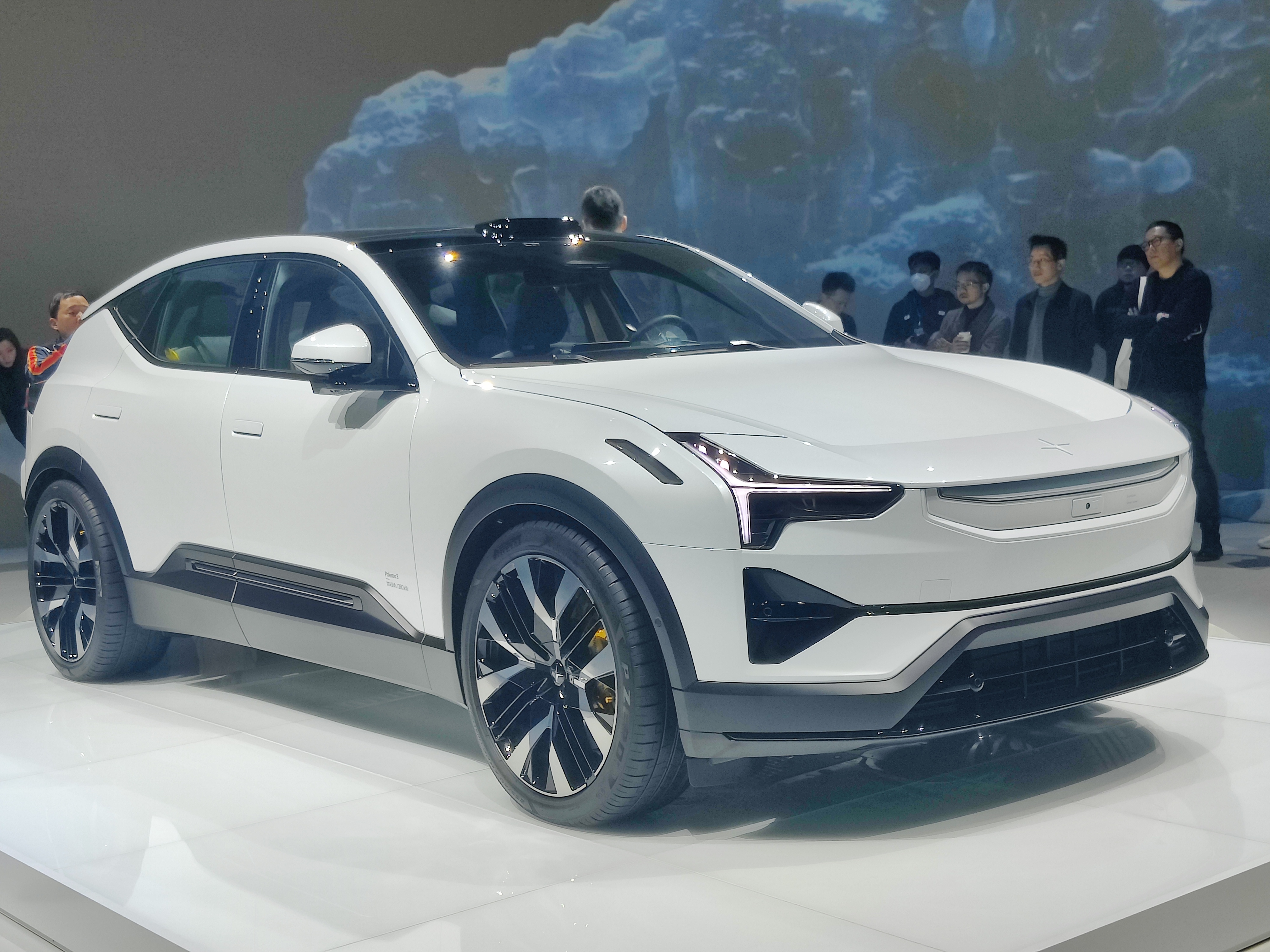
The Polestar 3 is a stylish electric SUV that aims to be both eco-friendly and fun to drive. It's made by a brand that focuses on performance and modern design.
LIVE
Hiya, Kenny the Hamster here, beloved pet of Doug and Carol Brookbank. Now, I've got
to hand it to Doug and Kazza. They're doing school pickups, jobs, trips to the supermarket
and still find time to get healthy. Apparently, it's down to some NHS Healthy Choices quiz.
Only took them five minutes to do, then gave them a simple plan to get started. Total amazeballs!
Take your first little step to healthy. Search NHS Healthy Choices quiz to get a score and
a score and a score. Now, I've got to hand it to Doug and Kazza. They're doing school
pickups, jobs, trips to the supermarket and still find time to get healthy. Apparently,
it's down to some NHS Healthy Choices quiz. Only took them five minutes to do, then gave
them a simple plan to get started. Total amazeballs! Take your first little step to healthy. Search
NHS Healthy Choices quiz to get a score and a plan that's right for you.
Welcome back to EV News Daily. Today, Kia facelifts the narrow Porsche's plug and charge and
Bentley's first EV takes shape. Plus, stay tuned. Later in the show, I'll tell you why
Polestar isn't getting left behind with a return to beast mode. No EV News China today.
It's the weekend. Our deep dive into how the East is shaping the global EV landscape returns
tomorrow morning bright and early. Now, Kia has sharpened the Nero but left the hardware
alone. The mid-sized crossover now wears the firm's design language. They call it opposites
united with a reworked front end and tidier surfacing, while still offering plug-in hybrid
and full electric versions. The front end loses the slick silver bar around the bonnets
of the Nero and gains some taller headlights. It's all in line with how the EV3 and the
EV9 look. This blatantly wants to be an EV3, this car. A more angular grille along the sides,
a flat black cladding, shrinks and switches to the glossy finish as to the wheel arch extensions.
Yep, you've seen that on the EV3, the EV9, all the Kia models. And now the Nero looks
like one of those. Inside, a thinner dashboard makes room for a pair of infotainment and
instrument screens at 12.3 inches and the centre console keeps its layout but swaps
piano black for matte grey plastic. The steering wheel now has a flatter top and bottom matching
the other EVs. Technical details will follow in March but the powertrain line-up mirrors the
current car, which is disappointing. Why keep on selling the Kia Nero unless it was dirt cheap
and it's not. The plug-in hybrid has an 8.9 kilowatt hour battery. If I'm being kind, I'd call it
modest. And an electric only range of 40 miles. The EV has a single front-mounted motor,
201 horsepower, 285 miles of range. The Hyundai Kona and the Kia Nero were always really
efficiency monsters. So maybe that's the reason to go and buy one of these, I don't know.
Now Porsche Canada has enabled plug-and-charge for its electric cars on Tesla's Supercharger
network, widening access to fast charging without using apps, cards and screens. The feature now
works on all of the McCann electric models and the 2026 model year Taycans when drivers use the
Porsche charging service. Porsche owners can now use more than 27,500 Tesla Superchargers in North
America. It has encrypted automatic authentication and payment when the cable connects. Charging
sessions start and the bill happens in the background, but only for active Porsche charging service
members. Porsche says the forthcoming Cayenne electric will get plug-and-charge when it reaches
Canada later in the year, extending the same experience across its line-up. The firm has
also widened its charging reach over the past year through software updates for Taycan and McCann,
aimed at smoothing out network access and more compatibility. Existing owners got their free
NAX to CCS DC adapters. A quiet but important step that lets Porsche drivers use the fast charging
and fast growing NA-CS standard while the cars rely on CCS. Now BMW's new iX3 has
been a bit of a sales hit, even as buyers have never even sat inside it. In Germany, more than
3,000 orders came in in October when they launched the vehicle before the car's first international
drive event since then demand has climbed further, helped by customer events in Europe. The response
has forced BMW to change their plans. Orders have now exceeded expectations. To such an extent,
BMW's added a second shift at its Hungarian plant earlier than intended. The factory can build 150,000
cars a year, a figure that may now be beaten with the extra shifts. A report of a near-sellout
for production year one has been denied, or if just not commented on really by BMW,
because the order books are open, so you can still order one. In Germany, about a third of people
buying an iX3 have never owned a BMW before. Many customers are placing orders without even a test
drive, a sign of how far their firm has come with their electric credentials, and how strong demand
is for great EVs, 500 miles of range, 800-volt Neue-classer platform. They're not without
competition though, like the new Volvo EX60 that just about gets three miles more on WLTP.
What about Mercedes-Benz GLC with EQ technology to give it its full name? Well that doesn't match
the iX3 on charging speed nor range, but it still makes a big step forward for Stuttgart.
The success of both models points to a shift in the EV market, rather than a one-off hit.
I think if current order patterns hold, this year will stand out as the year when buyers pushed
the old guard into building the new generation. Bentley's first EV is taking shape as a more
compact SUV. Bentley's first electric car has left the sketchpad and hit the road. A compact SUV
prototype was photographed on winter testing in northern Sweden, with less disguise than before.
Now we see its basic shape, headlights and tail lamps visible. Bentley leans on the Bentiger,
launched in 2015 as its best-selling model in America and worldwide. Yet,
Bentley needs a smaller electric model to keep more affluent, perhaps urban buyers in the fold,
and you could argue the regulators at bay. The new SUV is on Volkswagen's PPE, premium platform
electric, shared with the McCann and the Cayenne and the Audi Q6 e-tron, one of the
great cars out there, actually the A6. A6 of van, I take you back, Q6, do one. A6 of van,
electric, so good. Same platform, the choice ties the future of the crew factory, of course,
Bentley's made in crew, to the group's main EV toolkit and cuts costs and technical risk.
The profile echoes earlier. Bentley designed sketches and mimics a scaled-down Bentiger,
really upright, familiar, shorter and tighter, I would say, looking all very, very nice now.
Let's talk about Ford. They will build Chinese-designed batteries on the soil in Michigan,
and says it had no other choice. Jim Farley, the firm's boss, argues that licensing LFP,
lithium-ion phosphate technology from the world's biggest maker of EV batteries,
CATL in China, was the only route to make those cells in America. The politics are tricky. The
logic, though, is sound. Farley says producing cells at home with licensed IP, intellectual property,
beats importing. The cells are even finished packs from abroad. Ford owns the building. Ford
employs all the American workers. The cell technology, the IP, well, that's Chinese and it
hasn't gone down very well with some Republican politicians that don't want Chinese IP on the
ground. The wager is that long-term competitiveness in EVs and storage as well demands more than
just buying in batteries that arrive in sealed boxes as a job lot. Ford wants hands-on manufacturing
experience with chemistry, with processes, rather than staying tied to the old supply chains. Its
strategy centers on learning the technology through direct production, not outsourcing.
Ford has already widened the project's scope to make LFP cells for stationary energy storage,
a wise move if they're not going to be selling quite as many EVs as they thought they were.
They're going to squeeze more value from the CATL tie-up. It concedes that licensing technology
was the only way they could do it. Now, California's EV sales held up firm at the end of the year.
Many articles are circulating about the US declining in Q4 without the federal tax credit.
California says, hey, we still like EVs. They bought 80,000 zero-emission vehicles in Q4. That
was 19% of all new car sales. The federal tax credit vanished at the end of September,
and nationwide EV sales were down as expected because people brought forward their purchases.
The state's cumulative new EV sales have jumped by more than 300% in the last six years, while
nationwide EV sales fell from 10.5% to 5.8% in the United States in Q4 alone. California's
is obviously down, but way more resilient. Gover Gavin Newsom's budget on January 9 proposed $200
million for an incentive program to offset the federal tax credit. The California Energy Commission
on their part has allocated $100 million in infrastructure funding for this year,
with an emphasis on level one and two charging where cars sit, which is brilliant. And I say
all the time, we rave about DC fast charging. It's sexy. It's fast. It gets people into EVs
and the conversation of high tech. We never talk about charging EVs when they're not moving.
And, you know, when the wheels ain't turning, the electrons should be flowing. That's just my
opinion. My car is always at 50% at home because I don't go anywhere day to day that requires
me to DC fast charge. And I'm guessing most people, if they can charge at home, should be doing
the same. I mean, not the 50% thing. That's just because I do. So that's a great sign that not
all markets kind of fell off the cliff. Yeah. So nationwide, it kind of halved. California much
less so. The story is definitely going to be looking at the next six to nine months, maybe
12 months in America to see if the technology rises above people's financial priorities.
And if they were only buying EVs because they had seven and a half grand off,
then they shouldn't have been buying EVs in the first place and America will do it at its own
speed. But I suspect having seen other markets that abruptly got rid of subsidies, see Germany
had a rough year and now they've bounced back even stronger than before when they did have them,
the big ones a couple of years ago. So I'm very optimistic about US sales. We'll take a break,
we'll come back, we'll talk Norway and off peak charging. My favorite topic, stick around back in
a mo. Hi, Kenny the hamster here, beloved pet of Doug and Carol Brookbank. Now, I've got to hand it to
Doug and Casa. They're doing school pickups, jobs, trips to the supermarket and still find time to
get healthy. Apparently, it's down to some NHS healthy choices quiz, only took him five minutes
to do, then gave them a simple plan to get started. Total amazeballs. Take your first little step to
healthy, search NHS healthy choices quiz to get a score and a plan that's right for you.
Hiya, Kenny the hamster here, proud pet of Doug and Carol.
Hey, looks like my mom carols off out with the girls again. I tell you,
since she took that quick NHS healthy choices quiz, she's drinking less, but going out more.
And to think she thought being healthy would mean being boring. You might want to give it a go yourself.
Go girlfriend. Take your first little step to healthy, search NHS healthy choices quiz to get a
score and a simple plan to follow. All righty, welcome back to the podcast. Norway added 1192
fast charging points last year. The total in Norway is now 10,670 fast charging points.
That set a record, but it was below the total number installed in 2023. The slowdown marks are
maturing in Norway. The markets, if you like, after racing ahead is now east into cruise control.
The Norwegian Electric Vehicle Association held the crossing of 10,000 fast charges. That was last
summer as a big milestone with demand pressure easing operators are building fewer stations
than in early years, but they're all about service now in Norway. So it's okay. So we've got the
charges in the ground. Let's offer the right service, the right reliability, the right maintenance,
and the right amenities. A DC fast charging Norway has one fast charging point for 85 EVs.
That is improving on one in every hundred last year. And in 2019, one in every hundred and 13.
So this is the lowest it's ever been. There's now more charges per car. If that makes sense,
then they have been let's talk about off peak charging. My favorite topic UK off peak charging
has been falling in price. And the key is, I think, firstly, to bring price parity to anyone
who can't charge at home with what was our VAT. So VAT, our value added tax is 5% on home charging
and 20% on public charging. It's unfair. It's punitive to people that go EV. The government say,
please buy an electric car, if you wouldn't mind. Be very good of you to buy an EV. Thank you very
much. And then sting them for tax when they have to charge it publicly. It's simply unfair.
It's so morally wrong. It's awful that the government won't back down on this. It's just
a cash grab and it's greedy and it's mean spirited. And I really hate them for it because the answer
is so clear. If you can't charge your EV at home because you haven't got a driveway, that's not
your fault for not having a driveway. We need to fix that first. Otherwise, off peak rapid
charging has fallen in price by about 10% to an average of around 45 pence per kilowatt hour. So
if you can charge your car off peak, even if you have to DC fast charge it, there's big savings to
be had by doing it off peak. It cuts the cost of charging an EV with a low battery, say go maybe
10 to 80 during off peak hours. On average will cost around £20 now. Charge it during the day
cost on average, I know about £30. Your numbers will differ. The shift sharpens the gap between
smart use of a charging network and just plugging it in whenever you remember. This new report from
the AA finds that timing now does as much work as the technology. Drivers who charge off peak
or overnight get a clear edge over the last three years. Off peak charging prices have fallen here
while flat rate charging prices actually have risen. Some ultra rapid flat rate units now
approach 80 pence. I think I've seen more than 80 pence per kilowatt hour. My US listeners will be
falling off your chair right now. That's a dollar per unit of electricity. It's a lot, isn't it?
Home charging is obviously the best because average domestic EV prices, electricity prices for EVs
have dropped by 25% since our energy price crisis a couple of years ago, three years ago now.
On a per mile basis, EVs charged at home on off peak are night and day different to filling
up with petrol. It's not even in the same ballpark. It's just slam dunk win. Now,
more charges going in the ground. This is Eleport. Do I say Eleport or Elport? Adding
250 high-powered DC charges to its network over the next two years backed by a loan from the
European Investment Bank. The expansion pushes the footprint deeper into Central and Eastern Europe
with new charges in the Czech Republic and Slovakia. Public fast charging in the region is
patchy even as EV adoption climbs. Eleport was founded in 2016 running 400 sites with 800 plugs
across Eastern European countries. About half a DC fast charges. The new parks will sit at key
shopping and commercial areas in Croatia, Estonia, Latvia, Lithuania, Poland. That's not Eastern
Europe. Slovenia and the Czech Republic and Slovakia as well. Each site is expected to host up to 12
fast charging points and they're going to put 400 kilowatt DC charging in the ground as well,
which is really, really welcome in those countries. Next, nine European governments want to turn the
North Sea into 100 gigawatts of power. Energy ministers from the United Kingdom, Germany,
the Netherlands, and six others will seal the pledge at a meeting in Hamburg. They want to
build 100 gigawatts of offshore wind as part of a wider 300 gigawatt offshore target for the North
Sea. Interesting fact, I live in the windiest country in all of Europe. About one third of future
capacity in these waters would be shared between the nations. Initial schemes at 20 gigawatts are
starting by the end of this decade. For the EV industry, that matters. This is a huge scale.
It's now one of the big stories of our recent times. I've been doing this for eight years. I'll
go back and check the first podcast. One of the really big stories that you and I have covered
over the years is how cheap green energy has become. Whether you like green stuff,
whether that is in the country that you live becomes politicized or not, adding green generation
to the grid, not just in China. A lot of the technology is in China, but everywhere is by
far the cheapest. Now, to add energy generation to the grid, to do that with renewables. It's a
really awkward fact for people that are bankrolled by the oil industry and the fossil fuel industry.
And so that matters for electric vehicles because it cuts wholesale prices. So 100 gigawatts of wind
on our grid. Obviously, there's interconnects around Europe, so it affects everybody, brings
wholesale prices down, underpinning the argument for driving EV. Right, let's talk about Polestar
finishing off. They will launch a new BST model. Polestar is going beast mode late this year,
early next year. So there's the Polestar 2 BSTs. There's two of those actually. And so
not many on AutoTrader. Either there's not many in circulation or the people that have got them,
keep them. I may or may not have email alerts set up for Polestar 2 BSTs. Not that I'm going to get
one. I can't afford one, but just saying. The car will use one of the existing models. So it
probably won't be a Polestar 2. So be something else. There's some high-performance stuff around
that's doing really interesting things. Arnic 5 and 6N are the front runners. Hyundai are doing
like Kia GT models are really good as well. Further up the ladder, BMW and Audi are pouring
money into high-performance, Tesla's performance models have always been really good. And finally,
now with this electric M that BMW are talking about, that's going to be a beast as well.
So Polestar said, right, anything you can do, we can do better. We'll enter beast mode. BST has
formed. It's already turned out uprated versions of the Polestar 2. And now they've promised beast
mode on the Polestar 6. That's a roadster. And they will look at the Polestar 5 that was shown in
Munich last year with 900 horsepower. That's their quickest model and probably an obvious
candidate for BST. Although it won't be sold in America. The newer Polestar 3 and 4 also sit
pretty early in their life cycles as well. Maybe there's scope for adding BST models to those as
well. That's your podcast for today. Thank you for listening. Thank you to our premium partners,
National Car Charging on the US mainland and the Loha Charge in Hawaii and Test EV, Avalos
trusted partner for independent EV battery health testing in Australia and New Zealand. Have a good
and see you tomorrow. And remember there's no such thing as a self charging hybrid.
Total amaze balls. Take your first little step to healthy.
Search NHS Healthy Choices Quiz to get a score and a plan that's right for you.
About this episode
Kia unveils a refreshed Niro EV with a new design but unchanged powertrains, while Porsche enhances charging convenience by enabling plug-and-charge at Tesla Superchargers. Bentley's first EV, a compact SUV, is in testing, and Ford plans to manufacture Chinese-designed batteries in Michigan. California's EV sales remain strong despite federal tax credit changes, and off-peak charging prices are dropping in the UK. The episode also highlights Polestar's upcoming high-performance models, showcasing the evolving landscape of electric vehicles.