
DAILY : Leapmotor Spanish Production, SK On Solid State Plant & Rivian Breaks Ground In Georgia | 17 Sep 2025
EV News Daily - Technology and Business of EVs
DAILY : Leapmotor Spanish Production, SK On Solid State Plant & Rivian Breaks Ground In Georgia | 17 Sep 2025
EV News Daily - Technology and Business of EVs · Sep 17, 2025
Annotations will appear as you listen
0:00
25:37
Car
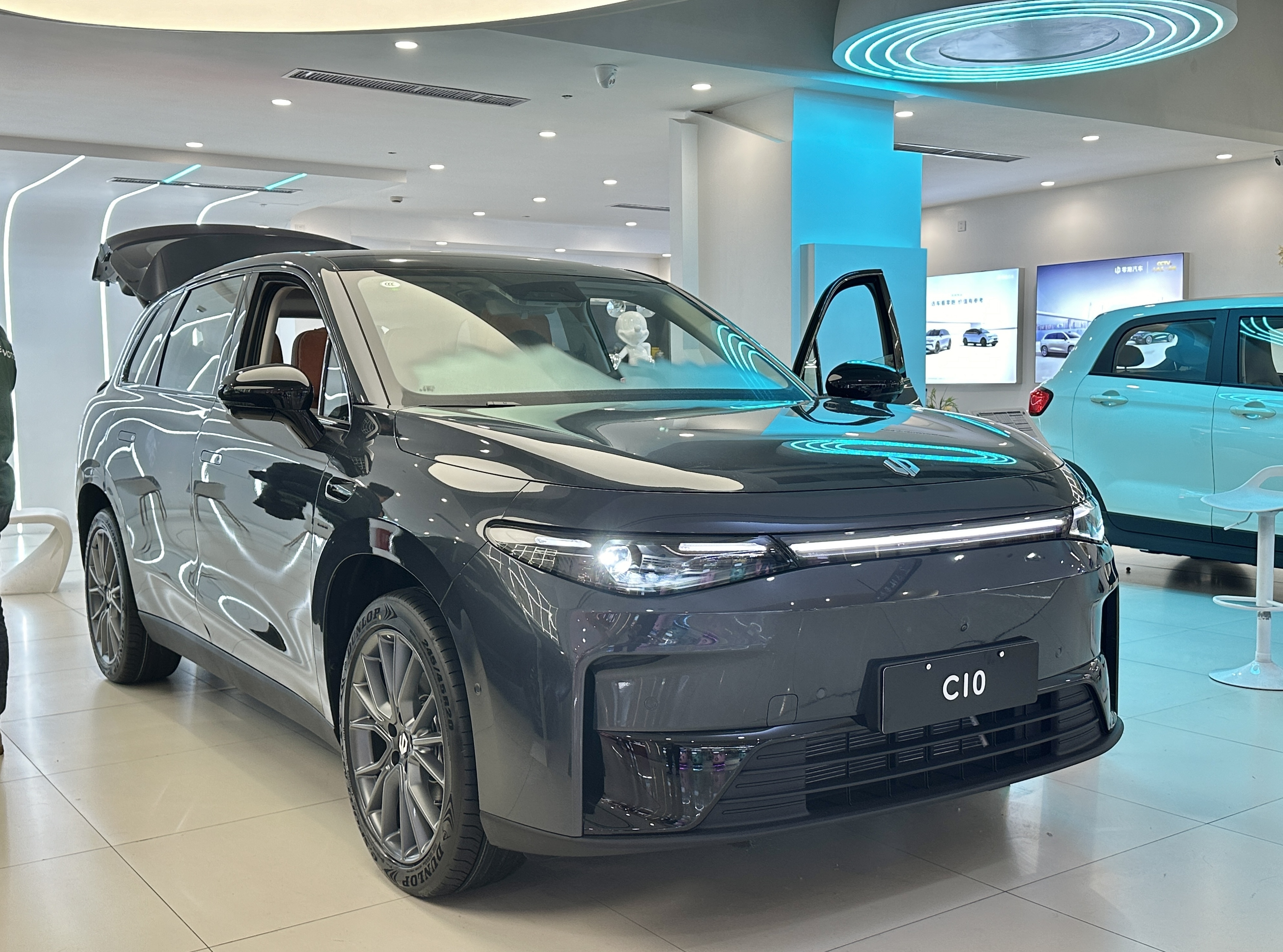
C10 Leapmoto

Car
E5 Audi E5

Car
Chrysler Voyager

Car
Tesla Cybertruck

Car
Alpina B10

Car
Rivian R2

Car
Renault 4

Car
Dodge Charger

Car
Galaxy Geely Ex5

Car
Tesla Model Y

Car
Suzuki Vitara

Car
Evitara

Car
Audi A4

Car
Audi Etron

Car
Nissan Leaf
LIVE
Five years ago, I was paying $65 a month for my subscriptions.
Today, those same subscriptions cost $111, and I don't even use half of them anymore.
That's why now I use RocketMoney to manage my subscriptions for me.
The app gives you a list of all of your subscriptions and reminds you of upcoming payments,
so you're not hit with any surprise charges.
On top of that, it also sends you alerts when subscription prices go up,
so you always know the price you're paying.
If you decide you no longer want a subscription, you can cancel it right from the app.
No customer service needed.
And the best part is, RocketMoney even reaches out
and tries to get you refunded for some of the money you lost.
On average, people that cancel their subscriptions with RocketMoney save $378 a year.
And overall, RocketMoney has saved its members $880 million in canceled subscriptions.
Stop wasting money on things you don't use.
Go to rocketmoney.com slash cancel to get started.
That's rocketmoney.com slash cancel.
Wix is the website builder that just keeps on giving.
It's giving...
I just built my whole site in under an hour.
It's giving...
I actually made that?
Whoa, it's giving...
Our sales are through the roof.
So whether you need help expressing yourself
or just need something to make your life easier,
Wix has you covered.
Try it out at wix.com.
Download RocketMoney.
Step 2.
Link your accounts and see every subscription you're paying for.
Tap one you don't use and cancel it.
That's money back every month.
Step 3.
Create a financial goal.
$50 every paycheck.
Or let the app automatically move small amounts of cash when you can afford it.
In a week, you'll forget you set it up.
In a month, you'll see real dollars piling up.
In a year, you'll be shocked at how much money you've saved.
Bonus challenge.
Upload an internet or phone bill and let RocketMoney try to lower it.
You only pay if they find you savings.
On average, RocketMoney members can save up to $740 a year
when using all of the app's premium features.
Users love the app with over 186,000 five-star ratings.
Make saving money the resolution you actually keep.
Start the 60-second savings challenge at rocketmoney.com.
That's rocketmoney.com.
Rocketmoney.com.
How many times have you wished you could be in two places at once?
With Wix, you practically can.
Wix's website builder is packed with powerful AI tools
to make running your business online easier.
Build a full site just by talking with AI.
Get an AI agent to manage your sales and marketing.
Or work like a 10-person team, even if it's just you.
So you don't need superpowers to get everything done.
You just need Wix.
Try it now for free at wix.com.
Welcome back to the podcast.
LeapMoto will build its cars in Spain.
SKON opens a solid-state battery pilot plant
and Rivian breaks ground in Georgia.
And stay tuned.
Later in the show, I'll tell you which
electric vehicle's initial production was cut by more than half
thanks to batteries.
On today's edition of EV News China,
we're talking about the Audi E5 Sportback.
Crazy massive screen in that thing.
The Voyager Dream MPV big launch
and BYD's SEAL07 is improved in every way and gets cheaper.
Join me tonight on our new show
called The Tech Sheet, where we answer the question,
years after the launch of the Cybertruck,
why is nobody else following the 48-volt architecture?
Why do EVs still have the ancient 12-volt battery?
Last night was part one.
It was a 4,000-word script I wrote.
So 20 minutes last night, 20 minutes tonight.
Nobody needs almost an hour of kind of documentary style
reporting on the 12-volt battery in EVs.
And yes, they go wrong.
And when they go wrong, it breaks your car.
So join me tonight for Patreons.
Patreon exclusives go into the feed there
for anyone who is at the five pounds or five dollars a month
or higher level.
And all of the bonus shows that I make
all end up in the free feed after seven days.
So you don't miss any content.
I'm not about paywalls.
I just want to give the patrons something exclusive,
one of the many member benefits.
All right, let's talk about Leap Motor,
owned by Stellantis.
Well, $51.49 owned by Stellantis.
Leap Motor International will make their vehicles in Spain.
The Spanish factories will assemble vehicles
according to CEO Antonio Velosa saying,
and I quote,
we have recently announced an industrial partnership
to give Leap Motor capacity at one of our Spanish plants
to build their cars on their platform.
That will start very soon.
End quote.
The move could let Leap Motor
avoid the European Union tariffs
on Chinese full electric vehicles.
The brand currently pays 20.7% tariffs
on top of the EU's blanket 10% import duty.
Velosa did not say which factory would be used
or which models will be built there.
An earlier report citing China's embassy in Spain
said that Stellantis and Leap Motor
would invest 200 million euros in a Spanish factory.
That the B10, that's the SUV,
somewhat a compact SUV,
was the likely model with production starting next year.
Stellantis took a 20% stake
in the overall Leap Motor business
in 2023, a 1.5 billion euro investment
that two years later looks a pretty smart investment.
It bought a 51% share in Leap Motor International.
That's where they sell, service and develop
Leap Motor's cars overseas outside of China.
Reports have focused on Zaragoza as the site
where Chinese battery maker CATL
announced a joint venture with Stellantis
to build LFP packs at a new factory.
The two companies investing 4.1 billion euros
on a joint venture there
with production starting by the end of 2026.
Solid-state batteries are all the rage
and they will change the cars that you and I drive
in years to come.
Still not ready for prime time,
well, semi-solid state might be,
but SKON has now completed their pilot facility
for proper solid-state batteries
at their research center in South Korea.
The company plans to commercialize
sulfide-based batteries by 2029,
one year earlier than originally planned.
SKON is developing two solid-state formats,
a polymer-oxide composite variant
and a sulfide-based version.
No one knows what the final solid-state batteries
will be like when they're fully commercialized
and on the roads and in the cars that you and I drive.
We do know that they will be more efficient,
enable longer range, much lighter weights,
be more stable and charge faster.
The polymer oxide-based is looking
at a commercialization perhaps in 2028
and the sulfide-based type a year later.
The South Korean plant will mainly focus
on the sulfide cells.
Some production lines are configured
for batteries with lithium metal anodes.
The plant was built alongside solid power.
Early last year, SK acquired licenses
from the US business, Solid Power,
to use their cell technology for R&B
and to make prototypes.
The facility will produce the prototype cells
to generate quality and performance data
ahead of mass production.
SKON's energy density targets are 800 watt-hours per litre
in the short term
and 1,000 watt-hours per litre in the long term.
Solid Power says that cells using a silicon anode
and a solid electrolyte can reach
a gravimetric energy density
of 390 watt-hours per kilogram
using the lithium metal anode
whilst retaining the NCM cathode
increases that to 440 watt-hours per kilogram.
Now let's talk about Rivian Breaking Ground in Georgia.
The on-again-off-again project,
Rivian Automotive Leaders said they are now confident
as the company began work
on its new $5 billion facility in Georgia.
The company broke ground yesterday east of Atlanta.
Despite the current incumbent of the White House,
not only pulling back on the things like the EV tax credits,
but also just the overall vibe in the U.S.
towards clean green travel, electricity generation.
Rivian Chief Policy Officer, Alan Hoffman said,
and I quote,
we did not build this company based upon federal tax incentives.
We're going to prove that we're going to be successful in the future.
End quote.
Yeah, I mean, look, Rivian's been around forever,
a really long time, much longer
than political cycles last.
Rivian's been through some hard yards,
and they're still doing them, by the way,
like every day at a startup must be, you know, must be hell,
but also enormously rewarding
because they're working on the R2.
That's the new SUV.
Now the Illinois plant will begin making it next year.
They say they're on target.
They say the pricing should still be around $45,000.
This is going to be huge.
An expanded Illinois plant will assemble 215,000 vehicles yearly.
If the R2 sells well and if Rivian produces the R3,
then they'll need capacity.
So they're looking at the long game here.
They will sell the R2, R3 onwards in Europe,
whether it's right-hand drive, I don't know,
but that'll certainly Europe will be a market
and maybe they'll have to look at an overseas market
as perhaps the U.S. becomes a little less friendly
to companies like Rivian.
I hope not.
I hope that there's nothing wrong with not having incentives.
I know that there's obviously two weeks to go.
Go and get the deals done.
If you were going to buy an EV or a used EV,
four grand off under 25K, this price.
And so that is clearly not a positive thing to lose that.
But trust me, we got rid of ours years ago
and then we became the number one EV market in all of Europe.
And so it's so complex, so nuanced.
It's not just about giving money off the vehicles.
Some argue that it benefits the car makers as well.
And it's a really difficult topic.
It's not simple.
Like everything on the internet has to be boiled down to simple.
Like tax credits, good.
No tax credits, bad.
Trump, bad man.
But it's not that simple, right?
So we haven't had any incentives,
used to get money off the charges and all sorts.
We've got some commercial things in place.
And it's worth thinking about how the U.S.
can thrive in an EV world.
And I'm so optimistic for the U.S.
I think when the U.S. decides to catch up, no doubt
the U.S. is a little bit behind.
There's a little bit of momentum being lost, China and Europe.
When the U.S. decides it wants to catch up on EVs
and cars like the Rivian R2, enormously compelling.
It'll be less about, oh, you're driving an EV,
just driving a great vehicle.
Oh, it happens to have a battery, but that's okay.
I think when the U.S. wants to catch up
and wants to do everything, the wind is behind it.
So I'm really optimistic about the EV market in the U.S.
You'll hear commentators who are saying,
look, in two weeks' time, the tax credits go.
October 1st is going to be a disaster.
It'll slow down.
Don't get me wrong.
There's going to be fewer people walking through
the door of the dealership on the 1st of October
as the day before.
But that, it's short-term.
Like, this is going to be a bump we write out in the U.S.
So the North American director of also research firm,
SBD, who's Alex Oiler, said,
we saw with Tesla that the key to profitability
is scale, and if you can't scale,
your cheapest vehicle is 70K.
So they need that plant online to achieve scale of R2 and R3.
He said, yep, completely agree.
And when Rivian does scale and bring those vehicle prices,
down could well be unstoppable.
Renault 4 is next in the news.
Man, I love this vehicle.
And the Renault 4, though, is now available as a cargo van.
We've seen this so many times over the years.
Small vehicles taking out the rear seats,
put a plastic load tray in.
Maybe, maybe like a bulkhead in there
so that things can't fly forward.
Sometimes not.
The conversion gives a load volume of over 1,000 litres.
That's 37 cubic feet and a maximum payload of 345 kilograms.
If you need to carry stuff as a company vehicle,
but don't need a van, these little mini vans,
these car conversions to vans are so cool.
This one does have a mesh bulkhead as an option, though.
Depending on market specification,
you can fit it with controls
to prevent the rear doors and windows from even opening.
An anti-slip mat for the load bay,
privacy cover for the load bay in France.
They're going to start at 29,000 euros.
That excludes France's VAT.
And the price applies to the powertrain,
not offered in the UK, actually.
The four seats, four model.
So 118 horsepower front mounted motor,
40 kilowatt hour battery pack,
191 miles WLTP range on that,
charging at 80 kilowatt peak charging rate.
Again, these vehicles might well just be charged once a day,
and that would be overnight.
You can get a 52 kilowatt hour pack,
254 miles or over 400 kilometres of range on that.
Over 100 kilowatt peak charging rate on that pack,
the bigger pack as well.
The conversion is done in-house by Renault.
It's not a third-party thing.
The plants in France, I think it's Mabouche plant,
where the Renault four is actually produced.
Really cool.
I love stuff like this.
And the Renault five, I think, has got all the attention
because the Renault five is the cheaper one.
And the Renault four is the vehicle,
but perhaps because it was, you know,
again, channeling the heritage of the Renault four,
maybe, and it is a little more expensive,
hasn't always got all of the attention.
But, oh, man, I love the styling on this,
particularly the one that has the canvas roof
that folds all the way back.
You do a fixed roof on this with roof bars
and a Renault four with a canvas roof
that completely goes back.
Huge, effectively, sunroof on this.
And, man, it's such a stylish video,
stylish, cool car.
The video I saw when they launched it had the,
I hope it still looks as cool in real life.
Is that kind of rear quarter lights behind the rear seats
to let more air and sort of just light into the cabin
to feel more airy?
The four.
OK, I need to talk about the four more, don't I?
Because we always talk about the five.
The four is super cool.
Let's move on.
Geely will provide a free charger in the UK
with the new EX5.
Yesterday's podcast, if you missed it,
I said that Geely is coming to the UK
as of on sale to the UK yesterday.
Orders opened for the new EX5.
They are also a bit of additional information,
giving away a home charger with every purchase of the Galaxy,
sorry, the Geely EX5, which under the Geely name,
you know, because Geely have Volvo, Polestar, etc., etc.,
Lotus and more, it's the Geely name that's coming to the UK.
So get your EX5 before the end of October,
23rd of October, actually,
and you get a seven kilowatt single phase,
Anderson charger.
They are the ones that look really, really cool, by the way.
And it includes nationwide installation
by Anderson-trained technicians as well.
That's not cheap to put a charger in at home, by the way.
So it's a nice little bonus.
The engineer and designer in Bedfordshire,
and it features a hidden tethered charging cable,
which is pretty unique, 5.5 meters or 18-foot cable.
Tied away, we're not in use.
Cast aluminium face here, I think on that one,
or at least you get different appearances on the Anderson's.
Last time I saw, I know they've been through some difficulties
and hopefully come out the other side
of that 70-year warranty on it, really cool technology.
Now, GAC, one of China's top five automakers,
just had their SUV, the ION-V, or AION.
Never sure how I meant to say it.
I hear people call it different things.
Approved in Australia, the ION, or AION-V,
is expected to start under $45,000, that's $30,000 US.
Detailed specs and final pricing announced closer to the launch.
The approval paperwork shows it entering as a single model variant.
It's 4.6 meters long and uses a 150 kilowatt electric motor
with a 75 kilowatts lithium ion phosphate pack in this one.
Claimed range of 375 miles or 600 kilometers or so.
The battery supports charging at 180 kilowatts peak.
16 minutes they give, and I hate the way
the Chinese are starting to give 30 to 80.
I'm seeing it more and more.
Stop it, stop it.
Come on, let's take a look at yourselves.
30 to 80, no one wants that.
The industry should talk 10 to 80 percent charge times.
Otherwise, we know you're fudging it.
30 to 80 in 16 minutes?
Yeah, okay.
But on a long road trip, who's pilling in at 30?
You're going to go past those charges
and go to the next ones to get to 10 percent.
Low state of charge.
You ride that wave of the nice fast charging speed.
This thing gives a peak charger at 180 kilowatts in their spec sheet.
It might not even charge at that at 30 percent.
So don't give us a 30 to 80.
Anyway, rant over.
Wasn't really a rant, was it?
All right, we'll stay in Australia for one final story.
A video posted on X, and this is interesting.
A video posted on X appeared to show a Tesla
driving itself through Melbourne's Central Business District
with the driver's hands off the steering wheel
and the car performing a hook turn.
The post claimed that the vehicle
had managed one of Melbourne's most tricky hook turns
and it did it all autonomously.
Fantastic. However, under Victorian law,
anyone trialing automated vehicles need to apply for a permit
to ensure that things are done safely, right?
These are big, heavy vehicles.
Any vehicle on public roads.
The Victorian government has said
that the Department of Transport and Planning
did not approve any testing of autonomous vehicles in Melbourne CBD.
And they are engaging with Tesla on the video that's being posted.
FSD is part of Tesla's push for so-called autonomy in the future.
The Tesla website says,
when enabled, your vehicle will drive you almost anywhere
with your active supervision requiring minimal intervention.
FSD is available in the US, Canada,
versions of it in China, Mexico and Puerto Rico.
According to Tesla's X account,
is coming soon to Australia and New Zealand.
I'm sure this will just be a bump in the road,
but regulators will want to know why they were testing it.
If indeed it was being done as the video says.
Look, AI can generate a lot of stuff now as well.
So how do we even know what's real?
We'll take a break, we'll come back,
we'll talk some more Tesla
and a probe into the Model Y plus Suzuki's Vitara E.
Stick around, back in a moment.
The holidays are expensive.
You're paying for gifts, travel, decorations, food.
And before you know it,
you've blown way past what you were planning to spend.
Don't start the new year off with bad money vibes.
Download rocket money to stay on top of your finances.
The app pulls your income, expenses,
and upcoming charges into one place
so you can get the clearest picture of your money.
It shows how much to set aside for bills
and how much is safe to spend for the month
so you can spend with confidence.
No guesswork needed.
Get alerts before bills hit.
Track budgets and see every subscription you're paying for.
Rocket money also finds extra ways to save you money
by cancelling subscriptions you're not using
and negotiating lower bills for you.
On average, rocket money users can save up to $740 a year
when using all of the app's premium features.
Start the year off right by taking control of your finances.
Go to rocketmoney.com slash cancel to get started.
That's rocketmoney.com slash cancel.
Rocketmoney.com slash cancel.
Wix.
It's where website creation meets AI
and where your boldest ideas become real.
It just takes one platform to build a site that looks great
and does everything you need it to.
And it just takes one person, you,
to start taking care of business like a 10-person team.
With AI tools for creating an entire website from scratch
or testing new ways to make money,
Wix is there with you from day one.
Try it out now at wix.com.
I didn't realize I was wasting $415 a month
until I downloaded rocket money.
I thought I had my finances under control
until the app laid out all my spending
and categorized it for me.
Takeout, shopping, and unused subscriptions
were quietly draining my account.
And as a result, my savings took a backseat.
But rocket money doesn't just tell you
what you're wasting money on.
It takes action to save you money.
First, the app looks at your income and monthly expenses
and calculates how much you can safely spend
each day to stay under budget.
Rocket money also finds and cancels
unwanted subscriptions for you
and even negotiates better rates on your bills
so you have more money in your pocket.
On average, rocket money members can save up to $740 a year
when using all the app's premium features.
Users love the app with over 186,000 five-star ratings.
It's time to simplify your finances
and take control of your money.
Go to rocketmoney.com slash cancel to get started.
That's rocketmoney.com slash cancel.
Rocketmoney.com slash cancel.
If you're an HVAC technician and a call comes in,
Granger knows that you need a partner
that helps you find the right product, fast and hassle-free.
And you know that when the first problem of the day
is a clanking blower motor, there's no need to break a sweat.
With Granger's easy-to-use website and product details,
you're confident you'll soon have everything humming right along.
Call 1-800-GRANGER, click Granger.com or just stop by.
For the ones who get it done.
Okay, welcome back to the podcast.
We're still talking Tesla today.
A couple more stories.
They've updated their warranty terms for new vehicles
for the 2026 model year onwards.
I know they didn't do model years,
but they sort of do, don't they?
United States and Canadian vehicles.
The paperwork now shows that there is a new,
and I'll say what it is,
high-priced propulsion-related parts warranty.
What is a high-priced propulsion-related parts warranty?
Well, it's an additional bit of coverage
on specific bits of the drivetrain and related components.
An additional seven years or 70,000 miles.
Now, this applies to the S3X and Y,
excluding Cybertruck by the look of it.
This seven-year coverage is separate
from the high-voltage battery coverage
and the drive unit coverage,
which get their own eight-year warranties.
It extends protection for many costly parts
beyond the basic vehicle warranty.
So the PCS power conversion system,
the inlet and outlet assembly hoses,
high-voltage fast-charge contactors assembly,
the high-voltage system controller,
the front and rear half shafts,
and what they say is the super-manifold assembly.
The inclusion of this new warranty covering the PCS,
the power conversion system, is notable.
The PCS is what looks after...
Oh, well, one of the things is it enables
slow-charging, level one, level two,
and can be one of the components more likely to fail
if there's an electrical issue,
now covered under warranty, good move, Tesla.
That's a brilliant bit of good news.
Now, the US NHTSA,
National Highway Traffic Safety Administration,
said yesterday on Tuesday,
it's now formally opened an investigation
covering 174,000 Tesla model-wise
after reports that the electronic door handle stopped working.
It said it received reports
that the exterior doors couldn't be opened,
cases where parents had stepped out to remove
or place a child into the rear seat before starting a trip.
NHTSA called this a preliminary investigation,
the first step before it seeks a full recall
if it finds that these model-wise
pose an unreasonable risk to safety.
The agency said it has nine reports so far
of parents who had put their children inside the vehicle.
The parents could not reopen the door
or regain access to the vehicle.
In four of the cases,
the parents were forced to break a window
to save their children.
The agency noting Tesla vehicles have a manual door release inside.
Children and babies obviously can't do that.
NHTSA said in its initial review
that the condition appears to occur
when the electronic door locks
receive a lower voltage from the vehicle.
Repair invoices have been reporting
replacement of the vehicle's low voltage battery
after the incident occurs.
So in these cases,
the owner said they weren't notified
on the dash of a low voltage battery
and it all ties into what I'm talking about
on the bonus shows that I'm making this week.
Last night was bonus show part one.
Why do EVs still have a 12 volt or 16?
It varies.
Low voltage battery system.
This technology has been common
since the 1950s,
before that it was six volt systems,
and why isn't everyone copying the Cybertruck,
which is a 48 volt system?
Well 42 volts was tried back in the 1990s
by a consortium of companies
and that failed.
So last night was part one,
looking kind of backwards, historical context.
Tonight part two we look forward to
how did the low voltage systems on our EVs,
why have we got them
and where will it go in the future?
I would invite you,
if you're one of my patrons,
to have a listen to that
and if you're listening to the free feed,
give it seven days,
they automatically tick over
from being lockdown for the Patreon exclusives
to being on the ad supported free.
Now Suzuki said its first battery electric vehicle
will go on sale in Japan in January
as it seeks a foothold in the EV market.
It's the Evitara SUV,
made in India for export to 100 countries,
starts at 27,000 US dollars equivalent,
3.9 million yen.
It'll do 267 miles
or 430 kilometers on a charge.
First revealed in November last year,
pre-orders I think are underway here.
I'm not sure deliveries have begun.
Have they?
Gosh, Evitara might be a gap in my knowledge.
I mean, there's plenty of those.
It comes to the EV world.
But Suzuki announced plans to invest
27 billion through to financial year 2030
in developing EVs.
Yeah, I mean, we'll see.
Suzuki's one of those companies
that hasn't got a ton of cash to splash.
Now, let's talk about the Tuareg.
This could be the first SSP model,
the Volkswagen Tuareg,
now sold with a combustion engine
or plug-in hybrid.
May come back as a fully electric car
built on VW's SSP architecture.
Volvo, sorry, Volkswagen,
haven't commented on this, by the way.
It's report saying that VW will stop production
of the pure internal combustion
Tuareg next year,
ending outputs at the Bratislava plant,
fleeing up, freeing up assembly,
capacity for the SSP line there.
The SSP line for their new platform
would be operational by 2029.
This would make it the group's first SSP vehicle.
An all-electric Tuareg under the VW naming scheme
would be called ID Tuareg,
which I hate.
Just call it Tuareg EV or just the Tuareg.
You know, it's just a name.
Get rid of ID VW.
No one's listening at the company to me, are they?
But, you know, you tried it.
It was interesting.
Just call it the Tuareg.
Just call it the Golf and the Polo.
SSP was meant to debut
with the premium Trinity model,
whose launch has been delayed and delayed and delayed.
I think it's 2032 now.
Other reports say SSP could appear
on the Audi A4 e-tron from 2028,
some saying the ID Golf,
but we think on yesterday's news
that's been pushed back as well.
This was first announced in 2021
to cover all class sizes of vehicle
from small to luxury,
800-volt architecture,
unified cell from VW's PowerCo unit,
sharing common components under the body
to cut complexity and create scale.
At the IAA Mobility Show
in Munich,
Volkswagen's brand CEO Thomas Schaefer
told Deutsche Welle,
the company has heard customer feedback
about flush-mounted door handles
and won't use them.
Volkswagen said the industry focused
on designing battery-powered cars
for early adopters,
but will shift to reach the average consumer
who want function over form.
Functions have to be easy,
like door handles.
It's all nice to have these flush-door handles,
he said,
but they're terrible to operate.
So we definitely have proper door handles
on our cars,
and the customers will appreciate it.
Says Mr. Schaefer.
The near-production ID Polo
and the Cross were shown at the IAA,
with conventional handles,
because, you know, handles work.
Like, I often say,
like door mirrors,
they just kind of work.
Okay, so cameras are better for aero,
but then you've got to have a camera
and all the wiring for the camera,
and some screens,
where if your vision is, you know,
for some people,
if they're focused on long distance
into the future,
you know,
looking ahead,
and then they look down at a screen,
some people find that readjusting of focal length
more difficult,
anyway.
That some things don't need reinventing.
Door handles was a solved problem.
Okay, it's better for aero,
if they just sort of auto-magically disappear,
but just stop adding complexity for the sake of it.
I'll give up three miles of range, okay?
Finally, Nissan has cut its production plans
for the new leaf,
I'm sorry to say,
by more than half.
The reason?
Delayed battery procurement.
According to Nikite,
the revision was caused
by lower than expected battery yields
at the Nissan affiliate,
where the batteries come from.
Nissan plans to launch the new EV
by the end of the year,
but battery issues pushing it back.
Nikite didn't disclose the original
or revised targets,
but said the output plan was reduced
by up to several thousand vehicles
a month at their plant in eastern Japan.
I think it's the Tokiji plant
that builds the new leaf for the US
and the Japanese market.
The leaf came out in 2010,
made in three places around the world,
one of them here.
We love Nissan's in the UK,
not just leafs,
but everything,
cash guys and the rest.
Move from being a mass market EV pioneer
through management changes,
through bad strategic decisions
to being a real laggard.
This leaf needs to arrive ASAP,
but it's like a two or three month delay.
So it's not the end of the world,
but still,
you can't catch a break sometimes
and that's your podcast for today.
Thank you so much
to our premium partners,
Porsche of the Village
in Cincinnati,
Audi of Cincinnati East
and Volvo cars of Cincinnati East.
National car charging on the US mainland
and the low-high charge in Hawaii
and octopus electroverse,
global public charging made simple
with one app and one map.
Have a good in cinema
and remember,
there's no such thing
as a self-charging hybrid.
Five years ago,
I was paying $65 a month
for my subscriptions.
Today,
those same subscriptions
cost $111
and I don't even use
half of them anymore.
That's why now
I use Rocket Money
to manage my subscriptions for me.
The app gives you a list
of all of your subscriptions
and reminds you of upcoming payments
so you're not hit
with any surprise charges.
On top of that,
it also sends you alerts
when subscription prices go up
so you always know
the price you're paying.
If you decide you no longer
want a subscription,
you can cancel it
right from the app.
No customer service needed
and the best part is
Rocket Money even reaches out
and tries to get you
refunded
for some of the money you lost.
On average,
people that cancel their subscriptions
with Rocket Money
save $378 a year
and overall,
Rocket Money has saved
its members $880 million
in canceled subscriptions.
Stop wasting money
on things you don't use.
Go to rocketmoney.com
slash cancel
to get started.
That's rocketmoney.com
slash cancel.
Rocketmoney.com
slash cancel.
If you're the purchasing manager
at a manufacturing plant,
you know having
a trusted partner
makes all the difference.
That's why hands down,
you count on Granger
for auto-reordering.
With on-time restocks,
your team will have the cut-resistant gloves
they need at the start of their shift.
And you can end your day
knowing they've got safety
well in hand.
Call 1-800-GRANGER,
click Granger.com
or just stop by.
Granger for the ones
who get it done.
If you're an HVAC technician
and a call comes in,
Granger knows that you need a partner
that helps you find the right product,
fast and hassle-free.
And you know that when the first problem of the day
is a clanking blower motor,
there's no need to break a sweat.
With Granger's easy-to-use
website and product details,
you're confident you'll soon have
everything humming right along.
Call 1-800-GRANGER,
click Granger.com
or just stop by.
Granger for the ones
who get it done.
If you're the purchasing manager
at a manufacturing plant,
you know having a trusted partner
makes all the difference.
That's why hands down,
you count on Granger for auto-reordering.
With on-time restocks,
your team will have the cut-resistant gloves
they need at the start of their shift.
And you can end your day knowing
they've got safety
well in hand.
Call 1-800-GRANGER,
click Granger.com
or just stop by.
Granger for the ones
who get it done.
If you're an HVAC technician
and a call comes in,
Granger knows that you need a partner
that helps you find the right product,
fast and hassle-free.
And you know that when the first problem
of the day is a clanking blower motor,
there's no need to break a sweat.
With Granger's easy-to-use
website and product details,
you're confident you'll soon have
everything humming right along.
Call 1-800-GRANGER,
click Granger.com
or just stop by.
Granger for the ones
who get it done.
About this episode
Leap Motor is set to produce vehicles in Spain, potentially avoiding hefty EU tariffs on imports. Meanwhile, SK On has opened a solid-state battery pilot plant, aiming for commercialization by 2029, while Rivian breaks ground on a $5 billion facility in Georgia, focusing on scaling production for its upcoming R2 SUV. The episode also covers updates on the Audi E5 Sportback, the Renault 4's cargo variant, and the latest developments in Tesla's warranty and safety investigations. Insights into the EV market's future and the challenges faced by manufacturers are discussed throughout.
Original notes
Can you help me make more podcasts? Consider supporting me on Patreon as the service is 100% funded by you: https://EVne.ws/patreon
You can read all the latest news on the blog here: https://EVne.ws/blog
Subscribe for free and listen to the podcast on audio platforms:
➤ Apple: https://EVne.ws/apple
➤ YouTube Music: https://EVne.ws/youtubemusic
➤ Spotify: https://EVne.ws/spotify
➤ TuneIn: https://EVne.ws/tunein
➤ iHeart: https://EVne.ws/iheart
LEAPMOTOR TO BUILD CARS IN SPAIN https://evne.ws/4mgfwEX
SK ON OPENS SOLID-STATE BATTERY PILOT PLANT https://evne.ws/4poDxws
RIVIAN BREAKS GROUND ON GEORGIA PLANT https://evne.ws/3VWurJG
RENAULT 4 EV GETS A CARGO VAN VARIANT https://evne.ws/4nDkCwo
UK GEELY EX5 CUSTOMERS GET FREE ANDERSEN A3 HOME CHARGER INSTALLED https://evne.ws/47G1wRs
GAC AION V APPROVED FOR AUSTRALIA https://evne.ws/465ShsA
TESLA MELBOURNE FSD TEST WAS NOT APPROVED https://evne.ws/4nrNoQc
TESLA ADDS 7‑YEAR WARRANTY TO SOME PARTS https://evne.ws/3IgdcQE
NHTSA OPENS PROBE INTO 2021 TESLA MODEL Y DOORS https://evne.ws/465VwjM
SUZUKI LAUNCHES E VITARA EV IN JAPAN IN JANUARY https://evne.ws/4prFSqo
ID. TOUAREG COULD BE THE FIRST SSP MODEL https://evne.ws/3VkOLo4
VOLKSWAGEN DROPS FLUSH DOOR HANDLES FOR FUNCTION https://evne.ws/4gs1T4t
NISSAN CUTS NEW LEAF OUTPUT OVER BATTERY SHORTAGE https://evne.ws/3VlzNya
You can read all the latest news on the blog here: https://EVne.ws/blog
Subscribe for free and listen to the podcast on audio platforms:
➤ Apple: https://EVne.ws/apple
➤ YouTube Music: https://EVne.ws/youtubemusic
➤ Spotify: https://EVne.ws/spotify
➤ TuneIn: https://EVne.ws/tunein
➤ iHeart: https://EVne.ws/iheart
LEAPMOTOR TO BUILD CARS IN SPAIN https://evne.ws/4mgfwEX
SK ON OPENS SOLID-STATE BATTERY PILOT PLANT https://evne.ws/4poDxws
RIVIAN BREAKS GROUND ON GEORGIA PLANT https://evne.ws/3VWurJG
RENAULT 4 EV GETS A CARGO VAN VARIANT https://evne.ws/4nDkCwo
UK GEELY EX5 CUSTOMERS GET FREE ANDERSEN A3 HOME CHARGER INSTALLED https://evne.ws/47G1wRs
GAC AION V APPROVED FOR AUSTRALIA https://evne.ws/465ShsA
TESLA MELBOURNE FSD TEST WAS NOT APPROVED https://evne.ws/4nrNoQc
TESLA ADDS 7‑YEAR WARRANTY TO SOME PARTS https://evne.ws/3IgdcQE
NHTSA OPENS PROBE INTO 2021 TESLA MODEL Y DOORS https://evne.ws/465VwjM
SUZUKI LAUNCHES E VITARA EV IN JAPAN IN JANUARY https://evne.ws/4prFSqo
ID. TOUAREG COULD BE THE FIRST SSP MODEL https://evne.ws/3VkOLo4
VOLKSWAGEN DROPS FLUSH DOOR HANDLES FOR FUNCTION https://evne.ws/4gs1T4t
NISSAN CUTS NEW LEAF OUTPUT OVER BATTERY SHORTAGE https://evne.ws/3VlzNya
0:00
25:37