DAILY: Standard Range Tesla Model 3/Y, Ford Eyes Chinese Tech and Rivian Opens Charging Network | 08 Oct 2025
EV News Daily - Technology and Business of EVs
DAILY: Standard Range Tesla Model 3/Y, Ford Eyes Chinese Tech and Rivian Opens Charging Network | 08 Oct 2025 EV News Daily - Technology and Business of EVs · Oct 8, 2025
The Tesla Model 3 is a small electric car that you can charge at home instead of using gas. It's popular because it can go a long distance on a single charge and has cool tech features like a big touchscreen inside.
The Tesla Model Y is a small electric SUV that is similar to the Model 3 but has more room for passengers and luggage. It's great for families or anyone who needs extra space while still being eco-friendly.
EPA numbers are ratings that tell you how efficient a car is, especially for electric vehicles. They help you know how far you can drive on a single charge.
A kilowatt hour is a way to measure how much energy a battery can hold. The higher the number, the more electricity it can store, which usually means you can drive further on a single charge.
Rear-wheel drive means that the back wheels of the car get the power from the engine. This can help the car handle better, especially when driving fast or making sharp turns.
Bumper design is about how the front and back parts of a car look and work. Bumpers help keep the car safe in case of a crash and can also make the car look nicer.
18-inch wheels are the size of the round parts that the car rolls on. Bigger wheels can make a car look cooler and sometimes drive better, but they can also make the ride feel bumpier.
The Tesla Cybertruck is a futuristic-looking electric pickup truck that stands out because of its unique shape. It's designed to be tough and can carry heavy loads, making it a good choice for work or adventure.
Destination fees are extra charges you pay when buying a car to cover the cost of getting it to the dealership. It's like a shipping fee for your new vehicle.
Drivetrain efficiency is about how well a car uses its power to move. If a car is more efficient, it uses less energy to go the same distance, which is especially important for electric cars.
The Ford Puma Gen E is a newer version of the Ford Puma that runs on electricity instead of gas. It's designed to be better for the environment and more efficient than older models.
Rivian is a newer car company that makes electric trucks and SUVs. They are known for their cool designs and are aimed at people who love outdoor adventures.
EV means electric vehicle, which is a car that runs on electricity instead of gas. They are often better for the environment and can save money on fuel.
A hydrogen fuel cell is a technology that uses hydrogen to create electricity for powering cars. However, there aren't enough places to fill up these cars with hydrogen, making them less practical for everyday use.
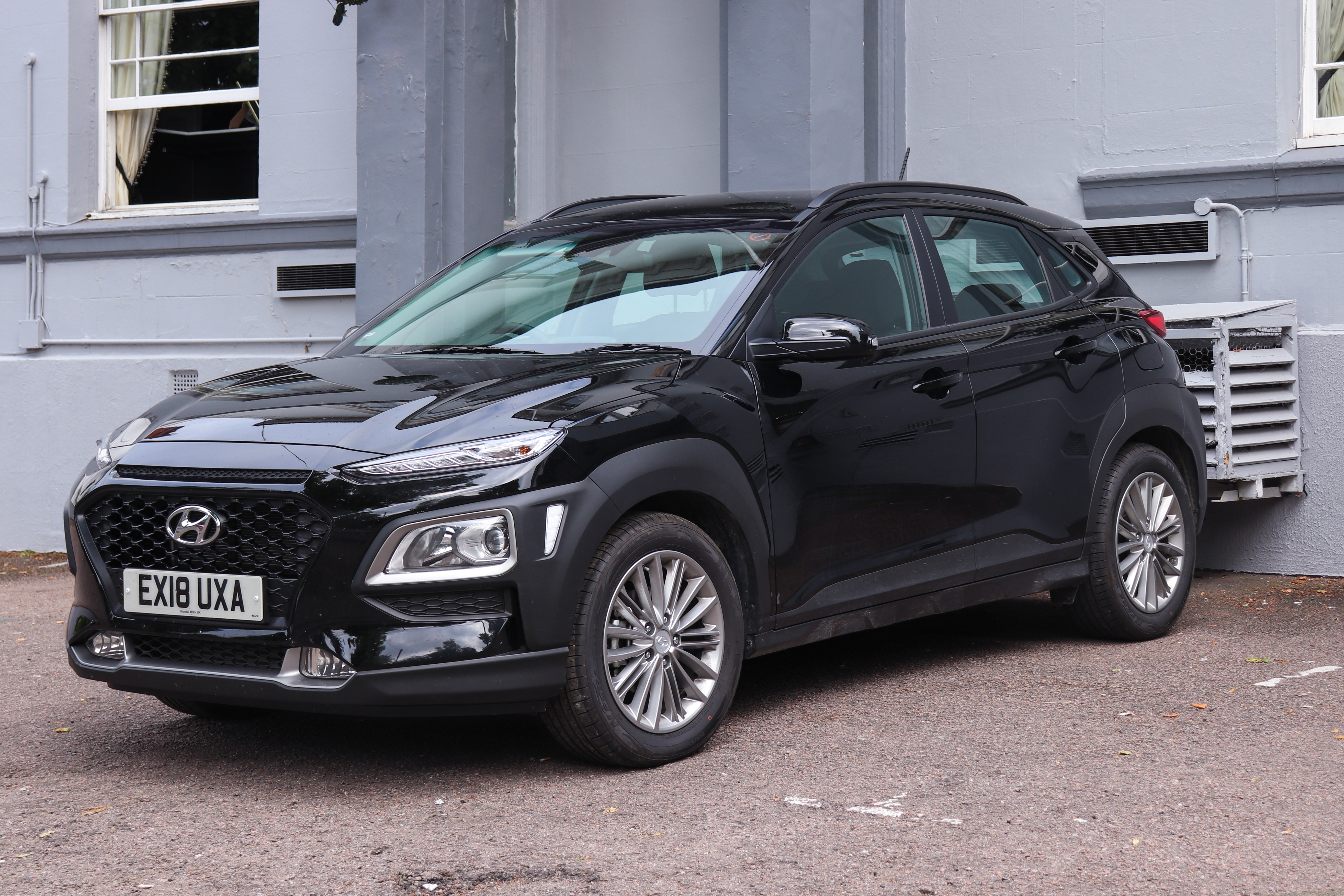
The Hyundai Kona is a small SUV that is easy to drive and has a lot of space inside for people and their stuff. It’s a good choice for city driving and comes in a version that runs on electricity instead of gas.
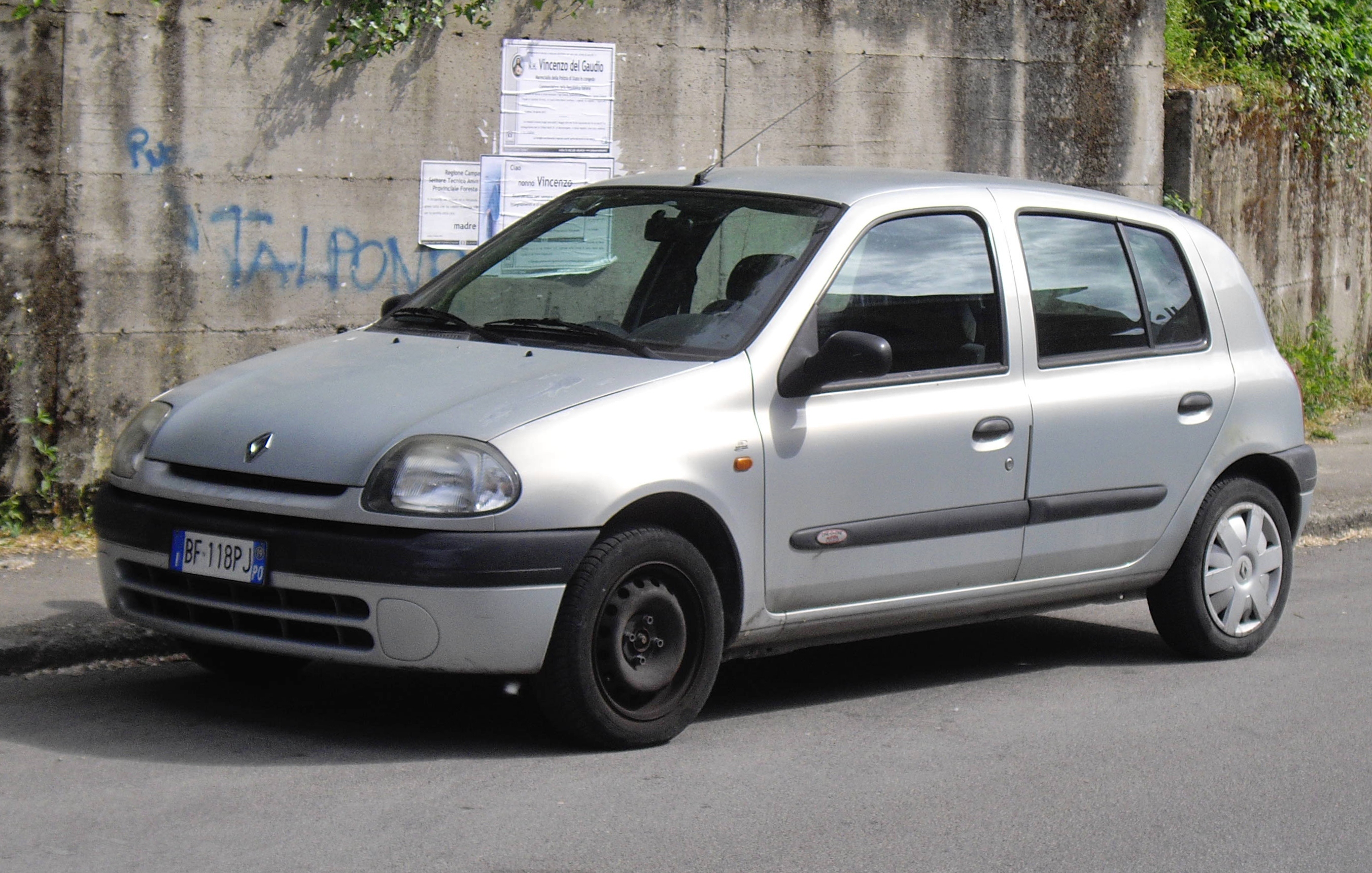
The Renault Clio is a small car with five doors, which makes it easy for people to get in and out. It's a good option for those who want a stylish and practical car for everyday use.
The Renault Twingo is a tiny car that's perfect for driving around the city because it's easy to park and get around. It's fun to drive and has a unique look that many people like.
The Dacia Spring Electric Cargo is a small electric van that businesses can use to deliver goods in the city. It's cheaper to run than gas vans and helps the environment by not producing pollution.
The Toyota Hilux is a strong pickup truck that's great for driving on rough roads and carrying heavy things. It's known for lasting a long time without breaking down, which is why many people trust it for work and outdoor activities.
Welcome back to the podcast. Today, the Standard Range, Test Model 3 and Y, Ford, i's Chinese
Tech and Rivian opened their charging network. Plus, stay tuned. Later in the show, I'll tell
you why one of the fiercest critics of EVs is now complaining that their own technology
is being misused by other car makers. Well, on EV News China today, we're talking about
China's autonomy pilot, Mercedes suffers and two wheel EVs and join me later for a bonus
show about the Kia PV5, a versatile or electric MPV that blends van-like interior space with
flexible seating and comfort tech and range. I don't think anyone's talking about this vehicle
enough yet, so I'll do a special show for you later. It'll be live tonight for patrons around
8pm UK and all Patreon exclusives then go into the free feed after seven days of exclusivity.
If you want the content first or just supporting the show that I do, it's one of the member benefits.
Sorry I've been away for two, three days. The kiddos bought home something from school or nursery
and took me down on Sunday, completely lost my voice for a couple of days. But been writing the
show, so I'll add it to the back catalogue now that I can talk again. Which is just in time for
Tesla's big announcement. Well, it's been long awaited. The affordable cars that we've been
promised. The $25,000 car, not quite. They're simply more affordable variants of the existing cars,
but we knew that already. However, even until recently, some Tesla influencers were still
saying that the so-called Model B, Model 2, something the new cheaper Teslas were going to
open up a whole new market. I'm not sure that's been done today. So let me give you the details
and you can make up your own mind. They're stripped down versions and they represent Tesla's response
in many ways to the expiration of the $7,500 federal EV tax credit and also response to the
growing competition for affordable EVs. The Model 3 standard is the perhaps the surprise.
Everyone knew there was a Model Y coming, but the Model 3 standard is going to be the lowest
price they sell. That is $36,990 or $38,630 with destination fees. So $38,500. Savings of about
$5,500 compared to the rear-wheel drive variant, which is now being called premium, by the way.
So these new versions are called standard. Everything else called premium.
The Model Y standard is $39,990 or $41,630 with fees and that's a $5,000 saving over the rear-wheel
drive version of the so-called premium Model Y. Both standard models have the same battery pack.
They are 69 kilowatt hours and that is one module smaller than the existing packs in the
premium as we now call them variants. Despite the smaller battery, they have got the same
EPA listed range, which is odd because the Model 3 is a smaller vehicle, much more aero. But either
way, they're giving them the same EPA numbers, 321, 321. Easy to remember, which is still a
really, really good number for a 69 kilowatt hour pack. A reminder to anyone that had kind of forgotten
that what Tesla do really, really well, EV engineering, efficiency, power trains, they are
still on top of their game. Both feature single motor rear-wheel drive configurations, top speed,
125 miles an hour. So what's changed? How do we get $5,000 off the vehicle? Let me explain.
We'll start with exterior changes. There's the removal of the front and rear LED light bars.
A simplified front bumper design with the lighting integrated into the headlamps,
just a single light unit. Standard 18-inch wheels, 19s are available as an upgrade but
hey, that's no bad thing. It's good for efficiency. It's good for ride as well
with the higher sidewall. Limited to three colors, the free one is called Stealth Gray.
The pearl white and the diamond black are either $1,000 or $1,500 extra.
Inside, no surprise, the rear passenger touchscreen has gone and we get manual air vents.
There's a seven-speaker system, not 15 plus subwoofer. There's textile seating with vegan
leather accents and inserts rather than the full vegan leather. Manual steering wheel,
rather than the electronically controlled steering wheel. Manual mirror adjustments.
That's quite a downgrade. There aren't too many vehicles on the market these days,
apart from the, like, the real lower end. This is your real bargain basement stuff,
where you have to lean across and adjust your passenger side mirror if it gets a little bit
out of whack. Is this the end of the world? No, of course it's not. You don't really change
your wing mirrors too much. I mean, our wing mirrors change, I guess, because my wife and I
both drive the Polestar and we have our own settings and so when we walk up to it with our
own keys, the seat changes, the mirrors change, and et cetera, et cetera. But if you just,
this is just your car, then the mirrors should always be in the same place. No heated rear seats,
no ventilated seats. The front ones are only heated. There's no AMF radio, for instance.
Might not be a deal breaker for you. There is no HEPA filtration system and there's no ambient
lighting. I mean, there's a light in the footwell and the door pockets, but again,
very, very cheap EVs. All cars kind of come with some degree of lighting.
What's specific to the Model Y? The glass roof is still there, but they have covered it with a
textile headliner. So you can't see the glass roof, but they said it was more expensive to
re-engineer it and put a solid roof in. So they still use the glass roof, but they cover it over.
You can't see it. No acoustic glass, tempered glass throughout. And an open center console
design like the Cybertruck. In the Model 3 specifically, the panoramic glass roof does
remain unlike the Model Y. They haven't covered it over to sort of punish you in a way, which is odd.
Acoustic glass in the front doors, but tempered in the rear. Addition of the front bumper camera.
That's going to come to all vehicles, of course. And the return of the indicator
to stalk on the Model 3, replacing the steering wheel buttons. They've also, on all the vehicles,
removed basic autopilot. So no auto steer. So you have basic lane keep. So L-CAS or lane
keep assisted. Very, very common. It's actually a safety feature that helps you get better safety
ratings from the different kind of safety testers. And so I'd be amazed if L-CAS ever came off a
that had it. Not expensive to do. But what Tesla is known for, which is the autopilot system,
and then upgrading full self-driving, or enhanced autopilot, and then self-driving,
that's all been stripped away. And so the one thing that Tesla wants to be known for,
which is the ability for their cars to become autonomous, this doesn't have it.
Now, obviously it is cheaper. And some states like New York offer additional rebates,
bringing the Model 3 standard to $35,000, Model Y $38,000 if you're eligible. Of course,
if the federal tax credit had still been around with state incentives, then the Model 3 would have
then been a late 20s vehicle. And Musk last year talked about, maybe the year before,
the $25,000 Tesla being the game changer. That's before Tesla all changed and pivoted and was
a robot company or something. And so, yeah, if Musk hadn't helped elect an administration that then
rapidly bend off any incentives, he probably would have got pretty close to his $25,000 car
as it is. It's a $38,000 vehicle, or maybe it was $39,000, isn't it? $38,630 with destination
fees for the cheapest car. So I've seen lots of headlines today calling this the affordable
Tesla's more affordable, yes, but not cheap by any means. But I'd love to get your thoughts on it.
We'll do a special podcast all about that vehicle in your feed. It's in the Patreon feed now, by
the way, and it will be in the free feed after seven days. Let's move on. Ford says it cannot
match BYD's lower battery prices and is shifting to system efficiency to keep their EVs efficiency.
What a competitive, rather, what does that mean? Well, the CEO, Jim Farley, there's two stories
about him today. Firstly, he showed up on a podcast by The Verge called Decoder, and he said that BYD's
vertical integration makes its batteries 30% cheaper than what even Ford can buy from CATL,
and Ford can't beat them on cost. Jim Farley said the only realistic way to close the gap
is to radically redesign motors, gearboxes and inverters so the drivetrain uses 30% less battery
energy. Ford's strategy is to pursue system level innovation, reducing the battery draw
through drivetrain efficiency rather than replicate BYD's vertical integration itself and,
you know, completely restructure Ford as a business. The engineering focus can improve
range and lower lifecycle costs, supporting the broader adoption of EVs. So if you can't buy
your batteries 30% cheaper, he says let's make our EVs 30% more efficient. I've mentioned this
before, the little Ford Puma Gen E, which doesn't get much attention because it's been stupidly
overpriced, at least here qualifies for the foreground off government grant now. So now
that it's mid-20s, it's a much more sensible price because at 30, you just buy a one-year-old
Tesla that's had all this depreciation and you get way, way, way, way, way, way better car.
But now it's mid-20s, it's playing in an interesting field. That little Puma Gen E,
it's really efficient. It's like five point something miles per kilowatt hour. So
that's interesting, isn't it? The second story about Jim Farley today, the CEO Ford,
says the vehicles from China are far ahead on quality and technology, calling them the 700
pound gorilla in the EV industry, whose cost and quality are superior. He says far superior to the
West. This is on the RJ Scarridge said recently as well, echoing Jim Farley's comments. The CEO
of Rivian said, yeah, sure, the prices are low for Chinese cars, but that's not why they're good,
it's not just that they're bargain basement. They're actually really good vehicles as well.
On the decoder podcast, Jim Farley said, he told the executive chairman, Bill Ford,
and the board and his team, I love you guys, but I don't think we can do this, describing,
you know, don't think we can do this on our own without outside help, which is why he went and
hired ex-Tesla, ex-Apple senior engineer Doug Fields. Now he is currently chief EV digital and
design officer at Ford, and that led him to build Ford's EV effort separately outside of the main
structures within Ford. He relayed a story when Doug Field, I think before Doug, he was trying to
recruit him into Ford, said along the lines of Jim, as in Jim Farley, your parts release system,
your IT, your CAD design are all 25 years uncompetitive. There's no way you can beat by
that. You need real expertise. Well, Jim Farley's repeatedly warned about the Chinese and the scale
of momentum coming from there, saying there's no real competition from Tesla, GM or Ford compared
to China, and that China is increasingly dominant outside its home market. Yeah, he's going to get
those reports coming across his desk daily, isn't he? And he's going to get the best in the business.
Far better than I have access to and far better than I can do myself. He's going to have some
amazing analysts at Ford, and they're going to be buying in all of the right bits of data.
Jim Farley knows absolutely what's coming out of China. Now, we do have our spinoff series
called EV News China, a little podcast every day about decoding what's happening in the east
for my listeners in the West and the global EV industry. And so, to an extent, we're trying
to do that ourselves as well here with you and I, and try and understand what's coming out of
China and what's happening inside China's walls as well. And it is, I think I would agree with Jim
Farley. Let's talk Hyundai Europe. I was watching an interview last night with
one of the senior figures of Hyundai. He's actually the president and CEO of Hyundai Motor
Europe. His name is Xavier Martinet. And he was talking to EV, sorry, EuroNews.tv. And
it was their sort of big questions, mini series type thing where he sits down with an interviewer.
She didn't have much knowledge of EVs. I think she was, you know, a general
journalist and what have you. She's asking about, oh, is hydrogen the future, which tends to be,
I think, you know, I see this a lot in the mainstream press. They get frothy over hydrogen
because it's a simple proposition, isn't it? And yet when you understand how hydrogen is
pointless for passenger cars, you know, as you know a little bit more and I know a little bit
more about it. But so she was asking about that. He gave a nice answer. He said, yeah,
Hyundai is like, you know, we're doing some investment and not putting all our eggs in
the EV basket, but they are obviously because hydrogen doesn't have a filling network and will
never have a filling network for passenger cars. No one's going to build one. It's too expensive.
He did talk about though, how Hyundai now holds an increasing share of the European
passenger car market, a 4% share of the passenger car market in Europe. They're now number 10
in Europe. And he says that regional production has been concentrated on two Euro facilities.
Again, the interviewer, she was really nice, but she, you know, she was saying, oh, would you make
your cars in Europe? And he politely had to say, well, yes, we do. We have a plant in Turkey
and the assembly line in Nosevice in Czech Republic. That's been around almost 20 years,
by the way. I think they opened in 2008. And they have a combined annual capacity for Hyundai of
560,000 units between Turkey and Czech. Now, last year, 79% of Hyundai's vehicles sold in
Europe were made at those sites. So South Korean company, but vehicles made here. Kona was always
made there. Kona EV, of which I owned for a year. That was a European made car, right? European
tuned, all those kind of things. But this year, he said, what's interesting is that their mix
of cars on the road at Hyundai that were made in Europe will actually fall from 79 to 70%.
And that's because of the Insta. Now, the Insta is their smallest EV, the Casper back home.
And the Insta is being really, really popular, but they make it in South Korea. So because
they've sold loads of them here, it's kind of weakening the Euro mix or Euro made mix for Hyundai.
Either way, he was obviously there to talk about the new B-segment car, concept three,
as it's called at the moment. It'll be Ionic something. And it arrives early next year. So
think Ford Fiesta, Renault Clio, Perto 208 competitor. It's an area of the market that
Hyundai's missing at the moment. Kia are a little bit ahead of them on getting into that
B-segment. But European customers, he said, this is fascinating, actually. This is the one thing I
took away from the interview. He said, European customers keep their cars for six years on average.
So going from combustion to EV, for most people, is an act of faith. That was his phrase. It's an
act of faith. Now, obviously, I live in this world and you listen to this podcast every day. So
you and I aren't normal in terms of the average person replacing their car every
six years on average. I know some people do it every two, three, if they're leasing and financing.
And he said, it's an act of faith. That was a really interesting way of putting it.
And maybe I'll remember that a little bit more when we talk about people moving to EV. It's a
really big deal for some people. And I do know that. I do know that. I was watching a review of
zero motorcycles because it took zero in a moment. And the reviewer was a little bit newer to electric
mobility than perhaps some others. And so he was saying all the things that maybe you and I were
saying five or 10 years ago about electric mobility, which was, you know, for him to give up his
petrol motorbike would be unthinkable at the moment. So yeah, it's interesting, right? We'll
come back or talk Rivian and zero, like I say, and press parity. That one raises its head again.
Stick around back in a moment. All right, welcome back to the podcast. Now, Rivian has been talking
R3, R4, even R5 and further. They say that they are now developing R3 and R4, but keeping design
details private. They're scoping out cost. And two months ago, RJ Scarridge was on the Daniel
Tosh podcast saying they're working on R2 and R3, but also R4 and R5 adding there may be an R6.
And that the four upcoming models, which is 2345, were as far out as our product plan goes today.
The future models are going to be lower cost. So they're not going to go anywhere upwards from R1,
but they'll be lower cost than R2 and R3. In August, RJ Scarridge said the company focused on
launching its $45,000 midsize R2, that there's no engineering teams on R4 and R5 as of today,
because he says R4 and R5 are conceptual. So thinking about what would the size be? What
kind of vehicle is it going to be? What was the buy? What's the market of R4 and R5? On the Decoder
podcast from The Verge with Joanna Stern, RJ Scarridge just reiterated Rivian's practice of
defining a vehicle before revealing it. And the company applies that early stage development
process to everything. So R2 is almost ready. Validation vehicles are out there. And then
3, 4, 5, and possibly 6, very much on the drawing board, but literally only on the drawing board.
Working out, what even do we want to do with these vehicles? Let me say there's no engineering
happening yet, but they are coming. Second Rivian story, it said yesterday, it's going to open up
the adventure network, RAN, Rivian Adventure Network is their charging network. And they're
opening up completely to other EV brands. Now, the network has 131 stations and 839 chargers.
109 at the minute are open to all EVs, but there are still 20 odd that are Rivian only.
Earlier this year, Rivian began upgrading them to J3400 slash native Nax connectors as part of
adopting the J3400 standard. And that is being done now as every site will now become compatible
with non-Rivian EVs, which is great, more charging. Now, I mentioned zero motorcycles,
zero is relocating. Their global headquarters have been in California, and they're moving,
they're moving the business to the Netherlands to align with Europe, its largest market for
electric bikes. Core global functions will be consolidated in their new European headquarters.
The California site remains their long-term innovation center. I guess they couldn't
completely disown the US because they have, you know, a business there. So they were careful to
say, oh, no, we're not completely leaving the United States, but they are moving to the Netherlands.
The US location will support a small team focused on powertrains and next-gen models.
Zero says the move follows rapid expansion over here in Europe, with strong retail and fleet
growth using the Netherlands as their hub. The company will increase agility, streamline their
operations and improve coordination with suppliers and distributors. Yeah, that video I was watching
earlier of the zero, oh, is it ZS, the bike that does 100 and something miles and is a,
you know, really compelling vehicle. I think for many, many people who are not completely in that,
that kind of petrol world of motorbikes of, I'll never drive electric. But if you perhaps have
a weekend bike or you live in Los Angeles or you live in a big area and you got to commute
Monday to Friday and you love two wheels, well, yeah, you could do that on a little one, two,
five moped for a lot less money. And, you know, you can certainly, you know, cut through traffic
and split the lanes. And if you want to do that with electric power, zero offers some really good
motorcycles. But the main reason I went to it was just to read the comments section. This is a
motorbiking YouTube channel. So this is full of people who love their two wheels. And I think,
you know, 99.9 out of 100 would actually love their, their, their, their petrol powered versions.
And I thought the discussion was pretty balanced. Actually, a lot of people saying I'm never going
electric, but not, but no vitriol, just electric bikes aren't very good. And that's, you know,
understandable. They have a really small battery physically, because they can't have massive
batteries like cars. So that could be, that could be something where, like I say, if you've got two
or three bikes or just even two bikes or a weekend fun bike, the electric would do you for commuting.
Or that's where we see solid state batteries, which are now coming out of the lab and onto the road.
And we've got semi solid state already on the road. But that's where we, there's a pathway to
doubling the energy density of lithium ion batteries. And a lot of EV, a lot of EV bikes
have AC charging, not even DC fast charging. So that is where you'd get faster charging,
double the energy density, eventually lowering the cost. There's no doubt
that a 12, 13, 15,000 euros for an electric motorbike, you're also paying a privilege of
being a very early adopter. So yep, EV motorbikes, somewhat behind the, you know, the car business.
Now used EV prices, once again, are near gasoline parity, used electric vehicle prices have nearly
reached parity with gas cars. The premium fell to just $900 last month, according to Cox Automotive.
The average listed price of a used EV was $34,704, which is interesting. Customers bought nearly
$41,000 used EVs, that's 60% up. Federal tax credit that expired, of course, was $4,000 for
used EV, below $25,000. So well below the average selling price. Leasing rules also have been shaping
supply. Consumers could easily claim the $7,500 tax credit when leasing a new EV rather than buying
one. Less rules around batteries and how you got that $7,500 off. Now there's a growing wave of
lease returns, not returns as in, but you know, off lease. So off lease is two, three years later,
higher trade in volumes has increased the used EV supply. It's pushing prices down. So now when
you go to go buy a used EV, you can now compare, you can compare the same model. So if you're looking
at a brand that has the same car in either powertrain or even different ones that, you know,
the same segment, same everything really, then EV is like you're paying a very, very small premium.
The CEO of Recurrents, Scott Kay, said that 2026 will be the year of the used EV. Recurrents are
a sponsor of this podcast. Ferrari is opening their own test track for electric vehicles.
It's a 1,887 meter private test circuit. Tests that they've built it beside their Fiorano proving
ground so that they can do more off-road testing. And when I mean off-road, let me explain.
Not on public road testing. I'm not talking off-road as in dirt tracks. So Ferrari said,
we built this new test track for our new EVs for precise, repeatable, high safety testing
completed in four months on a 37,000 square meter site next to Fiorano.
Then new test track. It looks amazing. It's all new, lovely new asphalt and stuff. Looks gorgeous.
It's divided into sections where they will evaluate handling dynamics and vehicle attributes.
They've got two banked curves and a 600 meter straight line and a sequence of bends,
varying sharpnesses and widths. The timing matches the activity around Ferrari's EV development,
which was spotted on the roads around Modena last week. Ferrari have a long history of driving
their cars out of their factory in Italy and they're being spy photographers to have a look at them.
So private test track doesn't totally roll it out. People have drones and long lenses,
but still a new private test track at Ferrari to test their EVs on.
Okay, let's move on and talk about charging. Electric Era is speeding up Level 3
charge deployments at the new Love's Travel Stops. First one at Buena Vista and on Highway 24
between Denver and Colorado Springs. The company uses their battery-backed DC charges to cut the
operating expenses by up to 70% and bring the installation time from years down to months,
while guaranteeing they say 98% uptime per plug. Over the past two years,
that approach helped customers also win more grant applications and more incentive money,
they say, with the federal NEVI funding now restored, of course, available state and federal
programs can cover up to half of deployment costs on some of the projects, enabling certain retailers
to achieve a positive return on charging alone in under two years. Electric Era also supplies
customer branded charges with retail program integration to convert charging activity into
install revenue. The Buena Vista site is Love's 38th EV charging location
and one of more than 150 EV charges the retailer now operates across 15 states.
Dacia have unveiled what they think could be a discussion point for the future of the small car.
It'll cost £13,000. It's 800 kilograms and it'll do 100 kilometers of range and it's not
quadrocycled, it is a car. Now Dacia have called it the hipster. It's basically a big square box,
small bonnet but otherwise a big square box with the wheels on all four corners really pushed out
and almost run a twingo like. Targeting £13,000, a compact three meter cube, four seats inside,
which they say would be a very affordable second car but a useful second car.
Rugged 4x4 cues and a driving position like a bigster SUV for outward views but very lightweight.
So 800 kilograms is 20% less than their little Dacia Spring, the cheapest EV you can buy and a
smaller footprint, a right sized battery they say. They give it 62 miles or 100Ks. I think that's
definitely going to be an issue when it's cold and battery range drops. But they say that that's
three times the typical French daily mileage. You can't argue with the data, you know arguing with
people's perceptions and rationality. 62 miles, 100Ks is a very low number. But to hit the price
point there'll be active crash avoidance aids that are omitted. Dacia says that new car prices
though keep rising up 30% in the last four years and the company wants to look at what a customer
needs a vehicle for. Dacia very famous of course for more affordable vehicles. Talking about where
we make our cars, the next car that you buy could be made in Hungary after a decade of industrial
investment. The Hungarian location of Debrecen is about to start production at BMW's electric car
plant and even CATL's new battery factory. The northwestern economic zone a few kilometers
away from Debrecen on the M35 motorway covers 620 hectares and that includes BMW's new
production site. A supplier park and supporting roads, logistics and utilities. In the same zone
the Chinese battery maker Eve Energy started constructing their first European plant
working, sorting works began on 20th of September. They'll supply cylindrical cells to BMW. Meanwhile
on the southern industrial park, now near Debrecen airport, CATL the Chinese battery maker and the
world's biggest EV battery maker building their second European plant for cells for BMW, Stalantis
and Volkswagen. It'll be open early next year. Additional suppliers are joining the cluster.
The Chinese SEM Corp will make battery separator film in the area. That'll start in the autumn
and the South Korean Eco Pro will open its European cathode plant strengthening the local EV
supply chain. The next EV you buy could have a lot of Hungary inside it.
What about e-bikes? Talking about it recently now in article today I saw talking about how
regulation isn't catching up with technology. Rising injuries involving electric bicycles,
electric scooters and micro mobility devices that coincide with a surge in the higher
powered models coming in often from China. Lawmakers and police are trying to respond
but the tech is moving faster than the regulations themselves. For example in Pennsylvania
legal e-bikes are low powered pedal cycles. We call them pedalex over here and e-bikes in Europe
but in the UK must be a pedalec. Many online sellers though are free to sell stronger machines
called e-motos that can be a 1500 or a 3000 watt motor on your bike which you don't have to have
license plates or a license or insurance or a helmet and yet they'll go faster than some
mopeds and motorcycles. They'll travel three times faster than a legal e-bike.
Now general counsel at People for Bikes Matt Moore said that the pandemic was one of the
drivers of interest in e-bike sales and it helped spawn unregulated cycles now appearing on the roads.
Many parents are buying them for their kids and in America not realizing how fast these bikes can
go like you wouldn't allow your kid to go on a motorbike at 40, 50 or 60 miles an hour with no
helmet and yet they're buying their kids things off the internet which can do that. Police and
enforcement is not keeping in pace. Clearer vehicle classes, new state and local rules are
needed and police training to align with safety. Police are saying well if we pull over a bike
there's no way because it's not licensed it's not regulated there's no way of putting it into the
database of saying there's no sticker saying this motor has a 1500 kilowatt motor on it and the police
aren't trained to say that's an illegal bike we're confiscating it and so their hands are
tied they're doing their best but regulation and integration of
micromobility is really important this isn't the podcast for micromobility fascinates me it's part
of our future how we'll get around on the planet in the future I'd drip feed it into this show
but yeah it's an interesting discussion point isn't it and finally Toyota are upset the company
that has spent untold amounts of money advertising against EVs the company that famously says
we choose not to plug in like Toyota hates EVs and well I wouldn't say I hate Toyota but I
certainly hate the way that they try and diminish electric vehicles I mean do your own thing that's
fine but don't try and make people feel bad about making the choice that they've made that's just
awful terrible company. Sean Hanley is the vice president of sales in Toyota and he told Drive
magazine in Australia that Toyota is a bit upset the other car companies are calling their cars
hybrids because Toyota say that they make proper hybrids meanwhile other car companies
use a 48 volt system or something which they say is not a proper hybrid and they shouldn't be
advertised as hybrids he said and I quote 48 volt assisted system does not represent hybrid drive
and that Toyota doesn't count 48 volt as hybrid Toyota are very upset these vehicles are being
advertised as hybrids and they are not he said other OEMs must be clear in their advertising and
marketing oh what a shame Toyota is really upset at other car companies saying we make hybrids
despite the stance it is interesting because Toyota actually makes 48 volt models they make
things like the Land Cruiser hybrid 48 volt and the Hilux hybrid 48 volt not in Australia but over
here in Europe where Mr. Hanley may not realize they are advertised as hybrids so even his own
company is doing the same thing that Toyota Australia are so so upset about look unless
it has a plug on it it's just a shabby shabby excuse of trying to reduce a little bit of
emissions you know and I know it you know 48 volts use a little motor generator rather than
alternate a small battery call it electrified call it hybrid call it mild hybrid call it full
hybrid if it hasn't got a plug socket on the side of it you're still going to the petrol station
and under the thumb of their their pricing their servicing and all that kind of stuff which of
course Toyota would very much like you to be for as long as possible unless your podcast for today
thank you so much to everyone that supports the show on patreon and particularly if you listen to
the ad ad supported feed as well the free feeder that really helps get the show on the air every
single day couldn't do with how you as we try and help people understand more about the move to
ev the ups the downs that we're going through over this process thanks to our premium partners
Porsche of the village in Cincinnati Audi of Cincinnati East and Volvo cars of Cincinnati
East national car charging on the US mainland and the loha charge in Hawaii and octopus electric
verse global public charging made simple with one app and one map have a good sit tomorrow remember
there's no such thing as a self-charging hybrid
About this episode
The latest episode dives into Tesla's new Standard Range Model 3 and Y, which offer more affordable options but come with notable downgrades in features. Ford's CEO discusses the challenges of competing with Chinese EV manufacturers, emphasizing efficiency over cost-cutting. Rivian opens its charging network to other EVs, while Hyundai reveals insights about the European market and the importance of consumer trust in EV adoption. The episode also touches on the evolving landscape of e-bikes and Toyota's discontent with hybrid classifications, providing a comprehensive look at the current EV industry dynamics.