
DAILY: Stellantis Improves Batteries, New Model Y Leaked & Volkswagen City Cars | 22 Sep 2025
EV News Daily - Technology and Business of EVs
DAILY: Stellantis Improves Batteries, New Model Y Leaked & Volkswagen City Cars | 22 Sep 2025
EV News Daily - Technology and Business of EVs · Sep 22, 2025
Annotations will appear as you listen
0:00
19:49

Car
Tesla Model Y


Car
Tesla Model 3

Car
Ford Puma

Car
7 Jq7

Car
5 Renault 5
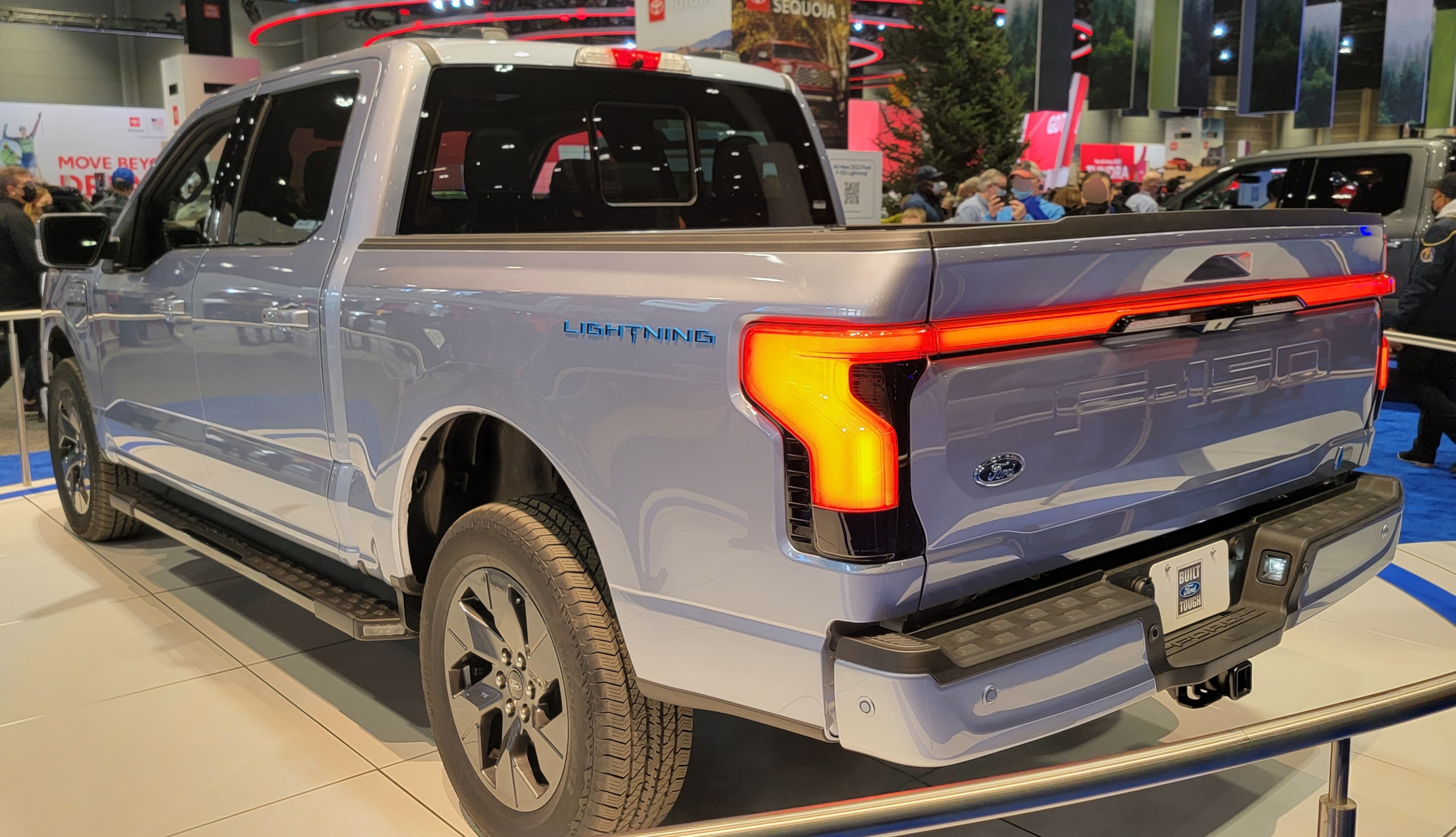
Car
Ford F150

Car
Ford Etransit

Car
BMW X5
LIVE
Brighten up your home with help from Menards.
Illuminate your home with LED light bulbs from Fight Electric.
They provide light that lasts with a rated life of over 10,000 hours.
Don't wait to finish your projects.
Save big money on Fight Electric LED light bulbs now at Menards.
Plus, check out our weekly flyer on menards.com
for all the great deals happening now.
Save big money at Menards.
With a state of today's economy, it's more important than ever to invest in products that last for years to come.
As a season shift and get cooler, make sure your closet is stocked with durable layers that stand the test of time from American Giant.
American Giants clothes work harder and are wearable season after season.
Their greatest hoodie ever made is made from the highest quality materials that are cut and sewn right here in the United States.
So you're investing right back in your local community.
Choosing American Giant means taking a stand for American manufacturing and hard-working Americans.
Something other megacorporations don't care about.
From fleece to knit, all in a range of colors for versatile daily wear,
American Giant delivers everyday pieces designed for everyday life.
Feel the difference of quality made to last clothes from American Giant.
Get 20% off your first order with code STAPLE20 at American-Giant.com.
That's 20% off your first order at American-Giant.com with code STAPLE20.
Welcome back to the podcast.
Stellantis improves batteries.
A new model Y is leaked and Volkswagen city cars.
Plus, stay tuned.
Later in the show, I'll tell you why BMW hasn't given up on hydrogen.
On AV News China today, we're talking about the record-breaking Yang Wang Yun'an Xtreme.
The Lotus Electra is going to go plug-in hybrid and Buffett bails on BYD.
And join me later for a bonus show about Neo Day, which was actually last Saturday in China.
Neo is one of the big names more likely to survive.
They've had new vehicles, battery-swapping news and international expansion to talk about.
It'll be live tonight for patrons, and all Patreon exclusives go into the free feed after seven days.
So you don't need to spend any money on Patreon unless you want to support the show that we do here
and get the shows before anybody else.
Stellantis kicks us off in the news.
They have built themselves a working prototype of one of their best cars, the Peugeot E3 008,
fitted with their new battery, the Intelligent Battery Integrated System, or IBIS.
Isn't that a rather budget chain of hotels?
However, instead of the separate inverter and charger units, the IBIS puts those functions inside the battery itself
and will do you a great price on a buffet breakfast.
No, it really thinks how electric vehicles deliver power, how they recharge,
and how they manage everything from the motor to the auxiliary systems.
Tests already show that the IBIS approach is compatible with different battery chemistries,
AC-DC charging, and can push energy directly to the grid or the car's motor.
With module-level software control, supplying 12V as well, handling regen for each module,
promising easier repairs, longer battery life, and even second life station reuse once a battery car battery is retired.
Well, during road testing, the IBIS delivered up to 10% more energy efficiency
and 15% more peak power from exactly the same battery pack that is in the existing cars, the 65kWh pack.
So, they could generate 172kW of power, not 150.
Charging was dropping by 15% in terms of the time.
They took 40kg out of the vehicle, which is, you know, not insignificant, half a person.
And usable range went past 300 miles from 275.
A really nice quality of life improvement.
Most of the gains coming from simplifying the powertrain and shrinking packaging.
No separate on-board charger or inverter means less weight, less energy lost to conversions.
Solantis claims the simplification is their innovation.
And engineers plan to test the IBIS in all-wheel drive setups next year.
They're cell-to-pack architectures, and they're still experimental for the IBIS as well.
Built on the SCLA medium platform, there'll be future Jeeps and Chrysler models.
I think using this, a stationary demonstrator has been running around since 2022.
With recent government backing, it could bring the IBIS technology to the road cars on offer by Stellantis
and change how conventional EVs are built.
Rethinking how the batteries are put together, this sounds great.
It was kind of presented as some sort of, you know, magical next-generation technology.
Another 15 miles, no one's going to turn them down.
But this is overall something like that Stellantis have been taking EV seriously.
And there's certain groups of people.
I suppose more of my US listeners really here don't get all the family cars that we get over here,
the Peugeots and Citroens, et cetera, who don't think Stellantis are in on EVs at all.
And I do see your point on that one if you don't get all the cars that we get now.
A hacker released new information about Tesla's new Model Y.
So this is clearly somebody's sniffing around and thinking they know what's going to come.
This is not Tesla announcing the vehicle.
The simplified Model Y is codenamed internally, the E41.
And it'll use cheaper materials, it'll admit some features.
We know that anyway because the standard Model Y starts at $45,000 in the US.
But this is going to be the $35,000 Model Y.
So it'll resemble Tesla's Model 3 that they make in Mexico.
That uses things like cloth and not the vegan leather.
Has no rear display, lacks ambient lighting and a pretty basic audio system.
Now, someone who's online, a security researcher known as Green The Only,
who's got a really good track record.
Now, I'm not just going to bring you some news on the podcast about some random girl or guy on the internet who claims they know,
but this person has a long track record of spotting bits of code and things like that,
looking at firmware and decoding what everything means.
He says, it is a he by the way, he's talked before on social media.
So he's a he, he says that the audio package is the essential package.
There is a backup camera without a heater.
There is no air wave in the center console, so no airflow control.
A new front face here, a simplified fiberglass headliner,
simplified cabin lighting in only the footwells, simplified seat controls, a single axis.
Woof, what backwards and forwards.
Okay.
No power mirror folding, not the end of the world.
No puddle lamps, not the end of the world.
No glass roof.
Some people prefer that.
No second row display.
Fine.
My kids have got their tablets.
No TPMS or tire pressure monitoring system.
Okay.
Well, we got fine.
You know, life went on before that was invented when I started driving cars and simplified
18 inch wheels and downgraded suspension that they are stripping some costs out of the vehicle.
No launch date confirmed.
Previous reporting says Tesla will wait till Q4 because obviously right now we've got the
big rush until the tax credit ends in the US.
And so why release a new vehicle?
Now the company briefly offered a simplified cyber truck.
Didn't they?
But discontinued it noting that people didn't want to buy the simplified model.
Would you buy a simplified model Y or would you just buy a regular model Y that's about
six months old or a year old?
I mean, I don't know.
This sounds like a working vehicle to me.
I could see like a bazillion taxis flying around with model Ys that were this spec.
I think the problem Tesla have got is they always want to talk about themselves being
a premium automaker, but to sell more cars, they've kind of got to go down market is one
theory.
And so then how premium is the Tesla image anymore?
Also the residual values are pretty bad for Teslas.
And so you can just get a really good model Y pretty new for 35 grand, which would be
we think the price of this new model Y.
And then there's the Chinese who keep releasing cars.
I told you about as a Model 3 competitor a couple of days ago.
Oh man, I forget who released it.
And it was better specs than the Model 3.
It was $12,000 equivalent in China and it's got all the toys.
Certainly all the toys that Tesla is stripping out of this car.
And so we are entering an era where even budget cars, I think the buying public generally
expect quite a lot, even from base trims and base specs.
So we will see now.
One thing that could help is their battery partner Panasonic developing the next gen high capacity
EV battery that will increase range by, well, this one's 90 miles on a Tesla Model Y.
So, you know, well done to Stellantis, but this is some serious business now.
So take the Model Y that has the Panasonic battery.
Another 90 miles or 145 kilometers.
So this is an anode-less cell design.
Removing the anode structure would free internal volume in each cell to hold more energy dense cathode materials
like nickel, cobalt and aluminium.
Panasonic says the battery could raise capacity by 25% with no overall cell size getting bigger.
The extra capacity would let Tesla extend driving range or keep the same range with a smaller pack,
which would be lighter, which is good for efficiency where Tesla are already the masters.
Panasonic says it'll be ready by the end of 2027.
That's the real deal.
Ford's Puma Gen E.
My goodness, thank gosh that's on the market because for a while Ford had nothing to sell you less than 40,000 pounds.
That's not the Ford that I grew up with.
Now the Ford Puma has moved to the top of the new vehicle rankings on the website CarWow,
becoming one of two models that get the full government grant money.
That and the transit or is it the Torneo? I'll have a look at that.
But yeah, the passenger car is the Ford Puma Gen E.
And so the all-electric Puma on CarWow was 27,000 pounds.
There is now the grant money off as well.
It's finally in around the 24s.
If you look for the best dealer deals on a brand new vehicle, that was much needed
because it was a very expensive car for what you got really, really efficient.
That little Ford Puma Gen E and sent a picture to my wife a couple of days ago,
hoping that she'd be like, oh, I like that because the lease deals are crazy on it.
And she was like, yeah, that's okay.
I really like him actually and really good little cars.
And so that was first in CarWow's most inquired about chart.
Number two was the JQ7, by the way.
Now, let's talk about Volkswagen.
They will sell its new small EV based on the ID Everyone concept as a Volkswagen.
It will not come in flavors with Shkoda badges and Seats or Cooperas,
the VW brand board member.
Kai Grunitz telling Auto Express it's necessary to have an entry vehicle.
If we don't do that, there'll be the Chinese doing that.
And if the first users who just got their license jump into a Chinese brand,
they might stay with a Chinese brand.
Yeah, I told you recently on the podcast about some data coming out
that people who buy an EV brand tend to stick with that EV brand when they come to replace it.
Mr. Grunitz said that making a truly low-cost car in Europe is hard.
Yeah, I mean, you're not kidding, but that's what you got to do, VW.
Sorry.
Below 20,000 euros, he says no.
Engineered in Europe, designed in Europe, built in Europe with a supply chain in Europe.
That's very challenging.
And I agree with him, but there are some very good cars under 20,000 over here,
something under 22,000.
You start to get in Grandi Panda territory, Renault 5 territory, small battery, entry spec.
I'll give you that.
These cars are stylish cars as well.
Yeah, no, I agree with him.
It's hard.
Now, VW Group last sold the trio, the trinity of cars.
The Seatme, the Skoda Citigo and the Volkswagen Up.
They were selling in 2011, but the A segment has shrunk since then.
The market's going electric.
It's hard to make small, cheap electric cars.
Explaining why the every one concept won't be rebadged.
He said that the city car market is too small for multiple brands.
It'll just come in a VW flavor.
We'll take a break.
We'll come back.
We'll talk about Scout and DAF trucking and a new non-profit campaign for EV.
Stick around back in a moment.
All right, welcome back to the show.
Now, let's talk a little bit about Blue Oval City.
Construction's completed.
Blue Oval from Ford, their complex in Tennessee, home to the company's electric vehicle center.
And largest ever investment has finished construction before production begins.
EV battery output is scheduled to start in 2027.
Production of the next gen F-150 EV and the E-Transit pushed back to 2028.
Now, construction is complete.
Equipment's been moved into the facility, which will employ 6,000 workers.
So it's all done, but the work is really only just beginning.
Now, Scout Motors will invest additional $300 million in South Carolina to build a supplier park
on the site of its production center in Blythewood.
The project is being done with no government incentives, no loans, for instance,
is expected to support 1,000 supplier jobs and expand the company's existing investment
of more than $2 billion in the state.
That raises the project's total economic impact to $700 million.
The supplier park will sit adjacent to the main production center on 200 acres,
providing over 2.3 million square feet of manufacturing and logistics space.
A just-in-time facility for sequencing parts for final assembly,
battery assembly building and an accessories building to support upfitting and installation.
The supplier park will function as a logistics and production hub
to deliver parts, batteries and accessories to Scout Motors.
Now, let's talk trucking and daff trucking.
They've started their series production of the XD Electric and XF Electric battery versions
of their next-gen models.
Production began about two and a half years later,
then announced the company unveiled the IAA show in 2022
and said that series production would begin in 2023.
Checks watch. You missed that one.
The XF Electric is aimed at distribution with a maximum battery option specified
to achieve 500 kilometers or 310 miles of range.
A modular powertrain, liquid-cooled LFP packs.
DC charging at 325 kilowatts, 22 on AC, by the way.
And those battery packs will go from 210 kilowatt-hour up to 525 kilowatt-hours.
DAF says charging 0 to 80, 45 minutes with three packs on board,
which I don't know the ins and outs of our regulations
over when you have to stop and not stop,
but I'm pretty sure that there's some red tape that has to be complied with
and that you have to stop for at least 45 minutes,
probably a couple of hours, actually for x-many hours of driving that you've done,
and so that all makes sense now.
Veloz, a non-profit, said that its Electric for All program,
titled The Way Forward is Electric,
reached hundreds of millions of consumers in the first two months of a year-long campaign
that began in July.
The campaign began with messages on EV benefits.
So, cost savings, lower maintenance, ease of charging, more range than ever before.
After Congress ended the federal tax credit early,
Veloz changed his messages to explain the incentive timeline
and that consumers could still qualify by contacting their dealer
and get a contract in place, make a down payment,
and then you haven't got to worry because the IRS extended that deadline
after the end of the month we're in.
Now, the UK public EV charging network has grown to over 85,000 charge points
and is growing at 30% a year,
but prices are going up as well according to Charge UK,
the industry body over here.
Energy costs now make up two-thirds of charge point operator costs,
wholesale electricity prices.
Well, when the Russian invasion of Ukraine happened,
they went up 450%.
There was an energy crisis here for a couple of years.
They're still 66% above pre-crisis levels.
Boy, am I glad to have solar panels in the summer and a battery.
Policy levies at about six pence per kilowatt hour to public charging costs.
Public charging is subject to 20% VAT at home.
We pay 5% VAT.
That's not fair.
There is no way in the world you can make an argument that is fair,
that I can charge my EV at home and pay 5% VAT,
and if you go down the road and charge it on a public charger,
I'm just paying 20% VAT in no way.
It's the same electricity coming down the same pipes.
Is that possibly fair?
And the government know it and they won't change it
because we're short of about 50 billion pounds, 40 to 50.
We have a chancellor who is scratching her head and saying,
we need some more money.
And so we're broke, apparently, as a country,
and so I don't expect EV charging to get cheaper any time soon.
In fact, I expect to get a nice big bill from His Majesty's Revenue and Customs
for this podcast at some point in the future,
saying, well, thank you for all the money last year,
but can we have some more, please?
Okay, there you go.
Right, BMW finishes off the day.
The new X5, very popular vehicle.
It's going to come in five powertrain options,
so I had to work them out.
Right, battery electric, obviously.
Plug-in hybrid, obviously.
Diesel, ugh, petrol, ugh.
But get this, hydrogen as well.
The hydrogen fuel cell model is being made alongside Toyota.
They'll make it in 2028, they say.
Third generation fuel cell system.
It's more compact, and it's better than ever, they say.
That's wonderful.
You could make a rocket ship if you want to,
but you can't fill it up anywhere.
BMW calls hydrogen complimentary to the Bev ecosystem,
especially where batteries are not ideal.
Look, if batteries aren't ideal, then I get it.
Then driver plug-in hybrid and fall back on combustion, if you want.
People get angry when I say that, and I know what I'm saying.
So please don't burn stuff if you can possibly avoid it, but hydrogen?
So firstly, the hydrogen industry in Europe is in the middle of an implosion.
Every month, they're closing hydrogen filling stations,
when they're not exploding themselves, by the way, or blowing up.
And so they take too long to then kind of recharge themselves,
because you can turn up and fill your car,
but if you're the car behind them, well, then get a book out.
So they take ages to then, you know, have a little sit down,
get their energy back, and then fill the next car.
It's not like petrol and diesel pumps, right?
And so, only so many cars an hour, they're fabulously expensive,
no one's using them, and all of the people that built hydrogen filling stations,
probably with government money or EU money, are all closing down across.
I think there's a couple of hundred left in Europe,
but they'll be gone in the next year or so.
BMW, that's a curious decision.
And let's Toyota page you, just take that off their hands.
I don't know, but okay, they say they're going to expand
the hydrogen refuelling infrastructure network, what BMW is?
No one's building new stations, they're all closing down over here.
They want a pool demand, they say, across passenger cars,
but also trucks and buses.
Now that's where it could work, trucks, buses, shipping, aviation,
maybe hydrogen has a place there, it must have a place somewhere.
It stores energy in a really good way.
So it must have a use, but in passenger cars, nope, it's stupid.
That's your podcast for today.
How many of those will BMW sell?
I wonder.
All right, well I'm holding up a hand, you can't see right now.
It's a number between zero and five,
because my prediction is how many real customers buy that hydrogen car.
That's your show, thanks to our premium partners,
Porsche of the Village in Cincinnati,
Audi of Cincinnati East, and Volvo cars of Cincinnati East,
national car charging on the US mainland,
and the loha charge in Hawaii,
an octopus electroverse, global public charging made simple,
with one app and one map.
Have a good and cinema, and remember, there's no such thing
as a self-charging hybrid.
About this episode
Stellantis unveils its new Intelligent Battery Integrated System (IBIS), enhancing battery efficiency and performance in their electric vehicles. A leaked report reveals Tesla's simplified Model Y, aimed at budget-conscious buyers, while Volkswagen plans a new small EV to compete in the market. The episode also discusses Ford's electric vehicle production plans, Scout Motors' investment in South Carolina, and BMW's hydrogen fuel cell model set for 2028. The podcast highlights the challenges of EV infrastructure and the evolving landscape of electric mobility.
Original notes
Can you help me make more podcasts? Consider supporting me on Patreon as the service is 100% funded by you: https://EVne.ws/patreon
You can read all the latest news on the blog here: https://EVne.ws/blog
Subscribe for free and listen to the podcast on audio platforms:
➤ Apple: https://EVne.ws/apple
➤ YouTube Music: https://EVne.ws/youtubemusic
➤ Spotify: https://EVne.ws/spotify
➤ TuneIn: https://EVne.ws/tunein
➤ iHeart: https://EVne.ws/iheart
STELLANTIS BATTERY TECH INCREASES EV RANGE https://evne.ws/4nrwVMg
LEAKED DETAILS OF NEW MODEL Y https://evne.ws/3KgkZyr
PANASONIC PUSHES ANODE-FREE EV BATTERIES https://evne.ws/3VuB1XW
FORD PUMA GEN-E LEADS CARWOW RANKINGS https://evne.ws/4njRlae
VOLKSWAGEN WILL SELL CITY CAR AS VOLKSWAGEN https://evne.ws/3KdGG28
BLUEOVAL CITY CONSTRUCTION COMPLETED; EV START DELAYED https://evne.ws/42GwSE0
SCOUT MOTORS ADDS $300M SUPPLIER PARK https://evne.ws/46ClSJ7
DAF BEGINS XD AND XF ELECTRIC PRODUCTION https://evne.ws/4pC1pwO
ELECTRIC FOR ALL REACHES HUNDREDS OF MILLIONS https://evne.ws/4mvmndQ
RISING COSTS THREATEN UK EV CHARGING AFFORDABILITY https://evne.ws/3Kmn6Rf
BMW X5 TO OFFER FIVE DRIVETRAINS https://evne.ws/4nIsBIs
You can read all the latest news on the blog here: https://EVne.ws/blog
Subscribe for free and listen to the podcast on audio platforms:
➤ Apple: https://EVne.ws/apple
➤ YouTube Music: https://EVne.ws/youtubemusic
➤ Spotify: https://EVne.ws/spotify
➤ TuneIn: https://EVne.ws/tunein
➤ iHeart: https://EVne.ws/iheart
STELLANTIS BATTERY TECH INCREASES EV RANGE https://evne.ws/4nrwVMg
LEAKED DETAILS OF NEW MODEL Y https://evne.ws/3KgkZyr
PANASONIC PUSHES ANODE-FREE EV BATTERIES https://evne.ws/3VuB1XW
FORD PUMA GEN-E LEADS CARWOW RANKINGS https://evne.ws/4njRlae
VOLKSWAGEN WILL SELL CITY CAR AS VOLKSWAGEN https://evne.ws/3KdGG28
BLUEOVAL CITY CONSTRUCTION COMPLETED; EV START DELAYED https://evne.ws/42GwSE0
SCOUT MOTORS ADDS $300M SUPPLIER PARK https://evne.ws/46ClSJ7
DAF BEGINS XD AND XF ELECTRIC PRODUCTION https://evne.ws/4pC1pwO
ELECTRIC FOR ALL REACHES HUNDREDS OF MILLIONS https://evne.ws/4mvmndQ
RISING COSTS THREATEN UK EV CHARGING AFFORDABILITY https://evne.ws/3Kmn6Rf
BMW X5 TO OFFER FIVE DRIVETRAINS https://evne.ws/4nIsBIs
0:00
19:49