DAILY: US Charging Surges, XPeng MPV For UK and Scout Fans Pick Hybrids | 31 Jan 2026
EV News Daily - Technology and Business of EVs
DAILY: US Charging Surges, XPeng MPV For UK and Scout Fans Pick Hybrids | 31 Jan 2026EV News Daily - Technology and Business of EVs · Feb 4, 2026
Annotations will appear as you listen
0:00
22:27
Car
X-Pung X9
The X-Pung X9 is a new type of vehicle designed for carrying passengers and cargo. It's coming to the UK soon and is part of a brand that also makes SUVs.
DC fast chargers are special stations that charge electric cars quickly. They use a different type of electricity that allows for faster charging compared to regular chargers.
EV Go is a company that sets up charging stations for electric cars. They help make it easier for people to charge their cars when they're out and about.
An electric vehicle, or EV, is a car that runs on electricity instead of gas. This means it produces less pollution and can be cheaper to drive since electricity is often less expensive than gas.
The Volkswagen ID.7 is a new electric car from Volkswagen. It's a type of sedan, which means it has a traditional car shape with four doors and a trunk, but it runs on electricity instead of gasoline.
Car
Kia PV5
The Kia PV5 is a new electric pickup truck from Kia. It's part of their plan to create versatile electric vehicles that can be used for different purposes, especially for work.
Subsidies are money given by the government to help people buy electric cars. This makes the cars cheaper and encourages more people to switch to electric vehicles.
The mass market means selling products to a lot of people at prices they can afford. For cars, it means making them available to everyday buyers, not just luxury customers.
The Volkswagen ID.5 is an electric SUV from Volkswagen. It's designed to be stylish and practical, perfect for people who want an electric car with more space.
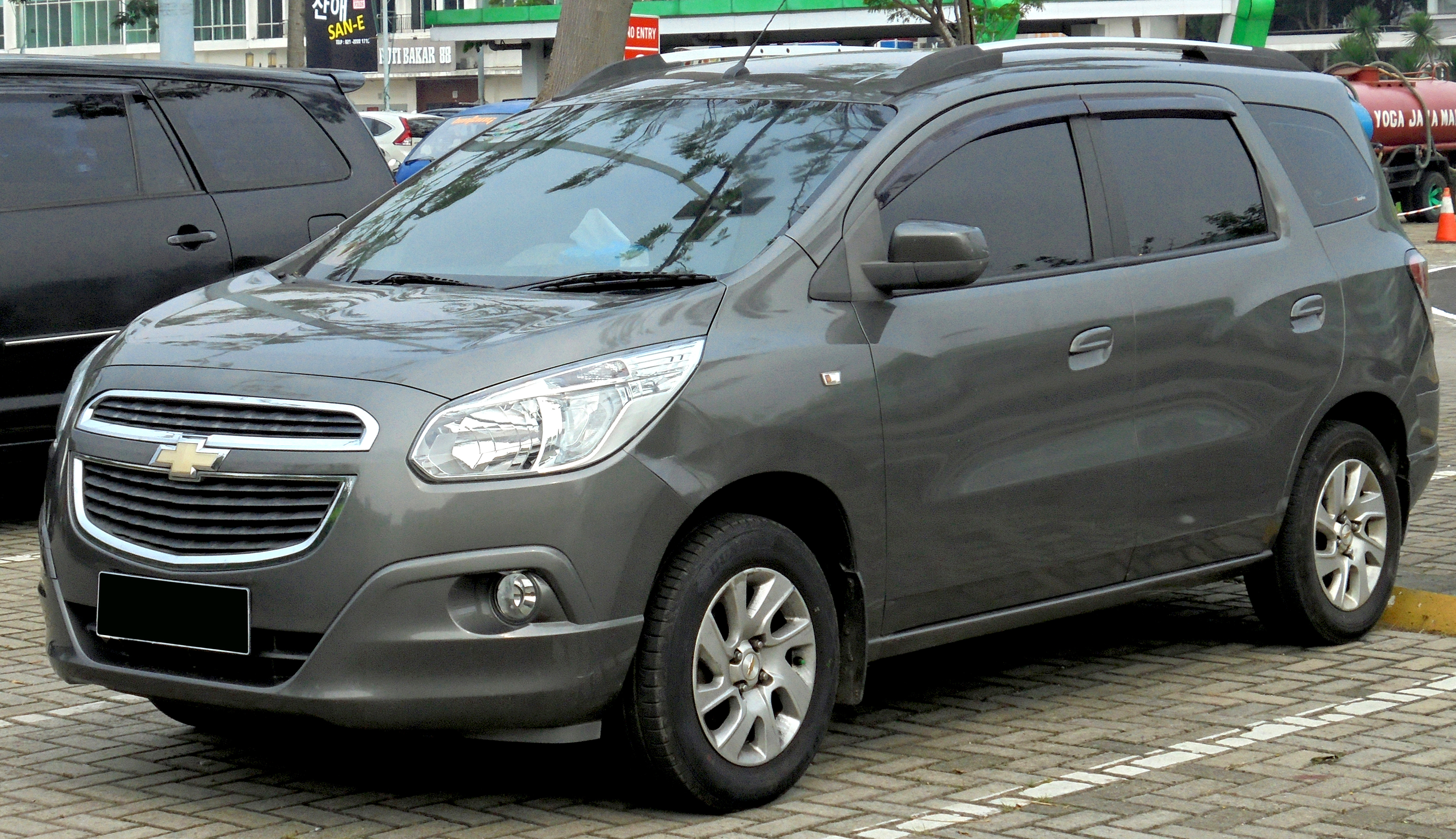
The Chevrolet Spin is a type of car that can carry a lot of people and stuff, making it great for families or anyone who needs extra space. It's designed to be practical and useful, which is why people often talk about it when discussing family-friendly vehicles.
An electric saloon is a type of car that runs on electricity instead of gasoline and has a four-door sedan shape. They are often more environmentally friendly.
An autonomous car is a car that can drive itself without needing a human driver. It uses technology to understand its surroundings and make decisions on the road.
LIVE
Let's do the 60-Second Savings Challenge.
Step 1.
Download Rocket Money.
Step 2.
Link your accounts and see every subscription you're paying for.
Tap 1 you don't use and cancel it.
That's money back every month.
Step 3.
Create a financial goal.
$50 every paycheck.
Or let the app automatically move small amounts of cash when you can afford it.
In a week, you'll forget you set it up.
In a month, you'll see real dollars piling up.
In a year, you'll be shocked at how much money you've saved.
Bonus Challenge.
Upload an internet or phone bill and let Rocket Money try to lower it.
You only pay if they find you savings.
On average, Rocket Money members can save up to $740 a year when using all of the app's premium features.
Users love the app with over 186,000 five-star ratings.
Make saving money the resolution you actually keep.
Start the 60-Second Savings Challenge at rocketmoney.com slash cancel.
That's rocketmoney.com slash cancel.
Rocketmoney.com slash cancel.
The number one resolution for people last year was to save more money.
But nearly half gave up by February.
Don't let that be you.
Download Rocket Money to reach your financial goals this year.
Track your spending, cut waste, and automate savings in one simple app.
Rocket Money shows you all your expenses and categorizes them,
so you know exactly where your money's going and where you're overspending.
From there, the app cuts waste by canceling your unused subscriptions and lowering your bills.
No customer service needed.
With that money freed up, the app will automatically set some cash aside for your goals.
Whether it's an emergency fund, paying off debt, or saving for vacation,
Rocket Money's got you covered.
Users love the app with over 186,000 five-star ratings.
And on average, users can save up to $740 a year when using all the app's premium features.
Make saving money a priority this year.
Go to RocketMoney.com slash cancel to get started.
That's RocketMoney.com slash cancel.
RocketMoney.com slash cancel.
Well, come back to EV News Daily today.
U.S. charging surges.
The ex-punk MPV for the UK.
And scout fans pick hybrids, plus stay tuned.
Later in the show, I'll tell you why Britain is making a move to outlaw hot rod e-bikes.
No EV News China today.
It's the weekend.
Our spin-off show returns on Monday.
Now we'll start with news of Parin.
They have put out numbers to the state of the American DC fast charging network in 2025.
Their new state of the fast charging industry report tracks who is building what, where, and at what power
in a market that will help decide how fast drivers abandon petrol.
Chargers, not cars, will set the pace of adoption in early 2026.
Capital is pouring into hardware rated at 150, 350, and even higher in the U.S.
But utilization, uptime and pricing, well, they're all a little bit patchy.
America's public fast charging network surged last year in 2025 up by 30%.
This is the amazing story coming out of America at the moment.
It added more than 18,000 plugs in the strongest build-out year in the history of the country.
DC fast charging plugs, by the way, 18,000 new DC fast charging plugs.
The growth defied expectations and crushed Parin's optimistic forecast of 16,700 driven by automakers,
investing, retailers, investing, and charging companies.
Private sector networks pushed ahead despite the Trump administration rolling back the $7,500
federal tax credit and revising the cafe rules to favour petrol.
Fourth quarter deployment was 5,769 new plugs, new DC fast charging plugs, and a 6,000.
That is 44% year over year growth in Q4, even in a quarter where all the headlines will tell you
EV sales slowed down.
Well, of course, they did.
People brought their purchases forward when they could get the money off the cars.
But what didn't slow down was the rate of the charging build-out.
Infrastructure improvements now mean drivers find more reliable, higher powered stations,
normally nearer amenities or with amenities like Wi-Fi, restrooms, and food options.
Federal funding steers the build-out towards highway corridors.
But Parin noted last year the rise of urban hubs where dwell times are longer and revenue models might differ.
The report contrasts networks that chase peak power ratings.
Just that big number.
Look how fast our charges are with those that are actually prioritising things like reliability,
or maintenance, or redundancy at site level.
More than half of new fast charges installed in Q4 were faster than 250 kilowatts.
Reducing charge times and congestion.
Charging sessions in January this year jumped 20% on last year.
There's a compounding demand effect going on.
Can you see it?
Okay, let's move on.
X-Pung will launch its X9.
That's an MPV.
And they'll launch it here in Great Britain this summer, adding a second model to the lineup
that gained a foothold last February when we got the SUV, which is the G6.
The UK was the first confirmed European market for the 7-seater, the X9,
which in China comes in PureBev and EREV versions as well.
An 800-volt platform, the SPA2 platform.
The Guangzhou-based firm plans several further model launches this year
and calls 2026 a defining moment in its European product strategy.
Before then, the refreshed second-generation G6 will reach here in the first quarter,
just weeks after China saw the unveiling of the third-generation G6
and the third-generation G9 SUV.
I should be able to bring you some pricing on that in the next couple of days, actually.
The right-hand drive, X9 though, is already on sale in Singapore.
Along with the G6, it'll be built on X-Pung's first right-hand drive assembly line.
That's in Malaysia, and it's their third overseas plan after Indonesia and Austria.
Hey, by the way, sorry about my voice. Both my kids are really sick.
You know, a couple of years ago, we wouldn't have called it the flu.
We'd have been doing tests up our nose and whatnot, but it's the same symptoms.
So a week of coughing and feeling pretty terrible, and, you know, it's gone to my voice as well.
So I'm sorry about that. Not feeling fantastic.
I'm recording this a couple of days later because I was literally in bed on Saturday and Sunday out for the count.
Thank you for bearing with me.
Occupational hazard of having small children.
All right, let's move on.
Scout Motors first customers want a plug, but they also want to fill a cap as well.
85% of reservations to the new Scout models, that's Volkswagen's off-road aimed sort of Rivian brand,
are for the EREV versions, not the Pure Bev.
Only 15% of would-be buyers coming into Scout.
So the Terra, that's the pickup, the traveler, that's the SUV.
Want to go full Bev, says Scott Keough, and he would know because he's the firm's boss.
Since the pair were unveiled in October 2024, Scouts lodged more than 150,000 refundable reservations.
Output will start at the end of 2027, the new plants in South Carolina, with truck pricing below $60,000.
The skewing demand forced a rethink Scout now plans to launch the EREV before the Pure Bev's,
reversing its original internal assumptions.
The bet rests on American nerves about charging access towing.
Long distance travel with utility vehicles.
And on China's rapid take-up of EREVs, Scouts harvester, which is what they're calling the engine,
the harvester EREVs, use a four-cylinder petrol generator,
obviously sourced from within the Volkswagen group, only to recharge a 63 kilowatt hour LFP pack.
It never drives the wheels, unlike something like a Shark, a BYD Shark 6,
which technically can, once you're up to speed, that keeps the driving feel of an EV.
The instant talk, the silence, the plug socket on the side, so you can recharge it overnight at home.
And you should do, because most Americans live in a different kind of housing stock
to what maybe we have here in built-up Europe.
And so, if you have single-residents homes with a driveway and a garage, please,
judge your EV overnight, even if it has an engine.
You will save yourself so much money on an overnight tariff.
The harvester models will deliver 150 miles of EV-only range,
and probably 500 miles or so in total range.
But having that fallback of a fuel tank, I think for many buyers of this kind of vehicle,
probably makes sense.
It's cultural, it's geographic, it wouldn't suit us.
We haven't got truck culture here anyway, and our country's not that big.
But in somewhere that has different cultural values and different motoring heritage,
as much as an EREV wouldn't suit me, if I'm being pragmatic about it,
I can see a subset of EV buyers where it's very, very suitable.
Again, I don't think it's right for everybody.
It's not a magic one, but I can see it.
Wish it wasn't there, because I'd like to get away from burning stuff.
For Scout, what began as a lonely bet now looks to be part of the industry hedge.
American buyers want electrons, but also a filler cap as well.
Now, a 30-minute wait to recharge puts off American buyers.
Carmakers now bet that cutting the stop to 10 minutes is what will make it analogous to filling up your fuel tank.
Tight remissions rules, generous subsidies in some places,
and a wave of new models have not yet shifted a large group of buyers in America.
This reporting coming from California, the Los Angeles Times, where I found this report,
says how long people sit at a public charger affects whether they go EV.
The industry's reply has been what we talked about already on this podcast,
DC fast chargers that are 150, 253, 50 kilowatts or more.
Rising charge rates are a significant tailwind to the industry,
says Badar Khan, Chief Executive of EV Go, one of America's big charging networks,
says, and I quote, if the energy is going in faster, you don't actually need higher utilization,
end quote. Well, the LA Times wrote today, in EV Go's two most recent quarters,
utilization, a measure of how much time its charge is occupied,
dropped for the first time since the company's IPO five years ago,
in part because its charges were delivering more electricity per hour.
The shift to speed should both delight drivers and bolster the business case.
For charging networks, ultimately faster charging may be the final nudge in converting the crowd to EV.
Let's move on. Volkswagen has begun shipping China-made cars to the Middle East and Southeast Asia,
with Africa and South America next.
The German group is recasting China from its profit center to a low-cost export base,
deepening the industry's fierce, fierce price war.
The shift follows a sharp slide in VW's China sales.
Brutal is an understatement, I think, from more than four million pre-pandemic to 2.7 million last year.
Porsche suffered the most, hit by an 80% collapse in the Chinese luxury segment,
with no recovery in sight.
The closing showrooms at Porsche in China to hold its ground against BYD
and the local startups of BYD's rewriting the playbook.
Oliver Bloom, the chief executive, says technology in China is now exported
and the firm couldn't serve those countries from its European base.
VW has moved R&D research and development to China,
cut manufacturing costs tied up with local manufacturers like XPeng,
a local software and EV specialist.
It's reworked its cost base.
The first model from that partnership, I've talked about it on our spin-off show,
EV News China is the ID UNIX 07, it's an electric saloon.
Now in production, by the way, delivers soon.
It'll sit among 20 new EV models that VW will launch in China to try and hold the sales slide.
Hey, by the way, if you can share this podcast with anybody,
maybe not this one, because I do sound a little bit rough,
but if you could maybe share a better one, if there is one,
with a friend, a relative, someone you know, maybe social media,
discussion groups, forums, Reddit, that kind of stuff,
just to say, oh, you're into EVs, check out this podcast.
I'd really appreciate it because it can come from me
and obviously I'm just the guy promoting it,
but if it comes from you, it makes a real difference as well
because people trust what you say in those communities that you're in.
So I'd really appreciate that if you can just share this podcast around
and help us grow.
We'll take a break and we'll be back.
We'll talk Kia and Scottie and more.
Make saving money the resolution you actually keep.
Start the 60 Second Savings Challenge
at RocketMoney.com slash cancel.
That's RocketMoney.com slash cancel.
RocketMoney.com slash cancel.
50 dollars every paycheck.
Or let the app automatically move small amounts of cash when you can afford it.
In a week, you'll forget you set it up.
In a month, you'll see real dollars piling up.
In a year, you'll be shocked at how much money you've saved.
Bonus challenge.
Upload an internet or phone bill and let RocketMoney try to lower it.
You only pay if they find you savings.
On average, RocketMoney members can save up to $740 a year
when using all of the app's premium features.
Users love the app with over 186,000 five-star ratings.
Make saving money the resolution you actually keep.
Start the 60 Second Savings Challenge
at RocketMoney.com slash cancel.
That's RocketMoney.com slash cancel.
RocketMoney.com slash cancel.
Welcome back to the podcast.
Now, Kia has opened its order books at home in South Korea
for a pickup version of their new EV van.
It's called the PV5 and it's a pickup version
with list prices starting at $43.5 million.
That's $30,000 US,
but subsidies will cut the out later $20,000 equivalent,
pushing the truck into the mass market.
You're telling me.
The PV5 is at the center of Kia's plan to turn boxy workhorses
into a modular electric platform,
which they can make money from.
The pickup shows how fast car makers can now stretch
a single EV architecture.
We've seen this PV5 already here.
We've got the People Carrier version,
but we know they're coming very early with the wheelchair
at the PV5 online, some of the car mags over here,
naturally compare it to the ID buzz
and the point they all have to make is,
this is 15,000 pounds cheaper
and there's 20,000 pounds in some trims cheaper.
And if you're moving around six or seven people,
you honestly don't really miss some of the niceties
of driving the ID buzz.
The PV5 comes in, particularly the smaller battery version,
very competitive pricing over here.
PV5 pickup back home in China though,
sorry, South Korea, is a price at 30,000
or even 20,000 US dollars with subsidies
way below the combustion rivals.
And then you factor in running costs.
If you're a home user, that's nice.
If you're a business, that changes the bottom line.
Kia pitches the PV5 line as more than a van
spin off a flexible base for cargo people
and now open bed jobs.
Okay, let's talk about a really interesting take
on Chinese cars.
And I might maybe even make a special podcast
when my voice is a little better
and I don't feel like trash.
I might make a bonus show about this
because I think this is really smart,
not without danger, but clever.
Chinese electric cars that now sell in Europe
for 14,000 pounds and less
are taking a share of the market
that brands like Shkoda once dominated.
Klaus Zelma is the boss of Shkoda
and he thinks some of the firms behind them
may one day vanish.
He doesn't doubt their engineering.
He doubts their economics in an interview
with the independent newspaper over the weekend.
Mr. Zelma argued that China's EV makers
face a brutal shakeout, chasing volume abroad
to make up for wafer thin margins
at home and heavy discounting.
That may bring short-term gains for European buyers.
A cheap, high-tech car from a brand you've never heard of,
but it could be a long-term risk.
The warning comes as Chinese manufacturers
flood Europe with cut-price battery cars.
I was just having a look at one of what I think
are the bellwethers, which is the early first edition
what they were called Funky Cat,
the Great Wall Motor, or GWM Funky Cat.
They changed their name to the 03.
Okay, but those ones are now 8,000 or 9,000 pounds
and they were a 30 grand car all of five minutes ago.
Nobody knows what GWM is. The logo means nothing.
Funky Cat just does kind of sound really weird.
And, you know, eight or nine thousand pounds,
you get so much car.
But then there's the risk factor,
which the boss of Skoda is bringing up,
saying that, well, what if that Chinese brand disappears?
There's no scale. There's no brand recognition.
There's no robust dealer network.
When that support fades, you're left with a car
that sure was built in an efficient factory in China
with low labor costs, but there's no after sales support
and you just left holding it.
Now, there's, I think, an element of scare mongering
and an element of truth, like all things in life.
It's black and white. It's shades of grey.
There's nuance to his argument,
but it's something that I think the legacy car makers
haven't done enough of,
which is to be more aggressive against the Chinese,
probably because, well, Skoda is VW and VW needs China.
So you've got to be very careful politically.
But I think he's being smart with it
because it's a good point.
So without fear mongering
and I think it's an interesting play
that Skoda are doing.
I would do more of it if I ran a car company
that was being beaten by the Chinese.
You've got to look for your ins, your wins.
And one of those could be, to say to your customers,
I mean, sure, wow, that's a,
you could get a really good deal over there.
What are they called again? All right.
They're going to be around in five minutes
because they weren't here five minutes ago.
Now they might be, they might be here forever,
but we've got to sell cars and it's a war out there.
So interesting, interesting tactic.
I kind of like it.
All right, let's see if I can get through three more stories.
Huawei now sells more premium cars in China
than Mercedes, BMW or Porsche.
The latest Huawei model is a high-end electric saloon
and it deepens the lead
and shows how China's car market is tilting towards domestic.
The firm built its brand on telecoms kits
and smart homes.
Huawei didn't build its brand on engines and gearboxes,
but its new luxury car sold with the joint venture
with the Chinese manufacturer
goes after urban affluent buyers,
the kind of safe base for German badges,
big spec sheets, low prices, high tech software.
The model leans on Huawei strengths
in car computing, connectivity, driver assistance.
The firm fills the cabin with massive screens.
The Huawei operating system over the air functions,
range, charging, performance,
all frankly beat the German rivals.
Plus, it's a Chinese name as well
that they're making it with what's not to love.
That is one of the examples of how
the Western car makers are really struggling in China.
You can check out more, by the way,
on our spin-off podcast.
It's called EV News China.
Not on today, it's the weekend,
but I do it weekdays, actually Monday to Friday.
And it's a fascinating...
You don't have to listen to it by any means,
and you'll still get all of the big EV news here on the main show.
But I learned a lot.
I learned so much doing EV News China.
And I've had some lovely comments from you guys
in the audience as well.
All right, two more stories.
Tesla's RoboTaxi's crash
about three times more
than human-driven cars.
According to new reporting by the EV website Electric,
new NHTSA crash data,
combined with Tesla's own mileage disclosures,
show that the early part of their autonomous car rollout
means things that their RoboTaxi's or CyberCabs,
whatever you want to call them,
are hitting things at a rate far higher than humans.
And this is with the safety monitor in the vehicles,
because we don't have data from when they removed them
to the trail car behind.
That matters for Tesla's claim that autonomy cut costs,
but it is also safer.
We've all seen those pictures online.
If you haven't, then they circulate on social media.
Regularly, if CyberCabs bumping into things, scraping walls,
a few collisions, no one's been seriously hurt.
Thankfully, the firm has long argued
that software outdrives humans.
And the fiercest fans of Tesla
all have YouTube channels or social media accounts
that will show them doing thousands of miles
without an intervention.
But so far, the first RoboTaxi numbers
are showing the reverse.
The official data coming out now shows
that the system not only needs minders,
but it crashes more often,
and the new data link two strands.
The federal crash report, which Tesla now has to file,
and Tesla's own mileage claims taken together
is how you work out that three times worse
than a human number, according to Electric.
Supporters, though, say that the early numbers
are bound to improve as the neural networks
train on miles driven.
They may, of course, and autonomy does not turn overnight.
It's not a flick of a switch from unsafe to safe,
but regulators and would-be RoboTaxi riders
will see the current gap between human and machine
as a cost, a liability, and increasingly a political risk.
And finally, Britain's parliament is going to examine a bill
that goes after non-compliant EV bike conversion kits,
signaling a tougher stance on this grey zone.
Cheap, high-powered e-bike kits have outrun the rules
that define the pedal-X that we have,
the electrically assisted pedal cycles.
Road legal e-bikes, like I have here in the UK,
deliver no more than 250 watts of continuous rated power,
cut the assistance after 15.5 miles an hour,
or 25 kph. Many online kits, though, ignore both those limits.
I could go onto any of those Chinese market places right now
and buy a 1,000 or 1,500-watt conversion kit
and go take my bike for a ride.
Some of them don't have basic safety features
like proper braking compatibility or braking regen
or proper battery management.
Supporters of the bill say these devices blur the line
between what a moped is, which needs type approval,
needs insurance, needs helmet, needs a registration plate.
These retailers that import them and sell them as e-bikes
that have a throttle grip or twist grip,
I mean, you never have to pedal.
And that's against the law.
They deliver speeds and acceleration
better than many mopeds and motorcycles.
Enforcement lags.
Police forces don't have the tools, training,
or legal mandate to test whether a converted bike
meets our current rules or is classed as a motor vehicle.
The proposed law would ban the sale of kits
that don't comply with existing standards
rather than wait to catch the riders in the wild
after they've bought the kit.
It also gives ministers scope to tighten definitions
and guidance as new products appear.
Proponents present the move as a way to protect
the reputation of legitimate e-bike sellers,
which depends on clear boundaries between the regulated vehicles
and unapproved Chinese hardware flooding in
on these different marketplaces.
If Parliament backs the bill, Britain's fast charging
and fast growing e-bike sector will face a sharper legal journey
just as the technology edges closer to being
small electric motorbikes.
It might sound like I've got a bit of my bonnet about this.
There are a few stories about this recently.
And maybe I do.
I won't be trying to be self-aware about this.
Maybe I do have a bit of my bonnet,
but I see so many of them flying around
and some of these kids wearing it.
The parents have bought them for kids, not wearing a helmet.
And they're doing speeds that I don't do in a car.
Like if I'm doing 25 miles an hour past a school,
these e-bikes fly past me on the inside, on the outside.
As a driver, if I knocked them off,
normally, who would you blame?
You'd probably blame the car driver for knocking off a bike
and without a helmet on.
I hate to think what would happen to some of these.
I mean, they're normally teenagers, aren't they?
That's not a great phone call for those parents to receive.
So maybe I didn't use a bit more self-aware.
I'll put a few of these stories in the podcast lately.
And it is something that I'm just kind of picking up more on.
And I think I do agree.
I think I do agree with a few more rules and regs around it.
My American listeners will be 15 miles an hour.
15? Are you crazy? You are a moron.
And that's your podcast for today.
That's OK. We can agree to disagree.
Thanks to our premium partners, National Car Charging
on the US mainland and the Lo Haar Charge in Hawaii.
And Test TV, Avalu's trusted partner
for independent EV battery health testing
in Australia and New Zealand.
Have a good day tomorrow.
And remember, there's no such thing as a self-charging hybrid.
I didn't even realize I was wasting $415 a month
until I downloaded Rocky Money.
I thought I had my finances under control
until the app laid out all my spending
and categorized it for me.
Takeout, shopping, and unused subscriptions
were quietly draining my account.
And as a result, my savings took a backseat.
But Rocky Money doesn't just tell you
what you're wasting money on.
It takes action to save you money.
First, the app looks at your income
and monthly expenses and calculates
how much you can safely spend each day
to stay on your budget.
Rocky Money also finds and cancels
unwanted subscriptions for you
and even negotiates better rates on your bills
so you have more money in your pocket.
On average, Rocky Money members can save
up to $740 a year
when using all the app's premium features.
Users love the app with over 186,000 five-star ratings.
It's time to simplify your finances
and take control of your money.
Go to rockettemoney.com
slash cancel to get started.
That's rockettemoney.com slash cancel.
Rockettemoney.com slash cancel.
About this episode
A surge in U.S. DC fast charging infrastructure is highlighted, with over 18,000 new plugs added in 2025, marking a 30% increase. The episode discusses XPeng's upcoming X9 MPV launch in the UK and Scout Motors' shift towards EREV models due to consumer demand. The conversation also touches on Volkswagen's strategy to export China-made vehicles amid declining sales in the Chinese market. The episode concludes with insights on how faster charging may influence EV adoption in America.