DAILY: Volvo EX60 Revealed, Tesla Puts Basic Safety Behind Paywall and VW Goes Top In Europe | 23 Jan 2026
EV News Daily - Technology and Business of EVs
DAILY: Volvo EX60 Revealed, Tesla Puts Basic Safety Behind Paywall and VW Goes Top In Europe | 23 Jan 2026EV News Daily - Technology and Business of EVs · Jan 28, 2026
Annotations will appear as you listen
0:00
24:12
Car
Volvo EX60
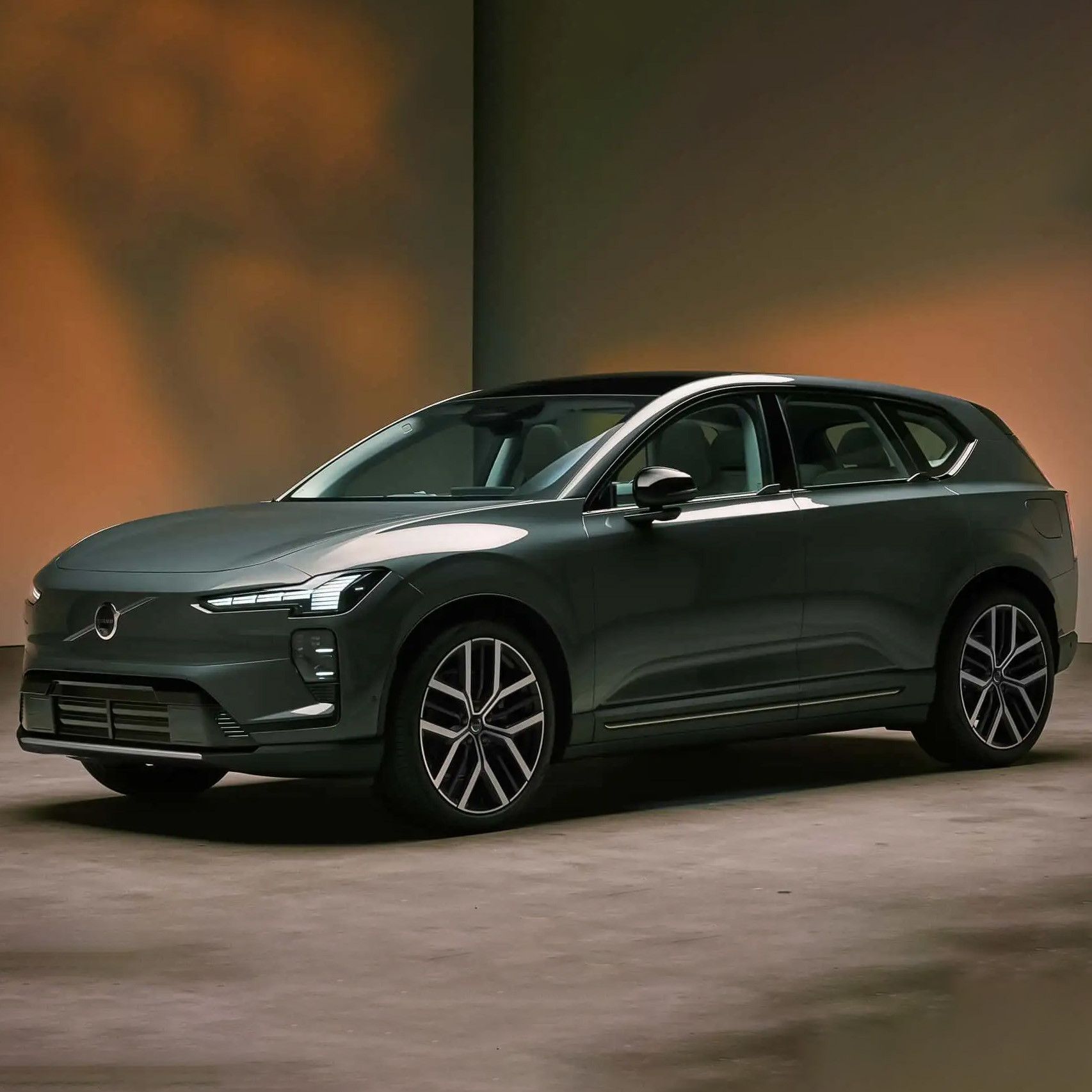
The Volvo EX60 is a new electric SUV from Volvo, a brand known for its focus on safety and innovation. This model is part of their effort to create more electric vehicles for environmentally conscious drivers.
WLTP is a testing method used to measure how far a car can go on a charge or a tank of gas. It helps compare different vehicles' efficiency.
Term
800 volts system
An 800 volts system is a type of electrical system used in some electric cars that helps them charge faster and work more efficiently. It's like having a stronger power source that can do more with less space.
400 kilowatts is a measure of how much power a charging station can provide to an electric car. The more power it can give, the faster the car can charge its battery.
Concept
cell to body design
Cell to body design means that the battery cells are built right into the car's body instead of being placed in a separate battery pack. This helps save space and can make the car lighter and safer.
A kilowatt hour (kWh) is a way to measure electricity. In electric cars, it tells you how much energy the battery holds and how far the car can go on a charge.
The Rivian R2 is a new electric car that Rivian is planning to release. It's expected to be smaller and more affordable than their other models, like the R1T truck and R1S SUV.
ADAS means Advanced Driver Assistance Systems. These are features in cars that help drivers with safety and make driving easier, like keeping the car in its lane or stopping automatically if there's an obstacle.
FSD means Full Self-Driving, a package from Tesla that adds extra features to help the car drive itself more. It aims to make cars fully autonomous one day.
Adaptive cruise control helps your car maintain a safe distance from the car in front of you by automatically speeding up or slowing down. It's like regular cruise control but smarter, so you don't have to keep adjusting your speed.
Lane centering helps your car stay in the middle of the lane while you drive. It uses cameras to see the lane lines and can gently steer the car to keep it centered, making driving easier and safer.
The Toyota Camry is a popular family car that is known for being dependable and easy to drive. It has good gas mileage and is often considered a smart choice for everyday use.
The Toyota Corolla is a small car that is very reliable and doesn't cost a lot to buy or drive. It's a good choice for people who want something simple and efficient.
Plug-in hybrids are cars that can use both gasoline and electricity. You can charge them at home, and they can drive a certain distance using just electricity before switching to gasoline.
Lemonade is a company that provides insurance, including for cars. They use technology to help determine how much you pay for coverage.
Term
autonomous car insurance
Autonomous car insurance is insurance for self-driving cars. It covers the special risks that come with cars that can drive without a person controlling them.
The Dacia Sandero is a small car that is very affordable and practical, making it a popular choice for many drivers in Europe.
Concept
move to EV
The 'move to EV' means that car companies are starting to make more electric cars instead of gasoline-powered ones. This change is happening because people want cleaner and more environmentally friendly options.
The Renault Twingo is a tiny car that's easy to drive around in cities. It's great for getting around quickly and parking in small spots.
LIVE
The number one resolution for people last year
was to save more money,
but nearly half gave up by February.
Don't let that be you.
Download RocketMoney to reach your financial goals this year.
Track your spending, cut waste,
and automate savings in one simple app.
RocketMoney shows you all your expenses
and categorizes them so you know exactly
where your money's going and where you're overspending.
From there, the app cuts waste
by canceling your unused subscriptions
and lowering your bills.
No customer service needed.
With that money freed up,
the app will automatically set some cash aside for your goals.
Whether it's an emergency fund,
paying off debt,
or saving for vacation,
RocketMoney's got you covered.
Users love the app with over 186,000 five-star ratings.
And on average,
users can save up to $740 a year
when using all of the app's premium features.
Make saving money a priority this year.
Go to rocketmoney.com slash cancel to get started.
That's rocketmoney.com slash cancel.
Rocketmoney.com slash cancel.
Chevrolet, together let's drive.
Rocketmoney.com slash cancel.
Get that MX gold card ready.
I'm way too tired to cook tonight.
You read my mind.
With the gold card,
we can get up to $120 a year in statement credits.
Are you feeling the cheesecake factory?
Five guys?
Either of those sound good?
Yes.
Which one?
Both.
Pay with the gold card to receive up to $10 a month
in statement credits at participating partners.
Uncover more ways to reward yourself
at americanexpress.com slash expo.
Explore Dash Gold.
Enrollment required.
Terms apply.
Welcome back to EV News Daily.
Today, the new Volvo EX60.
Tesla puts basic safety behind its paywall
and VW goes top in Europe.
Plus, stay tuned.
Later in the show, I'll tell you why another big name
gives up on a hydrogen project.
On EV News China today, we're talking about G. Lee
wanting more overseas clout.
The Luxeade R7 and X-Pung's cheap credit.
Well, let's talk about the Volvo EX60 big launch today.
A full bonus show in your feed, depending on whether you're
a Patreon or ad supported feed member.
But let's get into just the headline details on EX60
and we'll do a 20 minute show on it a little bit later.
The EX60 lands in what Volvo claims is the world's largest
EV segment.
This is the Tesla Model Y segment, the BMW IX3 segment.
On paper, it over delivers.
The all wheel drive variant, they've called it the P12,
offers 503 miles officially on WLTP.
That beats IX3 and honestly, it beats anything
you could possibly want to do with that vehicle
on a daily basis if you're an average person.
There's always road warriors out there on there,
but over 500 miles on a single charge,
800 volts system, adding 210 miles in just 10 minutes.
But you'll have to find yourself a charger
that is 400 kilowatts plus to do that.
Volvo drops the traditional battery pack design.
It's cell to body.
They insert the cell straight into the next generation
architecture, which is their new SPA3, designed by Volvo.
This is not going to be shared amongst a Brazilian
Geely Zika Polestar brand.
Volvo say, we've designed it for us.
The integrated battery casing stiffens the shell
and trims mass, though curb weight still runs
from 2,115 kilograms.
The range is in three core models.
Rear wheel drive, which is 370 horsepower,
83 kilowatt hour battery, 385 miles of range,
six seconds, 0 to 60, that's the one I'd have.
All, I don't need four wheel drive, perfect.
It's obviously a Volvo.
There will be a twin motor P10 version, 95 kilowatt hour pack.
That's over 500 horsepower, over 410 miles of range
and well, 4.6 seconds, 0 to 60.
Then there's the big P12 version.
Almost 700 horsepower, 117 kilowatt hour battery.
It's huge for that full 503 miles WLTP.
Over 400 on the EPA and 3.2 seconds, 0 to 60.
Now they all get limited to 112 miles an hour
because Volvo and honestly, why would you want to go quicker?
And it's either got semi-active suspension or passive
depending on which one you buy.
They also unveiled the cross country version,
20 millimeters, two centimeters higher,
wheel arch cladding, black moldings,
a wider track, all of that kind of stuff.
400 miles of range, by the way.
Inside, they call it the super set tech stack,
running the new operating system, NVIDIA
and Qualcomm's latest, greatest hardware.
Google's Gemini allows natural speech.
I've been talking about this a lot lately.
I think when you can talk to your car in a natural way,
in a conversational way, not fixed commands,
it will change the game.
I still won't do it when the kids are in the car
because they've learned they can do it too.
And it listens to their voices.
This is my son in the Polestar,
keeps asking for kids' music.
Hi, hi, hi, hi.
But luckily, you can press a button on the steering wheel
and it turns off voice assistant.
He hasn't worked that out yet, by the way.
And so, he thinks it's just offline.
And so, that's a huge deal.
And of course, that's coming to all Volvos and Polstars as well.
And so, the design, if you know what an XC60 looks like,
well, it's not a million miles away.
If you know what the front of an EX30, EX90 look like,
it's not a million miles away.
Boxy silhouette, panoramic roof.
Very roomy cabin.
Very scandy design.
Look, if you like Volvos, and clearly I do,
because it's just taste and everything subjective.
The materials, the design, everything about the car.
I would like a few more buttons on this
because I'm old fashioned.
A lot is to be done with voice in this.
But it really appeals to me.
High end audio system with speakers in the headrests.
All round, all four headrests as well.
And the returning boss, Hacken Samuelson, says the EX60
removes the last obstacle of going electric.
If you wanted really big range,
now you can get cars like this and the BMW iX3.
Which one would you have, by the way?
Either of those or maybe the Rivian R2.
I'd love to know.
This is huge today for Volvo.
And I won't talk any more than five minutes about this.
We'll do a full bonus show in your feed, all about it.
And dig in a lot, lot deeper.
Now, Tesla has done something today,
which has angered much of the EV community.
And I've noticed that all the Tesla websites
have either been very quiet on this
or put their own spin on it,
but I'm not sure how you can spin it.
Obviously we know that the boss, the chief exec,
Elon Musk has a target of hitting so many subscriptions
to their ADAS, their driving system,
to hit his targets to become a trillionaire.
So, in order to make you subscribe $99 a month,
they've taken out Autostear from the Model 3s
and the Model Ys and put basic lane centering
behind the FSD paywall.
The standard autopilot bundle,
which was once adaptive cruise control and steering assist,
now only offers adaptive cruise control.
That is a feature on the cheapest of cheap cars.
If you want absolute basic lane centering,
which is these days, just a basic safety device.
If you are doing a lot of hours on driving
to have a car with lane centering,
and by the way, cheap Camry's
and just your basic combustion car,
all come with lane centering now.
It's a basic safety thing.
It helps drive a fatigue.
If Tesla claimed to be a safety-led company,
you wouldn't take this out.
You would only do it unless you were forcing people
to pay $99 a month to get the very basic of features,
which is what you have to do now.
If you want lane centering, it's $100 a month,
but then that's for full FSD.
So, next month on the same date as California
put rules in about selling autopilot
because it's not.
And they've said, you just can't call stuff
that it doesn't do.
Then Tesla are not gonna sell it anymore.
So, you can no longer buy FSD
and you have to subscribe to it.
We've all got subscription fatigue
and this is yet one more thing.
So, this isn't existing vehicles.
By the way, they're not taking it away
from cars that are sold already.
This leaves Tesla's mass market cars less equipped
than a Toyota, a base.
A completely base Toyota Corolla.
That's $22,000 US dollars.
It gets adaptive cruise control and lane centering
and it's all standard.
Tesla buyers now pay more for less,
plus an ongoing fee to then restore
what you used to get included in the price.
The move deepens Tesla's shift from selling stuff
to selling subscriptions.
Their chief executive Elon Musk
has said FSD subscription prices will go up.
He said that in the past and they went down again.
So, he's said a lot of stuff which is not true.
He says that the price will go up from $99.
So, if you are stretching to get into a Tesla
and it's a really big moment
if you are maybe paying $500 a month at the minute
on your car finance and you're gonna stretch to $600
because you wanna get that Tesla.
A new car's really special
and it's a lovely moment when you get that brand new car.
Whatever model it is.
When you get yourself a brand new Tesla
and you've made that stretch to maybe $600 a month
and it's such a, you know, you work hard for it.
It's a big moment.
It's effectively now a $700 a month.
And you know, and obviously the numbers will change for you
but add a hundred bucks to your monthly payment
just to get a basic feature.
And all the buyers, you're gonna be forced to pay for FSD
or be left with a really, really second rate product.
It will just do adaptive cruise control.
And that's it.
It's got all the hardware to do everything
but they will completely lock it down
unless you open your checkbook every single month
that you own that car.
The core promise of full autonomy is still unfulfilled
but that's not a conversation for this segment.
Tesla has turned a former safety standard,
a very basic piece of safety
into a recurring revenue business model
that hits targets for its CEO
to get his massive payout somewhere down the line
which was a target for him to hit FSD subscriptions.
It has not gone down well today.
And I think many people
who really, really love the Tesla brand
for doing the right thing over the years
by its customers multiple times
and being known for safety
just keeps kicking people in the you know what
and at some point people are gonna say,
I've had enough, no more, just no more.
It's such a shame.
They've got so much right in the past.
I know people think I'm really hard on Tesla
but I'm so disappointed in them in the last maybe two,
two, three years.
Nothing to do with the extra curricular stuff
from their boss, just untapped potential,
my friends, untapped potential.
Let's move on.
We'll take a break, we'll come back
and lots to talk about on the podcast, stick around.
I didn't even realize I was wasting $415 a month
until I downloaded Rocket Money.
I thought I had my finances under control
until the app laid out all my spending
and categorized it for me.
Takeout, shopping and unused subscriptions
were quietly draining my account
and as a result, my savings took a backseat.
But Rocket Money doesn't just tell you
what you're wasting money on.
It takes action to save you money.
First, the app looks at your income and monthly expenses
and calculates how much you can safely spend
each day to stay on your budget.
Rocket Money also finds and cancels
unwanted subscriptions for you
and even negotiates better rates on your bills
so you have more money in your pocket.
On average, Rocket Money members can save up to $740 a year
when using all the app's premium features.
Users love the app with over 186,000 five-star ratings.
It's time to simplify your finances
and take control of your money.
Go to rocketmoney.com slash cancel to get started.
That's rocketmoney.com slash cancel.
Rocketmoney.com slash cancel.
Five years ago, I was paying $65 a month
for my subscriptions.
Today, those same subscriptions cost $111
and I don't even use half of them anymore.
That's why now I use Rocket Money
to manage my subscriptions for me.
The app gives you a list of all of your subscriptions
and reminds you of upcoming payments
so you're not hit with any surprise charges.
On top of that, it also sends you alerts
when subscription prices go up
so you always know the price you're paying.
If you decide you no longer want a subscription,
you can cancel it right from the app.
No customer service needed.
And the best part is Rocket Money even reaches out
and tries to get you refunded for some of the money you lost.
On average, people that cancel their subscriptions
with Rocket Money save $378 a year
and overall, Rocket Money has saved its members $880 million
in canceled subscriptions.
Stop wasting money on things you don't use.
Go to rocketmoney.com slash cancel to get started.
That's rocketmoney.com slash cancel.
Rocketmoney.com slash cancel.
Hey, welcome back to the show.
Now, Volkswagen has pushed Tesla off the European perch.
Last year, the Volkswagen brand
became the biggest battery electric seller.
I'd hinted at this when the early numbers were coming in.
Volvo, Volkswagen were clearly ahead of Tesla in Europe
but I said, be careful, that's Volkswagen Group.
Lots of cars to sell you.
Well, now the numbers are in.
It's Volkswagen brand, just the VWs,
which are now bigger than Tesla here in Europe.
BV deliveries up 56%.
Tesla's volume down 27%.
Europeans are voting with their wallets at the moment
and they're not buying Teslas as awkward as that may be
for the really big fans of the brand that might go,
why not, why wouldn't you buy one?
Well, the switch comes in a very fast growing market.
Europe's Bev sales were up 30% last year
to 2.6 million Bevs across all of Europe.
Again, this is not absolutely final.
This is data force figures covering 98% of EU, UK,
and EFTA markets.
Volkswagen gains were not confined to pure EVs.
They're doing pretty well everywhere.
Mercedes were third with their plug-in hybrids
doing pretty well and BMW also selling well
over here.
So conventional engines lost ground.
You'll be pleased to hear petrol sales fell 7%
and diesel plunged 19% to 1.5 million vehicles.
And yes, if you were wondering and thinking,
does that mean that EVs are more popular
than diesel cars in Europe?
Yes, by a long, long way.
European Bev sales, pure Bevs, 2.5,
well, 2.6 million units last year.
Diesel sales 1.5.
So yes, I don't update you on these numbers too much,
but diesel is very much a thing of the past over here.
European buyers are shifting towards electric SUVs.
VW leads in BEVs, plug-in hybrids,
and the key SUV segments.
But its absence in full hybrids and the rise
of the Chinese competitors like MG,
show the race has only just begun.
Now, if you want to get some cheaper insurance
with a Tesla, a small insurer is making a big call on safety.
Lemonade is a U.S. firm.
And they say they will cut your premium by 50%.
That's enormous for Tesla owners.
If you let FSD drive, the chain singles signals more
than just cheap cover.
Regulators are probing Tesla's FSD right now.
Yet the insurer says the numbers back up.
The arguments underwriters are struggling
to price different levels of automation
as car makers are deploying them.
Tesla will feed Lemonade all the detailed telemetry
from your vehicle, splitting out miles driven on FSD
from those driven by humans.
Lemonade will apply the 50% discount
on its pay per mile product,
which draws on the millions of signals
Tesla's emit, well, every second, frankly.
Lemonade will launch the new autonomous car insurance
as well in Arizona and in Oregon in February
and plans further rate cuts as Tesla rolls out
safety enhancements, they say.
A welcome bit of news to reduce your insurance bill,
but you do obviously have to share all of your data
and they know everything about you and pay per mile,
but you might want the saving.
Now, one in every 55 cars sold in Europe last year,
it's an interesting stat I know, was a Dacia Sandero.
The brand that built its name on CHIPA's chip,
Simple Transport, is having to deal with the move to EV.
Dacia became Europe's second biggest brand
by private car sales last year,
taking 8% of that segment.
The Romanian brand, the cheaper bit of Renault,
which was launched 2004,
past 10 million vehicles sold worldwide
with 700,000 cars registered last year worldwide,
global volumes up 3%.
And their Dacia Sandero's doing really, really well,
but they don't have many models.
The Sandero is Europe's best selling car for a second year.
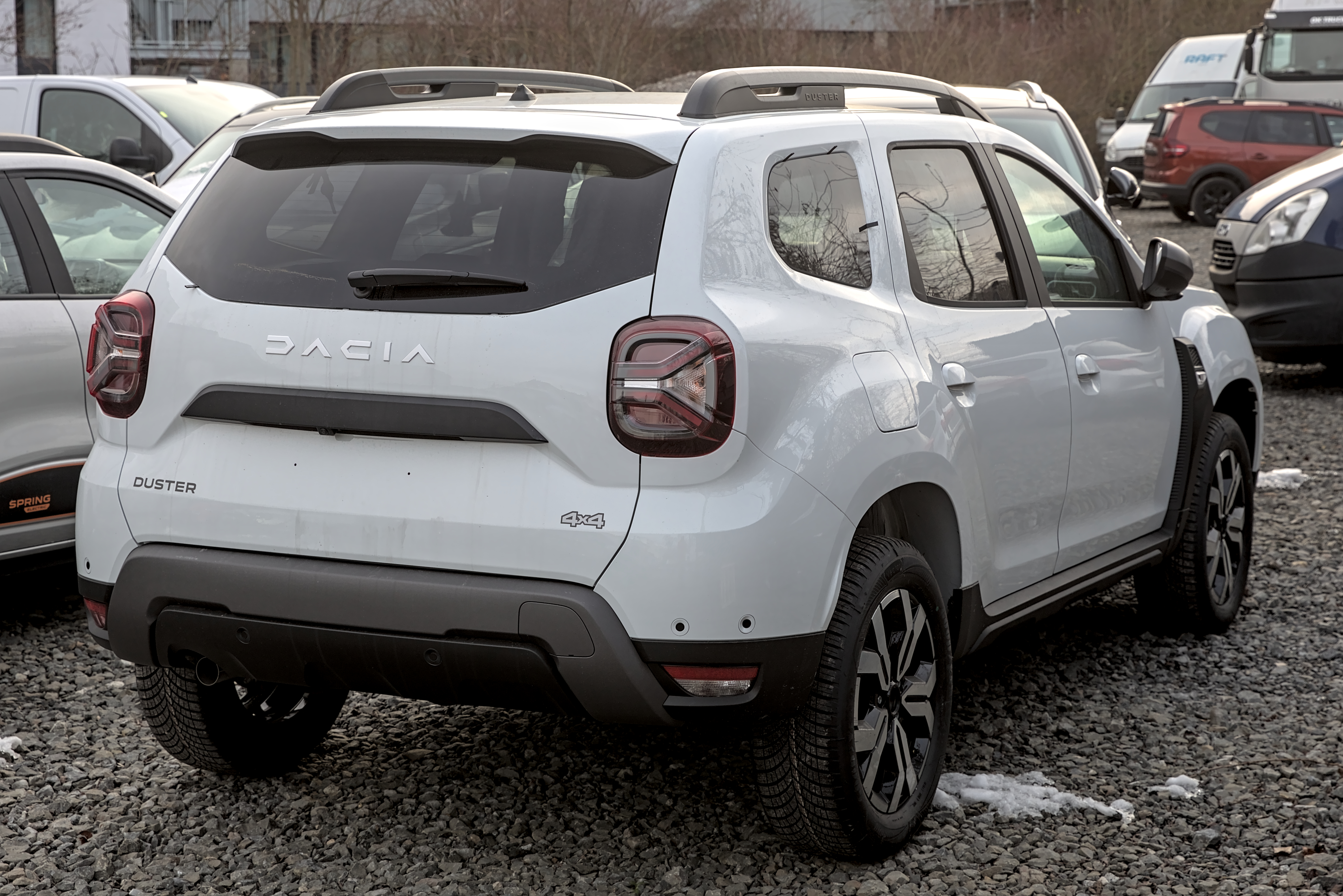
The Duster was Europe's second best selling SUV
behind VW's T-Rock and their Jogger,
I know if you're not used to the Dacia brand,
interesting names, fell a bit.
Electric models are now what drive the growth
at Dacia the spring became Europe's top car
in the A segment with 35,000 sales last year.
Look, it comes with a one-star Euro NCAP.
You can't get away from that,
but the car also doesn't go very far,
so just don't try to get hit by anything
or drive yourself into a tree.
Weak markets in Italy, France, and weirdly, Romania
are dragging on its performance.
There is an electric C segment model coming as well,
and I've mentioned it previously,
the new A segment EV based on the Renault Twingo,
but a Dacia version, which will obviously be much cheaper
and yeah, a little bit kind of feel a lot cheaper,
but it gets the price down.
That'll be here by the end of the year.
Now, Colorado VW dealers are suing to block Scout.
10 Colorado dealerships for Volkswagen Audi and Porsche
have taken their own parent group to court.
On January 20th, they sued the state
after Colorado's Motor Vehicle Dealer Board
voted 6-2 in favor of granting Scout a license.
The case turns on a narrow point of order.
In terms of the law, Colorado doesn't allow manufacturers,
it bars them from owning, operating,
and controlling dealerships
if they already have franchise dealers.
Over the same line make in the state of Colorado,
the dealers argue that Scout,
given it's backing by Volkswagen
and plans to source engines from, you know, Volkswagen,
is actually Volkswagen.
Regulators treated Scout as an independent entity,
saying it's an electric only vehicle maker
entitled to carve out,
so you can sell direct in Colorado,
like Rivian and Lucid.
The dealers say no, it's gonna be an e-rev,
they harvest a range extender.
An extended range electric vehicle,
although with the plug socket on the side,
you can charge the thing, also burns fuel.
So it's not an EV, so it shouldn't be a carve out.
That one will go through the courts.
Now, drivers of Britain's best selling plug-in hybrids
are paying way more for fuel
than the glossy brochures suggest.
New research today by Transport and Environment
finds that plug-in hybrids burn 490% as much fuel
as the manufacturers claim they do.
It pushes the real world cost of fueling plug-in hybrids
to 985 pounds a year.
The manufacturers say, no, it's more like 530 pounds a year
if you plug for things in overnight
and fully charge them on cheap rate electricity.
Of course, over the course of you owning a plug-in hybrid
for a long time, the gap matters
to very tight household budgets.
Policy now risks locking drivers into higher costs
as manufacturers are arguing with the governments
to allow plug-in hybrids and e-revs to count towards
things like zero emission vehicle mandates,
adding flexibilities that let them meet the targets
but also carrying on selling combustion vehicles
as long as they have a plug socket on the side of them.
Yeah, obviously I don't agree with that.
And a zero emission vehicle mandate
or whatever you want to call it,
like the EU's CO2 reduction to 100%,
which is now going to be 90% by 2035,
that doesn't include an engine.
But it's very inconvenient for the car makers
who have got lots of engines and the technology
and all the R&D costs that went into them
that they would rather like to sell you.
Sorry, they're not EVs.
Renault will fold its Ampere electric vehicle arm
and software arm as well.
Back into the group, ditching a standalone strategy
that never lived up to its billing.
The chief executive, Francois Provoist,
will brief labor unions today on a reorganization effort
and Renault says it will simplify its structure.
The move closes the former boss, Luca D'Ameo's plan,
that was to float Ampere.
Once pitched at a valuation of 10 billion euros
or 12 billion US dollars,
he scrapped the listing two years ago
as Europe's demand for battery electric vehicles
became more uncertain.
The rethink puts Renault in line
with other European makers,
retreating from some of their purie V investments
and being a little more cautious.
Now, let's talk about Mitsubishi.
This is interesting.
Mitsubishi will launch a performance electric hatchback
in Australia in the second half of this year,
built in partnership with Foxconn.
Yeah, they assemble iPhones.
It'll be based on the Foxtron Brea platform.
Must confess, not massively familiar.
That sells in Taiwan from about 40,000 US dollars,
but it'll have a Mitsubishi badge on,
Mitsubishi badge in Australia,
and it's aimed at drivers.
So a dual-motor all-wheel drive,
300 kilowatts of power, four seconds 0-60,
super all-wheel drive system being a Mitsubishi
with lots of performance,
like leaning into their rally drift mode kind of heritage,
either being an ASX VRE or ASX GTE.
Again, doesn't mean a huge amount to me,
but I think Australian engineers
that are carrying out the kind of local fine-tuning,
like hardware changers and market-specific software,
will probably be having a bit of fun with that.
Now, Ford say they will return to Formula One this year,
after two decades away.
They have put their logo really tiny
on the side of the Red Bull cars,
and they're meant to be Ford engines,
but that Red Bull powertrain effort
has been going for many, many, many years,
and while it's handy to have some of Ford's money,
I think Ford would quite like you to know
that they've built the engines.
They've talked a lot about,
oh, we're going back to Formula One.
There's a lot of Red Bull in there.
Jim Farley, Ford's boss, frames the tie-up
with Red Bull racing as a way to catch up
with the Chinese car makers
that now lead in software and digital
and over-the-air updates.
So, Ford's answer is to turn F1
into a software and data laboratory,
where they say with Red Bull,
it will co-develop a 350 kilowatts EV motor
and a combustion engine that runs on sustainable fuels
built for their new hybrid-heavy wheels.
Farley calls the power unit one of the hardest projects
in Ford's history,
thanks to complex demands and real-time data in Formula One.
The Red Bull powertrain's efforts,
of course, spaced in Milton Keynes.
Every time I've driven past it,
it just gets bigger, that place.
And it's been a thing many, many years in the building.
Ford have come on, and like I say,
I've sure written a very healthy check
to join the Red Bull team,
wanting to get lots of, what's the phrase, mind-share.
And wanting you to know that,
oh, we're back in Formula One now.
They're all going to filter through to their road cars.
Maybe you will.
Honda finish us off today.
They will stop making fuel cell systems
at their joint venture plant with General Motors this year.
It will close the partnership that began in 2017.
The move matters less for what it ends than what it starts.
Honda say they will shift any of its hydrogen fuel cell
technology development to its own projects.
It was meant to blend Honda's strengths
and GM's strengths together.
The partners set out to cut the cost of hydrogen
and improve performance and say the joint work
did make systems that were more durable
with low temperature resistance and more cost efficiencies.
Talks between the companies have now led to an agreement
to knock it on the head though.
And that's understandable.
Honda can fall back on what they say
is 30 years of work in hydrogen and fuel cell research,
treating it as a key energy carrier.
I didn't realize they've been doing it for 30 years.
They mentioned that as a bit of a badge of honor, don't they?
30 years of hydrogen R&D.
Let me just spin that around a little bit.
You've been working on this for 30 years
and you've got nothing to show for it.
I wouldn't be boasting about that if I were you.
Of course, hydrogen cars at one point
were trumpeted as key competition to electric vehicles.
And I certainly believe hydrogen
as a simple storage of energy has to have a place.
I know nothing about how it would work on aviation,
safety or shipping or anything like rail, right?
It feels like it's gonna have a place.
But for day-to-day road transport,
the cars that you and I drive,
it's the most ridiculous idea.
And that's your podcast for today.
Thank you to our premium partners,
National Car Charging on the US mainland
and the low-hard charge in Hawaii.
And Test EV, Avalu's trusted partner
for independent EV battery health testing
in Australia and New Zealand.
Have a good and see you tomorrow.
And remember, there's no such thing
as a self-charging hybrid.
I didn't realize I was wasting $415 a month
until I downloaded Rocket Money.
I thought I had my finances under control
until the app laid out all my spending
and categorized it for me.
Takeout, shopping and unused subscriptions
were quietly draining my account.
And as a result, my savings took a backseat.
But Rocket Money doesn't just tell you
what you're wasting money on.
It takes action to save you money.
First, the app looks at your income and monthly expenses
and calculates how much you can safely spend each day
to stay under budget.
Rocket Money also finds and cancels
unwanted subscriptions for you
and even negotiates better rates on your bills.
So you have more money in your pocket.
On average, Rocket Money members
can save up to $740 a year
when using all the app's premium features.
Users love the app with over 186,000 five-star ratings.
It's time to simplify your finances
and take control of your money.
Go to rocketmoney.com slash cancel to get started.
That's rocketmoney.com slash cancel.
Rocketmoney.com slash cancel.
About this episode
Volvo unveils the EX60, boasting impressive range and innovative battery design, aiming to compete in the popular EV segment. Tesla's controversial decision to place basic safety features behind a paywall has sparked backlash, as buyers now face higher costs for essential functionalities. Meanwhile, Volkswagen has overtaken Tesla in European EV sales, reflecting a shift in consumer preferences. The episode also touches on various industry updates, including Ford's return to Formula One and Honda's withdrawal from a hydrogen fuel cell partnership with GM.