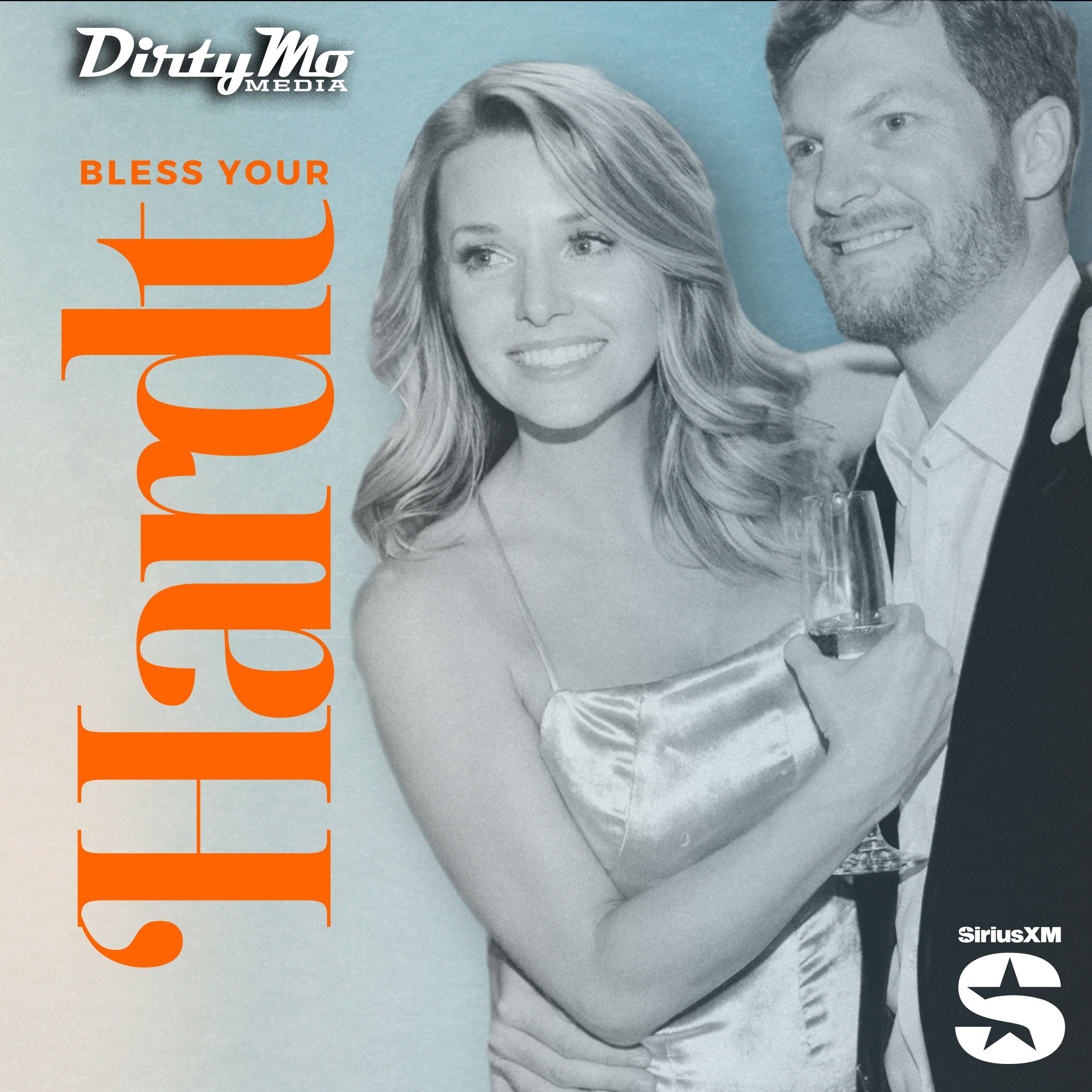
Dale and Amy Got Advice to Give Up Beer
About this episode
Dale Jr. and Amy trade family chaos stories, starting with Ayla’s crude “kick you in the nuts” line delivered to TJ over FaceTime—then they debate whether kids should learn to stand up for themselves (and how much is too much when it’s said to adults). The conversation shifts to Amy’s brainspotting therapy, including a resurfaced seventh-grade embarrassment memory, and how therapy can change emotional triggers. Between that, they review Texas Roadhouse’s new High Rock vodka cocktails, swap weird animal-video reactions, and play “most likely” trivia before an Ask Amy segment on space returns, Coachella, and more.
Dale and Amy are back for another episode of Bless Your ’Hardt, and things get chaotic fast. It starts with their oldest daughter dropping a very “Dale-coded” phrase on a grown man over FaceTime, and Dale’s explanation only makes it funnier. Amy opens up about brain spotting therapy and a buried childhood memory involving a seventh-grade teacher, a Hakeem Olajuwon jersey, and a moment of public embarrassment that stuck with her longer than she realized. Dale answers with one of his own from his teen years, getting called out by Tony Eury Sr. for not offering pizza to a crew, and how it shaped him.
They also get real about couples therapy and the one piece of advice that completely changed how they handle arguments. Of course, it would not be an episode without the chaos: Dale giving a 2,500-person speech with a cardboard collar still in his shirt, the girls walking around with one earring each, and Travis going down a Google rabbit hole after Dale makes up a wild alligator “fact.” Plus, Ask Amy returns with questions about festivals, cats, and social etiquette disasters. And do not miss this week’s Drink of the Week presented by High Rock Vodka.
Check out Dirty Mo Media on YouTube: https://www.youtube.com/@DirtyMoMedia
Hosted by Simplecast, an AdsWizz company. See pcm.adswizz.com for information about our collection and use of personal data for advertising.
Texas Roadhouse
"This is what you can find at Texas Roadhouse nationwide. It is on the menu."
Texas Roadhouse is a restaurant chain you can find in many parts of the U.S. They’re being used here as the source for a specific drink you can order.
Texas Roadhouse is a U.S. casual dining chain known for steakhouse-style food and a strong presence across many states. In this segment, it’s mentioned as the place where the “drink of the week” can be found nationwide.
vodka
"Two ounces of high rock vodka, three ounces of margarita sour mix, two ounces of orange juice..."
Vodka is an alcoholic drink made by distilling a fermented mixture. In this recipe, it’s one of the main ingredients that gives the drink its alcohol content.
Vodka is a distilled spirit typically used as a base in mixed drinks. Here it’s specified as “high rock vodka,” indicating the drink’s alcohol component and flavor profile.
margarita sour mix
"Two ounces of high rock vodka, three ounces of margarita sour mix, two ounces of orange juice..."
Margarita sour mix is a bottled cocktail ingredient that’s meant to make a drink taste tangy and sweet without mixing everything from scratch. It’s a big part of the flavor in this drink.
Margarita sour mix is a pre-made blend used to quickly add tartness and sweetness to cocktails. In this recipe, it’s measured as a key component that shapes the drink’s sour, citrusy taste.
orange juice
"...three ounces of margarita sour mix, two ounces of orange juice..."
Orange juice is just juice from oranges. In cocktails, it helps make the drink taste fresh and adds a bit of sweetness.
Orange juice is a common cocktail ingredient that adds citrus flavor and some sweetness. In this drink, it’s measured precisely to balance the vodka and sour mix.
vanilla syrup
"...two pumps of candy, orange syrup, and then two pumps of vanilla syrup."
Vanilla syrup is sweet syrup flavored with vanilla. Adding it to a drink gives it a richer, sweeter taste.
Vanilla syrup is a sweet flavored syrup used to add dessert-like aroma and sweetness to cocktails. This segment specifies “two pumps of vanilla syrup,” indicating it’s part of the drink’s signature flavor.
Total Wine
"A total wine. A total wine. And it's great."
Total Wine is a store where you can buy alcohol and cocktail ingredients. They’re suggesting you can get what you need there to make the drink yourself.
Total Wine is a large U.S. retailer specializing in beer, wine, and spirits. Here it’s mentioned as a source where you can buy ingredients to make the drink at home.
Long Island Iced Tea
"So we also have the Long Island Iced Tea... And it's one half ounce of high rock vodka, a half ounce of gin, a half ounce of rum, four ounces of sweetened sour, and a splash of cola."
Long Island Iced Tea is a popular cocktail made from several types of alcohol plus sweet flavoring. They also explain you shouldn’t shake it because it has soda in it.
Long Island Iced Tea is a classic mixed drink known for combining multiple spirits with a sweet-and-sour base and cola. In this segment, the hosts give a specific ingredient breakdown and explain how to serve it (don’t shake because it’s soda).
splash of cola
"...four ounces of sweetened sour, and a splash of cola. So you should just mix that up in your glass. You don't shake it because it's soda."
They add a little cola to the cocktail for sweetness and fizz. That’s also why they say don’t shake it—shaking can mess with the soda.
A “splash of cola” means adding a small amount of cola soda to the drink for sweetness and carbonation. The hosts later note you don’t shake it because it’s soda, which helps preserve the bubbles.
sweetened sour
"...a half ounce of rum, four ounces of sweetened sour, and a splash of cola."
Sweetened sour is a mix that gives cocktails a balance of tangy and sweet flavors. It’s one of the ingredients that makes the drink taste “right.”
Sweetened sour is a cocktail mixer typically made from citrus juice (like lemon or lime) plus sugar. It’s used here as a key part of the Long Island Iced Tea’s flavor balance—tartness plus sweetness.
race cars
"They might, some folks kind of continue to tinker on cars or bring in other race cars that were weekend racers like Tony Jr. Me, my street stock, things like that."
They’re talking about cars that are used for racing, not just regular driving. People often spend time working on them so they’re ready for weekend events.
The segment mentions “race cars” being brought in by weekend racers, which points to a common motorsports culture: working on cars outside of formal racing events. This often includes maintenance, setup changes, and basic prep before track days.
tinker on cars
"They might, some folks kind of continue to tinker on cars or bring in other race cars that were weekend racers like Tony Jr. Me, my street stock, things like that."
“Tinker on cars” means people working on their cars themselves—fixing things or making small changes. It’s common for weekend racers who want their cars to be ready.
“Tinker on cars” describes hands-on maintenance and modifications that hobbyists do between races. In motorsports communities, this can range from simple repairs to setup work that affects how the car drives.
street stock
"They might, some folks kind of continue to tinker on cars or bring in other race cars that were weekend racers like Tony Jr. Me, my street stock, things like that."
Street stock is a type of local racing where the cars start from regular street cars. They’re usually modified for racing, but not as heavily as more expensive race classes.
“Street stock” is a grassroots racing class where cars are based on production models and are typically less modified than higher-level classes. It’s often associated with local short-track racing and weekend racers who want affordable competition.
driving through little safaris
"You see those people are driving through little safaris and animals... They're feeding animals through their car. No, I don't want any of that. Yeah, we've done that before. Honestly, that just bangs your car off."
It’s like a zoo where you stay in your car and drive through an area with animals. Because you’re close to animals (and sometimes other cars), it’s easier to accidentally hit something and damage your vehicle.
This describes a “drive-through safari” style attraction where animals are kept near the road and visitors stay in their vehicles. The key automotive takeaway is that these activities often involve close contact with animals and other vehicles, which increases the chance of dents, scratches, and body damage.
pull over
"And we got out, everybody's driving by. [2723.1s] We pull over, we get out. [2724.3s] Dogs alive."
To pull over means to pull the car to the side so you can stop safely. They did it because they saw a dog in the road and needed to get out and help.
To pull over means to move the car off the roadway to the shoulder or a nearby safe area. The speakers pull over because they see a dog in the middle of the road and need to stop safely to help it.
before phones / before being able to Google
"And we, this is before phones. [2729.7s] Like this is before being able to Google where something is. [2732.6s] Yeah."
They’re saying this was before smartphones and Google, so they couldn’t quickly look up directions or nearby places. That made it harder to find a vet fast while on the road.
This highlights how navigation and finding services used to rely on memory, asking locals, or paper maps rather than real-time search. For car trips, it changes how quickly you can locate a nearby vet or other help after an incident.
back seat
"And we put this dog in the back seat of the rental car. [2735.9s] And luckily, I don't know how we figured it out, but we found a vet,"
The back seat is the seat behind the driver and front passenger. They put the dog there so they could drive it to get help.
The back seat is the passenger area behind the front seats, typically used for additional passengers or cargo. In this segment, it’s where they place the dog to transport it safely while driving to a vet.
rental car
"And we put this dog in the back seat of the rental car. [2735.9s] And luckily, I don't know how we figured it out, but we found a vet,"
A rental car is a car you rent for a short time from a company. Here, they used the back seat of that rental to help a hurt dog get to a vet.
A rental car is a vehicle you borrow short-term from a rental company, usually under a daily/weekly contract. In this story, it matters because they’re using the rental’s back seat to transport an injured animal.
rotary mower/brush cutter use on a tractor
"Dad was mowing with his bush hog and saw a bunny, a baby bunny run out under the tractor."
This is the kind of mower that spins and chops vegetation near the ground. If something small is hiding nearby, it can get startled when the tractor starts moving.
Using a rotary mower on a tractor is common for clearing brush and mowing rough ground. Because it’s cutting vegetation close to the ground, animals can be startled or run out from under the mower area.
bush hog
"One time dad was mowing with his bush hog and saw a bunny, a baby bunny run out under the tractor."
A “bush hog” is basically a tractor mower. Farmers use it to cut tough overgrown grass and weeds.
A “bush hog” is a brand name that’s commonly used to mean a rotary mower/brush cutter attachment used on tractors. It’s designed to cut tall grass, weeds, and brush, especially on rural or farm land.
fob
"Well, you still have to have the fob... I just leave my fob in my car... But when I get back in the truck, I throw it back in the console."
A fob is the small key you keep in your pocket or purse. It talks to the car so you can unlock it and start it without using a metal key.
In modern cars, a “fob” usually refers to the key fob that communicates with the vehicle for keyless entry and ignition. If the fob is inside the car, many vehicles allow you to start and drive without inserting a traditional key.
keyless entry
"Well, you still have to have the fob... I don't lose the fob... It's just my phone."
Keyless entry means you can unlock and lock your car without putting a key in the door. The car recognizes your fob and lets you use it.
Keyless entry is the system where the car detects the key fob and unlocks/locks without you inserting a key. It’s commonly paired with push-button start and immobilizer logic to prevent unauthorized driving.
front straightaway
"It was like 2014, and we're getting ready to go out to intros in an hour or so, and they were playing on the front straightaway. Everclear was on the front straightaway, and I was sitting there..."
A straightaway is the long straight part of a race track. The “front” one is usually the main section people can see easily, and it’s where cars are going fastest.
A front straightaway is the main straight section of a racetrack where cars build speed before braking for the next corner. It’s often the loudest and most visible part of the track during events, which is why bands or speakers might be described as playing “on the front straightaway.”
mound
"[4136.2s] And throwing from the mound is different. [4138.3s] Like people aren't used to throwing from the mound too."
The mound is the raised spot where the pitcher stands. Throwing from there is different than throwing from the field, so it can throw people off.
The “mound” is the raised pitching platform in baseball. Pitching from the mound changes the mechanics and timing compared with throwing from flatter ground, which can make someone’s first pitch feel harder or “off.”
throw out the pitch
"[4147.6s] There's no good that comes of it. [4148.8s] Only bad. [4149.7s] It's one of those things where they're like, come throw out the pitch."
In baseball, a guest sometimes throws the first ceremonial pitch before the game starts. It’s basically a “showtime” throw, and if it goes badly people notice.
“Throw out the pitch” refers to the ceremonial first pitch thrown by a guest or celebrity before a baseball game. It’s a high-pressure moment because the throw is judged by fans and players, even though it’s not part of the actual competition.
dugout
"[4166.8s] I couldn't, who threw out the pitch last night. [4168.8s] There ain't nobody talking about that. [4170.5s] But if he, you know, threw it in the dugout, it'd be all over there."
The dugout is where the team sits and hangs out during the game. If a throw goes into the dugout, it’s usually a clear sign it missed the target.
The “dugout” is the sheltered area where a team sits and where players gather between plays. In the context of the transcript, throwing a pitch “in the dugout” implies a very inaccurate throw that would be obvious to everyone.
Request an Explanation
Heard something you'd like explained? We'll add it to this episode.
Sign in to request explanations for terms you heard.
Want to learn more?
Browse our glossary for plain-English explanations of automotive terms, jargon, and concepts.
Help improve this episode
See something that's not quite right? Our annotations are AI-generated and can sometimes miss the mark. Click the flag icon on any annotation to suggest a correction.