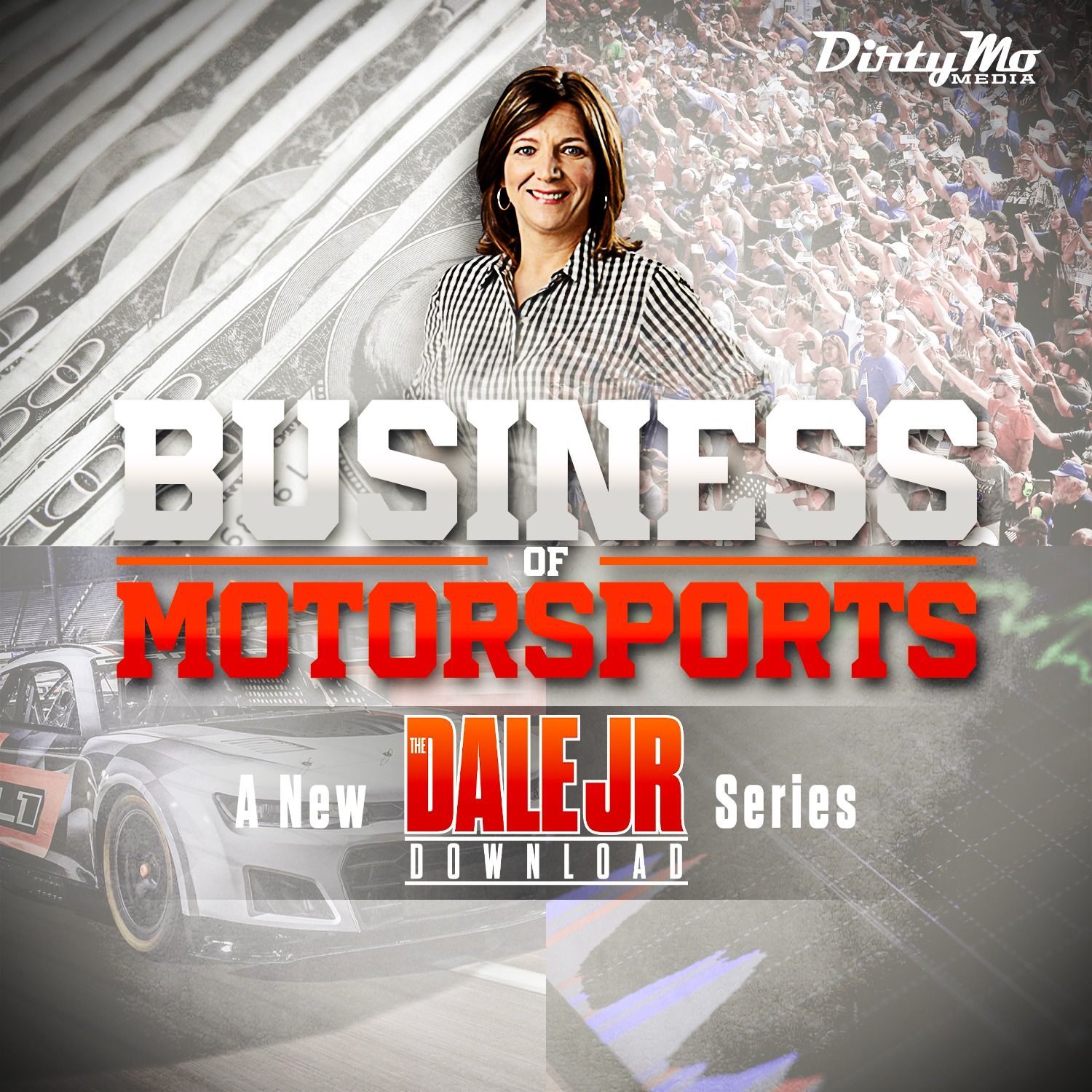
Mike Davis Knew It Was Time To Leave The Dale Jr. Download
About this episode
“Welcome to the business of motor sports.” Mike Davis (Dirty Mo Media) joins to explain why he stepped away from The Dale Jr. Download. They revisit his NASCAR start—“2002 was my first year in NASCAR”—and early Dale Earnhardt Jr. moments, then zoom out to the behind-the-scenes PR and media strategy. Davis describes mounting pressure as the company and show grew, saying, “I would rather go back and build the company and run the company.” The conversation also covers how the show evolved, including fan-first formats and direct-to-fan injury updates.
Mike Davis didn't set out to run a media company – he set out to help tell Dale Earnhardt Jr.'s story. Today, he's President of Dirty Mo Media, leading a company that's grown from a single podcast into a full network of shows, live events, and branded content across NASCAR, motorsports and new verticals outside of the racing world.
In Part 1, Kelley Earnhardt Miller takes Mike back to the beginning: becoming Dale Jr.'s publicist during the Budweiser years, helping navigate the historic departure from DEI, and launching the original Dale Jr. Download with no business plan – just an instinct that NASCAR fans wanted more Dale Jr. content.
That instinct turned into Dirty Mo Media. As the company grew beyond one show, Mike made the call to move from behind the mic as co-host of the Download to behind the scenes – becoming President and eventually an equity partner, focused on building the infrastructure, team, and strategy behind DMM's expansion.
This is the story of how one NASCAR podcast became a media company, and the partnership that made it possible.
Part 2 drops next week, where Mike and Kelley go deeper on what DMM looks like today and where it's headed next
Check out Dirty Mo Media on YouTube: https://www.youtube.com/@DirtyMoMedia
Hosted by Simplecast, an AdsWizz company. See pcm.adswizz.com for information about our collection and use of personal data for advertising.
Bud shootout
"And my first race with Dale was the Bud shootout, but then the Daytona 500 in which he won."
The Bud Shootout was an early NASCAR race that helped set the tone for the season. It wasn’t the main championship race, but it was still a big deal.
The Bud Shootout is a NASCAR season-opening exhibition race. It’s typically used as a high-profile early test of teams and drivers before the main points races begin.
Daytona 500
"And my first race with Dale was the Bud shootout, but then the Daytona 500 in which he won."
The Daytona 500 is NASCAR’s biggest race. If a driver wins it, it’s considered a huge accomplishment.
The Daytona 500 is NASCAR’s most prestigious single race, held at Daytona International Speedway. Winning it is a major career milestone and often defines a driver’s legacy.
Victory Lane
"And also was going to win a championship, but then he cussed in Victory Lane."
Victory Lane is where NASCAR winners celebrate right after the checkered flag. It’s a very public spot, so anything said there gets noticed.
Victory Lane is the ceremonial area at NASCAR tracks where drivers go immediately after winning. It’s where the winner’s interviews and celebration happen, so “cussed in Victory Lane” implies a public, on-camera moment right after a win.
sports car crash
"Oh, and he got burned in a sports car crash."
This is describing a serious crash involving a sports car. The “burned” part suggests there was a fire or heat-related injury, which is especially dangerous.
A sports car crash refers to an incident involving a sports car racing or driving context, which can involve different vehicle dynamics and safety systems than stock-car racing. The mention of being “burned” suggests a serious fire-related injury risk.
Fingerprint Incorporated
"Of course, my actual boss was Jade Gers for Fingerprint Incorporated."
Fingerprint Incorporated is the company the speaker says was their actual employer. It’s mentioned to explain who they worked for behind the scenes.
Fingerprint Incorporated is referenced as the employer/organization tied to the speaker’s role. In this context it’s part of the business/PR team structure around Dale Earnhardt Jr.
DEI
"First of all, DEI had tried to hire me, but that was never going to happen because they honestly just that they were a bit lost."
DEI is the racing organization tied to Dale Earnhardt. The speaker is saying that team wanted to hire them, but it didn’t happen.
DEI refers to Dale Earnhardt, Inc., a NASCAR team organization associated with Dale Earnhardt Jr. and his family’s racing operation. The speaker says DEI tried to hire them, implying team staffing and internal uncertainty.
Richie Gilmore
"And I remember going to DEI and meeting with Richie Gilmore and that kind of that group."
Richie Gilmore is a person the speaker met while talking with DEI. The name matters because it shows who was involved in the team side of the conversation.
Richie Gilmore is mentioned as someone the speaker met during discussions with DEI. In NASCAR circles, Gilmore is known as a team executive/manager figure, so this points to the people involved in team operations.
naming rights
"You've gone through IP rights, naming rights, that kind of stuff."
Naming rights are permission to use a name for branding purposes. The speaker is saying that was part of the negotiation process.
Naming rights are contractual rights to use a name—commonly for sponsorships, venues, or branded programs. In motorsports, naming rights can determine how teams, events, or products are branded and marketed.
IP rights
"You've gone through IP rights, naming rights, that kind of stuff."
IP rights are legal rights to things like names, logos, and branding. The speaker is saying the negotiation included who gets to use those assets.
IP rights means intellectual property rights—legal ownership of creations like names, logos, branding, and other protected assets. In sports PR and sponsorship deals, IP rights often cover how a driver’s name and likeness can be used.

Kia Rondo
"...after a really good season. Then you had the Pete Rondo, Steve Mille year 2005. We won one race at Chicag..."
The Kia Rondo is a people-hauling car meant for everyday family or group use. It’s designed to be practical, with room for passengers and luggage.
The Kia Rondo is a family-oriented compact MPV (multi-purpose vehicle) built for practical everyday use like carrying people and cargo. It’s significant because it represents Kia’s focus on building versatile, comfort-first vehicles rather than performance-focused ones. In the podcast context, the name appears as “Rondo” alongside other names/years, suggesting it’s being used as a reference point rather than a detailed technical discussion.

Subaru 360
"...which I would start some. I can't even watch J.M. 360s because they're so hard to watch for me. Why?"
The Subaru 360 is a very small car made in Japan, designed to be inexpensive and easy to drive. Because it’s so tiny and basic compared to modern cars, it can feel hard to watch or understand if you’re used to today’s vehicles.
The Subaru 360 is a small, early Japanese kei car known for being lightweight and simple, making it a notable piece of automotive history. It often comes up in conversations about classic, compact cars because its design and size reflect how manufacturers built cars for very limited space and low costs. It may be discussed in the podcast context as a reference point for why certain older vehicles are difficult to watch or evaluate by modern standards.
Request an Explanation
Heard something you'd like explained? We'll add it to this episode.
Sign in to request explanations for terms you heard.
Want to learn more?
Browse our glossary for plain-English explanations of automotive terms, jargon, and concepts.
Help improve this episode
See something that's not quite right? Our annotations are AI-generated and can sometimes miss the mark. Click the flag icon on any annotation to suggest a correction.