
Noah Gragson & Chase Briscoe: Doubting The Moon & Meeting Figgy Earnhardt
About this episode
Noah Gragson and Chase Briscoe join Dale Jr. for a wide-ranging chat that blends Atlanta race reflections with off-track stories. They describe a start that felt like “a rocket ship with no gas in it,” then talk about how pit-stop adjustments changed the grip and even helped them get back on the lead lap. Between NASCAR talk, there’s plenty of humor—meeting Figgy Earnhardt, fishing tales, and even helmet swaps—plus a look at how bonus points tighten the championship chase.
Dale Earnhardt Jr. was away, so Chase Briscoe and Noah Gragson invaded the Arby’s Studio to sit in for a new episode of Dirty Air. The guys bring the hilarity and recap NASCAR’s big weekend in Atlanta:
- Going fishing in Georgia
- Noah’s beef with Kevin Magnussen
- Hanging out during the rain delay with Figgy Earnhardt
- Chase buys his son a drum set
- Race winner Ryan Blaney calls into the show
- Bubba’s penalty was the right call
- The points standings are getting close
During the Ask Jr. segment, fans sent in questions asking Chase and Noah about:
- Meeting the Costco Guys in Atlanta
- Top candy bars
- Noah’s time in military school
- Chase in solo-dad mode with the twins
- Favorite songs
- Their first big purchases
Check out Dirty Mo Media on YouTube: https://www.youtube.com/@DirtyMoMedia
Hosted by Simplecast, an AdsWizz company. See pcm.adswizz.com for information about our collection and use of personal data for advertising.
Indianapolis Motor Speedway
"We told that last month at Indianapolis Motor Speedway and ironically enough, that show just came out, you know, a week or two ago."
Indianapolis Motor Speedway is a major racing track in the U.S. It’s most famous for the Indy 500, and it’s known for being fast and high-profile in motorsports.
Indianapolis Motor Speedway (IMS) is a famous motorsports venue in Indiana, best known for hosting the Indianapolis 500. In NASCAR and other series, it’s also used for testing and special events because of its large oval layout and high-speed nature.

Xfinity cars
"And so these cars are old Xfinity cars that we has laying around and they pretty much just put a right seat in them."
“Xfinity cars” are the race cars used in NASCAR’s Xfinity Series, which is like the step just below NASCAR’s top level. They’re real race cars designed for track driving, not normal street cars.
“Xfinity cars” refers to race cars built to compete in NASCAR’s Xfinity Series, which is the sport’s top developmental ladder below the Cup Series. They’re purpose-built for oval and road-course racing, so the hosts are describing using current-spec Xfinity machinery for the show experience.
right seat
"And so these cars are old Xfinity cars that we has laying around and they pretty much just put a right seat in them."
In racing, the “right seat” is the passenger spot next to the driver. It’s where a guest sits while the driver does the driving.
“Right seat” in racing means the passenger position next to the driver (typically on the co-driver/passenger side). It’s commonly used when someone rides along to experience the car’s pace while the driver focuses on controlling the car.
road course
"So we took them around the big track and then we take them around the road course, in a road course car."
A road course is a track with lots of turns, more like driving on real roads than a big oval loop. Race driving there is harder because you’re constantly changing direction and speed.
A road course is a type of race track made of turns and varying corners, often more like a winding road than a simple oval. NASCAR road courses require different braking points, cornering technique, and setup than oval racing.
Talladega
"coming to off a turn four, you just go down the back stretch of Daytona and Talladega and get inside"
Talladega is another top NASCAR oval track known for very fast, tightly grouped racing. When cars are packed together, a risky move can work—or it can lead to penalties that hurt your chances.
Talladega is shorthand for Talladega Superspeedway, another high-speed NASCAR oval famous for restrictor-plate racing and tight pack dynamics. The track’s speed and drafting mean aggressive moves can be decisive, but rule penalties can also swing outcomes quickly.
Daytona
"coming to off a turn four, you just go down the back stretch of Daytona and Talladega and get inside"
Daytona is a famous NASCAR oval track where cars race at very high speed. Because it’s an oval with lots of drafting, where you position your car and how you follow the rules can strongly affect who wins.
Daytona is shorthand for Daytona International Speedway, a high-speed NASCAR oval known for drafting and pack racing. Its layout makes lane choice and rule enforcement (like staying above/below certain lines) especially impactful late in runs.
double yellow line penalty
"I mean, it's not the first time we've seen it. It's probably not the the last time [2620.1s] we're ever going to see a double yellow line penalty."
On NASCAR tracks, there are special painted lines that drivers are required to stay within. If you cross the “double yellow line,” NASCAR can penalize you because it can mean you’re taking a shortcut or gaining an unfair advantage.
In NASCAR, a “double yellow line” refers to the painted boundary on the track that drivers are not supposed to cross when exiting or passing under certain rules. A “double yellow line penalty” is the sanction for crossing that line, typically to discourage gaining an advantage by going off the intended racing surface.
throw a block
"like whatever you do has to be extremely aggressive and you [2665.8s] have to catch them off guard because they're going to try to throw a block."
“Throw a block” is NASCAR slang for a defensive move where a driver positions the car to prevent an opponent from completing a pass. It’s especially relevant late in a race when the trailing driver is trying to make an aggressive move and the leader is trying to deny the lane.
darty
"I think he just didn't realize how far left he got. It gets really darty when you're like that too."
“Darty” means the car feels kind of shaky and hard to keep straight. It often happens when the tires don’t have as much grip as they need.
“Darty” describes a car that feels unstable and twitchy, often moving unpredictably under braking, steering input, or throttle. In racing, it usually points to reduced grip or a setup/traction balance that makes the car harder to hold steady.
split second decisions
"but at the time it's a split second decision. You're trying to win the race. It's hard to,"
In racing, a “split second decision” is when a driver has to react almost instantly. That quick choice can be the difference between a clean move and a crash.
A “split second decision” in racing refers to the extremely brief moment where a driver must choose a maneuver—like timing a move or avoiding contact—before the car’s position and grip make other options impossible. These moments often decide whether a pass works or turns into a wreck.
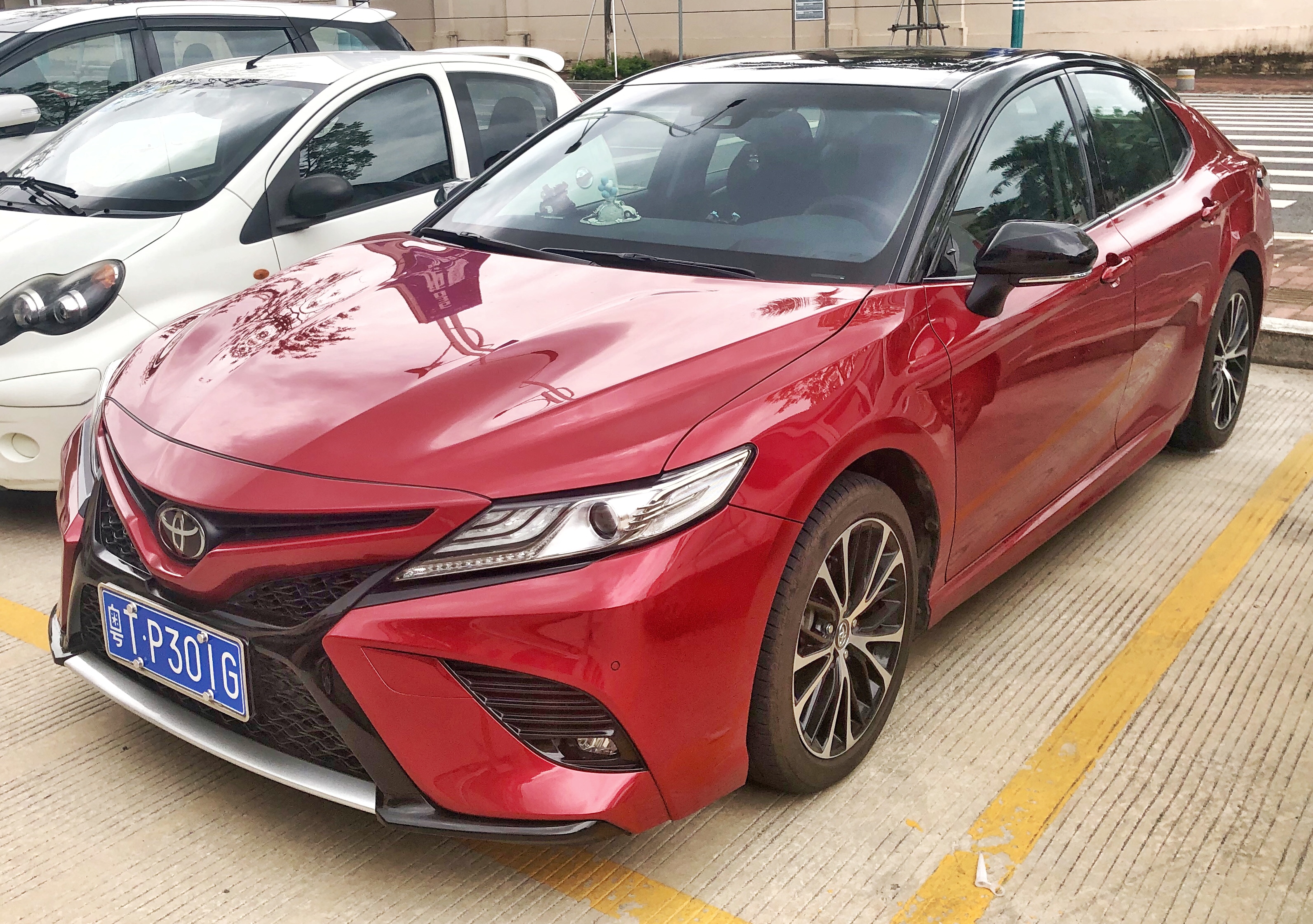
Toyota Cars
"...hought if it would have stayed hot and slick, our Toyota cars would have been really good. At the end, no help ..."
three wide
"It's like, I've been more focused on how we can get our ship turned around, but definitely an exciting finish. Three wide coming to the line was big."
“Three wide” is when three cars are next to each other at the same time. It’s exciting, but it’s also risky because there’s less space to avoid mistakes.
“Three wide” means three race cars are running side-by-side in the same corner or on the same straight. It’s a high-risk, high-traffic situation because there’s less room for each car to make adjustments without contact.
bottom lane
"The bottom lane kind of had a little bit of momentum at the time, but everybody's going to feed to the top lane."
The “bottom lane” is the lower line near the inside of the track. Depending on tire grip and conditions, it might be faster—or it might fall behind the outside line.
The “bottom lane” is the lower racing line near the inside of the track. It can have different grip and entry speed characteristics than the top lane, so which lane is faster can shift during a race.
top lane
"but everybody's going to feed to the top lane. I mean, if you watch the race, you just see how much momentum the top lane carries."
The “top lane” is the higher racing line near the outside of the track. Sometimes it’s faster because the cars keep more speed through the turn.
In oval racing, the “top lane” is the higher line near the outside of the track. Drivers often prefer it when it carries more speed or momentum through the corner, especially as tire grip and track conditions change.
Atlanta
"Obviously, I feel like Atlanta never disappoints. It's always a good race and very chaotic."
They’re talking about a NASCAR race at Atlanta Motor Speedway. It’s a track where races can get wild late, so it’s notable when there aren’t more crashes.
This refers to a NASCAR race at Atlanta Motor Speedway, a track known for high speeds and frequent late-race drama. The host is commenting on how chaotic the event can be and how often wrecks happen there.
chase is getting tight
"The chase is getting tight. Back to the host of our stuff though."
They’re talking about the championship race in NASCAR. “Getting tight” means the top drivers are close in points, so results can quickly change who’s leading the title fight.
“Chase” here means the NASCAR points battle where the championship contenders are separated by relatively small point gaps. When the host says it’s “getting tight,” they mean the standings are close enough that one bad result can swing who’s in contention.
added bonus points
"I think it's been pretty, it's amazing to me how big a win actually is now with the added bonus points. It is a lot."
NASCAR gives extra points for certain achievements during a race. The host is saying those extra points can make a big difference in who’s winning the season standings.
In NASCAR, “bonus points” are extra points awarded for specific accomplishments (commonly including stage performance and race results). The host is emphasizing that these bonus points can dramatically change the points gap after a race.
stage points
"You can't have a bad week or an off week. I mean, you might be able to have one or two, but you have to be getting stage points, winning races."
NASCAR races are split into stages. Drivers can earn points for how they do in each stage, not just for the final finish.
“Stage points” are points awarded based on performance in NASCAR race stages (segments of the race). Drivers can earn these points even if they don’t win the overall race, which makes consistency throughout the event crucial.
stages
"It definitely every race matters. Every stage matters. You know, for me, you know, even Sonoma, right?"
In NASCAR, a race is broken into sections called stages. Drivers can earn points at the end of each section, so it affects the championship even if you don’t win the whole race.
NASCAR races are split into multiple segments called stages. Points are awarded at the end of each stage, so a driver can gain (or lose) championship position even without winning the overall race.
Sonoma
"You know, for me, you know, even Sonoma, right? Like I ran second and I was mad that I didn't win..."
Sonoma refers to Sonoma Raceway in California, a road-course venue on the NASCAR schedule. Because it’s a different kind of track than many ovals, stage results and bonus points can have a big impact on how the championship shakes out.
Tony Stewart
"I'm excited for the chase to start because if you have somebody that does a, you know, Tony Stewart 2011 run where they can go win four or five races..."
Tony Stewart is a famous NASCAR driver. The host is using his 2011 season as an example of what it looks like when someone wins a bunch of races and suddenly becomes a championship threat.
Tony Stewart is a former NASCAR driver known for aggressive, high-win seasons. Here, the speaker references Stewart’s 2011 run as an example of how a driver can win multiple races in a row and climb the points enough to contend for the championship.
chase cutoff
"I feel like the chase cutoff though is going to be just so interesting because you're going to a lot of short tracks."
The chase cutoff is the “line” in the standings that decides who makes it into the final playoff part of the season. If you’re near it, every race can be make-or-break.
The chase cutoff is the points threshold that determines which drivers advance into the championship-deciding playoff rounds. The speaker expects it to be especially tight because the schedule includes many short tracks, where results can swing quickly.

Dodge Charger
"...y went with just me and my cell phone and I had a charger as well. And then when I got done there after two..."
The Dodge Charger is a large car made by Dodge. It’s usually built for comfortable everyday driving, and some versions are made to go fast. In the podcast, it’s mentioned as “a charger,” meaning the car itself.
The Dodge Charger is a full-size American sedan that’s known for performance versions and a long history in motorsports and street driving. It often comes up in podcasts when people are talking about cars they’ve owned, seen at events, or used as a personal “go-to” vehicle. In this context, it’s mentioned as “a charger,” likely referring to the vehicle by name.
Luma Craft race cars
"Yeah. So my roommate Tristan Fleming, after San Diego, we drove up to Newport and I met up with him and got to see him. So that was really cool. He owns a Luma Craft race cars, which they do a lot of like, sand cars for Glamis and the dunes and stuff."
Luma Craft is a company that makes vehicles for off-road desert use. Here, they’re talking about dune driving—like the kind of racing and fun people do in sand dunes.
Luma Craft is a brand known for building off-road-focused race boats and sand-focused vehicles used for desert driving. In this story, the host says Tristan Fleming owns Luma Craft race cars that are used for Glamis-style dune riding, so it’s about purpose-built machines for sand and dunes rather than street cars.
sand cars
"He owns a Luma Craft race cars, which they do a lot of like, sand cars for Glamis and the dunes and stuff."
“Sand cars” are off-road vehicles built for driving on sand. They’re set up to get traction and handle the rough conditions of dunes.
“Sand cars” refers to off-road vehicles set up specifically to drive through loose sand. They typically prioritize traction (tires and drivetrain setup) and durability for the constant sand resistance and impacts.
Glamis
"He owns a Luma Craft race cars, which they do a lot of like, sand cars for Glamis and the dunes and stuff."
Glamis is a popular desert dune area where people go off-roading. It’s especially known for sand-car and dune-buggy fans.
Glamis is a well-known off-road riding area in Southern California’s desert dunes. It’s famous among dune-buggy and sand-car enthusiasts for events and year-round riding.

Rolls-Royce Phantom
"...k it was to it. You have. Yes, you've heard this. Phantom so big it can't even fit in the parking spot. I d..."
The Rolls-Royce Phantom is a very expensive luxury car. It’s designed to be comfortable and quiet, and it’s also known for being extremely large. The podcast is mentioning how big it is—so big it may not fit easily in a parking spot.
The Rolls-Royce Phantom is a flagship luxury sedan built for maximum comfort, quietness, and high-end appointments. It’s often discussed because it’s extremely large and designed to feel effortless, including for rear-seat passengers. In this context, the “Phantom so big it can’t even fit in the parking spot” line highlights its size and presence.

Ford F
"... went cup racing. I'd always loved like the 1950s Ford F 100s, like with just the huge fenders and everyth..."
The Ford F-100 is an older pickup truck model from Ford. It’s known for its classic 1950s styling, including a more rounded, chunky look. The podcast is referencing the kind of F-100 design the speaker has always liked.
The Ford F-100 is a classic older-generation pickup truck, especially associated with the 1950s look people often describe as having big fenders and a bold, vintage stance. It’s significant because it represents an era of American truck design that many enthusiasts still find visually iconic. In the podcast, it’s brought up as something the speaker has always loved.

F-150
"I did buy, I went to this autograph session last year in Kansas and I was sitting there and there was a single cab F-150. I was just about to say you got like seven vehicles and"
The Ford F-150 is a popular full-size pickup truck. Here, they’re talking about an F-150 that had a special exhaust setup coming out the side, which usually means it’s been modified or has a more serious engine than you’d expect.
The Ford F-150 is a full-size pickup truck known for being widely available in many configurations. In this segment, the host mentions a specific F-150 setup with unusual side-exit exhaust, which is a common way enthusiasts hint at a more modified or higher-performance engine.
supercharged
"He's like, oh, it's a 50 supercharged. I didn't know what sleeper trucks are, but now I do."
“Supercharged” means the engine has a device that pushes extra air into it. More air usually means more power, so the car can feel faster than you’d expect.
A supercharged engine uses a belt-driven compressor to force more air into the cylinders. That extra air lets the engine make more power than the same engine without boost, which is why supercharged cars often feel much quicker.
sleeper trucks
"He's like, oh, it's a 50 supercharged. I didn't know what sleeper trucks are, but now I do."
A “sleeper” is something that looks ordinary, but it’s actually fast or powerful. In this case, the truck looks normal, but it has performance mods or a stronger engine.
A sleeper truck is a vehicle that looks fairly normal on the outside but has surprising performance underneath. The idea is to “hide” the real power so it can catch people off guard.
F-150 Raptor
"... pretty cool. And it was like half the price of a Raptor R for like 700 horsepower. I was like, can't be t..."
The F-150 is Ford’s pickup truck. Depending on the version, some F-150s can be very powerful. In the podcast, it’s brought up in a comparison about how much power you get for the money.
This “F-150” reference is to the Ford F-150 pickup line, which can be configured in many ways and is known for strong performance options depending on the model year and engine. The podcast compares it to a high-performance truck by mentioning horsepower and price, suggesting they’re talking about a faster or more capable F-150 variant. It’s discussed because buyers often weigh performance versus cost in the F-150 lineup.

Morgan Six Plus
".... I was getting there but I always struggled with six plus seven. And I always struggled with that's not a 6..."
The Morgan Plus Six is a small sports car made by Morgan. The “Six” is part of the model name, and it’s meant to be a specific version of the car. The podcast is referencing it while talking about confusion with numbers like “6 plus 7.”
The Morgan Plus Six is a British sports car known for its lightweight feel and classic roadster styling. It’s often discussed by enthusiasts because it blends traditional design cues with modern performance and driving character. In this context, it’s mentioned in a way that suggests the speaker is clarifying confusion around the “6” in the name.
Request an Explanation
Heard something you'd like explained? We'll add it to this episode.
Sign in to request explanations for terms you heard.
Want to learn more?
Browse our glossary for plain-English explanations of automotive terms, jargon, and concepts.
Help improve this episode
See something that's not quite right? Our annotations are AI-generated and can sometimes miss the mark. Click the flag icon on any annotation to suggest a correction.