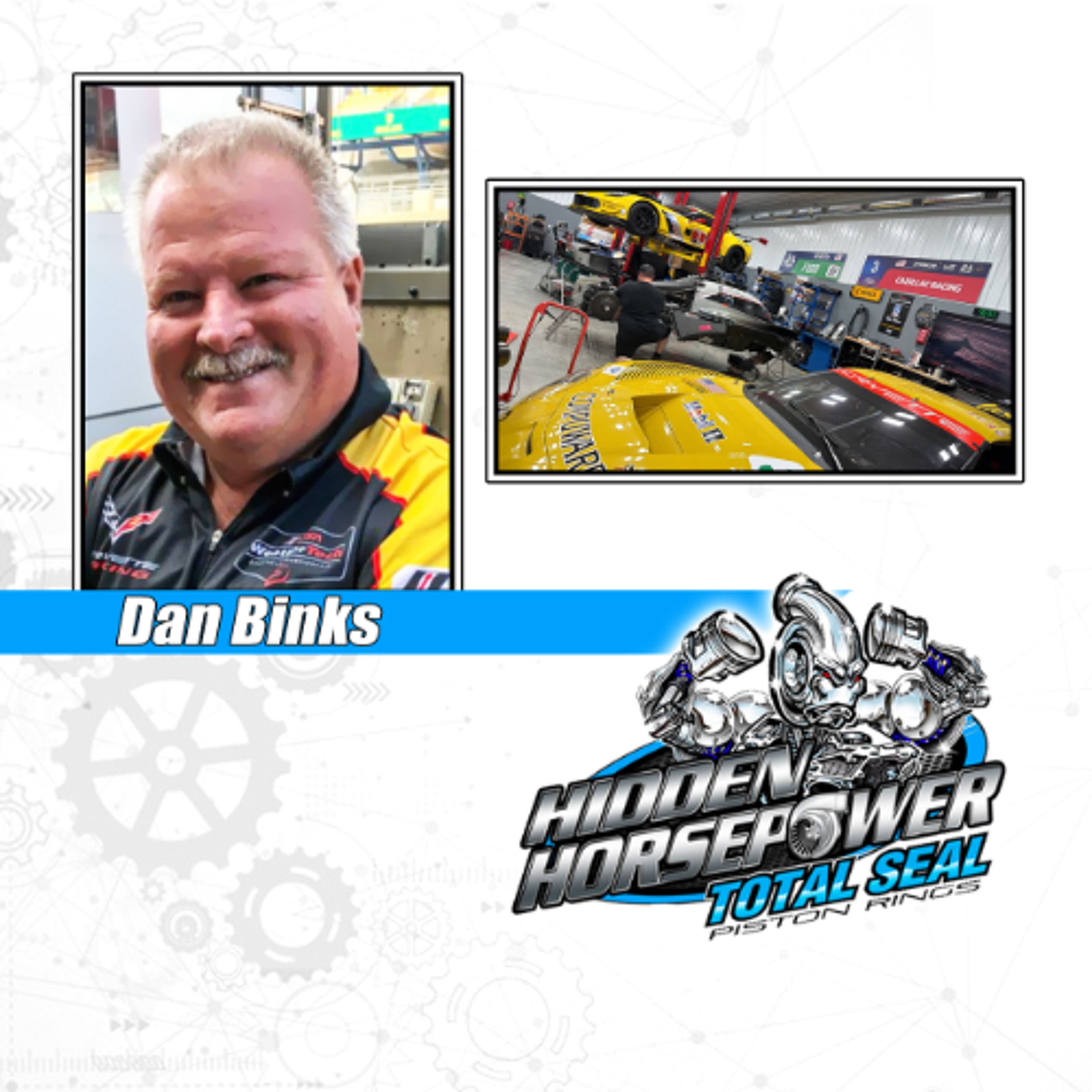
Instead of having 4 cylinders, this engine has 3. Fewer cylinders can mean less weight and packaging, which matters a lot for small race cars like midgets.
Most cars use coolant through a radiator and pump to keep the engine from overheating. This engine skips all of that to save weight, and it relies on oil to handle the heat.
Here “alcohol” means a racing fuel that’s different from regular gasoline. It’s commonly used in motorsports and can help with how the engine runs under race conditions.
Term
fuel stacking
Fuel stacking is when too much fuel builds up in the engine system instead of burning cleanly. That can cause rough running, and the speaker says this setup avoids that problem.
The exhaust valve is the “outlet” valve that lets the spent gases leave the engine. Better exhaust flow helps the engine keep making power as RPM climbs.
The intake valve is the “inlet” valve that lets the mixture get into the engine. Improving it helps the engine breathe better, especially at high revs.
A rev limiter is a safety/engine-protection limit that stops the engine from revving too high. If it’s removed or not used, the engine can be spun much faster.
It means they didn’t tweak the old design—they started over with a brand-new plan. The goal is to avoid repeating the same problems from earlier engines.
They’re talking about how today’s manufacturing tools make it possible to build parts faster and more accurately than before. That’s why a full engine-related parts plan can come together on a deadline.
CNC is a computer-controlled machine that cuts metal very precisely. It helps manufacturers make engine parts accurately and faster than older manual methods.
Dry sump systems store oil in a separate tank and use pumps to keep oil moving. That helps the engine keep proper lubrication when driving aggressively or spinning fast.
OE parts are the factory parts that came with the vehicle. The speaker is contrasting custom-built parts against what the manufacturer originally used.
RPM is how fast the engine spins. Higher RPM means the engine is working harder and the parts have to stay controlled and lubricated at very high speed.
Term
PSI valve springs
Valve springs help keep the engine’s valves opening and closing on time. When an engine spins fast, stronger springs can help prevent the valves from losing control.
Compression releases make it easier to start the engine by reducing the “squeeze” while you’re cranking it. Once the engine catches, they stop interfering.
They’re using a part originally made for Harley-Davidson motorcycles. The point is that it worked well for solving the starting problem on this engine.
Concept
unlimited race
They’re talking about a race where the rules are flexible, so teams can build very different cars and engines. The point is that it’s not limited to one “type” of setup.
Main bearings are the parts that let the crankshaft spin smoothly inside the engine. “LS main bearings” means the builder used bearings made to match GM’s LS engine design.
Rod bearings are the parts that connect the crankshaft to the pistons through the connecting rods. Using “small block Chevy” rod bearings means they used a proven bearing design from that engine family.
Coils are the parts that generate the high-voltage spark for the spark plugs. If they don’t have a good electrical ground, the engine may misfire or run badly.
Even though the engine block is metal, it’s not a perfect electrical conductor. If it has resistance, the electrical signals can be “off,” and the ignition system may not work correctly.
Grounding is the electrical “return path” that lets current flow correctly. If the ground is bad, the ignition and other electronics can act up and the engine may run poorly.
Instead of using a dedicated ground wire, the setup relies on the engine block to act like the ground. If the block isn’t a good enough conductor, the electronics can get the wrong signals.
A wiring harness is the organized set of wires that connects all the electrical parts. If the harness is designed differently—especially for grounding—it can fix electrical problems.
Term
AI
They’re using AI like a smart helper that answers questions based on what you type in. It can be useful for ideas, but you still have to double-check it on the car.
The cylinder head is the top housing of each engine cylinder where the fuel-air mixture burns and where the valves sit. If there are cylinder head problems, it can affect how well the engine runs and how long it lasts.
Pike’s Peak is a well-known race up a mountain. Because it’s at high altitude, the air is thinner, so engines have to work harder to make power—especially with a turbo.
Boost is how much extra pressure the turbo adds to push air into the engine. More boost usually means more power, but it can also be harder on the engine.
A flat-six is an engine design where cylinders are laid out flat, two sides of three. The way the cylinders are arranged can affect balance and how the engine fits in the car.
“Power per cubic inch” tells you how much power an engine makes compared to how big it is. If it’s high, the engine is getting a lot of power out of its size.
Concept
one less cylinder, one less piston, one less everything
Fewer cylinders means fewer moving parts inside the engine. That can make the engine smaller and sometimes easier to work on, which matters a lot in racing.
Concept
sleeves will slide out
They’re talking about cylinder liners/sleeves that can be taken out and replaced. That can make engine repairs quicker if the cylinder surfaces wear out.
Weight balance is where the car’s weight sits. If you change the engine (and therefore how heavy it is), the car can handle differently because the front and rear loads change.
Concept
pipe bombs
“Pipe bombs” is a colorful way of saying the cars were brutally loud and intense. The speaker’s point is that newer parts and electronics make them less chaotic and more reliable.
No lift shift means you keep your foot on the gas while shifting gears. It helps the car keep pulling instead of briefly losing power during the shift.
Traction control is a safety/handling system that helps the tires grip the road. If the wheels start slipping, it reduces power so you don’t lose acceleration.
Detonation is when the fuel-air mixture burns in an uncontrolled way inside the cylinder. It can be damaging, so the car’s computer tries to prevent it.
They’re talking about how some people were surprised Cadillac was racing. The idea is that Cadillac was known for big, comfy cars, so racing was unexpected.
General Motors is a major car company that owns brands like Cadillac. The speaker is saying GM has the resources and people to compete at a high level.
They’re talking about Cadillac/GM building their own engine for Formula One. Formula One engines are very advanced and require a lot of specialized engineering.
IMSA is a big racing organization in North America. When they say “IMSA cars,” they mean race cars built for that kind of competition, often including long-distance events.
Ingress and egress are event-planning terms for how people enter and leave a venue. In racing, easy ingress/egress matters because it reduces traffic and makes it simpler for fans to move between parking, gates, and viewing areas.
They’re talking about how thick the coating is—0.7 millimeters. The thickness matters because engine parts have very limited space, especially around the piston rings.
They also mention the Corvette, meaning the same coated piston parts are used in Chevrolet’s performance car. The point is that it’s meant to hold up under tougher conditions.
Compression ratio is how much the engine squeezes the air-fuel mixture before it’s ignited. Squeezing more can make more power, but too much can cause the fuel to ignite the wrong way and damage the engine.
The oil ring’s job is to keep extra oil from building up on the cylinder walls. Using thinner oil rings can reduce drag, but the ring still has to control oil reliably.
Detonation is when the fuel-air mixture ignites too aggressively and too early, instead of burning smoothly. It can create damaging pressure in the cylinder, so engines use safeguards to prevent it.
The Subaru 360 is a very small older car made by Subaru. It was built to be light and efficient, but small cars can still lose traction if the tires or driving conditions aren’t right. That’s likely why it was mentioned in a story about spinning out.
A cylinder head is the top part of the engine where combustion happens. A “cast head” means it’s made by pouring metal into a mold, which can be important for strength and for fitting racing modifications.
Term
COMP Eliminator Race
“COMP Eliminator Race” sounds like a drag-racing class with rules about what you’re allowed to change. The point of the engine work is to be fast but still legal for that class.
A drag car is a car set up to race in a straight line, usually over a short distance. The focus is quick acceleration and getting the power to the ground.
HRA is the rules body for a racing series. Saying something is “legal for HRA” means it follows the allowed parts and setup rules for that competition.
Horsepower is a way to describe how much power the engine makes. More horsepower usually means the car can accelerate harder—especially in drag racing.
Term
800 pound car
Weight matters because it affects how hard it is to get the car moving. A lighter car can accelerate faster than a heavier one with the same power.
A 3-cylinder engine is an engine with three firing cylinders. It’s often smaller and easier to fit into compact cars, but it can feel different than a 4- or 6-cylinder engine.
Concept
3-cylinder monster
This is about how a small 3-cylinder engine can still feel like a “monster.” With the right technology (like a turbo), it can make a lot of power for its size.
A rally car is a race car designed for rough roads and changing surfaces. It’s built to handle traction and quick acceleration in tough conditions.
Term
stationary engine parts
Stationary engines are engines that stay in one place, like for backup power or industrial equipment. “Stationary engine parts” means parts made for those fixed engines.
LIVE
The following is brought to you by Total Seal Piston Rings, the leader in ring seal technology.
TotalSeal.com.
Hello and welcome to another edition of Hidden Horsepower presented by Total Seal Piston Rings.
I'm Joe Costello and once again joined by the director of technical sales at Total Seal, Mr. Keith Jones.
What's up Keith, how are you?
I'm doing great. Had an exciting weekend. We'll say down south. Got to see some diesel drag racing and meet some very, very nice people.
We'll just say shout out to Cliff and Alicia. If you watch the podcast, you'll know where I am.
There you go. See, I like it. I like getting you out of the office there, right? You going and hanging out.
All right, so we got a cool guest. He does a lot of things kind of in the vintage world, but also in the midget and sprint car world and also in the high end sports car world.
It's got shops in Indiana, shots in Michigan. While I let everybody think about who it might be, they saw the artwork. They know who it is.
But tell me about this diesel racing thing real quick.
Yeah, went down into Alabama for the diesel motor sports shootout. They had chassis dyno testing. They did drag, went to the drag strip, got to go to a really neat little Bailington, Alabama.
It's a little family owned drag strip, eighth mile. Been in the family since 1966, still in the family. Beautiful little racetrack.
The cow's up top, past the top end, maybe a little sketchy looking, but there's actually a fence. I asked the owner, is that a problem up there?
No, no, never been a problem. But they had a good turnout, had some quick cars, quick trucks, and met some great people.
The couple I mentioned earlier, I sat down at this little place, sitting there trying to figure out what to have, and they jumped right in, told me it's like, you want this, this, this, and this, that's the stuff to have.
This place is known for it and talked with them most of the night. Great people.
That is great news. Get you out of the office, get you out there, hanging at the concession stand at a local drag strip. There's no place better than that.
And we'll see if our guest agrees, because I think he's got some pretty cool things going on, including an amazing, like one off three cylinder engine.
We're going to talk all about it. Joining us now from Binks Motorsports, Mr. Dan Binks. What's up, Dan? How are you?
Hey guys, how are you?
Great, great. Dan sounds clear. He sounds crystal clear, like perfect. Way to go, Dan.
All right.
So, Dan.
He looks professional. Look at that. He's got the great backdrop, crystal clear image. Sounds great. He's not new to this.
He's not new to this. But with all the different things that you're doing, and we're going to hear that three cylinder run, hopefully, just give us the overview.
Because you're helping some individual independent clients, people that we kind of co-work with. You're in the vintage scene.
You work on some of the Cadillac sports cars, which is interesting. So you have an insight into multiple platforms.
Tell us how that all came together. Starting out with your origin story, how'd you get into cars?
I got into cars. My dad raised cars. And at the early days, I worked for Jack Roush.
I worked for a place called Cars and Concepts. And then I went to Pratt and Miller and ran the Corvette team for General Motors through Pratt and Miller from 2002 to 2020.
And I retired and started another business. And that's where we got, you know, working on the Cadillac DPIs. I do the engines for them and my son does the cars.
And that's where we met Juan Gonzalez. And we actually have one of his cars in our shop down there. And I'm actually working on his engine today.
And then you had pictures of my midget. I built a three cylinder midget engine. And I think that's what we're going to talk about here in a minute.
Yes, absolutely. We are going to talk about that because I can't help but think Keith, Compleminator motor, right? Like something a three cylinder engine.
I'm sure Dan has had a lot of people ask a lot of things. I can see drags applications, off-road applications, ultralight aircraft applications. I mean, there's a lot of places that that thing could go.
How did that happen, Dan?
Basically, I was doing, I had a four cylinder midget engine and I wanted more valve area. And so I designed this three cylinder with 34 and a half inch pistons.
So it's more like a Pro Mod 4900 bore space stuff. And that was the only way I could get the valve area that I wanted to make the power that I wanted.
And I did the whole thing in 24 weeks. I built three engines, all billet and start to finish. It was 24 weeks till we raced at the Chili Bowl.
And we set a new record. We passed 60 cars in one day at the Chili Bowl most in history.
That is wild. So it worked. It worked. The baby worked.
Yeah, it's pretty wild. It doesn't have any water. It's actually oil cooled and everything for the Chili Bowl is about lightweight. There's no minimum weight.
So anything you can leave off, it helps out. So the engine's about 180 pounds.
That is wild. We've got a video, Keith, of it running and I'm struggling to get some photographs in position, but we'll get them. Don't worry.
But the video, I think we'll chat just a little bit. So no radiator, no water pump, no hoses, no cooling system. Awesome. Absolutely awesome.
And no problems overheating anything. I mean, you guys are able to keep it cool with fuel, I assume.
Yep, we keep it cool with fuel. It's alcohol. So basically it does have a water system, but the oil goes through the water system.
So I can run it on gasoline. I can put water in it. Or if I run an alcohol, I can put just the oil through it.
And no fuel stacking problems or anything with it. You guys got it all.
Yeah, it's mechanical fuel injection. You know, it's pretty simple. If it gets warm, you can add a little bit of fuel and cool it off.
So we added a couple of jets as we went on. We did 10 races in a row there at the Chili Bowl.
Oh my goodness. All right, let's listen to the sound of this thing. Here's the video. Check it out. It's coming up.
What a sweet sound that is.
Yeah, it's different for sure. It sounds like, you know, a little bit of maybe like old Kawasaki or, you know, I say it's got a twang.
It does have a twang.
It does. It's got that motorcycle engine sound to it. You know, and that's, you know, being a motorcycle guy, that's not a bad thing. That thing sounds awesome.
Yeah, it's 2.7 liters. So, you know, it's pretty big for a three cylinder. It shakes a lot, but we're making it go.
That thing's absolutely awesome.
What are the specs before the show started, guys? Dan and I and Keith, we were just kind of kicking it around.
We were joking about Compleminator, right? Because that's we haven't seen that you come up with a crazy combination.
He's already come up with one, but you gave us the weight and the power. And I think that's those are the vitals.
Yep. So it's four and a half inch bore, 34 50 stroke, 900 intake valve, sorry, 600 intake valve, 900 exhaust valve, 800 exhaust valve saring.
Basically, 900 cc's per hole.
At the chili bowl, there is no rev limiter. So we actually revved at 9800 RPM, almost 10,000 RPM outdoors. We can only rev at 8700.
Oh my goodness. So there you go, Keith. It's, it would be interesting to say the least.
Well, I'd say obviously we can't do it right now, but at some point, Dan, you're going to send me pictures.
I'd love to see some of that. We'll say what you can show the inside because when I first saw the picture, I'm like, okay, is this like a RO7 head cut down?
And then when you said the bore size, I'm like, oh, no, no, no. This is, yeah. That's not what that is.
Right. John Marcella designed the cylinder head based off of, like I said, 4900 bore space.
It's similar to like a John Kazee, you know, 4900 bore space stuff, really big valves, pretty big ports.
And it's 55 cubic inches per hole. So it needs a lot of air and, you know, air valves and big RPM thing the way it goes.
There you go. We got a photo for everybody out there watching on YouTube.
And what do you think of this, guys? When you look at it, that thing is wild.
55 cubic inches per hole, Dan. You're mad scientist over there. Clearly you've got a big imagination. You made it happen.
Yeah. You know, I didn't want to buy a Toyota or SR11 midget engine and I had had my own.
I had a four cylinder LS and I had a three cylinder LS and had problems with both of them.
And I finally just said clean sheet of paper. Here we go.
I've been fortunate enough to, you know, where I can do pretty much what I want.
And I called it Dan's sweatshop because everybody that was helping me was under the gun.
Oh my goodness. That is hysterical. But when you look at it, clean sheet of paper, right?
Like that's recently possible. That's like a modern thing.
Like I can make just anything I want. I can do anything I think about.
Just different ideas like we can make it perfect.
It's not about the foundry had to pump out 50 of them or you made these clean sheet of paper that shows you where we are with modern manufacturing.
Yeah. With the CNC stuff and, you know, get crankshafts and rods and pistons and, you know, rings, you guys helped us out with the rings.
I use Molly pistons. So all of the pieces that had to come together in 24 weeks was a pretty big task.
We were actually down to the last few hours to decide whether we're going to make it or not.
Wow. Keith jump in with a question. I'm working on the next photograph of this cylinder head.
The problem is which question, man? I got a thousand of them.
So, I mean, to get that thing turned around in 24 weeks, especially in today's environment.
I mean, think about this. Who do you go to get a crank in 24 weeks these days?
I mean, amazing you guys turned that thing around that that quickly.
And but it also talks about, you know, the modern like say the CNC age, because, you know, I grew up dealing with non CNC.
You were, you know, I got small block Chevy, big block Chevy, mobile part four.
You know, you were you were closed in by the constraints of that package and how much you could do with it.
And I see so many people today like Dan, you know, looking at, okay, well, you know, that's the best part of this.
And this is the best part of that. And if we can combine all these together and heck with the four, let's make it a three.
Let's big bore short stroke, lot of reps and you can build it.
I mean, I mentioned I was at a guy's, you know, a couple of guys diesel shops a few weeks back in Wisconsin and just just unbelievable.
Amounts of torque and horsepower these things are making and zero failures.
They're holding up their lasting.
And it's all because of, you know, they are they have literally abandoned the factory platform and are building everything themselves.
You know, from billet heads, billet blocks, you know, dry sump pumps, you know, on and on.
They're building everything themselves.
And, you know, and a thousand times better than the OE part.
And but and not to beat on the OE, but one of the things I, you know, I say all the time is the OE builds it for the OE.
They needed to do what they needed to do.
They don't need it to do 10,000 RPM like Dan or 6,000 foot pounds of torque like a pulling tractor.
I mean, so, you know, there are those limitations and the modern CNC allows the visions like Dan and the visionaries like Dan to realize the, oh, look at that.
That's just eye candy.
Look at that.
Yeah, I mean, it's, you know, got oil sprayers, PSI valve springs, Excel 9 valves and retainers.
We mounted the coils on the side of the block right above the coils are compression releases from Harleys because these cars actually push start.
And with the compression ratio and the piston size, we couldn't get it started.
So I had to add compression releases.
And it's a factory Harley piece that we use and enables it to spin over and start.
There you go.
Problem solution.
Okay.
We got to get it turned in before we let it make compression, you know.
Yeah.
And, you know, it didn't take up much room in the combustion chamber to put those things in and, you know, it was just a problem that we had and we jumped through hoops to get it done.
That's outstanding.
That is wild.
Well, it's a good looking piece just to show pieces, CNC jewelry, you can see, but back to the clean sheet of paper, you were able to accomplish what you thought was best for the circumstance.
And that's what the chili bowl is really all about, like an unlimited race.
Right.
I don't know if you ever get a chance to go down there, but it's pretty special 400 cars show up and 25 race.
So it's pretty wild.
Any mistake and you're done, you know, the one or one of our cars, the oil filter split the seal and that car was done.
And then the other car just kept making rounds.
So we learned a lot, but we still got some more to learn.
Well, yeah, that's not like a show up the first time and just dominate kind of thing.
No, I've been three times.
I've been three times and, you know, basically didn't do very good in the first two.
The last one, we did okay with the one car, but every time we just keep learning this, that's why we race, right?
If it was easy, anybody could do it.
Well, exactly.
Keith jumping with a question for Dan.
So 24 weeks, you know, from inception to conception, what was the biggest challenge?
I mean, obviously getting parts, but the crankshafts were hard.
Moldex did the crankshafts.
I did three of everything.
So the crankshafts were pretty hard.
Carrillo jumped through some hoops for me.
Moly did actually Kevin Studecker with the piston rings.
I, of course, I used a 027 piston ring and when we started it, he only had nine of them.
So I had three engines, 99 cylinders, right?
Three engines, 33 cylinders, and I didn't have any spares.
Those are the only ones that he had and they back ordered them.
And actually a few weeks ago, the rest of them came in.
But if I'd had any trouble, I would have been with a spare engine would have gotten used anyway.
So, but, you know, crankshafts were probably the biggest hold up.
The blocks were down to the last minute, you know, trying to get those machined and, you know, the cylinder heads were early.
The valves were early.
Val springs, all those pieces were pretty easy.
Main bearings, it uses LS main bearings.
It uses small block Chevy rod bearings and, you know, makes 160 horsepower per hole.
So you got to be, you know, the valve or the rod bearings are beat up pretty hard.
Oil pumps I got from daily, they had stuff on the shelf that I was able to adapt to make my stuff work.
Wow.
So it comes together, you get all the parts, you get it all together, we bolt it all together, we get it on the dyno.
And I mean, was that it or do we have failures or, you know, did we get it out of the box the first time?
The engine itself and all the mechanical parts worked absolutely perfect.
The electronics we had trouble with, believe it or not, the coils were grounded to the engine on one side of the engine.
And the electronics part of the ignition was on the other side of the block and the resistance in the block made the thing run bad and it took us three days to figure it out.
Wow.
Yeah, it was crazy.
So funny you said that because I was at, again, you know, it's that time of the year I'm out traveling and I was in the Midwest and I was a particular guy shop and they do a lot of dirt, late model type stuff and working with the MSD 6T box.
And the biggest failures they have with this thing is simply grounding problems.
They talked about, you know, trying to, like you just said, grounding through the block, the resistance is built into the material.
And they've created this whole wiring harness that's like, don't do it this way, use this and eliminate all the ground issues and all their problems went away.
Yeah, we actually used AI, we kept putting it in.
These are the problems we're having.
These are the problems we're having.
It said it's a ground problem.
We don't know what it is, but it's a ground problem.
And I had never used that before.
And we started moving stuff and around and all of a sudden the thing just came to life and basically at the 11th hour, we were able to get it going.
All right, stop.
You had never used AI before?
I had never used AI before.
I'm old, you know.
But this is perfect.
This is a perfect moment for all of us.
First of all, Dan, we're all old.
This crew, maybe not everybody watching, but I will tell you that I and I wonder about Keith, this is the buzzword.
If you watch any financial news network, everything is surrounded by AI and you are about to reveal how you used an unknown, untested technology to you.
You went to the AI with a query and it spit out an answer and the answer turned out to be right for your application.
And you had to do some tracking down.
But to me, that's very interesting.
Another phase of it, you put in your issues and it told you what it thought you had wrong.
That's right.
Yep, it did.
And I actually used it the other night, Saturday night.
We were having one of the cars was sluggish off the corner and I asked it how much timing I thought I could have.
And we were able to add three degrees of timing and it helped out quite a bit.
And AI said, I think, you know, it said don't go more than 35, you know, 33 or 34 on alcohol at your compression ratio.
We think it's okay.
And, you know, I was under the gun and we just tried it and the thing ripped.
We finished first and third.
Keith, are you using any AI in your deal?
No.
I have queried it and gotten what or I've had issues is I've asked it the same question the same way multiple times and gotten multiple different responses.
Yeah.
So I wasn't willing to do what it said.
I'm like, if it gave me consistent answer, but like anything, it's learning.
And some of the questions I asked were not common.
And, you know, like, okay, I get the gist, but again, Dan's case, you know, where it's at ground and they chased the ground and they found it.
And, you know, it's, I can say this, I know a person that used AI.
I'll just say as we were trying to manipulate a piece of software to get it to do what they wanted it to do.
And AI figured it out.
They spent hours and trying to get this software to do what they wanted it to do.
They queried it to AI.
Literally within a minute, they had the solution.
So, you know, in the right hands with the right tools, it's powerful.
Yeah, I think you got to take all of it with a grain of salt, but, you know, we were sort of stuck.
We weren't at the dyno and you just started asking the questions and we were really stuck.
So was, you know, we didn't have much to lose and only stuff to gain.
So it worked out for us anyways.
Well, I think it's an interesting topic and something that we really haven't delved into too much here in hidden horsepower, but in the world of motorsports, they got to be doing it, right?
It's underground.
They're just not telling us.
They're definitely.
May I ask which AI you used, Dan?
I don't know what the name is.
There's Claude.
There's ChatGPT.
It's ChatGPT.
Sorry, ChatGPT.
You have to pay a little bit for the extended one that I used, but my daughter set it up because I'm not very good at that.
But I just keep asking it questions and it'll save the questions that you ask.
So like the next time, hey, I want to try something different or ask it like you said, where you weren't getting the same answers.
Sometimes you just got to change the way you ask it.
Not to make this all about AI.
We could get a whole AI thing going on because I think it's an extremely useful, powerful tool in the right hands.
Yo, dude.
Yo, for combat?
Well, that's a different story altogether.
I can tell you that, you know, the story of my mom being in the hospital has kind of gotten out.
And so I can use it as a reference here on Hidden Horsepower.
She's getting all these tests, you know, there's something called my chart.
And so I'm kind of like seeing the results of all her tests and they're coming in rapid fire to me, except honestly, I don't know what any of this stuff means.
So what I would do is I would copy the results from the my chart and I would just paste them into the chat GPT.
Like you were talking about Dan that I pay for, you know, like it's 20 bucks or something.
It's not it's like worth it's worth the money to experiment with it.
And I said, hey, please explain this in plain language.
This is just all I said, please explain this in plain language.
And it said, OK, and it was able to give me up to the second breakdown of all of these results.
This is good. This is bad.
These are things to ask the doctor about.
And I lived for 30 days doing exactly that.
And, you know, that's not rocket science, but it just like helped me understand kind of thing.
And it worked.
So, you know, I'm not telling everybody to go out and do anything.
But Dan, you used it for one thing.
I can tell you I used it for something else.
Keith, he's confusing it.
So it's like normal.
I'm trying my best.
So, I mean, Dan, I could ask you, I mean, so with this engine platform, I mean, where are you going?
I mean, we're going to make, you know, v sixes v 12s, are we going to grow it shrink it?
At this moment, I don't know what we're going to run it in the midget.
There's some cylinder head problems that they say they need to be cast cylinder head.
So I'm working on that right now.
You know, the sky's the limit.
Somebody asked about running one at Pike's Peak with a turbo.
It looks like with about 32 pounds of boost, it'll make 1000.
So at Pike's Peak, you know, a 200 pound engine with the turbo, making 1000 is, you know, pretty cool.
We just have to figure out, you know, what to do next.
A lot of people have ideas that we've had people ask about making a Porsche cylinder head similar to mine because, you know, three cylinders on each side of flat six, you know, and the, you know, the amount of power this thing makes per cubic inch would make a pretty wild street car or race car.
So who knows, you know, the sky's the limit at the moment just because, you know, other people are having ideas and people are hearing about it.
You know, I'm going to be on your show here more and more people hear about it.
You never know who's going to call.
Well, I'm hoping for a compiliminator guy.
Is that like I already put that out there.
Let's listen to the sound one more time, maybe two more times.
Let's listen again.
And, and, you know, it's one less cylinder, one less piston, one less everything.
It's like it makes it, you know, it makes it affordable, not, not affordable, but you know what I'm saying.
Yeah, and I made it similar to a fuel car where the sleeves will slide out so you can put, you know, you could change all three pistons and rods and, you know, an hour.
Yeah, the cylinder head comes off in the car with eight bolts.
The other cylinder head can be ready and drop right on.
I actually practiced, I adjusted all the rockers and the push rods for the spare cylinder head.
So if I needed to put it on, all I could do is just bolt it together and not have to adjust anything.
So, and being three cylinders, it's not, you know, overwhelming, you know, V8 takes a long time to work on.
This thing's, you know, pretty small and compact.
Yeah, I'll just say I'm amazed at, you know, we'll just say, you know, I'm old school, no replacement for displacement, you know, bigger is better.
And you've taken that, though, and made a smaller version of it, you know, four and a half inch, 43 and a half inch stroke, big RPM.
Like, like Joe says, this just screams cop eliminator.
But, you know, we'll just say it's so impressive.
The power output out of that little package out of that small package and the potential places that could go.
Absolutely, absolutely.
Like I said, mind boggling. And as always, not to put the pitch out.
Anything we can do, I can do for you moving forward.
You know, man, I'd love to talk to you more about it.
But what about, you know, not to not to divert from this, because this is what we're talking about.
But, you know, you had mentioned earlier some of the vintage racing stuff that you do, you know, the Cadillac program.
That's all exciting stuff as well.
Yeah, we have four of those Cadillacs that you're seeing right there, the 01, the 02.
We have a Wayne Taylor car number 10.
We also were able to purchase the Jimmy Johnson car and actually Juan Gonzalez from Mission Foods owns that car, and we take care of it for him.
I do the engines and my son takes care of the cars.
That's our shop in Indianapolis.
We got two Corvettes there that we take care of for Pierce Marshall, and that's the 01 Cadillac.
That's also his car that we take care of.
So, yeah, we do a bunch of vintage stuff.
Those cars are 2022s, right, you know, but they're vintage, you know, they're so fast.
All these guys that, you know, want to do that this Corvette was from the 80s.
That car actually makes over a thousand horsepower, single turbo V6.
And I restored that car four or five years ago.
But, okay, so not just, but to touch on that, okay, over a thousand horsepower V6.
Wow, imagine the weight balance, we'll say opportunities would be there with a 200 pound three cylinder turbo at a thousand horsepower.
Yeah, I mean, it's all relative, right, those vintage cars, you sort of have to use the parts that you that they used in the day.
And, and we're able to make them a lot better. Those cars were pipe bombs in the day right now.
They're, you know, they actually run for quite a long time.
And I would say the evolution of the parts has really been phenomenal.
The electronics on that car, no lift shift, traction control, you know, for the Cadillacs.
It won't shift if the, you know, it senses that the drivers trying to shift at the wrong time.
I mean, there's so many things that that thing does, knock sensors, right, it won't let it detonate.
It could take timing out if it gets hot, you know, the, the sky is the limit really.
And Cadillac getting involved in sports car racing, a lot of people back then thought like, why, what are they doing?
Aren't they supposed to make like big boats that you cruise down the, the avenue with?
And I have a Formula One cars.
Well, and that's, that's where I'm going with this.
Like they, did they have a plan the whole time or was it just kind of like this is the logical deal?
I don't expect you to completely know, but if you got your hands on these things and you're in Michigan, you probably do know a little something about the Cadillac.
I've been fortunate enough to, you know, race with General Motors for 20 years.
So I have a lot of friends downtown and Pontiac there.
And, you know, I hear, hear all the rumors and stuff, but now they're not rumors, right?
They're, they're making their own Formula One engine.
They're making fast street cars.
You know, fast Imsa cars, it's, it's a super cool time for, you know, GM and Cadillac.
And I just have a small part doing some taking care of these older ones.
That's cool though.
I think it's, that's great that you do it.
Not to put you on the spot, but like, do you think they're going to be able to contend five years out?
I think that, you know, the expectation is obviously that.
I think that they, they have enough of the funding and the right people.
That's a monumental task to do a good job there.
The only disadvantages, right?
Those other guys have had five or 10 years working on these cars and engines and trying to catch up.
I can't even imagine, you know, all the smart people and things that you have to try and, you know, even good ideas won't be good enough.
So they, they really have their work cut out for them.
Facts.
Yes, they do.
But, but they'll figure it out.
I mean, that's, that's the diligence of, you know, dealing at that level.
And we'll just say, you know, the, you write a big enough check, you can hire the right people.
Yep. That's, that's a big deal.
You know, and, you know, they got America behind them.
So I think the sky's the limit.
I'm hoping for the, you know, next three years, I would say they'll start to show big promise, I would think.
If I told either of you 10 years ago that Ford and General Motors would both be involved in Formula One like heavy, heavy.
Would you have, would you have thought I was crazy?
Yeah, I think I had to call you a liar.
Yeah, you are.
F1?
No.
No, right. Exactly.
Look at the popularity.
Look at how it's just exploded.
I mean, this all comes off the TV show, but man, what a job they've done, you know, and promoting that sport and it's just exploded.
You know, there could be 40 teams if they'd let them.
I mean, it just everybody wants to be involved.
I think that that would actually help them to get more teams.
And, you know, they race all over the world now and they get Kota, they got, you know, Las Vegas, you know, maybe they'd go to some road America or someplace like that.
It would be unbelievable.
So I think there's room for them to have more races and I think there's room for them to have more teams.
I can tell you our Miami race is exceptional.
I haven't been there in years.
We used to run IMSA cars down there and but I haven't been down there for any of the Formula One shows.
It's wild because it's at the stadium, which is also the track, but they do a tremendous job of converting the stadium.
And because of the way it is, the ingress and egress is super easy.
You know, you can, there's so many places to stay.
It's like, I call it the most convenient Formula One race.
It's like, if you want to go to a Formula One race, you fly into Miami or Fort Lauderdale and you can go check out the race and you can fly home that night.
If you wanted to be crazy like that, or if you want to stay, there's a million places to stay.
Very popular.
Like everyone loves it down here.
It's, it's the right place.
Nobody wanted it in the streets.
You may recall that that was a beef with a lot of people and as much as it looked good in the opening scene of Miami Vice, people were annoyed by it.
And this is like a perfect compromise.
It is very big.
And, you know, I don't know if I know anybody that has rings for those guys, but, you know, I can't say about nothing.
Right.
Exactly.
How was that?
I could probably go next door and find some if I look hard enough.
Dan, how was that the ring selection process?
Walk us through that a little bit with Kevin.
Yeah, I'm doing this crazy thing.
Did, did, did you decide since you had a bore like a promod car to just go with a promod style giant bore ring or was there more to it?
Well, the load was way down compared to a promod and all those things.
So, you know, I said, Hey, can I get away with the 27th ring, you know, a lot of people in that bore size or one millimeter or whatever.
And I said, man, I want to, I want the best conforming piston ring that I can get.
And it's got that, I think it's C 72 coating on it.
And, you know, we ran about 100 miles between the dyno and the, and the race weekend.
And I took that thing out.
We were at about four and a half blow by and everything looked beautiful.
So I was super excited with that.
Yeah, that's a, that's a super durable coating.
It works very, very well on alcohol.
You know, even, even let a little bit of dirt get through now, dirt's never good.
Right.
You know, it's a, it's, it's titanium nitride.
It's a very, very tough coating and it holds up extremely well.
Yeah.
The 0.7 millimeter stuff is a great, you know, when it comes down to the really thin ring packs, that's, that's like my go to ring.
It's just, it's got enough mass.
It'll handle a little bit of, you know, something silly happens.
It holds up.
It's just, it's that, it's that three bears.
It's just, it's the just right size.
And that's an excellent choice.
Yeah.
It's in all the, my Cadillac pistons and it's in my Corvette pistons.
It's in all of them now.
And that's why I made it easy to, to make the choice.
And there's a picture of my midget and my head there.
I didn't show any of the pistons.
I probably should have showed you that stuff.
But anyways, it's a, you know, very small dome piston.
The combustion chamber is very small, not too big a compression ratio, 13 and a half to one.
A lot of guys are running up to 16 with Sprint cars and things like that.
But I was really concerned about making this thing start and how good the compression releases were going to work.
And so I took it a little bit easy on the compression ratio and, and it paid off.
It, it's very interesting though, you made the comment about the ring size.
I remember a long time ago working with a, you know, the 24 hour team.
And, you know, they're going to Le Mans and, you know, I'll just say it's Ford based product.
And they were so scared to put any, I mean, 16, 16, three sixteenths.
I couldn't even talk them into a low tension all ring.
It's like, guys, got a 22 pound oil ring.
Oh, no, no, if we've got to stop and put oil in a man, you know, we can't do that.
And we look at what we're doing today, you know, brings down as thin as 0.5 millimeter.
And, you know, oil rings as thin as 1.2s and, and things like this and just how that technology is advanced.
And, and as you said, and then the engine management systems, that's really the key.
The detonation and all that knock sensors, keeping that thing from hurting itself.
And I've been fortunate enough, I raced Le Mans 19 times and was able to win it six times with Corvette.
So I understand your, your position with, you know, 16th piston rings.
I can tell you, we didn't run 16th piston rings in our Corvette.
Well, they didn't win.
So there's a reason.
I don't know if it was that, but they never won.
There you go.
Wow.
Were you, were you part of the, the, the era when Earnhardt was there with, with Dale Jr.
With Dale Jr.
Yeah.
When we, when he crashed that car at Sears Point, that was pretty wild.
So anyways, yeah, I was part of that deal for a long, long time.
Crazy, crazy.
Let's get to final questions.
Keith, I know you've got a couple.
I certainly want to ask one myself from Dan.
You, Juan Gonzalez, Mission Foods, Mission Foods drag racing.
They support so many different forms of motor sports and motor racing.
I've spoken with him a few times at the drag races and he's like always super positive person.
Almost like, you know, tell us what you need.
And it's like, no, you tell us what you need.
It's, it's great that he loves motor sports so much.
What have your interactions been and obviously taking care of some of his personal cars and collection.
This guy loves cars like no other.
Yeah.
His car collection is phenomenal.
He loves driving.
You know, he's got Porsches and Cadillacs and all kinds of things.
We take care of one Cadillac for him and we take it to all the lawn races.
Watkins Glen, Daytona, Sebring.
So anyways, Road Atlanta also.
And he's been phenomenal and then he's been following my sprint car stuff and my midget stuff.
And now he sponsors both of my midgets and a couple of sprint cars with Cody Swanson.
Jason McDougal, Darren Knight, it drives my midget.
Cody Swanson drives the wing car that we helped with the 50M doing that million dollar for race deal with the wing sprint cars.
So we got all kinds of things going with Juan.
He's a super cool guy.
I go and hang out with him at Indy once last couple of years I've been down there with him and get to check out the drag racing.
It's just phenomenal.
That's key.
So, but now you had mentioned, you know, you know, the midgets but also Sprint car.
So are you guys doing your own 410s or?
Yep.
So I do.
I do Cody's 410 for the pavement sprint car we won at Anderson on Saturday night.
My new v6 was in Colton Bettis's car Saturday night he finished third.
And then my other car, Kyle O'Gara had one of my 360s in his pavement car and got an instant spun out and didn't finish.
But I think all three cars qualified in the top six.
So that's pretty exciting.
Oh, very much so.
That's absolutely excellent.
Talk about a person who's got their hands in a lot of different pots over here.
My goodness.
Yeah.
I'm all over the place.
You're all over the place.
You're all over the place.
I can't even quit.
Right.
I retired in 20 and I can't even quit.
Right.
That's good.
That speaks of the character of the people that get into this.
Right.
Like you want to, you want to solve problems.
You want to overcome challenges.
You want to create things from scratch.
Is there anything we didn't ask you about the three cylinder engine that you wanted to put out there?
You want us to talk about cover?
Like I can't help but think about my goodness.
Just a totally unique design.
You got to feel great when you see that thing run.
But is there anything that we need to know that we didn't cover?
I don't know.
Like I said, I just made a clean sheet of paper and I wrote down, you know, what parts would I use?
And I put everybody's, you know, what I thought would be the best parts in the whole list,
you know, from Jaisal to Molly to Advanced Sleeve to, you know, Moldex to Acceladine Vals, PSI Valsprings.
I just, I wrote down all the stuff that I wanted and then I sent out a list and asked them if they could help me.
And these were my parameters and everybody stepped up.
And I can tell you, to do that in 24 weeks, you know, 100 different people had to, you know, pull their weight to make it all happen.
No, that's, that's incredible.
So now you had mentioned, Dan, you know, working on a cast head to make it, you know, so that they don't make it illegal or anything like that.
But if somebody wanted to come to you and see, you know, let's just say, I call you up, Dan, hey, Dan, how fast can I have one of these things?
I want, I want to go COMP Eliminator Race.
I'm going to put in my drag car.
I don't care about that.
Well, for COMP Eliminator, you could have one pretty fast because I think the cylinder head would be legal for an HRA.
If you got something up your sleeve, you know, I got three of them sitting here.
So I wanted to know.
So you got them ready to go.
Yeah.
I tell people, I'm only afraid of one thing and she's in the house.
So someone with a lightweight dragster, guys, you got to take advantage.
You got to take advantage of the opportunity.
How fast do you think it would go?
You know, 400 horsepower and 800 pound car, maybe?
I don't know.
Real lightweight car.
Oh, she'd fly.
Yeah.
I'll have to do some comps out there.
I know that there's.
All right.
Call me.
Oh, there you go.
Does it have a name?
Does this engine have a name, Dan?
Have you named this project?
Have we neglected to ask you that?
Like what is this thing called that we're talking about?
We call it the triple bypass.
Well, you know, I, you know, we had, we had all kinds of names coming in and my son named it the triple bypass because he,
he said a bunch of old guys are working on this thing.
So it sort of fits the triple bypass.
I love it.
I love it.
That is great.
That is great.
Keith, final question for Dan.
Oh, no, that was it.
I just wanted to know about availability on the engine.
But well, let's see, you know, you got the triple bypass running.
You got a million things coming at you.
What's the next project?
I know you got something in your mind.
Like I said, the 11 question was maybe pikes peak.
We got a bunch of Sprint car races coming up.
So those are keeping me busy.
I don't have any new pipe creams at the moment, but you never know.
Maybe a flat six.
That'd be real interesting.
Oh my gosh, this guy is all over the place.
I love it.
I love it.
All right.
So on that note, you know, we like to think, and maybe this is not true, but I think it is that there are some young
interested future engine builders, future machinists that watch hidden horsepower.
Maybe their parents are forcing them to one way or another, like watch these guys.
And at the end, each guest, I ask them like, give us some advice for those guys to help them get ahead, to help them learn something,
something that maybe you wish someone told you along your journey.
For me, really, the electronics would have been a big gain for me.
I have to, you know, hire young kids to help me with the electronic stuff.
The mechanical stuff itself is fairly straightforward.
You can, you know, research from pistons to, you know, combustion chambers, you can research that pretty well.
The electronic stuff I get stumped on quite often.
So I, you know, now all the kids are on their computers.
So I think, you know, they'd have an advantage that I didn't have.
But that's the one thing I would add, probably.
Outstanding.
Outstanding.
Well, we thank you for joining us here on Hidden Horsepower.
This has been a wild episode, a very interesting, a new engine, clean sheet of paper designed from someone with a lifetime of experience.
Dan, we appreciate you coming on the show, sharing it with everyone.
And I would hope the phone is going to ring.
You've got a light package that is fiercely powerful.
There are a lot of people can put that thing to use.
And I assume the plan to go back to the Chili Bowl next year is already in place.
Oh, yeah.
Yeah, we'll have two cars at least at the Chili Bowl.
We're going to try to run the BC 39 at Indianapolis.
But I'm just thrashing on getting this cylinder head updated.
There you go.
There you go.
Well, we'll be watching.
Do you have any social media that people can follow the triple bypass?
You can follow Dan Binks on Facebook.
That's really about it.
I'm not on all the fancy ones now.
So yeah, but hey, that's it.
That's what we got to have some place where we can follow along and we're going to do it.
Dan Binks on Facebook.
Thank you, Dan.
Appreciate you coming on Hidden Horsepower and sharing the inside story of the triple bypass with us.
All right.
There he goes.
Dan Binks with us here on Hidden Horsepower.
What do you think about that, Keith?
You know, I had like three cylinder engine.
I know you had some insight, but this is all new to me.
That's wild.
Mine's blown.
I mean, like you say, you know, the power potential, the packaging potential, it's small.
It can go into a lot of things.
I mean, think about, you know, the little Japanese car, the Cappuccino.
I mean, imagine stuffing that in one of those little things.
I mean, just it's a little compact package that's lightweight, makes a mountain of power from rally car to drag car.
Like you say, slap a turbo on it.
That thing's going to be wild.
It's going to be, bottom line, my prediction, he won't be able to keep up with production.
Let's listen.
That thing doesn't take off.
Let's listen.
That's a great sound.
You said it's got a little bit of a motorcycle sound, but that's okay.
That is good stuff.
How are things at Total Seal?
What's the latest greatest on Keith Jones desk?
Oh, we're just busy working on all kinds of projects.
You know, like everybody we talked about before from, you know, F1 all the way down to farm tractors and everything in between.
You know, we're working on everything.
Working on, you know, stationary engine parts right now for, you know, big nine inch four stationary stuff.
It's always, every phone calls something different.
Every phone calls a different challenge.
And that's what keeps us going.
And, you know, we'll just say keeps us thinking.
What's the next thing?
There you go.
Keith, great job as usual.
Thank you so much for joining us, taking the time out of your busy day.
Guys, if you're looking for questions regarding revolving rings, obviously builds.
He's the guy Keith Jones, but the whole team there, Total Seal is there to answer your questions.
Give him a call.
Check out the website.
Keith, thank you so much.
Thanks, everybody.
Enjoy your week.
There he goes.
The director of technical sales at Total Seal piston rings.
I'm Joe Pistello.
Appreciate y'all checking out the show hidden horsepower by Total Seal.
About this episode
Keith and the crew kick off with a diesel drag-racing trip, then shift into Dan Binks’ one-off three-cylinder “monster” build. Dan walks through a clean-sheet design aimed at the Chili Bowl, including oil cooling with no radiator, mechanical fuel injection, and a high-RPM setup that can run near 10,000 RPM where “there is no rev limiter.” They also cover billet/CNC build speed, grounding and wiring fixes, and how compression releases help hard-to-start high-compression setups.
On this episode of Hidden Horsepower, presented by Total Seal Piston Rings, we sit down with Dan Binks — former Director of Corvette Racing.From leading GM’s factory Corvette program to multiple championships and Le Mans victories, Dan has engineered at the absolute pinnacle of motorsports. Today he’s bringing that same championship mindset to dirt racing with a wild, high-revving 3-cylinder monster that’s tearing it up at the Chili Bowl Nationals.Hosts Keith Jones and Joe Castello dive deep with Dan on ring seal technology, cylinder pressure management, and the relentless attention to detail it takes to compete and win at the highest levels of the sport.If you build engines, race cars, or simply love cutting-edge horsepower stories, this is one you need to hear right now.Hidden Horsepower — Real power lies in the details.
Watch / Listen now.