“Dealers Are Fed Up!” — Inside the Automaker Squeeze, FTC Crackdown and an Industry on Edge | Matt Bowers, Todd Blue and Andy Wright
Car Dealership Guy Podcast
“Dealers Are Fed Up!” — Inside the Automaker Squeeze, FTC Crackdown and an Industry on Edge | Matt Bowers, Todd Blue and Andy WrightCar Dealership Guy Podcast · Apr 14, 2026
Ford is a major everyday car brand. In this conversation, it’s grouped with other mainstream brands to explain what they mean by “mainline” dealerships.
Where you sell cars changes how easy it is to move inventory and what prices you can get. California, for example, has different buyers and rules than many other states.
EVs are cars that run on electricity instead of gasoline. The speakers are saying the industry spent a lot of money on EVs, which may have changed what cars are available to buy.
Private equity is a type of investor that buys companies with the goal of making them more valuable over time. In car retail, that can mean owning dealership groups or backing companies that run them.
Car
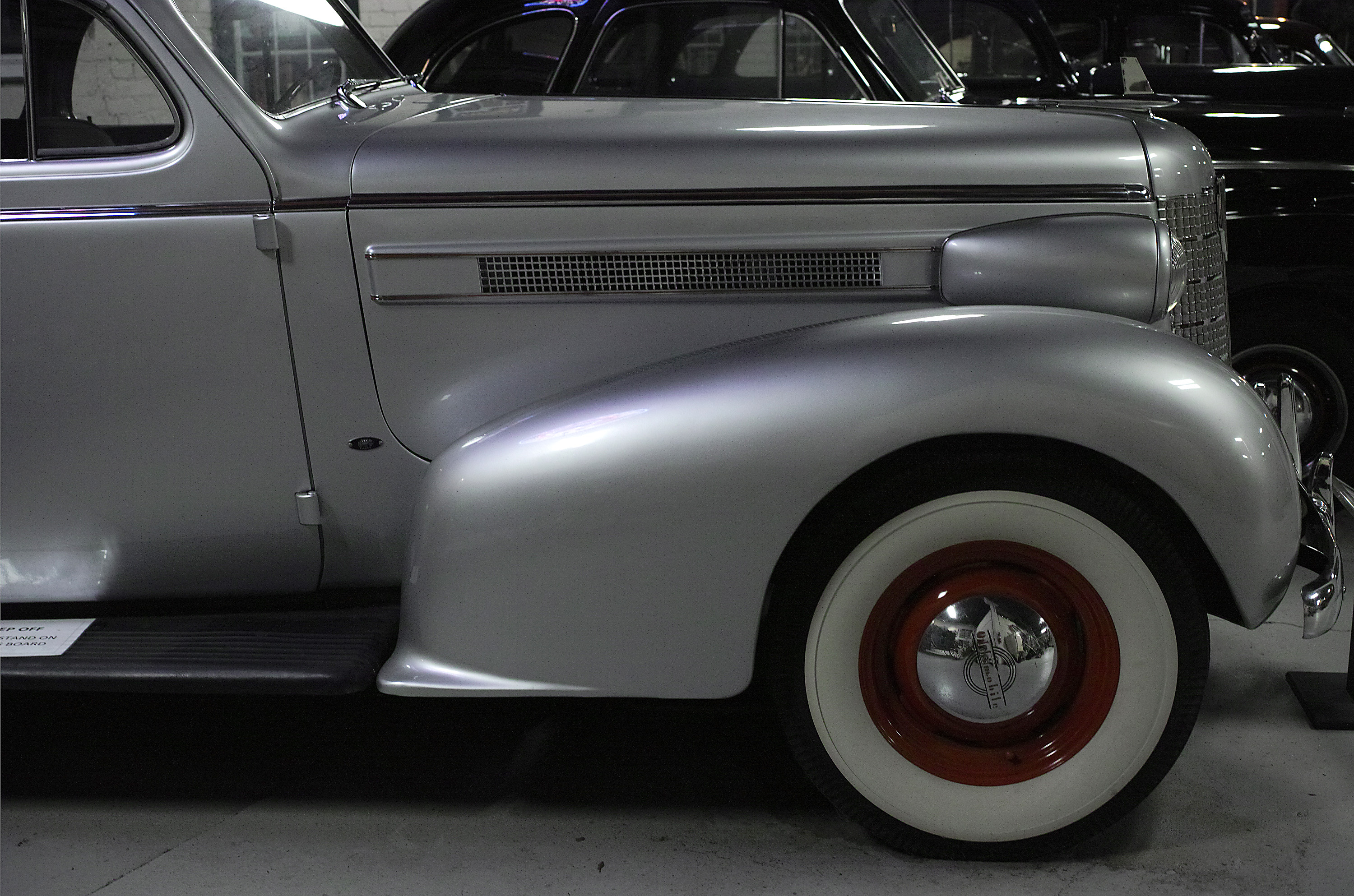
Oldsmobile
Oldsmobile was a car brand owned by General Motors. In the past, dealers often focused on selling one GM brand, like Oldsmobile, in their local area.
Negative equity means your current car is worth less than what you still owe on it. When you trade it in, that gap often gets added to the new loan, making the new car more expensive each month.
Edmunds is a car research website that tracks pricing and market trends. Here, they’re being used as the source for the numbers about how common negative equity is.
“Rolling it forward” means the extra amount you owe on your trade-in gets added to your new car loan. So you can end up owing more than the new car is worth again.
Trim levels are different “packages” of the same car—some have more features than others. If the automaker changes what’s included, they can make the car cheaper to build and easier to buy.
OEM partners are the car companies themselves—the ones that make the vehicles. The idea is that dealers can’t fix pricing alone; they need the automaker to help too.
UAW is a workers’ union in the U.S. auto industry. The point here is that labor costs and agreements affect whether companies build factories in certain places.
CarPlay is Apple’s way of showing your iPhone on the car’s screen. If lots of cars use the same CarPlay setup, they can start to feel the same instead of unique.
Tesla is referenced as the benchmark for a screen-and-software-first approach to vehicles. The speaker argues that some automakers are copying Tesla’s model, but they personally prefer cars that feel connected to the road and driving rather than “transportation” as an app-like experience.
The speaker highlights social media platforms as the modern “voting” mechanism for dealership visibility and customer engagement. For dealers, consistent short-form and video content can directly influence lead generation and showroom traffic.
That’s the website they mention if you want to learn more about the company they’re promoting. It’s basically where you’d go to check out their service.
A stair-step program is a sales bonus system with levels. If a dealer is close to hitting the next sales target, they may be able to offer a bigger discount right then.
Inventory levels are basically how many cars are sitting around to be sold. Too few cars means lost sales; too many cars means money gets stuck and discounts may be needed.
Franchisees are the local dealership owners who run the brand’s stores in their area. They’re responsible for day-to-day operations and follow the brand’s rules.
Dealer partners are the local dealerships that sell the cars for the brand. If the automaker changes the sales model, those dealerships can lose money or control, so the relationship matters.
Carvana is an online used-car retailer that sells vehicles directly to consumers. It’s mentioned alongside Tesla as part of the broader shift in how cars are bought and sold.
Aggregator sites are websites that collect lots of car listings in one place. The key point is that dealers can’t assume only their own website will be checked—third-party listing sites may be monitored too.
LIVE
We have a problem that's the result of several years of circumstances that have compounded
to bring us to the situation we're in right now.
If you have such a problem with it, well then just don't do it.
In everything in life, people look for an advantage.
What stops you?
God forbid if we're facing anything bad ahead of us.
How do we effectively explain that to the customer?
Dudes keep them too long and then they die.
I think it's horrible for the consumer.
I don't care what anybody says, the statistics don't lie.
The consumer is going to vote on whether your plan worked or not.
It's a huge opportunity for collaboration.
Nobody's talking about it.
The consumer definitely is asking for something that we're not giving them.
I'm not afraid of that.
Welcome to the Dealer War Room.
This is a first from Car Dealership Guy.
This is a bit of an experiment.
We kept having these, or I should say, everyone at this table and myself kept having these
really, really good conversations and I said, man, we have to record this.
We need a forum where we can have these true, intimate, authentic conversations with a group
of dealers.
Let's get started.
I want to start with a dealership buy-sell market.
Matt, you brought this up initially in the group chat and I think it's a great place
to start.
The buy-sell market, to me, to the industry tells us a lot about dealer confidence, who's
buying, who's selling, what are deals actually looking like.
Let's run through the data first.
By the data, to start, if you look at last year, about 390 to 600 dealership transactions
closed in 2025.
This is, of course, from the Presidio and Hague reports we took data from both.
That number is roughly 50% above pre-pandemic norms, so volumes were extremely high.
Coming to this year, the year started out a bit slow.
March seemed to have picked up.
We had almost a transaction a day being reported.
We cover all these transactions in CardioshipGuy, cdgbuysale.com is our buy-sell tracker.
If we're looking at another piece of data here, the average publicly owned dealership
generated $4.1 million in adjusted pre-tax income.
That was in 2025.
Unsurprisingly, Toyota and Lexus stores traded at 8 to 10X in most markets over 10X in Florida
and Texas.
Toyota and Lexus continue to be the hot ones in town.
Matt, let's start with you.
You've been very outspoken about this.
I feel like I mean you can have hour-long conversations about the buy-sell market.
What's your general take to start about where we're at?
Yeah, I think it keeps changing, right?
So you had the COVID period, then you had to just post-COVID period, and then today
what I'm seeing, so I'm really seeing two really distinct markets.
I don't think it's like one buy-sell market, I think it's a couple of separate ones.
The super premium stuff, the stuff that you mentioned, Texas, Florida, I'd even add Tennessee
into that mix in some cases in Metro Nashville.
We'll give some love to Tennessee.
Yeah, for sure.
Like super premium brands, great stores, big earnings, great states, those are still doing.
I mean, I'm into parking a lot and somebody asked me if I want to pay 10 and a half times
earnings for a store, not like 10 and a half times 500,000 either, 10 and a half times
like a load of money, okay, right?
That hasn't changed, that's never changed.
One thing I am seeing, a couple of years ago you had brands fracture, and we talk about
them a lot, I get asked them about them a lot.
You had a couple of brands sort of struggle a little bit, which created opportunities
for buyers here and there.
Now what I'm seeing, I'm seeing more brands fracture, okay, nobody's talking about it
though, people feel perfectly comfortable talking about the two that everybody talks
about all the time.
They're really not in that much of a different boat in terms of dealer profitability than
many others out there.
They just don't get hated on as much, so I don't know if that's good or bad or unfair.
So I'm seeing that and then I'm seeing in really competitive markets, Dallas, Texas,
Houston, Texas, Atlanta, Chicago, big towns.
I'm seeing regular mainline stores are starting to break more than I've seen before.
What do you mean by mainline?
Chevrolet, Ford, mainstream, yeah, right, like good brands, they're not making a bunch
of news for getting into trouble, buyers for those brands.
Stores that during COVID would have made two and a half million dollars a year easily
would have traded for 12 million in a week, now are not profitable at all.
Okay, so there is some opportunity for somebody like me who tries to add value through operating
the store, not through a lower cost of capital or I try to go into the store and make it better.
And if I believe I can do that, I don't have to be right, I have to believe I can do that,
then I believe there's opportunity.
I can take something and make it something else.
So that's kind of what I'm seeing out there right now.
I'm seeing more opportunities come up than in the past.
So I think you're going to see a wave, I think this is going to continue.
So why?
It's harder.
It's harder right now than it was one time a year ago.
There's less buyers in the new car market today than there was this day last year.
What about the bid ask spread?
You both recently acquired stores along that process.
Did you notice a big valuation gap between expectations and reality?
You know, it's interesting.
I live in Houston and I would love to buy stores in Houston.
Typically, I would buy luxury.
I haven't found Texas stores on sale yet or Florida stores on sale yet.
On the flip side, I do think California is a good buy.
Now you have to deal with tremendous inertia and complications doing business in California.
You have to be willing to do it and it's complicated to say the least.
But at the same time, one in every eight or nine cars sold in America are sold in California.
So if you look at it that way, you align with certain brands, you're connected with certain brands,
then maybe that's your point of differentiation.
Maybe someone wants out of a state or they want to centralize.
So I think the bid ask spread to answer your question depends on geography,
just like Matt was talking about.
And it depends on brand and if you could add value to your brand partners with whom you're
close or if you're familiar with geography.
Like I went back into a market I used to be in business with four or five months ago.
And I feel like I can add value there because I can get around without navigation in my car.
And if you can do that and you know market well enough, then that might be your point of
differentiation.
So bid ask spread is, I think it's definitely geographic and brand for sure.
Yeah. What brands did you just acquire?
Well, most recently in California, Porsche Audi Land Rover Honda.
I'm very excited about, I know Andrew's Honda, big Honda guy.
And I'm so excited about Honda.
Never had a Honda store before, actually anything that isn't luxury before.
So really excited about taking that on.
And then obviously I love my Porsche relationship and consider that family Audi to a certain
extent because it's obviously in the same group.
And I think the Audi product cadence that's coming, that's another thing I wanted to add.
I think a lot of these brands are beat up.
A lot of dealers are mad at these brands upset for one reason or another because the product
isn't.
And I think that looking ahead at incoming product, if you have the ability like look
what's coming down the road, if you can wait, I think it's well worth.
And then of course, I think Land Rover is an excellent brand.
I think leadership is great and great luxury.
And so I think that mix is excellent in the market that I chose to go into was
major Metro adjacent, which I like doing that as well.
You mentioned product.
I had this conversation in this studio with Mike Marouni about product.
And do you feel, Andy, you can, this is to you as well, but do you feel like there is
as they say, like a lost generation of CapEx?
Like do you feel like the last, you know, five years of or even decade of all this investment
in EVs has come at the expense of product?
And now what you actually have available to sell, you both have Mercedes, they put a very
big investment in electric vehicles.
What do you think about that?
Yeah, I mean, I think all the OEMs are trying to figure out how to recalibrate their businesses
after several years of investment in EV technology.
So that's absolutely happening.
But if I could just pivot back to what you were saying about the buy-sell market,
I really have a handful of observations and takeaways from the statistics that you cited
earlier, and that is there's still tremendous interest and bullishness in retail automotive.
That should be takeaway number one.
There's a lot of interest still in these stores.
There is very few places that a qualified investor can go and get the type of return
that they can still earn even in a post COVID market
that they can find in a retail automobile dealership.
So for that reason, I think we're going to continue to see
bullishness and interest in the buy-sell market from both traditional and non-traditional players.
And you've had several of these people on your program.
The three of us sitting around this table are the more traditional players,
but we are still seeing a lot of interest from non-traditional players, the private equity
investors and family offices and things like that.
I think we're going to continue to see that.
The franchise system, despite what so many pundits and people that follow the industry
have said, and like to attack the industry, the franchise system is still the best delivery
mechanism for retail automotive that's ever been devised.
I don't care what anybody says, the statistics don't lie.
Franchise dealers have huge tremendous investments in the local communities that they operate in.
Their faces and oftentimes their names are associated with these businesses.
They not only service the community from a retail standpoint, but we also
are supporting the communities with, we've talked about it before, things like Little League and
all the stuff that we do that is not necessarily the most high-profile stuff,
but it adds up in aggregate and it means a lot.
And for that reason, I think that's again why we're going to continue to see
a lot of bullishness and a lot of desire from people that want to continue to grow in this
business. And I think that's a really good thing.
So Andy, why do you think the industry gets so much hate if that's the case?
And in addition to that, there's so much investment being put into competition,
whether it be online auto retailers or direct to consumer, which we'll talk about that as well.
Yeah, I think that's really a function of we have a couple of bad actors that kind of spoil the
bad apples that spoiled a bunch, as they say, right?
That's the minority?
I do. I really do. And I'm blessed to know a lot of people in this business.
We were talking before we came on the podcast here today,
all the people that we know, kind of common friends that we have in the business,
and we all know a lot of people. And I think it's safe to say that the overwhelming majority
are good business people that do it right. And I think that is evident by the fact that
so many of those people are continuing to grow. One last comment about the buy-sell market too,
to what Matt was saying, the other observation I have is, is that there is definitely, without
question, a bifurcation in the buy-sell market happening right now between brands and geographies.
And Matt touched on that earlier. Todd did as well. I mean, the reality of it is,
is that there are certain brands right now, those brands that operate consistently and
stably and have good leadership and good direction, they're still bringing the money,
especially if they're in markets where the geography warrants the type of multiples that
they're getting. The brands that are not are struggling a little bit more. The operators
that are maybe doing things the wrong way and it's manifesting itself in their performance,
their financial performance as Matt was talking about earlier, those stores,
they're going to be tougher sales. When you say operators doing the wrong way,
are you referring to OEMs or retailers? Retailers. Well, really both, but it's really the retailers
that are in markets and that have brands where maybe they've taken their eye off the ball
on certain things. It's shown up in their earnings like Matt was talking about. And therefore,
that's going to be a tougher sell if they're looking to make an exit. But it's an opportunity,
to Matt's point, for people that want to go in and see an opportunity to turn a store around
and maybe pick up something at an investment level that they wouldn't otherwise have to step up to
for other brands in other markets and still garner a return that's respectable. So there's a lot
going on and I think it's going to continue to evolve and I think we're going to continue to see
that bifurcation. Yeah, I'm here less about blended years of earnings now. I'm used to
hear a lot about that. It's like, well, look, if you take the last three years, I'm like,
yeah, okay, how about if we don't take that, right? Even the last 12 months, right, Matt? I mean,
so I'm seeing and look, in the same thing, this business, the heritage of this business is that
in 1960, General Motors goes to Milwaukee or whatever. Who's the number one Oldsmobile salesman?
It's Bob. Goes has steak dinner with Bob and his wife. And all right, look, we're going to put a
Chevrolet dealership and 20 miles outside of town and we're going to make you the dealer, Bob.
Well, I don't have any money. It's okay. We're going to build it for you and you're going to lease
it from us and we're going to loan you a million dollars. My God, I'll do it. Well, there's a shift
in the generations too right now. So people, one thing as old as time is car dealers keep
car dealerships too long, right? So dudes keep them too long and then they die or get sick or
not quite the same guy that they were in 1960 any longer. And then it's like, it's not how good you
were in 1960. It's how good your kid is right now. And then so that also impacts a lot of these
deals too. And then a lot of people kept the business through COVID intentionally and said,
hey, I'm going to make money. I know I'm not going to get the same amount for it later, but
that was their math. They're like, we're going to keep it. We're going to earn money and then we'll
sell it later for whatever they're selling for. So I'm seeing a lot of that too. So it's more
approachable though than it was. And stores don't sell as easy. Like little country stores and stuff
like that. Man, you used to put a little store out in the country and some 200 unit planning
volume store in the country. You had six dudes behind it. I'd argue that the smaller stores
are almost harder to operate than the bigger stores, right, Matt? I mean, it's just as much
if not more work for less of a return. So that's another challenge and a reality, an economic
reality of this business. That's a reality. The franchise network as it existed in 1960,
those stores were put there for a guy to go to work, sweep the floor, get the bookman keys out,
open the door, flip the sign over, we're open now, selling four trucks today. And that's really not
the reality that people are looking for anymore. Certainly not the consolidators, right? Yeah,
the consolidators. I mean, but I don't even meet dudes like, and I get a lot of people reach out to
me and they're like, hey, I don't know if you ever read these messages, but I sell 200 used cars a
month in Kansas City and I want to do what you did, man. And I got a deal working on a deal in
Squinchahucky, Kansas. It's close to another town that's close to a town that we can draw from.
I'm like, just don't do that deal, dude. How about that? Just don't do it. Why do you advise
I'm not to do the deal? I mean, why are you doing this? Are you doing this because you love it that
much? No, you know, like, you know, why do you want to be me? Well, you think I'm rich, right?
You know what I mean? So it's like, you know, I want to do it to get rich. That's not how you
get rich, right? That's how you own a job. That's probably less than the job he has. So if you love
the car business that much, okay, and you can put an SBA loan together to go buy a car dealership
in Squinchahucky, Kansas, do it. Okay, but if you're doing it to go do X, Y, and Z, that's
that's just not a reality. Yeah. But going back to your question about ice vehicles and the thing,
right? I mean, then that one of your questions was and the manufacturers, I know it's
totally off where we were, but I do think by manufacturer, each manufacturer has addressed
it differently. So take Mercedes as an example. I feel like they've gotten ahead of it a little
bit. They went way too far electric, then they dialed it way back, you know, and I think they
addressed it generally. Now they have some more new, obviously, electrics coming. So we'll see
how that goes. But it's kind of like I used to be in the recycling business before I was in the
automobile business. And people think that if you put an orange bucket out in front of your driveway
that you're doing the right thing for the world and you're recycling and that's a good thing.
Well, actually, that's not good because you're flooding the market with recyclables.
A better impact on the environment would be to purchase
something that's made from recycled materials because you're creating a market. So obviously,
we did everything backwards by flooding the market with electric vehicles and then hoping
people would buy. Now, thank God they've dialed it back. Other manufacturers definitely have not
dialed it back fast enough the way Mercedes has. EV production. EV production and they hopefully
are going to adjust to the consumer. And I think a lot of the topics we're going to talk about today
are consumer related. I'm concerned about the consumer, really. Amen. A lot of these things.
And so this forcing of things, whether you force someone to recycle in an orange bin,
it's way different than purchasing something made from recycled products. I don't know if I'm
making that. So before we keep going, something's been on my mind since before we even hit record
today. The four of us grabbed lunch together earlier and I'm sitting there listening to Andy,
Todd and Matt just go at it. Buy, sell strategy, what markets are breaking, how they're thinking
about OEM relationships going into the back half of the year. Nobody's posturing, nobody's selling
anything. It's just three serious operators who trust each other thinking out loud. And I remember
thinking this is the thing that most dealers just don't have. Not the information, the people,
a real peer group you can be completely honest with. That's what we built CDG circles to be.
Confidential text based peer groups curated by level and store type. So you always have someone
to call or text when a decision actually matters. No one trying to sell you anything, no travel,
no stage, and everything stays between operators. CDG circles complies with all antitrust and
competition laws. So you never have to worry about what's on or off the table. Just operators helping
each other out. So if you want to learn more, go to cdgcircles.com. That's cdgcircles.com or
click the link in the show notes below. All right, let's get back into the conversation.
Well, you're heavy on luxury and we've talked about the case shaped recovery in the country.
I know how incomes have diverged. And let's go into the next topic, which is about
affordability. Andy, you raised this one specifically. But just affordability has
become a defining issue and the problem is one of the big problems here is negative equity.
By the data, let's run through that. So today, nearly 30% of trade ins toward new vehicles
were underwater in Q4. That's publicly available data. And that's the highest share since 2021.
So it doesn't look pretty there. The average amount owed hit an all time high of $7,200.
The other issue that's in the market is, this is from Edmonds, by the way. The other issue is the
$10,000 problem, we call it, where over 27% of upside down trade ins carried $10,000 or more
in negative equity. And that's a record, all time record. Now, you should expect that to rise
with inflation, but also, you know, that's nonetheless, that's a new record. And nearly
one in 10 owed more than $15,000. So it's not trending well there. That's from Edmonds as well.
And lastly, 84 month loans. So are you guys, do you guys, are you guys doing many 84 month loans
right now? We do them not a lot, but we are not. Yeah. Well, over 40% of new vehicle purchases
involving negative equity are now financed with 84 month loans. Somebody's doing them.
Yeah. So rolling that forward, right, that obviously lowers the monthly payments, but guarantees
the buyer is under water again on direct trade. Andy, so you flag this, just like said the table
for us, where do you think we're out on the affordability cliff? Well, we have a problem.
And we have a problem that's the result of several years of circumstances that have sort of compounded
to bring us to the situation we're in right now. So we had a COVID market where we had
manufacturers shut down production. That limited the supply of vehicles, drove up transaction
prices. You know, it's a pretty standard fundamental supply and demand market situation, right?
But then in addition to that, we saw leasing drop off a cliff back during COVID because
the manufacturers didn't really need to support leasing because they were selling all their
production to us and we were in turn, you know, selling that production to the retail customer.
There was scarcity. It just wasn't needed. So we don't have that pool of buyers
that are coming back into the market every year at the rate that they were leading up to COVID.
You then saw transaction prices go up because of inflationary pressures, whether that had to do
with suppliers or just simply manufacturers complying with regulations, a variety of different
reasons. So when the transaction prices went up, that's when we started to get into 84-month loans,
things along those lines. So that's why I said we have a variety of factors here
that have compounded into the situation we find ourselves in today.
So where do we go from here? I think we're already starting to see, at least I am,
with brands we are, we're starting to see our manufacturers have serious conversations about
line sets, trim levels, however you want to characterize it. Different brands have different
ways of characterizing it. Basically what that means is the models that they build, the trim
levels or the line sets, meaning the equipment that goes into these vehicles, how can they alter
that to bring the transaction prices down, the price points down, so that they're hopefully
building a vehicle that not only performs the way people want it to perform from a size standpoint
and all that other type of stuff, but also from a technology standpoint, what's included in the
vehicle, they have to look at that stuff. They have to make sure that they're building the right
cars at the right time, at the right price, and they're set up to effectively compete in the
market for the consumers where and when they want to transact. So that's the beginning
stage of what we really need to be doing right now. The problem is, in my opinion,
it's not happening fast enough. We continue to see average transaction price creep up
instead of creep down. I mean, we've had a couple instances. I think Cox had cited some data
where there were a few months where average transaction prices fell like, well, like 40 bucks.
It was de minimis, right? It was, yeah, it was nothing. So we need to see some
meaningful shifts in transaction prices, I think, in order to hopefully engineer some sort
of a soft landing here so that new cars become more palatable to consumers because the used car
market because of the COVID shortages, we're still reeling, I think, from supply shortages in
the used car market because buyers are seeking alternatives that they can afford in the used
car market and they're just not there in the numbers that they need to be. So you would think
that would make new cars more attractive, but it's not because those transaction prices are
staying stubbornly high. So it's a real conundrum. We've got to work together with our OEM partners
to solve this problem. We'll explain this to me though. If the OEMs view this as such a big issue,
why is it that you feel like there's not enough attention, they're not putting enough attention
towards it? Because we've been talking about prices rising for four or five years,
it's been the case. We came down a little bit, came back up. If it's such a big deal and there
aren't alternative ways around it, more creative financing, why aren't the OEMs doing more about
it? I mean, this could be existential for their businesses. Yeah. Well, I mean, I'd love to hear
with these guys think I'm personally, the reason I think we haven't gotten there yet is because
dealers are still taking the allocation. The average day supply that is on dealer lots right now
is elevated. We're incurring higher and higher floor plan expenses at some point as margins
continue to compress like Todd was talking about earlier, excuse me, with margins compressing
and the net margin ultimately compressing because of grosses going down, expenses staying at or
above the levels where they've been, dealers are going to have to start making decisions. When
dealers start making decisions about the vehicles that they stock and the cost that they incur to
stock those vehicles, that's going to impact production schedules and the vehicles that
manufacturers build. They're going to have to respond. I mean, I don't know what you guys think.
No, no, I agree with you. I agree with you. I would say that again, focusing on listening to the
consumer, this is a product related thing, like this digitalization of these vehicles, these
screens, all this equipment that I got to tell you, many consumers don't even care about.
They care about certain safety features. They want things to work, but customers still want
toggles and buttons and switches and knobs. We've spent all this money on screens because,
to be honest, the Chinese market led that, especially for most of the German manufacturers,
and they thought that's what China wanted, and so they thought that would be the right product
for the rest of the world. Maybe it is, maybe it isn't, but if it's way more money and the consumer
says, I don't want to pay for that, then I think that's something that's an issue. Now, can you
deal with it? The other issue is, and I want to hear from Matt, but the other issue I would say,
even at the highest levels, remember COVID was whatever, six years ago now,
five and a half, six years ago, the consumer was especially at the highest level, the highest
luxury and performance cars. They're like, what do you mean I have to lose money on this car
when I traded? They literally don't understand that cars typically don't make money as something,
and I'm not even kidding, especially the younger people in the marketplace,
which we can talk about later, but the consumer is confused a little bit because COVID confused
everybody, so a readjustment of values and all that stuff isn't necessarily bad, and yes, you're
the underwater nature of the cars in the system, that correction may need to just happen to wake
up the marketplace and then readjust. It might be taking some pain in the short run in order to
get things back, but I would love to hear Matt about that. This isn't the only industry, the
watch industry, the plane industry, all these things, but I think it's a thing that we haven't
during COVID, what you heard was, what I heard was consumers want what? Content. I want content.
I could tell you this safely. In the stores I have, they ain't one person that walks in the
door and said, all right, I need content, like a load of content in this vehicle right here.
Ain't nobody said that, okay? People said, hey, I need to buy my son a car for graduation. I don't
want a new car. I don't want a new car. I want to buy a pre-owned car for him, okay, right? You
acknowledge them. They want safety. Yeah, yeah. I mean, but like it's like as an affordability
thing, getting back to that. In my life, the safe harbor for affordability in the American car
market has been the American car manufacturers. I was a sales manager to Ford dealership. We
leased ranges for $150 a month. We've approved everybody, okay, at 10% tier four special rate
Ford credit at $300 a month. That's all gone. During COVID, it's funny that the American car
manufacturers got rid of their most affordable vehicles across the board to add higher end
vehicles that they made money on, okay? And so now you're learning that this is just an unwinding
of what that was. Like when that happened, I was like, so it's the great rebalancing,
it's the great recalibration that needs to occur here. I don't think there's anything
they can do about it. It's just like, okay, why doesn't it out of your Porsche or whoever?
Stop making all the electric cars, they just make gas cars tomorrow. That's what people want.
It's just not that simple, right? You know what I mean? Like it's not that simple. Like once you
start to train in motion, it's got to get almost slow the train down, you know, and then going
backwards and then redo it all, you know what I mean? So I think there's a journey to get there
and I think there's going to be some pain for that. I think there's a win-win here for
dealers, for OEMs, and for consumers. And that is if we can work with our OEM partners to help
advise them on the products that they need to build, contented or packaged the way people
want them packaged at the right price points. I think there's reluctance on their part because
they got to, they went down the path of building these vehicles that were very profitable for them
upfront when they wholesale them to us, but they're having to give more of that back now
in the form of incentives, right? So the opportunity here for the win-win is really
if we can build the right cars in the right quantities and the retail channel can turn
that product at the rate of velocity that is ideal, incentive costs will come down,
naturally profitability should go up, and the consumer will have a vehicle priced at a point
that they're saying they want to transact, right? But it's going to take courage on the part of
OEMs working with their dealer partners to identify what the vehicles are that we need to build,
how they need to be packaged and where they need to be priced so that we can meet that consumer
where they want to be met from a pricing standpoint. So I think the brands that can do that are
going to have a leg up and they're going to ultimately win in the near term.
I think the simple answer is there needs to be balance, right? It's extreme this way or extreme
this way, you know what I mean? And so this is industry that's not super famous for having a
ton of balance and not really. Balance with what? Balance of products, balance of everything, balance
of OEM to dealer relationship. We'll touch on all of this thing, but this is a thing that's a thematic
thing to me. You just don't stop making the least, the most affordable cars and make the
ones with the most content, you make the most money because it leads to some moment like this
and then now you have to unwind it. So you should make a little something for everybody,
okay, in the case of stuff like this happening. Because I know this, whatever's happened in the
past will probably happen again, no matter what they say when it's happening during COVID. It was
like, that's it, no more car dealership. But in the last five years though, Matt, I mean, I've been
involved with dealer councils and things like that with my OEM brands. And you know, the last
five years, there's been very little discussion about like dealer product forums and there hasn't
been a lot of dialogue around like, what do we need to build? How do we need to build it? Because
basically they were building what they build and they sold it, right? It wasn't an issue.
It wasn't an issue to your point. So which creates a lot of exposure. Correct. So what do you think
about this? As you're talking, I'm thinking one of the conversations I had with another dealer
the other day was I asked them about Chinese vehicles. If you go back 35, 40 years ago,
you had the entrance of, you know, the Koreans, the Japanese, they brought all this new competition
of the market, dealers benefited and kept OEMs on their toes. Today, the biggest difference,
you are at massive risk of upsetting the apple car. Because you mentioned blue sky valuations,
I mean, dealerships, they're saying your, you know, your grandfather's dealership, this isn't
3 million, 2 million, 50, 60, 70, 100 million. So you have a lot of money at stake here.
Right. And if you do bring out these external forces, which could be beneficial for dealers
and consumers long term, you're putting a lot of blue sky at risk potentially. What do you think
about that? Are you talking about in the context of the Chinese entering the market?
It is, I'm sort of shifting to that, but I'm talking about in the context of
getting to this equilibrium of competition that you're talking about. And it feels like we're
not getting there. It feels like, you know, it's been a, it's been a very slow process.
So if you kind of take in the aggregate, what everybody said, including you, I think what's
missing in the marketplace is a decontented, not an increased contented, if that's even a word,
vehicle, like go ahead and put the safety items in there, put in the ABS brakes and the GPS or
like sometimes that's all anybody needs. It's kind of like when we sat on the Porsche dealer council,
they were like, we want to get rid of the manual. And I was yelling and screaming, no, we can't get
rid. They're like, well, we only sell 10%. I'm like, that's because you only make 10%. If you made
more, you could charge more for manuals. People are, are so over screened and over digitized,
if that's a word. So then the marketplace is saying, offer them something that they don't have.
But again, to answer your question, I think, remember, this is 2026. So that would be
44, was it 44 years ago, Honda 1982 came to the United States and Ohio. That's 44 years.
Not just that they came to America, that they built a plant. So obviously,
I think we should continue to encourage construction, manufacturing of vehicles in the U.S.
If the economic incentive was so strong, how is it that not one OEM has done it already?
What's the catch? Or is it, should I, should I decontent the vehicles or should I just provide
leasing that, you know, sub-vents? Well, I think some of the content, contenting is
unnecessarily government required. Correct. Like the on and off switch at the,
at the stop lights, the dumbest thing ever, no, deregulation. Yeah. I mean, because that actually
bad for the engine long term to turn it off and on, off and on, off and on. I mean,
and so hopefully, but anyway, could be some of those things. It's a mixture, but I would encourage
the manufacturers to offer a decontented vehicle and see what happens. The younger consumer,
I think, is looking for that. They have a hard time building them and making money.
I mean, that's it. Economic incentive. That's the bottom line. I mean, so these are,
you know, these are UAW, you know, like a lot of them. And so if a car manufacturer,
any car manufacturer comes into United States of America tomorrow, I mean,
do you think he's going to build a car manufacturer facility in Illinois and sign up with the UAW?
Do you? No. Yeah. Yeah. No. Of course not. Well, I think, look at what they're doing.
places where you can afford to narrow that. So it's a bigger, bigger problem,
like a much bigger problem than us. I think so. Regulation, government needs to figure out how
to respond to that instead of responding to all this other, you know what I mean? Like that's
what I think needs to ultimately happen. I think the legacy OEMs though, do have some costs that
are sort of baked in to how they produce vehicles that are probably not the most efficient. And I
think if there's anything we're learning from the Chinese and how they're able to manufacture
vehicles, I mean, obviously the labor dynamics are very different. But it's my understanding,
and again, I'm a retailer. I'm not a manufacturer, but it's my understanding that,
you know, the Chinese have figured out a way through much higher levels of standardization
and a lot of the components that are going into these vehicles under the hood. Okay. Stuff that
you don't see. There's a lot more standardization and that's helping to drive obviously the economies
of scale and things like that, that are bringing the cost of manufacturing down. So, you know...
I would push back on that a little bit and say that the Chinese manufacturers are definitely
supported by the government. Oh, that too. No, I... Yeah. That's dumping a little into the U.S. I
think that's the concern for me. Yeah. I mean, listen, I'm a free market capitalist, but I think
that if we were to introduce Chinese manufacturers into the United States market, it needs to be
done on a level playing field. And I don't think you can characterize what's going on right now
as a level playing field. So, therefore, I'm not in favor of it. I think that NADA's position on this
matter is spot on. And until such time as those sort of systemic challenges can be addressed,
that that should continue to be the policy that's pursued. So... And I do think we overcomplicate
listening to the consumer. The consumer... Sorry to mean to tap on the table, by the way. The consumer
definitely, definitely is asking for something that we're not giving them. And I feel like we can
make a car. All manufacturers, German, Japanese, American, Korean, doesn't matter where, that is
affordable and actually something they want. Not apologetically less of a car, but, oh,
we have this. It's more fun. You're more interactive. It's more visceral. And it actually would sell and
be affordable and be the next whatever it is. I agree with that statement 100%, by the way. I think
he's spot on. I think we can figure it out where there's willers away. You're also in a very much
of luxury heavy. And so for you to say that, I think it's particularly interesting. You know,
why is that so acute to you? Like, do you feel that within your stores? Yeah, I don't think luxury is
defined by more stuff. I actually think sometimes luxury is less. Less is more. You know, I want
to feel in touch with the road. I want to hear the car. I want to, I want things that I mean,
if everything is just a big screen, then it's just they're all the same. Like I want to see gauges.
I want to have it be tactile. I want to touch. I want a manual personally. But if not a manual,
I want the car to be more about what I'm doing there than screen. I can sit home and watch a
screen or take an Uber and watch. I always thought carplay was like the biggest honey pot for the
industry, right? Everyone's on carplay. You've just commoditized your vehicle even further and
further. How is how is the Mercedes any different than the Nissan? Yeah. You know, and I'm exaggerating,
but the whole screen is the same. You know, it's the UX. I'd like to see more individualization
and differentiation among the brands. I think it would help stop copying each other, stop trying
to be like Tesla. I don't want to be like Tesla. You know, to me, Tesla is something that like,
you know, someone that used to buy an Oldsmobile would buy. Like you don't care about your car,
you just transportation. That's totally fine. Yeah. No problem. But if you care about cars,
you'll buy something that interests you, that excites you, that connects you to the road,
that makes it fun to drive versus sitting at home. I don't want to have self-driving doesn't
matter to me at all. Now, of course, there's plenty of in the marketplace that want that,
but there's places in the market that want to have a car and have that be something different
than playing with their iPad. Yeah. I think the competitive dynamics in the industry have shifted
and to your point, OEMs need to reposition themselves and understand it's no longer you
just sell a car to anyone, right? You have someone that wants self-driving. You have someone that
wants to feel the road. You have to kind of go into these niches to serve the modern day consumer.
I think we got to follow that up with the fact though that that dealers need to reposition
themselves as well. Yes. Yes. And I think that, you know, I used to say all the time during COVID
when digital retail and online retailing was all the rage that, you know, listen,
I want to transact wherever a consumer wants to transact. I always used to say
100% online, 100% in store or a combination of the two. Just tell us how you want to do it.
And we need technologies that are available that can help us accomplish that. And that's one of
the things and I've been very vocal on your program, Yosin, on your platform about, you know,
some of the OEM restrictions and requirements that we have with respect to technology solutions
and things like that that we are required to use that are deficient in their ability to help us
transact where consumers want to transact. That's a serious problem that we need to collaborate
with our OEM partners on to solve for so that we can adapt to the next generation of buyers
that want that flexibility in how they transact and where they transact and so on and so forth.
I'm prepared to do that, but right now my hands are tied to a certain extent, but all of us,
all of our hands are tied to a certain extent by some of these programs. It's a serious
challenge, but it's an opportunity. Well, I just showed you guys before this recording,
I showed you a screenshot of someone that tweeted at us and said, hey, I just bought this vehicle,
this dealership and I'm getting, you know, three to four emails asking me to, how is my service?
One is from Chevy, one is from Dealer, one is from, you know, third party. It's a huge issue.
So how is this issue of OEM mandated technology coming up in your store? How are you feeling it?
Well, obviously I'm with five different brands. We have five different standards and that's a
problem because in a perfect world, I'd be able to define the ecosystem that I want to operate
within where we can find commonalities in the data and how we share data because that's really
where the rubber meets the road is in the data. It then becomes a matter of how do you deploy the
data to sort of power your ecosystem so you can deliver your customer experience. So that's a real
big challenge because when we're trying to create those economies of scale, but we have to allow
for all the different solutions and whatnot, that's a big time challenge. And, you know, I made a
comment to you before we sat down here today. I mean, I think that customer satisfaction and
follow-up is a process that's largely become adversarial between OEMs and dealers. And it's
huge opportunity for collaboration because that customer is our mutual customer and we should
be working in conjunction with one another to ensure that we're delivering on all fronts from a
customer experience standpoint. That's the retail experience in the dealership. That's the product
experience, the whole nine yards. We both have a vested interest in making sure that that consumer
has a great experience. And so let's make that a collaborative process. Let's remake that as a
collaborative process instead of it being maybe a little bit more adversarial as it is with some
manufacturers more than others, but it's another opportunity. And again, it's kind of become a
sacred cow over the over the past few decades that that's just the way that's the way we've
always done it, which I can't stand those words. What has CSI or just the way the whole the way
the whole CS, well, all the above. So basically, but you know, the CSI process and follow-up and,
you know, make sure you follow up. If you don't, you get your hand slapped, it's it cost you this
money, whatever. At the end of the day, we need to work together on this stuff. And that's,
that's really where I hope the narrative starts to go in that direction, because it's a huge
opportunity, especially as we see more and more of the disruptors enter the marketplace, whether
that's Tesla or Lucid or any of these other players. And we can compete with these guys. It's,
it's really nothing that's beyond our reach. We just have to do it together. We have to collaborate
at higher levels. I think also with the advent of AI, you know, I had a discussion on the platform
with like sentiment analysis. Sure. With, from the customer experience, you mentioned simplifying
CSI. Yeah. Just turn converting it to NPS. Would you recommend us to a friend? I think what we
know is the fact that a customer takes time out of their day to send us a message about
how they're, this is just ridiculous. Why are they getting all these emails after spending 40,
$50,000 in the vehicle? That's just an issue. And the industry needs to solve them.
I think it's a lack of trust between the car manufacturers and the dealers at some level.
It starts with that. And then it's got good intent. But, you know, you know, car manufacturers,
many of them will advertise, they'll do what was traditional kind of tiered to or less local
advertising, you know, because this guy and this guy and this guy don't, don't do it. So we're going
to make sure everybody has the same website. We're going to make sure that everybody gets this
third party email. We're going to, you have to sign up for this. And if you don't, then you
don't get this part of the package of money that you have to get. You know, it's like,
you know, at the end of the day, the consumer votes, all this stuff that we're talking about
here, the electric car is like, why is this a problem? It's a problem because the consumers
don't want it. If you're a dealer, and we'll talk about the FTC stuff, we'll talk about all this
stuff. If you're a dealer that won't call people back, guess what, you know, you're going to get
a problem. Yeah, it's a problem. It's a problem. You know what I mean? And that's how it changes.
You know what I mean? So it's like, you can't step in and do good business for people that
aren't able to, right? But I think it's a, but which, which one of the OEMs is going to be the
one that says, okay, look, we have a really good dealer body. Let's look, here's the intent. We
want people to be happy. Like you said at lunch, yeah, here's two questions. Yeah. Yeah. Yes. No.
Okay, let's go. You know what I mean? I don't see that happening. All right. So Matt just said it,
the consumer votes and right now they're voting on your Instagram, your TikTok, your YouTube.
Every day you're not showing up with content, some dealer down the street is. That's exactly why we
partnered with Nomad Content Studio. Nomad has helped over 250 dealers turn short form video
into a real sales pipeline using the people and cars already on your lot. No big production budget,
no agency run around, just proven content strategy that drives actual buyer engagement and racks up
millions of views that translate into sales. They handle everything strategy,
filming, editing, so you can focus on running your store and selling cars. If you want to
learn more, go to trynomad.co. That's trynomad.co or click the link in the show notes below for a
free content consultation today. All right, let's get back into it. So sticking on the topic of
OEM dealer relations, one of the biggest impacts to margin, of course, are, you know, incentives,
stair step programs to your pricing. This is an issue which has just continued to bubble up
on our platform. We ran a survey in circles and CDG circles amongst all the dealers on
stair step programs within their respective dealerships and 97% were unfavorable. This was
among retailers. And so it makes you wonder, right, what's the end game here, right? Clearly,
OEMs have an incentive to want to move volume. At the same time, you want to keep your customer,
the dealer happy, you want to find some alignment. And what do you think about just
stair steps, the future of these programs? Well, I think that, you know, listen, stair steps have
been around the entire time I've been doing this over 25 years. They've been around for 25 years.
Some OEMs don't use them at all. Some OEMs use them every month, and some use them sparingly.
At the end of the day, though, I think we need to ask why. And the reality of it is, is I think
a lot of our OEM friends think that it's the best way for them to increase market share and
throughput throughout their retail network. But the bottom line is at what expense? I think that
it's at the expense of number one, the consumer experience, because if a customer, it's the second
to last day of the month, and they can buy a car and the dealer is willing to discount it $2,000
because they're on the precipice of hitting a stair step program versus if they come into that
store three days later and the price has gone up by $2,000, how do we effectively explain that to
the customer? And what message is that conveying? I think we need to... I think that's the big
thing. Correct. Forget the dealer. The customer is taking the brunt of it and they're pissed off
because they just paid more than the other guy. That's the big issue long term.
Right. So, and I mean, at the end of the day, the market is willing to transact
where the market is willing to transact. And I think that it's incumbent upon both dealers and
OEMs to be consistently studying the marketplace, make sure that we're building the right vehicles
in the right quantities with the right trim levels or line sets. And we have the right incentives
to keep those vehicles moving at the rates that they need to move, to keep the plants running,
to keep inventory levels at a manageable place or position. And that can be a process, again,
where we have an opportunity to collaborate. It doesn't need to be somewhat adversarial in
that respect. It can be an opportunity to collaborate. And I think the manufacturers that
are doing that at a high level are succeeding. Look at Toyota. Toyota is arguably doing the
best job in the industry right now at managing production schedules with inventory levels,
with incentives and profitability. And I think there's something to be,
that we can all learn from that. So, it can be done. It's not like this is some elusive
concept. It's being done right now. And I think others can learn from that.
You're going to hate this. Okay. I don't have a problem with stair steps.
All right. Okay.
Don't hate it. Tell us more.
Right. Okay. I don't hate it. So, I'll go through the rationale real quick with you on this. But
broadly though, first, it falls into the bucket of this. Like,
if you have such a problem with it, well then just don't do it, right? Or don't do that brand.
Quit trying to fix the brand that wants to do it. It's like my first wife, right?
Like, if everything was cool, I'd still be married to her, right? But it's not.
So, I'm not married to her anymore. I just got a different wife. So, the car manufacturers,
you know, like there's some certain car manufacturers. This is being real, man.
Okay. I don't think I'm doing this. It's their business. But we do the same thing.
Do you pay the, do you pay a salesman that sells three cars, the same thing as you sell a guy that
sells 35? You're selling, you have boat with your pockets. What about this guy right here?
You know what I mean? I say this. It's objective based selling. Some car manufacturers recruit a
network of people. When there's regime change, they recruit a network of people that think like
that. Okay. So, you don't hear those guys complaining about that. You hear the guys who had it before.
Okay. And look, you know, I don't have any currently, but I'm sure I don't know. Maybe after
this heirs, I might have a couple that might be done with me. But like at some point, if it's
such a big problem between us, let's just go do something else, man. You know what I mean? Like,
I'm not going to spend all my time trying to fix, pick one of the OEs that does the
stair step programs. I'm just going to go do something else. Right? I think it's two schools
of thought. I mean, look, to just get up and divest and move on, sure you could do that,
but not everyone wants to do that. Not everyone has a group of stores. I wanted my wife,
my first wife, to do multiple things that she wouldn't do. So, I'd choose one, right?
What do you think about, but what do you think about the customer experience? It doesn't bother
you? No. That your customers are getting, no. Different prices? No. I think customers got
different prices on new cars since before. Yeah, but that doesn't mean it's a good thing.
Today you have more competition. Yeah. And guess what? I don't think it matters.
And I think the theme throughout the show is we keep it simple, whether you're a manufacturer,
a dealer, for the customer. We are over complicating this entire thing. I think
there are certain times for certain things, stair step or otherwise, certain times for digitization,
for ice, for, you know, and I think everybody's making things too hard. Like this is just
transportation. This is excitement. This is sports cars. This is SUVs. And let's give the
consumers what they want and deliver it in a way that they can have it without complications.
Stands the utopian perspective. I just think that it's unrealistic in a fragmented supply chain.
Like I think you have OEMs, right? You have retailers. But I think the alignment with
manufacturing dealers, the critical point to that simplification. I think it's either you get aligned
or over the span of years or decades, you get consolidated and you're out of the picture because
you did not get aligned and you lose. I've had more people come back to me the next day and
complain they're carb roped and I have complained about stair step program as a consumer in my life.
Five, 50 to one or more, right? So I don't know. Maybe I don't have enough experience.
Just about everybody I've grown up dealing with has had in some way, shape, or form
some kind of volume based objective. Even Honda. I can remember when Honda did stair step programs.
Very sparingly. I can count on one. Do it or not.
I can count on one hand in 25 years. I can tell you. The point is that everybody has some issue
they deal with. I think it's a way of dealing with an issue until there's a better way to solve that
issue. That's it. But if it's such a thing that I'm going to spend all day complaining about it,
then I don't know. That's how I look at it. But I don't look at things like 97% of the world though.
So I might not be the greatest guy to ask about this. Andy?
No. Hey, listen, I've been, I've had a lot of fun getting to know this guy and I respect and
appreciate his contrarian view because, like you said, the circle's pole was
totally unanimous, right? But it's still instructive, right? I think the big takeaway is this,
is if stair steps were fundamentally good for the business and for brands, then why are the
brands that are the most sought after, the most stable and sustainable, okay, from a profitability
standpoint, from a throughput standpoint, all that type of stuff, those brands do not do stair
steps. I think it has nothing to do with stair steps or not. But I think it's a fair academic
point though. It's part of a broader picture. It's a fair academic point though. I would agree with
you on that. But I don't think that's how, I think that, I think Toyota has the market share they
have in North America. And again, look, I was a Gulf States Toyota dealer. They pay the out of
people, you know what I mean? At the sales manager level incentivize them. So, I mean, you know,
like, let's not pretend like, you know, everybody's got their thing.
Let's stick on OEMs. Well, let's talk directly to consumer. I think back to simplicity, right?
Scout and all these initiatives by OEMs. Scout is the most visible attempt right now by
manufacturer route against the dealer network. And I mean, it does definitely send a signal to the
market, Todd, you've been vocal about this. What do you think about Scout and what Volkswagen is
trying to do with dealers? Yeah, I'm concerned. You know, it's funny, I have the highest respect
for Scott Keough. He was a fabulous president of Audi. And I used to joke with him when he was
leaving Audi that he should not go to Volkswagen and should run for senator of Virginia. I mean,
he's an incredible order and a beautiful speaker and motivator. However, I thoroughly and really
ardently disagree with, you know, Scout going direct, not because I'm scared at all or intimidated
by him. I think it's a huge mistake. I think it's bad for the brand, bad for the Scout brand. I
think it's horrible for the consumer. And, you know, all these Tesla customers come for their
trade ins are like, I can't get a service appointment for Tesla because, you know, they're not
dealer. And I think the consumer continues to not understand what the dealer body does for
these brands and for the service of our customers. Like that, ironically, is the issue. So with Scout,
it's cool looking and all that. It's neat, but there's plenty of competition. And I think it's a
huge mistake. Why should the consumer care? The consumer should care because the consumer will
not get competitive pricing in sales or service. They won't get good service when their car breaks.
There's no accountability. Ironically, when it's direct to consumer, the manufacturers
doesn't hold themselves as accountable as they hold us. And that's evident by the customer
experience for service for Tesla, for service for Tesla. So I think that is a significant issue.
And I think it is a hugely risky proposition for Volkswagen to make Scout go direct to consumer.
I think it's bad for the Volkswagen group. I am really hopeful they will reconsider the position,
take the ego out of it and partner with the great dealers in the Volkswagen or other system and do
it. I think it'd be a great opportunity. It's a cool vehicle, but a cool vehicle alone will not
deliver success for the brand. So I'll put my lobbying effort into Scott to reconsider.
What do you think this says about overall brand loyalty? And again, if consumers, OEMs are all
watching, right? If consumers are willing to transact with and against an if, but this new
manufacturer, just out of nowhere, what does this say about what consumers actually want nowadays
when it comes to how loyal they are to a brand? I remember growing up, the neighbors and everyone,
it's like, oh, we only buy this type of vehicle. Or like the family, you saw the same vehicle in
the driveway. We always had different vehicles because my dad was a dealer. But you don't,
at least... When we talked about this before, in 1982, the number one selling vehicle in America,
1982, Cutlass Supreme, Oldsmobile. Where's Oldsmobile today? Oh, so my point in that is
consumers are fickle. Great. I love that. I welcome that. I want to adapt to them. I want to
be flexible for them. I want to move with them and help them as their tastes change,
as they grow older or as they change their needs from having a big SUV, if you have three kids and
a dog, to a four-door car, to eventually your sports car when you're dual income and no kids,
and all those things. And that's what a dealer can do. Like a dealer can adapt with the customer's
life cycle and help them with that process. Who's going to build an electric station wagon?
That's what I want to know. There's a market for that.
So, but anyway, so I guess what I would say is I think there is a disconnect, a true disconnect,
that the absolute fact is direct to consumer is bad for the customer, is bad for the customer.
I agree. I mean, like you got to remember why the franchise network was created.
It was created by the car manufacturers. It wouldn't created to make you rich or anything.
That's not why it wasn't created so the consumers would hate the car dealers.
It's okay. We're going to mass produce something all over the United States of America.
Okay. And to win market share, we're going to put it within 30 minutes of every citizen in the
world, you know, the US's door. So if we do that in a widget goes in every one of them,
the widget breaks, how do we deal with that in two days instead of eight months?
Exactly. Right. It was meant to deal with a mass production.
I think like Tesla and some of these, these aren't mass, these aren't mass market vehicles,
though, in my opinion. They're not. Tesla. Okay.
When's the last number one selling vehicle in the world in the Tyler, Texas or Gulfport,
Mississippi? Not everywhere. It's obviously, you know, geographically dispersed, but I
understand. It's a very much a mass market vehicle. But I'm like, okay, excuse me. I said
mass market. I meant wrong. I mean, I don't know that it appeals to everyone in the market. You
know, like the way Ford or General Motors or any of these kind of play, it's what they were meant
to do. Right. You know what I mean? So I would say Tesla is almost a, it's a luxury car, you know,
or a upper end car. Incorrect. You're looking like, I mean, I disagree, but I think it's,
it used to be a luxury car. Okay. Just like the iPhone used to be a luxury, you know, phone.
Yeah. I don't think a $40,000 model three of the luxury car. I think that needs to change
that definition. But so I think that, I think that direct to the consumer is very difficult
for most people to transact with. You know what I mean? Like,
there was a dealer meeting I attended a few years ago and it was like, okay, look how easy this is
to buy Tesla. And the CEO of the company walked through the purchase and he put it on a platinum
American Express car. Well, go to the Walmart. That's the Walmart theory, right? Go to the
Walmart in Gulfport, Mississippi or Tyler, Texas and go grab somebody, put them on an iPad and
ask them to buy a Tesla. Trade your car and buy a Tesla. I don't think you, I don't think people
realize what's out there and the real, you know, in the rest of the world. I think it's not that
easy. Well, that, that I agree with, by the way. I agree that there's a certain customer.
But if the great thing, I think we should also not forget, and again, I don't spite them,
but I would say that let's not forget history or we condemn to relive it. And that is how much
government incentives help Tesla build that company a huge amount, a giant amount. Like,
so if every other manufacturer would have had that, what would have happened? And a share price that
didn't for a long time reflect earnings at all, fine, finally caught up, maybe kind of sorta.
So let's see, let's see what happens. I mean, is the Fremont, the rumor is the Fremont Tesla
manufacturing plants going to stop building cars and build robots for AI supposedly.
Let's see if that happens. I don't know. Like, let's see what really happens long term. And again,
I go back to Bravo. He's the wealthiest man in the world. He's done an incredible job
building companies and quite frankly, building a brand. But, but, but is it really better for
the consumer? Is it really better for the consumer? And that's, that's really my issue.
I think we also need to make sure that there's, there's a, there's a fundamental issue of fairness
here as well. Okay. And we, we opened this, this discussion by talking about the buy-sell market
and about the valuation of dealerships, right? And I think about Matt's comments about that small
town store and what was it? Kenosha was Kansas or whatever the heck he called it. Shishkwanana.
Shishkwanana, yeah, whatever, whatever he was talking about. But, but let's think about this
for a second. Let's say there's a Volkswagen store in that small town in Kansas that a gentleman or
lady plows their entire life savings into, to invest in a facility, to invest in people and
processes, to sell Volkswagen vehicles. Okay. They're a franchisee. To have Volkswagen turn
around and say, well, we're going to start selling scouts direct into your market.
And even though you did everything we asked you to do, you have zero protection. Well,
that's not the way our system is set up right now. So, you know, that's why there is the
affiliation rule. And that's why so many people are so apoplectic about what is going on.
And I think we can't discount that because that's real. And that's, that's the facts
as we know them pertaining to the franchise system and why it still is the best demonstrated way
for the delivery of retail in automotive that's ever been devised. And, you know, Tesla's only
5% market share. So, if the Tesla way of shopping, buying and servicing a vehicle was that much
better and in that much higher demand than traditional legacy retail automotive, then why
isn't their market share higher? I think that's a fair question, right? But I, again, we can't
discount the fact that there have been tremendous multi-million dollar investments made by single
point entrepreneurs and people that own multiple stores like the three of us sitting at this table
right now. And, you know, that just can't be completely discarded in one fell swoop without,
I think, a discussion to warrant how that would actually happen if it, if it in fact did happen.
So, and I would also add to that no one's going to feel sorry for us dealers, because everybody
thinks dealers have all this money. What I'm saying is that system that he described and the
layers and layers of licensing and items that are set up to protect the consumer,
that we are held accountable to do, which we are happy to do, which are hard. It's a lot of
onerous items to ultimately protect the consumer. If the manufacturers aren't held to those same
standards, then the consumer's the one that's at risk. It's the consumer that's at risk.
And by the way, just one last thing. There's been several manufacturers, many that I represent,
who have been very vocal about the fact that they still believe that the franchise system is the
best system. And why wouldn't they? At the end of the day, franchisees have multi, multi-million
dollar investments. So if you looked at that in aggregate, like if you looked at in aggregate,
the amount of real estate investment that a brand's franchisees has, they would have to take on that
responsibility if they were to go direct to consumer, right? If you look at, again,
to Todd's point about operationally and all the dynamics with regulations,
there's a lot of heartburn there that we put up with as franchisees,
and that's what we get paid to do. And then lastly, when they build those cars and they
roll off the assembly line, they get wholesale to us. They sit on our fence. It's our capital that's
tied up there. It's not their capital. It's our capital that's tied up in the inventory.
So do they really want to take on that burden at the numbers that the industry currently
is dealing with in terms of ground stock that's sitting on dealer lots unsold? I mean,
that's a massive capital outlay for the manufacturers. That can't be discounted.
You know, I think the one question I would ask the CEO if I was having a conversation with him
right now would be, okay, fine, you want to go to direct to consumer, understood. But I would
understand the real root cause of why and what can be done about it. I think there's too much,
you know, let's just stop this. It's not happening. And I don't know how much there is.
Okay, why? Why have you given up on auto retailers? Is it like, what is it?
It's a margin thing.
Can we get to the root cause? Well, I mean, which to me is a little foolish because
what Andy just said, I mean, having all that inventory on your balance sheet,
it was nice to have the inventory on your balance sheet during COVID when things went up.
We did talk a whole lot more about direct to consumers during COVID, right? You know what I
mean? During that was more prevalent than it is today. I mean, Scout, this has been calming.
But I mean, did Ford do it? No? You know what I mean?
I think the direct to consumer thing is not any of that. I think they're doing it probably
because of the perceived market cap valuation that the share price would be affected. And
look, I, I improved margins. No, no, no. But because Tesla's market cap and the value of that,
everybody wanted to copy it, right? So I think there's a perception that your share price will
go up because of that. And quite frankly, I think it could be exactly the opposite in the case of
Scout. And again, there is so much competition for that kind of vehicle. If they decide to do
it, I wish them the best of luck, but I encourage them to rethink it one more time, set ego aside,
and line up with our, with your dealer partners and see what we can do for you because I think it
could be great. But if you want to do it, we have plenty of stuff we can sell against.
I think it's that. And I think, I think it's margin.
I've had it, I mean, told squarely to my fate, you know what I mean? Like, yeah, like if we can
remove this, you know, just get rid of this, remove this, well, then look, look at, look at
what's left. Look, if we can do that, if we can get rid of all the, you know, like again, it's,
it's a, it's multiple things, but it's, it's margin. Yeah. You know, look, the amount of money
that my car dealerships made or have made at certain points has been brought
to my attention in my face many, many times, but many, many car manufacturers, you know what I mean?
Over the years, you know, okay, you can do this because of this, right? Wow, look, just looking
at that, you know what I mean? Like, yeah, you can go build this, you can go do that, you know what
I mean? So I think by and large though, I think the, how they think is that if you can take them out,
it's going to improve margins. And then also to Todd's point, you know, everybody's trying to,
you know, Carvana, Tesla, you know, so I think, I think there's a hope to, to be that way.
Well, I think as industries mature in many cases, they vertically integrate. And I think this is
like what you said, they're seeing this happen with Tesla and other forms of vertical integration.
And you, if you want to be able to compete on that playing field, you've spoken about
Ghana, of course, it's, it's a tough one. So I want to, I want to close the body of the show on
the FTC. And sure, everyone here has read the news about the letter that got sent to 97
auto deal groups citing six specific practices that it considers illegal. This, this basically
discussed. So, well, let me take a step back. But what happened was the cars rule, which the FTC
tried to enact that got vacated in January 2025. It seems like over the past year, the FTC shifted
to less regulation, more enforcement, at least by, by this action. And so this letter got sent
to 97 dealers talking about advertising practices, hiding mandatory add ons, as they say, advertising
on available inventory and, and several other things. Several, or several deal groups were
named or have been already named. And in certain cases, Lindsay automotive group is actually, was
just announced they're going to be paying about $75 million of restitution plus another three plus
million to the FTC. So we're talking about real numbers here, real money. Matt, first of all,
did anyone here get this letter? No, no, I did not get this. That was the quickest note we've ever
got. Now, what do you, what do you think? I mean, what do you think about the state of the
industry when you hear about this? This, I think there's different states. You know, I have some
states that are heavily, heavily regulated in terms of an advertising message to the consumer.
Did I have some states that are, you know, Afghanistan, basically, you do whatever you want.
Okay, really, truly. Okay, you know, and then, you know, so it goes from one extreme to the other
all over the country. I think this, if you're selling the same product in the same market with
multiple people selling it, people are going to look for an advantage. Okay, in everything in life,
people look for an advantage. What stops you? What stops you from walking out of the, of the
store with all the groceries for free and not paying? What? There's a law against that that you
know will be enforced if you walk out that door, right? I think this is no different. I think if
you give people the rules and then enforce it, and I don't want to see anything bad happen to the
people that you mentioned, you know, or any of these people that I got this letter,
you know, because you could be a great dealer and employ, I mean, I employ a thousand people,
you know what I mean? And so, are all of them great people? Absolutely, by car and map hours
automatically. Okay, you know what I mean? Like, you know, you could want to slip through the cracks
possibly. I don't, I'm going to look on that when I get home. But my point is that, you know, I don't
want to see anything bad happen. But I think if there was a consistent law, this is the rules.
And this is what happens when you violate the rules and then you go do it. I don't think the,
I think your problem goes away then. So how do you feel about this letter overall? Do you think it
was a good move? I don't know enough about the letter. I would say, first of all, disclosure set
you free in any business. Disclosure set you free. A. B. Don't give someone a speeding ticket
for going 55 because you changed the speed limit to 45 later and then retroactively give them a
speeding ticket. Tell us the rules. Yeah, tell us what they are. Where does it start? Where does
it stop? 99.9% of the dealers, we have too much invested. No one's going to try to get around
that. And it's really simple. So I'm a little surprised that it isn't a little bit more worked
out. And it's, I don't, I don't know what's really happening. If it's, if it's grandstanding, I don't
know what's happening. But nobody has malintent in any of this in my humble opinion. And again,
disclosure set you free. Keep it simple and just tell us what the rules are. Yeah. And in this case,
you know, it's said here that new regulators are also monitoring, monitoring aggregator sites,
third-party listing sites, not just dealer websites. Really? And so this was, this was actually
stated to us by a time client through Cardio should we got news. So it's now,
I think the selective enforcement stuff is tricky, because you've seen selective enforcement
historically, it hasn't changed much, or at least it seems like it hasn't. I do wonder if this letter
that got sent to 97 dealers, of which I have spoken to some that have received a letter,
will that make a real impact, you know, will certain dealers tighten up their operations,
because they sort of got this warning with no fines attached or anything yet? I think yes.
I think so too. Yeah. I mean, think about, you know, the last time we really talked about the
FTC and the automotive business was revolving around finance insurance and document security
and stuff like that. You know, what happened? Lots of stuff happened. Everybody went put law,
everybody, you know, like things happened just at the mere threat of that. Okay. You probably,
people remember that. I remember that. You know what I mean? So here's the thing. This is what
could happen. Everybody's lawyer sent them an email, and we put in locks on all the doors and
put all the documents on it. You know, like we did what we had to do to prevent that. I think the
bad actors are going to get found out by the consumers over time, you know, that'll finish them.
But I think that letter or the, or the specter of that will probably, you know,
I would hope they would create the right path moving forward.
Well said. As we wrap up, I think I'm going back to the theme of this show. I think
a lot of OEM conversation and talking about simplicity. What's one message you'd have to OEMs
listening right now? Or dealers for that matter. But you know, let's, Matt, let's start with you.
Shop at madbarrows.com. Yeah. No, no, no, no. So I mean, look, I do realize that people watch
this and I do realize that it's, you know, it's impactful. One way or the other, you know, for
the people that are up here. And so I would say this, that, you know, the consumer, I've said it
a bunch of times on the show already, that the consumer votes, right? The consumer votes. So it
doesn't really matter, you know, what if it was just as simple as just do everything like Honda
does it? Well, then let's just do it like, let's just everybody do that. I think that
every brand needs its own identity, their own identity of dealers, right? Okay. And then I think
that the consumer is going to vote on whether your plan worked or not. Okay. So I would ask the OEMs
to listen to the customers, maybe not again, I'm sorry, not the six dudes on the dealer advisory
board quite as much. Okay. Like that matters. Okay. But what really matters is what the consumers
are saying. Okay. And so I think it's a balance like I talked about earlier. Okay. You know,
so if those six guys are the right six guys every single time, great. Okay. You know what I mean?
I think they are many times, but I think there's more out there than that. I think you have to be
in tune with the consumer. I talked to car manufacturers and ask them, why do you do this?
Why is there an ad covenant? Why is there this? And he's like, I don't, I don't know. I don't know.
The dealers, the advisors, they like it. They don't have to guys hate it. I can't change if they
just go nuts if I did it. So it's like, I don't know if there's that strong of a sentiment from
some of the car manufacturers. You know, so I think that, I think that's an area that has a lot
of improvements to be made, not only from the dealer, you know, if the consumer votes, if my
market share is dwindling and Tesla and Scout has success, then I have to change something to survive.
And I'm not afraid of that. I agree 100% on consumer. And I would also say that as the inertia
and the headwinds are facing us, whether you think 1982 was a terrible year and it was with 20 plus
percent interest rates, 2008 was a terrible year with the great recession or God forbid if we're
facing anything bad ahead of us, the alignment and the partnership between the manufacturers and
the dealers is more important than ever. And I don't say that to be politically correct. I say that
because we need each other badly. And the most successful dealer body and the most successful
manufacturers actually make the most money when they have the best relationships. And then the
I won't mention by brand, but I think a lot of people have mentioned it before. And it's not even
like being like, oh, kumbaya politically correct. It's literally what works. So we do have headwinds
coming. I'm not scared. Dealers are strong. We're resilient. And I just think tighten up with each
other, firm up that partnership and focus on the consumer. Like Matt said, and I think we'll be
great. And I don't think it's that hard, Andy. Yeah, I'm going to echo pretty much what both
guys just said. I'll just say it this way. I'm very bullish on retail automotive. I'm very bullish
on the franchise system. It's still the best delivery mechanism. And I've said that numerous
numerous times on this podcast. And I'm extremely bullish on what can be accomplished through higher
levels of collaboration between dealers and OEMs. We need each other. Todd said it. Matt said it.
It's been a common theme here. We've talked about a lot of different things. But the reality of it is
we are stronger together. We are stronger when we collaborate at much higher levels.
And when we find mutually beneficial win-win solutions, the sky's the limit. So that's just,
you know, that's what I'm hopeful for. And that's why, again, I remain, I remain bullish. I think
there's a lot to be optimistic about here. Excellent conversation. Matt Bowers, Todd
Blue, Andy Wright, gentlemen, thank you so much for coming on. This was amazing, brother. Thanks,
subscribing to the show and check the show notes for links to what we talked about.
Thanks for tuning in. I'll see you guys next time.
About this episode
Dealers vent and strategize about a tough, bifurcating market: premium brands in strong geographies still trade at big multiples, while many “mainline” stores are losing profitability and taking longer to sell. The panel ties affordability problems to negative equity, 84-month financing, and stubborn transaction prices after COVID supply shocks. They argue OEMs must “decontent” and package vehicles for real consumer wants, not over-digitized screens. They also debate dealer hate, FTC enforcement letters, stair-step incentives, and Volkswagen’s Scout direct-to-consumer push—warning that direct models risk service, accountability, and fairness.
Welcome to Dealer War Room from Car Dealership Guy — a new series where host Yossi Levi sits down with top operators to break down the biggest challenges in auto retail.
Today I’m joined by Matt Bowers, Owner of Matt Bowers Automotive Group, Todd Blue, CEO of LAPIS, and Andy Wright, Managing Partner of VINart Dealerships.
In this episode, we get into the growing tension between dealers and OEMs — from affordability and negative equity to mandated tech. We also break down the split in the buy-sell market, rising FTC pressure, and why the franchise system is going through a major reset.
This episode is brought to you by:
1. CDG Circles – A digital peer group for top auto dealers. Private dealer chats. Vendor reviews. Real insights. Join dealers representing 3,000+ rooftops @ here.
2. Nomad Content Studio – The team behind the dealers you actually see online. Nomad works in your dealership to build a brand new pipeline of sales driven by social media content. If you want your dealership to be next, head to @ here and book a call.
Check out Car Dealership Guy’s stuff:
For dealers:
CDG Circles ➤ https://cdgcircles.com/
Industry job board ➤ http://jobs.dealershipguy.com
Dealership recruiting ➤ http://www.cdgrecruiting.com
Fix your dealership’s social media ➤ http://www.trynomad.co
Request to be a podcast guest ➤ http://www.cdgguest.com
For industry vendors:
Advertise with Car Dealership Guy ➤ http://www.cdgpartner.com
Industry job board ➤ http://jobs.dealershipguy.com
Request to be a podcast guest ➤ http://www.cdgguest.com
Topics:
03:25 Why Toyota Stores Trade For 10X Earnings.
07:25 The California Buy Most Dealers Ignore.
09:15 Why Mercedes Dialed Back EVs Early.
12:35 Why Auto Retail Gets So Much Hate.
16:45 Why Small Country Stores Won't Sell.
21:10 How 84-Month Loans Trap Buyers.
26:40 The Dealer Decision That Forces OEMs To Change.
32:15 Why American Carmakers Killed Cheap Cars.
36:10 The Regulation Destroying Engines.
42:25 Why Follow-Up Became Adversarial.
46:20 The CSI Fix Nobody Will Try.
52:45 Just Leave The Brand If You Hate Stair Steps.
58:45 The Question Every CEO Must Answer.
01:02:50 Why Franchisees Have Zero Protection.
01:08:10 The Margin Obsession Killing Partnerships.
01:12:50 The $75 Million FTC Warning.
Car Dealership Guy Socials:
X ➤ x.com/GuyDealership
Instagram ➤ instagram.com/cardealershipguy/
TikTok ➤ tiktok.com/@guydealership
LinkedIn ➤ linkedin.com/company/cardealershipguy
Threads ➤ threads.net/@cardealershipguy
Facebook ➤ facebook.com/profile.php?id=100077402857683
Everything else ➤ dealershipguy.com