
“Dealers Are Fed Up!” — Inside the Automaker Squeeze, FTC Crackdown and an Industry on Edge | Matt Bowers, Todd Blue and Andy Wright
About this episode
Dealers vent and strategize about a tough, bifurcating market: premium brands in strong geographies still trade at big multiples, while many “mainline” stores are losing profitability and taking longer to sell. The panel ties affordability problems to negative equity, 84-month financing, and stubborn transaction prices after COVID supply shocks. They argue OEMs must “decontent” and package vehicles for real consumer wants, not over-digitized screens. They also debate dealer hate, FTC enforcement letters, stair-step incentives, and Volkswagen’s Scout direct-to-consumer push—warning that direct models risk service, accountability, and fairness.
Ford
"What do you mean by mainline? Chevrolet, Ford, mainstream, yeah, right, like good brands, they're not making a bunch"
Ford is a major everyday car brand. In this conversation, it’s grouped with other mainstream brands to explain what they mean by “mainline” dealerships.
Ford is another mainstream automaker used here to define “mainline” dealership operations. The hosts group brands like Ford and Chevrolet together to contrast them with luxury “super premium” brands in terms of dealer economics.
Chevrolet
"What do you mean by mainline? Chevrolet, Ford, mainstream, yeah, right, like good brands, they're not making a bunch"
Chevrolet is a big, mainstream car brand. Here it’s mentioned as an example of the kinds of brands that sell through regular dealerships.
Chevrolet is a mainstream automaker commonly discussed in the context of high-volume dealership networks. In this segment, it’s used as an example of a “mainline” brand that sells through traditional dealerships rather than luxury boutiques.
geography
"But at the same time, one in every eight or nine cars sold in America are sold in California... So I think the bid ask spread... depends on geography..."
Where you sell cars changes how easy it is to move inventory and what prices you can get. California, for example, has different buyers and rules than many other states.
Geography matters in auto sales because demand, regulations, and customer preferences differ by region. The segment highlights how dealer economics and pricing dynamics can shift when a market is concentrated in places like California.
Land Rover
"And then of course, I think Land Rover is an excellent brand. I think leadership is great and great luxury."
Land Rover is a luxury SUV brand. People usually associate it with comfortable rides and strong off-road ability.
Land Rover is a British luxury SUV brand known for off-road-focused vehicles. In dealership conversations, it often comes up as a premium brand with higher customer expectations and pricing power.
EVs
"Like do you feel like the last, you know, five years of or even decade of all this investment in EVs has come at the expense of product? And now what you actually have available to sell, you both have Mercedes, they put a very big investment in electric vehicles."
EVs are cars that run on electricity instead of gasoline. The speakers are saying the industry spent a lot of money on EVs, which may have changed what cars are available to buy.
EVs are electric vehicles, and the industry has spent heavily over the last several years to develop them. The discussion frames EV investment as potentially affecting what automakers have available to sell and how they manage their product plans.
Mercedes
"And now what you actually have available to sell, you both have Mercedes, they put a very big investment in electric vehicles. What do you think about that?"
Mercedes is a well-known car brand. They’ve been putting a lot of effort into making electric versions of their cars.
Mercedes-Benz is a major automaker that has invested heavily in electric vehicles as part of its broader electrification strategy. In dealership/retail discussions, Mercedes EV investment can influence inventory timing, model mix, and customer demand.
private equity
"...we are still seeing a lot of interest from non-traditional players, the private equity investors and family offices and things like that."
Private equity is a type of investor that buys companies with the goal of making them more valuable over time. In car retail, that can mean owning dealership groups or backing companies that run them.
Private equity firms pool investor money to buy businesses, improve them, and often sell later. In auto retail, they may buy dealership groups or invest in platforms that support dealership operations.
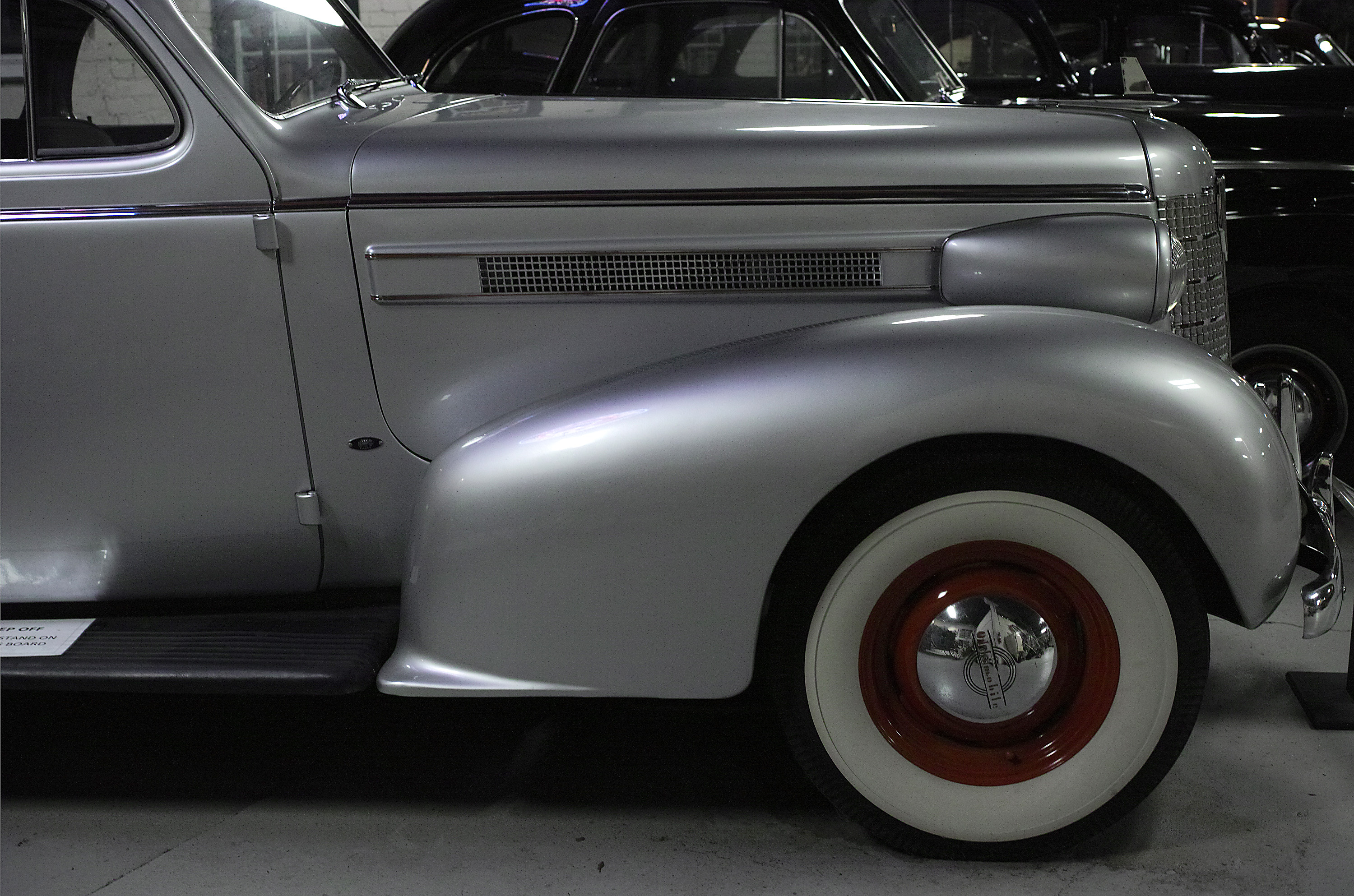
Oldsmobile
"Who's the number one Oldsmobile salesman? It's Bob. Goes has steak dinner with Bob and his wife."
Oldsmobile was a car brand owned by General Motors. In the past, dealers often focused on selling one GM brand, like Oldsmobile, in their local area.
Oldsmobile was a General Motors brand, and the transcript uses it to illustrate how GM’s dealer sales efforts were organized around specific brands. Mentioning Oldsmobile helps listeners understand the historical dealer-brand structure.
ice vehicles
"But going back to your question about ice vehicles and the thing, right? I mean, then that one of your questions was..."
ICE vehicles are regular gas or diesel cars. The phrase is used to contrast them with electric cars.
“ICE vehicles” means internal combustion engine vehicles—cars powered by gasoline or diesel rather than electric motors. The term is used in discussions about the transition to EVs and how automakers and dealers are adapting to changing demand and regulations.
negative equity
"But just affordability has become a defining issue and the problem is one of the big problems here is negative equity. By the data, let's run through that."
Negative equity means your current car is worth less than what you still owe on it. When you trade it in, that gap often gets added to the new loan, making the new car more expensive each month.
Negative equity is when the amount you owe on your current vehicle is higher than its trade-in value. It’s a major driver of affordability problems because it can be rolled into the new loan, increasing monthly payments.
Edmonds
"The other issue that's in the market is, this is from Edmonds, by the way... $10,000 problem... And that's a record... That's from Edmonds as well."
Edmunds is a car research website that tracks pricing and market trends. Here, they’re being used as the source for the numbers about how common negative equity is.
Edmunds (referred to here as “Edmonds”) is an automotive research and pricing site that publishes market data used by dealers and consumers. In this segment, it’s cited as the source for statistics on negative equity and upside-down trade-ins.
rolling that forward
"...rolling that forward, right, that obviously lowers the monthly payments, but guarantees the buyer is under water again on direct trade."
“Rolling it forward” means the extra amount you owe on your trade-in gets added to your new car loan. So you can end up owing more than the new car is worth again.
“Rolling that forward” refers to carrying negative equity from a trade-in into the new vehicle loan. This effectively increases the new loan balance, which can keep the buyer underwater again on the next direct trade.
trim levels
"line sets, trim levels... the equipment that goes into these vehicles, how can they alter that to bring the transaction prices down"
Trim levels are different “packages” of the same car—some have more features than others. If the automaker changes what’s included, they can make the car cheaper to build and easier to buy.
“Trim levels” are different versions of the same model with varying equipment and features (and usually different prices). By changing trim content—what’s standard vs optional—manufacturers can reduce cost and potentially lower transaction prices.
supply shortages
"we're still reeling, I think, from supply shortages in the used car market because buyers are seeking alternatives that they can afford"
A supply shortage is when there aren’t enough cars available. When that happens, prices usually stay high because buyers have fewer choices.
Supply shortages mean there aren’t enough vehicles available relative to demand, which tends to push prices higher. The speaker ties this directly to the used-car market, where buyers can’t find enough affordable options.
OEM partners
"So it's a real conundrum. We've got to work together with our OEM partners"
OEM partners are the car companies themselves—the ones that make the vehicles. The idea is that dealers can’t fix pricing alone; they need the automaker to help too.
“OEM” stands for Original Equipment Manufacturer—typically the automaker that builds the vehicles. The speaker is saying dealers need automakers to coordinate on pricing, inventory, and product planning to improve affordability and market stability.
OEMs
"to solve this problem. We'll explain this to me though. If the OEMs view this as such a big issue, why is it that you feel like there's not enough attention, they're not putting enough attention towards it?"
OEMs are the companies that actually make the cars. Think “the automaker,” not the dealership.
OEMs stands for Original Equipment Manufacturers. In the auto world, it refers to the automakers that design and build the vehicles (and often the powertrain and major components) that dealers sell.
OEM brands
"...I've been involved with dealer councils and things like that with my OEM brands. And you know, the last five years, there's been very little discussion..."
An OEM is the company that actually makes the cars. When they say “OEM brands,” they mean the car brands the dealer sells for.
OEM stands for Original Equipment Manufacturer—i.e., the automaker that builds the vehicles. “OEM brands” in this context means the specific car brands that dealers represent under franchise agreements.
ABS brakes
"[1994.9s] vehicle, like go ahead and put the safety items in there, put in the ABS brakes and the GPS or [2001.2s] like sometimes that's all anybody needs."
ABS is a safety feature that helps your brakes not lock up. That means you can usually steer better while braking hard.
ABS stands for anti-lock braking system. It prevents the wheels from locking up during hard braking, helping the driver maintain steering control and reduce stopping distances on many surfaces.
GPS
"[1994.9s] vehicle, like go ahead and put the safety items in there, put in the ABS brakes and the GPS or [2001.2s] like sometimes that's all anybody needs."
GPS in a car helps you find where you are and where you’re going. It’s basically built-in navigation.
GPS (Global Positioning System) is used in vehicles for navigation and location-based services. In dealership discussions, it often comes up as a “must-have” convenience feature that can affect perceived value.
UAW
"[2100.9s] I mean, that's it. Economic incentive. That's the bottom line. I mean, so these are, [2104.3s] you know, these are UAW, you know, like a lot of them."
UAW is a workers’ union in the U.S. auto industry. The point here is that labor costs and agreements affect whether companies build factories in certain places.
UAW is the United Auto Workers union, which represents many workers in the U.S. auto industry. The speaker uses it to argue that labor and economic realities influence where automakers build plants and how they structure deals.
CarPlay
"I always thought carplay was like the biggest honey pot for the industry, right? Everyone's on carplay. You've just commoditized your vehicle even further and further."
CarPlay is Apple’s way of showing your iPhone on the car’s screen. If lots of cars use the same CarPlay setup, they can start to feel the same instead of unique.
CarPlay is Apple’s system that mirrors an iPhone’s apps and interface onto a car’s infotainment screen. The speaker argues that making many brands rely on the same CarPlay experience reduces differentiation between vehicles.
Tesla
"stop trying to be like Tesla. I don't want to be like Tesla. You know, to me, Tesla is something that like, someone that used to buy an Oldsmobile would buy."
Tesla is referenced as the benchmark for a screen-and-software-first approach to vehicles. The speaker argues that some automakers are copying Tesla’s model, but they personally prefer cars that feel connected to the road and driving rather than “transportation” as an app-like experience.
Instagram, TikTok, YouTube
"the consumer votes and right now they're voting on your Instagram, your TikTok, your YouTube. Every day you're not showing up with content..."
The speaker highlights social media platforms as the modern “voting” mechanism for dealership visibility and customer engagement. For dealers, consistent short-form and video content can directly influence lead generation and showroom traffic.
trynomad.co
"If you want to learn more, go to trynomad.co. That's trynomad.co or click the link in the show notes below for a"
That’s the website they mention if you want to learn more about the company they’re promoting. It’s basically where you’d go to check out their service.
This is the website referenced for learning more about Nomad’s services. It’s part of the episode’s promotional call-to-action for the content-marketing partnership.
stair step programs
"...stair step programs to your pricing. This is an issue which has just continued to bubble up on our platform."
A stair-step program is a sales bonus system with levels. If a dealer is close to hitting the next sales target, they may be able to offer a bigger discount right then.
“Stair step programs” are tiered incentive structures where the amount of support (or dealer discount authority) increases once a dealer hits certain sales targets. They often create short-term pricing swings near the end of the month or quarter.
market share
"...a lot of our OEM friends think that it's the best way for them to increase market share and throughput throughout their retail network."
Market share is how much of the market a brand sells. If the automaker wants to sell more cars, it tries to increase its share.
“Market share” is the portion of total vehicle sales a brand captures in a given market. Automakers use incentives and dealer programs to increase market share by pushing volume through the retail network.
consumer experience
"...I think that it's at the expense of number one, the consumer experience, because if a customer, it's the second to last day of the month..."
This is about how the customer feels about the buying process. If prices change depending on timing, it can feel unfair and make people angry.
“Consumer experience” here means how customers perceive fairness and transparency in pricing. The discussion highlights that end-of-month incentive timing can make two similar buyers pay different prices, harming trust.
inventory levels
"to keep inventory levels at a manageable place or position. And that can be a process, again, where we have an opportunity to collaborate."
Inventory levels are basically how many cars are sitting around to be sold. Too few cars means lost sales; too many cars means money gets stuck and discounts may be needed.
Inventory levels refer to how many vehicles a manufacturer or dealer has on hand at a given time. Managing inventory is central to balancing supply (cars available to sell) with demand (customer buying), while avoiding costly overstock or missed sales from shortages.
franchisees
"At the end of the day, franchisees have multi, multi-million dollar investments... there's a lot of heartburn there that we put up with as franchisees"
Franchisees are the local dealership owners who run the brand’s stores in their area. They’re responsible for day-to-day operations and follow the brand’s rules.
Franchisees are the independent dealer owners/operators who hold the franchise agreement for a brand. The segment emphasizes that franchisees make large investments and absorb operational and regulatory burdens.
dealer partners
"and line up with our, with your dealer partners and see what we can do for you because I think it could be great."
Dealer partners are the local dealerships that sell the cars for the brand. If the automaker changes the sales model, those dealerships can lose money or control, so the relationship matters.
“Dealer partners” refers to the franchised dealer network that sells and services vehicles on behalf of automakers. When automakers consider direct-to-consumer models, they often need to renegotiate incentives, inventory flow, and responsibilities with these dealer partners.
Carvana
"you know, Carvana, Tesla, you know, so I think, I think there's a hope to, to be that way."
Carvana is an online used-car retailer that sells vehicles directly to consumers. It’s mentioned alongside Tesla as part of the broader shift in how cars are bought and sold.
aggregator sites
"it's said here that new regulators are also monitoring, monitoring aggregator sites, third-party listing sites, not just dealer websites."
Aggregator sites are websites that collect lots of car listings in one place. The key point is that dealers can’t assume only their own website will be checked—third-party listing sites may be monitored too.
Aggregator sites compile listings from many sources (often including dealer inventory) into one place. The discussion implies regulators may monitor these third-party platforms for compliance, not just the dealer’s own website.
Request an Explanation
Heard something you'd like explained? We'll add it to this episode.
Sign in to request explanations for terms you heard.
Want to learn more?
Browse our glossary for plain-English explanations of automotive terms, jargon, and concepts.
Help improve this episode
See something that's not quite right? Our annotations are AI-generated and can sometimes miss the mark. Click the flag icon on any annotation to suggest a correction.