Affordability challenges mean it’s harder for people to afford a car right now. That can be due to higher prices or higher monthly costs, so fewer cars get sold.
Dealer inventory is the stock of vehicles a dealership has on hand for sale. The segment frames leftover inventory as a problem because it ties up capital and increases costs the longer vehicles remain unsold.
Ford Motor Credit is Ford’s captive finance arm that provides dealership and customer financing. In this segment, it’s referenced as a likely lender behind floor-plan arrangements for dealer inventory.
The Ford F-150 is a popular pickup truck. Here, they’re talking about a brand-new 2020 F-150 that sat on the lot long enough that it needed extra work before it could be sold.
Price history charts track how a vehicle’s pricing changes over time across listings and dealer activity. In the context of leftover inventory, these charts help show whether dealers are discounting, holding prices, or struggling to move specific models.
The Ford Mustang is a car made for driving enjoyment, usually with a sporty look and engine options meant for stronger performance. It’s often talked about because many people own one and have different experiences over time. In this episode, it’s mentioned alongside other vehicles to describe how customer service or ownership issues played out over a certain number of days.
They’re looking at a 2025 Ford Mustang Mach-E GT. The point is to compare what the dealer likely paid (invoice) to what they’re asking now, to see how much discounting is happening.
This means the lender charges 0% interest for three years. It can make the monthly payment easier to manage, but the overall deal may still depend on the car’s price and incentives.
Commercial vehicles are cars or trucks meant for work/business use. They can have different pricing and incentives than regular cars you’d buy for personal use.
Days on market tells you how many days a car has been advertised for sale. If it’s low but the car has miles, it can mean the dealer is moving and relisting it.
Prosper Ford is the dealership they’re looking at. The point is that even if the ad shows a big discount, the final price can change once the dealer adds extras.
If a new car sits on the lot for a long time, problems can happen even though it’s “new.” The dealer may have to fix damage before selling it, which can add cost.
A body shop repair is fixing the car’s body after damage. If something hits the car while it’s sitting on the lot, the dealer may need to pay for repairs before it can be sold.
A flood car is a car that got water inside—usually from a storm or standing water. Even if it seems to work again, water can damage wiring and cause rust later.
Ford is a major U.S. automaker, and “Ford dealer” refers to franchised retailers selling Ford vehicles. The speaker uses Ford as an example of how long-stored inventory can become financially problematic when demand or pricing shifts.
Mileage on a “new” car can matter because it may indicate the vehicle was driven for transport, test drives, or dealer use. While it can still be sold as new depending on rules, higher miles can affect perceived value and negotiation leverage.
Many automakers report sales on a quarterly basis, which can delay how quickly the market reacts to changes like gas prices or geopolitical events. That’s why the host calls April’s early-month stats the “first real glimpse” for some manufacturers.
Market share is a brand’s portion of total vehicle sales in a given period. Tracking year-over-year market share helps identify which automakers are gaining or losing momentum and often correlates with how aggressive they need to be with pricing and incentives.
CarEdge is a website/platform that scores car dealers. The key point here is that they use pricing information they collect, not just opinions from reviews.
Concept
objective vs subjective
“Objective” here means the ratings are derived from documented pricing inputs, while “subjective” would rely on personal opinions like reviews. The segment positions this as a way to reduce bias in how dealers are judged.
The segment describes how CarEdge “pro customers” use aliases—created email and phone numbers—to request pricing. This is central to how the platform collects comparable out-the-door quotes from dealers.
The “out the door price” is what you’d actually pay at the end of the deal. It includes the car price plus the extra costs like taxes and fees, so it’s the best way to compare two dealers.
The episode states there’s a minimum of three quotes required to generate a dealer score. This is essentially a “data sufficiency” rule to avoid ratings based on too little information.
LIVE
It's noon here in VentnerCity, New Jersey, and San Juan, Puerto Rico, and this is Car
Edge live for Thursday, March 26th with your host, me, Leigh, Leight here in VentnerCity,
and Zach, hola, hola, amigo, in Puerto Rico!
How are you today, handsome?
I don't know, man. I don't know if that's...
Yeah, all right. All good. I'm doing well. Thanks so much, everyone, for tuning in.
Dealers can't sell 300,000 leftover new cars. We have the latest data from Edmunds
showing how the car market is slowing down before we jump into the latest and greatest
car headlines and news. A friendly reminder today's show is brought to you by caredge.com.
Now, it was six years ago that my dad and I started caredge.com, and we provide a car
buying service that takes care of research, dealer outreach, and even negotiation. We learn
what matters. Do you contact car dealers, compare real offers, and help you get the best deal
without the stress? We've offered this service for many, many, many years. We've helped so many
people, and you can learn more back at caredge.com. We are also offering a promotion right now,
$200 off our car buying service, 20% off Car Edge Pro. If I may, dad, over on the car buying
service page, we actually show you our savings. You can come down here and meet our team.
Congratulations to Nick on our team, dad, who recently passed a million dollars in savings for
his customers, 278 deals that he's helped caredge customers with, 1.1 million in savings. You can
actually come down here and see some of Nick's recent deals and how he supported our community.
You can also start with a free consultation, so please, folks, learn more about the incredible
work that we and, importantly, our team do back at caredge.com. Dad, the big story this morning,
I want to talk about the 300,000 new cars that are left over and have not been sold. We've got
leftover vehicles, but before we head there, let's head over to Edmunds, new vehicle sales
expected to dip in Q1 amid ongoing affordability challenges. According to Edmunds, analysts
forecast a seasonally adjusted sales rate of 15.9 million vehicles from March as needs-based
purchases helped sustain the market despite ongoing economic headwinds. Dad, we are looking at
a first quarter decline in sales of 8.8% compared to the fourth quarter of 2025 and 6.3% year over
year. The car market is struggling, the new car market especially. Let's start here with this
headline from Edmunds and then I'll get into those leftover vehicles. I'd buy the dip. The dip
is real. It really is. Listen, we keep talking about affordability challenges. If you go to the
first page of automotive news right now and scroll down a little bit, you will see that I think the
average asking price is over $50,409. That is up almost $1,000 from a year ago, up $762 from 30 days
ago. You can talk about the affordability issues all you want, but if the average marketed price
is $50,409, I think I can sit here today and proclaim that any talk about it from the manufacturers
is pure BS and that they have absolutely no intentions of doing anything about it.
Yes, the dip is real and the dip is going to continue because they figured out how they can
make a tidy profit if they sell new car-wise $15.6 million to $15.8 million in any given year.
So, yes, it's real and it's going to get worse.
Deb, we're going to look at those manufacturers that are struggling the most to sell those really
expensive vehicles. The first thing is first, we've got the data that actually shows the forecast
of how they're going to end the quarter versus in the past. We're going to use two proxy measures
here, this forecast for these various manufacturers. We're also going to spend time on the car-edge
car search and we've got the toggle set. New cars still for sale that are 2025 model year
or earlier, there's 330,000, almost 331,000 of them nationwide. We've been tracking this
all year long. Many automakers now have 2027 model year vehicles on their lots, yet while
they have those vehicles sitting there, more than 10% of new cars for sale in America right now
are leftovers. And that's really not good, but let's start here. The brands that are going to
see the biggest decline year over year, quarter over quarter, it doesn't really matter how you
look at it. Ford, look at this, Deb, year over year, they're going to be down almost 11%, 10.6%
General Motors sales are going to be down 9.8% Nissan sales. They've been struggling for so long
here, pops. They're going to be down 9.4%. Now what's interesting here is not only do we have
the change year over year, as denoted in this column, we also have the change from the fourth
quarter of this year. So look at that Ford sales, quarter over quarter are going to be down 18%.
Let's just sit with that for a second. Ford sales quarter over quarter down 18%. If there's not
desperation over in Ford to land, I don't know what it takes because let's keep going with the
experiment for one more second here. Back to the car search. We're looking at using new cars,
leftover new cars. How many of them are Fords, drum roll please? Almost half.
123,000 Fords are leftovers. And what do you think on whatever remaining
23s or 24s that are still new sitting in dealer inventory? What do you think the
incentive is from the manufacturer? There is none. Okay. Now Ford might have given their Ford
dealers a lump sum cash payment at the end of 2023 for the remaining 2023s. And they might have
done the same for the remaining 2024s at the end of 2020. But my guess is we're not going to see
massively huge discounts on these vehicles to move them. The dealers seem to be okay sitting with
them. Yeah. So actually, can you explain this? Can you explain this in layman's terms? Go as
simple as possible first. We can get into more granular details following. Why are leftover
vehicles such a bad thing? And why is Ford in particular, now that you've looked at the data
dead, we know quarter over quarter, they're off 18%. Year over year, they're off 10.6%.
And their dealers nationwide that have 123,309 leftover new cars for sale. Why is that bad?
Layman's trucks as simple as you can possibly explain it. And then let's get more into the
details. Well, it's bad for the dealers because it's costing them money to have those vehicles sit there.
And forgetting floor plan, because in many of the cases where you have a one or two-year-old
leftover, Ford Motor Credit or whatever the floor plan bank was for that dealership might have
demanded that those older new vehicles get paid off and you can no longer be financing those. So
forgetting the floor plan costs, the lot rot costs are astronomical. Every day a vehicle
sits there, the worse it gets, you can't even begin to imagine the catastrophes that befall
some of these vehicles as they're just sitting waiting on a lot. Okay. Vehicles are sitting there,
lots are crowded, things get moved around. Oh, my goodness gracious. Jimmy, the lot attendant,
just backed into that brand new 2020 Ford F-150. Oh my God, there's another $400 we have to spend.
The customer took a vehicle out, drove it. They're flat spots in all four tires. There's another
$1,200 that we have to spend. We went to demo that vehicle. The battery is dead. Okay. There's
another $300-400 that has to be spent. And we haven't even mentioned rodent infestation yet,
which is a real thing that happens that rodents, you know, I joke and I say rodents look at all
those vehicles sitting there and they go, look, a new condominium complex. Let the family know,
we got a new place for everybody to stay. But it's true that, you know, when it gets colder,
when it gets chillier and they're looking for warm places, you know, under the hood,
makes a lovely condominium for rats and other rodents and those soy-based wires. They taste
so good. They're so tasty. They might not be nutritious. Okay. But they're tasty. And so,
if you have to start replacing wiring harnesses, or the cost, the expense, just skyrocket. It's
crazy. So, there's no real incentive for a dealer to have vehicles sit for hundreds upon hundreds
of days. Well, I'm interested in here, Dad. And let's get some zip codes. Share some zip codes
where you want us to do these analyses in the chat. Obviously, back on the Car Edge Car Search,
it's called zip code base. So, share some zip codes. We're all we do in an 85254, which is
where I was born and raised, or in the DC area, which is where I live. But I want to do some
other parts of the country, Dad. And I want to look at how dealers are pricing, what the price
history charts are for these vehicles, because many of them, to your point, have been sitting for
hundreds upon hundreds of days and are still not selling. So, let's come here. First from Mark.
Thanks for tuning in, Mark. We've got 80017. All right. So, let's come over here to the Car Search,
Dad. That was 80017. Okay. So, we're in Aurora, Colorado. Yes. All right. Let's see if some images
will load here. I don't know if any of the images, maybe it's my Wi-Fi. All right. There we go.
This is Shomp, which is interesting, Dad, because Shomp is quite frankly one of the best car dealers
in the United States of America in terms of how they treat customers. 424 days they've had this
Mustang Mach-E. 467 days they've had this F-150 Platinum. Which one do you want to look at, Dad?
Look it either. It doesn't matter. All right. I'll open that one in a new tab and we'll start here
on the F-150 Platinum. Let's see, Dad, I'm going to scroll on down. Yeah, they've had it 467 days.
That is absolutely nuts. They've got it priced to be clear. I'm looking up here. They've got it
priced right below invoice. And here's the price history chart. Back in January, they had it listed
for sale at $78,899. They've got $80,149,810, $83,000. I love seeing this type of stuff because
this is usually, hey, I want to get a price drop notification on the vehicle to trigger some
interest. That's an interesting tactic here, but they actually had it listed for sale even lower
back in January of this year. That's really interesting. Let's come over here, Dad.
Look at this for a second, by the way. Remember when Ford came out with these EV vehicles and they
said, you're not dealers. You're not going to make money from invoice to MSRP. That's not
where you're going to make money on EVs. Look at this for a second here. The invoice price
on this 2025 Ford Mustang Mach-E GT is $59,172. It's currently advertised for sale at $51,113.
Let's come down here. And it's still sitting on the lot, is it not?
Yeah, of course. And yeah, you can see here, Dad, what they've been doing. They had it at $56,000
last year, $56,055,051,052,051,000. This is what dealers have to do because to your point,
let's see, are there any incentives on this right now? And this is on a 2025. There's 0%
financing for 36 months. Yeah, there would be incentives on the leftover 2025s. But if there's
any leftover 2024s, I'm pretty sure there's no incentives. Not from the manufacturer.
Yeah, you know what? Let's do a quick peek. Let's take a peek. Let's do this instead.
So let's go down here to year. Holy cow, Ford still has $8,000. But many of these, here you go.
Many of these are going to be more commercial vehicles. So let's see if we can find any
non-commercial vehicles. I'm actually grateful to see that. Commercial vehicles, very different
world than retail vehicles. So one more page here. Okay, let's just do F-150. How about that?
Bear with me, pops. Bear with me. And let's look at incentives. Let's see here.
Yeah, we got no incentives. I'm telling you, Ford is done
having, excuse me, direct the consumer incentives on their 2024 models. Okay, that came to an end.
They let their dealers know at a certain point last year. They let their dealers know this is
the last month we're going to be offering any type of customer incentives. And then there could be a
model year cash payment to the dealer to help the dealer move those vehicles along. But that was it.
I mean, we used to get that crap all the time with the Audi A8.
And oh my God, and the size of the cash payout for the remaining Audi A8 was astronomical.
It might have been $20,000, $25,000. Okay, but there were no customer programs from Audi.
So it was all on the dealer at that point to lower the price reflective of that extra cash
that they received from Audi in order to move the vehicles.
Yeah, let's go to another zip code really quickly here. This is so fascinating. 75033 from Tara
Tongue. So let's come here. That was 75033. So we're taking a quick trip over to Frisco,
Texas. So let's take a peak here, Dad. Now, instantly, one of the things I'm seeing with
these leftover vehicles, a few, Dad, have a bunch of miles on them and they don't have that high of
a days on market. That means the dealer is moving it around from one dealership to another, maybe
listing it as new, sometimes used, things like that. But look at this dealer discount just off
the bat here on this 2025 Ford Bronco Sport with 1,100 miles on it, MSRP of almost 40 grand.
They're advertising it for $27,564. Almost $12,000 off.
On a $40,000 car. Let me ask you a question.
30% discount off of MSRP. Do they have a dealer transparency index score for car ads yet?
Take a peek. So this is Prosper Ford. Have we done any negotiations with them?
Let's take a peek. So that was Prosper Ford? Yes. We have. All right. So Prosper Ford,
we've got three quotes from them. They add add-ons. What are said add-ons? It looks like they add
Lowjack, ZacTech. I like Zac, but not ZacTech. Crayon Bedliner, Windows 10, Club Plus. So this
is a dealer. So again, just for those of you that may be unfamiliar, we have caredge.com
dealer-radings. These are based on real Althador price quotes 40,460 that we've received
from dealers. I went here and I searched for Prosper Ford in Prosper, Texas. And then you had
to add add-on rate. Just click on that and it takes me right here. So yeah, this dealer, to be
clear here, is sitting on a 2025 Ford Bronco Sport with 1,100 miles. It's got a $39,185 MSRP and
they're advertising it for sale for $27,564. And as a customer, you should expect to see some add-ons
on that vehicle based on the three prior deals that we've done with that dealership.
And we can actually come here and see. Give me a second here. It's loading. We can actually come
here and see, whoops, those added accessories. So you can see dealer added optional accessories
right there, $2,496. So this is good insight, Dad. You're right. They're advertising one price,
but then as a customer, this is a dealer that gets a C grade because they're then adding add-ons.
Once again, proving that you can't necessarily believe the price you see that's advertised.
But the beauty of this is that if we have had any type of negotiations with these dealers,
you can check and see what type of negotiations we've had, what type of add-ons. So you have a much
clear, as a customer, you have a much clearer understanding as to who it is you're trying
to deal with and what to expect when you do. But let's go back to this, Dad.
Yes. This is a Ford dealer in Frisco, Texas that must be desperate to get rid of this vehicle. Now
I'm interested, Dad. Let's actually come back over here. Now I'm really interested. I just want to
look at their inventory. You don't want to just look at Prosper for its inventory. So I just clicked
on shop inventory. They have 300, excuse me, 321 new cars for sale right now. This dealer does.
How many of them do you think are 2025? So let's look at that.
A third?
40. So they only have 40. They don't have a ton.
Yeah.
They don't have a ton, but the ones that they do, Dad, they're advertising really low prices.
Look at this. Yeah, but they all have miles on them.
Yeah. That's another interesting thing. Yeah. Not all of them, but a lot of
their do. This is an F-150 Lightning that has 31 miles on it. That's a new car.
73,395 dollar MSRP. They're asked in 57, 854. We know again, we look at the dealer
transparency index. We know that they add add-ons, typically 2,100 of them to a deal. So this is,
Dad, the point that's interesting to me is this dealer's got 40 leftover new cars.
At a moment in time where Ford nationwide, this is where we started this year, nationwide,
their sales are off 10.6% year over year and almost 18% quarter over quarter.
How desperate does this, and you explained, you explained why dealers don't want to hold
on to inventory and perpetuity. How desperate does the dealer ultimately have to get to maybe
not do add-ons? Yeah, to this point right here, no add-ons. Maybe get rid of the add-ons to sell
the car. They're getting that, right? I don't see how they could not be as desperate.
Or is it just a cash grab? It's like, okay, hopefully a customer just doesn't even think,
can we make a little bit of money back because we're already losing so much on the deal.
Well, you've heard me say this before. You never get what you don't ask for.
So the dealer is always hoping against hope that as someone that is not well-versed in what goes
on at a dealership will walk in, see the price, see the add-ons and go, yep, that's exactly what I
wanted. And I can't believe you're only charging me that much. So their hope is that that one person
in America that might be that way walks into their dealership. And in many cases,
they are willing to wait as long as it takes. Why is beyond me? I just, you know, if you spend as
many years in retail automotive as I did, you cannot believe all the crap that happens to new
cars that sit. It's like, at least once a week, somebody comes up and reports something that
you've never heard before and you go, how could that possibly happen? Okay, you know, it could be,
it could be there was a windstorm. And one of the light poles fell on one of the vehicles that's
been sitting there for 480 days. And now you've got an $8,000 body shop repair that needs to be,
it's just... Or the car gets totaled. I remember that, I'm not going to name any names on this
story, but I remember it rain in a certain area. And a dealership had a vehicle for over a year
and a half. And the next thing you know, that vehicle was a flood car that was totaled. I mean,
that's another way to just, it's not dissimilar from when customers are negative in a negative
equity position, totally upside down on their car. And there's a thunderstorm and they park it
underneath a tree, hoping the tree falls. But the only reason customers did that is perhaps your
father suggested it to them, because when they would come in and they'd be $12,000 and $13,000
upside down on their trade, you know, and the people would say, well, what can I do? I look
for bad weather and park under a tree. You know, it's... Which is to be clear, it's like that level
of desperation happens at the dealership. And it also obviously happens to customers when they
realize they're upside down. These dealerships are upside down in their inventory. I mean,
dealerships are upside down in many of their new cars, the ones that are sitting,
that have been sitting for a while. And quite often, they can be way upside down in some of
their used car inventory rather quickly, because markets can turn quickly and market values can
shift quickly. But if you're a Ford dealer and you're sitting on some stuff that's 380 days,
450 days old, what are you waiting for? I mean, literally, what is the hope here?
Because... And let me just say this, as a new car manager or a general manager at a dealership,
hope is not a plan. Okay? I hope some moron comes in and actually buys it. That's not a plan.
I mean, I don't know, you know, I don't know of any specific source that you can use to advertise
directly to morons. Okay? So hope, the hope that somebody comes in is ridiculous at this point.
What is your plan to get rid of the vehicle? How is it that you're going to advertise it?
How is it you're going to incentivize your salespeople to show it? You have to have a plan.
You can't sit on this stuff. And if you are sitting on it, then I have questions for the
dealership principle. And I think the practical takeaway for our community is,
do what we're doing. Whether it be a specific dealer or you're finding dealers in your area,
set the year filter. Whether you use CarEdge or a different car search, doesn't really matter.
Set the year filter to 2025. If you are a deal seeker, these are the vehicles that these manufacturers
and these dealers, more importantly, the dealer, are going to be desperate to move on from.
One second. Scroll back up real quick a little bit. Scroll up a little bit right there. Stop right
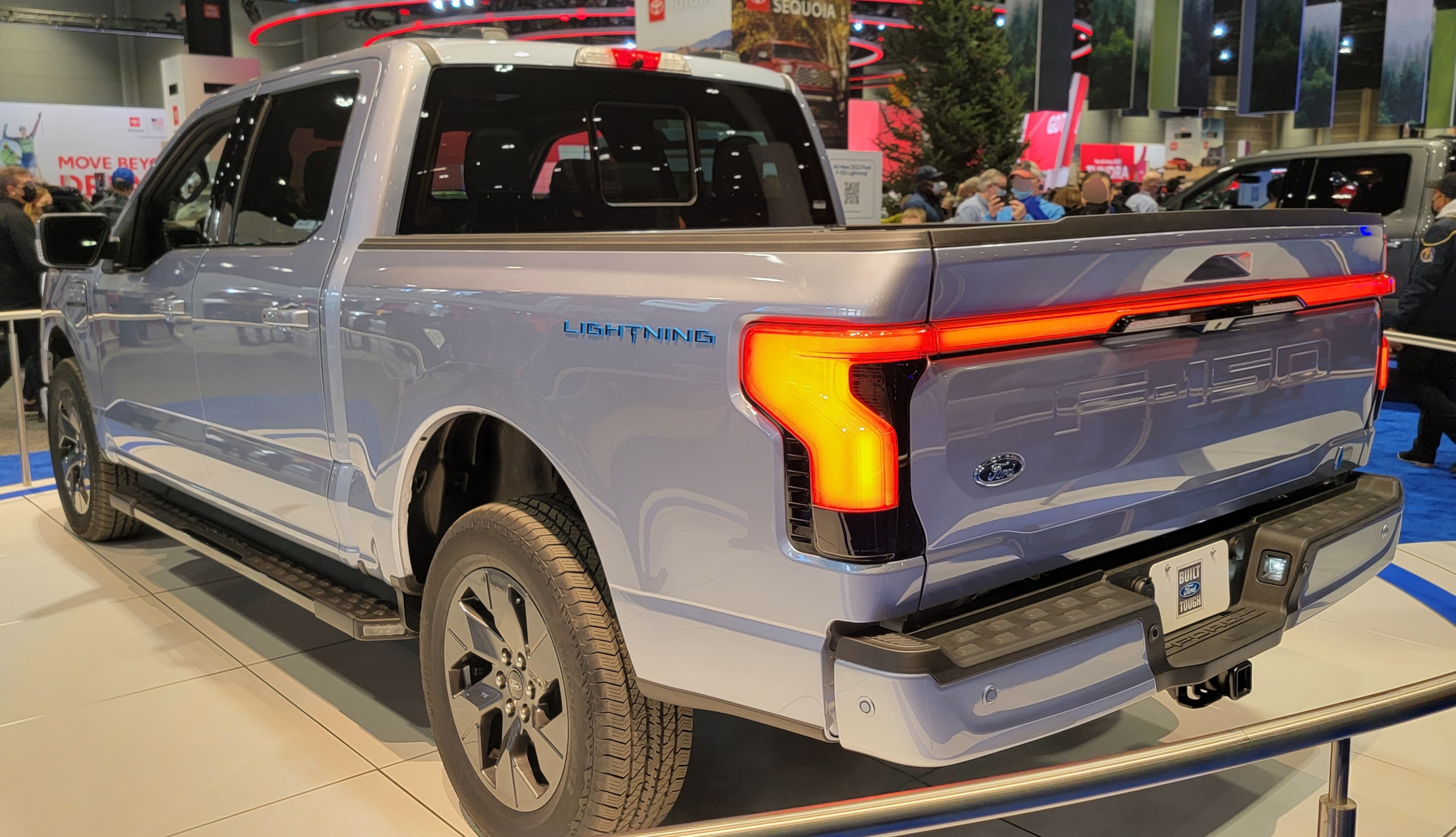
there. The third vehicle on the right, that 2025 Ford F-150 Lightning new electric in transit,
that's been sitting on the lot for 237 days and has 2300 miles on it. Maybe they meant to say,
it's being driven. I don't think it's in transit. And if it is, if it is, well,
if it's been in transit for 237 days, well, you got another question for Ford directly.
Just some of the silly things that I notice. Okay. So again, folks, set your year to 2025,
find those new cars, find those deals. That is absolutely where there's desperation, a lot of
incentive for these dealers to move on from this image.
There certainly should be. And any progressive dealership owner would look at it and say, just
move on, get what you can, get us some cash for that. For instance, if it's this Ford Lightning,
it's not going up in value. Okay, maybe it's a used car to a small degree, but as a new car,
it's not going up in value. So you can't sit on this stuff. Although I did work for a gentleman who,
as I have said, would sit on something until it was the only one left in America. But you know,
most people can't afford to sit on a vehicle for two, two and a half, three years just so they
can claim, well, we've got the only one left in America. And if you want it, you're going to pay
this price for it. You know, that probably could have sold 15 cars in the same timeframe
and made a hell of a lot more money during 15 units.
Now, it's not just Ford, Dad. I want to pull back up over here for a second. So obviously,
we talked about it. Ford sales off almost 18% quarter over quarter. General Motors sales off
11% quarter over quarter. But look at that, Dad. Toyota sales off 13% quarter over quarter.
Stellantis sales off 12.4% quarter over quarter. The whole industry is off 8.8% quarter over.
Well, and to a certain degree, that's to be expected because the fourth quarter of the
year is because you've got December in there. That is one of the strongest quarters of the year.
And then you're going into one of the slowest quarters of the year.
Over year change, you're still down 6.3% for the entire industry in terms of sales.
And obviously, Nissan's struggling, Ford's struggling, General Motors struggling, Honda,
who we've been talking about more and more recently, they're struggling. So really some
strong and damning trends here for new car sales, which again puts even further emphasis on these
300,000 leftover new cars out there. And I will truly be curious as to see
what happened during the month of March to see how the war has impacted sales,
to see how gas prices rising might have impacted sales. It will be interesting to look at the
stats. You know, the second, third, fourth of April, whenever we have some of the sales stats.
And many of the manufacturers only report sales quarterly. So this will be our first real glimpse
at what we're going to see from some of these manufacturers. It will be interesting to see
what that is. Yeah, it really, really will. I will also just pull up here. Edmunds has the
data on market share by manufacturer. And look at that, Ford's market share year over year down
4.6%. GM's market share down 3.7%. Nissan's market share down 3.3%. I think those are going to be
the manufacturers who have the most incentive to deliver incentives to drive down prices, to find
ways to get customers to buy their vehicles. And again, the tactic that we're employing everyone
to try and use today is to find those leftover vehicles, which of course you can do back on
caredge.com. Use the car search there to find those deals. Now, dad, let's come here to the chat
from Rich Diana. Thank you. Thanks, Rich. Great it. Pops, take a look at the 1995 Chrysler Atlantic.
Remind you of any of your pay-o-t trips from the 70s? Oh, God. Do you know the Chrysler Atlantic,
then? I don't remember it, no. Give me a second. Stand by. It's loading. It's loading. Oh, interesting.
Yes. You know that the nose almost looks like a Pontiac Solstice.
It does look like a Pontiac Solstice. Yeah. Yeah. Wow.
Can you see yourself driving that, dad? Oh, I could see myself dying in that because I think
once I got in it, I could never get out of it. But other than that, yeah, I'm sure that must
have been a fine ride. Yeah. Wow. What a cool concept car. Then, dad, we have here from Leon.
I have a local dealer that I grade an F minus and Car Edge has them at an A. How do I communicate that?
So this is something I'm super proud of. We'll see how it plays out in the long term.
The Car Edge dealer ratings platform is purely data from Althador price quotes. There is no
currently a way for people to leave reviews. So this is not a review website. This is data.
This is ratings based on the Althador price quotes that we've received from these dealers.
It'll be interesting, Leon. I know you've been a longtime community member, so I'm very curious
for your feedback. You can email me, of course, directly. I'd love to hear your story. But the
idea is to have this be quantitative, excuse me, instead of qualitative. This is really
data. Then again, the thing that we're super proud of is every single piece of data we have here.
We have the quotes sitting here, including the handwritten notes from the dealership.
So we have all of the receipts. We have all of the data to back it up. I think that's a
big game changer for the auto industry is. Yeah. This is not subjective.
Yeah. This is objective. Yes. And so any preconceived notions we might have about a dealer,
this gives us a much clearer understanding as to what their business practices are
and how they operate. And the fact that we have the receipts, they have shipped us,
not necessarily knowing they were shipping them to Courage, but they have shipped to the customer
who they thought they were in contact with. I want to reframe how you're phrasing this, Dad.
It's their information that they ship that they gave us. Yes.
Yeah. I just want to be very clear. What dealerships do is they send information
out the door price quotes to aliases on behalf of customers. Yes. What it is.
These are real customers who are buying cars. So I just want to be really clear because I think
your words can maybe be misconstrued. These are paying car edge pro customers who have an alias,
email and phone number created and the dealerships are responding to inquiries for pricing from that.
These are people who are going to buy cars. Yeah. For providing out the door price quotes to those
people instead of you having to get your phone number hit up and phone calls and all of that
to ask for the out the door price, we do it for you. That's all this is. And then of course,
to your point, Dad, we capture the actual out the door price quotes, we store them,
we organize them and then we create these ratings. Yeah, these ratings on the other side of it.
Maybe someday we'll have reviews. Maybe. But that'll be a different feature because this is
objective, not subjective to your point. Yes. And that's the beauty of it. And for us to be able to
actually allow people to click on the out the door quotes and see for themselves
what the dealership said, that's valuable information. I don't know. I do know.
I'm pretty sure you can't get that anywhere else. And that's the real beauty of this,
is that we are capturing data that nobody else is capturing. And not only are we capturing it,
but we're organizing it in such a way for people to be able to access it.
You know, maybe even some people at the FTC or state governments or state attorney generals
offices where they can access some of this data when they're looking at the way some
car dealerships might operate. Yeah, it's really cool. We don't expose it right now,
but we also have the screenshot of the advertise page on the dealer's website as well. So we
can juxtapose. We don't provide this in the user interface right now, but we have the screenshot
that shows whatever the online advertise price was versus the actual out the door price quote
that we received. So there's receipts upon receipts upon receipts. And again, this is accessible.
Just Google search car edge dealer ratings or go to caredge.com slash dealer dash ratings. We do
have a question that came in here with regards to this from Dan. Is there a minimum number of
quotes needed in order to get a score? Yes, three. That being said, if you do want to see
dealers who have less than three, just go to search all dealers and you can toggle show all
dealers or hide low data dealers. So, you know, you can play around with that here in the user
interface to show or hide if we have low data. Now, Dan, there was one other story I wanted to
bring up. Can you look at the first one on the list over there that happens to say
swickered anchorage? And this is interesting, if I may. Can we focus on something else if that's
okay? We certainly can. Appreciate that, Pop. So what I wanted to pull up for a moment here
is we've actually got that in article and automotive news about AI car shoppers. And so I just wanted
to take a second here. And I wanted to acknowledge the fact that this is what we've been trying to
we've been able to, Dan, if I may, over here on the CarEdge website. $20.2 million is what we've
been able to save people with the AI that we've created. So, you know, I know we talk about a
lot, but the industry is starting to take notice and we really want to try and shape what this
looks like into the future. Well, and hopefully we will. Fingers crossed, we will. All right,
Pops. I'm going to go enjoy the afternoon here in Puerto Rico where it is downpouring. And I think
there's a flash blood alert on my phone. So I'm going to go enjoy that. I hope you enjoy the
afternoon as well. What floor are you on? We're high up. It's okay. But we'll be back tomorrow
with more CarEdge Live at 12 p.m. Eastern. Thanks everybody for being here today. Have a great
rest of your afternoon, Zach. Thank you, Pops. You too. I'm going to try. If you liked the show,
please take a moment to rate, review, and subscribe. It really does help the show to grow.
Thank you for listening.
About this episode
Edmunds data points to a slowing new-car market, with Q1 sales expected to dip 8.8% vs Q4 2025 and 6.3% year over year, driven by affordability pressure. Leigh and Zach dig into the fallout: roughly 330,000 leftover new cars (2025 model year or earlier) remain on lots, with over 10% of listings nationwide classified as leftovers. Ford gets special scrutiny—quarter-over-quarter sales down ~18% and dealers sitting on large leftover counts—yet incentives can be minimal. They also show how pricing can look “cheap” online but get padded with add-ons, using CarEdge dealer ratings and price-history examples.
Today on CarEdge Live, Ray and Zach discuss the latest data on unsold new cars. Tune in to learn more! Hosted by Simplecast, an AdsWizz company. See https://pcm.adswizz.com
for information about our collection and use of personal data for
advertising.