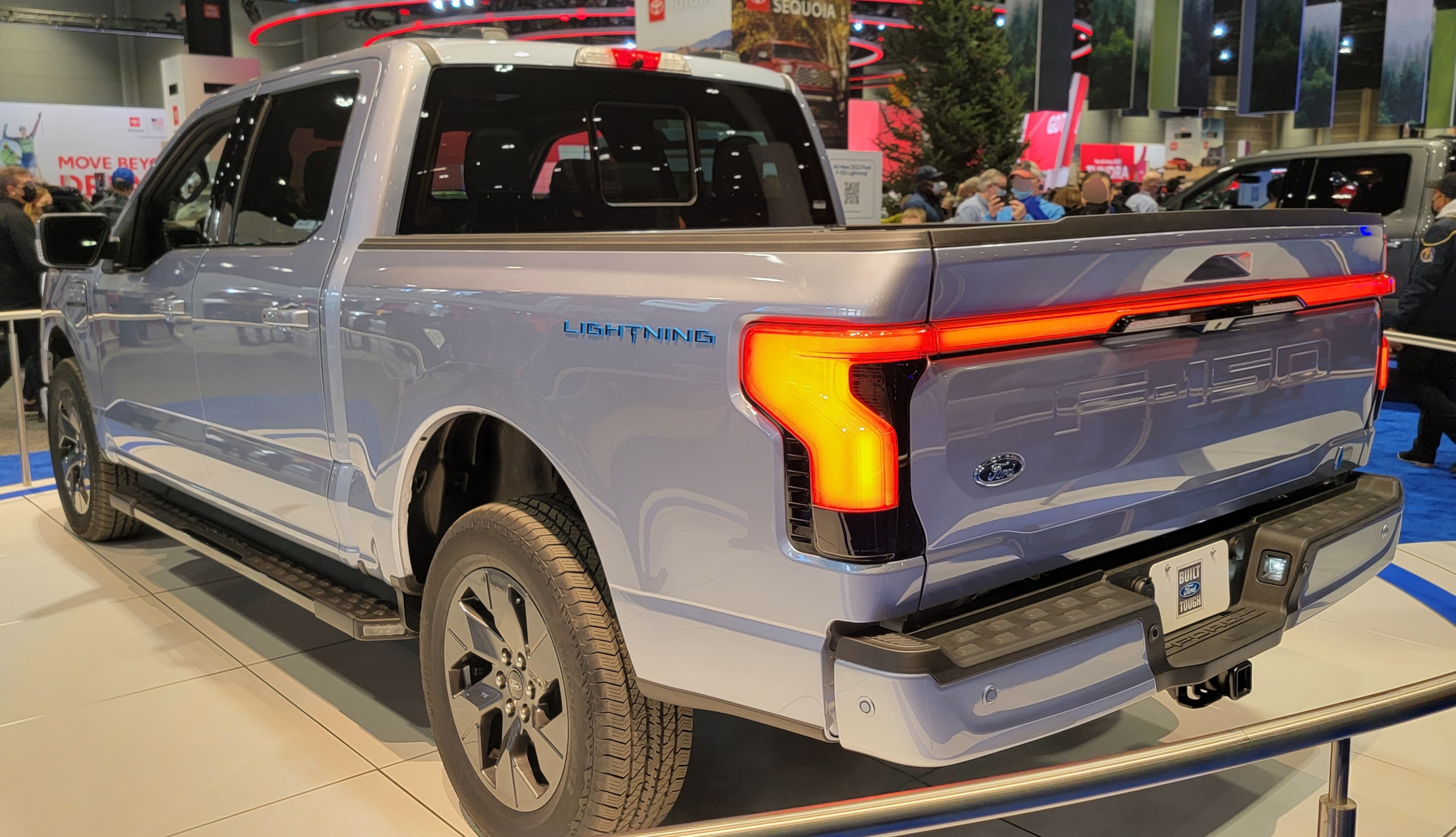
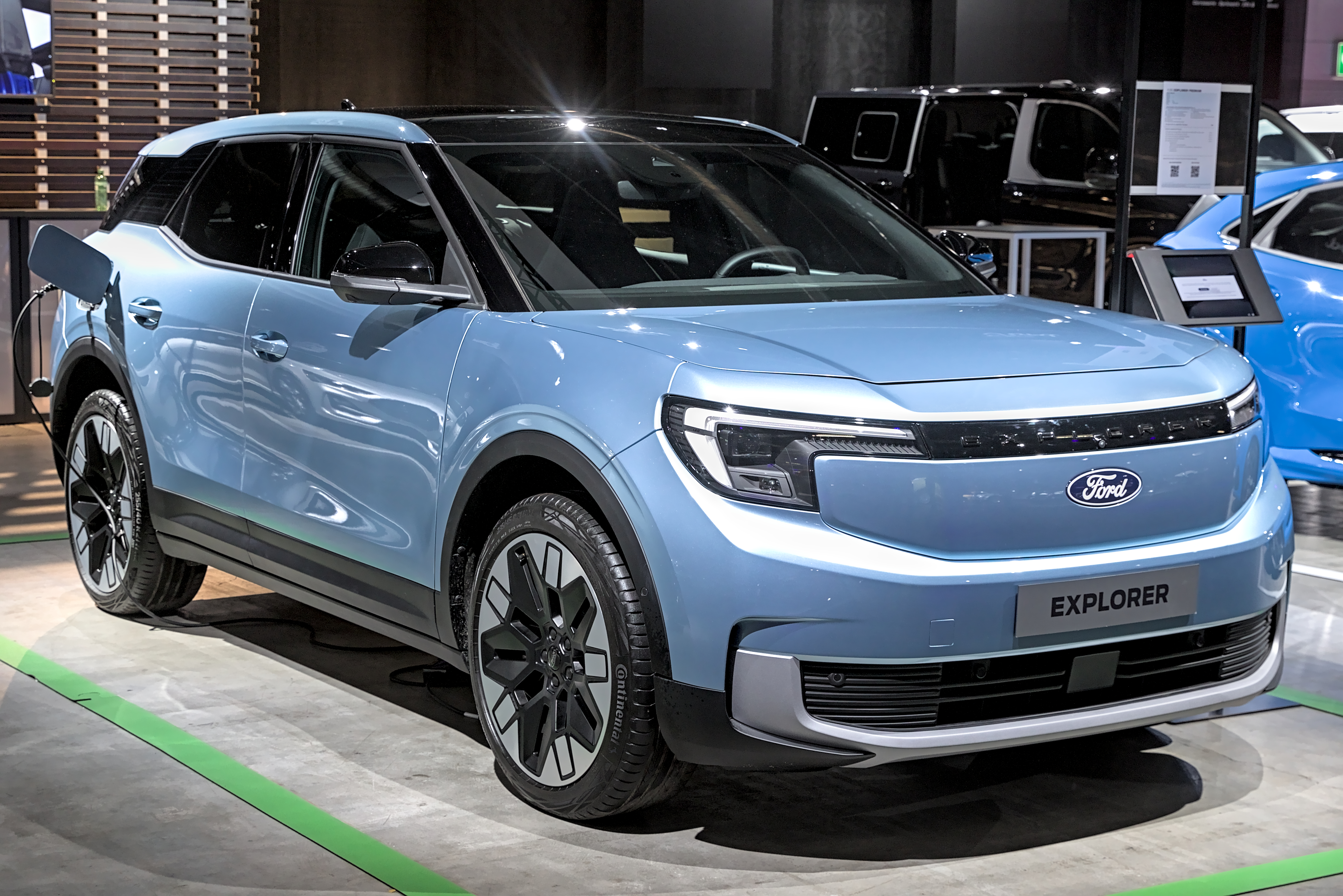
Raptor is a special name Ford uses for its fastest and toughest trucks and SUVs. They have stronger suspensions, bigger tires, and more powerful engines for off‑road adventures.
High‑margin vehicles are cars that make a lot of money for the company when they sell them. They usually cost more or are made cheaply, so the profit is big.
A solid state battery is a newer type of electric car battery that can store more power and is safer than the usual batteries.
Car
Toyota LFA
The Toyota LFA is a rare, high‑performance car made by Toyota. It has a special engine and very light body, so it can go very fast.
LIVE
With nearly 5,000 specialists dedicated to supporting dealer financial services, Ally has the expertise to help you with your retail finance, F&I, and remarketing needs. We're all better off with an Ally. Contact your local Ally Account Executive to get started today. Ally do it right. Welcome to this weekend drive edition of Daily Drive for the first week in December 2025. I'm Kellan Walker in Las Vegas. We're breaking down some of the biggest stories in the auto industry.
From the past week, I'm looking forward to watching the store in the days ahead. Joining me today are Michael Martinez, who covers Ford in the UAW forest at automotive news. Mike, welcome back to weekend drive. Thanks for having me. And Larry Velocquez, who covers Toyota and Subaru, Larry Legend. Thanks for joining us.
and Mazda, Larry Legend. Thanks for joining us.
Thank you, Kel. And by the way, Mike is now gold plated, Mike, for the first time.
Thanks to Larry. I gave him, I gave him gold status on Delta. Oh, there we go. All right. So
before we get into this week's news, what are you guys covering this week?
Well, I'll start. I am deep in NADA preparation already, because by the time this airs,
I am on vacation through the rest of the month. So I am deep trying to get this stuff
in and ready for NADA, already talking to our council chairs, going through the end of the
year stuff that we that always bury us this time of year. Well, Larry's off. Some of us do have
to work at least for a little while longer. So this week, you know, we're going to talk about
this later. It was a big sales week. And obviously a big week in that two of the Detroit three CEOs
were standing behind the president of the United States in the Oval Office for a big announcement.
So I think we'll get into that in a few minutes here. You're right, Mike. We'll speak into that.
President Trump announced his proposed rollback of Biden air fuel economy standards.
Auto industry execs were in attendance at the White House, including Ford CEO Jim Farley,
and Stellantis CEO Antonio Filosa. The plan would cut requirements from 50.5 miles per gallon
by 2031 model years down to 34.5 miles. Larry, what are your thoughts?
Well, with affordability being the number one issue for for this industry right now,
I think the best thing that consumers can do is have less gas mileage. We really all want to
pay more money before fuel. So but seriously, what this does, this proposal, it'll take a while to
get enacted and there'll be fights on both sides. But look, nobody, as somebody who drives a hybrid,
nobody likes paying more at the pump. And while these requirements while loosening these
requirements may, and I want to emphasize may help keep the costs of vehicles down.
It's also going to mean the return of the eights and all the bad habits that we really should have
been trying to get out of. But hey, we go back to the future. That's what this the the spirit is about
in the US. So, you know, it's interesting that Larry mentions that I heard our friend Jessica
called well at Edmonds talk about this announcement and the affordability concerns. And she mentioned
it from a sort of a human psychology standpoint that yeah, we all hate the fact that a new vehicle
costs $50,000 or more these days and that least payments are ridiculous seven hundred eight hundred
bucks in some cases per month. But especially if you're you're buying outright. It's a one-time
payment. It's going to hit you really hard, really sucks. But you go to the gas station every week.
And if you need to do that more because your vehicle is less fuel efficient, that's going to take
more of a psychological toll on you. That's why people you're in, you're out. Go crazy over
slight fluctuations at the pump. So again, to Larry's point, I don't know what this does. I'm not
convinced that that was really about affordability. It's the nice political points. The Republicans can
score on this. That's all fine and great. But you know, the automakers, obviously any regulation
that goes away, they're going to be happy about. And it seems to be that they think this will allow
them to change what they built because in some cases, they were sort of constrained because of regulations.
They had to offer more fuel efficient models and not offer as many of those gas casally V8s
and Raptors and Ford's case and all that stuff that would cause a penalty.
Yeah, you know, it's worth noting too that the worst thing, the absolute worst thing for this
industry, at least from an automaker perspective, is inconsistency. This industry moves
not like a battleship because battleship can turn, right? It moves like islands,
like drifting islands of trash. We do not turn very well and we certainly don't turn quickly very
well. So when we get these political snapbacks, one way or the other, they always go back.
So you look at what Toyota is doing right now. And I mean, I covered Toyota. But the difference
between what they've always had this 100 year plan, right? They look 100 years out and they just
keep focused on that and try to deal with the middle as they can. But you look at the difference
between that and the kind of reactions that a lot of automakers are forced to make,
these kind of instant reactions, one way or the other. And they get trapped out on these islands
and they get and they're stranded, capital all over the place because of these, the way that the
the industry moves so slowly. And it waste a lot of money because of it.
Well, Mike, as I mentioned, Jim Farley was in the Oval Office for the announcement and made
a statement of support. What is this likely to mean for Ford? And is it significant that Farley
decided to show up in person? Well, what it means for Ford is that you're going to see them
unleashed Raptor. And that's a phrase that a number of executives have used over the past few
weeks. Raptor obviously being its performance sub-brand. You have F-150, Bronco,
Ranger, and the like. And to hear Ford tell it, they were constrained in terms of the number of
Raptors they could produce. They are super high-margin vehicles and people can't seem to get enough
of them. So they are going to build as many as possible now because they are less constrained.
So I think you're going to see more Raptors in terms of Jim Farley. It was interesting. He's
certainly made some statements against the Trump administration in the past. Ford as a company
has bucked the Trump administration before Farley was CEO. Interestingly enough, back in 2019,
Ford was one of a number of automakers that joined on to stricter emissions standards in California
that they would stick to those and not adhere to less stringent emission standards that the
Trump administration was proposing. So obviously different between fuel economy and emissions. But
in that case, they stood against them. Now he's literally and figuratively standing with
the president. I think it was important, though, in quite telling because during that,
there's an exchange in the Oval Office. At one point, President Trump started speaking about
the F-150 and he said, oh, Jim, do you want to talk about this? Or in Farley said, no, Mr. President,
I will not stop you from talking about the F-150. And I think that's really telling because
for Ford, this could basically be used as a commercial. There's scoring points with an administration
that really values optics and acts of flattery. And he can tell a wider American audience how great
his big truck is. So this works out well for Ford from an advertising and marketing standpoint.
And the Trump administration has already moved to gut any way to enforce cafe standards anyway.
Is this new proposal moot? Yes.
All right. Do you need any more in a minute?
I mean, what we mentioned before, right? This is politics. So a lot of it was optics.
A lot of it was to score points against the other side. So yeah, there were no real teeth to enforce
not meeting that 50.5, right, if that would have stayed in place. But at least now the one side can
say we rescinded this role that was hurting American business. So there you go.
Well, guys, in other news, we got in November, US sales numbers, the top line results were mixed,
probably more automakers losing ground and gaining. Mike, what are your overall thoughts?
Well, it's the trend that we've seen for a few months now that has sort of played out slowly
over the year. We had a really strong start to the year. A lot of pull ahead sales a few times,
once in advance of the tariffs. And again, in the fall, in advance of the EV incentives going
away. So we saw a lot of people that wanted to buy vehicles maybe do that earlier than expected,
which meant at some point in the back half of the year things were going to slow down. We saw that
in October. We saw that in November. The automakers that did do well, Toyota Kia posted again,
seems to be there's a consensus that if you have a wide portfolio in terms of hybrid EV gas,
and if you have enough lower priced offerings, non-luxury or lower priced mainstream vehicles,
you're going to do okay because everybody's looking for deals right now. Everybody wants more
affordable vehicles. But I will say one thing we need to keep a little perspective on.
Couple down months in a row now. But the year is probably poised to finish with sales of at least
16.2 million vehicles, if not a little more, if we have a strong December.
2024, we sold 16 flat. So for everything that we've talked about all year, for all the ups and
downs, for all the curve balls this industry has dealt with, we're going to have a better performance
overall than we did last year. That's an encouraging sign. It's kind of crazy too if you think about
it, right? That we're going to end up up this year after all that we have been through. It's kind
of it's nuts. But I tell you what, the overriding theme and Mike brought it up. The overriding theme
of this is that if you still have affordable vehicles, those are hot sellers. Toyota telling me they
can't keep corona in stock. They can't keep corona cross in stock. All these all these starter
vehicles, the first entry that somebody makes, the ones that are still 30 in the low 30s or below
if possible. Those are hot sellers right now. And Mike, four deliveries were down slightly less than
1%. Anything interesting there? Yeah, I'm going to stick on that same train of thought as Larry. It's
the entry level models. So Ford, you know, it was down, but they outperformed the industry and they
sent some data over. I'll give you some numbers. Entry level Maverick, up 76%. Entry level Ranger,
up 48%. Entry level Explorer, up 60%. So even when you get into the larger vehicles, like an explorer,
midsize SUV, you know, if you have a base trim, people are going to buy it. Good stuff, guys. Coming
up, we'll talk about Stellantis's hiring spree at its North American headquarters and Toyota's
leap back into supercars. That's next on Weekend Drive.
Rivian built its brand around Adventure, off-road escapes and beach camping, but CEO RJ Scarrange
sees a more robotic future built on self-driving systems as critical to gaining market share
from slower moving rivals. The next few years are going to look entirely different than the last
few years. Not just for Rivian, but I'd say for the automotive industry in general. I'm Molly Boygon.
On the next episode of Shift, part one of our exclusive interview with Rivian CEO,
RJ Scarrange, he talks with our own Lawrence I live about his vision for software-defined
architectures, autonomy, and the launch of the company's first mass market vehicle in 2026.
That's available Sunday on the automotive news shift podcast.
For over 100 years, Ally has helped dealers like you serve your customers by providing the best
in-class products and services you need, and by remaining true to the automotive passion,
we share. Your dedicated Ally account executive will work hand-in-hand with you to help you gain
efficiencies, increase your product offerings, and work to improve per vehicle revenue,
because we care about your business as much as you do. We're all better off with an Ally.
Contact your local Ally account executive to get started today. Ally do it right.
Welcome back to Weekend Drive. I'm Kellyn Walker with Larry Belliquette and Michael Martinez.
This week, we found out Stellantis was hiring nearly 2,000 white color workers at its North
American headquarters in Auburn Hills, Michigan. It's a bit of a whiplash after the tech center was
virtually emptied out under former CEO Carlos de Vares. Mike, what do you think about this move
by Stellantis, and what does it say about the automakers' commitment to North America?
Well, it's just that, Kellyns, that they are committed to North America, and that was
sort of the not-so-secret about Carlos de Vares is that he probably really couldn't care less
about this market for Stellantis globally. And we're seeing Antonio Falosa in the short time he's
been CEO really reverse a lot of what de Vares did. Probably he's needed to do this. We've seen
him bring back the heavy. We've seen him recommit to invest in Belvedere after de Vares was slow walking
things following the UAW talks. And now we're seeing him invest in North America, invest in Michigan
specifically where de Vares was really cutting to the bone. So it's a good sign. I think he
understands that they do have some crown jewels here in the RAM and Jeep brands. And obviously,
you know, we're less than a decade removed from record Jeep sales. It was a really positive story.
RAM has some really profitable name plates. Dodge has been profitable for them. So
again, I think it shows that that Falosa is committed to this market and understands the importance
of it for the company global. Let me just say that as a long recovering Chrysler reporter,
I spent a long time covering Chrysler slash Theac Chrysler slash right before they changed
it to Stellantis. This is into quote, Yogi Barra. It's like deja vu all over again.
I've played this game. I've read this book. I've listened to this record
before. It is just like 2012 all over again. Cerberus gutted, gutted the tech center.
We're going to cut our way to say, you know, cut our way to profitability. Fiat comes in is like,
okay, well, let's let's put some people in. Let's invest in the products in North America.
Let's revive Jeep. Let's, you know, let's develop RAM. Those are keys and they ticked but when they
did it, it works. So the fact that that Falosa is doing this, I think he's, you know, he's doing
a tried and true playbook. And if done right, it'll work. Interesting. Now we talked with Kurt
Nagel of our sibling publication, Crane Citroy Business earlier this week about this. He says,
there's some risk that goes along with hiring 2,000 white collar workers all at once. Larry,
do you think that this could backfire if Stellantis can't get the traction and wants in North America?
Well, yeah. Okay, short of hiring people who are, you know, who are fresh or having trouble
otherwise finding work, which that's a whole other topic we could talk about. They are going
to have a hard time filling those jobs because they might not be the most stable jobs in the world,
right? If you're an aspiring engineer and you have an opportunity, you can't find anything
else. Yeah, you're going to, you're going to take that job absolutely. But you're going to be out
on the limb by yourself here for a while. If it doesn't hold, if the strategy doesn't work,
or if we, you know, this is still a cyclical industry. If we have a down cycle, you're hanging out
on that limb, make it. Mike, what are your thoughts? Yeah, I'd say I don't know that there's any more risk
than any other company in this industry at any time, right? There's ups and downs and every year
we have layoffs at the various automakers. And, you know, if things go poorly, economically, you know,
maybe they are the first to be cut. But for now, to Larry's point, they seem to be investing
in the company in the region and, you know, they could be some good jobs.
Well, guys, before we wrap up, Larry this week, you covered Toyota's decision to get back into
the Supercar game. It's reviving the legendary Lexus LFA as an all electric model. And it will launch
its new GR performance brand around 2027 with a 641 horsepower gasoline GT Supercar. What's the
play here? It's a Toyota going fast. That's the play. He likes to go fast. He calls himself a
master driver. He had a big hand in developing these cars. They all three share a platform,
despite the different power trains. They put an all new block, they're building an all new engine
for this, right? A twin turbo, all aluminum-blocked V8.
The 600 which along with a electric motor will produce 641 horsepower is expected to go over
200 miles an hour and will be retailed in the United States eventually. That's the GT, the GR GT.
The other side of this is the LFA, which is still a concept, but which we think will be the
company's first use of a solid state battery. Wow. That's interesting. Now we can't get
confirmation of that, but we've seen the solid state battery have seen it for a couple of years.
They have repeatedly said it's going to be out in 2027. This would be because of the low volume,
this would be the perfect Toyota play to adopt a solid state battery, which if you put this
battery in a super light LFA-shaped car is going to be an absolute rocket ship. Interesting. I'm
excited to see that. I want one. I want one. I want one. I want one. Are you and y'all you got to do
is get one of your rich friends to buy one, right? That's the better way to do it. That way you don't
have to make the payments. Drive his. Just don't just don't wreck it. All right. Well, Mike Larry,
thank you so much for joining me. Thank you, Kel. Thanks, Kel. That's all for this weekend drive
edition of Daily Drive. I'm Kellyn Walker. Thanks to automotive news executive producer Jake
Nier for his help on today's podcast. You can get the latest news on manufacturing,
federal fuel economy standards, and everything happening in the auto industry at autonews.com.
Come back on Monday for the first part of our exclusive interview with Rivian CEO, RJ Scarrange.
We believe that autonomy is going to redefine how we think about vehicle ownership as we move
even beyond that eyes off hands off environment put into an environment where the vehicle can operate
empty. It dramatically changes your life. We'd love to hear from you. Let us know what you think of
the show when the topics we cover today. Send us an email at DailyDrive at autonews.com or leave
us a voice mail at 313-444-2774. If you enjoy the podcast, remember to like, leave a review,
and subscribe so you never miss an episode.
About this episode
A deep dive into the implications of President Trump's proposed rollback of CAFE standards, which would reduce fuel economy requirements significantly. Hosts Kellan Walker, Michael Martinez, and Larry Velocquez discuss the potential impact on vehicle affordability and automaker strategies, particularly for Ford and Stellantis. The episode also touches on recent sales trends in the auto industry, Stellantis's hiring spree, and Toyota's return to supercars with the revival of the Lexus LFA. Insightful commentary on the intersection of politics and automotive economics makes this discussion particularly engaging.
Auto industry leaders joined President Donald Trump at the White House to announce proposed rollbacks of Biden-era fuel economy standards. Automotive News’ Larry P. Vellequette and Michael Martinez talk about that and other news from the past week, including Toyota’s leap back into supercars.