The Kia Telluride HEV is a version of the Kia Telluride SUV that uses both gas and electric power to save fuel and pollute less. It is a newer model coming out in 2027.
A hybrid lineup means a group of cars that use both gas and electric power to save fuel. When a company adds more hybrid cars, they are expanding this group.
The Telluride HEV is a version of the Kia Telluride SUV that uses both gas and electric power to save fuel. It has three rows of seats, so it can carry more people, and is popular for families.
A condition report is like a checklist that tells you how good or bad a car is before you buy it, especially when you can't see it in person. It points out any problems or damage the car might have.
An auction is like a big sale where cars are sold to the person who offers the most money. People bid against each other to buy cars, and it can be different at each auction.
Acquisition means how a dealership gets its used cars, like buying them from auctions or customers trading them in. Getting cars quickly and cheaply helps the dealership sell better.
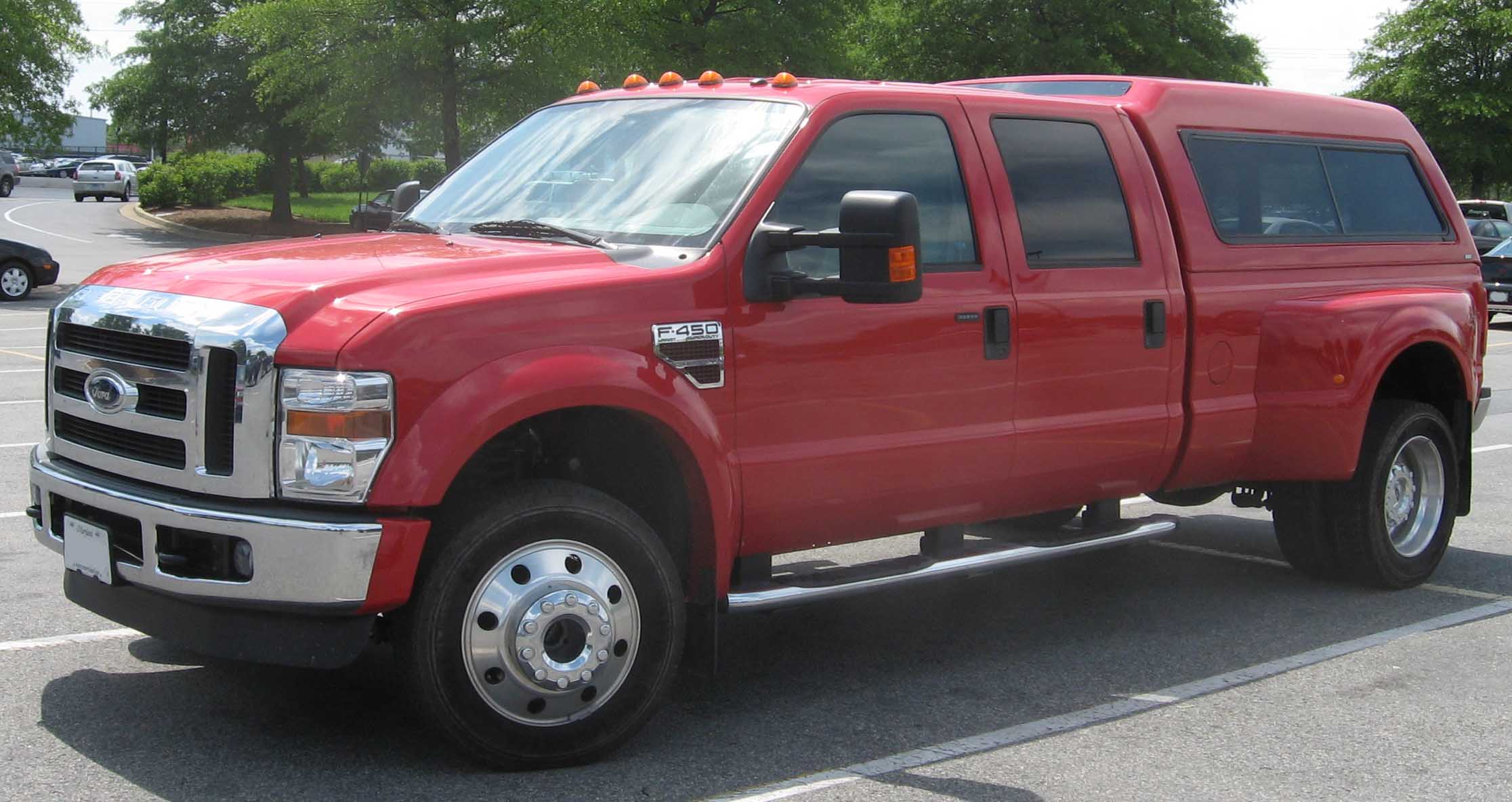
The Ford F-450 Platinum is a very big and strong truck that can carry heavy loads. The Platinum part means it has fancy features and is very comfortable to drive.
The Ford Edge is a type of SUV, which is a bigger car that can carry more people and stuff. It comes in simple and fancy versions, so some are basic and some have lots of features.
The Hyundai Genesis is a fancy car made by Hyundai that feels more expensive than it really is. It has nice features and is comfortable, so people like it if they want a luxury car without paying too much.
The Mitsubishi GT is a small, fast car that can drive well in different weather because it has special wheels that help it stay on the road. It's good if you want a fun car that's also useful for everyday driving.
The Toyota Camry is a common car that many people use for daily driving and also for rental cars. It's known for being dependable and easy to maintain.
And to Great America, thanks for supporting today's content,
including that great conversation with Rob Dale
on used car discipline in 2026.
I'm fascinated by how he's able to track the variance
between projected recon, actual recon,
and then track it by different sources
and help use that to better execute in 2026.
Also, I love their discipline on inventory and turn.
Just some fascinating ideas brought up there.
So thank you, Rob Dale, for being on.
And thanks, Great America, for supporting today's content.
To the comments, a bunch of comments.
Supervisor Dan says, love the new look.
Thank you.
We love it too.
Yoga car says there will be two types of people,
people who use AI to think deeper,
and people who use AI not to think.
And yoga cars, I agree 100% with you.
I was at an event with Chase,
as their CEO summit many months ago,
and they had an economist on.
And he said, look, there'll be two types of people
in AI in the new marketplace in the next several years.
There will be people who are servants to that AI,
not really understanding it, not knowing how it works.
And then there will be those that are executing
and becoming better as a result of it.
And I think we're beginning to see in 2026
that component today now more than we've ever seen it.
And I think it's going to continue to realize itself out.
So a reminder to our daily dealer live audience,
if you're watching the show live, post your comments.
If you're not watching, thanks for watching the podcast
in the car, wherever you may be.
But check out our live show, Monday, Wednesday,
Friday, 1 PM Eastern.
We love the comments.
We love the feedback and the conversation
that you help us have as part of your participation
in the show.
And we jump straight into our next guest, Frank Zambo,
vice president of sales at Otto Haller Exchange.
Frank, welcome to the show.
Hey, Sam, thanks for having me.
I appreciate it.
Frank, it's great to have you back.
You've been on the daily dealer live before.
You've also been on the industry spotlight, I believe,
with me.
And that was a heck of a lot of fun.
Tell, for our audience that doesn't know you,
tell us who you are and what you do out there, Frank.
Yeah.
So my name is Frank Zambo.
I'm the vice president of sales at Otto Haller Exchange.
We are strictly a marketplace that gives our dealers
the ability to post their shipping opportunities directly
to our network of vetted carriers.
And then, really, technology and my operations team
take care of everything else.
So it's a way for them to post their direct price,
carriers see that price, check it out,
and everything's handled from there.
Frank, there's a lot of dealers out there today watching
the show that say, hey, transport is just
a cost of doing business.
You say it's a profit opportunity.
Convince us.
Yeah.
I mean, I think people have been stuck in their old ways forever,
and they just kind of go with the flow of handing it over
to a third party or a middleman that's
going to give you a quote and then post it
on some of these large boards.
And you really never know what type of rip
they may be making off of it.
But when you actually look at what a carrier is getting paid,
and we want to give carriers what they need to stay profitable
so they can move these vehicles from A to B
in the most efficient way possible,
when you actually look at that, and then you have the analytics
in front of you to see how much you can save from the old model
to a new model.
Kind of like how you may have seen the efficiencies from moving
from a taxi cab when you're in New York,
but then using Uber, right?
Letting technology kind of be that middle thing,
that middle conduit to connect you direct to the source.
And yeah, our dealers are seeing obviously a huge savings
in time and money.
All right, before we get into the economics of that,
you've got a fan out there in the comments.
Law Cocktail says, Frank used to sack QBs in the NFL
in addition to shipping cars.
Tell us about that just for our audience.
This will be fun.
Yeah, awesome.
Yeah, back in the day, in a path of life,
I was in Wisconsin in Kansas City,
played three years in Green Bay,
was lucky to win a Super Bowl in 2010 with the Green Bay Packers,
and then brought my talents over to Kansas City
and was there for six years, had some really great years.
Bad thing for me is I missed out on the whole,
my last season was 2019, so that was from there.
But I was extremely proud of the guys I played with
and those coaches.
I'm still in great contact with them.
And then the good thing for me is a lot of Wisconsin-based
dealerships use auto hauler exchange,
Kansas City-based dealerships.
So when we were starting out, it was a good way,
a good ticket into some of those dealerships
to give us the try and then it spread from there.
All right, predictions for Green Bay.
Since I'm in the Midwest, we have stores, Ziggler does,
and Wisconsin, Illinois, Indiana, and Michigan.
So we're always watching the Detroit Lions,
Green Bay Packers, and obviously the Chicago Bears.
Of those three, who has the best prospects coming into 2026,
then we'll go back to transportation.
Yeah, I'm so focused on transportation.
It's tough for me to follow all that stuff still.
I'm more concerned of making sure my kids aren't wearing
too much lion stuff around the house.
There you go.
I'm not a good fan, but the Lions have been good lately.
But Matt before I knew him from my college days,
he was actually a grad assistant out of Central Michigan.
So I'm a huge fan of, you know, they trusted in me,
so I'm always going to be a huge Packer in Kansas City fan.
And then they got just great,
there's a reason why they're good every year.
They got a great culture over there.
And yeah, rooting for those guys, both of them will be equal.
All right, so back to transportation.
What are dealers feeling most right now in transportation?
Costs, speed, reliability, fraud,
what are the biggest pain points most dealers experience?
I think you listed all of them.
I mean, all four of those are what
dealers are focused on.
Cost number one in speed are the two most important by far.
I think it's just a luxury to have the transparency
into every type of load that you're moving,
whether you want to be able to locate that vehicle,
know exactly where it's at, when it's arriving.
So, you know, GPS locator on every vehicle you have.
And then the price you're paying,
the price you're going to get to the carrier,
the price that, you know, obviously,
I don't have to stay in business,
so we have a cost to do in business.
And then carrier phone numbers,
we want you speaking to the carriers if needed.
Obviously, we have a team that's managing to make sure
ETAs and standards are being met,
but we want you to talk to carriers if needed.
And we don't, you know, a lot of times with the other model,
you know, they're trying to block that
because they don't want you to really know
what you're paying the truck and what the rip is, you know.
So, it's just a completely different model
and more transparency, speed, money,
and saving money, and that's what we're proving with this.
So, I was going to ask you about that,
and you sort of answered this already,
but we, in our auto group, we've seen a lot of fraud.
I'm going to have Carrie Ann Thomas,
she's our head of security on here in a few episodes,
I think next week or week after next,
but she's going to come on and talk
about transportation fraud and theft, and it's rampant.
These bad actors that are coming into auctions
and they get notification about vehicles to be shipped,
they see high cost vehicles to be shipped, $100,000 plus,
they fraudulently pretend to be someone they're not,
they steal the vehicle and they're off and at it.
In March of 2026, what advice would you give to dealers
that would help them to better secure
and better protect their inventories and their shipments?
Yeah, I mean, I know there's other ways out there right now
that dealers can post their shipping opportunities
direct to a network of carriers.
I don't know if that network has vetted the correct way,
so there's a risk into doing that.
Then there's a way you can go have a broker
and hopefully if you're using a good broker
that they are vetting those carriers and monitoring that.
And then with our way, you're kind of being able
to post it direct to the carriers with your rate,
but you're getting that same kind of oversight.
So we're kind of right there in the middle of the tube
with a way for you to get cheaper transportation faster
and more reliable.
But yes, one of the questions in the pre
were what's changing here?
And I would say fraud is definitely way up
and making sure you have your checks and balances in place.
Whether if you're using a broker or you're doing it yourself,
make sure those checks and balances are in place
to prevent fraud because it is everywhere.
And I like how you encourage direct contact
with the trucker, with the shipper,
because establishing that direct line of communication
also reduces fraud because you know
who's going to go pick that vehicle up.
And you've got communication all the way through,
not just when it becomes a challenge.
So speed is also an issue in shipping today.
We've seen that if it takes longer to ship a vehicle,
for groups that are buying vehicles all across the country,
you can go outside of arbitration timelines
and then that impacts your reconditioning costs
and everything else.
How does your method increase the speed to ship?
And how does that help with arbitration
if that needs to happen later on down the process?
Yeah, great question.
I think it's really twofold.
One, when I don't give a quote
and then I try to make a large rip in between
and I just give the carrier what they need now
to pick up that vehicle,
instead of having me with that carrier
and trying to low ball them to make a bigger margin,
there's speed right there.
And then a lot of times, lane data is very hard
to be accurate sometimes with.
And if you are misquoted on a unit,
that's coming from New York down to Orlando, for instance.
And now it's sitting for a month
because that broker were misquoted it.
Maybe that carrier just needs a little bit more
to pick up a heavy unit that's coming out of the North, right?
So it gives you the ability to not just be stuck to one price,
that you can move that price and give carriers based,
give them what they need.
You'll see through our system that they're able to,
carries will place bids.
And if it's above what you posted it for,
then you can increase it to give that carrier.
If they can pick it up tomorrow,
I'm okay with paying them an extra 50 bucks.
But that third party might not be okay
with $50 cutting into their margin.
Their margin.
Again, more of a transparent model
that is giving the carriers more
freedom to bid and give you what they need to stay profitable.
But coming into the comments,
Vajran says,
finding the right transportation partner
has a direct impact on your dealership's profitability.
The right partner doesn't just move cars.
They improve speed to market,
which is a big metric we look at.
Speaking of metrics, if I'm a GM,
what three metrics that are transportation related
should I review every Monday?
What are the top three metrics?
Yeah.
Price, like maybe it'd be like price per mile, right?
I would probably be right around like that 80 cents a mile.
I would say days from when you purchased it
from the auction, you maybe posted or gave it to your,
you know, to whoever your transportation company is
to the time of the lives to your lot.
And then I would make sure that they have insurance
that the carriers that are touching your load
because in case something does go wrong,
falls off a truck or does get stolen,
just make sure that you have all that insurance information,
COIs and FNCSA scores readily available
if you need to access those.
So it's the best practice thinking about transportation
in the dealership environment.
Who should own transport inside a dealer group?
Is that a used car manager functions
or looking to move inventories at an inventory manager?
Is it the controller, CFO?
Who should be making these decisions
and making the transportation movements?
What I would say really, it changes.
I have, you know, we have hundreds of dealers
in our network and it's all different.
You know, I have owners who are in charge of transportation.
I have used car managers, inventory managers,
general managers that have just kind of always done it
and they like to have their hand on it.
But I really, I think maybe it depends on the size
of the dealership group or the size of the dealer ship
that who has a hand.
But there's all folks, mostly I would say used car,
but it could be the owner, the dealer principal,
anything could be, I've seen a metter in our platform.
All right, Frank, as we wrap up,
and I think you have some data you were going to share with me
because I know we've got a couple of stores at Ziggler
that do business with you.
But before we get to that,
what transport inefficiency is quietly costing dealers
six figures?
We tease that at the top of the show.
What transport inefficiency
is quietly costing dealers six figures, Frank?
I think low-balling carriers is probably
the biggest inefficiency in our space
because we don't want carriers going to bump a dock for Amazon.
We want to keep the good carriers in the space,
even if you've got to give them a little bit more.
So again, I feel like with our business model,
we're able to give that carrier a little bit more
because we don't have as many touches,
we don't need as many people monitoring everything
when you have technology that can kind of handle that.
So let's give these carriers a little bit more
to keep the good ones in the space
because eventually we're always going to need to move vehicles.
They're moving all the time.
I mean, one vehicle can move probably 20 times in its lifetime.
It's truly amazing how much money is spent
on vehicle transportation.
So let's keep the good ones in the space.
So yeah, the lowest paid carrier
is not always the best option, I'll say that.
Yeah, it is interesting.
There is in some areas a race to the bottom,
price-wise, expense-wise,
but there are areas where it makes sense to spend a little more
to make sure you get a quality product at the other side.
So Frank, as we wrap up here, you had some data for me.
Share it.
Yeah, I mean, I got to get shout out to Jaden
over at your Honda Racine store.
He's been a great customer of ours
and partnered with us for the last two years.
But yeah, I mean, he's averaging four days
from posted to delivery.
He's running around at 80 cents.
I was kind of digging into a few of his loads
that posted on February 9th, delivered on the 12th.
And that was out of Houston.
And he was all in for $700.
And he posted that one himself.
And I wish I had to actually check in with Jaden.
I don't hear from him often.
He kind of is taking it as his own.
He's on autopilot.
So I almost check in with him to see how he's doing,
but I don't hear from him much.
And that's what we want, right?
It's your way to approach these carriers directly.
If you need help, we're here.
And it'd be tough for you to have a missed call from us.
I'll tell you that.
Yeah, the fascinating part about your story,
I remember on the industry spotlight
was the owner of the company,
the guy who developed this technology, was a broker
and essentially ran himself out of business
creating this type of a structure.
So it's absolutely fascinating.
Frank Zombo, Vice President of Sales at Auto Hauler Exchange.
Thanks for being on the show and contributing to the content today.
Thanks for being here.
Appreciate you, Sam.
Yeah, transportation, super important right now.
We're going to have Carrie on Thomas on.
She's head of security for Ziggler Auto Group.
And we've seen theft and attempted theft
in that transportation pipeline lately.
And it's a challenge.
You know, the bad actors out there are becoming better.
They're becoming more creative using AI
and other technology that's available.
And they're getting away with things that, you know,
they shouldn't be getting away with.
And it just occurs to me as Frank talks about their way
of doing business.
I think it's fascinating because you actually
do have a direct line of contact with that trucker,
with that driver.
And it seems to me that could reduce instances of fraud
and theft as you're in direct communication with that driver.
Lindy Singer comes into the comments
as average of four days from posted to delivery.
Very cool to hear real world stories of HX in action.
I'd love to hear more.
You know, I didn't mention this to Frank,
but that Honda store is one of our highest volume stores
across the Ziggler Auto Group.
So they do a ton of transactions in use.
So definitely very cool to see them winning.
All right, next up, John Moore Murphy,
used vehicle director at Huller Classic Automotive Group.
John, welcome to the show.
Yeah, thank you for having me.
So John, your first time on the show.
So thrilled to have you and get your perspectives today
as we go through it.
For those that don't know you,
tell us a little bit about yourself and tell us what you do.
Yeah.
Well, again, thank you for having me.
And first time, really enjoyed the first two guests.
But a little bit about me,
spending the car business 24 years or so, I guess, formally.
First job was Valet at a Volkswagen store,
your neck of the woods, North Chicago area.
Okay.
Yeah, yeah, yeah.
Yeah.
Which Volkswagen store, by the way?
It was at that time, Randy Rormann Volkswagen and Gurney.
Gurney.
Yeah, yeah, yeah.
So they have Gurney Volkswagen and they've got a Hyundai store,
both the same GM, good guy, GM right now.
So yeah.
Yeah, yeah, fun story.
I think I got a tour stuck in a snow bank,
had to go up to the GM's office, tell him about that.
So sorry for anybody listening over there.
But, you know, bona fide car guy,
true car guy, grew up in a family of gear heads.
And my father was a general,
or my grandfather, excuse me,
general manager and partner of a dealer group there in
Chicagoland.
Well, you know, my dad obsessed car collection, etc.
So I really have a home life, which is surrounded by cars.
And it was only natural for me to get into this business.
And really, really took a passion.
And, you know, where my skills are is the used vehicle.
Yeah.
So how many rooftops do you have in the Hauler classic family of dealerships?
Yeah.
So we currently have 13 and we're growing.
So we're proud of that.
Our newest acquisition was a Ford store here.
So Hauler Ford, right.
And nicely situated right across them,
our large Hauler Hyundai and Genesis North Orlando dealership.
Yeah.
So you're in the Orlando marketplace.
That's a busy market.
You've got Mitsubishi.
You've got Vinfast, which is interesting.
We'll dive into that in just a minute.
But a lot of different brands,
including Honda, Mazda, Ford, Audi and whatnot.
So you came into the group and standardized recon across
franchises and used super stores.
Most groups struggle with that.
What forced the change of standardizing that?
Yeah.
Well, it was needed.
I'll use that kind of cliche phrase scale, right?
So as we're looking at scale and volume,
having so many cooks in the kitchen, so to speak,
we just touched on the number of dealers we have.
And of course, there's guys on here with much larger dealer groups
and managing much more rooftops.
But very, very large import footprint here in central Florida.
But you have really great operators acting and speaking
and talking differently across all those rooftops
and all have opinions, right?
And those opinions translate into
how they're treating the used car.
Also, with scale, seriously, you take used cars, right?
We have the benefit of having a Honda store,
two Honda stores, right?
So talk about dynamite trades as you talk about your Honda store.
Getting those trades in and people feasting on them
in the wholesale market, or if you pitch them to wholesale,
that really hurts a guy like me.
I just cringe when I see that, right?
So I want to, everything we take in,
I want to give an opportunity for retail,
obviously with some extreme exceptions,
a total loss vehicle, et cetera.
But that standardization really stems from scale and scalability.
So as you went in and standardized it specifically,
what does standardization mean?
And what was the first non-negotiably you implemented
as part of that standardization?
Oh, great question.
So I'll touch on the non-negotiable at the end,
but standardization is really,
how do I take something you touch, feel, and see?
And I think all of us know that in our business, right?
Vehicles, and especially the used car,
there is a difference between the fleet used,
the rental Toyota Camry and grandma's Toyota Camry, right?
But standardization is, and how we implemented it here is,
A, we have an identity, right?
We're nearly 90 years old, five generations.
You know, we're a staple here in Central Florida
and a trusted dealer.
So there is an identity.
So a guy like me coming from the outside,
I had to understand what that identity was
to even begin to talk about standardizing the process.
And standards really translate to,
what am I looking for on that car?
And how do I bring that car to a level
that is both acceptable to our customers
and our internal customers, our employees too, right?
Comfort in selling that car.
So it's putting black and white
measurables on a highly subjective thing,
which is test driving the car, seeing a car, smelling a car.
So tire tread measurements, brake measurements.
How do you look at hail?
How do you think of hail?
What's high visibility?
What's low visibility?
When you map it out and have that kind of uniform look
at the car and data entry on the car,
now it makes sense to go to the go-no-go.
And the gatekeepers, like the service advisors
at the dealerships or at the recon facility,
I like to refer them as the gatekeepers.
They know our standards.
They have our standards, which we wrote down,
the measurables on the car.
Do we greenlight that car or do we not?
So do you have one system or process
you use in your fixed ops departments
as your reconning used vehicles?
I assume you do it at each store,
or do you have centralized recon somewhere?
So we actually, it's a hybrid.
So we have, we're lucky to have in those rooftops,
we have two driver smart locations.
That's a used independent stores.
They're super stores at this point.
They're very large and proud of that.
But we do have reconditioning facilities located there.
Those facilities will touch some cars,
i.e. coming from auction, to go to a new car franchise.
That staff is better equipped to handle arbitrations.
You touched on that, transport damage claims, etc.
So we want to make sure that the car we bought online
or in the lane somewhere is the same car that showed up.
But we do have reconditioning facilities.
We also have, obviously, our franchise dealers,
our new car dealers.
They'll take in sparingly offsite purchases,
but they'll definitely process through their trades.
Systems all act and walk and talk,
two years on to a little more than two years
of me joining the organization.
They all walk, talk, look the same,
with the exception of maybe one or two stores
that have some manufacturer specific
softwares and programs.
So is there like a rapid recon
or some sort of a program that you use across the group
consistently, as you standardize that?
Or does everybody have their own program based on OEM?
Yeah, not at this time.
And we talk about that scale, right?
So sometimes, and I heard your first guest,
he talked about simplifying things, right?
Dummy it down.
We track very stick and rudder, but we need to.
We want high ownership there.
So when a car comes in, it's tracked both centralized,
a department located at our home office.
Here, there's a team of buyers.
There's a general manager of that group, right?
That handles wholesaling, interstore buys and sells
and transfers, but they're tracking it manually
and the stores are tracking it manually.
And of course, using the systems
that are in place at those dealerships.
Okay.
What's your speed to frontline target?
So from acquisition to frontline ready, ready for sale?
We're rocking and rolling if we're sub five days.
So standardization goes a lot more than,
what am I measuring?
What am I looking at?
What am I feeling on the car?
Okay.
Now it's green light.
I am reconditioning the car.
There's checkpoints in there, right?
So I like to use the word compass, right?
I like to take a measurement,
thumb in the wind sort of speak.
So if it's slotted for body work, right?
I want a time in zone that I'm raising my hand
when it hits that day, right?
But if we're rocking and rolling under five days,
which for example, the recon centers
will do that consistently,
then we're in really good shape.
I think acceptable is seven and under.
And then we start to raise the red flag
when we have any location that lists towards 10, 10 or more.
We even measure time to kick.
So time is money.
I think we talked about that with Frank for sure.
Time is money wholesale as well.
So our organization will also not only measure
the journey of the car transport,
the journey of the car from original RO open
to when it's done in Q seed,
and then equally time to kick
because I need fast response time
to get it to auction to maximize the value.
What's your, in 2026,
what's your time to transport on average?
So it depends on where we source, right?
But I think if you take an average look at it,
it's going to be right around that four day metric.
And we do leverage Frank's company as well,
auto hauler exchange.
And I second that high control.
That's always nice to look at.
Yeah.
Has that helped with fraud theft
and attempts to steal inventory in the transit process?
Yes. That's the short answer.
It's just high visibility to the movement of the car
and the type of unit that we can sometimes move.
But also think about last mile, right?
What's happening at the sales desk?
We really want to have, you know,
part of our process is trust transparency.
That translates immensely out to, again,
a five generation company like ours.
When you're at the desk
and you're quoting a last mile or a home delivery,
you know, as much transparency
as you can possibly give that customer
and feeling of control to the dealership really works.
So thinking about the used market
coming into this first quarter here, 2026,
thinking about like the last 90 days
and what your data has showed you
as you've standardized all these processes.
What's a trend you're seeing
and what's one operational change
you've made in the last 90 days
to better capitalize and put your best foot forward in 2026?
Yeah. You know, another great question.
I think the best way or the change that we made
or implemented over the last 90 days
that helped us as we're scaling, right?
We have two years of immense used car growth.
You know, well, in excess of 15% year over year
each of the first two years.
And again, a lot of used cars
going through our reconditioning centers
was really tracking the live cycle.
So we talked about that a little bit with the first guest.
45 day look at the car,
punt on the car, so to speak, at 90 days.
But measuring and being highly involved
in what we're doing in the life cycle of that car,
equally with recon as well.
I think the recon car can tend to get lost.
So if you're going to put hard turns or hard looks
in your inventory, in your live inventory, right?
You want to also have that in recon.
And I think that we added that upstream layer, right?
That standardization.
What vehicle standard are we bringing this to?
We've added the touch points.
We better understand our speed cycle
in terms of transport and time to market.
Now let's better understand the journey of the car
as it's live. And that's really helped us.
Yeah. Yeah.
If you acquired a new store tomorrow as part of the group,
what are the first three things
when you think about standardizing and getting used cars
just crushing it in 2026?
What are the first three processes
you'd install into that new store immediately?
Well, immediately I would think of appraisals, right?
Obviously the most profitable used cars we all had,
you talked about margin compression.
That's a reality here.
So want to immediately touch and work to standardize appraisal,
appraisal process.
We have a robust appraisal process here.
We touch a lot of metal and we're proud of that.
We're proud of the accuracy of our appraisal process.
The next thing I would do is absolutely go into the back,
figure out who's touching and who's the internal rider
on the used vehicle and immediately standardize that journey.
Understanding that once it's standardized,
you're going to have more vehicles being tried,
tested through that process.
And then I would absolutely, when it comes to used cars,
I'd absolutely want to cap off, I think,
the top three hit with how we're merchandising the car.
I think you touched on pictures, detail, quality of car.
Again, we all...
Anybody you're using on the photo side?
So we actually use multiple vendors that support our organization.
It's really important the photo quality.
So if you go to our website or look at any of our dealer groups,
they're going to be slightly different.
Some rooftops look the same.
Some rooftops look different to their sister store.
But we do outsource that.
Essentially, if I'm not processing any cars through,
I don't want to be paying for that.
All right, John Murphy, used vehicle director,
Holler Classic Automotive Group.
Thank you so much for being on the show.
Hang tight with us because we're going to actually go back
to the beginning of the show, bring Rob Dell back on to join us.
As part of the little round table,
this is a tradition we've started past few weeks.
And it's just a little bit of fun at the very end,
ask some questions and see your individual perspectives on things.
So we kind of just go through rapid fire here.
Anybody can take this.
And welcome back, by the way, Rob.
Good to have you.
So what's more dangerous right now?
Slow recon or overpaying at acquisition?
What say you both?
Slow recon.
Yeah, slow recon, 100%.
Yeah, yeah.
So you can overcome getting it wrong in the payment process.
Or you can fix for that, but slow recon will kill you.
What's the biggest myth in used car profitability today,
March of 2026?
That you can make money on the front of the car.
Front and margin.
Yeah, yeah, yeah.
In fact, that was interesting, Rob.
I was fascinated by that, the average loss per new on auction vehicles.
But then you make it up with the trade and everything else.
I mean, we're operating on tight margins.
I think it's interesting.
People come on this show and they're like,
automotive has incredibly tight margins.
It's true, particularly in used cars.
Is it not?
Yes, very true.
If you had to choose one KPI to improve for 90 days,
what would that one KPI be?
We got to get it from both of you, Rob.
You first, Benjohn.
I mean, the biggest KPI is your gross return on investment.
What do you turn in that investment into?
And that's a multiplication problem of just not problem,
but an opportunity of how fast you're turning in
and what your return was on it.
And how do you make it higher?
I mean, we manage money.
Some people say we manage metal, but it's money.
Yeah, John.
I think the deal quality at the desk on the showroom floor.
Being large volume used car players and choosing that pathway
and all those challenges, if we're going to have best price first
and you're getting an incredible deal,
let's make sure our customers are protecting their investment.
And that deal quality translates to FNI.
Okay, Rob, going back to the GROI you just talked about,
what's the fastest way to increase GROI in today's market?
Just sell it faster.
I mean, that's it.
Like you can sit there and say you could buy it cheaper
and get a higher return, but if it still sits there for 60 days,
you won't get the multiplier that if you sold it in 15 days.
Is price the biggest lever to selling it faster or is it marketing?
What's the biggest lever to selling it faster and getting that GROI?
I mean, I think when you talk about even with John's store, it's everything.
We sell cars very fast, but if we have a cog in the wheel
and our time to front line gets slow, customer will deflect.
And we take deposits all the time and tell them,
hey, we're still putting it through the reconditioning process.
So it's got to be merchandising.
It's got to be recon.
It's got to be price.
It's got to be everything.
It's got to be your staff.
Yeah, thoughts, John?
Yeah, I second that.
The car has to, I go back to that look,
feel good, smell good, right?
Look good, drive good, smell good, I should say.
As a mentor of mine once said, but great pictures online.
Do we merchandise it right?
Does that consumer know that this car has those options, all that stuff?
And again, price is a big lever, lever, of course,
but it's getting the eyes on the car on your inventory.
You know, both of you talked AI a little bit,
and both of you in one way or another said,
ChatGPT manual entry to ask questions or another AI tool.
Is that the best AI tool and use cars for today?
Or is there another tool that's better?
What's your best favorite go-to AI tool?
Starting with John and then Rob.
Oh, man, putting me on there.
I mean, you know, ChatGPT is great.
We definitely leverage it.
We use it.
But I really like what you said, the nuances in the automotive world,
the used automotive world.
There's instinct, there's training.
You know, you have to deviate.
And I actually like that better is, you know,
you can have something do 90% of the work,
but force yourself to put that input in,
force the system to change.
But, you know, we have some vendor partners.
You know, we're a thank you user as a dealer group.
You know, there's some pretty cool stuff.
I mean, NADA this year, buzzword, right?
AI, there's some pretty cool stuff that's there already
and stuff that's coming down the pipe to leverage and use.
I'm excited about it.
But I just want to caution that still has to have, you know,
the manual touches.
Yeah.
Yeah.
Rob, any thoughts as we wrap up?
I mean, I think you just got to play with it
and see what works for you.
I took a MIT class for eight weeks or something like that
to try to understand it.
Oh, interesting.
The big thing that I'm seeing in the industry,
if we're talking about with a lot of tools,
is they're not customizable yet to your own store.
And I think that's what's going to be missing.
I think when, if I want to build an agent,
I want to do it a certain way.
I don't want it to do it the way everybody else does it.
Rob, you took an MIT class.
You went to MIT, took a class on AI.
What's the class called?
I can't remember.
It was business application for AI.
You can do it online.
Yeah.
I mean, you had to do homework.
It was like going back in the past, but it was.
Was it worth it?
It was.
You will not learn how to build anything or be a programmer,
but it will give you a really good understanding of just
what could be possible.
And it'll make you think a little bit different,
in my opinion.
Rob Dell, Vice President Bob Ruth Ford,
and John Murphy,
used vehicle director,
a Haller Classic Automotive Group.
Thanks to you both for being on the show today,
sharing your perspectives.
Absolutely.
Thank you.
Thank you.
And the comments are abundant online.
Paul Salisman says,
photos are so important and often not given enough attention.
Samira says,
John and Haller Classic are doing amazing things.
And then Paul Salisman says,
outsource recon are all in house,
including detail.
We didn't get to that point,
but we will in a future episode.
Hey, that's a wrap on this first episode
with the new format.
We appreciate the producers,
Cole, everybody that went into putting this together.
And to you, our daily dealer listening audience,
thanks for being here and watching Daily Deal Alive,
where we break down the biggest moves in the car business
as they happen.
Don't forget, we're here live.
Every Monday, we'll be back Wednesday,
1 p.m. Eastern and Friday.
So if this is your world, as always,
hit like, hit subscribe,
and turn on those notifications
so you never ever miss a beat.
And we'll see you next episode.
Thanks for being here, everybody.
About this episode
The discussion centers on the critical importance of inventory efficiency, transport cost control, and recon discipline for car dealerships in 2026. Rob Dell shares insights on using detailed data tracking to optimize used car acquisition and turnaround, emphasizing education and teamwork. The episode also covers industry headlines including Asbury's dealership sales, Ford's large software recall, and Kia's new hybrid Telluride. Listeners gain practical strategies to improve dealership execution, focusing on tight operations rather than volume to protect profits amid market challenges.
Today's show features:
- Rob Dell, Vice President of Bob Ruth Ford
- Frank Zombo, Vice President of Sales at Auto Hauler Exchange
- John Murphy, Used Vehicle Director at Holler-Classic Automotive Group
This episode is brought to you by:
Great America – Planning a new service lane, collision center, or showroom refresh? GreatAmerica finances dealership build‑outs and remodels—including service equipment, collision & repair, body & paint, EVSE, car wash, signage, and software. Our fast credit decisions keep projects on schedule, while flexible financing structures are designed to support growth, efficiency, and long‑term ROI—without tying up cash needed for inventory, staffing, or daily operations. Visit https://carguymedia.com/4l4uK13 to learn more!
AutoHauler Exchange – Auto Hauler Exchange is the vehicle transportation marketplace connecting shippers and carriers directly to remove inefficiencies, cut delivery timelines in half, and save 15-20% on transport. Visit https://www.autohaulerexchange.com/ to set up your free account today.
Check out Car Dealership Guy’s stuff:
CDG Circles ➤ https://cdgcircles.com/
CDG News ➤ https://news.dealershipguy.com/
CDG Jobs ➤ https://jobs.dealershipguy.com/
CDG Recruiting ➤ https://www.cdgrecruiting.com/
My Socials:
X ➤ https://www.twitter.com/GuyDealership
Instagram ➤ https://www.instagram.com/cardealershipguy/
TikTok ➤ https://www.tiktok.com/@guydealership
LinkedIn ➤ https://www.linkedin.com/company/cardealershipguy/
Threads ➤ https://www.threads.net/@cardealershipguy
Facebook ➤ https://www.facebook.com/profile.php?id=100077402857683
Everything else ➤ dealershipguy.com