The discussion centers on the critical importance of inventory efficiency, transport cost control, and recon discipline for car dealerships in 2026. Rob Dell shares insights on using detailed data tracking to optimize used car acquisition and turnaround, emphasizing education and teamwork. The episode also covers industry headlines including Asbury's dealership sales, Ford's large software recall, and Kia's new hybrid Telluride. Listeners gain practical strategies to improve dealership execution, focusing on tight operations rather than volume to protect profits amid market challenges.
Today's show features:
- Rob Dell, Vice President of Bob Ruth Ford
- Frank Zombo, Vice President of Sales at Auto Hauler Exchange
- John Murphy, Used Vehicle Director at Holler-Classic Automotive Group
This episode is brought to you by:
Great America – Planning a new service lane, collision center, or showroom refresh? GreatAmerica finances dealership build‑outs and remodels—including service equipment, collision & repair, body & paint, EVSE, car wash, signage, and software. Our fast credit decisions keep projects on schedule, while flexible financing structures are designed to support growth, efficiency, and long‑term ROI—without tying up cash needed for inventory, staffing, or daily operations. Visit https://carguymedia.com/4l4uK13 to learn more!
AutoHauler Exchange – Auto Hauler Exchange is the vehicle transportation marketplace connecting shippers and carriers directly to remove inefficiencies, cut delivery timelines in half, and save 15-20% on transport. Visit https://www.autohaulerexchange.com/ to set up your free account today.
Check out Car Dealership Guy’s stuff:
CDG Circles ➤ https://cdgcircles.com/
CDG News ➤ https://news.dealershipguy.com/
CDG Jobs ➤ https://jobs.dealershipguy.com/
CDG Recruiting ➤ https://www.cdgrecruiting.com/
My Socials:
X ➤ https://www.twitter.com/GuyDealership
Instagram ➤ https://www.instagram.com/cardealershipguy/
TikTok ➤ https://www.tiktok.com/@guydealership
LinkedIn ➤ https://www.linkedin.com/company/cardealershipguy/
Threads ➤ https://www.threads.net/@cardealershipguy
Facebook ➤ https://www.facebook.com/profile.php?id=100077402857683
Everything else ➤ dealershipguy.com
"floor plan with its elevated interest, well, it's not free, and sloppy inventory decisions"
Floor plan is like a loan dealers take to buy cars for their lots, and they have to pay interest on it until they sell the cars.
Floor plan refers to the financing method dealerships use to purchase and hold inventory of vehicles, often involving loans with interest that dealers must pay while cars remain unsold.
"...tight on FNI process, because, well, right now the spread between average dealers and elite dealers, it's not units sold, it's execution... why FNI is still one of the most under leveraged margin engines in the building."
FNI is a way car dealers make extra money by selling cars smartly, adding extras, and negotiating well, not just by selling many cars.
FNI stands for 'Front Net Income,' a process in automotive dealerships focused on maximizing profit from vehicle sales through effective pricing, add-ons, and negotiations. It is considered a key margin engine for dealers to increase profitability beyond just selling units.
"...tight on recon, tight on transport, tight on FNI process... will cover why recon discipline is a growth strategy..."
Recon means fixing up used cars at a dealership so they look good and work well before selling them to customers.
Recon, short for reconditioning, refers to the process of inspecting, repairing, and preparing used vehicles for sale at a dealership. Effective recon discipline ensures vehicles are ready for sale quickly and in good condition, which helps improve sales efficiency and profitability.
"Now, Ford says the fix will come by an over-the-air update beginning March 17th with dealership and mobile service options available."
It's like getting an automatic update on your phone, but for your car. The car gets new software sent to it without you needing to go anywhere.
An over-the-air update is a method of delivering software fixes or improvements to a vehicle remotely, without requiring a visit to a dealership. This allows manufacturers to quickly address issues or add features via wireless communication.
"Next up today, Kia is expanding its hybrid lineup with the 2027 Telluride HEV."
A hybrid lineup means a group of cars that use both gas and electric power to save fuel. When a company adds more hybrid cars, they are expanding this group.
A hybrid lineup refers to a range of vehicles offered by a manufacturer that combine internal combustion engines with electric motors to improve fuel efficiency and reduce emissions. Expanding a hybrid lineup means adding more hybrid models to the brand's offerings.
"Next up today, Kia is expanding its hybrid lineup with the 2027 Telluride HEV. Pricing starts at $46,490 and runs to just under $58,000 across 6 trims, placing it firmly in the mid-40k to 50k range where many 3-year row SUVs already transact."
The Kia Telluride HEV is a version of the Kia Telluride SUV that uses both gas and electric power to save fuel and pollute less. It is a newer model coming out in 2027.
The Kia Telluride HEV is the hybrid electric vehicle version of Kia's popular Telluride SUV, introduced for the 2027 model year. It combines a gasoline engine with electric motors to improve fuel efficiency and reduce emissions compared to the standard Telluride.
"a sizable pool of hiring come buyers shopping for 3-row SUVs in that 50k range. And the Telluride HEV is clearly aimed at those."
The Telluride HEV is a version of the Kia Telluride SUV that uses both gas and electric power to save fuel. It has three rows of seats, so it can carry more people, and is popular for families.
The Kia Telluride HEV is the hybrid electric vehicle variant of the popular Kia Telluride, a midsize 3-row SUV known for its spacious interior and value. The HEV version combines a gasoline engine with electric motors to improve fuel efficiency and reduce emissions.
"You astounded our audience way back then because selling 50 new in a Ford store, you were selling 300 used a month on average and attributed a lot of that to a buy center."
A buy center is a part of a car dealership that buys used cars to sell them to other people.
A buy center in automotive retail is a centralized department or team within a dealership responsible for purchasing used vehicles, often from trade-ins or auctions, to stock the used car lot efficiently.
"small Ford market, 50-ish cars, but used cars are what we control. And we look at the data every day..."
Used cars are cars that other people have already driven. You can buy them for less money than brand new cars.
Used cars are pre-owned vehicles that have had previous owners. They are sold through dealerships or private sales and often represent a more affordable option compared to new cars.
"Yeah, so we know in dealerships this way, trains are your best source of inventory."
Inventory means the cars that a dealership has ready to sell. They need to keep track of these cars to make sure they have what customers want.
Inventory in a car dealership context refers to the stock of vehicles available for sale, including new and used cars. Managing inventory efficiently is critical for dealership profitability and customer satisfaction.
"A big debate we've been having recently is the validity of CRs or our condition reports from auctions themselves and the differing dollar amounts,"
A condition report is like a checklist that tells you how good or bad a car is before you buy it, especially when you can't see it in person. It points out any problems or damage the car might have.
Condition reports (CRs) are detailed assessments provided by auction houses or sellers that describe the current state and any defects of a vehicle. They help buyers understand what they are purchasing, especially in auctions where physical inspection may be limited.
"Is it a particular auction or is it auctions in general? I would say it changes is the right answer. I mean, I'll see it at one auction. So that was a big change that I made going into 25 as I wanted to track. You know, we used to just track auction. Well, that was blanketed, right? That could be anything, and we're in Pennsylvania. So I got the big house right up the road, and I was at a sale. I saw a car that was at a different sale because we have four pretty big auctions around us, and the CR was wildly different."
An auction is like a big sale where cars are sold to the person who offers the most money. People bid against each other to buy cars, and it can be different at each auction.
An auction is a public sale where vehicles are sold to the highest bidder, often used for classic cars, repossessed vehicles, or dealer inventory. Auctions can vary widely in terms of vehicle types, prices, and buyer competition.
"I think acquisition is a big piece, depending on how you're acquiring cars, how fast you can get them there."
Acquisition means how a dealership gets its used cars, like buying them from auctions or customers trading them in. Getting cars quickly and cheaply helps the dealership sell better.
Acquisition in the used car process refers to how dealerships obtain their inventory, including sourcing vehicles from auctions, trade-ins, or direct purchases. Efficient acquisition affects how quickly and cost-effectively a dealership can stock cars for sale.
"Step one when the car gets here is it gets merchandise. So that's photos and everything before it goes to detail or to the shop."
Merchandising means getting the car ready to show to buyers, like taking good pictures and writing about it. This helps people want to buy the car.
Merchandising in the used car context involves preparing the vehicle for sale, including taking photos, writing descriptions, and presenting the car attractively online or on the lot. This step helps attract buyers and can speed up sales.
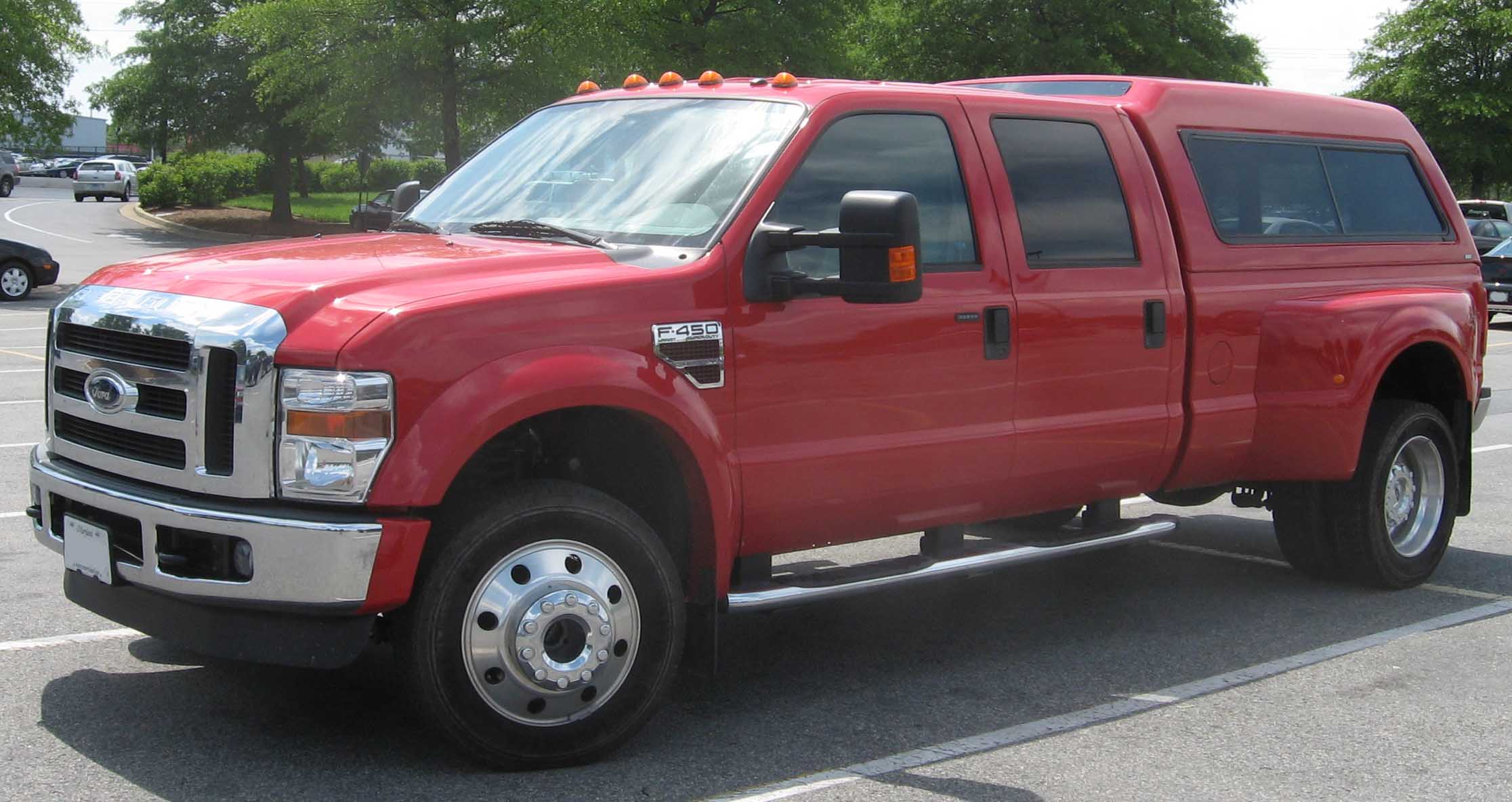
"There's the vanilla Ford Edge and then there's an F450 Platinum with all the gear."
The Ford F-450 Platinum is a very big and strong truck that can carry heavy loads. The Platinum part means it has fancy features and is very comfortable to drive.
The Ford F-450 Platinum is a heavy-duty pickup truck variant from Ford's Super Duty lineup, with the Platinum trim indicating a high-end luxury and feature-rich version. It is designed for heavy towing and hauling while offering premium comfort and technology.
"There's the vanilla Ford Edge and then there's an F450 Platinum with all the gear."
The Ford Edge is a type of SUV, which is a bigger car that can carry more people and stuff. It comes in simple and fancy versions, so some are basic and some have lots of features.
The Ford Edge is a midsize crossover SUV produced by Ford, known for its balance of comfort, technology, and performance. It is positioned as a family-friendly vehicle with various trim levels including more basic and luxury-oriented versions.
"One of the inventory managers handles pricing for the first two weeks. And I call that the margin opportunity, is what I call that."
Margin opportunity means the time when the dealer can sell the car for more money before they have to lower the price to sell it faster.
Margin opportunity refers to the initial period after a car arrives in inventory when the dealership can set a higher price to maximize profit before needing to reduce it to sell the vehicle.
"With that being said, retail is greater than wholesale.
So we want to retail everything."
Retail means selling cars directly to people who want to buy and use them, usually for more money than selling to other businesses.
Retail refers to the sale of vehicles directly to individual customers or end consumers, typically at a higher price than wholesale. It usually involves more marketing and customer service efforts.
"but she's going to come on and talk about transportation fraud and theft, and it's rampant."
Transportation fraud means people trick others when moving cars from one place to another, usually to steal or cheat with expensive vehicles.
Transportation fraud involves deceptive practices related to the shipping and delivery of vehicles, often targeting high-value cars to exploit payment or ownership processes illegally.
"... right across them, our large Hauler Hyundai and Genesis North Orlando dealership. Yeah."
The Hyundai Genesis is a fancy car made by Hyundai that feels more expensive than it really is. It has nice features and is comfortable, so people like it if they want a luxury car without paying too much.
The Hyundai Genesis originally started as a luxury sedan model under Hyundai before becoming its own brand known simply as Genesis. It is significant for offering premium features and performance at a more affordable price compared to traditional luxury brands, making it a popular choice in the luxury car market.
"That's a busy market. You've got Mitsubishi. You've got Vinfast, which is interesting."
The Mitsubishi GT is a small, fast car that can drive well in different weather because it has special wheels that help it stay on the road. It's good if you want a fun car that's also useful for everyday driving.
The Mitsubishi GT is a sporty hatchback that combines performance with practicality, often recognized for its turbocharged engine and all-wheel-drive system. It is a notable player in markets where compact performance cars are popular, competing with other sporty hatchbacks.
Vinfast is a new car company from Vietnam that makes electric cars and wants to sell them all over the world.
Vinfast is a Vietnamese automotive company that has recently entered the global market, known for producing electric vehicles and aiming to compete internationally.
"there is a difference between the fleet used, the rental Toyota Camry and grandma's Toyota Camry, right?"
The Toyota Camry is a common car that many people use for daily driving and also for rental cars. It's known for being dependable and easy to maintain.
The Toyota Camry is a popular midsize sedan known for its reliability and widespread use in both personal and fleet applications, such as rentals.
"...So tire tread measurements, brake measurements. How do you look at hail?..."
Tire tread measurements mean checking how much rubber is left on your tires. This helps make sure the tires are safe and can grip the road properly.
Tire tread measurements refer to assessing the depth and condition of the tire tread to determine safety and remaining lifespan. It is a key factor in vehicle inspection and affects grip and braking performance.
"...So tire tread measurements, brake measurements. How do you look at hail?..."
Brake measurements mean checking how worn the brakes are to make sure they can stop the car safely.
Brake measurements involve checking the thickness and condition of brake pads and rotors to ensure they are within safe operating limits. This helps maintain effective braking performance and vehicle safety.
"And we do leverage Frank's company as well, auto hauler exchange."
Auto Hauler Exchange helps car dealers and transport companies move cars from one place to another safely and quickly.
Auto Hauler Exchange is a company specializing in vehicle transportation logistics, connecting dealers and transporters to move cars efficiently and securely across locations.
Select text to request an explanation
Hey everybody, welcome back to another episode of the Daily Dealer Live.
Hi, I'm your host, Sam Darkin.
Thanks for choosing to be here this Monday the 2nd of March.
Welcome to March, and by the way, welcome to a fresh new squeaky clean look to the Daily
Dealer Live show, props to the producers, to Cole, the CDG team, for freshening us up
a bit.
We're always working to level up our game here at Daily Dealer, and well, I hope you'll
like it.
You'll see a bunch of new effects today, and it's fun.
It's fun to get new toys, and we do enjoy that.
So, as we begin March, let's dive into it, let's talk auto industry reality.
You noticed February sales bounced, SAR is pacing around the mid-15 million range, headlines
say stability, some say recovery, but here's the truth no one wants to say out loud.
Well, volume isn't our problem in 2026 in my opinion, profit discipline is, margins
are tighter, affordability is still stretched, EV demand is found steady, not explosive,
floor plan with its elevated interest, well, it's not free, and sloppy inventory decisions
are getting punished, and they're getting punished fast.
Operators who win this year won't be the loudest, they'll be the tightest, tight on turn, tight
on recon, tight on transport, tight on FNI process, because, well, right now the spread
between average dealers and elite dealers, it's not units sold, it's execution.
And on today's show, we're breaking that down coming up this episode, the inventory efficiency
moves that protect net profit in March of 26, the transport inefficiencies, quietly draining
six figures, will cover why recon discipline is a growth strategy and why FNI is still
one of the most under leveraged margin engines in the building.
If you're a dealer, GM or FNI director watching right now, this isn't theory, today's show
is a playbook, welcome to daily dealer life, and first, let's hit today's automotive industry
headlines.
And as we go into that, by the way, as a reminder to everybody, we're streaming across all CDG
social media platforms, post your comments in, we'll bring them into today's show.
First up today, movement on the buy sell front from our buy sell tracker, CDG buy sell tracker,
Asbury's been busy reshaping its footprint.
The public group sold nine dealerships on February 23rd alone, including three South Carolina
stores to Arbium of Atlanta, and six luxury dealerships in the St. Louis market to Mile
1 Auto Group.
They exited that region entirely.
Earlier in the month, Asbury also divested a Stilana store in Atlanta.
Altogether, that's 10 stores sold in February, representing about 610 million in annual revenue
and roughly 210 million in net proceeds from the late month's transactions.
For context, the move follows last year's $1.45 billion acquisition of herb chambers
and reflects the ongoing portfolio realignments, ton of M&A activity.
So props to that in our M&A CDG buy sell tracker.
Moving over to recall activity, ah, we love it.
So you know, we've got to refresh, but some of the classics remain.
Moving over to recall activity, the most recalled OEM, Ford, is rolling out a major software
fix affecting millions of vehicles.
The automakers roughly recalling roughly 4.3 million vehicles in the U.S. due to an integrated
trailer module software issue that can affect trailer brake lights, turn signals, and braking
functions.
Now, Ford says the fix will come by an over-the-air update beginning March 17th with dealership
and mobile service options available.
Stepping back though, this is another reminder that large scale software recalls are becoming
more common as vehicles rely more heavily on electronic systems, which adds to operational
pressure across sales and service.
Also last week, a new study found that keeping an aging vehicle may be costing more than
drivers realize.
According to Synchrony, owners are spending nearly 167% more per year than they expect
to maintain their vehicles, which makes for a $4,565 gap between perception and actual costs.
Fuel and insurance lead annual expenses with maintenance and repairs adding hundreds more.
What's the bottom line here?
Well, delaying a purchase can feel like saving money, but the ownership math may say otherwise.
Next up today, Kia is expanding its hybrid lineup with the 2027 Telluride HEV.
Pricing starts at $46,490 and runs to just under $58,000 across 6 trims, placing it firmly
in the mid-40k to 50k range where many 3-year row SUVs already transact.
Production will take place in West Point, Georgia, marking Kia's first US-assembled hybrid.
What's the big picture here?
Well, while rising vehicle prices remain a real concern for many consumers, there remains
a sizable pool of hiring come buyers shopping for 3-row SUVs in that 50k range.
And the Telluride HEV is clearly aimed at those.
And that's a wrap on today's industry headlines.
All right, so going to the comments here, Tanya B says, hello, hello Tanya.
D&C, wait until gas spikes, it will slow vehicle sales even further.
Many of us saw the headlines over the weekend.
The US launched its action against Iran and oil prices were impacted over the weekend.
And I assume through today, Evan Wright, happy Monday, Sam.
Evan, happy Monday to you.
And Hannah Farmer, our own CDG, Hannah says happy first Monday of March.
So again, post your comments up in today's stream in the comments.
We'll bring them into today's show.
First up today, let's turn to Rob Dell, Vice President of Bob Ruth Ford.
Rob Dell, welcome to the show.
Thanks for having me again.
So Rob, you were one of our first guests way back many, many months ago last year.
We appreciate having you back.
You astounded our audience way back then because selling 50 new in a Ford store,
you were selling 300 used a month on average and attributed a lot of that to a buy center.
Maybe for those in our audience who don't know you well,
tell us a little bit about yourself and what you're up to now, Rob.
Yeah, so I'm the Vice President of Bob Ruth Ford, small town of under 3,000 people,
small Ford market, 50-ish cars, but used cars are what we control.
And we look at the data every day to figure out how to get better and keep growing.
Yeah.
So you've talked about that data.
You've talked about efficiency.
What data for you in March of 2026 is driving your decisions as it relates to used car and new car?
Yeah, so we know in dealerships this way, trains are your best source of inventory.
And everybody talks about our buy center that buys 200 cars a month.
And then obviously we buy some auction cars, but it's transaction price, cost,
how quickly it turns.
But you have to take that data and then educate the team.
I could know all of that data, but if I don't teach you that, Sam,
then you're not going to change your decision on making patterns.
So we always say don't fall in love with everything and take the emotion out of it.
Oh, that's good.
That's good.
So where are you getting?
What's the source of data?
And how are you relaying the why behind that?
First off, source.
So the source of data is actually how we transact.
So we track everything from the appraised value, estimated recon,
where we transact at from obviously back, what our cost to market was or price to market was
when we transacted.
And then if you take that information, you just dumb it down.
I want to duplicate the good ones and I don't want to do the bad ones again.
And that changes all the time, right?
And you and I could have a store right across the street from each other
and we would transact differently.
So you have to know your store and you have to empower your team to make good decisions.
So as you talk about those different metrics, how are you digesting that back in front of
your team?
Is there a system or is there a process?
Is it a spreadsheet?
Is it a report that you look at every single day to keep your eye on the price?
So it starts with a spreadsheet is how we track it.
It is nothing super fancy.
But then, yes, you've got to use a tool to put it in front of somebody
that they can relate to.
Honestly, there's plenty of AI tools that you can just dump a spreadsheet into
and it can give you a beautiful presentation that looks way better than what we could make
in a matter of seconds or minutes.
And we're changing that all the time.
Maybe one presentation works for one team and it doesn't work for the other.
But it's constant feedback on that.
And the whole way down to whoever numbers the car, they have to look at it.
The one piece of data I took from last year, we retailed about 4,500 cars.
Our estimated recon versus actual recon, we only had a variance of $30,000 on 4,500 cars.
That's tight.
For the whole year, that's super tight.
Yeah, impressive.
But now break it down and one buyer might be off 100 grand.
The other buyer might be off $50,000 and then you have to look at it by source.
So the auction buyer, whoever can't touch and feel the car,
they're usually the ones that are the furthest off.
The trades, they're always spot on.
You can touch and feel the car.
So that number sounds great, but what are you going to do with it after?
You got to break it down a little further.
So that's an interesting point you make.
When you look at different sources, particularly auctions,
are there particular auctions where you see it's off more than another?
A big debate we've been having recently is the validity of CRs
or our condition reports from auctions themselves and the differing dollar amounts,
the inability to arbitrate on some of those, either because time passes,
it takes too long to get a vehicle on site, or you don't discover the issue until later on
down the road, or the percent is so small, they won't arbitrate on it at all.
So your data, as you're tracking this super tight,
where are you seeing the biggest differences?
Is it a particular auction or is it auctions in general?
I would say it changes is the right answer.
I mean, I'll see it at one auction.
So that was a big change that I made going into 25 as I wanted to track.
You know, we used to just track auction.
Well, that was blanketed, right?
That could be anything, and we're in Pennsylvania.
So I got the big house right up the road, and I was at a sale.
I saw a car that was at a different sale because we have four pretty big auctions around us,
and the CR was wildly different.
So now we started tracking each auction house a little differently to look for those variances
and at least be able to combat them when they arrive, if that makes sense.
If you know you have a problem in one, you just got to help your reconner be more cautious.
All right, you probably don't want to out the one who your data says is the highest variance,
but who has it the best?
Which auction source do you see the least variance?
It's not consistent, to be honest with you.
Okay, it varies.
It varies, yeah.
It's out in, and then it completely changes.
It's like whack-a-mole, it appears somewhere else.
It's not consistent.
So in your experience, where do most dealerships lose speed when you think about the used car
process?
Acquisition, recon, merchandising, pricing, or at the desk?
All the above.
I think acquisition is a big piece, depending on how you're acquiring cars,
how fast you can get them there.
Step one when the car gets here is it gets merchandise.
So that's photos and everything before it goes to detail or to the shop.
But in the shop is another big one.
One big difference here is we broke down the walls.
Our sales team and our service team kind of get paid on a joint pot.
So you don't have pointing the fingers or funneling it through one person that can make
that decision.
That was a big shift we made years ago, but it should never revolve around one person.
And the thing I say in this company is, what if the aliens suck that person up today?
Yeah, yeah.
Yeah, well, it's the backup.
So there's a team of people in every step of it,
and their pay plan is directly attributed to the speed.
And it just works for us.
So you mentioned photoing, detailing.
Do you do that in-house or do you outsource that with particular photos, photos in detail?
Yeah, so we photo in-house and we do everything in-house.
We don't outsource anything.
But yeah, it's pretty simple process.
It doesn't, there's technology out there that can crop everything out.
You can take a picture of a dirty car and it'll look nice.
Now, if the sides caved in, I would still rather take the picture of the car and re-photo it later.
But without a photo, you're not getting a lead.
We all know this.
Yeah, yeah.
So what's one operational change you've made recently, Rob,
that accelerated turn without sacrificing margin here in March, 2026?
We probably made this over a year ago.
And but whoever buys the car cannot have anything to do with pricing,
because the two of them did not get together.
So, and I said it earlier, take the emotion out of everything because if I go buy a car
and I got 25 plus years of experience, I go, oh, this is a unicorn.
I'm going to tell myself everything.
I'm going to ask too much and the car is going to sit.
And we all know, you know, we track gross return on investment.
And, you know, I had a conversation with one of my inventory managers who does pricing the other day.
And he said, well, we stretched, we ever paid, and that's why I priced it this way.
And I just reminded him the two don't have anything to do with each other.
Yeah.
So that was probably the biggest thing is, and then in the pricing model,
which our pricing window is only for 45 days, and then we get rid of the car.
But there's three different people that have three different segments.
So every two weeks, it shifts person personnel also.
So a different set of eyes can get on it and just get the car out here and turn the money.
So do you ever get.
So you have one person that'll do the purchasing that'll put the buy money on it,
then another person that does the pricing.
Do you ever get the buyer going to the pricer and saying, you're out of your mind?
Like this is not accurate.
And how do you resolve that dispute?
Do they end up winning?
Who wins that argument?
Yeah.
But this is what you can tell you right now.
Our average transaction is at 20 days on use cost.
The average age of the inventory is 14 days.
So when you can show them and look here,
I'll give you another stat that blows everybody's mind.
Of all the auction cars we retailed last year,
we lost $600 on the front of every car on average.
But they still made money, right?
They still went through the shop.
Finance, the shop, right.
Finance, docks, everything.
So is that loss acceptable to you?
100%.
Okay.
52% of those cars have a trade too, remember.
So that's being the acquisition again.
Yeah.
Yeah.
Interesting.
Interesting.
So how quickly can you, using this data,
identify a bad inventory buy?
What data do you look to?
If you make a mistake in an acquisition, the buyer,
how quickly are you able to see that?
Is it the delta between buy and price?
Or what data point tells you that it's a problem?
I would say that we're averaging more than three days.
I mean, because you just paid the wrong money for the car.
You paid too much money.
That one's going to be the same one you can figure out most times.
You know, it could be a reconditioning estimate.
You know, years ago, I had somebody that would just put $750
in for reconditioning when average RO is 1,700 bucks.
You know what I mean?
So you just got to continually look at it.
And, you know, again, I'm going to go back to a lot of AI tools
that you can use if you put a spreadsheet,
and it'll point out things that you're blind to.
So what AI tools?
There's a bunch of AI tools.
Specifically, which one do you use,
and what's the prompt that you enter in to get the output?
I mean, I'll ask anything from chat GPT, a simple question,
to I would go as far as dump a whole spreadsheet into,
like, notebook LLM.
It's a Google product that can make me visuals and everything.
But to your point, you do have to ask it questions.
And depending on what formula or data that you put in there,
it doesn't understand.
You might have to explain it as well.
So just give us an example of a prompt
that you would use to get the information you're wanting,
if you have it off the top of your head.
I think that's fascinating for a lot of dealers.
Yeah, so let's go back to that reconditioning estimate.
So I see this number, and I'm like,
we were off $6 a car for the whole year.
That's amazing.
That's astounding.
Right, and it sounds great.
But then I started asking it by, because I track it by purchaser.
I call that an appraiser.
And then I started seeing these wild differences.
And it was telling me that the guy that was the best
and should teach everybody in the world,
it was telling me his data, well, he looks only at trades.
Well, that's the easiest ones to get correct.
So I would have to ask it a couple more questions.
And then it would start, and some of it,
I still have to use my brain power for, right?
But it was really eye-opening to go through that.
By the way, Rob, I think that's why AI,
a lot of people would say, hey, it's going
to replace a ton of people.
You still have to use thought processes, industry knowledge.
You still have to know the questions to ask, to engage it,
to QC it, and to get the right information on the other side.
Because if you don't, you surrender the value of the tool itself.
It's not going to get you where you want, Rob.
Correct?
It's going to tell me any cheaper cars that sell real equipment,
based on affordability, and they have a high return.
Nobody can go out there and just buy 500 of them.
So you're 100% there.
All right, as we continue through this aging playbook,
actually, before we get into that,
I want to ask you some questions on aging.
But you've got enough data.
You're looking at enough information.
Is there any trends in used cars that began to emerge
over the last 60 or 90 days that give you clues
to what this market in 2026 will look like?
Any data clues to 2026 and winning in 2026?
I mean, I think it's discipline.
And I think that comes down to your average investment,
your average transaction price.
Those are two metrics that we look at every day.
Our average transaction price is around $26.5 on used cars.
And our average inventory cost is usually $23,000 to $24,000.
So that makes sense.
But if that average inventory cost starts going up,
that could be tough.
But if it's 26 grand, people say you sell cheap cars.
Well, there's 80 and $90,000 cars in that number
and $8,000 cars too, right?
So I think it's just keeping an eye on it.
And in my world, I tell people all the time,
certain models will appear as either really hot
and then ice cold two weeks later.
That's the key.
Being able to identify that quicker than a lot of the tools
that are in the market can tell you that for your own store.
Dave Thomas with CDK was recently on the show
and he introduced this idea of there's really,
instead of looking at the average transaction price
and then finding that kind of startlingly high average,
he's saying, look, we need a segment
into two different averages,
one for the upper K economy and one for the lower K.
And he thoughts on that.
Do you think about average price in that middle
or do you try to think about it in terms of the more expensive
side, which you cater to and the less expensive side,
which you also cater to?
Yeah.
I mean, it would be great to separate those.
I think, and he's 100% right.
You know, I think one of the fastest growing segments
this year, in my opinion,
is going to be what I call mid-level luxury.
I think there's a lot of people that buy that.
There's cars that I've been watching turn extremely fast
and they're extremely profitable.
There's not an abundance of them out there to get,
but yes, I mean, you're right.
There's the vanilla Ford Edge and then there's an F450 Platinum
with all the gear.
And those are two totally different beasts.
With that being said, even if I'm selling the luxury
or the higher end extremely fast,
I'm still going to be cautious on the amount that I carry
in my market.
If I was in a metro market, it might be completely different.
All right.
Something you said a minute ago, it landed with me.
And we've got to ask some more questions.
Aging, you said at 45 days, it's gone.
Walk us through your aging strategy in order,
price pack, marketing, wholesale.
What happens at those 30-day, 45- and 60-day marks?
So, okay, the car comes in.
One of the inventory managers handles pricing
for the first two weeks.
And I call that the margin opportunity,
is what I call that.
At day 15, somebody else comes in
and their job is to try to get rid of it by day 30.
So as you can imagine, the margin starts going away.
At day 31, and really it's at day 25,
the used car director comes in
and he's going to have an exit strategy by 45 days.
The entire team knows it, the sales team knows it,
every manager knows it.
With that being said, retail is greater than wholesale.
So we want to retail everything.
And it was a shift I made last year.
We do not, if it's a frontline car that we do well with,
even if it didn't sell, I'm not going to wholesale the car.
One time, I will write the car down and I will re-age it.
And I'll let it go through the cycle one more time.
The price can't go up,
because here's what I found out, tracking all this data.
I wholesaleed the car, nothing good happened at the auction.
And at the end of the day, bought the same car
and ran it back through my shop and got the same result.
But yeah, so it's just like, look, can I have a car?
Well, here's a prime example.
Today's the first of the month, the second, right?
Yep.
We have 300 used cars in stock.
12 of them currently are over 45 days old.
So I got 12 cars.
I got to figure out if I'm going to wholesale
or if I'm going to write them down.
And so you'll allow it to go to 90 days.
And then what happens at 90, if it's on its second 45?
You force it to wholesale, right?
It is gone.
It cannot live a second time.
Yeah, interesting.
All right, let's talk fixed ops before we let you go.
And then we are going to have you back at the end of the show
for our traditional roundtable,
which we've started just a few weeks ago.
Again, another update we've made to the show format.
So what's one fixed ops adjustment you've made in the past many months
that has improved your used car gross or turn?
I mean, there's been a lot of fixed ops.
And I'll start with, I've been here seven and a half years.
And I remember telling the fixed ops team,
we were going to double the fixed ops gross for the department.
And they almost all quit.
And since then we've tripled that number almost four times that number.
But it's no different than a sales team.
I grew up in the sales world.
First off, fixed ops in my mind is real easy.
It's just math.
There's not as many feelings involved in it.
But you can, if you build a team,
so like we have an internal team of technicians,
there's eight techs on that team, there's a team lead,
just like you'd have a sales manager or sales people, right?
They have a team bonus that they hit.
So if a car comes in the shop, you write the estimate,
you're off tomorrow and the parts come in,
I can hang the parts for you.
It helps both of us.
So just breaking down that wall and realizing,
look, technicians are probably your hardest
in the industry to hire and retain.
When you have a robust used car operation,
you have an endless supply of work.
We've never run out of work in seven and a half years.
Treat them as though they should be.
And I can tell you, the only reason we can't hire techs
right now is we need more bays.
Just take care of them.
But the used car machine will definitely help you feed that.
So if a GM watching, last question up,
if a GM watching today wants to improve inventory turn
this week, right now, what's the first thing they should do
that GM wanting to improve inventory turn this week?
They should go look at their inventory.
They should analyze it and then go listen
to whoever's managing the inventory.
Because I guarantee there's two different strategies
or there's a motion involved.
I like it.
Align the strategies.
Rob Dale, Vice President, Bob Ruth, Ford.
Thank you so much for being on the show.
We'll have you back at the very end for the round table.
Thank you, Rob.
Thank you.
All right.
Let's talk Great America.
Today's episode is brought to you by Great America.
Great America finances, buildouts, and remodels,
including service equipment, collision and repair,
body and paint, EV charging,
car washes, signage, and software.
Upgrade your dealership without draining cash.
Learn more at GreatAmerica.com forward slash dealer build.
See something that's not quite right? Our annotations are AI-generated and can sometimes miss the mark.
Click the flag icon on any annotation to suggest a correction.