Derek Amodio Was a Chef but Now He’s a Technician?
The Jaded Mechanic Podcast
Derek Amodio Was a Chef but Now He’s a Technician?The Jaded Mechanic Podcast · May 19, 2026
Annotations will appear as you listen
0:00
98:53
Car
Chrysler Dodge Jeep Ram dealer
They’re saying they got hired at a dealership that sells and services several related brands. That usually means you work on different makes of cars, not just one.
A scan tool is a computer you plug into the car to see what it’s detecting as wrong. It helps the technician figure out the problem faster than guessing.
“Master” here doesn’t describe a car. It refers to a top-level mechanic who’s very experienced at repairing vehicles. The podcast is using it to explain the person’s expertise.
A heater core is the part that makes the car’s heat work. It uses hot fluid from the engine, and if it fails, you usually have to take apart a lot of the dashboard area to replace it.
The blend door is what helps control how hot or cold the air feels inside the car. If it jams or breaks, the climate system can’t mix temperatures correctly.
Flat rate means the shop pays you a fixed amount of time for each repair, even if it takes you more or less time. If a job takes longer than expected, you can feel the pressure.
A hybrid pay system combines hourly pay with additional pay based on billed or “flagged” hours. In practice, it tries to balance technician stability (hourly base) with incentives tied to productivity.
“Flagged” is shop-speak for the hours your repair gets officially counted for billing. If your pay depends on productivity, those counted hours matter.
A service advisor is the person at a dealership who talks to customers about what needs to be fixed and helps get the car scheduled for repair. If that person changes, customers may not trust the new one right away, which can reduce the number of cars coming in.
Web based training is learning done online, usually through videos or modules. Here, the technician says it can help make up for slower weeks when there aren’t as many repair jobs.
A “bus bar” is a thick electrical conductor that distributes power to multiple circuits in a vehicle. In modern cars, it’s often part of the electrical architecture (for example, feeding fuses/relays and modules), so understanding where it sits helps when diagnosing electrical issues.
Term
hybrid Dodge Hornets
A hybrid car uses both a gas engine and an electric motor. Because of that, the car’s electronics can behave differently than a normal gas-only car.
“BEV” means the car is fully electric and runs on a battery. Some electric cars need you to wait after disconnecting the battery so systems can fully shut down.
The DRB3 is a diagnostic computer tool for certain Chrysler vehicles. The host says it’s good at reading trouble codes, but not as great for everything else.
wiTECH is a diagnostic tool for Chrysler vehicles. The host says it can show more detail about what the car expects to be connected, which helps when diagnosing communication problems.
An oscilloscope attachment lets you “see” electrical signals as a graph. It helps when the problem is electrical and not obvious from error codes alone.
“Pin out” means figuring out which wire goes to which pin in a connector. It’s a common step in electrical testing, but the host says it can be unnecessary if you diagnose smarter first.
The Ram ProMaster is a van meant for carrying cargo and doing work. The podcast brings it up because it’s a common vehicle type that gets serviced. It’s the kind of vehicle people use for business, so maintenance matters.
Straight time is the normal hourly way of getting paid—more hours worked means more pay. It doesn’t depend on how long the repair is “supposed” to take.
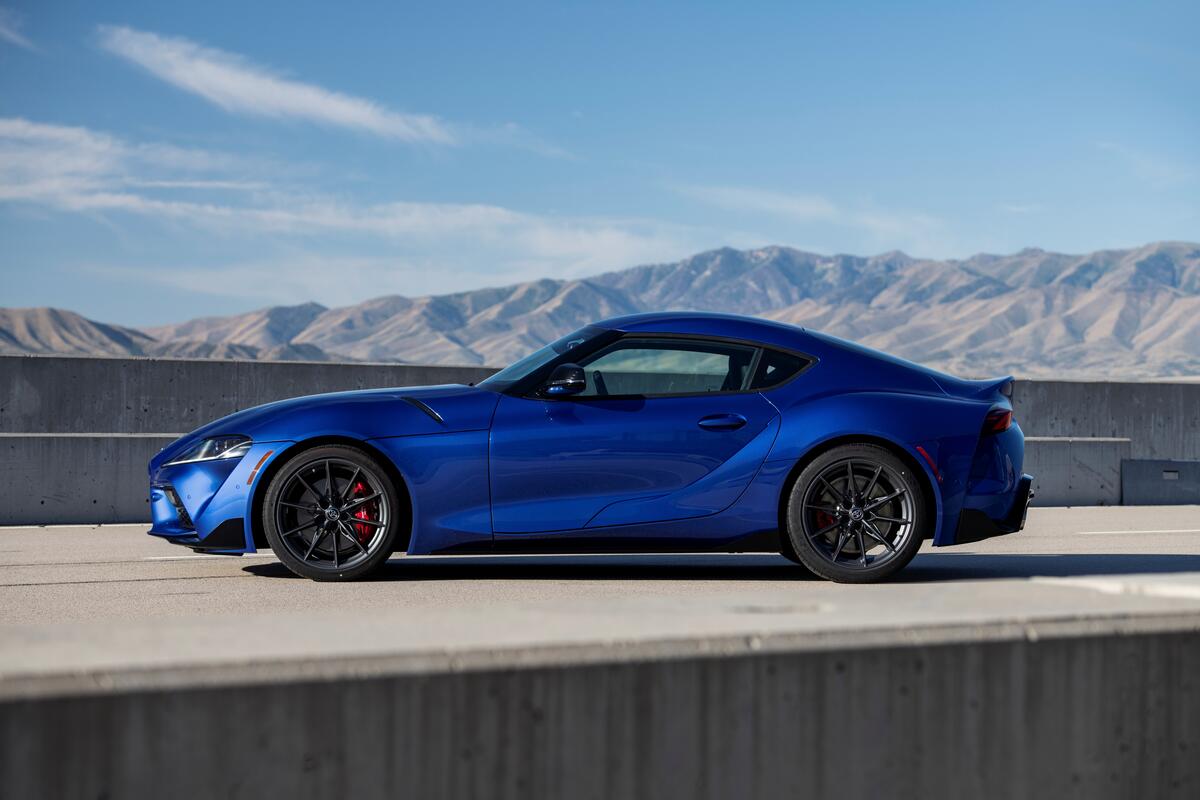
The Toyota Supra is a sporty two-door car made for fast driving. People talk about it because it’s designed to feel exciting to drive and it can sound and perform well. It’s often mentioned when someone is sharing a favorite car or a performance story.
The Jeep Grand Cherokee is a larger SUV meant for everyday driving and longer trips. In some versions, it has a bigger V8 engine, like the 5.7-liter “Hemi.” The podcast mentions it because it came up during a maintenance situation involving coolant.
“5.7 HEMI” is the engine size and type—it's a V8 in the Jeep. The shop is using it to identify what kind of engine the car has when diagnosing the coolant problem.
The Jeep Wrangler is an off-road SUV that’s made to handle rough roads and trails. The podcast mentions it because there was a recall, meaning the manufacturer asked owners to get a specific fix done. Recalls are important because they can address safety or reliability problems.
Cars have computers that control different systems. This recall is about updating that computer software so it can better detect a battery problem early.
On a hybrid, there’s a special battery pack that powers the electric parts of the car. Here they’re talking about a recall because some of the battery cells could fail in a way that becomes unsafe.
A drive cycle is a particular kind of driving the car asks for after repairs. It helps the car finish learning/verification steps so the update works correctly.
The PCM is the car’s main computer that controls the engine and drivetrain. In this recall, it’s involved in the battery monitoring so the car can respond if something goes wrong.
A service bulletin is the manufacturer’s step-by-step instructions for a known problem. Here, it matters because the order of updates affects whether the car works correctly afterward.
Module order means the order you update the car’s computers. This recall needs a specific sequence, and doing it in the wrong order can cause the car to act up afterward.
A software flash is when a technician updates the car’s computer software. It can take time, and sometimes the car needs extra steps afterward to confirm everything updated correctly.
Stellantis is the company that owns Jeep. They’re mentioned because they offer long warranty coverage on the hybrid batteries to help reassure owners after the recall problems.
Term
thermal meltdown
A thermal meltdown means the car gets dangerously hot and something can fail. The host is joking/warning that certain off-road setups could make overheating more likely.
DTCs are the “error codes” the car saves when something goes wrong. If there are a lot of them, it can take time to figure out which issue is actually causing the symptoms.
ProDemand is a system shops use to look up repair instructions and specs. They’re saying Tesla info wasn’t available there, so they couldn’t do the work in-house.
Control arms are suspension links that connect the wheel hub to the vehicle’s frame or subframe, helping control wheel motion and alignment. If bolts can’t be removed due to battery packaging, control-arm service can become much more time-consuming and expensive.
A lower ball joint is a small joint in the suspension that helps the wheel move properly. They’re saying it’s one of the toughest pieces to get off and back on during the repair.
A CV axle is the part that sends power from the drivetrain to the front wheels while the suspension moves. It has joints that let it bend without losing power.
The CV boot is a rubber cover that protects the joint inside the axle. If it rips, the joint doesn’t stay properly lubricated and can wear out quickly.
A cooling fan recall means the car maker is fixing a problem with the engine cooling fans. Here, they’re changing the fuse rating to lower the risk of an electrical fire.
The Challenger is a performance car model, and the podcast is talking about how some of the top versions were discontinued. That means fewer of those specific high-performance versions may be showing up over time. The mention is mainly about what people still have and what mechanics still work on.
The Dodge Challenger is a fast, performance-focused car with a strong engine. The podcast talks about a high-performance version (SRT8) with a manual transmission, which is a more driver-involved setup. It’s mentioned because it was a memorable car to work on.
The Dodge Charger is a car built for performance, with a stronger engine than a typical family sedan. The podcast mentions it because it came up during the speaker’s work and how they talk about cars. It’s basically part of the day-to-day lineup they deal with.
Here, “Hurricane” is the name of a specific engine. The host says it’s a turbocharged straight-six (with two turbos), and they’re comparing it to the V8 “Hemi” setup.
The Jeep Wagoneer is a big SUV designed for comfort and space. The podcast mentions it because it has a strong engine option and is meant for families who want an SUV instead of a minivan. It’s basically a roomy vehicle with more power than a basic SUV.
The camshaft is the engine part that controls when the valves open and close. If you replace a cam, you have to get the timing right so the engine runs correctly.
Lifters are parts inside the engine that help the camshaft open and close the valves. If lifters aren’t working right, the engine can run rough or make noise.
The head gasket is a seal between the engine block and the cylinder head. If it fails, fluids can mix or leak, and the engine may overheat or run poorly.
Top dead center (TDC) is when a piston is at the very top of its travel. Mechanics often use TDC as a reference point to make sure timing is set correctly.
Pentastar is the name for a Chrysler V6 engine family. People talk about it a lot because it has certain maintenance habits and common issues that owners should know about.
The oil life monitor is the car’s way of telling you when it thinks the oil is worn out. Some people trust it, while others change oil on a set schedule just to be safe.
A vacuum pump helps create suction for certain engine and emissions systems. If the car throws a code for it, that usually means the pump isn’t making the vacuum the car expects.
The Ford F-150 is a large pickup truck used for everyday driving and work. The podcast talks about a 2014 model with a 5.0-liter engine and focuses on simple maintenance like changing the oil. Regular oil changes help the engine last longer.
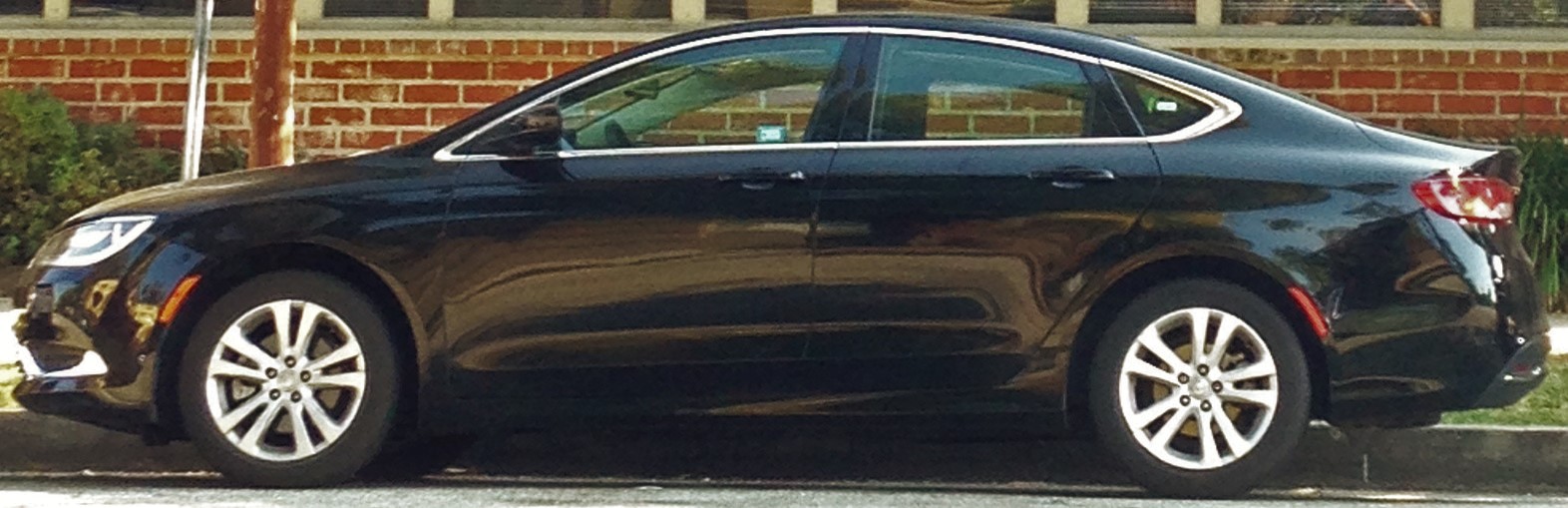
The Chrysler 200 is a regular passenger car (a sedan) meant for everyday driving. The podcast mentions it because someone had one with very high mileage and was still using it. That’s usually brought up to talk about how long a car can last with maintenance.
5W-20 is another oil “weight” rating. It’s thinner than some other grades, and the car may specify it for fuel-economy—using the wrong one can affect how well the engine is lubricated.
0W-20 is a thinner oil grade meant to flow very easily when it’s cold. The speaker is saying that using it in an engine that should run a thicker oil could contribute to wear issues.
The Jeep Gladiator is a truck that’s built for off-road driving. It has a cargo bed like a pickup, but it’s designed with the same kind of rugged capability people associate with the Wrangler. The podcast mentions it because the speaker is considering it for that mix of features.
Term
express team
An “express team” is a group in a shop that handles faster, simpler jobs so they can get customers in and out quickly. The speaker is explaining how their dealership is organized.
In automotive service, a warranty is manufacturer or dealer coverage that pays for repairs under specific conditions. The speaker mentions working on “something warranty,” meaning warranty-approved jobs that still need timely completion.
Tire changeover is when you swap tires for the season. The speaker is using it as an example of how the shop worked together during the busy tire season.
“Balance them” means adjusting the wheel and tire so it spins smoothly without shaking. The speaker is describing how coworkers help each other during tire season.
AllData time is a reference for how long repairs are supposed to take. The discussion is about whether warranty reimbursement should match those published time estimates.
A labor op is basically the repair code that tells the shop how much time (and pay) the job is allowed to take. In the story, the code changes the pay even though the process is similar.
This is the AC service where the system is cleared out and then refilled with refrigerant. The point is that the same basic AC work can be billed differently depending on the overall repair.
Time studies are tests that measure how long a repair really takes. Here they’re being suggested so warranty pay matches reality and technicians can do the job properly.
Term
OE
OE means the original car maker. The idea is to ask the manufacturer to review how long the job really takes so shops get paid enough to do it the right way.
Diagnostic technicians are the people who figure out what’s wrong first, not just replace parts. The speaker is saying their work matters when discussing warranty pay rules.
LIVE
I first started at this dealership. I didn't know much about flat rate. I hadn't been in the industry for a long time. Everywhere I worked before was, was hourly. So I didn't know much about it. But I went around asking, you know, the text there on my first day, you know, how long have you been working here? And I. Many of the techs were there five years, 10 years, 20 years. One guy was there over 30 years.
I'm like, yeah, you're not staying at a job that long unless things are pretty good. You know, you'd have to be a real masochist to stay there for that long if things were that bad.
Welcome back, ladies and gentlemen, to another exciting episode of the Jaded Mechanic podcast. Getting ready to roll into tools. And somebody had reached out to me a couple weeks ago that's actually from Pennsylvania, and had a kind of an interesting story to tell me about their, you know, their foray into the industry and that kind of stuff. And unfortunately, he's not gonna be able to meet me at tools and he. Yet he's in Pennsylvania, so we're already talking about making plans for him to make it there next year. So. Derek Amodio, how are you, man?
I'm doing well, Jeff. How about yourself?
Very good, Very good for a Sunday night. It's nice. We had snow here this morning. Did you guys?
We didn't. It's actually been a really nice week here. Now, tonight and tomorrow night are supposed to get cold again. There's a freeze warning. So anyone who sticks started their gardens earlier around here by kicking themselves out there, wrapping up their plants.
And that's the thing. I did a pile of snow tires last week, taking them off. Right. And I'm like, yeah, you know, I don't know why you're doing that. Like, I normally it sounds crazy, but, I mean, even when I ran snows on my own vehicle, and we're going back a few years now, I didn't take them off till May 1. That was kind of my deadline.
Right.
Because I've. And I've seen it snow in May. Now when I say it snows, it's like we get a flurry and it melts. Kind of like what we had this morning.
Okay.
We're still getting enough cold nights that, like, we had a bunch of rain last week, but if we got the right mixture, we'd have some ice for sure. So everybody that's in a big rush, you know, just pump your brakes, give it another couple weeks. There's no that Old adage that you're going to tear up your tires driving them around is. Is for the most part a myth. You know, your car, you're going to wear your tires. Anyway, so Derek, kind of tell us. You said to me that you. You kind of were in the industry after high school, and then you kind of took a break and you're back in it.
So kind of share with us kind of what that. How did you get into it? Why, you know, what all that kind of story is about?
Sure. So when I was in high school, I kind of had no direction in life. Didn't know what I was going to do. A couple of buddies of mine took auto shop in high school. So my senior year of high school, I took auto shop. I started really enjoying it. I had a really good auto shop teacher. And I know I hear a lot of terrible stories about people's auto shop experiences in high school, but we had a pretty good teacher.
He was a longtime Chevy Tech.
Okay.
And he was obsessed with gm. Everything he owned was gm. All his clothes, his cars. So he would bring his Chevy van in and we. We learned to do brakes on that and oil changes, and we detail it for him. And he pretty much used us as his personal workhorses, but learned a lot from him, you know? Loved it. I was supposed to go to tech school a couple states away from where I was living at the time. I grew up in New York.
Oh, cool.
Yeah. Like right on the border of Long island and New York City.
Okay.
On the Long island side. But it wasn't like all beaches and rich people. It was a little more suburb, you know, between the city and the. The upscale area.
Not. Not like the nice place where the Sopranos live. Not there.
Yeah, no, I think that was Jersey. Yeah, but. But, yeah, no, it wasn't like that. It wasn't like Mon talk and all the things you see on tv. For Long island, it was. It was a little more cityish, but kind of suburb.
Right on.
So I was supposed to go to tech school in Connecticut. Then my grandfather got sick my senior year of high school. I ended up staying home to help my mom take care of him. I'm like, I'm just gonna get to work in the industry and, you know, see how I like it. If I want to go to tech school in a year or two, I could do that, whatever. Uh, so I did it for two, three years. I worked in a couple small independent shops. And when I say small, I mean like two or three bays.
Yeah. I think each of them had three bays, but two bays had lifts. One was just a floor bay where we did some interior work and stuff like that. When I turned 18, because I graduated high school, I was 17 when I turned 18, a buddy of mine's father was a store manager for a local major chain tire store.
Okay.
And stupidly, I was excited to go work for him. And that kind of, I think, was probably the downfall of me in this career at the time I started working there, and I was making decent money. You know, I was learning as much as I could there. But it was all just, you know, tires, some oil changes.
Yeah.
Occasional brake job, front end or suspension work. Nothing too crazy. Kind of plateaued there real quick. And nothing against people that work there and enjoy it. Just the place I was at, just. It wasn't where I was going to further my career, to where I wanted to go. Then, long story short, I ended up moving to New Jersey, getting involved in the food industry, and was actually a chef for about 15 years.
That. See, that's an interesting. That's interesting transition because I have another friend that's kind of like he's gone back and forth, and sometimes he'll even moonlight with a. With a chef job in some pretty good restaurants. Like, he's pretty skilled at it.
Yeah, I worked in some upscale restaurants, and I was. Actually. I moved around a little bit. You know, I went from New York to New Jersey, back to New York. Ended up meeting my wife. She was actually a waitress at a restaurant I worked at at the time. And we've been together. I think we're going on, like, 13, 14 years now, but.
And we moved to Connecticut. I was a chef there. And then when we first got married, I kind of decided. Didn't want to work nights, weekends, and holidays anymore. You know, I was working. Can't tell you how many times I worked. Christmas Day, New Year's Day, New Year's Eve, Thanksgiving Day, Easter Sunday. So I knew starting a family, that just wasn't the life I wanted.
So I actually ended up getting a job working for FedEx in a FedEx warehouse, which was impeccable timing because that was right before the pandemic started. And I'm sure, as you know, the restaurant industry got flipped upside down during the pandemic, as most industries did.
It never really recovered, did it, in a lot of ways?
No. I mean, from what I see, the price of ingredients that these restaurants are paying is astronomical compared to what it was. And, you know, same thing with automotive industry. I mean, car parts are ridiculous. Car prices are ridiculous since the pandemic and nothing really went fully back to normal.
But I think there's a collective group of people, though, Eric, that, like, once that pandemic hit, whereas they might have eaten out, like, say three nights a week, you know, And I. I'm not talking upscale three nights a week anywhere.
Yeah.
I think that once that hit, they stay now home. And that's when Uber and Uber eats and everything and doordash and just became huge because they didn't want to leave the house.
Yeah.
And they were having the food brought to them. And it's like, you know, they're paying these exorbitant amounts of money for delivery service of food that is not as good as eating in a restaurant. Let's be real. Yeah. You know.
Yeah.
I can't wrap my head around it. So.
Yeah, no, listen, I hear you.
So you go on FedEx now when you're kind of dabbling. I don't. Dabble is not the right word. When you're in your. Your tenure as a. As a chef, cook, whatever.
Yeah.
Are you still kind of in and out sometimes on the jobs? Like, are you still fixing your own car, kind of monkeying around with some
other friends or so A little bit. Not. Not a ton. I mean, I've actually been blessed with vehicles where I haven't had too many issues. My wife's got commitment issues when it comes to cars. Within two, three years, she always ends up trading it in for something else. Not because she's having issues with it. She just wants something, you know, newer or fanc or different, whatever the case may be.
Me, myself, I usually tend to keep my cars a little bit longer than that, but I would. I would do things like oil changes most of the time, brakes. And then if it was anything more, I mean, that at the time was pretty much the extent of my knowledge on cars anyway. If. Okay since learned a lot, but. Yeah, so. So I. I would dabble a little bit, but not too much.
I didn't have a ton of tools. I didn't have a ton of time to. To be bothered working on cars and luckily didn't have any cars that needed anything too. Too major. So I was working for FedEx. We were in Connecticut at the time. Ended up moving to Pennsylvania about three years ago, where I live now, you know, a little bit outside of Philly. And I figured I'd do what I know, you know, go back to work for FedEx.
It was that or a restaurant, you know, at the time. Go. So I went to Fedex got hired pretty much immediately because at that point I had had two, three years experience driving for FedEx. And when I got hired here, the route I was put on was just in this rural area. Now, let me take a second to explain FedEx ground delivery drivers. FedEx Express is a little different, but FedEx ground delivery drivers actually operate on kind of a flat rate system.
Okay.
So each of the routes is owned by an independent contractor that you work for that contractor. And I was making a dollar and 45 cents per delivery. Whether I deliver one package or 100 packages to a house, I get a dollar 45.
Right.
When I lived in Connecticut, I was in a pretty busy town. My route. And during the pandemic, I was doing like two to 300 deliveries a day. Yeah, you know, it was killing me, but it was great money. Once the pandemic kind of slowed down, I was down to probably averaging about 150, 180 stops a day, which is still pretty, pretty decent and definitely a lot more manageable, A lot less wear and tear on my body.
Yeah.
And then when I moved here to Pennsylvania and got hired here, I was in such a rural town, my. I was doing maybe 40, 50, 60 deliveries a day. My stops were 10 miles apart. It was. There was a huge Amish population where I was, which surprisingly, they actually do order things that get delivered FedEx. I don't ask me how they order their stuff. I don't know.
They surprise me, man. It really, they really do because they
operate a lot of dog kennels. They were constantly ordering chewy.
Yeah.
You know, the chewy dog food company stuff. So I was delivering a ton of chewy out there. But just the money was terrible. My route was like an hour away from, from the warehouse I was operating out of. So on top of a day where I'm not making much money, I'm driving, you know, to the warehouse, which was like 40, 45 minutes from my house, then another hour to my route and then an hour back after my deliveries. And it was. I was just miserable. So every day on my way to my route from the warehouse, I would pass by a store location of the major tire chain I had worked for back in the day.
Right.
So I don't know where and how. I kind of just was like, hey, I wonder, you know, if they'd ever hire me back out here. So I put in an application and did. I'd gotten a call back from a regional manager who got some information from me, you know, asked me where I had worked for this company before, you know, how long I worked there, that kind of stuff.
Yeah.
So I told them, never heard back from them, but I was like, yeah, let me go on indeed, and just start applying to different garages and see what happens. So I found this Chrysler Dodge Jeep Ram dealer, dealership. About a year and a half ago. They. They called me right away, interviewed me, hired me on the spot. I went out because I didn't have any real tools. Bought like a thousand dollars worth of tools from Lowe's, a bunch of Craftsman stuff, and a cobalt tool cart to work out of. And yeah, that's where I've been for the last year and a half.
And I actually love it.
See, that's awesome. Because, you know, everybody sometimes thinks, like, it's like the wrong move to make for a lot of young people is, Is the dealership. And, you know, I've told my story enough times that like, and I say this, if I had to made that move to the dealership early in my career, I wouldn't be in this industry, because I wasn't. And it wasn't like they were holding me back. I don't want to say that. But there was more opportunity at the dealer. It was a situation where you're working on much newer cars, much newer technology, a different type of budget for repair is, I guess, the most appropriate way I could put it. And yes, and training.
Now, back then, so much wasn't. We were just getting into the idea of online training.
Okay.
But the on the job training was. Was way different. You know, like, my independent tenure was like, you know, here's another oil change. Here's a set of tires. Uh, we're going to safety this rusty old car, so I need you to put it on the rack and get the wheels off and get the brakes apart so that the senior tech can look at it, because he's the one that's going to decide what it needs for his safety. And, you know, you might get to do some of the repairs, stuff like that. Once I got to the dealer, it was like, wide open. Here's a scan tool, here's a service information system.
Because at my tenure at the little shop that I was at, the Independent, they didn't even have a computer that you went over and looked at service information. Like, he worked in one that he didn't even have it. He would get wiring diagrams faxed down from the shop down the street.
Oh, wow.
And so that's the shop down the street, you know, probably. Or down the street was probably 7580 an hour door rate and he was 60.
Okay.
And I don't know how they worked out the relationship that, you know, he would send them that kind of stuff because to me, even back then I'm like, you're, you know, he's allowing you to undercut him. So if I hadn't gone to the dealer, I'd have starved because there was lots of weeks that I spent half of my earnings just on tools that I needed to do the job. It was ridiculous. Oh yeah. See you roll into the dealership, what do they start you with, Derek?
So it was mostly oil changes, tire rotations, couple smaller like mileage services. And then I think the first time I was probably there maybe a month, the first kind of bigger job that they gave me was an oil cooler on a 3.6 liter. And it took me damn near eight hours to do it. Now I could do them in like an hour and a half, two hours. But. But yeah, that was the first thing they started me off on. But aside from that, like I think assigned me a mentor who I say a mentor, he's a few years younger than me. I'm 37 years old now, so they signed me a mentor.
And really everyone in the shop is great. If I have any questions, I've needed a little bit of guidance, a little bit of help with something. They've all been great about, you know, stepping up, helping me.
That's good.
Ever so I can't, you know, sing their praises enough. I've gotten really lucky with, with where I landed. Service managers, great. But yeah, from I did that oil cooler, next thing I know I'm doing a heater core on I think it was a 2017 Ram, maybe a couple weeks after that. And none of flat rate guys wanted to touch it. I started off hourly and at that point I'm getting paid hourly and I want to learn, you know, I have a family. I couldn't I taking this jump, going back into the automotive industry after taking almost a 20 year break from it. Yeah, was a leap of faith.
But I have a family. I have no real option to fail. So I'm going to learn whatever I can, soak up whatever information I can. You know, when I first started out I was, and even now, you know, I was online every night on YouTube when, you know, I should be going to sleep. I wake up early for work the next morning I'm on YouTube, watching Scanner, Danner videos, check Engine Chuck, all those things, listening to your podcast, listening to a couple other podcasts, automotive podcasts, watching Royalty Automotive's videos are great.
They're awesome.
Sherwood's just a kind soul. I feel like I've never, never met the guy. I hope to one day. He's just, just seems like a legitimately good dude. I, I know you've had him on the show a couple times and I
met him in person. The first time I met him, he was exactly like he is on tv. There was Orb tv. Dated myself. Exactly how he is online. It's not, it's not some kind of, you know, show or act. He is just a very humble, positive, enthusiastic person to be around. He's just great.
The whole family's like that.
You know, it's one of those people where you hear, hear or see people bash him online. You just not even having met the guy or know the guy personally. I'm like, that can't be true. And Sherwood wouldn't do that. Sherwood wouldn't say that.
And he laughs at it. He thinks it's hilarious. Like when, when the, the cracks that he got about the snap on belt, you know, and the cracks about the, the ponytail and stuff like that. Like what that is, is jealousy. I mean.
Yeah, nice.
In his 50s and can still grow ahead of hair like that.
Like, I mean, listen, I'm jealous.
I'm jealous as hell. You know, like, it's so. It's always the same thing. You're always going to have your detractors. I have them. If you put yourself out there, Paul Nanner has it. You know, Paul and I have long conversations about that because I heard him
on your show and him too. He's, you know, seems like he's a good person. He wants to, you know, do all this stuff for charity. Him and his wife both seem like good, genuine people.
They're amazing. They're amazing.
And you can tell it from, from, you know, their content from, from Sherwood's content. He's making this content, started making this content just to help people. It wasn't to, you know, especially Paul Danner wasn't say, hey, I want to go viral. There was no viral back then. You know, he was doing it since, God knows, you know, YouTube first started. Yeah, no one expected YouTube to blow up like that. Yeah.
So you do your, you do your homework. Like, I'm always, you know, attesting that every, every technician needs to and, and did it kind of help fast track your, your job, you know, during the day?
Like, definitely. Yeah, definitely. You know, there's been quite a few things I've seen that have helped me, you know, diagnose cars especially electrical has always been my kind of weakness. Electrical diag and stuff. So those Scanner Danner videos and Check Engine Chuck videos have been yeah, great. And I know my mentor at my job is a huge Paul Danner fan. He's got a sticker on his toolbox and he told me when I first started there, he's like, you know, watch, watch Scanner Danner videos. He's like, I learned a lot of what I know from him and he's, he's a master tech.
He's really kind of a whiz with at least Chrysler products. I haven't really seen him work on too many off brand stuff but you know, he could. There's been cars where I, I'm kind of stuck on something and I ask him for help and within three seconds he makes me feel like an idiot.
Some just have the touch, right. And then it's like back in the day when I was at Chrysler, I was, I was that guy. Like I had so much knowledge of, of the spots to look, the way it was all linked together. I just had that, that ability to seem to make it look really simple. And you know, some of it wasn't all that terribly difficult once you kind of learn the recipe. But there was a lot of ones that still kicked my butt. Right. But you know, you, you develop your process.
The first one kicks your can and then if you're good and stay focused on the sense of trying to remember things if you can store it in that memory banker. I tell you, like back in the day I used to write notebooks every night. You know what I did because some of it was for writing my stories for warranty pay and some of it was to try and remember back later on. What did we have that van that was doing that weird airbag fault? Oh yeah, splice, you know, 207, you know, corroded and go back and check splice 207. Like I would do little things like that and it's. I lost those notebooks. I wish I still had them because they'd be so cool to look back on now and just, you know, think about them. But I threw them away.
Yeah, that's smart. And that never dawned on me. And that may be a, Another practice I adopt now is to, to start taking notes when. Especially on some more of the, some of the more problematic vehicles.
Yeah.
Eventually you get to the answer and it'd be good to have those notes to, to remind yourself.
And the other secret weapon, you know, is like I can remember my last kick When I was at Nissan, I joined the Nissan Facebook, Nissan Tech Facebook group. And that was really helpful because you start to network with a lot of guys now, they'll bust your balls, like, if you haven't done the research or you're not even. You're just getting in there looking for the answer, and they're not going to really be all that helpful.
Yeah.
But if you, you know, if you just. Like I say, like, when Iatn, when I was on that way back when, if you just sit and lurk, you can pick a lot of things up just by hanging out.
Oh, yeah.
And not asking a bunch of questions, just listening to what the conversation is. And now I think that that's kind of taken some of the place of some of those journals that I used to keep, because I still. I'm in one for Mopar tax. And I don't know if any of them listen to this or, you know, throw me out, but, I mean, I'm not a Mopar tech in a sense anymore. But it's kind of neat to see and. And still see. Oh, yeah, they're working on a, you know, 2026 and a 2025 and a 2024, like, and getting into some of the problems. I work on those cars, too, but I'm doing really basic stuff, getting them ready where I work.
Right. Yeah, you're in there tackling these problems, and it's like, okay, that's cool. That's really neat. So that's taken with a place. So you. You start at the dealer. You're all just on an hourly pay, and you take jobs like the heater core and everything. How was that first heater core?
I think it took me about three days.
Yeah.
But I got it done, you know, the repair fixed, the concern, and. Yeah, that was about it.
Yeah. And learned a lot.
I was nervous as hell that I was going to break some of those interior panels or on those lines, but I, you know, went slow and. And kind of paid attention to what I was doing and got through it. And I've done several of them since.
Yeah. And how was your. How's your time now?
Probably get done in about one full day.
Yeah. Good for you, man. Yeah, it's not an easy job. I mean, I know guys are like, oh, I do them in four hours. And you. And you learn the shortcuts, like, you know, don't take as much of the dash apart. Kind of like, you know, unbolt it, pull it back, slide the box. That kind of jazz.
But, I mean, it's still a big deal. I mean, I remember I did a. Did a Durango a few years ago because that was like this tape or something in the box would heat up and melt, and it would jam the motors up, and it was essentially screw up the blend door, and you had to buy the whole box. It would just melt down. And I started it the one day, and I got it apart, and then we had a rush of bunch of stuff that I had to get ready. I was working in a fleet shop, and I didn't get back to it for like a week. So trying to remember where every connector and every screw and everything that was like. I did not break any records doing that.
It went together fine. It all worked when it was done, but it was like, it was slow because it was a week. It's actually the more week I think it was like 10 days before I got back to it to start putting them back together. And that was, you know, but, you know, and that's be different if it been like, you know, a steering rack or an engine in an older van or something like that. But it was like. It was the first evap I'd ever dashboard I'd ever done in one of those older Durango. So I didn't have a ton of them out in the past. You know, I was like, how does this go again? Like, it was tricky.
So did you ever make the jump to flat rate?
I did. So I just went flat rate about two months ago. Okay. First they put me on. So I started the dealership. I want to say it was mid September of. What are we in now? 2026? So 2024. So mid September of 2024.
Okay.
By that January, they put me on a hybrid pay system. So I made a certain amount hourly, and then, yeah, a certain amount for every hour I flagged. And just about two months ago, they. They moved me up to flat rate.
Right. Good. And it's going well then?
It's going well. It's going pretty well. I mean, you know, some weeks better than others. That's the nature of the beast. It's definitely an added level of stress. Even when I know I've pretty much been okay since I went flat rate. But it definitely adds in that extra level of stress. If you're having one bad day now, especially if it's a Monday and you're like, oh, my God, yes, this whole week's gonna be.
And then, yeah, you know, next day you go, you turn it around, you get a good job or something that you make great time on you're like, okay, bounces out and. Yeah, but every time you have even, not even necessarily a bad day, but one bad job where you end up chasing your tail, you up end, it can mess with you.
Yeah, you want to get those crap jobs on Thursday. Right. Friday's even better because even if it's not your Saturday to work, I'd come in and finish those jobs or, you know, go in and beat my head against the wall when I could focus a little better. Right. Like, it was not. Yeah, but I was the same. Like, if, if I got into a butt kicker on a Monday, I had to really, really, really work to keep my attitude from like completely having the wheels fall off. You know, like, it was, it was something that I had to consciously, like, tell myself, don't let this.
Don't let this screw up your whole week. Don't let this screw up your whole week. And I was, I didn't, I wasn't always successful at it.
Yeah.
So, you know, it is, it's an added stress and it's, you know, we talk about the mental health thing in with technicians and, and all that kind of stuff. And you know, it's not just dealer techs, it's anyone that's paid on kind of that incentivized system is that we forget sometimes that, you know, the really good weeks are really good. But when it's that lean, uncertain time of the year or week or day or month, it's really hard to tell yourself that it's all going to be okay sometimes. And if you get too many days like that or they make a change, that's the big thing I always saw is like, everybody was always like, really happy. They're making good money and then they make a change. Somebody in management moves or a really good advisor, say, moves or retires and customers leave or customers come in and all of a sudden Mike, the service advisor they dealt with, is no longer there and they don't trust the new person. You can really see the hours come down. Hours come down.
Everybody's just like, oh, well, it'll all turn around eventually. And oh, gee, or you're not hustling enough or no, man, it's got nothing to do with that. It's got to do with a change happened that is really affecting everybody's pay. And when you affect your pay, you affect your morale. And when you affect your morale, you really affect the business.
Yeah.
And that's what I think is that uncertainty is what I'm trying to always not keep hitting the hammer. On the nail over and over again. But just reminding people that like on paper, flat rate looks great until it's not working and then the fallout is way more than just financial, I guess what I'm trying to say. So.
Yeah, yeah.
So how do you. Because you hear the conversation sometimes Derek and Will say like, mechanics are terrible with money. We don't plan. Do you have anything that you do to kind of even it out for the lean times or do you just kind of put your head down and keep hustling?
Pretty much just put my head down and keep hustling. We do, we do get paid for, for to do, you know, training, whether that's the training we get sent to the training center for or some of the web based training. So the couple weeks I've had where I've been, you know, a little bit lower on hours, I've been able to kind of make up for it with some of the web based training. I am getting to a point where I'm running out of the web based training though. I only have training center training left. Excuse me, My allergies are. No, it's killing me tonight with the, the weather warming up here. Yeah, but, yeah, no, the, the training's definitely helped with that, but I need to, you know, pick it up a little bit where I can because training's gonna run out.
I won't have that, that crutch anymore.
And that's something to think about for people that are, you know, the people in management, owners, whatever that are listening. You know, training's important for all kinds of reasons. Obviously we talked about it before, but think of what Derek's just talking about. There is the fact that like he's using that sometimes as that slack time. He's using it productively. He's bettering himself and he's relying on that pay that comes from that training to even out the low weeks, that he's not responsible for them being low weeks. Right. So people that don't want to pay your tax for training, man, I struggle with that still because, you know, it just, to me, it doesn't make sense.
It's, it's an investment. And if you're not going to pay to invest, why are you in business? Like, it just doesn't make sense to me. So good on you for doing it, man. It's good.
Probably one of, one of the biggest perks I've seen to working in a dealership because I obviously have worked in independent shops and I mean, I was still very, very green when I worked in Those independent shops. But you know, probably one of the biggest perks has been the training. And some of the training is just kind of monotonous and boring and you don't really learn a ton where it's hard to follow because you know, they have, especially with the web based training, you can't stop and ask questions.
Yeah.
You know, the in person training's a little bit better. You have the instructors, you know, our, I'm half an hour away from our, our training center here.
Okay.
And there are two instructors there right now. And both of them are great, you know, great at keeping things interesting, answering questions, they're knowledgeable. So that helps you do the web based training. Again, it's hit or miss. Some of them are actually pretty good. And then some of them, you can get lost in it because you already don't know what they're talking about from the beginning. And by the time they get to the end you're like, hey, I got questions from the beginning that I can't ask it. You know, I can go, I can ask people at work about it when I get there the next day.
But if I'm doing it at home the night before, like I said, you can't pause it and ask a question.
Yeah.
But you know, part of it, you gotta, you gotta move through the ranks with the training and whether it's good or bad.
Yeah. And I always found like the web based stuff is like you can't ask the question, but oftentimes it's like you don't even have the vehicle in front of you. Yeah. And I can remember like the few times that I went to in class they'd be teaching, I'm going to really date myself. Like you know, 2006 caravan. Yeah. And they actually have one in the, in this, in the center. So they can say, okay, so this is the new architecture.
And see here's you know, a bus bar and here's where it's located. And you know, they give you little tips way in there. That was good. When I sit there and look at. And again, it's hard for me now even at home to take a lot of training because even when I'm watching a YouTube video, I'm looking at my phone, you know, whereas the in class stuff, you know, I don't, I don't sit there and stare at my phone when somebody's doing it in class. I'm a lot more tuned into what they're doing. So, you know, it's hard. That's always been a distraction for me.
I'm also very much a hands on learner. Like if I you know, give me service library and the car in front of me and I can figure it out for the most part, tear it down, put it back together, you know, you, you show me something on the Internet and a lot of the web based training isn't even videos of them, you know, performing a repair that, showing a picture here and you know, this and that. And I'm not going to learn from that. I'm not going to remember it 10 minutes after I watch it.
Yeah. Yeah.
And I think a lot of us in this industry are hands on learners and that's part of how we got into this industry to begin with.
100 and I find like the, the toughest thing for me always was that monthly, whatever they called it, master tech training that you had to do and you know, you had to get like you had to watch the 45 minute video and then there was a 10 question test at the end and everybody like the, he's feeding you the answers, your service manager or whatever's feeding your answers, you're eating the pizza and you just, and you knew like they didn't care if you got anything out of the damn class. It's just they had to have everybody complete it, submit the results, you know, get the score and that was it. It wasn't. They didn't really care if you learned anything.
Our job doesn't do that. We gotta do that on our own time or if it's slow in the shop that day and you want to do some training, they'll let you do that. But we don't do it all together. They don't feed us the answers. I actually like some of the master tech presentations. They give you kind of some small tidbits here and there sometimes that help with the, the newer vehicles that you haven't really seen a lot of yet. Like, you know there are certain things about, like the, the hybrid Dodge Hornets, you know the Bevs where if you disconnect the battery you have to leave it disconnected for 15 minutes before you reconnect it. Otherwise one of the coolant pumps is going to keep running and it's going to drain the battery.
And so little, little things like that, you know, you get those tidbits of information from that which you may, may accidentally skip over when reading a procedure in service library or if you're changing a 12 volt battery on a car, you're probably not even going to look in service library. You know, you're gonna be like Pop the negative cable off. Pop the positive cable off. Throw the new battery in.
Yeah.
So it's nice that, you know, sometimes they give us those little tidbits that.
That help. And I always found, like, Chrysler, when I look back now, Chrysler service information for me still has been the best I've ever seen in terms of, like, how it's. The architecture of it, how it's set up, the wiring diagrams are, when they were accurate. There were some of them back in the day that were not. It was just very easy to navigate. And it wasn't just because of my time experience with it. Like, I talk all the time and throw Nissan under the bus. The way they split it up was terrible.
They would put the connector pictures in a completely different section of the service information from the electrical. It was ridiculous. Where Chrysler has always been so good that like, literally drag and click and there's your connector. Right. And it was just fantastic. I was always wishing, you know, more people in the OE side of things took a cue out of the Chrysler book and did it that way. I mean, they were the first really to bring topology on a scan tool to the scan tool, showing you what's actually on the network and all that kind of stuff. Now everybody's scan tool does that.
Yeah. And yet they were the first to bring that. And everybody just, you know. Yeah, yeah, it was. It was groundbreaking at the time. Like, I'm gonna. Y Tech was one of the first ones that did that way back then, you know, And I remember seeing it the first time, and I'm like, oh, that's cool. Because, like, the DRB3, it wouldn't show you that if you had to just go in and if you couldn't, it just would say no communication.
Whereas, like, witech would show you that it's supposed to be there. But the line. The line going to. It's not lit up. It's off the connection. You know, you don't have to.
I've used the DRB3 a couple times on some older vehicles that came into the. The dealership. And it's. It's great for reading codes, but, you know, when it comes to anything outside of that, I'm kind of lost on it.
I. I could. Yeah, I could get. Take a couple hours and probably teach a bunch of you guys in your shop the. The power of that tool. It's incredible what it would do back in the day, like, especially once you start to learn it. I watched one guy actually used to come oscilloscope attachment to it, and I Watched one tech actually in all my years that had actually used it and knew how to use it. The rest of us, like we didn't use a lap scope and he actually knew how to set it all up and, and use it.
It was, it was pretty impressive. But that tool was, that was a pretty cool tool back in the day. It was, it was something special. I made a lot of money with that tool. And once you learned the little tricks of it, it was efficient, man, it was really good.
So no, I think I used it once to diagnose like a knock sensor on an O2 Chrysler Sebring or something.
Yeah.
And then I think one other time on something else I don't remember, but that's about the extent of my experience with the Dr. V3.
It was great for a lot of the body stuff. Like if you wanted to turn on, like, I still remember how cool it was because like a lot of what you day to day, you could do with a code reader and a basic data pit if you were just doing check engine lights. But man, if you could speed up so much of your diag in the body stuff, I can still remember like, you know, power windows and power locks kind of problems, how much info you could get from the DRB3 from what it was doing that you didn't necessarily have to tear the door panel off. Right. You could save yourself some time. It was good that way. And now we all take that advantage for. Excuse me, we take that for granted.
But back in the day, like that was a big deal for a lot of us was like, you'd see the old school guys that didn't know what the tool could do and they would just start ripping things apart. Not ripping, taking things apart and starting to pin out stuff. And I'd go over the tool and hook the tool up and go, no, I don't need to do that test because I can make it blow the horn or turn the wipers on or something like that. Right. Like it really sped up my diag. It was, was handy for that, man. It really was.
Wytech just recently got the, the capability to, to check lights on the vehicle with, yeah, some prompts. I mean, Wytech's a great tool too. It has been as long as I've been working for Chrysler, which obviously only been a year and a half. But yeah, it was, I think just about six months ago or so. They, they added the feature where you can turn on all the front lights, you know, turn signals, rear lights, brake lights. So if you're doing an inspection. I don't know if. Where you live, if you guys have inspection, but we have a state safety inspection here, and all your lights have to work, and sometimes everyone's too busy to.
To get behind you and give you a light check. So now you just plug in your pod and you can.
Yeah.
You know, actuate all the lights in the back, the front, and make sure everything's working. So how.
How big is your dealership, Derek?
I think we have about 14 or 15 bays.
Nice size.
Yeah, it's a pretty sizable. Sizable shop. You know, one of. One of the bays is. Is strictly for trucks to four post lift. We, you know, put our 2500s and up on there. The Rams, you know. Promasters.
Yeah, up.
Upfitted promasters and trucks, that kind of stuff. We have two bays that are dedicated just to the regular promaster cargo vans. You know, they have enough clearance to go all the way up on them and an alignment rack, and then the rest are just regular tech bays. We probably have about 10 to 12 texts. Maybe counting myself, we had a few more. Two guys recently just left.
Oh, okay. Why did they leave?
One of them moved and just to go work at a Chrysler dealership closer to. To his new house.
Okay.
The other one got switched from hourly to hybrid and kind of freaked out. He was probably for the better that he left. He wasn't. Wasn't. You know, I think his. Nothing against me. He's not a nice enough guy and everything, but I think the. The place he went to is an independent shop.
I think it was just a little bit better suited for his skill set.
Yeah. Yeah, it happens. You know, it's. It's. It's. It's a. It scares a lot of guys. I know the first time I went to Flat Rate or somebody even talked about it because, like, again, when I'd been at the little shop, everybody's like, oh, it's terrible.
You're gonna starve. And I went, well, I can't really starve anymore when I'm at, like, it's five bucks more an hour. And it was. It was the best move I ever made. Like, I was. I went from making $10 an hour straight time to, at the time, like, 16 bucks flat rate. And I never had a problem turning. I always took home more money at the end of the day than I had at that regular shop.
Always. Never, never not.
So, yeah, I think I. I work. I'm physically in the building about 38 to 39 hours a week, and I usually end up flagging over 40 hours. I mean, I'm not. Our dealership's not the type of place where any of our guys are flagging like 80, 90 hours a week.
Yeah.
You know, if, if I'm billing more hours than I'm there, I'm doing all right.
Yeah, Yeah. I, I always looked at like, if, you know, and again, this will be a great sound bite for the trolls. But if I covered my time when I was there, I was never really disappointed in myself, you know, Same here. Now, if. If the guy down three days down, you know, hit 60 and you watched and you knew he wasn't doing half the work or like, he was really aggressive with the pen that would crank you up. But, like, I knew what I was working on and I knew what I was doing and I knew what my work stood for. That, you know, if I was there 44 hours and I build 44, I was happy. You know, I didn't look at it and go.
Because there's lots of days where I could still get like a 90 minute lunch in, you know what I mean, and still make my eight hours. It wasn't like I had to, you know, skip lunch and, and all that kind of stuff. There was days I did. If there was days that I had a lot of work piled up and I could, you know, I was going to hit 16 that day, I'd skip lunch, no problem. Yeah, that's what coffee's for. But, you know, I never, you know, I wasn't routinely like, oh, my God, I'm gonna make 20, I'm gonna make 20, I'm Gonna make 20, and I'm gonna skip lunch and, and, you know, live on monster or coffee. That wasn't, that wasn't the vibe in the shop. So it wasn't set up like that.
There was probably too many, I want to think back then, there was probably too many texts to really have days like that, you know.
Yeah.
My best day ever was a Saturday because there was only two of us there and we had a fantastic advisor that day and everything just all the stars aligned. It was a fantastic day. It was, you know, 28 hours. Like, it was incredible.
Saturdays, you know, we work one Saturday a month. We're on a rotation. Saturdays usually end up being pretty good day. Sometimes they're hit or miss. Yeah, there's some Saturdays where you'll bill like seven hours by lunch and then have nothing after lunch.
Yeah.
And then there are Saturdays where, you know, I build 18, 19 hours. You know, you get all our Saturdays are a big inspection Day. We don't do any diag on Saturdays. Really. We're not supposed to. If it's a slow Saturday and some people call up, make appointments for diag, they'll take them. But for the most part, it's inspections, oil changes, mileage services. So it's a day set up to be able to make.
To make money.
That's good. I didn't work for anybody that ever had that foresight to, you know, they just always. If the customer said Saturday was a day I could bring it in. Oh, bring it in. You know, and if it's a good
customer and we had that situation, you know, I'm sure they would. They would make those accommodations for that customer. If it's been a few times I've done diag on Saturdays or someone comes in for an oil change, you realize an oil cooler is leaking and you're either like, hey, I'll throw that in. It's a pretty slow day. Or you say, hey, yeah, you're going to have to wait till Monday because I don't have a couple extra hours to throw that in for you today. But, you know, or I see a radiator leaking while I'm doing an oil change or something like that, I'm going to obviously tell the customer, get it priced out for them whether or not I. I do that repair. Like, I worked yesterday and lady came in for an inspection.
She's like, hey, I had to add half a gallon of coolant to my car yesterday. She was a grand cherokee with a 5.7 hemi. Yeah, she's. I'm like, I'll take a look at that for you. I guess we had recently changed the water pump. She thought maybe there could have been an air pocket. Whatever. Coolant settled.
I look over. It's just the whole left side of the radiator is covered in coolant.
Something like that. Yeah, that's common.
It needs. Needs a radiator. I'm not going to have the time to do it today because it, it was a busy day. So she's cool with waiting till Monday.
But, yeah, yeah, they're. I. I was unfortunate a lot of my advisors would just book, like, if they had some. How do I say it? Some customers that they didn't really want to deal with, they would book them on a Saturday. Or the recalls always seem to get booked on a Saturday. And, you know, it was like. What even made it more frustrating is like, in Ottawa, not every dealer was open Saturday. So you would see these people that, like, you'd never Seen the car before and you knew you weren't seeing it again.
But they were there because they wanted that recall down on Saturday.
Yeah.
And I'm like, oh man. And then child, child seat anchor bolts. I remember putting so many of them in on Saturdays like they would. Because back then, way back in the day, they were all done free. You didn't charge the customer. They didn't pay for the part. They didn't pay for labor. It was just so that it was done properly.
Yeah.
And some Saturdays it seemed like I did four of them by lunch, you know, and everybody goes, oh, it's no big deal. It's not a big deal until you're putting in the caravan and you got to clean out the back of the caravan and then you lay your little. We called it a map and you laid it over top of the carp and it showed you where based on the floor pan where you're allowed to drill the holes and you drilled it down through and you put your seat bolt ins and all kind of stuff. And you know, so it was no charge to the customer. And I think they paid us like half an hour of bolt or something. So, you know, sometimes you did okay and sometimes you lost your butt cleaning depending on how much you clean event. Because back then they would never say, oh, excuse me, Mr. Smith, like you'll have to make another appointment because you know, you've got, you look like you live in this and you need to clean it out.
Like the customer doesn't know. They just think it, you know, it takes two minutes. Right.
No, it's always, always people who need interior work done that the most stuff packed into their car. We recently had a recall we were doing on Saturdays. I don't know if you heard about the cheap 4xe 68C recalls where there's some software updates. So I guess they get the, the hybrid batteries for the four by ES from Samsung and they were having issues with some of the cells splitting in the. The battery can become a fire hazard. So there was some software updates for the PPCM to monitor the battery pack and inform you or you know, the PCM if the, the cell starts to split. Yeah, everyone in my dealership hated doing them and we were getting them on Saturdays because some customers, it's only day that could come in and you know, there were just overwhelmed with the amount of, of Wrangler 4 by E's coming in for this recall. It was all just software updates and some of them needed a drive cycle.
Depending what level of software the PCM had on it previously. It was updating the hcp, the ahcp, I'm sure the hybrid control processors, the battery pack control module. I think the IDCM and the PCM are part of it also. It was like an hour and a half worth of software flashes and then if it needed the drive cycle when you were done, it was like an extra 0.3. Yeah, I was like, I'll take all those recalls. People wouldn't read the service bulletin and they'd have issues doing the software flashes with, you know, the car not starting afterwards. The, the service bulletin for the recall will tell you you have to update the modules in a specific order. Yeah, people weren't doing that, they were having issues with it.
You were supposed to do a battery analysis prior to any of the updates. So they would tell you if you need to do a drive cycle. So people are automatically having to do the drive cycle every time they did it because they would wait till after the flashes to do the battery analysis. Like I said, it was supposed to do it before any of the flashes and then after all the flashes and then it would tell you if you had to do a drive cycle. So I'm like, I'll take all of them. I can bang out these software flashes. If they're also getting an oil change and inspection. You know, run the emissions inspection first and put it up.
You know, plug white tech in, start doing the software flashes, you know, drain the oil, do all that. Next thing I'm, you know, I gotta three, four hour ticket on something I was able to do in an hour and a half.
Yeah, yeah.
And then we ended up replacing a whole bunch of hybrid batteries in those, which actually not a terrible job, but
I haven't seen too many of the, the hybrid wranglers yet.
Okay. We see a ton of them over here.
See, that's funny to me because it just, I get why people buy them. Right. I really do. But it's really hard for me because I drive a Wrangler, it's really hard for me to see that a lot of those people that are like die hard Jeep people would think that like the hybrid wrangler is the right thing to go.
So I don't think it's a lot of the, the hardcore Jeep people who are buying them. I think it's the people who want a wrangler, they got a better price point because here in the US we were getting tax credits for buying hybrids.
Yeah.
You know, cheaper price point now, especially buying them used because since they've been played with recall since they came out. And the value of them is kind of plummeted, especially after, after that last hybrid battery recall. You know, Samsung songs making the batteries. As far as anyone knows, they're still putting the same batteries back in that are still just as likely to have the same issues. Stellanis is, is giving them like lifetime warranties on the hybrid batteries to try and make up for it. But the value from what I've heard, has plummeted. But I'm In a, a Jeep 4XE owners group on Facebook just kind of for market research, just to see what people are saying about it. I don't, don't actually own one, but people still seem to love them.
People are still willing to buy them. They're, they're happy that the value plummeted because now they're going buying a second one. Or people who didn't have or had a regular wrangler want to trade it in, you know, make some of their money back and, and get a 4 by E for cheaper. And hey, you know, I'll, I'll keep fixing them as long as people keep buying them. So.
And I think as crazy as it sounds, I think like if there's a, you know, kind of a grassroots, you know, revolution later on that finds a fix for that or, you know, I want to say like, can all of a sudden, you know, make a better battery out of something else, say, you know, some pre cells or something and put it into the wrangler. I think it'll be the Jeep people that eventually figure out how to do it. It's just, yeah, it's, it's funny in the idea for me that I like, somebody thinks they should buy a 4 by E and then, you know, go run Moab in it or something like that. Right. Or make it in a rock crawler because like, well, wait a minute here. What are we thinking about?
Like people, people do it. I see some of them come in and they're, they're lifted and they got all the light bars on them and all that fun stuff.
You want to just have a thermal meltdown as soon as you get high centered, right? Like that's just what I want.
Like, it's funny, when I first got hired at the dealership, one of my biggest fears was working on electric cars. Hybrid car, because last time I worked on a car was, you know, 2008, 2009. Priuses were kind of just becoming popular. Teslas didn't exist. Yeah, you didn't have electric cars. You didn't have plug in hybrids. But Now I actually kind of enjoy working on the plug in hybrids of the Jeep 4 by ease, the Grand Cherokee 4 by ease because I've worked on quite a few of them and gotten comfortable with them and I actually kind of enjoy working on them.
Well, that's good. That's the right attitude because I mean. And I kind of had a neat.
The Hornets are a nightmare. Dodge Hornets, whether it's the gasser or the, or the hybrid, those are just a nightmare coming. They got 64 DTCs and trying to figure out which ones.
Or the little Tornado engine. And the, and the Hornets are just terrible. They hate Chrysler for that. Kaiser Stellantis. Right. I had an interesting thing this weekend where it was like we had a Tesla in the shop and we didn't have time to really get to it this week so we ended up sending it out. And Tesla, when you go to Pro Demand, there's no service information. Right.
Like there's zero, not even a wheel nut, torque, nothing. And so it ended up going to another shop to get done because we were pretty backed up. And so this weekend then I kind of had. As I'm sitting here mulling over, I'm like. Because I tell everybody, like, I don't want to work on ev. I don't. Not because of the. I'm not scared of the technology.
I don't like the political behind it. It's in a nutshell, really simple.
Yeah.
But I got thinking, you know, there's gonna be a time when I'm gonna be forced to do it, so I might as well. So. So I spent the better part of a weekend just looking online at Tesla training. You know what I mean?
Yeah.
Watching what I could, learning what I could. And it's not that terrible. It's really not that bad. You know, it's like anything else, you know, the service information, it's just another car, you know, I don't want to work on them, but I'll be a lot more prepared now this week when I'm sure I'm going to have to look at another one. It won't freak me out so much. Not that it freaked me out, I just was like I was all up in my head. It was a Monday, you know, it was promised way sooner than we were going to be able to get it done. And I'm like, yeah, I don't want any part of this.
But yeah, you know, it's a Tesla too. And that's the thing. Like I could even get onto the. I always like the Priuses you know, I always thought that was a cool thing, but there's just something different about a Tesla. The people are different that buy a Tesla than buy, you know, definitely a 4 by E. For sure. Yeah. So it was just a Monday thing and we'd over promised the, the expectation of the time of the car and I got all up in my feelings about it and it was like, you know, it ended up having to go up because we had too much other stuff to do.
And it's a good thing that it did because the other shop that's looking at it, this Tesla, it's Model X 2019, had already had a battery replaced at Tesla. And I guess when they put the battery in, they put some bolts in the wrong direction and now it's over there getting some control arms done and they have to cut the bolts off because the bolts go through and now they can't because the battery is blocking the ability to pull the bolt out for the control arm having to cut them. And after order new bolts and we'll get here till Wednesday. So the car is going to be a week behind delivery, promise date and way over budget. So, you know, probably good that it went there.
Instead of something I'm pretty familiar with in the dealership. You see that happen more often than any one of us would like, I'm sure.
Yeah. So, you know, it's funny, it's like, well, the guys at Tesla like got the battery issue fixed, but maybe he was new that day too when he's putting the battery and he didn't realize like when you put the bolts in that way. Yeah, it happens, right? So yeah, they're human just like us. What's your favorite thing to work on when you're at the dealer?
I replaced quite a few transmissions in Promasters and some of the older Grand Caravans, they're pretty much pretty similar, you know, Grand Caravans on a much smaller scale than the Promaster. But I kind of enjoy doing that. Swinging the transmission out and back in something, you know, I know, you know, sell that job. My, my day's pretty much taken care of and I could just put some music on and rock out and get it done.
Huh. I haven't had a chance to work on a ton of promasters. I worked on more transits and I
hate doing most things on them. But the transmissions aren't too bad. The hardest part about doing the transmissions on the promasters is probably getting the lower ball joint off and then back in when you're done. They can be a Little bit. Little bit of a. Sometimes, yeah.
And the other one I struggle with getting those is compasses.
Yeah.
To pry down that control arm and get that ball joint stud back down through.
Yeah.
I fought one that had. They put some spacers on the, on the strut to push down the spindles, this goofy little strut lift kit. And man, did it ever make that angle hard in the tip lift kit on a compass? Yeah.
Well, I guess up there, you know,
parts of Quebec, parts of Canada, in Quebec, they do weird stuff.
I'll just say I think that's anywhere. I mean if you go out into the, the city over here into Philly, I'm sure you'll see a lot more weird crap.
But it was causing the CV axle to fail over and over again like it would. Just because the angle was just chewing the CV boot.
To be expected.
Yeah. So we. I removed the front lift kit this past week and just said enough's enough. We're not going to keep warrantying axles in the stupid thing. But I did a lot of. I did a lot of cooling fans and promasters. I found that they would come in and either have an AC complaint or have a overheat complaint, depending on the time of year. And always that one fan of the two fans, one would not be working right.
There's actually a recall on the 20, 20, 25 and maybe 2026 cooling fans also. Yeah, something about the. They put I think a 60amp fuse to it and it was too much. So there, I guess it became a fire hazard with the electrical system. So they're having you replace the cooling fan and put in a 40amp fuse instead of the 60amp fuse.
Some things they stay the same for crimes. Because I can remember, I can remember cooling fan recalls in like old Grand Cherokees like 2002, 2003 and they sucked. They didn't pay were the dam
cooling. Cooling fan recall I think in the promaster probably pays like. I think it was sub two hours. So 1.7, 1.8, something like that. Definitely takes a little longer than that to do it because you got to take the whole front fascia and everything apart, take the headlights out and do all that fun stuff.
Do you definitely.
Probably like a three hour job if it were customer pay.
Yeah. Do you still see any of the like the Hemi cars come in or are they kind of all phased out?
Pretty much like the Hellcats and the SRT and stuff like that? Yeah, we still get nuts. Not a ton of Hellcats. I see a decent amount of scat packs come in which have the 6.4 naturally aspirated. And then every once in a while you'll see, you'll see a Hellcat come in with the six. Two supercharged. Those are always fun. Oh, fun to work on, fun to drive. Then you get disappointed when you, when you look in that window and you see an automatic transmission.
Yeah.
You see one that's manual, that's me. Like I have more respect for the 570 manual than I do in the scat pack or the Hellcat when it's an automatic.
Yeah, I drove an old. One of the last cars I ever PDI for Chrysler was an SRT8 challenger with a stick. Nice. I remember it was yellow and that was the coolest car I'd ever driven at the time because I never got. All the years I worked at Chrysler, I never got to drive a Viper. I mean, not did I get to drive it. Yeah, I drove it in from the parking lot into the bay and drove it back. But I never got to road test it because we have a Viper that
comes in once a year for his inspection and oil change. I haven't worked on it or driven it yet. I'm not even sure I would fit in the damn thing, to be honest with you. I'm £260.
I know. Yeah.
Five foot ten. Yeah. Be a tight fit. I mean, the guy who owns it is probably about close to the same size as me, so. Yeah, he probably doesn't drive it much, but. No, that was my dream car as a kid. It's probably part of the reason I was excited to work at Chrysler to start with.
Yeah. I mean, and that's the thing, like I love, I love the brand and everything it stood for. And you know, that's kind of why I guess I still hold on to the jeep thing because I think it's like the last it and the Ram is the last remnants of what I remember the brand being, you know, and it's. Now they're talking they're going to bring the hemi back. Right. So I mean, I think that's.
They did bring it back. They did bring it back this year. The 2026.
Yeah. So.
And they're still putting hurricanes in a lot of the rams, but yeah, put it in the charger, which kind of irks me a little bit.
Now what is, what's the hurricane? Is that little four cylinder turbo?
No, no, that's the, the straight six twin turbo.
Yeah, yeah.
It's a cool motor, you know, for the pain in the ass to work on, but it's. It's a cool motor for, like, the Wagoneers, for, like, the soccer moms that don't want a minivan and stuff. But to see it in the Charger is a little disappointing. To see it in the Rams is a little disappointing also, in my opinion.
Yeah, I. You know, what's. What about your. Your hemi camshafts? You do a bunch of them. Have you done them?
I've done one so far.
Yeah.
And it was just about two weeks ago, actually.
Okay.
Yeah, I've done. I've done lifters a couple times. I did lifters and a cam for the first time a couple weeks ago. Took me like two days. The way I am is the first time I do a job. I do it pretty slow. I pace myself. I like to learn from it.
I want to remember how everything goes back together. Then once I do it once, a second, second, third time I do it, I'm doing it in, like, half the time. Yeah, but, yeah, it was. I enjoyed doing it, actually. I think I'm kind of looking forward to the next one when I have to do, because I know I can do it quicker and I won't have to chase my tail on it. But, no, I. I enjoy doing engine work and mechanical stuff. I.
Like I said the electronics have never been my. I've gotten pretty okay at diagnosing some electronic issues and stuff like that, but I still much prefer working on the mechanical stuff.
Yeah, it. I. And I. I want to say that the way you approach it, like you were just talking about. About, you know, not being in a hurry the first time you do anything, that's just. That's the secret recipe to being. You know, you got to slow down to go fast to say that. Right.
Especially the first time you're doing something like, pay attention.
Smooth as fast.
Yeah, smooth as fast. For sure, bro. Because it. It's so. You make it up so quick, the next three, four you do. You're. All of a sudden you're like, you're knocking it out in one third the time. And everybody's like, holy crap.
And there. There. Sometimes I do things a bunch of times and I'm doing them faster, and then I make mistakes. Yeah, I just had issues timing a wrangler with a 36 a few weeks ago. That was totally my own fault. I was doing head gaskets on it. I'd done it a few times, and I was all cocky when I was timing it, and it was like my. My second week flat rate, too you know, did the head gaskets timed it, put everything back together, timing codes like crap.
I never, never double checked that it was in top dead center before I timed it. When I tore it down, it was in top dead center. Must have slipped at some point along the way.
Yeah.
And you know, I looked at one of the guys I work with and like I, I needed that to humble me because I was getting too cocky. I had my first week or two, flat rate, I did great and I was like, oh this, this is, this is easy, I got this.
What if I had that?
And it, you know, chase my tail on that one? And it humbled me and I'm like, I really, I really needed that. And you know, it was a reminder to slow things down and pay attention to what I'm doing because you know, if I, if I speed through every job and then I got to do it two times, it's going to slow me down versus if I slow it down a little bit, do it right the first time.
Yeah, yeah.
So like I said, I needed that. It humbled me. It was a learning experience. Everyone makes mistakes, you just gotta learn from them. Right?
Yeah. I don't think you, because I've never worked with a perfect tech. I don't think you've got one in your shop either.
No.
So, you know, they don't, they don't exist. I mean, oh God, I know some really, really smart guys and, and they all just laugh and share the horror stories of the cars that have kicked their butt or the mistakes they made. Right. Like it just, you have to, and I'm not talking going in there all ham fisted and breaking a bunch of shit for the customer. But I mean, you are going to go and get the, you're going to get the diag wrong, you're going to go down rabbit holes, you're going to, like you said, forget to do things. You know, you're gonna go on a road test and forget to plug in something and it's gonna give you a code as soon as you go around the corner. Right. And it, the better thing is that it happens before you go back to the customer.
That's the worst part, you know, that's what you want is it to happen when you're doing your quality control, not the customer to do the quality control for you. But you know, it, it's, you just have to be like transparent, honest, learn about it. You know, don't get mad, I mean, you can get a little upset with yourself, but don't beat yourself up too Much because if you're with the right group of people, they're gonna just kind of laugh at you and maybe give you a little bit of ribbing, but they're gonna share all the stories that they've done too.
Yeah. When I, when I went through all that with the timing on that 3 6, one of the senior texting with me, he's like, listen, we've all done it. He's like, don't, don't beat yourself up, don't beat yourself up over it. We've all done it.
Yeah.
And it's true.
Yeah. DD done a lot of head gaskets on those.
Quite a few. Yeah. Yeah.
See I got one and I'm dreading the day that I have to do it. Not that it's leaking yet or overheating or anything. It's not. It's just.
Honestly, the 36 gets such a bad rap. Yeah. You know, I see it on the forums online day in and day out, but the ones I see come in with the oil leaks, with overheating, with the head gaskets. You look at their oil change sticker, they're 10,000 miles overdue for an oil change. You know, they were here a few weeks ago getting whatever done and you recommended this and that. They declined all the work and now their oil cooler leak turned into oil cooler valve cover, gaskets and a timing cover.
Yeah.
You know, and then they decline that work and then next thing you know they need a head gas. So it's, it's self inflicted a lot of the time. And I think, you know, for some reason it seems like wrangler owners tend to be the ones that don't want to maintain their vehicles. I don't know if it's young people buying them and they're, they can't afford the maintenance on it. And I think that that's part of the problem sometimes. And I think some of the other times maybe, I don't know, living busy lifestyles, they don't think about it. They think they don't have to maintain their vehicles.
Well, I think, I don't know with the Pentastar gets a bad rap because like everybody follows that oil life monitor and I don't. Right. Like I, I go 5,000 kilometers, so I go 3,000 miles and I change the oil and that's it. That's as long as I'll push it. Right. Because I'm smart enough to know that like it won't hurt anything to do it. And everybody's like, it's not going to prevent the lifters from failing anyway. It may not, but I guarantee that it'll prolong to do it, you know, and then it's the same thing.
Like, I'm meticulous about making sure that I don't have any cool at least. And if I do, I keep topping them up. I keep topping up. I keep topping up because I don't want to have to pull the heads on it. Like, I really don't. Could I do it? Yeah, I could, but I just. I don't want to if I can avoid it. It's 10 years old.
It's 2015. It works good. It's, you know, not. Haven't given me any issues. No, it's not misfiring. It's not. I got my first check engine light. I don't even know how to turn the light on.
I got the code for the vacuum pump and that's it. Like, that's the first code that the thing is thrown at me. The vacuum pump that's up at the front.
So, you know, you maintain it well. And like I said it, I heard we have a bunch of customers who come in who maintain their vehicles very well. And I hardly ever see one of those customers come in with any sort of a major issue.
Yeah, it's.
I drive a 2014 Ford F150 with a 5.0 liter, and like you, I change my oil every 3,000 miles. Maybe 4,000 if I knew I was doing mostly local driving. I'll keep it towards the 3000 if I'm doing more highway driving. I mean, be like, all right, I can go 4,000. But then I've had it a little over two years now, and I've never had an issue with it. I run 5W30 in it instead of the 520 that it calls for. And every time I go to Napa or autozone to get my oil, they look at me like I'm crazy when they look at my oil filter and they go, you know, that's not the right oil for your car. I'm like, it runs quieter and smoother when I put this stuff in.
Yeah, yeah. Screw the EPA, right?
And I'm gonna from 520 in mine to 5:30 in my Pentastar Because I was talking to my friend that he's a master tech at Chrysler and he's actually an old apprentice of mine and he's like, you know, he's got 200 and some thousand on his caravan with a three, six and. And I don't know, at least that on his Hemi truck. And he's only ever run 530, not 520. Yeah, he's never had to open up either one of them yet. So.
Yeah, when I bought my truck, I looked on, you know, joined some groups on Facebook and looked at forms. A lot of people said they were running 5:30. And. And, you know, I did a little bit of research, and 2013 F150 called for 530. The 2014 F150 with the 5.0 calls for 520. There are no engineering differences whatsoever in the engine for those two years. Yeah, it was just the EPA telling them, you know, you want to switch to 520 to whatever reason. And when I first bought the truck, and at 528, there was a little valve noise up, up top.
And, you know, nothing crazy, nothing I was concerned about, but I switched to 530 and it runs so much quieter.
Yeah. Yeah. And now look at the wranglers that are running 00:20. Like, it wouldn't matter to me if I bought one tomorrow. I still wouldn't be running that crap in it. No, Like, I just.
Not at all.
It's the same thing as, like, my buddy was saying. He's like, they haven't changed one thing inside that engine that would have.
Hemi's running 0:20 now. And it baffles me. I'm like, of course you're gonna have issues with lifters and cams and, what, you're running 0:20 in a truck that should be running 040, if anything, like.
And you're pushing that interval way out past where that oil is breaking down. You know what I mean? I. I just, I'm not telling people,
yeah, don't change the oil till you hit 10,000 miles with the water that you call oil.
Now, what was the choice, you know, and I'm not judging to go with a Ford truck when you work at Chrysler or.
Sorry, I bought it before I started working for Chrysler. And I, I, I said to my wife, as soon as I got the job, like, you know, if I knew that, I would have bought a Ram instead. And now if, you know, if and when time comes where I go to get rid of the truck, I'll probably look into, like, a wrangler or gladiator or something, because I like working on the three sixes, and I'm getting pretty, pretty good at it. And, you know, I have all the resources I knew, assuming I still work there, which I think I will for the foreseeable future. You know, as long as everything stays the same with management and you know, the, the culture we have at the shop I'm at, then I'm happy staying there long term.
And see, that, that's key, isn't it, Derek? Because like, you just, you just touch on something really, you know, that, that doesn't get discussed enough on here. And it's like I talked to so many people and they're like, they left the dealer or they left the shop that they're at. And so much of this isn't about even the pay schedule. It's the culture. You know what I mean? Like, I'm at a shop right now where I could go and make more money working somewhere else, but I stay there because, like, it is so cool, so laid back. Everybody's so friendly to one another. Like everybody calls each other just bro, you know what I mean? And then we cut up all day long and it just is like, that's worth something to me. That's not money.
You know what I mean? That, that, that feeling that like everybody is getting along and nobody's like, nobody's competing against each other for hours or like, that's worth a lot to me. Something that, you know, we should be looking at more so than just was job pay.
Like what's our. Our shop culture is great. And at my job, we're broken up into teams. There's three service advisors, three different teams, and then the express team. But our, our team specifically, everyone just gels really nicely. We all get along really well. We all often have lunch together. You know, a lot of us come in early before the shop opens, and we're, you know, drinking our coffee, just bullshitting with each other.
And yeah, you know, even management has told us, like, I wish every team we had ran as smoothly and as well as your guys team and the other teams know it. They know, like, you know, we just have that kind of friendship between us and we're always, you know, happy to help each other, you know, and hourly. Kid in the bay next to me is on my team, tells me, you know, he's still a young kid, like 19. He's like, hey, I gotta push a car in. You know, I'm in the middle of working on something else. Even if I'm losing my ass on this job or, you know, I'm working on something warranty, I'm trying to get it done quickly. I'll still take the five minutes to stop what I'm doing, go help him push something in. Or if he's got a question about diag or something to stop what I'm doing and help him for five, ten minutes.
Like, yeah, you know, you need that. Because then at some point I'm going to need help. And he's helped me countless times push something in or, you know, I'm old, if I'm having trouble prying a ball joint out of a, you know, he'll, he'll come over, he'll, he'll give me a hand and you know, one hand washes the other. And you need that, that kind of culture because it makes everyone's day go smoother, everyone's day go by less aggravating. Yeah, it's one, one less stress that you have to worry about when, you know, everyone you're working with has your back and you have theirs.
I can still remember, you know, it was a big thing for me. Like tire season. We'd be lined up, right? So 8 o' clock in the morning, you'd have six customers waiting for tire changeover. And they were all waiting at 8 o' clock in the morning. And it's like none of the advisors would get together and space them out and go, okay, like, you know, we have one set of mach instead of going 8, 9, 10. You know, everybody's got the appointment at 8, they're all waiting. And I can remember, like, it, you would just line up over there and somebody would start doing, changing them out. Somebody would balance them.
Right. It didn't matter. And you walk them over and like, you just, it was a team thing to get them done. You just wanted to get that part of your day done, you know. Now if you had other things on the ticket that you could do, you could wait, but if it was, you just helped one another. And then I've seen other shops where it's like a guy would stand there and drink coffee and wait for your machine to be done and then he would do his four and then he would be balancing. And I'm just like, it's so different, you know, like teamwork makes the dream work. Yeah.
And, and I, I've seen the guy that like, never helped push a car in.
Yeah.
When he had to push one in, he was pushing it by himself.
Yeah.
And, and you know, like that always to me was, you know, you don't want to see that kind of culture.
But I understand one guy who was like, they, you know, he was actually one of the guys who had recently left my shop, but he was. You ever asked him for help with anything, borrow a tool, give me a hand with this for A second, help me push a car. Never wanted to help you. But he was always the first person to ask everyone when he needed help.
Yeah.
You know, and help with the dumbest things, too. Things he probably could have done without any help. But he was always the first to ask for help and never wanted to give it to anybody else. And it got to a point no one ever wanted to help him with anything. And he sat there wondering why. It's like, well, you know, you gotta. You gotta give a little to get a little in life, you know, it's not just a shop thing. Just in life.
That's how life works.
If. And, you know, and. And that's the thing. I think that it's like, you know, we. We talk now about guys when they're going in to apply for a job. You know, kind of accepted that you probably already have the job when they, when they call you. But go in and interview them. Don't let them necessarily interview you and talk to the other guys that are in the shop.
They'll be frank with you. They'll tell you exactly what it's like. Go in and say, are you guys making hours or not? Well, yeah, we're doing really good. Or no, we're not. Like, what do they tell you? Right? It's like, that's the most important thing because that's the real culture. You're not going to get the real culture from the people that are most of the time doing the interview. You get the real culture from the text in the back.
Yeah, absolutely.
And it's a lot. You'll feel it. You know, when I first started at
this dealership, I didn't know much about flat rate. I hadn't been in the industry for a long time. Everywhere I worked before was, was hourly, other than the tire shop I worked at, which was hourly. But then we got a little bit of a commission for every tire we changed and whatnot. Yeah. So I didn't know much about it, but I went around asking, you know, the text there on my first day, you know, how long have you been working here? And I. Many of the texts were there 5 years, 10 years, 20 years. One guy was there over 30 years.
I'm like, yeah, you're not staying at a job that long unless things are pretty good. You know, you'd have to be a real masochist to stay there for. For that long if things were that bad, you know?
Yeah. And, you know, I'm not the grumbly one. Like, everybody thinks that just like, oh, Jada McCanny grumbles. But, you know, there's always one in every store that just, like, grumbles. This sucks and this sucks and that sucks.
And, yeah, we got one of those, too.
And, you know, the reality is, is, like, they're not so much mad at their situation as they're mad at themselves, because if it was really all that flipping terrible, they would have left.
Yeah, I know it's themselves, but they still, you know, and.
Because they don't have any other opportunities, you know, and they don't say, my dealership's perfect.
You know, there's always things that can be improved upon, but the overall majority of things is pretty good.
Yeah, yeah, I. It's the same. I don't. I don't tell any technician. If they ask me, you know, should I go here or should I go there? I go, you got to go where it's best for you, man. And I can't sit there and say, you know, the dealer is the last place is the devil. I don't ever say that because of my history. I do see a lot of things, the conversations that are going on in socials right now, and it's.
It kind of starts to stick in my car after a while because a lot of people are. Are talking about why the technician shortage is there and why it's happening. And, you know, and they're talking about it's. It's a culture and it's a leadership problem. And they're not wrong, but they're only talking about it. They're not really talking about what the fix is. And we know what the fix is. And that's like, you know, you have to have a pay plan that works.
And I'm not trying to say that flat rate needs to be abolished, but you have to have a pay plan for the technician that's there for you, that works for them. It's not going to be what works for you anymore because you won't have a technician. And I see all these content creators as of late, and they're defending, you know, it's funny, they're defending flat rate. And then the next month when they have, like three bad weeks in a row, all of a sudden they're like crying into the microphone, wondering if they're cut out for this, if they made the right choice. And I'm just sitting here back going, I remember my first five years in the industry, like, yeah, you are going to have some months where it just kicks you. And, you know, I don't know if it's better now. Well, I'm almost sure it's not better now than when I was in. But, you know, people are talking about it like, you know, oh, it's not, it's not all that terrible for some.
It's not for a lot of us, though, it's bad. And, you know, talking about how to, you know, it's a culture and a leadership problem. It's a pay problem. Guys are just frankly not making enough money under warranty for some of the repairs that they do and what they're expected to do. And the dealers have a very easy. Well, easy is relative. The dealers have a solution that just means that they're going to have to pay for the time that it takes to do the job. Now, if you have to get that money from the customer or you have to get it from warranty, or you have to take it out of the vault and pay the tech, the tech has to get paid.
That's in a nutshell. If you're not going to pay the tech, you're not going to have a tech, and the work's not going to get done, and then you're going to make any money. So what's the solution here?
You know, I know there, there are a lot of states over here, Pennsylvania is not one of them, but quite a few states that are starting to mandate that the, the manufacturers pay all data time or, or Mitchell time. You know, I think that's only fair. If a customer, if, if your car is just out of warranty and this part breaks on your car, say it's a leaking oil cooler, your. Your oil cooler leaks. Customers got to pay, depending on the car, 3.2 hours for that. Why does the manufacturer only have to pay 1.7? It's not. And I get there. There are certain arguments the manufacturer can make.
Well, we know the car is not going to be rusted when there's only 2,000 miles on it. And, you know, every bolt should come out much easier than on one. You know, no one else has touched it before. You know, things are going to be in the right place. I understand that. So. So cut it down by.04.0.5. Don't cut it more than in half, you know, or in half, you know, they're.
They're heater core jobs under warranty that are paying 3.7. There's nobody, no matter how new the car is, who's not taking some crazy shortcuts to a heater core in 3.7 hours.
Yeah, it's not happening. Yeah. And I don't.
I saw Something interesting. I forget what I was doing. It was some warranty job and I had to. I had to evacuate the AC system and recharge it. So I was talking to my service advisor after the job was done, telling him I had to do that. He's getting the labor op. He's like, okay, that's an additional hour. He's like, wait, wait.
It was a powertrain repair, so it's only 0.9. I'm like, how does that make any sense? If I was. If I was servicing the AC system, it pays one hour, but because I was servicing the powertrain system, it pays 0.9. Yeah, yeah, explain that one to me. It takes me six minutes less to do it because I was doing a different repair.
Yeah.
Still the same process. Still the same machine I'm using.
Yeah. And I don't know if this maybe was. It's probably before your time, but there used to be a rash of heater cores would plug up in the Chrysler 2002. And this is after my time at the dealer, but I know about it because I know lots of friends that are still there. And the warranty time was terrible to change them out. And everybody all of a sudden then started to beat the warranty time and they figured out how they were doing it because they were not actually changing the whole part of the heater core. They were leaving the tubes in the firewall and they were uncrimping the tubes from the heater core and sliding the heater core off the tubes. And then they were re crimping the new core onto the tubes and it saved having to take a lot of the dash apart to be able to slide that out.
Now, did they all. Did it work? Yeah, it worked, but that wasn't how it was intended to be done to fit the time. You know what I mean? And that's the part that always makes me kind of laugh. But at the same time is like how we get into these when people are talking online and they're going, I just had this repair done under warranty and look at the poor quality. And I always stand up for the technician because it's like the warranty time doesn't cover enough time to take that dash out and do it the right way. So they're going to do it this way. Now think about that for a minute. If you went to work tomorrow and you're going to be there eight hours, I'm going to tell you, only going to get paid for.
Would you take a shortcut? Sure you would. Everybody would. You know because to not is crazy. So when they make us, force us to do things like that and then they stand back and go, I can't believe that's happening. Like, what do you mean you can't believe it's happening? You knew it was going to happen. They're going to find a way. Technicians will find the friggin way. They'll find several friggin ways.
And don't sit there and go, I can't believe it. Like be part of the solution. Which means go to your OE and do your time studies and say, no, we need more time for this.
Yeah.
And you know the people that are in charge at the dealership, if your techs are losing, the right thing for you to do is to help them out.
Yeah.
Pay the difference. You know, because that legislation of saying, you know, the transmission job under all Data says pay 12 hours warranty pay 6. And now legislation comes through and says that's illegal. To do that you must pay them 12. That's great. I love that. Here's the reality. The diag technicians and I harp on this all the time.
They're still getting screwed because there is no set labor time that says it can only take. Never should take more than three hours to find a parasitic drain in a car. Well, that's horseshit.
Yeah. I've had ones take me several days to chase down a parasitic draw.
Right.
Granted, you don't always have to sit there babysitting the car. Sometimes, you know, you're working on it and then you accidentally wake it up and you got to let it fall back asleep. Yeah, I get that. But yeah, no, definitely. If nothing else, it's tying up your bay for days on end even if you're not sitting there physically working on it the entire time.
Yeah. So this idea that the solution is legislation that makes them pay you the full time for the job is a help. But there are still points where you are going to lose. You're going to be punished under this pay system. And that's why I'm not necessarily an advocate for the pay system. I'm an advocate for a hybrid plan, a straight flat rate.
I think I really like the hybrid plan at my dealership. I knew it was temporary. I knew it was kind of a stepping stone between hourly and flat rate. I wish it could have lasted a little longer, but I did like the system.
And you know what, if they're doing everything right for you, Derek, it's not going to make a whole lot difference. Right. Like you're still going to get Your hours?
Yeah, and they're good about like if I go up to my service manager and I say, hey, it's been a really, you know, say it's Thursday or it's Friday, it's been a really tough week, I'm having trouble making hours this week. He'll feed me some new vehicle preps and stuff like that to get my hours up or if he has anything else I can work on to get a little more. He'll, he'll, he'll help us out up, you know, in that way if he sees that you're at least trying to produce and stuff, there's only so much he can do. He can't make hours where they don't examine. I mean, I guess theoretically he could, but you can't really make hours where they don't exist. And you know, he does what he can to help us out, which I appreciate. I've worked job, I'm older, I'm not one of these 22 year old guys who think every job should be, you know, people just handing stuff to you. Yeah, I've worked some really shitty jobs in the past for some really shitty people, especially in the restaurant industry.
I mean there so many restaurant owners, restaurant managers that are just really bad people. And there's some great people too. And you have bad people in every industry, I get that. But the restaurant industry does seem to be plagued with drug addicts. You know, just people who will steal the shirt off their own mother's back given the chance. And you know, know I've worked for some of those people. And you know, when you have someone who is willing to, to go to bat for their employees or to help out their employees to listen to you, it means a lot and it's, you know, getting rarer and rarer to find people like that. So.
Yeah, you know, he may not be perfect, my service manager, but like I said, he, he tries. He. As long as you're, you're good to him, you're honest with him about stuff, you know, you, you, you. He knows that you have his back, he'll have yours and he'll, it'll help you out where you can.
Yeah. Now in kind of closing up probably by the time this one gets released, I'll be at tools or you'll be, you know, or it'll be even, I'll be back home from tools because it's probably two to three weeks maybe before this gets released. So you're not able to make tools this year. But being that you're in Pennsylvania you know, if you want to come by, I'm going to be there and I'll be doing a meet and greet on Friday night and, you know, you're an hour away or whatever, like you said, so if you wanted to drive by, I'd probably, you know, get a chance to meet, buy you a beer, you know, and if you can't make it this year, let's try and get you there next year somehow, you know, because, like, you know, even if you come up for a day and take some classes or something like that, like, reach out to me and I can make that happen for you because I think you'd really enjoy it.
I think absolutely. Always all for bettering myself in any way I can, learning as much as I can. I'm. Got a kind of a late start to this industry. I mean, I know I started when I was much younger, but, yeah, kind of a restart. And, you know, I'm trying to make up for it as much as I can, as quickly as I can. And so I'd be happy to go one of those things. And if I can't, I'll try to make it this year.
I can't make any promises, but when I have more advanced. I told you kind of a little bit about my story when I first started messaging you about why I couldn't make it, but when I have more advanced notice for things like that, it makes it a little bit easier.
Yeah.
So I will. We'll definitely see what I can do to. To try and make it next year.
Yeah, I think. And. And I want to say that I really appreciate, you know, your attitude and everything, because like you said, you get on here and you tell me, you know, like, I'm learning from these people and, you know, I get on and I do my homework every day. Like, that's the kind of thing that I could just. You're 37. I'm 50. I remember when I was at the dealer at 37, and like, I was. I thought I was good and I was good, but I thought I'd, like I'd peaked.
And I realize now that I wasn't even close to being. I'm not even. I'm not even halfway where I should be.
I always tell people, sorry, and I don't mean to cut you off. I always tell people, if I would have started in a dealership with the same culture that I have now when I first started when I was younger, that I probably would have stayed in the industry. And then I think about it, I'm like, that Might not be true because I was a different person back then. I wasn't doing my homework the way I am now. Granted, I didn't have as many. There weren't as many resources back then as there are now. The Internet wasn't so prevalent. You know, there wasn't.
There was YouTube, but it was still kind of new. And there wasn't a whole wealth of knowledge at your fingertips on YouTube. There were maybe some, like, those things called. Before we had podcasts and stuff like that.
Forums and. Yeah, yeah.
Like, there were the forums and, you know, the little, like, online diaries that certain people, you. You could find it if you dug deep enough. But A, I wasn't as motivated to look for it, and B, it wasn't as readily available.
Yeah.
So I think the timing was right when I entered the industry this time. I had the right. Just, you know, the right formula of my motivation, which is mainly my family. I went into this industry now knowing that. That I can't afford to fall flat on my face. I have to. And my wife has a great job, and, you know, she makes great money, but I still have to pull my weight, you know. Sure, we have a kid, and we own our house here, and, you know, we have a mortgage.
And so I took the leap of faith knowing I couldn't fail. And I. You know, that's a lot of my motivation to be up late at night on YouTube, looking up these videos and driving to and from work with. With your podcast on. My son's in the back half the time when I'm driving him to and from school, listening to your podcast also. And he. He loves anything with an engine, so I think he's gotten into. He's big into monster trucks right now.
We've been to Monster Jam several times.
Nice. And. And, you know, and that's what I like to hear is I like to hear the success stories as well. The guys that have been in the dealer and, you know, like, they. They're enjoying it, you know, and they're doing well in it, and they found a good one because there are good ones out there, 100%. There are. There are good dealerships to work at. Yeah, you just.
Sometimes it's. It's like any shop. It's. Any job, period, You're. Sometimes they're.
Gonna.
They're gonna be tough, and other times, you're just gonna feel like you fit, you know, and that's. And that's the whole thing. It can change, and you got to be ready to take your skills somewhere else. But I Mean, if you bring yourself, your best self every day and you bring your skills and you try to treat everybody nice and good and. And, you know, be. Be a team player and be a positive role model, a lot of places would be better for a lot of us, you know, it's. We can do a lot more is what I'm trying to say. So, Derek, I'm gonna let you go.
It's getting late.
Yeah.
You know, I want to thank you for coming on here.
Thanks for having me.
Yeah, man, I appreciate it, what you're doing.
And, yeah, you're helping people more than you realize, I think. And it's a great.
Like I said before we got on, I don't like it's. I love doing this, you know, but I don't like. I don't. I feel like, you know, others have come before me and I've kind of, like, laid the groundwork of all is all that I'm doing. And, you know, my hat's off to the guest because it's. It's very easy when you get the right guest to do this. It's not hard at all.
Aside from, you know, what you're doing for the industry. Just you. You have. Your podcast just has the right mix of information and entertainment, so you keep things interesting enough to keep listening, and you throw out those tidbits of information all the while, you know, doing what you can for the industry and trying to turn things around so that we all have a better future in the industry. And like I said, I just think it helps people more than you realize.
Yeah. I just want everybody to know that you're not alone. That's the main thing. Right. Whenever you think it's getting tough, realize
it's all people need.
Yeah. You know, somebody else has already been through it, you know, and they came out on the other end, they managed. So, you know, reach out to me, reach out to them. We talk all the time about leaders and your bay mates and stuff like that. Reach out to them. You know, when you're having a tough day. Yeah. Don't bring the negative in.
Let somebody know that you're having a tough day, and they'll probably be the type to hand you, you know, extend a hand out and help you. You get it through it, because that's. That's the only way we do it, you know, share your knowledge, share your ability, you know, teach somebody how to do something. And, you know, this industry will improve, you know, regardless of how we're paid or regardless of, you know, what the hourly rate. Is it? None of that'll matter. The industry will improve. We'll bring a better culture to the industry, and it will have no choice but to get better because it just, it's at that point now where it's on the tipping point, and I'm just gonna give it a little shove once in a while and, and see what happens. So, everybody, thank you for joining Derek and I tonight.
You know, like I always tell everybody, just try to be 1% better tomorrow than you were today. You know, thank you to my family, you know, all the sponsors, promotive tech metric, LaunchTech USA. Thank you to all of them for that support. You know, it means a lot. It really empowers me and enables me to do things, you know, to, to meet people and, and, you know, have these conversations. Without you guys, I wouldn't be able to do it. So thank you for that and, and thank you for Derek for coming on, man, this is a great conversation, and
thanks again for having me.
Yeah, it makes me feel so good to have talk to somebody that's got a positive experience to go and work at a Chrysler dealer because, like, talk
to me in 10 years secret, still to say no. Okay. But, you know, yeah, no, I, I. Listen, like I said, nothing's perfect. No job is perfect. But you've been around the block long enough, you worked at some really crappy people in some really crappy places, and you start to appreciate things a little bit more when you know that you have it pretty good.
That's the secret sauce, guys, is like, once you get around a little bit, you realize that, like, what you thought was really bad was, you know, okay. And then, you know, you. You take what you learn and you pass it on. So everybody, thank you very much. Love you all. We'll talk to you later. Derek. Thank you, man.
Have a great week. Have a great day. Tomorrow, we'll talk to you again.
All right, sounds good.
Hey, if you could do me a favor real quick and, like, comment on and share this episode, I'd really appreciate it. And please, most importantly, set the podcast to automatically download every Tuesday morning. As always, I'd like to thank our amazing guests for their perspectives and expertise, and I hope that you'll please join us again next week on this journey of change. Thank you to my partners in the AESAW group and to the Changing the Industry podcast. Remember what I always say, in this industry, you get what you pay for. Here's hoping everyone finds their missing 10 millimeter, and we'll see you all again next time.
About this episode
From chef life to dealership technician work, Derek Amodio walks through how he entered automotive after high school, starting with basic brakes and oil changes and later moving into bigger diagnostic and repair responsibilities. The pandemic reshaped the job with “car parts are ridiculous” pricing, while dealership tools and training changed how he troubleshoots. Along the way, the discussion digs into flat-rate pay, HVAC heater-core/ blend-door headaches, and modern diagnostic tech—plus EV and hybrid recall workflows.
Launch your tool game to the next level with Launch Tech USA! HERE
In this episode, Jeff chats with Derek Amodio about his unique path back into the automotive industry after spending years working as a chef. Derek opens up about making the switch from the kitchen to the shop, the challenges of moving from hourly pay to flat rate at a Chrysler dealership, and why having the right culture and mentorship around you matters so much. They also talk about keeping up with changing automotive technology, the importance of ongoing training, and how a supportive team can make all the difference for techs getting started or finding their way back into the industry.
Timestamps: 00:00 Weather and tire myth discussion
09:24 Getting hired at FedEx
12:32 Choosing a dealership career path
20:12 Using memory notebooks
26:33 Challenges of incentivized pay systems
28:41 Discussing job training and challenges
33:37 Tech training and helpful tips
42:17 Balancing work hours and breaks
45:59 Installing car seats on Saturdays
50:56 Thinking about future innovations
54:38 Tesla maintenance issues
59:28 Driving a yellow SRT8 Challenger
01:04:11 Mechanics sharing car repair challenges
01:12:19 Teamwork and helping each other
01:18:12 Discussing technician pay plans
01:21:48 Chrysler heater core issue workaround
01:25:34 Supportive service manager
01:33:29 Supporting each other in tough times
Follow/Subscribe to the show on social media! TikTok - https://www.tiktok.com/@jeffcompton7 YouTube - https://www.youtube.com/@TheJadedMechanic Facebook - https://www.facebook.com/profile.php?id=100091347564232