
Derek Amodio Was a Chef but Now He’s a Technician?
About this episode
From chef life to dealership technician work, Derek Amodio walks through how he entered automotive after high school, starting with basic brakes and oil changes and later moving into bigger diagnostic and repair responsibilities. The pandemic reshaped the job with “car parts are ridiculous” pricing, while dealership tools and training changed how he troubleshoots. Along the way, the discussion digs into flat-rate pay, HVAC heater-core/ blend-door headaches, and modern diagnostic tech—plus EV and hybrid recall workflows.
Like the show? Show your support by using our sponsors.
Promotive can help you find your dream job. Touch HERE to see open jobs.
Need to update your shop systems and software? Try Tekmetric HERE
Launch your tool game to the next level with Launch Tech USA! HERE
In this episode, Jeff chats with Derek Amodio about his unique path back into the automotive industry after spending years working as a chef. Derek opens up about making the switch from the kitchen to the shop, the challenges of moving from hourly pay to flat rate at a Chrysler dealership, and why having the right culture and mentorship around you matters so much. They also talk about keeping up with changing automotive technology, the importance of ongoing training, and how a supportive team can make all the difference for techs getting started or finding their way back into the industry.
Timestamps:
00:00 Weather and tire myth discussion
09:24 Getting hired at FedEx
12:32 Choosing a dealership career path
20:12 Using memory notebooks
26:33 Challenges of incentivized pay systems
28:41 Discussing job training and challenges
33:37 Tech training and helpful tips
42:17 Balancing work hours and breaks
45:59 Installing car seats on Saturdays
50:56 Thinking about future innovations
54:38 Tesla maintenance issues
59:28 Driving a yellow SRT8 Challenger
01:04:11 Mechanics sharing car repair challenges
01:12:19 Teamwork and helping each other
01:18:12 Discussing technician pay plans
01:21:48 Chrysler heater core issue workaround
01:25:34 Supportive service manager
01:33:29 Supporting each other in tough times
Follow/Subscribe to the show on social media!
TikTok - https://www.tiktok.com/@jeffcompton7
YouTube - https://www.youtube.com/@TheJadedMechanic
Facebook - https://www.facebook.com/profile.php?id=100091347564232
Chrysler Dodge Jeep Ram dealer
"So I found this Chrysler Dodge Jeep Ram dealer, dealership. About a year and a half ago. They. They called me right away, interviewed me, hired me on the spot."
They’re saying they got hired at a dealership that sells and services several related brands. That usually means you work on different makes of cars, not just one.
The speaker is describing working at a Chrysler Dodge Jeep Ram dealership, which is a multi-brand dealer network. In practice, that means the shop services vehicles from multiple marques under one roof, often with shared training and tooling.
scan tool
"Once I got to the dealer, it was like, wide open. Here's a scan tool, here's a service information system."
A scan tool is a computer you plug into the car to see what it’s detecting as wrong. It helps the technician figure out the problem faster than guessing.
A scan tool is a diagnostic device that plugs into a car’s onboard computer to read fault codes and live sensor data. At modern dealerships, it’s a core step for pinpointing problems before parts get replaced.
service information system
"Once I got to the dealer, it was like, wide open. Here's a scan tool, here's a service information system."
This is the official repair manual software the dealership uses. It tells the technician the right steps and specs for fixing a specific car.
A service information system is the manufacturer’s digital database of repair procedures, specifications, wiring diagrams, and diagnostic guidance. Dealerships rely on it to ensure repairs follow the correct steps for each vehicle.
wiring diagrams
"He would get wiring diagrams faxed down from the shop down the street."
Wiring diagrams are like maps for the car’s electrical system. They show which wires connect to which parts so you can trace problems.
Wiring diagrams are schematics that show how a vehicle’s electrical components are connected and what signals travel where. They’re especially important for diagnosing electrical faults, sensors, and communication issues.
oil cooler
"And then I think the first time I was probably there maybe a month, the first kind of bigger job that they gave me was an oil cooler on a 3.6 liter."
An oil cooler helps keep the engine oil from getting too hot. Fixing one usually takes more work than simple services like an oil change.
An oil cooler is a heat exchanger that helps regulate engine oil temperature by transferring heat to another fluid or to airflow. It’s a more involved repair than basic maintenance because it requires careful disassembly and leak-free reassembly.

Master Tech
"...ed a lot of what I know from him and he's, he's a master tech. He's really kind of a whiz with at least Chrysle..."
“Master” here doesn’t describe a car. It refers to a top-level mechanic who’s very experienced at repairing vehicles. The podcast is using it to explain the person’s expertise.
“Master” in the podcast context appears to refer to a “master tech,” meaning a highly experienced technician. This isn’t a car model, but it’s relevant because the speaker is describing someone’s skill level and expertise with Chrysler vehicles. The mention helps explain why the conversation includes detailed maintenance and diagnostic perspective.
heater core
"So you. You start at the dealer. You're all just on an hourly pay, and you take jobs like the heater core and everything. How was that first heater core? [1364.0s] I think it took me about three days."
A heater core is the part that makes the car’s heat work. It uses hot fluid from the engine, and if it fails, you usually have to take apart a lot of the dashboard area to replace it.
The heater core is a small heat exchanger inside the dashboard that uses hot engine coolant to warm the cabin. When it leaks or fails, you often have to remove interior trim and HVAC components to access it.
blend door
"I remember I did a. Did a Durango a few years ago because that was like this tape or something in the box would heat up and melt, and it would jam the motors up, and it was essentially screw up the blend door, and you had to buy the whole box. [1447.0s] It went together fine."
The blend door is what helps control how hot or cold the air feels inside the car. If it jams or breaks, the climate system can’t mix temperatures correctly.
The blend door is part of the HVAC system that mixes hot and cold air to control cabin temperature. If it gets stuck or fails, the system can’t regulate temperature properly, and related components (like the HVAC “box”) may need replacement.
flat rate
"So did you ever make the jump to flat rate? [1483.0s] I did. So I just went flat rate about two months ago. [1517.0s] It's going well."
Flat rate means the shop pays you a fixed amount of time for each repair, even if it takes you more or less time. If a job takes longer than expected, you can feel the pressure.
Flat rate is a pay system where technicians are paid a set number of hours per job based on published labor times, regardless of how long the repair actually takes. It can reward efficiency, but it also increases stress when a job runs long or gets complicated.
hybrid pay system
"By that January, they put me on a hybrid pay system. So I made a certain amount hourly, and then, yeah, a certain amount for every hour I flagged. [1514.0s] Right."
A hybrid pay system combines hourly pay with additional pay based on billed or “flagged” hours. In practice, it tries to balance technician stability (hourly base) with incentives tied to productivity.
flagged
"By that January, they put me on a hybrid pay system. So I made a certain amount hourly, and then, yeah, a certain amount for every hour I flagged. [1514.0s] Right."
“Flagged” is shop-speak for the hours your repair gets officially counted for billing. If your pay depends on productivity, those counted hours matter.
In dealership repair workflows, “flagged” hours are the labor hours a technician’s job is billed for (based on the repair order and labor guide). It’s a key metric tied to pay under flat-rate or hybrid systems.
service advisor
"And if you get too many days like that or they make a change, that's the big thing I always saw is like, everybody was always like, really happy. They're making good money and then they make a change. Somebody in management moves or a really good advisor, say, moves or retires and customers leave or customers come in and all of a sudden Mike, the service advisor they dealt with, is no longer there and they don't trust the new person. You can really see the hours come down. Hours come down."
A service advisor is the person at a dealership who talks to customers about what needs to be fixed and helps get the car scheduled for repair. If that person changes, customers may not trust the new one right away, which can reduce the number of cars coming in.
A “service advisor” is the dealership role that interfaces with customers and coordinates the service process—writing up work orders, communicating expectations, and scheduling repairs. Changes in that role can affect customer trust and the shop’s workload, which then impacts technician hours and pay.
web based training
"Pretty much just put my head down and keep hustling. We do, we do get paid for, for to do, you know, training, whether that's the training we get sent to the training center for or some of the web based training. So the couple weeks I've had where I've been, you know, a little bit lower on hours, I've been able to kind of make up for it with some of the web based training."
Web based training is learning done online, usually through videos or modules. Here, the technician says it can help make up for slower weeks when there aren’t as many repair jobs.
“Web based training” refers to technician learning modules delivered online, often used by dealerships to keep staff progressing between in-person sessions. In this episode, it’s described as something that can be used to offset lower repair hours during lean periods.
bus bar
"So they can say, okay, so this is the new architecture. And see here's you know, a bus bar and here's where it's located. And you know, they give you little tips way in there."
A “bus bar” is a thick electrical conductor that distributes power to multiple circuits in a vehicle. In modern cars, it’s often part of the electrical architecture (for example, feeding fuses/relays and modules), so understanding where it sits helps when diagnosing electrical issues.
hybrid Dodge Hornets
"Like, you know there are certain things about, like the, the hybrid Dodge Hornets, you know the Bevs where if you disconnect the battery you have to leave it disconnected for 15 minutes before you reconnect it."
A hybrid car uses both a gas engine and an electric motor. Because of that, the car’s electronics can behave differently than a normal gas-only car.
A hybrid vehicle combines an internal-combustion engine with an electric motor and a battery. The “hybrid” label matters because hybrid systems often have special procedures for powering down and restarting components safely.
Bevs
"Like, you know there are certain things about, like the, the hybrid Dodge Hornets, you know the Bevs where if you disconnect the battery you have to leave it disconnected for 15 minutes before you reconnect it."
“BEV” means the car is fully electric and runs on a battery. Some electric cars need you to wait after disconnecting the battery so systems can fully shut down.
“BEV” is an abbreviation for Battery Electric Vehicle, meaning the car runs only on electricity stored in a battery. BEVs can require specific battery-disconnect wait times because certain modules or pumps may keep running briefly after power is removed.
service library
"And so little, little things like that, you know, you get those tidbits of information from that which you may, may accidentally skip over when reading a procedure in service library"
A “service library” is the repair manual database technicians use. It has the official steps and diagrams for fixing problems on that specific car.
A “service library” is the manufacturer’s official repair-information system used by technicians. It typically includes wiring diagrams, diagnostic steps, and component-specific procedures that you’re expected to follow rather than relying on memory.
DRB3
"I remember seeing it the first time, and I'm like, oh, that's cool. Because, like, the DRB3, it wouldn't show you that if you had to just go in and if you couldn't, it just would say no communication."
The DRB3 is a diagnostic computer tool for certain Chrysler vehicles. The host says it’s good at reading trouble codes, but not as great for everything else.
The DRB3 is a Chrysler-era diagnostic scan tool used to communicate with vehicle control modules. In the episode, it’s contrasted with newer tools: it’s described as strong for reading codes, but less helpful for deeper diagnostics like confirming network communication behavior.
wiTECH
"Whereas, like, witech would show you that it's supposed to be there. But the line. The line going to. It's not lit up. It's off the connection."
wiTECH is a diagnostic tool for Chrysler vehicles. The host says it can show more detail about what the car expects to be connected, which helps when diagnosing communication problems.
wiTECH is a Chrysler diagnostic platform that can display more detailed information about what’s present on the vehicle’s network. The host describes it as showing expected connections even when the line isn’t “lit up,” which can speed up electrical/network troubleshooting.
oscilloscope attachment
"I watched one guy actually used to come oscilloscope attachment to it, and I Watched one tech actually in all my years that had actually used it and knew how to use it."
An oscilloscope attachment lets you “see” electrical signals as a graph. It helps when the problem is electrical and not obvious from error codes alone.
An oscilloscope attachment lets a technician view electrical signals as waveforms over time. That’s useful for diagnosing intermittent or sensor-related issues that a scan tool alone can’t clearly explain.
code reader
"Like, if you could speed up so much of your diag in the body stuff, I can still remember like, you know, power windows and power locks kind of problems, how much info you could get from the DRB3"
A code reader is a simple scanner that pulls error codes from the car. The host is saying more advanced tools can do more than just read those codes.
A code reader is a basic diagnostic tool that retrieves stored trouble codes from the car’s onboard computer. The host contrasts it with more advanced scan tools that can do deeper testing and control functions beyond just reading check-engine-related codes.
pin out
"you'd see the old school guys that didn't know what the tool could do and they would just start ripping things apart. Not ripping, taking things apart and starting to pin out stuff."
“Pin out” means figuring out which wire goes to which pin in a connector. It’s a common step in electrical testing, but the host says it can be unnecessary if you diagnose smarter first.
“Pin out” refers to identifying the specific wire/pin locations in a connector so you can test circuits correctly. The host criticizes technicians who start tearing things apart and “pin out” connections instead of using the tool’s guided diagnostics.
state safety inspection
"So if you're doing an inspection. I don't know if. Where you live, if you guys have inspection, but we have a state safety inspection here, and all your lights have to work"
A state safety inspection is a required check to make sure the car meets safety rules. Here, they’re talking about making sure the lights all work.
A state safety inspection is a regulated check that verifies key vehicle safety items meet requirements. In the episode, it’s specifically tied to verifying that all lights function, which can be done faster using scan-tool prompts.

Ram ProMaster
"...ut our 2500s and up on there. The Rams, you know. Promasters. Yeah, up."
The Ram ProMaster is a van meant for carrying cargo and doing work. The podcast brings it up because it’s a common vehicle type that gets serviced. It’s the kind of vehicle people use for business, so maintenance matters.
The Ram ProMaster is a commercial van built for cargo and business use, often seen as a practical work vehicle rather than a passenger car. The podcast mentions “Promasters” in the context of a shop’s vehicle lineup, implying it’s a common type of van they handle. It’s discussed because maintenance and repairs on fleet-style vans are a big part of many repair shops’ daily work.
four post lift
"One of the bays is. Is strictly for trucks to four post lift. We, you know, put our 2500s and up on there."
A four-post lift is a garage hoist that raises a vehicle using four posts. It’s used to lift cars or trucks safely so technicians can work underneath.
A four-post lift is a vehicle hoist with four supporting posts, used to raise cars for service while providing stable support. The host mentions dedicating one bay for trucks on a four-post setup, which is common for heavier vehicles that need secure lifting.
alignment rack
"[2373.0s] ...they have enough clearance to go all the way up on them and an alignment rack, and then the rest are just regular tech bays."
An alignment rack is the setup a shop uses to check and adjust how the wheels are aimed. It helps the car track straight and wear tires evenly.
An alignment rack is the specialized platform/equipment used to measure and adjust a vehicle’s wheel alignment angles. It’s typically used for suspension and steering-related corrections after repairs or when alignment is out of spec.
straight time
"[2449.0s] ...I went from making $10 an hour straight time to, at the time, like, 16 bucks flat rate."
Straight time is the normal hourly way of getting paid—more hours worked means more pay. It doesn’t depend on how long the repair is “supposed” to take.
Straight time is hourly pay where wages are based on the number of hours worked, regardless of the job’s “book time.” In contrast to flat rate, it doesn’t directly reward finishing faster.
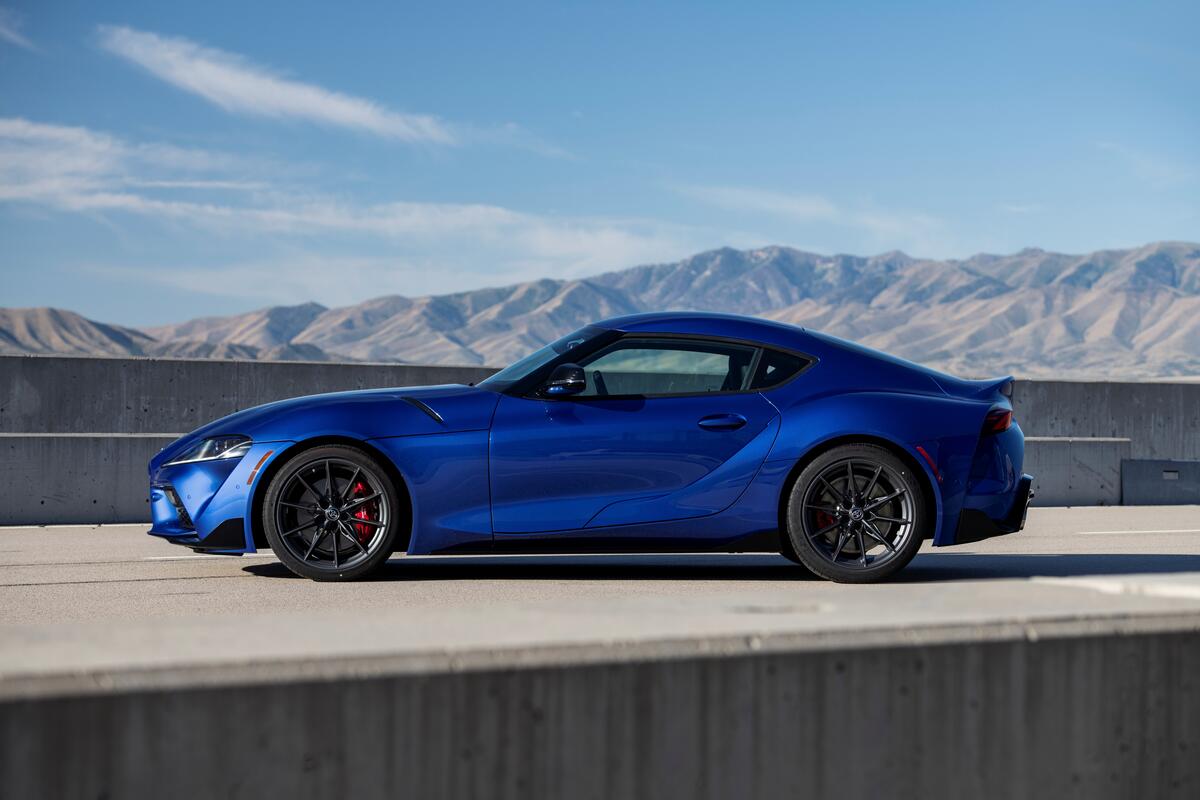
Toyota A90
"Yeah, Yeah. I, I always looked at like, if, you know, and again, this will be a great sound bite for the trolls. But if I covered my time when I was there, I was never really disappointed in myself, you know, Same here. Now, if. If the guy down three days down, you know, hit 60 and you watched and you knew he wasn't doing half the work or like, he was really aggressive with the pen that would crank you up. But, like, I knew what I was working on and I knew what I was doing and I knew what my work stood for. That, you know, if I was there 44 hours and I build 44, I was happy. You know, I didn't look at it and go. Because there's lots of days where I could still get like a 90 minute lunch in, you know what I mean, and still make my eight hours. It wasn't like I had to, you know, skip lunch and, and all that kind of stuff. There was days I did. If there was days that I had a lot of work piled up and I could, you know, I was going to hit 16 that day, I'd skip lunch, no problem. Yeah, that's what coffee's for. But, you know, I never, you know, I wasn't routinely like, oh, my God, I'm gonna make 20, I'm gonna make 20, I'm Gonna make 20, and I'm gonna skip lunch and, and, you know, live on monster or coffee. That wasn't, that wasn't the vibe in the shop. So it wasn't set up like that. There was probably too many, I want to think back then, there was probably too many texts to really have days like that, you know."
The Toyota Supra is a sporty two-door car made for fast driving. People talk about it because it’s designed to feel exciting to drive and it can sound and perform well. It’s often mentioned when someone is sharing a favorite car or a performance story.
The Toyota Supra is a performance sports coupe known for its strong engine and driver-focused feel. It often comes up in conversations about memorable sound, power, and what makes a sports car “special,” which fits the podcast’s mention in passing. It’s also a common target for enthusiasts because it’s closely associated with high-performance tuning and driving experiences.

Jeep Grand Cherokee
"... gallon of coolant to my car yesterday. She was a grand cherokee with a 5.7 hemi. Yeah, she's. I'm like, I'll take..."
The Jeep Grand Cherokee is a larger SUV meant for everyday driving and longer trips. In some versions, it has a bigger V8 engine, like the 5.7-liter “Hemi.” The podcast mentions it because it came up during a maintenance situation involving coolant.
The Jeep Grand Cherokee is a midsize SUV that’s offered with multiple engine options, including a 5.7-liter V8 (the “5.7 Hemi” mentioned). It’s a popular choice because it combines everyday usability with stronger power than many smaller SUVs. It’s discussed in the podcast in the context of real-world ownership and maintenance (like coolant).
5.7 HEMI
"[2682.0s] She's like, hey, I had to add half a gallon of coolant to my car yesterday. She was a grand cherokee with a 5.7 hemi."
“5.7 HEMI” is the engine size and type—it's a V8 in the Jeep. The shop is using it to identify what kind of engine the car has when diagnosing the coolant problem.
“5.7 HEMI” refers to Chrysler’s 5.7-liter HEMI V8 engine family, known for its hemispherical combustion-chamber design. That engine is common in certain Jeep and Dodge models, so cooling-system and leak issues show up frequently in shops.
radiator
"[2697.0s] I look over. It's just the whole left side of the radiator is covered in coolant."
The radiator helps keep the engine from overheating by cooling the coolant. If it’s leaking, the car can lose coolant and run hot.
The radiator is the heat exchanger that removes heat from engine coolant before it returns to the engine. A radiator leak can quickly cause coolant loss, overheating risk, and repeated top-offs.

Jeep Wrangler
"...here were just overwhelmed with the amount of, of Wrangler 4 by E's coming in for this recall. It was all ju..."
The Jeep Wrangler is an off-road SUV that’s made to handle rough roads and trails. The podcast mentions it because there was a recall, meaning the manufacturer asked owners to get a specific fix done. Recalls are important because they can address safety or reliability problems.
The Jeep Wrangler is a rugged off-road SUV built around a body-on-frame design and a reputation for trail capability. The podcast references a recall involving “Wrangler 4 by E’s,” which points to a specific safety/repair campaign affecting certain versions. Wranglers are frequently discussed because their popularity also means recalls and service updates can be common topics for shops.
software updates
"there's some software updates. So I guess they get the, the hybrid batteries for the four by ES from Samsung and they were having issues with some of the cells splitting in the."
Cars have computers that control different systems. This recall is about updating that computer software so it can better detect a battery problem early.
Software updates in modern cars change how control modules behave—often by improving monitoring, diagnostics, or safety logic. Here, the Wrangler 4xe recall uses software updates to make the car’s control systems watch the battery pack and alert the PCM if a cell starts to split.
hybrid batteries
"So I guess they get the, the hybrid batteries for the four by ES from Samsung and they were having issues with some of the cells splitting in the. The battery can become a fire hazard."
On a hybrid, there’s a special battery pack that powers the electric parts of the car. Here they’re talking about a recall because some of the battery cells could fail in a way that becomes unsafe.
In a plug-in hybrid like the Jeep Wrangler 4xe, the hybrid battery pack stores electrical energy for the electric motor and for starting/assist functions. The episode focuses on a recall where certain battery cells could split, increasing the risk of overheating or fire.
Samsung
"So I guess they get the, the hybrid batteries for the four by ES from Samsung and they were having issues with some of the cells splitting in the."
Samsung is mentioned as the company that supplies the battery used in the hybrid Wrangler. The recall is related to problems with those battery cells.
Samsung is referenced as the supplier of the hybrid battery pack used in the Jeep Wrangler 4xe. The episode ties the recall to battery-cell splitting issues associated with those packs.
drive cycle
"and some of them needed a drive cycle. [2865.0s] Depending what level of software the PCM had on it previously."
A drive cycle is a particular kind of driving the car asks for after repairs. It helps the car finish learning/verification steps so the update works correctly.
A drive cycle is a specific sequence of driving conditions used to let the car’s computers complete tests, calibrations, or readiness checks after service. The episode explains that some Wrangler 4xe updates require a drive cycle, and doing it at the wrong time (or skipping the required order) can lead to problems.
PCM
"inform you or you know, the PCM if the, the cell starts to split. Yeah, everyone in my dealership hated doing them and we were getting them on Saturdays because some customers, it's only day that could come in"
The PCM is the car’s main computer that controls the engine and drivetrain. In this recall, it’s involved in the battery monitoring so the car can respond if something goes wrong.
PCM stands for Powertrain Control Module, the car’s main computer for managing engine and drivetrain functions. In the episode, the PCM is part of the recall strategy: it’s updated to receive battery-pack monitoring information and react if the system detects a cell-splitting condition.
service bulletin
"The, the service bulletin for the recall will tell you you have to update the modules in a specific order. Yeah, people weren't doing that, they were having issues with it."
A service bulletin is the manufacturer’s step-by-step instructions for a known problem. Here, it matters because the order of updates affects whether the car works correctly afterward.
A service bulletin is an official instruction from the manufacturer that tells technicians how to diagnose and repair a known issue. In this recall, the bulletin specifies the correct order to update modules, and the episode says skipping that order caused issues like cars not starting afterward.
module order
"The, the service bulletin for the recall will tell you you have to update the modules in a specific order. Yeah, people weren't doing that, they were having issues with it."
Module order means the order you update the car’s computers. This recall needs a specific sequence, and doing it in the wrong order can cause the car to act up afterward.
Module order refers to the required sequence for updating different electronic control units during a recall. The episode emphasizes that the Wrangler 4xe recall requires flashing multiple modules in a specific order, and getting the sequence wrong can cause failures after the update.
software flashes
"It was like an hour and a half worth of software flashes and then if it needed the drive cycle when you were done, it was like an extra 0.3."
A software flash is when a technician updates the car’s computer software. It can take time, and sometimes the car needs extra steps afterward to confirm everything updated correctly.
Software flashes are the process of rewriting firmware/software onto a vehicle’s electronic control modules. The episode describes long recall jobs involving an hour-and-a-half worth of software flashing, plus additional steps like a drive cycle depending on the car’s prior software level.
Stellantis
"Stellanis is, is giving them like lifetime warranties on the hybrid batteries to try and make up for it."
Stellantis is the company that owns Jeep. They’re mentioned because they offer long warranty coverage on the hybrid batteries to help reassure owners after the recall problems.
Stellantis is the automaker group behind Jeep, and it’s referenced here in relation to warranty coverage. The episode says Stellantis offers lifetime warranties on the hybrid batteries to help offset concerns after the recall and battery issues.
thermal meltdown
"You want to just have a thermal meltdown as soon as you get high centered, right? Like that's just what I want."
A thermal meltdown means the car gets dangerously hot and something can fail. The host is joking/warning that certain off-road setups could make overheating more likely.
A thermal meltdown is an extreme overheating scenario where components can fail due to heat buildup. The host uses it as a warning about how certain modifications (like high lift and extra lights) could contribute to overheating risk when the vehicle is stressed off-road.
DTCs
"The Hornets are a nightmare. Dodge Hornets, whether it's the gasser or the, or the hybrid, those are just a nightmare coming. They got 64 DTCs and trying to figure out which ones."
DTCs are the “error codes” the car saves when something goes wrong. If there are a lot of them, it can take time to figure out which issue is actually causing the symptoms.
DTCs (diagnostic trouble codes) are the fault codes a vehicle stores when it detects a problem. When a car has many DTCs, a technician has to determine which ones are root causes versus side effects.
Pro Demand
"And Tesla, when you go to Pro Demand, there's no service information. Right."
ProDemand is a system shops use to look up repair instructions and specs. They’re saying Tesla info wasn’t available there, so they couldn’t do the work in-house.
ProDemand is a dealer/repair information platform used to access service manuals, procedures, and specifications. The speaker’s point is that for Tesla, the platform didn’t provide the service information they needed to complete the job.
wheel nut, torque
"And Tesla, when you go to Pro Demand, there's no service information. Right. [..] there's zero, not even a wheel nut, torque, nothing."
Torque here means how tight a bolt or wheel nut should be. They’re saying the information they needed wasn’t available, so the job had to be sent out.
Torque (in this context) refers to the specified tightening force used when fastening components like wheel nuts. The speaker is saying the shop lacked even basic torque specifications and other service information, which can slow down repairs and increase the risk of improper assembly.
control arms
"they put some bolts in the wrong direction and now it's over there getting some control arms done and they have to cut the bolts off"
Control arms are suspension links that connect the wheel hub to the vehicle’s frame or subframe, helping control wheel motion and alignment. If bolts can’t be removed due to battery packaging, control-arm service can become much more time-consuming and expensive.
lower ball joint
"The hardest part about doing the transmissions on the promasters is probably getting the lower ball joint off and then back in when you're done."
A lower ball joint is a small joint in the suspension that helps the wheel move properly. They’re saying it’s one of the toughest pieces to get off and back on during the repair.
A lower ball joint is a suspension pivot that allows the control arm to move while maintaining steering and alignment geometry. The speaker highlights it as the hardest part of the transmission job on their mentioned vehicles, because it can be difficult to remove and reinstall.
strut lift kit
"They put some spacers on the, on the strut to push down the spindles, this goofy little strut lift kit."
A strut lift kit is an aftermarket setup that raises the car. They’re saying it can make certain suspension angles harder to deal with during repairs.
A strut lift kit is an aftermarket suspension modification that raises ride height by changing strut geometry and/or mounting points. The speaker says this kind of lift makes suspension angles harder to work with, which can complicate tasks like removing ball joints or control-arm hardware.
CV axle
"But it was causing the CV axle to fail over and over again like it would. Just because the angle was just chewing the CV boot."
A CV axle is the part that sends power from the drivetrain to the front wheels while the suspension moves. It has joints that let it bend without losing power.
A CV axle (constant-velocity axle) is the drive shaft that transfers power from the transmission to the wheels while allowing the suspension to move up and down. It uses CV joints so the axle can keep delivering torque even when the wheels are at an angle.
CV boot
"But it was causing the CV axle to fail over and over again like it would. Just because the angle was just chewing the CV boot."
The CV boot is a rubber cover that protects the joint inside the axle. If it rips, the joint doesn’t stay properly lubricated and can wear out quickly.
The CV boot is a protective rubber cover over a CV joint. When it tears or gets chewed up, grease leaks out and dirt gets in, which accelerates CV joint wear and can lead to axle failure.
cooling fan recall
"There's actually a recall on the 20, 20, 25 and maybe 2026 cooling fans also. Yeah, something about the. They put I think a 60amp fuse to it and it was too much. So there, I guess it became a fire hazard with the electrical system."
A cooling fan recall means the car maker is fixing a problem with the engine cooling fans. Here, they’re changing the fuse rating to lower the risk of an electrical fire.
A cooling fan recall is when a manufacturer issues a safety/defect fix for the engine cooling fans. In this case, the speaker describes a fuse-rating change (60A to 40A) to reduce fire-hazard risk from the electrical system.

Challenger Hellcats
"...they kind of all phased out? Pretty much like the Hellcats and the SRT and stuff like that? Yeah, we still g..."
The Challenger is a performance car model, and the podcast is talking about how some of the top versions were discontinued. That means fewer of those specific high-performance versions may be showing up over time. The mention is mainly about what people still have and what mechanics still work on.
The podcast’s “Challenger” reference is about the model’s lineup and how certain performance variants “phased out,” including Hellcat and SRT versions. That kind of discussion usually comes up when talking about what’s still around in the real world and what shops are still seeing come in for service. It’s also a way to connect current work with the car’s performance history.
Dodge Challenger
"...the last cars I ever PDI for Chrysler was an SRT8 challenger with a stick. Nice. I remember it was yellow and ..."
The Dodge Challenger is a fast, performance-focused car with a strong engine. The podcast talks about a high-performance version (SRT8) with a manual transmission, which is a more driver-involved setup. It’s mentioned because it was a memorable car to work on.
The Dodge Challenger is a performance muscle car known for powerful V8 options and a classic, aggressive design. The podcast specifically mentions an SRT8 Challenger with a manual transmission, highlighting it as a notable car the speaker worked on. Challengers often come up in mechanic discussions because their performance parts and drivetrains can be both exciting and demanding to maintain.

Dodge Charger
"...nes in a lot of the rams, but yeah, put it in the charger, which kind of irks me a little bit. Yeah. So."
The Dodge Charger is a car built for performance, with a stronger engine than a typical family sedan. The podcast mentions it because it came up during the speaker’s work and how they talk about cars. It’s basically part of the day-to-day lineup they deal with.
The Dodge Charger is a performance sedan that’s commonly associated with powerful engines and a sporty driving feel. In the podcast, it’s mentioned in the context of how the speaker routes or refers to vehicles during work, including a comment about it “irking” them. That kind of mention usually reflects how frequently the Charger shows up in real shop life and customer conversations.
Hurricane
"Now what is, what's the hurricane? Is that little four cylinder turbo? No, no, that's the, the straight six twin turbo."
Here, “Hurricane” is the name of a specific engine. The host says it’s a turbocharged straight-six (with two turbos), and they’re comparing it to the V8 “Hemi” setup.
In this context, “Hurricane” refers to Chrysler/Stellantis’ turbocharged engine family. The host clarifies it’s a straight-six twin-turbo, and they’re contrasting it with the Hemi/V8 direction for models like the Charger and Ram.

Jeep Wagoneer
"...rk on, but it's. It's a cool motor for, like, the Wagoneers, for, like, the soccer moms that don't want a min..."
The Jeep Wagoneer is a big SUV designed for comfort and space. The podcast mentions it because it has a strong engine option and is meant for families who want an SUV instead of a minivan. It’s basically a roomy vehicle with more power than a basic SUV.
The Jeep Wagoneer is a larger, more upscale SUV aimed at families that want comfort and space, not just off-road ability. The podcast mentions it in the context of a “cool motor” for people who want a roomy SUV without wanting a minivan. It comes up because it blends everyday practicality with a stronger engine choice.
cam
"I've done lifters a couple times. I did lifters and a cam for the first time a couple weeks ago."
The camshaft is the engine part that controls when the valves open and close. If you replace a cam, you have to get the timing right so the engine runs correctly.
A camshaft (often shortened to “cam”) controls valve timing by using lobes to push on valve-actuating components. Changing a cam is a major mechanical job because it affects how the engine breathes across the RPM range.
lifters
"Yeah, I've done. I've done lifters a couple times. I did lifters and a cam for the first time a couple weeks ago."
Lifters are parts inside the engine that help the camshaft open and close the valves. If lifters aren’t working right, the engine can run rough or make noise.
In an engine, lifters are components that translate camshaft motion into valve movement. They help open and close the engine’s valves, so problems with lifters can affect engine noise, power, and valve timing.
head gaskets
"Yeah, I just had issues timing a wrangler with a 36 a few weeks ago. That was totally my own fault. I was doing head gaskets on it."
The head gasket is a seal between the engine block and the cylinder head. If it fails, fluids can mix or leak, and the engine may overheat or run poorly.
A head gasket seals the engine’s cylinder head to the engine block, keeping combustion pressure and coolant/oil separated. When it fails, you can get overheating, coolant loss, misfires, or pressure leaks—so replacement requires careful reassembly and correct timing.
timing
"I was doing head gaskets on it... timing it, and it was like my... timing codes like crap."
Timing is how the engine’s moving parts are lined up so valves open at the right time. If it’s off, the engine can run wrong and throw warning codes.
Engine timing refers to synchronizing the camshaft and crankshaft so valves open at the correct moments relative to piston position. If timing is off during a repair, the engine can throw timing-related trouble codes and may not run correctly.
top dead center
"I never, never double checked that it was in top dead center before I timed it. When I tore it down, it was in top dead center."
Top dead center (TDC) is when a piston is at the very top of its travel. Mechanics often use TDC as a reference point to make sure timing is set correctly.
Top dead center (TDC) is the crankshaft position where a piston is at its highest point in the cylinder. Many timing procedures require setting the engine at TDC (often with specific cylinder/mark alignment) before installing or verifying timing components.
Pentastar
"Well, I think, I don't know with the Pentastar gets a bad rap because like everybody follows that oil life monitor and I don't."
Pentastar is the name for a Chrysler V6 engine family. People talk about it a lot because it has certain maintenance habits and common issues that owners should know about.
Pentastar is Chrysler/Stellantis’ family of V6 engines used in many models, including the Jeep Wrangler and Dodge/Chrysler vehicles mentioned here. It’s often discussed in enthusiast circles for maintenance intervals and common wear items like lifters.
oil life monitor
"...with the Pentastar gets a bad rap because like everybody follows that oil life monitor and I don't."
The oil life monitor is the car’s way of telling you when it thinks the oil is worn out. Some people trust it, while others change oil on a set schedule just to be safe.
An oil life monitor is the vehicle’s system that estimates when engine oil should be changed based on driving conditions and engine operating parameters. Enthusiasts sometimes debate it because some prefer fixed intervals to reduce risk.
vacuum pump
"I got the code for the vacuum pump and that's it. Like, that's the first code that the thing is thrown at me. The vacuum pump that's up at the front."
A vacuum pump helps create suction for certain engine and emissions systems. If the car throws a code for it, that usually means the pump isn’t making the vacuum the car expects.
A vacuum pump creates vacuum pressure used by various engine systems (often including brake assist and emissions-related controls, depending on the vehicle). When the check engine system reports a vacuum pump code, it can indicate reduced vacuum and related drivability or emissions issues.

Ford F150
"Yeah, it's. I drive a 2014 Ford F150 with a 5.0 liter, and like you, I change my oil e..."
The Ford F-150 is a large pickup truck used for everyday driving and work. The podcast talks about a 2014 model with a 5.0-liter engine and focuses on simple maintenance like changing the oil. Regular oil changes help the engine last longer.
The Ford F-150 is a full-size pickup truck and one of the most common vehicles on the road, which is why it’s frequently discussed in mechanic settings. The podcast specifically references a 2014 F-150 with a 5.0-liter engine and mentions routine oil changes—exactly the kind of maintenance that matters for longevity. It’s brought up as an example of ownership habits and basic upkeep.
5W30
"I run 5W30 in it instead of the 520 that it calls for."
5W-30 is the oil “weight” rating. It tells you how the oil flows when it’s cold and how it behaves when the engine is hot.
5W-30 is an engine oil viscosity grade. The “W” indicates cold-weather flow behavior, and the number indicates how thick the oil is at operating temperature; using the wrong viscosity can affect lubrication and noise.
oil viscosity
"...they look at me like I'm crazy when they look at my oil filter... I'm like, it runs quieter and smoother when I put this stuff in. ...of course you're gonna have issues with lifters and cams..."
Oil viscosity is how thick the oil is. The right viscosity helps the engine stay properly lubricated, especially when it’s cold and when it’s hot.
Oil viscosity is how thick or thin an oil is, typically expressed as grades like 5W-30 or 0W-20. Viscosity affects lubrication film strength, especially during cold starts and at operating temperature, which is why manufacturers specify exact grades.
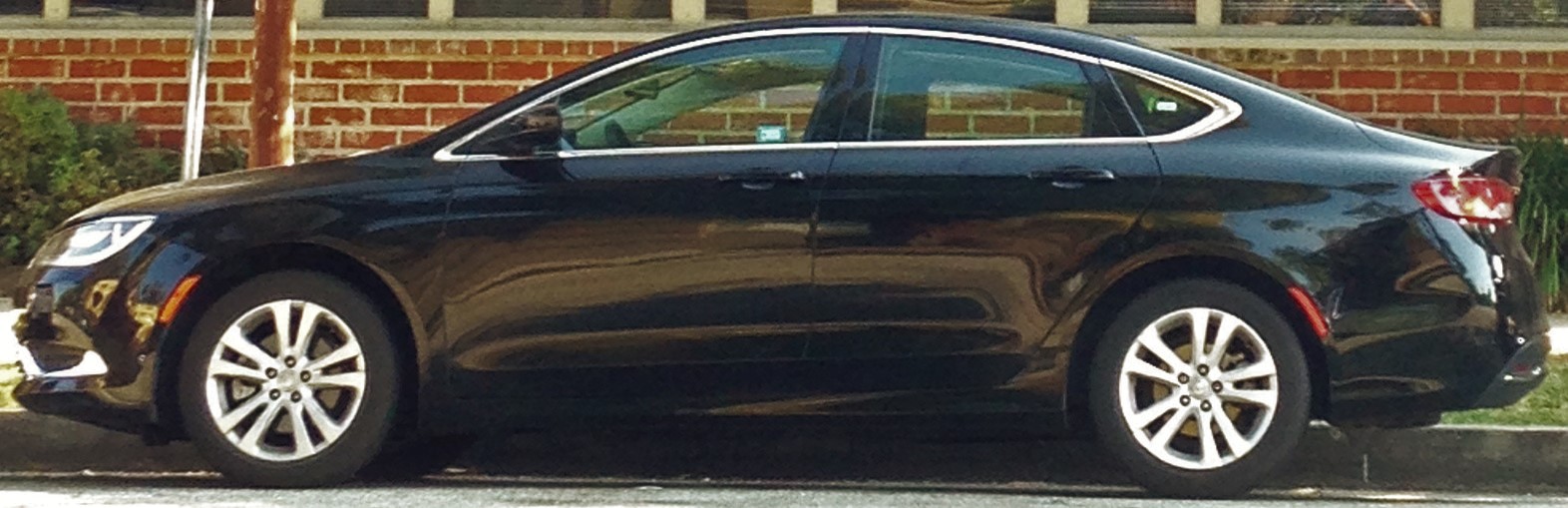
Chrysler 200
"...rentice of mine and he's like, you know, he's got 200 and some thousand on his caravan with a three, si..."
The Chrysler 200 is a regular passenger car (a sedan) meant for everyday driving. The podcast mentions it because someone had one with very high mileage and was still using it. That’s usually brought up to talk about how long a car can last with maintenance.
The Chrysler 200 is a midsize sedan that was sold with different engine choices and is often discussed as a used-car ownership example. In the podcast, it’s referenced in the context of high mileage (200+ thousand) and another vehicle’s engine size, suggesting the speaker is talking about longevity and real-world durability. That kind of mention is typical when mechanics compare what keeps running versus what doesn’t.
5W20
"...look at the wranglers that are running 00:20. Like, it wouldn't matter to me if I bought one tomorrow. I still wouldn't be running that crap in it."
5W-20 is another oil “weight” rating. It’s thinner than some other grades, and the car may specify it for fuel-economy—using the wrong one can affect how well the engine is lubricated.
5W-20 is an engine oil viscosity grade commonly specified for fuel-economy reasons. Using 5W-20 when a manufacturer calls for a different viscosity can change oil film thickness and may influence wear/noise depending on engine design and operating conditions.
0W20
"...my buddy was saying. He's like, they haven't changed one thing inside that engine that would have. Hemi's running 0:20 now..."
0W-20 is a thinner oil grade meant to flow very easily when it’s cold. The speaker is saying that using it in an engine that should run a thicker oil could contribute to wear issues.
0W-20 is an engine oil viscosity grade designed for very easy cold starts (“0W” cold-flow rating). In this segment, the speaker argues that running 0W-20 in an engine that should use a thicker grade can contribute to lifter/cam wear concerns over time.

Jeep Gladiator
"...uck, I'll probably look into, like, a wrangler or gladiator or something, because I like working on the three..."
The Jeep Gladiator is a truck that’s built for off-road driving. It has a cargo bed like a pickup, but it’s designed with the same kind of rugged capability people associate with the Wrangler. The podcast mentions it because the speaker is considering it for that mix of features.
The Jeep Gladiator is a pickup truck version of the Wrangler platform, combining off-road capability with an open cargo bed. The podcast mentions it as a possibility the speaker might look into, alongside a Wrangler, because it offers similar ruggedness with a more truck-like layout. It’s often discussed by people who want off-road ability but also want the practicality of a bed.
express team
"...There's three service advisors, three different teams, and then the express team."
An “express team” is a group in a shop that handles faster, simpler jobs so they can get customers in and out quickly. The speaker is explaining how their dealership is organized.
An “express team” is a shop workflow group focused on quicker, simpler services (often things like basic maintenance or fast-turn repairs) to keep throughput high. The speaker contrasts it with other teams in their dealership’s structure.
warranty
"...Even if I'm losing my ass on this job or, you know, I'm working on something warranty, I'm trying to get it done quickly."
In automotive service, a warranty is manufacturer or dealer coverage that pays for repairs under specific conditions. The speaker mentions working on “something warranty,” meaning warranty-approved jobs that still need timely completion.
tire changeover
"...it was a big thing for me. Like tire season. We'd be lined up, right? So 8 o' clock in the morning, you'd have six customers waiting for tire changeover."
Tire changeover is when you swap tires for the season. The speaker is using it as an example of how the shop worked together during the busy tire season.
Tire changeover is the seasonal swap of tires (for example, moving between winter and summer tires) and the associated mounting and balancing work. The speaker uses it to illustrate how their shop’s teamwork handled a predictable rush.
balance them
"...Somebody would balance them. Right. It didn't matter. And you walk them over..."
“Balance them” means adjusting the wheel and tire so it spins smoothly without shaking. The speaker is describing how coworkers help each other during tire season.
“Balance them” refers to wheel/tire balancing, where weights are added to correct uneven mass distribution so the tire spins smoothly. The speaker describes tire changeover as a team process where someone would handle balancing after swapping tires.
Mitchell time
"quite a few states that are starting to mandate that the, the manufacturers pay all data time or, or Mitchell time. [4829.0s] Well, we know the car is not going to be rusted when there's only 2,000 miles on it."
Mitchell time is a published estimate of how long a repair should take. It’s used to decide what the shop gets paid for labor.
Mitchell time refers to labor-time estimates from Mitchell, a widely used automotive estimating system. Shops and technicians use these published times to determine how long repairs should take for billing and warranty reimbursement.
All Data time
"quite a few states that are starting to mandate that the, the manufacturers pay all data time or, or Mitchell time. [4829.0s] Well, we know the car is not going to be rusted when there's only 2,000 miles on it."
AllData time is a reference for how long repairs are supposed to take. The discussion is about whether warranty reimbursement should match those published time estimates.
All Data time is labor-time guidance from AllData, another common automotive repair information and estimating source. The speaker’s point is that some states require manufacturers to reimburse based on these time guides rather than lower warranty times.
labor op
"He's getting the labor op. He's like, okay, that's an additional hour. He's like, wait, wait. [4885.0s] It was a powertrain repair, so it's only 0.9."
A labor op is basically the repair code that tells the shop how much time (and pay) the job is allowed to take. In the story, the code changes the pay even though the process is similar.
A labor op (labor operation) is the specific billed repair code a shop uses to claim a job and its allotted time. The speaker highlights how the same underlying work can be assigned different labor-op times depending on what repair is being performed.
evacuate the AC system and recharge it
"I saw Something interesting. I forget what I was doing. It was some warranty job and I had to. I had to evacuate the AC system and recharge it. [4867.0s] So I was talking to my service advisor after the job was done, telling him I had to do that."
This is the AC service where the system is cleared out and then refilled with refrigerant. The point is that the same basic AC work can be billed differently depending on the overall repair.
Evacuating and recharging the AC system are service steps used to remove air and moisture from the refrigerant circuit and then refill it with the correct refrigerant charge. The speaker uses this as an example of how the billed labor time can change based on what repair category the job is tied to.
dash
"they were not actually changing the whole part of the heater core. They were leaving the tubes in the firewall and they were uncrimping the tubes from the heater core and sliding the heater core off the tubes. [4949.0s] And then they were re crimping the new core onto the tubes and it saved having to take a lot of the dash apart"
“Dash” here means the dashboard. Some repairs require taking it apart, which takes time and makes the job more expensive.
In automotive repair talk, “dash” means the dashboard assembly. Many HVAC repairs—especially heater core replacement—can require removing parts of the dash, which is why labor time and pay become contentious.
time studies
"Which means go to your OE and do your time studies and say, no, we need more time for this. [5025.0s] Yeah."
Time studies are tests that measure how long a repair really takes. Here they’re being suggested so warranty pay matches reality and technicians can do the job properly.
Time studies are structured measurements of how long a repair procedure actually takes under defined conditions. In this episode, they’re proposed as the basis for adjusting warranty labor times so technicians aren’t forced into shortcuts.
OE
"And don't sit there and go, I can't believe it. Like be part of the solution. Which means go to your OE and do your time studies and say, no, we need more time for this. [5025.0s] Yeah."
OE means the original car maker. The idea is to ask the manufacturer to review how long the job really takes so shops get paid enough to do it the right way.
OE means Original Equipment, referring to the vehicle manufacturer’s engineering and service standards. The speaker suggests going to the OE to perform time studies and update labor allowances so repairs can be done correctly without shortcuts.
diagnostic technicians
"Pay the difference. You know, because that legislation of saying, you know, the transmission job under all Data says pay 12 hours warranty pay 6. And now legislation comes through and says that's illegal. [5035.0s] Pay the difference... Here's the reality. The diag technicians and I harp on this all the time."
Diagnostic technicians are the people who figure out what’s wrong first, not just replace parts. The speaker is saying their work matters when discussing warranty pay rules.
Diagnostic technicians focus on troubleshooting—figuring out what’s causing a fault—before repairs are performed. The speaker tees up that diag techs are central to how warranty and labor-time rules affect shop behavior.
Request an Explanation
Heard something you'd like explained? We'll add it to this episode.
Sign in to request explanations for terms you heard.
Want to learn more?
Browse our glossary for plain-English explanations of automotive terms, jargon, and concepts.
Help improve this episode
See something that's not quite right? Our annotations are AI-generated and can sometimes miss the mark. Click the flag icon on any annotation to suggest a correction.