
The Biggest Mistake Shop Owners Make with Josh Coomes and Brian Ramsburg
About this episode
Shop owners and techs break down the biggest mistakes that turn a repair business into a job-for-the-owner: “They own a job and not a shop.” The conversation centers on service-writer communication, incentive-driven spiffs that can lead to overcharging, and the need for evidence-based diagnosis instead of guessing parts. They also dig into workflow realities—diagnostic uncertainty, scheduling backlogs, pay structures, and how small delays or scope limits can snowball into liability and reputation damage.
Like the show? Show your support by using our sponsors.
Need to update your shop systems and software? Try Tekmetric HERE
Launch your tool game to the next level with Launch Tech USA! HERE
Recorded at Tools in Hershey, Pennsylvania, Jeff sits down with Josh Coomes of Auto Shop Therapy and technician Brian Ramsburg to discuss the realities of running a modern repair shop. Brian reflects on more than 18 years in the trade, the challenges of being a solo technician, and why he enjoys variety in his work, while Josh shares his customer-first approach, leadership lessons, and the importance of protecting a shop's reputation. Together, they explore diagnostics, pay plans, hiring, training, and building a culture that values quality over speed.
Timestamps:
00:00 Listen or Become a Liability
00:35 Tools in Hershey Introduction
02:37 Brian's Career Journey
04:18 Owning a Job vs. Owning a Shop
07:42 Customer Empathy and Service Standards
09:21 Turning Away Older Vehicles
14:48 Favorite Types of Repairs
18:02 Why They Avoid European Vehicles
19:40 Shop Scheduling and Profitability
21:56 Technician vs. Owner Priorities
25:38 Working Relationship Challenges
28:28 Hiring and Leadership Lessons
36:20 Mentoring and a Proof-Based Culture
40:41 Pay Plans and Team Morale
42:03 The Starter Diagnosis Debate
45:41 The Stress of Being the Only Technician
48:50 Quality Control vs. Book Time
52:40 Shop Standards and Fair Productivity
55:27 Workflow and Imperfect Data
58:51 Flat Rate Pressure Stories
01:05:10 Hiring Through Working Interviews
01:10:23 Charging Properly to Grow
01:12:44 Final Advice and Closing
Follow/Subscribe to the show on social media!
TikTok - https://www.tiktok.com/@jeffcompton7
YouTube - https://www.youtube.com/@TheJadedMechanic
Facebook - https://www.facebook.com/profile.php?id=100091347564232
service writers
"Because like it's, it's as hard a job as, as the technician role, I think, 100%. Um, service writers are pivotal for actually success in this, and I keep, sometimes I beat on them really hard."
A service writer is the person at the shop counter who talks to you about the problem, writes up the repair, and coordinates between you and the mechanic. If they do their job well, the shop runs smoothly and customers approve the right repairs.
Service writers (often called service advisors) are the front-desk staff who interview the customer, write up the repair order, and communicate with the technician and customer. In a shop, they strongly influence profitability because they control what gets authorized and how clearly the issue and estimate are explained.
active listening
"Well, um, I guess the best way to put it is they were really good with machines and mechanical apparatus. Uh, their active listening wasn't that great."
Active listening means paying close attention when someone is talking, asking questions to make sure you understand, and not zoning out. In car repair, it helps the shop figure out what’s really going on with the car.
Active listening is a communication skill where someone fully focuses on what the other person is saying, asks clarifying questions, and confirms they understood the details. In a repair-shop context, it helps service writers capture the customer’s symptoms accurately so technicians can diagnose correctly.
spiffs
"that weren't needed, overcharging on time on purpose, like, 'cause they get, you know, spiffs on everything, right?"
Spiffs are bonuses that a worker gets when they sell add-ons or certain services. If someone’s paid that way, they might push extra work even when it’s not really needed.
Spiffs are sales incentives—extra payments or bonuses tied to selling certain products or services. In automotive service, spiffs can encourage upselling (adding work that may not be necessary) and can distort what customers are told to approve.
service-advisor incentives and upselling
"that weren't needed, overcharging on time on purpose, like, 'cause they get, you know, spiffs on everything, right? And for me, the driving force was customer experience and fixing the cars right."
They talk about how some shop staff can get paid in a way that encourages selling extra stuff. The point is to compare that with doing the right repairs and treating customers fairly.
The hosts discuss how service advisors can be incentivized to sell unnecessary work, including overcharging and pushing add-ons. They contrast that with a customer-first approach focused on fixing the car correctly and improving the customer experience.
project car
"Let's throw something like a, your, your BMW that was on the hoist, the, your project car."
A “project car” is a vehicle being worked on as a hobby or longer-term build, often with parts missing, repairs in progress, or non-standard setups. In the discussion, it’s contrasted with a customer’s car that the shop might not want to take on.

1997 Chevy truck
"Yeah. And it's like, and I had that conversation. Somebody wanted to do brakes on a '97 Chevy truck."
They mention a 1997 Chevy truck and say someone wanted brake work done on it. They’re using it to explain why a shop might not want to take certain older cars, even for something that seems simple.
The speaker cites a specific example: a 1997 Chevy truck with a brake job request. The “1997” matters because older vehicles often come with different parts, procedures, and shop readiness than newer cars.
brakes
"Somebody wanted to do brakes on a '97 Chevy truck. ...No, I don't wanna bring that in the shop."
They’re talking about brake work—repairs or service to help the car stop safely. Even though it’s a common job, the shop might not want to take it if the car doesn’t match their preferences.
“Brakes” here refers to brake service work (the speaker specifically mentions doing brakes on a 1997 Chevy truck). Brake jobs are common, but the point is that shop owners may still decline certain cars if they don’t want that type of work in their workflow.
A-OK Auto Repair
"It's like, no, my mechanic is A-OK Auto Repair."
A-OK Auto Repair is the name of a local repair shop the speaker trusts. They’re saying it’s better to stick with a mechanic you have a relationship with.
A-OK Auto Repair is the specific shop name the speaker uses as an example of a trusted mechanic. The discussion emphasizes building an ongoing relationship with a particular repair shop rather than constantly switching referrals.
check engine light
"But then if you turned around like I was in his shoes working for you and you brought in a, a '97 for some weird misfire or check engine light that won't go away after it's been..."
The check engine light is a warning on the dashboard. It means the car’s computer noticed something wrong and needs to be checked.
The check engine light is the dashboard warning that the vehicle’s engine management system has detected a fault. Shops use it as a starting point for diagnostics, but the underlying cause can range from minor to serious.
misfire
"But then if you turned around like I was in his shoes working for you and you brought in a, a '97 for some weird misfire or check engine light that won't go away after it's been..."
A misfire is when the engine doesn’t burn fuel correctly in one or more cylinders. It can make the car run rough and may turn on warning lights.
A misfire is when one or more engine cylinders fail to ignite properly during combustion. It can trigger drivability issues and often sets diagnostic trouble codes that lead to further troubleshooting.
evaporator
"He was, uh, expecting it to be a bad evaporator 'cause another shop told him that, and it's like, where's the evidence that the evaporator's bad?"
The evaporator is a key part of the car’s air-conditioning system. It helps cool the air inside the cabin, and you shouldn’t replace it without confirming it’s actually the problem.
In an automotive A/C system, the evaporator is the heat-exchanger inside the cabin that absorbs heat from the air. If it’s leaking or failing, the A/C won’t cool properly, but the speaker emphasizes that you need evidence before replacing it.
high tide line
"The only thing we found was a leak in the high side line. Right."
The high-side line is one of the A/C hoses that carries high-pressure refrigerant. If it leaks, the A/C can lose charge and start acting up, like not cooling or cycling on and off.
The high-side line is the A/C refrigerant line that carries high-pressure refrigerant from the compressor/discharge side toward the condenser. A leak on the high side can quickly reduce system pressure and cause poor cooling or compressor cycling issues.
short cycling
"Now, when we got it done, it's short cycling. Yeah. It's got the right amount of refrigerant in it."
Short cycling is when the A/C compressor keeps starting and stopping quickly. That usually means something is wrong, so the system can’t cool the cabin consistently.
Short cycling in an A/C system means the compressor turns on and off repeatedly instead of running steadily. It often points to an underlying control or refrigerant/pressure issue, and it can prevent the system from cooling properly.
superheat
"and it's like, so now I have to get into an AC, a real AC problem that's short cycling and, you know, like I'm trying to up, you know, my game with superheat and- Yeah"
Superheat is a measurement related to how hot the refrigerant is compared to when it would boil at that pressure. A/C techs use it to figure out if the system is getting the right refrigerant flow.
Superheat is the temperature rise of refrigerant vapor above its boiling point at a given pressure. In A/C diagnostics, technicians use superheat to judge whether the system’s refrigerant flow and heat transfer are correct.
subcooling
"subcooling and all these other things, like, you know, 'cause now we're trying to be the best, you know?'"
Subcooling is another refrigerant temperature measurement that helps A/C technicians check whether the system has the right charge. It’s basically telling you how “cool” the liquid refrigerant is compared to what it should be.
Subcooling is how much cooler the liquid refrigerant is than its condensation temperature at a given pressure. It’s used alongside superheat to evaluate whether the A/C system has the correct refrigerant charge and heat rejection performance.
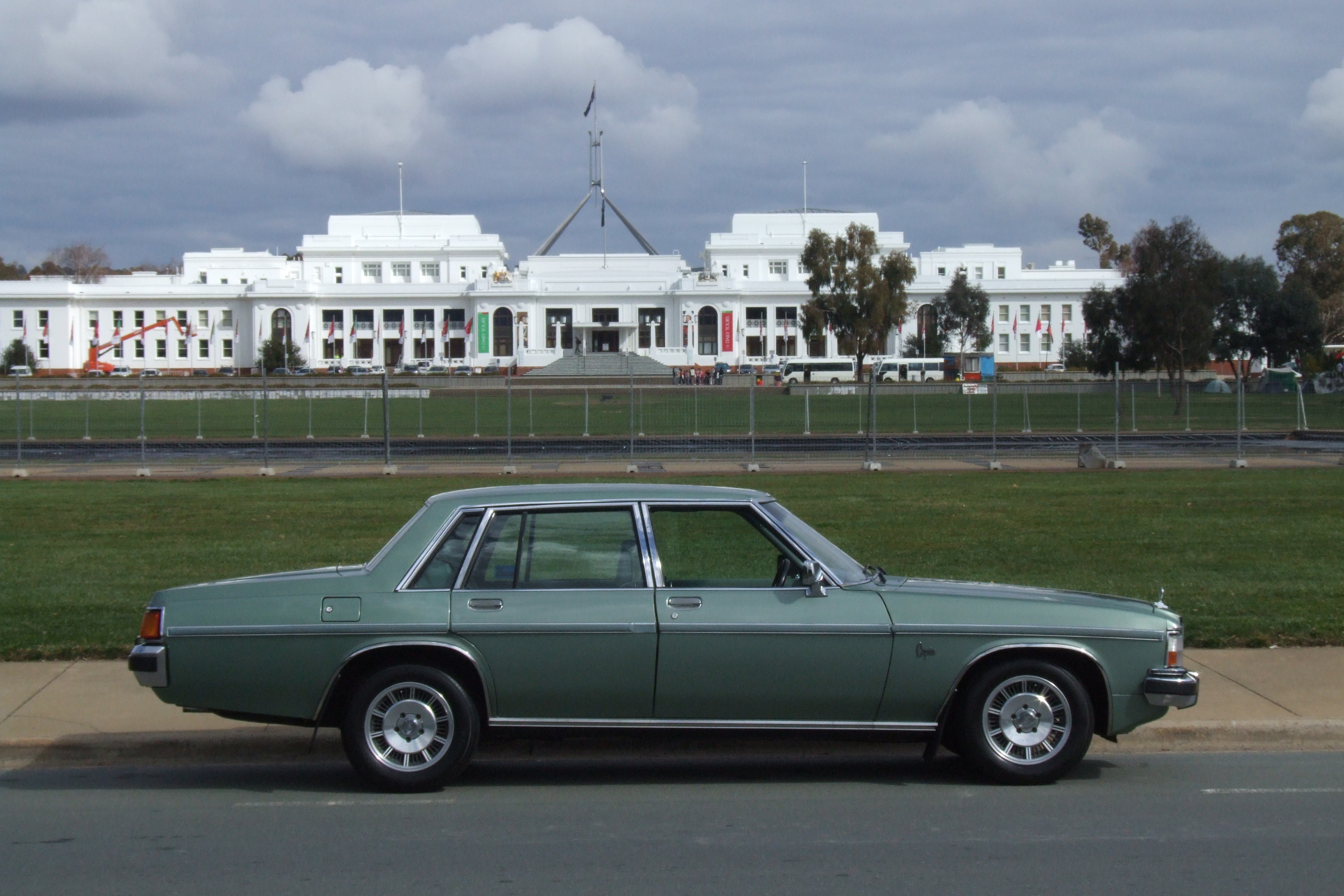
Holden Caprice
"...before where we had an AC problem on an old Chevy Caprice. subcooling and all these other things, like, you..."
The Holden Caprice is a large, comfortable sedan made for everyday driving. Like many older cars, it can develop problems with the air conditioning over time. If the AC isn’t cooling properly, it usually needs diagnosis of parts like the compressor, refrigerant level, or related sensors.
The Holden Caprice is a full-size, family-oriented sedan from Holden, known for comfort and traditional V8/large-car driving feel depending on the model year. It can come up in repair discussions because older large sedans often develop age-related issues, including air-conditioning problems. In the podcast context, it’s referenced alongside an AC troubleshooting story, which is common for cars that have been in service for years.

Chevy Caprice
"Yeah. Now, we did it before where we had an AC problem on an old Chevy Caprice."
They’re talking about an older Chevrolet Caprice they worked on before. It’s just an example of a past A/C problem that taught them what to expect.
The Chevrolet Caprice is a full-size American sedan that’s often used as a real-world example in shop stories because it’s common, mechanically straightforward, and can still be kept running for years. Here it’s referenced as an earlier A/C job that led to similar diagnostic “can of worms.”
PCM
"and the driver inside the PCM was bad. It wasn't turning the compressor on."
PCM means the car’s main computer for the engine/drivetrain. They’re saying the A/C issue was tied to the computer not turning the compressor on.
PCM stands for Powertrain Control Module, the computer that manages engine and drivetrain functions. In this A/C story, the PCM is implicated because it controls whether the compressor is commanded to run.
compressor
"It wasn't turning the compressor on."
The A/C compressor is the part that “moves” the refrigerant through the air-conditioning system. If it doesn’t run when it should, the A/C won’t cool properly.
In an A/C system, the compressor is the pump that pressurizes the refrigerant and circulates it through the system. If it isn’t being commanded to run (or can’t run), the system can’t cool and may cycle oddly.
ABS light
"Two months ago, intermittently would throw a, an ABS and a traction control light on the dash, and you cycle the key and it would go away. ... Now it's got a code in it. So when I get done recording today, I'll go out and, uh, Brax and I are gonna film a video showing the new launch tool, and at least finally know what code's in my Jeep for an ABS."
The ABS light is a warning on your dashboard for the car’s anti-lock brakes. If it comes on, the anti-lock feature might not work correctly, especially during hard stops.
ABS light refers to the dashboard warning for the anti-lock braking system. When it illuminates, it usually means the ABS has detected a fault and may not be able to prevent wheel lock during hard braking.
traction control light
"Two months ago, intermittently would throw a, an ABS and a traction control light on the dash, and you cycle the key and it would go away. ... there was no code in there for ABS or, or traction control."
The traction control light warns that the traction control system has detected a problem. Traction control helps reduce wheel spin by adjusting engine power and/or braking when the car senses slipping.
diagnostic trouble code
"And I never scanned it until last week, and when I scanned it looking at the Jeep just to set up my new launch tool, um, there was no code in there for ABS or, or traction control. ... Now it's got a code in it."
A diagnostic trouble code is a number your car stores when it detects a problem. A scan tool reads those codes so you can figure out what’s wrong instead of guessing.
A diagnostic trouble code (DTC) is a stored fault identifier recorded by a vehicle’s onboard computer. Scanning for DTCs helps pinpoint what system is malfunctioning—like ABS or traction control—rather than guessing.

Volkswagen
"So I do have a European background, but I left Volkswagen in '07, right?"
Volkswagen is a European car brand. Here it’s mentioned because the speaker’s experience with European cars affects how they approach diagnostics and repairs.
Volkswagen is a major European automaker, and the speaker references leaving Volkswagen in 2007. In this episode’s shop context, “European” brands like Volkswagen are often associated with specific diagnostic workflows and tooling.
VCDS
"Like, I can still get into my ALL-Tell and, or my VCDS- Right ... and I can still go into measuring value blocks that are drilled into my brain"
VCDS is a computer program used to diagnose certain European cars, especially Volkswagen Group models. It helps a mechanic read error codes and check what the car is doing in real time.
VCDS (Volkswagen Group Diagnostic System) is a diagnostic software tool used primarily on Volkswagen Group cars. It lets technicians read fault codes, view live sensor data, and run certain guided tests and adaptations.
readiness monitors
"and I can pull those same measured value blocks up, know that I can force readiness monitors and that kind of stuff."
Readiness monitors are the car’s own emissions self-checks. If they’re not “ready,” an inspection may fail even if the problem seems fixed.
Readiness monitors are part of a vehicle’s emissions diagnostics. They indicate whether the car has completed its self-tests for emissions-related systems, which matters for inspection and for confirming repairs fixed the underlying issue.
value blocks
"measuring value blocks that are drilled into my brain, and I can pull those same measured value blocks up"
Value blocks are organized screens of live data from the car’s sensors. A mechanic uses them to see what’s happening inside the engine and emissions systems while diagnosing a problem.
Value blocks are groups of live diagnostic data channels shown by Volkswagen Group diagnostic tools. Technicians use them to observe sensor readings and system status in a structured way while troubleshooting.
diagnostic (diag)
"we charge for, for diag for sure, and what we normally do is, like, we'll get a baseline, and then that'll get us into, like, further testing- ... we have an elevated labor rate for diag"
In this context, “diag” refers to paid diagnostic work: using scan tools and testing to identify the root cause of a fault. The hosts describe how multiple complex diagnostics can overlap and slow shop throughput even when the work is billed.
gross profit per unit
"tires are your highest gross profit per hour job that you are doing in your shop- Yeah"
This is a way to measure how much profit the shop makes for each hour of work. It helps decide which jobs are worth prioritizing.
Gross profit per hour is a shop-efficiency metric that measures how much money a job earns before expenses, normalized by labor time. It’s used to compare job types (like tires and brakes) based on how profitable they are for the technician’s time.
PO420 fault
"He just automatically assumed a PO420, 430 fault, it needs a cat."
PO420 is a computer error code that usually points to a problem with how well the catalytic converter is working. But the converter isn’t always the real cause, so you still have to check other things.
PO420 is an OBD-II diagnostic trouble code commonly associated with catalyst efficiency problems. It often leads shops to suspect the catalytic converter, but the underlying cause can be something else (like exhaust leaks, sensor issues, or misfires) that still needs testing.
catalytic converter
"he didn't know that you could test for a catalytic converter. He just automatically assumed a PO420, 430 fault, it needs a cat."
The catalytic converter is an emissions part in the exhaust. It helps clean up the car’s exhaust gases, and when it’s not working right it can cause warning lights—though the problem might not always be the converter itself.
A catalytic converter is an emissions-control component that helps convert harmful exhaust gases into less harmful ones. When it fails or is clogged, it can trigger oxygen-sensor-related fault codes, but those codes don’t always mean the converter itself is bad.
PO430 fault
"He just automatically assumed a PO420, 430 fault, it needs a cat."
PO430 is a computer error code that usually suggests the catalytic converter isn’t doing its job. It doesn’t automatically mean the converter must be replaced—diagnostics are still needed.
PO430 is another OBD-II code related to catalyst efficiency, typically for the bank 2 catalyst (exact meaning can vary by vehicle). Like PO420, it’s frequently misinterpreted as “the cat is bad” without confirming with proper diagnostics.
fault code
"He just automatically assumed a PO420, 430 fault, it needs a cat."
A fault code is an error message stored in the car’s computer. It tells the shop what system might be having trouble, but you still need to confirm the exact cause.
A fault code is an OBD-II diagnostic trouble code stored by the vehicle’s computer when it detects a problem. Codes help narrow down the cause, but they still require interpretation and follow-up testing to avoid replacing the wrong part.
scan tool
"It only takes a few minutes with a scan tool, or maybe you might have to smoke an exhaust, right?"
A scan tool is a gadget that connects to the car’s computer. It can pull up error codes so the shop knows what’s actually wrong instead of guessing.
A scan tool is a diagnostic device that plugs into a car’s onboard computer to read stored trouble codes and live sensor data. It’s commonly used to pinpoint why a warning light is on—often faster than guessing by symptoms alone.
smoke an exhaust
"It only takes a few minutes with a scan tool, or maybe you might have to smoke an exhaust, right?"
This means using smoke to find leaks in the exhaust. If exhaust is leaking, it can confuse the car’s computer and lead to wrong conclusions.
“Smoke an exhaust” refers to using a smoke machine to introduce visible smoke into the exhaust system to locate leaks. It’s a practical diagnostic step because exhaust leaks can cause misleading emissions codes and sensor readings.
broken hose
"But we also know that we're always one day away, one broken hose from that car is now in bay for two, three days."
A hose is a flexible tube that carries fluids or air. If it breaks, the car can lose coolant or pressure, and the repair can take longer than expected.
A broken hose is a failure in a rubber/metal coolant or vacuum line that can cause leaks, overheating, or loss of system pressure. In a shop context, even a small hose failure can immobilize the car until the correct part is sourced and installed.

Chevrolet Silverado
"Brian M- Pawlik just shared with me yesterday a situation that they had in their shop, and the customer came in with a Silverado transmission problem, right?"
The Chevrolet Silverado is a popular pickup truck. If the transmission has a problem, it’s a major repair, and the shop has to stand behind the work—especially if the customer is difficult.
The Chevrolet Silverado is a full-size pickup that commonly uses conventional automatic transmissions, making transmission diagnostics and repairs a frequent shop job. The hosts use a “Silverado transmission problem” as an example of a high-volume repair that can still create warranty and liability headaches if the customer’s situation is messy.
transmission
"Now, they have a strict policy. Like, they, they diagnose the transmission issue, um- They charge for the diagnosis, and then they sublet the transmission."
The transmission is what helps the car shift gears. If it’s not working, the car can’t drive properly, and the repair is usually expensive and complicated.
A transmission is the drivetrain component that changes gear ratios so the engine can deliver the right amount of torque for different speeds. When a shop “diagnoses the transmission issue” and then sublets the repair, it’s about responsibility for a complex, expensive system.
camshaft goes flat
"Well, the guy has the truck in no time. So after he gets the tranny done, just like a Silverado would, camshaft goes flat, and then this guy proceeds to go around their little neighborhood telling all the other shops, "Don't take anything to that shop. They screwed me."
“Camshaft goes flat” is a shorthand for camshaft wear or damage that ruins the cam profile (the lobes that actuate valves). In practical terms, it can cause poor engine timing/valvetrain operation and may appear soon after another major repair, creating blame and warranty disputes.

Master Tech
"...e're in agreeance at this point that a A level, a master tech, they're not really looking for work. If they are..."
In the quote you provided, “Master” sounds like it’s talking about a very experienced mechanic, not a specific car. Without the actual car name, there’s no way to explain what that vehicle is. If you tell me the full car name that was meant, I can explain it clearly.
“Master” in the provided context doesn’t clearly identify a specific car model or make; it appears to refer to a person’s skill level (a “master tech”) rather than a vehicle. Because of that, there isn’t a particular car to explain in terms of design, purpose, or typical issues. If you can share the exact car name or model mentioned, I can generate a proper car-specific explanation.
flat rate
"...I do a lot of things the way I do because I worked flat rate for so many years that it was just about speed, and I didn't care, right?"
Flat rate means you get paid a set amount for a repair job, not for the time it takes. That can make some techs focus on speed, because finishing quickly can mean more pay.
Flat rate is a pay system where technicians are paid a fixed amount of money per job or per repair operation, regardless of how long it actually takes. It can strongly influence behavior, often pushing people to work faster because time directly affects how much they earn.
lab scope
"...so I can't necessarily just go, "This is the lab scope that I took of that, and this is the, this is the data that was on it," like that..."
A lab scope is a diagnostic tool that shows electrical signals as graphs. It helps a technician see what a sensor or wiring is doing, even when you can’t tell by looking.
A lab scope (short for a diagnostic lab scope) is a specialized oscilloscope used to capture electrical waveforms from a vehicle’s sensors and circuits. Technicians use it to verify timing, signal shape, and anomalies that aren’t obvious from visual inspection alone.
engine stall
"...or I wiggled the harness and the engine stalled, and I never had a I had, I had, the only tool I might've had was a pocket screwdriver on it, right?"
An engine stall is when the engine shuts off unexpectedly. It’s often caused by something interrupting the engine’s ability to keep running.
An engine stall is when the engine suddenly stops running, usually because the air/fuel delivery or ignition/spark control is interrupted. In diagnostics, stalling is often treated as a clue to issues like sensor faults, wiring problems, or fuel/air metering problems.
heat soak
"...we talked about that Jeep, you're t- talking heat soak, and I'm going, "Man, it's really hard to think that that's like heat soak when the temperature is what it is right now," right?"
Heat soak means the engine compartment stays hot after driving. That lingering heat can change how sensors and parts behave, which can cause problems that come and go.
Heat soak is the condition where heat stored in an engine bay continues to affect temperatures and sensor readings after the vehicle is shut off or after heat builds up. It can cause intermittent drivability or sensor issues that are hard to reproduce unless the car is allowed to sit and then restarted.
data interpretation class
"...a visual inspection and listening to it, and then some s- data interpretation."
Data interpretation means figuring out what the diagnostic readings actually tell you. It’s the step where you decide what the numbers and graphs mean for the problem.
Data interpretation is the process of turning diagnostic readings (from scan tools, scopes, or other measurements) into a conclusion about what’s wrong. It’s not just collecting data—the key is understanding what the patterns mean for the system being tested.
visual inspection
"...I fixed so many cars with just like a visual inspection and listening to it, and then some s- data interpretation."
Visual inspection means checking the car by looking closely for obvious problems, like leaks or damaged parts. It’s a first step that can quickly point you toward what to test next.
Visual inspection is a diagnostic approach where a technician looks for physical clues—like leaks, damaged wiring, loose connectors, or worn components—before moving on to instrument-based testing. It’s often paired with listening/feel to narrow down likely causes.
starter diag
"Cause Josh and I talked about, especially about that starter thing, because, like, he's sharing it with me, and I'm going, "Dude, here's how I would approach it," and I'd be exactly the same. You give me a starter diag. If I walk out and I rap on it with a hammer and it starts, my diag's done."
“Starter diag” is short for checking what’s wrong with the starting system. Instead of just replacing the starter, you test to make sure the starter is really the problem.
A “starter diag” means diagnosing a no-crank/no-start condition specifically by testing the starter system (starter motor, wiring, and related power/ground paths). The point is to confirm the starter is actually the failed component before replacing it.
volt drop connection
"Well, you could just disturbed it, and it could be a volt drop connection right on there. Mm. Guess what, man? I still gotta go through all that work to, say, access that starter, right?"
A “volt drop connection” is a bad electrical connection that loses voltage when you try to start the car. That voltage loss can stop the starter from getting the power it needs.
A “volt drop connection” refers to an electrical connection that has excessive resistance, causing a measurable voltage loss under load. In a starter circuit, that can prevent enough current from reaching the starter motor even if the battery is good.

Nissan Titan
"Now, and I, I shared with one o- the last one I had was a Titan when I worked at the dealer. Not the last one, but one that sticks in my brain is we had a Titan that was under warranty, and, uh, intermittently would hit the key, and it wouldn't crank. Sometimes it would click, click, click. Sounds just like a starter, right? Well, on that Titan, it's buried on the intake manifold."
The Nissan Titan is a big pickup truck. In this story, the truck seemed like it had a bad starter, but the real issue was a loose cable connection.
The Nissan Titan is a full-size pickup, and this episode uses a Titan example to show how a “starter problem” can actually be caused by wiring/connectors. The speaker describes a Titan under warranty that intermittently wouldn’t crank, ultimately traced to a loose starter cable connection.
intake manifold
"Sounds just like a starter, right? Well, on that Titan, it's buried on the intake manifold. You know what I did? I ordered the starter motor, and when I got in there, guess what? That cable was right from the factory, had backed off and was loose."
The intake manifold is the engine part that channels air to the cylinders. It can also be a tight area to work around, which makes starter access harder.
The intake manifold is the part that routes air (and often fuel, depending on engine design) from the intake system to the engine’s cylinders. Some starters are packaged in tight spaces and can be difficult to access—this speaker notes the starter is “buried” on the intake manifold area on a Nissan Titan.
due diligence
"Under warranty, I'm putting the starter in. Now, on a customer's car, that's where it becomes a real thing. What do you do here? You've already got the customer con- con- con- I say convinced. Convinced that they need a starter, they're gonna buy a starter, you put the starter in. The due diligence thing is now when I'm there, I continue the diag process as I'm replacing the part."
“Due diligence” means you don’t stop diagnosing just because you’re replacing a part. You keep checking so you fix the real cause, not just the symptom.
“Due diligence” here means continuing the diagnostic process even after deciding to replace a part. The speaker contrasts a parts-swap approach (installing a starter because the customer is convinced) with verifying the root cause while the job is already open.
shotgun diag
"I see the effect of the loose connection, then I fix that too. That's the difference. Where swapnostics or shotgun diag has gotten a bad rap in this industry is because we may hand it off to somebody else and say, "Just go put that starter in.""
“Shotgun diag” means guessing and replacing parts until the problem goes away. The downside is you might not fix the real cause, and you can waste money and time.
“Shotgun diag” is a troubleshooting approach where a technician replaces likely parts one after another without confirming the exact cause. The speaker says it gets a bad reputation because it can lead to unnecessary parts replacement and incomplete repairs when the real issue is something like a loose connection.
failure analysis
"And they don't notice, they don't look at that when they take it apart. We're looking always failure analysis."
Failure analysis is figuring out what really caused the problem. Instead of just swapping parts, you check the evidence to find the real reason it failed.
Failure analysis is the process of figuring out why a component failed, not just replacing it and moving on. In a shop context, it often means checking electrical signals, mechanical conditions, and related parts to confirm the true root cause.
starter stuck
"Either way, it, it was Nissan- Yeah ... starter stuck underneath intake manifold. ... Supply power and ground to it. Nothing. Yeah. Starter's just locked up. It's dead. Locked up. No good."
A starter stuck means the starter motor (or its internal mechanism) is mechanically bound and can’t spin freely. In this case it’s described as locked up, which explains the no-click/no-crank symptom even after confirming electrical power and ground.
supply voltage
"Uh, that one in particular, we went ahead and checked, obviously, supply voltage, the whole nine, made sure all that was good."
Supply voltage is the electrical power provided to a circuit or component. When diagnosing a no-start or no-click condition, confirming supply voltage helps determine whether the problem is upstream (power/controls) or inside the component being tested.
power and ground
"we had power, we had ground. Yep. Yep. Still no click, no nothing."
In automotive diagnostics, checking power and ground means verifying both the positive feed and the return path to complete the circuit. A component can fail to operate if either side is missing, loose, corroded, or has excessive resistance.
tire job
"Because I feel the same way. I'm like, "They're gonna be on me, like, 'cause we got all these cars backed up." It's like tire season in Canada, right? 'Cause nothing is just a tire job. It's a tire job, but plus can you look at this when they're there?"
A tire job is any work the shop does with tires, like rotating them or swapping them for the season. Here, they’re saying it’s usually more than just the tire work when the shop is overloaded.
A tire job is shop work related to tires—commonly mounting, balancing, rotation, or seasonal swaps. In the context of this discussion, it’s used to highlight that even routine tire work can become stressful when many cars are backed up.
commission-based sales
"When I'm, when I'm commission-based pay, hybrid, flat rate, whatever, I'm wired where I'm gonna challenge you every time on why am I doing that."
Commission-based pay means you earn more when you complete more work. So the way you do repairs can be influenced by what helps you hit your earnings targets.
Commission-based pay ties a technician’s earnings to the amount of work sold or completed, rather than only hours worked. That can change behavior—techs may push back on extra steps or question diagnoses more often because their pay depends on throughput.
hourly
"when he's- he's right when he says if you're hourly and I tell you to go rotate the tires 'cause I think it's gonna fix the check engine light, you just do it."
Hourly pay means you get paid for the hours you work. In this conversation, they’re saying that how you get paid can affect how you handle extra tasks or questions about repairs.
Hourly pay means technicians are paid based on time worked, not on the number of jobs completed. The speaker contrasts this with pay plans like flat rate or commission, arguing that hourly pay changes how techs respond to requests and extra work.
AVR test
"And I smack it with a hammer, and I've got an hour sold to diag or whatever, right? And I smack it with a hammer, and I do a quick AVR test on the battery, and I've got two things that I've proven what it is, my diag's done."
An AVR test is a quick check to see if a car battery (and sometimes the charging system) is actually working properly. Shops use it to avoid guessing and to confirm the problem fast.
An AVR test is a quick diagnostic check used in automotive electrical troubleshooting to verify a battery’s health under load/charging conditions. In shop conversations, it’s often shorthand for a standardized battery/charging system test that helps confirm whether the battery is the root cause.
quality control
"Now, here's the other thing, that what you're doing well is because from my training and my exper- experience, the quality control that happened after the repair- ... if you're doing it right and they're giving you quality control time, that can be where some of that, if your time goes over a little bit on the repair, you're still not gonna lose"
Quality control time is the extra time a shop sets aside to double-check the repair after it’s done. If it isn’t paid for, technicians may get squeezed when the verification takes longer than expected.
Quality control time is paid shop time specifically reserved for post-repair verification steps (confirming the fix worked, checking for related issues, and documenting results). In flat-rate/efficiency systems, whether QC is billed or included in the job can strongly affect technician pay and overall labor profitability.
effective labor rate
"And it was kind of tanking the ELR, effective labor rate, enough to where it screws the labor gross profit-"
Effective labor rate is basically the shop’s real average hourly profit from labor work. If it drops, the shop may struggle to pay bills and keep technicians.
Effective labor rate (ELR) is the shop’s real average hourly rate after accounting for how labor is billed and paid out. It’s used to track whether the shop’s labor pricing and technician pay structure are generating enough money to cover overhead and still be profitable.
labor gross profit
"And it was kind of tanking the ELR, effective labor rate, enough to where it screws the labor gross profit- ... to where it's like, hmm I'm not making what I need to make overall GP to be able to pay all the bills."
Labor gross profit is how much money the shop makes from charging for labor after paying the people doing the work. If that number gets squeezed, the shop can’t afford things like raises and bills.
Labor gross profit is the profit dollars the shop makes from labor charges after direct labor costs are considered. It’s a key metric because even if technicians are busy, poor labor economics (like low ELR) can still reduce profit and hurt the shop’s ability to operate.
Mitchell time
"Now, we did- we still run 25% over Mitchell times. Or if the technician feels as though this job pays four in Mitchell, uh, after multiplier comes out to five, I need six. Okay. Like, I don't care."
Mitchell times are the “how long it should take” estimates that many repair shops use to price jobs. If a job pays based on those times, it helps the shop standardize labor charges.
Mitchell times refers to labor time guides published by Mitchell (often used by repair shops) that estimate how long specific jobs should take. Shops use these estimates to set flat-rate pricing and to compare technician productivity against expected job times.

Cadillac ELR
"...y all the bills. I'm like, "So we have to get the ELR up so I can afford to pay, give raises basically,..."
The Cadillac ELR is a luxury car that can run using electricity and also has a gas engine. It’s made to help you drive on electricity for a while, then use gas when you need more range. Because it uses both systems, it can sometimes be more expensive or complicated to maintain than a regular gas car.
The Cadillac ELR is a plug-in hybrid luxury coupe built by Cadillac, designed to combine electric driving with a gasoline engine for longer range. It’s often discussed in the context of real-world ownership costs and maintenance because hybrid systems add complexity compared with a standard gas car. In a podcast, it may come up when talking about budgeting for repairs or keeping a higher-tech vehicle running.
timing belt
"But I mean, a great example is if, like, I'm on board, I'm not doing a Honda V6 timing belt in three and a half hours of what Mitchell says. Like, even with multiplier, I'm still putting more on that because I've never done a timing belt that fast on those cars."
The timing belt is a belt that helps the engine’s moving parts open and close at the right times. It wears out over time, so mechanics replace it to prevent problems.
A timing belt is the toothed belt that coordinates engine timing between the crankshaft and camshafts. Because it’s a wear item, shops quote replacement time based on how long it takes to remove covers, set timing, and verify everything is correct.
Honda V6 timing belt
"But I mean, a great example is if, like, I'm on board, I'm not doing a Honda V6 timing belt in three and a half hours of what Mitchell says. Like, even with multiplier, I'm still putting more on that because I've never done a timing belt that fast on those cars."
A timing belt is a belt inside the engine that keeps the camshaft and crankshaft working in sync. If it’s not replaced on time, the engine timing can get off, which can cause serious damage.
On a Honda V6, the timing belt synchronizes the crankshaft and camshafts so the engine’s valves open at the right time. Replacing it is labor-intensive because you typically have to remove covers and set timing correctly, and it’s often bundled with related maintenance.
water pump
"with a water pump. It's like, that's it. You know? Yeah. I don't really care. ' Cause we've seen all the, all the posts, and the guys go, "I whip them off in an hour and 30 minutes.""
The water pump moves coolant through the engine so it doesn’t overheat. Since it’s often hard to reach during a timing-belt job, shops may do it together to save labor later.
A water pump circulates coolant through the engine to control temperature. On many timing-belt jobs, the water pump is replaced or inspected at the same time because it’s often driven by the same belt system and requires similar disassembly.
idlers and pulleys
"I remember when I worked at a high-end day, it was crazy fast how fast some of those guys could do the timing belt and, and all the idlers and pulleys in there at the same time. It was like, we're talking 45 minutes. It was a four-hour job, right?"
Idler and pulley parts guide the timing belt and keep it tight enough to work correctly. If they’re worn out, the belt can wear faster or run out of alignment.
Idler pulleys and tensioner pulleys help route the timing belt and maintain proper belt tension and alignment. Replacing or servicing them during a belt job helps prevent premature belt wear and timing issues.
caliper
"And it's like their process is you don't put a caliper back on without torquing the bolts. Every frigging bolt. It's Loctited and"
A caliper is part of the braking system that clamps the brake pads onto the rotor. If it’s put back together without tightening the bolts properly, the brakes may not work safely.
A caliper is the brake component that squeezes brake pads against the rotor to slow the car down. The discussion implies that after removing and reinstalling a caliper, the bolts must be torqued correctly to ensure safe clamping force and proper brake operation.
torquing head bolts
"And it's like their process is you don't put a caliper back on without torquing the bolts. Every frigging bolt. It's Loctited and"
Torquing bolts means tightening them to the exact tightness spec. That matters because too loose can be dangerous, and too tight can damage the bolts or parts.
Torquing bolts means tightening them to a specified torque value rather than “as tight as possible.” Correct torque helps prevent bolts from loosening, stripping, or being over-stressed, which is critical for safety-related components like brakes.
Loctited
"Every frigging bolt. It's Loctited and torqued. Mm-hmm."
They’re using a special glue on the bolt threads so the bolt doesn’t loosen over time. It’s meant to keep things tight even with vibration from driving.
“Loctited” refers to using a thread-locking adhesive (often the Loctite brand) on bolt threads. It helps prevent fasteners from loosening due to vibration, especially on suspension and brake-related hardware.
torqued
"Every frigging bolt. It's Loctited and torqued. Mm-hmm."
They tighten bolts to a specific tightness level using a torque wrench. That helps make sure the bolt is secure without being too tight.
“Torqued” means tightening a fastener to a specified torque value using a torque wrench. Using the correct torque helps ensure the bolt is clamped properly without being under-tightened (risk loosening) or over-tightened (risk stretching or damage).
brake jobs
"That's how we've been able to make time on brake jobs forever, is because we don't necessarily run over to the wire wheel like I'm famous for..."
A “brake job” is when a shop services or replaces parts in your braking system. They’re talking about how detailed the job should be.
“Brake jobs” refers to service work on a vehicle’s braking system, typically including inspection and replacement of components like pads and rotors. The episode contrasts a thorough brake-service process with a faster, less-clean approach.
wire wheel
"That's how we've been able to make time on brake jobs forever, is because we don't necessarily run over to the wire wheel like I'm famous for, and I wire wheel every bolt."
A wire wheel is a spinning brush that scrubs metal clean. Mechanics use it to remove rust and buildup before putting parts back together.
A “wire wheel” is a rotating brush (usually on a grinder) used to clean rust, old residue, and corrosion from metal parts. In brake work, cleaning fasteners and mating surfaces can improve fitment and reduce issues caused by grime or corrosion.
rotor
"I've worked with countless guys that they do a 15-minute brake job because nothing gets cleaned, pads get slapped on, rotor gets hammered off, rotor gets hammered on, and out the door it goes."
The rotor is the metal disc the brake pads squeeze against to stop the car. If it’s not handled and cleaned properly, braking can feel worse or wear parts faster.
A “rotor” is the brake disc that the brake pads clamp onto to create friction and slow the car. The transcript mentions removing and reinstalling the rotor as part of a brake job, highlighting how shortcuts can skip cleaning and proper handling.
pads
"I've worked with countless guys that they do a 15-minute brake job because nothing gets cleaned, pads get slapped on, rotor gets hammered off..."
Brake pads are the parts that press against the rotor to create stopping power. If they’re installed without proper prep, braking performance and wear can suffer.
“Pads” are the friction material components inside the brake caliper that press against the rotor. The episode criticizes a quick brake service where pads are “slapped on” without cleaning and preparation, which can lead to poor fitment or uneven wear.
labor GP
"Yeah, I keep my labor GP exactly where I want it because now you're getting paid $22 an hour..."
“Labor GP” is basically the shop’s profit from labor work. They’re saying the way the shop tracks profit can pressure techs to rush jobs instead of doing extra steps.
“Labor GP” means labor gross profit—how much profit a shop makes from labor charges after direct labor-related costs. In the context of the episode, it’s used to explain how technician pay and billing targets can conflict with a more careful, time-consuming repair process.
clutch coil
"We used to see lots of Nissans that, like, after an hour that clutch coil would go open circuit, and the clutch wouldn't cycle anymore."
A clutch coil is an electrical part that helps control when the clutch engages. If it fails, the clutch can stop working correctly.
A clutch coil is an electrically controlled component that helps actuate a clutch (often via an electromagnetic mechanism). If the coil fails electrically, the clutch may stop engaging or cycling even if the rest of the drivetrain is fine.
open circuit
"after an hour that clutch coil would go open circuit, and the clutch wouldn't cycle anymore."
An open circuit is basically a broken electrical connection. No electricity can get through, so the part it controls won’t work.
An open circuit means the electrical path is broken, so current can’t flow to the component. In this context, an open circuit in the clutch coil prevents the clutch from cycling.
control head
"Control head in a Nissan, we'll do that too. Yep. Um, we just took care of it after the fact."
A control head is the part you interact with to control a system in the car. The speaker is saying that on some Nissans, the problem can involve that control unit too.
A control head is the user-facing control module (buttons/knobs/display) that commands a system. In the speaker’s Nissan example, they’re saying the issue can involve the control head and may need to be addressed after diagnosis.
can of worms
"But some people are getting so tuned in that they're telling us there's something wrong before the data is telling us something's wrong. And that becomes the whole can of worms of like, how can we go after this, right?"
They mean that once you start down a certain diagnostic path, it can turn into a messy problem with lots of complications. It’s hard to know what’s causing what at first.
“Can of worms” is used here to describe how a seemingly small diagnostic or customer-communication issue can spiral into a complicated, hard-to-pin-down situation. The speaker connects it to chasing problems before the vehicle’s data confirms them.
production based car
"And when you're on a production-based pay, flat rate or hybrid, the technician is the one that's taking the brunt."
Production-based pay means you’re paid based on how much work you get done, not just how many hours you’re there. If things slow down, your pay can be affected.
“Production-based pay” ties technician compensation to output—how many jobs or hours of billed work they complete—rather than purely time worked. In shops, this can create pressure to move quickly and can affect how delays and rework are handled.
crank shaft
"it was a Volkswagen Passat, and there was a difference in the crankshaft between automatic and manual... I looked at the crankshaft, the first thing I did, it was the wrong freaking engine anyway."
The crankshaft is a major engine part that turns the engine’s motion into rotation. If the crankshaft is different for automatic vs manual versions, the wrong part won’t fit or work correctly.
The crankshaft is the rotating shaft inside an engine that converts the up-and-down motion of the pistons into rotational motion for the transmission. Because it’s tightly matched to the engine’s configuration, it can differ between automatic and manual versions of the same model.

Volkswagen Passat
"Oh, and that, that stupid car that that happened to, it was a Volkswagen Passat, and there was a difference in the crankshaft between automatic and manual."
A Volkswagen Passat is a common car model. The important takeaway here is that some engine parts can be different depending on whether the car has an automatic or a manual transmission, so ordering the wrong one causes big delays.
The Volkswagen Passat is a mainstream midsize sedan/wagon platform where drivetrain components can vary by configuration. In this discussion, the key point is that the crankshaft differs between automatic and manual setups, so ordering the wrong part can derail the repair.
automatic or manual
"it was a Volkswagen Passat, and there was a difference in the crankshaft between automatic and manual."
Automatic and manual are two different ways the car changes gears. Some parts can be different between them, so you can’t always swap components without checking compatibility.
“Automatic and manual” refers to two different transmission types, and many drivetrain parts are not interchangeable between them. Even when the car model is the same, the engine and crank-related components can be specified differently to match the transmission.
Request an Explanation
Heard something you'd like explained? We'll add it to this episode.
Sign in to request explanations for terms you heard.
Want to learn more?
Browse our glossary for plain-English explanations of automotive terms, jargon, and concepts.
Help improve this episode
See something that's not quite right? Our annotations are AI-generated and can sometimes miss the mark. Click the flag icon on any annotation to suggest a correction.