Detroit’s Mobility Success Isn’t Happening in a Vacuum with John McElroy, President of Blue Sky Productions and Host of Autoline
The Mobility Table
Detroit’s Mobility Success Isn’t Happening in a Vacuum with John McElroy, President of Blue Sky Productions and Host of AutolineThe Mobility Table · May 5, 2026
The “Global EpiCenter of Mobility” is an organization involved in promoting and coordinating mobility efforts. The hosts are saying it’s part of the network working on future transportation in Detroit.
“Advanced mobility” just means the next wave of transportation beyond today’s cars—like electric vehicles and smarter, more connected tech. The hosts are talking about how Detroit is preparing for that future.
They’re talking about cars that use electricity instead of gas, and cars that can drive with less help from the human driver. That can range from advanced safety features to full self-driving.
They mean different kinds of transportation businesses, not just regular cars. The idea is Detroit should lead across many vehicle types.
Concept
headwinds vs tailwinds
They’re using a metaphor: “headwinds” are things that slow you down, and “tailwinds” are things that push you forward. The point is to treat problems as something you can work on.
SAE is a well-known engineering organization for the auto industry. Mentioning its tagline is a way of pointing to the long-running idea that engineering can improve how people get around.
Electrification means cars are moving away from gasoline engines and toward electric motors. That also changes charging needs and how the whole system around driving works.
Automation is when a car can help drive itself using sensors and computers. Depending on the level, it can steer, brake, and accelerate with less driver input.
Term
overhead camshafts
An overhead camshaft is part of an engine that controls when the valves open and close. Putting it up in the cylinder head can help the engine time things more accurately.
The crankshaft is the main rotating part inside a gas engine. It turns the up-and-down motion of the pistons into the spinning motion that powers the car.
Drones are flying devices that can be controlled remotely or fly on their own. Here, they’re mentioned as part of the broader future of transportation beyond cars.
Toyota developed a manufacturing method that tries to make factories more efficient. The big idea is to reduce waste and keep improving the process so cars get built faster and with fewer problems.
Lean manufacturing is about running a factory more efficiently. Instead of doing things “just in case,” it tries to cut out wasted time and materials so the work flows smoothly.
Fisher Body was a GM-related company that built car bodies. The host brings it up to highlight a World War II-era mindset: when brute force isn’t enough, improve how you think and work.
GM is a major car company. In this episode, they’re described as trying to modernize how they build cars and software by working more independently from their usual old processes.
“Skunkworks” means a special, fast team inside a company that tries new ideas with fewer rules. Here it’s described as helping Ford find cheaper ways to build EVs.
“Last mile delivery” is the final part of shipping—getting a package from a local hub to your house or business. The episode suggests new delivery methods are being tried for that last step.
Electric scooters are battery-powered scooters for short trips. They’re often used as a practical way to get around for quick errands or commuting gaps.
Electric assist means a bike helps you when you pedal, usually with a small motor. It makes riding easier—especially on hills or longer rides—without turning it into a full motorcycle.
They mean self-driving vehicles. These are small cars or robots that can navigate and move around without a human driver, often using cameras and sensors to understand where they are.
“New mobility” means transportation is evolving—how people get around and how deliveries happen is changing, not just with cars but with new technologies and services.
Blue Sky Productions is the company John McElroy is with. In this conversation, it’s mentioned as part of the broader effort to support new technology and startups in the region.
This is about getting new technology from inventors into real cars. It’s not just inventing something—it’s also getting it approved and built into vehicles.
Stellantis is a big automaker group mentioned in the discussion. The point is that even though companies like this matter, the real innovation push may come from startups and entrepreneurs.
Ford is another major car manufacturer mentioned in the conversation. The host is saying the future innovation might come more from entrepreneurs than from big automakers acting alone.
The Ford Edge is a mid-size SUV made for regular driving, like commuting and family trips. It’s designed to give you extra space and a higher driving position than a typical sedan. People talk about it when discussing what to look for in a practical SUV.
New Lab is mentioned as a hub for startups and entrepreneurs. The idea is that it helps people build plans, find funding, and turn new ideas into something that can actually be used.
Term
AI
AI means “smart” computer software that can learn patterns and make decisions. The discussion is about whether car companies should build that expertise themselves or rely on specialists.
Computer-aided design (CAD) is software engineers use to draw and design parts on a computer. It helps them plan a car’s components before building them.
General Motors is a big old-line car company. The hosts are using it as an example of how a major automaker used to lead big technology shifts, like computer-aided design.
The powertrain is what makes the car move—basically the engine/motor and the parts that send power to the wheels. The point here is that car companies used to focus most on owning that part.
The transmission is the gearbox that helps the engine work well at different speeds. The point being made is that many people don’t know details like how many gears their car has.
An automaker is the company that makes cars and sells them under its brand. The discussion is about which parts of the process they should do themselves.
Buyer experience means what it’s like to shop for the car and deal with the brand afterward. The point here is that the automaker should manage that part closely.
OEMs are the main car companies that make the vehicles in the first place. The idea here is that they can hire other companies to do some tasks, but they still manage the big-picture parts of the car business.
Outsourcing means a car company pays other companies to do some jobs for them. Here, they’re saying that helps automakers move quicker and adapt more easily.
Concept
agile way
“Agile” is a way of building and improving things faster by making changes in smaller steps. In cars, it usually means the company can adjust sooner as technology and customer needs evolve.
It means the battery’s behavior is controlled by software. Instead of one fixed way of charging and using the battery, the system can adjust to what the vehicle or grid needs.
from China, we're spreading automotive technology into other mobility sectors.
Holy cow. This is the transformational part. This is generational.
Look, you took the words right out of my mouth. Little did we know. I remember
getting excited about rolled fillets on crankshafts and engines and overhead
camshafts and things like that. We thought that was wow, really moving the
needle forward. It was nothing compared to today. Today we are definitely
revolutionizing mobility, inventing new ways of moving things. I'm sure you
will probably get into it, drones and things like that. But I mean, that
didn't exist back then. And while those other things that I just mentioned,
improve the automobile or the engines within them, it didn't change
mobility. Now we're seeing that kind of change. That's a great way to
encapsulate it. No, and I feel like this is one thing that makes the industry,
if we can think of it as a mobility industry, that much more attractive to
young people, right? Because we have these fantastic new technologies that
we're deploying vehicles that are electric powered or that drive themselves.
But also the entree gives you into drones and other things. You know, I feel a
little bit of, you know, yes, there may be some pessimism about electrification
rates, things like that. But in so many ways, mobility has brought sexiness
back. No question about it. Look, I mean, you know, for young people, the allure
of a 100 year old company, not exactly there, right? I mean, it's been there,
it's doing its thing, it's going to continue doing its thing. But to get
into new things that can transform society in a better way, improve the
environment, that's what's going to get young people interested. I shouldn't
say get them, they already are interested, but that's what's bringing them in.
I mean, it's funny, you know, young people, I was talking with someone who
was about teaching young people about drones. And, you know, I said, you know,
kids know how to use these remote controls, like they game their gamers. So
this is nothing for them. Like this is like a natural evolution for them to be
able to control a drone, right? And there's a lot of energy and excitement
about those kind of new technologies. But for them, yeah, this is just,
this is natural. Right. No, you're right, Janine. You know, what we think of
is, ooh, can we do this? Will this actually happen to them? It's already
done. It's obvious. Of course, we're going that way. Yes. And I feel we need
that injection, you know, in this mobility industry of that can do attitude.
That's right. And frankly, if it improves our speed of evolution, the degree
with which we can change our products or introduce new products, you know,
that will help with what I feel is like the elephant in the room, which is
this topic of competition with China, right? We've seen such fast, you know,
this step function approach to evolution, as opposed to some sort of line on a
graph, that I feel like we need this injection of can do attitude and pace
right from from electronics from, you know, those other industries that are
now becoming a part of mobility. Right. Well, you know, a little bit of
history here, we sort of went through this in the 1980s and 1990s with the
Japanese auto industry. It looked like China of today. It looked like the
Japanese were unstoppable, and they were going to take over everything. So what
did the American automakers and suppliers do? They studied what the
Japanese were doing. We did focus groups, but I've been already used to be at
the Center for Automotive Research. You guys were involved in that. There was
a great book that came out at MIT called The Machine that Changed the World.
Everybody studied the Toyota production system. And what happened by the
early 90s? Certainly the mid 90s. Detroit had totally caught up in terms
of productivity. And I would even argue in quality and definitely in terms of
profitability. So now what do we have to do? We need to study the Chinese and
figure out what aspects of what's going on in China can we adopt. And if we do
that, I believe we can be fully competitive with them, but it's not going
to be easy and it's not going to happen overnight. Yeah. And I feel like, by the
way, there is a shift and it's maybe only a few months old where the mindset is
changing to what you just talked about is we're past that reaction phase of, oh
my goodness, this task seems too daunting, the competition too strong and so
on. I feel like the shakuna has worn off and we're now rolling up our sleeves.
You know, we're doing the Rosie the Riveter thing. What can we do? Where can
we lead? Is it overall leadership? Is it specific areas? But we're actually now,
I think, in that mode of, all right, let's fix it. And as you said, we've
done it before. Well, you know, you brought up Rosie the Riveter. So here's
another World War Two analogy. Back in the Second World War, Fisher body,
which was one of the big divisions of General Motors at the time, adopted the
slogan, when the strong arm fails, think your way to victory. And this ties in
exactly what you're talking about right now. We have to think our way to
victory, most on pure automotive, because I'll stick with that, but also when it
comes to this mobility, the Chinese are absolutely leaders in mobility right now,
not the United States of America. We're there, but they're pulling ahead.
Yeah, and I'm curious. Okay, so we talk about this transformation, this
revolution not happening in a vacuum, and it's not just China, right? There is
tremendous technological leadership still in Europe. And by the way, I caught
myself using the word, excuse me, Janine, still in Europe, right? Because the
positions are changing. And I'm curious about how much of the future of
mobility is going to be coming from companies we've never even heard of
yet, or that maybe, you know, people in some specialized role have heard of, but
not in the general awareness. Well, I think the companies that are going to be
leaders in mobility are out there right now. It's just that they're small,
they're still in a growth phase. They still have not reached a critical mass.
And I could not tell you which of those are going to be the ones that
emerge because I don't think anybody knows that much. Well, how things are
going to go in the future. But the companies that are going to emerge as
the leaders in these different forms of mobility, I believe are pretty much
largely in place. Well, and we talked about this before too. When we first
started this work with the Global Epicenter Mobility, it was about how
do we transition the traditional automotive manufacturing into this
advanced mobility space. But what we're seeing is this advanced mobility is
its own thing. It is developing its own industry. There are new players that
are in this space that are more agile. Their leaner, their mindsets aren't set
and established like some of the older manufacturers may be, right? And so I
think you're definitely seeing this advantage that for anyone coming into
the Detroit region, the opportunities here are tremendous, right? And mind
you, yeah, the older OEMs, they're there, they're innovating. But I think
they're really depending on some of the new folks to do some of the
innovation.
100% Jeanine, you can't rely on the legacies to be the leaders in this
revolution that's taking place. It's going to be the startups. That's how
it always happens. I will point out, however, even the legacies like
GM and Ford recognize this. Ford created Skunkworks out in California to come
up with a radically different way of manufacturing cars to slash the cost of
making an EV. General Motors has set up its software and product development
also in California to get away from the mothership and 100 years of legacy
procedures and get some of that new thinking, get that new thinking. So even
they recognize they've got to change. It'll be fascinating to watch that. But
as far as the new mobility, that's going to be the startups, not the
legacies.
That's right. And in new spaces of mobility, right? So we talked a lot
about this on our show, like it's really beyond just the traditional
automotive. There are so many new kind of technologies that are coming that
will move people in services and goods in a different kind of way than it has
in the past. Are there any that excite you?
Well, the whole VTOL thing. I call them drones. Don't talk to the VTOL
manufacturers and call them drones. They hate that. They call them vertical
takeoff or landing. I think that's going to be revolutionary. And it's right on
our doorstep. It's happening right now. We've seen things like last mile
delivery kind of approaches, whether it's electric scooters. I think there's
even going to be a lot of more interest in pedal vehicles, electric assist,
you know, e-bikes are all over the place.
Absolutely. And I love my, thank God for the e-bike.
Exactly. And autonomy. We're going to have all kinds of autonomous little,
you know, we have already seen that in Ann Arbor. You know, Domino's was
experimenting. I think it was Domino's. I hope I got that right. I hope I got
the right piece of company there. But it was delivering with little autonomous
cars that would drive up and down the sidewalk. So this is what I talk about
the revolution. It's going to free up people to do things that are far more
productive than just the menial things. Don't get me wrong. I'm not against the
menial things. We need people to be able to do that. But the new mobility is
going to change that. Here's one thing I want to add though. We need a strategy.
We need a strategy because this is not going to happen on its own in Detroit.
We need somebody out there, us included, pointing at here's where we can go. Here's
where the future can be. Paying a vision that gets the public on board, our
political leaders on board, our corporate leaders on board, and academia as well.
It's going to take that kind of critical mass to make it happen.
And that's a lot of the work that we do with the global epicenter mobility,
honestly. We've got 24 partners, each of them touching a little piece of that,
from our partners with the state of Michigan to University of Michigan and Wayne State,
and Lawrence Tech, and Techtown, and so forth. But you're absolutely right.
How are we all collectively going to get behind something? Very much like we did the
automotive industry. And I think going back to what Bernard said, yeah, okay, with China,
really taking the leadership in some spaces. But I think because there are so many different
types of mobility, I think the Detroit region has the ability to lead on all things mobility.
So not just EV and automotive, but what other opportunities and things can be manufactured,
frankly, with the assets that we have, and the research and development folks that we have here.
We have everything here to be able to be a leader of a broader industry.
Totally agree. And you hit on it, the manufacturing capability.
You know, within, I would say, a 50 mile radius of where we're sitting right now,
you can make anything. Literally.
Anything. And I'm talking from microprocessors to parts for nuclear submarines, and of course,
all the automotive stuff and mobility stuff in between. But that is the trump card that we have
in this region. We know how to design, engineer, and manufacture things.
The benefit of the ecosystem, right, is it's every level of that going way back to the nuts
and bolts, frankly, them, you know, even the materials of themselves. But John, I'm curious,
you talk to a lot of companies, you know, and I'm curious about two things. One,
do you get the idea that the automakers specifically, but the suppliers as well,
are they more open, receptive to getting an entrepreneur, some small startup, coming to them
and offering them what technology it is that they're selling or making?
Greater embrace. I haven't seen it any better than it's been in the past. No, I don't see that.
So that sounds like a domino that needs to fall, if we're going to truly live up to this vision
of finding easier pathways for this innovation to enter the vehicle itself, right?
We keep talking about, hey, we have to get GM and Ford and Stellantis, you know,
more agile and more cutting edge and all that. I don't think we should rely on them
to be the leaders. I hear what you're saying. I think I come back to the true entrepreneurs,
those who are putting business plans together, going out and scraping up the money,
whether they're in New Lab or other places to do these things, that's where the future is.
And so I love the fact that you brought up New Lab. I love the fact that you guys are involved
in it. That's the future of this region. I don't think GM, Ford or Stellantis are going away.
I do believe they are going to shrink even more, but they're not the future. And God bless them.
You know, I'm not trying to trash them in any way, shape or form. They do a lot of good things,
but they're not growth companies. No, no, no. But how about their need for the latest technology?
You know, will they not be pulling more in externally than they traditionally have?
I hope they do. I hope they do. So, I mean, why are all these automotive companies investing in AI?
I mean, you know how to stamp weld steel and put motors or batteries in and sell these things
at dealers. You're not an AI expert. You know, it's like if you go back in the day to when
computer-aided design, computer-aided manufacturing came out, General Motors was heavily involved
in developing that. Well, maybe that made sense 40 years ago. It does not make sense today. Why
do they have to be battery manufacturers, for example, too? Do they really need all that?
I think what the legacy's really got to look at closely now is what is really core? What do they
truly have to control themselves? You read my mind. And the rush should come from startups or
other companies that specialize in those technologies. Because we've asked that question,
what makes an automaker, right? And, you know, you can have system integration and be the company
that puts it together as kind of an assembler, but it's amazing how often in the past that question
came down to, okay, I can buy seats and dashboards and wheels and suspension parts, but the core
thing is the powertrain, right? I'm going to be, you know, where that engine and transmission
came from, especially the engine. And what you just talked about, treads on dangerous ground,
because it's getting at the definition of how we previously used to think of what makes an
automaker. And when you say General Motors doesn't need to make a battery, they can get it from
somewhere else, you know, that could be incendiary talk in this town. Yeah, right. Well, Bernard,
you say the engine is the heart of it all. That used to be true.
That's what I mean. The point of the matter is, look, I'm a hardcore car enthusiast. You know,
I really built vehicles. I love driving. I race cars. I do everything with cars. Love them. But,
you know, that's not what the general public is interested in. 90% of the car buying public
has no clue what's under the hood. You know, go ask anybody, hey, how many gears are in that
transmission of yours? They'd have no clue. Is that why they bought the car? No. Most of them
don't even know what kind of engine is under the hood. They certainly don't know the display. So,
them days is gone. They are. The heartbeat of the car is the engine that that's over and done with.
So what you've really got to concentrate on is what's really core for an automaker. I would argue
there's only three things. You have to design the vehicle inside and out. You have to market
and sell the brand and you have to control the buyer experience. You can pretty much outsource
everything else. That's fascinating. I can tell you've put some thought into this. Oh, look, I've
learned this over the years. I put my own thought into it, but I've learned from the real experts
to what do you really have to do? And I think we see that energy from folks that are coming here
to Detroit, right? They're not coming here thinking there's really no opportunity for me here,
right? I think they're coming here understanding that that's what's going to need to happen, right?
And I talked to a guy from Utah, you know, that was coming to Detroit because they know the
opportunities here. They understand that the innovation mindset and the changes that need
to happen in this industry mean that there will be a space for them, right? As these OEMs and the
legacy look to outsource, right? To do things differently, to do things in a more agile way
than they have in the past. No, I love what you're saying and especially when they come from overseas,
not just from elsewhere in the country. I love talking to people and asking them the question,
why did you come to Detroit? And it's exactly what you're talking about there. They're going,
I could do without the bitter cold in January and February, but in the summer it's beautiful here,
it's idyllic. But I love talking to people from outside of the Detroit region and asking them
where they came here because they're bullish. They see the future. They're not locked into
this 100-year-old mindset of, you know, we got to go back to VA-powered, you know, big automobiles.
They're mining gold in Detroit. You know what I'm saying? Like in terms of the mentality
that he'll go west, young man mentality is, you know, come to Detroit, young man, young woman.
Go Midwest. Yeah, come to this area, this region because they do see the opportunity here. Listen,
I remember talking to a guy from China who came here and he says, you know, I look at a plant
that's, you know, shuttered and padlocked and all the Americans are going, oh, we lost another one
and I'm looking at it. The Chinese guy told me and I'm going, wow, what an opportunity. We can open
this place up and make all kinds of things. Yep, it is a different mindset and I feel
you're totally right about, it's very healthy to have that exterior kind of presence coming in to
kind of refresh what we do. Yep. No, and John, I'm curious about what have you seen, right? Because
I could tell you're bullish, you're optimistic, but when you talk to these companies, you know,
can you give an example of something that you would call out as just to highlight something
that really encapsulates the fact that this industry, this region is doing what it needs to
to compete globally? There's a lot of disparate things that are happening. I can't say that I see
an overall strategy. I can't say that I see a critical mass that that's going to drive it forward.
I see a lot of individual efforts. That's exactly what I'm getting at. And, you know, amongst
different companies. Yeah, is there a highlight you'd like to call attention to? No, I don't think
we're at that stage yet. I think we need more strategy, more thinking about what are we going
to do? And it's pretty clear that we cannot rely on government subsidies to get this done. We're
going to have to unleash the free market to make this happen. There's so much capital sitting on
the sidelines now looking for an opportunity to invest that we got to be able to tap into that.
You know, that's one of the reasons why Silicon Valley is as strong as it is. It's got to call
the venture capital people there. We've heard that quite a bit of people with
fantastic ideas, but a lack of access to capital. And I feel like there are plenty of signs that
Detroit's getting better at doing that. No question. We are getting better. But when you ask me,
is there one shining example there? I don't think we're there yet. I think there's more work to do.
Well, and that also means there's more opportunity here, right? I mean, meaning it's not done yet.
Like we are emerging. There is so much opportunity to continue to come here to make that one big,
shiny example of something. We haven't hit it yet, but we're really close. Right. No, we're
getting there for sure. And there's a lot of things going on in the Detroit area, technologically
speaking, that most people are completely unaware of, including myself. But, you know, I'll give you
an example where my studio is just down the road from it is this startup company that's working on
sdvs, you know, software defined batteries. So you can do all and it's it's cutting edge stuff.
There is another company that's just a couple of miles from my studio that's working on carbon
capture for locomotives. Who knows about this stuff? Nobody knows about this stuff. And those are
just two examples that are replicated thousands of times in the Detroit area. I just wish that we
could give some shine a spotlight on all these things, because I think people in this region
would be blown away when they see all this R&D that's going on that they have no clue of. Right,
right. And frankly, our hope is over time to give, you know, time at this table to some of those
companies to do exactly what you're talking about, because absolutely, it does not get enough attention
in this region. I know we've got to wrap up. We could talk to you for hours. I love your
insight and your enthusiasm for this work. And so we invite you to come back to our mobility table.
Absolutely. And the next, you know, we'll still be here. I'm talking about the amazing things
that are happening in our region. So thank you for lending your expertise and your time with
us this morning. We'll be watching your podcast as well. And we hope that you will
tune in to us as well. Oh, yes, I will. And thanks for the opportunity, because, you know,
what we're doing here, harkens back to what I was just talking about, giving voice to what's
going on in the Detroit area. That's all positive and growth oriented. 100%. So, John, it's been
a pleasure as always. Thank you for joining us for the mobility table. Our guest has been John
McElroy, the host of AutoLine. We will see you next time.
About this episode
Detroit’s mobility future is framed as bigger than the auto industry, with John McElroy arguing that electrification, automation, drones, and other new modes are creating a fresh sector. The conversation contrasts legacy automakers with startups, urges Detroit to study China’s pace and methods, and points to the region’s deep manufacturing base as a major advantage. It also stresses that real momentum will come from entrepreneurs, private capital, and a clearer regional strategy.
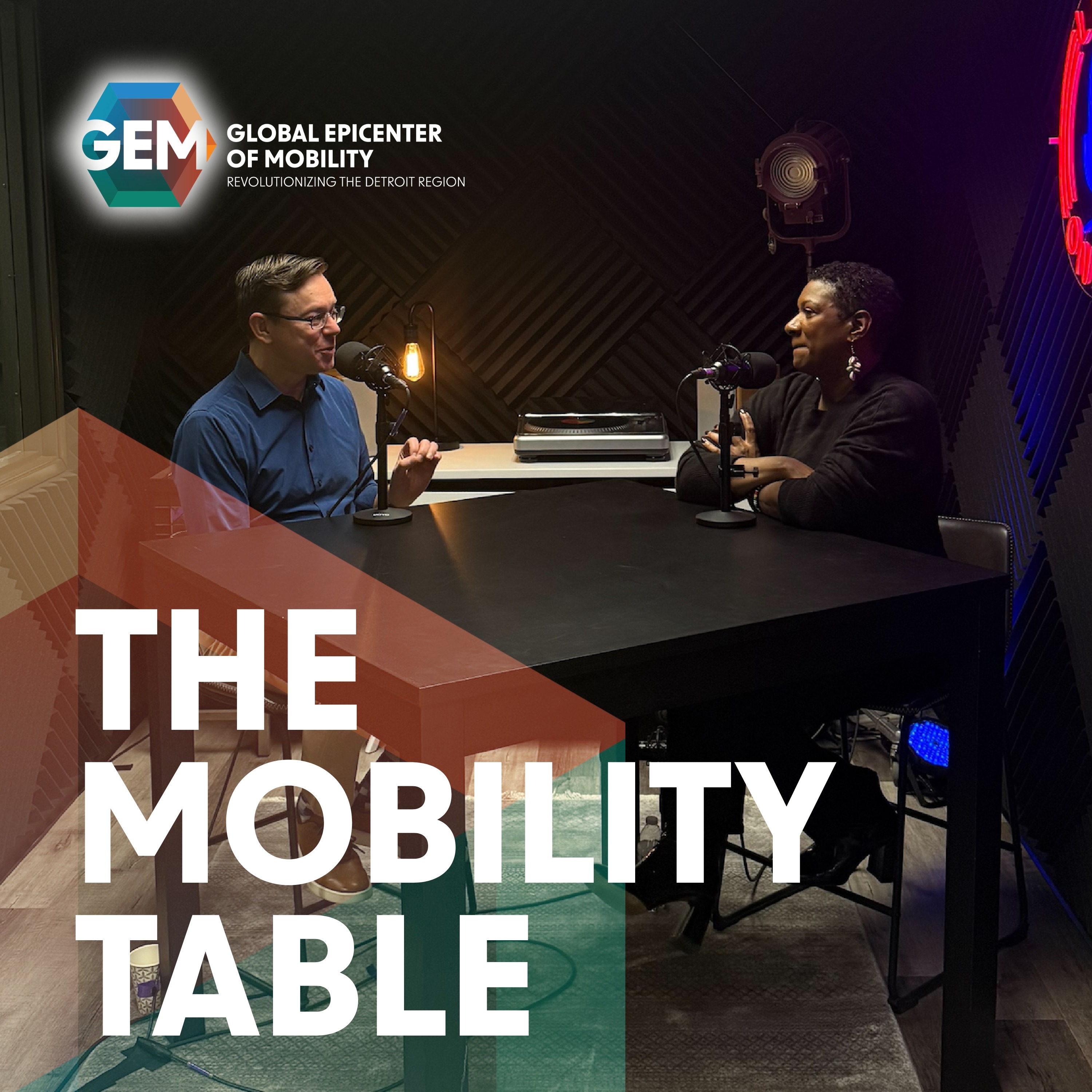
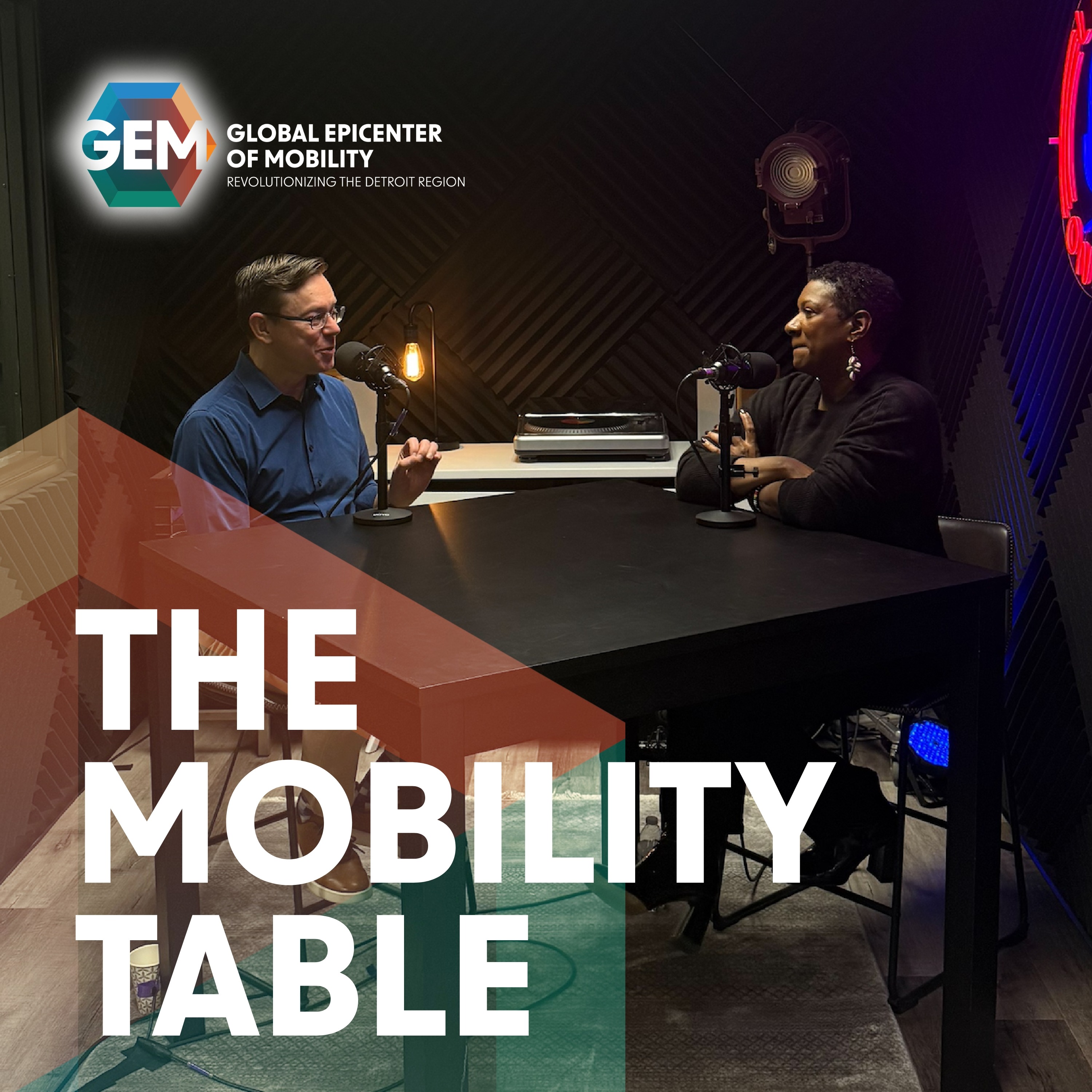
John McElroy sat down with Jeannine and Bernard at The Mobility Table to discuss the ways the Detroit region mobility ecosystem can overcome global competition. The conversation explores the resources, capabilities and knowledge that sets the Detroit region apart and will drive innovation in the future.
John is an influential journalist, lecturer, commentator and entrepreneur, having created Autoline an outlet dedicated to the reporting, discussion and dissection of the automotive industry and its products. He is an automotive expert, sharing his insights through radio segments, blogs and appearances on major outlets across the country.