
Doing Donuts with Nolan Sykes and Joe Weber
About this episode
The conversation kicks off with the “It’s the Donut Media Spikes Car Radio collaboration” framing—newer, scrappy car-media energy meeting legacy giants like “Motor Trend was really big at that time.” Nolan Sykes and Joe Weber then trade career origin stories, from cold texting and emailing to landing interviews. The hosts pivot through builds and driving lessons: “And so as soon as I connected the air filter, it ran 200% better,” plus practical fuel-economy tips like “just drive the speed limit.” Later, they talk Porsche accessibility, analog feel, and a wide range of garage and event chaos.
accessibility
"Accessibility. Accessibility is a big one. Accessibility, I think is like a, it's a term I think that gets thrown around."
Here, "accessibility" means how easy it is for regular people to connect with a car brand. They’re saying Porsche can feel too expensive or too “high status” for many fans, unless you know what to buy or you already like the brand.
In car media, "accessibility" means how easy it is for everyday people to relate to a brand or car—usually in terms of price, familiarity, and how approachable the lifestyle feels. The hosts argue that Porsche can feel "next level" and therefore less accessible to many viewers.
Porsche
"we've tried a few times now to make Porsche centric videos because I think they are, they're very interesting company. Yeah. And, you know, the cars are awesome and the engineering is really cool."
Porsche is a famous German sports-car brand. The hosts are talking about how Porsche videos don’t always do as well because the brand can seem out of reach for many people.
Porsche is a German sports-car brand known for engineering-focused models and a strong enthusiast following. In this segment, the hosts discuss how Porsche content can feel less accessible because the brand is associated with a higher-status image and higher prices.
CPO program
"where we had some pre-owned Porsches that Porsche dropped off. And you know, it was an ad for their CPO program. Oh, right. Right. And I got to drive like a used 911."
A CPO program means “certified pre-owned.” It’s when a carmaker sells used cars that have been checked and usually come with extra coverage compared to buying a random used car.
A CPO (Certified Pre-Owned) program is a manufacturer-backed way to sell used cars with added inspections, warranties, and certification standards. The hosts mention Porsche’s CPO program as the reason they had pre-owned Porsches available to drive for a branded spot.
PDK
"And even though it had the PDK and even then, like it just so responsive, faster than any automatic I'd ever driven."
PDK is Porsche’s special automatic-style gearbox. It shifts very fast by using two clutches, so the car feels quicker and more responsive than many older automatics.
PDK is Porsche’s dual-clutch transmission, designed to shift quickly by pre-selecting the next gear. Because it can keep the engine in the right rev range with minimal interruption, it often feels much more responsive than a traditional automatic.
analog cars
"He goes, now you got it completely wrong. He goes, these are very analog cars. Sometimes I don't even have radios in it."
“Analog cars” is a car-enthusiast way of saying the car feels more connected to the driver. Less computer-managed “stuff,” more direct steering and feedback.
“Analog cars” is an enthusiast term for vehicles that feel mechanically direct and driver-involving, with fewer digital/assisted layers taking over. The speaker contrasts this with more modern, comfort- or tech-focused experiences, saying the driving is focused on the driver.
go cart
"They don't have air conditioning and the driving experience is focused on you. It's like a go cart. I went, okay."
They’re comparing the car to a go-kart. The idea is that it feels light, quick to turn, and fun in a direct, hands-on way.
Calling a car a “go cart” is a metaphor for quick steering response, light-on-its-feet feel, and immediate feedback. It’s describing how the car’s chassis and controls make it feel nimble and playful rather than heavy or distant.

Lamborghini Diablo
"...ack when I was a kid, like the purple Lamborghini Diablo, that was the poster on my wall. If I was looking..."
The Lamborghini Diablo is a very expensive, high-performance supercar made by Lamborghini. It’s known for its loud, dramatic design and strong performance. The podcast mentions it because it was a famous car people admired when they were kids.
The Lamborghini Diablo is a high-performance supercar from Lamborghini, known for its dramatic styling and V12-era performance reputation. It’s a classic poster-car for many enthusiasts and remains a recognizable name decades later. The podcast references a purple Diablo as a childhood poster, showing how iconic it is in car culture.
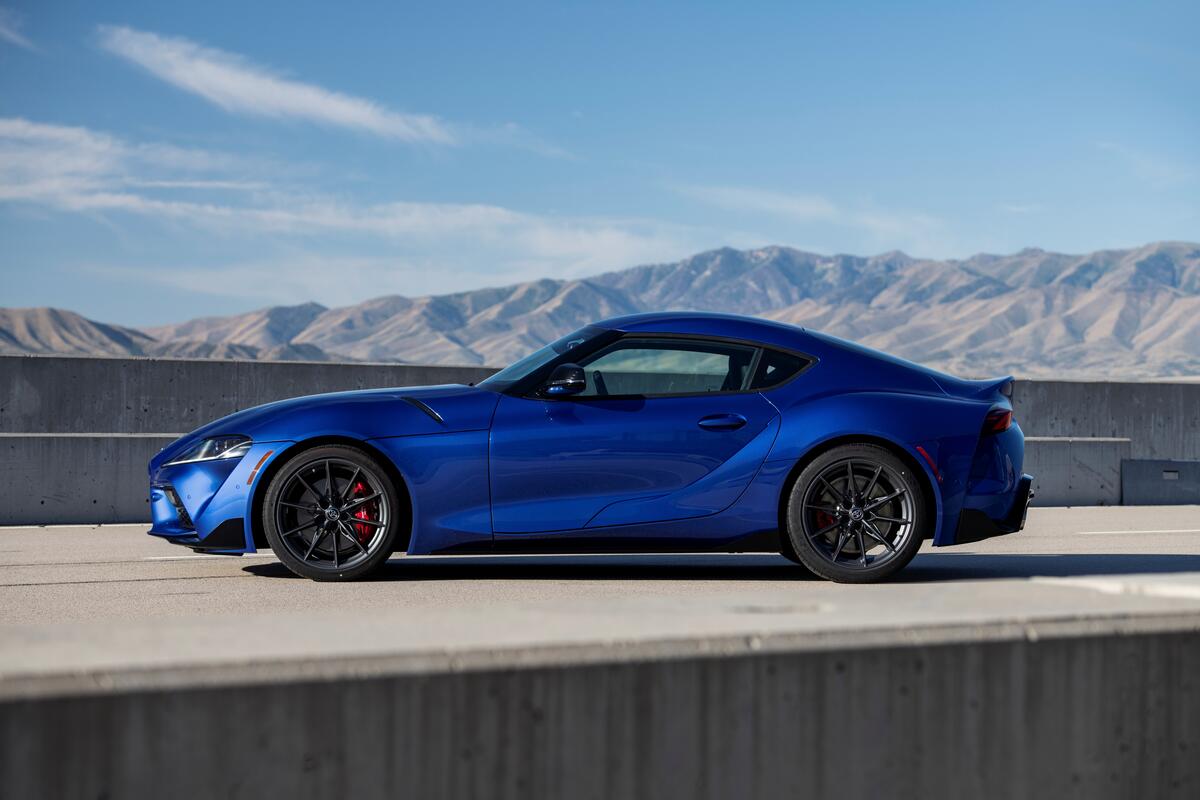
Toyota Supra
"...here's a goofball on my street who's got a purple Supra with big white wheels, and it looks beat up like ..."
The Toyota Supra is a sports car from Toyota. It’s designed to be fast and fun to drive. The podcast talks about one on a street because it’s a recognizable, eye-catching car—even if it looks beat up.
The Toyota Supra is a performance sports coupe built for strong acceleration and driver-focused handling. It’s frequently mentioned because it has a big enthusiast following and a strong presence in car culture. The podcast references a purple Supra with noticeable wear, highlighting how these cars can stand out even when they’re not pristine.
Racetech
"Let's talk about Racetech. Racetech was invented in 1997 by car enthusiasts for car enthusiasts."
Racetech is a company/brand that makes garage flooring. The pitch is that it’s tough, relatively affordable, and you can install it yourself.
Racetech is a brand making a garage flooring system aimed at being durable and DIY-friendly. The speaker frames it as cost-effective and engineered specifically for home garages, and mentions it’s working on the “Spike Ferris and Home Garage.”
do-it-yourself-modulated flooring system
"Racetech is a cost-effective, durable, truly do-it-yourself-modulated flooring system engineered for the garage."
A “do-it-yourself-modulated flooring system” refers to interlocking or panel-based garage floor tiles designed to be installed by the owner. “Modulated” implies the floor is built from repeatable modules rather than one poured surface.
vehicle rolling loads
"Anyway, it can handle vehicle rolling loads in excess of 80,000 pounds. Doesn't chip peel a stain?"
This means how much weight and stress the floor can handle when cars roll over it over and over. It’s basically a durability rating for garage floors.
“Vehicle rolling loads” are the forces a floor or surface experiences as tires roll over it repeatedly. Garage flooring products often advertise this to indicate how well the material resists cracking, chipping, or deformation under sustained weight and movement.
McGuire's
"Today's show also sponsored by McGuire's... New for 2026, quick solution kits... includes a specialized drill attachment brush to increase cleaning power and decrease time spent."
McGuire’s is a car-care product brand. The host is talking about their bundled “quick solution kits” that include the right cleaners for specific tasks, plus a brush attachment to speed up scrubbing.
McGuire’s (spelled as “McGuire's” in the transcript) is a consumer car-care brand making cleaning and detailing products. The host specifically mentions McGuire’s “quick solution kits,” which bundle products for common jobs and include a specialized drill attachment brush.
etches
"And what does that do to our paint? Don't want that yet. Like some chemicals and acids in there. It etches."
“Etching” is when certain chemicals eat into or damage the paint surface. If something acidic sits on the car, it can leave marks that aren’t just easy to wash off.
In automotive paint care, “etching” is damage where chemicals (often acids) react with the clear coat and leave dull spots or permanent marks. It’s different from simple dirt because it can change the surface chemistry, making the damage hard to fully polish out.
Datsun 300ZX, Z31 Gen
"So you seem to have brought us a Datsun or an Nissan? ... It's 1984. Datsun 300ZX, Z31 Gen."
This is the Datsun/Nissan 300ZX, a classic 1980s sports car. It’s special because it was made during the time when the brand name changed from Datsun to Nissan in the US, so you can see both badges on the car.
The Datsun/Nissan 300ZX (Z31 generation) is a late-1970s/1980s Japanese sports coupe known for its aerodynamic shape and V6-powered performance. In the US, the brand name shifted from Datsun to Nissan around this era, which is why this car can show both badges.

Nissan 300Zx
"... an Nissan? It's both actually. It's 1984. Datsun 300ZX, Z31 Gen. And is this car featured in one of your..."
The Nissan 300 ZX is a sports car made by Nissan. It’s part of the Z-car line, which is known for being sporty and stylish. The podcast mentions a specific early version and talks about what it’s called and which generation it is.
The Nissan 300ZX is a performance sports coupe from Nissan, known for its classic Z-car styling and driver-focused character. The podcast references it as a 1984-era car and notes the Datsun 300ZX/Z31 generation naming. It comes up as part of a discussion about a featured car and its identity.
Datsun became Nissan in the US
"This was the year that it went from Datsun to Nissan in the US. And so it has both the badges on the back."
In the US, the company changed the name from Datsun to Nissan. Cars from that time can have branding that reflects both names, which is why the badges can look confusing.
This refers to the brand transition in the US market where Datsun cars were rebranded as Nissan. For owners, it can show up as mixed branding details (like badges) on cars from the transition period.
NA
"Oh, let's see that. It's an NA. That's confusing. Right?"
“NA” means the engine is naturally aspirated, so it doesn’t use a turbo or supercharger. It’s the opposite of a turbocharged setup.
NA here means naturally aspirated, i.e., the engine makes power without a turbocharger or supercharger. That matters on a 300ZX because the turbo versions are a big part of the model’s enthusiast reputation.
back fees
"It has a bunch of back fees on it. So I didn't register it."
“Back fees” means money that wasn’t paid for the car’s paperwork before. If those aren’t handled, you may not be able to register the car in your name.
“Back fees” here likely means unpaid registration-related charges from a previous owner. Not paying them can prevent a car from being properly registered, even if the car is physically in your possession.
registration transfer
"just was never registered as nono. I see. And so just kept a crew in free fee. It's like a couple times during the transfer. They didn't say well that's not your problem. They said it is your problem."
A registration transfer is the paperwork step that makes the car officially belong to you in the eyes of the DMV. If it wasn’t done, you may have to fix the paperwork before you can fully sort out the car.
A registration transfer is the process of moving vehicle registration responsibility from the previous owner to the new owner. If it’s “never been” done correctly, the new owner can still be stuck dealing with fees or compliance issues tied to the car’s prior status.
DMV service
"That'd be awesome. Yeah. I could use his services. He's he has a DMV service that also my kid was kidnapped."
DMV services help with car paperwork—things like registration and title transfers. It’s basically someone handling the government forms for you.
A DMV service refers to help handling Department of Motor Vehicles paperwork like registration, title, and transfers. In car ownership, these services can be used when paperwork is missing, delayed, or complicated by prior ownership history.
VG30
"We got it running pretty good. It's got 220,000 miles on the original VG30. V6."
VG30 is the name/ID for a specific Nissan V6 engine. It’s like saying “this exact engine type,” so people know what parts and history apply to it.
VG30 is Nissan’s engine code for a V6 used in certain late-80s/90s Nissan models. Engine codes like this identify the specific design family, which helps enthusiasts track parts, upgrades, and known maintenance patterns.
Enkei comps
"You put new wheels on it. It's got enky comps on it, which are just a classic period correct wheel."
Enkei is a company that makes wheels. “Comps” is a particular classic wheel style, and it’s often chosen because it looks right for the car’s era and can improve handling when matched with the right tires.
Enkei is a wheel brand, and “Enkei Comps” refers to a classic, period-correct style of wheel. Wheel choice affects ride comfort, grip, and how the car’s stance looks, especially when paired with lowering springs or coilovers.
tame coilovers
"And we lowered it. Correct. Do we what we have? We have tame coilovers on it, which are kind of the cheaper ones, but they're a budget option. They're pretty decent and they're adjustable."
Coilovers are suspension parts that let you change how high or low the car sits. They’re adjustable, so you can dial in the ride and handling instead of being stuck with the factory setup.
Coilovers are adjustable suspension setups that combine a coil spring and shock absorber into one unit. They let you lower the car and fine-tune ride height and handling balance; the host calls these “tame” because they’re a budget option.
performance exhaust
"Do we do exhaust? There is a performance exhaust that's sitting in my basement right now. We had the boxes, we didn't get around to it."
A performance exhaust is a different exhaust system than stock. It’s usually meant to let the engine breathe better and often makes the car sound more aggressive.
A performance exhaust is an aftermarket exhaust system designed to improve airflow and change the sound and sometimes power delivery. The host mentions it’s still in the basement, implying it hasn’t been installed yet.

Delorean DMC-12
"...up, but it was the same. That also looks like the DeLorean steering wheel. But our cameraman is using it for..."
The DeLorean DMC-12 is a sports car made by DeLorean. It’s famous for its unusual stainless-steel look and for appearing in popular movies. The podcast mentions it because their cameraman is using something from the DeLorean, like the steering wheel.
The DeLorean DMC-12 is a sports car best known for its distinctive stainless-steel body and its strong association with the “Back to the Future” franchise. It’s often discussed because it’s instantly recognizable and has become a pop-culture icon beyond just being a car. The podcast references the DeLorean steering wheel and uses it in their filming setup.
Willow Springs
"We set up an autocross course at the balcony [1617.9s] at Willow Springs and we tested it and it did great."
Willow Springs is a real race track in California. People use it to test cars because it has a variety of turns and speeds.
Willow Springs refers to Willow Springs International Raceway in California, a track used for testing and filming. It’s known for a mix of fast sections and technical corners, which makes it useful for evaluating cooling and handling.
autocross
"We set up an autocross course at the balcony [1617.9s] at Willow Springs and we tested it and it did great."
Autocross is a timed driving competition on a closed course with cones. You drive through the course as fast and smoothly as you can to show how well the car handles.
Autocross is a timed driving event where you navigate a marked course with tight turns, usually on a parking lot or closed track. The goal is to test handling and driver skill at relatively low speeds compared with road racing.
V6
"We kind of beat [1624.7s] the shit out of it and it didn't get hot. The V6 really wanted to be revved out."
A V6 is an engine with six cylinders arranged in a V shape. It’s a common engine type in many cars.
A V6 is an engine with six cylinders arranged in a “V” shape. The V layout helps balance packaging and smoothness, and it’s a common configuration for everyday cars and performance-oriented trims.
K&N performance air filter
"And so I bought a K&N [1636.1s] performance air filter on it and I looked and the MAF sensor was not even connected."
K&N makes aftermarket air filters. Swapping the air filter can change how easily the engine breathes, which can affect how the car runs.
K&N is an aftermarket brand known for performance air filters that replace the factory intake filter. In this segment, the host claims that installing the K&N filter improved drivability immediately.
MAF sensor
"And so I bought a K&N [1636.1s] performance air filter on it and I looked and the MAF sensor was not even connected. [1642.0s] And so as soon as I connected the air filter, it ran 200% better."
The MAF sensor tells the car how much air is getting into the engine. If it’s not connected, the car may run badly because it can’t adjust fuel correctly.
The MAF (mass airflow) sensor measures how much air the engine is ingesting. If it’s unplugged or not connected, the engine can run poorly because the ECU can’t accurately calculate fueling and timing.

Sienna
"Well, the thing is, we're going to buy a Sienna and I looked up the towing capacity of a Sienna [1661.6s] and it's exactly, give or take a couple hundred pounds."
The Toyota Sienna is a minivan. Here they’re talking about how much it can tow so they can plan what they want to do with it.
The Toyota Sienna is a minivan known for practicality, including family-friendly packaging and towing capability. In this segment, the hosts discuss its towing capacity as part of planning to turn it into a track-capable setup.
towing capacity
"Well, the thing is, we're going to buy a Sienna and I looked up the towing capacity of a Sienna [1661.6s] and it's exactly, give or take a couple hundred pounds."
Towing capacity is the maximum weight a vehicle can pull safely. It depends on how strong the car’s systems are for pulling and stopping.
Towing capacity is the maximum weight a vehicle is rated to tow safely. It’s determined by factors like the engine, transmission, cooling system, brakes, and chassis strength.
high low
"Okay. It was built during our high low season a few years ago where we built two [1716.3s] overlanding Tacomas. Tell everybody what high low is in case they don't."
“High low” is a challenge where they build two similar cars—one with cheap parts and one with expensive parts. Then they compare what the difference really is.
“High low” is a show format where two nearly identical cars are built with different budgets—one using cheaper parts and the other using expensive parts. The point is to compare how much performance (or feel) you actually gain from pricier components.
overlanding
"Okay. It was built during our high low season a few years ago where we built two [1716.3s] overlanding Tacomas."
Overlanding is traveling long distances with your vehicle set up for camping and rough roads. It usually means adding gear and upgrades so you can handle dirt trails and stay out longer.
Overlanding is long-distance, self-reliant travel—often off-road—using a vehicle equipped for camping and rough roads. It typically involves upgrades like storage, lighting, and suspension/tires suited for uneven terrain.
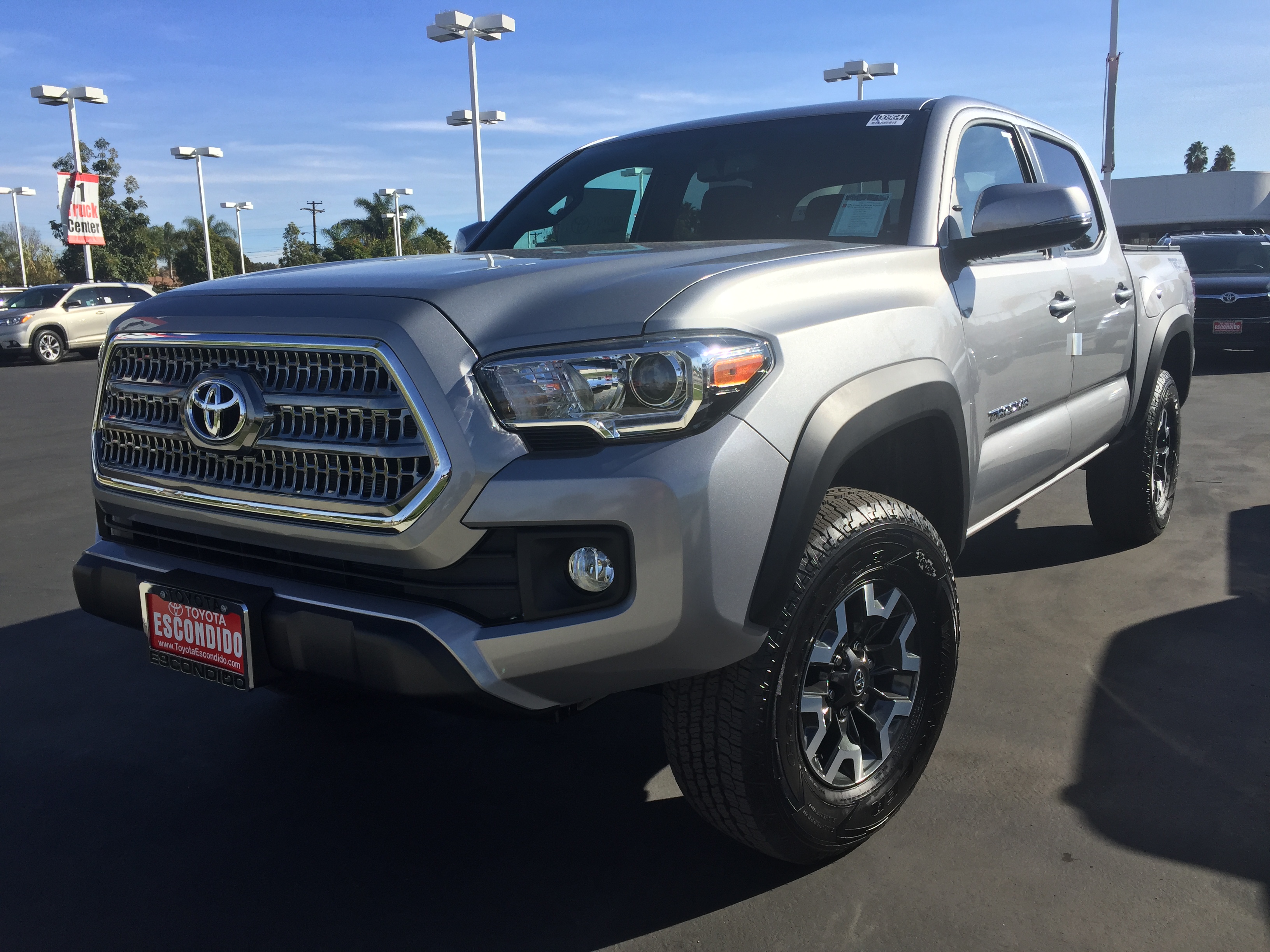
Tacomas
"No. So it's interesting, especially in the case of this season with the Tacomas, you'll notice real quick, I want to address the bumper there. It's been bent downwards."
A Toyota Tacoma is a popular pickup truck, especially for people who drive off-road or add lots of gear. Here, they’re talking about their Tacoma and how the front bumper got damaged because the truck was pulling with a lot of force.
The Toyota Tacoma is a midsize pickup known for off-road capability and a huge aftermarket. In this segment, the hosts talk about a Tacoma build used for production and overlanding-style gear, including a modified front bumper that got bent under winch load.
bumper
"you'll notice real quick, I want to address the bumper there. It's been bent downwards. It's not supposed to look like that."
A bumper is the part at the front of a car meant to take impacts. In this story, the Tacoma’s bumper got bent because the truck was pulling very hard with a winch.
A bumper is the front or rear impact-protection structure, and on off-road builds it’s often upgraded to handle heavier recovery and contact. Here, the Tacoma’s bumper is described as being bent downward because the winch load pulled it out of its intended position.
winch
"the seats are really good that it actually started pulling the bumper, the winch started pulling the bumper down."
A winch is like a heavy-duty pulling tool with a cable, used to recover a stuck vehicle or pull something out. Here, the winch force was strong enough to bend the Tacoma’s bumper.
A winch is a powered cable-retrieval device used for recovery—pulling a vehicle or load using a motor and cable. The hosts say the winch started pulling the Tacoma’s bumper down, showing how recovery forces can overwhelm parts that aren’t designed for that load.
overloaded
"what we found was actually really interesting. We completely overloaded the high truck with all the expensive parts."
“Overloaded” means they put a lot more weight and gear on the truck than it normally carries. More weight can make the suspension and tires work harder and can stress parts like the bumper.
“Overloaded” here means the truck was loaded far beyond a normal setup—adding lots of weight and gear that changes how the suspension and tires behave. That matters because extra weight increases forces on components like the bumper, suspension, and tires during recovery and driving.
Bilstein
"But the suspension we've done on, so it's got Bilstein, like a $700 set of Bilsteins, which are just awesome."
Bilstein makes suspension shocks/struts that help the car control bumps better. They’re saying their Tacoma has an upgraded suspension from Bilstein, which helps it handle the heavy setup and bigger tires.
Bilstein is a suspension brand best known for shock absorbers and struts used for improved ride control and durability. The hosts mention a “$700 set of Bilsteins,” tying the Tacoma’s suspension upgrade to how it handles bigger tires and rougher use.
33-inch tires
"It's running, I think, 33-inch tires right now. Normally, we set it up for 31s. It's got, it's kind of big right now. It kind of rubs sometimes with that."
“33-inch tires” means the tires are bigger than stock. Bigger tires can sometimes hit or rub against parts of the truck when you turn or when the suspension moves.
Tire size (like “33-inch”) refers to the tire’s overall diameter, which affects clearance, gearing feel, and how much the tire can rub on suspension or fenders. The hosts say they normally run 31s, but with 33s the tires rub sometimes, which is a common fitment issue on lifted or modified trucks.
rubs
"It's got, it's kind of big right now. It kind of rubs sometimes with that."
“Rubbing” means the tire is touching something it shouldn’t. That usually happens when the tires are too big or the truck isn’t set up with enough clearance.
“Rubbing” means the tire contacts nearby body or suspension components during steering or suspension travel. It’s usually a clearance/fitment problem caused by tire size, wheel offset, lift height, or alignment.

Bronco
"there's the Bronco. I went, oh, this will be fun. But she did well. The 405 terrifies her. And 405 and a Bronco."
The Bronco is Ford’s rugged SUV meant for off-road driving. They’re talking about using it because it handles rougher conditions better than a lower car.
The Ford Bronco is a rugged off-road SUV built for trail use, with a body-on-frame layout and strong ground clearance. The host’s mention of “the Bronco” and “high clearance bumper” ties it to off-road capability and family driving on challenging roads.
welding
"What surprised you about welding? I've never welded anything. Like it looks easy. I remember in second grade, like the teacher's going, don't look at the welders."
Welding is how you join metal pieces together so they become one solid piece. The host is surprised because it looks simple, but it’s easy to mess up if you’re not used to it.
Welding is a metal-joining process that fuses parts together using heat (and sometimes filler metal). In fabrication work like building a bumper, welding quality matters because it affects structural strength and how well the bumper survives impacts and vibration.
fabrication
"A teammate, this guy, Aaron Parker... he is experienced in welding and fabrication. So he handled most of that."
Fabrication means making parts yourself—cutting and assembling metal to build something. In this story, it’s how they made the bumper components.
Fabrication is the process of building or modifying parts by cutting, shaping, and assembling materials—often with welding. Here, it describes how the bumper was built from scratch rather than bought as a finished product.
rectangle tube stock
"I took the stock brackets that were holding the stock bumper on and I just welded a piece of rectangle tube stock on top of it..."
Rectangle tube stock is basically a hollow steel bar with a rectangular shape. It’s used because it’s strong and works like a frame for parts like bumpers.
Rectangle tube stock is rectangular-section steel tubing used as a structural material in fabrication. Using it on a bumper creates a stronger frame-like member than thin sheet metal, helping spread loads from impacts.
spot welds
"Yeah. I mean, you'll put it together with spot welds where you're just going"
Spot welds are small, localized weld points that join two metal pieces together. Car makers use them a lot because they’re quick and don’t overheat the whole panel.
Spot welds are a type of welding where two metal sheets are clamped together and a localized electrical current melts them at small points. They’re commonly used in car bodywork because they’re fast and create strong joints without heating the entire panel.
warp
"Otherwise, warp. Yeah. Yeah."
“Warp” here means the metal gets bent out of shape. If you weld too long in one spot, that area heats up more than the rest and can pull the panel crooked.
In welding and sheet-metal work, “warp” means the panel bends or distorts from uneven heating and cooling. When you concentrate too much heat in one area (like long welds), the metal can move and the bumper won’t sit straight afterward.

Civic SI
"Yeah. So for our recent season, our newest season that I just mentioned with the Civic Seats, we built two Civic SIs."
The Honda Civic Si is a more performance-focused version of the regular Civic. It’s the “enthusiast” trim, and they’re saying they built two of those cars from the late-2000s Civic generation.
Honda Civic Si is the Civic’s enthusiast trim, typically tuned for a sportier driving feel than the base model. In this segment, they’re talking about building two Civic SIs from the eighth generation era (late 2000s).
Handcook
"We can't comment because we're sponsored by Handcook. Forget what they said."
This sounds like a tire brand name mentioned in the sponsor banter. The key point is the host is joking about which tire brand they’re allowed to talk up.
Handcook appears to be a mis-transcription of a tire brand name used in the context of sponsorship. It’s mentioned as the sponsor they “can’t comment” about, contrasting with the Vredestein pitch.

Tesla Model Y
"I just put hyper tracks on the Tesla Model Y to make them quieter and stop popping. Two of the cars, what did I have on there? Continentals."
The Tesla Model Y is an electric SUV. The host is talking about changing its tires to reduce noise and fix a problem where the tires were slowly losing air.
The Tesla Model Y is an electric crossover, and the host is discussing how tire choice affected real-world issues like noise and slow leaks. They say they swapped to “hyper tracks” to make the tires quieter and stop popping, then later describe slow leaks that they attribute to the original tires.
Continentals
"Two of the cars, what did I have on there? Continentals. And we had flat tires on the Model Y and I was like nails and are like,"
Continental is a tire brand. The host is saying they had Continental tires on the Model Y before switching to something else.
“Continentals” refers to Continental tires, a major tire manufacturer. Here it’s mentioned as the tire type previously on the Tesla Model Y before the host switched to other tires.
slow leaks
"And I went, what? There's just slow leaks in these tires that came from Tesla. And I went, well, typical Elon Musk bullshit, but let's put some Vredesteins on there."
A slow leak means the tire isn’t fully punctured, but it’s losing air little by little. You might not notice right away, but the tire pressure drops over time.
A “slow leak” is a tire that loses air gradually rather than suddenly going flat. The host connects this behavior to the tires that came on the Tesla Model Y and contrasts it with the later switch to Vredestein.
Lucid
"I like the Lucid. Except when you press the button on the app, like Open Trunk, it says, are you sure? Confirm."
Lucid makes electric cars. Here they’re talking about using a phone app to control the car—like opening the trunk—and how the car asks you to confirm before doing it.
Lucid is an electric-vehicle brand known for high-end EVs and a tech-forward approach, including app-based controls. In this segment, the host is describing an app feature (Open Trunk) that prompts for confirmation, which is a practical example of how the car’s software/UX works day to day.
Open Trunk
"Except when you press the button on the app, like Open Trunk, it says, are you sure? Confirm."
“Open Trunk” is a phone-app button that lets you open the car’s trunk remotely. In this case, the app makes you confirm first so you don’t trigger it by accident.
“Open Trunk” refers to a remote function in the car’s mobile app that unlocks/opens the vehicle’s rear cargo area. The host is pointing out the app’s confirmation prompt (“are you sure?”), which affects how quickly you can use the feature.
Vredestein
"Anyways, if you're looking for tires, check out Vredestein.com. They're known for heritage, European styling, performance, design, more than a century of experience."
Vredestein makes tires. The host is saying the brand is getting popular in America and that they’re known for performance-oriented tires with a European feel.
Vredestein is a tire brand with a long history and a focus on European-style performance tires. The host is promoting Vredestein’s current U.S. expansion and tying it to tire choice for enthusiasts (“Treads for Vreds”).
dimension constraints
"Yes. So there's dimension constraints and also weight constraint. Okay."
Dimension constraints are size rules for the build—basically limits on how big the vehicle can be. They’re used to keep things fair and safe for the event.
Dimension constraints are rules that limit a build’s physical size—like length, width, or height. In motorsport-style events, these restrictions help keep vehicles comparable and fit within the course and safety equipment.
weight constraint
"So there's dimension constraints and also weight constraint. Okay. 175 pounds."
A weight constraint is a rule about how heavy the vehicle is allowed to be. It helps keep competition fair and can also affect how the vehicle performs and handles.
A weight constraint is a maximum (or sometimes minimum) vehicle mass rule enforced by the event. Lower weight can improve acceleration and handling, but the constraint also levels the playing field and affects safety and durability.
tube frame
"I didn't really realize that they let you build like tube frame stuff. I thought, initially, I thought it was going to be like wood."
A tube frame is a car’s skeleton made from metal pipes welded together. It’s a common way to build a lightweight, strong custom vehicle.
A tube frame is a vehicle chassis made from welded metal tubes, forming a rigid framework for the body and drivetrain. It’s common in custom builds and lightweight race cars because it can be strong while staying relatively light.
no practice runs
"So there's no practice runs. That's Jimmy in the front there. Yeah."
No practice runs means they don’t get to try the track ahead of time. So the first time they drive it, they’re learning the bumps and jumps on the spot.
No practice runs means competitors don’t get to test the course beforehand, so they must rely on design assumptions and first-run learning. That increases uncertainty for traction, suspension behavior, and how the vehicle handles jumps or uneven sections.
roll bars
"So that's why we need roll bars. And also you'll notice it's a white Bronco."
Roll bars are metal bars inside a car that help keep the cabin from collapsing in a crash or rollover. They’re common on off-road and track cars because they add safety when the car flips.
Roll bars are structural bars installed inside a vehicle to help protect occupants during a rollover. They create a stronger “cage” so the cabin is less likely to collapse if the car tips onto its side or roof.
405
"And also you'll notice it's a white Bronco. And they were doing that down the 405."
“405” is a big freeway in the Los Angeles area. Saying they were doing it on the 405 means it wasn’t on a racetrack—it was on a public road.
“405” refers to California’s Interstate 405 (I-405), a major freeway in the Los Angeles area. Mentioning it sets the scene for where the stunt or incident happened—on a high-traffic public road rather than a closed track.
junior dragster
"What are these wheels from a stroller? [2932.5s] They're from a junior dragster. [2933.9s] Junior dragster."
A junior dragster is a smaller drag-racing car made for kids/young drivers. It’s built for quick acceleration down a straight track, not regular street driving.
A junior dragster is a small, purpose-built drag-racing car for younger drivers. It’s typically designed for short, straight-line acceleration runs and uses scaled-down racing components compared with full-size dragsters.
disc brakes
"Oh, this is bad. [2961.5s] Look at the brakes. [2962.4s] Yeah, it's got disc brakes."
Disc brakes are a braking system where pads squeeze a metal disc to slow the car down. They’re known for good stopping power and staying consistent when you brake more than once.
Disc brakes use brake pads clamping onto a spinning rotor to slow the vehicle. They generally provide stronger, more consistent stopping—especially with repeated braking—compared with older drum-brake designs.
two-frame chassis
"They built this amazing chassis, this two-frame chassis. I think it ended up being like 214 pounds with Vindiesel on it, so they had to go and do like a tooth kind of scrape out everything."
Some race cars use more than one main frame to hold everything together. It can make the car stronger, but it can also make it heavier, so builders sometimes cut weight by removing parts.
A “two-frame” chassis uses two separate structural frames (often inner and outer) to support the car. This can help with packaging, stiffness, and crash structure, but it also adds weight and complexity—so builders may remove material to hit a target mass.
3D printed stuff
"but because we had to scrape out all that 3D printed stuff to get the weight down, that's why it popped off."
3D-printed components are parts made by adding material layer-by-layer from a digital model. In custom chassis/vehicle builds, they’re often used for brackets, mounts, and prototypes, but they can be heavy or require redesign if weight targets are strict.
glue
"but because we had to scrape out all that 3D printed stuff to get the weight down, that's why it popped off. Because it was only held on with a little bit of glue there."
They used adhesive to hold a part on. Glue can be strong in the right situation, but it can also fail if the part gets stressed by vibration or impacts.
In vehicle fabrication, “glue” can refer to an adhesive bond used to attach or hold a component in place. Adhesives can work for certain loads and environments, but they may fail when the part is light, poorly supported, or subjected to vibration and impact—especially after weight-cutting changes.
directive
"There was a little bit of controversy because, I don't know what the actual directive was, but there was a certain amount that you could push."
They’re talking about a rule or instruction that limited what they were allowed to do. Racing rules exist so one team can’t gain an unfair advantage by pushing too far.
A “directive” here sounds like a rules or guidance limit on how much the team was allowed to modify or push a parameter (likely a setup/measurement). In motorsports, these kinds of directives are common because they keep competition fair and prevent teams from exploiting loopholes.
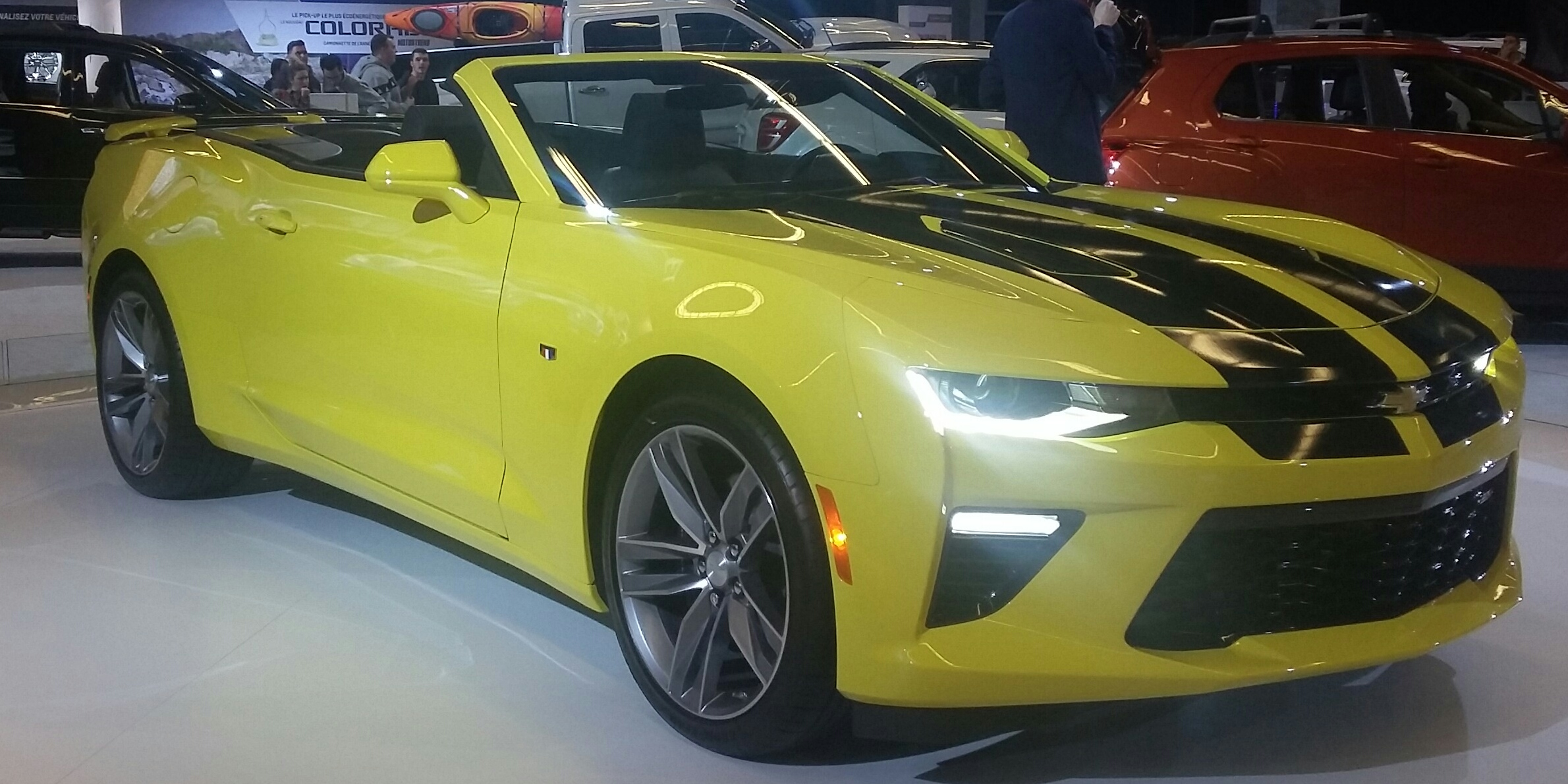
Chevrolet Camaro
"...t mileage from what was it? Was it a Mustang or a Camaro? It's a drag car that we built a couple of years ..."
The Chevrolet Camaro is a sports car made by Chevrolet. It’s built for performance and comes in many different versions. The podcast mentions it because they were comparing it to a Mustang for a drag-car project and talking about mileage.
The Chevrolet Camaro is a sports car from Chevrolet with a performance-focused lineup and strong popularity among car enthusiasts. It’s commonly compared to other “pony cars,” especially when discussing drag racing builds and driving efficiency. The podcast mentions it alongside the Mustang in the context of a drag car and mileage considerations.

Ford Mustang
"...o get the best mileage from what was it? Was it a Mustang or a Camaro? It's a drag car that we built a coup..."
The Ford Mustang is a sports car made by Ford. It’s known for being fast and for having lots of different versions. The podcast mentions it while talking about a drag-car build and trying to figure out which car setup gets better mileage.
The Ford Mustang is a long-running American sports car/pony car known for performance options and a huge enthusiast community. It’s often discussed in mileage and driving contexts because different engines and setups can change fuel economy. The podcast brings it up while comparing it to a Camaro for a drag-car build and best mileage question.
Roots blower
"with a Roots blower on it or Whipple, [3175.8s] sorry, excuse me, a Whipple style supercharger on it."
A Roots blower is a device that forces extra air into the engine so it can make more power. It’s a specific style of supercharger, not just “a turbo” or “a generic boost system.”
A Roots blower is a type of supercharger that uses two intermeshing rotors to push more air into the engine. It’s known for making boost quickly and is commonly associated with classic muscle-car setups and some modern performance builds.
Whipple
"with a Roots blower on it or Whipple, [3175.8s] sorry, excuse me, a Whipple style supercharger on it."
Whipple is a company that makes superchargers for performance cars. A “Whipple” setup usually means a specific kind of aftermarket boost system designed to add a lot of power.
Whipple is a performance brand best known for superchargers, especially high-output forced-induction kits. When someone says “Whipple style supercharger,” they’re usually referring to a specific supercharger design and hardware package rather than a generic “boost.”

Challenger Hellcat
"... it. Originally, the idea, we wanted to do like a Hellcat, but we were like, okay, the mods we want to do t..."
The Challenger is a muscle car made by Dodge. It’s designed to be powerful and has a classic, bold look. The podcast mentions it because they were deciding what kind of performance version to start from for their modifications.
The Dodge Challenger is a muscle car known for its retro-inspired styling and strong performance options. In the podcast, it’s mentioned because the conversation was about planning mods and initially considering a Hellcat-based direction. The focus is on how they chose what to build for the project.
mileage
"what was interesting for me was to see how much [3205.2s] of an effect it really has on mileage, [3208.4s] these little tiny things that you hear about"
Here, “mileage” means how many miles you can drive on a gallon of gas. They’re saying that even small things can change fuel economy.
In this context, “mileage” means fuel economy (how much fuel the car uses over distance). The hosts are discussing how small changes—like driving behavior and setup details—can noticeably affect it.
drive the speed limit
"One thing anybody can do without making any changes [3222.9s] to their car to save more gas is just drive the speed limit. [3226.2s] Really? [3226.8s] Yeah. [3227.3s] Just drive the speed limit. [3228.3s] That's the biggest impact."
They’re saying one of the easiest ways to save gas is to drive at the speed limit. Going faster usually makes the car burn more fuel, so slower driving helps a lot.
The idea is that fuel economy is strongly affected by speed: driving faster increases aerodynamic drag and engine load, which raises fuel consumption. The hosts claim that simply following the speed limit can have the biggest impact on saving gas without any vehicle modifications.
low air pressure
"What about your tires? Tires, definitely, if you have low air pressure, yeah, it's going to affect your mileage."
If your tires are underinflated, they don’t roll as efficiently. The car has to use more energy to move, so you may burn more fuel.
Low tire air pressure changes how the tire sits on the road, increasing deformation. That typically increases rolling resistance, so the engine has to work harder to keep speed, which can reduce fuel economy.
contact patch
"You know, you have a bigger contact patch with the ground that's more friction that your car, your engine needs to overcome as you're moving down the road."
The contact patch is the part of the tire that touches the road. If tire pressure is off, that touching area changes, and it can make the car harder to move and less efficient.
The contact patch is the portion of the tire tread that actually touches the road. Tire pressure affects its size and shape, which changes grip and rolling resistance—both of which influence how hard the engine has to work.
manufacture specifications
"So having your tires at a proper air pressure to honestly manufacture specifications, none of that, your comfort level is going to be different too."
Car makers list a recommended tire pressure for each vehicle. Using that number helps the car roll efficiently and keeps the ride and tire wear in a good range.
“Manufacture specifications” here means the tire pressures the automaker publishes for the vehicle. Using those values is important because they’re chosen to balance rolling resistance, ride comfort, and tire wear.

2002 Lexus LS430
"Like my wife, she has an old, we have like a 2002 Lexus LS430. And I was trying to save gas by having those tire pressures like pretty jacked up."
The 2002 Lexus LS430 is a big, comfortable luxury car. Here it’s mentioned as an example of how setting the tire pressure correctly can make the ride feel better.
The Lexus LS430 is a 2002-era full-size luxury sedan from Lexus, known for a comfortable ride and long-distance cruising. In this segment, it’s used as the speaker’s example of how adjusting tire pressure to the manufacturer’s spec can improve comfort and drivability.
proper air pressure
"Yeah, they know what they're doing. So, proper air pressure is pretty important, also for safety too."
That means making sure your tires are inflated to the right level. If they’re too low or too high, the car won’t handle as well and the tires can wear out faster—especially in wet weather.
“Proper air pressure” refers to setting your tires to the correct inflation level. It affects grip, braking distance, and how the tire wears, and it also matters for safety when conditions change (like rain).
Akira Nakai
"this was Akira Nakai's personal car. So Akira Nakai is the guy behind RWB."
Akira Nakai is a well-known Japanese car builder/designer. He’s famous for creating the RWB widebody style for the Porsche 911.
Akira Nakai is the Japanese designer best known as the creative force behind RWB (Rauh-Welt Begriff), a style of Porsche 911 widebody customization. He’s credited with helping make widebody “tuning culture” more mainstream, especially in Japan and among international enthusiasts.
Tiptronic
"So it's a Tiptronic or something? It was the four speed auto that it was before PDK. Tiptronic maybe?"
Tiptronic is an automatic transmission that also lets you choose gears yourself. It’s still an automatic, but you can manually command the shifts.
Tiptronic is a brand name for an automatic transmission that lets the driver manually select gears (often via buttons or a shift gate). In this segment, the host is discussing that Nakai’s personal 911 used an older four-speed automatic rather than a modern dual-clutch setup, which affects how “sharp” it feels.
memory
"Please, please talk about memory. Please talk about memory. So I can expand on this and not sound like an idiot."
They’re asking to talk about memory—basically how memories and impressions stick. Then they start sharing what they remember about cars and what they didn’t understand at the time.
The host explicitly asks to “talk about memory,” setting up a reflective discussion rather than a technical walkthrough. In this segment, that framing leads into personal recollections about specific cars and builds.
manual
"I want to know so badly now what a manual in this car feels like and what it's like to really hammer on a car"
“Manual” here means the driver shifts gears themselves using a clutch and a stick. The host wants to know how that feels compared to other ways cars shift gears.
In this context, “manual” means a manual transmission, where the driver selects gears with a clutch pedal and gear lever. The host is contrasting the feel of driving a manual versus other transmission types, especially in a performance setting.
hammer on a car
"I want to know so badly now what a manual in this car feels like and what it's like to really hammer on a car that's been given the RWB treatment"
“Hammer on it” is slang for driving it hard, like giving it lots of throttle. The host means they want to feel what the car is like when you push it.
“Hammer on a car” is enthusiast slang for driving aggressively—typically applying strong throttle inputs and pushing the car’s performance limits. It’s used here to describe what it would feel like to really test the RWB-built car rather than just cruise.
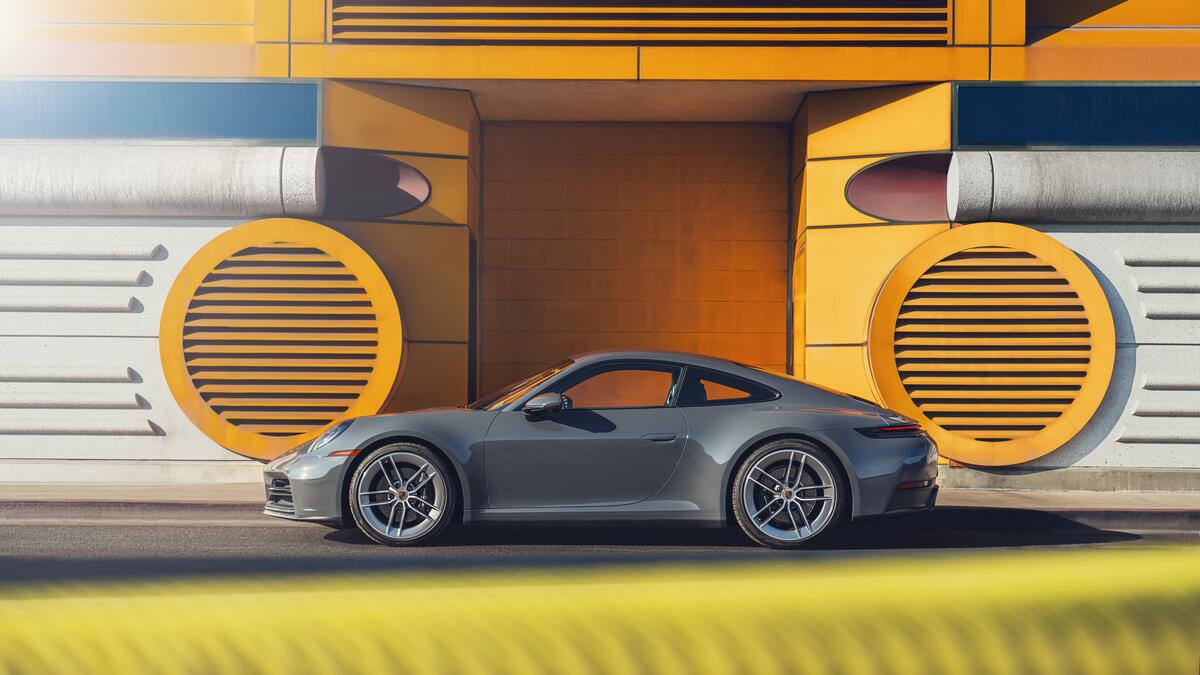
Porsche 911
"There were definitely times when I thought chopping up a 911 was stupid because Stupgart already created a masterpiece."
The Porsche 911 is a famous sports car from Porsche. It’s known for its distinctive shape and rear-engine layout. Here, they’re talking about people modifying or cutting one up and why that can feel controversial.
Porsche 911 is the iconic rear-engine sports car line from Porsche, known for its flat-six engine layout and long-running evolution. In this segment, the host references the idea of “chopping up” a 911, which is a nod to how enthusiast culture can clash with the car’s status as a classic design.
wider tires
"Without wider fenders, you came on wider tires on your car. And for people who actually track their RWB 9-11, that is a very important feature."
Wider tires touch the road over a larger area. That usually helps the car grip better, but you also need enough clearance so the tire can spin without hitting the fender.
“Wider tires” increase the tire’s contact patch with the road, which can improve grip and stability—especially during cornering and track driving. On a widebody setup, wider tires also require matching fender clearance so the tire doesn’t rub.
wider fenders
"Without wider fenders, you came on wider tires on your car. And for people who actually track their RWB 9-11, that is a very important feature."
Wider fenders are the outer panels that stick out farther to make room for bigger wheels and tires. They help keep the tire from rubbing and allow the car to fit the setup safely.
“Wider fenders” are body panels that extend outward to cover and clear wider wheels and tires. In track-focused builds, they’re a key part of fitment because they prevent rubbing and help maintain proper tire positioning.
RWB
"Back in Japan, RWB hosts events where their customers bring out the This is why you changed your mind."
RWB is a Japanese company that customizes Porsche 911s. They’re especially known for making “widebody” versions with wider tires and fenders.
RWB stands for Rauh-Welt Begriff, a Japanese Porsche customization brand famous for its widebody “restomod-style” approach focused on the Porsche 911. Their builds are often driven hard at events, which is why details like tire and fender fitment matter.
electric Ferrari backlash
"What do you guys think about this electric Ferrari backlash? Oh, God. Jump in."
They’re talking about people being upset about Ferrari making an electric car. Some fans feel electric doesn’t match what Ferrari is known for, while others think it’s fine.
This phrase refers to the fan reaction to Ferrari launching an electric car. In enthusiast circles, the backlash usually centers on whether an electric powertrain fits Ferrari’s traditional identity and driving feel.
1000 horsepower
"OK, if 1000 horsepower is pretty fun, I could overlook how it actually looks."
Horsepower is how much power the car’s engine or electric motors can make. Saying “1000 horsepower” means it’s an extremely powerful car, usually associated with very fast acceleration.
“Horsepower” is a measure of engine (or motor) power, and “1000 horsepower” implies extremely high output. In practice, that level of power is often discussed because it can translate to very quick acceleration and strong performance—though it doesn’t automatically guarantee the same kind of feel as a traditional engine.
Ferrari badge
"But I do think like the problem is that it has that Ferrari badge on it. If Nissan came out with this concept, people would be like,"
A “badge” is the logo/emblem that shows the car’s brand. They’re saying the Ferrari logo on the car is part of what makes the design feel off to some people.
A “badge” in this context means the brand emblem (the Ferrari logo) on the car’s body or grille. The host is arguing that the visible Ferrari branding is part of why people react negatively or feel it doesn’t “fit” the concept.
own a Ferrari
"Is it going to be the same situation where you have to own a Ferrari, be able to have this?"
This is referring to the idea that Ferrari ownership can be a gatekeeping or qualification factor—where buyers may need to already own a Ferrari to access certain cars or allocations. The hosts are questioning whether a similar situation could happen with the Nissan they’re discussing.
iPhone
"all right, let's hire the iPhone guy, ... because he designed something that tilts towards an iPhone instead of towards a Ferrari"
They’re using “iPhone” as a metaphor for Apple-style design and priorities. The point is that the designer’s mindset leaned toward consumer tech instead of car-focused priorities.
“iPhone” is used here as shorthand for Apple’s product design philosophy—user experience, software integration, and a tight focus on consumer tech. The hosts use it metaphorically to argue that a designer’s priorities can shift a company’s product direction.

Ferrari
"It's just not a smart idea for Ferrari because he designed something that tilts towards an iPhone instead of towards a Ferrari, right? ... So that's faster than our little Apple Watch Ferrari"
Ferrari is a famous Italian brand that makes high-performance cars. In this conversation it’s mostly being used as the comparison point for speed and design choices.
Ferrari is an Italian performance brand known for high-end sports cars and engineering-focused design. In this segment it’s used as a reference point for the “iPhone guy” hiring idea and later as a nickname for a fast car being compared against the electric Porsche Cayenne.

Porsche Taycan
"Exactly. You know, like the Taycan. And then the Utopian made a good point too."
The Porsche Taycan is an electric car made by Porsche. It’s built to be fast and handle well, not just to be efficient. The podcast mentions it as an example in their conversation.
The Porsche Taycan is Porsche’s all-electric performance sedan, designed to deliver quick acceleration and sporty handling. It’s often brought up because it shows how Porsche applies its performance identity to an electric powertrain. In the podcast, it’s mentioned as part of a discussion that includes another point about the Taycan.

Porsche Cayenne
"when you have cars like this, put up this new Porsche Cayenne that they just brought out right here. Look at this guy. This is the new electric Porsche Cayenne"
The Porsche Cayenne is Porsche’s big luxury SUV. Here they’re talking about a new electric version and how insanely fast it is compared with other cars in the conversation.
The Porsche Cayenne is Porsche’s large luxury SUV, and it’s notable here because the hosts are discussing a new electric version. In this segment, they frame it as Porsche’s most powerful model, emphasizing its performance numbers and EV identity.
0 to 62
"1156 horsepower. An absolute monster, 0 to 62 times 2.5 seconds, right?"
“0 to 62” means how quickly the car goes from standing still to 62 (usually miles per hour). It’s a quick way to compare acceleration between cars.
“0 to 62” is shorthand for how fast a car accelerates from 0 mph (or 0 km/h, depending on the market) to 62 mph (or 100 km/h). It’s a common performance benchmark because it reflects the car’s launch capability and power delivery.

Tesla Cybertruck
"...ng to buy that car are the people that bought the Cybertruck, that are like..."
The Tesla Cybertruck is an electric pickup truck. It looks very unusual compared to most trucks. The podcast mentions it in terms of the kind of people who choose to buy one.
The Tesla Cybertruck is an all-electric pickup truck with a distinctive angular design. It’s discussed because it’s polarizing in appearance and because it represents Tesla’s approach to electric vehicles in a truck format. The podcast references who buys it—people who are drawn to the Cybertruck specifically.

Dodge Charger
"Has been mentioned, they use like the shark nose like air flow kind of nose that Dodge did for the charger too."
The Dodge Charger is a popular American muscle car. Here, they’re talking about how its front-end design—especially the nose shape—looks similar to what another car is doing.
The Dodge Charger is a long-running American muscle car that’s known for its aggressive styling and wide availability compared with ultra-rare exotics. In this segment, the host connects its front-end “shark nose” airflow shape to another vehicle’s design cues.
Jason Fenske
"On the subject of the Cayenne though, I watched Jason Fenske's review of it, and he said it was amazing."
Jason Fenske is a car reviewer on YouTube. The host is saying he reviewed the Porsche Cayenne and thought it was really good.
Jason Fenske is a well-known automotive YouTuber who reviews and explains cars with a technical, enthusiast-focused approach. In this segment, he’s cited as the source of the Cayenne’s positive evaluation.
Request an Explanation
Heard something you'd like explained? We'll add it to this episode.
Sign in to request explanations for terms you heard.
Want to learn more?
Browse our glossary for plain-English explanations of automotive terms, jargon, and concepts.
Help improve this episode
See something that's not quite right? Our annotations are AI-generated and can sometimes miss the mark. Click the flag icon on any annotation to suggest a correction.