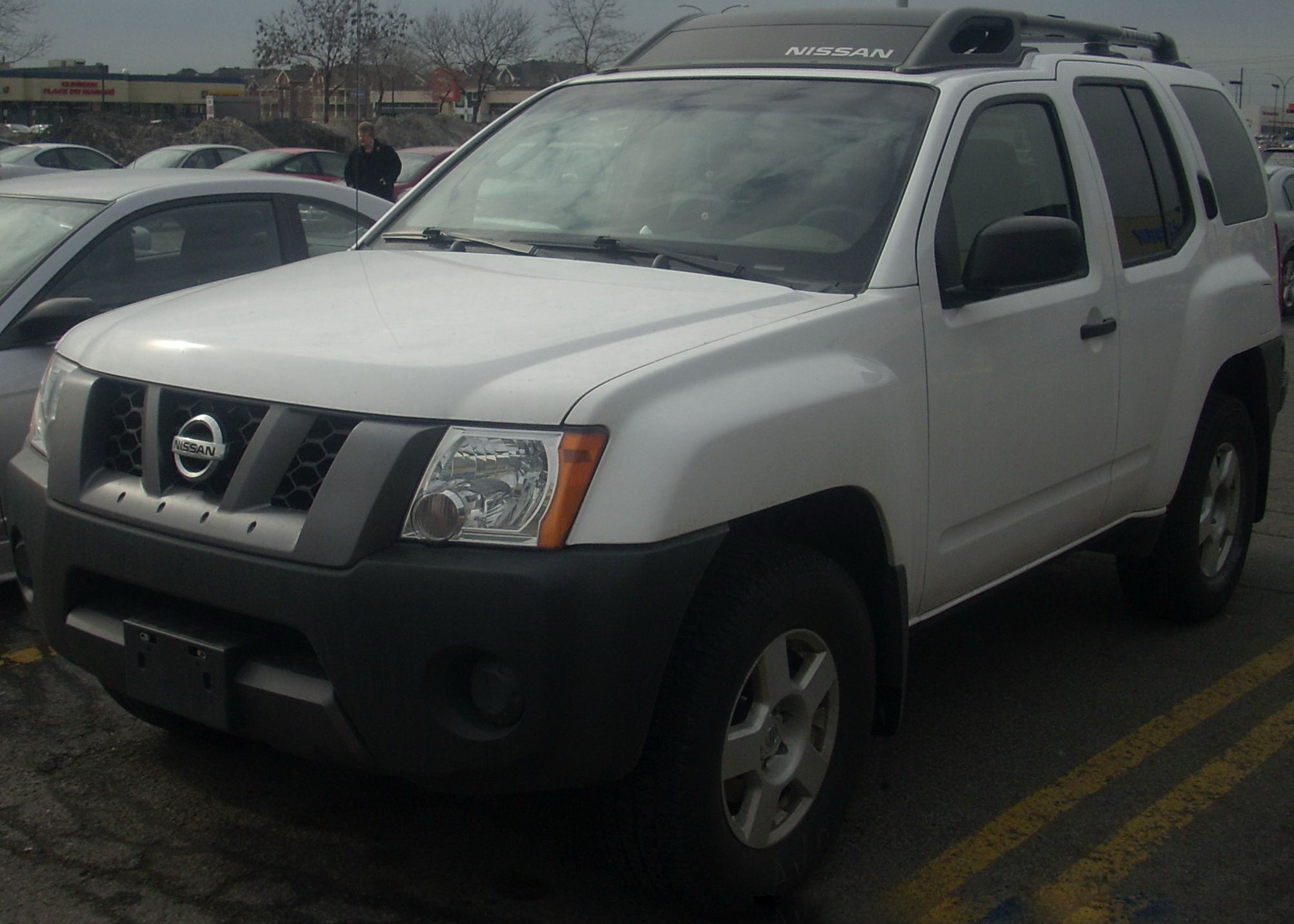
The Nissan XTerra is an SUV meant for everyday driving and light off-road or outdoor use. In the podcast, it’s mentioned as the kind of vehicle you’d rather be in for a drive. That suggests it’s viewed as a practical, capable choice.
The Honda S600 is a small old sports car made by Honda. The podcast mentions it because the speaker really likes it and considers it special. It’s the kind of classic car people enjoy for the driving experience.
Car
1999 Mercedes S600
This is a top-of-the-line Mercedes sedan from 1999. The speaker is saying theirs has a habit of causing problems, and even after cleaning it got a check-engine warning.
Ceramic coating is a protective layer you put on your car’s paint. It helps keep the paint cleaner and easier to wash because dirt and water don’t stick as much.
An automatic car wash is the kind where the car drives through a machine that cleans it with brushes or cloths. Some people worry it can be rough on the car or get water into places it shouldn’t.
The “check engine” light is a warning that the car’s computer noticed something wrong. It doesn’t always mean the engine is broken, but it does mean you should get it checked.
Car
Road Glide
A Road Glide is a Harley-Davidson touring bike. It’s built for long rides, and it typically has luggage (saddlebags) and a windshield to help with wind and weather.
The windshield is the clear panel in front of you on the bike. It helps push wind up and away from your face, and changing it can make the ride feel very different.
Car
Road King
The Road King is a Harley-Davidson touring motorcycle. In this clip, they’re working on it by installing new lower fairings, which are parts that cover the bike’s front area.
Lower fairings are the outer panels on the lower part of the bike’s front. They help block wind and road spray, and they can be replaced when you’re customizing or repairing the bike.
Burrago is a company in Italy that makes model cars. The speaker liked their detailed metal kits with moving parts, and that’s what got them interested in cars.
Car
Mercedes-Benz SSKL
The Mercedes-Benz SSKL is an old, famous Mercedes performance car from the 1930s. The speaker mentions it because it’s the kind of classic European car that inspired their interest.
The first Mazda RX-7 is special because it uses a rotary engine, which is different from the normal piston engines most cars have. It’s also known for its unique look and fun, responsive driving feel.
An engine swap means taking the engine out of one car and putting a different engine in. It’s more than just bolting it in—you often have to change wiring and fuel parts so it can start and run properly.
This is a 1984 Ford Mustang convertible. In the episode, it’s the car that got modified—swapping from a V6 to a V8—so it’s a good example of how people build older Mustangs.
Carbureted means the engine uses a carburetor to mix fuel and air. It’s an older style of fuel system that usually needs more tuning than modern fuel injection.
Fuel injection is how a car delivers fuel using electronically controlled injectors. It generally helps the engine run more smoothly and consistently than older carburetor setups.
The drivetrain is the set of parts that sends power from the engine to the wheels. If you change the engine, you may need to change some of these parts so everything lines up and works together.
A wiring harness is the car’s main bundle of wires that connects everything. When you swap an engine, you usually need the right wiring so the new engine’s sensors and controls can talk to the rest of the car.
Car
1990 Mazda protégé
A 1990 Mazda Protégé is a basic, older compact car. Here it matters because it was the first car the speaker drove, before they moved on to nicer cars.
This is a sportier Volkswagen Jetta from 1990. The “16 valve” means the engine has more valve openings, which can make it feel more responsive when you drive.
A “single car accident” means the crash involved only one vehicle—no other cars were directly involved. In driving terms, it often points to factors like road conditions, speed, or loss of control rather than a collision with another driver.
Term
rims were toast
“Rims were toast” means the wheels were badly damaged. That can cause shaking and makes the car feel unstable until the wheels are fixed.
Car
Volkswagen GLI
The Volkswagen GLI is a sportier version of the Golf. Here it matters because the speaker’s project involved taking parts from a wrecked GLI to build something else.
The Volkswagen Rabbit is a small Volkswagen that people often modify. In this story, someone’s building a 1984 Rabbit with a bigger, more modern engine to make it more fun to drive.
“Boring out” an engine means making the cylinders slightly bigger to increase engine size. “16-valve” means the engine has more valve openings, which can help it breathe better and make more power.
The tailpipe is where a car’s exhaust comes out at the back. “Crawling up my tailpipe” means the other car is tailgating you—driving too close behind you.
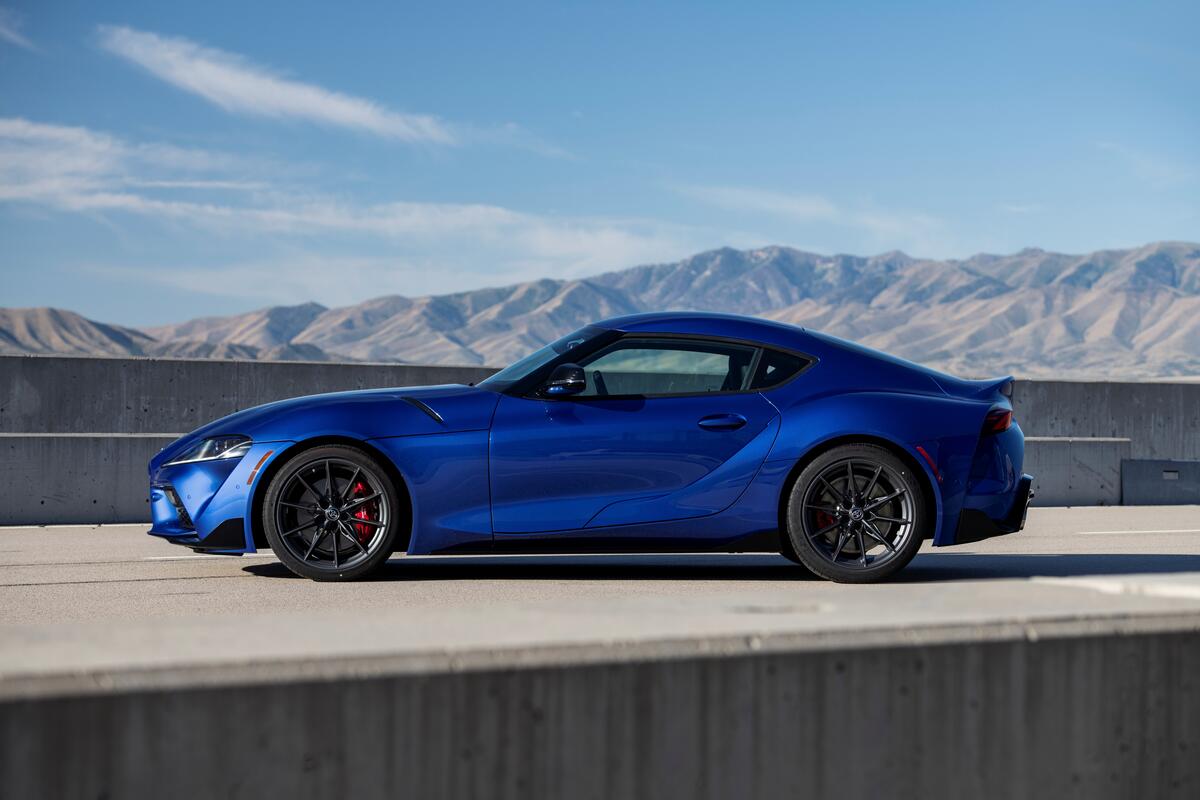
The Toyota Supra is a sports car that’s designed to be quick. In the podcast, the speaker describes a situation where the car seemed to get very close while driving. That’s usually tied to how fast it can accelerate and how quickly it can close distance.
A 2012 Mini Cooper is a small car that’s popular for learning how to drive a manual (stick shift). In the episode, they pick this one because it’s not too easy to mess up while you’re learning.
Hillhold is a driver-assist feature that helps prevent the car from rolling backward when you start on an incline. It holds brake pressure briefly after you release the brake, giving you time to move off smoothly.
The Porsche 944 Turbo is a classic Porsche sports car. The point here is that it’s easy to read—when you’re pushing hard, it warns you before it starts to lose grip, and then it lets go gradually instead of suddenly.
They’re talking about the tachometer, which shows how fast the engine is spinning (RPM). It helps you understand how hard the engine is working while you drive.
“Break loose” means the tires stop gripping the road. When it happens, the car can start sliding, and the host is saying one car starts sliding more smoothly than the other.
They’re comparing a 1987 Corvette to the Porsche 944 Turbo. The idea is that the Corvette may lose traction suddenly, while the Porsche gives more warning before it starts to slide.
A manual transmission is the kind where you use a clutch and shift gears yourself. The host thinks it feels more engaging because you’re actively controlling what the car is doing.
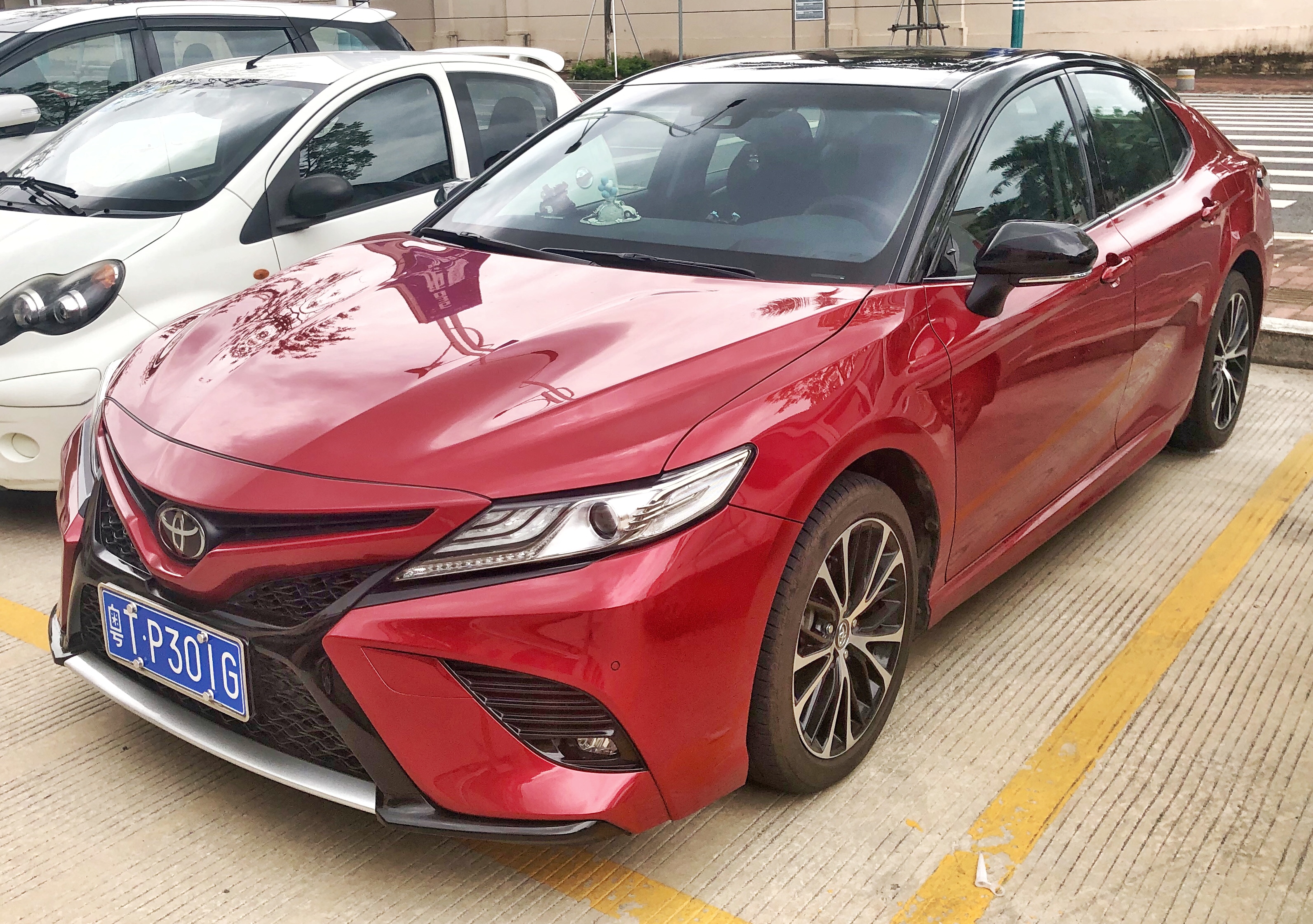
The Toyota Camry is a regular, everyday car meant for comfortable commuting. The podcast mentions it during a passing moment, as a comparison to what the speaker was driving. It’s basically being used as an example of a typical sedan on the road.
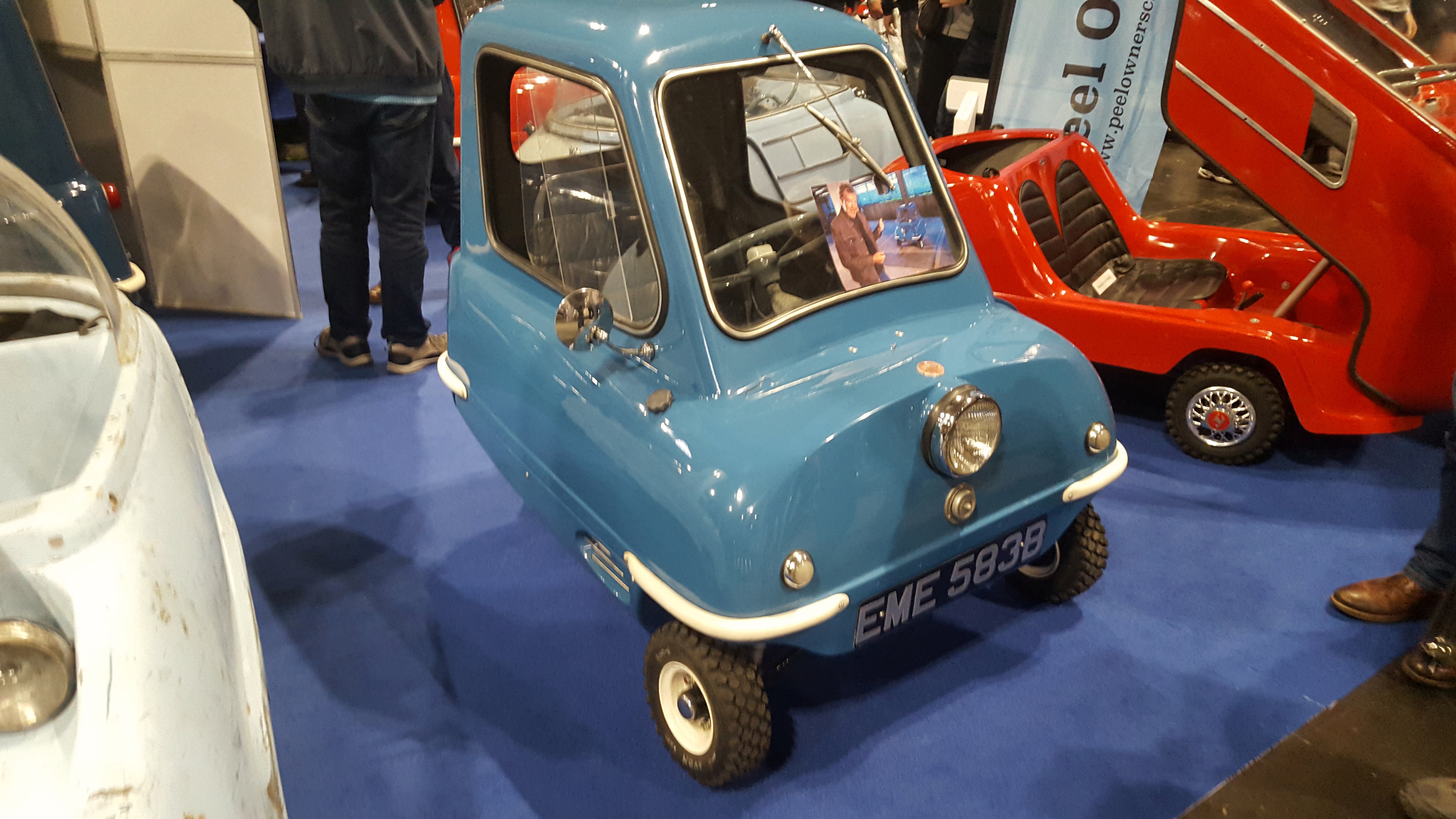
This vehicle doesn’t have reverse, so you can’t back up like a normal car. The host explains you have to get out and reposition it when you park on a slope or need to turn around.
The Peel P50 is an extremely small “microcar.” It’s famous because it’s so tiny and weird-looking that it feels more like a novelty than a normal car.
Car
1967 Jaguar 3.8 S
The 1967 Jaguar 3.8 S is a classic Jaguar from the 1960s with a 3.8-liter engine. The host describes it as a project car that needed repairs and restoration work.
The Mini Classic is a small old car designed to be easy to drive and park. The podcast brings it up while talking about classic cars and what someone has or likes. It’s mentioned because it’s a recognizable classic model.
The Lancia Fulvia Zagato is a rare, Italian sports car with a special Zagato body. It also uses a compact V4 engine and drives the front wheels, which is part of what makes it stand out.
Term
V4
V4 means the engine has four cylinders arranged in a V shape. It’s not as common as the usual four-cylinder layouts you see in most cars.
They’re talking about lowering risk by storing cars in multiple buildings. That way, if one building has a fire, the insurance doesn’t have to cover every car at once.
“Underpinnings” means the car’s main basic structure and mechanical parts. The host is saying the A30 and the Austin Healey Sprite share that foundation, which is why upgrades can work.
“1275cc” is the engine’s size—how much space the engine’s cylinders have. Bigger displacement like 1275cc often means more potential power, which is why the host thinks it can turn the A30 into a more fun car.
Car
Maserati A6
The Maserati A6 is an old, rare Maserati that’s considered important in the brand’s history. The host mentions it was built in very small numbers, which is why collectors care about it.
A machinist is a person who can make metal parts using specialized machines. For old cars, they’re important when you can’t buy the exact part you need.
Lucas was a company that made electrical parts for a lot of older British cars. If many cars used Lucas parts, it can be easier to find replacements when restoring them.
A full service restoration shop is a place that can do many parts of the restoration process itself. Here, it means they can handle repairs and also make or source the parts needed for older cars.
3D printing is a way to manufacture a part using a computer file. In vintage car restoration, it can be used to recreate hard-to-find parts.
Concept
restorations on mostly British cars
When a shop focuses on British cars, it usually means they’ve learned the common problems and repair methods for those older models. The speaker is using it to explain how the shop developed its restoration style.
The Triumph TR-250 is a classic British roadster. Here, it’s mentioned because the speaker started with the car disassembled and had a shop put it back together.
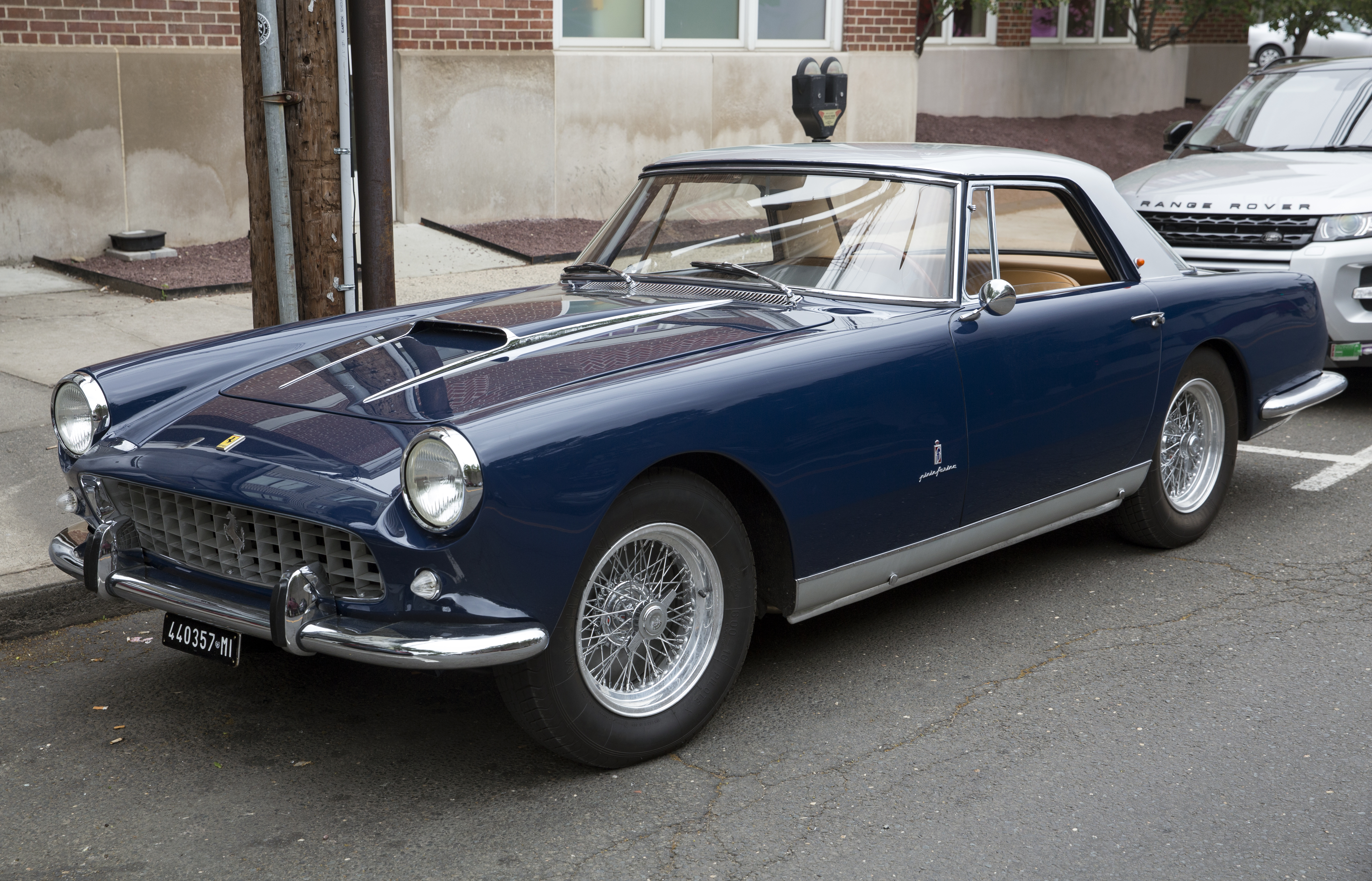
The Ferrari 250 GTO is a very famous old Ferrari sports car from the 1960s. It’s known for being rare and highly valued by collectors. The podcast mentions it because it’s the kind of car people talk about when discussing serious classic car ownership.
The Ferrari 250 GTE is a famous old Ferrari from the 1960s. In this story, it’s important because it got a full restoration from basically the bare car, after being stored for a long time.
A ground-up restoration is when a shop basically takes the car apart completely and rebuilds it. It’s the most thorough kind of restoration, not just a cosmetic fix.
The DeLorean DMC-12 is a sports car with a very unusual look. The podcast brings it up through a conversation about owning one and the people who are fans of them. It’s mentioned because it’s a memorable classic car that many owners talk about.
An automotive turntable is a rotating platform that lets you spin a car for photos or video. It makes it easier to get good angles without moving the car around by hand.
A sunroof that “lifts out” is a roof panel design that can open upward and out of the way, creating a more open-air feel than a fixed glass panel. In practice, it can make the cabin feel closer to a convertible by letting in more air and light.
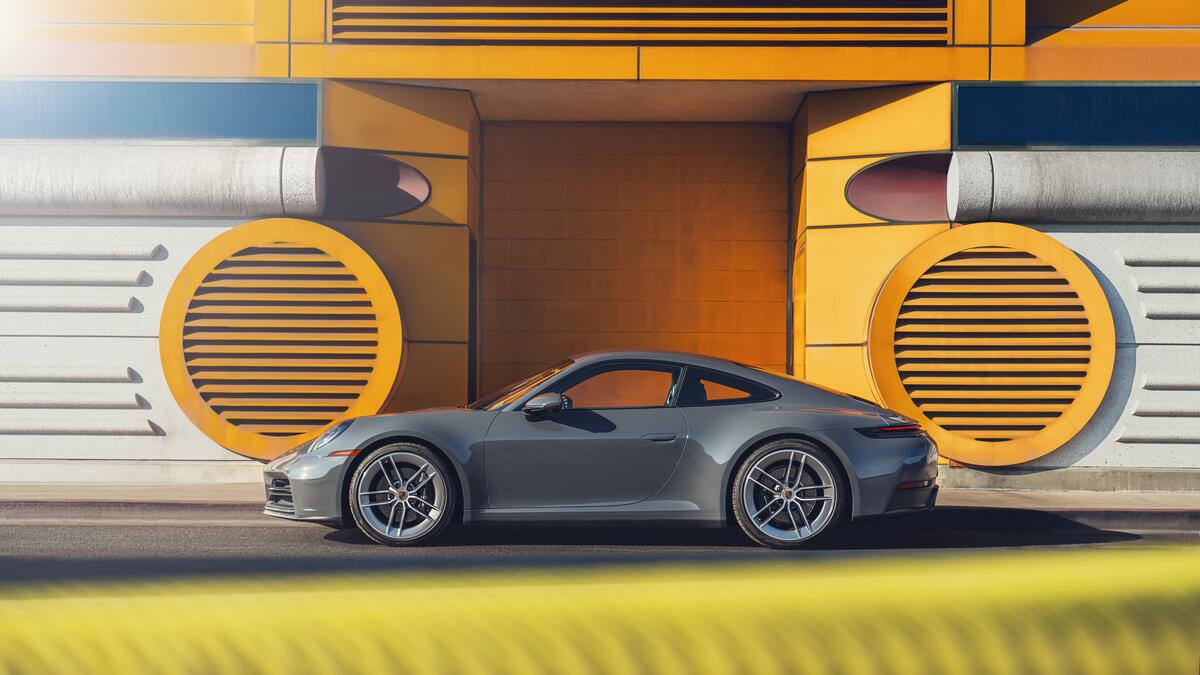
This is a Porsche 911 that cools its engine using air instead of coolant. It’s a classic setup that affects how the engine is built and how people maintain these older cars.
Car
Citroen DS
The Citroën DS is a classic Citroën that looks and feels unlike most cars. People call it “strange” because it was ahead of its time in design and technology.
The Volkswagen Bora is a Volkswagen sedan model that was sold in some markets. The podcast mentions it while talking about a collection of older cars. It’s brought up because it’s a less common classic that collectors like to find.
The Maserati Bora is a rare older Maserati with a mid-engine layout and an exotic look. It’s the kind of car enthusiasts talk about because it’s unusual and not commonly seen.
The Sunbeam Tiger is a British sports car that’s famous for using a Ford V8 engine. It’s a surprising combo, which is why car people find it memorable.
They’re talking about how really unusual cars can be hard to get people to watch online. The channel needs to grow so they can cover more obscure cars that most people wouldn’t search for.
Car
Panhard PL17
The Panhard PL17 is an older French classic car. It’s not a super common model, so fans of vintage cars often get excited about it because it’s unusual and different from the usual classics.
The MG MGB is a classic British roadster. People like it because it’s a fun vintage sports car and it’s a common choice when you’re looking at other British classics.
The Triumph TR6 is a classic British sports car. It’s well known for having a bigger engine than many similar roadsters, which is part of why enthusiasts want one.
The Triumph TR3 is an older version of the TR roadster line. It’s a classic British sports car that people often collect because it’s part of the early history of that model family.
The Renault Twingo is a tiny, easy-to-drive car made for city streets. This one is a 1996 model, so it’s older and more unusual—people notice it because you don’t see them often.
Car
1990 Volvo station wagon
Volvo made station wagons that are built to be useful and last. Here, the point is that this 1990 Volvo station wagon was restored by the owner, including doing engine work.
Car
1983 Toyota pickup SR5
This is a 1983 Toyota pickup, and “SR5” is a nicer trim level than the basic version. The hosts are saying theirs is fully restored, so it stands out and gets a lot of attention.
Two-wheel drive means power goes to only two wheels, usually the rear. It can be fine for normal driving, but it generally has less grip than four-wheel drive on slippery or rough ground.
A Bronco is a classic Ford SUV that’s built for rough roads and off-roading. The person talking really likes the specific older Bronco’s look—especially the colors and stripes.
“Bulletproof engine” is a nickname people use for an engine that seems to last a long time and rarely breaks. It’s more about reputation than a measurable rating.
The Jensen Interceptor is a classic British car that’s known for being a stylish, sporty cruiser. Here, the person bought a 1974 version that was a convertible, which adds extra drama and complexity compared with a normal car.
Hot wiring is when someone starts a car by bypassing the usual key/ignition wiring. It’s usually done when the car won’t start normally, often because of an electrical or security issue.
An electric fan switch tells the cooling fan when to turn on. Here, they used that switch’s power path to help the car’s ignition system work well enough to start.
Wheel balancing makes sure the tire and wheel spin smoothly. If they’re not balanced, the car can vibrate and feel unstable.
Term
hot swap batteries
Hot swapping batteries means changing the battery quickly instead of waiting for everything to fully shut down. It’s a workaround people use when the car keeps losing power.
Heat soak means parts stay too hot after driving. For the fuel system, that can cause fuel delivery problems and make it hard to restart when the car is hot.
An electric fuel pump pushes fuel to the engine. They added one to help prevent fuel delivery problems when everything gets hot.
LIVE
Quiet and I'm Skulls. I'm broadcasting. Hey, all you
gearheads and car fiends, welcome to Driven Radio Show,
your weekly automotive happy hour. I am Brett Hatfield here
with my cohost and engineer extraordinaire, Mr. Mark
Gross. That's me. We are coming to you from Driven Radio
Studios where it's going to storm its butt off. Do you see
the sky when you got here? Yeah. Yes, I did. I'm waiting
for tornadoes. Yeah, it'll be a fun ride home. Hey, I'm glad
you're in that XTERRA and not something else. Yeah, amen.
Hey, did you do anything to your T-bird this week? Not a
thing. Looked at it. Did you stare at it through extra
parts at it? Yeah. Basically, I cleaned the garage and
ignored the bird. Oh, that's right. You were going to get
your grill out and all that stuff. I did talk to Darrell
Ospik of Ospik Automotive. Oh, yeah. And chatted with him.
He's actually kind of interested in working on it. He
wasn't that thrilled with the 64 Dodge. This is a lot, lot
better car than your Dodge was. Nothing against your Dodge.
It's prettier. It's definitely prettier. So we'll see what
we'll see what he can do with it and go from there, see if he
can get it dialed in, but it's going to be a little bit. I've
got a bunch of plans coming up in May. So I'm just, I'm trying,
you know, not going to rush. Not going to worry about it.
Well, you're going to get done when it gets done.
In McPherson. Yeah. Well, I'll be gone for a weekend in
McPherson and then I got a couple of weeks going to go to, oh
God, New Mexico with my son and hiking. Oh, cool. Where are you
going to go? The Gila National Forest. Okay, cool. And he's
got a big idea of where to go through, et cetera, et cetera,
which I think is really cool. And I've been carrying the
backpack. I've got it loaded and oh my God. So I did some
re-engineering on the load yesterday because the, the
backpack is too heavy. I'm like, am I, am I going to walk eight
to ten miles a day with this thing on my wheeled airport
bags, don't you? Yeah, that's pretty what I do. Drag is
sled. So I, you know, I bought a, I bought two cases of MREs,
right? And was going to go, yeah, I'll just take some MREs.
This would be easy. They cook themselves, don't have to, they're
heavy. Yeah. They are heavy. Yes. And so I got rid of those,
got some, you know, dried couple of Zatarans things and some
noodles. Remember the rule from the Rangers, ounces turn to
pounds and pounds turn to paying. Yeah, that I 100% believe.
And I'm just walking around my, you know, my neighborhood with
his backpack on, looking like I'm trying to go camping
somewhere. And, and it's like, wow, this, this would get old
real fast. So I've already lightened that up. And yesterday
I made my own beef jerky for the first time ever in my life.
There you go. And by the way, do not, do not ever buy shaved
beef from Hy-Vee, well, anywhere, whether it's Hy-Vee or
what, because when you try to put stuff on it, it just turns
into shaved goop. And then when you run it through your
dehydrator, you're, it looks like dried sewage. It tastes
pretty good though. My, I've got a buddy of mine, another buddy
named Mark, one of my 15 friends named Mark, the guy who sold
me the Road King. Yeah. He makes his own beef jerky and a
dehydrator at home. And to hear him tell it, he gets a flank
steak or something like that. And he says, first, get it
really cold. And it makes it easier to cut. Yeah. And you
cut it your own self. Yep. You don't have somebody else do it
because when it's shaved. Yeah, it was terrible. And they did a
really good job of shaving it too. I mean, it was, it was paper
thin. Didn't have a hair like, oh, I'm so smart. Look at me.
I'm just gonna do, no, it was just a big clump of goo. So yeah,
that was fun. But that's what I did with the T-bird. I was gonna
say, I'm so glad I asked you about your Thunderbird. The
Schadenfreude Express. My beloved 1999 Mercedes S600, the car
that never fails to fail. I got it all cleaned up. I spent an
entire day last weekend polishing and ceramic coating and
trying to, you know, because the paint's all right now and
trying to get everything just right. And I ran it through an
automatic car wash because I just, I wanted to get a little bit
of dust off of it. And of course, the sunbitch through a
check engine like. Oh, God, because it did not like being
treated like those plebeian cars. Apparently, it doesn't like
to have its belly washed. How'd you treat me like a Kia you
bastard? How dare you? What's wrong with you?
So the finest Mercedes ever made continues to give me the
Eftel. Let's see, the saddlebags of the road glide are
almost ready at Hot Rod Express. The new windshield for the
road glide was out of Turkey Creek. I went and got it today and
came home and started to put it on. And that's the bike that
fights me no matter what I do to it. And it wanted to fight me
over a stupid stinking windshield that should have
been a 10 minute swap an hour and I'm casting at the bike. Oh,
sure. Oh, sure. And I put new lower fairings on the Road King
on the black bike. And those just went swimmingly. They went so
easy. They were lower fairings from Hogwarts. And they worked
really great. Nice. I continue to pittle around with the red
Corvette and the blue Corvette because you know, 60 and 65
year old cars require that. Yeah, as you can attest as I'm
learning. Yeah, well, you never get done with this stuff. Old
cars always need attention. Yeah. And we're going to talk to a
couple of people who have a ton of old cars. Our special guests
this week are Alex and Amy Howland of Vintage Underground.
Alex and Amy have been collecting cars together for over 20
years. Alex's love of cars started at an early age with
building detailed models of classic cars. Amy's love of cars
started after she married Alex. He infected her. Yeah, he did
it. He gave that she warned her as his contagious. Definitely.
Absolutely correct. Contagious enthusiasm showed her how
fascinating cars could be. The Howland's believed to that to
truly understand cars. One has to use them for their intended
purpose. And that's fantastic. You don't you mean drive them?
Yes. Holy cow. Kind of like I drove the 65 at the Tonga Noxium
back today. Nice. And people in traffic are still schmucks.
Very special. Yes. Yeah. Taking the collection on the road
allows the Howlands to share that understanding and passion
with others. Alex and Amy, welcome to Driven Radio Show.
Thank you very much. Hi. Alex, we'll start with you since
since you infected your lovely bride later in life. When did
you know you were a car person? Did you have early
influences? In a lot of I mean, I come from a family of non
car people. Essentially. None of my parents cared about cars.
They drove things like diesel Oldsmobiles of the 1970s. Oh
God, I remember those horrible, horrible things. Horrible
done. Station wagon versions on top of that. Wow. At the same
time, I've always loved absolutely everything mechanical
and taking things apart, destroying all my toys by
disassembling them and trying to put them back together.
Sometimes successful. They usually not. And that really has
kind of led a huge part of that. We absolutely share that
thing. Mechanical cars are the biggest mechanical thing I can
mess with. I used to have a drawer full of semi disassembled
Mickey Mouse watches. My mom apparently on sale. So Alex, if
your family was a bunch of non car people and they were they
were driving Malaysera garbage like diesel Oldsmobile wagons.
Hey, my uncle had a 98 I wrote and that it was awful. And on top
of that, it was beige. Oh, it was beige over beige and it had
that like beige crush velvet awful 70s couch interior on it. If
you didn't have any early familial influences. How did you
get into cars? What drove that interest? It wasn't just this
is the biggest thing I can ranch on.
A big part of what I blame is my mother's Italian. We have
family still in Italy, and we would travel to Italy fairly
regularly. And I'm I did not speak Italian, my mother did, and
we're hanging out with family who didn't speak Italian. So a lot
of it was trying to find things of interest me in the meantime.
There's a company based out of Monza, Italy called Burrago that
made model car kits. Yes, metal with opening doors and
steering wheels that turn the wheels and everything. Yeah. And
that's really where I started. But I started putting together
models of things like 1934 Mercedes Benz SSKLs, not putting
together necessarily modern cars. And so most of the model kits I
put together were like pre war up into like 1960s Ferraris, a few
early jaguars. And that's really a big part of what I blame for my
love of sort of the classic shape of cars. And I wasn't very
interested in the blazer of cars that were around when I was a
kid. But I would occasionally see things that were either older
or more interesting one way or the other or that kind of stood
out as beautiful to me. And most of those tended to be European
cars, although a few Japanese cars and things slipped into that
as well.
Did you have an early favorite car?
One that I absolutely remember always loving when I'd see them
are series three Jaguar XJ6s, which is I always just thought was
an absolutely beautiful design. And I mean, it's a family car,
it's a sedan, but it's the kind of thing I felt like I could
possibly own. The other one I really liked were first generation
Mazda RX7s. Oh, yeah. Also in the 80s. Yes, yes. Kind of a stunning
beautiful shape of a car and just absolutely wonderful.
They weren't that fast, but they felt sprightly when you drove
them. They were really, really interesting. I loved those two.
Absolutely. So what was your first car related job?
Technically, the first one that I officially thought of as a job
is actually owning or being an older and vintage underground. Now
that said, I did do a lot of sort of shade tree mechanic work on
the side in the past. And the main one that I got paid for was I
helped a friend of mine's mother do an engine swap on a 1984
Mustang convertible, converting it from a v6 carbureted car to a
302 v8 fuel injected engine out of a wreck to 88 Mustang. So
basically swapping over pretty much the entire drive train for
the most part, moving over to the fuel injection, redoing the
wiring harness, all of that. And I made a total of $1,000 for
basically spending most of three months after work every
evening, working on this car. So that's in their garage with
what tools I had. So I don't even think that qualified for
minimum wage at the time. Did that
Absolutely not. Did that shape your, your love of Mustangs or
take it away?
Didn't really feed my love of Mustangs. I'd like the earlier
ones, more than the later ones. This was in the 80s. It was sort
of that blazer and a lot of style and things. But it was, it
was a fun project to do. And I love the project. I love kind of
the experience and everything I learned doing it. And it was
successful. I did get it done. The car ran, it drove. And then
last I knew they still had the car today.
Oh, cool. Nice. So how did you two meet? And Amy, did you know
what you were in for with Alex's automotive passion?
Well, this is actually kind of funny, because so I answered the
second question first. Neither of us had any idea. When we got
married, we had not started collecting cars yet. And Alex
had some neat cars. But I was like, okay, cars, my parents
drove minivans. Okay, so not very exciting. But
we started collecting cars. Well, Alex started, Alex started
it. And it's awesome. But Alex started talking to me about the
people who designed the cars, the history of the people, the
people owned our cars. I love the stories. So while we didn't
know what we were getting into, and I knew he was mechanically
minded, I knew he liked cars, I knew he enjoyed that. But neither
of us had any idea we would be where we are now. I don't think
there was any way we would have known as to how we met,
ironically, at a medieval event. We were both part of a society
called the Society for Creative Anachronisms.
Oh, the SCCA. Yes, I went to some meetings down in Dallas,
Texas. This is a long time ago. But yeah, one, I had a sob
9000 at one time. That counts. And the husband of the gal who
worked at the sob dealership, their receptionist was an SCA.
And he would show up and all of his stuff at the dealership. And
clink, clink, clink. Yeah, well, chain mail and then everything
underneath it. And I just I was kind of fascinated by it, for a
number of different reasons. And I started talking to him and the
sob was broken so often I got to know that guy pretty well.
It'll do it. Well, it very much appeals to that. How does it
work? Instinct that I think leads Alex's into Alex into
engines, and also leads me into I do fiber arts, obviously, your
listeners can't see it, but I'm knitting right now, because
that's what I do when I'm sitting down. As long as I'm not
driving, do not knit and drive. But yeah, I try not to
do that. Safety first. Don't do those things. Strange. I was
just thinking about the bathroom and that's got a very
different name now. We were both in an event. One of my besties
who I usually hung out with was on exchange program in Wales of
all things. Of course. And I saw Alex sitting with some people
that I knew and they invited me over to sit with them. And I
thought, well, he's really cute. And he was doing homework.
Because these events were happening like the weekend
before finals week. Oh, and we wound up talking for four hours.
It was amazing. And then we were like really good friends for
a year, got engaged, engaged for 13 months, got married. She
made this term paper. Yeah. Yeah. Now 25 years later. Here we
are. Yes. It all started with a trebuchet and a chicken leg.
Paul, pretty close. Yeah. So you two have
likely like that. You two obviously have very different
automotive backgrounds. I was told that I should ask you about
your individual driving experiences. I started driving
basically with permanent 15. My first car was a 1990 Mazda
protégé that I had to share with my sister. It eventually went
off to college with her and then I ended up inheriting my
father's 1987 Ford tourist station wagon, which absolutely
convinced me I never wanted to own anything like that ever
again in my life. Wow, you've kind of moved down. I was
interested in owning nicer cars, cars that are enjoyable to
drive. You didn't turn it into a shagging wagon. I mean, come on.
The back end of that thing was an acre and a half. You put down
a foam pad, a leftover rug, and the next thing you know, you
got Shangri-La. And you would know because you have owned one
not that long ago. Well, I owned a regular tourist, but my
brother had a little 70. I think it was a 72 or 74 Vegas
station wagon. Oh, yeah. He put down a six piece, a six inch
thick piece of foam back there. And this leftover, you remember
the rugs that had like the twisted things your your grandma
and your great-grandma's always had that they called them rugs,
but they really looked like some leftover monster from Sesame
Street. He threw that in the back there and it was a four
speed and that he my brother was popular. I bet Amy could knit
one of those. I bet she could. She'd probably knit a Vega. So
anyway, I'm just saying I get your feel, please continue.
Pretty much from there, it's like, okay, immediately as soon as
I could, I had my first choice of car where I traded in the
station wagon on a 1990 Volkswagen Jetta Gli 16 valve.
Okay, that's not bad.
Absolutely loved that. That was my first car that had any kind
of like real feel performance up to it. And I proceeded to park
it on the driver's side door after going around a quarter too
fast. Yep. Front right wheel went into a ditch, caught a
strange pipe underneath the driveway, hop the car up and
set it down on the driver's side. And I walked out of it fine.
Car did not. I was incredibly lucky at a toolbox in the
passenger seat that went through the driver's side window right
past my head. Probably one of the worst things I've ever done
in a car. Wow. Entirely my fault single car accident. I've
never had anything that bad ever again. And I've really learned
to respect the road and respect the driving conditions I'm
driving in a lot more after that.
I had a buddy who had a 1970 in high school 1972 Toyota station
wagon. And he treated it like it was, you know, fricking road
race. And we were playing tag ass one night. And I was in a
1955 gutless Plymouth. And I finally got up the hill enough to
go around a corner. This is in the Ozarks of Branson, Missouri.
And and saw my buddy taking a he was taking a left to go up this
other curve. And there he was on two wheels just tottering. And
then he came back down. And I'm like, Dave, and he's like, Oh,
my God. And yeah, the the rims were toast. So he kind of did
the little shimmy going home very slowly. And and we didn't do
that anymore. I yeah, those little cars, they're peppy as
hell. But yeah, this corner. Oh, yeah, they'll creep right up
on you. GLI was was a great car. They were really fantastic. I'm
kind of sad to hear that it went away like that.
I started a project where I bought my friend 78 VW rabbit
and decided to transplant the engine out of my wrecked GLI into
it. Never quite got that done. But that was another one of the
major I'm starting to hear a theme here. I've been involved
it. Absolutely. So I never finished that. However, we
now have someone else's version of exactly what I was trying to
build in 1990s, with a 2.1 liter board out 16 valve engine in a
1984 VW rabbit. So fantastic little car to drive.
Alex is starting to sound like the Earl Shib of the car engine
swap world. My name's my name's Alex Hauglin, and I can swap that
engine for $49.95. That's kind of your background, Amy. We're
gonna pick on you now. What's your what's your automatic
background? What were your driving experiences like?
So I did not get my license until I was in my early 30s.
What? And yeah, and part of that was okay, so my parents, Lord
love them, did not press either me or my brother to get our
driver's license. I think part of that was they were, you know,
of course, the insurance would have gone up, they would have
had to teach us we had really good public transport and walked
a lot. I was in excellent shape. But then Alex and I got
married and we moved to a house three miles out of town. Okay,
which means no public transport. And Alex enjoys working on
cars. He enjoys woodworking. He enjoys cooking. He enjoys many
things that involve fire and sharp things. And so I was like,
okay, I need to know how to drive because if something god
forbid happens, I need to be able to take him to the emergency
proof. That's very important. Also independence is nice being
able to get into town and so on. So I started learning to drive
in a Subaru WRX station wagon. Wow, lovely car. Yeah, that's
automatic. That's that's a heck of a way to start.
So after my very first driving lesson, Alex said, Would you
like to drive part of the way home? And he got me out onto the,
you know, onto the road where there was less traffic and so on
and so I'm driving along and doing okay. But there's somebody
that feels to me like they're trying to crawl up my tailpipe
behind me. And I didn't like that. And we have a 90 degree turn
onto our driveway. It's a shared driveway. And I was going a
little too fast to take the turn. And Alex said, Oh, go on, go
on. And what he meant was keep going. Oh, keep going. What he
meant was don't take the turn. Oh, keep going and we'll find
another place to turn off. I thought he meant take the turn.
And I took the turn too fast. We went off the driveway into the
trees. I let's see, I shattered a wheel, put a big dent in the
side of the car. We found out later that I popped most of the
rivets on the firewall. Oh, my, we were fine. I was in absolute
tears. Alex did everything right. He jumped out of the passenger
side of the car. It comes running around to my side of the
car. And he the first thing he says is, Are you okay? And I am
sobbing and I'm going, I broke the car. I was so upset. But of
course, I was slightly traumatized and couldn't sit in a
driver's seat for about a year. Oh, wow. Yeah. After that. Now I
drive pretty much everything. So the the outcome of that was
that Alex said, Okay, once you get your driver's license, you
get to pick your first car. And it can be anything you want. And
so I chose a 2012 Mini Cooper. And we picked a Cooper works
because it was the best one. And that's what I learned to drive
stick on. Nice. It is one of the best cars possible to learn to
drive stick. It's really hard to kill it. It has a hillhold. So
if you're like me and you're a little nervous about rolling
back, it's great for that. We still have that car. Cool. It's
still amazing. And now I prefer stick really to an automatic
transmission. Is that because when you're driving stick, it's
more involved or why why that preference? And I commend you on
that preference. I'm thrilled about that. It makes me feel
very cool. It's like, Oh, I have the skill. I can do this. And
there's so many people now who don't yet. Yeah, it's a theft
attorney. Yeah, well, it is that too. But I do like the being
involved with the car. I like cars that I don't have to fight
with in order to shift and stuff. There are some cars that it
takes takes a little getting acquainted. Yes, to find out how
they like to be treated, how they like to shift. But I feel
like once I've got that down, it's just like, hey, it's, it's
not just, okay, I'm driving a car and we're gonna get from A to
B. It's, hey, we're gonna have fun together on the five minute
drive to the grocery store. You know, and I like that. I like
that a lot.
Basically, what I'm getting out of this story is that
transmission.
Yeah, Alex, apparently, when you were when she was first gonna
drive you to the hospital after cutting yourself, it was to
save money. That way, there's no ambulance fee. That came from
Amy's parents. Yeah, it was an inheritance. I'm seeing right
through the story down to the meat of the matter. You know, if
she was really going to go ambulance, she should have gotten
that countrymen it's a little bit full seats, throw them in
there. Old milk delivery truck. Yeah, that's right. And then
the other point to the story is that she likes five speeds. So
now she's going to be drifting around the court that 90 degree
corner to go up the driveway. Yeah, go ahead. It's gonna be all
NASCAR and laughter all the way up that drive. That's what I got
out of that. I don't see NASCAR, but I did almost have, I did
almost have a little bit of a problem with our Porsche 944
turbo. Oh, I love those so stable. Yes. And so you don't
Yeah, and it tells you how fast you're going. It tells you
exactly what it's gonna do. Okay, you really do need to slow
down for this corner. Is it my tack or my speedometer? And those
944 turbos are so communicative, you can tell everything
they're gonna do before they do it. And they'll let you push them
really, really hard. And when it finally does break loose, it's
not a snap thing. It's it's slow. And it allows it's not the
difference. The two cars that you can book in with this would
be like an 87 Corvette versus an 87 944 turbo. And the 944
turbo will let you get away with the most heinous crap in the
world. And it tells you what it's going to do. And then when it
finally does let loose, it does so very slowly and it lets you
know what's coming. The 87 Corvette on the other hand,
everything all at once, you're done right now. And good luck
catching up. Do you find that cars with manual transmissions
feel like they have more soul?
Absolutely. Yes. You're more connected to the car. You feel
like you are involved in the entire experience. It's not
you're more integrated in everything that happens. Yes. Yes,
I absolutely agree with that. For a guy who spent a couple hours
on a 65 stingray today. Yeah, I absolutely agree with that. Amy,
you're absolutely correct about getting to know the car and
figuring out what it likes. And you do for it is kind of a
symbiotic relationship. Once you figure out how wants to be
driven, how it wants to be shifted and everything else. So
yeah, I absolutely agree with that. I think you're 100%
correct. You've mentioned your collection. How many cars are
in your collection? And do you have a museum with all your
cars on display?
Right now, we are at 218 cars, holy moly. That's not counting
daily drivers. That's just the classics. It's not counting our
to rig or anything like that.
Okay, everything we were bitching about about the cars we
own. Yeah, I'm gonna just shut up. Shut your mouth. No, I
mean, how do you maintain that? God, you got to have a staff,
don't you?
Some extent, I do. I have one full time person who works for me
who takes care of a lot of the detailing and a lot of the
running around keeping cars sorted. I have a couple shops I
work with to keep fluids changed. It is kind of a full time
job, honestly, just maintaining and keeping the
Oh, it would have to be. It's what I'm involved with just about
every day one way or the other. And but it's something I
absolutely love and love dealing with. So it is how many
people have volunteered to help us out with keeping the cars
exercised?
I'm wondering how many cars ever she's needed.
None. It's Bobby, Bobby is our detailer. And I'm pretty sure
that he would say no, the texture will rub any kind of
dust right into that paint. I don't want to deal with that. So
out of respect for Bobby.
I don't use car covers either. I hate them.
That's exactly the situation for us. So now that said, the
number of battery tenders I have is pretty significant.
Oh, yeah, I would imagine you've got one for just about every
car. Do you collect motorcycles also? Or is it strictly
cars?
No, just cars. Amy and I have been sort of a rule where we are
allowed to own motorcycles or in Amy's case, like Vespas
motor scooters. Okay, we're not allowed to drive.
We know too many people who have been injured or killed on
motorcycles. And it's not a matter of I'm concerned about
how Alex will drive. No, no, I'm concerned about how everyone
else will drive.
Yes, absolutely. Absolutely. Mark and I Mark used to own
motorcycles and I still do. And I find I spend more time
polishing them than riding them. And again, you're
absolutely correct. It's not what you're doing. It's what
everybody else is doing or not doing. I saw a guy like looking
I was up from the phone. Yeah, I was driving down the highway
today. I was doing 70. And I slowly overtook a guy in a
Camry who you know, just like a dirt brown Camry. And he was
driving a little erratically look like he was doing the
gutter to gutter. And I look over at him and at 70 he's
staring at his lap. He's jacking with his phone. Yeah. Yep.
And I'm just thinking, okay, well, there's quite a bit of
traffic on this highway today. What about that guy in front of
you who panic stops for something? There's something in
the road throws the brakes on and you don't realize it until
you're in his back seat. Yeah, I just pray that they're
assured. God yeah, but if you're on a bike, man, you're a
bus bike is yeah, it's done. You'd be done. And so do you
take the Vespa to be able to drive across that frigging
garage that you've got?
Well, I don't I don't own a Vespa as much as I love them.
However, I do have a replica trident appeal trident, which is
a three wheeled bubble car that is made on the Isle of Man and
goes to maximum of 30 miles an hour. Cool. Yeah. It's legally a
moped. Yeah. It is legally a moped. It's really fun, but also
terrifying. They have a a go pedal, a stop pedal. No reverse
gear. Oh, well, you that's it. Park going uphill. That's all you
got. Oh, wow. Yeah, you can you can get out pick up the
back end, turn it around, set it down again. It's pretty easy.
This sounds like a peel P 50. I can do it by myself. It is it is
the two seater version of the peel P 50 basically. Okay. Okay.
Same same manufacturer, same type of thing. Just a lot more
Jetsons looking so pure bubble
not something you drive something you wear that happens
to go to take you places. Yes. So 218 cars is a crap load of
cars. How how's the collection grown? What did you start
with? And how do you amass such a collection? Because I'm
looking at you two. You're not very old. You're still pretty
young. And I'm just wondering how you what are you just
driving down the road and go, I'm buying everything. I like to
say I'm very good at buying cars and very bad at selling. So
that's dead start. If you buy one and then you never sell it,
then you tend to end up this way. It started actually entirely
as a British car collection with the couple Jaguars started
with a project car the first car that I thought of as a
classic car that I ever ever owned, not counting like a
series one RX seven and things like that, which to me at
that point that was just a car that that car was made well
still alive. So or well when it while I was alive as opposed
to predating me. But I bought a 1967 Jaguar 3.8 s which is a
four door sedan. Yes. That was a project. It had a running
engine and things like that. But it needed some bodywork and
needed a bunch of restoration work. Never quite finished that.
But I did take parts of that and restore a different Jaguar 3.8
s in the long run. And so I have exactly the car I was trying
to build finished out of that project. So that has actually
happened now. But it started out with that and then added
another Jaguar that in Austin Healy, and then a classic mini
and started up with pretty much exclusively in British cars
until I bought a Lancia Fulvia Zagato, which is a alloy
bodied little four cylinder V4 front wheel drive Italian
sports car. Fantastic little vehicle. Absolutely fell in
love with that. And that opened the door to Italian cars,
which then opened the door to German cars, Swedish cars,
a few Japanese cars have slipped in. The problem is I love all
cars. I love American cars, too. The main problem is that
most American cars are significantly bigger than
everything else that I have. Yes. And they take too much space
when you have 218 cars. So well, how big is the storage
much less efficient? How big is the building you store all
these in? I have six different buildings I store them in,
which actually the insurance is much happier about because
if the building burns down, they don't have to pay out on all
of them. Okay, so that makes sense place. So I've got the
building that we're in right now, which is one of our shops
is 10,000 square feet. Okay, I have another four 5,000 square
foot buildings. And then a few smaller spaces here and there
as well. So and the other thing that I like to say is that
most couples have one person who's a collector, and the other
person who puts on the brakes every so often and says, No, we
need to stop. We don't have that. Yeah, I'm in our dynamic.
He said keep going. You asked Alex when yeah, when when Alex
you asked Alex when he just figured out that he was a car
person, I figured out I was a car person and started
contributing to the collection. Our was it our first time at
all British field meet or a second time at all British field
meet? I think your second time. My second time. And we were not
going to go. I was not going to go to the SWAT meet. Alex was
going to go to the SWAT meet. I was going to go to the yarn
store. And then it turned out that the yarn store didn't open
until noon. So I went, Okay, we'll just walk around for a
couple hours and it'll be fine and then we'll go to the yarn
store. So we're walking around and I spot this flame red 1970
split bumper and GB GT and absolutely fell in love to the
point where I was getting growly about other people getting
in the car because I'm like, No, that's my car now. That's my
car. So that was my first classic car. Unfortunately, I
still can't drive it. I'm two inches too short.
Alex is too short for an MG for that British car.
The problem is the common issue. Oh, okay. So you really let
you. It really lets you stretch those legs out. Alex, get her a
two by four and zip ties, man. There's still phone books out
there in the stores. Jesus. This is a non issue. Alex bought
some pedals and is going to weld on pedal extensions for
me. There you go. We're going to do it right. But I love tiny
underpowered cars. So most of my cars in the collection are I
have an auto Bianchi Bianchina. Oh, those are really fancy cars.
Yes. It's adorable. Yeah, they are cute. What do they have
10 inch wheels on them? They're a little teeny tiny. Yes,
they're literally. Yeah. Yeah, I know. And I love a classic
mini. Okay, which I would not classify as underpowered but
well, again, 10 inch wheels are the most fun. Well, and the
piltrident and the citron du chavaux. Yes. Oh, if it wasn't
for me, we wouldn't have a citron du chavaux. So we get what
Amy is attracted to the weirdo card. Alex, what attracts you
to the vehicles you love? What is it yet you look for or what
hooks you or is it anything in particular or just, you know,
when you see it? I tend to like design both mechanical and
body design as some of the main things that tend to attract me.
So I tend to be attracted to a lot of sports cars, a lot of
Italian design. But I also like some of the like sort of odd
things that the Brits were doing in the 1950s and things like
that cars that very homely only a mother would like things.
So things like the Austin A30 or whatever, these little tiny
family cars and such, except that of course with the Austin
A30, the underpinnings are the same as an Austin Healey Spray.
So that means you can put a 1275cc engine in it, put just
brakes on it, turn it into a really nice performing little
tiny sports, little tiny sports four door sedan, essentially.
You have this massive collection full of what sounds like kind
of eclectic stuff. I mean, some of it, the Jaguar stuff,
there's, you know, Jaguar owners group and lots of support
there. But there's also it sounds like there's some really
eclectic stuff in the collection. It's not to not to try to be
too invasive. But how do you afford all of this? It's a
massive collection. It's over 200 cars. I got seven. They're
my parents are both chemists. They founded what was the
largest privately held biotech company in Oregon.
All right, here we go. So when the company wasn't worth
anything, essentially, they transferred a quarter of the
ownership to my sister and myself. And so when we sold the
company, that's a huge part of what's funded this and
technically aside from being an owner of vintage underground,
my day job is I do property development. And that came out
of the fact that we also in the buildings that the company
was in sold the buildings did a 1031 exchange. And now I'm
involved in managing property and developing property and
things like that kind of coming off of that. So okay, that's a
huge part of where it's coming from at this point is between
the between that and the initial investment essentially of
our company. Well, I'm with you to a point. I love commercial
real estate. My favorite phrase is triple net lease.
Part of it is I look at the classic cars as a good way to
spend money in a way that I can enjoy far more than most
other things without necessarily losing all value. I mean, it
takes a fair amount of money to maintain keep it running.
Sure. But at the same time, there are things that if I
decided to liquidate the collection, I could turn around
to liquidate the collection. Well, it's an investment out of
it that I put into it. But it's an investment I get to drive.
Yeah, it's an I was going to say it's an investment stocks.
Amen. It's an investment you get to enjoy. Yeah.
And that's exactly that's why I've collected the things I've
collected. When did you start exactly? I mean, 218 cars is a
lot to amass. How long have you been at it?
A bit over 20 years really is sort of when it started.
It adds up pretty quick, to be honest. And there are times that
I'll buy four cars at once. Oh, yeah. By cars out of the
collection or whatever. The problem is that what tended to
happen is I'd have available space. I would fill it. And
then I'd buy or rent or lease more available space and then
fill that. And so it tended to go in sort of spurts and sort
of at the functional limit of what we can maintain at this
point. I mean, it really is a lot of cars to try and keep up
right. Yes. And the cars are pretty diverse. I mean, we have
very common cars to the people we've got. I have a 1949
and Maserati A6, a car that they built 62 of. Maserati's first
streetcar. A bunch of sort of more unusual things. I've got a
1951 KADOT L3 sports racer that raced at Watkins Glen in 1951.
The car they built three of. Things like that. I love Fiat
Abbas. I love Maserati. We've got a bunch of Jaggers. A lot of
esoteric Alfa Romeo's. Quite a few Alphas. I love Alphas.
Absolutely. All Alphas. So with these cars and you again, you
do have a lot of eclectic stuff and it's personal taste and
there's nothing wrong with that. But when you have a car that
you need to fix it, how do you find parts or have you started?
Do you print parts? Do you make your own parts? Do you have
people on hand who are capable of doing that? Do you have
machinists working for you? Building number nine is a metal
shop, basically. Yeah, it's gotta be. So there's a few
advantages you have with some of the European cars with
small producers. One is that everything British has Lucas
electrics, which basically meant they all bought from the
same parts bit. You run some of the same things with Italian
cars and such as well where they'll share door handles or
share some of the components and things. So that makes it a
bit easier. But with being an owner and vintage underground,
a sort of full service restoration shop, we do everything
from top to bottom. We do have a machinist on staff. I do
3D print components. As a hobby, I also build 3D printers.
So that kind of fits into that. You build 3D printers?
I do. So now probably about 14 of them. Oh, wow. We've just
barely touched on it, but you are a partner in vintage
underground. Tell us about vintage underground. What is it?
Where is it? And how do we go look at it? Well, they got a
kickass website. I looked at it for a little bit this
afternoon when I had time. But explain everything that you
do there. Tell us all about vintage underground.
So my vintage underground was founded by a friend of mine,
Joe Potter, who started it basically with himself and
one other full-time employee doing restorations on mostly
British cars. His background was working as a mechanic.
And so it came from a mechanical background that
necessarily the typical paint body that a lot of
restoration shops come out of. And I started as a customer.
I had a Triumph TR-250 that I bought in pieces and I hired
them to put it back together, essentially. And from there,
it kind of grew and I've had them work on other cars,
do other cars for me. I've watched other cars that
they're doing for other people, some of which I now own.
I have a 1962 Ferrari 250 GTE, which they did a full
ground-up restoration on for the previous owner. And she had
bought the car in, I think the early 80s, drove it for
basically a summer and parked it in her barn. And then they
pulled it out of the barn, did a ground-up restoration,
absolutely stunning car. And then at the end of it, she's
like, you know, I'm now afraid of driving it. I'm afraid of
ensuring it. I don't want to necessarily have this let me
I can't say that I blame her for sale. And I let that the
opportunity to buy it, having seen through the entire
process. And I fell in love with that car the day it came
into the shop. So being very mechanically minded, I've
always been involved in actively involved in the
restoration they've done for me. Going in, doing research,
finding information, trying to kind of steer the way that
things end up going, that everything comes out the way
we want. And so that's, I've really watched the business
grow. And now we're up to, I think, just over 30 employees.
And Joe is approaching retirement age and came to me and
basically said, it's like, you know, what do I do here? Do I
retire, wind this down, let everyone go? What do we do?
Are you interested in coming in as a partner? Are you just
buying the business outright? What do we want to do from
here? And so he and I basically worked out a deal where I
came in initially as a partial owner, and then I've been
slowly acquiring more of the company from him essentially
with the idea that when he retires theoretically it could
be handed over to me and keep the operation going. But we do
just about everything ourselves in the house for the most
part. So full paint and body, full mechanical, our own
upholstery shop. We now have our own engine machine shop. We
have the machinists on staff. We do a lot of work with like
fuel injection conversions. We do full metal shaping, making
panels for one-off panels to fit cars and everything off the
box and such, making the box ourselves. 3D printing and
technology definitely are coming more into it now. And so
it's been a growing business. It's been an overall
fairly successful business, but it's a huge amount of work.
There's not a lot of money in restoration. I'll be completely
honest here. It's expensive work to do, takes a lot of time,
takes a lot of effort, and for it to be affordable at all,
there can't be a massive amount of profit coming out of it.
Yes. But at the same time, I don't want to lose my
restoration shop. So that was a part of the incentive for me
coming in. Where do the vintage underground employees come
from? And this is a question with an ulterior motive behind
it. I'm a McPherson College restoration program alum.
So I'm wondering if you're hiring any of our kids.
Absolutely. We are recruiting nationwide at this point
because we don't have as many resources here in Eugene,
Oregon to necessarily draw from. I mean, the advantages were
in a good location to be a restoration shop. The cost of
living is terrible. It's a beautiful place to live. It's
a nice environment to be in. We have some of the best
driving roads in the world, in my opinion. But at the same
time, it's hard to find people. So we have been very active
with working with McPherson on bringing in interns.
We're hoping to bring in two or three this summer. We
brought in an intern last year. I'm very interested in
continuing to do that. If I was 20. In my point of view.
If only I was 20 years younger.
Yeah, I'm totally listening to this going on. Oh, God.
The Apprentisaurus in me is like, I want to go.
Yeah. I have too close to retirement.
When you're doing that apprentice interview, something
about white beards, you know.
Look at Eugene going, uh-huh. I need to learn everything
right fricking now. How much of this are you going to do
before you want to take a break and sit down?
I want to see your shop now. I want to see the collection
and everything else. But on top of that,
you've got this really cool YouTube channel called
Everyday to Exotic. What prompted you to make that channel?
Do you have a goal or direction for the channel?
There's a lot of videos on there.
We had been talking for a while about how cool it would
be to share our collection online. We had the website.
We still have the website. It's been just now.
It's been refreshed and there's so much more on it.
By the way, everybody go there, howglintcollection.com.
But we have a friend who is a fellow Delorean owner.
And he used to work in Hollywood.
And he did special effects on some of the Marvel movies.
He's done a whole bunch of stuff.
Well, he moved back up to Oregon because this is where
his family is. And he has a wife and two children.
And they decided that working in LA on the gig economy was
maybe not the best thing for raising two kids.
So they came up here. We met him because we have a Delorean.
He has a Delorean. And he was like, you know, I really miss filming.
And you have this collection. Would it be okay if we got together
and did a short video and see how it goes?
And we said, okay, that's that's fun.
And then we invited him over to the shop and he looked around and he went,
oh, we could do way more than I was originally thinking.
And so he was talking about this.
But to clarify, our first idea was on the website to try and do everything we could
to try and do a good way of presenting the cars that we have.
So we ended up buying an automotive turntable and setting up a studio
to photograph for the website.
So he walks into our shop with a full studio with lights and everything
and a turntable. And he's like, and an infinity wall behind it and everything.
And he's like, wow, okay, you're set up to do something here as opposed to just a
let's go out and drive and fill the car.
Nice.
And so we basically wound up filming a pilot
for a show. And Alex had been talking to him about this and he comes to me and he goes,
do you want to do this?
And I'm like, I want to do this.
I come from an education background.
I went to school to become a teacher.
I always wanted to be on TV when I was a little kid.
I wanted to do educational television.
And so now I'm like, oh, educational television.
So we did the pilot.
He edited it.
It turned out really well.
And we were like, we've got something here.
And so we started doing it regularly and we said, we'll do it till it's not fun anymore.
And so the motivation really is to share.
What we do, what it's like to be a caretaker of so many cars because that's what we are.
Eventually, we hope these cars will outlast us.
So eventually other people will be taking care of them.
And I feel like we're trying to show people this is what it's like.
This is what they are.
This is what makes them so wonderful.
And also, this is Oregon.
Look at how amazing Oregon is because we love living here.
We love driving here.
And it's so fun and we've gotten so much good feedback from people,
including like, oh, well, we'll be like, well, we don't know what this is.
Because sometimes there's things in the cars that we're like,
this is a design feature and we're not really sure what this is for.
And we've had fabulous people.
I mean, they're not mean about it.
They're not condescending.
But they will leave like, paragraph long comments that say, I have one of those.
This is what that is.
And this is what it's for.
And oh my gosh, that's so awesome.
Let's talk about cars now.
Well, I'll leave you a comment right now.
I love that connection.
I've been watching one of the videos on your YouTube channel right now.
And I'm warning you, I'm going to come steal that little red RX7.
That is the sexiest little car.
I love this.
And you got a GSLSE.
You got the one that was completely loaded with everything.
That was the one that I really didn't want to get out.
I wanted to keep driving that forever.
And Alex is like, do you know how thirsty that car is?
And they're brilliant.
They're absolutely brilliant.
They handle so well.
I tried so hard to lay my hands on one when I was in high school.
And I love those little cars.
And it was a little gold GSLSE.
They are just fabulous.
And with the sunroof that lifts out and it makes it almost a convertible,
they are so neat.
And that one looks fantastic.
God, it's pretty.
That red is really, really beautiful.
It's much more beautiful now that we've repainted it and sort of threw a bunch
of the mechanical issues on it.
Well, I kind of guess that one.
It had the usual issues of like faded paint and it had some repairs.
So some panels were brighter than others or things like that.
So but a big part of it for us though is we do want to drive these cars.
We want them to be in good enough condition to drive them in a good enough condition
to preserve them.
It doesn't have to be perfect.
There's that interior in that car is still largely all original interior.
The seats are fabric and they're worn in areas.
The sort of velvet textures worn off and spots things.
But it is still a very functional, very drivable car.
And the driving experience is what it to us is what it's really mostly all about.
It doesn't have to be a show winner.
It just has to run and be enjoyable to drive.
And I thought they were fantastic to drive.
I'm such a fan of those.
I'm such a fan of the Porsche 944 Terabos.
I think those are wonderful cars.
Probably handling wise, the second most communicative best handling car I've driven.
The first one being an air cooled 911.
They just you can tell everything that's going on.
I just think they're brilliant.
And you've got.
Oh, look, you've got the Citroen DS.
Those things are so strange.
They're very odd.
I'm just I'm scrolling through all of the videos you have in here.
A 73 Maserati Bora, 67 Sunbeam Tiger.
What a weird old collection you two have.
But in the cool way, you know, it is.
It is cool, but it's strange.
The hard part we have is there are some cars that are a little bit too strange for YouTube.
In order to have anyone actually find it.
Watch it.
So part of the goal here is to grow the channel to the point where I can finally get to some of the
really odd things like the endless GT or.
No, I'll tell you what.
It's been probably four years ago.
We had the president of the Panhard Club on.
And I absolutely I figured that was going to be a show that nobody cared about.
Nobody listened to wasn't going to get any downloads or anything else.
I kind of did the interview as a favor to a friend of mine.
I couldn't believe the response we got.
A car that almost nobody's heard of.
And people were coming out of the woodwork to listen to that show.
So, you know, saying that you had to have the channel built up well enough to do the weird stuff.
Do the weird stuff.
Yeah, do it now.
Do the weird thing.
Go ahead and do the.
So in other words, we really should do our Panhard PL17.
Yeah, do it because there's a bunch of Panhard fans out there that just weird.
All the people who love those do it.
You know, this is kind of like the other side of the cars that I like because I love, you know,
these fat, ugly American classics.
Gimme fins.
Gimme chrome.
Give me something ridiculous.
Something that even the, you know, the vehicle smokes a cigar.
It's I just I love them.
But when it comes to when I was looking to replace that dodge that I had,
I did keep for quite a quite a long time several listings for MGs, MGBs.
I would just about kill for a Triumph TR6.
Yes, you would.
And oh, yeah.
And that Triumph, I believe it's a TR3.
Isn't that what Daryl has in his garage still, that little red one?
Yeah.
The convertible.
Yes.
A little bug eye thing.
And I'm like, oh, damn, that is just sparkly.
It well, wait, wait.
The more odd.
Love that they are.
You say, isn't that what Daryl has in his garage?
Well, what doesn't Daryl have?
He's got three of everything in his garage.
So, yes.
He's a bit of a collector, yes.
And he's got a stew to Baker buried back in there.
And actually had two 32 and 33 Fords at the time.
Yeah, he does.
And he says he's got another 32 Ford hot rod in there that some guy dropped off.
Oh, yeah.
I helped him push it back in.
Stomping stuff on.
But anyway, you know, you're barking up the right tree because these these odd
cute, wonderful little things.
And I didn't realize that I like citrons because I didn't know what they were.
But the old humpy ones, you know, the kind of the new words.
But those really old humpy ones, it looks like, you know, it's a cobble wagon,
except a lot, you know, slopeier.
That's the Doche Vogue.
Oh, dig it.
Dig it.
Yeah, that's it.
Who knew, you know, it's I'm like the extremes.
I either want it to be dinky and bizarre or massive and bizarre.
I think you fit in with these people wonderfully.
You're my people, man.
What I was getting at is don't worry about doing the weird stuff because I every time
I've worried about doing the weird stuff on the show and then we do it.
We get this huge response and I'm always thinking, where do these people come from, man?
And so it's their time to shine, baby.
Just do it.
Just do it.
I can understand it a lot of ways.
I mean, we did a video for 1949, Bentley, March 6th, Standard Steel Saloon.
And I'm thinking, OK, it's a cobble card a lot of ways, but it's not going to take off.
And it was a long episode.
Went absolutely gangbusters.
It was our best performing episode ever in the last few weeks that it came out.
And it's like, OK.
I don't understand, but I like.
I mean, I love the car.
The car is an amazing car to drive, but I didn't expect people to grab onto it as much as they
did and the number of stories we got.
Say the weird thing out loud.
Say the weird thing out loud.
I think you're going to develop a following when you do that.
And share it with us and we'll throw it out on social.
Oh, yeah.
Absolutely.
Bring it.
Absolutely.
Thank you.
Do the do the weird thing.
Say the weird thing.
It's funny when you've got these these cars that seem like, OK, this is just a little
pocket of interest.
Nobody's really going to follow this, but I'll put it out anyway.
And that's when people go nuts.
And I think do it.
Just do it.
What are they going to say to you?
Oh, you can't do that.
That's my channel.
Screw you.
I'll do whatever I want.
And this channel wouldn't.
Yeah.
This channel wouldn't be anything if it worked for Amy in a lot of ways because
a huge part of what we do is we talk about the car, we talk about the history,
but then we each drive the car and talk about what it's like to drive.
What is the driving experience like?
Some of these cars are cars that Amy hadn't driven yet until we put a camera in her face.
Most of that.
And so a big part of it is it gives a very good feel of me, the jaded driver who's driven
everything.
And Amy is sort of a new driver kind of coming in to that same car and getting a sense of
what is this like?
What is it like to drive this?
What's it like to have?
And it really is, I think, what makes it.
I mean, we don't need another like middle-aged white guy out there talking about his cars
as much as we talking about their cars.
No offense, man, but it's one of those things.
But there are a lot of them on YouTube and very few people with her perspective.
And so I think her perspective is what makes our channel work for more than mine.
Well, and that's really what this show is, is we get all of these different perspectives.
And I love hearing about them.
I'm looking at your at the channel.
There's a ton of stuff on here.
I've never driven.
There's a lot of stuff on here.
I've never even reviewed and I've been working for sports car market for a decade.
So you've got really cool stuff on your channel.
I don't think you should hold back just whatever weird old thing you got.
Put it out there.
Here's here's the one upside.
If it is that bizarre or that rare, you can be certain that you're the only person who's
got it on YouTube.
And that's cool.
Absolutely.
So I have a 1996 Renault Twingo that is my baby.
It's bright yellow.
Of course it's your baby.
It's the size of a baby.
It is.
But it's it's so fun and it's so clever and I can't wait to do it for the channel.
But we took it to a cars and coffee.
And this young guy pulls up in his 1990 Volvo station wagon that he had restored himself
and was working on the engine and everything himself.
And he runs out of his car and he runs up to the Twingo and he goes, oh my God, that's a Twingo.
I never thought I'd see one in person.
Where did you get it?
And we talked for like two hours.
Oh, that's so cool.
Nice.
So I love those conversations.
I love it when somebody shows up and they absolutely love the thing that you have
and they want to ask you about it and they want to tell you their story about it.
And even in something so simple as a 60s Corvette, you can't stop to get
gas without having a conversation with somebody.
And I'm guessing with your collection and all the cars you've got and you do have some oddball
stuff, I'm guessing you have really magnificent conversations with people about it.
The one that attracts the most attention is a 1983 Toyota pickup that we have.
SR5 fully restored.
Yes.
It is reconsidered our shop truck.
It is beautifully done by a friend of mine who owned a, well, still owns a auto body shop.
He did it for himself.
And then he decided that it was time to let it go.
He had a piece of property, commercial property, or actually residential property,
I think he was looking at buying.
And he's like, you know, I need money for down payment.
It's time to let this go.
Are you interested?
And it's like, this is the nicest Toyota pickup I have seen in ages.
And so it's like, of course, I have to buy it.
I need a shop truck.
I need something I could go and pick up things with.
And so I buy the truck.
We use it to go get like Philip Gaskins and things like that.
And every stop in the gas station is about a 20 minute adventure.
Yes.
Because everyone comes up to look at that truck because everyone has a connection to it.
Is it a two-wheel drive or a four-wheel drive?
Four-wheel drive.
Hell, yeah.
We've lived in everything.
And we're just very much done.
All the graphics on the side.
What color is it?
Brown.
But it is, it is the sort of the, cream off or sort of light can cream color.
Kind of a beige.
With the like orange and yeah, with the orange, dark red and brown.
Yeah, I'm looking at pictures on Google right now.
And oh yeah, baby, I want one.
When I drive to work there's a, and drive home, there's a guy along the drive who has an older,
much older Bronco, but it's got the, it's the kind of dark brown with the orange,
then that kind of cream beige stripe.
It's some other stripe.
And it's funny that I really, really want to stop by his house.
And I know I'm, I, I've almost done it, but I'm like, that's just too weird.
But I just want to knock on his door and thank him.
And I, that's no bullshit.
I really want to, because I'm like, this is, this makes me so happy.
Every time I drive by it, thank you.
Thanks for parking it outside, because I get to see it.
And now you can't tell me where that is, because I've gotta come over to Raton Beach.
I'll show you.
Yeah, old Bronco.
Oh, baby.
Yeah, it's, it's, it's just sitting sexy and love it.
Oh, you know how much I miss that back, that big black Bronco.
Man, that thing was so cool.
So that Toyota's got to be pretty honking to you.
Do you have at least a decent sound system in it?
So you can play all your eighties rock?
Craco.
It is, it's basically stock for the most part from that end.
So, but still with the like bulletproof 22 hour engine, just absolutely fantastic.
But I have to park the car to get in it.
Do you carry one of those little mini cranes?
I mean, I have my foot too.
That thing is like,
oh, yeah, you know, it can floss your teeth with a carpet.
Yeah.
Without even trying.
Just gonna have to, wow.
Gonna have to knit a step for each of you.
I need, I need this and really think about it.
What is the dumbest thing you've ever done in a car?
The dumbest thing I've done with the car, let's say, is I bought a 1974 Jensen Interceptor
convertible out of Los Angeles.
And a friend of mine and I thought it would be brilliant to fly down and drive it home.
The first indicator that this wasn't going to go well,
probably should have been the fact that I had to hot wire the car to get another guy's garage.
It would not start.
It would not put feed power to the coil.
He had an electric fan switch.
And what I did is I bypassed the or I connected the electric fan switch to the coil so I could
get power to the coil to actually get the car to start.
Going up over the grapevine, the air conditioning compressor seized and broke the fan belt,
which also happens to be a fan belt for your generator.
Or the wheels had new tires on it, but no one had bothered to put any weights on the wheels,
so they were not balanced at all.
Oh, that's fun.
So I got up over the grapevine, we went to Costco and bought a spare battery and a battery charger.
We went to the Costco Tire Center to have them balance the wheels for me.
Spent the night in Button Willow and then proceeded to try and make our way home,
stopping halfway to hot swap batteries in order to basically get the rest of the way home.
And we made it as far as, where did we stop that night?
San Jose.
And we pulled to San Jose trying to look for a hotel,
not realizing because neither of us are really sports fans,
that the Super Bowl was happening that night in San Jose.
Wow.
And so we find a single hotel with a $500 night room, spend the night at the hotel,
find a shop to replace the air conditioning compressor in the car, install an electric fuel
pump because we kept having heat soaked issues on the fuel system.
Oh, I forgot to mention we bought aluminum foil to wrap the fuel lines in at Costco as well
in order to try and reduce the heat, so essentially the fuel lines.
And then we drove, we made it all the way up to Eureka the next night and the next morning
as we were pulling out the fuse for the electric fan that I'm using to power the ignition
system, blue.
And so we finished the rest of the trip on a U-hole trailer at the end of everything because
we just needed to get home.
Yeah, just pull a fuse.
The other thing I ever did was just buying that car and just thinking that,
okay, yeah, I can do this and trying to make it happen.
And that said, it was the best story.
My friend and I had the best experience that we could have had in that.
And even with everything that went wrong and all of that, it was a hell of a lot of fun.
And I was home with Jason's wife, Heather, she was staying with me with their new baby.
And this trip was supposed to take a weekend.
It did not take a weekend, but we were getting the best updates.
They were sending us photos, every photo that included Alex and Jason.
They had the biggest smiles on their face.
They were having the best time.
Amy, how about you?
Dumbest thing you've ever done in a car?
So the dumbest thing I've ever done in a car.
So I am not spatially advanced.
It's probably a good way of putting it.
And this was early when I was learning to drive a car.
I was learning to drive after I destroyed our first car.
Alex's dad gave me his 1996 Subaru Legacy.
Or no, is it 97?
Something like that.
98, somewhere in there.
For a screen, it had already been driven a lot.
It had been well maintained.
So it was a very good beginner car.
And at our house at the time, the people who built our house built this sort of
half basketball court thing.
And so there was chain link fence and there were poles.
And we were parking cars kind of in the basketball court because it was convenient.
It's a good place to park things.
And I was pulling out of that basketball court and not very aware of where the passenger
side of my car was.
And I sort of ground it against one of those poles.
The stupid thing was I heard the noise and did not stop.
I should have heard the noise of the car suffering severe friction and stopped and
gotten out and checked out what it was.
I did not do this.
And so there was a big sort of dent and scrape in the side of the car,
which we did not bother to repair because we were like, you know what?
If you do it again, this is your trainer car.
It's really old.
Okay.
And it still operated.
It didn't even make it so the door couldn't open or anything.
It was just cosmetic.
This is the one you drive when you go to concerts.
I don't care if anybody dings it.
Amy's racing stripe.
We wound up selling that car to a friend of mine, of ours,
because she needed an inexpensive car that she could just drive.
We put new tires on it for her and that car ended its life by being rear-ended while parked
in front of her house at 3 a.m. by a drunk driver who, if I recall correctly,
actually hit the car behind her car and shoved it into her truck.
And totaled both vehicles.
Radically re-engineered the frame and substructure.
Everything was a lot shorter.
Now it's a sub-compact.
Compacted.
Wow.
We've been...
Yes, exactly.
It was a compacted compact.
Your car seems kind of stubby this morning.
What happened?
It's fine.
It's fine.
We were fine.
Never give up, never surrender.
It's okay.
Just the tires are in the back seat.
It's no big deal.
We've been speaking with Alex and Amy Haugland.
Haugland, I want to make sure I pronounce that correctly.
Can you please tell us where we can find you online and on social media?
So HauglandCollection.com.
That's H-A-U-G-L-A-N-D Collection.com is our website.
Then we are also on YouTube at Everyday2Exotic.
That's Everyday the number two exotic.
And go ahead and take a look.
We've got a lot of things we're putting up there.
The goal here is to share our collection and let everyone know kind of what these
cars are all about.
So come join us and have fun.
And what a cool collection it is.
Lots of really interesting videos on there.
Some of them showing you working on that collection.
And I'm sure there's some owners out there looking at that and going,
oh, this is a tutorial.
I've got somebody else to kind of carve the way for me.
Alex and Amy, thank you so very much for being with us.
And also for just putting up with us.
Oh, thank you.
This was really fun.
Thank you so much for giving us this opportunity.
They were fantastic.
The fact that she knits anytime she's sitting down.
So what she was doing was knitting parts for those weird cars.
Well, that was it.
You know, I'm thinking you've got all these really oddball cars.
And I know a lot of European manufacturers will borrow parts and,
you know, switches and tail lights and stuff like that.
One of the Lamborghinis that's got a tail light that's enormously expensive
is the same tail light that came off a fiat and is like a tenth the price.
Just stuff like that.
But the first thing I'm thinking is, okay, I got a rare car upstairs.
I can't find parts anywhere.
How in the hell do you do this?
And yeah, how do I do it?
I do it.
Yeah, I engineer and design 3D printers.
And then there you go, printing parts.
And if you've got an original part, it may not be completely whole,
but you put that in your scanner, you add it up a bit.
That's right.
That's right.
You absolutely do that.
And then they said, they do coach building.
They do engineering building.
You know, he's got this collection,
but then he's got this fabulous shop right there that can fabricate anything for the collection.
God, is that just the coolest thing ever?
You and I were actually thinking right on the same point,
because right before you asked that question, my memory is crap now,
but I was like trying to remind myself.
Where the hell do you get parts?
Where the hell do you get parts?
Where the hell do you get parts?
I figured that one of these buildings at these multiple buildings,
one of them's got to be some kind of machine shop.
And I was like, oh, I'll be there.
And I didn't get a lot of time to look at vintage underground earlier today,
but I did see that they do full on coach work and fabrication and stuff like that.
So now you've got this cadre of really talented people working for you
that can help serve this really eclectic collection.
And folks, go look at every day to exotic on YouTube and just look at their videos.
You'll see what I'm talking about, man.
They got some strange stuff on there.
Strange by our standards.
That's the one thing I'm like, you know, I'm not saying it's bad.
It's just very, very different.
There's some derby wear and people out there, they're like,
God, this is the Narmaline.
Yeah.
That's just, oh, that's it.
Their most recent video that just posted earlier today is this really cool
launch of Delta Integrale Evo U2.
Those are super rare.
You don't see those anywhere.
But our friend, Pead Watts, got a thing for those.
Of course he really does.
But they also have a 1959 Fiat 1200 Turismo Veloce.
Maybe not that rare in Italy or parts of Europe, but pretty stinking rare here.
You don't see them much.
You know, I've been to so many auctions and covered so many collector cars.
When I see stuff that I've never seen before, that draws the eye, man.
And you were talking about, while we're doing the interview,
about the conversations that pop up.
You know, I only went to watch two car shows in Sybil, the 64 Dodge,
but I had so many conversations with dudes that would walk up
and they're looking at it and finally they would come up and approach me and go,
what is that?
Because it was something so oddball out, they didn't,
they, it looked like a whole bunch of different cars,
but they didn't know what the hell they, it was.
And I'm like, okay.
And so we would chat about it and chat about the history.
And usually there was one of those stories you talked about where,
you know, my uncle drove one of these.
Yeah.
Yeah, my dad, and I'm like, that is cool.
Bring that story on.
I had a cousin who had, you know, that sort of thing.
But, and your Dodge, again, here we are back to
borrowing parts from the parts bin and throwing stuff together.
And they didn't make a ton of your car.
And it also had kind of an oddball engine in it.
How many people have heard of a 361?
Yeah, it was a bit of a stopgap thing after they killed off one entire car company,
the DeSoto car company, and took its corpse and made this thing out of extra Dodge parts.
It's alive and kind of ugly, but cool.
But you wound up getting a really cool car out of that.
And because now you've put your foot in the collector car pool,
people are coming up to you and saying, what is this?
My uncle, my dad, my cousin, this guy who live next door,
you know, all that kind of stuff.
But you've also, you know, you've gotten that one.
We've been out, we took that 63 down to Old Murray River Run.
And people were, and they're 63 Chevy convertible.
Yeah, 63 and Palo Rack top, nothing hugely special about it.
Pretty cool color that Azura Aqua.
But people walking up just won't talk about old impalas.
Yeah.
And that's part and parcel.
You know, if you got cars like this, they don't even, they don't have to be perfect.
They don't even have to be really, they don't have to have huge amounts of allure.
But people will come up and talk to you.
You're not getting, you're not doing a quick gas stop.
Well, we've got that one, a super listener, a bud car.
Love you bud.
Oh yeah, bud.
And he sent me a message a couple of weeks ago.
He's like, hey dude, I saw a symbol because he's down in Ottawa Kansas.
Oh yeah, yeah, yeah.
And Colton, the kid who bought it, you know, loves this car.
And he and his wife love cruising around with in it.
So they, they're driving it everywhere.
That's cool.
And he's like, I saw it.
I'm like, awesome.
Awesome.
They, you know, I love a story with a happy ending.
Well, and good on you Colton for continuing to drive that car.
Yeah, Colton, you're a rock star.
And, and use it in the manner it was intended.
Amen.
Huge thank you to Alex and Amy.
Really appreciate you taking the time.
And yeah, very, very cool people.
218 cars.
Holy Moses.
Some of them you could put in your back pocket, but still.
That's that's that's a lot of cars.
That's a lot of insurance cars.
It's another moving mechanical thing.
Yeah.
That you have to take care of.
Yep.
And they're doing it.
And they're, they're making sure that they all run and they're in tip top shape.
And they're driving them.
And God bless them.
They're, they're doing the car world good.
Amen.
I'm just thrilled that we got to have them on.
This is when I say thank you so much for spending time with Driven Radio.
We love what we do.
We really love what we do.
We get to talk to the coolest people.
But we wouldn't be able to do it without the support of our listeners.
You can find us online at DrivenRadioShow.com.
Follow us on Facebook, Twitter and Instagram at Driven Radio Show.
And on LinkedIn as Driven Radio Show podcast.
If you have a story you would like to tell or someone you would like us to interview.
And we've got one of those coming up.
We've got this.
Oh, awesome.
Did you get a lock in?
The Two Skin Navy and guys, I've got them locked in.
I'm pretty sure we're going to have them on May 5th.
And then it'll post probably three or four weeks after.
But to guys who contacted us, they got a really cool story.
We're going to have them on to talk about it.
I just realized that since they buy all the Chrysler's that I like
up in that area, that's why they call it Finland.
I didn't put two and two together until right this very second.
Oh man, what a stretch.
It all makes sense.
What an absolute stretch.
It's just logic.
Uh, okay.
Well, if you got a story you would like to tell,
it's so ridiculous or someone you would like us to interview,
please contact me at Brett.
That's B R E T T at drivenradioshow.com.
I am Brett Hatfield for Mark L Groves.
Yo, thank you for listening.
You are so strange, man.
And we'll see you next time you're on Driven Radio.
About this episode
Alex and Amy Haugland of Vintage Underground talk about what it takes to keep a huge collection on the road and in shape—everything from detailing quirks (a 1999 Mercedes S600 that “did not like being treated”) to motorcycle touring projects and engine swaps. They share how they got into collecting, what makes a car “fun to drive,” and how they fund and staff a restoration shop. The conversation also covers parts sourcing, including 3D printing, plus their Everyday to Exotic / HauglandCollection.com online presence.
Brett and Mark welcome Alex and Amy Haugland of Vintage Underground to discuss how they got started collecting cars, what attracts them to the cars they buy, their YouTube channel Everyday 2 Exotic, and how dangerous learning to drive can be. All this and much more on Driven Radio Show!