Driven Radio Show #353: Alex and Amy Haugland of Vintage Underground
About this episode
Alex and Amy Haugland of Vintage Underground talk about what it takes to keep a huge collection on the road and in shape—everything from detailing quirks (a 1999 Mercedes S600 that “did not like being treated”) to motorcycle touring projects and engine swaps. They share how they got into collecting, what makes a car “fun to drive,” and how they fund and staff a restoration shop. The conversation also covers parts sourcing, including 3D printing, plus their Everyday to Exotic / HauglandCollection.com online presence.
Hosted on Acast. See acast.com/privacy for more information.
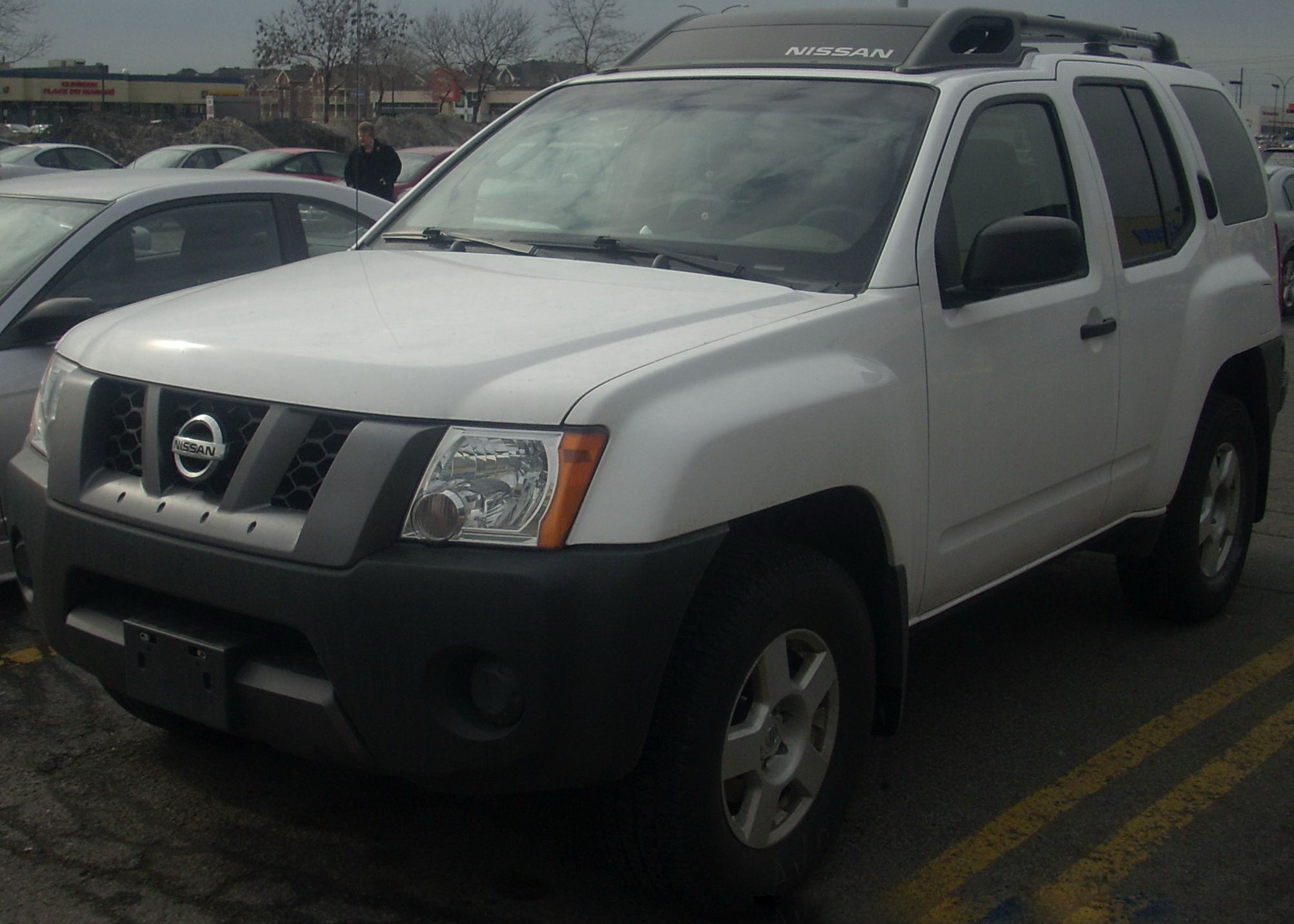
Nissan XTerra
"... be a fun ride home. Hey, I'm glad you're in that XTERRA and not something else. Yeah, amen. Hey, did you ..."
The Nissan XTerra is an SUV meant for everyday driving and light off-road or outdoor use. In the podcast, it’s mentioned as the kind of vehicle you’d rather be in for a drive. That suggests it’s viewed as a practical, capable choice.
The Nissan XTerra is a compact-to-midsize SUV known for a rugged, outdoors-friendly design and practical capability. The podcast context is about being glad someone is in an XTerra rather than “something else,” implying it’s being treated as a dependable, sensible choice for the situation. It comes up because it’s a recognizable SUV option for everyday driving and casual adventure use.

Honda S600
"...e Schadenfreude Express. My beloved 1999 Mercedes S600, the car that never fails to fail. I got it all c..."
The Honda S600 is a small old sports car made by Honda. The podcast mentions it because the speaker really likes it and considers it special. It’s the kind of classic car people enjoy for the driving experience.
The Honda S600 is a small, classic Japanese sports car from the early 1960s, known for its lightweight feel and enthusiast appeal. The podcast calls it the speaker’s “beloved” car, which is why it’s mentioned—this is the kind of vehicle people keep because it’s fun and special. It comes up as a classic that represents a particular era of simple, driver-focused design.
1999 Mercedes S600
"But that's what I did with the T-bird. I was gonna say, I'm so glad I asked you about your Thunderbird. The Schadenfreude Express. My beloved 1999 Mercedes S600, the car that never fails to fail. I got it all cleaned up."
This is a top-of-the-line Mercedes sedan from 1999. The speaker is saying theirs has a habit of causing problems, and even after cleaning it got a check-engine warning.
The Mercedes S600 (1999) is a flagship luxury sedan known for its big, smooth powertrain and high-comfort ownership experience. In this segment, the host highlights a recurring problem pattern—something that “never fails to fail”—and ties it to how the car reacts after cleaning, including triggering a check engine light.
ceramic coating
"I spent an entire day last weekend polishing and ceramic coating and trying to, you know, because the paint's all right now and trying to get everything just right."
Ceramic coating is a protective layer you put on your car’s paint. It helps keep the paint cleaner and easier to wash because dirt and water don’t stick as much.
Ceramic coating is a protective paint treatment that forms a durable layer over the clear coat. Enthusiasts use it to improve chemical resistance and make dirt and water bead off more easily than bare paint.
automatic car wash
"And I ran it through an automatic car wash because I just, I wanted to get a little bit of dust off of it."
An automatic car wash is the kind where the car drives through a machine that cleans it with brushes or cloths. Some people worry it can be rough on the car or get water into places it shouldn’t.
An automatic car wash uses conveyor systems and rotating brushes or cloths to clean the vehicle. Some owners avoid them because certain setups can be harsh on trim, wheels, or coatings, and they may also expose sensitive areas to water intrusion.
check engine like
"And of course, the sunbitch through a check engine like. Oh, God, because it did not like being treated like those plebeian cars."
The “check engine” light is a warning that the car’s computer noticed something wrong. It doesn’t always mean the engine is broken, but it does mean you should get it checked.
A “check engine” light is the dashboard warning that the car’s engine-management system has detected a fault. It can be triggered by issues ranging from emissions-related sensors to problems that show up after unusual driving or cleaning conditions.

Road Glide
"Let's see, the saddlebags of the road glide are almost ready at Hot Rod Express. The new windshield for the road glide was out of Turkey Creek."
A Road Glide is a Harley-Davidson touring bike. It’s built for long rides, and it typically has luggage (saddlebags) and a windshield to help with wind and weather.
The Road Glide is a Harley-Davidson touring motorcycle known for its comfortable ride and hard saddlebags for luggage. In this segment, the host is working on the Road Glide’s windshield and saddlebags, which are common touring-focused features.
windshield
"The new windshield for the road glide was out of Turkey Creek. I went and got it today and came home and started to put it on."
The windshield is the clear panel in front of you on the bike. It helps push wind up and away from your face, and changing it can make the ride feel very different.
A windshield on a touring motorcycle is an aerodynamic panel that redirects airflow around the rider. Replacing or adjusting it can noticeably change wind buffeting and rider comfort, which is why it’s treated as a real “swap” job rather than cosmetic work.

Road King
"And I put new lower fairings on the Road King on the black bike. And those just went swimmingly."
The Road King is a Harley-Davidson touring motorcycle. In this clip, they’re working on it by installing new lower fairings, which are parts that cover the bike’s front area.
The Road King is a Harley-Davidson touring model that’s known for its classic cruiser look and long-distance comfort. Here, the speaker specifically mentions installing lower fairings on a Road King, tying it to real-world customization/repair work on a touring platform.
lower fairings
"And I put new lower fairings on the Road King on the black bike. And those just went swimmingly."
Lower fairings are the outer panels on the lower part of the bike’s front. They help block wind and road spray, and they can be replaced when you’re customizing or repairing the bike.
Lower fairings are body panels on a motorcycle that cover the lower front area around the engine and fork area. They help with aerodynamics and can also protect components from road spray, which is why swapping them is a common touring-bike maintenance/customization task.
diesel
"were driving Malaysera garbage like diesel Oldsmobile wagons. [482.7s] Hey, my uncle had a 98 I wrote and that it was awful."
Diesel is a type of engine fuel system. It works differently than gasoline, so the car can feel and behave differently.
Diesel refers to an engine that uses compression ignition instead of spark ignition. In older vehicles, diesel can feel different in how it starts, how it revs, and how it delivers torque compared with gasoline engines.
Burrago
"There's a company based out of Monza, Italy called Burrago that [529.0s] made model car kits. Yes, metal with opening doors and [533.6s] steering wheels that turn the wheels and everything."
Burrago is a company in Italy that makes model cars. The speaker liked their detailed metal kits with moving parts, and that’s what got them interested in cars.
Burrago is a model-car company based out of Monza, Italy, known for die-cast model kits. The speaker describes Burrago kits as metal models with moving features like opening doors and steerable wheels, which is why they became an entry point into car enthusiasm.

Mercedes-Benz SSKL
"But I started putting together [539.9s] models of things like 1934 Mercedes Benz SSKLs, not putting [545.4s] together necessarily modern cars."
The Mercedes-Benz SSKL is an old, famous Mercedes performance car from the 1930s. The speaker mentions it because it’s the kind of classic European car that inspired their interest.
The Mercedes-Benz SSKL is a pre-war performance Mercedes known for its supercharged straight-six and lightweight, race-bred character. In the 1930s, cars like the SSKL helped define the “classic” European look and mechanical drama that many enthusiasts chase today.

series three Jaguar XJ6s
"One that I absolutely remember always loving when I'd see them [586.4s] are series three Jaguar XJ6s, which is I always just thought was [591.2s] an absolutely beautiful design."
The Jaguar XJ6 (Series 3) is a classic Jaguar sedan. People love it for its elegant styling and smooth inline-six engine character.
The Jaguar XJ6 (Series 3) is a classic British luxury sedan known for its long-wheelbase comfort and elegant, late-60s/70s styling. It’s notable to enthusiasts because the XJ6 represents the “old-school” Jaguar formula: smooth inline-six power and a very traditional grand-touring feel.

first generation Mazda RX7s
"The other one I really liked were first generation [601.3s] Mazda RX7s. Oh, yeah. Also in the 80s."
The first Mazda RX-7 is special because it uses a rotary engine, which is different from the normal piston engines most cars have. It’s also known for its unique look and fun, responsive driving feel.
The Mazda RX-7 (first generation) is famous for its Wankel rotary engine, which spins instead of using a conventional piston-and-crankshaft layout. Enthusiasts also like the early RX-7 for its distinctive shape and the way it feels “lively” even when stock performance isn’t the headline.
engine swap
"And the main one that I got paid for was I [638.1s] helped a friend of mine's mother do an engine swap on a 1984 [642.8s] Mustang convertible, converting it from a v6 carbureted car..."
An engine swap means taking the engine out of one car and putting a different engine in. It’s more than just bolting it in—you often have to change wiring and fuel parts so it can start and run properly.
An engine swap is replacing one engine with a different engine from another vehicle. It usually requires matching engine mounts, drivetrain components, and—critically for modern fuel systems—updating the fuel delivery and engine control wiring so the new engine can run correctly.

Ford Mustang
"And the main one that I got paid for was I [638.1s] helped a friend of mine's mother do an engine swap on a 1984 [642.8s] Mustang convertible, converting it from a v6 carbureted car..."
This is a 1984 Ford Mustang convertible. In the episode, it’s the car that got modified—swapping from a V6 to a V8—so it’s a good example of how people build older Mustangs.
The 1984 Ford Mustang convertible is a classic American muscle-era platform that’s often used as a base for modifications. In this story, it’s specifically notable because the owner is converting it from a V6 setup to a V8 fuel-injected configuration, which changes how the car makes and controls power.
carbureted
"converting it from a v6 carbureted car to a [650.6s] 302 v8 fuel injected engine..."
Carbureted means the engine uses a carburetor to mix fuel and air. It’s an older style of fuel system that usually needs more tuning than modern fuel injection.
Carbureted refers to an older fuel-delivery system where a carburetor mixes air and fuel before it enters the engine. Compared with fuel injection, carburetors are generally less precise and can be more sensitive to tuning and wear.
fuel injected
"to a [650.6s] 302 v8 fuel injected engine out of a wreck to 88 Mustang."
Fuel injection is how a car delivers fuel using electronically controlled injectors. It generally helps the engine run more smoothly and consistently than older carburetor setups.
Fuel injection is a system that delivers fuel to the engine using electronically controlled injectors. Compared with carburetion, fuel injection can meter fuel more accurately across different driving conditions, which typically improves drivability and consistency.
drive train
"So [656.3s] basically swapping over pretty much the entire drive train for [660.3s] the most part..."
The drivetrain is the set of parts that sends power from the engine to the wheels. If you change the engine, you may need to change some of these parts so everything lines up and works together.
Drivetrain (often said as “drive train”) is the collection of components that transfer power from the engine to the wheels, including the transmission and the parts that connect it to the differential. Engine swaps frequently require drivetrain changes because the new engine’s output and mounting points may not match the original setup.
wiring harness
"moving over to the fuel injection, redoing the [663.0s] wiring harness, all of that."
A wiring harness is the car’s main bundle of wires that connects everything. When you swap an engine, you usually need the right wiring so the new engine’s sensors and controls can talk to the rest of the car.
A wiring harness is the bundled set of wires and connectors that routes power and signals to the car’s components. In an engine swap, redoing or swapping the wiring harness is often required so sensors, fuel/ignition controls, and the engine computer communicate correctly with the new engine.
1990 Mazda protégé
"I started driving basically with permanent 15. My first car was a 1990 Mazda protégé that I had to share with my sister."
A 1990 Mazda Protégé is a basic, older compact car. Here it matters because it was the first car the speaker drove, before they moved on to nicer cars.
The Mazda Protégé (1990) is an early-1990s compact that’s remembered for being a simple, affordable car to own and drive. In this story, it’s notable because it’s the speaker’s first car and the starting point for their driving life.
foam pad
"You put down a foam pad, a leftover rug, and the next thing you know, you got Shangri-La."
A foam pad is just thick cushioning. Here it’s used to make the back of the wagon feel more comfortable for lounging.
A foam pad is a thick cushioning layer used to add comfort and insulation. In the segment, it’s part of a DIY setup in the back of a station wagon to create a more comfortable “hangout” space.
six inch thick piece of foam
"Oh, yeah. He put down a six piece, a six inch thick piece of foam back there."
They’re describing a very thick cushion—about six inches of foam. The point is that it made the back of the wagon comfortable to hang out in.
The speaker specifies a “six inch thick” foam layer, emphasizing how much cushioning was added. That thickness is the key detail in their story about turning a station wagon’s cargo area into a comfortable space.
four-speed
"Street. He threw that in the back there and it was a four speed and that he my brother was popular."
A “four-speed” means the car has four forward gears. That affects how the engine sounds and how smoothly it drives at different speeds.
A “four-speed” transmission means the gearbox has four forward gear ratios. Fewer gears than modern cars can make the engine run at higher RPM on the highway, but it also tends to feel more direct and mechanical in older vehicles.

1990 Volkswagen Jetta Gli 16 valve
"Pretty much from there, it's like, okay, immediately as soon as I could, I had my first choice of car where I traded in the station wagon on a 1990 Volkswagen Jetta Gli 16 valve."
This is a sportier Volkswagen Jetta from 1990. The “16 valve” means the engine has more valve openings, which can make it feel more responsive when you drive.
The 1990 Volkswagen Jetta GLI is a performance-oriented version of the Jetta, known for its more driver-focused tuning than the standard trims. The “16 valve” part refers to the engine having 16 valves total (typically four valves per cylinder), which helps improve breathing and responsiveness compared with simpler valve setups.
single car accident
"Entirely my fault single car accident. I've never had anything that bad ever again."
A “single car accident” means the crash involved only one vehicle—no other cars were directly involved. In driving terms, it often points to factors like road conditions, speed, or loss of control rather than a collision with another driver.
rims were toast
"And yeah, the the rims were toast. So he kind of did [1150.6s] the little shimmy going home very slowly."
“Rims were toast” means the wheels were badly damaged. That can cause shaking and makes the car feel unstable until the wheels are fixed.
“Rims were toast” is slang for severely damaged wheels, often from impacts, curb strikes, or aggressive driving on rough surfaces. When wheels are damaged, the car can develop vibration (“shimmy”) and may become unsafe until the wheels are replaced or repaired.

Volkswagen GLI
"GLI was was a great car. They were really fantastic. I'm [1167.8s] kind of sad to hear that it went away like that."
The Volkswagen GLI is a sportier version of the Golf. Here it matters because the speaker’s project involved taking parts from a wrecked GLI to build something else.
The Volkswagen GLI is a performance-focused trim of the Golf, known for being a practical daily driver that’s still fun to drive. In this segment, the GLI is central to the hosts’ stories—someone had a wrecked GLI and planned to reuse its engine for another project car.

Volkswagen Rabbit
"we now have someone else's version of exactly what I was trying to [1191.0s] build in 1990s, with a 2.1 liter board out 16 valve engine in a [1199.9s] 1984 VW rabbit."
The Volkswagen Rabbit is a small Volkswagen that people often modify. In this story, someone’s building a 1984 Rabbit with a bigger, more modern engine to make it more fun to drive.
The Volkswagen Rabbit is a compact car platform that’s popular with enthusiasts for swaps and custom builds because it’s relatively simple and has a big aftermarket. The segment specifically mentions a 1984 Volkswagen Rabbit being built with a modernized 2.1-liter 16-valve engine, turning it into a more performance-oriented project.
2.1 liter board out 16 valve engine
"with a 2.1 liter board out 16 valve engine in a [1199.9s] 1984 VW rabbit."
“Boring out” an engine means making the cylinders slightly bigger to increase engine size. “16-valve” means the engine has more valve openings, which can help it breathe better and make more power.
“Board out” (boring out) means enlarging the engine’s cylinder bores to increase displacement, which can help make more power. A “16-valve” engine uses four valves per cylinder (two intake, two exhaust), which typically improves airflow compared with fewer-valve designs.
tailpipe
"But there's somebody that feels to me like they're trying to crawl up my tailpipe behind me."
The tailpipe is where a car’s exhaust comes out at the back. “Crawling up my tailpipe” means the other car is tailgating you—driving too close behind you.
A tailpipe is the exhaust outlet at the rear of the car. When someone says another driver is “crawling up my tailpipe,” they mean the other vehicle is following extremely closely, reducing safety margins.
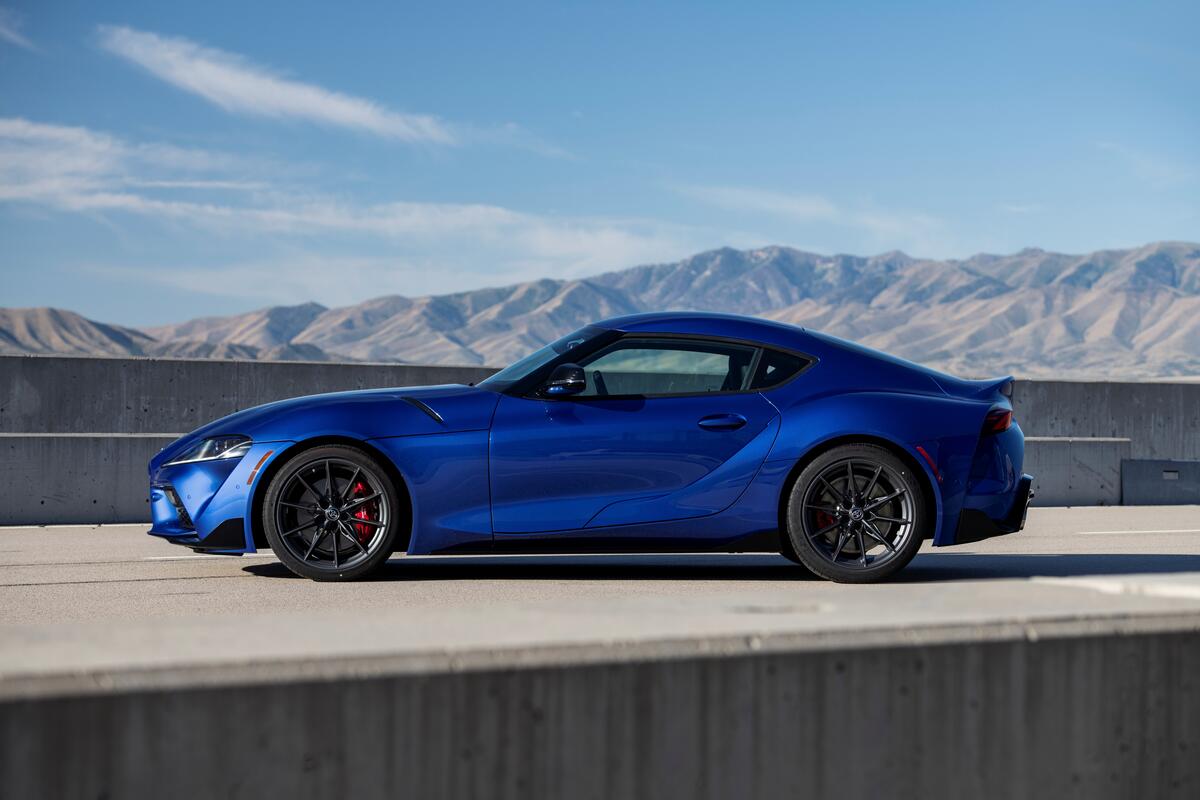
Toyota A90
"that feels to me like they're trying to crawl up my tailpipe behind me. And I didn't like that. And we have a 90 degree turn onto our driveway. It's a shared driveway. And I was going a"
The Toyota Supra is a sports car that’s designed to be quick. In the podcast, the speaker describes a situation where the car seemed to get very close while driving. That’s usually tied to how fast it can accelerate and how quickly it can close distance.
The Toyota Supra is a well-known sports coupe built for performance and driver engagement. The podcast context focuses on a close, fast-driving moment where the Supra’s behavior in traffic feels intense to the speaker. It’s mentioned because the Supra’s acceleration and speed can make it feel like it’s “right behind you” during driving.

2012 Mini Cooper
"And it can be anything you want. And [1435.5s] so I chose a 2012 Mini Cooper. And we picked a Cooper works because it was the best one."
A 2012 Mini Cooper is a small car that’s popular for learning how to drive a manual (stick shift). In the episode, they pick this one because it’s not too easy to mess up while you’re learning.
The 2012 Mini Cooper is a compact, front-wheel-drive car that’s commonly used as a beginner-friendly manual-transmission learning platform. In this story, it’s specifically chosen because it’s easy to drive a stick shift and forgiving for new drivers.
stick
"And that's what I learned to drive [1445.6s] stick on. Nice. It is one of the best cars possible to learn to [1451.9s] drive stick."
“Stick” means a manual transmission. You use a clutch and shift gears yourself instead of letting the car pick the gear for you.
“Stick” here means driving a manual transmission, where you control engine speed by using a clutch and selecting gears. Compared with an automatic, it gives the driver more direct control over how the car accelerates and slows down.
hillhold
"It's really hard to kill it. It has a hillhold. So [1455.3s] if you're like me and you're a little nervous about rolling [1457.3s] back, it's great for that."
Hillhold is a driver-assist feature that helps prevent the car from rolling backward when you start on an incline. It holds brake pressure briefly after you release the brake, giving you time to move off smoothly.
automatic transmission
"And now I prefer stick really to an automatic [1469.5s] transmission. Is that because when you're driving stick, it's"
An automatic transmission shifts gears by itself. You don’t have to use a clutch or choose gears like you do with a manual.
An automatic transmission changes gears for you without requiring the driver to operate a clutch or manually select gears. The speaker contrasts it with a manual (“stick”) to explain why they prefer manual control.
shift
"[1501.3s] very cool. It's like, Oh, I have the skill. I can do this. And [1501.3s] there's so many people now who don't yet. Yeah, it's a theft [1493.8s] attorney. Yeah, well, it is that too. But I do like the being [1506.9s] involved with the car. I like cars that I don't have to fight [1506.9s] with in order to shift and stuff. There are some cars that it"
When you “shift,” you’re changing gears. That’s what helps the car match the engine to what you’re doing—like accelerating or cruising.
In driving, “shift” refers to changing gears in the transmission. How a car shifts—smoothness, timing, and effort—can make it feel easy or frustrating to drive.
five speeds
"[1566.5s] there. Old milk delivery truck. Yeah, that's right. And then [1568.6s] the other point to the story is that she likes five speeds. So"
“Five speeds” means the car has five forward gears. That can change how smooth it feels and how the engine sounds while you drive.
“Five speeds” usually means a 5-speed transmission, with five forward gear ratios. More gears can help keep the engine in its best power/smoothness range, but the exact feel depends on the specific transmission and gearing.

Porsche 944 turbo
"almost have a little bit of a problem with our Porsche 944 turbo. Oh, I love those so stable. Yes. And so you don't Yeah, and it tells you how fast you're going."
The Porsche 944 Turbo is a classic Porsche sports car. The point here is that it’s easy to read—when you’re pushing hard, it warns you before it starts to lose grip, and then it lets go gradually instead of suddenly.
The Porsche 944 Turbo is a front-engine, rear-drive sports coupe that’s known for being very predictable at the limit. In this segment, the hosts describe it as “stable” and “communicative,” meaning the car gives clear feedback before traction breaks loose.
tack
"Is it my tack or my speedometer? And those 944 turbos are so communicative, you can tell everything"
They’re talking about the tachometer, which shows how fast the engine is spinning (RPM). It helps you understand how hard the engine is working while you drive.
“Tack” is almost certainly a mis-transcription of “tach,” short for tachometer. A tachometer shows engine RPM (revolutions per minute), which helps drivers judge how hard the engine is working and when to shift or modulate throttle.
break loose
"And when it finally does break loose, it's not a snap thing. It's it's slow. And it allows it's not the difference."
“Break loose” means the tires stop gripping the road. When it happens, the car can start sliding, and the host is saying one car starts sliding more smoothly than the other.
“Break loose” describes when a tire loses traction and the car starts to slide or rotate rather than following the driver’s intended path. Here, the host contrasts a gradual, progressive breakaway with a sudden loss of grip.

87 Corvette
"The two cars that you can book in with this would be like an 87 Corvette versus an 87 944 turbo. And the 944 turbo will let you get away with the most heinous crap in the world."
They’re comparing a 1987 Corvette to the Porsche 944 Turbo. The idea is that the Corvette may lose traction suddenly, while the Porsche gives more warning before it starts to slide.
The “87 Corvette” refers to a 1987 Chevrolet Corvette, used here as a comparison point for how different cars behave when pushed hard. The host claims the Corvette breaks traction more abruptly (“everything all at once”), making it harder to catch once it starts to slide.
manual transmissions
"Do you find that cars with manual transmissions feel like they have more soul? Absolutely. Yes. You're more connected to the car."
A manual transmission is the kind where you use a clutch and shift gears yourself. The host thinks it feels more engaging because you’re actively controlling what the car is doing.
A manual transmission is a gearbox controlled by the driver using a clutch pedal and gear lever. The host’s point is that manuals can feel more “connected” because the driver directly controls engine speed and torque delivery through each gear change.
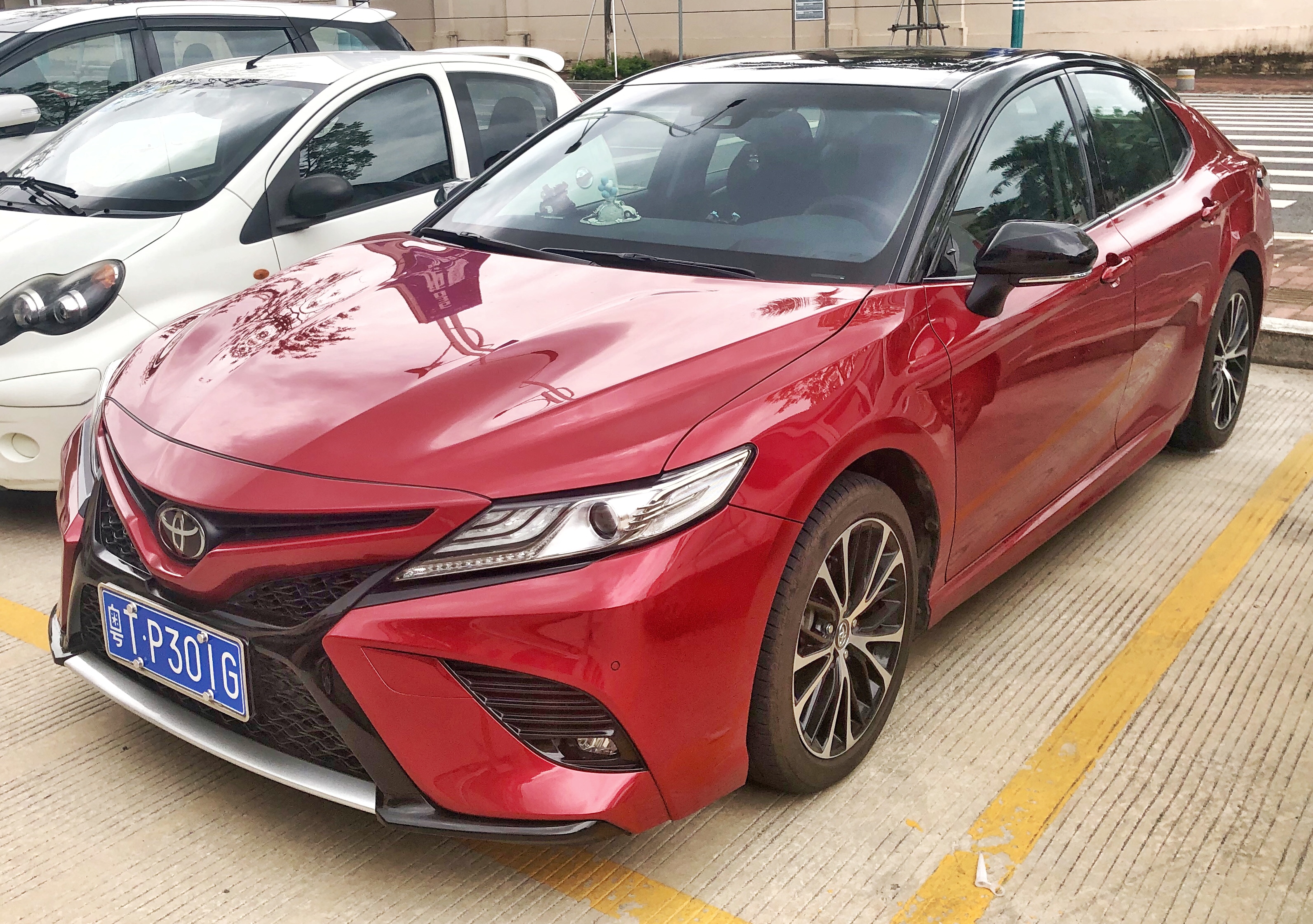
Toyota Camry
"... I was doing 70. And I slowly overtook a guy in a Camry who you know, just like a dirt brown Camry. And h..."
The Toyota Camry is a regular, everyday car meant for comfortable commuting. The podcast mentions it during a passing moment, as a comparison to what the speaker was driving. It’s basically being used as an example of a typical sedan on the road.
The Toyota Camry is a mainstream midsize sedan focused on everyday comfort, practicality, and efficiency. In the podcast, it’s used as a reference point during an overtaking maneuver, showing how even a common commuter car can be part of real-world driving situations. It comes up because the speaker is describing relative speed and passing behavior.
moped
"Cool. Yeah. It's legally a [1940.6s] moped. Yeah. It is legally a moped."
A moped is a small, slower motor vehicle that’s treated differently by the law than a normal car. That’s why the host mentions it’s “legally a moped.”
A moped is a low-powered, low-speed motor vehicle that’s regulated differently than a full car or motorcycle. In many places, that legal classification affects licensing requirements, where you can ride, and what speed limits you’re expected to follow.
no reverse gear
"They have a a go pedal, a stop pedal. No reverse [1953.0s] gear. Oh, well, you that's it. Park going uphill. That's all you [1957.5s] got."
This vehicle doesn’t have reverse, so you can’t back up like a normal car. The host explains you have to get out and reposition it when you park on a slope or need to turn around.
Some very small, low-speed vehicles are designed without a reverse gear, which changes how you maneuver in tight spaces. The host describes the workaround: getting out, repositioning the vehicle, and then setting it back down.
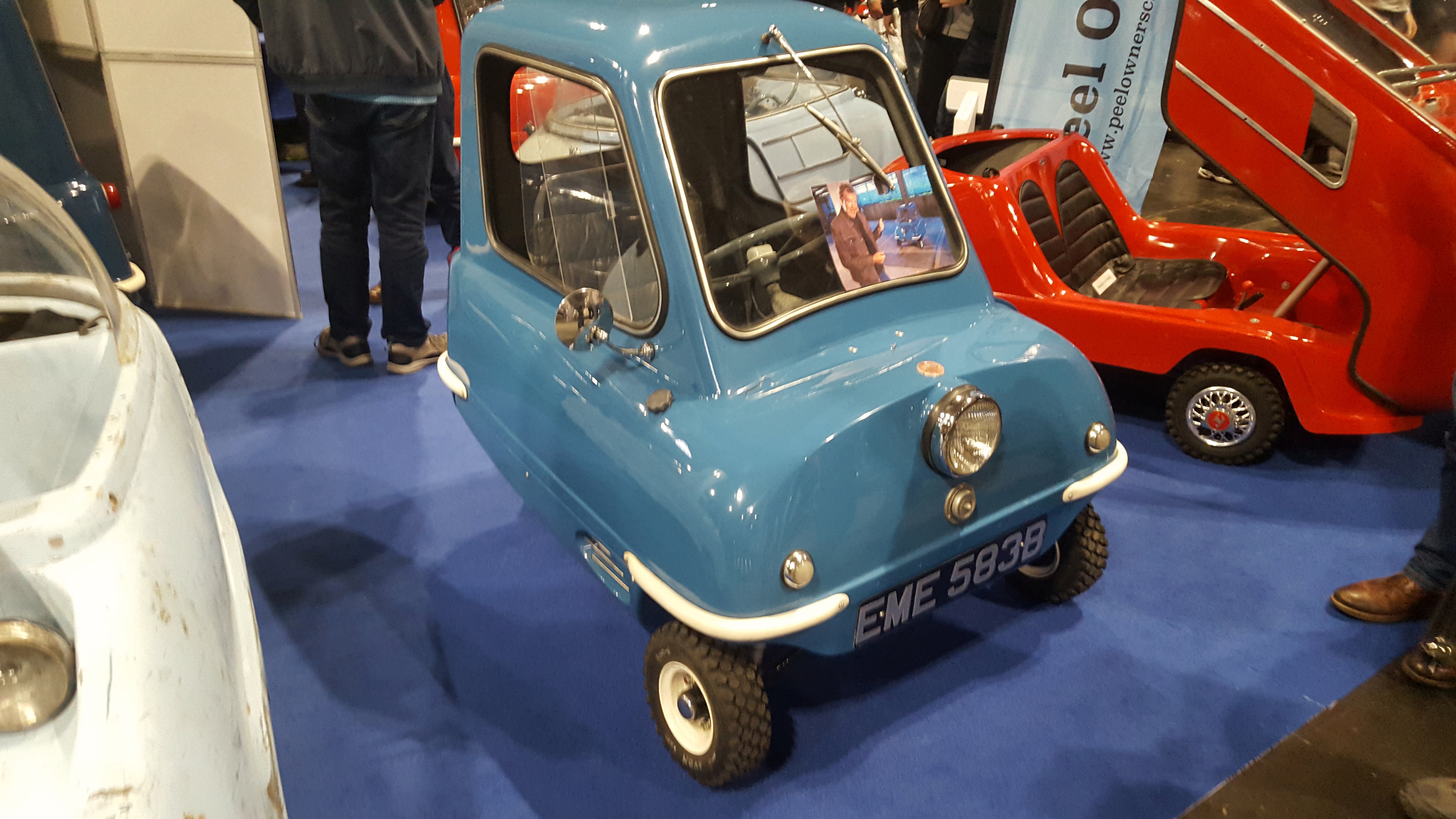
Peel P50
"the two seater version of the peel P 50 basically. Okay. Okay. [1972.8s] Same same manufacturer, same type of thing."
The Peel P50 is an extremely small “microcar.” It’s famous because it’s so tiny and weird-looking that it feels more like a novelty than a normal car.
The Peel P50 is a famously tiny microcar made by Peel Engineering. It’s known for its “one-person” proportions and unusual design—so even when the hosts mention a two-seater version, they’re pointing at the P50’s microcar concept.

1967 Jaguar 3.8 S
"But I bought a 1967 Jaguar 3.8 s which is a four door sedan. Yes. That was a project. It had a running engine and things like that. But it needed some bodywork and needed a bunch of restoration work."
The 1967 Jaguar 3.8 S is a classic Jaguar from the 1960s with a 3.8-liter engine. The host describes it as a project car that needed repairs and restoration work.
The 1967 Jaguar 3.8 S is a classic Jaguar model from the 1960s, built around Jaguar’s 3.8-liter inline-six engine. In the episode, it’s discussed as a project car that needed bodywork and restoration, which is typical of many older Jaguar classics.

Mini Classic Mini
"...d another Jaguar that in Austin Healy, and then a classic mini and started up with pretty much exclusively in Br..."
The Mini Classic is a small old car designed to be easy to drive and park. The podcast brings it up while talking about classic cars and what someone has or likes. It’s mentioned because it’s a recognizable classic model.
The “Mini Classic” refers to the classic Mini, a small British car that became famous for its compact size and efficient packaging. The podcast mentions it alongside other classic cars, which suggests the speaker is talking about a personal collection or early-car memories. It’s discussed because the Mini is a well-known classic that many enthusiasts seek out.

Lancia Fulvia Zagato
"until I bought a Lancia Fulvia Zagato, which is a alloy bodied little four cylinder V4 front wheel drive Italian sports car."
The Lancia Fulvia Zagato is a rare, Italian sports car with a special Zagato body. It also uses a compact V4 engine and drives the front wheels, which is part of what makes it stand out.
The Lancia Fulvia Zagato is a small Italian sports car known for its distinctive Zagato coachbuilt body and compact V4 layout. In this segment, it’s described as an alloy-bodied, front-wheel-drive V4—an unusual configuration that helps explain why the speaker fell in love with it.
V4
"which is a alloy bodied little four cylinder V4 front wheel drive Italian sports car."
V4 means the engine has four cylinders arranged in a V shape. It’s not as common as the usual four-cylinder layouts you see in most cars.
V4 refers to an engine with four cylinders arranged in a “V” shape (two banks of two cylinders). It’s less common than inline-four or V6/V8 layouts, and it can help packaging and balance in certain designs.
front wheel drive
"which is a alloy bodied little four cylinder V4 front wheel drive Italian sports car."
Front-wheel drive means the front wheels do the work of pulling the car along. It’s a common layout, especially on smaller cars.
Front-wheel drive (FWD) means the engine’s power is sent to the front wheels to move the car. It typically packages the drivetrain more compactly and can make smaller cars easier to fit into tight spaces.
insurance payout risk management
"I have six different buildings I store them in, which actually the insurance is much happier about because if the building burns down, they don't have to pay out on all of them."
They’re talking about lowering risk by storing cars in multiple buildings. That way, if one building has a fire, the insurance doesn’t have to cover every car at once.
The speaker is describing a risk-management approach for a large collection: splitting cars across multiple storage buildings can reduce the maximum loss from a single fire. They also tie this to how insurance claims are structured when determining payouts.
SWAT meet
"I was not going to go to the SWAT meet. Alex was going to go to the SWAT meet."
A “SWAT meet” is basically a classic-car swap meet. People go to find parts, tools, and sometimes whole cars to buy or trade.
In classic-car culture, a “SWAT meet” is a swap-meet style event where people buy, sell, and trade parts and cars. It’s less about show judging and more about hunting for components and deals.
pedal extensions
"Alex bought some pedals and is going to weld on pedal extensions for me. There you go. We're going to do it right."
Pedal extensions are add-ons that make the pedals easier to reach. They help shorter drivers sit comfortably and control the car without stretching.
Pedal extensions are aftermarket modifications that effectively lengthen the pedal travel for shorter drivers. They’re commonly used in older cars with limited adjustability so the driver can reach the clutch/brake/accelerator comfortably and safely.
underpinnings
"except that of course with the Austin [2380.7s] A30, the underpinnings are the same as an Austin Healey Spray."
“Underpinnings” means the car’s main basic structure and mechanical parts. The host is saying the A30 and the Austin Healey Sprite share that foundation, which is why upgrades can work.
“Underpinnings” means the core mechanical platform of a car—things like the chassis structure and major running-gear components. In this segment, the host uses it to explain why the Austin A30 can be modified similarly to the Austin Healey Sprite.
1275cc engine
"So that means you can put a 1275cc engine in it, put just [2387.7s] brakes on it, turn it into a really nice performing little"
“1275cc” is the engine’s size—how much space the engine’s cylinders have. Bigger displacement like 1275cc often means more potential power, which is why the host thinks it can turn the A30 into a more fun car.
“1275cc” refers to engine displacement, measured in cubic centimeters (cc), which is a key factor in how much air/fuel the engine can move. The host is describing a swap or upgrade path: fitting a 1275cc engine into the Austin A30’s shared platform to make it more lively.

Maserati A6
"I have a 1949 and Maserati A6, a car that they built 62 of. Maserati's first streetcar."
The Maserati A6 is an old, rare Maserati that’s considered important in the brand’s history. The host mentions it was built in very small numbers, which is why collectors care about it.
The Maserati A6 is a classic Maserati from the early postwar era, known for its role in the brand’s development of road-going performance. In this episode, it’s highlighted as a rare-production car (the speaker says Maserati built only 62), which makes it especially collectible.
machinists
"Do you print parts? Do you make your own parts? Do you have people on hand who are capable of doing that? Do you have machinists working for you? Building number nine is a metal shop, basically."
A machinist is a person who can make metal parts using specialized machines. For old cars, they’re important when you can’t buy the exact part you need.
A machinist is a skilled tradesperson who makes or modifies parts using machine tools like lathes and mills. In restoration shops, machinists are often needed to fabricate custom metal parts when no aftermarket or OEM replacements exist.
Lucas electrics
"So there's a few advantages you have with some of the European cars with small producers. One is that everything British has Lucas electrics, which basically meant they all bought from the same parts bit."
Lucas was a company that made electrical parts for a lot of older British cars. If many cars used Lucas parts, it can be easier to find replacements when restoring them.
“Lucas electrics” refers to Lucas as a major supplier of electrical components for many British cars. The point here is parts commonality: if multiple brands used the same supplier, electrical parts can be easier to source across different models.
full service restoration shop
"But with being an owner and vintage underground, a sort of full service restoration shop, we do everything from top to bottom."
A full service restoration shop is a place that can do many parts of the restoration process itself. Here, it means they can handle repairs and also make or source the parts needed for older cars.
A “full service restoration shop” is a facility that handles multiple stages of restoration in-house, rather than outsourcing everything. In this context, it explains how Vintage Underground can manage both sourcing and fabrication—mechanical work, metalwork, and custom parts—when dealing with rare European cars.
3D print components
"We do everything from top to bottom. We do have a machinist on staff. I do 3D print components. As a hobby, I also build 3D printers."
3D printing is a way to manufacture a part using a computer file. In vintage car restoration, it can be used to recreate hard-to-find parts.
“3D print components” refers to making replacement parts by building them layer-by-layer from a digital model. For vintage European cars, this can help when original parts are discontinued or too expensive, especially for non-safety-critical pieces.
restorations on mostly British cars
"“...doing restorations on mostly British cars. His background was working as a mechanic.”"
When a shop focuses on British cars, it usually means they’ve learned the common problems and repair methods for those older models. The speaker is using it to explain how the shop developed its restoration style.
Specializing in British cars usually means the shop is experienced with the common restoration needs of classic UK marques—parts sourcing, corrosion-prone areas, and period-correct fitment. In this segment, it’s used to explain why Vintage Underground’s work came from a “mechanical background” and why their typical projects look a certain way.

Triumph TR-250
"“I had a Triumph TR-250 that I bought in pieces and I hired them to put it back together, essentially.”"
The Triumph TR-250 is a classic British roadster. Here, it’s mentioned because the speaker started with the car disassembled and had a shop put it back together.
The Triumph TR-250 is a classic British sports car from the TR series, known for its open-top roadster vibe and period-correct styling. In this segment, it’s notable because the host describes buying one “in pieces” and hiring Vintage Underground to assemble it back into a complete car.

Ferrari 250
"...er people, some of which I now own. I have a 1962 Ferrari 250 GTE, which they did a full ground-up restoration ..."
The Ferrari 250 GTO is a very famous old Ferrari sports car from the 1960s. It’s known for being rare and highly valued by collectors. The podcast mentions it because it’s the kind of car people talk about when discussing serious classic car ownership.
The Ferrari 250 GTO is a legendary, high-performance classic Ferrari from the early 1960s, known for its racing heritage and extreme desirability. The podcast context ties it to the speaker’s ownership and restoration background, which is why it’s brought up. It’s discussed because it represents a pinnacle of collectible sports cars and restoration effort.
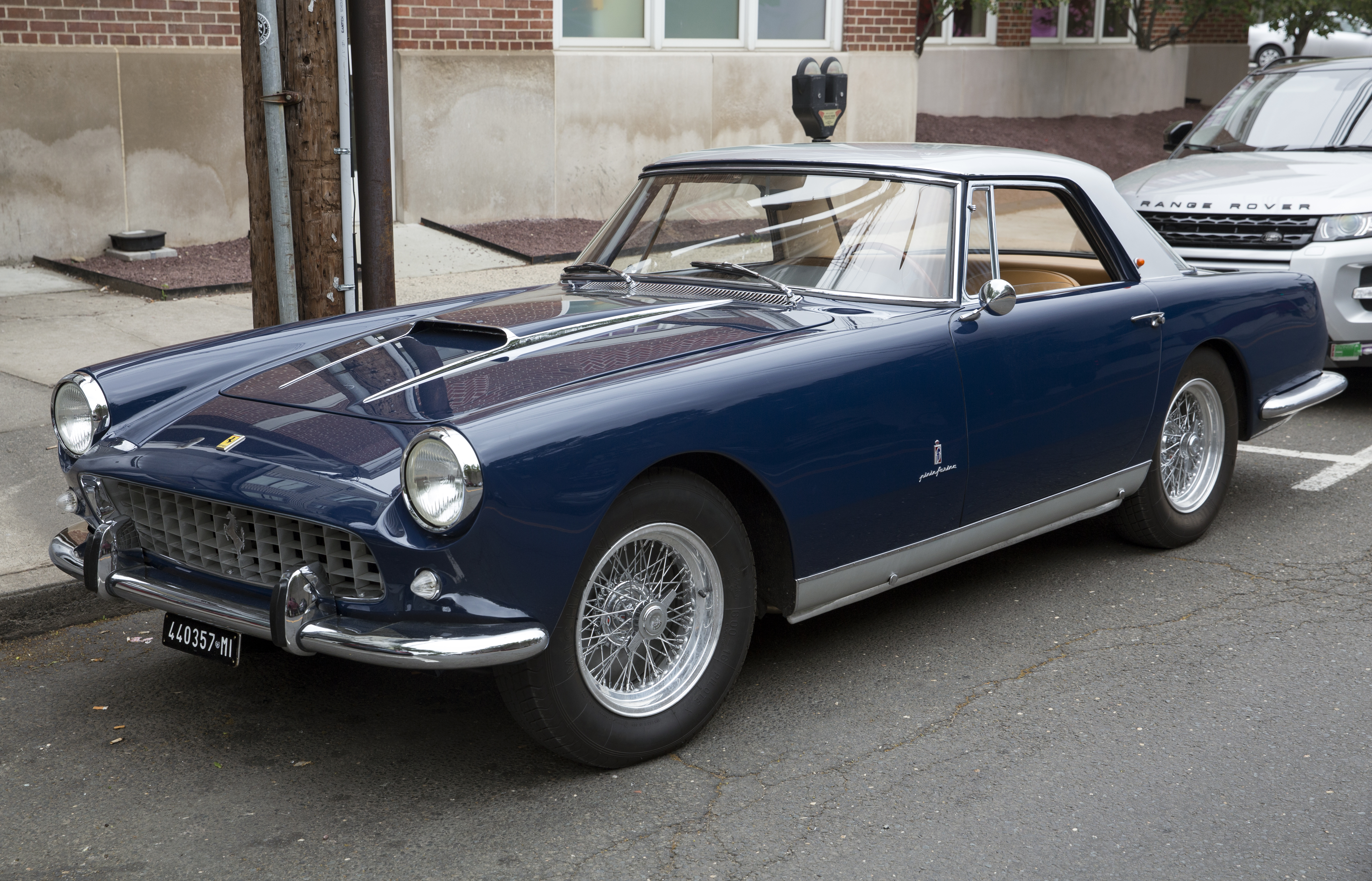
Ferrari 250 GTE
"“I have a 1962 Ferrari 250 GTE, which they did a full ground-up restoration on for the previous owner.”"
The Ferrari 250 GTE is a famous old Ferrari from the 1960s. In this story, it’s important because it got a full restoration from basically the bare car, after being stored for a long time.
The Ferrari 250 GTE is a legendary grand touring Ferrari from the 1960s, famous for its classic styling and status as a “proper” vintage Ferrari. This segment is worth explaining because the shop performed a full ground-up restoration after the car sat in a barn for years, then the owner was hesitant to drive or insure it afterward.
ground-up restoration
"“...they did a full ground-up restoration on for the previous owner... And then they pulled it out of the barn, did a ground-up restoration...”"
A ground-up restoration is when a shop basically takes the car apart completely and rebuilds it. It’s the most thorough kind of restoration, not just a cosmetic fix.
A ground-up restoration means rebuilding a car from the chassis/body outward—typically stripping it down completely, repairing or replacing worn components, and reassembling to a like-new standard. In vintage-car circles, it’s a major undertaking that usually costs more and takes longer than a refresh or partial restoration.

Delorean DMC-12
"...lection.com. But we have a friend who is a fellow Delorean owner. And he used to work in Hollywood."
The DeLorean DMC-12 is a sports car with a very unusual look. The podcast brings it up through a conversation about owning one and the people who are fans of them. It’s mentioned because it’s a memorable classic car that many owners talk about.
The DeLorean DMC-12 is a distinctive sports car best known for its unusual styling and its place in pop culture. The podcast mentions a friend who is a Delorean owner and references Hollywood connections, which fits the car’s reputation and fan community. It’s discussed because it’s an iconic, enthusiast-owned classic rather than a typical everyday sports car.
photographing cars for a website
"But to clarify, our first idea was on the website to try and do everything we could to try and do a good way of presenting the cars that we have."
They’re talking about how they want to show their cars online. The goal is to set up a studio so the pictures and video come out looking right.
This segment focuses on how the hosts plan to present their cars online. It’s about building a proper studio setup so the cars look good in photos and video.
automotive turntable
"So we ended up buying an automotive turntable and setting up a studio to photograph for the website."
An automotive turntable is a rotating platform that lets you spin a car for photos or video. It makes it easier to get good angles without moving the car around by hand.
An automotive turntable is a motorized platform used to rotate a car smoothly for photography or video. It helps creators capture consistent angles and lighting without manually repositioning the vehicle.
thirsty
"And Alex is like, do you know how thirsty that car is? [3309.9s] And they're brilliant. [3311.3s] They're absolutely brilliant."
When someone calls a car “thirsty,” they mean it uses a lot of gas. It’s basically a casual way to say the car’s fuel economy isn’t great.
In car talk, “thirsty” means the vehicle consumes a lot of fuel for how it’s being driven. It’s a qualitative way to describe high fuel usage (often tied to engine design, tuning, and driving style).
sunroof that lifts out
"And with the sunroof that lifts out and it makes it almost a convertible, [3332.9s] "
A sunroof that “lifts out” is a roof panel design that can open upward and out of the way, creating a more open-air feel than a fixed glass panel. In practice, it can make the cabin feel closer to a convertible by letting in more air and light.

Porsche 911
"The first one being an air cooled 911."
This is a Porsche 911 that cools its engine using air instead of coolant. It’s a classic setup that affects how the engine is built and how people maintain these older cars.
“Air-cooled 911” refers to Porsche 911s that use air cooling instead of a liquid coolant system. That cooling approach is a big part of why classic 911s have a distinctive engine layout and sound, and it also shapes how they’re maintained and how they age.

Citroen DS
"Oh, look, you've got the Citroen DS. Those things are so strange."
The Citroën DS is a classic Citroën that looks and feels unlike most cars. People call it “strange” because it was ahead of its time in design and technology.
The Citroën DS is famous for its unusual, futuristic design and its advanced engineering for its era. It’s especially known for being “strange” in a good way—often tied to innovative suspension and comfort features that made it stand out from typical cars of its time.

Volkswagen Bora
"...all of the videos you have in here. A 73 Maserati Bora, 67 Sunbeam Tiger. What a weird old collection yo..."
The Volkswagen Bora is a Volkswagen sedan model that was sold in some markets. The podcast mentions it while talking about a collection of older cars. It’s brought up because it’s a less common classic that collectors like to find.
The Volkswagen Bora is a European-market nameplate for a compact/midsize sedan, depending on the generation. In the podcast, it’s mentioned as part of a collection of classic cars, which points to it being a curiosity or less-common model among enthusiasts. It comes up because collectors often talk about unusual or region-specific cars they’ve found.

Maserati Bora
"A 73 Maserati Bora, 67 Sunbeam Tiger."
The Maserati Bora is a rare older Maserati with a mid-engine layout and an exotic look. It’s the kind of car enthusiasts talk about because it’s unusual and not commonly seen.
The Maserati Bora is a rare, mid-engine Maserati from the 1970s known for its sharp styling and exotic grand-touring character. When someone lists it alongside other oddballs, it’s usually because it’s both distinctive and uncommon.

Sunbeam Tiger
"A 73 Maserati Bora, 67 Sunbeam Tiger."
The Sunbeam Tiger is a British sports car that’s famous for using a Ford V8 engine. It’s a surprising combo, which is why car people find it memorable.
The Sunbeam Tiger is a classic British sports car best known for its unusual engine swap: it’s a Tiger that uses a Ford V8. That combination is part of why it feels “weird” or special—an unexpected pairing that makes it a cult favorite.
cars that are a little bit too strange for YouTube
"The hard part we have is there are some cars that are a little bit too strange for YouTube. In order to have anyone actually find it. Watch it."
They’re talking about how really unusual cars can be hard to get people to watch online. The channel needs to grow so they can cover more obscure cars that most people wouldn’t search for.
This is about the “discoverability” problem for niche cars: some vehicles are so unusual that they don’t naturally attract clicks or search traffic. The hosts are discussing how they’re trying to grow the channel so they can cover more obscure, oddball cars that most mainstream audiences won’t seek out.

Panhard PL17
"So in other words, we really should do our Panhard PL17. Yeah, do it because there's a bunch of Panhard fans out there that just weird."
The Panhard PL17 is an older French classic car. It’s not a super common model, so fans of vintage cars often get excited about it because it’s unusual and different from the usual classics.
The Panhard PL17 is a French-built car from Panhard, known for its distinctive styling and place in vintage European motoring. It’s the kind of niche classic that enthusiasts seek out because it’s less common than mainstream brands, and it often shows up in “oddball” classic-car conversations.

MG MGB
"But when it comes to when I was looking to replace that dodge that I had, I did keep for quite a quite a long time several listings for MGs, MGBs."
The MG MGB is a classic British roadster. People like it because it’s a fun vintage sports car and it’s a common choice when you’re looking at other British classics.
The MG MGB is a British sports car from the MG brand, famous for its classic roadster look and enthusiast-friendly reputation. In vintage-car circles, it’s often compared against other British classics like the Triumph TR series when people are shopping for a similar “old-school” driving experience.

Triumph TR6
"I would just about kill for a Triumph TR6. Yes, you would."
The Triumph TR6 is a classic British sports car. It’s well known for having a bigger engine than many similar roadsters, which is part of why enthusiasts want one.
The Triumph TR6 is a British sports car known for its inline-six engine and classic 1960s/early-1970s roadster vibe. It’s a popular “bucket list” classic because it offers a more powerful, smooth character than many smaller British roadsters.

Triumph TR3
"And oh, yeah. And that Triumph, I believe it's a TR3. Isn't that what Daryl has in his garage still, that little red one?"
The Triumph TR3 is an older version of the TR roadster line. It’s a classic British sports car that people often collect because it’s part of the early history of that model family.
The Triumph TR3 is an earlier-generation Triumph TR roadster, part of the brand’s famous TR lineage. It’s typically associated with the classic early-TR look, and it’s a common pick for collectors who want a vintage British sports car with historical roots.

1996 Renault Twingo
"So I have a 1996 Renault Twingo that is my baby. [3861.3s] It's bright yellow. [3862.2s] Of course it's your baby."
The Renault Twingo is a tiny, easy-to-drive car made for city streets. This one is a 1996 model, so it’s older and more unusual—people notice it because you don’t see them often.
The Renault Twingo is a small, city-focused car known for its compact packaging and playful, practical design. A 1996 Renault Twingo is especially interesting today because it’s a rare, older example that stands out in modern car culture and at events like cars and coffee.

1990 Volvo station wagon
"And this young guy pulls up in his 1990 Volvo station wagon that he had restored himself [3881.0s] and was working on the engine and everything himself."
Volvo made station wagons that are built to be useful and last. Here, the point is that this 1990 Volvo station wagon was restored by the owner, including doing engine work.
Volvo station wagons are known for their practical, family-oriented design and durable reputation. In this segment, the host highlights a 1990 Volvo station wagon that the owner restored himself, including working on the engine—showing how these cars can become long-term projects.
1983 Toyota pickup SR5
"The one that attracts the most attention is a 1983 Toyota pickup that we have. SR5 fully restored."
This is a 1983 Toyota pickup, and “SR5” is a nicer trim level than the basic version. The hosts are saying theirs is fully restored, so it stands out and gets a lot of attention.
The 1983 Toyota pickup SR5 is a classic late-70s/early-80s Toyota truck, and the SR5 trim is a higher-equipment level than the base models. In this segment, it’s described as fully restored and a “shop truck,” which is why it draws attention—people recognize and connect with that specific era and trim.
two-wheel drive
"Is it a two-wheel drive or a four-wheel drive?"
Two-wheel drive means power goes to only two wheels, usually the rear. It can be fine for normal driving, but it generally has less grip than four-wheel drive on slippery or rough ground.
Two-wheel drive (2WD) means the truck sends engine power to only one axle—typically the rear axle on many pickups. That affects traction and how capable the truck feels on snow, mud, or uneven surfaces compared with four-wheel drive.
Four-wheel drive
"Four-wheel drive. Hell, yeah. We've lived in everything."
Four-wheel drive means the car can send power to all four wheels. That helps it grip better on slippery or rough ground, like dirt, snow, or mud.
Four-wheel drive (4WD) sends power to both the front and rear axles, improving traction when roads are slippery or uneven. It’s especially useful for off-road driving, snow, mud, and loose gravel where a two-wheel-drive setup can struggle.

Bronco
"When I drive to work there's a, and drive home, there's a guy along the drive who has an older, much older Bronco, but it's got the, it's the kind of dark brown with the orange, then that kind of cream beige stripe."
A Bronco is a classic Ford SUV that’s built for rough roads and off-roading. The person talking really likes the specific older Bronco’s look—especially the colors and stripes.
The Ford Bronco is a classic American off-road SUV known for its rugged, go-anywhere reputation. In this segment, the hosts are reacting to an older Bronco with a distinctive two-tone stripe and graphics, which is part of what makes it so memorable.
bulletproof engine
"So, but still with the like bulletproof 22 hour engine, just absolutely fantastic."
“Bulletproof engine” is a nickname people use for an engine that seems to last a long time and rarely breaks. It’s more about reputation than a measurable rating.
“Bulletproof engine” is enthusiast slang meaning an engine that’s extremely durable and resistant to failures when maintained. It’s not a technical specification, but it signals the speaker’s confidence in that engine’s long-term robustness.

Jensen Interceptor
"The dumbest thing I've done with the car, let's say, is I bought a 1974 Jensen Interceptor convertible out of Los Angeles. And a friend of mine and I thought it would be brilliant to fly down and drive it home."
The Jensen Interceptor is a classic British car that’s known for being a stylish, sporty cruiser. Here, the person bought a 1974 version that was a convertible, which adds extra drama and complexity compared with a normal car.
The Jensen Interceptor is a British grand tourer known for its distinctive styling and classic-era V8 performance. In this story, the speaker specifically bought a 1974 Jensen Interceptor convertible, making it a notable “old car” purchase with a big personality and a more complicated ownership experience than a modern car.
hot wire
"The first indicator that this wasn't going to go well, probably should have been the fact that I had to hot wire the car to get another guy's garage. It would not start."
Hot wiring is when someone starts a car by bypassing the usual key/ignition wiring. It’s usually done when the car won’t start normally, often because of an electrical or security issue.
“Hot wiring” means bypassing the car’s normal ignition/key system by directly supplying power to start it. It’s often used when the ignition circuit or key/immobilizer isn’t working, but it’s also a sign the car has an electrical or security-related problem.
coil
"It would not put feed power to the coil. He had an electric fan switch. And what I did is I bypassed the or I connected the electric fan switch to the coil so I could get power to the coil to actually get the car to start."
The coil is part of the ignition system that makes the spark needed to start the engine. If it isn’t getting power, the engine can’t ignite the fuel.
In an ignition system, the “coil” is the transformer that boosts low-voltage battery power into the high voltage needed to create a spark. If the car “won’t put feed power to the coil,” the engine can’t spark and therefore won’t start.
electric fan switch
"He had an electric fan switch. And what I did is I bypassed the or I connected the electric fan switch to the coil so I could get power to the coil to actually get the car to start."
An electric fan switch tells the cooling fan when to turn on. Here, they used that switch’s power path to help the car’s ignition system work well enough to start.
An electric fan switch controls when the cooling fan runs, typically based on engine temperature. In this story, the switch was repurposed/bypassed to provide power to the ignition coil, which highlights a wiring/power-supply issue rather than a normal cooling problem.
air conditioning compressor seized
"Going up over the grapevine, the air conditioning compressor seized and broke the fan belt, which also happens to be a fan belt for your generator."
If the A/C compressor seizes, it basically locks up and can’t spin. Since it’s often run by a belt, that can cause the belt to break too.
When an air conditioning (A/C) compressor “seizes,” its internal moving parts lock up and it can’t rotate. Because many cars drive the compressor with a belt, a seized compressor can snap the belt and leave the system inoperable.
fan belt
"Going up over the grapevine, the air conditioning compressor seized and broke the fan belt, which also happens to be a fan belt for your generator."
A fan belt is a belt that spins important parts of the engine. If it breaks, other systems that depend on it—like charging—can stop working.
A “fan belt” (more commonly called a serpentine belt or accessory belt) drives multiple engine accessories. In this case, the same belt also powers the generator/alternator, so when it breaks you can lose charging and other accessory functions.
balanced at all
"Or the wheels had new tires on it, but no one had bothered to put any weights on the wheels, so they were not balanced at all."
Wheel balancing makes sure the tire and wheel spin smoothly. If they’re not balanced, the car can vibrate and feel unstable.
Wheel balancing corrects uneven tire/wheel mass so the wheel spins smoothly at speed. If the wheels aren’t balanced, you can get vibration and handling issues, and it can feel “off” even if the tires are new.
hot swap batteries
"Spent the night in Button Willow and then proceeded to try and make our way home, stopping halfway to hot swap batteries in order to basically get the rest of the way home."
Hot swapping batteries means changing the battery quickly instead of waiting for everything to fully shut down. It’s a workaround people use when the car keeps losing power.
A “hot swap” is replacing a battery while the vehicle is running or while power is still being managed, rather than fully shutting everything down first. In practice, it’s a risky workaround that’s sometimes used when a car won’t reliably keep voltage/charging during a breakdown.
heat soaked issues on the fuel system
"find a shop to replace the air conditioning compressor in the car, install an electric fuel pump because we kept having heat soaked issues on the fuel system."
Heat soak means parts stay too hot after driving. For the fuel system, that can cause fuel delivery problems and make it hard to restart when the car is hot.
“Heat soak” is when heat builds up in a component after the car has been running or after heat exposure, causing temperatures to stay high even when you stop. On the fuel system, heat soak can lead to vapor formation (vapor lock) or reduced fuel delivery, making hot restarts difficult.
electric fuel pump
"find a shop to replace the air conditioning compressor in the car, install an electric fuel pump because we kept having heat soaked issues on the fuel system."
An electric fuel pump pushes fuel to the engine. They added one to help prevent fuel delivery problems when everything gets hot.
An electric fuel pump pressurizes and moves fuel to the engine, typically improving consistency compared with a mechanically-driven setup. In this story, installing an electric fuel pump was meant to address heat-soak fuel delivery problems so the car would start and run reliably after heat exposure.
Request an Explanation
Heard something you'd like explained? We'll add it to this episode.
Sign in to request explanations for terms you heard.
Want to learn more?
Browse our glossary for plain-English explanations of automotive terms, jargon, and concepts.
Help improve this episode
See something that's not quite right? Our annotations are AI-generated and can sometimes miss the mark. Click the flag icon on any annotation to suggest a correction.
1 community members have helped improve this episode.