Driven Radio Show #362: Dave Kinney and Greg Ingold of Hagerty Price Guide
About this episode
Auction talk and market reality checks kick off the conversation, from Barrett-Jackson Columbus to the National Corvette Museum and Bring a Trailer. The hosts then dig into collector-car pricing logic with Dave Kinney and Greg Engold of the Hagerty Price Guide, including how sell-through, generational demand, and “K-shaped” market behavior affect values. The episode also swings through Pebble Beach/Monterey planning, rare Studebaker Avanti details, and practical ownership themes like rust checks and why newer trucks can make more sense.
Hosted on Acast. See acast.com/privacy for more information.
Barrett Jackson Columbus sale
"I am wrapping up Barrett Jackson Columbus coverage and we are preparing for a trip to [283.9s] the National Corvette Museum."
Barrett-Jackson is a big auction for collector cars. “Columbus” means the event is happening in the Columbus area, and people go there to buy and sell rare cars.
Barrett-Jackson is a well-known collector car auction brand, and “Columbus” refers to one of its event locations. These auctions are where enthusiasts track rare cars, bid on restorations, and watch prices move in real time.
National Corvette Museum
"I am wrapping up Barrett Jackson Columbus coverage and we are preparing for a trip to [283.9s] the National Corvette Museum. [286.5s] Oh, dude."
The National Corvette Museum is a museum specifically about the Chevrolet Corvette. It’s a place where Corvette fans can see important cars and learn the history of the model.
The National Corvette Museum is a dedicated Corvette-focused museum in the U.S., centered on Chevrolet’s Corvette sports car history. It’s a common stop for Corvette fans because it showcases cars, artifacts, and the brand’s evolution over decades.
Keeneland Concours
"And then right after the museum, we're going to the Keeneland Concours in Lexington, Kentucky, [297.6s] traveling with the Kansas City Ferrari Club and friend of the show, Christopher Parr."
A concours is a fancy car show where cars are judged and displayed. The Keeneland Concours is one of those events in Lexington, Kentucky.
A “concours” is a judged car show where vehicles are displayed for craftsmanship and condition, often with a theme or prestige focus. The Keeneland Concours in Lexington is one of those events that attracts collectors and enthusiasts.
Kansas City Ferrari Club
"And then right after the museum, we're going to the Keeneland Concours in Lexington, Kentucky, [297.6s] traveling with the Kansas City Ferrari Club and friend of the show, Christopher Parr."
This refers to a local enthusiast club organized around Ferrari ownership and events. The “Ferrari” name here is about the community and the cars they’re likely to be discussing at the trip.

Corvette
"I will not be driving a Corvette. So Brett, can I ask you a question?"
A Corvette is a famous sports car made by Chevrolet. It’s known for being fast and having a big fan following. Here, they’re talking about a raffle connected to the Corvette Museum.
The Chevrolet Corvette is a long-running American sports car known for its performance-per-dollar reputation and iconic mid-engine evolution in recent generations. In this segment, it’s referenced in the context of a Corvette Museum raffle for new Corvettes.
raffle
"Because you can, when you go to the Corvette Museum, you can buy tickets for their raffle for new Corvettes."
A raffle is like a lottery: you buy a ticket and a winner is picked at random. In this case, the prize is a new Corvette.
A raffle is a lottery-style promotion where people buy tickets and winners are selected randomly. Here, the raffle is specifically for new Corvettes, which ties it to the collector-car and enthusiast community.
hardtop
"I'll take the, I'll take the hard top. I mean, I'll tell you what, I'll get one with your package and you can have the wing."
A hard top is a solid, rigid roof instead of a fabric soft top. It usually feels more solid and can be quieter and warmer.
A hard top is a rigid roof panel (as opposed to a soft top fabric roof). On convertibles, choosing a hard top typically means better insulation and a more solid feel, and it can be a desirable option for collectors.
wing
"I'll tell you what, I'll get one with your package and you can have the wing. Because I can be your wingman."
A “wing” here means a rear spoiler on the back of the car. It’s mainly for style, and sometimes it helps the car stick to the road.
In car talk, a “wing” usually means an aerodynamic rear spoiler. It can be part of a performance or appearance package, and on enthusiast cars it often affects how the car looks and sometimes how it generates downforce.
Hagerty Price Guide
"Speaking of. Hey, kids, our special guest this week are Dave Kenny, who you've been listening to, and Greg Engold of the Hagerty Price Guide. ... And that became the Hagerty Price Guide. Well done, gentlemen."
The Hagerty Price Guide is a tool that helps people figure out what collectible cars are worth. This episode is about that pricing information and the people behind it.
The Hagerty Price Guide is a valuation resource that helps enthusiasts estimate what classic and collectible cars are worth. In this episode, it’s the central subject because the guests are associated with Hagerty’s pricing and valuation work.
sell-through rate
"I don't remember what their sell-through rate was. It wasn't spectacular, but of course Meekamendi is coming off a Kissimmee that was just in January."
Sell-through rate means how many cars at an auction end up getting sold. If the sell-through rate is high, it suggests buyers were actively bidding and paying.
Sell-through rate is the percentage of auctioned vehicles that actually sell. It’s a common metric for judging how strong demand is for a given batch of cars at an event.
collector car market
"And the boomers drove the collector car market. Hell, it was basically invented by the pre-boomers, but the boomers took a hold of it and went running with it."
The collector car market is where classic and enthusiast cars are bought and sold like investments or hobbies. They’re talking about how different generations have driven demand and how that can change car prices.
The collector car market is the ecosystem of buyers, sellers, and auctions where classic and enthusiast cars trade based on desirability and condition. In this segment, the hosts connect it to generational buying behavior and the idea that values can shift over time.
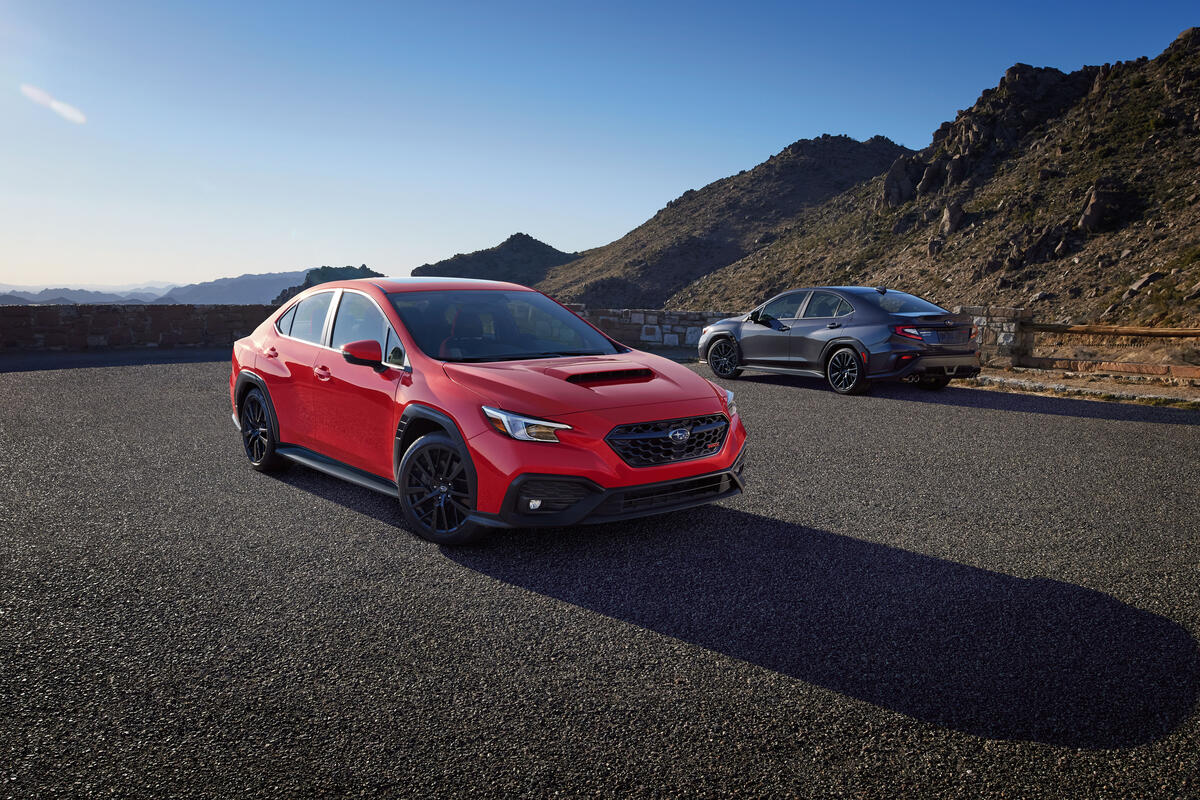
Subaru Wrx
"Their collector car might be a seven-year-old Subaru WRX or it might be a almost 100-year-old Ford at this point."
The Subaru WRX is a sporty Subaru that’s built for quick driving. Here, they’re saying some people collect cars that are still fairly new, not just super old classics.
The Subaru WRX is a performance sedan/wagon known for its turbocharged engine and rally-inspired all-wheel-drive setup. In this discussion, it’s used as an example of a “collector car” that’s still relatively modern compared with vintage classics.
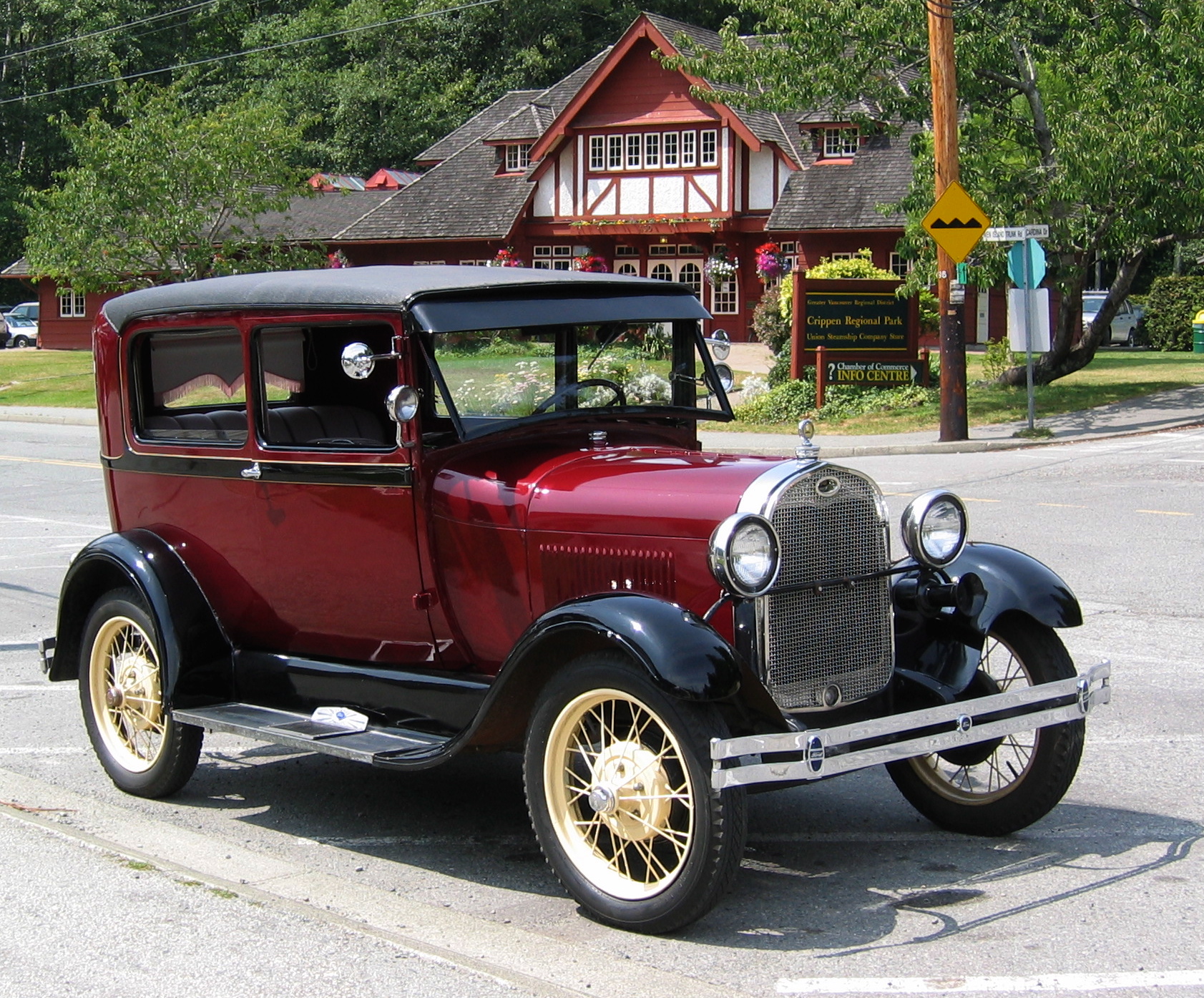
Ford
"Their collector car might be a seven-year-old Subaru WRX or it might be a almost 100-year-old Ford at this point."
Ford is a well-known car brand. They’re using it as an example of a very old car that someone might collect.
Ford is a major American automaker, and in this segment it’s mentioned as an example of an extremely old car that some people consider a collector vehicle. The key point is the wide age range of what counts as a “collector car.”
bubble
"And we're starting to see a little bit of correction in the Porsche 911 bubble."
A “bubble” is when prices get pushed way up and may not be sustainable. If the bubble “corrects,” it usually means prices stop rising so fast or start coming down.
In collector-car talk, a “bubble” means prices have risen far faster than fundamentals would normally justify, creating a risk of a correction. When they say the Porsche 911 bubble is correcting, they’re implying market demand may be cooling and values could stabilize or drop.
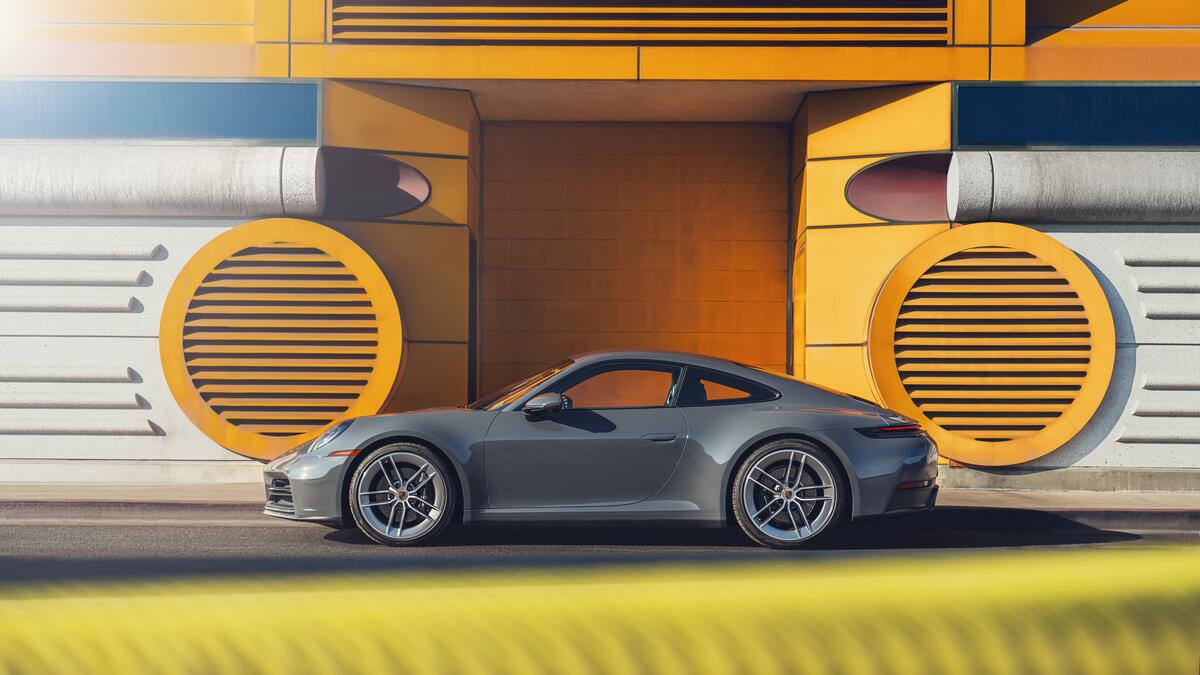
Porsche 911
"And we're starting to see a little bit of correction in the Porsche 911 bubble."
The Porsche 911 is Porsche’s famous sports car. Here, they’re talking about its prices in the collector market—like whether the value is getting too high and might come back down.
The Porsche 911 is the iconic rear-engine sports car line from Porsche, known for its distinctive silhouette and long-running evolution across generations. In this segment, it’s referenced as being in a “bubble,” implying its market prices may be cooling or correcting.
electric Ferrari
"Greg, what are your predictions on the latest Ferraris that they've been pushing so hard the electric one?"
An “electric Ferrari” means a Ferrari that runs on electricity instead of gasoline. They’re debating whether people who buy Ferraris will still want it even though it’s electric.
“Electric Ferrari” refers to Ferrari’s move toward battery-electric vehicles, which replace the traditional internal-combustion powertrain with electric motors and a high-voltage battery. In this segment, it’s used as the key test case for whether the brand’s collector demand will extend to EVs.
V12
"I mean, I will say that in my mind, you know, the young Greg who appreciated V12 Ferrari is not that interested in the new electric Ferrari."
A V12 is a type of engine with 12 cylinders arranged in a V shape. People who love V12 cars often care about the traditional feel and sound—something an electric car won’t replicate.
A V12 is an engine configuration with twelve cylinders arranged in a “V” shape, typically known for smooth power delivery and high-performance character. The host contrasts a “young Greg who appreciated V12 Ferrari” with the new electric Ferrari, implying the electric car may not satisfy fans who prefer traditional V12 sound and feel.
EV
"But we'll see if it's going to be new people coming to the brand because they're interested in EVs or if they're going to be snapped up by existing clients."
EV stands for electric vehicle, meaning a car that’s powered primarily by an electric motor and battery rather than a gasoline engine. Here, it’s used to describe whether new buyers are coming to the brand because they’re interested in EVs.
all-electric car
"I just don't know about the the all electric car. [926.5s] I don't I'm not a hater. [928.1s] I just don't like the styling of it because it doesn't really say Ferrari and"
An all-electric car is a vehicle that uses only electric power for propulsion, typically with a battery pack and electric motor(s). The host is saying they’re not opposed to EVs in general, but they dislike the styling of Ferrari’s all-electric offering.
SUV
"if we were talking 20 years ago and said that Porsche sells so many more SUVs than they sell sports cars, [952.5s] you know, most people wouldn't believe it, but what keeps the 911 alive? [955.7s] It's the SUVs."
SUV stands for sport utility vehicle, a body style designed for higher seating position, passenger space, and typically available all-wheel-drive. The hosts argue that SUVs are driving sales volume for Porsche and Ferrari, which helps sustain their sports-car or supercar lines.
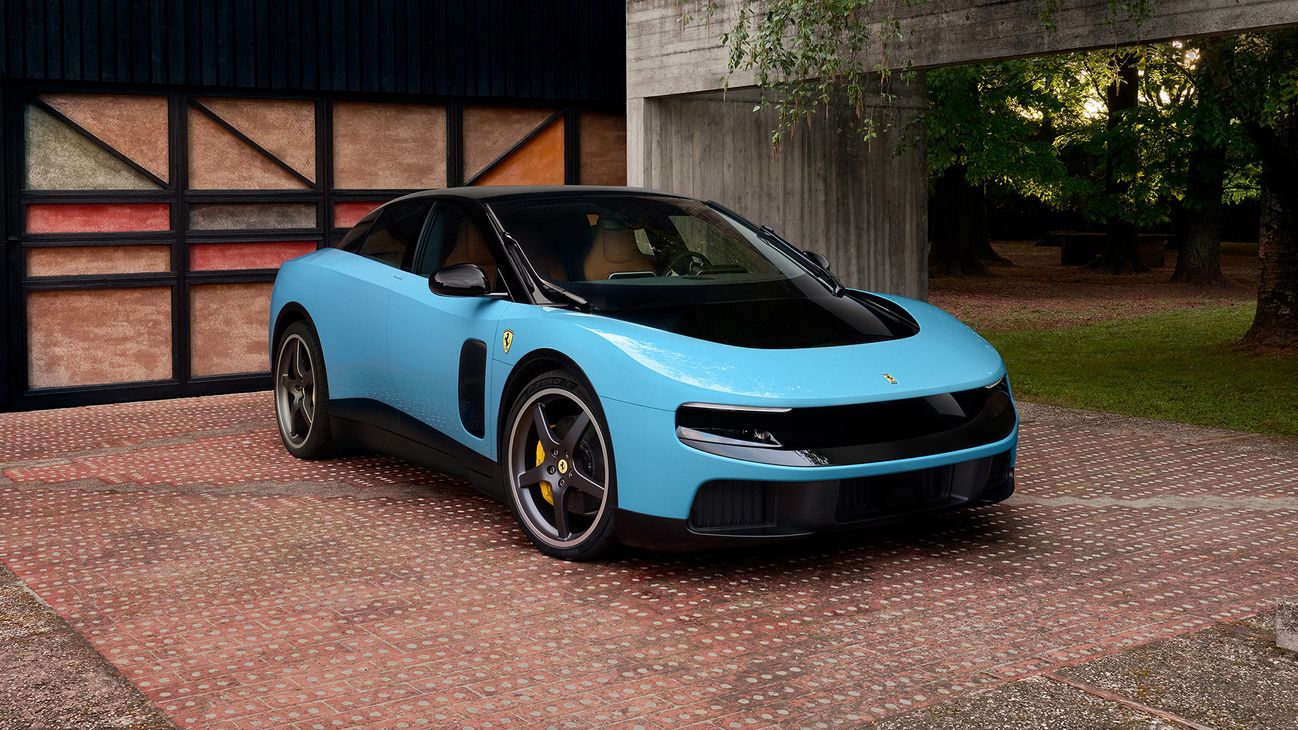
Ferrari Luce
"...hat they say, Type 222 or whatever that the loose Luce, whatever they want to call it. The blue one is a..."
The Ferrari Luce is a specific Ferrari car that’s being discussed for its identity and details. The podcast mentions a type number to help describe which exact car they mean. That kind of detail matters most when cars are rare or historically significant.
The Ferrari Luce referenced in the podcast appears to be a specific Ferrari model or variant name tied to a particular car story or classification. Mentions like “Type 222” suggest the discussion is about identifying a particular vehicle among rare Ferrari entries. It’s brought up because collectors and historians often focus on exact model/variant details.
Rosso Corsa red
"They have pictures of it in Rosso Corsa red. It's a little easier on the eye, but it doesn't say Ferrari anywhere except for the Scuderia badge on the front fender."
“Rosso Corsa” is the classic Ferrari red paint color. It’s a specific named shade, not just any red.
Rosso Corsa is Ferrari’s famous red paint color name, used across many Ferrari models and eras. When someone says “Rosso Corsa red,” they’re referring to a specific classic Ferrari-style red rather than a generic red.
Scuderia badge
"It's a little easier on the eye, but it doesn't say Ferrari anywhere except for the Scuderia badge on the front fender. It just doesn't look like a Ferrari."
“Scuderia” is Ferrari’s racing identity. A Scuderia badge is a logo that signals Ferrari’s motorsport connection, even if the car doesn’t have the word “Ferrari” on it.
“Scuderia” is Ferrari’s racing team identity, and the Scuderia badge is a branding element tied to that motorsport heritage. When the hosts say the car only has a Scuderia badge, they mean it’s using Ferrari’s racing branding rather than full “Ferrari” model badging.
Monterey auction at RM Sotheby's
"One of the sales that's going to happen at Monterey this year is at RM Sotheby's. They're going to be selling or auctioning one of the five Corvette Grand Sports from 1963."
They’re talking about a big collector-car auction during Monterey Car Week. RM Sotheby’s is the auction house, and they’re offering a very rare Corvette.
This segment is about a specific collector-car auction happening during Monterey Car Week, run by RM Sotheby’s. The hosts focus on the significance of a rare 1963 Corvette Grand Sport being offered there.
Corvette Grand Sports
"...be selling or auctioning one of the five Corvette Grand Sports from 1963. Any thoughts, any predictions?"
The podcast is talking about a very rare kind of Corvette called the Grand Sport from 1963. These cars are special because only a few were made. They’re being discussed in the context of an auction or sale, so people are guessing what they’ll be worth.
In the podcast, “Corvette” refers to the Chevrolet Corvette Grand Sport, specifically a rare set of five cars from 1963 being discussed for sale or auction. Grand Sports are significant because they’re limited and historically tied to racing heritage. The conversation is about predictions and expectations for these particular collector cars.
no sale
"It was a no sale. I had to dig way back into the artifacts, but it was no sale at 4.8 million."
At an auction, a “no sale” means the item didn’t sell. Usually that’s because the bids didn’t hit the minimum price the seller wanted.
In an auction context, a “no sale” means the car didn’t reach the seller’s reserve price (or otherwise didn’t get a winning bid). It’s a common outcome for very high-value collector cars when bids don’t clear expectations.
Daytona Cobra Daytonas
"...nd, there's five of these and there were only six Cobra Daytonas, but there were 39 Ferrari 250 GTOs."
The Daytona Coupe is a rare, race-related version of a famous car. The podcast is pointing out that only a very small number were made. Because of that rarity, it’s a big deal for collectors and auctions.
The Daytona Coupe refers to the famous high-performance race-focused car associated with the “Daytona” name, and the podcast compares its rarity to other legendary collector cars. The mention of “five of these” and “six Cobra Daytonas” highlights how few exist, which drives collector interest and auction attention. It’s discussed because limited production and racing pedigree strongly affect value.

Ferrari 250 GTOs
"But to my mind, there's five of these and there were only six Cobra Daytonas, but there were 39 Ferrari 250 GTOs. I honest to God, I think these are cheap."
The Ferrari 250 GTO is a legendary Ferrari from the 1960s that collectors consider extremely special. They’re mentioning how many exist and using that rarity to explain why prices are so high.
The Ferrari 250 GTO is a mid-1960s Ferrari grand touring race-derived collector icon, and it’s one of the most sought-after cars in the world. The hosts cite the number of cars (39) and compare that rarity to other “once-in-a-lifetime” collector cars to argue about pricing.

Ferrari
"And you know, Ferrari, absolutely, you know, people buy them in every continent. ...every continent has a Ferrari club and Ferrari owners and whatever."
Ferrari is an Italian car brand known for high-end sports cars. Here, they’re saying Ferrari has fans and owners in basically every part of the world, unlike some American models.
Ferrari is an Italian supercar brand with a worldwide owner and club presence across many continents. The hosts use Ferrari as the comparison point to argue that global brand following can affect how often certain cars “come up” in the market.
North America is the epicenter
"So, I mean, you know, but I mean, we are the North America is the epicenter of Cobras. But keep in mind, they're also, I mean, we don't like to admit this,"
“Epicenter” here means the main hub—where most of the interest and activity is. If a car’s biggest fan base is in North America, that can affect how and where it gets bought and sold.
Calling North America the “epicenter” describes where the biggest concentration of buyers, fans, and market activity is for a given car. For collector cars, that can influence availability, pricing, and how often specific models show up in sales channels.
British component
"But keep in mind, they're also, I mean, we don't like to admit this, but there's quite a large British component to those cars."
They’re saying the Cobra has an important British influence. That helps explain why it has fans outside the U.S., not just in America.
A “British component” here refers to the UK influence in the Cobra’s origins—often discussed in terms of design, engineering, or supply-chain roots. The hosts use it to explain why the Cobra has appeal beyond the U.S., even though it’s commonly framed as an American icon.

SLS Gullwing Benz
"So Hyman and Company, a group that you are very familiar with, Dave, they had a record sale of an SLS Gullwing Benz for $775,000 on bring a trailer."
This is a Mercedes-Benz supercar known for its “gullwing” doors that open upward. The hosts are talking about one that sold for a lot of money at auction, which is why it comes up.
The Mercedes-Benz SLS AMG is a modern take on the classic gullwing concept, with doors that hinge upward like the original 300SL. In the segment, “SLS Gullwing Benz” refers to that gullwing-style Mercedes, which is a highly collectible, auction-friendly supercar.
Hyman and Company
"So Hyman and Company, a group that you are very familiar with, Dave, they had a record sale of an SLS Gullwing Benz for $775,000 on bring a trailer... And then I wound up there two days later at Hyman."
Hyman and Company is a car dealership/collector-car business. In this story, it’s where the host went after the car sold and where they keep track of what’s happening in the collector market.
Hyman and Company is an automotive dealership/collector-car business that participates in high-end sales and auctions. In this segment, it’s the seller/dealer connected to the Mercedes-Benz SLS gullwing sale and the host’s annual check-in.
Bring a Trailer
"they had a record sale of an SLS Gullwing Benz for $775,000 on bring a trailer... the car just sold on bring a trailer for $775,000."
Bring a Trailer is a website where car enthusiasts buy and sell cars through online auctions. Here, it’s where the expensive Mercedes sold.
Bring a Trailer is an online auction platform focused on enthusiast and collector cars. The segment uses it as the venue where the Mercedes-Benz SLS gullwing sold for $775,000.

Slr Mclaren
"...one that usually goes for a ton. Usually it's the SLR McLaren. Yeah."
The SLR McLaren is a very expensive, high-performance car. In the podcast, they’re saying it often sells for a lot of money at auctions. That’s mainly because it’s rare and highly sought after.
The SLR McLaren is a high-end performance car that’s known for being extremely valuable on the collector market. The podcast comment that it “usually goes for a ton” reflects how demand and rarity can push auction prices high. It’s brought up as a benchmark for what certain rare cars tend to sell for.
supercar market
"As we, as a, you know, as we look at it, the, the whole hype around Ferrari is starting to find its way into other areas of the supercar market."
The supercar market is the world of very expensive, special high-performance cars. They’re saying excitement about one brand can make buyers chase other supercars too, which can push prices up.
The supercar market refers to the niche segment of very high-end, low-volume performance cars where pricing is heavily influenced by rarity, brand desirability, and collector sentiment. In this discussion, the hosts are describing how hype around one brand can affect demand and prices across the whole segment.
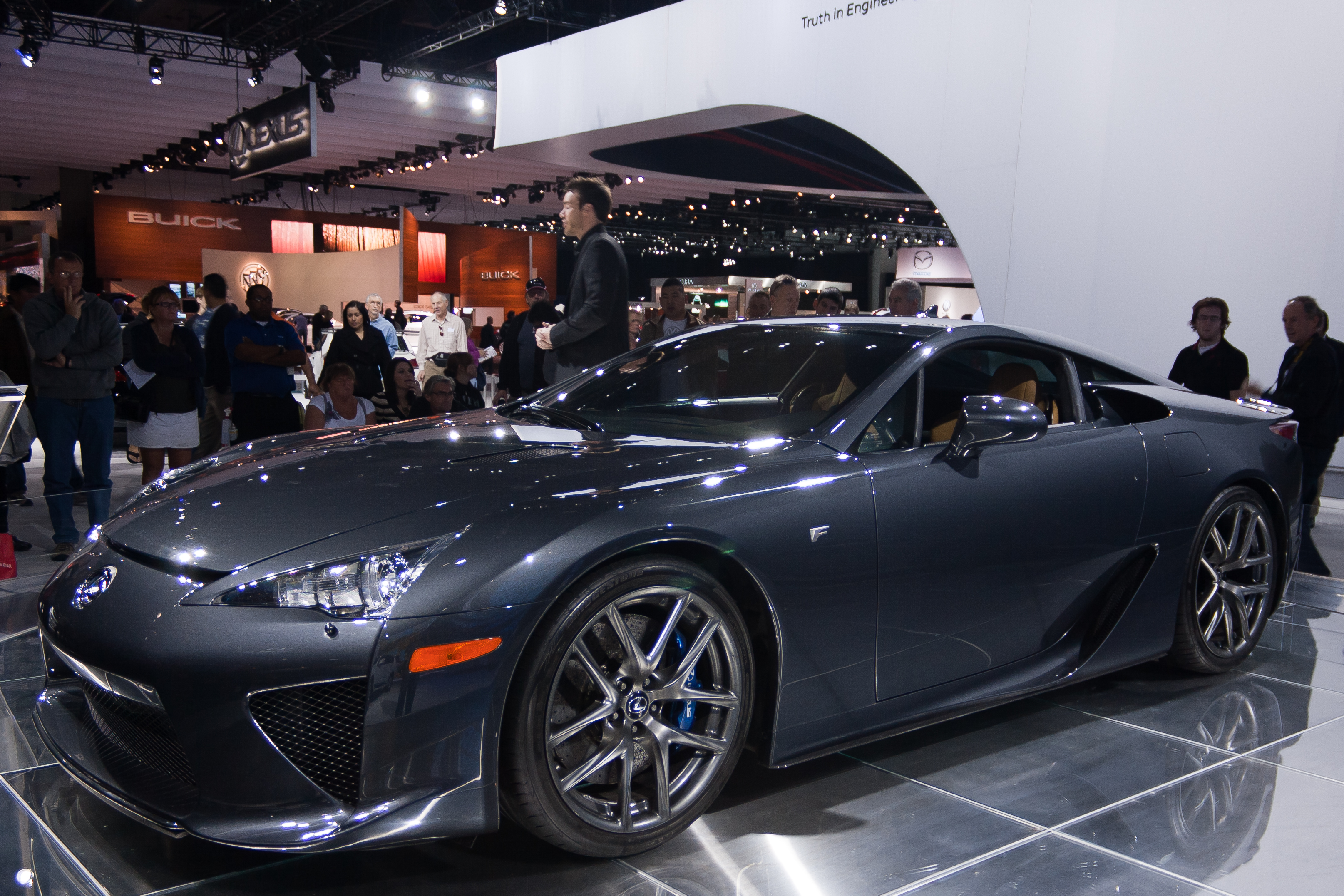
Lexus Lfa
"It's your Lamborghinis. It's your Lexus LFA is like everything in that segment is starting to go bananas."
The Lexus LFA is a limited-production supercar from Lexus, built to compete with European exotic brands. Because it’s rare and highly sought after, it’s often used as a benchmark for how hype and collector demand can push prices in the supercar market.
K-shaped car market
"So, you know, that whole over, you know, K-shaped market is happening here."
A “K-shaped market” means the market doesn’t move evenly. Some things get more valuable while others get worse, so you see a split between winners and losers.
A “K-shaped market” describes an economy where one group of assets (often the most desirable “top” cars) rises while another group falls or stagnates. In other words, the market splits into winners and losers rather than moving together.
blue chip
"Now, is this older blue chips? Like we were seeing some, some pretty hot Lamborghini mirrors out there, or is it just all blue chips, both modern and vintage?"
In collector-car pricing, “blue chips” means the most established, highly sought-after models—typically the ones buyers trust to hold value. The hosts are contrasting whether the strength they’re seeing is limited to these top-tier cars or spread across the rest of the market.
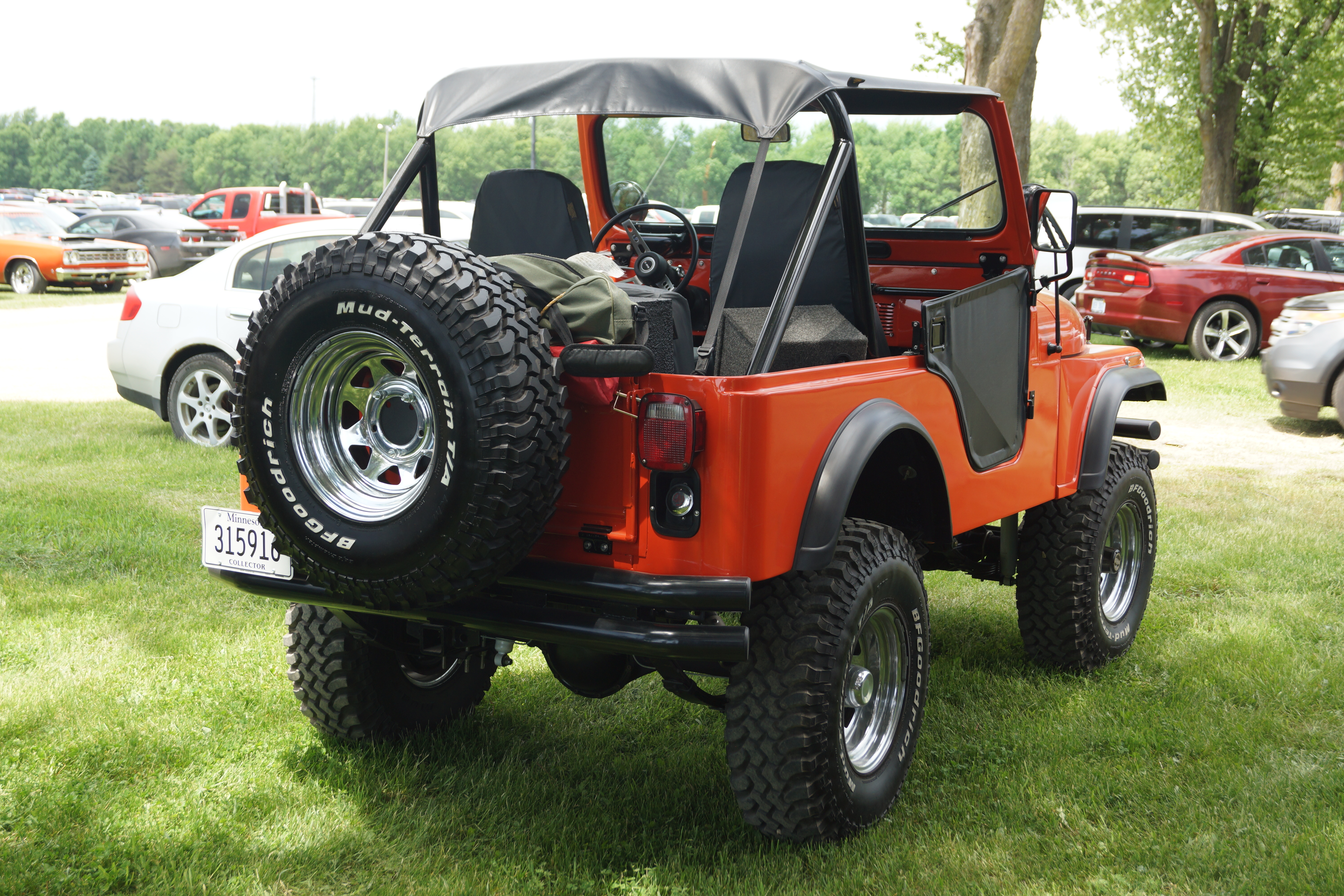
Jeep Cj7
"...of work went into it. We had things like the Jeep CJ7 went down. The VW, VW transporters went down."
The Jeep CJ is an older Jeep made for off-road driving. The CJ7 is a specific version people talk about a lot. The podcast mentions it because it’s a well-known model that many people work on or modify.
The Jeep CJ is a classic, open-style off-road Jeep platform known for its rugged simplicity and huge aftermarket support. The podcast context mentions a CJ7, which is one of the better-known CJ variants. It comes up because these Jeeps are commonly restored and modified, and they’re often used as examples in “what vehicles were involved” stories.

Ford Bronco
"...g because everybody who wanted to have a modified Bronco, with some exceptions, they've already done it."
The Ford Bronco is an SUV made for driving on rough roads and off-road trails. Many people customize them, like changing tires or suspension. That’s why it comes up when talking about modified Broncos.
The Ford Bronco is a rugged SUV designed for off-road capability and outdoor use. It’s frequently discussed because many owners modify them, so the conversation often turns to what’s been done already and what still stands out. In this podcast context, it sounds like they’re talking about the modified Bronco scene and how many builds have already happened.
first generation Broncos
"I mean, yeah, I do think that the first generation Broncos is as cool as they are. It's a lot of money for something with the simplicity of a Massey Ferguson."
“First generation Broncos” means the earliest Ford Bronco models. They’re often seen as simpler and more straightforward than newer ones, which is part of why enthusiasts like them.
“First generation Broncos” refers to the earliest production run of the Ford Bronco, known for its simpler, more basic mechanical design compared with later models. The hosts use it as a benchmark for why people find the early trucks cool, even if they cost a lot today.
agrarian
"The word is agrarian. Yes. And it is absolutely agrarian. Also, folks, all you guys out there listening..."
Here, “agrarian” is basically a way of saying it feels like something built for farm work—simple and practical. It’s not a car feature you can measure; it’s more about the vibe.
In this context, “agrarian” is used to describe the early Bronco’s old-school, farm-equipment-like feel—simple, utilitarian, and geared toward practical work rather than comfort or refinement. It’s a stylistic comparison rather than a technical specification.
lifted Bronco
"Also, folks, all you guys out there listening and some girls who think, man, my life's dream is to have a lifted Bronco. Don't."
A lifted Bronco is a Bronco that’s been raised higher than stock. People do it so it can handle rough terrain better, but it can also come with trade-offs.
A lifted Bronco is a Bronco modified to sit higher off the ground, usually to improve ground clearance and off-road capability. Lifting often changes ride height and can affect how the vehicle handles and how easily it leaks or gets exposed to water, depending on the setup.

Chevrolet Blazer
"...n you start messing around with the stance. I'm a blazer guy and I had a blazer that was slightly lifted a..."
The Chevrolet Blazer is an SUV made by Chevrolet. Some owners modify them to look and sit higher, often by changing the suspension and tires. That’s why the podcast mentions lifting and stance changes.
The Chevrolet Blazer is an SUV that’s known for being a popular base for customization, especially when owners want a more aggressive stance. The podcast reference to lifting and “messing around with the stance” points to common modifications like suspension changes and larger tires. It’s discussed because these builds are a big part of Blazer culture.
air bags
"You can finance that as, like I said, air conditioning and air bags, which are not a bad thing to have."
Air bags are safety cushions inside the car that pop out during a crash. They help protect you by reducing how hard you hit things.
Air bags are supplemental restraint devices that deploy rapidly during a crash to help reduce injury by cushioning occupants. They’re a key safety feature that many buyers expect on newer vehicles.
warranty
"And, you know, and, and everything's under warranty. And that's kind of cool too."
A warranty is a guarantee from the car maker that some repairs will be paid for for a certain time. Here, they’re saying buying new means you’re covered if something goes wrong.
A warranty is a manufacturer-backed promise to cover certain repairs for a set period or mileage. In the context of buying a new Bronco, the speaker is pointing out that warranty coverage reduces the risk of unexpected repair bills.

80 through 86 F series
"Specifically the, you know, the 80 through 86 F series, the heavy [2442.7s] duty trucks started to close the gap between the light duty trucks [2448.7s] by about 32%. [2450.5s] So, and we saw the same thing happen with 80s Toyota pickups."
The “F-Series” is Ford’s pickup truck line. Here they’re talking about the 1980 to 1986 versions (the “bullnose” style) and how different versions of those trucks have been changing in price.
This refers to the 1980–1986 Ford F-Series pickup trucks, specifically the “bullnose” era. The segment discusses how these trucks have been gaining value, including how heavy-duty versions are closing the gap with light-duty versions.

Pickup Toyota Pickups
"So, and we saw the same thing happen with 80s Toyota pickups. [2457.0s] We saw the two wheel drive versions closing the gap between the four [2462.6s] wheel drive versions by about 23%. [2465.4s] So what we're seeing out of this is that the, not necessarily that"
They’re talking about Toyota pickup trucks from the 1980s. They mention that two-wheel-drive and four-wheel-drive versions have been moving closer together in price.
This refers to Toyota pickup trucks from the 1980s, which the Hagerty Price Guide update is using as another example of value trends. The host specifically compares two-wheel-drive versus four-wheel-drive versions and how the price gap has been narrowing.
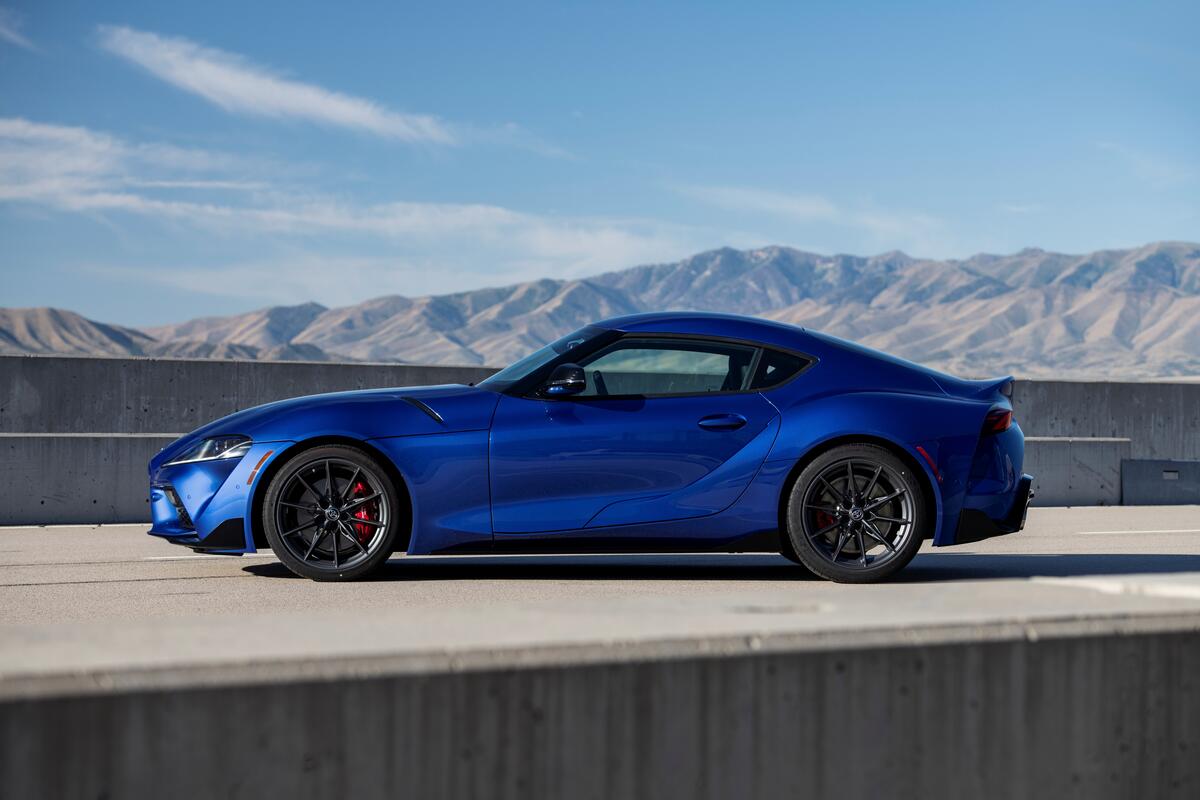
Toyota 80S Toyota
"...ut 32%. So, and we saw the same thing happen with 80s Toyota pickups. We saw the two wheel drive versions clos..."
two-wheel drive
"We saw the same thing happen with 80s Toyota pickups. [2457.0s] We saw the two wheel drive versions closing the gap between the four [2462.6s] wheel drive versions by about 23%. [2465.4s] So what we're seeing out of this is that the, not necessarily that"
Two-wheel drive means the vehicle powers only two wheels. In this discussion, they’re comparing how 2WD versions are changing in price compared to 4WD versions.
“Two wheel drive” (2WD) means the truck sends power to only two wheels, typically the rear wheels on many pickups. The segment uses it to compare pricing versus four-wheel-drive versions.
four wheel drive
"We saw the two wheel drive versions closing the gap between the four [2462.6s] wheel drive versions by about 23%. [2465.4s] So what we're seeing out of this is that the, not necessarily that"
Four-wheel drive means power goes to all four wheels, which helps with traction. In this segment, they’re using 4WD as the comparison point to show how prices are converging.
“Four wheel drive” (4WD) means the truck can send power to all four wheels, improving traction on slippery or uneven surfaces. Here it’s used in the Hagerty Price Guide context to show how the price difference versus 2WD has been shrinking.
one ton truck
"I mean, anybody who's driven a one ton truck knows that they're one of [2488.6s] the most uncomfortable vehicles in the world to drive."
A “one ton truck” is a bigger, heavier pickup than the common half-ton. It’s built to haul more weight, so it often rides rougher or feels less comfortable for everyday driving.
A “one ton truck” is a heavy-duty pickup class typically rated around 2,000 lb (about 1 ton) of payload. In practice, it usually means a larger frame, stronger drivetrain components, and a more work-focused ride than lighter half-ton pickups.
half tons
"But, you know, if you want something cool and half tons are expensive [2498.7s] and, you know, there's a few nice one tons out there."
“Half-ton” is a way people categorize pickup trucks by how much they can carry. It usually means the more common, everyday-friendly size compared with heavier one-ton trucks.
“Half-ton” is a common pickup-truck class label that roughly corresponds to payload capacity (about 1,000 lb). It’s the mainstream size for many buyers, so pricing and availability often differ from one-ton heavy-duty trucks.

Chevrolet C10
"One was a C 10 long bad. [2549.7s] One, believe it or not, was a Ford Falcon based Ranchero."
“C10” is a classic Chevrolet pickup truck. People love them, but older ones can have serious rust problems, so condition matters a lot.
The “C10” refers to the Chevrolet C/K pickup line, a classic American full-size truck platform. Enthusiasts often seek specific years and configurations because these trucks are popular for restoration and customization—and because rust can be a major issue on older examples.

Ford Falcon
"...C 10 long bad. One, believe it or not, was a Ford Falcon based Ranchero. Oh, cool."
The Ford Falcon is an older Ford car model that came in different body styles. In the podcast, they’re mentioning how a Falcon-based version relates to another vehicle type. That kind of connection is often what makes older cars interesting to collectors.
The Ford Falcon is a model line that was offered in various body styles, including some that became notable in collector circles. The podcast context suggests a connection to the Ranchero, highlighting how certain vehicles share platforms or design roots. It comes up because older Falcons can be part of interesting automotive history stories.

Ford Ranchero
"One, believe it or not, was a Ford Falcon based Ranchero. [2555.6s] Oh, cool."
The Ford Ranchero is a unique kind of pickup that’s based on the Ford Falcon. It looks and drives more like a car than a typical truck, which is why it’s a favorite among collectors.
The Ford Ranchero is a “car-based” pickup built on the Falcon platform, combining passenger-car comfort with a truck bed. That Falcon-derived layout is part of why these are collectible: they’re distinctive, and the details vary a lot by year.

Ford F100
"Oh, cool. And the other was a an F 1 50, probably about a or an F 100. I guess probably about 1968, 69, 70."
The Ford F-100 is an older pickup truck made by Ford. It was built to be used for work, and many people still collect and restore them. The podcast is likely talking about a specific vintage year range for that truck.
The Ford F-100 is a classic pickup truck from the F-Series lineup, known for its simple, work-focused design and strong collector interest. The podcast context places it around the late 1960s to 1970 timeframe, which is a popular era for vintage trucks. It’s mentioned because older F-100s are often part of restoration and “what’s the story behind this build” conversations.
long beds converting into short beds
"But and I know a lot of people are taking the long beds and converting [2582.7s] into short beds now. [2583.7s] They're cutting the frames and doing that."
They’re talking about changing a pickup truck’s bed length. People cut and modify the truck so it can use a shorter bed, usually because it looks better to them.
The host is describing a common custom/restoration practice: taking a pickup truck with a long bed and modifying it into a short-bed configuration. That typically involves cutting and reworking the truck’s frame and body so the shorter bed can fit correctly.
cutting the frames
"They're cutting the frames and doing that. [2587.0s] And the shorties look better."
“Cutting the frames” refers to structural modification of a pickup truck’s chassis/frame to accommodate a different body/bed setup. Because the frame is a major load-bearing structure, this kind of work needs careful fabrication and alignment to avoid future drivability and safety issues.

F 150
" [2664.9s] Those things were so cool. [2668.5s] I drive a 24 year old F 150. [2673.5s] That's essentially a crew cab lightning."
The Ford F-150 is a popular full-size pickup truck. Here, the speaker is saying they currently drive an older one, which helps explain their taste in trucks.
The Ford F-150 is Ford’s best-known full-size pickup, and it’s commonly used as a daily driver and work truck. In this segment, the host mentions driving an older F-150, which frames the kind of truck they’re comparing to the “Blazer Chalet” and other enthusiast vehicles.

Ford F-150 Lightning
" [2668.5s] I drive a 24 year old F 150. [2673.5s] That's essentially a crew cab lightning. [2676.7s] And they're awesome."
The “Lightning” is a faster, more performance-focused F-150. “Crew cab” means it has four doors, so it’s easier to carry people and still use the truck like a normal daily.
“Lightning” here refers to the Ford F-150 Lightning, a performance-oriented version of the F-150. A “crew cab” describes the cab configuration with four full-size doors, which matters because it changes how the truck fits and feels day-to-day.
Harley weenie
" [2676.7s] And they're awesome. [2678.5s] I'm a Harley weenie. [2680.4s] That's fine."
That phrase is basically slang for “I’m a Harley fan.” It’s about motorcycle culture, not a specific car part or model.
“Harley weenie” is a slang way of saying the speaker is a Harley-Davidson fan. It’s not a car term, but it signals their enthusiast identity and what kind of culture they’re comparing to.
supercharger
"Right. But it's, I just drove that thing to Columbus to cover Barrett Jackson. I drove it there and back. And it is as thirsty as anything you can imagine. But with that supercharger, it is point and shoot."
A supercharger is a device that forces extra air into the engine. That extra air helps the engine make more power faster, so the car feels quicker right away.
A supercharger is a forced-induction device that uses engine power to compress incoming air. More compressed air lets the engine burn more fuel, which typically boosts acceleration and makes power feel immediate.
flip and fold covers
"And I got one of those flip and fold covers on it. So I got a monster trunk."
This is a cargo cover for the truck bed that you can fold or flip out of the way. It keeps things covered when you want, but you can open it up when you need to load or unload.
A flip-and-fold cover is a type of cargo cover for a pickup bed that can be folded or flipped to open up the bed. It helps protect items from weather while still allowing quick access when you need to haul something.
cars and bids sale
"What I was driving at is we got that on a cars and bids sale for 25 grand. It had 12,000 miles on it."
Cars and Bids is a website where people auction cars to other enthusiasts. Saying it was on a Cars and Bids sale means the price came from online bidding.
Cars and Bids is an online auction platform where enthusiasts bid on cars. When the host says the truck was on a Cars and Bids sale, they’re describing how the price was set through that auction process.
out the door price
"What I was driving at is we got that on a cars and bids sale for 25 grand. It had 12,000 miles on it. It is like new. And it cost me a third of what a new truck would."
Out-the-door price is the full total you actually pay, after taxes and fees. It’s the real “what it costs me to buy it” number.
Out-the-door price is the total amount you pay to take the car home, including taxes, fees, and any required charges—not just the sticker or winning bid. When the host compares auction price to a new truck’s cost, they’re essentially talking about the overall cost difference.

Gmc Canyon
"concerned. Well, I mean, and I drive a 2022 GMC Canyon and I plan on driving that thing until it's no lo..."
The GMC Canyon Crew Cab is a mid-size pickup truck with a larger back seat area. The podcast is talking about someone planning to keep their 2022 model for a long time. That usually means they’re discussing how practical it is to live with.
The GMC Canyon Crew Cab is a mid-size pickup truck configuration that provides more passenger space than a standard cab. The podcast context mentions driving a 2022 Canyon for a long time, which suggests they’re discussing ownership plans and long-term use. It’s relevant because the Canyon is often chosen for daily drivability with truck utility.

Avanti
"the best one, the best Avanti that you could find. [3028.1s] This will be the second post-war Studebaker"
The Avanti is a special model made by Studebaker. The host is talking about a particular Avanti that’s rare and historically important, including how it was recognized at Pebble Beach.
The Studebaker Avanti is a distinctive, late-1950s/early-1960s American grand touring car known for its styling and limited production. In this segment, the host is discussing an Avanti variant and how rare it is, including its Pebble Beach history.
Pebble Beach
"This will be the second post-war Studebaker [3030.5s] on the field ever at Pebble Beach. [3032.8s] It is the first Avanti ever invited."
Pebble Beach is a famous classic-car show in California. The host is saying this rare Studebaker Avanti is important because it was invited and shown there in a very notable way.
Pebble Beach is a world-famous concours d’elegance event in California where rare and highly curated classic cars are displayed and judged. The host’s point is that this Studebaker Avanti (R3) is historically significant because it’s only the second post-war Studebaker on the field and the first Avanti ever invited.
R3
"It's an R3, which are almost legendary. [3039.5s] They are the Avanti's Grand Sport in a way."
R3 is a special version of the Avanti. The host is saying it’s rare and has a reputation, and that only a small number of these cars were made and still exist today.
R3 refers to a specific Avanti performance/trim designation that the host describes as “almost legendary.” The key point here is that it’s a rare variant with very limited surviving examples, and it’s discussed in terms of how it relates to the Avanti’s Grand Sport identity.
build sheet
"And the funny thing is there's always at least [3068.8s] three copies of the build sheet."
A build sheet is like the car’s original factory paperwork. It can show what options the car had from the factory, which helps restorers make the car accurate.
A build sheet is the original factory paperwork that documents how a specific car was assembled—often including options and production details. The host says there are at least three copies of the build sheet, which matters for accurate restoration and verification of what the car was originally.
original engine
"But it now has its original engine back, and not all of them do, and not all of the nine do."
“Original engine” means the engine that belongs with the car’s original history. Collectors often care a lot because it’s a sign the car is more authentic and can be worth more.
“Original engine” refers to returning a car to the powerplant it originally left the factory with (or the correct matching engine for that car). For classic cars, having the original engine back is a major authenticity and value factor, because many cars have had engines swapped over the decades.
Hubble Beach
"I'm very, very honored to have it accepted at Hubble Beach. The dream that I never thought I'd be able to live, it's going to go on the Tour de Elegance on Thursday beforehand."
Hubble Beach sounds like a major car show or collector event. They’re saying the car was accepted there, which is a big deal for a restoration.
Hubble Beach is referenced as the venue where the car is being accepted, implying a high-profile collector-car event. The context suggests the car’s restoration and documentation are being recognized publicly.
Tour de Elegance
"it's going to go on the Tour de Elegance on Thursday beforehand. That's a 73 mile trip."
Tour de Elegance is an event where cars get to drive and show off before the main show. They’re saying this car will participate in that tour.
Tour de Elegance is a pre-event driving tour mentioned as part of a larger concours-style weekend. The host frames it as a special opportunity for the restored car to be seen and driven before the main event.

Subaru R2
"...production numbers? Well, it's one better than an R2. So that's nailed it."
The Subaru R2 is a small car made by Subaru. It’s meant to be compact and practical, especially for city driving. The podcast is mentioning it because it’s not very common.
The Subaru R2 is a small, compact car from Subaru, designed for easy city driving and efficient packaging. The podcast joke about production numbers suggests it’s a relatively limited or niche model compared with other small cars. It comes up as a trivia or rarity point for enthusiasts.
airbox
"But when you open the hood, it's got an air box instead of a little breather. [3223.0s] It has different valve covers. [3225.6s] It has a 304.5 cubic inch engine."
An air box is part of the engine’s air intake system. It helps control how air flows into the engine, which can affect how strong and responsive the car feels.
An air box is an intake component that manages airflow into the engine. Compared with a simpler “breather,” an air box can help improve how consistently the engine gets air, which matters for power and throttle response.
valve covers
"It has different valve covers. [3225.6s] It has a 304.5 cubic inch engine. [3229.1s] The rumor was they wouldn't let one out unless it got 400 or 450 horsepower."
Valve covers are the top covers on an engine that protect the moving parts under them. When someone says the valve covers are different, it usually means the engine build is different in some way.
Valve covers are the housings on top of the engine that protect the valvetrain and seal in oil. Different valve covers can indicate different engine setups or performance packages, even if the engine’s basic layout is similar.
304.5 cubic inch engine
"It has different valve covers. [3225.6s] It has a 304.5 cubic inch engine. [3229.1s] The rumor was they wouldn't let one out unless it got 400 or 450 horsepower."
“304.5 cubic inches” is how big the engine is internally—basically how much space the pistons move through. Bigger displacement often means more potential power, assuming the engine is built to use it.
“304.5 cubic inch” is the engine displacement, a measure of the total volume swept by the pistons. Displacement is a key factor in how much air/fuel the engine can move, which strongly influences potential power output.
transistor ignition
"It came with factory with a transistor ignition ignition, which never worked ever. [3250.2s] So we've had to, you know, we've had to modify it back to, you know, back to a more conventional system."
Transistor ignition is an electronic way of making the spark that ignites the fuel in the engine. They’re saying the original version they had was faulty, so they had to switch back to a more normal ignition setup.
Transistor ignition is an electronic ignition system that uses transistors to control the ignition timing and spark delivery. The segment notes it “never worked ever,” implying the original setup was unreliable or problematic, and they later converted it back to a more conventional ignition system.
transistor box
"But we still have the transistor box on there and all that. There's all kinds of air breathers that are in the thing."
A “transistor box” is an old-school electronics module. It’s like a small control unit that helps the car’s systems work the way they’re supposed to.
A “transistor box” is an electronic control module that uses transistors to manage a specific system on the car. In older performance cars, these boxes often relate to ignition, engine control, or auxiliary functions that help the engine run correctly.
air breathers
"There's all kinds of air breathers that are in the thing. There's, you know, ways to get more air to the engine, basically, with the big supercharger."
“Air breathers” are parts that help the car get more air where it needs it. More air can help the engine make more power, especially on boosted engines.
“Air breathers” are openings or components that help manage airflow—often to feed air into the engine bay or to support engine breathing under boost. In the context of a supercharged setup, they’re part of how the car gets more usable air for combustion.
Skunkwork project
"It was kind of, like I said, it was a Skunkwork project. And the very last Avani built was an R3 car number nine, and that's at the Crawford Museum in Ohio."
A “skunkworks project” means a special, small team working on something unusual or experimental. It’s the kind of project that gets built outside the usual routine.
A “skunkworks project” refers to a small, often secretive, high-focus development effort done outside normal corporate processes. In automotive terms, it usually implies a special, experimental, or low-volume build.
quarter mile
"I think a lot of the people who the original owners thought they were, they were really rapid cars. They weren't really, you know, they weren't a quarter mile car as much as they were a long term, very, very fast car."
“Quarter mile” is a common drag-racing distance. It’s a quick test of acceleration over a short straight.
“Quarter mile” refers to a drag-racing distance (about 402 meters) used to compare acceleration and top-end pull. The speaker contrasts that with how the car feels over longer periods rather than just a short sprint.
square headlights
"they were the some of the last cars out the door with the R of the R threes and they're all 1964s, which means they all have the square headlights instead of the round headlights,"
“Square headlights” describes the shape of the headlight housings. The speaker is saying the 1964 cars have square ones instead of round ones.
“Square headlights” is a specific body/lighting design detail used to distinguish between headlight generations or trim changes. The speaker notes that the 1964 cars have square headlights instead of round ones.
Big Sur
"then come and take a look at Thursday because we'll be driving down the, down the coast down to Big Sur and back."
Big Sur is a coastal region in California known for dramatic ocean views and winding roads. The segment mentions a drive “down the coast down to Big Sur and back,” which frames the event as both a show and a scenic driving experience.
driven rate
"So there's nothing better than if you can't afford the ticket, send me an email. [3426.3s] We'll make you a driven rate."
“Driven rate” appears to be a promotional or discounted ticket rate offered through Driven media. It’s not a standard automotive term, but it’s a specific pricing reference tied to attending the event.
color change
"And so because I am a master negotiator, I went and looked at the hawk and it was a color change. It wasn't a bad car, but it wasn't for me."
A “color change” means the car has been repainted a different color than its original. In classic-car pricing, repainting can be a positive or negative depending on quality and whether it matches the car’s documented history.
restore a car
"She knows it's a passion thing. And I have proved that old adage that it cost $150,000 to restore a car to 93%."
“Restore a car” means fixing up an older car to look and run like it should, sometimes with major work. The speaker is emphasizing that doing that can cost a lot of money.
“Restore a car” refers to bringing a classic vehicle back to a high standard—often involving bodywork, mechanical refreshes, and sometimes full disassembly and reassembly. The speaker’s point is that restoration costs can be extremely high, which is central to how Hagerty-style valuations are understood.
double turquoise car
"It will make quite a statement on the lawn because when you have a double turquoise car that, you know, kind of looks like the Jetsons were the ones with the original owners on it for people of my age."
They’re describing the car’s paint color as “double turquoise,” meaning it’s a very eye-catching turquoise look. The point is that it really stands out when parked on a lawn.
“Double turquoise” is a color description the speaker uses to emphasize how visually distinctive the Avani is. In car terms, it implies a bold, likely two-tone or unusually saturated turquoise paint presentation that stands out in a display setting.
face
"But the good news is it's mostly people of my age, boomer generation who hated the car because it didn't have a face. There's no, there's no outward. It's hard to see the grill."
They’re talking about the car’s “face,” meaning how its front looks—like whether you can clearly see the grille and lights. They’re saying this car’s front doesn’t show that in the usual way.
Here, “face” is design slang for a car’s traditional front-end identity—especially a visible grille and headlight arrangement. The speaker argues that the Avani lacks that obvious “face,” which they say made it polarizing.
grill
"There's no, there's no outward. It's hard to see the grill. It's underneath the bumper."
The “grill” is the front opening on a car—usually the part with the mesh pattern. They’re saying this car hides that traditional front opening under the bumper.
In automotive design, the “grill” is the front opening (often with a mesh pattern) that historically helped with airflow to the engine and cooling system. The speaker is using it as a visual cue, saying the car doesn’t show a traditional grille because it’s tucked under the bumper.
electrics
"Without without the stink of being electric or or something that Elon made or looking like a bar."
They’re saying the comparison shouldn’t automatically make you think it’s an electric car. They’re separating the look from the fact that it might be EV-related.
The speaker mentions “electric” to distinguish the styling comparison from the idea that the car looks like it’s electric. In this context, it’s about how EVs can have different front-end design language, and how people associate certain looks with electric vehicles.
Elon
"Without without the stink of being electric or or something that Elon made or looking like a bar."
They’re referring to Elon Musk as a way of saying people might blame the look on Tesla or EVs. It’s more about public perception than car mechanics.
The speaker references “Elon” as shorthand for Elon Musk, tying the “electric” association to Tesla’s public image. It’s a cultural reference rather than a specific technical automotive term.
Studebaker
"So, so I don't know a ton about Studebakers."
They’re talking about Studebaker cars, which are older American vehicles made by a company that doesn’t exist today. They’re saying they’re not very familiar with that brand.
“Studebakers” refers to cars made by Studebaker, a historic American automaker. The speaker says they don’t know much about them, implying the conversation is touching on older American car history.
Pierce Arrow
"They owned Pierce Arrow one time. They owned EMF. They owned Flanders."
Pierce-Arrow was a famous luxury car brand from the early days of automobiles. The episode notes that Studebaker owned it for a time, which shows how car companies used to buy other brands.
Pierce-Arrow was a luxury American car brand best known for high-end vehicles in the early 1900s. The host mentions Studebaker owning Pierce-Arrow at one point, which is a reminder that automakers frequently bought and merged with other brands during that era.
E-M-F
"They owned Pierce Arrow one time. They owned EMF. They owned Flanders."
EMF was an old car brand from the early days of the auto industry. Here it’s mentioned because Studebaker owned it at one point, showing how companies changed hands back then.
EMF was an early American automobile brand that produced cars in the early 1900s. In this segment, it’s listed as another company Studebaker owned, highlighting how Studebaker’s corporate history included multiple acquisitions and brand ownerships.
Flanders
"They owned EMF. They owned Flanders. They had a bunch of and the company was famous for its ups and downs."
Flanders was an early car brand. In this episode it’s mentioned as one of the brands Studebaker owned, which helps explain why Studebaker’s story includes a lot of different automotive companies.
Flanders was an early American automobile brand. The host groups it with other brands Studebaker owned, emphasizing that Studebaker’s history involved multiple automotive names and corporate ups-and-downs.
ups and downs
"They had a bunch of and the company was famous for its ups and downs. They own Pierce Arrow at one time."
“Ups and downs” means the company had a rough history—good times and bad times. The host is using it to describe how Studebaker’s business went through major changes over the years.
“Ups and downs” here is shorthand for the financial and operational volatility that many early automakers experienced—periods of growth followed by downturns, restructuring, or ownership changes. The host uses it to frame Studebaker’s corporate history as turbulent.
Student Baker Museum
"It's not it's easy to get to the the Student Baker Museum is a unique museum that tells a great story."
The Student Baker Museum is a real museum the host recommends. They’re saying it’s a great place to learn the full story of an old car company.
The Student Baker Museum is a specific museum the host recommends visiting, framed as a place that tells a complete story about the car company history they’re discussing. The segment emphasizes it has a clear beginning and ending, unlike many unfinished brand histories.
Request an Explanation
Heard something you'd like explained? We'll add it to this episode.
Sign in to request explanations for terms you heard.
Want to learn more?
Browse our glossary for plain-English explanations of automotive terms, jargon, and concepts.
Help improve this episode
See something that's not quite right? Our annotations are AI-generated and can sometimes miss the mark. Click the flag icon on any annotation to suggest a correction.