“Driver performance” in F1 is the overall measure of how well a driver is doing, combining results like qualifying position, race pace, and consistency. The hosts are using it as the basis for their ranking discussion, even though car issues can blur how much is the driver’s fault.
Qualifying is the timed session before the race that decides where each driver starts. If something goes wrong in qualifying, it can make the race harder right from the beginning.
Place
Com
“Com” is shorthand for the Monaco track. The hosts are saying Russell’s crash with Lewis Hamilton there wasn’t his fault.
This sounds like a problem with the car’s “power boost” system not working the way it should at the key moment. If it doesn’t deploy properly, the driver can’t use the extra speed when they need it.
Mercedes is the F1 team involved in the problem being discussed. That usually means the issue is related to how their car’s systems are working, not just what the driver did.
The opening lap is the very first lap after the race starts. Drivers are packed together and things can go wrong quickly, so early problems can ruin your race.
Concept
elements of that
“Elements of that” just means the specific parts of the problem that are affecting how well the car is working. Here, it’s referring to the power-unit and how it’s being used.
In F1, the “power unit” is the whole engine-and-hybrid system that makes the car go. It’s not just the engine—there are also parts that store and reuse energy, and the driver has to manage it to get the most speed.
Term
regulations package
A “regulations package” is the bundle of rule changes for Formula 1. It can affect how the cars are built and how they behave, so results may depend less on driver skill alone.
Term
50-50 splitter
A “50-50 splitter” refers to a power-splitting strategy that divides energy or torque between the driver’s inputs and the car’s hybrid/energy management system. The hosts connect it to how Mercedes “broke it down” in terms of Russell’s lack of pace, implying that the balance of who/what controls the power delivery can affect lap time.
Here, “fidelity” means how faithfully the car turns what the driver does into what actually happens on track. If the match isn’t accurate, the car may not respond the way the driver expects.
Term
deployment element
A “deployment element” is a specific feature or setting that gets turned on and used while you’re driving. If that feature doesn’t behave well, it can make the car harder to drive fast.
Oscar Piastri is a Formula 1 driver. In this segment, they’re talking about whether qualifying struggles should be blamed on the driver or on the car’s systems.
Charles Leclerc is an F1 driver. In this episode, the hosts argue about where he should rank after a weekend, based on his speed in qualifying and the race, and a controversial moment.
The race is the main competition on Sunday (or the main day) where drivers try to finish first. In this discussion, they’re saying Leclerc did well enough in the race to deserve a higher ranking.
A “legal move” is an action on track that the rules allow. Here, the point is that the stewards decided the incident wasn’t a rules violation, so it shouldn’t be treated as a mistake.
Colopinto is the driver they’re talking about. They’re saying he did well because he fought smartly in traffic and came out on top in a close race situation.
A “four car battle” means four cars are fighting closely for position. When it’s that tight, it can make or break whether you finish in the points.
Term
deployment power
In F1, drivers don’t just have one fixed engine output—they manage energy and power. “Deployment power” is about how much extra acceleration they can use when they need to attack or defend.
Verstappen is Max Verstappen, one of the top drivers in Formula 1. They’re comparing his result and performance to Antonelli to decide who should be ranked higher.
Russell is an F1 driver (George Russell). The point here is that his results are hard to judge because the car wasn’t always consistent and sometimes couldn’t deliver the expected performance.
Person
Kubitsa
Kubica is an F1 driver who drove for Williams around that time. The hosts are using both drivers as examples of how the car’s limitations affected what they could achieve.
Car
Aston Martin
Aston Martin is the F1 team the car belongs to. The hosts say the Aston Martin wasn’t very fast and was inconsistent, so it’s hard to tell whether a driver is doing everything they can or if the car just isn’t capable.
“Alonzo” appears to refer to Fernando Alonso, an F1 driver. The hosts argue that even if Alonso is capable of strong seasons, the car’s fundamental limitations can prevent the results from matching the driver’s talent.
Perez is Sergio Pérez. The hosts are explaining that his low ranking was partly because the weekend didn’t give him much chance to show what he could do.
Term
deployment problems
“Deployment problems” refers to issues with how a driver’s car systems are used during a stint—most commonly relating to deploying power or energy in the right way at the right time. In F1 context, it’s about whether the car is delivering what the driver expects when they try to use it.
Bottas is a Formula 1 race driver. Here, the hosts are comparing his results to another driver’s (Perez) to judge how good or bad a weekend really was.
Term
changed some bits on the car
This means the team adjusted parts or settings on the car during the race weekend. The goal is to make the car work better, especially if it wasn’t performing as expected.
In F1, drivers earn points depending on where they finish in each race. The “F1 scoring system” is just the official rules for how many points you get for 1st, 2nd, 3rd, and so on.
The Belgian Grand Prix is one of the Formula 1 races. The hosts are using the outcome of that race to explain why certain drivers moved up or down in their rankings.
Lewis Hamilton is a Formula 1 driver. In this segment, the hosts say his ranking dropped a lot—he’s described as being 19th in their system and slipping to fourth overall.
Bortoletto is a driver mentioned as having a big jump in the hosts’ rankings. They credit a strong weekend and say he might be a top contender because of his points haul.
Person
Isak Haja
Isak Haja is a driver the hosts say is doing better than his points suggest. They mention he scored six points in Belgium and moved up to 19th, so they think he can gain momentum.
“Points tally” just means how many points a driver has in the standings. The hosts are saying Isak Haja’s ranking looks better than his total points so far.
“Midfield pack” means the group of drivers who are all fairly close in speed and results. The hosts are saying it’s a tight fight there, so rankings can change a lot based on one race.
LIVE
The Athletic
The race is on!
And Kimmy Antonelli got back to winning ways in Belgium after hunting down and passing
Charlotte Clarke.
But will that propel the Italian back to number one in my driver rankings?
And what about Antonelli's beleaguered teammate George Russell?
Where will he place?
I'm Ed Stewart, and joining me to discuss how I rank a driver's performances after
the Belgian Grand Prix is Ben Anderson.
Well, Ben, for the first time, I've got someone who was on the ground at the race, covering
it with me.
So another different perspective.
I like this.
Do you feel better equipped or worse equipped than previous ones you've done because of
that?
Probably better equipped.
I lived the experience with you.
I don't envy you, this race, particularly for driver rankings, because it was absolutely
the worst circuit for the energy starvation that we've been to so far.
And as you've said before, circuits where the energy starvation is at its most acute
makes untangling the car aspect and the driver aspect so much more difficult in F1, 2026.
So I'm expecting the members to crucify you, basically.
Yeah.
I would say this is one of the worst weekends there's ever been for my driver rankings,
driver ratings.
Get your excuses in, Ed.
Come on.
No, it's one of the...
Just in terms of the signal of driver performance, I mean, it's been bad all throughout this
season.
Yeah.
That's just what F1 is, sadly, and I'm afraid we're going to have to talk about it a lot.
I know some people don't want us to, but that is what it is.
It is the thing that's driving performance.
And we like to throw you a difficult challenge, don't we?
So yeah, it makes your job a bit harder.
Yeah, absolutely.
Well, shall we remind everybody of the ranking order, and then you can get into grilling
me on behalf of the members of the Race Members Club who've sent in their questions.
So let's have the countdown.
Gasly.
So Ben, you've come prepared.
You've got the ammunition in the form of everything the Race Members Club has said, so where
do we start?
Yes, I have.
Let's start at the bottom.
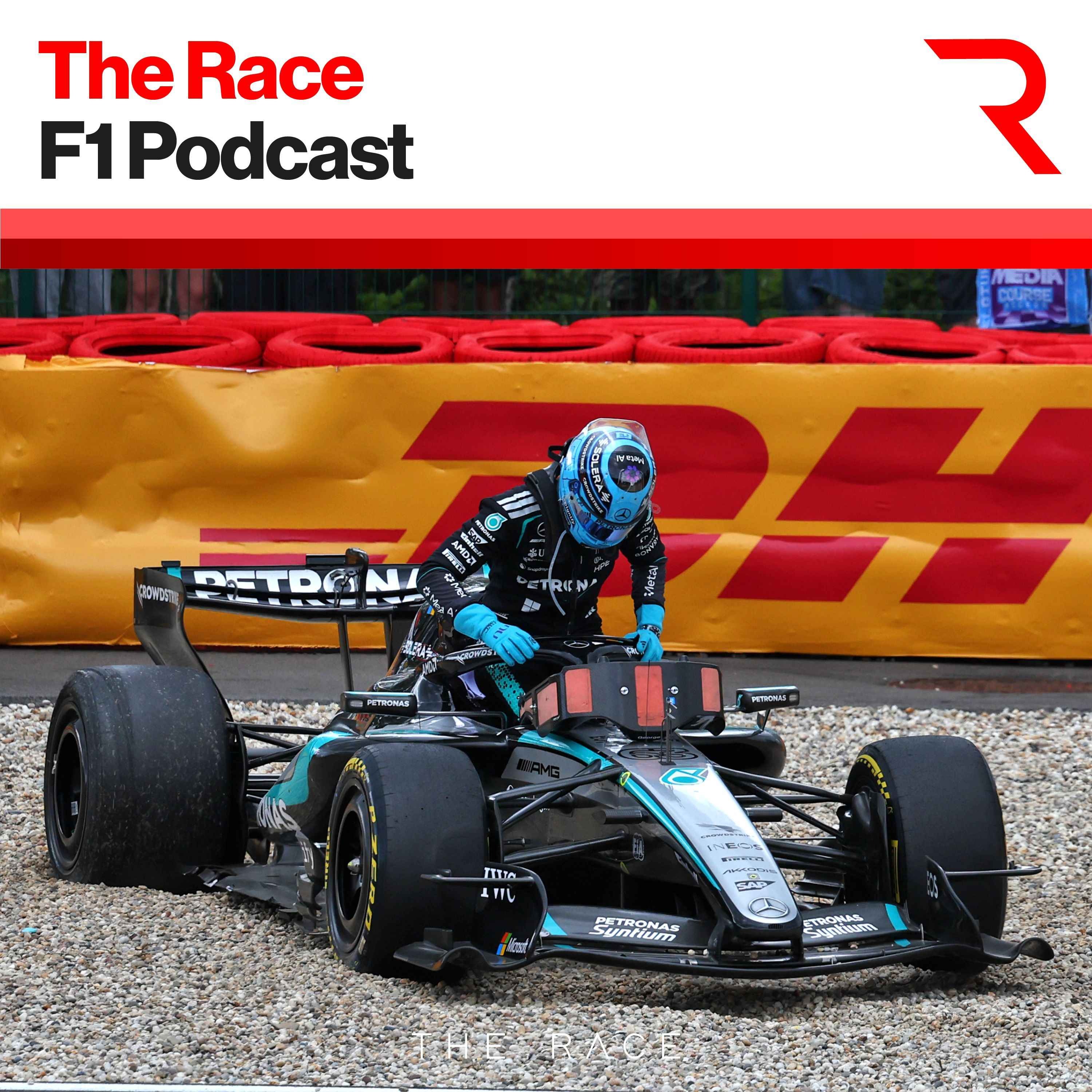
This time, George Russell in last place, the members had lots to say about this.
They feel you're punishing him for those Mercedes deployment issues that affected him in qualifying,
particularly, but also at the start of the race.
They say the crash with Lewis Hamilton at the Com was not his fault.
They reckon he qualifies third.
If Red Bull doesn't sacrifice, he sat cad jar to help Tomax Verstappen in Q3, even with
those deployment issues, AI algorithmic deployment issues that Mercedes were battling and not
really understanding.
And one of our members, Thoranin Gunnison, said, Ranking him last is brutal and treats
a victim of circumstance like he drove a sloppy, mistake-ridden weekend.
Shout-outs to Number 37, Robert Chambers and Ranch Dingus who all want to know why you
were so hard on Russell.
Well, it's a number of things.
Firstly, I'd say that first slap incident, he certainly had a part in.
Yeah, the deployment issue, which, incidentally, on that opening lap, all the Mercedes cars
had it.
They all had it to different degrees.
Russell may well have been the one who had it worst.
And so he lost some ground.
And that was different to the qualifying deployment issue, wasn't it, we should say?
Yeah, but that deployment issue didn't force him to put his car on the outside of Hamilton.
It was a risky position to put himself in, and he played a part in what happened.
It wasn't his fault.
But again, I'll always give drivers credit for balancing the risk versus reward.
And he was definitely trying to make up for it.
I don't necessarily blame him for that.
The deployment issues, yeah, on Saturday, Mercedes said, yeah, there was a problem,
but they settled on in the end, it's 50 50 in terms of driver and power unit problems
for the performance.
And so Russell is still struggling with elements of that.
Now, I don't like the fact that the power units and getting the most out of them in
the deployment is necessary, but it's it's central to performance to the fact to the
point where it is performance and countless drivers were complaining of deployment problems
throughout the weekend, as they have been all season.
So this is part of it.
And yes, Piastri was driving correctly, but there were also speaking to a few people,
some small little things he was doing that that were costing him a little bit as well.
This is what you have to do.
You are, as drivers have said all season, you are driving the power unit.
Your job is to drive the power unit.
So Russell is not driving the power unit on top of all the problems as well as say,
Antonelli, and he tried to make up for a problem that wasn't of his own making at they
com. It was a risky position to put himself in and the incident happened.
So he has to be ranked pretty lowly unfortunate.
Yeah, it is harsh.
He wasn't driving terribly, but in the conventional sense, driving is not what it was.
It's not what it's been at any time before in Grand Prix history.
Any driver publicly, they're annoyed privately.
They are 50 times more irritated with the whole thing.
So Russell is partly a victim of circumstance, but he's a victim of
circumstance primarily of the of the regulations.
So that's why he's down at the bottom.
You've got to hold it against him because there were things he did that were not to his
advantage. He is not as in tune with the power unit.
If we say Russell holds no responsibility for that, then the whole notion of ranking
drivers becomes impossible and that has been diminished by the whole regulations package.
But Anseli is more in tune with it and he is not having the same level of problems.
There are problems that are within the driver's control.
Like I say, that 50-50 splitter power unit to driver was how Mercedes broke it down in
terms of Russell's lack of pace.
So therefore Russell is part of it.
Yeah, it's very difficult to untangle the right balance, isn't it?
Because even the teams are struggling to understand exactly how much of that driving
input, the fidelity of it impacts the deployment and it varies between car
different type of power unit driver.
But as you say, there is a driving aspect.
A follow up question related to this deployment element about also Oscar
Piastri from Gavin Cameron, who listened to our In Car Insights podcast after
qualifying, wants to know about how these machine learning deployment issues, the ones
that hurt Russell and Piastri in qualifying particularly, and that even Andrea
Seller couldn't explain properly when I was trying to ask him about them post
qualify, how do they affect the rankings?
He says, is it fair to hold that against drivers like Piastri and presumably Russell too?
Well, they are the rankings.
That's the simple fact that driving the power unit is critical.
So yeah, there were things that Piastri was doing that were slightly compromising it.
I mean, I had a few conversations with people about some of the factors that play
into that. And at heart, a lot of it comes down to what the driver is doing.
Now, some of them are tiny details that it would be impossible to actually be on top of.
Piastri must have been more difficult because the rustle lands in any comparison.
We were looking at data a lot on Saturday and you could see some quite obvious
differences and it kind of made sense.
But the Piastri one, where the gap also was much closer between him and Norris,
that's so difficult to understand.
Yeah, it is very, very difficult.
But you just you basically have to say that if there are these variations
in deployment, unless there is a specific problem that the team identifies,
then you have to put it down into the drivers, into the drivers control,
even when it can be down to wind and all these sorts of things.
This is this is impossible to the teams can't do it literally every single time.
Just off record, you speak to anyone on the engineering side of teams about this.
You say, right, well, what's causing this?
You get sort of the big sign and say, well, this is really hard for us to do.
You know, I've never known a situation in Formula One when universally they've been so
people have been so baffled and frustrated and irritated with the whole thing.
So, yes, it is extremely difficult.
But given deployment is so crucial in terms of the pace,
you just end up putting everyone about equal first because that's making a difference.
There are some driving difference traces, but it's such a problem.
So engineered into it when you look at somebody like Piestre, I mean,
yeah, that that deployment, as Stella said, he was driving correctly and it hurt him.
But there were other little inputs going on that had a part in that.
It's not necessarily reasonable to expect to do it.
But that's what's what's making the difference.
Rankings won't work if you if you don't do that.
I mean, sometimes you might be told that there was a problem with
the we didn't upload the correct software precession because they get all these updates
and that kind of thing.
Sometimes there is a tangible mistake that causes it.
But usually the system is working correctly.
It's just working bafflingly.
And the driver's job is to as painful and ludicrous as it is and difficult as it is
to be in tune with it.
Often it's just down to pure luck.
That's why everyone's so frustrated with it.
So it's yeah, it's extremely, extremely difficult.
And no wonder the drivers are furious.
Well, even if it's not luck, sometimes it's just a thing they don't understand
until much, much, much, much later.
So, you know, for our members who are interpreting this a certain way,
having watched on TV or read some stories, Andrea Stella or Toto Wolf might say
one thing at a certain point post qualifying because they think, oh,
this has happened.
But actually many hours later, their position shifts because suddenly some
engineer detects one thing.
Ah, actually, it's this tiny thing we think was also a part of the equation.
So it's a bit like the machine learning in the engine.
It's a constantly evolving thing, but a very, very difficult thing to be precise about.
Yeah, absolutely.
And in qualifying, for example, Toto Wolf on Sunday after the race, when I asked him,
said that basically the problem meant that Russell used up a little bit more pack
early in the lap compared to Antonelli, which helped him to be close,
basically fractionally quicker than Antonelli in Q3.
But that hurts him later in the lap.
But it's that this is the fundamental problem with it.
We talk about deployment problems and naturally everybody hears something's
gone wrong, but this is the thing.
It's not gone wrong.
It's just stupid.
Deeply stupid.
This is how it works.
And it's these tiny minuscule differences that are impossible to unravel.
Mercedes needed to spend all night with number crunching and analysis going on
at HPP and Bricksworth to get an understanding of what's gone on.
You know, this is the number of human hours that went into it would have been
enormous. That's ridiculous.
This is this is a whole different level to any of the data analysis before.
And it's intensely frustrating.
And again, I know people are irritated.
We keep talking about it, but it's it's everything.
And yeah, that that understanding keeps evolving and shifting.
But usually when they've understood it and you speak to people about it,
they do say it comes down to the driver with its reasonable to expect the driver
to be able to control it, whether it's down to five percent different level
of throttle liftoff or some ludicrously undetectable amount.
It's still within that within their command.
And you just have to accept that's the challenge.
But it's it's so is I cannot express how frustrating it is trying to go through
this and seeing what is causing these performance swings.
Right. So we move on to our second topic now, Ed.
I want to talk about what the members perceive to be Carlos Sainz favoritism.
Science was obviously top three in your rankings,
but there's a general feeling among members that he should be ranked lower
because in their eyes, he ruined his own weekend by causing that one contact,
I think with one of the Haas drivers.
Amir Mazian says, ranking him this high when he only had a solid weekend
and was at fault for his first lap contact shows evidence of clear science bias,
which is something Wow also mentioned.
CN said your science obsession strikes again.
I don't think it's particularly controversial to think science is quite good.
You know, you could say if I got a Max Verstappen obsession
because he tends to perform a high level.
Now, OK, I mean, the sort of bias favoritism thing,
it's not a particularly useful argument.
Now, there is one statement in there, which is about the first lap thing,
which I understand my initial thing was thinking, yeah, that science is one.
But when Ocon is basically making that sort of big lane change,
science is already on the brakes.
So can't move.
Could you have been a bit more conservative?
You could argue that.
But it's I looked at that one and thought, you know what?
Ocon's got a part in that as well.
Sometimes there are those incidents that are just one of those things.
It's very different to say the Russell car positioning things.
So, you know, you could disagree on that.
That's that's fine.
But I kind of when I looked at it again and check the onwards,
I thought, you know what?
That's just one of those things that's that's happened.
But it's weekend.
I don't think it was solid because the Williams is not a quick car.
If you get it into Q2, that's your that's effectively your your pole position,
isn't it? Yeah, it just is.
He was ahead of he both houses, weren't they?
And the house is a quicker car.
So it's him versus Bearman, isn't it?
Yeah, yeah, that back.
Well, we had a more unflattering term for it, but it's the battle at the back.
That's they yeah.
And and he's he's consistently getting the most out of the car.
Now, this is still the same guy who was starring in a Ferrari at times.
So it's no particular surprise.
You know, I it's one of the things about doing these rankings is
particularly when it comes to the midfield, you do get a strong signal.
And there are two drivers in the midfield who very, very, very consistently
you're looking at and thinking, do you know what?
They're at the top of what the car can do.
And it's Sainte's and Bearman in terms of performance there.
The two ones that consistently do it.
But it just so happens that for the most part, it's only in recent times
they've been in the eighth and ninth fastest car.
So I'd certainly say if you disagree on the first lap contact, that's absolutely fine.
That's a matter of opinion.
But I would say in terms of solid, his weekend was a lot better than solid.
What what more is he supposed to do?
The laws of physics govern how fast the car can can go.
And the evidence actually pretty consistently is that Sainte's is at the
top of what the car can do in terms of pace.
His race pace was good.
Remember, he had that penalty as well that dropped him further back.
That wasn't anything to do with him.
So often you go through it and he's just genuinely impressive.
Yeah, well, one of our members, Jake Nelson, said he would put Sainte's
number one in a ranking for the whole season so far.
So I think some some of the observers are definitely picking up on this signal
that science is performing at a high level.
Yeah, and I don't expect people to see it because he's not on TV much.
People haven't got, as I always say, a whole weekend and hours
hours to go over it.
And that he said this to hasn't he?
He said, you know, that he doesn't expect to be noticed this season.
Why Williams is so terrible, but he's absolutely determined to put in the highest
level of performance he can regardless of the car.
Yeah. And I can only look at it and and judge it as I see it.
That's kind of our job to do that.
And yeah, like you say, clear bias, favouritism.
Well, how do you unravel the difference between a bias or a
favouritism that you think is unjustified or just somebody doing a really good job?
Consistently. So yeah.
And he is a Grand Prix winner.
I think he's widely regarded as he was it was unlucky.
The only reason he was dropped by Ferrari was to make space for Hamilton.
And so I won't criticise that element of the decision, but it wasn't.
Oh, this guy's not good enough.
We need to get rid of him.
I think most people I'd thought would agree he should be in a in a top team.
Yeah, I think that's that's the place he's earned.
So not that surprised he's he's doing that.
Well, so you've got a science obsession, but he is a very,
very classy Grand Prix driver.
I don't think he's the best driver on the grid.
I wouldn't I wouldn't have put him as I don't think I put him as number one
ranking for the whole season, but he's certainly up there.
Let's finish the first part of the podcast by visiting the champions rankings.
Champions refers to the champions tier members of the race members club
who get to submit their one to 22 race weekend rankings
and we can compare them to mine.
So, Ben, do you want to give us the rundown?
Yeah, absolutely. I'm going to go in reverse order.
So our champions at number 10 had Lewis Hamilton, who you ranked 19th.
Ed at number nine, they had Oscar Piastri, who was fourteenth in your rankings.
At number eight, Franco Colapinto, who was sixth in your rankings at seven.
Isaac Hadjar, who was also seventh.
So some unity there. Sixth, Gabrielle Bortoletto, who was fourth in your rankings.
Fifth, Arvid Lindblad, who was eighth in your rankings.
Fourth, Charlotte Clarke, who was ninth in your rankings.
Third, Lando Norris, who was fifth in your rankings.
Second, Max Verstappen, who you put number one.
We'll talk about that later.
And number one, they had Kimmy Antonelli, who you put second.
Yeah. And as I say, we'll be having a chat.
Well, I'll be having a chat about that with myself, mainly for the members.
So if you're interested in hearing that sign up for the race members clubs,
I hit the link in the episode description or head to Patreon and search for the race
members club to find out more.
Hey, it's Lauren Dragon from Wirecutter,
the product recommendation service from the New York Times and I test headphones.
We basically make our own fake sweat and spray it over and over on these headphones
to see what happens to them over time.
We're going to put on some noise canceling headphones
and see how well they actually block out the sound.
I have 3,136 entries in my database.
Kids, workout, a version of Bluetooth.
At Wirecutter, we do the work so you don't have to.
For independent product reviews and recommendations for the real world,
come visit us at nytimes.com slash Wirecutter.
Right, Ben, what does part two have in store for us?
Where do you want to go next?
OK, let's move on to Charles Leclerc,
who was ninth in your rankings this weekend.
The members want to know if you think in hindsight you ranked him a bit too low.
They feel he did all he could in qualifying and the race.
And one said it's baffling to count the piastry incident against him,
considering it was judged by the stewards to be a legal move.
Shout out to Adpo, Gavin Cameron, Kimmy Reichenelli and Elyon Farrell
for questions on this topic.
So too harsh on Leclerc.
What do you think?
Well, he would have been a lot higher.
He'd probably been a contender for Topspot without that incident.
And again, the usual thing, really, really high standard,
really, really small differences.
So that put him down.
Now, it's not baffling to count it against him.
The stewards were plain wrong in this case.
I think this was they judged it as if it was a corner.
The only thing piastry could have done to avoid that is not be a racing driver
and not be on the track, because if you can do that, you are allowed to move.
I mean, because if you've got to be alongside a certain amount of the driver
can move over on you, therefore, on a straight, you can always move
across on somebody approaching a corner and hit them or something.
It's it's a complete and utter nonsense.
And it was higher as it created damage.
You could easily have given damage to Leclerc.
And yeah, my I have to judge those instances.
I see it and how Leclerc played it.
And Leclerc does this does this quite a lot.
And I just think it was it was very, very high risk.
And yeah, I just can't I can't agree with the stewards on it.
And I don't think any driver, any neutral driver would look at that
and agree with it because it's like I said, on the post race podcast,
racing doesn't work if you can do that straight to not corners by and large.
If you are doing something on a straight that causes an incident
and somebody else drives off the track or isn't trying to overtake you,
that this nonsense about piastry wasn't going to make the move.
That that's not that's not remotely relevant to this.
He was perfectly entitled to be there and Leclerc hit him.
It was it a foolish move and piastry.
Leclerc was lucky to get away with it and it did damage piastries race.
So yeah, it's for me, you've got to judge the steward.
I mean, if a court of law rules some somebody not guilty when they're guilty,
that doesn't mean you say, well, therefore, they're definitely not guilty.
If the verdict is demonstrably wrong, which I would say,
I defy anyone to read that verdict.
So go and find it. It's on the race website or find a document.
It's just illogical and they've got bogged down in guidelines
that once again are not comprehensive enough
and cannot be comprehensive enough to cover every possible scenario.
Yeah, I think the key point here is whether the court is right or wrong.
And perhaps there's this feeling that the court is impenetrable in this case.
But as you know, it's a it's a fallible thing.
We had a follow up question from Stephen James Ward,
who was curious to know if your opinion of the incident
superseded what the stewards said.
And I think it's quite clear in this case,
it did because you just felt that the stewards got it completely wrong.
Yeah, I mean, I'm not necessarily sure that stewards
would have got it wrong because the stewards often and this has happened many times
if they get the the guidelines and all the conversations
they've had in the background says that the guidelines apply or whatever,
they have to apply them.
And there have been a number of times when you speak to stewards
and they say, well, ideally we'd let it go, but we couldn't because the guidelines
existed. So I'm absolutely not saying the stewards are idiots in this case.
Because at this time, they even the guidelines don't apply.
Well, yeah, but we don't know all the other conversations that have been
had that are part of this.
There's kind of a there's a case law there and there's there's all the sorts
of preparatory information.
In my experience, most of the stewards, all the stewards I speak to,
they're diligent and they're dedicated.
And actually, for the most part, they they'd probably like to have a tiny bit
more leeway, but the rules as you have to apply them are the rules.
But I think there will be a little bit more talk about this.
And it's certainly going to come up in in drivers meetings and in conversations
about how how these incidents are are applied.
Because what was Piastri supposed to do?
What was he supposed to vanish?
He was supposed to not be there.
So how does it work if if he can't be there?
And Piastri got damaged and the clerk could easily have done.
Right.
Shall we move on now to the bit where you have full power, Ben?
This is your spotlight that you can shine on whatever you like for good or bad.
So what are you going for?
OK, I'm going to shine a positive spotlight here on Franco Colopinto,
who was sixth in your rankings.
This is his second highest ranking of the season behind Miami, where you had him
second and his first top 10 since Canada.
So I just want to know why you were so impressed with him
and why was he better this weekend than Hajar, Linblad and Leclerc in your eyes?
Well, part of it is obviously the Alpine wasn't a super quick car.
I think his pace was was pretty good.
He did get out qualified by Gasly by six hundreds of a second, something like that.
So Tom Tensenberg's is similar pace.
That was a small negative.
But the thing that stood out about Colopinto is he won that really tight
four car battle. There was a four car battle for P 10.
So it's basically that's the all or nothing battle.
One person was going to get something out of the race.
Three of them didn't.
And Colopinto was the one who prevailed in it against it.
It's Gasly Hulkenberg Lawson.
And obviously he played it well.
Obviously at the past, the double pass he made in chemistry
was because he had more deployment power, but that will have been a strategic thing as well.
So very clever in battle, not only to be able to get ahead, but then stay clear of that.
And they that group stayed together.
So that race impressed me because I think a lot of times
that race would end up with you not getting a point out of it.
So I was impressed by Colopinto.
He's he's pretty comfortable, pretty quick on the on the Friday,
even though he did say the car was difficult to drive as well.
So I thought that was a pretty good effort from from Colopinto
and better than Hajar, Limb, Ludlick.
Well, Hajar had a sort of impressive weekend,
but you also had quite an easy assignment in many ways
in that he wasn't having to qualify properly.
He did well with the with the the towing,
despite the fact that the power unit was giving him slightly random power levels.
And he drove the race well, but it's primarily strategic
that got him up to where he was.
He still had good pace relative to Verstappen, not quite Verstappen pace, but pretty good.
Limblad had the strongest car in the midfield.
And ultimately, it's not quite as good on race pace,
but he couldn't do anything about Bortoletto.
So I mean, Limblad had an impressive weekend,
but I just thought Colopinto made that little bit of a difference in the race.
And Leclerc just dropped behind him
because of that that era that we've already talked about the misjudgment in in battle.
So that that's what got Colopinto to where he was,
because he had to make a difference in that race with the way he did.
What was the the tightest race in the in the field,
where a few seconds made the difference between P 10 and P 13.
Right. Should we have another break now, Ben?
Just a reminder to everyone if you're enjoying it,
do like, follow, subscribe on your podcast app of choice.
So you never miss an episode and also because it genuinely helps us
in terms of getting the podcast out there to the people.
So be much appreciated if you can do that.
Right, Ben, let's move on to the final part of the podcast.
Now, lots of drivers we haven't talked about.
So where are you going next?
Right. So let's move now to the top, the battle for top spot.
In fact, Matt Lee wanted to know,
was this the toughest decision of the year you had to make
between Antonelli and Verstappen for number one?
And in a tie break situation, given this feeling that it was quite a close call,
Jack Rudd thought top spot should have gone to Antonelli
because there was more on the line for him in this race, basically.
And he ultimately delivered the better result.
They could they could have been the other way around.
They were very, very, very similar in the grand scheme of things.
So I sort of thought about it in the end.
It was partly down to the fact that Antonelli did ultimately have the quickest car.
Verstappen didn't have the quickest car, probably even the second quickest car.
So he did well to get that P2.
And yeah, he had the toe.
He was unique in that he had a teammate in qualifying completely at his service
when it came to Q3, but he did a good job there.
You know, they got pretty close at Blanchiamont.
And then he was ahead of the clerk, wasn't he?
He only dropped behind him because of the VSC.
So there was an opportunity there to have finished a place higher
than than was merited by the pace of the car.
So I thought Verstappen was doing a little bit more.
Again, it's not it's no slight on Antonelli in any by any stretch of the imagination.
You have to take a choice.
But again, I think it's kind of one of those 4951 calls
in terms of how you wait it.
So it's it's almost a coin toss.
I want to follow up with a question on Hadjar, who obviously was key
to aiding Verstappen's front row start and laying the platform for his race.
A few members, including Eddard Gaming, Elyon Farel, again,
and Eric Bryant thought you ranked Hadjar too harshly,
considering the circumstances that went against him having a normal weekend.
And ranch dingus reckoned Hadjar or Bortoletto should have been number one
because they were the real standouts of the weekend.
Yeah, well, I mean, Hadjar, you couldn't put Hadjar number one
because he was not as quick as Verstappen.
He was he was brisk.
He wasn't eight tenths off him or anything, but he was what was in qualifying.
It was I've got point 257 in my mind and point 234
There we go. It's point 234
Difficult to judge, though, because he was not necessarily going all out in
qualifying. No, no, that was that was a Q2 comparison,
because that was whether the last time they both did.
That's why I take my comparisons from the last session they both participate in.
But I don't think there's any evidence to say that Hadjar would have been
quicker than Verstappen or quite as quick in the race.
His pace was good and Hadjar often had some handy space to operate
and so you got quite a good race pacing.
It was good, but it wasn't Verstappen pace.
It wasn't quite Verstappen pace.
So it wasn't quite wasn't as big as the qualified that qualifying Delta.
So it was impressive, but I think you've got.
Hadjar could not be number one because there was a big body of evidence
that Verstappen was stronger.
It was still a really good weekend from Hadjar, one of his strongest the weekend.
He was in tune with the car, so he deserves a good ranking.
And I'd say his ranking was a good one.
Whether it happened today on seventh.
Yes. That's still a good ranking.
Bortoletto, I thought about him as a number one candidate,
but he did in that first stint fall behind Gasly.
He did the VSC to get to the front of that group.
That last stint was very impressive, staying clear of Lindblad.
But now just a few little tiny things.
You're always looking for these tiny little things that make a difference.
Bortoletto's that's just chuffled him down a tiny bit.
But another impressive weekend, as I always say,
there's such a small difference between all of these drivers that
it's those tiny differences that have to have to make a difference.
And remember as well, although Bortoletto on paper destroyed Holkenberg,
Holkenberg actually was quite unfortunate as well.
So I don't think this is a case of Bortoletto completely
burying Holkenberg or anything as well.
So that teammate comparison looks worse than it is for
for Holkenberg, who had he had problems and had good good race place as well,
even though because he battling in traffic, he ended up
finishing what 29 seconds behind or something like that.
Well, speaking of tiny differences, let's move on to where they're a portion
of the field where there are not tiny differences.
Ranking the lost causes.
There was a really interesting question from Grant.
I want to get this name right.
Thaftoto. I don't think that's a real name, maybe.
Why not? That's perfectly credible.
Thaftoto. Yeah. OK.
Grant Thaftoto.
Given how far behind the rest of the pack they are, what factors
do you take into account when grading the Aston's and the Cadillacs,
who obviously, you know, are miles off the rest of the midfield?
And we always try to get a car performance signal
and understand what they can do.
The Aston Martin in the first half of the season.
Hopefully that will change from this week and then hungry with the updates.
But I don't think there's been a car that I've ever actually dealt with
in rankings that's been so difficult to get a firm idea of exactly what it should do,
because it's been very inconsistent.
Plus, you've got the deployment troubles on top of it.
There have been times where you have a car that's well off the bat.
The Williams in 2019, let's say, with Russell and Kubitsa,
they were in their own little class C.
But you could get a pretty good idea of where the ceiling of that car is.
And yeah, we know the Aston Martin is not quick.
And you know sort of ballpark where it is, but it's that inconsistency
in the car that makes it quite hard.
You know, Alonzo and Stroll could be driving phenomenal seasons,
but they're just fundamentally limited by the machinery they've got.
So the Aston Martin is basically impossible and Aston
have done such a bad job with the car on top of all the muddying of the waters
that goes on with power unit and deployment and all that kind of thing.
But it does make it incredibly difficult.
I'm not saying either of those two drivers has had a bad season.
They've had nothing to work with.
But it's really, really difficult to know exactly what's reasonable to achieve from it.
The Cadillac is a less problematic car,
but because it's a new team, they are quite erratic
in terms of the consistency across the two cars.
That has been a consistent problem.
I ranked Perez low, low, but basically said he didn't really have much opportunity
this weekend and it didn't really reflect on him so much.
But you had deployment problems, didn't he?
But again, you don't know whether they're just endemic ones,
whether he was doing something to get the deployment wrong.
And then I guess you have to kind of rank Bottas against him
because they're kind of in again a class of one almost.
And then you're in danger of overrating Bottas
because Perez has had a bad weekend when normally Perez is ahead.
But you don't know if Perez has had a bad weekend
because it's his fault or the car's fault.
And you go round in the circle, I guess.
Yeah, exactly. And he was out of the race very early Perez.
And for example, Silverstone to come up with a comparison.
Perez was struggling, but they changed some bits on the car into the race,
including a number of bits that weren't sort of so known about publicly.
And Perez's race pace just crushed Bottas in the Grand Prix.
Perez might have done that in this race,
but it didn't have the chance to play it out.
So it is difficult.
It is a little bit easier with the Cadillac Drives.
Perez has been impressive this season.
He's been a little bit unfortunate recently in terms of the rankings.
It's just the nature of the rankings format means that sometimes with these cars,
it can be harder to catch the not eye,
but harder to actually get yourself up into the higher echelons.
But equally, sometimes there are times when it's very clear
you're performing at a brilliant level,
but the Cadillacs are less annoying than the Aston Martins in that regard,
I would say.
But you're always looking for it's difficult when you get cars
that are kind of in their own no man's land because,
like I said, with Colopinto, he happened to have a race
where it was really, really close and just tiny differences
would make the difference between 10th and 13th.
Well, tiny differences when you're in an Aston Martin,
make the difference between 21st and 22nd.
Tiny differences between the Cadillacs make the difference between
maybe 19th and 20th or 18th and 20th if you're lucky.
So it becomes harder for them because of how cast aside they are.
And there have been times when you have HRTs at the back of that kind of thing
and there's been inconsistencies in performance that have made it difficult.
But sometimes you could get quite a clear sign of how strong people are being.
So they've been annoying.
I don't think either of those teams would have been as frustrating this season
in terms of rankings, but for the wider frustration of the deployment issues as well.
So I think when it comes down to evaluating the performance
of those drivers over the season, it becomes a little bit different,
difference just looking at the aggregate of their rankings, positions and that kind of thing.
Well, shall we finish off with the drivers rankings championship?
So that gives you a points position based on the F1 scoring system.
So for the top 10 for each race, Ben, do you want to give a quick rundown
of the leaders in that?
Yes, we've got Kimi Antonelli still out in front,
just like he is in the real world championship.
His lead is up to 34 points now and it's over Max Verstappen.
Who's jumped a second from fifth on account of effectively winning
the Belgian Grand Prix in your driver rankings.
Lando Norris has gone up from fourth to third.
Lewis Hamilton and George Russell are the big losers.
Obviously they had bad rankings.
Hamilton was 19th in your rankings and obviously Russell, as we discussed, bottom.
So no points for them.
They've slipped to fourth and fifth, respectively, with Hamilton ahead of Russell.
Bortoletto is the other big mover.
He's jumped to seventh from eleventh on account of a very strong weekend
and obviously a potential number one contender, a very good points hole for him.
And after being stuck in the bottom three for a while,
Isak Haja, who we talked about before on this podcast,
is having performed better than his points tally in this rankings championship.
He's jumped to 19th after scoring six points in Belgium.
So maybe he can build some momentum finally in this championship.
Yeah, it's interesting.
It's a championship landscape, isn't it?
Very tight in that midfield pack.
Obviously, Sainz with the clear bias is there.
It's the best midfield leading driver.
Obviously, there are some drivers who stand out as being hard done by by it.
Berman a little bit hard done by.
But obviously has been struggling a little bit as well.
And sometimes there's a there's a bit of an irritating ceiling on that car
in terms of how many opponents they've had.
Hopefully they're improving that a little bit with tackling
some of the characteristics problems.
And yeah, good to see Haja moving out.
Haja has not been the 19th best driver this season.
He's been better than that.
So yeah, this is it's an interesting thing to look at the the shape of the season.
But it's it's not the points thing is not something I think about a great deal.
But I presume by the time we get to the end of the season,
it'll have got a little bit closer to it.
But obviously, as in reality, you can sometimes have a weekend
where a driver who's doing poorly has one mega weekend
and they suddenly leap forward ahead of a driver who may have been
sort of consistently beating them, but not picking up many points.
So yeah, I mean, for Stappens climbed up the order, Anthony, well ahead.
I don't think there's anything
particularly in that top six that you look at and think there's something
terribly wrong. And if if science was in a Ferrari still,
six is roughly where you might expect him to be, isn't it?
Yeah, probably.
There's a few.
I think it's as you say, that congested mid pack where it starts to get a bit
noisy and difficult to get a read, like I wouldn't necessarily have Lin Blad
down in what is he outside the top ten on points.
It sort of feels like he's had better season than that,
generally in terms of rankings.
But it's again, it's tiny differences.
And like you say, one mega performance can get you a huge bucket of points
over someone who's filling the Nico Hulkenberg real life position of 11th most often.
Yeah, exactly. And it's a pastry quite low as well.
I think Norris had a better season than pastry, but but pastry has been
is a little bit unfortunate as well in many ways.
But it's yeah, it's it's a it's a funny sort of methodology.
And it's interesting to look at it.
And there's things in that I look at and think, well, that doesn't feel like
the right order overall.
So what would be really interesting at the end of the year is to compare it.
So when we rank every driver, taking everything into account,
which is not just the aggregate of weekend by weekend, because there's a lot
more things to think about and take into account there.
But judging the offset, seeing what the offset is between our overall ranking
and the rankings championship, I think will be quite fun.
Something to look forward to in whenever the season ends, five months time.
It'll feel like it's tomorrow, won't it?
It will be. Yes.
I was going to say we'll be in Abu Dhabi before we know it,
but we may not be in Abu Dhabi before we know it.
So we'll be somewhere or somewhere.
Yeah, exactly. We'll be somewhere before we know it.
Let's put it that way.
Well, thanks very much, Ben, for being my partner in crime on this podcast
and also during the whole spa weekend.
In fact, no problem.
Finally, reminder, if you're not in the race members club
and you want to get involved in this and all the driver ranking fun,
head to patreon.com search for the race.
We're going to be back with more rankings in a week's time after the Hungarian
Grand Prix, and I think I have somebody else, a different teammate might have
somebody who hasn't done it before, because we like to rotate it around
and change the thinking and the challenges from week to week.
So stay with us for everything you need to know from the world of Formula One.
The Athletic
About this episode
After Belgium, the hosts run through how they ranked drivers and why George Russell ended up last following a nightmare weekend. They weigh Kimmy Antonelli’s win and the wider ranking shake-up, then dig into Mercedes’ “deployment” problems, power-unit management, and energy starvation that make car-vs-driver separation harder. With qualifying and race control factors (including VSC) muddying the picture, they argue rankings can’t ignore regulations and inconsistent machine behavior.
We're back with another driver rankings podcast following the Belgian Grand Prix, where there were contrasting fortunes for the two Mercedes once more. But where did our own Edd Straw rank George Russell after early contact with Lewis Hamilton forced him out of the race? And who has claimed this week's top spot in the rankings? Ben Anderson quizzes Edd on how he ranked the drivers in Spa, backed up as ever by questions from The Race Members' Club.
Get bonus F1 podcasts, extra content and ad-free listening, sign-up to The Race Members' Club on Patreon today.