Skip Barber is a well-known racing school, and Sonoma refers to the Sonoma track in California. Getting a competition racing license there implies the host completed a structured track/racing curriculum and licensing process.
A competition racing license is permission to race in organized events. It usually means you’ve proven you can handle the car safely and follow track rules.
The Ssangyong Musso is a type of SUV that’s built for practical, everyday driving and tougher conditions. The podcast mentions it briefly in a conversation about what someone had or drove. It’s not a mainstream sports car, but it’s a real vehicle people use.
They’re talking about an event called the Heritage Invitational. It’s a track day/race where different drivers compete, and the hosts got to take part in the Legends-car races.
Pro Am means pros and amateurs race together. In this case, the pros bring experience, and the amateurs get to compete too—often with different goals like learning, fundraising, or just racing.
They’re calling out that the pro drivers are NASCAR “legends,” meaning famous, accomplished NASCAR racers. It’s basically a way of saying the event has big-name talent.
“Pass/fail open book” describes an evaluation format where you can reference materials while completing the test. In racing schools, this often means the focus is on understanding procedures and safety rules, not memorizing everything under pressure.
A sanctioning body is the group that officially runs the racing series. They care most about safety—like not crashing into people or barriers—more than just being fast.
Even if you think you’ll be fine, going past the intended track area can still get you flagged. Track schools watch whether you’re staying in control and following the safety plan.
The transcript references specific track corners by number (corner seven and corner 11), which is how many circuits communicate locations for instruction and safety. It also highlights that some corners are bumpy or have limited margin, changing how you should approach them.
The Skip Barber Racing School offers structured driver training, and an “advanced two day” class implies higher-level instruction and on-track evaluation. The transcript also suggests the class can count toward SCCA licensing/requirements, making it more than just a casual track day.
Topic
advanced class
The “advanced class” refers to a higher-level training track that can qualify you for a competition license. The hosts are describing how the licensing process ties to completing specific training steps.
SCCA is a big U.S. club that organizes amateur racing events. They also handle the paperwork side—like recognizing training so you can get a competition license.
Spring Mountain is a driving school/training place for motorsports. The point here is that after you take their class, you still have to make sure the training counts for your racing license through SCCA.
They’re using 2013 Ford Mustangs for the driving school. The idea is that you can learn track driving in a car that’s set up for the track without needing to worry about a super exotic machine.
A half cage is part of a roll-over safety frame, and harnesses are racing seat belts. They keep you securely in place and are safer than a normal seat belt on track.
StopTech brakes are upgraded brake parts from a company that makes track-focused braking systems. For a driving school, better brakes help the car stop reliably lap after lap.
Part
Tremac six speed
They’re talking about the manual gearbox. Some of the school cars use a Tremec six-speed, which changes how you shift and how the car stays in the right power band.
“Coyote” is what people call Ford’s 5.0-liter V8 engine used in Mustangs. They’re saying the school cars use this kind of engine because it’s generally reliable and cost-effective.
They mention their car had about 90,000 miles. The takeaway is that these track cars can be driven hard and still be fine if they’re kept in good shape.
Company
Skippy
“Skippy” sounds like the name of a company involved with these cars or the program. They’re saying it had financial trouble (bankruptcy) and later came back.
If you shift to a higher gear too soon, the engine can run at too low an RPM. Then it doesn’t have enough power and the car feels like it’s bogging down.
“Five-speed” means the car has a stick shift with five forward gears. More gears can help the engine stay in the right power range, and the exact feel depends on the transmission.
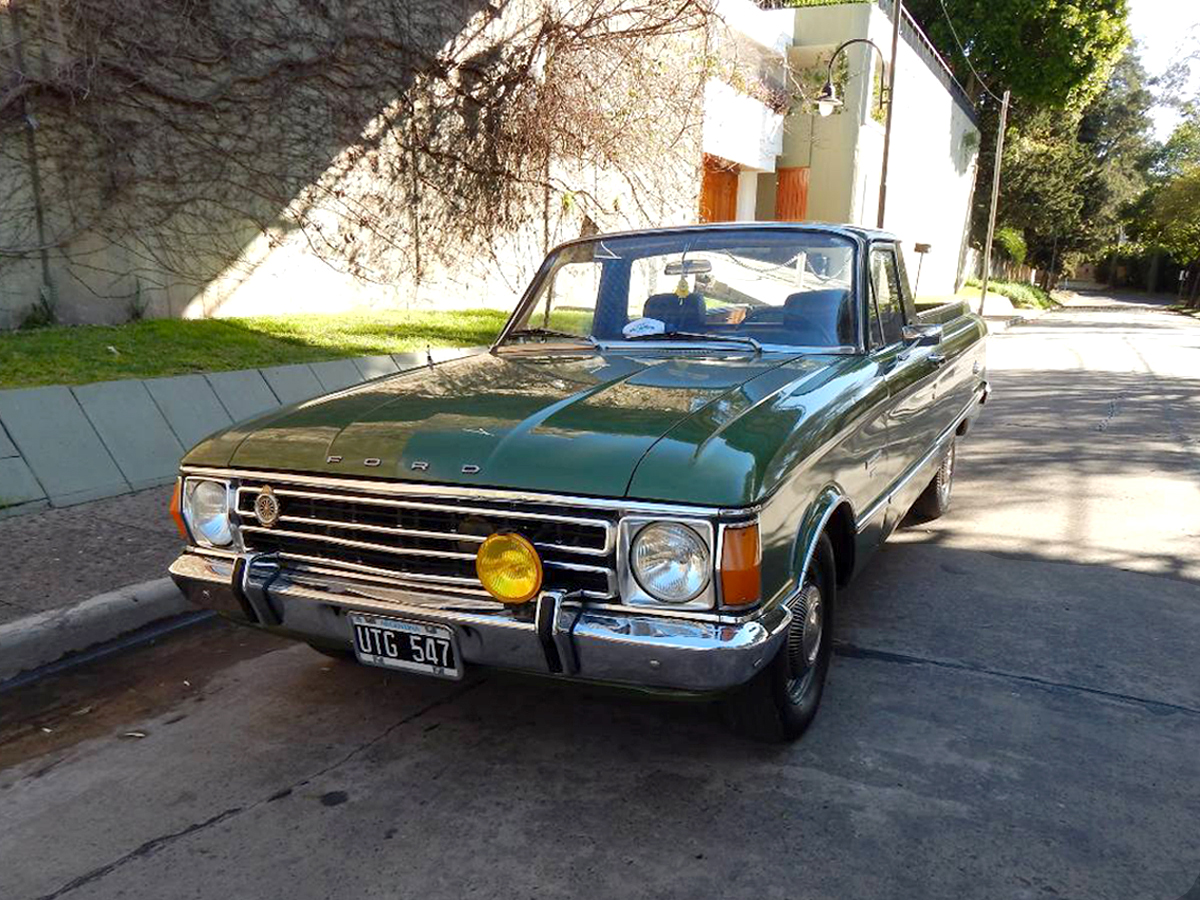
The Ford Ranchero is a classic vehicle that mixes a car and a pickup truck. The podcast mentions it because the host feels another car they drive feels similar to the Ranchero. It’s a unique type of vehicle that people remember for its unusual design.
They’re comparing driving-school options that let you drive Corvettes. A Corvette is a sports car from Chevrolet, and it’s a popular choice for learning because it’s designed to handle spirited driving.
They’re talking about Mac Tools, a company that sells tools to mechanics. The host explains how their franchisees sell tools to local shops and build ongoing customer relationships.
Data logging means the car can record what it’s doing while you drive. Afterward, you can look at the numbers to understand how your runs went and what to adjust.
A brake trace is basically a lap-by-lap graph of your braking. It shows where you started braking and how hard, so you can see if you’re coming in too late or braking too much.
A GPS trace is a recorded map of where the car went on the track. It helps coaches see if your line and timing are off, even if you feel like you drove “fine.”
Cosworth Toolbox is a computer program that helps coaches review your driving. It lines up your data with what happened on video so you can see exactly what to change.
Instead of trying to fix everything at once, you pick one or two things to work on. That way your brain learns the change and you don’t get confused or worse at the basics.
Driving fast is also mentally exhausting. Taking a break helps you calm down and think clearly, so you can actually learn from what you did wrong.
Concept
driving energy vs speed
Instead of telling you to go faster, coaches sometimes talk about “energy.” That means how much momentum you’re carrying—how hard you’re moving and how that affects braking and cornering. It helps because different drivers may need different brake points to carry the right momentum.
Braking markers are track reference points that tell you when to start slowing down for a turn. The point here is that one marker can mean different things for different drivers, because everyone brakes a little differently. So coaches may focus on learning your own braking behavior rather than copying a number.
Self-coaching means you don’t just listen to the instructor—you also watch what you did and figure out what to change. You compare your laps and try small adjustments. It’s how you turn practice into real improvement.
They’re saying the numbers matter—lap data helps you see what you’re doing differently from a faster driver. After qualifying and practice, you compare things like braking and the racing line. Then you try a few specific changes instead of guessing.
They describe how they run a track day at Road America: first qualify to get a baseline, then practice, and later review what the faster driver did. The idea is to use that feedback to improve your next laps. It’s basically a repeatable learning plan.
The “racing line” is the path you choose through a corner. A better line can help the car stay more stable and get back to full throttle sooner. They’re comparing their line to a faster driver to learn what to change.
They’re talking about how hard you press the brakes compared to another driver. Braking harder or softer changes how the car sets up for the corner and how much grip you have. It can make your laps more consistent.
Concept
lap consistency vs best lap
They’re saying their top lap didn’t get dramatically faster, but their other laps improved a lot. That means they were driving more consistently. In racing, consistency is huge because it reduces mistakes and keeps you closer to your potential every lap.
That’s about thinking ahead while you drive. Instead of only focusing on the next turn, you plan a few turns in advance so you don’t end up trapped behind someone.
Racecraft just means “how to drive smart” in a race. It’s about picking the right moments to set up corners and pass, not just going as fast as possible all the time.
Concept
rear view
Using the rear view (mirrors) while driving is a key track skill for situational awareness—knowing where faster cars are and adjusting your line to avoid being surprised or boxed in. It’s especially important when passing is allowed or when you’re being pressured from behind.
Engine braking is when your car slows down because the engine is resisting the wheels. It happens when you lift off the gas or shift to a lower gear. It can help you slow smoothly without riding the brakes.
Downshifting means you put the car in a lower gear. That makes the engine spin faster and helps slow the car a bit without using the brake as much. It can also make the car feel more responsive when you accelerate out of the turn.
Lime Rock is a race track in Connecticut. It’s known for being a smaller, twisty track where you have to be precise. The hosts are listing it as another “dream track” you can drive through a school.
Laguna Seca is a well-known race track in California. It’s famous for being tricky and fun to drive. The hosts are saying schools can help you get to tracks like this without having to plan a big trip.
Coda is another race track the hosts mention as a place you can drive through a program. They’re basically saying you can get track time at famous circuits without traveling as far. If you’re curious, look up the track name to find the exact location.
They’re describing how small changes in throttle can change how the car sits and grips in a turn. Lift a bit and the car shifts weight; then add gas and it settles back down. The key is doing it smoothly so the car stays stable.
Steering feel is how much the steering wheel tells you what the tires are doing. Some cars feel very communicative, others feel vague. The point here is that you can still drive well even if the steering isn’t super talkative.
The hosts reference being “used to driving BMWs,” implying BMWs often have steering and chassis feedback that drivers learn to interpret. This is used as a comparison point for how much steering feel matters when learning track driving. It’s a brand-level driving-characteristic comment rather than a specific model review.
Understeering means the car doesn’t turn as much as you want. The front tires are losing grip first, so the car feels like it wants to go straight. Learning to notice it helps you drive smoother and adjust your inputs.
In racing, teams have to stop to change tires. Pit stop strategy is deciding the best time to do that so you come out ahead of other cars.
Topic
road and track desert 600
That phrase sounds like a specific race event. It’s basically a motorsport event in a desert setting, and the host is saying they were out there driving.
Here, “Charger” means the Dodge Charger that the host drove. They talk about how it feels and what they liked about it. It’s mentioned because it’s part of their real driving review.
“Scat Pack” is Dodge’s name for a sportier, higher-performance version of a car. Think of it as the “enthusiast” trim level with more power and more aggressive character.
The Dodge Challenger is a muscle car, meaning it’s designed to be powerful and exciting to drive. It has a bold, old-school look that newer models try to keep. The podcast mentions it because the shape and styling remind people of earlier Challengers.
The host says the modern Charger looks like a modernized version of the 1968–1970 Dodge Charger. That’s a specific styling era of the classic muscle-car look, and it helps listeners understand what design cues the new car is borrowing.
They describe it as an “American GT coupe,” meaning a car meant for comfortable long-distance driving with some performance. The trip they describe is basically the kind of use case GT cars are built for.
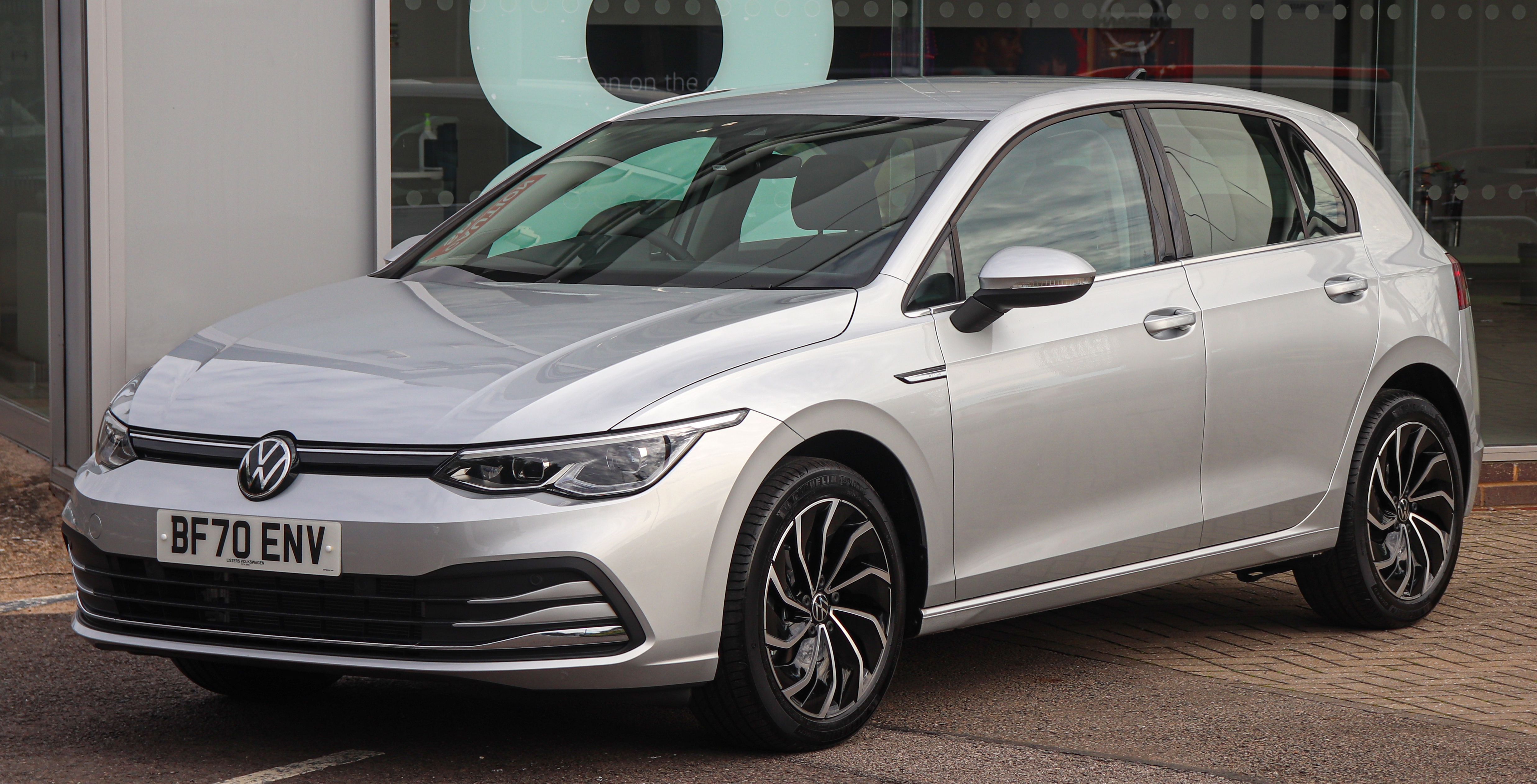
The Volkswagen Golf is a small car that’s meant for everyday driving. The podcast mentions it because it can fit normal things like golf clubs without being a big vehicle. It’s popular because it’s practical but still fun to drive.
A hatchback is a car where the back opens like a door that lifts up, so loading stuff is easier. They’re saying this one hides that hatch design really well.
Miles per gallon (MPG) is a measure of fuel efficiency—how far the car can travel on one gallon of fuel. The hosts cite an average MPG figure to evaluate how reasonable the car is for long-distance driving despite its weight and lack of hybrid assistance.
Lumbar support is the part of the seat that supports your lower back. If it’s adjustable, you can set it so your back feels better and you don’t get sore as fast.
The thigh bolster is the part of the seat that supports your upper legs. If it extends, it can help you feel more held in and comfortable, especially when driving for a while.
They mention Porsche because Porsche seats are often praised for good support. The host is comparing how comfortable the seats feel versus what they associate with Porsche.
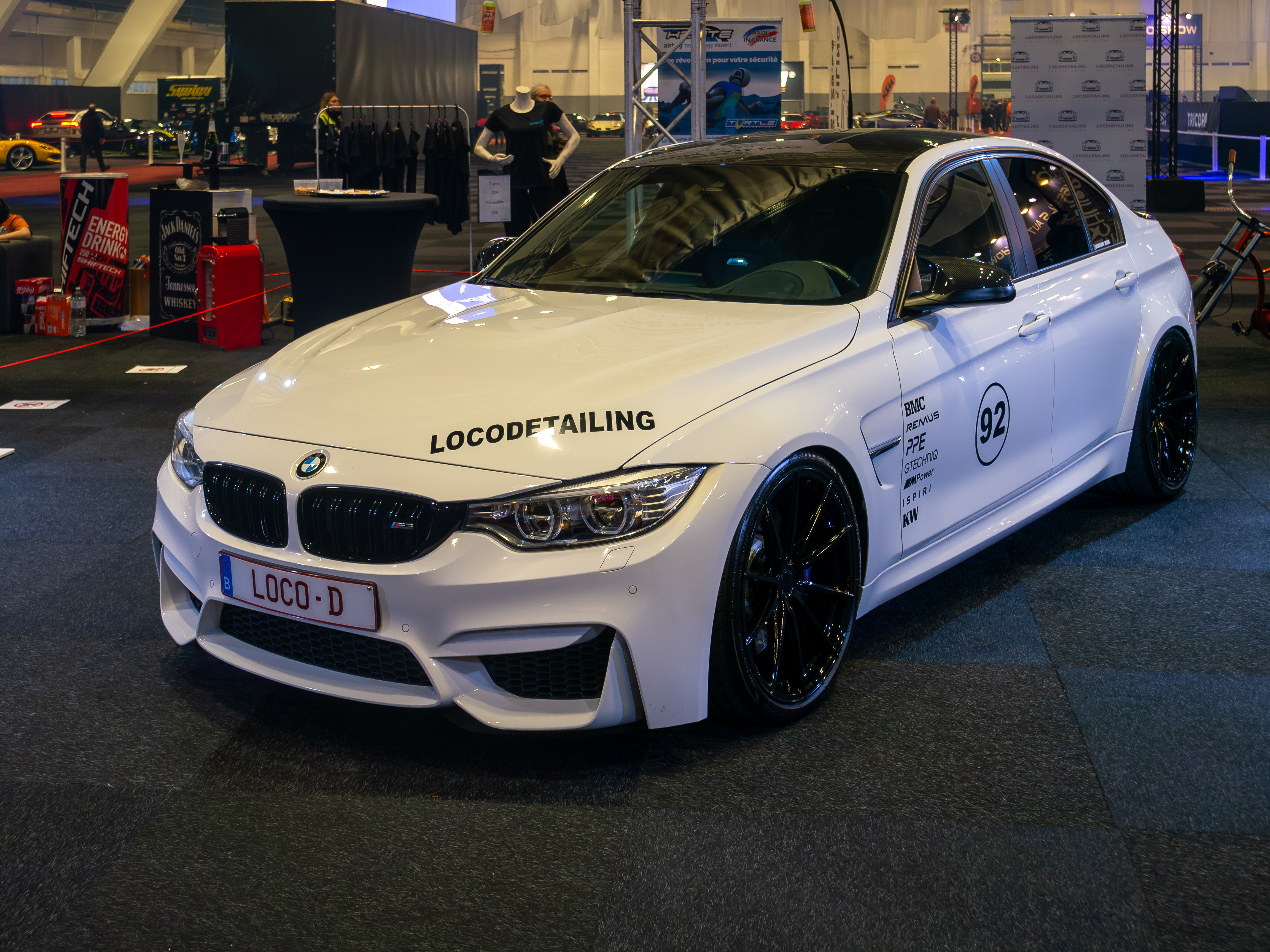
The BMW M3 Competition is a high-performance BMW. The host is using it like a “sound benchmark” to judge whether the car he’s reviewing sounds good or not.
Dual exhaust means the car has two exhaust outlets instead of one. It can change the sound you hear from the engine and how the exhaust note “echoes” outside.
An inline six is an engine with six cylinders in a straight line. People like them because they can run smoothly, but the exhaust setup can still make the sound annoying at certain speeds.
Drone is that annoying, steady “hum” or “buzz” you hear when you’re driving at a constant speed. It’s not usually the loudest part of the exhaust—just the most irritating.
They’re saying the Toyota Supra is one of the inline-six cars that sounds good. The point is that some engine/exhaust combinations just have a better note.
Term
RB
“RB” is Nissan’s engine family that a lot of Skyline fans talk about. The host is basically saying those engines tend to sound great compared to the car he’s reviewing.
They’re saying Skylines are some of the best-sounding inline-six cars. The idea is that the engine/exhaust setup can make the sound more pleasing instead of droning.
Term
JZs
“JZ” is Toyota’s inline-six engine family. The host is saying these engines are known for a great-sounding exhaust note.
Term
one into two
“One into two” means the exhaust starts as one path and then splits into two. That split can change the exhaust sound and how it resonates while driving.
Headers are the exhaust manifolds that collect exhaust gases from the engine’s cylinders and route them into the exhaust system. The way headers are split (e.g., “two sets of three” on a six-cylinder) influences exhaust pulse timing and can change sound and performance.
If the suspension is “overdamped,” it’s like the shocks are too tight and don’t let the wheels move smoothly. That can make the ride feel stiff and can also hurt how well the car grips over uneven roads.
Adaptive shocks are suspension parts that automatically get softer or firmer depending on the road. If a car doesn’t have them, it can feel either too bouncy or too stiff, depending on the situation.
They mean the suspension can’t find the right balance. It ends up neither comfortable nor sporty, because the shocks can’t adjust to different road conditions.
Control arms are the parts that connect the wheels to the suspension. Longer or better-shaped control arms can help the wheels move in a more controlled way over bumps.
An exhaust manifold is the part that gathers exhaust gas from the engine cylinders and sends it onward. On turbo cars, manifold shape and routing can affect both performance and the way the car sounds.
The “392” is a performance Charger V8. The host is basically asking if the new model is supposed to take over for the Charger 392’s performance identity.
A “GT” is a car meant for comfortable long drives—more relaxing than track-focused. The host is saying the car feels like it’s trying to be something in-between, and that’s the problem.
The Genesis GV60 is an electric crossover. The host is saying that, for about the same money, it feels better in the ways that matter—comfort, interior feel, and how quickly it moves.
CarPlay is a way to connect your iPhone to the car’s screen. If it’s glitchy, the connection or the display can act weird, like freezing or flashing.
LIVE
What up everyone? Welcome to the Smoking Tire Podcast. Today's episode is brought to you as
always by Off the Record. We love them over here and as I drive around the country, I know
that Off the Record is always looking out for me. If the V1 doesn't get them, if the Waze doesn't
get them, Off the Record's gonna get them. Off the Record sets you up with qualified attorneys in
every state in America to fight moving violations on your behalf. Don't let it ruin your day,
don't let it ruin your vacation, and certainly don't plead guilty. Get Off the Record. Go to
offtherecord.com slash tst to get 10% off all legal services through Off the Record. Again,
that's offtherecord.com slash tst to get 10% off all legal services through Off the Record.
Alright folks, on this episode of the podcast, Zach gets his competition racing license at Skip
Barber Sonoma. I drive 1600 miles in the new Dodge Charger 6-Pack and give my review. I found some
exotic car bargains from my birth year and a Waymo was driving like a dick for an unexpected reason.
It's the Smoking Tire podcast. Let's go. Guys, the Smoking Tire is giving away a 992.1
Turbo S in partnership with Dream Giveaways. We're giving away a $275,000 car with some slick
choice mods. The proceeds benefit charity and you don't have to buy any merch. It's a straightforward
entry process, so hit the link in the show notes and get entered to win today.
What the fuck is up? It's your favorite date, Matt Farah. Happy Motherfucking 420.
It's your anniversary of your two favorite things. It's my anniversary of my, yeah,
tolerates two favorite things, my wife and the chronic. And to celebrate, I have taken
some advantage of both today. Don't you worry. Don't worry. Unlike most other podcasts, I did
smoke some weed before this one to celebrate 420. It's real. It's important. It's a real change
in behavior. Yes. It's nice of you to do that for the people. What I actually just did for real,
if I'm being very honest, was go to the locker, realize that actually I was out of weed here at
the office and I scraped the grinder, scraped it, not resin, no, not complete resin, put it
in my college, no, no. But you know, the grinder makes a healthy amount of keef. And so a guitar
pick to the keef and it's all stronger than weed, right? Oh, it's delightful. Keef was,
I mean, when I learned you could just buy keef and I don't even know if you can anymore,
but you could. That was, I remember, that's when we were living together. You were just buying banks.
Keef, because the combination, the year, the year was 2004. The place was Smokey Joe's Bar
at the University of Pennsylvania. Still there, shout out to them. Band used to play there.
This is the last time I remember being able to smoke cigarettes in bars, like while I smoked,
like not in Vegas or anything, you know what I mean? Like local. And I had that jar of keef.
And you would, when you'd pack your stokes, it would leave that, that gap, right? And so that
you would have that scoop at the end. So you would just gently do a nice little scoop. And then
you'd fucking tap, tap, tap, tap, tap, tap, tap it down, a nice little scoop. And then when you
just go to light your cigarette in the bar, you'd have that first banger. And then it was, oh,
what's that smell? I've just got a cigarette. Yeah, everyone's like, who's smoking weed? And
you're like, no, it's not him. Not him. You just got a cigarette. Just that very happy looking man
with a cigarette. That's not as angry right now as he was before, huh? Talk about the fucking glory
days. They got a website. And then you were already smoking a cigarette. Then you, you already were,
you were still at the bar and you were already, I mean, god damn it. Oh, great. I've never ever
enjoyed anything as much as you enjoyed smoking cigarettes. Wow. Nobody liked cigarettes more
than me. So it's, it's, so they're so bad for you, but socially did so much for me.
But, but you and other people who smoked a long time, they talk about it like,
it's this oasis that they used to live in before, you know, the, the communist rules
showed up or something. It's just, oh, yeah, in the morning before you even have water. Yeah,
it's the best. You're like, right, it's because you're craving this addiction. Yes. And now I
don't feel terrible because I had the thing. I had this, I had last night, we were at Musso and
Franks. Shout out to TST listener, Brian, who works at Musso and Franks, the oldest restaurant
in Hollywood, old school steakhouse, fucking great. It's good. He, and Brian gives us the,
that gets us the best table. He's a car, he's a car guy. We've seen cars and coffee. And for years,
he's been like, come to Musso and Franks. And I was like, well, whatever. But then I finally was
that Al Pacino and Brad Pitt are sitting at in Once Upon a Time in Hollywood. It's like,
apparently, a very requested table. It's pretty cool. We had a fucking fabulous meal.
But this group of like six super drunk guys was next to us. They're like our age, but they are
wasted and they're fucking loud. And Brian's taking care of them. So he's like, here's some, here's
some, you know, what do you call it? Some amuse-bouche. Give me a second. These dudes are wasted.
Let me get their food out. And, and he goes, he, they start bringing out like three trays of food.
All five of these guys get up to have a stoke outside. And Brian just looks at me. He's got like,
all this tray looks over. And he's like, huh. I was like, and we started talking about how great
that mid-meal grit was. Didn't it reduce the flavor of all the food you're eating?
You don't know, you don't, you don't know what you're missing. Like, I know what you mean.
Yes. Smoking does reduce the flavor, but it's not like, it's not like yesterday, I wasn't smoking.
Yeah. You know, it's a, it's a slow, it's a slow changeover.
So no immediate change. Like if you take a bite of steak and then go smoke a cigarette and come back.
No, no, no. There's no short term. Yeah, there's no short term effect.
Yeah. Okay.
Especially if you've been fucking pounding, you know, Italian red wine.
Right. They know everything tastes delicious. Sure. Just put more salt on it.
So that was our, that was our anniversary celebration. And Brian was all fucking,
Zuckerman and Johnny have both been in this week also. I guess it's a popular spot to go this week.
But we should go again, because it was, it was a superb fucking so old school.
I ate there with Lynn Woodward, Aaron Robinson. Oh yeah. Like our oldest, our oldest young friends.
Our friends that are roughly our age, but are like out of the 30s.
And Lynn drove her old Porsche. And Aaron drove like an old Buick.
That opened when Musso opened. Yeah.
We say this with the greatest love. Yeah. There are friends from like another time.
For sure. Yeah. Anyway, hi. Happy 420 and all that. A lot of, a lot has gone on since we last talked.
We got ahead because we were traveling. We did, we did the gig at the Heritage Invitational.
I hope the people at home enjoyed that show. We certainly enjoyed doing it.
That's a really fun event. We got to drive the Legends cars on the track.
We saw a bunch of, a bunch of very, very, very famous and legendary racing drivers
duke it out in similar cars. We saw, and then we saw like in the, in the Pro Am
where they, they had a bunch of these pro drivers. I mean NASCAR Legends,
they had Bill Elliott and Mark Martin. Jeff Gordon. Jeff Gordon.
And there was Tommy Kendall. Kurt Busch. Was, was Sterling Marlin there too?
Kurt Busch. Maybe Sterling Marlin. But like, pfuckin' guys that were like legends.
And they put them all in these Mustangs. And then a bunch of wealthy amateur drivers
got to donate money to the charity and buy seats to compete. And it was like a team sport.
Pretty fun. My highlight of it was when like the 19-year-old utility track kid
weren't there at JC. So I drove his Legends car. Yeah, he's the track.
He fucking got on the podium. He's third place. And he's really fast. He was,
we were watching, it was like in the semifinals, I think he had the second fastest time. And then
maybe Jeff or Kurt found like a second and a half and suddenly jumped way ahead.
I think it was Kurt. Because Jeff was in the lead and he was, JC was right behind him.
But JC's this guy who just started driving a few years ago and is one of the fastest people in
Legends, one of the fastest people at this track. And I was like, oh, is he an instructor here?
And Graham goes, no, he's like the facility's something, brother. So he just
does Sim stuff and drives when he can. And he's really good. He just has it.
And he's on the podium with NASCAR Legends, which was like an unbelievable thing to see.
I was into that. And it was a very fun event. Oh yeah, the vintage Tide car too.
We saw some of the Radwood portion. Art and fucking Warren and the boys did a great job
with this Radwood. This was a really good one. It was a really like nice, diverse mix, not too big,
spread out around the track. So you kind of walked, you walked a couple corners.
But also a great spread of 80s and 90s NASCARs and race cars, which were really,
really fun. So that was a good time. And then Zach went to get his competition license.
I did. How'd that go? And I got it. You passed. I passed. I passed. It is past fail open book.
It kind of is. Yeah. Yeah, it is. Yeah. I think it's like, what did J.F. say? Because J.F. did it
too. He's like, don't crash and don't go four off or, you know, and be a problem. And like,
you'll, you know, they'll probably give you the license, but that's just like the actual race,
by the way. That's the same rules, right? Like the sanctioning body gives no fucks. If you're
fast or slow, they care if you're crashing into shit. I had, I had one off, but it was in it.
I was just practicing like playing with deeper braking zones. And it was an area that was
coned, not dirt. And I went, all right, if like, if I overshoot this, I have runway. So I, and I
overshot it by like eight feet. And they flag me anyway, because that's just protocol. And they
were like, Hey, what happened there? And I went, here's what happened. Here's why blah, blah, blah.
And they went, okay, like this was not, this wasn't an accident that you don't understand.
Yeah. You found, you found the safest place on the track to push this one thing. And you saw
what happens, right? Second safest. Yeah. They were like, we like to do this in corner seven.
And I was in 11. Oh yeah. But you, but it was short 11. They owned 11. If you run short 11,
you've got, unless you're blowing that at 100 miles an hour, if you blow that by a few feet,
that's a, so much room. Yeah. So much room with an exit, with a return route. Well,
a guy in my class did have an oopsie on that corner on day one and whacked a wall. Get out of
here. Like he, he got on the gas too early coming out of it and 11's bumpy. Like you just, this
class is, it was, so this was the advanced two day skip barber class. I had signed up for it
months ago. And then it just so happens that this also counts for the SCCA is like a full
competition license. If you get passed through in, in the advanced class. So they send a
certification to SCCA and SCCA says, Oh, okay, here is your license. Spring Mountain also counts
if you do the two day advanced class, which you've already done. I did that a couple of years ago.
So you could, they just could have just sent in the thing and he would have had the license.
They probably could have done that. Yeah. But Spring Mountain took that off of their website
for some reason, like it used to be in their marketing. And so you have to find it in SCCA's
webpage, which I did after I did this class. So I mean, more training is always totally.
And I was already signed up for it before even like, I was happy to have the training.
This is a Sonoma. We're talking about corner numbers. And I don't think we said Sonoma race.
You're right. I didn't set it up at all. So I did the skip bar for two day class.
I was driving, you're doing a bad driving 2013 Mustangs at Sonoma. Weather was perfect.
The cars are pretty simple. They've got stop tech brakes, half cage harnesses.
That's it. I mean, some of them have been swapped to the Tremac six speed. I think a few are still
five speeds, but mine was a six, not that we needed it. And it's pretty much it. It's a real
simple formula in square stance, I think. And you said it's a 13. So it's a coyote motor car,
at least, right? It's not a four. It was the four six. Sorry. That's like a 10. Yeah. Or no. Oh,
wait, let me see. Oh, that car is like older than that. That car is like a nine. Yeah. Oh,
eight, oh nine, maybe. Yeah, it was the four. It was definitely the four six mod motor. Yeah. Which
reliable, cheap, I mean, for a school car, who gives a shit? I think that's the plan. As long
as if they're reliable, that's really fine. Mine had 90,000 miles on it or something like that.
Skippy is a skippy does. They're making it work. You know, that company went bankrupt a little bit
and now they're back. Some of the people in the class said that their cars were being weird.
And I don't know if that's the way they were driving them or the cars were being weird. I
think there's a bit of both. So I think one person was upshifting super early and they're like,
the car bogs, you know, like, sure. Yeah. But when you shift to three,
but one guy who was very capable, he was reporting some transmission
sure oddities. Well, if it's that five speed. Yeah, I don't know which one. Mine was a
Tremac. So it felt great. Sure. Funny enough, this car felt so much like the ranchero I race in
lemons. I swear to God, that is a compliment to a certain car and an insult to the other one.
Correct. Correct. It's a compliment to Tim and Gluckern, the guys that built that car.
Oh, all right. I know how this feels. Just be delicate everywhere.
That rules. Okay. So what for someone who might want to go get their license and they go, well,
I could go to Skippy at Sonoma or I could go to Spring Mountain and drive Corvettes.
How do you compare those two experiences? Folks taking a quick break for Mac tools.
You know, Mac tools. You've seen the Mac tools truck at shops before. But have you ever thought
of being the one who actually owns that route, selling those tools to those shops for anyone
already into cars, working on them, being in and around shops, or at least spending your weekends
wrenching on something. This is perfect because Mac tools franchisees run their own mobile tool
business selling directly to shops and technicians. It's a relationship business. It's repeat customers
that you service every week, but you're not left to figure it out on your own. They've got an
extensive training program and support to build this the right way. As a small business owner
myself, multiple small business owners myself, I really think this is a good idea because I had
to figure out a lot of expensive and difficult lessons to start my business. But if you've got
a partner that's been around for a long time and they've got training, they've got resources,
they've got support, they can integrate you into their ecosystem and set you up with stable income
for a very, very long time. That is incredibly beneficial if you're trying to be your own small
business owner and you're not ready to learn some of those lessons in what we call the trial by
inferno way like I did. Mac has been doing this for over a century. There's a reason it still
works. So if you ever thought about doing your own thing in the automotive world, it is worth
checking out. Go to mactools.org slash tire to learn more and see if there's an open root near you.
That's mactools.org slash tire to learn more. We also got support today from Factor and for me,
eating healthy isn't a willpower problem. It's a setup problem, right? Until I found Factor
because here's what happens to me. My setup is a mess. I do not put time to eat in my calendar.
I got four jobs, I got a lot to do. I'm running all over the place. I don't put that hour or
whatever to deal with lunch in that schedule. But with Factor, I can hit the nutrition goals,
I can eat on time, I can eat correctly without the planning, the grocery store runs, the cooking,
because the Factor food, it's already in the fridge, right? Factor's got meals built around
goals, right? That could be weight loss, it could be overall nutrition, it could be protein,
it could be GLP-1 support for strength and recovery. They've got the Muscle Pro collection,
and every meal is crafted with those functional ingredients like lean proteins and colorful
veggies, whole foods, healthy fats. Factor, in fact, bans 175 ingredients. There's no artificial
colors or sweeteners or high fructose corn syrup, all that stuff. Everything's fresh,
it's not frozen, and they have over 100 rotating weekly meals. So basically, when I'm running around
all morning, I don't get to noon or one when I'm starving, and then I try to figure out what to eat.
I make an unhealthy decision because it's whatever's quickest, and that's how your diet
completely falls apart. But with Factor, the food's here. It's in the fridge, it's ready to go,
two minutes in the microwave, no mess, no prep, all good. Factor shops, Preps cooks and delivers
right to your door, so I have more time for work and everything else that I love. So head over to
factormeals.com slash tire50off and use code tire50off to get 50% off and free
daily greens per box with new subscription only while supplies last until September 27th,
2026. See website for more details. One more time, factormeals.com slash tire50off, that's
50, tire50off, and use code tire50off to get 50% off and free daily greens per box. And now,
back to the show. I know what I would do, but you go on. I will say I paid retail for both.
No one owns my words. I would go to Spring Mountain if you can make the flight and the travel
because the new Corvettes have the data logging system built into it. And what we would do between
sessions at Spring Mountain helped me a lot more than what we did between sessions at Skippy. So
between sessions at Spring Mountain, they would pull up your video with all your break trace,
your GPS trace. They would show your route and show where I was breaking too late, too much.
I was getting on the gas too early. Here's where you need to wait more.
And this is with the stock Corvette PDR thing.
Exactly. So it's that with a Cosworth software.
Yeah, it's Cosworth Toolbox.
It's Cosworth Toolbox. And they'd have two or three instructors in our classroom
attending to a person at a time. And they're like, see here, this is wrong, right there,
that's good. And then you're able to look at it on video and go, okay, and then you go back out
and remember, here's the spot I was doing X wrong. Yeah. And in between each session,
you only want to make one or two changes. You don't need to overwhelm yourself and go,
here's where I'm fucking up every corner. Right. You go, this session, I'm going to find a half
a second in these two corners. And then once I get that and make that automatic, next session,
I'm going to find two tents in these two corners and now you don't overwhelm your brain.
Yeah. Cause I think when I, when I first went to the spring mountain school,
the first day I was like, oh, we're taking all these breaks. And now I realize that the breaks we
take, skip B or spring mountain or anywhere are really important. Cause one, you can analyze what
you're doing to you need to rest your brain and kind of calm yourself down a bit and process.
And like, it's amazing how much, I don't know, thinking you do, I mean, racing cars or driving
cars or doing school stuff. Like you are, you're analyzing your performance, then you're performing,
then you're analyzing your performance, then you're performing and you're doing it, you know,
all in one day. So I just found the tools they had available that are native to the C8 really
helpful, but also the specificity of the instruction that was given at spring mountain was like,
here's where you're breaking wrong. Here's how you're accelerating wrong. Like, and, and at skip B,
I think they're doing it maybe a little bit to be safe. They don't like, they never use the word
speed. They never say you're carrying good speed there. They say energy. I think that, and they
wouldn't give people breaking markers. Cause it's like, they wouldn't say, Hey, you should break at the,
at, at the three and a half. Cause I think their concern is if I don't know how to break as well
as you, or I don't get as far in the pedal, then that marker means very different things,
which is, which does make sense. And there were very different skill levels in my class.
Sure. But I, I came away, I learned a lot that I had to self coach myself through. And they do
say like self coaching is a big thing of driving, which I agree with. I just wish there had been
more notes given in these breaks. Cause for me, like the only note they'd say is try more energy
into seven. And it was like, well, what about corners one through six, eight, you know, nine
through having the data is just like so important. Like when we go to road America, like the by far,
the most important thing we're going to do is on the Friday, which is qualifying day,
Tato will go qualify the car, right? Obviously, because obviously he fucking will. And then
we'll have his law, his data, and then we will go practice the car and we'll go do a session,
you know, 10 laps, 15 laps, whatever practice in the race car. And then at home, at dinner,
that night, it's here's your line. Here's Tato's line. He does this much more break pressure.
He does this much less. He did blah, blah, blah. And then you can, you know, throughout the race,
try to go, well, what are the three things that I can do based on what he's doing,
you know, that, that can make me where he, if he can make the car do it, I probably could.
I found it was not entirely true, but I can at least, I can at least, you know, there's
certain big ones like he, he, uh, after, uh, after comparing my data to his in the next race,
my very best lap only got a tiny little bit faster, but all the rest of my laps got closer
to my best lap. Like I was much, much, yeah. Like my best lap was like a 235 five and, and
my worst lap was like a 238 instead of like a 242, you know. So I think like all, like either
my slop got less, you know, like, and, and also I set up passes, you know, and got stuck in traffic
less. That's something I'm, I get stuck in traffic a lot in lemons. And I mean, sometimes you're
stuck, but like planning those moves three corners out so that you don't get stuck on the third
corner. You just go by is something that I just have to learn. In this series, it will be more
than that, more corners than that. I had, there were passes and maybe if you're fucking Tommy or
Tato, you don't have to do this. But if you're me, there were certain cars where we were, we were,
the cars themselves were basically the same speed. And so I could not beat them down straight
aways and whatever, but I could see where I would watch them and I'd go, I know I'm, I can go
through that corner fucking faster than them. So I'd, I'd set it up and I would chill and I'd go,
you know, but I'd, and then I'd wait for the next time around sometimes. And then I'd, but, and
then three corners ahead from there, I'd go, all right, I'm now, and it usually would work.
But it would take a while to get by.
That's, and that's, they did cover some racecraft in the class. They covered a lot of stuff. I
don't want to harp on them entirely, but the one other fast guy in the class was an old man
wearing cowboy boots, his name started with a C. And when I did the spring mountain school,
there was an old man wearing cowboy boots, whose name also started with a C, who is fast as fuck,
different names. But what my lesson to people is, if you're in a racing class and there's an old guy
wearing cowboy boots, just be very careful because I, I was just, I was fast. I was getting point
buys and stuff. And then I'm just, I'm going up like turn three at Sonoma and I look at my rear
view and someone is up my ass. And this is day two that hadn't happened yet. And I went, my ego,
I go, some instructor put on a regular helmet and he's fucking with us. This is open passing time.
That's what's happening. And so we, I give him a point buy and we pull in and it's this guy,
Charles, and he gets out. He's like, his hands are shaking. He's like, Oh, that was,
that was something. I go, well, you were flying dude. He's like, and he always seemed scared when
he got out of the car. But to your point, the next time we went out, I watched how he went
through one through five because he was quicker than me. And that's when I learned, Oh, I don't
have to break going into turn two. I can just downshift. And you break with the hill with the
elevation. I was doing like a light tap, but I just went, well, if I'm going to catch Charles,
I'm just going to go for it. And it worked. And then I was catching him on the back half.
Yeah. There's not, there is not much breaking in turn into turn two. If you've got a light-ish car
with good tires, like when I drove the Bentley GT, I had to like a little bit, but some other cars.
Yeah, not so much. Yeah. I mean, I will say like complex turns one through six at Sonoma
are fucking rippers. I just love driving that first half of that track. And I think that is
the big kudos to Skip Barber, at least for the advanced thing. Maybe the,
maybe the three-day fundamentals like really good, but the course comes to you. So like,
and you can drive tracks you've dreamt about, like they do Laguna Seca and Lime Rock and Coda.
Like, so if you don't want to fly to Vegas, you don't have to. But also you can kind of like,
go drive a track you've dreamt about for a long time. I mean, I had so much fun. And these cars,
my car was really balanced. Like, it was a good teacher. You just lift a little bit. You feel
the back get light. You add the gas a little bit. It settles back. I mean, it was, it was really
talkative in that way. Mustangs make good track cars. You don't have to, you know, you don't have
to do much. It's a basic suspension and brake package. And then the right size wheels and tires.
And that's it. Yeah. These cars don't have anything else besides that. Yeah. It's great.
No steering feel, but we're used to driving BMWs. And also when you're in a racing seat and
everything else is so locked down, like you get enough information that like I knew when I was
understeering for easily. Yeah. And you've driven enough cars, you know, you don't need
super, super steering feel to get through that kind of stuff. It's like, you might not choose to
like buy this car, but like you could certainly drive it. You know, fine. That's great. I'm glad
you had fun. Got a license. And now we, I mean, now we get to go fucking race. I know. Now you
get to go race a car with Tommy Kendall, like crazy. So crazy. Yeah. Wild, right? Yeah. He's
still extremely fast as we saw. Yeah. Well, I mean, look, to have the unnaturally fast child,
you know, and then also to have a dude who's a legend and who's seen everything and go,
this is like, you know, what happened to this and this and can like see and just knows like
everything about pit stop strategy and how to like mentally fuck with other teams and like
all kinds of shit. You get the creativity of youth and the boldness of course, because it
does not fear death and the wisdom. It's awesome. So while you were doing that, I went on the
road and track desert 600 folks, one more break because support is coming in from blue chew.
You know what it is. The future of erectile function is here, not dysfunction. Clapman
function, high function. And it's my anniversary today on 420. So blue chew gold. It is changing
the way millions of men are having sex in 2026. The new arousal boosting formula combines passion
and performance into one tablet that dissolves under your tongue for super fast onset. Crazy.
No more waiting for them pills to kick in. No more moments ruined by performance anxiety.
Just the results you want when you want them. Most CD meds focus on blood flow alone,
but blue chew gold goes further by combining two ingredients for blood flow with two for
mental arousal and connection. So you're not just physically ready. You're actually in the mood.
This type of innovation is why blue chew gold is the number one brand in erectile dysfunction.
The process is super simple. It's all online. Get started today at blue chew.com and go for
the gold. I mean, dude, you can it's not about need. I think anymore, right? Like that's why
they're saying function because it's like it used to be like, oh, you have a problem and this can
fix it. Now it's like you don't have a problem, but you can be Superman. I think that's where it's at.
And I like that thought process. It's a reframe folks. And boy, do we have a special deal for you
right now. Get two months of blue chew gold. You get the third for free with promo code
tire. That's promo code tire at blue chew.com. For more details and important safety information,
we thank blue chew for sponsoring the podcast. Again, code tire, get a third month free when
you get two months of that blue chew gold, baby. Guys taking a break from the action because support
is coming in fast like Jim Farley, the CEO of Ford, who's now got a podcast. And you're always
asking me what I'm listening to when not recording this show. And right now it's this the new season
of drive with Jim Farley in it. The Ford CEO talks to some of his favorite people about what
they're driving and what drives them to succeed like Formula One driver Daniel Ricardo. Listen,
there's a well worn trope about racing drivers not being interesting to listen to. But if there is
one that is interested, interesting to listen to it is Daniel Ricardo. I think this guy's
takes on stuff and life are great. And look, Jim is a racing driver also. I personally raced against
him like two months ago. And it for me, a CEO that drives race cars on the weekends is about
the pinnacle of CEO dumb when it comes to car companies. So the two of them together obviously
have a lot of things to discuss on drive with Jim Farley, which you can get on your podcast app.
Very easy to find drive with Jim Farley. Check it out across. You can you can play that if you
want to see all the cars. There's that that reel I put those are all the cars on the event. You
can just mute muted play it. So I was driving the new Dodge Charger six pack scat pack
coupe. And I actually like was like pretty excited to drive that car. I requested it and I like
actually had to do kind of a lot of work to like get it like it was it was substantially more work
than getting like most normal press cars. I am not sure why. But I actually think it looks cool.
I think it's a cool looking car. It's it's sort of how I wished the original Charger sedan because
they make this as a two and a four door now. And I always thought, you know, the Challenger sort
of looked like the old Challenger just bigger. But the charger didn't look like anything from back
then. This looks like a modernized version of the 68 to 70 charger. Yeah, basically, right? Is that
the right years? Yeah, 68, 70 66 to 69. Basically, like, yeah, the one you're thinking of the good
one. Yeah, right. Now, it and I was like, Oh, this is it's going to be we're doing the desert 600.
I have a big a long highway transit to Vegas. We got a lot of big open sweepers across the
desert, not a lot of hairpins, some long highway transit, some some high speed, you know, two
lanes. And then I got a big transit home from Scottsdale. It's like 1600 miles. I was like,
this this is a big American GT coupe. I drove it in the Corvette already, right? I did the
array. And my like pecs and arms were like sore from keeping the car straight. Remember,
so I was like, give me some relax shit. It's got the twin turbo six. I thought that would be
an interesting thing to experience. Can you tell by how I'm setting it up that I didn't like it
very much? Yeah, okay. I for the record, I do think it looks great. And it is really the only
two door coupe that you can actually fit four people and four sets of like luggage in like
four people and four weekend bags. No problem for people and four sets of golf clubs. No problem.
Like that's pretty unique in the space right now. Yeah, you know, they're
there really isn't like an S class coupe anymore. You know, and any two door car that has back seats,
those back seats are pretty small. Like what's the next biggest, right? Bentley GT at whatever X
the price BMW eight series, like kind of not really. I mean, the M twos are two plus two, but
has not much headroom. I remember. Yeah, that's true. So not a lot of big coupes out there.
And so I don't I have no issue with Dodge going for the big coupe thing and like,
to their credit, like I can almost sit behind myself comfortably. Wow. I could sit behind you
comfortably in the back of that car. And also pull up the rear, the rear view.
I should have airdropped you this picture of the open trunk because it doesn't look like it,
but it's a hatchback. The whole rear window opens. Oh, wow, that's that's hidden really well. Yeah,
yeah. Should I say, anyway, let me let me airdrop you. It's worth it for me to airdrop you the
picture of the open of the open hatchback here, just so we have it. So I mean, it's it's actually
like as a practical long range car, not back. Okay. And and over that entire entire drive,
I average like 19 miles per gallon, which for a 4,800 pound car, 4,800. Damn, not a hybrid.
Not a hybrid. Wow. Gas powered. Yeah. Front engine. It is all wheel drive. It's all wheel drive.
But that's where that's what we're talking about here. So it's but the hatchback is dope,
actually. I'm fully about this. And I thought so I thought in the other picture that this
top roof thing was a hinge for people listening. There was a big pivot point.
And it's not so they actually they hide the seam is like hidden on the glass. That's really clever.
Yeah, cool. Yeah. So that that I found to be a nice bit of practicality about about this car.
It also has comfortable seats. In general, it is it is a comfortable place to spend time
in in any seat, you know, heated and cooled seats with a nicely adjustable lumbar and
maybe not as substantial as Porsche, but like an extendable thigh bolster like
not bad. Not bad. Body. Body does not hurt. Okay.
The engine.
I thought it sounded worse than an M3 competition until the very last fuel stop on the way home
when an M3 competition pulled up next to me at the gas station. And I we talked about the
cars. I was like, oh, this that's the three the blah, blah, blah. And I started it for that person
and he went home. Okay. And I turned it off. I go start that. They are actually very similar
sounding. Yeah, the whole time quite exhaust in the back as dual exhaust. Okay. Now I have a theory
actually, because I think this car doesn't sound good. Doesn't sound good on the inside. It doesn't
sound good on the outside. Hearing the M3 next to me. I was like, oh, shit, I thought this was
worse than the M3, but then the M3 pulled up and that's actually pretty bad too. But I'm trying
to I was trying to think of all the really good sounding in lines. I was like, why there's an
inline six. It's not a V. It sounded like a fucking droney VQ. It droned. And I was like,
what is wrong? Why does this drone and to their credit, it makes good power. It makes good torque.
And if you keep it up high in the revs and I mean above four, it sounds okay. Okay. But on the highway,
drone, really? And a ton of drone at really low speeds. Like, dude, you should have standing at the
hotel valet. When they pulled this motherfucker. It's embarrassing. It's like not good. The car,
the look of the car, the vibe of the car. The exhaust design like is separating the pulses
weirdly. Someone's smart to throw that in the comments, but ponder this. The best sounding
inline six is that you know, yeah, are going to be like this, the skylines, the RB, the Supras,
the JZs and and and BMWs for the most part, right? They all have a single exhaust. Yeah, true.
The ones that don't sound so great. Now, I haven't I don't know, does a new M3 have a one into two?
Or is a new M3 a dual exhaust? I suspect you think the headers are two sets of three or is it one
set? That's what I that's what I don't know. If it's if it's, but like those and maybe someone
who's smarter than me can actually tell me why the older engines sound good and the new ones don't.
Maybe it's the displacement of them. Maybe it's the firing order. Maybe it's the configuration
of the turbos. I don't know, but like this engine doesn't sound great and neither does the new M3.
It's I'm not saying it's worse, but it doesn't sound great and fucking drones, which for a twin
turbo inline six to me is not really acceptable. The gearbox is also it's it's just a boring like
it's not so okay, despite the fact that this makes 550 horsepower, despite the fact that it looks
pretty nice, I just despite the fact that it is a it seems like it was screwed together well
and has it has some good things going for it. It's just not any fun. Like that's that's ultimately
the problem. Like it's not it accelerates briskly, but not mind blowing. It handles
appropriately appropriately, but not impressive. And it looks nice. But you see look how hot the
fender gap is really big, right? Yeah. But so you'd see that and you would go, well, it probably
has a very squishy ride, right for highway, the highway touring car. It rides like it's on cut
springs. So the problem here is, it's a very heavy car, £4,800. It does not have adaptive shocks.
So it's probably overdamped. So it's over sprung and over damped to compensate. And it just it's
it's got stiff springs. And then they've tried to find a balance between ride and handling. Yeah.
But without an adaptive shock, when your car is that heavy, you're going to end up in no man's
land and it doesn't ride that well. And it doesn't handle that well either. Yeah. So like it would
a car like this needs an advanced suspension to handle and ride appropriately. It's just too
heavy for like a basic ass set of shocks. I wonder what it is. But like the the Lucid's famously
don't have adaptive suspension and so impressive. They don't have like a powertrain. You can have
like crazy long control arms. Yeah, I think well, that's the answer. Like it speaks to the
suspension geometry itself and then maybe where the weight is sprung in that car. Your phones are
Oh, we don't need to. Sorry. That was it was only here to air drop and we're not being you know,
but so the BMW engine because it's twin turbo does have two exhaust manifolds. It looks like
there's two sets of three that each one goes to a turbo that makes sense. And then it's, you know,
the pipes run parallel for a while and then they cross over at a point and then separate again
in the muffler. So sure, be a bunch of things influencing why this sounds like the way it
does. Good. But I, you know, us enthusiasts, we hear on the marketing, Oh, in line six,
it's going to be, it's going to sound good. And then it doesn't. So that was very disappointing.
And but ultimately it just didn't, it didn't feel like a serious performance car,
which was, which was unfortunate. You know, I know they didn't, they told me specifically,
I'm not allowed to put it on track. It only comes with all season tires. So like, they're trying to
convince me and everyone else that this is not a serious performance car.
Okay. You know, okay. Well, is this, is this replacing
like the Charger 392? Is that what it's supposed to replace? Or is it just like the regular RT?
Because it may not be aimed at being a serious performance car. I mean, it's like,
now, but the problem there is that if what, if it's not a serious performance car,
then it seems like it should be aimed directly at good GT car. But then the ride is not enough
in it a bit, even though reviews would say the ride, you know, gets soft in the corners. Sure.
But if it's not comfortable riding around town or riding on the highway,
then you kind of have a no man's land. It's all right on the highway. It's terrible around Los
Angeles. It's really brutal. I'm like, you know, it's so funny. I got, I booked it, hoping for
to discover that this is the budget Bentley GT, you know, and I gave it back yesterday.
And I got the new Genesis GV60, which is the small electric crossover. Like it's about the
same price as this. It's, this is the budget Bentley GT, but the interior, the ride, the
acceleration, the cross stitching and the materials, the sculpture of the seat in this car.
That's the fucking budget Bentley GT, much more so than this is. That's like, that's actually like,
you know, if you put someone who didn't know better and close their eyes and put them and had
them like touch it, they might actually get confused, you know, anyway. But I do have to say,
oh, what else did I write on my notes? Okay, but there are, there's some, so the bad things,
the ride doesn't sound great. Carplay was glitchy that I send you the little video,
the video, the flashing, I'm going to put it on my Instagram review, but it, carplay was glitchy
a little bit. And, but like some, some good things. One thing I do really like was the dashboard
is much lower than the outgoing car. The outgoing car, you sat behind a very tall dashboard,
like shorter people will love this. It has much better like sight lines and a much lower dash
that, that opens up the, the greenhouse quite a bit. Nice. And the wind doesn't buff it when you
go on the high and when the windows down. So it's a cool cruiser. I actually think this thing had
adaptive shocks, better sort of wheel and tire fitment. And the rear windows went down to make
a pillarless coupe. That would be extremely sick. That would be cool. They probably wouldn't
pass like the past like a side impact standards. Maybe. Yeah, maybe. But you know, it's cool.
It has, it had a great curb people appeal. People asked me about it. The valets at the hotels,
almost all of whom recognize me. I'm huge with valets. Like you and I are celebrities major
to valets, which is that industry that we target directly. Yeah, that is the gateway job into
car enthusiasm and car journalism. They loved it. And I was like, do you like the sound? And
they're like, yeah. So they, they didn't mind the farty, the farty exhaust. We know they're
putting a V8 in this. It's going to be, it's going to be fucking hell-catted like next year,
if then. That will probably get adaptive shocks. I hope so. And, and you know, look at it. It
doesn't look like it needs a fucking V8. I mean, it just, the idea that this has this sort of like
BMW M3 light powertrain in it, it's just like a total mismatch of character. And I know they were
like in a tough spot and this was going to be a fully V. And then they backtracked and it does
sort of feel like a no man's landy kind of product. So like, I sympathize. I really do. But I thought
it would be a better GT if it wasn't going to be a serious, you know, but it was, it was, it was a,
it was a little no man's landy. But this event we did is one of my favorite ones I've ever done.
The, just the balance of the driving in the hotels. You see the tent? I put the picture. We
park or right next to Zion National Park. There's, there it is. And it was like a glamping
type of deal. The tents were dope. And there's like a potbelly stove in there. And you got to make
the fire and keep that bitch going, but had a nice bathroom. That's awesome. Had a hot water
shower. It was awesome, ripped, great hot water. And I had the fire going all night,
fucking just ripping J's under the stars. And dude, this place is like outside of town. And so
you've never seen stars. It's outside of Zion. Yeah. The southwestern side of it, where you come
in from? Before you go, it get into town. It's south of town. You can't, it's not the one you
see from the road. There's, you can see a glamping place on that road. You have to drive all, turn
left up there and then go like six miles up the hill. Yeah, there's nothing up there. It was the
best. I would, I would 100% go back and stay. I don't know if I would do more than like two or
three nights there, but I would absolutely do two or three nights there. That was a good time.
That's like a restful two days. Get away from everything. But well, it's, there's hiking. I
mean, there's trails you can get to from here, but also you can go hike in the park and then just,
and then just come back. But it was, they got, they've got a restaurant there. There's probably
like 60 of these tents. They had a couple, they had one that had a window over the bed. So you
could look at stars. Yeah, they're, I don't know what they cost as part of the thing, but
it was cool. Las Vegas Motor Speedway. Great event. And we did the Lake Mead Valley of Fire Drive.
And there's a, there's a drive from, if you, the drive from Zion to Sedona, the route that we did
was fucking sick. It was, it was so nice and some of the best drives we did. So we still got a few
spots left in the Pacific Northwest one. It's filling up though. I'm stoked about it. We had
sort of a slow start. I don't know people like we're not, not necessarily ready to pull the
trigger, but we had two people who came on this event sign up for the Pacific Northwest one while
they were there. They had so much fun. Yeah. And you see that picture of the challenger next to the
355? That's his dude, Abbey, who rolls solo. He brought a Ferrari 355 on this event. Fucking
ripped it on the track, fully smoked the brakes and drove it solo for the entire, entire rally.
Bravery. No mechanicals. It was a boss move. There were quite a few TST fans on this. Shout
out to Lance. Shout out to Matthew. Shout out to Allen. Shout out to Abbey. All TST fans who came
on the event. How many people in the event total? 25 cars. Okay. This dude Lance went for it.
Tycon Turbo GT. Shout out to him. It was a bad idea. It was a bad idea. Second EV to ever come
on one of these. The first one was this, was the Smokies and it was a Lucid Air GT, long range.
That gentleman who was very kind, he kind of hung back and drove slow. And in the Smokies,
the average speeds are much lower. You know, the roads are winding and technical, but in the desert,
it's like, you know, 90 miles an hour, you know, wide open, these wide open roads, you know, the
average speeds are much higher. So this dude was ripping through his battery. And this guy has a
heavy foot. This is a heavy foot. Was he charging until breakfast ended and then he hops in the
car? Dude, his charge plan, he had a plan. We told, he told us what we were doing. We sent him the
route ahead of time. He was like, okay, cool. Like I got it. No problem. He had to make extra stops
every day. Wow. He was going through batteries so much. So when he calculated it, he was like,
oh, the max distance I can go is this. But yeah, he was going through the battery. Look at the size
difference of the 355 in the charger. Wow. It is towers over it. In fairness, the charger does at
least hold a lot more stuff. If you put that 355 next to a GT3 RS, it's much, much, much,
huge and holds the exact same amount of stuff. Great point. You go, oh, I see what the problem
is here. But yeah, there was a really good spread of cars on this one too. So if you want to come
drive with me in June, oh dude, and we talked about, I'm not going to say what they are yet,
because they're certainly not ready. But we talked about the four events for next year.
Some bangers, some bangers on the schedule. Next one has a stopover at Dirtfish, which is like
one of the five places on earth. Oh yeah, the Pacific Northwest one has two track days. Well,
one track day at PIR in your own car, Portland International Raceway, which is a great little
track. Not a little, a great road course. And then a day at Dirtfish in their Subaru's, ripping
on the fucking, on the dirt ski, which is going to be just the best. Before we get to a few questions,
I wanted to say something really funny that happened yesterday. You know, Waymo's can go on
the highway now. And so we're going, I forget where I was going, but I'm on the highway last night.
Oh, we were going hiking in Malibu. So I'm on the 405 going north. And there's a Waymo. And I go,
okay, Waymo on the highway, and it's in the left lane. I go, the Waymo's in the left lane.
And I go, it's the Waymo left lane hogging? And it was going like 66 in the left lane. I was like,
oh no. I was like, we're going to have a big problem if Waymo's are going on the highway
and left lane hogging. Like this is fucked up. Yeah, I can't pull them over. Yeah,
this is crazy. I was like, this is so bad. And I go to pass the fucking Waymo on the right.
This being driven by a human. Oh God, what an amazing highlight of the problem. Incredible.
So Waymo, if you're listening to this show, tell your engineers to not do that.
So listen to this, here's something else I figured out. I had dinner with Alex Roy.
And so we talked about a great many interesting things as any dinner with Alex Roy is going to
be very interesting. But the difference between Waymo and Tesla's self driving and when I say
self driving, I don't necessarily mean Tesla FSD supervised. I mean their cyber cab.
The difference in their algorithms, Tesla's optimizes for time. Waymo's optimizes for safety.
Oh boy. And so that's why a Waymo will take longer to get places than Tesla FSD supervised or a,
because it will take the safest route. Because they have their own insurance,
their self insured. So there's that. So this is according to Alex, but Alex is I think can be
a trusted expert in this field. And he's not, he's not anti Tesla. He did the fucking Tesla
across the country. Like he's months ago. Yeah, he thinks Elon Musk is a shitbag, but he's he's
he gives Tesla a lot more credit for things than I personally. Does he know why someone
said to send me a picture of the robotaxi recently, but like it's an old story. Why
do they do a two door car? Do they do an average, do they take an average, a survey of like, hey,
average cab hire is one to two people. You don't need, okay. That's why I figured. Yeah. I think
that's silly when you could, if you don't need a driver have a vehicle like that little van thing
that's driving around here now that could hold more people even if it doesn't need to, but you
know, okay, whatever. Got it. That's what, yeah, I think that's silly, but it's one of the less
fucked up decisions I guess that Elon Musk has made recently. Oh, for sure. It's, I think it's
one that got a lot of attention because everyone's like a two door cab and you're like, that is the
low hanging fruit of that we need to analyze, but it's a question that I guess could be answered
quickly. It's like the yoke, you know, it implies things, you know, it implies that there,
there won't need, there won't ever need to be a driver because you're sitting where that driver
could go, you know. Why was the more thinking like it's just why not make a car that has four
seats so that people can share a cab and go out together as a group? But if 93% of cab hires are
from one or two people, they go, why would we spend extra money to make extra space that won't be
used? I think a very high percentage of cabs are one or two people. Yeah. Yeah. But yeah. Oh, so we
were talking about that, but I, but he thinks I told him about, you know how the Waymo, the Waymo's
take the long way from my house, like if they need to go east, they leave, they leave west and then
go back east. And I told him about that. He said there are almost certainly a substantially higher
number of accidents at the other intersection than at the one that it uses to leave your house. Oh,
sometimes seem odd, but that for one reason or another you are substantially safer.
So it has, maybe it has the accident data from different areas. It goes, oh, it's a dangerous
intersection. We'll avoid it. Smart. Yeah. Interesting, right? Yeah, cool. Yeah. So I mean,
if somebody that is equal level of expert to Alex Roy would like to fact check that claim,
like I'm open to hearing other information, but I just thought that was very interesting. Nick
That's pretty much all I got. That's all I got. That's what my week was. Yeah. We both had busy,
busy weeks. Yeah. Busy weeks driving, driving cars. So which we will have this week as well.
And every week forever. Yeah, we got this. We got a Durango Hellcat, which will be kind of fun to
take to Road America. I hope they let us take it on the track. There's a bit of a, there's,
people have sent me a thing that Road America doesn't necessarily allow SUVs on track.
But when an organization rents out the entire facility for a weekend, the rules may be different.
So we'll, we'll see when we get there. I hope we get to have a go. I'm just glad gas is slightly
cheaper in, you know, Michigan or Wisconsin, where we're going because the Hellcat Durango,
you know, a lot of these folks who do our road and track events, they come from all over,
you know, they come from all over. And, and, and so a lot of them are East Coast,
some are Midwest, you know, whatever. And so we were at somewhere in fucking Utah,
you know, and gas was 459. And, you know, one gentleman was like, holy shit, 459,
what are we in California? And I'm like, fucking Habibi, I'm looking at 699 over here.
Yeah. That 459, 459, that was like two years ago.
They freaked out about it. That's, that's years ago. This is,
yeah, 450 is close to national average. That's not bad.
Right next to us. Diesel, diesel behind us here is seven and a quarter.
Diesel's crazy. I mean, diesel's been nuts since basically, since diesel gate before that diesel
was cheaper than gasoline. And then the market, the demand for it dried up. And now it's more
expensive. Oh, wait. So real, before we go to some questions, we have, we have a Vinny did bring
me the road and track from December 81, my birthday, my, my birth. And so I did want to
show a couple of highlights. We've got the 911, all wheel drive convertible on the cover. This
was a prototype that I've actually seen in person. They built, it was an early version of basically
the, the all wheel drive system that they used in the, in the nine, six, four or the nine, five,
nine, actually. And then, and the sort of later triple nine, six, four, they never built it.
This was a convertible SC and it's in Porsche's collection. And you can see it. Sometimes it
rotates through the museum. So that's pretty cool. But it feels like the sob 9 11, right. All
wheel drive for the winter, but soft top. So I love this. This is fabulous. This is the review
of the Deloria cutting through the hype to discover an exciting GT car. And the photographs are,
are actually, are particularly artistic and striking from this 1981 thing. And I went back
to look who shot it. Jeffrey Zwart. No way. This is a Jeff Zwart joint, dude. No wonder the pictures
were so, like a lot of them people listening are like black and white photos of a Delorean
interior. They're called out of the next one. Yeah, these are, there's some, those some very
like dramatic looking. Yeah. The inserts are dramatic black and white. Isn't that funny? Yeah.
I got to save this and for Jeff, but he, he, he photographed this for the year I was born,
which is, which is hilarious. And so that's wild. Yeah. So then let's go to the, the classifieds.
That's okay. Of course, the, the bit that's interesting and see the deals that people could
have gotten had they bought a car 44 years ago. So had your parents bought a car instead of raising
a child. Right. So just real quick, what is a dollar in December of 1981 with inflation,
you know, worth today? What would a dollar be today from 44 years of inflation? Just so we have
one dollar then is $3.63 today. Okay. So three and a half. We'll call it three and a half,
three and a half X. So, uh, so in December of 81 in the back of road and track magazine,
you could have bought a Ford GT 40 roadster chassis number 108 original condition, complete
documentation tested in October, 1965 sports car graphic magazine, $150,000.
Okay. Wow. So not nothing, but that's, you know, 450 in today's money, right? Or let's call it 525
25 in today's money. That car is probably worth $10 million. That's a good, that's true. That would
have been a good buy. That's true. That would have been a buy and hold, right? How about Ferrari
275 GTB 4 cam serial number 93 restored to museum quality. This one's right here in Encino,
California, $55,000. Yeah, I was going to say that's going to be less than the GT 40. So yeah,
so that's like, let's call that, you know, trim three and a fourth, $200,000, $210,000,
something like that. $192. $192. In today's money, cars worth three million bucks. It would have been
a fucking buy. That would have been a, by the way, you know, it was buying cars at these prices,
Ralph Lauren, Ralph Lauren in the late seventies and into the eighties was buying
shit just like this for money, just like this. He, but he was by the one that won the mall,
you know, because he was into it instead of 55 grand, he'd pay a hundred and 55 grand and it would
be a man Bruce Meyer. Yeah. How about a Ferrari Dino 246 GTS spider? Oh, this will be $8.
California car, original mint condition, $30,000. So a hundred grand,
a hundred grand, but today that car is, you know, three, 400 grand. Yeah. Wow. That,
and those went through a dip then that might have been, there might have been a dip coming
after that because those things were pretty cheap for a while. Like early 2000s, the Dinos
were pretty inexpensive. All right. Here's a super banger, 1966 Lamborghini 400 GT,
very, very rare. New two-tone silver paint, black leather seats, fresh service, new tires,
$18,500. So, you know, 50 grand, 55 grand, something like that. Yeah, three and a half,
three and a half, 55 grand. That car, half a million, 600, 700,000, something like that,
it's a nice one. And finally, 1955 Porsche Speedster, new paint, new interior top,
mechanically superb California car since new, $19,500. So again, there's your $60,000 in inflation,
gets you about three to $500,000. Are there any old 911s in there for like two grand?
Well, no, not really because interestingly, you know, like a 79 Porsche Turbo was like,
only, it was only two years old. So, that was 52,000 bucks. You know, those kind of things were
actually like pretty expensive. The funny ones are like stuff that is exactly the same dollar
amount now. Yeah. Like this, how about like, 1979 Trans Am, you know, custom built motor,
blah, blah, blah, immaculate condition, 22,000 bucks. I mean, that's... Probably what that
caused now. That's what that caused you today, you know, like, how about a 1979 Lotus Esprit S2,
was like 6,000 miles, 23,500 bucks. I mean, that might be 40 now, but it won't be hundreds.
So, those should be cheaper than with inflation. Right. Yeah.
Like, oh dude, 1979 Rolls Royce Silver Shadow. So, this is like, these are six grand. You find
one of these, this is the cheapest. These things are sub 10 Gs. So, this one, 9,000 miles, 72,000
because it was only two years old. My grandfather had one of those because he owned a scrap yard
and someone literally like dropped it off just to donate or exchange it for money for the medal.
Oh dude, I didn't even see this. I missed this whole thing. Hang on. Give me one real quick,
because this is a fun one. Ed Waterman's Thoroughbred Motor Cars in Washington, DC.
They have some inventory. I'm not going to do the translation of all these, but I think everyone
understands the scale of prices, right. So, like 63, 289 Cobra. Very early. 19,000 miles, 35,000 bucks.
Right. Okay. How about 1953 Mercedes Benz 300 Galwing? Oh boy. 21,000.
Right. Lamborghini, Lamborghini 400 GT, as is bargain. This must be a shitter. 10,900.
1971 Miura SV, red black. That's 5 million today. So, 55, if times three and a half, that's
275. Sure. Inflation. So, this car outperforms that by probably 20X. Inflation, not the market.
You know, the market is a different thing. I'm just talking about inflation. This dude is sitting on.
Wait. One, two, three. Three, two, seventy-fives. A 330 GTC. Okay, wait. What's the dopest shit he's
got here? All right. So, this is really funny. He's got a 54, 250 Europa, a 55, 375 America,
a 56 Tour de France, and one, two, three, four, five, two, seven, five GTBs, a 330 GTC,
a 365 GTC four, a 246 Dino. Okay. The most expensive car he's got. And I mean the very
most expensive, more than the Miura, more than anything, is the 250 Ferrari TDF, 65,000. I
understand that. The second most expensive is the Miura SV. The third most expensive is a one-year
old Ferrari 308 with 3,900 miles on it. Yeah. I mean, so the car's... 43,000. It's when they're 30
years old, no one cares about them. That was like, because it was 81, so the Cobra was 63,
so that was 18 years old. The Gullwing was a little older. 28. 28? 18. Oh, so that was 18.
All right. I'm sorry. Excuse me. Yeah. Yeah, yeah. So, you need to wait for the depreciation
to hit and then go back up. Wild, right? So, that's fun. That guy was sitting on some stuff.
Yeah. And if he'd help, you know... That guy could have just held it for 30 years and then
just keep it all, you idiot. Don't sell anything. But, you know, he had to buy those cars,
he's sitting on them. He's just trying to make a couple grand on each trade or on each sale.
Move it and shake. That's day trading. What he's doing is day trading compared to, you know,
just sitting on it, right? Well, that's what every business is really doing, right? I mean,
if you trade products, you're like, I buy these cups and now I sell these cups in my store.
Yeah. You should have held them. Held for 30 years. But how do I pay my rent?
Can you make that bigger? Let's go to the people over at patreon.com slash the smoking tire podcast.
We love you folks over there. Really fucking killing it for us. Taking care of us. We're trying
to take care of you by letting you guys ask questions for the show, watch the live stream,
get the show before anybody else, get extra show, get the show without ads, and more. We've got the
Patreon exclusive, Notice Canyon, Brosin, Ferry, Metallic, Pink, like, Dial. I have been getting
calls from a lot of personal friends who want to make sure that there's one for them,
but the patrons get first crack at all that shit. And so I will have the link for you very,
very soon. They will sell out probably in a day. So mark your calendar for when I send the link.
You feel me? And let's go to the people. Just Jay says, your thoughts on the other day of the
Tag Heuer Monaco, caliber 11, like Steve McQueen's from the movie Le Mans. For my 50th birthday,
my wife bought it for me. It's my baby and I'll likely have it forever. As such, I don't care
what anyone else thinks about it, but I'm curious what the word on the street is.
I know many smart and successful people that like the Tag Heuer Monaco. Alex Roy, as a matter of fact,
wears a Tag Heuer Monaco. It is the kind of watch that I think educated people wear. It's a very
unique piece. It's the square case. It's nothing else, looks like it. And either you kind of love
how it looks or you don't really care for how it looks. If you ask me, I personally don't really
care for how it looks. I don't have a desire to own one myself. And if I wanted a square watch,
I would get a Cartier Santos. But for people who like them, more power to them. It's a certainly
a respectable timepiece. Steve McQueen's a real shitbag, though, you know.
Yes, correct. But the watch is the watch. That makes sense. Alex has it. It looks French to me,
even though it's not, but he's Citroën man. He likes things that are a little different.
Ball caddy, growing up, I loved cars, but I was told to make cars my hobby, not my livelihood,
by a family friend who worked for Ford. Would you agree?
You know, I feel like I went through a period where I got over cars for a bit during, and it
was really when I was working for Tangent and TST. It was just like too much. But I think we're very
fortunate that we get to go for drives in the canyons and track stuff. And like, that's work.
We get paid for that based on the things we make. So there are definitely worse things to do. But
you will get a little jaded, like that will happen. Yeah. When you make cars your livelihood,
it does ruin cars the hobby a little bit, because when other people might want to go do
carshit in their free time, you're like, I don't want to do that. Like, I felt really bad. There
was a guy on this event. It was a very sweet guy. And if you're out there listening, I'm not going
to use your name. You know who you are. That was like trying to recommend places that he knew
that had good roads. And you know, he was first trying to suggest why that we should have an event
there, as many people do. And we usually respond with like, here's the things we need to make an
event. And we need good hotels. We need a racetrack. Because there's a lot of places that have one or
two of the things we need, but not three. And so we're not trying to be shitty. We're happy
to hear suggestions. But we usually respond with like, do you know any good hotels in that area?
Do you know of not to be like, downers about it, but like help, like, you know, if you know,
like, let's tell us. So anyway, the person was like, just this place, they were talking about the
Black Hills, like where Sturgis is. And I was like, I don't know if they have racetracks up there. I
don't really know. And he was like, suggesting I should like go up there as a vacation. And I kind
of responded like, I'm at work right now. And I had to drive this thing twice to do this work,
like my vacations are not road trips. And I might have been the way I said it, I might have been a
little dismissive. And I think of people who come on our on our experiences, can't fathom that somebody
might, because they're they're paying a lot of money coming from all over to go on road trips,
because it is their hobby. It's their escape from whatever the fuck their office job is.
But it does ruin your hobby. Like I, if I had an office job, I might want to go to the Black Hills
for a road trip. But now I'm like, if there's a gig, you know, and I felt like kind of a dick.
Well, we do mini road trip, like, you know, driving to the canyons once a week is like a four to five
hour thing we do an hour there each way. It's not really road trip. That's a lot for most people
five hours, a lot of driving. And for us, it's like, that's kind of how we're going to the office
Tuesday. Yeah, so I get it. Yeah, but I certainly if you if you see too far behind the curtain,
if you work at Ford, you might go, this industry is full of dick bags, this relative, right?
Family friend, you know, they might have liked cars and now they're just building them and they
just they hate cars because they hate their job, because they're an assembly line per I don't know
what it is, like, they might just be so disgruntled and what they see as a car and what they're
really unhappy about something else. Yeah, so there's a lot to unpack there. Yeah, like, if you
do the thing within the within the term cars that you enjoy, you probably won't feel that way. But
you may not want to also do it as a hobby. Yeah. Fartmeister says, with the shift from haptic and
screen controls back towards physical buttons and knobs, will physical gauge clusters also make a
comeback? No, no, no, they're just too expensive. There's too expensive. I think there's too much
information now they they want to or need to show on the screen and a screen is the most
effective way to do that by a huge margin. At the high end, you may see screens implemented in a
creative way, like what Zenvo does or what what Ferrari maybe is going to end up doing with this
Johnny Ive car. So hopefully we can see innovative uses of like OLEDs and stuff like that. But like,
you know, like, I still like what Porsche is doing where there's a few gate like the tack is real.
And then like screens around it. But you know, for I went to digital tack a long time ago,
and then they're probably not coming back from it. Yeah. Front wheel drive NSX. My wedding was
Saturday. Congratulations. And now I'm looking for a car themed honeymoon activity in Northern
California. They've done track days and Thunder Hill and Sonoma looking for something new.
I mean, wine country road trip. I don't know. I don't know if you're drinkers, but but wine
country road trip is always always a beautiful thing to be doing. I mean, what they're taking
two different cars like his and hers accords if that's real car themed honeymoon activity. I
drive highway one from SF to like Oregon. Yeah, because the landscape changes. It's gorgeous.
I would do that. You could stay at some glamping places or camping or whatever. But
that's a pretty good thing to do. I don't know. To me, like car themed is like a couple like road
trip or track day. Yeah, that's like, I don't I'm not really sure. I mean, if you can afford the
time, you could drive all the way from NorCal to Washington and ended dirtfish and then like
do a two day rally school. Yeah, that's like the payoff. But I mean, I could you could rent an SUV
and do part of the beat back country discovery route. Yeah, or just take one of their Honda
cords and do that. You could probably make it. Yeah. But like, I mean road trip. You could do
the Russian River Valley loop down and then down PCH back down to Marin County. I mean,
that's beautiful. But like, not sure. And if I'm not sure that I mean, I think what we're saying
is that the options for a car themed event are you can meet in a parking lot, you could build
something, you could road trip something or you could race something right kind of it pretty much
or you could adventure, you can do overland adventure. So those are your categories of car
themed thing. You could buy seats and arrive and drive race car. Yeah, you could do that. And you
could go to you could do a lemons or a champ race together. They don't often require any wheel to
wheel experience. Yep. I don't know where like Sierra cars or cross carts are based. But if you
can go rip those, you can also do motorcycle skills and sensibilities are so yeah, ZR one X
go and give it to you. That's pretty funny. Thoughts on the GT three SC a cabriolet.
I wish it was a speedster. I don't I'm sure there that someone want said want said somewhere
said I want a GT three with back seats and a soft top and then we could sell it for a shitload
of money. And I'm sure it drives lovely. You know, it's got the ST. Yeah, side doors on it.
So it looks pretty cool. I'm sure it's nice. I think it will not be worth the amount of money
that people have to pay to get them unless they're one of the allocated, right? You know,
but I'm sure the 911 cabrio in general is a very rigid cabrio like as far as soft top cars go like
that's a pretty tight, tight package. I mean, I watched I watched Harris's video on it and
according to AP, like they didn't have to add a bunch of structure to it compared to the normal
cab because the normal cab is very stiff already. Yeah. So that tracks now they made a speedster
where they have to make a new body for that or would they just kind of stick on, you know,
the whole backseat filler thing that like pull up the the 991 speedster. I think they have to
make a whole new back. I don't think it's a separate just pull up images. I'm sure I think it's a whole
yeah, it's it's a different thing. Yeah, that whole top that whole rear rear bit is different
because the way it meets with the with those fenders is different, you know,
that's all different. Yeah. So that's this is a much cheaper what they've done is much cheaper.
Yeah, like it's cheaper to you know, rather than having to redesign a whole rear clip,
they have the convertible, they have the lower bumper already, they already have the st doors,
they already have the st fenders so they could mix and match existing shit. Yeah, exactly. And we
know where Porsche is at financially. So that's what they're going to do. They probably started
playing this a little while ago, but I'm sure that the cost savings was a benefit. This is a
extremely high margin parts bin car. I mean, which is like, I'm sure I'm not saying it's not
developed. I'm sure Andy and his team have, you know, made it a thing that it can proudly wear the
badge. But nevertheless, like everything that's in it from what I've seen, yeah, at least the
boilerplate items I have, I love to drive it. I love to talk to Andy. I'd love to go on the launch
if that's a thing. But the boilerplate items it seems like is pretty mix and match from stuff
they've already got. Yeah. And I guess if it's something, I don't know if they do like research
with customers and say, is this something you'd like? Or if Porsche, you know, they make it and
they know that the customers will buy it. It's nice that the soft top is more usable than the
speedster solutions. Like you don't have to get out and, you know, set up your tent. Right. I'm
sure they'll sell all of them. Of course they will. It's not a product that necessarily interests me
as a consumer, but I interest me very much as someone who gets to taste. I look forward to
having a go for sure. Okay. Matt Brooke says, I'm looking to consolidate from four cars down to three
by selling my daily driver Taurus SHO and one of my fun cars. Two of those cars are a 944
Turbo and a VW Vanagon Camper. Do I replace
the 944 Turbo and the SHO with a base 718 Cayman or Boxster? Or do I replace the SHO and the Vanagon
with a PowerBoost F-150 with a pop-up bed camper? I mean, these are really different, Matt. Plus you
follow up saying like you camp a lot, but you're outside Atlanta and this would be like a fun
thing to drive around. So if you get the 718, it will be fun to drive in the, you know, back roads
of Georgia and you could bring a little camping gear. But obviously the F-150 is going to be,
I mean, I think it's a more comfortable daily. It's just easier in so many ways. You can carry
more stuff. And then if you're going camping and if your camping involves way more gear like the
off-roading, plugged in a blender, you know, you could put a rooftop tent on it or a bed tent.
Like you have so many options with it, but it's not going to be fun to drive in the back roads. So
like is your definition of a weekend fun? Is it driving quickly and, you know, packing light or
are you bringing mountain bikes and a gun and, you know, bringing a deer home and I don't know,
like these are really different vehicles. Yeah, you know, work from home and have no commute.
That's great. Yeah. That means you don't need a normal car as much, right? Three weird cars equals
one normal car if you work from home. I guess, oh, is this question... What we don't know is the
extra car. We don't know the extra car is. I think what the crux of this is, Matt, would you rather
have a newer 718 and a van again for camping or an F-150 power boost and your fun cars a
944 turbo? Yeah. The thing is like a 718 is an excellent option if you want something in that
category. The power boost F-150 with a camper is an excellent option for something in that category.
So the question is, do you want to have a old weird car as a weekend car and a normal car
as a daily or as an everyday car or the other way around? Right. So that's tough. I don't know.
I'd probably rather have the F-150 and the 944, probably. But, right, because I'm not that into
actually camping in a 35-year-old van again. I'm not into vintage camping compared to new camping,
whereas I am into vintage sports cars. Yeah, I think I would be more willing to do adventures
in the F-150 than the van again. I know that they can be amazing cars with like slow climbing
hills, all that stuff. Weet City Night Court, is it okay to wear a gold-colored watch that
isn't actually made of gold? Yes, absolutely. Many fine watches are colored gold that are not
actually gold. It's totally okay to do it either ironically or seriously. The awesome gold turtle
that I gave Foley from Are You Garbage that he's wearing all the time now, which is awesome.
Yeah, PVD gold. That's great. AYG, by the way, we're going to see them. It's like May 7th in LA.
I've got tickets and if you're in LA on May 7th, come see AYG live with us. It's really fun.
Username reimagined by Singer. Are we going to have any comics from the Netflix or the
Jokefest? Sit up for podcasts if they have time. I'm trying to get Tom in. He's going to be around
and I will try to get the AYG guys if I can. Tim Ais... Okay, cool. That's not a question,
but Tim Ais, shout out to your new scooter. Moonshiner28 is considering getting my
USCG license. Is that Coast Guard? Coast Guard license. What kind of license do I have? I have
the ASA bareboat charter certification that's up to like 80 feet, 88 feet or something like that.
I got it like when I was 17. I got it a really long time ago. I don't think you need anything
more than that. Usually, if you're talking about chartering boats, you want to get bareboat charter
and maybe you want to take the catamaran course if you've never sailed on a catamaran before.
But I don't know the names of those courses. Sorry. Quadrafoli O-Face. What is the best M2
generation and gearbox? First gen manual, I think. First gen manual? I would say the last gen
CS manual. Oh, you like the facelifted one a little bit? Yeah. Queershift and gears. They're
pretty sure it's them. I'm doing their podcast. Oh, cool. Which has a very funny name. That funnier
name than this. Vaughn talked about the RTR EcoBoost Mustang and it got me thinking about
entry-level sports cars. Curious about your take on the GT86 compared to the EcoBoost Mustang as
fun sporty drift cars. Without driving JR's car, I can't say because the last one I drove,
Cobb Tuning, did a full package on an EcoBoost Mustang that I just hated.
This was like 2016 or something. The first year of that car, it's been some time and I have driven
no EcoBoost Mustang since then. I really want to do JR's car. But like, a Mustang is so big
compared to an 86. And this person also replied to themselves that the Mustang only comes as
paddle shift automatic. You cannot get it as a manual. No manual. Obviously GT86, you can get
as a manual and I think it's a pretty good one, especially for the money. And it's a smaller car.
I'd get the 86 dollar for dollar unless I didn't fit in it or it didn't hold the amount of stuff
and people that I needed it to hold. Outside of that, there's a tough argument for a four
cylinder Mustang with respect to JR and whatever it is that he builds.
Mustang geek, thoughts on the tit for tat Nürburgring battle between Ford and Porsche?
It's really Ford and Chevy right now, isn't it? I mean, the whole ZR1X versus GTD thing going on.
There's Mantaise in there as well. Mantaise getting it done as well.
Yeah. And then they wonder if the GTD competition has a Whipple Blower instead of the Eaton. I mean,
it's probably like a thousand horsepower instead of the 838. Yeah, because they just shave seven
seconds off their time or something and now Ford is the GT is faster than the ZR1X, but people are
like, is this a cheater car? Yeah, I mean, it might not be street legal. Whatever this power unit is,
may or may not be able to pass smog or anything like that. So it remains, if I had put money on a
GTD that was just delivered, I would be extremely pissed that they now have this faster one. I'd
be like super pissed that six months later, here's a faster one. So I'd expect a...
Like hopefully it's not street legal because otherwise, yeah, it diminishes the value of the
current one. Yeah. So let me see. Tappin Z's nuts. That bridge is always going to be the Tappin Z
bridge for me. I'm not fucking calling that shit the Mario Cuomo bridge. Fuck you. Not a Cuomo fan.
When WCCS is selling a car on behalf of an owner, how do you decide between listing it on
BAT versus cars and bids? First way is if the owner personally has a preference. We work for
the owner of the car and if they are knowledgeable and have a preference, then we will do what makes
them happy. And then our head of concierge, Dave, will run comps on both sites and see if these type
of cars perform notably better on one car versus... On one site versus another site. And then also
some cars are too old for cars and bids. So some cars, it's like you only have...
BAT is your only real option. Duffel Shuffle Retirement Club says,
I saw that you liked the Mustangs provided by Skip Barber, although this was probably written
before the show started. I found it surprising since Ron and Vin had nothing good to say about
them on Scottow's show. Anyhow, in theme with the date, what's the most inconvenient or embarrassing
time y'all have been interrupted while high or drunk? Interrupted. So you've imbibed or ingested
and then something interrupts you. There was a time of... Yeah, I had to run Le Mans and they told
me I couldn't drive and so I went to the bar and got shit-faced and they were like, Matt, you're back
in. I did once... Oh, I was interrupted by the police showing up for our house when we had brownies
and someone in our house had a panic attack and decided to call 911 on 420 and bolder police
are like, yep, we got a lot of these calls this day. That was bad. The first 10 times in my life
that I smoked weed, and I'm talking like when I was like 13, 14, I was caught all 10. Not joint
in hand, but I was caught either while smoking or just being high and smelling like... It smells
like weed, yeah. And I was very young and so my parents were like, thought that if they caught me
10 times, I must have done it, been doing it a thousand times, all day, every day. And they
wouldn't absolutely not believe like, no, no, I'm just very bad at hiding because I'm 13 and we don't
have cars and can't go anywhere. You've caught me every time or someone has caught me every time
and they just didn't... So they sent me to rehab where on the very first day, the guy called my
parents and was like, he does not need rehab. He's just bad at doing this. He's caught me. You've
caught him every time. I don't know what this Rai Pontiac Rai's questions is. What is this?
Well, last week before Vaughn came on the show, when a car and driver tested the RTR and their
instrument testing was not very flattering, he, I guess, had said, did AI write this review?
And I think he has since retracted that. And I also, I learned after the show, I should have
looked up before, but that article was written by Alana Cher. So like, Alana knows how to drag
race. She knows how to run cars. She's also a huge fan of muscle cars and old cars. So
some of the criticism toward that was like, maybe the person who wrote this is not a car person.
That is obviously not true with her. It was just like, the numbers are the numbers
in that particular test. And it just didn't accelerate quickly? It was slower to 60 and
a quarter mile, I believe, than a regular Mustang GT. Not good if the car has 200-300 more horsepower.
But if it did not have appropriate tires for that type of test or it got worse traction,
I mean, you know. I don't know if a car and driver has tested a Mustang on that same road,
same like different tires. I didn't read it. See that in there. But I would just say that
the person who wrote it is a trustworthy source. So they should just do, I don't be a good content
if they do drag race, like take them both to a strip and see what happens if you can get the
RTR to hook up, I don't know, or highway racing. Oh yeah, okay. So that's the first time seeing of
that. Okay. Mr. Nailhead, I wanted a Lancia N to be my next car to replace my 2011 Mazda 2.
If I'm buying used, is there any real difference between a 2022 and a 2026 Elantra N
to warrant spending more on a pretty tight budget? I don't think there is enough
that if money is tight, you should spend it on that. I feel like it was mostly,
I'm sure there were some small hardware changes, but I think the big story was the facelift.
The new one looks way better, but the old one was fast, handled well, seats were good, blah, blah,
I drove the post-facelift and pre-facelift one, and when I drove the post-facelift one,
there wasn't anything about it from the driver's seat that was different enough
that if you didn't have the old one immediately next to it to try it back to back,
you could tell the difference. There just wasn't, it was really looks. So save your money,
get the older one. The only difference is if I don't know what's, I know Hyundai has a great
warranty. So maybe there's some math to be done on, well, it's $1,500 more or $2,000,
but I get an extra three or four years of factory warranty. That might be it.
Good. Outside of that, driving, nah, same. Okay, wait.
This is...
Beeping ADAS hole.
Bang for the buck, what items provide the most value in terms of quality and tactile feel,
certain cars or watches, etc.?
There are a lot. I mean, most, well, most value is a hard one because when you talk about
quality and tactile feel, these are usually, that's usually not where you find value.
That's usually the first thing that gets cut out in search of value, right?
I mean, so like, and then there's also like, how long that, like for instance, a brand new Genesis
G90 or whatever, and a brand new Bentley GT have actually some pretty similar,
like the way the quilting and the touch and blah, blah, blah and all that stuff.
But like five years down the road, if you look at a five or 10-year-old or 50,000-mile
Genesis G90 and a 50,000-mile Bentley GT, which will have worn in better and held up better.
So, I mean, I don't know, I've said a whole bunch of times that the best, the most satisfying
shit I've ever bought is steel Rolex watches, my Vespa,
Porsches, just, you know, a brand new Porsche, my, you know, my Spyder,
a MacBook Pro. I mean, honestly, you know, in your hands, the titanium fucking MacBook Pro,
that shit is sick, a great pen. The tactile turn pens are really nice.
I mean, I think the Miata at the cheaper end is the best example of like, has great tactile
feel because it's focused on that. But once you start, once you go upmarket a little bit,
the focus becomes more broad, like we just M2 or other cars, Mustangs and stuff.
And then when you get to the top, the focus can narrow again because they go, here's a car that's
just about, you know, feeling nice when you shift or here's a car that's just about having gauges.
Yeah. So, yeah, but there's, there's a lot of stuff that that factor, you know,
high-end cameras, leather, good Leica cameras and some, I mean, some gun manufacturers.
And even then, like you just spending a few hundred dollars more to go from like a polymer gun to an
all steel gun. I think it feels like it's worth a lot more money, but it's not.
And yeah, I mean, there's stuff that you can do to make shit feel way more,
way more expensive than, than it is. I mean, for instance, like they make a mod
that if you wanted to take your, your G shock watch for like a hundred and fifty dollars,
you can make that fully metal. Like just they take it and put it in a metal. It's a metal
aftermarket case. And so like, you know, you, can you, you can mod a watch to make it feel
more upscale and luxurious. Like fads shifter in his E 36. Yeah. That's tactile as fuck. I mean,
it's a giant motorsport shifter, but it's an upgrade you can make. Yeah. But I mean, one of
the things, for instance, that we did with this, just as an example of how much I give a shit about
the notice canyon, this is the prototype, right, that I've been wearing for like a month.
You know, where, and I said, and I compared it to my other ones, because this is a new bracelet,
this new class. And I said that the edges of this bracelet are not smooth enough. Like the,
the corners are like a little rough. And they're not, it's not, if I hold it up next to my Rolex
bracelets, it doesn't quite feel right. And it's not me, it's not that they don't have the right
materials or write everything. I just want those corners to be slightly, slightly softer
to give it a little bit of a more luxurious feel, really perfectly rounded off and smoothed edges,
give a luxurious feel. So that's like kind of a thing that we're working on just now. And they've,
they've got it, they have the new bracelet. And then the other thing is, is this bit,
the bottom bit that sits on your, on your, the part of the class that sits on your wrist now
is longer and smoother. And that way, when it sits on your wrist, you don't have to have this as
tight, but it's just the fact that it's a little longer keeps it from moving without having to be
as tight. So that's, that's a nice thing that we're really focusing on. And that's when a watch,
particularly a lot of people buy off what they see on the internet, they see a picture that's
taken at the right. And of course, it's a lot of ways you don't have a choice, the store's not near
you, whatever. But then they put it on and they go, it's not right. So if you can try before you
buy, that's great. But if not, know that at least your boy is over here fucking thinking about this
kind of shit when you buy my watch. Mustang Geek says, do manufacturers discreetly include
automotive journalists in focus groups on the front end of product development?
Not necessarily journalists, but like influencers. Yes. So, you know, full disclosure,
my wife, Hannah is does research and she works for a company semi full time, but also does freelance
on the side. And Hannah was asked to put together a group of
influential intellectual influencers, not just like stupid influencers,
to consult on a new product for an OEM. I couldn't, I don't do that. But I arranged for a whole bunch
of people that are in the scene, but don't call themselves journalists such as Scotto, such as
Larry Chen, such as people who really know cars but aren't like journalists and wouldn't be ethically
compromised by working for an OEM directly for one reason or another. And Hannah ran a focus
group with those people that the results of which were delivered to an OEM and helped,
in my opinion, greatly improve what ultimately became the GR Corolla. And again, what is going to
become the GR GT or whatever this new high performance GR SportsCoup is. So, Hannah did
help run a focus group of influential people that I was not personally involved with, although I
handed over a roll of decks of people. So, yeah, I mean, they kind of do. I think the question would
be like, how far, how early in the process do they involve people? Because the OEMs, do they go,
hey, we've got these hard points, this platform, here's what we're doing? Or do they approach them
with blank canvas and say, what do you want to see? Yeah, I'm not sure either. I mean, obviously,
Harris was just driving a GT3 convertible mule in that video. So, and we know that he has a
relationship with Andy and is probably does some driving of these products. I don't think that makes
him unobjective for whatever, but like, I don't personally do it.
Darian Luxe narrowed down your top, my top three, seven-figure cars into the three favorites of
the Singer DLS, McLaren F1 and Carrera GT. Can you think of one six-figure car or less
that you would rather have than any of those cars? No. That's why those cars cost so much money.
Those cars were at the top of the list. I mean, that's why there's, yeah, I don't want those
cars because they're expensive. No, the only downside about those is that they're expensive,
not only in the sense that you can't acquire one, but that if you're hesitant to drive it hard
because of the cost. We see so many owners that just bubble them because they get afraid of getting
hit or getting rock chips, and so then it's actually a merit to it. The flexing nib, have you
guys ever been gate kept and how did you deal with it? Like, I'm not, I don't think so. Like,
like blacklisted or what is, how do you interpret the use of that term?
Well, it can just be like, I mean, I looked it up because it's such a broad term, like controlling
the access to resources, information, community belonging, I mean, I don't know, there's stuff like
there are car clubs that require membership to attend, so like technically that's a gatekeeping
thing. Can you afford the membership or not? I mean, there's private, private country clubs and
racetracks and stuff that have it. It seems like almost anything that's gate kept, there is a free
or cheaper option. Like, there's expensive golf course country clubs, there's also public golf
courses, like there's private racetracks, public racetracks, then there's autocross,
like the even cheaper version. So I think the way to approach it is, what are you trying to get
from that place that is gate kept and can you find, you know, 80% of that experience cheaper?
And the answer is probably yes. Now, if it's information, I mean, now with the internet,
like, I think that tore down a lot of the gates that a lot of, you know, institutions and universities
had. Well, yeah, I mean, in the beginning, we, you know, we really thought that YouTube would
be this rolling audition for television. And we did get to the sort of the edge of television
and to do a little television, but it never became the thing. And I don't want to call that
gatekeeping or we just didn't get it done good enough when we were there or whatever.
Actually, I think that's a perfect example, because the formula for a long time was move to
Hollywood, get an agent, audition for shit, pitch shows to very specific people. The way to get in
those meetings was oftentimes you had to have a relationship with someone that could vouch for
you so that the person who is important knows they're not wasting their time with you. And we
circumvented it by the internet being invented YouTube. And we go, Oh, well, what if we just make
the thing and then hope eventually someone sees it, which is what happened? Pretty much.
Last one. And then I'm going to save the rest for the next show. Twin cam home haze says,
we're actually going to my one of my favorite restaurants tonight in LA called two home haze
for our for our dinner. Cannot recommend it highly enough. It's been it's on all the lists
now it's the fucking pets looking for a sports car this winter to replace my NB Miata. I drove the
GTS four oh and loved it GT 350 and loved it. Amira liked it. Manual 2024 Supra hated it.
And a manual 2024 M two enjoyed it. Anything else I should drive before I buy a GTS or GT four.
I would say if you can find a great Camaro ZL one, I might consider that
or SS one le also. I mean, if you've got if you've got money for for this other shit,
you can buy a ZL one. They're not that expensive. You're not that expensive.
ZL ones are fucking fast. They got MagRide. Yeah, they're they're good at a lot. So if you like the
GT 350, I think you'd probably like a ZL one. The M two you like Supra, you hate it. Okay,
so don't bother with the Z four. You know, GTS is are a gold standard for kind of a reason.
You know, I don't the Amira is the obvious option. You know, and that's that's the best choice if
nothing is if you don't like Porsches. I mean, you could you could get something old.
You could get something older. I mean, everything you're talking about here is,
you know, the GT 350 is really the oldest car. True. You could go older and your money you could
go with something like you could try a Viper. You might like a Viper. You might like a Corvette.
Yeah, Grand Sport. Yeah, you might you might like a either either a front engine Corvette of
its higher equipment or a C8, you know, Z 51, you may you may like that.
You know, if you've got 75, 80,000 bucks to spend, you're in you're deep into low mile C8
territory. I feel like if you merge the GT 350 and the Amira, you get C8 Corvette Z 51.
Yeah, pretty much. You know, it's a comfy ride like the Amira mid engine, of course,
but sound and power like GT 350. And the engine's also less problematic, probably.
Sure. The 350. Sure. Oh, Mustang Mach 1, as an honorable mention, great ride,
simpler engine, plenty powerful. And also a guy in my school, he runs it as a track car
frequently and he's like, no problems. So that's a pretty great car. There's some good options.
Yeah. I mean, and I really the GTS is the gold standard, but I think your head's in the right
place. You got good, you got good choices. Yeah. Thanks, everybody. We'll save save the rest of
those questions for another day. I'm trying to get before we go racing, I'm trying to get shot
who's building my Benzito to come in here and and give us the the nuts and bolts of the project,
because I post I post content about this thing, people clearly want to know about it. But there's
a lot of debate, which is fine. But particularly around which engine we're using, why we're using
the E 55 and not the M 119 from the 500 E. There's a very good reason. Mainly you have to modify
the unibody to do the 119. But but I want shot to take us through the whole process of it,
as well as like his crazy story and all that wild shitties. Yeah, cool. Hopefully before
we race. But if not, if not, certainly afterwards. Thank you to our patrons for support over at
patreon.com slash the smoke entire podcast getting that game today. And last but certainly not least,
don't forget, we are giving away a 9 11 Turbo S brand new tuned by us. You can go to the link
in the video or podcast description to get over there. You can buy tickets and and get entered
to win the game ends on August, I believe 20th of this year. And yeah, you're going home with
the 9 11 Turbo S and 75 K to pay the the federal taxes to offset that. Thanks, everyone. We'll see
you next time. Bye.
About this episode
Zach earns his Skip Barber Sonoma competition license (pass/fail open-book), sharing what it takes to push without crashing and how data-driven coaching differs from Spring Mountain’s Corvette setup. Matt reviews the new Dodge Charger 6-Pack after a 1,600-mile desert run, praising practicality and comfort but criticizing heavy-car feel, excessive ride/handling compromise, and especially the twin-turbo inline-six drone and “not-fun” character. The hosts also recap recent Driving School/Desert 600 events, Waymo highway oddities, and a 1981 Road & Track classifieds nostalgia segment with inflation math. Q&A covers watches, car-hobby burnout, and buying advice.
Matt Farah completed a Road & Track Experience of the Southwest and has things to say about the new Dodge Charger; Zack Klapman reviews Skip Barber's -day Advanced course AND now has a racing license; we look at classified ads from 1981; a Waymo was lane-hogging; and Patreon questions include:
What happens when your hobby is your job?
Will physical gauges return with the buttons?
The 911 GT3 Cabrio
Get a weird fun car and normal daily or vice versa?
Favorite M2 generation/spec
Ecoboost Mustang vs GR86
The Ford vs Porsche vs Chevy 'Ring battle
Elantra N: '22 or stretch for the '26?
The search for tactile feel
How to deal with gatekeepers
GTS 4.0 vs GT350 vs Emira vs....?
Your watch is cool, don't worry
Record 4/20/2026 mannnnn
Show Notes:
Mac tools
Go to https://mactools.org/tire to learn more and see if there’s an open route near you
Factor
Head to https://Factormeals.com/tire50off and use code tire50off to get 50 percent off and free daily greens per box, with new subscription only, while supplies last until 09/27/2026. (See website for more details).
Bluechew
Right now, when you buy two months of BlueChew Gold, you get the third for FREE with promo code TIRE. Visit https://BlueChew.com for more details and important safety information
Get 4X bonus tickets with any donation of $25 or more. With every donation you are helping benefit some wonderful veterans' and children's charities. Use Podcast Promo Code: SMOKINGTIRE
Promo Code Offer: Get 4X bonus tickets with any donation of $25 or more. With every donation you are helping benefit some wonderful veterans' and children's charities.
Want your question answered? To listen to the episode the day it's recorded? Want to watch the live stream, get ad-free podcasts, or exclusive podcasts? Join our Patreon: https://www.patreon.com/thesmokingtirepodcast
Use Off The Record! and ALWAYS fight your tickets! For a 10% discount on your first case go to https://www.offtherecord.com/TST
#cars #comedy #podcast
Instagram:
https://www.Instagram.com/thesmokingtire
https://www.Instagram.com/therealzackklapman
Click here for the most honest car reviews out there: https://www.youtube.com/thesmokingtire
Want your question answered? Want to watch the live stream, get ad-free podcasts, or exclusive podcasts? Join our Patreon: https://www.patreon.com/thesmokingtirepodcast
Use Off The Record! and ALWAYS fight your tickets! Enter code TST10 for a 10% discount on your first case on the Off The Record app, or go to http://www.offtherecord.com/TST.
Watch our car reviews: https://www.youtube.com/thesmokingtire