0:00 / 0:00
DwD 0730:  Mental Bandwidth - A Limited and Vital Commodity on Track

DwD 0730: Mental Bandwidth - A Limited and Vital Commodity on Track

Garage Heroes In Training Oct 03, 2025 28 min
0:00
0:00

About this episode

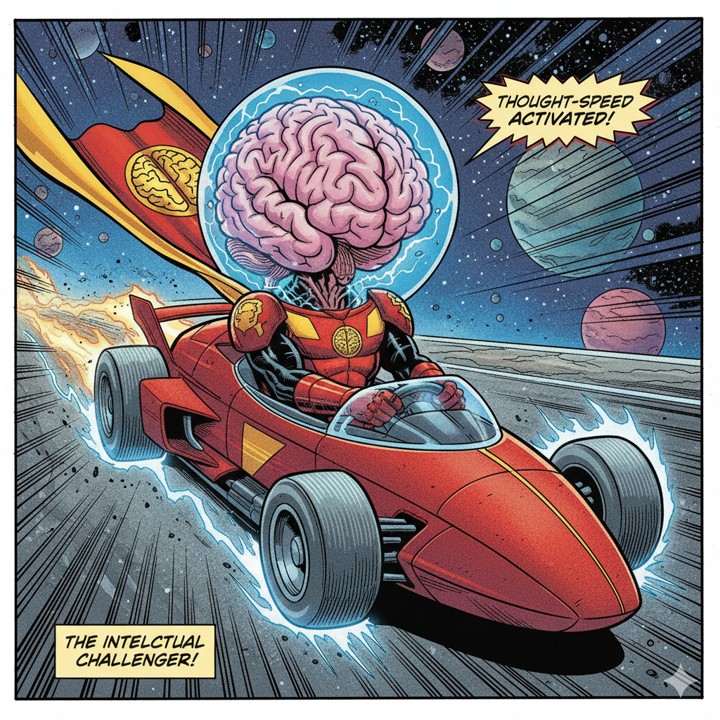
Exploring the mental demands of track driving, this conversation delves into how beginners often feel overwhelmed by the intense focus required, with every detail demanding attention. As drivers gain experience, many skills become subconscious, freeing mental bandwidth for strategic thinking and racecraft. The hosts share personal stories about the challenge of multitasking, like instructing while driving, and emphasize the importance of patience and practice in developing mental endurance. They also discuss how mental fatigue can be more draining than physical exertion and invite listeners to share their own experiences with managing mental load on track.

Topics: mental bandwidth track driving challenges beginner driver experience subconscious driving skills mental fatigue racecraft strategy instructor multitasking driver focus development mental vs physical fatigue learning progression
Select text to request an explanation
Cornell's plumbing, heating in there.
Hey, it's Tanner here to say happy new year to you from everyone over at Cornell's plumbing, heating in there.
Cornell's plumbing is the only people I call if I've got a plumbing issue or an issue with my furnace.
Cornell's plumbing, heating in there has been proudly serving Oregon homeowners for a long time
and they know what it takes to make your house comfortable.
And right now, if you tell them you heard it from Tanner on the brew,
you'll get a $0 service call with repair or 50 bucks off any repair.
Check them out at Cornell's plumbing dot com.
Cornell's plumbing, heating in there.
From the great halls of their house, there are assembled three who hope to one day be the world's greatest driving heroes.
Created from the cosmic legends of the universe comes our team captain, the vision, Bill Fisher.
They're soon to be Wonder Woman, Vicky Fisher, our captain Marvel and head flight trainee,
Jennifer Scribchuk, and our Batman, the master of tools, gadgets and all things mechanical.
Our mild mannered soon to be billionaire, Alan Danvers.
Their mission to fight injustice, share what is right and wrong to get you out of your house
and come out racing with them and serve all mankind.
They are the garage heroes in training team.
Dominating with Dawson.
Well, let's dominate.
It's a quiet night at the Fisher household.
I have nothing else to do.
I wish I had, I wish I had some dominating with Dawson that I could do with Ben Dawson.
Boom.
Guess what?
You got it.
It's not so quiet in there now.
It's like a genie without the outfit, thankfully.
Without all the one liners.
That's true.
But, you know, if you want to see Ben Dawson dressed up as a genie, go to the garage heroes
and training only fans page and, you know, pay the price.
Maybe we'll get it done.
Yeah.
I would definitely do that.
I would do farce in a jar, dress like a genie, whatever it takes to fully fund this effort,
you know.
We do it for our listeners, you know.
Totally.
Absolutely.
Indeed.
Well, I don't know if anybody's still here.
We might as well start talking about racing again, but, you know.
Great.
Or farce in a jar.
Yeah.
Thank you for making it through our little, uh, witless banter.
I mean, witty banter.
So, we're dominating tonight.
Well, we're going to talk about mental usage when you're on track.
In terms of when you're first starting, you're like totally overwhelmed.
Just totally just your brain's flying.
All these things are coming at you.
Cars are, cars are seemingly all around, especially in endurance race.
Cars are everywhere.
Everybody's flying.
Everybody's, everybody's dive bombing you.
Everybody's, and then eventually you start to settle down, whatever.
And things become a little bit more natural, a little bit more habit, a little bit more
reflex, a little bit less brain.
And one thing I did notice, this is the longest intro to Dominic Dawson ever.
One thing I did notice is early on in my career as an instructor, I noticed that
when I was driving, if I were to try and drive even at like eight tenths of my,
you know, full out, I would screw up just because my brain was doing something else
and I was distracted and I wasn't, everything wasn't fluent.
And I wasn't, I probably wasn't even good at talking while driving because I never
did it before.
I was, I was thinking, how do you, how do you explain to somebody who's,
maybe they're in the, the initial few trips to the track and their,
their brain is just like, what, how do you, how do you say like the stages
of this?
That's probably the worst question I've ever asked you, but trying to
make a good answer for me.
Well, it's true.
I mean, this is, it's, sometimes it's easy to lose sight of the fact that
what we were doing out there is so overwhelming because it's so fully
immersive.
Life and death, you know what I mean?
It's fully like, it's fully something that if you mess it up,
you can really hurt yourself or other people.
So it's, it's a, it's a pretty serious undertaking along with all the BS
that happens at the track.
It's a, it's a go, no go, you know, I think you can end up getting
airlifted out of it.
You make a, you know, a mistake or even just having any kind of laugh.
So I think everybody who has any kind of head on their shoulders
takes it seriously enough.
And that can really, really just wears you out.
I mean, I remember coming home from my, my second or third track
day or something like that on a Saturday and going back for the
Sunday, but like ordering pizza or something like that.
I did something like ordering some food at the hotel room or
something like that.
I couldn't even, I fell asleep before you got there.
I just completely out and didn't even wake up worried about where
why I didn't eat dinner.
I was just so tired.
I just, just, you know, dozed off completely and didn't even wake
up till the next day.
So I think it is so mentally consuming.
There's some physicality to it too, but I think most of the
fatigue that people feel after their first few track events
is largely, is largely mental drain.
Would you agree?
Yeah, 100%.
I mean, it's, it's a, it's not something that you can prepare
for either.
Right.
So yeah, it's going to prepare you for it.
It's a, it's a pretty dangerous weighty pursuit that
wears you out.
But the more and more practiced you become, the more
your mental focus can shift from survival and what they
call lizard brain thinking where it's just, you know,
I'm just trying to do what it's going to take to keep
Bill alive or whatever.
And you can start shifting your thinking a little bit more
too.
Oh, that felt good going through that corner.
How can I optimize?
What is it?
What, what I'm doing to there?
What worked?
What, you know, you started getting more analytical about
what you're doing and more of the safety immediacy kind
of falls away as you become more and more competent
with understanding the rules of the road, understanding
everyone else's behavior, understanding your
expectations of you.
Part of the mental drain of being able to track the
first few times was like, Oh shit, did they just come
on?
Did they just call my class?
Like, you know, part of it is, is worried about being
at the right place at the right time, almost as much
as it is about like, you know, not screwing up and
driving your car into the wall or something.
So, so there's a lot, there's a lot going on.
There's a lot of like, there's a lot of understanding
the group you're with, understanding what time
you're supposed to be somewhere stressing about the
leave that poker chip I was supposed to hand to
the person at the grid to show them that I went to
classroom to leave that, you know, sitting on much
trailer.
Is it, oh crap, I'm already belted in, it's in my pocket
and they can't read on me.
There's just a million things that can stress you
a little, a little car break in car, not doing what
it's supposed to do.
I've never heard that noise before.
What is this?
Where's my glove?
So many, so many ways to screw yourself up.
There is as more and more things become routine
and you're used to them at the track on and off
the track, you start to develop more brain
autonomy where it's like, alright, I know how to
get around here.
So, you know, my brain is going to help me
remember to break at the three.
We got that down.
I don't have to like develop extreme, you know,
devote extreme focus to remember where to break
every lap.
So I can start thinking about maybe, maybe try
to roll out of that roll out of the throttle
a little bit, a little bit early, maybe try
breaking a little deeper.
You know what I mean?
You start thinking about analytical things.
And then, you know, you sort of go through that
phase and then you start thinking about, you know,
how can I push harder?
How can I go a little deeper?
How can I drive a little faster?
And ultimately, once you've been doing this stuff
for a long time and you turn into somebody who's
been racing or been driving for a long time,
you really fall into a mode of where the
blocking and tackling, the, you know, the
shifting, the breaking, the accelerating,
the turning is mostly done with what you
call muscle memory.
Like your body's doing most of that stuff for you
without you having to develop a lot of thought
into it unless you're, yeah, unless you're
specifically trying to improve a certain section
or you're trying to do something else.
But, you know, you can kind of, you can kind of hit
a plateau and just sort of do cycle driving
where you just kind of, you just kind of
drive the same cycle over and over again.
And, and this phase can be especially useful
if you're a racer, you know, develop this,
this core competency to driving.
And then if you're a racer, you can
devote your brain power and your bandwidth
to, well, you're rolling up on a
gaggle of cars that you're going to have to
work your way through.
How am I going to work my way through here?
Starting to do analytics and thinking about, you know,
well, I see this car doing this well in this corner
as you're coming up to me.
You probably usually have a few laps to
sort of evaluate the group you're about to
roll up through if you're, if you're working
your way up through traffic.
You know what I mean?
Which is something we all aspire to be doing.
Like, okay, which one of these dovers
is going to be the slowest in this corner?
Do I need a pass on to kind of get through,
get this process started?
So that's a, these are things that
your brain can be devoted to once you've
got the mechanics of it down.
Does that make sense?
It does, it does.
And one thing before I go back to answering
this thing, one thing that's fun about our
podcast, even though nobody gets to see it
besides us, is sometimes we ask such
fundamental rudimentary aspects of
racing on purpose.
And the look on your face is like,
dude, I don't know.
I just do it.
But you play our silly game and you
actually have to think about it.
It's like, well, when you said that,
I thought the immediate joke was going
to be, well, obviously, Pintos is not
ever thinking about a single thing
ever might last on the track.
Not consciously.
Which is probably one of the reasons
why you're as fast as you are.
Because we had a gentleman who I went
through HPDE with, and he's
actually a neurological surgeon or
something.
I got one of those.
I got one of those.
It's local to me.
Matt, how are you doing, buddy?
Right.
And he started talking during one of
our debriefs.
And it's basically, if it's conscious
thought, it runs at, let's say, X speed,
right?
And if it's subconscious thought,
it's actually 10 X.
Roughly.
So the more you can convert to
subconscious reflexive or just
subconscious habit.
Not only do you get more bandwidth
available for racecraft and looking
at other people and everything else
that you need to do, the more
quickly you're able to process it
and do things.
Yeah.
That's reassuring to hear.
Yeah.
I mean, it's better than doing it
dumbly, right?
But we could, boy, I could get into
chess right now.
I'm having a hell of a week.
But anyway, let's just podcast
hopefully available soon.
Apple's killing me.
Sorry.
Didgeridoo.
There we go.
Went off to the skewed off.
I think the thing that made it
become very clear to me that I
was at the same time happy and a
little surprised when I started
talking, started to give instruction
when I was coming up to a turn
that I've done at least
hundreds, maybe borderline
thousands of time.
It's one of our local tracks.
And I've done it a whole lot
faster in that particular car
many, many times.
But when I was talking, boy, did
I booger up that turn.
It was nasty.
It was one of those like, I
don't want to ever do one of
those again.
And I wasn't even going that
fast.
And it just the distraction of
changing to be talking and
thinking about something else
consciously as opposed to just
focused and doing my normal.
It was an HPT.
And it was just like, oh
my God, I screwed that turn
up.
What was that?
Who did that?
I want to know who grabbed my
wheel and my feet because they
need to stop touching me while
I'm driving.
Well, especially given the
context that you just gave
about how subconscious
operates about 10 times
faster than your front of
brain describing kind of
thinking that it makes sense
that going through doing something
you've done plenty of times
competently.
And then suddenly having to
describe it as you're doing it
completely throws your rhythm
off.
So it's probably going to throw
your body rhythm off as well
as you're trying to describe
it like, oh, let me turn in
here.
Then you're doing it.
Everything's going to be a
tick off or more than what
you just do if you're just
letting your body do it.
Right.
Yeah.
Especially, you know, not
that this was the point of
this episode, especially for
your new instructors, just be
aware that if you are
driving and you are talking,
you're not as good a driver
as you think you were
without talking.
But that's part of being
instructor.
I think usually when I'm
doing that, I usually just
end up making, I kind of keep
my rhythm by making fun of
myself or kind of just
joking along with the
students.
I'm trying to drive and
talk.
You know, so it's probably
a little bit different,
a little bit different
cadence for me.
You know, as I try to
think about it.
You're not going to set
a personal best when
you're instructing though
for multiple reasons, this
being one of them.
A lot of the time when
I'm giving somebody a ride,
usually it's in the
frenzy of like, oh yeah,
you want to take a ride
right now?
Yeah, jump in and grab a
helmet.
A lot of times that ends up
being done without a proper
communicator or proper
communication system.
So sometimes I just get in
there and before we go,
I'll say, hey, watch this,
watch this, watch this,
watch how I do this,
especially if it's somebody
I've been in the car with
and seeing what you're
struggling with.
Pay attention to how
I'm doing this, how I'm
doing this, how I'm doing
this.
And I might just take
them out and just
blast around.
And then we get back out
when we stop.
I'll say, hey,
you're awesome.
I can't believe how amazing
you are.
You're such a smart person
and a great communicator.
And I'm even better race
car driver.
I'm just kidding.
Nobody ever says that to me.
But, you know,
sometimes I don't even
try or bother to try to
explain things
contemporaneously with my
driving sometimes.
I'm just going to be,
you know,
point a few things out
to pay attention to
before we get in the car
and then let the person
just absorb the
experience and then we'll
talk about it afterwards.
Yeah.
I just, you know,
it was more,
it was a surprise to me
how poorly in quotes
I drove while speaking.
Yeah.
And it's also pleasing
in that apparently I have
digested enough of this sport
to be, you know,
fluent without speaking
and that a lot of it's
gone subconscious.
And that's one of the
things you're going to
have to do.
So if you're in the
beginning and you're
overwhelmed or
or, you know,
just give yourself some
grace, give yourself some
time, it'll get better.
And when you're
more mature in your
racing, driving career on
track, be careful
that you don't
make subconscious
bad decisions subconscious
and work to make sure
that, you know,
what is natural is
best.
And if you're trying to
change something, you're
going to have to
pull things out of your
subconscious, bring them
to conscious and then
focus on.
I agree.
All right.
Did we
knock that one around a
little bit?
Yeah.
And I think it's
definitely more thought
provoking than most of
the things I
ever think about about
being on track.
So it's always good to
kind of drag me out of
my cave and maybe talk
about stuff that I
usually think about.
Something makes me
think that we
have something been.
Well, you know, we're
fortunate to have
plenty of good listeners
who like to interact
with us.
And if you've got
something else that you
want to say about the
mental struggles of
becoming better and
better at driving and
processing what's
happening on the track,
tell us some of your
experiences or tell us
what we're missing and
love to hear about it.
What did we miss?
What worked for you?
Everything about it?
What color socks
you're wearing?
We don't care.
We'll take any
listener feedback.
Absolutely.
We're like overdue
in a while.
Codename Tyler, sorry.
So we'll get back to you.
Tyler.
Tyler, hit us up.
That's right.
Or codename whatever
your name is.
I mean, whatever
I make up your name to be.
Alleged Tyler Aaron.
That's right.
Alleged.
Alleged or
alleged.
Both are applicable.
Both.
Exactly.
Fantastic pilot
and racer.
Allegedly.
Indeed.
All right, sir.
Thank you, Ben.
Thank you.
It was a fun exercise.
Don't think about it
when you're when you hang up
though.
Okay.
All right.
Thanks, Ben.
Thank you.
Thank you.
Thank you.
Thank you.
Thank you.
Thank you.
Thank you.
Thank you.
Thank you.
Thank you for stopping by
and listening to our
you
you
you
you
you
Let's dominate we all prefer things a certain way like groceries if you want groceries just how you like them
You got to try Instacart
They have a new preference picker that lets you pick how ripe or unripe you want your bananas
Shoppers can see your preferences up front helping guide their choices because when it comes to groceries the details matter
Instacart get groceries just how you like

Request an Explanation

Heard something you'd like explained? We'll add it to this episode.

Sign in to request explanations for terms you heard.

Want to learn more?

Browse our glossary for plain-English explanations of automotive terms, jargon, and concepts.

Explore Terms