
GHiT 0762: Nick Barbato's GLTC at Road Atlanta
About this episode
Nick Barbato’s GLTC weekend at Road Atlanta with Gridlife turns into a deep dive on track intimidation, sim-first hill confidence, and why braking points and curb discipline matter. They connect qualifying chaos—transponder/timing data issues and averaging laps—to the reality of passing in dirty air. The conversation also shifts into setup experimentation: air-box aggression, splitter/wing tweaks, and even fuel-starvation troubleshooting with dual pumps. The takeaway: racing as data gathering and learning, not just results.
GHiT 0762: Nick Barbato's GLTC at Road Atlanta
Gridlife went to Road Atlanta last week and we review the GLTC rces from the perspective of Nick Barbato. It was a weekend.
Did we miss something? Please let us know at [email protected]
A link to the episode is: https://tinyurl.com/RoadATL2026
We hope you enjoy this episode!
If you would like to help grow our podcast and high-performance driving and racing:
You can subscribe to our podcast on the podcast provider of your choice, including the Apple podcast app, Google music, Amazon, YouTube, etc.
Also, if you could give our podcast a (5-star?) rating, that we would appreciate very much. Even better, a podcast review would help us to grow the passion and sport of high performance driving and we would appreciate it.
Best regards,
Vicki, Jennifer, Ben, Alan, Jeremy, and Bill
Hosts of the Garage Heroes in Training Podcast and Garage Heroes in Training racing team drivers
Money saving tips:
1) Enter the code GHiT 25 for $50 off the Fire Links hardware system with a 1 year membership included and/or a an extra three months if you subscribe now at https://firelaps.com/
2) Enter code "GHIT" for a 10% discount code to all our listeners during the checkout process at https://candelaria-racing.com/ for a Sentinel system to capture and broadcast live video and telemetry.
3) Enter the code "ghitlikesapex!" when you order and Apex Pro system from https://apextrackcoach.com/ and you will receive a free Windshield Suction Cup Mount for the system, a savings of $40.
4) Need a fix of some Garage Heroes in Training swag for unknown reasons: https://garage-heroes-in-training.myspreadshop.com/
5) Want to show you support to help keep our podcast going? Join our Patreon at: patreon.com/GarageHeroesinTraining
6) For a 30% discount on the Race Setup Pro, please use the code GHITLIKESAPEX at checkout

Dodge Road Runner
"... You know, after he holds up the sign because the road runner just knocked him off the cliff and I'm just going..."
The Dodge Road Runner is a classic muscle car from Dodge. It’s known for being a performance-focused car with a strong enthusiast following. In the podcast, it’s mentioned as part of a story, not as a detailed technical topic.
The Dodge Road Runner is a classic American muscle car associated with the late 1960s era of performance-focused styling and engines. In the podcast, it’s referenced as part of a humorous or story-like moment, but the key point is that it’s a recognizable performance nameplate. It often gets discussed because it represents a specific period of muscle-car history and enthusiast culture.
pit wall
"once I started breaking basically way past the end of the pit wall, right, way past it, then it's like a question of just make sure you get to the apex"
The pit wall is the wall next to the pit lane that separates cars in the pits from the track. Drivers use it as a reference point for where to brake and how close they can get while staying on track.
The pit wall is the barrier separating the pit lane from the racing surface. Drivers use it as a visual reference for braking zones and how late they can brake without running wide or crossing into unsafe areas.
apex
"then it's like a question of just make sure you get to the apex because you can kind of use that room at exit, but not really all."
The apex is the inside “turning point” of a corner. Racing drivers aim to pass that point so the car is positioned well to exit the turn and speed up.
In road racing, the apex is the point in a corner where the car is closest to the inside edge of the track. Hitting the apex helps you set up the car’s balance so you can accelerate efficiently toward corner exit.
rumbles at exit
"Like it's like, so it's like, if you end up out at the rumbles at exit, that might be almost a waste of time. It depends on the car and everything."
Rumble strips are the bumpy strips near the edge of the track. If you hit them at the wrong time, the car can feel unsettled and you lose time, so drivers try not to rely on them.
“Rumbles” are rumble strips—raised or textured strips on the track edge that create vibration and audible feedback when you run over them. Using them at corner exit can slow you down or upset the car, so drivers treat them as a warning sign and a last resort rather than a normal racing line.
offline marbles
"So actually, if you kind of got out there, it was a little bit looser. That's what kind of the offline marbles were. So it was, you know, it was almost like you would get get penalized a little bit"
“Marbles” are loose junk on the track surface that builds up off the main racing line. If your tires hit it, grip can suddenly drop and the car may feel looser or harder to control.
“Marbles” are loose debris (often rubber and grit) that collects off the racing line, especially on the outside or “offline” areas of the track. When tires roll over marbles, traction drops and the car can feel looser or more unpredictable, which affects braking and corner exit.
driving simulator
"And I explored the space in the driving simulator just to see what would happen there. And even in the sim, it was not good."
A driving simulator is a video-game-style setup that lets you practice driving a track. It’s useful for learning lines and braking points, and for testing mistakes safely before doing it for real.
A driving simulator is used to practice track-specific braking points, cornering lines, and car behavior without the cost and risk of real track time. In racing, sim work can help drivers explore “what if” scenarios—like how late braking affects corner exit—even if it won’t perfectly match real tires and grip.
horsepower
"So basically, if I could just reliably take one horsepower off it, I could take 85 pounds off the car."
Horsepower is a measure of how much power the engine makes. Less horsepower usually means the car accelerates more slowly, which matters a lot in races.
Horsepower is a measure of engine power—how much work the engine can do over time. In racing, teams may “take horsepower off” via restrictors, tuning, or rules compliance to meet a class balance, and that power reduction can translate into slower acceleration.
tune
"I wasn't able to get a new tune in time. So I decided to run a little bit more conservative..."
A tune is the car’s computer settings for how the engine runs. If you don’t have the right tune ready, you may have to drive with safer settings until it’s updated.
A “tune” is the calibration of the engine control unit (ECU)—how it manages fuel, ignition timing, boost (if applicable), and other parameters. In motorsport, getting the right tune can be the difference between using the car’s full potential and running it conservatively while you wait for changes.
qualifying time
"my rock qualifying time actually would have been P seven overall. Um, and then later in the weekend..."
Qualifying time is the lap time you set before the race. It often decides where you start, and faster qualifying usually gives you a better chance to score well.
Qualifying time is the lap time set during the qualifying session that determines starting position. In this discussion, the host uses qualifying time as a predictive tool for overall race potential and points, especially at a track where acceleration matters.
reclassifying to 215
"taping up my air box and, and taking some more risk reclassifying to 215. It took, you know, I wasn't able to get all the way down..."
“Reclassifying to 215” means moving the car into a different rules category, usually tied to tire size. That can change what the car is allowed to run (like weight), which affects how fast it can be.
“Reclassifying to 215” refers to changing the car’s class/allowance based on a tire-size or rule category—here, the number “215” typically points to a tire width class. In series with balance-of-performance style rules, that classification can affect what weight or power the car is allowed, so it directly changes competitiveness.
three tenths of a second
"And that was worth at least just on the data, a good three tenths of a second."
Three tenths of a second is a small time gap, but in racing it can be huge. Tiny improvements can move you several spots on the grid or in the results.
“Three tenths of a second” is a common racing time delta used to describe how much faster (or slower) a change is. In motorsport, even tenths can be the difference between multiple positions, because lap times are tightly clustered.
Watkins Leonard
"This was just to have a try nice, clean, solid weekend, get some good points, regroup, have a strong weekend at Watkins Leonard and then go out with a banging lime rock."
This sounds like “Watkins Glen,” a well-known race track in New York. It’s a twisty course where drivers have to be smooth and consistent to do well.
“Watkins Leonard” appears to be a mis-transcription of “Watkins Glen,” a famous road course in New York. It’s known for its elevation changes and technical corners, so getting “good points” there usually means strong car control and consistency.
Lime Rock
"…regroup, have a strong weekend at Watkins Leonard and then go out with a banging lime rock. Your favorite."
Lime Rock Park is a race track in Connecticut. It’s known for being short and twisty, so driving mistakes and car setup differences can really matter.
Lime Rock Park is a short, fast road course in Connecticut that’s famous for quick direction changes and heavy braking zones. Because it’s compact, small setup or driving mistakes can show up immediately in lap times and tire wear.
grid life drifters
"So, so grid life wrote Atlanta, I think they had the drifters there. I did not have a chance to see it. And so that… they had, they had the grid life drifters…"
“Grid Life” is a motorsports event that sometimes includes drifting. Here, they’re describing a drift setup happening alongside the main racing weekend.
“Grid Life” is a motorsports event/series brand that often includes drifting as a featured activity. In this segment, the “grid life drifters” are sharing the same track weekend with the race team, which is why the hosts talk about a drift “drip track” layout and live broadcast.
initiate the drift
"…you would initiate the drift coming down the back stretch into 10 a, and then you do a little left drift through 10 a…"
“Initiate the drift” means starting a controlled slide. The driver intentionally gets the rear tires to lose grip so the car can rotate while still being steered.
To “initiate the drift” means to deliberately break traction so the car transitions into a sustained oversteer slide. Drivers typically use steering input plus throttle (and sometimes a lift/weight transfer) to get the rear to step out while keeping the car controllable.
hard right
"…and then a hard right past 10 B under like a little infield track and then loop back around."
A “hard right” is a big, quick steering turn to the right. In drifting, that kind of steering helps the car rotate and stay in the slide.
A “hard right” in a drift context is a sharp steering change that helps rotate the car and set up the next phase of the slide. In tandem with throttle and vehicle weight transfer, it’s part of how drivers maintain angle and line through a sequence of turns.
combined single session, GT and TC
"So this was a unique weekend where, uh, due to the sharing of the track with the formula drift and some other, uh, challenges, they had to do a combined single session, GT and TC, one hour combined practice and qualifying. So there was actually no practice."
They’re saying the weekend schedule combined two racing groups into one shared session. That changes how drivers plan their laps because it’s not separated into practice and qualifying.
The hosts describe a race weekend format where GT and TC run together in one combined session for both practice and qualifying. This affects strategy because drivers have less dedicated time to learn the track and set up for qualifying.
banker time
"So yeah, so one hour block of time, um, and I went out early, ran for 15, 20 minutes, uh, put in a solid banker time. I think it was like P five or six at the time, solid, okay."
A “banker time” is an early lap that’s already fast enough to put you in a good position. It’s like saving a good score before you try to improve even more later.
In racing, a “banker time” is an early lap that’s good enough to set you up safely in the qualifying order. Drivers often use it as a safety net before the track gets faster or before they risk more aggressive laps later.
fresh set of tires
"I fell back, you know, to around, you know, P 13 or 14, but I knew with a fresh set of tires and a good track, um, ramping up, I could have a good shot."
“Fresh tires” means the car has new tires that grip the road better. Qualifying laps are often planned to happen when the tires are at their best.
A “fresh set of tires” means the car is on new (or newly mounted) tires with full grip potential. In qualifying, drivers time their fastest laps for when tire grip is highest, often after the track has warmed up.
purple lap
"And then I ended up doing a purple, purple lap for a 37, eight, I think. Um, and again, all was good."
A “purple lap” is a lap that’s your best time in that session. It’s a color on the timing display telling you you’re doing great compared to your previous laps.
A “purple lap” is a lap time that’s the fastest in your session so far, shown on timing screens with a color code. It’s a quick visual cue that you’ve hit (or are close to) your best performance.
transponder
"So it would have retroactively been P seven. Uh, but then I realized that the session ended, uh, that my transponder was"
A transponder is a small electronic tag on the race car that the track uses to automatically time your laps. If it doesn’t get read, your lap times may not count properly.
A transponder is an electronic device on the car that communicates with track timing equipment to record lap times and position. If a transponder isn’t read correctly, your qualifying results can be missing or incorrect even if you drove fast.
averaging my last five laps
"So they ended up just averaging my last five laps, which included an out lap and passing somebody."
Instead of using one best lap, race officials used an average of several of his recent laps. That can change where you start the race, even if you had one really strong lap.
Averaging last laps is a timing/qualification fallback where officials compute a representative time from multiple completed laps instead of using a single best lap. In practice, it can penalize drivers who had one good lap but a few slower ones, changing the final grid position.
out lap
"So they ended up just averaging my last five laps, which included an out lap and passing somebody."
An out lap is the lap you do when you leave the pits and are still getting up to speed. It can be slower or less consistent than a lap where everything is fully warmed up.
An out lap is the lap a driver completes when leaving the pits to get up to speed, often with different tire temperatures and less-than-ideal conditions compared to a fully warmed-up lap. Using an out lap in an averaged timing calculation can skew the result.
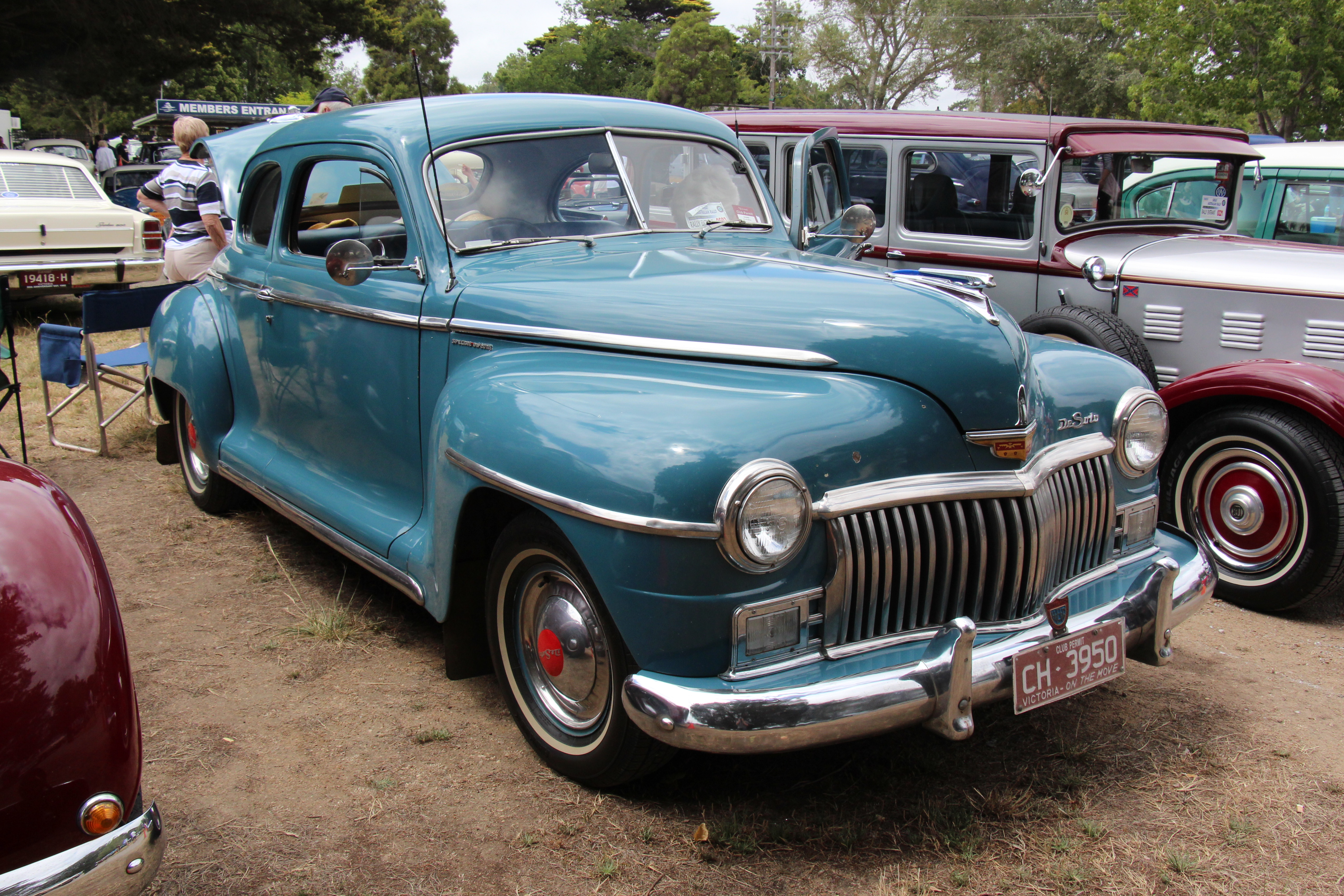
Plymouth P15
"So it was just stupid. So yeah, I think I started P 15 or 16 and unfortunately just given, you know, again, my, my car turns good, but, um, as on the straights, uh, you know,"
The Plymouth P15 is an older classic car made by Plymouth. The podcast mentions it while talking about how it does on straight sections of road, which relates to how fast it can go and how it accelerates. It’s being used as an example of performance in a simple, practical way.
The Plymouth P15 is a vintage Plymouth model from the mid-20th century, often discussed by enthusiasts as a classic, straightforward platform. In the podcast, it’s mentioned in the context of how the car performs on straights, implying attention to acceleration and top-end behavior. That makes it a good example of how older cars can be evaluated in terms of real-world driving characteristics.
GLTC
"Yeah. You, uh, passing in GLTC is at a premium and that, you know, five, 10, 10 positions."
GLTC is the racing series he’s talking about. He’s saying that in this kind of racing, getting around other cars is hard, so starting a few spots back can really hurt your chances.
GLTC is the racing series Nick Barbato is competing in, and it shapes how the weekend plays out—especially around qualifying, track position, and passing. In this segment, he’s emphasizing that passing in GLTC is difficult, so small position changes (like 5–10 spots) matter a lot.
clean air
"But, but if you're not in clean air and you're getting balked and you're behind a slower cornering car, it's almost impossible to pass."
Clean air means you’re not being affected by another car’s airflow. If you’re stuck behind someone, the air around your car gets messy, and it can reduce grip and make passing much harder.
Clean air is air that isn’t disturbed by another car’s wake. In racing, being in clean air helps tires and aero work as designed; when you’re in dirty air, downforce and grip can drop, making the car harder to turn and pass with confidence.
balked
"But, but if you're not in clean air and you're getting balked and you're behind a slower cornering car, it's almost impossible to pass."
Being balked means you get stuck behind slower cars and can’t get around them right away. That can ruin your chances because you lose the right moment to pass.
To be balked means to be held up by traffic—typically a slower car that you can’t pass immediately. In racing, getting balked breaks your momentum and often forces you to wait for a gap, which is especially damaging when passing is already difficult.

Ford Mustang
"... in IMSA. He's working for one of the factory for Mustang teams as a mechanic. So, and he's also my good fr..."
The Ford Mustang is a performance car made by Ford. People talk about it a lot in racing because it’s built to go fast and there are lots of parts and tuning options for it. In the podcast, it’s mentioned because someone works as a mechanic for a Mustang racing team.
The Ford Mustang is a long-running American performance coupe/convertible known for its strong aftermarket support and racing presence. In a motorsports context like IMSA, it’s discussed because factory-backed Mustang teams rely on specialized mechanics and tuning to keep the car fast and reliable under race conditions. It’s a common “hero” car for training because many parts and setups are well-documented in racing circles.

BMW E36
"He had another, he also has a E 36 that they'd been developing and testing. It has a B 48 swap, which, you know, for those who don't know, it's a really, really cool little, I think it's a two liter maybe turbo charged engine."
The BMW E36 is an older BMW 3 Series (from the 1990s). People often modify it for track driving, and here they’re testing one with a different engine to make it faster.
The BMW E36 is the 3 Series generation from the 1990s to early 2000s, and it’s a popular platform for track builds and engine swaps. In this segment, the E36 is being developed and tested with a modern powertrain, which is why it matters to enthusiasts.
B48 swap
"It has a B 48 swap, which, you know, for those who don't know, it's a really, really cool little, I think it's a two liter maybe turbo charged engine. And they made it to a six or seven speed box."
A “B48 swap” means putting a BMW B48 engine into a car that didn’t originally have it. It’s a way to get a newer, often turbocharged engine into an older chassis for better track performance.
A “B48 swap” means installing BMW’s B48 engine into a different car than it originally came with. The B48 is a modern BMW inline-4 that’s commonly turbocharged, and swapping it can dramatically change how the car makes power and how it behaves on track.
six or seven speed box
"And they made it to a six or seven speed box. I'm not sure. Super cool car, you know, well developed."
“Box” here is shorthand for the gearbox/transmission. Matching a swapped engine to a multi-speed transmission is important because gear ratios affect acceleration, top speed, and how well the engine stays in its power band during laps.
Zebulon front splitter
"And he was running a full till Zebulon front splitter and I don't run a splitter. And we were able to compare times when he wasn't running a splitter. ... But he put that real nice Zeb splitter on for race two or three..."
A front splitter is a piece that sticks out low in front to help the car “stick” to the road by using airflow. Here they’re testing how much faster the car is with the Zebulon splitter on.
A front splitter is an aerodynamic add-on mounted low at the front of the car to manage airflow and create downforce. The “Zebulon” splitter is a specific brand/part used on this BMW E36, and the hosts compare lap-time differences when it’s installed versus removed.
air dammit devices
"And, you know, of course, I'm no stranger to running these types of air dammit devices over the past 10, 15 years, but I was not expecting actually how much of a difference it would really make on track..."
He’s talking about aerodynamic add-ons that change how air flows around the car. Even if the engine stays the same, these can make the car grip better and go faster through corners.
“Air dammit devices” is a garbled reference to aerodynamic devices (like splitters, diffusers, and other underbody/front-end aero). These parts change airflow and downforce, which can noticeably alter cornering speed and lap times even if the engine is unchanged.
high speed left over crest
"We were just talking about that corner. He went from like a little bit of a deficit on me to like a four plus mile an hour apex speed, min speed advantage."
“Over crest” means the track goes up and then down through the corner. That can change how the tires grip, so it’s a spot where aero and suspension setup really matter.
“Over crest” describes a corner where the car goes over a rise in the track surface, changing load and grip as the suspension unloads and then loads again. Combined with “high speed,” it’s a demanding section where aero and chassis balance strongly affect how quickly you can carry speed.
high speed corner
"There was only one corner I was lacking in that high speed corner in the back before the kink. But here there was like three solid high speed corners where that front error was working..."
A high-speed corner is a turn you take quickly, without slowing down a lot. At those speeds, the car’s aerodynamics and tire grip matter more than in slower turns. That’s why setup changes can noticeably affect lap time.
A high-speed corner is a turn where the car maintains relatively high velocity, so aerodynamic effects and tire grip under sustained load become especially important. Small aero or setup differences can show up as measurable exit-speed and stability changes. The host repeatedly references multiple high-speed corners to explain why the splitter choice mattered.
pace Delta
"if this is going to make this much of a pace Delta, I need to make that happen."
Pace delta just means the time difference—how much faster one car is than another. The host is saying the splitter might create a big enough time gap to matter over the whole lap. Small speed changes can add up.
Pace delta is the measured difference in lap time (or segment time) between two cars or setups. In racing, even small changes—like a small exit-speed improvement—can compound into a noticeable pace delta over a lap. The host uses it to quantify how much the splitter change could affect their overall speed.
arrow
"and he was running a bit heavier than me just to see how much the arrow was working in that corner."
Here, “arrow” sounds like the car’s aerodynamic grip—how much the aero parts help the tires stay planted. The host is comparing two similar cars to see how much that extra “push down” helps in a corner. It’s about how aero affects cornering speed.
In this context, “arrow” is almost certainly shorthand for aerodynamic downforce generated by the car’s aero devices (like the splitter). The host is comparing two cars with similar chassis and tires to see how much that aero effect is helping in a specific corner. The key idea is that aero balance can change how quickly the car can carry speed through the turn.
setup tweaked around there
"I mean, he has, you know, however many hundreds, if not a thousand laps around Rhode Atlanta and a setup tweaked around there."
A “setup” is how a race car is adjusted for a specific track. Here, the host is saying Wingfield fine-tuned his car for Road Atlanta instead of just using the same settings everywhere.
A “setup” is the track-specific configuration of a car—things like suspension settings, alignment, tire choice, and aerodynamic adjustments. “Tweaked around there” means the driver adjusted the car to match Road Atlanta’s demands rather than using a one-size-fits-all setup.
BMW S52
"my car is a 108,000 mile stock S52 engine has some mild upgrades for durability on the valve train side. That's it."
The S52 is a BMW engine (an inline-six) that shows up in some M3s. In this story, they’re saying their car uses the stock S52, but with small changes to help the valve-train last longer on track.
The S52 is BMW’s inline-six engine used in certain E36 M3 models, and it’s a common enthusiast track engine because it responds well to mild durability-focused upgrades. Here, the host says his car has a “stock S52 engine” with mild valve-train durability upgrades, while keeping stock engine management.
valve train
"my car is a 108,000 mile stock S52 engine has some mild upgrades for durability on the valve train side. That's it."
The valve train is the mechanism inside the engine that controls when the intake and exhaust valves open and close. If you’re driving hard on a track, people often upgrade it so it lasts longer under stress.
The valve train is the set of components that opens and closes the engine’s intake and exhaust valves (including parts like camshafts, lifters, and related hardware). On track cars, durability upgrades to the valve train help the engine survive higher sustained loads and heat.
mechanical throttle body
"Five speed ZF gearbox, mechanical throttle body, stock engine management."
A mechanical throttle body means the gas pedal is connected to the throttle plate with a physical linkage. That can make throttle response feel more direct compared to newer “electronic” throttle systems.
A mechanical throttle body uses a direct mechanical linkage (typically cable) between the accelerator pedal and the throttle plate. This contrasts with drive-by-wire systems and can change throttle response feel and how the car’s calibration behaves.
stock engine management
"Five speed ZF gearbox, mechanical throttle body, stock engine management. Eric Magnuson's car."
Engine management is the computer that controls how the engine runs. “Stock engine management” means they’re using the factory settings rather than a custom tune.
Engine management is the car’s electronic control system (ECU) that meters fuel and controls ignition and other parameters. “Stock engine management” means the ECU calibration is not replaced or heavily modified, which keeps the engine behavior closer to factory settings.
ZF gearbox
"That's it. Five speed ZF gearbox, mechanical throttle body, stock engine management."
A ZF gearbox is the transmission made by ZF. On track, the transmission matters because it helps you keep the engine in the right rev range while you accelerate and slow down for corners.
ZF is a transmission manufacturer, and “ZF gearbox” here means the car uses a ZF-built manual transmission. Gearbox choice matters for track driving because it affects shift feel, gearing, and how well the engine stays in its power band.
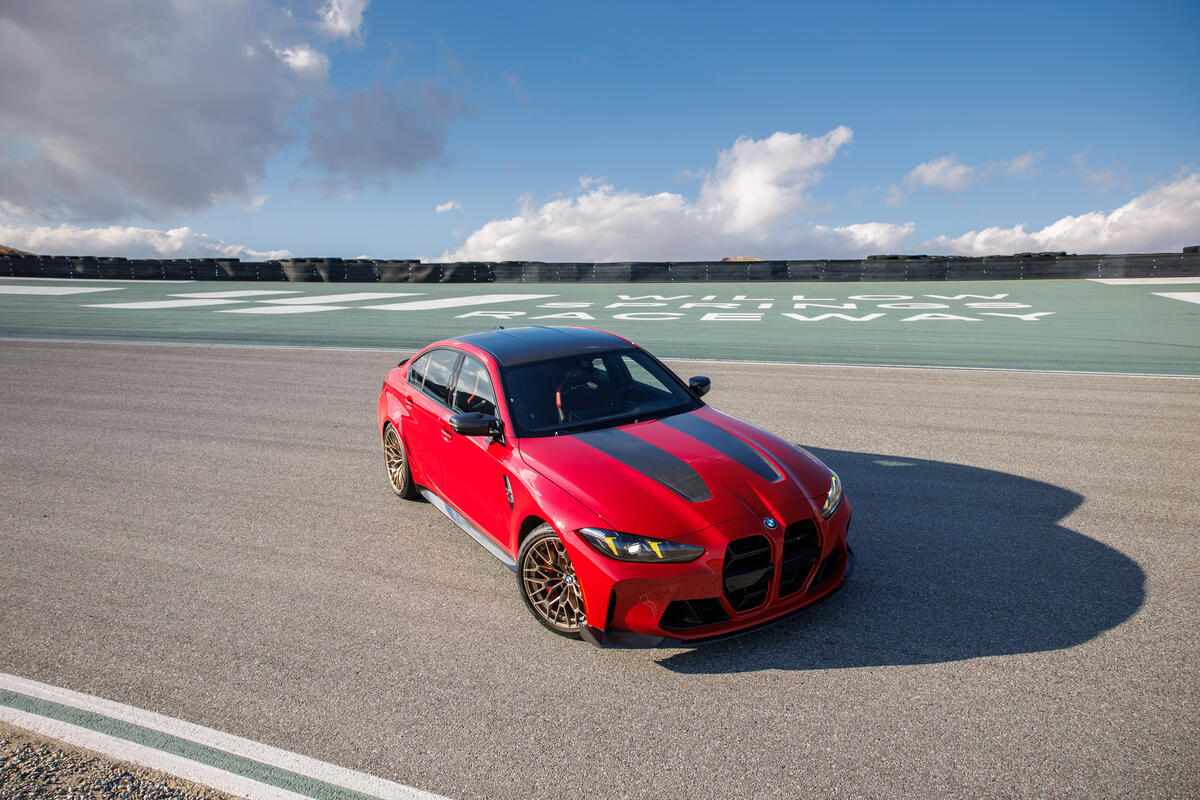
BMW E46 M3
"Eric Magnuson's car. So I run that car in roughly 215 horsepower, 2,800 pounds. Eric Magnuson has an E46 M3 LS3 flat tune VA."
The BMW E46 M3 is a track-capable BMW from the early 2000s. Here, they’re talking about Eric Magnuson’s E46 M3 and how its engine setup changes how much power it makes and when it makes it.
The BMW E46 M3 is a performance version of the 3 Series from the late-1990s/early-2000s, known for its high-revving inline-six and strong track reputation. In this segment, it’s specifically discussed as Eric Magnuson’s car, including its LS3 flat tune and the resulting horsepower behavior.
275
"He has to run it much heavier and runs it on a 275. So I think his race weight is 30, 32 or 33."
“275” here is almost certainly the tire width in millimeters. Wider tires can provide more grip, which matters a lot for cornering and acceleration on track.
In track racing context, “275” most likely refers to a tire width in millimeters (a 275-mm class tire). Tire width affects grip and how much traction the car can generate, which is why it’s often tied to class rules or balance-of-performance adjustments.
race weight
"Eric Magnuson has an E46 M3 LS3 flat tune VA. The thing makes 230 horsepower for like 4,500 RPM. And so, but he runs it. He has to run it much heavier and runs it on a 275. So I think his race weight is 30, 32 or 33."
Race weight is how heavy the car is when it’s actually being driven in the race, not just empty. A lighter race weight usually helps the car accelerate and handle better.
Race weight is the car’s total mass during competition, including the driver and any required equipment. It’s crucial for comparing performance because power-to-weight strongly affects acceleration and overall lap times.
11 inch wheel
"But he gets to run a big 275 wide tire on an 11 inch wheel. So he has a real 230 horsepower all the time."
Wheel width affects how the tire sits and how it contacts the road. Matching an 11-inch wheel with a wide tire can help the tire work better when you’re driving aggressively.
Wheel width (here, 11 inches) determines the tire’s shape and contact patch under load. The combination of an 11-inch wheel with a 275 mm tire is a setup choice that can help maximize grip and stability during hard acceleration.
RPM
"I make 215 horsepower for about 200 RPM and it falls down to maybe like 203 by red line. And it's like under 195 and another 1,000 RPM in the other direction."
RPM is the engine speed—how fast it’s spinning. They’re saying their power is strongest at certain engine speeds, then it drops as the revs get higher toward the redline.
RPM (revolutions per minute) is how fast the engine spins. The speaker is describing how their horsepower changes across the rev range—making peak power only occur for a limited band and dropping by the time the engine reaches redline.
red line
"I make 215 horsepower for about 200 RPM and it falls down to maybe like 203 by red line."
Redline is the highest engine speed you’re supposed to run. People use it as a reference for what the engine can do near the top of its rev range.
Redline is the engine’s maximum safe operating speed, where the manufacturer recommends you not to exceed. In performance tuning discussions, it’s often used as a reference point for how power and torque behave at the top end of the rev range.
torque
"Plus all that torque of that V8. Plus all that torque, yeah."
Torque is the engine’s pulling force. More torque generally means the car can get up to speed faster, especially when you’re accelerating out of a turn.
Torque is the engine’s twisting force, and it strongly influences how quickly a car can accelerate, especially at lower RPM. The discussion contrasts horsepower (which can vary across the rev range) with torque from the V8 that helps the car “monster runs off the corner.”
V8
"Plus all that torque of that V8. Plus all that torque, yeah."
A V8 is an engine with eight cylinders. It usually makes strong pulling power, which helps the car accelerate—especially when you’re coming out of a turn.
A V8 is an engine with eight cylinders arranged in a “V” shape, typically giving strong low- and mid-range torque. The speaker is linking the V8’s torque to better acceleration and corner-exit traction.
hybrid racing
"It was the hybrid racing Civic with a K24 swap. 6B was had the fastest trap and was accelerating faster than Eric Bang to"
Hybrid racing means the car uses both a gas engine and an electric system. The electric part can help the car accelerate and manage energy during the race.
“Hybrid racing” refers to race cars that combine an internal-combustion engine with an energy storage system (often a battery) and an electric motor. The goal is typically improved acceleration and/or efficiency, plus the ability to deploy electric torque strategically during driving.
ECM
"I think, I think there's something modified in that ECM where you touch a little button and it goes, oh, no, now we're back to the correct horsepower."
The ECM is the engine’s control computer. They’re saying the car’s computer may be set up to change engine settings—like power output—when the driver presses a button.
ECM (Engine Control Module) is the car’s computer that manages engine functions like fuel delivery and ignition timing. In this context, they’re suggesting the ECM has been modified so the engine can switch back to the “correct” horsepower when a button is touched.
coefficient of drag
"Which is that car cuts a very small hole through the air, right? So let's just assume it's all good, right? Then, you know, it's probably half of the frontal area of the 46, right?"
Coefficient of drag is a number that describes how “slippery” a car is through the air. Lower drag helps the car lose less speed on straights and usually makes it faster.
Coefficient of drag (Cd) measures how easily air flows around a car—lower Cd means less aerodynamic resistance. They’re comparing the Civic’s “small hole through the air” (aerodynamic shape) to other cars, implying it reduces drag enough to matter on straights.

Chevrolet Corvette
"Oh, yeah. You know, so it's probably not quite Corvette coefficient of drag, but probably close, right? A..."
The Chevrolet Corvette is a sports car designed to be fast and handle well. The podcast talks about how its shape affects how easily it moves through the air. That’s important because air resistance can strongly affect speed.
The Chevrolet Corvette is a performance sports car known for its aerodynamic shape and strong track and road capability. It’s mentioned in the context of aerodynamics (drag coefficient) and how closely a real car’s performance matches theoretical expectations. That makes it a frequent topic when discussing speed, efficiency, and why certain cars feel fast at higher speeds.
6-speed gearbox
"And a 6-speed gearbox that would keep good, you know, because he doesn't take a full flat modifier, does Eric, to my understanding, it's only like 208 horsepower."
A 6-speed gearbox is the transmission with six gears. More gears (and the right gear spacing) help the engine stay in the “sweet spot” so the car accelerates strongly.
A 6-speed gearbox is a manual or sequential transmission with six forward gears, used to keep the engine in its best power/efficiency range. They’re arguing that a close-ratio 6-speed helps the car stay in the right rev band during acceleration, especially when it doesn’t take a full flat-out approach through the corner.
custom ratios
"And he has a gearbox, I think it's custom ratios where, you know, it's built just for GLDC. So I think coefficient of drag, 6-speed."
Custom ratios means the gear spacing was chosen specifically for the racing situation. It’s done so the car’s acceleration and speed match what the track and rules require.
Custom ratios means the transmission gear ratios are specifically selected or built for a particular race series or track demands. Here, they’re saying the gearbox ratios are tailored for GLDC, likely to optimize acceleration and top speed balance for that rule set.
6B
"Any thought on you changing to a 6B? ... one of the non-negotiables is to go to a custom build, close ratio, 6B."
“6B” here is the name of the specific 6-speed gearbox setup the host wants. It’s not just any 6-speed—it’s a particular configuration aimed at better acceleration and shifting.
“6B” is shorthand the host is using for a specific 6-speed gearbox configuration/build they want. In racing contexts, it typically refers to a particular close-ratio 6-speed setup rather than a generic “6-speed” replacement.
close ratio
"one of the non-negotiables is to go to a custom build, close ratio, 6B."
A “close ratio” transmission means the gears are closer together. That helps the engine stay in the useful power range so you don’t fall out of power between shifts.
A close-ratio gearbox keeps the spacing between gear ratios tighter, so the engine stays in its power band more often during acceleration. That’s especially helpful on road courses where you’re frequently shifting and want strong pull out of corners.
ZF
"they're like 80 pounds heavier than my ZF transmission. Probably the more preferred option would be a custom build ZF transmission"
ZF is a company that makes transmissions. In this conversation, it’s the transmission brand currently in the car, and they’re considering building a custom version of it.
ZF is a major drivetrain supplier, and here it refers to the ZF transmission currently in the car. The host compares weight and gearing options between using E46 gearbox components versus building a custom ZF-based transmission.
usable gears
"a custom build ZF transmission to turn my gear box into having four usable gears instead of just three."
“Usable gears” means the gears that actually help you at the track. If the gearing doesn’t match the speeds you reach, some gears won’t be useful for accelerating.
“Usable gears” means the gears that actually fit the track’s speed ranges and the car’s power/torque curve. If the gearing is off, some gears may be too short or too tall, so they don’t contribute effectively to acceleration.
natural power band
"Especially road Atlanta running a natural power band."
Your engine has an RPM range where it feels strongest. “Natural power band” means that sweet spot, and the setup aims to keep the engine working there as you drive.
A “natural power band” is the RPM range where an engine makes its strongest usable power. The host is saying the gearing and setup should match that range so the car stays in the most effective RPMs through corners and straights.
Watkins Glen
"The short-term corrective action for road Atlanta, sorry, for Watkins Glen is do everything I can to get the car as flat tuned as possible."
Watkins Glen is a famous road racing track. The host is talking about making setup changes specifically for that track’s demands.
Watkins Glen is a road course in New York known for heavy braking zones and complex corner sequences. Track-specific setup changes—like suspension tuning and ride height behavior—matter a lot there because the car repeatedly transitions between slow and fast corners.
electronic throttle body
"I don't have an electronic throttle body right now, so I can't really flat tune it like the rest of these guys, but I'm going to go to the dyno with my tuner."
Instead of a cable connecting your gas pedal to the engine, an electronic throttle body uses a motor to control the airflow valve. That makes it easier for the car’s computer to control how the engine responds.
An electronic throttle body replaces the traditional cable linkage with an electronic motor that controls the throttle plate. It’s part of a drive-by-wire system, which lets the ECU precisely meter airflow and adjust throttle response for tuning.
dyno
"but I'm going to go to the dyno with my tuner. And our number one goal is just to make that power curve."
A dyno is a machine that tests the car’s engine on rollers. It helps measure horsepower and lets the tuner adjust settings safely.
A dyno is a test stand that measures engine output (like horsepower and torque) under controlled load. Tuners use dynos to iteratively adjust the ECU and verify the resulting power curve.
power curve
"And our number one goal is just to make that power curve. I want to try to have that thing just make 213 horsepower to redline"
The power curve is a graph of how strong the engine feels at different RPMs. It helps you see whether power comes on early, late, or stays consistent.
A power curve shows how horsepower (and often torque) changes as RPM increases. It’s a key tuning target because two engines with the same peak horsepower can feel very different depending on where the power is made.
mid-range
"and then add as much power back as I can in the mid-range. And that will only charge me 1% on the way."
Mid-range is the middle part of the RPM range. Making more power there usually improves how the car feels in real driving, not just at the very top RPM.
Mid-range refers to the RPM band between low-end response and peak power. For street driving and road racing, improving mid-range torque/horsespower often makes the car feel faster because it’s where you spend a lot of time between shifts and corners.
Link ECU
"So there's like MS3 Pro, there's Link ECU, and I'm going to retrofit an electronic throttle body onto my S52, which has not been done many times before."
Link ECU is an aftermarket engine computer. It gives the tuner control over how the engine runs so the car can be tuned for the power you want.
Link ECU refers to an aftermarket ECU platform used for engine control and tuning. Like other standalone or semi-standalone systems, it gives the tuner control over fueling and ignition and can support drive-by-wire configurations when properly integrated.
MS3 Pro
"So there's like MS3 Pro, there's Link ECU, and I'm going to retrofit an electronic throttle body onto my S52, which has not been done many times before."
MS3 Pro is an aftermarket computer for the engine. It lets a tuner adjust how the engine runs so you can tailor power and drivability.
MS3 Pro is an aftermarket engine management system (an ECU) used to control fueling, ignition, and other parameters. It’s often chosen by enthusiasts because it supports custom tuning and can be paired with sensors and throttle-by-wire setups.
drive by wire
"But I'm going to keep the old S52 and basically retrofit any 46 electronic pedal to a drive by wire throttle body and do a real flat tuned S52 next year."
Drive-by-wire means the gas pedal doesn’t directly move the throttle by cable. Instead, sensors tell the computer what you want, and the computer controls the throttle electronically.
Drive-by-wire replaces the mechanical connection between the gas pedal and throttle plate with electronic signals. The ECU interprets pedal position and commands the throttle motor, enabling more consistent throttle mapping and easier tuning for power and drivability.
electronic pedal
"But I'm going to keep the old S52 and basically retrofit any 46 electronic pedal to a drive by wire throttle body and do a real flat tuned S52 next year."
An electronic pedal uses sensors to detect how far you press the gas. The car’s computer then uses that signal to control the throttle.
An electronic pedal uses sensors to measure pedal position and sends that information to the ECU. In a drive-by-wire conversion, the electronic pedal is a key input that allows the ECU to command the throttle body precisely.
drops a valve
"The only things that I outsource are like, okay, if my engine explodes because it drops a valve and I have to race in a month, I'm going to contact my buddy here with high speed motor sports to love you."
“Drops a valve” means a valve inside the engine fails and can’t move/seat correctly anymore. That can quickly turn into serious engine damage, which is why it’s a big deal for someone trying to race on a tight schedule.
“Drops a valve” describes a catastrophic engine failure where an intake or exhaust valve comes loose or fails to stay in its normal operating position. When that happens, the engine can lose compression, damage internal components, and may require a full rebuild or replacement before racing.
carpart.com
"Actually, I did the legwork, found an engine online from carpart.com, motor out in Texas, drop shipped the motor to you. I did the whole build."
They found the engine online through carpart.com. It’s basically a place to buy parts/engines without going to a local shop first.
carpart.com is mentioned as the source where the engine was found online. The key point for listeners is that the build involved sourcing a complete engine through an online parts marketplace rather than buying locally.
drop shipped
"found an engine online from carpart.com, motor out in Texas, drop shipped the motor to you. I did the whole build."
“Drop shipped” means the engine was sent straight from the seller to the person building the car. It’s a way to get parts faster without handling them through extra steps.
“Drop shipped” means the seller ships the engine directly to the customer (or builder) rather than storing it and delivering it through a local intermediary. In a racing build context, it’s a logistics method to get a replacement engine quickly.
OEM plus
"I ordered like, you know, 70 parts for the car, you know, upgraded, you know, just basically OEM, OEM plus component shifted to you. I said, hey, you build it and he did it."
“OEM plus” means using mostly factory-style parts, but upgrading a few things to make the car better than stock. It’s not a full-on race build, more like “better than stock” while staying practical.
“OEM plus” is a build approach where you start with factory (OEM) parts and then upgrade key components beyond stock, but not necessarily to full race-spec. The goal is often better reliability/driveability or modest performance gains while keeping the car’s character close to stock.
aluminum block engine
"Absolutely. That's that would probably be the ideal engine. Some aluminum block engine where I could get 80 pounds off the nose."
An aluminum block engine is an engine where the main engine structure is made from aluminum instead of heavier iron. It’s lighter, which can help the car feel more balanced and easier to handle.
An “aluminum block engine” uses aluminum for the engine’s block instead of cast iron. Aluminum is lighter, which can reduce front-end weight and improve balance—exactly what Nick is aiming for by “getting 80 pounds off the nose.”
S54
"Even like an S54 would be a game changer."
S54 is a BMW performance engine (from the E46 M3). People like it for racing because it makes strong power and responds well to tuning.
S54 is BMW’s high-performance straight-six engine used in the E46 BMW M3. It’s known for its rev-happy character and strong aftermarket support, which is why people talk about it as a “game changer” for track racing builds.
best of the rest
"it could probably be like best of the rest at this point, I think in terms of what's possible."
“Best of the rest” means you might not be the absolute fastest, but you’re the best among the other cars. It’s a way of describing being near the front even if you can’t win outright.
“Best of the rest” is a racing comparison meaning you’re not necessarily fighting for the overall win, but you’re the top performer among everyone outside the front-running class or dominant cars. It’s often used when a car can be competitive but not quite match the fastest overall package.

Honda S2000
"Of course, the ultimate nuclear option is, you know, K24 swapped S2000. That would really be, be amazing."
They’re talking about a Honda S2000 that gets a different engine—specifically a Honda K24 engine. It’s a common “swap” idea because it can help the car make more power and be more track-friendly.
A Honda S2000 is being discussed in the context of a K24 swap, meaning the car’s original engine is replaced with a Honda K-series 2.4L inline-four (K24). This kind of swap is popular because it can make the S2000 much easier to build for power and track use than staying with the factory setup.
K24
"Of course, the ultimate nuclear option is, you know, K24 swapped S2000. That would really be, be amazing."
K24 is Honda’s 2.4-liter engine. When people mention it in a swap, they mean they’re putting that engine into a different Honda car to get better performance potential.
K24 refers to Honda’s K-series engine family, specifically the 2.4-liter displacement version. In swap conversations, “K24” usually implies using that engine’s architecture and aftermarket support to create a stronger or more tunable powerplant for another Honda chassis.
NJMP
"What, what car are you trying to drive in at NJMP in a few weeks, Jeremy? You're slumming with us."
NJMP is a race track in New Jersey. They’re talking about what car a guest will drive there soon.
NJMP refers to New Jersey Motorsports Park, a road course used for racing and track days. The hosts are discussing which car someone will drive there in the near future.
air box
"Well, yeah. You know, like in the early part of the podcast, so yeah, the car did end up having pace for, you know, five or six in retrospect after it went a little bit more aggressive with the air box."
The air box is part of the system that brings air into the engine. If it’s changed to let the engine breathe better, the car can feel stronger and run faster. That’s why it can affect race pace.
The air box is part of the intake system that routes and conditions incoming air before it reaches the engine. Changing how the air box is set up (or how it breathes) can affect throttle response and how much air the engine can draw, which in turn changes pace.
battle pace
"But yeah, you know, you know, in terms of like battle pace, yeah, I mean, that's that's what it was."
Battle pace means how fast the car is when you’re actually racing and dealing with other cars. It’s not just about one perfect lap—it’s about staying quick while defending or trying to pass. That’s why it can be harder to measure than pure lap time.
“Battle pace” is the speed a car can sustain while actively fighting for position—managing traffic, defending, and making repeated passes or setup changes. It’s different from clean-lap pace because racing involves more variables (and often more conservative driving lines) than a single timed lap.
sim work
"Different traits of weaknesses, different tracks and, you know, knowing the layout of Royal Atlanta, all the sim work and even I even spent some time researching results last year watching the races last year of the in car and I can see which cars did better."
“Sim work” means practicing in a racing video game simulator. People use it to learn the track and try different driving lines and setups. It helps you show up to the real race weekend more prepared.
“Sim work” refers to using a racing simulator to practice and refine driving lines, braking points, and car setup before or during a race weekend. Because sims can be tuned to match a track, they help teams anticipate how the car will behave and where it may gain or lose time.
Royal Atlanta
"Different traits of weaknesses, different tracks and, you know, knowing the layout of Royal Atlanta, all the sim work and even I even spent some time researching results..."
“Royal Atlanta” sounds like the track layout they’re talking about at Road Atlanta. Knowing the track helps you understand where the car will be strong or struggle in corners and braking. That’s a big part of race strategy.
“Royal Atlanta” appears to be a reference to the Road Atlanta circuit layout. Track layout knowledge matters because corner sequence, braking zones, and traction demands determine where a car’s strengths and weaknesses show up during a race.
flat power band
"Watkins Glen. So Watkins Glen, if I can get a flat power band, like I mentioned, we're going to put the splitter on."
“Power band” is the engine’s sweet spot where it pulls hardest. A “flat power band” means it feels strong and steady over a bigger range of engine speeds, which makes the car easier to drive fast.
“Power band” is the engine’s usable range of RPM where it makes strong, predictable power. A “flat power band” means the car’s power output stays relatively consistent across a wider RPM range, which helps traction and drivability through corners.
carrying 5%
"Cateal is going to be carrying 5% at least by then because remember he won all four races at Rhode Atlanta. So that's 4%. That's 100 pounds."
“Carrying 5%” here means the car has extra weight added for racing balance. Extra weight usually makes the car slower, so it affects lap times and strategy.
In this context, “carrying 5%” refers to ballast/weight handicap expressed as a percentage of the car’s base weight. More weight generally reduces acceleration and can slow lap times, so teams plan around the added mass.
100 pounds
"So that's 4%. That's 100 pounds. Plus, if he wins anything at Gingerman."
They’re talking about how much extra weight the car has—100 pounds. In racing, that kind of weight increase can cost time, but the exact penalty depends on the track and how the weight is added.
The speaker is quantifying the effect of added ballast: 100 lb of extra weight. In racing, teams often estimate how weight changes translate into lap-time loss, though the exact impact depends on where the weight sits and the track’s layout.
Gingerman
"Plus, if he wins anything at Gingerman. So that should slow down a car. It should, quote unquote, slow down a car at Watkins Glen, a second per lap because"
Gingerman Raceway is a race track in Michigan. The speaker mentions it because results there can change how much extra weight a car has for the next races.
Gingerman is shorthand in racing for Gingerman Raceway, a road course in Michigan. It’s referenced here as another event that could affect the driver’s weight handicap and therefore lap-time potential.
weight range
"conservatively speaking, 100 pounds is half a second per minute in that weight range depends on track where you put the weight, million other variables."
They’re saying the “extra weight costs X time” estimate depends on the car’s overall weight category. Where you put the weight and what the track is like can change how much it slows you down.
“Weight range” here means the specific mass bracket where a rule-of-thumb conversion between weight and lap-time loss is applied. The speaker notes the estimate depends on track and where the ballast is placed, because not all pounds affect the car the same way.
fuel starving
"I still had 45 pounds that I couldn't even take off because my car was fuel starving. So I'm basically going to be able to add 10 average horsepower and a splitter for free. Now, quick question about fuel starving."
Fuel starving means the engine isn’t getting enough gas when it needs it. Even if the tank isn’t empty, the fuel can move around in the tank during hard cornering, so the pickup doesn’t pull fuel reliably. The car then loses power until the fuel system “catches up” again.
Fuel starving is when the engine doesn’t get enough fuel to match demand, so power delivery falls off or the engine feels like it’s “running out” even though there’s fuel in the tank. In racing, it often shows up at sustained high-speed loads or long corners when fuel sloshes away from the pickup and/or the fuel system can’t keep pressure. The delay they mention is the time it takes for fuel pressure to drop and then recover as the car changes attitude and the pickup refills.
dual pump kit
"I have a dual. Yeah, the dual pump kit and it was still starving. It's actually that's a great question, Jeremy."
A dual pump kit is an upgrade to the fuel system that uses two fuel pumps instead of one. The goal is to keep the engine supplied with enough gas during demanding driving. Here, the surprising part is that even with two pumps, the car still had fuel-starvation at certain conditions.
A dual pump kit adds a second fuel pump (or uses two pumps in parallel) to increase fuel delivery capacity and help maintain fuel pressure under hard driving. It’s commonly used when a single pump can’t keep up during sustained high load, high G cornering, or when the car is running low on fuel. In this segment, they’re discussing why even the dual pump setup still didn’t prevent fuel starvation at that specific track/load condition.
cambered corner
"And even that because it's a cambered corner. So a little bit more load, even though so there was less arrow load, but more mechanical grip mode."
A cambered corner means the road is slanted in the turn. That slope changes how the tires press into the pavement, which can make the car feel more stable or grippy through the corner.
A cambered corner is one where the road surface tilts so the outside edge is higher (or lower) than the inside. That tilt changes how the tires load up through the turn, which can increase grip and affect how much steering input and throttle you need.
dual pickups
"Yep. Wow. Yep. With with dual pickups. Yeah, that's crazy."
Dual pickups are two places in the fuel tank where fuel can be drawn from. In hard cornering, fuel can slosh away from one pickup, so having two helps keep the engine supplied.
Dual pickups are two fuel pickup points in the tank feeding the fuel system. In racing, they help ensure fuel is available to the pump(s) during sustained cornering and braking, reducing the chance of fuel starvation when fuel shifts inside the tank.
starvation kit
"…the dual tank, you know, the dual pumps, the starvation kit as they call it, right? Even at pit race, you know, all those high speed, high G corners…"
A starvation kit helps stop the engine from running out of fuel during aggressive driving. When you corner hard, fuel can move away from the fuel pickup, so these kits add extra pickup/pump arrangements to keep fuel flowing.
A starvation kit is an aftermarket (or race-prep) fuel system modification that helps prevent fuel starvation during hard cornering. It typically uses features like dual pickups and baffling so the engine keeps receiving fuel when the tank’s fuel sloshes away from the pickup under lateral G-forces.
fuel light
"Even at pit race, you know, all those high speed, high G corners and, you know, flying around there and like there was, I had my fuel light on and I still did three laps."
The fuel light is the warning that the car has low fuel. Here it’s being used as a real-world check that the fuel system can still supply the engine even when the tank is almost empty.
The fuel light is the dashboard warning that the fuel level is low, usually based on a float or sensor in the tank. In a race context, seeing the fuel light while still completing laps highlights how the fuel system (like dual pickups and a starvation kit) can prevent starvation even when the tank is nearly empty.
dual pumps
"[2647.8s] Now, one thing I do need to do, which because I never looked at it, but so the previous, [2652.8s] it's actually those dual pumps were installed by the previous owner long, long time ago."
“Dual pumps” just means there are two fuel pumps instead of one. The goal is usually to make sure the engine gets enough fuel, especially when the car is modified or running harder.
“Dual pumps” means the car has two fuel pumps working together (often one per side of a system or for redundancy/flow). In practice, it can be part of an aftermarket fuel setup that’s meant to support higher fuel demand.
baffles
"[2657.2s] Actually, the owner before the guy bought the car from and but I'm not sure if it has those [2662.5s] little almost like, like baffles, like the little cups. [2665.9s] Yes."
“Baffles” are little internal parts inside the fuel system that help keep fuel flowing smoothly to the pump. If they’re not there or not working right, the pump can pull in air and fuel delivery can get worse.
In a fuel pump context, “baffles” are internal deflectors/cups that help control fuel pickup and reduce aeration (air getting into the fuel). If the baffles are missing or worn, the pump can draw less usable fuel during hard cornering or low fuel levels.
fuel pump rings
"[2668.9s] I think that will make a big difference. [2670.6s] Take a look at that, pull it out, order some new fuel pump rings, pull them out and just [2676.2s] kind of take a look at them and see what's going on in there because that might be it."
“Fuel pump rings” are sealing parts around the fuel pump. If they’re worn out, they can cause leaks or fuel delivery problems, so checking and replacing them can help the system work correctly.
“Fuel pump rings” here likely refers to the sealing/retaining rings used around the fuel pump assembly. If they’re old or degraded, they can affect sealing and fuel delivery reliability, so replacing/inspecting them is a sensible troubleshooting step.
ST4
"[2692.7s] Yeah. [2693.6s] So what else? [2695.0s] And the and the front splitter. [2696.5s] I have a really cool half inch pressure treated wood splitter that I ran in ST4."
“ST4” sounds like a specific competition class/category. The important part is that different classes allow different modifications, so what you can do to the car depends on the rules for ST4.
“ST4” appears to be a class designation for a specific racing/track setup or event category. It matters because the rules for that class often determine what modifications (like splitter/handling changes) are allowed.
Request an Explanation
Heard something you'd like explained? We'll add it to this episode.
Sign in to request explanations for terms you heard.
Want to learn more?
Browse our glossary for plain-English explanations of automotive terms, jargon, and concepts.
Help improve this episode
See something that's not quite right? Our annotations are AI-generated and can sometimes miss the mark. Click the flag icon on any annotation to suggest a correction.