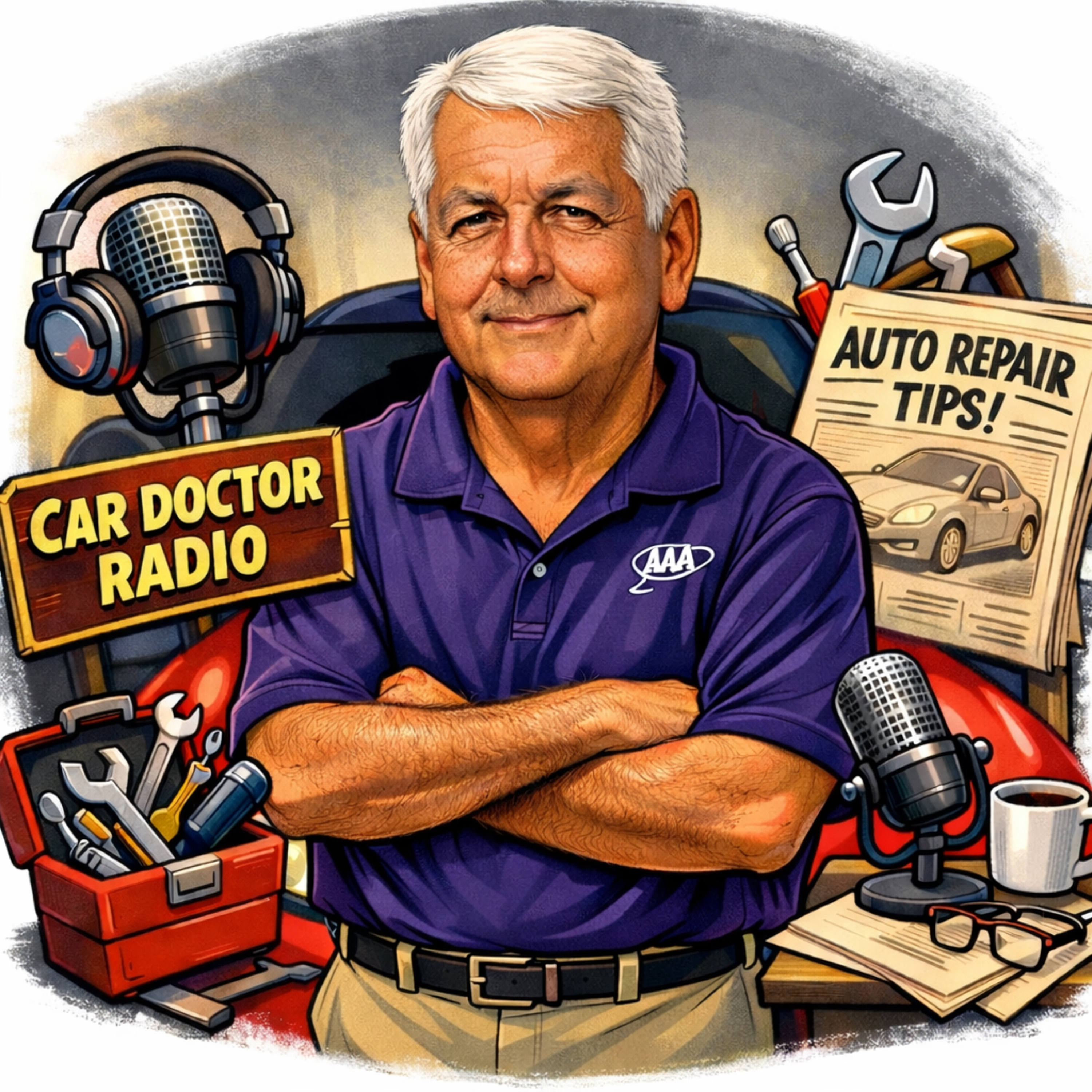
John Paul covers a busy Easter Sunday mix: a roundup of 2027 auto-show highlights (Chrysler Pacifica updates, Ford Expedition anniversary package, Genesis GV70 and wagon-like concepts, Hyundai off-road “Boulder,” Infiniti QX-65 coupe-style SUV, and Kia’s EV3/EV3-range talk), then a hands-on review of the 2026 Nissan Armada Pro-4X. He praises the twin-turbo V6, towing (8,500 lbs), comfort, and tech, but questions the value versus the Infiniti QX80. The call-in segment debates raising ethanol to E15 and its effects on mileage, performance, and fuel systems. A tool review wraps up with Harbor Freight’s Bauer 20V cordless 3A ratchet, praised for controlled nut-spinning and DIY convenience within its torque limits.
On this Easter Sunday while dinner is in the oven we talk about the 2026 Nissan Armada, did tool test of the Bauer 20-volt battery ratchet. We also did a recap of the NY Auto Show and chatted with our listener family
"And good Sunday morning everyone and welcome to another edition of the car doctor program on award-winning 95.9 W-A-T-D on this Easter Sunday. Yes, we're live on Easter Sunday. We're live every time."
The Porsche 959 is a very high-performance sports car. The podcast brings it up because it’s a famous car known for being technologically advanced for its time. People mention it when discussing important performance cars from the past.
The Porsche 959 is a legendary high-performance sports car known for advanced engineering and its place in motorsport-era technology. The podcast’s mention is brief, but it signals the car’s importance as a standout machine in automotive history. It’s discussed because the 959 is often referenced when talking about performance milestones and engineering breakthroughs.
"And this is the time of the year that I always used to go to the New York Auto Show. And the New York Auto Show was always one of those things that I enjoyed going to."
The New York Auto Show is a big event where car companies show off new cars. The host is saying it was fun not just for the cars, but also for the extra events and people you could meet.
The New York Auto Show is a major North American event where automakers display new vehicles, concepts, and technologies. The host describes it as a yearly tradition and notes that it used to include brand invitations and additional activities beyond the main exhibits.
"So, you would go to the show but if you were on the right list, which I wasn't always, you would get invited to different things. So, you would be invited to, you know, Chrysler would do something or Nissan would do something..."
Nissan is a car company from Japan. They sometimes invite people to special events when there’s a big auto show going on.
Nissan is a major Japanese automaker that often hosts events and media previews around big auto shows. In this segment, it’s mentioned as one of the brands that invited the host to activities beyond just walking the show floor.
"...or, you know, I saw some great entertainment because, you know, Ford invited me to something and there was some great entertainment."
Ford is a big car maker in the U.S. The host is talking about how Ford would invite him to special events during the auto show.
Ford is a major American automaker that frequently participates in large auto shows with product reveals and brand events. The host mentions being invited by Ford to something, emphasizing the show’s entertainment and networking side.
"But also, it was about the cars. Subaru, I know, did something that was pretty interesting and that's where you got to like chat with some of the people..."
Subaru is a car company from Japan. The host is saying Subaru did something interesting at the auto show.
Subaru is a Japanese automaker known for its all-wheel-drive systems and popular models like the Outback and Forester. In this segment, it’s mentioned as doing something interesting at the auto show, highlighting how brands differentiate their event programming.
"And the next year, they really didn't have anything to say, so they made a PT Cruiser convertible. Wasn't all that hard to change. Cut the roof off, make it two doors, put a fake top on it."
A convertible is a car where you can open up the roof for open-air driving. The host is saying Chrysler basically created a new variant by changing the roof.
A convertible is a body style where the roof can be removed or folded down. The speaker describes Chrysler’s approach to creating a “new” model by cutting the roof and adding a convertible setup, which is a marketing-driven way to refresh interest.
"But the budget friendly Voyager has been rebranded as a Pacifica in LX trim for those seeking more luxury."
Rebranded just means the same basic idea gets a new name or marketing label. The host is saying Chrysler is shifting the Voyager into the Pacifica lineup to sell it as a different kind of minivan.
“Rebranded” means Chrysler is changing the name and positioning of an existing vehicle or trim level to market it differently. In this case, the speaker says the budget-friendly Voyager is being marketed as a Pacifica in LX trim for more mainstream appeal.
"[420.9s] Hyundai also had a concept there called the Boulder.
[424.1s] It is a body-on-frame SUV.
[429.5s] It's the off-road SUV concept."
Some SUVs are built like trucks: there’s a strong frame underneath, and the body sits on it. That usually helps with towing and off-road use, but the ride can feel different than a regular crossover.
A body-on-frame SUV uses a separate ladder frame underneath, with the body mounted on top. This layout is common on trucks and tends to be better for towing and rough-road durability, but it can feel less “car-like” than unibody crossovers.
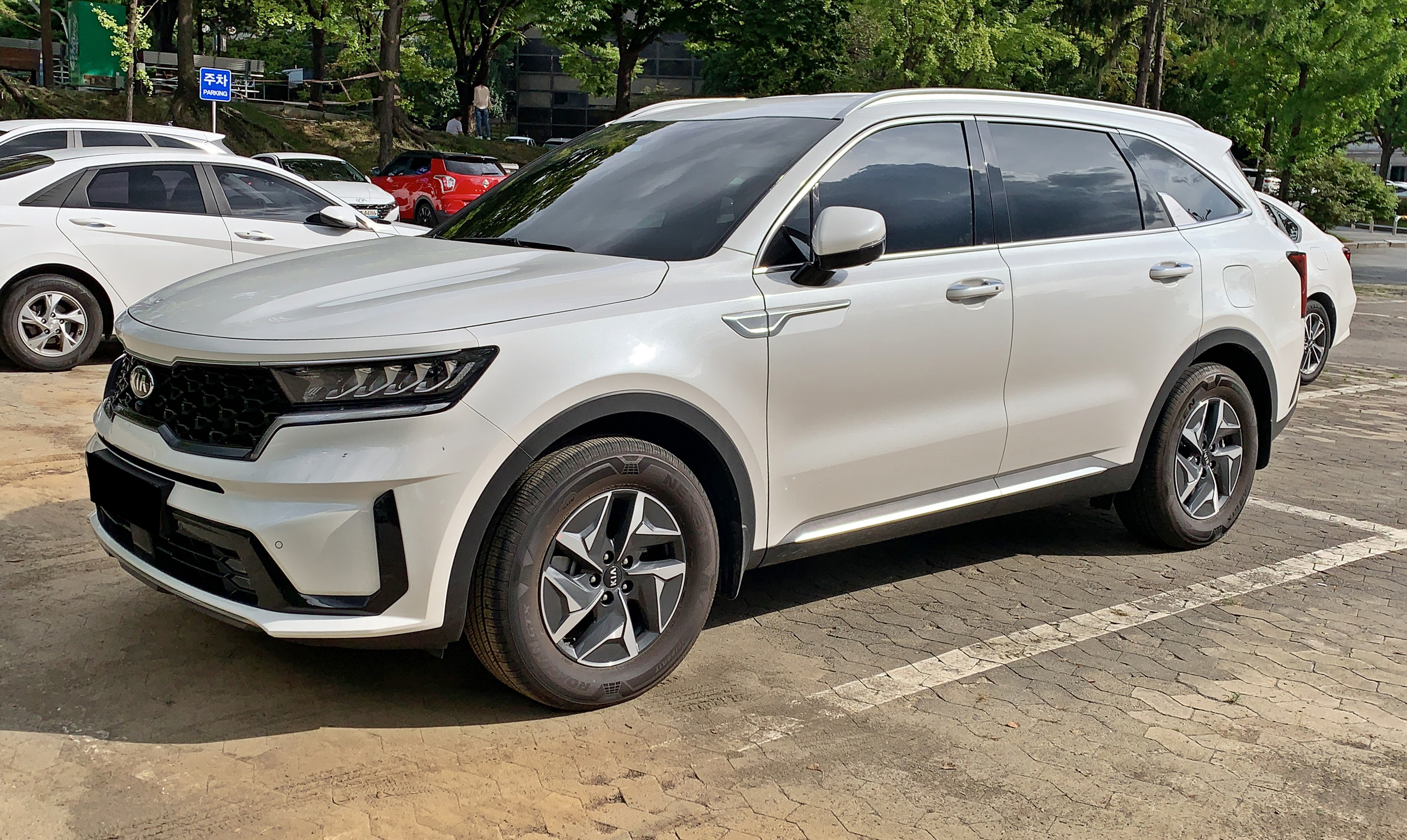
"[436.2s] Now, I've been saying for, I'm trying to think what year it was.
[445.6s] 2005 when Kia came out with the Sorento, which was a body-on-frame vehicle.
[455.8s] And I said that would make a pickup truck..."
The Kia Sorento is a Kia SUV model. The speaker is pointing out that around 2005, it was built more like a truck (with a frame), not like the more car-like SUVs people think of today.
The Kia Sorento is mentioned with a specific timeframe (“2005”) as a body-on-frame vehicle. Early Sorentos used a truck-like construction, which is why the speaker connects it to the idea of making it feel like a pickup.
"[480.0s] The concept was really interesting, it had 36-inch mud tires on it, interior design for adventure,
[487.9s] full-power retractable rear window, kind of like the forerunner to add ventilation kind of,
[495.2s] except if you've ever driven in a car with a retractable rear window..."
A retractable rear window lets you open the back glass to let air in. It can be nice for ventilation, but if exhaust gets pulled into the cabin, it can be unpleasant.
A retractable rear window is a feature where the rear glass panel can slide or fold to open airflow without fully opening the tailgate. The speaker also notes a real-world downside: exhaust can enter the cabin when driving with the window open.
"[495.2s] except if you've ever driven in a car with a retractable rear window, you know,
[499.0s] the carbon monoxide exhaust comes in the rear window as you're driving on the road,
[502.7s] but on the other hand, if you're just going slow and you have the windows open..."
Carbon monoxide is a harmful gas that comes from car exhaust. If it gets into the cabin while you’re driving, it can be dangerous, so it’s a real ventilation safety concern.
Carbon monoxide (CO) is a colorless, odorless gas produced by vehicle exhaust. If it enters the cabin—such as when a rear window is open and airflow pulls exhaust inward—it can be dangerous, which is why the speaker calls out the issue.
"[523.2s] You could flip up the rear glass, which most cars don't have that anymore,
[528.2s] or most SUVs don't have that, but whether it was by accident or on purpose,
[534.4s] the edge of the rear hatch window was exactly even with the top of the dash."
This means the back window can open upward by itself. It can help you load things and let air in without opening the whole back door.
“Flip up the rear glass” refers to a tailgate design where only the rear window/glass panel opens upward, often while the rest of the tailgate stays closed. This can make loading easier and improve ventilation without fully opening the cargo area.
"But the new QX-65 has a sloped roof line, athletic styling, mid-size SUV that rivals the... I think Audi Q8 maybe, BMW X6, the Mercedes..."
The BMW X6 is a BMW SUV with a sloping, sportier roofline. It’s often used as an example of the “SUV that looks like a coupe” trend.
The BMW X6 is a “coupe-like” SUV that helped popularize the sloped-roof, sport-SUV look. Mentioning the X6 reinforces that the QX-65 is being compared to the same style of luxury competitors.
"It'll be a hybrid version for the first time.
So sort of the size of Mazda CX-30 where you won't find a hybrid."
A hybrid uses a gas engine plus an electric motor. The goal is usually better mileage and less gas use.
A hybrid uses both an internal-combustion engine and an electric motor/battery to improve efficiency. Adding a hybrid option can change fuel economy expectations and how “easy on gas” a vehicle feels in daily driving.
"Subaru is offering a solution to one of the complaints often faced by more rugged wilderness models.
They aren't what you'd call easy on gas."
“Easy on gas” refers to good fuel economy—using less fuel for the same distance. The speaker says rugged wilderness models often aren’t efficient, which is why a hybrid solution is attractive.
"Of course, the Forester Hybrid will be more efficient, but it lacks the increased ground clearance, which I think is only half an inch. Subaru vehicles all have like eight and a half inches of ground clearance..."
Ground clearance is how high the car sits off the ground. Higher clearance helps when roads get bumpy or uneven.
Ground clearance is the distance between the road and the lowest part of the vehicle’s underbody. More ground clearance helps with driving over bumps, ruts, and uneven terrain without scraping.
"All-terrain tires, upgraded suspension, dynamic traction management. People do take Subaru's off-road."
All-terrain tires are made to work on both regular roads and rougher surfaces. They usually grip better on dirt, gravel, and sand than regular tires.
All-terrain tires are designed to handle a mix of pavement and light off-road surfaces. They typically have more aggressive tread patterns and tougher sidewalls than standard highway tires.
"The long-awaited design change of the Volkswagen Atlas was shown at the Auto Show, fully redesigned, sleeker, more upscale-looking. A couple things to current Atlas on, expected change, three-row seats."
The Volkswagen Atlas is a big family SUV with three rows of seats. They’re talking about a redesign that Volkswagen showed at an auto show, with changes meant to make it feel more modern and upscale.
The Volkswagen Atlas is a three-row midsize SUV built for families. In this segment, the host discusses a long-awaited redesign shown at an auto show, including a more upscale look and expected updates like three-row seating.
"A couple things to current Atlas on, expected change, three-row seats. A lot of people like the Atlas because you should see it next year."
Three-row seats means there are seats for more than just the front row. It’s what you want if you regularly carry a bigger family or friends.
Three-row seating is a layout that allows a vehicle to carry more passengers—typically up to seven or eight depending on configuration. It’s a key selling point for family-focused SUVs like the Volkswagen Atlas.
"A long list of safety driver assistance features like adaptive cruise control, lane keeping assistant,
which I shut off because I hate it."
Adaptive cruise control is like regular cruise control, but it also reacts to the car in front of you. If traffic slows down, it can slow you too.
Adaptive cruise control (ACC) automatically adjusts your speed to maintain a set following distance from the car ahead. Unlike basic cruise control, it can slow the vehicle when traffic tightens, reducing driver workload.
"A long list of safety driver assistance features like adaptive cruise control, lane keeping assistant,
which I shut off because I hate it.
Traffic sign recognition, which reminds you of, which is, I guess, you know,"
Lane keeping assistant helps the car stay in its lane. If you don’t like how it nudges or warns you, you can turn it off.
Lane keeping assistant (LKA) helps keep the vehicle centered in its lane using cameras and steering inputs. Some systems provide gentle steering corrections or alerts; drivers may disable it if it feels intrusive or makes corrections they don’t agree with.
"Traffic sign recognition, which reminds you of, which is, I guess, you know,
you're driving along speed limits 55 on a two-lane busy road,"
Traffic sign recognition is a system that reads road signs using a camera. It can remind you of things like the current speed limit.
Traffic sign recognition uses a camera and software to identify road signs (like speed limits) and display them to the driver. It’s meant to reduce missed speed-limit changes, especially on busy roads where signs appear frequently.
"It had a retail price of $81,675, and that included destination charge."
Destination charge is the cost to ship the car from where it’s built to the dealership. It’s usually added to the price you see on the window sticker.
A destination charge is the fee automakers add to cover shipping the vehicle from the factory to the dealership. It’s typically included in the sticker price and can vary by brand and model year.
"Yeah, my question concerns is they're going back to the ethanol... They want to increase it from 10% to 15%... What ethanol is, and what we found out when they added 10% ethanol back years ago..."
Ethanol is a type of fuel alcohol mixed into regular gas. When the percentage goes up, it can affect how well your car runs and how much fuel you use.
Ethanol is an alcohol fuel additive blended into gasoline to raise octane and reduce reliance on petroleum. In higher blends (like 15%), it can change fuel economy, drivability, and how deposits form or get cleaned in the fuel system.
"It's an L88 clone. It's got a, you know, a solid with the high compression 454 in it."
An “L88 clone” means the Corvette is built to look and act like a special high-performance L88 version. It may not be the exact original parts, but it’s trying to get that same vibe and performance.
An L88 clone refers to a car built to resemble the Chevrolet Corvette L88 package, which was known for aggressive performance hardware and higher-output potential. Clones vary widely in how closely they replicate the original parts and calibration.
"I ran it at the drags up at the, up in New Hampshire there. And I guess when they had a Corvette day and the car ran low 12s and high teens."
Drag racing is racing in a straight line to see how fast you can accelerate. What’s in the engine and what fuel you use can make a big difference in results.
Drag racing is timed straight-line competition where cars accelerate over a short distance to measure performance. Gear ratios, engine build, and fuel quality all strongly affect how quickly a car can reach its best times.
"If you race, if you race a car that's made to run an alcohol, it's, they're blue. And they're made of a proprietary material."
Alcohol-based fuels act differently than regular gas. If you run alcohol, you usually need special parts so the fuel doesn’t damage rubber seals and cause leaks.
Alcohol fuels (like methanol or ethanol blends) behave differently than gasoline, especially in how they interact with seals and materials. Racing setups that run alcohol often require fuel-system components designed to resist swelling, hardening, or degradation.
"Home heating oil is getting more and more biofuel. And biofuel can be, you know, made from corn or whatever. And what there's, what the oil burner people are saying, you may have to go in and switch over to nitrile O-rings and stuff in your oil burner and oil tank because of the same reason."
O-rings are small rubber seals that stop leaks. If the fuel changes (like more biofuel), the “rubber type” may need to change too so it doesn’t swell or fail.
O-rings are circular seals used to prevent leaks in fittings, valves, and tanks. The speaker is suggesting that biofuel or alcohol exposure may require switching to nitrile O-rings because different elastomers handle fuels differently.
"And it had doors that, uh, they weren't Galwing, but what they do is they, they slid, they slid into the rear fender, right?"
“Galwing” usually means gull-wing doors that open upward. In this case, the speaker says the doors slide instead of lifting.
“Galwing” is a common nickname for gull-wing doors—doors that pivot upward like an airplane wing. The speaker is contrasting it with a different door style that slides into the rear fender.
"But this is, and I'll say right up front, this is Harbor Freight sent me this. Because I guess I whined somewhere about it."
Harbor Freight is a store that sells tools, often at lower prices than big-name brands. They sent the ratchet being reviewed in this segment.
Harbor Freight is a major U.S. retailer known for affordable tools and tool storage. In this episode, they’re the company that provided the tool for review.
"You don't want to ratchet with a lot of torque... It made too much torque... So torque output is sufficient."
Torque is the twisting force that loosens or tightens bolts. More torque isn’t always better—sometimes it’s safer to use a tool that applies just enough force.
Torque is the twisting force applied to a fastener. The speaker’s point is that too much torque from a ratchet—especially in awkward positions—can cause the tool to kick, jam your hand, or make you lose control.
"we had two big, giant air compressors. They were huge. ... because everything back then ran on air."
An air compressor is a machine that makes pressurized air. That pressurized air can power tools and inflate tires without needing electricity at the tool itself.
An air compressor stores and pressurizes air so pneumatic tools can run. In older shops, compressed air was the “power source” for lifts, tire inflators, and many tools because it’s reliable and can deliver steady pressure.
"[3215.0s] Marvel Mystery Oil
[3215.9s] we always joke about it.
[3217.0s] It's a mystery. Nobody knows what's in it.
[3220.8s] there's a little bit of kerosene."
Marvel Mystery Oil is a bottle of car fluid people add for lubrication and cleaning. The exact recipe isn’t always obvious, and it includes both oil and solvent-type ingredients.
Marvel Mystery Oil is an aftermarket oil additive/lubricant marketed for cleaning and lubrication. In the segment, the host discusses it as a “mystery” blend and notes that it contains solvents like kerosene/paint thinner plus oil components.
"[3249.3s] because I wanted to keep this thing lubricated
[3251.3s] and WD-40 evaporates
[3253.5s] so you can't use that.
[3255.7s] WD-40 is great for a lot of things"
WD-40 is a spray people use to loosen stuck stuff and keep moisture away. It’s not meant to be a lasting lubricant because it tends to evaporate over time.
WD-40 is a widely used water-displacing spray and light solvent that can help with freeing stuck parts. The host notes a key limitation: WD-40 evaporates, so it’s not ideal as a long-term lubricant for components that need ongoing lubrication.
Select text to request an explanation
W-A-T-D presents John Paul, the car doctor, All Things Automotive.
Have questions? Call or text 7-8-1-837-4900.
Now, here's John Paul, the car doctor.
And good Sunday morning everyone and welcome to another edition of the car doctor program
on award-winning 95.9 W-A-T-D on this Easter Sunday.
Yes, we're live on Easter Sunday. We're live every time.
I don't think we've ever not been live. I don't like to be.
It's either I'm going to be here or I'm not. That's all there is to it.
So, I'm here today and if you would like to join us, our phone number is 7-8-1-837-4900.
We have no guests for today so we will be talking to you
and we have a bunch of stuff to talk about, a car review, a tool review.
And this is the time of the year that I always used to go to the New York Auto Show.
And the New York Auto Show was always one of those things that I enjoyed going to.
Some people used to go, you know, there was always, back in the old days,
there was a lot of different events that went along with the auto show.
So, you would go to the show but if you were on the right list, which I wasn't always,
you would get invited to different things.
So, you would be invited to, you know, Chrysler would do something
or Nissan would do something or, you know, I saw some great entertainment
because, you know, Ford invited me to something and there was some great entertainment.
But also, it was about the cars. Subaru, I know, did something that was pretty interesting
and that's where you got to like chat with some of the people that you've met over the years.
And I actually kind of missed that because a lot of those people have retired now
but some of those people are still around and some of them I only know from here, from the radio.
Like John Vincent and Alex Quanton from US News, they had a pretty good rundown
of the things they liked at the auto show.
So, I'm just going to kind of go over those.
For 2027, Chrysler brought out their kind of refreshed Chrysler Pacific minivan
and that is the only vehicle Chrysler offers right now, which is sort of puzzling, I guess.
In fact, someone wrote to me just recently that they've always owned Chrysler vehicles
and they wondered what's going on with Chrysler. Will they survive?
I think they will. I think it's too iconic a name.
You know, if I was running Chrysler, which good thing I'm not,
I think I'd try to make Chrysler like a Lexus or an Acura or something.
You know, the old days where, you know, people drove Chrysler and said,
oh, it's a Chrysler. It's not a Plymouth or a Dodge.
I try to make them unique and different and luxurious.
What do they have to say here? The logo fits the vans aggressively restyled.
It's the Pacifica minivan. It says line up to sport a new illuminated wing badge.
I kind of remember when Plymouth or Chrysler wasn't doing very well.
Let's face it, they haven't done well off and on in their history.
But the PT Cruiser was like one of their hits, sort of.
And the next year, they really didn't have anything to say, so they made a PT Cruiser convertible.
And that was their big thing to show at the auto show.
Wasn't all that hard to change. Cut the roof off, make it two doors,
put a fake top on it. All of a sudden it was a new model.
But the budget friendly Voyager has been rebranded as a Pacifica in LX trim
for those seeking more luxury. There's a pinnacle that debuts a blue agave Napa leather interior.
Hmm. Sounds nice, I guess.
But it competes with the Odyssey and the Sienna.
Pacifica remains the hauling king thanks to its stow-and-go seats, which fit nicely in the floor.
It's kind of... that is an interesting concept
because the second row seats actually fold up and drop into a compartment in the floor.
The problem is most people use a compartment for storage of other stuff.
So when you want to go use it, you got to take all your other stuff out so you can store the seats.
But... and it's... they killed the plug-in hybrid, which...
I kind of like that. In fact, that actually won an award with the New England Motor Press.
Kind of the same thing out of Ford. For 2027, Ford showed the 30th anniversary package of the Expedition.
The full-size SUV has been on the market for 30 years and to celebrate the Detroit automakers offering a 30th anniversary appearance package,
which will be the only version of the Expedition available with the Ford blue ember metallic paint.
So, specialty kind of thing.
The color was exclusive to the Mustang Dark Costs, the contrasting paint, large 22-inch wheels.
22-inch wheels. We're seeing those all over the place.
The Expedition is currently the top-rated model of their SUV ranks, if you remember last week's or last week's interview.
So, they like it a lot.
Genesis, which, you know, a few years ago nobody knew what a Genesis was.
In fact, the Genesis was a sub-model of Hyundai, but now it stands out on its own as a premium brand.
Following the introduction of the G70 Prestige Graphic trim at the Los Angeles Auto Show in November,
Genesis is applying the same treatment to its best-selling GV70 compact crossover,
meant to give the SUV a sportier personality.
Personality or sporty-ish, kind of wonder.
But it holds its top spot.
Again, it's considered by U.S. News one of the best.
They had a really good-looking concept, something called the Genesis G90 wingback.
I don't know if they'll ever make it here, but it is sort of a sleek wagon, and I somehow believe that wagon's going to make a comeback.
I think people are getting a little tired of SUVs you have to jump up into.
Now, certainly compact SUVs are easier to get into, lower to the ground, don't offer the same space.
People want the bigger vehicle for more stuff, but all of a sudden they become more of a challenge to get in and out of.
So the Genesis may be there, and in Europe, wagons do pretty well.
Hyundai also had a concept there called the Boulder.
It is a body-on-frame SUV.
It's the off-road SUV concept.
Previous both a production SUV and a mid-sized pickup.
Now, I've been saying for, I'm trying to think what year it was.
2005 when Kia came out with the Sorento, which was a body-on-frame vehicle.
And I said that would make a pickup truck, and the folks from Kia at the time said,
well, you know, it's kind of a thinking move, but it's interesting to see that now that Hyundai may be building a,
what I would categorize as a mid-sized pickup.
You know, 2030 is a long ways away, it's four years away, but it'll be interesting to see what happens.
The concept was really interesting, it had 36-inch mud tires on it, interior design for adventure,
full-power retractable rear window, kind of like the forerunner to add ventilation kind of,
except if you've ever driven in a car with a retractable rear window, you know,
the carbon monoxide exhaust comes in the rear window as you're driving on the road,
but on the other hand, if you're just going slow and you have the windows open,
it is kind of nice to have all the windows open.
And also the idea of retractable window makes it easy to load longer things in there.
That's one of the things I miss about, it was the Sorento that I owned.
You could flip up the rear glass, which most cars don't have that anymore,
or most SUVs don't have that, but whether it was by accident or on purpose,
the edge of the rear hatch window was exactly even with the top of the dash.
So if you went to Home Depot or Lowe's and got a 12-foot long 2-by something,
you could set it up on the dash and then run it all the way back with the rear window open
and you didn't have to worry about it falling out, which was kind of nice.
So it'd be interesting to see what happens.
What's to say here? Well, currently a concept.
The boulder signals Hyundai's intent to graduate from a suburban runabout crossovers
to competing with off-road icons like the Bronco and the Wrangler.
Infiniti showed the new QX-65.
Luxury SUV buyers can't seem to get enough of crossovers that look like coupes.
This one looks like a coupe.
So does that make it like a station wagon?
I don't know.
I don't actually like this four-door coupe concept.
To me, a coupe is always going to have two doors.
Mustangs are always going to have two doors.
The Mustang Mach-E, like it a lot.
I don't like calling it a Mustang.
Call me old-fashioned.
But the new QX-65 has a sloped roof line, athletic styling, mid-size SUV that rivals the...
I think Audi Q8 maybe, BMW X6, the Mercedes, whatever they call their one that's like that.
Exterior features a textured grille meant to evoke Japanese bamboo
and a metallic accent line running down the sides.
It doesn't look like bamboo to me, but that's what they say here.
Kia EV3.
Taking its cues from this flagship EV9, putting its best bits into a package that fits into tight spots and tight budgets.
The all-new EV3 is a successor to the totally fine but not particularly exciting Nero EV.
The electric compact crossover is expected to have 320 miles of range,
which is quite a bit more than like the Nissan Leaf or...
The Leaf would be a good comparison, doesn't have that.
But we're starting to see more and more EVs that have that 300-mile range,
which is sort of that magic number that people feel comfortable with.
Tech forward cabin, both a 30-inch display.
Do you really need a 30-inch display?
The one I really like, and I don't know if this will ever show up,
but on the floor of the show, and I saw this picture pop up a couple of times,
is something showed by Kia called a PV5 electric van,
and it was marked up as a New York taxi cab.
Nissan did this years ago with their little mini van.
They marked it up as a taxi cab.
And then they put it in a press fleet, which was kind of interesting.
Driving around in basically a taxi cab for a week was kind of fun.
It also had some weird features in it, like a PA system.
Not really a PA system.
I guess you could call it a communication system between you and the passengers in the back seat.
It did have the plexiglass shield between the front and rear seats,
just like a taxi cab would.
It was kind of interesting to drive, but it would be interesting to see what this is.
The PV5 is currently available in a cargo and five-seat passenger vans
in other parts of the world, where it's earned multiple awards for space and versatility.
It's not unlike the VW ID buzz, though Volkswagen's putting that on hold
because no one's buying it because, well, it's $85,000 and it has a pretty small range.
So compared to things we're seeing today, we'll have to wait and see.
Kia also showed the new Celtos, the 2027 Celtos.
Are you seeing kind of a pattern here where it used to be the auto show
was Chevy and Ford and Chrysler and a few imports and Jaguar and Mercedes
and we're out of all those vehicles.
Well, they're not at the auto shows.
I'm sure GM was, but the redesigned Celtos has a little bit more chunkier look.
It's kind of boxy looking.
It'll be a hybrid version for the first time.
So sort of the size of Mazda CX-30 where you won't find a hybrid.
Also, right now, the Hyundai Kona, you won't find a hybrid.
I'm willing to bet there will be one.
Alongside two four-cylinder engines, including a turbo of four,
so probably up over 240 horsepower would be my guess.
It looks pretty good.
A cool feature, this is according to the folks from US News and World Report,
the touchscreen infotainment system supports Netflix and YouTube streaming while parked,
which I'm sure someone will figure out how to jailbreak that and make it
so you can watch movies while you drive which is wrong
and we'll get into distracted driving in a bit.
2027 Subaru Forester Wilderness Hybrid, which Craig Fitzgerald,
who I've known for 30-some odd years, described it as Subaru's way to print money.
Subaru is offering a solution to one of the complaints often faced by more rugged wilderness models.
They aren't what you'd call easy on gas.
Subaru estimates the Forester Wilderness Hybrid would get 25% better gas mileage
than the Forester Wilderness, which is 26 combined,
and it would put it in line with the standard Forester, which is 29.
Of course, the Forester Hybrid will be more efficient,
but it lacks the increased ground clearance, which I think is only half an inch.
Subaru vehicles all have like eight and a half inches of ground clearance,
If it was my $20,000, I'd rather, you know, if I could save $20,000,
get essentially, to me, what felt like the same vehicle.
I would go with the Nissan Armada, but I don't necessarily need a premium nameplate.
Anyway, there you go.
That's the 2026 Nissan Armada, big, capable, better than ever.
If you're shopping for a full-size SUV, you know, put it on your test drive list.
We have all kinds of people on the phone waiting for us, so why don't we take a break?
And when we come back, we will talk to Bob, Ken, and Joe, maybe?
Give us a call at, nope, never mind he disconnected whoever that was.
So, we'll figure that out when we come back.
You'll listen to the car doctor program on 959 WATD.
Hey there, folks. It's Quinn Kelly reminding you to tune in Sunday night at 5 for the South Shore's first voice in sports talk radio, the Sports Exchange.
Unmatched coverage of local high school action as well as a relatable voice on all things Boston Pro Sports,
we've got you covered live at 5 every Sunday night.
Have a question for our host, Miss Last Week Show, or just want to share a great sports story you can find us on Twitter, at SE, on WATD.
But remember, mark your calendar, folks, and we'll see you Sunday night at 5 for the Sports Exchange on 959 WATD.
Make an appointment Sunday morning at 11 for John Paul, the car doctor, on 959 WATD.
Now, back to the car doctor.
And welcome back to the car doctor program. If you'd like to join us, 7800-837-4900, let's talk to Joe.
Joe, good morning.
Good morning to you.
And happy Easter.
Same to you.
Yeah, my question concerns is they're going back to the ethanol.
Oh yeah.
They want to increase it from 10% to 15%.
Only for 20 days?
Yeah, if you believe that.
Anyway, my experience with it is you get worse mileage with it, lower performance, and I've been, you know, I drove a lot of different vehicles.
I used to work, my job was driving a lot on the road.
Let me turn my radio off.
Anyway, my own experiences, you get a couple of miles less per gallon, less performance.
The automakers are totally against it.
They said it's going to disrupt your fuel systems.
It's caustic.
It causes trouble all along the fuel line from the tank to the lines right to the engine.
The other thing is, I don't know what kind of additive you'd have to put in for your upper cylinder lubrication.
With these modern cars, with the tolerances they got, the old thing would be like pour some Marvel mystery oil into the tank.
And if you do that, you're going to end up clogging your injectors and everything else.
I wonder if you consider doing a show sometime, you know, do some research on the pros and cons of this.
Okay, here's what I read just recently about this.
Most cars from 2000 up should be okay with the 15% ethanol.
What ethanol is, and what we found out when they added 10% ethanol back years ago, is ethanol is a really good cleaner.
So if you have a bunch of junk floating around in your fuel tank, it's going to wash it out and it's going to end up in places where it was never really designed to go.
And do exactly what you said, clog up maybe fuel pumps, fuel injectors, things like that.
Also for people with boats, it melted fiberglass fuel tanks, which sounds almost impossible, but claims it did.
Old fuel lines, back years and years ago I had a 65 Chevrolet Corvair.
And I replaced every fuel line in it, except the piece that went between the fuel fill tube and the tank.
So after a couple of tanks of ethanol based gasoline, all of a sudden I was filling it up one day and gas is leaking out on the ground.
I looked down and there's this leak out of the fuel line.
And I assume it was because that was, you know, it was probably 1965, you know, it was old at the time, but it seemed like it chewed right through that old fuel line.
So not good.
The other thing is, you know, my summer car, my summer ride is a 69 Corvette.
It's an L88 clone.
It's got a, you know, a solid with the high compression 454 in it.
Now, you know, bouncy four speed M22, 411s in it.
The car would cop life.
I guess.
You know, it's a great street machine.
It's tractable.
You know, you can drive it in traffic and stuff.
When I used to, you know, I've had the car for 33 years.
You know, I put in, I put all these new parts in, new front to back, new suspension, everything else.
Anyways, when I could get 94 Sonoco, I mean, that stuff was like race fuel.
You know, I could, from an easy role, I could punch that thing and carry the front wheels 50 feet.
No, you know, with the 411s in the back.
I ran it at the drags up at the, up in New Hampshire there.
And I guess when they had a Corvette day and the car ran low 12s and high teens.
Wow.
And that's a street machine.
I drove it up and drove it back.
Yeah.
So, the other thing, my, my reading and research over the years, I'm 80 years old now.
I've been building cars since the 60s.
And the, my experience was, I read all the magazines.
What I did was I changed the, all the gaskets.
I got a Hawley 850 double bumper.
Yep.
And I used the night trial gaskets.
If you race, if you race a car that's made to run an alcohol, it's, they're blue.
And they're made of a proprietary material.
But you can buy gloves made of that stuff.
But I put that in, I had any, I bet no fuel problems whatsoever.
It's, it's, it's funny.
I was, and this is another challenge we're going to be facing, I guess.
Home heating oil is getting more and more biofuel.
And biofuel can be, you know, made from corn or whatever.
And what there's, what the oil burner people are saying, you may have to go in and switch over to
nitrile O-rings and stuff in your oil burner and oil tank because of the same reason.
Right.
It's classic.
Yeah.
Yeah.
And I agree with you that the more alcohol you put in, unless your car's been specifically tuned to run on alcohol,
which most cars aren't, you are going to see a little bit of fuel economy drop.
You know, if you said to me, you built your engine to run on ethanol, to run on 85% ethanol,
you could probably get another 200 horsepower out of it.
But you didn't.
So, you know, it, so it has to go in the opposite direction.
So I agree with that.
It'll be interesting to see what's going to happen.
One of the major pipelines that brings fuel from to, to the East Coast has already said they're not even going to bother.
They're just going to run the same mix of fuel, even though they have this waiver to be able to run ethanol,
higher percentage of ethanol, they're not even going to bother doing it.
It's a political thing.
You know, I don't want to go deep into politics.
Yeah.
Don't talk politics because I don't know anything about it.
They want to, the people, the guys in the Midwest in Nebraska that grow corn, they don't use it.
They use diesel to, to, to plow the fields to grow the corn.
So that's what, that's their experience with it.
One last, one last thing is years ago I was on the road in Eastern Mass here and they went by a gas station and I needed fuel.
So I was waiting for somebody at a town hall.
I ran over there to refuel.
And on the side of the, the, uh, his garage, he had a vehicle and it was a Darren.
You ever heard of a Darren?
Yeah, I think so.
It's a two-seater.
It's early fifties.
I'd say anywhere from 51 to 53.
I believe it had a, might have had a Chrysler small block, you know, a small Chrysler Hemian, like a 331 or something like that.
And it had doors that, uh, they weren't Galwing, but what they do is they, they slid, they slid into the rear fender, right?
Exactly, yeah.
Yeah.
Yeah, it was a, it was a, I think it was really a Kaiser Darren maybe?
As I recall.
I believe, yeah.
Yeah.
This was many years ago.
I just wanted, I don't think it's too plentiful because that's the only one I ever saw or heard of.
I, I've only, I've only seen them, I saw one at a museum and one at like a really fancy car show once.
And it was, um, it was probably, it may have been the first, one of the first fiberglass cars?
Yeah, I believe it was, yeah.
Yeah, yeah.
No, an interesting car.
I will tell you, um, and this isn't, again, I don't talk politics because I'm an idiot.
I don't know, I don't know anything about politics.
Um, but I was years ago, I went on vacation to some, uh, this town called Puerto Morales in Mexico.
And I was there and odd, there was a corn convention going on.
And I was like, you know, I, I, I speak very little Spanish.
I can usually order beer and ask where the bathroom is and that's probably the extent of my Spanish.
And, but I'm, yeah, but I was, I was standing there staring at some pop up sign, you know, trying to figure out what it all was.
And, you know, I had pictures of corn and whatever.
And this guy comes over, um, some kind of farmer person.
And I said to him, you know, I was looking at the sign.
I said, and he said, oh yeah, you know, we harvest corn and, um, and I said, oh, you know, you're using corn for food and using corn for this and using corn for that.
And I said, it seems like you're using corn for everything but fuel.
And he looks at me, he goes, in Mexico, corn is such so important to our culture.
We would never use it to make fuel.
Right.
And I'm like, you know, you're right.
I mean, corn is used, you know, we grow, we feed ourselves with it, we feed all our animals, livestock, chickens, turkey and stuff like that.
So if we're going to make demands for that, it's just going to increase the price overall.
You know, I agree with you.
I agree with you.
But again, we don't talk politics.
So, okay.
Yeah.
All right.
All right.
Good enough.
All right.
Thanks, Joe.
Yeah.
Enjoy your show.
Thank you.
All right.
Have a good day.
Happy Easter.
All right.
Take care.
All right.
Told we'd do a tool review.
We don't do that very often.
But this is, and I'll say right up front, this is Harbor Freight sent me this.
Because I guess I whined somewhere about it.
But they sent me a Bauer 20 volt 3A drive cordless ratchet.
I don't have, years ago, years and years and years ago, I bought a battery powered cordless
ratchet and it was terrible.
Battery life was terrible.
It really, it wasn't good.
This one uses a 20 volt battery.
I don't know what that one was.
It was battery wasn't even removable.
I think it was made by skill.
But this uses the 20 volt battery platform that a lot of Bauer tools use.
And I would say they're really trying to focus on serious DIYers, maybe professional grade
in there somewhere.
It's really designed for maintenance, that type of thing, equipment repair.
Looks pretty reliable.
It certainly speeds up assembly and disassembly.
It is not designed.
And I was reading some of the reviews on Harbor Freight's website.
And on their website, people were complaining, oh, it doesn't have any torque.
You don't want to ratchet with a lot of torque.
Because I had, you know, back in the old days, I had air ratchets.
And I had a 3A air ratchet.
And if you were trying to loosen up some starter bolt, you had your hand up between
an engine block and a frame.
And that bolt didn't want to move.
Your hand got jammed between the ratchet because you couldn't control it.
It made too much torque.
I also had a little 3A strive snap on air ratchet that I really liked it a lot
because it was relatively quick.
It had no real torque.
It was meant to be a nut spinner.
It was nothing more that you could take out spark plugs.
You could, I don't recommend it, but you could put in spark plugs with it
because it didn't have a lot of torque.
It wouldn't do any damage.
And it was small and compact and easy to use.
I don't like a lot of torque in some place where you have to worry.
So torque output is sufficient.
But, you know, it's really meant for you to crack the nut loose.
And that's what you use it for.
It won't replace an impact gun.
It won't replace a, you know, a long ratchet or a breaker bar.
It's not made for that.
It's made to, you know, spin nuts and bolts back out.
It has a nice variable speed trigger.
It has decent control.
It works pretty well as a full-size ratchet.
Is it perfect?
It's a little big and chunky.
The handle size and balance feels pretty good.
With the 20-volt battery, yeah, it's a little heavy,
but if you're, you know, laying under a car
and you've got to loosen up a bunch of stuff
and you don't have room to put, you know, a regular impact gun,
it's nice for that.
So the extra weight, I think, is certainly manageable.
I have a half-inch drive battery impact gun
that has all kinds of torque.
I think it's 1,000 foot-pounds of torque or something.
And it works good.
In fact, it loosened up a neighbor of mine
was loosening up a big nut on the back of a flywheel,
and he tried breaker bars and cheater bars
and couldn't get it to move.
Tried this big impact gun.
It weighs almost 10 pounds.
It was heavy.
This isn't bad.
It's heavier than some of the compact 12-volt ones,
but I thought the weight was manageable.
It was not fatiguing.
I thought it did good.
The head profile is reasonably slim.
I think it will fit in, you know,
if you're doing, you know, engine work,
pulling transmission pans off,
some suspension work and you need to get under there.
I think it works good.
The forward-reverse selector is positive.
Trigger response, I think it's pretty good.
It's not jumpy.
I've seen some of the other ones that are pretty jumpy.
This one isn't it.
The real advantage, if you already have the Bauer 12-volt system,
you're already on that platform.
And this is always my recommendation with most battery tools.
Buy something that you already have and you're already using.
I have here mostly the works stuff.
You know, I have a works weed eater.
I have a works leaf blower,
which I use mostly for blowing sawdust out of my shed
when I'm working in the shed doing stuff.
I have a works air compressor for it.
So I'm already on the works battery platform.
So if you're already on the Bauer battery platform,
stay with it.
It makes sense.
You already have it.
Chances are you're already going to have a battery that's fully charged
and ready to go.
This is my first Bauer battery tool.
It will encourage me probably to maybe think about adding to it
with something different.
Maybe some other Bauer tool that maybe a 20-volt,
something non-automotive,
maybe a 20-volt finish nail or something.
It's always kind of, you know, every once in a while
I need to nail something.
I have a little air compressor and a Brad stapler handy.
You do a lot less damage sometimes with an air nail
or air stapler than you do with a hammer and nail
because you don't have to worry about splitting things.
But to drag that out to tack three pieces of molding up,
kind of annoying, having a battery once nice.
So this may encourage me to go out and buy something like that.
The standalone battery is also pretty reasonable
compared to some of the premium van brands.
So, you know, for that reason, I think it's pretty good.
I think it's pretty solid feeling.
For the price point, I think it was like $60.
You know, is it as good as, you know,
can you compare it to a Snap-On or Milwaukee?
Probably not, but it also doesn't feel disposable.
I think it's good.
I think with basic care, you know,
you're not going to throw it across the shop floor.
Although it probably could survive,
but I don't recommend doing that with any tool.
But I think you should hold up really well,
especially do-it-yourself kind of stuff.
In a shop, maybe it's a tool you don't go to all the time,
but it's something when you need it, it's going to be handy.
So I think if you're doing, you know,
basic repair and maintenance, it's going to be handy for that.
Just taking stuff apart, you know,
even if you're doing it on a bench,
it's going to be good for that.
You know, these days with all the battery tools
that are available and as good as they are,
whether they're Bauer or others,
you know, Harbor Freight also has their premium line.
But I think all of those tools
you almost don't need a big giant air compressor.
I remember one of the first shops I ever worked in,
we had two big, giant air compressors.
They were huge.
And I think the second place I went to work,
we had a good-sized air compressor that was tucked in a closet,
so it wasn't quite as noisy,
but you know, the sound of an air compressor running,
one of them we had was so old, it was actually water-cooled,
so it had water that ran around it,
which also made it fairly quiet.
But still, these were big, huge air compressors,
because everything back then ran on air.
You know, air was there for the lifts,
air was there for all the tools,
air was there for all the tire inflators.
Today, you know, battery tools,
you know, if you have a battery, you know,
a half-inch impact gun, battery 3-inch impact gun,
battery ratchet, you almost don't need an air compressor.
Sure you do, because it's always handy to have one
to air up a tire, something like that,
but you know, some good battery tools,
you can have a little small air compressor
for just blowing stuff off and doing things.
It's amazing what a small air,
you can use an air chisel with a small air compressor
because you're not using a lot of air at one time.
You'll never, an air ratchet requires a decent-sized compressor,
a half-inch impact gun.
Not, you can get by with it,
as long as you kind of let it rest in between,
but things that spin, air ratchets spin a lot,
sanders, buffers, things,
you can't run those on small compressors.
But these battery tools, like this,
like this Bauer one from Harbor Freight,
does a good job.
I think it's, you know, if you're,
if you're somebody who reaches for an air ratchet
once in a while and you're like,
you know, I'm tired of dragging up my compressor,
I'm trying to work out in the, you know,
garage or in the basement at night,
and I don't want to have the compressor running
and disturb the rest of the house,
this battery one can do a pretty good job.
It's quiet, does its job.
Again, you're not going to use it for,
you know, if you have really rusted
nuts and bolts you're dealing with,
it's not going to work for it.
Really tight, you know, clearances.
It's a little tight for that,
because it is a relatively long handle,
which gives you the leverage to loosen stuff up.
Again, what I like about it,
good trigger controls,
operate smoothly.
If you're already on that
20-volt platform,
you're good to go.
And it's usable as a manual ratchet,
a little awkward but usable.
It's not compact,
it's compared to some of the 12-volt ones,
and limited torque,
but again, I don't want
high torque ratchets.
So,
serious do-it-yourselfers,
yeah, it's a good choice.
That extra one in the shop,
it's a good choice.
Will it replace the professional grade tool?
Not every day,
but if you're somebody who reaches for
a cordless ratchet,
air ratchet sometimes,
I think this would be a good choice.
As long as you understand its limits
and use it right, I think it delivers
more than enough performance.
And for the price, I think it was,
like I said, I think about $60
without the battery,
but if you're already on the platform,
it makes it really easy.
So there we go, there's a review of our
20-volt
3A-strived cordless ratchet
from Harbor Freight, the Bauer line.
And there you go. Why don't we take another break,
pay some bills, my name is John Paul,
this is the Car Doctor Program.
On this Easter Sunday, where we're live,
join us at 7-8-1-837-4900. We'll be right back.
Hey guys, it's Lexi James.
And we're Cryer Creek.
And welcome back to the Car Doctor Program
on 959WATD.com.
Search for Twilight Showcase on Facebook.
And visit twilightshowcase.org.
Twilight Showcase,
tonight from 8-10
on 959WATD.
Make an appointment
Sunday morning at 11
for John Paul, the Car Doctor
on 959WATD.
Now, back to the Car Doctor.
And welcome back to the Car Doctor Program
on 959WATD.
Next week,
we were supposed to be talking to Lauren Stoney
and
she was
she's an influencer.
And she, but she's
she doesn't work for Penn's Oil
and she was going to talk to us
about car care stuff.
Apparently she had more stuff to influence
so she canceled. But I'm also
working with
not Harbor Freight
because it's a completely separate
thing, but it's Harbor Freight
tools for schools.
And I wanted to talk to them
because
if you're a school teacher, you know a school teacher,
a voc tech teacher, whatever the case is,
you have the opportunity
to write up
kind of a summary of what you do
and it's a little intensive. It can take
you a couple hours.
It can take you
more time than that.
I've heard
people say it takes 30 hours
but you have a chance they're giving away
some
serious money.
And what's interesting about it is
part of it goes to the
and I want to say it's $100,000
they're giving away $500,000
and
$70,000 goes to
the school and
$30,000 goes to the instructor.
So personally, the instructor gets like
$30,000.
But it's called Harbor Freight tools for schools.
It's a charity, Eric Schmidt
who founded
Harbor Freight. It's his charity.
So it's completely separate from Harbor Freight.
So it has the same name
but it's a completely separate entity.
But
you have till, I think
the middle of
May or the beginning of May
to send your application in.
But if you have a chance to
get
you know $100,000
or schools or tool scholarships
or something, pretty good.
So we have that coming up.
We're trying to put that together
for next week.
The week after
we're talking to
Michael Parsons.
He's the guy from Source 1 Financial.
He's the one who tries to help people
when their vehicles get totaled to be able to get the maximum
amount for the vehicles. So we have
him coming up.
This is a little bit of an odd one
and it isn't completely
confirmed yet.
But we're talking sunglasses
the beginning of May.
And somebody said, what are you talking sunglasses?
I'm like, have you ever driven in the sun?
You know,
spend time outdoors in the sun?
Your vision is so key to everything you do
having a good pair of sunglasses.
And I have
I have a pair of Oak Lease
that
I've had for years now.
I also have a pair of Arabians
that I remember. I must have bought them
35 years ago.
They're aviators
which have come
and gone out of style over the years.
And I remember
buying them at, I think it was BJ's
or something. My wife yelled at me
for spending $20 for sunglasses.
I still have them.
These sunglasses
are
their hobby, the same people who make
water sports stuff.
And one pair
is they're actually made
from recycled
kayaks, which I just kind of thought
was kind of neat. I thought it was a little
interesting story there, but as I get older
to me it seems more important to have
decent sunglasses.
When I didn't buy these
ultra expensive Ray-Bans
that I spent
$20 for
or the
Oak Lease which
I think
I found them floating in the water.
I'll have to think about that a little bit more.
But I ended up replacing the lenses.
But anyway
so I have them.
Let's see if we can go real quick to Tom and Kingston
at least wish Tom a happy Easter.
Tom, good morning.
Good morning, happy Easter to you.
We've got a couple of minutes left.
There's too many Tom's calling in at that time.
I know, got all confusing.
I guess I'm in a little dilemma now.
What do I do with the quart
of
Marvel Mystery Oil? I can't put in my gas tank anymore.
I just do it a little at a time.
Put it in the engine.
You can still add it.
I mean it's a lubricant.
I wouldn't add
a whole quart of it all at once.
I'd add a little bit at a time. I think you'll be fine.
Does it do anything?
It's a lubricant and a cleaner.
So it doesn't hurt.
Marvel Mystery Oil
we always joke about it.
It's a mystery. Nobody knows what's in it.
When you look what's in it, there's a little bit of
there's a little bit of kerosene.
A little bit of like paint thinner sort of stuff.
A little bit of oil.
A bunch of little parts.
A little dab will do you.
But
I still have some
just a plane.
I have some in an old fashioned oil can
that I use for stuff.
When I want actual real oil
I had to take apart
a lock yesterday.
And I was looking
for real oil
because I wanted to keep this thing lubricated
and WD-40 evaporates
so you can't use that.
WD-40 is great for a lot of things
that doesn't work good for locks.
Doesn't work good for cleaning linkage sometimes.
What about a lawn mower?
If you have two gallons of gasoline that you're using
a lawn mower can you put a dab of that stuff in there?
Can't hurt.
Listen, enjoy the weekend.
Alright, thanks Tom.
You too. Bye bye.
Yeah, I
believe in using a little bit of Marvel Mystery Oil.
I like it. I think it's a good product.
I use it.
The few air tools I have left
I use it for that.
Lubricates good. Good product.
Hey Jesse, happy Easter.
Happy Easter my friend.
Alright, for all of you
out there, happy Easter, happy
Passover, until next week
make sure you wear your seatbelt drive safely.
Be good to your car and if you do see an emergency vehicle
by the side of the road, slow down
or move over. It saves lives.
Talk to you all next week. Bye bye.
you
Request an explanation for:
4 cars
4 cars featured
Request an Explanation
Heard something you'd like explained? We'll add it to this episode.
Sign in to request explanations for terms you heard.
Want to learn more?
Browse our glossary for plain-English explanations of automotive terms, jargon, and concepts.
See something that's not quite right? Our annotations are AI-generated and can sometimes miss the mark.
Click the flag icon on any annotation to suggest a correction.