The Toyota RAV4 is a small SUV that’s meant for everyday driving and family use. It’s commonly shopped for in the used market because many people keep them for a long time. The podcast is basically asking what you should expect to pay for one that’s a few years old.
They’re talking about Tesla, the electric-vehicle brand. The main idea is that Tesla prices and availability can change fast, and dealers may not be willing to discount much.
They mention Georgia because that’s where the dealer they talk to is located. Local demand and inventory can change how fast cars sell and how much dealers discount.
The hosts are describing a split used-car market where some vehicles trade near new-car pricing (selling at original MSRP) while others depreciate sharply. This kind of divergence usually comes from differences in supply constraints, demand, and how many similar cars are entering the used market (like lease returns).
“Holding their value” means the car doesn’t lose its price as fast as other cars. Here, they’re saying Tesla’s limited supply helps keep resale prices stronger.
They’re talking about how the number of cars available for sale used can change when lots of leases end. They also explain that leasing popularity (“lease penetration”) affects how many cars come back.
At the end of a lease, you may be able to buy the car instead of returning it. The price is usually set ahead of time, so it can be a good deal if the car is worth more than that price.
A hybrid uses two power sources: a gas engine and an electric motor. In this discussion, hybrids are part of what’s driving customer behavior at the end of leases.
When you lease a car, the contract assumes the car will still be worth a certain amount at the end. That “end-of-lease value” affects your monthly payment and how the car holds up when you go to sell it.
A lease is basically a long-term rental with an end date. When the lease ends, the car usually comes back to the leasing company, which can increase the number of cars for sale used.
If lots of cars suddenly show up for sale used, there are more choices than buyers. When that happens, prices often drop—especially for the models that are arriving in big numbers.
Resale value is what the car is worth when you sell it later. Lease deals depend on predictions about resale value, so if it’s lower than expected, the deal can turn out badly.
Transaction price is what people actually pay when they buy the car. If that average price is higher than what the car is worth later, it suggests depreciation is worse than expected.
Equity is basically how much “extra value” you have in the car. If the car isn’t worth enough compared to what you’d have to pay to own it, you don’t have equity.
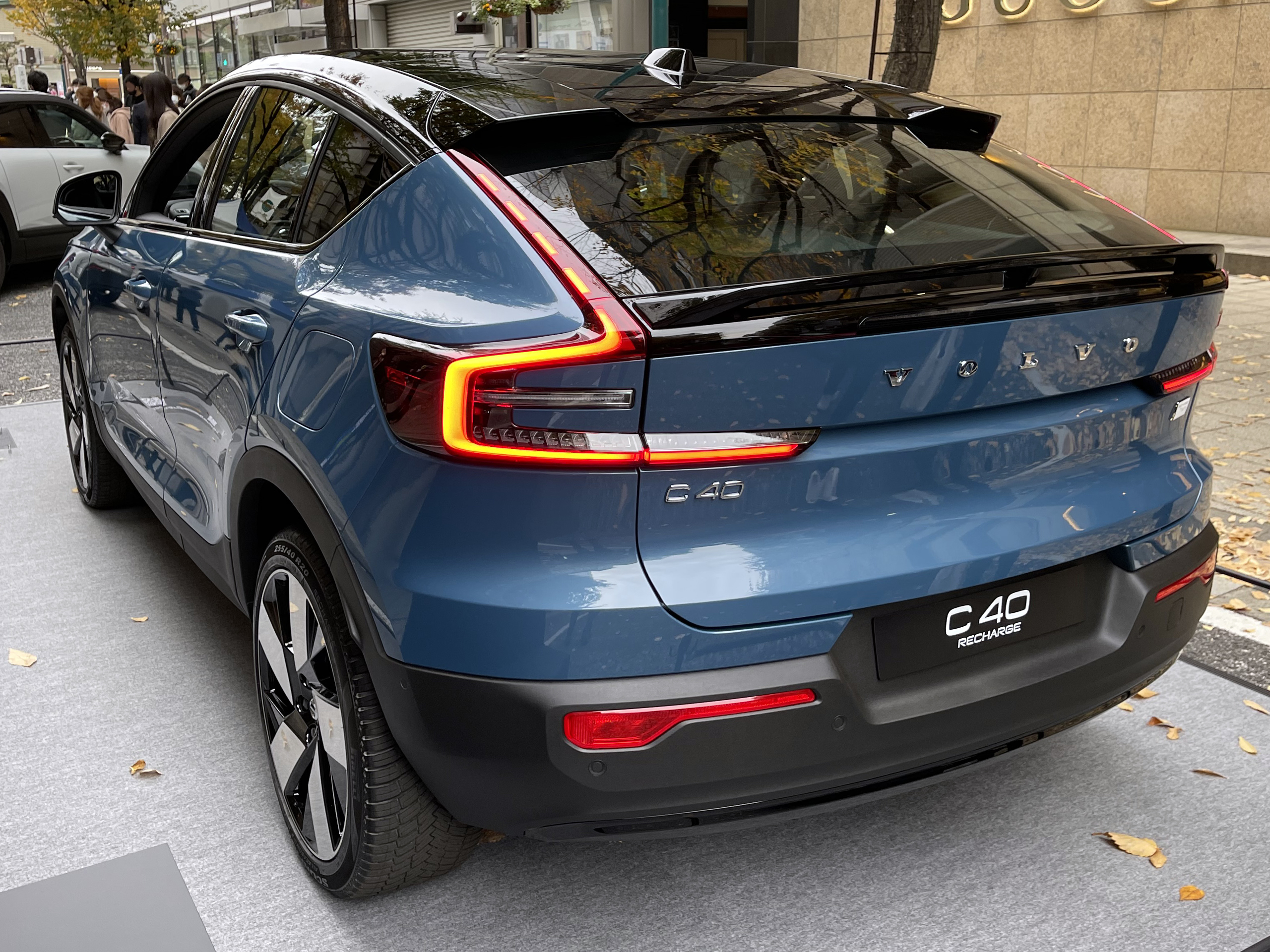
The Volvo C40 Recharge is Volvo’s all-electric SUV. The hosts are talking about how much people pay for it in real deals (especially leases) versus what it was originally priced at, which affects whether it can be a good “deal” later.
“Upside down” means the car is worth less than what you owe or what you expected it to be worth. If that happens, the market may offer discounts to move inventory.
The Hyundai Ioniq 5 is an all-electric SUV. It runs on a battery instead of gasoline, and it can be charged at home or at public charging stations. It’s often discussed because incentives can make it cheaper to buy, especially compared with what it costs after a few years.
The Hyundai Ioniq 9 is an electric car model mentioned as an example of a vehicle that may come with a big rebate. Big rebates can make the lease deal look better right now.
This is a way to group cars that were leased around the same time. When those leases end, that group starts showing up for sale, which changes what used cars are available.
A “demand story” means the market is mostly about what people want to buy. In this case, the hosts are saying more people want Teslas than other EVs, which affects availability and pricing.
Kia is another car brand that makes electric vehicles. The hosts mention it to say Tesla has been around longer, so people are more likely to consider Tesla first for a used EV.
Polestar is a company that makes electric cars. The hosts are saying it hasn’t been around as long as Tesla, so fewer people automatically think of it when shopping for a used EV.
For electric cars, the battery is the most expensive and important part. The hosts are saying people worry most about whether the battery will last or develop problems, especially on used cars.
This means how many cars are coming back from leases and showing up for sale. More cars coming back usually makes it easier to find a deal on the used market.
This is an electric SUV from Mercedes-Benz. In this discussion, it’s used as an example of a car that may be cheaper later because it loses value faster than people expect.
The Mercedes-Benz EQS is a luxury electric SUV. Instead of using gasoline, it uses a battery and electric motors. People bring it up in used-car discussions because the price can drop a lot after a few years.
Concept
depreciates like crazy
That phrase means the car is losing value quickly. The hosts are saying some EVs may get much cheaper sooner than people think.
“Current market value” means what the car is worth right now based on real prices. The speaker is saying some buyers can get it for 15% to 20% less than that going rate.
EV means electric vehicle—cars that run on electricity stored in a battery. In this segment, the speaker says EV deals and inventory are harder to find right now.
The Toyota Grand Highlander is a bigger Toyota SUV with three rows of seats. Here, the host is using it as an example of a car that’s getting a discount right now.
The Prius plug-in hybrid is a Prius that you can charge like an EV, but it also has a gas engine for when you need it. In this segment, it’s mentioned as an example of pricing/financing that may come with incentives.
That phrase is the financing deal: 1.9% interest for a loan lasting 72 months (6 years). Deals like this can make the monthly payment smaller, but the overall cost still depends on the full loan details.
Gas prices affect what it costs to drive a gas car. When gas prices change, people often change what cars they shop for, and that can move used-car prices too.
The idea is that used cars aren’t built from scratch like new cars. They show up when people replace their cars, so if people aren’t turning cars over, the used-car supply stays tight.
Supply and demand means: if there are fewer cars than people want, prices go up; if there are more cars than people want, prices go down. That’s why the number of cars available matters so much for used and EV pricing.
A 30-day average is just a “one-month average” to make the numbers less jumpy. It’s used to judge whether cars are selling faster than they’re coming in (or the opposite).
LIVE
It's noon here in Ventner City, New Jersey, in our nation's capital, Washington, D.C.,
and this is Carage Live for Wednesday, May 27th, with your hosts, me, Ray, hanging out
in my living room here in Ventner, and Zach, hanging out in the new office in Washington,
D.C. Oh, and look, is that a Marty Supreme shirt or just a Supreme shirt?
It's so good to see you handsome.
How are you today?
I'm doing fantastic, Dad.
I'm especially well because...
Yes?
We've got a guest joining us today.
I'm going to pull Josh onto the screen.
Josh Ramsey from the Carage team.
Josh, how are you today?
Outstanding, gentlemen.
Thank you.
How are you guys?
Super grateful to have you here with us.
For those of you in our community who do not know Josh, I'm going to pull it up on the
screen really quickly.
Go to carage.com slash concierge, boom, there it is, and on this page, go ahead and scroll
on down.
Now, usually I talk about getting a free consultation with our team, but today, Josh, I want to put
you on a pedestal.
You can meet the concierge team, the folks that help our members save in Josh's case,
almost a million dollars here so far in his time with Carage.
You can click into Josh's profile, delivering dreams to Driveways for decades and learn
more about his experience in the car business.
When you talk to your, when you have your consultation with Carage, if you're interested
in working with Josh, just let him know.
Just let him know because Josh today is going to drop so many nuggets and so much good information.
Did I build you up, Josh?
Well, that was too much, man.
I got a lot to live up to now.
I promise not to tear you down.
Guys, the thing I want to talk about with both of you today, very grateful to have both
of you, is this.
Edmunds put out a new report talking about the state of the used car market, and it's
actually good news.
Used car prices approach records, but steeper depreciation growing off lease inventory offers
some relief.
The big storyline here is this chart, and this chart from Edmunds shows us what's going
on with the average transaction price versus MSRP versus residual values.
Back in Q1 of 2022, Josh and Pops, the average residual value after three years for a used
car was 81% of its original MSRP.
In 2026 here, we're at 66%.
Josh, we'll ask the first question to you.
What are you seeing out there for car edge customers and in general, when it comes to
the used car market?
Is this Edmunds data helping you sleep easy at night or is it making you concerned?
No, I mean, it's definitely fluid to the market.
It's consistent.
Used car market is strong, but it's obviously going to get changed with a little bit of
the lease turn-ins, as we know about, and then, of course, the crunch of gas is transitioning
some of that to the EVs, which is crunching those as well, so yeah, I agree, 100%.
Oh my God, I'm going to be the contrarian here, okay?
And the reason I'm going to be the contrarian here is we have recently done searches live
on this very program, and we can show you the prices of used cars that have depreciated
like eight cents, okay, year over year.
So Edmunds can come out with that data that they have and say, oh yeah, they're transacting
at 34% lower than BS, the dealers did not get that memo, okay, and we've done it, we've
done two three-year-old cars, and the selling price today is like 88% of the original MSRP,
not 66%.
So yeah, I'm the contrarian, I'm the bad guy, the sky is falling, but I don't see it in reality.
And it's nuance.
It's nuance, right?
I agree, Ray, the gas prices as I indicate on the EVs, they're crazy right now.
You can't touch one, a hybrid, are you kidding me, a used hybrid?
They're MSRP for what it was two years ago.
So I mean, some of these vehicles, it's a different ballgame than what that reads to a
certain degree.
Some of the stuff, yes, it depends on the vehicle, I suppose, but today everybody wants
a hybrid, wants an EV because of the gas prices.
I would guess, I'm just going to guess, I'm going to spitball here, Josh, and you can hold
my feet to the fire.
But I'm going to guess, like one of the ones that you could get at a really, really cheap
price in comparison to MSRP would be like a Wrangler 4xE.
Okay, when those come back off of lease, yeah, you'll be able to buy a cheap 4xE from, but
other vehicles, not so much.
I mean, it has to do with, it is nuanced.
It has to do with the brand, okay?
And if it starts with a JEE and ends with a P on the end, that's brand-aid and holding
its value, okay?
But there are others looking at a used RAV4 that's three years old.
What are you going to pay for that in comparison to its original MSRP?
What about Tesla, Josh?
What are you seeing with Tesla?
I know Tesla prices must be highly volatile.
Are they tracking to the admin's data, depreciating significantly, or are they holding their values?
You know, 60 days ago, 90 days ago, that was probably accurate data.
It's almost like maybe some of that data is a little dated perhaps.
But I would say that maybe today or the last 60 days even, it's been unreal.
You can't find these vehicles.
I've got one dealer that I lean on pretty heavily in Georgia.
He does a lot of EV business, whether it be a Porsche or whether it be a Tesla.
And he usually will have 30 to 40 Model Ys available.
And I got two customers from Model Ys right now, and he has two on the lot.
So, they're selling as quick as they can get them, and dealers aren't wanting to negotiate
heavily on them at all.
So, it's a challenging market specifically for Tesla's.
But there's some good deals still to be had on EVs.
Toyota's offering 0% on some of their stuff.
You know where to look.
They're out there.
I think that on the use car side, what's becoming super clear to me is that there are
two very different markets out there.
Like, there's one market, which is use cars are selling at original MSRP,
which is Asinine and Crazy.
And Dad, to your point, we've done that on this show many times.
And I am interested with both of you on here today to pull up some Jeep 4xs.
Let's see what's happened to them after two or three years.
And we should look at that.
But then the other side of the market is, and included in that,
would be Josh, what you just shared with Tesla.
It sounds like Tesla supply is relatively short right now for Model Ys in particular,
you mentioned.
So, they're holding their value more less negotiable.
But then the other side of the market would be those 4xs.
Like, they are depreciating.
They are boat anchors.
It's interesting when you dig into more of the admin's data,
they're talking about an anticipation of a lot of lease returns
starting to impact the use car market.
I mean, Josh, you've been in the business for 20 plus years.
Dad, 40 plus years.
Between the two of you, between all three of us,
I think we average close to 20 years in the car business.
Between the two of you, I can't imagine you've ever seen a time
where use car inventory has gone as low as it did.
And so, obviously, there's been a crunch there.
But this off lease inventory could reset things a little bit.
And Edmunds does a great job showing you which brands
have the biggest lease penetration and which vehicles.
So, Dad, to your point, the Wrangler 4x,
it was leased 77% of the time when it was purchased.
And so, or when it was acquired by a customer.
So, there's about to be a ton of off-lease Jeep Wrangler 4xs,
which could be huge bargains, veritable bargains for consumers.
Yes.
One of the things when you read into that,
and we've discussed it in the past,
that there is a significant increase in lease returns
that are due to come back this year and next year.
Primarily, those are going to be EVs,
okay, because lease penetration overall
is still well below where the industry would like to see it.
At its high point, according to Edmunds, it was about 29%.
You know, I don't know.
When I was doing this stuff, it was usually in the low 30s.
32, 33% of your business was leases.
Well, the fact that it dropped to like 18%,
and it's crept all the way up to 20%,
it is there's still not enough vehicles coming back
to make up for the shortage of used cars that we had in the,
in 2022 and 2023 and 2024.
Yes, we'll see an increase in some lease returns.
If they are decent lease returns,
I still think that plenty of these customers are going to find out
they can buy their lease out at the end,
and it will be worth 15% to 20% more than what they have to pay for it,
and so they'll never make it to the dealer.
The dealer is never going to get his hands on that.
What do you think, Josh?
I mean, you nailed the head right there at the end.
Yeah, the hybrid stuff.
How many of our customers initially tell us that,
hey, if it makes sense at the end of the lease, I will buy it out, right?
The three-year payment's great,
and if the option doesn't look good, I'll turn it in.
But if it looks good, I'm going to buy it.
The economy is going that way,
or the market, I should say, is going that way.
Tesla's maybe not so much.
You know, it's an up-and-down cycle pretty heavily still,
and if you look back three years ago from today,
we were in that upcycle, Ray, as you indicated.
We went from 10% to 18%, right,
in a matter of probably six or eight months or less in a year anyway,
and now all those are coming back to us.
So, yeah, I strongly agree that most of those will be bought and kept
because of residual values.
Go ahead, Jack.
Edmunds gave us this data that ties into this conversation.
These are the most leased vehicles from, guess what, year 2023.
So these are the vehicles that most leases,
I mean, you guys are the experts on this,
but most leases are three years.
Not a lot of people do two-year leases.
Some people do four-year leases.
Most are three.
So these are the vehicles that at the highest rate will be coming off lease this year,
which should, I'm going to use this word gently here,
flood the used car market with inventory of these vehicles, of these vehicles.
And the reason I say that is because they put in here
the estimated average transaction price versus resale value.
These are examples of leased vehicles
where the customer does not have equity.
These are unequivocally vehicles where the leasing company is in the hole.
They said that this vehicle is going to be worth a certain amount,
and what this column on the right is telling you
is it's worth this much less or this much more.
Look at the Volvo C40 Recharge.
87% of transactions on Volvo C40 Recharges in 2023 were leases.
The original MSRP was $61,000,
which is crazy if you think about the C40 and what that competes with.
The estimated residual value was supposed to be $32,628.
The actual average transaction price for those vehicles in Q1, 2026 was $25,468.
There's about to be a flood of Volvo C40 Recharges on dealer lots.
And if you're looking for cheap affordable mobility, that could be an option.
And then you can see the rest of the list here.
And if I scroll down, it's just more EVs.
It's just more EVs.
And we're talking upside down by $14,000 in some cases on the EQS
SUV. So these would be potential shopping opportunities for customers.
At least that's where my mind's going.
I'm curious what you guys think about that.
I guess, Josh, in particular, you mentioned Tesla.
Should people be looking at Tesla alternative EVs?
Because this would suggest there should be some negotiability there.
100%. That's why I brought up the Toyota thing.
You know, Toyota is not known for EVs necessarily,
but they're starting to break into that market.
And they do have some good options.
You know, the VZ, I think it is.
It's been out for a year or two, possibly three.
But anyways, 0% for 72 months on a Toyota.
That's unheard of.
And it's an EV.
So it's a pretty good deal, in my opinion.
You know, the prologue's got a huge discount, rebate to $7,500.
There's some other models out there like that.
I think the Hyundai Ioniq 9, 10 grand rebate.
So all that stuff's going to equate to the residual value.
And if you buy a car that's got a low incentive today,
and then all sudden it's got a $10,000 incentive tomorrow,
it's got to all make sense at the end, right?
And so that's why these are lease vehicles.
And specifically, same with Tesla.
You know, Tesla turn-ins go back to Tesla,
unless as Ray indicated to, they're not worthy.
And then they'll go to a dealer for reconditioning.
But yeah, there's going to be some bargains out there.
Once these things get turned in, and Zach just kind of shared the hot list.
So I hope everybody got a screenshot.
Yeah. Well, I think Edmunds for that hot list,
because what you're indicating what's going on on the new car side
is just a precursor for what's to come three years later down the line.
When those vehicles get turned in as leases,
like the Edmunds data is, you had a point earlier, Josh,
like what you're seeing today in the market
looks a little bit different than what Edmunds is reporting on,
which makes sense because this is their Q1 analysis.
This is looking in the rear view mirror 90 days ago.
The information you have is from helping customers this morning.
And so it is really interesting to think about
not only are what we're looking at in some cases from last quarter,
or in the case of the 2023 lease vintage cohort, that's three years old.
What's the market going to look like in three years?
You've got some pretty good indicators there.
But sorry, Dad, I cut you off.
Well, I was going to say, for people who are looking for veritable bargains,
what do I mean by a veritable bargain?
Something that has depreciated dramatically over the last three years.
Their opportunities will be in used EVs as those leases come due,
because nobody in their right mind is going to pay the residual value for those vehicles.
It is like, it would be like, hey, how can I spend 30% more than the value
of what it is that I want to buy?
Oh, I could buy my current EV lease out.
Well, nobody's going to do that.
So that indicates to me, in my mind, looking at some of these things,
that there will be, if not a flood, a major increase in the availability of used EVs
during the second half of this year and into 2027.
And there will be opportunities for people who are looking for relatively inexpensive vehicles.
The problem for a lot of those people is they might not have anywhere to charge them.
Because the people that typically are looking for 20 to $25,000 vehicles might not necessarily have
a house, might live in an apartment that doesn't have an EV charger.
So there could be some difficulties, but there will be opportunities,
but it will be on the EV side.
I don't think it will be necessarily on the Peeheve side.
I don't think it will necessarily be on the hybrid side so much,
but I think full battery electric vehicles.
Because they used artificially high residual values in order to create a cheap lease payment.
May I ask you a question, Josh, because I have a little bit of dissonance.
I'm a little confused because I agree with everything my dad said,
but then that dealer that you work closely with usually has 30 Tesla Model Ys on their lot,
and they only have two right now.
Why do you think there's a push for Teslas right now?
Or holding their value better, or at least in terms of transaction prices?
What do you think the Tesla story is?
Well, it depends if you're a Nelon fan, right?
I guess you could come up with all kinds of answers there, but
I mean, they are kind of the leader in it, if you will, kind of like the China market as their
leader. And not only that, but there's a lot in the news about that company surrounding
currently, right, with the IPO coming and all that.
So for SpaceX, but I think that helps it.
It's just a natural boost for it.
And then on top of it, I mean, fuel prices obviously, right?
I mean, that's probably the biggest game changer of the all fit in the room.
And the supply of them, there's plenty of them available, right?
How many Volvo's recharges are out there?
There's minimal, right?
So people aren't aware of them.
The Volvo brand doesn't do a good job of marketing at all, in my opinion, of course,
but there's some variables there.
But my main answer would be what's in the news today and what people know about,
what they hear about, and then of course, the fuel prices.
So it's nothing, it's a demand story.
Like people want Teslas instead of Volvo EVs.
Like that's kind of what I'm hearing from you.
Absolutely.
And I agree with that because I think, you know, when you say to people in EV,
name an EV, the first name that's going to come to mind is a Tesla.
It is and has been the most popular selling electric vehicle in this country for quite some time.
And so, and it's got a history, it really does have a track history,
much more so than say Hyundai or Kia or Volvo or Polestar.
You know, Tesla's been around, what, 15 years?
Polestar and Hyundai and Kia and those with full EVs have been around for five years.
So there's a history associated with Tesla that people can look at and go,
yeah, I think on a used vehicle front, this one would make more sense
because I know a little bit more about it.
There's history for me to look at that indicates that these should be road worthy for years and
years and years and they have minimal battery issues, which I think is the main and most
important thing when it comes to an EV.
So I think that's why you find a shortage of Teslas at the moment because let's face it,
if I was going to think about a used EV, first one I would think about would be Tesla.
Yeah, I mean that's just me.
They definitely have the mind share of most people.
I want to pull up one more data point from Edmunds because I think it's a huge component
to quantify what we've talked about today.
It's that second bullet point, helping the cause as a projected surge in off lease availability
this year and I want to quantify it.
We're talking more than half a million off lease vehicles coming into the market already that
we've seen a 25% increase.
So that is the magnitudes of scale that we're talking about here.
We're not talking an extra 1,000 cars, 2,500,000 cars that are coming back.
And again, when we look at the data, those that have lost the most value that are going
to be sold as used cars are a lot of those EVs.
So if you've always wanted to drive a Mercedes-Benz EQS SUV but you convinced yourself that spending
$140,000 three years ago wasn't the right move, congrats.
Another Mercedes-Benz has become a boat anchor that depreciates like crazy.
You could probably go pick one up this year or next year for probably like 50 grand.
It's already depreciated that much.
So to me, it's just important to quantify how big this is.
The off lease story is non-trivial.
It's a big number.
Yes, there are a half a million leases coming due.
Okay, and I still believe that the vast majority of...
Now, we know that 25.7% of those leases that are coming due are EVs.
So that leaves, what, 74.3% that are non-EVs.
And I've got to believe that the residual values on most of those non-EVs are still
considerably lower than what the market value is for those vehicles.
And I'm going to sit here today on May 27th and say the vast majority of that 74.7%
will never see the light of day at a dealership because their current driver will end up buying
it because they can buy it for 15% to 20% below current market value.
The ones that are going to make it to market are that 25.7% that are EVs.
I hear you.
Josh, while we've got you, and they've got a lot going on today, so I don't want to keep you
too, too long.
What do you see with car edge customers that you're working with?
What are your reads on the room in terms of use car prices, new car prices?
Any key takeaways from the work you've been doing helping customers day in and day out?
You know, it's the same old adage.
The number one reason that we're utilized is to have a successful car deal, whether it be
price, whether it be the experience, that's always our goal.
But currently, a third of my clients probably are either, I would say nearly half of my clients
probably are EV or hybrid.
The ones that are EV, we're struggling right now to find the deals for them.
We're struggling to find the units.
The availability is really tough.
The Toyota stuff's actually loosened up a little bit.
We're starting to see some availability and some discounts there.
Some of our partner dealers are definitely on board with providing us, I just did a deal
the other day, a $2,000 discount on a Grand Highlander.
That's amazing.
We don't get into the Prius plug-in hybrid, the plug-in version, 1.9% for 72 months,
and a discount maybe sometimes of $1,000 to $2,000 for customers.
So, it's starting to go more towards the customer's buyer's market on the new car stuff,
which will help eliminate some of the used car pressure, hopefully.
Are those customers that you have that are shopping for EVs?
Are they new EVs or used EVs?
All used.
All used currently.
That's why it's challenging.
So, I wonder if they were in the market in six months, if it would be a totally different
story, or do you think it would still be the same?
I guess, yeah, that is the question.
Do you think the market for used EVs, what we've been talking about primarily here,
will look meaningfully different at the end of this year than it does today?
Because it sounds like it is tough for you in your role helping people get car deals done today
to source used EVs.
But everything Edmunds is saying is it should get better, at least maybe not for Tesla,
but for the other brands.
Excuse me, I, with EVs, you could just about write something down and be wrong,
because it's just that volatile, right?
It's like trying to predict the stock market.
I mean, you can look at the graphs and guess from there.
I don't know, it's really based on right now the fuel prices.
That's the main driver.
And people didn't care before about the cost of fuel like they do now.
So, of course, naturally they're going that way.
In six months from now, if all that's eliminated, it could be a different story.
And if those leases come on board, more elimination.
So, the customer was to say directly, Josh, would you recommend buying used EV right now
or waiting six months?
I'd say you probably got a pretty good chance at gambling and winning,
because right now we're at the top and there's only room to go down.
But we've also thought that before and then see these car prices still go up.
So, I'm with you, and you could write it down and probably be wrong.
Yeah, it definitely feels like a coin foot for sure.
You know, one of the things that I've been saying recently is if you find a vehicle that you like
at what appears or feels to be an affordable price for you,
you're probably better off buying it today than waiting.
Because we haven't really seen a significant retreat in used car pricing.
We just haven't.
We had that time during 2022 where prices skyrocketed.
And they've come back to earth a little bit.
But they're still 25% higher than what they had been prior to when things went nuts.
So, I just think if you find something you like and it checks out
and it seems affordable today, buy the damn thing today rather than gamble.
You know, I can tell you my experience at the casino when I gamble,
I contribute more often than I win, okay?
There's a reason those casinos are so big because there's more losers than winners.
And I think that's pretty much what's going on with new cars and used cars at the moment.
I mean, I look at auto news every day and automotive news.
And the average market price today is what?
$15, $1800 higher than it was at the same time last year.
So, it's not like we're seeing...
Okay, I'm sorry, it's only $1889 higher this year than last year.
And $772 higher than it was 30 days ago.
So, you tell me, if you're gambling, why would you think that those prices are coming down?
It don't seem to be.
But I do want to just pause at one thought, which is, if your prices do exactly the opposite of
what they've been doing, maybe there's the retreat.
You've said it all along, Dad and Josh, it's super validating to hear you say it as well.
The used car market and consumer shopping behavior is super, super, super correlated
to what happens to gas prices.
Oh, absolutely.
So, there are these wild cards, which I do think is so why it's so important to stay so informed
in today's car market because these things do have meaningful changes in pricing and fast.
Yeah. One thing I always like to say to customers, there's no such thing as a used car factory.
So, it's a supply and demand crunch.
And new car manufacturers have gotten some, I should say, have gotten better at that supply
chain.
So, Toyota specifically, right?
So, that's only going to scale the used car market as well.
And so, naturally, everything's going to be more crunched up.
And if you look at the supply versus how many vehicles are sold on a 30-day average,
the math really doesn't math.
So, that's naturally going to cause it to economics 101, supply and demand.
And right now, supply and demand on EVs is high.
So, naturally, what do you get?
You get a hard buying market.
Some of my customers are settling on an EV because we can't find them what exactly they want.
Fascinating. Really, really interesting.
Again, folks, friendly reminder, back at CarEdge.com.
Click on Car Buying Service up at the top.
And usually, I'm asking you to get a free consultation.
Chat with us.
Schedule time to talk to us or have Car Edge call.
You can also just call 402-74-46203 and talk to our team right now.
In particular, I want to bring your attention to scrolling down and meeting our team of concierges.
Josh, who's been on the program with us today,
can learn more about him and the work that he's done.
And when you have your consultation call, if you want to work with Josh,
feel free to ask to work with Josh.
You can learn more back at CarEdge.com.
Click on Car Buying Service.
Josh, we appreciate your insights.
As always, thank you so much for coming on the show with us.
Any parting shots, parting thoughts for the community?
No, thank you for having me.
It's always fun to be here.
It's always fun to see Ray and talk with you guys and get to share my up-to-date,
I guess what I'm going through.
I guess last for all the customers listed and the folks out there,
it's every deal is different.
And when a customer comes to me for their help,
that's what it's all about, is listening to their wants and needs
and any objections that they've experienced
and trying to overcome that and deliver a successful deal.
So we always talk about the nuances,
but generally if it's directed towards everybody's deal specifically.
And that's what we like to do is help you specifically.
So I look forward to anybody I can work with.
Appreciate you, Josh.
Appreciate all the help you give, folks.
Thank you, Josh.
It was great having you here today.
Have a great day, Josh.
See you, Josh.
So fun.
So great to get to talk to members of the team who are helping folks out.
That's really, really awesome.
Dad, the use car market's confusing.
You know, that's one of the things I'm thinking about right now
when I look at what's going on in the Edmunds data.
Even the Edmunds data is confusing and it's super, super nuanced.
So I think that's one of the key takeaways for our communities.
The use car market is not simple today
and it hasn't been simple for about half a decade.
And I think what makes it so confusing, if I may, is we're discussing Edmunds data
that's 90 days old.
Josh had a great point with that.
Such a good point with that.
Yeah, and the world has changed dramatically in the last 90 days.
We have seen gasoline prices spike over the last 90 days.
That changes everything for people, especially when more and more people
were finding it more and more difficult to be able to sustain themselves
on the incomes that they have based on the higher price of things.
So it's great to look at the Edmunds data.
It's hard to really extrapolate anything from it,
because all that data was before we have all this crap that's going on now.
Incredible, man.
From Mark, did Josh volunteer or was he voluntarily told?
I received an awesome message from Josh maybe two weeks ago.
Hey, what I'm seeing in the use car market with Tesla's right now is crazy.
Can I come on the show and talk about it?
So anyone on the Car Edge team, if they want to come on the show,
they're more than welcome to.
We love sharing insights.
And from Jenny Lang, dad.
Wow.
Is this the Jenny logo I think it is?
Well, since she phrased it high in kids, I would think it is.
Jenny, how the hell are you?
May I tell a quick story about Jenny?
Jenny was my general manager at Acura North Scottsdale.
And I think people who watch this show will be able to relate to what Jenny said.
And Jenny and I had to go to an Acura conference in Chicago.
We were in the Phoenix area and we had to fly to Chicago.
And, you know, it's what a two and a half, three hour flight, whatever it was.
And Jenny and I are talking.
And finally, I don't know, after about two hours or so, Jenny turned to me and she said,
do you ever shut up?
And I think the answer to that question is, well, no.
So Jenny, I apologize for that even today.
And it's so good to hear from you.
I hope you're doing really, really well.
So yeah, this is my dad's former boss.
Swinging by.
I met Jenny.
A handful of times as well.
Say Jenny.
And I think I spoke to you, Jenny, maybe a couple of years ago as we were getting
courage off the ground.
You were really supportive.
So very kind.
Very kind to see you supporting us here in this way.
So thank you for that.
We really appreciate it.
Absolutely.
It was great to hear from Jenny.
Absolutely.
All right, guys, that's the show for today.
We're back tomorrow with more Car Edge Live.
Then again, we're tuning up for, or gearing up, excuse me, for Friday, side by side from
Ventner City, New Jersey.
So can't wait to be by my dad's side for the upcoming weekend.
We're going to celebrate his 75th birthday.
We're going to hang out, go to the beach.
It's going to be a good whole time.
But we will be back tomorrow with more Car Edge Live like this.
And we hope you tune in.
Absolutely.
Thank you, everybody, for being here today.
Thank you, Josh, for being here today.
And we look forward to seeing you all back here again tomorrow.
About this episode
Used-car pricing is staying stubbornly high, but the story is getting more nuanced: residual values are shifting, lease returns are poised to change supply, and EVs are driving volatility. The hosts walk through Edmunds data comparing average transaction prices to MSRP and residuals, including how residuals can diverge from what buyers actually pay. They also debate Tesla’s resale behavior, talk lease buyouts and incentives, and connect the whole market to gas prices and charging access.
Today on CarEdge Live, Ray and Zach discuss the latest from Edmunds. Tune in to learn more! Hosted by Simplecast, an AdsWizz company. See https://pcm.adswizz.com
for information about our collection and use of personal data for
advertising.