
EDMUNDS Just Put the Entire Auto Industry On ALERT | Episode 1079
About this episode
Used-car pricing is staying stubbornly high, but the story is getting more nuanced: residual values are shifting, lease returns are poised to change supply, and EVs are driving volatility. The hosts walk through Edmunds data comparing average transaction prices to MSRP and residuals, including how residuals can diverge from what buyers actually pay. They also debate Tesla’s resale behavior, talk lease buyouts and incentives, and connect the whole market to gas prices and charging access.

Jeep Wrangler
"price in comparison to MSRP would be like a Wrangler 4xE. Okay, when those come back off of lease, yeah, you'll be able to buy a cheap 4xE from, but"
The Jeep Wrangler 4xe is a hybrid Wrangler you can plug in. It uses electricity for part of your driving, but it’s still built to handle off-road use.
Jeep Wrangler 4xe is a plug-in hybrid version of the Wrangler that combines a gasoline engine with electric drive. The “4xe” name signals it’s designed to be able to run on electricity some of the time while still keeping Wrangler-style off-road capability.
MSRP
"price in comparison to MSRP would be like a Wrangler 4xE. Okay, when those come back off of lease, yeah, you'll be able to buy a cheap 4xE from, but other vehicles, not so much. ... What are you going to pay for that in comparison to its original MSRP?"
MSRP is the original “sticker price” the manufacturer lists. They’re comparing what people pay now for used cars versus that original price.
MSRP (Manufacturer’s Suggested Retail Price) is the sticker price a manufacturer recommends. The host is comparing used-car prices to MSRP to discuss depreciation and how well different vehicles hold their value.
off of lease
"Okay, when those come back off of lease, yeah, you'll be able to buy a cheap 4xE from, but other vehicles, not so much."
“Off of lease” means the lease is ending and the car is coming back to be sold again. When lots of these cars hit the used market, prices can change.
“Off of lease” refers to vehicles returning at the end of a lease term, when they typically enter the used-car market. Lease returns can create supply that affects used pricing, especially for models that have strong or weak residual value.
holding its value
"And if it starts with a JEE and ends with a P on the end, that's brand-aid and holding its value, okay? But there are others looking at a used RAV4 that's three years old."
Holding value means the car doesn’t lose its resale price as quickly. They’re saying some brands keep demand better, so used prices stay higher.
Holding value means a vehicle’s resale price stays relatively high compared to what it cost new. The host ties this to brand perception and residual value behavior, implying some brands maintain demand better than others.

Toyota RAV4
"...lue, okay? But there are others looking at a used RAV4 that's three years old. What are you going to pay..."
The Toyota RAV4 is a small SUV that’s meant for everyday driving and family use. It’s commonly shopped for in the used market because many people keep them for a long time. The podcast is basically asking what you should expect to pay for one that’s a few years old.
The Toyota RAV4 is a compact SUV that’s widely known for being practical and for holding value well, which is why it frequently appears in used-car pricing conversations. In the podcast context, the focus is on what a buyer might pay for a RAV4 that’s about three years old, compared with other options. That makes it a natural example when discussing affordability and depreciation in the used market.
Tesla
"What about Tesla, Josh? I know Tesla prices must be highly volatile. Are they tracking to the admin's data, depreciating significantly, or are they holding their values?"
They’re talking about Tesla, the electric-vehicle brand. The main idea is that Tesla prices and availability can change fast, and dealers may not be willing to discount much.
Tesla is the EV brand being discussed in terms of pricing and availability. The host is describing how Tesla’s market pricing can swing quickly and how supply constraints can affect dealer inventory and negotiation.
Georgia
"I've got one dealer that I lean on pretty heavily in Georgia. He does a lot of EV business, whether it be a Porsche or whether it be a Tesla."
They mention Georgia because that’s where the dealer they talk to is located. Local demand and inventory can change how fast cars sell and how much dealers discount.
Georgia is referenced as the location of a dealer the host relies on for EV inventory. Regional inventory and local demand can affect how quickly cars sell and whether dealers discount.
two very different markets
"I think that on the use car side, what's becoming super clear to me is that there are two very different markets out there. Like, there's one market, which is use cars are selling at original MSRP..."
The hosts are describing a split used-car market where some vehicles trade near new-car pricing (selling at original MSRP) while others depreciate sharply. This kind of divergence usually comes from differences in supply constraints, demand, and how many similar cars are entering the used market (like lease returns).
holding their value
"So, they're holding their value more less negotiable. But then the other side of the market would be those 4xs."
“Holding their value” means the car doesn’t lose its price as fast as other cars. Here, they’re saying Tesla’s limited supply helps keep resale prices stronger.
“Holding their value” means a vehicle’s resale price stays relatively high compared with what you’d expect after a few years. In the segment, the hosts connect this to supply being short for Tesla Model Y, which reduces discounting and supports resale prices.
depreciating
"But then the other side of the market would be those 4xs. Like, they are depreciating."
Depreciation is how fast a car loses value. They’re saying one group of used cars is dropping in price more quickly than the other.
Depreciation is how quickly a car’s value drops over time. The hosts contrast depreciating Jeep “4xs” with Tesla Model Y that’s described as holding value, implying different used-car demand/supply dynamics.
off-lease inventory and lease penetration trends
"And so, obviously, there's been a crunch there. [442.2s] But this off lease inventory could reset things a little bit... [494.7s] At its high point, according to Edmunds, it was about 29%. [509.9s] Well, the fact that it dropped to like 18%,"
They’re talking about how the number of cars available for sale used can change when lots of leases end. They also explain that leasing popularity (“lease penetration”) affects how many cars come back.
This segment focuses on how low used-car inventory and a crunch can be influenced by upcoming off-lease returns. It also discusses how lease penetration levels (and their historical changes) affect how many cars re-enter the market.
lease returns
"One of the things when you read into that, [471.8s] and we've discussed it in the past, [474.1s] that there is a significant increase in lease returns [478.2s] that are due to come back this year and next year."
Lease returns are the cars that come back when the lease is over. If a lot of leases end around the same time, more cars can show up for sale used.
Lease returns are the cars that come back to lessors when lease terms end. A surge in lease returns can increase the number of used cars available, which can affect pricing and incentives in the near term.
EVs
"Primarily, those are going to be EVs, [485.8s] okay, because lease penetration overall [489.5s] is still well below where the industry would like to see it."
EVs are electric cars that run on batteries instead of gasoline. They’re saying many of the leased cars coming back soon are expected to be EVs.
EVs are electric vehicles that use one or more electric motors powered by a battery pack instead of a gasoline engine. The episode notes that many upcoming lease returns are expected to be EVs, which could change used-EV supply dynamics.
buy their lease out
"they can buy their lease out at the end, [545.3s] and it will be worth 15% to 20% more than what they have to pay for it, [551.7s] and so they'll never make it to the dealer."
At the end of a lease, you may be able to buy the car instead of returning it. The price is usually set ahead of time, so it can be a good deal if the car is worth more than that price.
“Buying your lease out” means the lessee can purchase the car at the end of the lease term for a pre-set price. That price is often tied to the car’s expected value, so if the market value ends up higher, the buyout can feel like a bargain.
hybrid stuff
"What do you think, Josh? [560.4s] I mean, you nailed the head right there at the end. [563.2s] Yeah, the hybrid stuff. [564.8s] How many of our customers initially tell us that,"
A hybrid uses two power sources: a gas engine and an electric motor. In this discussion, hybrids are part of what’s driving customer behavior at the end of leases.
“Hybrid” refers to cars that use both an internal-combustion engine and an electric motor. The point in this segment is that hybrid vehicles are influencing how lease-end decisions and demand are playing out.
residual values
"So, yeah, I strongly agree that most of those will be bought and kept because of residual values. Go ahead, Jack."
When you lease a car, the contract assumes the car will still be worth a certain amount at the end. That “end-of-lease value” affects your monthly payment and how the car holds up when you go to sell it.
Residual value is the estimated value a leased car is expected to have at the end of the lease term. It matters because it helps determine the lease payment, and higher residual values usually make leases cheaper and can support stronger resale prices later.
leased vehicles
"These are the most leased vehicles from, guess what, year 2023. So these are the vehicles that most leases, I mean, you guys are the experts on this, but most leases are three years."
A lease is basically a long-term rental with an end date. When the lease ends, the car usually comes back to the leasing company, which can increase the number of cars for sale used.
A leased vehicle is one where the driver pays to use the car for a set period, rather than buying it outright. At lease end, the car typically goes back to the leasing company unless the customer pays to buy it, which is why lease returns can strongly affect used-car supply.
flood the used car market with inventory
"So these are the vehicles that at the highest rate will be coming off lease this year, which should, I'm going to use this word gently here, flood the used car market with inventory of these vehicles, of these vehicles."
If lots of cars suddenly show up for sale used, there are more choices than buyers. When that happens, prices often drop—especially for the models that are arriving in big numbers.
This describes a supply shock: when many cars return from leases around the same time, they add a large number of vehicles to the used market. More supply than demand can push used prices down, especially for the specific models that are returning in volume.
resale value
"And the reason I say that is because they put in here the estimated average transaction price versus resale value. [646.1s] These are examples of leased vehicles"
Resale value is what the car is worth when you sell it later. Lease deals depend on predictions about resale value, so if it’s lower than expected, the deal can turn out badly.
Resale value is what a vehicle is expected to be worth when it’s sold after ownership or at lease end. In leasing analysis, resale value is compared against the assumed residual value to judge whether the lease deal’s value predictions were accurate.
estimated average transaction price
"And the reason I say that is because they put in here the estimated average transaction price versus resale value. [646.1s] These are examples of leased vehicles"
Transaction price is what people actually pay when they buy the car. If that average price is higher than what the car is worth later, it suggests depreciation is worse than expected.
Transaction price is the actual selling price paid for a vehicle, and an estimated average transaction price is a statistical average across sales. Comparing it to resale value helps show whether the market is holding up or if vehicles are coming back worth less than expected.
equity
"These are examples of leased vehicles where the customer does not have equity. [649.8s] These are unequivocally vehicles where the leasing company is in the hole."
Equity is basically how much “extra value” you have in the car. If the car isn’t worth enough compared to what you’d have to pay to own it, you don’t have equity.
In a lease context, equity refers to the difference between what the vehicle is worth and what the customer owes (or the buyout/remaining balance). If a lessee has no equity, the car’s market value is at or below the amount needed to buy it out, making it hard to profit from selling it.
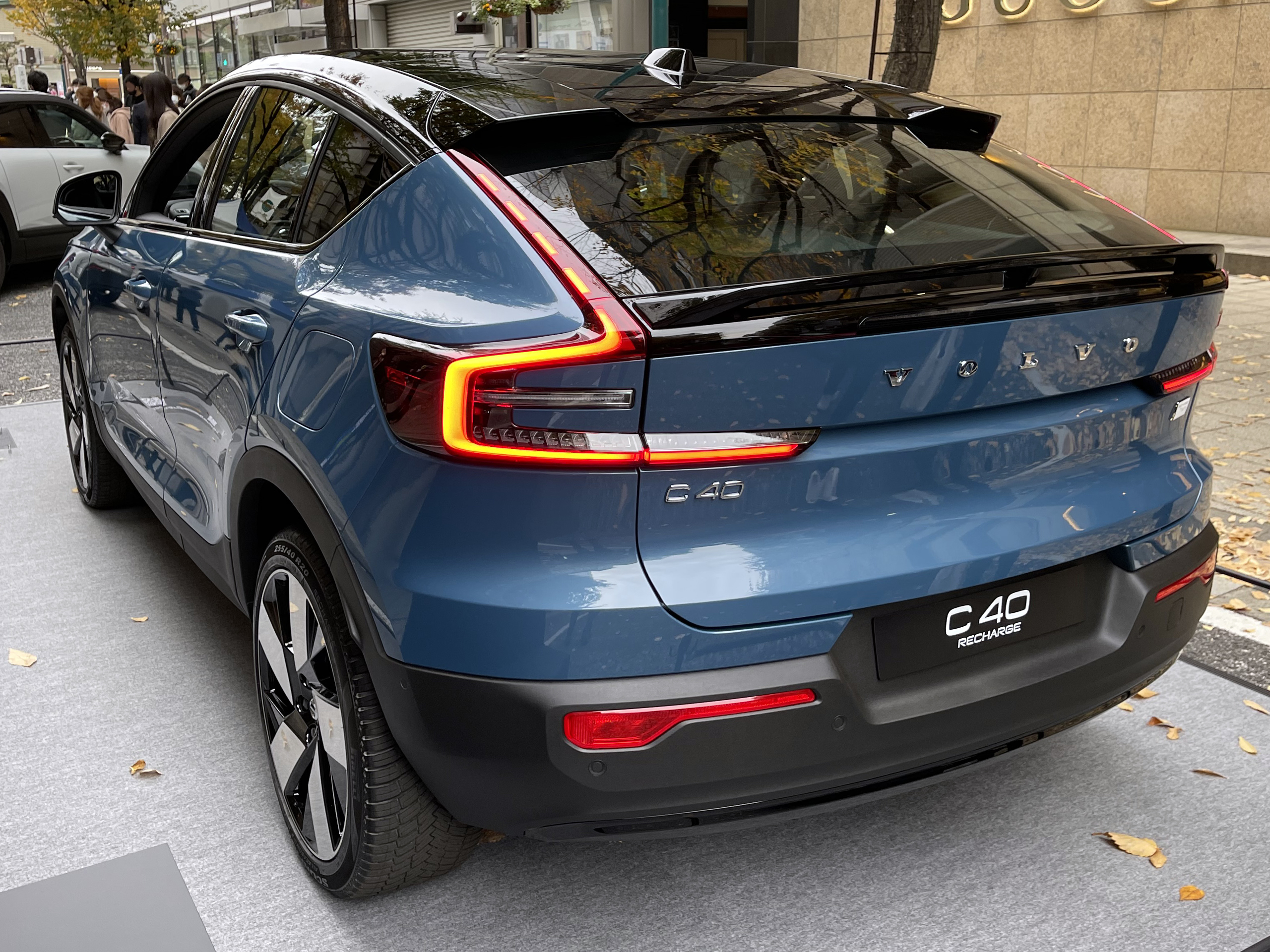
Volvo C40 Recharge
"Look at the Volvo C40 Recharge. 87% of transactions on Volvo C40 Recharges in 2023 were leases."
The Volvo C40 Recharge is Volvo’s all-electric SUV. The hosts are talking about how much people pay for it in real deals (especially leases) versus what it was originally priced at, which affects whether it can be a good “deal” later.
The Volvo C40 Recharge is a Volvo battery-electric compact crossover, positioned as an EV alternative to other luxury small SUVs. In this segment, the hosts focus on its pricing and leasing behavior, which matters because EVs can see big swings between sticker price, lease terms, and what they’re actually selling for.
upside down
"And we're talking upside down by $14,000 in some cases on the EQS SUV. So these would be potential shopping opportunities for customers."
“Upside down” means the car is worth less than what you owe or what you expected it to be worth. If that happens, the market may offer discounts to move inventory.
“Upside down” describes being underwater on a vehicle—typically when the amount owed (or expected value used in the deal) is higher than the car’s current market value. In EV pricing discussions, it often signals that depreciation has been faster than expected, which can lead to discounts and better deals.
0% for 72 months
"But anyways, 0% for 72 months on a Toyota."
“0% for 72 months” means the financing deal has no interest for six years. That can lower the monthly payment and make the car easier to afford.
“0% for 72 months” refers to a financing promotion where the lender charges no interest for a long loan term (72 months). These offers can make an EV feel more affordable even if the vehicle’s price or depreciation is uncertain.

Hyundai Ioniq
"...ome other models out there like that. I think the Hyundai Ioniq 9, 10 grand rebate. So all that stuff's going to ..."
The Hyundai Ioniq 5 is an all-electric SUV. It runs on a battery instead of gasoline, and it can be charged at home or at public charging stations. It’s often discussed because incentives can make it cheaper to buy, especially compared with what it costs after a few years.
The Hyundai Ioniq 5 is a fully electric crossover designed around a modern battery and fast-charging capability, making it a common reference point when people talk about EV incentives and used-car value. It often comes up in discussions about rebates and affordability because buyers may be comparing new pricing versus what similar EVs cost after a few years. That’s why it’s mentioned alongside other Ioniq models and incentive talk.

Hyundai Ioniq 9
"There's some other models out there like that. I think the Hyundai Ioniq 9, 10 grand rebate."
The Hyundai Ioniq 9 is an electric car model mentioned as an example of a vehicle that may come with a big rebate. Big rebates can make the lease deal look better right now.
The Hyundai Ioniq 9 is an upcoming/marketed Ioniq-family EV that the host uses as an example of how rebates and incentives can change quickly. That kind of incentive volatility can influence how shoppers think about lease terms and residual value.
lease vehicles
"And so that's why these are lease vehicles. And specifically, same with Tesla."
A lease is like renting a car for a few years. You pay for the use, and then you give the car back at the end instead of buying it outright.
A lease is a financing structure where you pay to use the car for a set period, then return it at the end. The lease terms (especially residual value and incentives) can create short-term “bargains” that don’t necessarily translate to long-term ownership value.
lease vintage cohort
"not only are what we're looking at in some cases from last quarter, or in the case of the 2023 lease vintage cohort, that's three years old."
This is a way to group cars that were leased around the same time. When those leases end, that group starts showing up for sale, which changes what used cars are available.
A “lease vintage cohort” groups leased vehicles by the time period they were originally leased (their “vintage”). Analysts track how that specific group performs over time—especially when leases end—because it affects supply in the used-car market.
EV charger
"The problem for a lot of those people is they might not have anywhere to charge them. Because the people that typically are looking for 20 to $25,000 vehicles might not necessarily have a house, might live in an apartment that doesn't have an EV charger."
An EV charger is what you plug into to charge an electric car. If you can’t charge at home, owning an EV can be harder day-to-day.
An EV charger is the equipment used to recharge an electric vehicle, typically at home or at public charging stations. Access to charging—especially at home—directly affects whether a buyer can realistically live with an EV.
full battery electric vehicles
"but I think full battery electric vehicles. Because they used artificially high residual values in order to create a cheap lease payment."
A full battery-electric vehicle is a car that runs only on electricity. It doesn’t use gasoline like a hybrid or plug-in hybrid would.
Full battery electric vehicles (BEVs) run entirely on electricity stored in a battery pack, with no gasoline engine. The distinction matters because BEVs, hybrids, and plug-in hybrids can have very different pricing, incentives, and real-world demand dynamics.

Tesla Model Y
"but then that dealer that you work closely with usually has 30 Tesla Model Ys on their lot, and they only have two right now."
The Tesla Model Y is an all-electric SUV/crossover. The hosts are talking about how many of them dealers have and how that affects prices and demand.
The Tesla Model Y is a battery-electric crossover from Tesla, and it’s one of the brand’s highest-volume models. In this discussion, it’s used as an example of inventory availability and pricing/holding-value behavior in the EV market.
demand story
"So it's nothing, it's a demand story. Like people want Teslas instead of Volvo EVs."
A “demand story” means the market is mostly about what people want to buy. In this case, the hosts are saying more people want Teslas than other EVs, which affects availability and pricing.
A “demand story” means the situation is driven mainly by consumer wants and buying behavior rather than supply or production constraints. Here, the speaker argues that shoppers’ preference for Teslas over other EVs is what’s shaping the market.
Kia
"much more so than say Hyundai or Kia or Volvo or Polestar."
Kia is another car brand that makes electric vehicles. The hosts mention it to say Tesla has been around longer, so people are more likely to consider Tesla first for a used EV.
Kia is an automaker that sells EVs, and in this segment it’s grouped with other brands as having a shorter EV presence than Tesla. That shorter “history” is used to explain why Tesla is more top-of-mind for used EV shoppers.
Polestar
"Polestar and Hyundai and Kia and those with full EVs have been around for five years."
Polestar is a company that makes electric cars. The hosts are saying it hasn’t been around as long as Tesla, so fewer people automatically think of it when shopping for a used EV.
Polestar is an EV-focused brand, and the speaker frames it as having a shorter time in the market compared with Tesla. In the used-EV context, that “less time” is presented as a reason shoppers may not think of Polestar first.
battery issues
"There's history for me to look at that indicates that these should be road worthy for years and years and they have minimal battery issues, which I think is the main and most important thing when it comes to an EV."
For electric cars, the battery is the most expensive and important part. The hosts are saying people worry most about whether the battery will last or develop problems, especially on used cars.
In EVs, “battery issues” refers to problems with the high-voltage battery pack, such as premature degradation, failures, or performance loss over time. The speakers treat battery reliability as the biggest worry for buyers, especially when considering used EVs.
off lease availability
"It's that second bullet point, helping the cause as a projected surge in off lease availability this year and I want to quantify it."
This means how many cars are coming back from leases and showing up for sale. More cars coming back usually makes it easier to find a deal on the used market.
“Off lease availability” refers to how many leased vehicles are returning to lessors and becoming available for sale (often as used cars) after the lease term ends. When that supply rises, it can push used prices down and increase shopping options.
Mercedes-Benz EQS SUV
"So if you've always wanted to drive a Mercedes-Benz EQS SUV but you convinced yourself that spending $140,000 three years ago wasn't the right move, congrats."
This is an electric SUV from Mercedes-Benz. In this discussion, it’s used as an example of a car that may be cheaper later because it loses value faster than people expect.
The Mercedes-Benz EQS SUV is an all-electric SUV in Mercedes-Benz’s EQ lineup. It’s notable here because the hosts are using it as an example of how EVs can depreciate quickly once they enter the used-car market.

Mercedes-Benz Mercedesbenz Eqs
"to be sold as used cars are a lot of those EVs. So if you've always wanted to drive a Mercedes-Benz EQS SUV but you convinced yourself that spending $140,000 three years ago wasn't the right move, congrats."
The Mercedes-Benz EQS is a luxury electric SUV. Instead of using gasoline, it uses a battery and electric motors. People bring it up in used-car discussions because the price can drop a lot after a few years.
The Mercedes-Benz EQS is a luxury electric vehicle, and the podcast context specifically frames it as an SUV you might find in the used market. It’s significant because high original prices can make buyers hesitate, but later depreciation can bring it into reach when shopping for used EVs. That’s why the conversation focuses on what happens when you “always wanted” one but didn’t buy it at the original cost.
depreciates like crazy
"Another Mercedes-Benz has become a boat anchor that depreciates like crazy. You could probably go pick one up this year or next year for probably like 50 grand."
That phrase means the car is losing value quickly. The hosts are saying some EVs may get much cheaper sooner than people think.
“Depreciates like crazy” is a shorthand for rapid depreciation—when a vehicle’s resale value drops quickly over time. In the segment, it’s used to argue that certain EVs are losing value faster than buyers expect, affecting used-car pricing.
below current market value
"will never see the light of day at a dealership because their current driver will end up buying it because they can buy it for 15% to 20% below current market value."
“Current market value” means what the car is worth right now based on real prices. The speaker is saying some buyers can get it for 15% to 20% less than that going rate.
“Current market value” is the going price level for a vehicle based on what buyers are paying right now. The speaker is describing a discount relative to that benchmark, implying shoppers may be able to buy certain cars for less than what the market is currently charging.
EV
"The ones that are going to make it to market are that 25.7% that are EVs."
EV means electric vehicle—cars that run on electricity stored in a battery. In this segment, the speaker says EV deals and inventory are harder to find right now.
EV stands for “electric vehicle,” meaning the car is powered primarily by an electric motor and a battery rather than a gasoline engine. The speaker uses EV availability and discounting as a key reason EV shoppers are having trouble finding deals compared with other powertrains.

Toyota Grand Highlander
"Some of our partner dealers are definitely on board with providing us, I just did a deal the other day, a $2,000 discount on a Grand Highlander."
The Toyota Grand Highlander is a bigger Toyota SUV with three rows of seats. Here, the host is using it as an example of a car that’s getting a discount right now.
The Toyota Grand Highlander is a larger, three-row SUV in Toyota’s Highlander family, aimed at buyers who need more passenger and cargo space than a typical two-row crossover. In this segment, it’s used as an example of an EV/hybrid-adjacent “deal” situation where the speaker mentions a specific discount.

Toyota Prius
"We don't get into the Prius plug-in hybrid, the plug-in version, 1.9% for 72 months,"
The Prius plug-in hybrid is a Prius that you can charge like an EV, but it also has a gas engine for when you need it. In this segment, it’s mentioned as an example of pricing/financing that may come with incentives.
The Prius plug-in hybrid is Toyota’s plug-in version of the Prius, meaning it can run on electricity from a battery that you charge externally, while also having a gasoline engine for longer trips. The speaker references it in the context of financing and discounts, highlighting how plug-in hybrids can be treated differently than full EVs in real-world deal availability.
1.9% for 72 months
"We don't get into the Prius plug-in hybrid, the plug-in version, 1.9% for 72 months,"
That phrase is the financing deal: 1.9% interest for a loan lasting 72 months (6 years). Deals like this can make the monthly payment smaller, but the overall cost still depends on the full loan details.
“1.9% for 72 months” describes an auto loan’s promotional interest rate and the length of the loan term. A longer term like 72 months can lower the monthly payment, but the total cost depends on the rate, fees, and how much you finance.
gas prices
"The used car market and consumer shopping behavior is super, super, super correlated to what happens to gas prices."
Gas prices affect what it costs to drive a gas car. When gas prices change, people often change what cars they shop for, and that can move used-car prices too.
Gas prices influence consumer decisions because they change the day-to-day cost of driving gasoline vehicles. When gas gets more expensive, some shoppers may shift toward alternatives (including used cars that are more fuel-efficient), which can affect used-car pricing and inventory.
no such thing as a used car factory
"Yeah. One thing I always like to say to customers, there's no such thing as a used car factory. So, it's a supply and demand crunch."
The idea is that used cars aren’t built from scratch like new cars. They show up when people replace their cars, so if people aren’t turning cars over, the used-car supply stays tight.
The phrase means used cars don’t get produced directly; they come from the turnover of existing vehicles (trade-ins, lease returns, aging inventory). That makes the used-car supply dependent on what happens in the broader new-car and ownership cycle, so shortages can persist until enough cars flow into the used market.
supply and demand
"So, it's a supply and demand crunch... And if you look at the supply versus how many vehicles are sold on a 30-day average, the math really doesn't math... supply and demand on EVs is high."
Supply and demand means: if there are fewer cars than people want, prices go up; if there are more cars than people want, prices go down. That’s why the number of cars available matters so much for used and EV pricing.
Supply and demand is the basic economic mechanism behind vehicle pricing: if supply is constrained and demand stays strong, prices rise; if supply increases or demand falls, prices ease. The hosts apply it to both used cars and EVs, arguing that current inventory and sales volumes are creating price pressure.
30-day average
"And if you look at the supply versus how many vehicles are sold on a 30-day average, the math really doesn't math."
A 30-day average is just a “one-month average” to make the numbers less jumpy. It’s used to judge whether cars are selling faster than they’re coming in (or the opposite).
A 30-day average is a smoothing method that looks at sales volume over a month to reduce noise from day-to-day swings. In pricing discussions, it helps compare how quickly cars are being sold versus how many are available, which can indicate whether the market is tightening or loosening.
Request an Explanation
Heard something you'd like explained? We'll add it to this episode.
Sign in to request explanations for terms you heard.
Want to learn more?
Browse our glossary for plain-English explanations of automotive terms, jargon, and concepts.
Help improve this episode
See something that's not quite right? Our annotations are AI-generated and can sometimes miss the mark. Click the flag icon on any annotation to suggest a correction.