
YOUR Car Questions Answered LIVE | Q&A With a Former Car Dealer | Episode 1111
About this episode
A live listener Q&A kicks off with a family planning a second vehicle, then quickly turns into practical negotiation strategy: settle an agreeable out-the-door number first, and handle the trade-in as a separate transaction. The hosts explain how “four square” worksheets and monthly-payment focus can hide unfavorable numbers, and how dealer add-ons like recon and dock fees change the real total. Later, a former dealer breaks down used-car and CPO sales quotas, then they review a 2023 Jeep Gladiator Sport’s pricing and maintenance-cost odds.
two separate transactions
"The reason it's two separate transactions is because it's two separate transactions. [271.2s] Get into the details of that because obviously there's that way to obfuscate"
The “two separate transactions” idea means the dealer treats the new car deal and your trade-in as two different parts. That can affect how they talk about the numbers, sometimes focusing on your monthly payment instead of the real total cost.
The “two separate transactions” idea is that dealerships often structure a deal as (1) the new car purchase and (2) the trade-in sale separately. This separation can make it easier for the dealer to steer the negotiation toward your monthly payment rather than the true combined cost.
monthly budget
"typically what's going to happen is they're only going to operate [292.3s] on what your monthly budget is going to be [295.2s] and that you might not have a real clear understanding"
A “monthly budget” approach means the discussion centers on your payment each month. That can make it harder to see the full cost of the car and what they’re really offering for your trade-in.
A “monthly budget” approach is when the dealer negotiates primarily around what you can afford per month. This can hide the real economics of the deal—like the actual cash value of your trade-in and the total out-the-door price.
cash value
"and that you might not have a real clear understanding [299.3s] as to how much they are actually offering you for your car, [305.1s] what the actual cash value is that they're willing to pay for your car."
“Cash value” means the real dollar amount the dealer is willing to pay for your old car. If you don’t know this number, it’s easy for the dealer to make the deal look better than it really is.
“Cash value” here means the dealer’s actual offer for your trade-in in money terms, before it’s blended into the overall deal. Knowing the cash value helps you verify whether you’re getting a fair trade-in and whether the total deal is truly discounted.
out the door price
"That's not to say that after you get an agreed upon out the door price on the new car [316.7s] and that you then come to some type of consensus on the trade-in"
The “out the door price” is the final total you’ll pay at the dealership. It includes the car price plus things like taxes and fees, so it’s the best number to compare between offers.
“Out the door price” is the total amount you pay to drive the car home, including the car’s price plus taxes, registration, and dealer fees. It’s the number you should compare between deals because it reflects the true cost, not just the sticker price.
tax credit
"that if you're in a state where you get a tax credit for the value of the trade [327.1s] that that then wouldn't lower the total out the door price."
A “tax credit” is money off your taxes if you qualify. In some places, it can be tied to your trade-in, which can lower the total cost of the new car.
A “tax credit” is a reduction in your taxes (or sometimes a tax benefit applied to the transaction) based on qualifying criteria. In car deals, some states offer credits tied to the trade-in value, which can change the final out-the-door cost.
trade-in
"and that you then come to some type of consensus on the trade-in [322.3s] that if you're in a state where you get a tax credit for the value of the trade"
A “trade-in” is when you turn in your current car to the dealer to help pay for a new one. The dealer assigns a value to your old car, and that value gets used to reduce what you owe.
A “trade-in” is when you give your current vehicle to the dealer as part of the deal for a new car. Dealers may quote a trade-in value separately from the new car price, which can affect how the overall deal is presented and negotiated.
four square
"I'm going to scroll down here to the actual example of a four square. This is what a lot of dealerships use to do a negotiation with a customer."
A “four square” is a dealership deal sheet that shows four parts of the offer. It’s used to focus you on the monthly payment, even if the overall deal is worse once you look at the other numbers.
“Four square” refers to a common dealership negotiation worksheet that breaks the deal into four boxes—typically trade-in value, vehicle price, down payment, and monthly payment. Dealers often use it to steer your attention toward the monthly payment while other numbers (like trade-in and vehicle price) may be less favorable.
monthly payment
"the fourth bottom, the fourth square on the right, the monthly payment that's got four lines underlining it to attract your eyes to that."
The “monthly payment” is the monthly cost of the car loan. A dealer can sometimes make that number seem good, but the total deal can still be expensive depending on the other numbers in the offer.
The “monthly payment” is the amount you pay each month under the financing terms (loan amount, interest rate, and term length). Deal structures can make the monthly payment look reasonable while the total cost is higher due to how the vehicle price, down payment, and trade-in are handled.
down payment
"there, there's a trade-in amount of vehicle price down payment, monthly payment."
A “down payment” is money you pay upfront. It can lower the amount you finance, but a dealer can still structure the rest of the deal so you don’t actually save much overall.
A “down payment” is the upfront cash you pay to reduce the financed amount of the vehicle. Changing the down payment can shift the monthly payment without necessarily improving the overall deal.
quotas
"Do dealers who sell used vehicles from other than their own manufacturer have quotas on those vehicles? ... Can you explain what quotas are for new car dealerships?"
A quota is a sales goal a car brand sets for a dealership. If the dealership sells enough cars by the deadline, they may get extra money or incentives.
In car retail, “quotas” are sales targets set by a manufacturer (or sometimes a parent company) for a dealership to hit within a time window. They’re often tied to incentives or bonuses when the dealership reaches the goal.
manufacturer certified pre-owned
"Well, sometimes for manufacturers certified pre-owned. ... When it comes to pre-owned cars, manufacturers sometimes will set up sales objectives for manufacturer certified pre-owned cars."
This is a used-car program where the car maker “certifies” the car. The dealer has to meet certain standards, and the brand may also set separate sales goals for these certified used cars.
“Manufacturer certified pre-owned” (often shortened to CPO) is a used-car program where the automaker certifies the vehicle to meet specific inspection and reconditioning standards. Because it’s tied to the brand’s program, dealers may have separate sales objectives for these cars versus regular used inventory.
sales objectives
"Well, many times there are sales goals or objectives that are set by the manufacturer for any given dealership. ... It could be on a monthly basis, it could be on a quarterly basis."
Sales objectives are just the dealership’s specific targets—like how many cars they should sell by a certain date. Hitting them can affect bonuses or rewards.
“Sales objectives” are the specific targets a dealership is expected to achieve, such as selling a certain number of vehicles in a month or quarter. They function like measurable benchmarks that can influence incentives and performance reviews.
internal sales goal
"Used cars that aren't certified pre-owned, the only quota could be some sort of internal sales goal. Is that common debt?"
This means the dealership sets its own target for sales. If you hit the number, you may earn extra money or a bonus.
An “internal sales goal” is a dealership’s internal target for how many vehicles (like used cars) a team is expected to sell. It can be tied to bonuses or per-car pay rather than manufacturer quotas.
maintenance costs
"So I'm going to then view the maintenance costs. Gladiator Sport, if you can get down to a trim level, but I assume it comes to that."
Maintenance costs are what you can expect to spend to keep a car running—like repairs and upkeep. The host is using a chart to estimate those costs for a 2023 Jeep Gladiator.
Maintenance costs are the expected money spent on routine upkeep and repairs over time. In this segment, they’re specifically using CarEdge’s maintenance-cost data to estimate annual costs and the chance of major repairs for a 2023 Jeep Gladiator.
trim levels
"Gladiator Sport, if you can get down to a trim level, but I assume it comes to that."
A trim level is the version of the car you buy, with different features and options. The host is saying the maintenance-cost numbers can change depending on which trim you’re looking at.
A trim level is a specific configuration of a model—different packages and equipment levels that can affect cost and repair likelihood. The host mentions narrowing the Gladiator down to a trim level (like Sport) to better match the data.

Jeep Gladiator
"So now I'm looking at the caredge data we have for maintenance costs, excuse me, on the Jeep Gladiator. And I'm going to look at this chart in particular."
The Jeep Gladiator is a Jeep pickup truck. Here, they’re looking at predicted maintenance costs and how likely it is to need a big repair as the truck gets older.
The Jeep Gladiator is Jeep’s pickup truck, built on a truck platform with Jeep-style off-road capability. In this segment, the host is using CarEdge’s data to talk about the Gladiator’s expected maintenance and major-repair likelihood over time.
major repair
"So it's a 2023, which means it's three years old. Yes. So the likelihood of a major repair is 7% right now."
A major repair means a big, costly problem that goes beyond normal upkeep. They’re giving percentages for how likely the truck is to need one as it ages.
A major repair is a significant, expensive fix rather than routine wear-and-tear maintenance. Here, the host is quoting the probability that the 2023 Jeep Gladiator will need a major repair at different points in its life.
likelihood
"So the likelihood of a major repair is 7% right now. Yes. Next year it jumps up to 12%."
Likelihood means the odds, based on data. They’re using it to say how likely the truck is to need a big repair now, later, and over its lifetime.
Likelihood here means the statistical chance of an event—specifically, the chance of a major repair occurring. The host uses it to compare probabilities now, next year, and over the vehicle’s lifetime for the Jeep Gladiator.
annual costs
"We're looking at $1,000 in annual costs, $1,100 in annual, 17% likelihood."
Annual costs are the average yearly amount you might spend to keep the vehicle in good shape. They’re quoting estimated yearly totals for the Gladiator.
Annual costs are the expected average amount of money spent each year on maintenance and repairs. The host cites dollar figures (around $1,000–$1,100 per year) alongside the probability of major repairs for the 2023 Gladiator.
in its segment
"That's actually 7.3% better than similar vehicles in its segment."
“In its segment” means compared to similar cars or trucks. They’re saying the Gladiator looks better than other comparable vehicles when it comes to major repair odds.
“In its segment” means compared against similar vehicles in the same category. The host says the Gladiator’s major-repair likelihood is 7.3% better than other comparable vehicles in its segment.
list price
"Now, your take, Dad, 2023 Jeep Gladiator Sport, $29,000 list price, 20,000 miles on it."
“List price” is the sticker price—what the seller advertises the car for before any deals or discounts. It helps you compare the car’s original cost to what you’re paying today.
“List price” is the manufacturer’s or dealer’s advertised price before discounts, incentives, or negotiation. In used-car discussions, it’s often used as a reference point to compare what the car cost new versus what it sells for now.
Carfax
"It's only got 20,000 miles. What's the car fax look like?"
Carfax is a report that shows a used car’s history, like accidents or title problems, based on records from different sources. It’s one of the first things people check before buying a used vehicle.
Carfax is a vehicle history report service that compiles records like reported accidents, title issues, and service history from various data sources. Buyers use it to spot red flags and to estimate how a used car was treated before purchase.
market conditions for used Gladiator sports
"What's the car fax look like? One of the market conditions for used Gladiator sports in that area."
Used-car prices aren’t the same everywhere. “Market conditions” means things like how many similar trucks are available in your area and how badly people want them right now.
“Market conditions” refers to local supply and demand factors that affect used-car pricing, such as how many similar vehicles are for sale and how quickly buyers are snapping them up. In this context, the host is pointing out that the same Gladiator Sport can be priced differently depending on the area.
original MSRP
"What would you be looking at? Wait. You're asking me to put together a 10,000 piece jigsaw puzzle and only like 9,000 pieces are missing. ... What was its original MSRP?"
MSRP is basically the car’s sticker price when it was new. Knowing the original MSRP helps you figure out whether a used price is a good deal or overpriced.
MSRP (Manufacturer Suggested Retail Price) is the price the automaker sets as the car’s “new” sticker price. When someone asks about the “original MSRP,” they’re trying to determine how expensive the Gladiator Sport was when new so they can judge whether the current asking price is fair.
VIN
"Chad, share with us the VIN. Share with us the VIN and we'll pull it up on the car."
VIN means Vehicle Identification Number. It’s like a car’s fingerprint, and it helps you find the car’s details and history in online records.
VIN stands for Vehicle Identification Number. It’s a unique 17-character code that lets you look up a specific car’s history, build details, and original equipment using databases.
depreciated $13,000 in three years
"Okay. So that sounds like it's a little expensive for a three-year-old soon to be four-year-old. They're saying that it's only depreciated $13,000 in three years."
Depreciation is how much a car loses value as it gets older. Here, they’re saying the car’s value went down by about $13,000 over three years.
Depreciation is how much a vehicle’s value drops over time. Saying it “depreciated $13,000 in three years” is a quick way to quantify how the market price changed since the car was new.
invoice pricing
"Do top-selling dealerships get better invoice pricing from the manufacturer? [931.9s] No. [932.8s] The invoice pricing's the same."
Invoice pricing is basically the price the car dealer pays the manufacturer for the car. Even if two dealers pay the same invoice price, they can still end up with different deals because of manufacturer incentives.
Invoice pricing is the price a dealer is billed by the manufacturer for a vehicle. In many cases, it’s used as a baseline for negotiations, but the dealer’s final profit can still change based on incentives and other programs.
stair step programs
"However, depending on manufacturer incentives and stair step programs, top-performing dealerships [946.6s] could end up, because they sell more cars than smaller dealerships, could end up hitting [952.5s] stair step programs that ultimately allow them to have a lower cost for a vehicle."
Stair step programs are like sales-volume “levels.” If a dealership sells enough cars, the manufacturer gives them better incentives, which can make the car cheaper for that dealer to buy.
Stair step programs are tiered dealer incentive structures where the manufacturer increases benefits once a dealership hits certain sales volume targets. Because larger dealers sell more cars, they may qualify for deeper tiers that lower the dealer’s effective vehicle cost.
manufacturer incentives
"However, depending on manufacturer incentives and stair step programs, top-performing dealerships [946.6s] could end up, because they sell more cars than smaller dealerships, could end up hitting"
Manufacturer incentives are money or deal structures the automaker offers to reduce the effective cost of a vehicle. They can include cash rebates, financing deals, or other programs that dealers can pass along to buyers.
bonus program
"[961.9s] The invoice price does not change from dealer to dealer. [966.2s] The stair step program is a bonus program, right? [969.6s] Yes, but I thought you want me to."
A bonus program is extra money or extra deal help the manufacturer gives if the dealer hits certain goals. It’s usually tied to sales performance.
A bonus program is an additional incentive paid or credited when specific performance goals are met. In dealership contexts, it often ties to sales targets and can stack with other manufacturer incentives.

2007 Toyota Yaris
"From Bob, let's go through this dad hi pops and Zach. [1095.5s] I have a 2007 Toyota Yaris, wow, that I'd hope to keep until my condo is paid off this [1101.0s] December. [1101.6s] Unfortunately, it's not the point where it needs front brakes and new rear suspension [1106.0s] bushing."
This is a small Toyota meant for everyday commuting. The caller is saying their 2007 Yaris needs repairs like front brakes and rear suspension parts, and they’re wondering whether it’s worth paying for more work.
The Toyota Yaris is a small, economy-focused car known for being relatively simple and inexpensive to maintain. In this question, the 2007 Toyota Yaris is specifically discussed because it’s reaching the point where wear items like brakes and suspension bushings start needing replacement.
suspension bushing
"[1101.6s] Unfortunately, it's not the point where it needs front brakes and new rear suspension [1106.0s] bushing. [1106.7s] I've already spent money replacing the muffler exhaust manifold and several other parts over"
A suspension bushing is a soft part that helps the suspension move smoothly and reduces noise and harshness. If the rear ones wear out, the car can feel loose or start making noises, and it may need replacement.
A suspension bushing is a rubber (or elastomer) mounting that isolates vibration and allows controlled movement between suspension components. When rear suspension bushings wear out, you can get clunking, poor ride quality, and alignment/suspension wear—often making it a meaningful repair on older cars.
front brakes
"[1101.0s] December. [1101.6s] Unfortunately, it's not the point where it needs front brakes and new rear suspension [1106.0s] bushing. [1106.7s] I've already spent money replacing the muffler exhaust manifold and several other parts over"
Front brakes are the parts that help the car slow down from the front wheels. If they’re worn, you may need new pads and possibly rotors, which can be expensive on an older car.
“Front brakes” refers to the braking system components on the front axle—typically brake pads and rotors. When front brakes wear out, stopping performance can degrade and the repair cost can become a deciding factor on whether to keep an older car.
muffler
"[1106.0s] bushing. [1106.7s] I've already spent money replacing the muffler exhaust manifold and several other parts over [1110.5s] the past few months."
The muffler is the part of the exhaust that makes the car quieter. Over time it can rust or fail, and fixing it can cost money—especially on an older car.
The muffler is part of the exhaust system that reduces engine noise by using internal chambers and baffles. Mufflers commonly wear out over time due to corrosion, and an exhaust repair can add to the “keep vs. replace” decision on an older vehicle.
exhaust manifold
"[1106.7s] I've already spent money replacing the muffler exhaust manifold and several other parts over [1110.5s] the past few months. [1111.6s] I'm struggling with whether it's worth putting any more money into this car."
The exhaust manifold is the part that collects exhaust gases coming out of the engine. If it cracks or fails, it can be a costly repair because it’s hard to access and the parts can be damaged by heat.
The exhaust manifold is the engine’s exhaust outlet assembly that collects exhaust gases from the cylinders and routes them toward the rest of the exhaust system. Manifold issues can be expensive because they may involve heat-related cracking and labor-intensive repairs.
warranty
"[1121.1s] A lease is appealing because it would give me a reliable vehicle under warranty and eliminate [1125.1s] the risk of a surprise repair bill. [1126.8s] However, the monthly payment would stretch my budget and I want to keep enough of a financial"
A warranty is a guarantee that if something breaks within a certain time, the company will pay for the repair. The caller thinks leasing would help avoid expensive surprises.
A warranty is a manufacturer-backed promise to cover certain repairs for a defined period or mileage. In this context, the caller believes a leased car would be covered, reducing the chance of paying for major failures out of pocket.
high mileage
"[1137.8s] The alternative is buying an older used car that fits my budget, but I'm concerned I'd [1142.2s] end up with a high mileage vehicle that could require expensive repairs anyway."
High mileage means the car has been driven a lot. More driving usually means more wear, so the caller worries it could need costly repairs.
“High mileage” means a car has been driven a lot, which increases the likelihood of wear items and age-related failures. The caller is concerned that an older used car with high mileage could still require expensive repairs.
lease a new car for reliability
"If you were in my situation, would you repair the Yaris and try and make it last a little longer buying an expensive used car, lease a new car for reliability?"
Leasing means you pay to drive a new car for a few years instead of buying an older one. The hope is that a newer car will be less likely to break down, so you’re not stuck paying for expensive repairs.
Leasing a new car for reliability is a strategy where you avoid owning an older, higher-maintenance vehicle by paying to use a newer one for a set term. The idea is that newer cars are less likely to need major repairs early on, shifting the risk away from the owner of an aging car.
repair ... and try and make it last a little longer
"If you were in my situation, would you repair the Yaris and try and make it last a little longer buying an expensive used car, lease a new car for reliability?"
This is the choice to fix the car you already have and keep using it. The key question is whether the repair bill is smaller than what you’d spend to replace it.
This is the “keep and repair” approach: instead of replacing the car, you spend money to address issues and extend its service life. The segment ties this to a cost-benefit question—whether repair costs are lower than the downside of buying something else.
wholesale level
"So, on the wholesale level, what's the car worth? Maybe $1,000 bucks, but you know that car."
Wholesale price is what a dealer might pay for a car, not what you’d pay as a customer. Dealers usually pay less because they need room to profit and to cover reconditioning costs.
“Wholesale level” refers to the price a dealer or auction system might pay for a car, which is typically lower than what a retail buyer pays. It’s used here to estimate what an old Yaris is worth to a dealer, before considering repair costs to make it presentable or reliable.
miles
"But I'm guessing about a lot of things like how many miles does it have on it? Is it a 100,000 mile Yaris?"
“Miles” here means how many miles are on the car’s odometer. More miles usually means more wear, so it can affect what repairs you might need next.
In used-car discussions, “miles” usually means odometer mileage, a proxy for wear and how much the car has been used. Higher mileage often correlates with more maintenance history and a higher chance of needing repairs, which is why they ask whether it’s a 100,000-mile or 250,000-mile Yaris.
maintenance and repairs
"Like if I'm going to get an older used car and expect that I'm not going to have [1307.8s] maintenance and repairs like that, so yeah, stick with one I already know."
Cars need ongoing upkeep and occasional fixes. The point is that if you buy an older used car, you should expect to spend money on repairs eventually.
This refers to the ongoing upkeep work a car needs over time, plus the fixes required when parts wear out or break. The discussion contrasts that reality with the idea that buying an older used car might be “low hassle,” which the dealer argues is often unrealistic.
do it signing
"We see cheap payments that are advertised with $3,995 do it signing or $5,000 do it signing. [1358.4s] Well, that's not a bargain."
This sounds like “due at signing,” meaning you pay some money right when you start the lease. A low monthly payment ad can be misleading if you have to pay a lot upfront.
“Do it signing” appears to be a mishearing of “due at signing,” which is money you pay upfront when you start a lease or financing deal. These advertised low monthly payments often depend on a large upfront amount, so the total cost may not be as good as it looks.
recon fee
"And then he mentioned recon. Yeah, there you go. You can see it there, $995 recon fee."
A “recon fee” is money a dealer charges to fix up and prepare a used car for sale. It’s not the car’s sticker price, so it can make the total cost higher.
A “recon fee” is a dealer charge for reconditioning a used car—things like detailing, minor repairs, and making the vehicle ready for sale. It’s often separate from other fees, so it can materially change the final price.
OTD
"So it looks like we've got $2,000 in fees, ultimately taking the OTD with taxes and everything to $16,321."
OTD means the final total price you’ll pay when you buy the car. It includes taxes and dealer fees, so it’s the best number to compare between listings.
OTD (“out-the-door”) is the total price you pay to buy the car, including taxes and fees. Dealers may advertise a lower number, but OTD is what matters for comparing offers fairly.
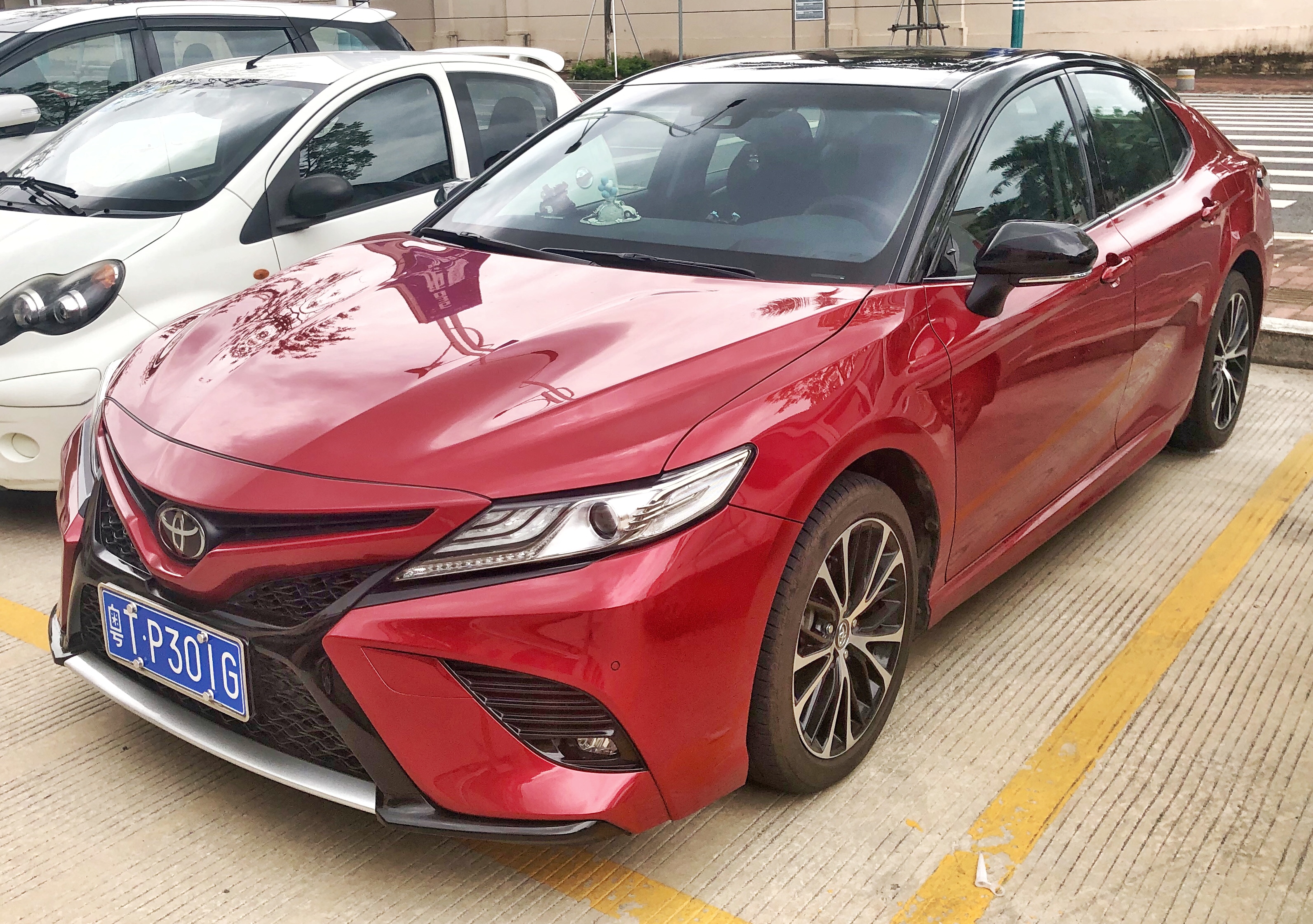
2016 Camry XSE
"So you think in 2016, Camry XSE at a little over $16,000 or a 2021 with the similar mileage at $18,000, what do you think?"
The 2016 Toyota Camry XSE is a mid-size sedan with a more “sporty” trim level and extra equipment. Here it’s mentioned because the hosts are comparing what similar used cars should cost.
The Toyota Camry XSE is a mid-size sedan trim that’s known for a sportier look and typically more features than the base models. In this discussion, it’s used as a price comparison point for a different model year and mileage.
dock fee
"That dealership that has it listed for 15777, they very well might have a $1,000 dock fee. They very well may have a $1,000 reconditioning fee or more."
A “dock fee” is an extra charge the dealer adds on top of the car’s price. It can be for things like getting the car ready or moving it around, and it affects the final amount you pay.
A “dock fee” is a dealer-added charge that’s meant to cover costs like transporting the vehicle to the dealership or preparing it for sale. It’s a common example of why two listings with similar base prices can end up with different OTD totals.
reconditioning fee
"They very well may have a $1,000 reconditioning fee or more. So you can't guess."
A “reconditioning fee” is what the dealer charges to fix up a used car before selling it. Ask what they actually did, because it can change the total price a lot.
A “reconditioning fee” is a dealer charge for bringing a used vehicle up to sale-ready condition. It can overlap with other fees (like recon), and the exact scope varies by dealer, so you should ask what work is included.
pre-purchase inspection
"And if I may, you have to drive both. And if you decide on one or the other, then you need to get a pre-purchase inspection done on either one or both."
A pre-purchase inspection is when a trusted mechanic checks the exact car you’re thinking of buying. It can reveal problems you can’t easily see, helping you avoid expensive surprises.
A pre-purchase inspection (PPI) is a mechanic’s evaluation of a specific used car before you buy it. It helps uncover hidden issues (repairs needed, accident damage, worn components) so you can negotiate or walk away with more confidence.
dealer transparency index
"So everything is predicated on the dealer transparency index... is that you have an A grade on the DTI, DTI Dealer Transparency Index."
This is the specific “scorecard” CarEdge uses to judge dealers. To be approved, a dealer has to earn an A on that score.
The dealer transparency index (DTI) is the specific metric CarEdge uses to rank dealers. The hosts say eligibility for the certified program requires an A grade on this index.
certified program
"The only way that you can even be eligible to join our certified program is that you have an A grade on the DTI."
CarEdge’s certified program is the approval tier for dealer partners, and the segment explains that eligibility depends on the dealer’s DTI score. The host frames it as a structured way to qualify dealers based on pricing transparency.
DTI
"is that you have an A grade on the DTI, DTI Dealer Transparency Index."
DTI is an acronym for a dealer “transparency score.” It’s basically a way to measure how clearly a dealer lists prices and fees.
DTI stands for Dealer Transparency Index, CarEdge’s internal rating for how transparently dealers quote pricing. In this segment, an A on the DTI is presented as the gatekeeper for joining the certified program.
bait and switch add-ons
"is to actually quote prices that transparently that do not have bait and switch add-ons, things like that."
“Bait and switch add-ons” refers to quoting a low price to attract a buyer, then adding extra charges later that weren’t clearly disclosed up front. The host links this behavior to why dealers may not earn a top transparency grade.
mystery shop
"we use our AI to mystery shop every dealer that we interact with every single month."
It’s like an undercover test where a company checks what a dealer is like by contacting them as if they were a regular shopper. The goal is to see whether the dealer’s pricing and process are truly transparent.
A mystery shop is an undercover evaluation where someone poses as a normal customer to see how a dealer handles pricing and sales practices. Here, CarEdge says it uses AI to mystery shop dealers monthly to verify transparency.
F grade
"Oh, also to be clear here, if you don't give pricing, you obviously get an F grade."
In this segment, an “F grade” is the consequence of not providing pricing, according to CarEdge’s dealer transparency scoring. It’s presented as a hard cutoff that affects whether a dealer meets the program’s transparency expectations.

Mazda 3s
"Are there offering, this is from Thinker outside the box, are they offering good deals on Mazda's right now, specifically the Mazda 3s? I think Mazda's got a new supply of inventory."
The Mazda 3 is a popular small car from Mazda. The question here is whether Mazda has discounts on it right now, and the answer depends on how many cars are available and how many people are buying them.
The Mazda 3 is Mazda’s compact car, and this segment is about whether there are good current deals on that model line. The hosts discuss how inventory supply and sales volume can affect discounting and pricing.

Mazda 3
"...ey don't sell a whole lot of, they don't sell the Mazda 3 in volume, in any great volume, at least certainl..."
The Mazda RX-3 is an older Mazda car that’s known for having a special type of engine. It’s not a model that many people bought, so it can be harder to find. That’s why it might be mentioned when someone talks about how often Mazda sells certain models.
The Mazda RX-3 is a classic Mazda model associated with the brand’s rotary-engine heritage, and it’s far less common than modern Mazda models. It may come up in a discussion about how certain Mazda models don’t sell in large volumes, which affects availability and how often you’ll see them in the market. Because it’s a niche, older vehicle, it’s typically discussed more in terms of rarity and ownership specifics than as a mainstream daily driver.
manufacturer's website
"the best thing to do, as I like to suggest, is whatever brands you're looking at, go to the manufacturer's website, plug in, look up offers."
The carmaker’s website is where you can find the official discounts and deal offers directly from the manufacturer. The idea is to check those first so you know what the factory is offering before you talk to a dealer.
The manufacturer’s website is where automakers publish official consumer offers like rebates, financing promotions, and lease deals. The hosts recommend starting there because those offers are the “factory” terms before negotiating with a dealer.
regionalized offers
"Sometimes they ask what your zip code is, because offers can be regionalized. And plug in your zip if they ask for it and find out what type of offers they have,"
“Regionalized offers” means discounts that change depending on your location. So the deal you see in one state might not be the same in another.
“Regionalized offers” are promotions that vary by geography, such as state or local market incentives and dealer-specific participation. That’s why the same model may have different rebates or financing deals depending on where you live.
zip code
"Sometimes they ask what your zip code is, because offers can be regionalized. And plug in your zip if they ask for it and find out what type of offers they have,"
A zip code helps the website figure out which deals apply in your area. Car discounts can vary by region, so the site asks for your location to show the right offers.
A “zip code” is used by automakers to determine which promotions apply to your specific region. Many offers are regionalized due to local incentives, inventory distribution, and dealer participation.
factory offer
"Start there before you then contact the dealer and say, okay, I know what the factory offer is. What are you going to do for me?"
A “factory offer” is the official discount or financing deal the carmaker itself is offering. The host suggests you check that first so you can tell whether the dealer is offering something extra—or trying to change the deal.
A “factory offer” is an incentive or promotion issued by the automaker (the OEM), such as rebates, special APR financing, or lease terms. The host’s point is to know the factory offer first, so you can evaluate what the dealer is adding on top.
contact multiple dealers
"And then obviously the tactic there is contact multiple dealers, get OTT quotes."
This means you ask more than one car dealer for a price. Doing that helps you compare offers and usually gives you more leverage when negotiating.
“Contact multiple dealers” is a shopping tactic where you request quotes from more than one dealership to compare pricing and incentives. The goal is to create competition so you can negotiate from better information.
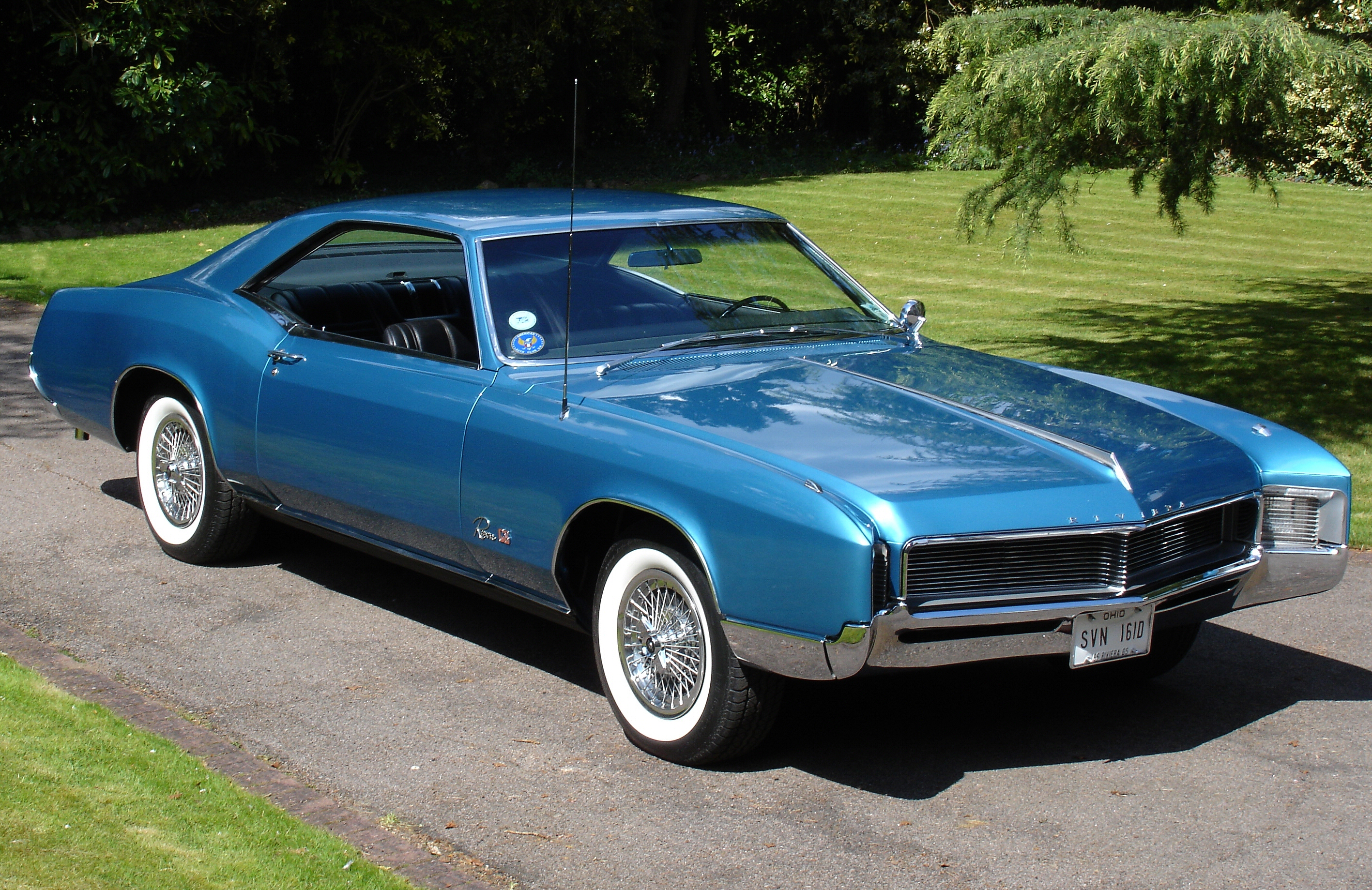
1965 Buick Riviera
"Pops and Zach, show you the 1965 Buick Riviera, all right? That was, may I be bold enough to say, that was a hell of a good-looking car. We're about to look at it together."
The 1965 Buick Riviera is a classic Buick from the 1960s. People like it because it has a very recognizable, stylish “old-school” American design. In this segment, they’re basically praising how good it looks and talking about how it changed from start to finish.
The 1965 Buick Riviera is a classic American personal-luxury coupe from Buick, known for its distinctive styling and long-hood, long-deck proportions. It’s often discussed by enthusiasts as a design icon of the mid-1960s, with a look that can change dramatically depending on how it was modified or restored.
Request an Explanation
Heard something you'd like explained? We'll add it to this episode.
Sign in to request explanations for terms you heard.
Want to learn more?
Browse our glossary for plain-English explanations of automotive terms, jargon, and concepts.
Help improve this episode
See something that's not quite right? Our annotations are AI-generated and can sometimes miss the mark. Click the flag icon on any annotation to suggest a correction.