The “two separate transactions” idea means the dealer treats the new car deal and your trade-in as two different parts. That can affect how they talk about the numbers, sometimes focusing on your monthly payment instead of the real total cost.
A “monthly budget” approach means the discussion centers on your payment each month. That can make it harder to see the full cost of the car and what they’re really offering for your trade-in.
“Cash value” means the real dollar amount the dealer is willing to pay for your old car. If you don’t know this number, it’s easy for the dealer to make the deal look better than it really is.
The “out the door price” is the final total you’ll pay at the dealership. It includes the car price plus things like taxes and fees, so it’s the best number to compare between offers.
A “trade-in” is when you turn in your current car to the dealer to help pay for a new one. The dealer assigns a value to your old car, and that value gets used to reduce what you owe.
A “four square” is a dealership deal sheet that shows four parts of the offer. It’s used to focus you on the monthly payment, even if the overall deal is worse once you look at the other numbers.
The “monthly payment” is the monthly cost of the car loan. A dealer can sometimes make that number seem good, but the total deal can still be expensive depending on the other numbers in the offer.
A “down payment” is money you pay upfront. It can lower the amount you finance, but a dealer can still structure the rest of the deal so you don’t actually save much overall.
A quota is a sales goal a car brand sets for a dealership. If the dealership sells enough cars by the deadline, they may get extra money or incentives.
This is a used-car program where the car maker “certifies” the car. The dealer has to meet certain standards, and the brand may also set separate sales goals for these certified used cars.
Sales objectives are just the dealership’s specific targets—like how many cars they should sell by a certain date. Hitting them can affect bonuses or rewards.
Maintenance costs are what you can expect to spend to keep a car running—like repairs and upkeep. The host is using a chart to estimate those costs for a 2023 Jeep Gladiator.
A trim level is the version of the car you buy, with different features and options. The host is saying the maintenance-cost numbers can change depending on which trim you’re looking at.
The Jeep Gladiator is a Jeep pickup truck. Here, they’re looking at predicted maintenance costs and how likely it is to need a big repair as the truck gets older.
A major repair means a big, costly problem that goes beyond normal upkeep. They’re giving percentages for how likely the truck is to need one as it ages.
Annual costs are the average yearly amount you might spend to keep the vehicle in good shape. They’re quoting estimated yearly totals for the Gladiator.
Concept
in its segment
“In its segment” means compared to similar cars or trucks. They’re saying the Gladiator looks better than other comparable vehicles when it comes to major repair odds.
“List price” is the sticker price—what the seller advertises the car for before any deals or discounts. It helps you compare the car’s original cost to what you’re paying today.
Carfax is a report that shows a used car’s history, like accidents or title problems, based on records from different sources. It’s one of the first things people check before buying a used vehicle.
Concept
market conditions for used Gladiator sports
Used-car prices aren’t the same everywhere. “Market conditions” means things like how many similar trucks are available in your area and how badly people want them right now.
MSRP is basically the car’s sticker price when it was new. Knowing the original MSRP helps you figure out whether a used price is a good deal or overpriced.
Invoice pricing is basically the price the car dealer pays the manufacturer for the car. Even if two dealers pay the same invoice price, they can still end up with different deals because of manufacturer incentives.
Stair step programs are like sales-volume “levels.” If a dealership sells enough cars, the manufacturer gives them better incentives, which can make the car cheaper for that dealer to buy.
Manufacturer incentives are money or deal structures the automaker offers to reduce the effective cost of a vehicle. They can include cash rebates, financing deals, or other programs that dealers can pass along to buyers.
This is a small Toyota meant for everyday commuting. The caller is saying their 2007 Yaris needs repairs like front brakes and rear suspension parts, and they’re wondering whether it’s worth paying for more work.
A suspension bushing is a soft part that helps the suspension move smoothly and reduces noise and harshness. If the rear ones wear out, the car can feel loose or start making noises, and it may need replacement.
Front brakes are the parts that help the car slow down from the front wheels. If they’re worn, you may need new pads and possibly rotors, which can be expensive on an older car.
The muffler is the part of the exhaust that makes the car quieter. Over time it can rust or fail, and fixing it can cost money—especially on an older car.
The exhaust manifold is the part that collects exhaust gases coming out of the engine. If it cracks or fails, it can be a costly repair because it’s hard to access and the parts can be damaged by heat.
A warranty is a guarantee that if something breaks within a certain time, the company will pay for the repair. The caller thinks leasing would help avoid expensive surprises.
High mileage means the car has been driven a lot. More driving usually means more wear, so the caller worries it could need costly repairs.
Concept
lease a new car for reliability
Leasing means you pay to drive a new car for a few years instead of buying an older one. The hope is that a newer car will be less likely to break down, so you’re not stuck paying for expensive repairs.
Concept
repair ... and try and make it last a little longer
This is the choice to fix the car you already have and keep using it. The key question is whether the repair bill is smaller than what you’d spend to replace it.
Wholesale price is what a dealer might pay for a car, not what you’d pay as a customer. Dealers usually pay less because they need room to profit and to cover reconditioning costs.
Cars need ongoing upkeep and occasional fixes. The point is that if you buy an older used car, you should expect to spend money on repairs eventually.
Term
do it signing
This sounds like “due at signing,” meaning you pay some money right when you start the lease. A low monthly payment ad can be misleading if you have to pay a lot upfront.
A “recon fee” is money a dealer charges to fix up and prepare a used car for sale. It’s not the car’s sticker price, so it can make the total cost higher.
OTD means the final total price you’ll pay when you buy the car. It includes taxes and dealer fees, so it’s the best number to compare between listings.
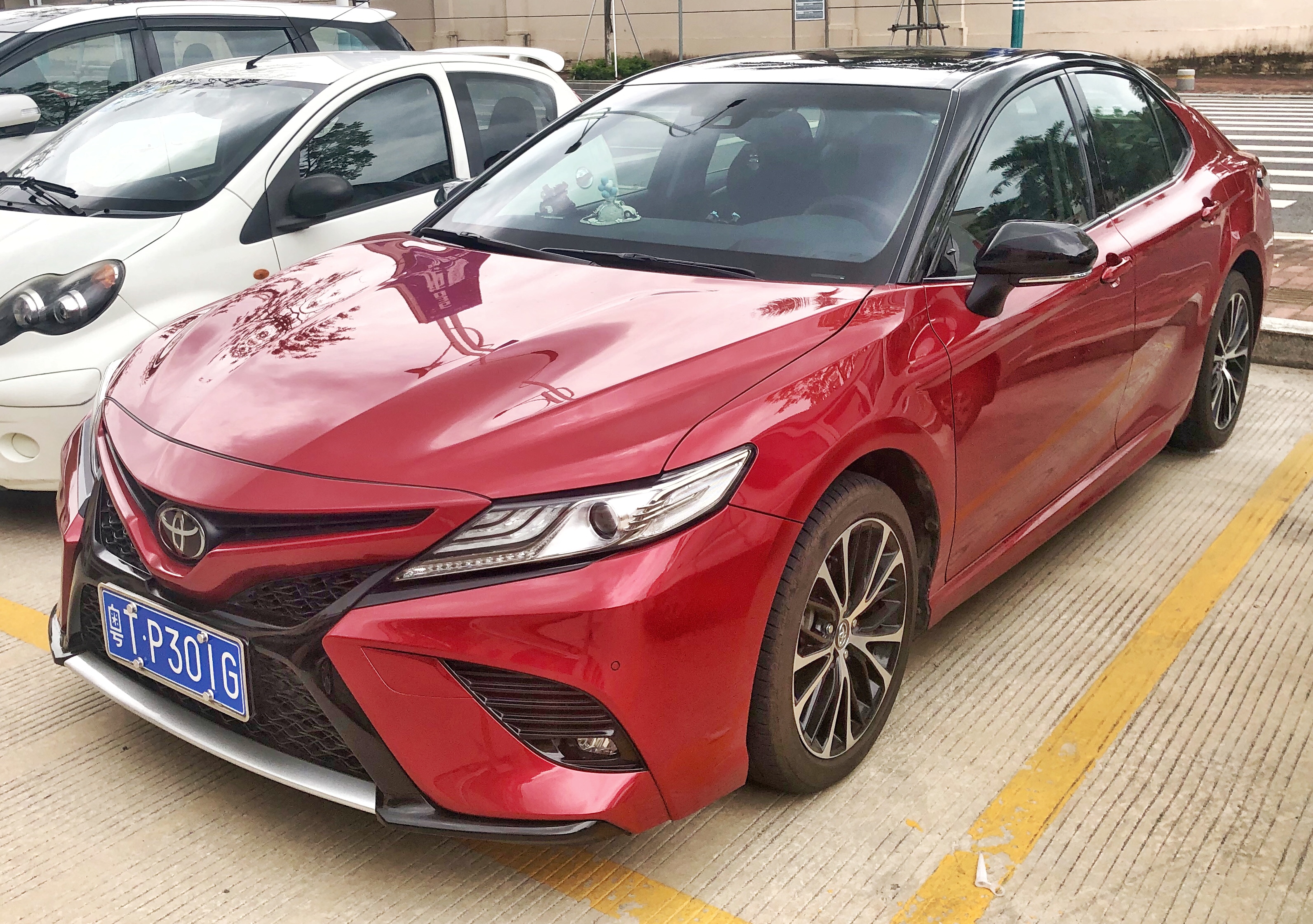
The 2016 Toyota Camry XSE is a mid-size sedan with a more “sporty” trim level and extra equipment. Here it’s mentioned because the hosts are comparing what similar used cars should cost.
A “dock fee” is an extra charge the dealer adds on top of the car’s price. It can be for things like getting the car ready or moving it around, and it affects the final amount you pay.
A “reconditioning fee” is what the dealer charges to fix up a used car before selling it. Ask what they actually did, because it can change the total price a lot.
A pre-purchase inspection is when a trusted mechanic checks the exact car you’re thinking of buying. It can reveal problems you can’t easily see, helping you avoid expensive surprises.
CarEdge’s certified program is the approval tier for dealer partners, and the segment explains that eligibility depends on the dealer’s DTI score. The host frames it as a structured way to qualify dealers based on pricing transparency.
“Bait and switch add-ons” refers to quoting a low price to attract a buyer, then adding extra charges later that weren’t clearly disclosed up front. The host links this behavior to why dealers may not earn a top transparency grade.
It’s like an undercover test where a company checks what a dealer is like by contacting them as if they were a regular shopper. The goal is to see whether the dealer’s pricing and process are truly transparent.
In this segment, an “F grade” is the consequence of not providing pricing, according to CarEdge’s dealer transparency scoring. It’s presented as a hard cutoff that affects whether a dealer meets the program’s transparency expectations.
The Mazda 3 is a popular small car from Mazda. The question here is whether Mazda has discounts on it right now, and the answer depends on how many cars are available and how many people are buying them.
The Mazda RX-3 is an older Mazda car that’s known for having a special type of engine. It’s not a model that many people bought, so it can be harder to find. That’s why it might be mentioned when someone talks about how often Mazda sells certain models.
The carmaker’s website is where you can find the official discounts and deal offers directly from the manufacturer. The idea is to check those first so you know what the factory is offering before you talk to a dealer.
A zip code helps the website figure out which deals apply in your area. Car discounts can vary by region, so the site asks for your location to show the right offers.
A “factory offer” is the official discount or financing deal the carmaker itself is offering. The host suggests you check that first so you can tell whether the dealer is offering something extra—or trying to change the deal.
Term
contact multiple dealers
This means you ask more than one car dealer for a price. Doing that helps you compare offers and usually gives you more leverage when negotiating.
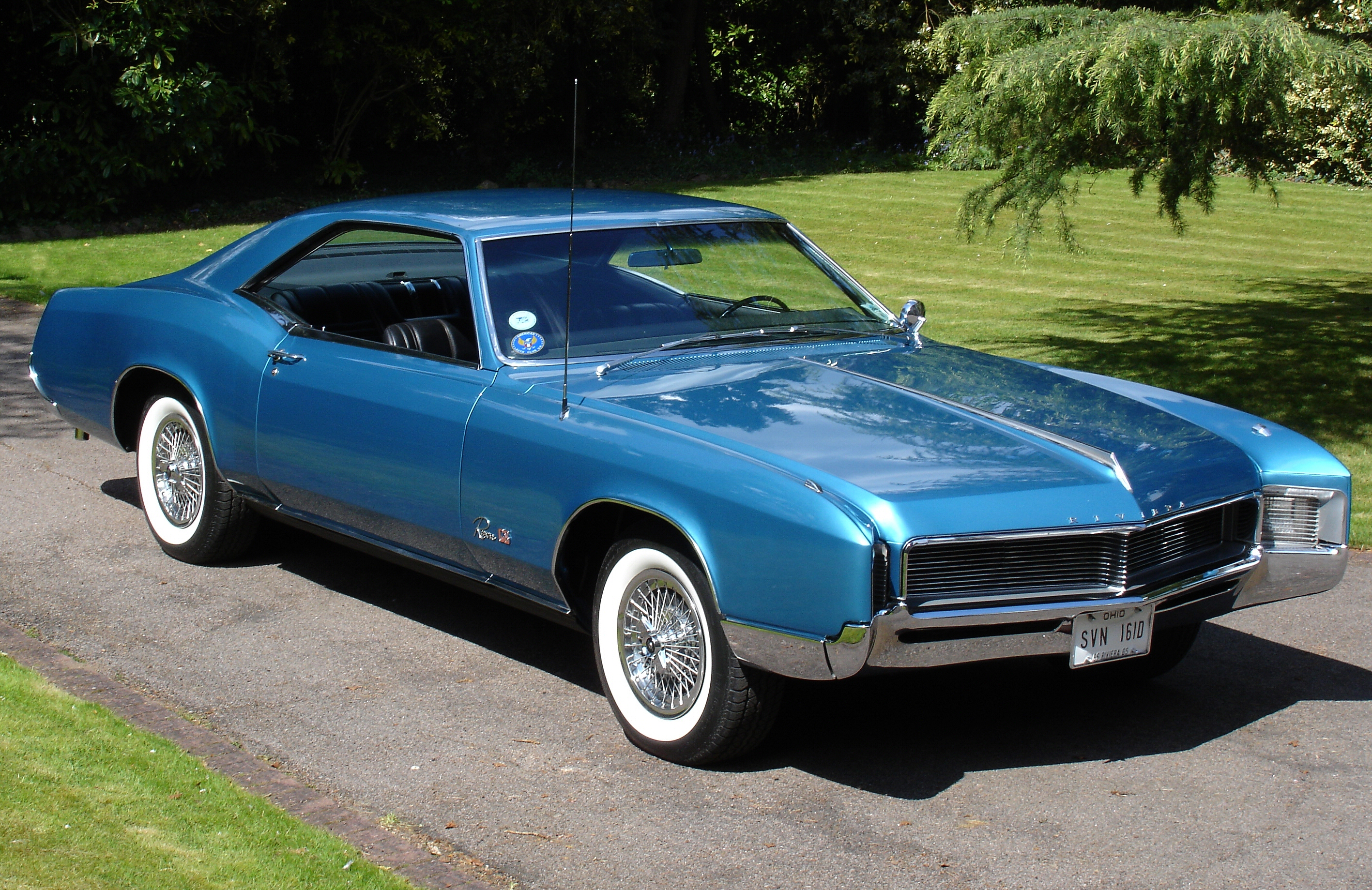
The 1965 Buick Riviera is a classic Buick from the 1960s. People like it because it has a very recognizable, stylish “old-school” American design. In this segment, they’re basically praising how good it looks and talking about how it changed from start to finish.
LIVE
Every team, every topic, everywhere. This is Believe.
It's noon here in Venter City, New Jersey, and our nation's capital, Washington, D.C.
And this is Courage Live for Friday, July 17th with your hosts, me, Ray, here in Venter and Zach,
hanging out in this office in D.C. And if it's Friday, it must be Q&A with Zach and Ray.
What's going on, Hanson?
First question. Why didn't I get a haircut yesterday? Like, what am I doing?
This is bad. I need a haircut.
Oh, terribly, yes. Some people want to know if you have a perm.
I do not have a perm. No, this is natural. But man, oh man, do I need a haircut?
All right, folks, today's show, Friday Q&A with Pops and, I guess, no, I've got to say Zach and Ray.
With Zach and Ray, we're going to have some fun today. Thanks, everyone, for tuning in.
It's going to be an enjoyable 30 minutes with all of y'all.
Please, please, please share your thoughts and your questions in the chat.
We will turn our attention there in just a moment.
Today's show is brought to you by CarEdge.com.
For those of you that like the edge when it comes to buying your car, head to CarEdge.com.
We are in year almost seven now of building out our car search, our buying service,
Ask CarEdge, our research center, dealer reviews, and so much more.
I encourage everyone to start with a free consultation. You can meet our team, real humans on our team.
Please, please, please check out CarEdge.com to learn more.
Let's start, Dad. I guess we'll go to my email inbox. How's that sound?
Well, you know, I can't remember the last time I was in your email inbox, so let's do it.
All right. Here we go, Dad. This comes from Steve Austin.
Hi, Zach. My wife and I are currently a one car household, but with two children.
We're now in the earliest stages of buying a second vehicle.
After coming across your YouTube channel recently, I have a question as we begin to explore the purchase of another vehicle.
First, when do we begin shopping for a vehicle?
Well, the CarEdge advice recommends not mentioning a trade-in until after the out-the-door price for the purchased vehicle has been determined.
I'm curious if it would be unwise to disclose that I have a trade-in and trade-in any early conversations with a salesperson.
I wouldn't want to lie, but would you recommend not discussing a trade-in at all before reaching an out-the-door price
when telling a salesperson that there is not a trade but in a weaker position knowing that I don't have that to offer at the end?
All right, Dad. What's your take on this? When do I bring up the trade-in when it comes to buying a new or used car?
One of the things that a salesperson is going to do is they're going to ask if you have a trade.
You don't want to lie. I very well might have a trade. I have a vehicle that I currently own.
I don't know if I'm going to trade it in, if I'm going to sell it privately,
or if I'm going to sell it to another dealership.
What do I mean when I say that as a customer?
Well, it's easy to go online today and get cash offers for your vehicle.
You put in a little bit of information and it'll spit out a cash offer.
You can also take your vehicle to dealerships in your area and say,
I'm not thinking of buying anything at the moment.
I am thinking of possibly selling my car. How much would you pay me for it?
Once you have that information from local dealerships or the cash offers from online sources,
you can use that as a negotiating tool as the second step of your new car purchase.
The first step is to reach an agreeable out-the-door number,
knowing every charge, every line item and what that total is.
Then the second transaction is you selling the dealership your trade in
if you decide that you want to do that.
Why is it this way? Why do you suggest that people treat these as two separate transactions?
I also then want to transition after you answer that.
You were sharing some advice. You need 15 to 30 days to shop for a great deal
and your trade you need to evaluate separately.
It might take some time here.
Help us understand why this is the way that it is,
what the pitfalls are of doing it the other way.
What's the time commitment here? How involved will it be?
Things like that.
The reason it's two separate transactions is because it's two separate transactions.
Get into the details of that because obviously there's that way to obfuscate
what you're actually buying a car for. Give us that type of decision.
The reason it's two separate transactions is because if you tell them up front
that you have a traded or that you're going to trade your car,
typically what's going to happen is they're only going to operate
on what your monthly budget is going to be
and that you might not have a real clear understanding
as to how much they are actually offering you for your car,
what the actual cash value is that they're willing to pay for your car.
That's not to say that after you get an agreed upon out the door price on the new car
and that you then come to some type of consensus on the trade-in
that if you're in a state where you get a tax credit for the value of the trade
that that then wouldn't lower the total out the door price.
It will.
But this is a way for here's the key.
It's really, it's this simple.
You want to buy the new car as inexpensively as you possibly can.
The dealership wants to sell it to you for the most that they possibly can.
Conversely, they want to buy your car as inexpensively as they possibly can
and you want them to pay the most for it that they possibly can.
That's why you do it this way.
And if I made dad consumer reports that a great article,
like they actually interviewed me and my dad for it,
which is awesome how to beat the four square and other car dealership sales tactics.
I'm going to scroll down here to the actual example of a four square.
This is what a lot of dealerships use to do a negotiation with a customer.
And you can see there, there's a trade-in amount of vehicle price down payment,
monthly payment.
This is the type of, hey, look here, don't look there that I think is so prevalent
within the car buying process and thus the reason to focus on things very simply
as buying a car for the best price I can get.
I'm selling a car for the best price I can get.
You avoid this four square where next thing,
maybe the payment is actually within your reasoning fair,
but you have no clue of what they're offering you for the trade-in is right,
if the vehicle price is right, or if the down payment is just being manipulated.
So this article from Consumer Reports is a great example of that happens in a dealership.
This is why you do things.
Look at four square again.
And look at that fourth bottom, the fourth square on the right,
the monthly payment that's got four lines underlining it to attract your eyes to that.
It's only 845 dollars and 61 cents.
You can't tell me how many months that's for.
I didn't tell you how many months that's for.
They didn't tell you if the trade-in value is fair or unfair.
There's just, again, this is the why.
And I love how you put it that you're trying to get the best price when you buy a car
and you're trying to get the best price when you sell a car and coupling them together.
Unfortunately, obfuscates.
I don't love using such a big word.
Makes it confusing.
What is going on with this one hair, man?
You have issues with your hair that I can only dream about.
There we go.
It's gone.
Okay, we're good.
All right.
Back to the show.
Back to the show.
Next question.
Friday show.
May I say one thing?
It's still not good.
It's better.
Better.
Yeah.
I got rid of the one though.
This is from Donna.
Do dealers who sell used vehicles from other than their own manufacturer have quotas on
those vehicles?
For instance, a Toyota dealer selling a used Honda vehicle.
This is a really interesting question, Dad.
Can you explain what quotas are for new car dealerships?
And then can you explain if there are quotas for used car sales as well?
Well, sometimes for manufacturers certified pre-owned.
Can we start with just quotas for new cars in general?
Let's start with the simplest here.
Well, many times there are sales goals or objectives that are set by the manufacturer
for any given dealership.
It could be on a monthly basis, it could be on a quarterly basis.
It could be a combination of month by month by quarter.
And so they're hoping or suggesting that you should sell X number of these vehicles
or models in that timeframe.
When it comes to pre-owned cars, manufacturers sometimes will set up sales objectives for
manufacturer certified pre-owned cars.
In the case of if you're at a Toyota dealership, does that Toyota dealership have a quota
for how many used Honda's it sells?
No, they only care about how many used cars they sell as a whole above and beyond any
quota they might have from Toyota for the certified pre-owned.
Yeah, and again, I'll just restate in my own words, new cars, there's some sort of goal
from the manufacturer.
You hit that, you get a bunch of money at the end of the month.
Used cars, if it's a certified pre-owned news card, then you get that potential quota.
Used cars that aren't certified pre-owned, the only quota could be some sort of internal
sales goal.
Is that common debt?
Are they internal to the dealership sales goals?
Like, hey, if you sell X number of used cars this month to get a bonus, like that could
maybe be a thing?
It could be where the pre-owned manager says, hey, if we sell 100 used cars this month,
there's an extra X amount of dollars per car sold for each and every car that you sold.
Could be something like that.
But it is not a manufacturer or any other quota that says, oh, gee, we'd really like
you to sell 10 used Honda's this month.
Exactly, yeah.
All right, Dad, let's come to the chat and then we'll go back to the email and we'll
head over to the community forum as well.
Again, Friday Q&A with Zach and Ray.
It really does roll off the tongue quite nicely from Chad.
Thank you for this, Chad.
Opinion on a 2023 Jeep Gladiator Sport with a $29,000 list price has 20,000 miles on it
for reliability.
All right, so I'm going to pull up some data.
We'll start with the data and then we'll get your just general thoughts on this, Dad.
You know where I'm heading.
I'm going to caredge.com.
I'm going to go to research and I'm going to go to maintenance costs.
Yes.
And this was a Jeep.
What was it, Dad?
Gladiator 2023.
Gladiator.
So I'm going to then view the maintenance costs.
Gladiator Sport, if you can get down to a trim level, but I assume it comes to that.
Yep.
So we just have the data here.
I'm going to remove the question off the screen just for a second.
So it was a 2023.
So now I'm looking at the caredge data we have for maintenance costs, excuse me, on
the Jeep Gladiator.
And I'm going to look at this chart in particular.
So it's a 2023, which means it's three years old.
Yes.
So the likelihood of a major repair is 7% right now.
Yes.
Next year it jumps up to 12%.
We're looking at $1,000 in annual costs, $1,100 in annual, 17% likelihood.
Let's see.
Let's see.
Let's see.
37% chance during its lifetime it's going to have a major repair.
That's actually 7.3% better than similar vehicles in its segment.
So there you go.
That's at least what the data on caredge.com shows.
Now, your take, Dad, 2023 Jeep Gladiator Sport, $29,000 list price, 20,000 miles on
it.
What are you thinking?
I don't know.
I mean, I don't know.
How much?
The honesty.
The honesty.
I love it.
What would you be looking at?
Wait.
You're asking me to put together a 10,000 piece jigsaw puzzle and only like 9,000 pieces
are missing.
Where is the Jeep Gladiator?
What state are we in?
Okay.
It's only got 20,000 miles.
What's the car fax look like?
One of the market conditions for used Gladiator sports in that area.
So how would you like me to answer that question?
I don't know.
What was its original MSRP?
Was it a $45,000 Gladiator or was it a $60,000 Gladiator, right?
Chad, share with us the VIN.
Share with us the VIN and we'll pull it up on the car.
It's a garage car search where you can see the original MSRP and all that stuff.
So please, please, please, please put it in the chat and we will spend some time there.
Dad, back to email then.
I don't mind trying to help.
Here we go.
Here we go.
Pennsylvania clean car fax market is good.
MSRP was $42,000.
Okay.
So that sounds like it's a little expensive for a three-year-old soon to be four-year-old.
They're saying that it's only depreciated $13,000 in three years.
What's the zip code in Philadelphia?
Do you remember one off the top of your head?
Well, I can tell you in Springfield where Uncle Kenny lives, 1-9-0-6-4.
1-9-0-6-4.
Okay.
And now we're looking for, it was a 2023 Jeep Gladiator sport.
All right.
Give me a second here, Jeep Gladiator.
There it is.
Trim.
Bear with me for a second.
We've got nowhere to be.
Sport.
All right.
So let's see here.
Wow.
Within 100 miles of Uncle Kenny, Dad, my uncle and his brother, yeah, lives in the zip code
in Pennsylvania.
There's three of them.
And we've got 35,000 miles, 21,000 miles, 19,000 miles.
And you can see the prices that they're advertising right here.
Okay.
So let's assume for a second.
I don't know, but let's assume for a second.
It's the one with 21,813 miles in York, Pennsylvania, York Volkswagen ladies and gentlemen.
So they're asking 30,000 for this.
Yeah.
It was a trade-in.
Yeah.
They've had it for 46 days, fire sale.
That is untimely considering what's going on.
They're saying it's depreciated 27% over those.
Yeah.
And I think it should depreciate more, okay?
I realize that dealerships are paying a premium for lower mileage, younger used cars.
I get that.
I do.
And so I can appreciate where they're coming from, you know, pricing at just under $30,000.
But I just think that it's still too much.
I think maybe it's, what, a $26,000, $27,000 vehicle?
I think Chad's right there with you.
So there we go.
Cool.
I feel like we've been able to help Chad out.
Dad, I want to turn back to email for a second here.
Then we're going to go over to the community forum again.
You can email me, Zach, zachatcaredge.com.
Just put in the subject line Friday show and we pulled them up on the Friday show.
This one's from Lori.
You ready, Dad?
Yeah, I hope so.
Do top-selling dealerships get better invoice pricing from the manufacturer?
No.
The invoice pricing's the same.
However, depending on manufacturer incentives and stair step programs, top-performing dealerships
could end up, because they sell more cars than smaller dealerships, could end up hitting
stair step programs that ultimately allow them to have a lower cost for a vehicle.
My gosh, man.
You're going so deep.
The invoice price does not change from dealer to dealer.
The stair step program is a bonus program, right?
Yes, but I thought you want me to.
I thought the whole concept of this is to go deep.
I want you to go deep.
I'm sorry.
I don't mean to do it.
But the short answer is no, the invoice price-
No, that was the first answer.
Wasn't it?
I said no.
Everybody pays the same.
I said that.
I did.
I'm going to defend myself, damn it.
I said that.
That was the first thing I said.
Do all dealerships get the same deal from the factory regardless of how much inventory
they move?
Do all dealerships get the same deal from the factory regardless of how much inventory they
move?
The first program is where the manufacturer might say, if you sell, your objective for
this month is 100X, whatever the vehicle is.
Sell 100 robs.
100 robs.
If you reach 90% of your objective and sell 90 robs, we'll give you $750 per rogues sold.
If you hit 100% of your objective, that might jump up to let's say $1,250 per rogues sold.
If you hit 110% of your objective or higher, well then that number might jump to $2,000
per rogues sold.
That's what a stair step program is.
If a dealer only reaches 90%, obviously ultimately the cost in his vehicle was a little higher
than somebody that 100, 10% of their objective, so I'm doing my best to go deep and make it
understandable.
The folks love when you go deep.
We've got from Bob over on the car edge community, formcaredge.com slash community.
If you're not on there, you're missing out on an awfully good time.
From Bob, let's go through this dad hi pops and Zach.
I have a 2007 Toyota Yaris, wow, that I'd hope to keep until my condo is paid off this
December.
Unfortunately, it's not the point where it needs front brakes and new rear suspension
bushing.
I've already spent money replacing the muffler exhaust manifold and several other parts over
the past few months.
I'm struggling with whether it's worth putting any more money into this car.
On the other hand, this doesn't seem like a great time to buy a used car and I am not
sure if I can comfortably afford to lease a new one.
A lease is appealing because it would give me a reliable vehicle under warranty and eliminate
the risk of a surprise repair bill.
However, the monthly payment would stretch my budget and I want to keep enough of a financial
cushion for unexpected condo repairs, medical expenses, and other emergencies.
I'm 69 years old and living on a fixed income, so that cushion is important.
The alternative is buying an older used car that fits my budget, but I'm concerned I'd
end up with a high mileage vehicle that could require expensive repairs anyway.
I'm honestly feeling stuck and more stressed about this than I'd like to admit.
If you were in my situation, would you repair the Yaris and try and make it last a little
longer buying an expensive used car, lease a new car for reliability?
I truly appreciate your advice and perspective.
Thank you.
This is again from Bob.
Dad, what an incredibly thoughtful question.
I'm so curious to get your take on this.
Well, let's say that you have a Yaris that's realistically 20 years old.
What is the value of that Yaris today?
If it were in decent condition, what would it sell for?
If somebody like our dear friend Brandon, that car question is answered at his lot, if he
had a Toyota Yaris 2007, what would he sell it for?
$2,500?
$2,000?
So, on the wholesale level, what's the car worth?
Maybe $1,000 bucks, but you know that car.
I don't know how much you would have to spend in order to bring it up to the condition you'd
feel comfortable with it, but you know what you've spent in the past.
Your mechanic can certainly give you a clearer understanding as to what you might be looking
at in the future.
And if it's not, it's got to be cheaper to repair that Yaris.
But I'm guessing about a lot of things like how many miles does it have on it?
Is it a 100,000 mile Yaris?
Is it a 250,000 mile Yaris?
I mean, there's so many things I don't know, but it would seem to me that if you know the car
and that you have over the past 20 years maintained the vehicle, well, if you make the
repairs that are necessary at this point, it still could be serviceable for a number of years
to come. And it would certainly be less expensive than buying, once again, an older used car that
you definitely will be looking at major repair expenses moving forward.
So if it were me and I had limited income, I think I would repair the Yaris.
Yeah, I think I'm with you.
I think getting an older used car, that scares me.
You already got one.
Yeah, you're already driving one.
Exactly. Like if I'm going to get an older used car and expect that I'm not going to have
maintenance and repairs like that, so yeah, stick with one I already know.
Or if I can stretch in a comfortable way to that new lease, then sure, that's an option.
But I wouldn't. And here's the reason why I wouldn't stretch for a lease.
You keep a car forever.
Yeah.
If it's your own car.
What if you get into a lease at a comfortable payment today?
Well, there's no guarantee that you can replace that lease vehicle in three years
at that same comfortable payment.
That's the one problem with a lease.
We have seen the cost of leases skyrocket.
We see cheap payments that are advertised with $3,995 do it signing or $5,000 do it signing.
Well, that's not a bargain.
It seems to me as someone who keeps a vehicle a long time, leasing is not the appropriate
way to go for you.
It doesn't make sense to buy a different older used car.
You're already driving an older used car.
You know what it's going to take to fix it.
Fix it.
Love it.
Ah, love that, Dad.
Thank you so much for that.
All right.
Let's turn our attention to one more question and answer from the community forum for this Friday.
Q&A with Zach and Ray.
This is from Amiri Amari.
Excuse me.
OTD price for a used 2016 Toyota Camry XSE.
I plan to negotiate the recon fee.
I'm also interested in a 2021 Camry XSE with 122,000 miles on it.
List of price 15,777.
I can assume the OTD price would be approximately 18,000, which is a better deal.
So we got one deal here, which is on a 2016 Toyota Camry.
Yeah, Toyota Camry XSE with 126,000 miles on it.
They're asking 13 large for it, Dad.
They're putting a $1,000 dock fee on it.
Tax, that's tax.
Title registration, lien fee, okay.
They've got everything here, 365.
And then he mentioned recon.
Yeah, there you go.
You can see it there, $995 recon fee.
So it looks like we've got $2,000 in fees, ultimately taking the OTD with taxes and
everything to $16,321.
So you think in 2016, Camry XSE at a little over $16,000 or a 2021 with the similar mileage
at $18,000, what do you think?
We don't know for sure that it's $18,000.
He's guessing.
Yeah.
Okay.
That dealership that has it listed for 15777, they very well might have a $1,000 dock fee.
They very well may have a $1,000 reconditioning fee or more.
So you can't guess.
If you want to compare and contrast, you have to get that after door number the other one.
And if I may, you have to drive both.
And if you decide on one or the other, then you need to get a pre-purchase inspection done
on either one or both.
So you have a better understanding as to what it is that you're looking at.
One is 10 years old and one is what, five years old or four years or so.
There's a number of variables, but the biggest variable is you need to not guess what that
after door number would be on the other one.
You need to find out exactly what it is.
I think that spot makes plenty of sense that.
Let's turn our attention here to the chat and then we'll go back to email for one more.
We've got a couple of questions coming in.
For example, we've got this one from Bless the Music.
This is Pam.
Hi.
How does Car Edge determine how car dealers in Florida become certified, excuse me,
Car Edge dealer partners?
How can we report what they are really doing?
So first and foremost, you can always email us.
Zach, again, zach.caredge.com.
We love sharing what's going on in the world with your experiences with dealers.
The way that we have criteria for all dealer partners, not just Florida specific, but Florida
definitely needs it, is based on their dealer transparency grade.
So everything is predicated on the dealer transparency index.
And so the only way that you can even be eligible to join our certified program
is that you have an A grade on the DTI, DTI Dealer Transparency Index.
The only way that you can have an A on the dealer transparency index
is to actually quote prices that transparently that do not have bait and switch add-ons,
things like that.
So that's how we work.
That's how it works.
And the way that we verify that to be clear is we use our AI to mystery shop every dealer
that we interact with every single month.
So they have no clue who's shopping them, what's shopping them.
Oh, also to be clear here, if you don't give pricing,
you obviously get an F grade.
And so there's no chance that you can work with us as a dealer partner.
So yeah, the intent there is that we can help folks find dealers
who actually give good information and don't bait and switch you.
It's a really crazy concept, isn't it?
Indeed.
Shocking that we have to do that.
We've got another one in the chat, Dad.
Are there offering, this is from Thinker outside the box,
are they offering good deals on Mazda's right now, specifically the Mazda 3s?
I think Mazda's got a new supply of inventory.
Yeah, but my guess is probably not an oversupply of Mazda 3s.
And the only reason I say that is they don't sell a whole lot of,
they don't sell the Mazda 3 in volume, in any great volume,
at least certainly not the volume that they used to.
That doesn't preclude that there couldn't be good deals on them.
True.
You know, the best thing to do, as I like to suggest, is whatever brands you're looking at,
go to the manufacturer's website, plug in, look up offers.
Sometimes they ask what your zip code is, because offers can be regionalized.
And plug in your zip if they ask for it and find out what type of offers they have,
consumer offers, that they have one of the various models.
Start there before you then contact the dealer and say,
okay, I know what the factory offer is.
What are you going to do for me?
Absolutely.
And then obviously the tactic there is contact multiple dealers, get OTT quotes.
From Rich.
Thank you, Rich.
We appreciate this.
Pops and Zach, show you the 1965 Buick Riviera, all right?
That was, may I be bold enough to say, that was a hell of a good-looking car.
We're about to look at it together.
Give me a second.
I mean, from how it started to where it ended up,
it was the 65 was, I thought, a really good-looking and, I mean, that's a great-looking car.
Yeah, that looks cool.
Yeah, yeah.
Good one, Rich.
Yeah, and where they finally ended up was, it just didn't look like it was from the same DNA.
But yeah, I thought the Riviera was always a good-looking car.
Nice job, Rich.
Got us looking at some good stuff today, which we really appreciate.
All right, folks, again, we can help you out with anything.
My dad and I would be so proud to assist you.
CarEdge.com, that's where all of our resources live.
A lot of the stuff that we've referenced today is there, the community forum, of course,
as well, research, and then click on community forum.
So much good information that if you're not using CarEdge.com, you're missing out.
So please take advantage of that.
Enjoy the upcoming weekend.
If you're in a state like my dad and I are, where there is the poor air quality right now
as a result of the wildfires, be careful.
I walked over to the office and I felt it.
My chest hurts.
So yeah, please be careful outside.
It's pretty gross in those areas right now.
I used my inhaler this morning because even in my apartment with my air purifier,
it was in the yellow zone letting me know that even the air inside the apartment's
not that good at the moment.
Yeah, so be careful.
Be careful.
Dad, enjoy the upcoming weekend.
I look forward to seeing you in person on Sunday through safe travels.
Safe travels.
We'll watch the World Cup final hang out with my sister and your granddaughter,
my niece.
It'll be a really fun time.
So get here safely.
We'll look forward to seeing you then.
Somebody wants a tan up.
It's, I just, I can't help it.
It's there.
If you liked the show, please take a moment to rate, review, and subscribe.
It really does help the show to grow.
Thank you for listening.
About this episode
A live listener Q&A kicks off with a family planning a second vehicle, then quickly turns into practical negotiation strategy: settle an agreeable out-the-door number first, and handle the trade-in as a separate transaction. The hosts explain how “four square” worksheets and monthly-payment focus can hide unfavorable numbers, and how dealer add-ons like recon and dock fees change the real total. Later, a former dealer breaks down used-car and CPO sales quotas, then they review a 2023 Jeep Gladiator Sport’s pricing and maintenance-cost odds.
Today on CarEdge Live, Ray and Zach answer your questions! Tune in for Friday car buying Q&A with Ray and Zach. Hosted by Simplecast, an AdsWizz company. See https://pcm.adswizz.com
for information about our collection and use of personal data for
advertising.