Negative equity means your car is worth less than what you still owe on your loan. So when you try to trade it in, you may still have to pay the difference.
Chevrolet is the company making the Silverado. They’re mentioned here because their financing deals may make it easier for people to buy again even if they’re already in debt on their current truck.
Ford is brought up as a comparison to Chevrolet. The hosts suggest Ford may also be using financing/approval tactics that can help people buy again even when they’re underwater.
0% financing means the loan has no interest charge. The catch is that it doesn’t automatically fix the problem if you already owe more than the car is worth.
This is Chevrolet’s big pickup truck. The hosts are talking about a problem where the truck is worth less than what the owner still owes on the loan, so trading it in can leave you owing even more.
The Ford F-150 is a popular pickup truck. In this segment, it’s mentioned to illustrate how car financing deals can still leave buyers owing too much later, especially if the loan is long and the car loses value.
“Sub-vented” here means the interest rate is being reduced through a special financing program. It can make the monthly payment seem better, but it doesn’t automatically prevent buyers from getting stuck with a loan that’s hard to escape.
A loan term is how long you have to pay back your car loan. A longer term can make the monthly payment smaller, but it can also cost more overall and can make it harder to get out of the loan later.
Loan-to-value ratio is a way to measure how much you’re borrowing compared to what the car is worth. If the ratio is high, you’re more likely to owe more than the car is worth later, especially if the car’s value drops.
Collateralized means the bank is counting on the car’s value to protect the loan. If the car is worth less than what you owe, the bank has less protection.
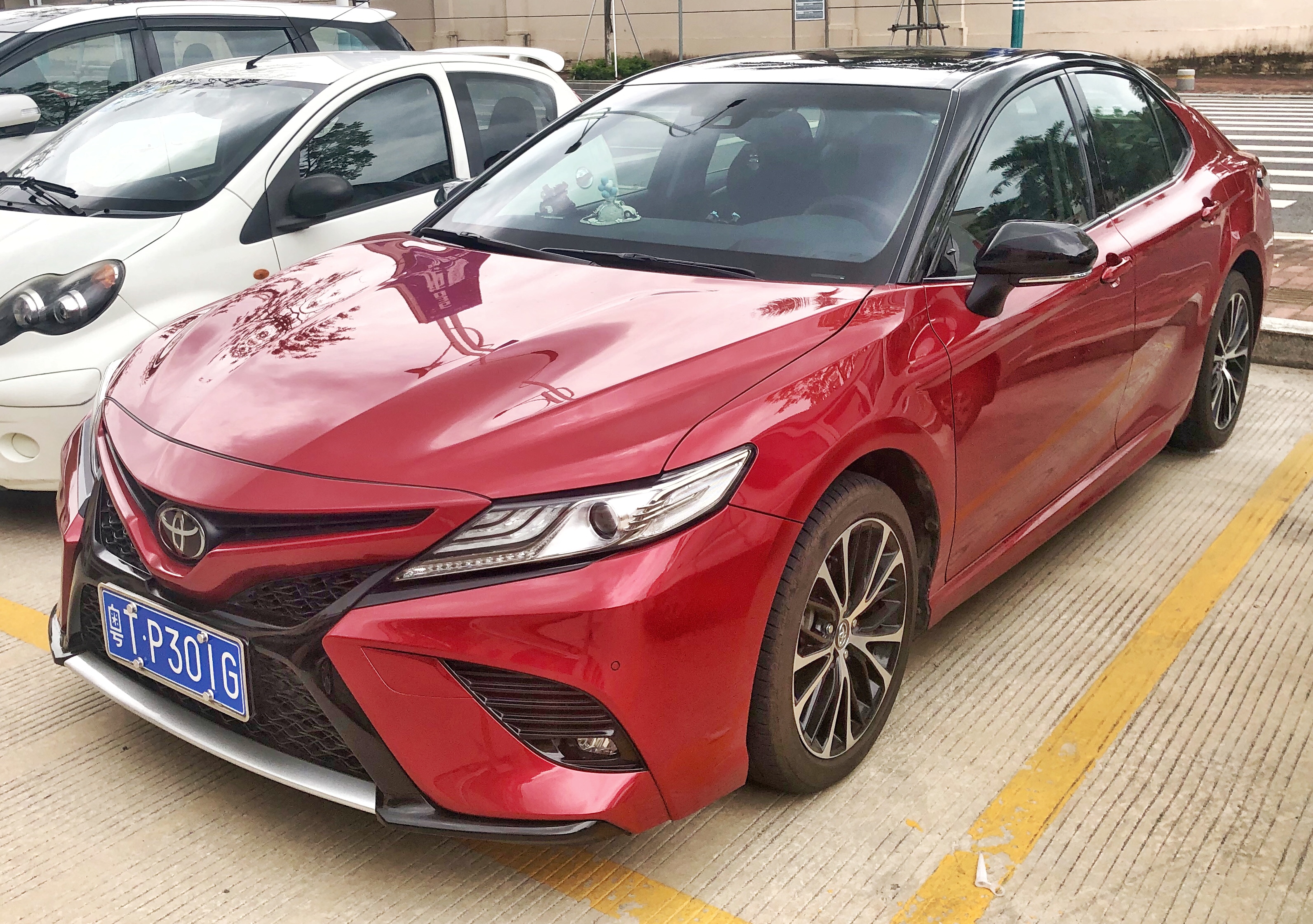
The Toyota Camry is a popular, dependable family sedan. Even though it usually holds its value pretty well, this episode explains how paying big dealer markups can still put buyers in a bad loan position.
Dealer markups are added fees dealers charge above the normal price. If you pay more than the car is really worth, the car can lose value later and you may end up owing more than it’s worth.
A Toyota RAV4 is a popular SUV that many people buy with a loan. If a dealer adds expensive extras and you finance those too, you can end up owing more than the car is worth.
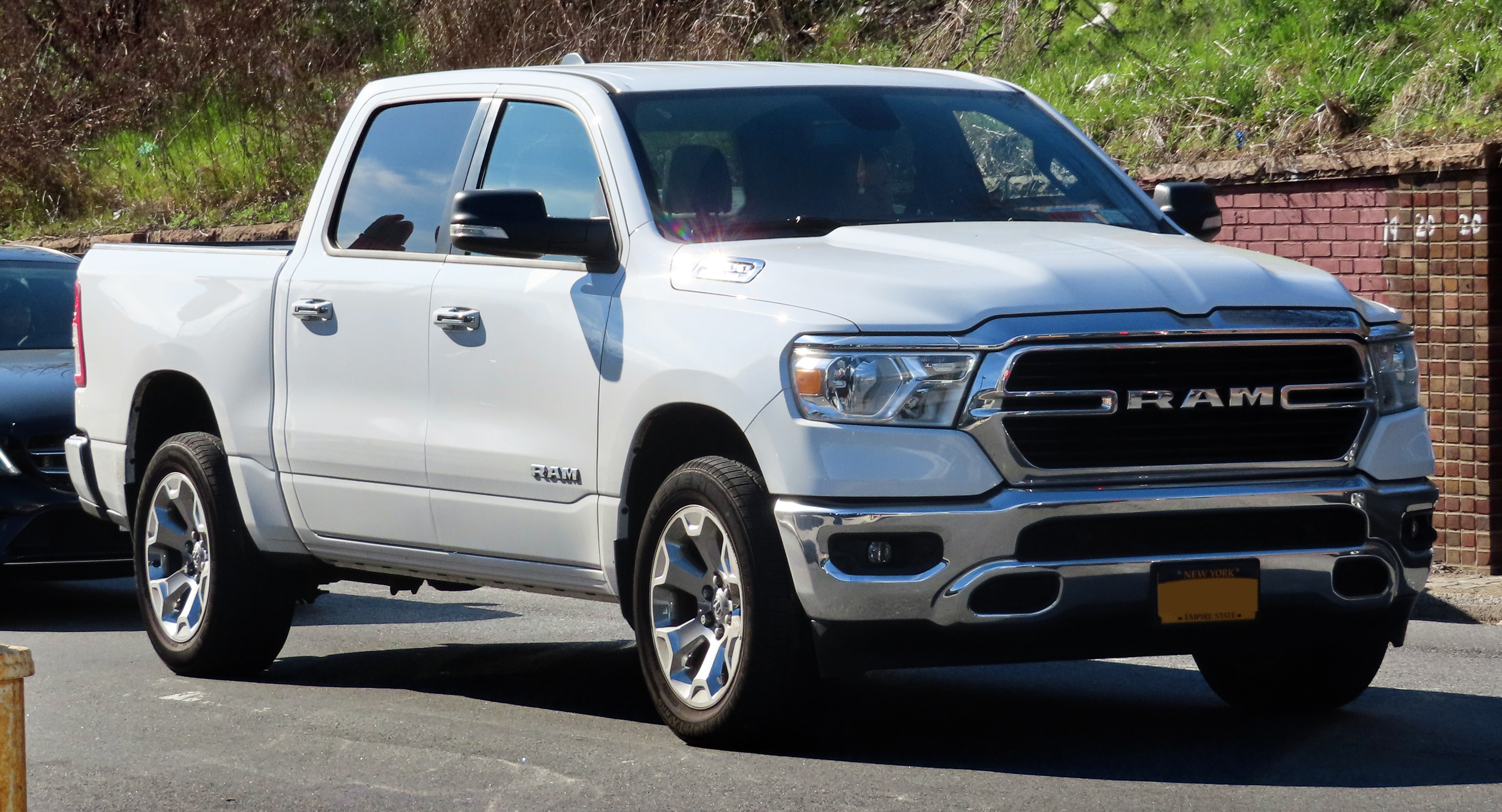
The Ram 1500 is a large pickup truck. The podcast mentions it because some owners owe a lot more on their loan than the truck is worth right now. That’s negative equity.
The Ram 1500 is a full-size pickup truck. The hosts are saying that many buyers of this truck end up owing more than the truck is worth, which makes trading it in later costly.
The Nissan Rogue is a smaller SUV/crossover. In this discussion it’s mentioned as the vehicle people are trading in (or comparing against) when talking about how much negative equity shows up in deals.
The Honda CR-V is a popular compact SUV. The hosts are saying CR-V owners are “less upside down” than many truck owners, meaning the gap between what they owe and what the car is worth is smaller.
A market adjustment is an extra charge dealers add on top of the normal price because the car is in high demand. Paying it can make it harder to get your money back if you sell or trade the car later.
The Chevy Equinox is the example car in this segment. They’re using it to show that some people owe more on their loan than the car is worth when they try to trade it in.
The Honda Accord is another example car they’re using. The point is that even popular cars can leave you owing more than the car is worth when you go to trade it in.
The Toyota Corolla is included as an example of a common, affordable car. They’re showing that even cars like this can end up with you owing more than the car is worth.
The Ford Explorer is one of the SUVs they’re comparing. They’re using it to illustrate that some people owe a lot more than their car is worth when they go to trade in.
CarMax is a company that buys used cars from people. The idea here is to get an offer from them so dealers have to compete and you don’t get lowballed.
Brand
Carvanic
Carvanic is mentioned as a company you can get a quote from. The point is to compare offers so you don’t get a bad deal from a dealership.
To “lowball” you means to offer you a price that’s too low. The hosts are saying dealers may do this on your trade-in so they can make more money overall.
The Hyundai Tucson is another example car they’re using. They’re showing that people can still owe more than the car is worth even on common crossovers.
The Jeep Wrangler is another example they’re using. The point is that even popular cars can end up with negative equity when you try to trade them in.
Term
informed shopper
An “informed shopper” is someone who doesn’t just accept the first offer. Here it means you compare prices and trade-in offers so you can avoid getting taken advantage of.
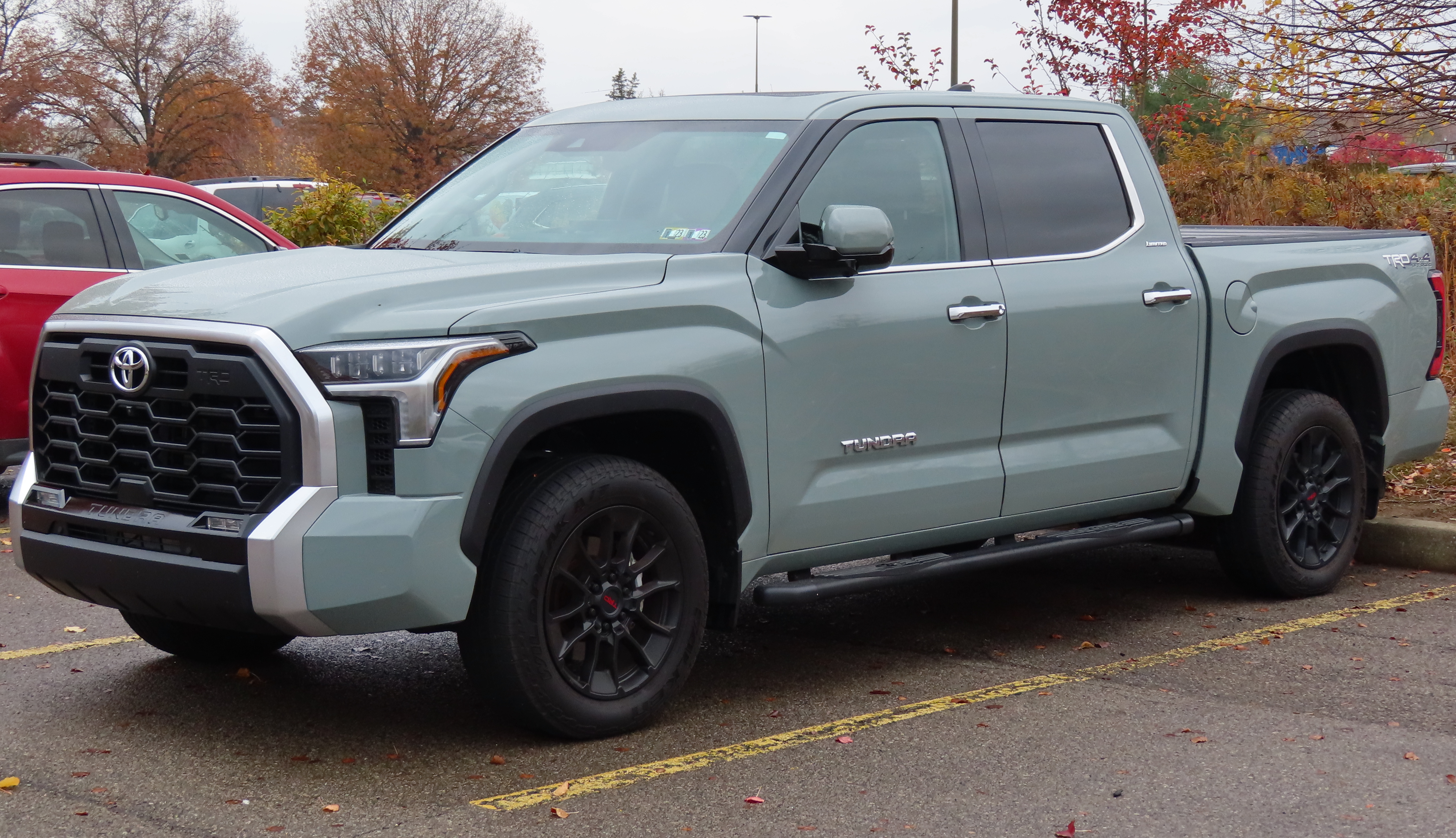
The Toyota Tundra is a large pickup truck used for work and towing. The podcast brings it up because some owners owe more on their loans than the truck is worth. That’s what “upside down” means in this context.
An auto loan is the financing used to pay for a vehicle, typically repaid with monthly payments plus interest. In this segment, the hosts focus on how negative equity gets added to the next auto loan, which increases monthly payments and total interest over the life of the loan.
The Kia Sportage is a compact SUV for everyday driving. The podcast mentions it because some people who financed one owe more than the SUV is worth today. That’s negative equity.
The Jeep Grand Cherokee is an SUV meant for regular driving, with some versions able to handle rougher roads. The episode mentions it because some people who financed one are still paying off more than the SUV is worth today. That situation is called negative equity.
Trade values are what a dealership offers for your current vehicle when you trade it in. In this segment, the hosts argue that issues and weaker sales for the Toyota Tundra can reduce trade values, which increases the chance of negative equity at the next purchase.
Monthly payments are the recurring amount you pay each month to repay an auto loan. The segment emphasizes that climbing negative equity leads to record-high monthly payments, because the loan amount (and interest) is larger when the trade-in shortfall is rolled over.
Term
interest costs
Interest costs are the extra money you pay to borrow funds on top of the vehicle’s price. This segment highlights that when negative equity is rolled into a new auto loan, buyers can end up paying unusually high total interest over the loan’s lifetime.
This is the Audi Q7 SUV, and the episode is talking about the 2027 version’s price jump. They explain that a higher sticker price usually means a higher monthly payment when you finance the car.
A car payment is what you pay each month to finance or lease a car. The hosts are showing how higher prices and trade-in shortfalls can make that monthly number jump.
Here, “finance” means taking out a loan to buy the car. They’re using a quick estimate to show how borrowing more money usually increases your monthly payment.
The VW Atlas is a big family SUV with three rows. Here they’re saying the 2027 model costs more than the previous year, and that higher price can raise your monthly payment too.
MSRP is the official sticker price the manufacturer lists for the car. If MSRP goes up, the financed amount usually goes up too, which can increase your monthly payment.
LIVE
Every team, every topic, everywhere, this is Believe.
It's noon here in Ventner City, New Jersey, on our nation's capital, Washington, D.C.
And this is Courage Live for Will, the most important day of the year, Wednesday, July
22nd.
Zach's 31st birthday, ladies and gentlemen, with your hosts, Zach, the birthday boy and
well me, the proud papa right here in Ventner.
Happy birthday to you, young man.
How are you doing today?
Thank you, Dad.
Appreciate the birthday wishes.
I'm doing well.
Really appreciate everyone who's reached out to me today and has wished me a happy birthday.
Thank you so much.
Cannot believe I'm 31.
Wow.
Yeah.
Wow.
Cannot believe how old I am getting.
Today's show, the birthday show, is brought to you by caredge.com.
I want to be able to buy a birthday present later on today.
And so, everyone that supports us, back at car, now I'm teasing up.
We really do appreciate everyone that supports the business we've built back at caredge.com.
My dad and I, with our incredible team, we're here to help you with all things car buying
related, leading with transparency, all right?
That's the whole shtick here back at Car Edge, for example, on the car search.
Some of the things that you can see here are, for example, how long vehicles have been sitting
on dealers lots.
Also, dealer ratings, based on how transparent they are, please, please, please spend some
time back at caredge.com.
If you have a good experience, I want to wait there for a second.
If you have a good experience, let us know.
If you have a bad experience, let us know.
We're here to make your life easier.
Now, the big story we're going to cover today comes by way of Edmunds.
Every quarter, Edmunds does a new negative equity study.
And I know I reuse the same title, Edmunds shocks the auto industry, scary new data.
Guys, as long as the freaking negative equity amounts keep going up, every quarter, I'm
going to use the same dog on title.
Q2 new vehicle purchases with negative equity trade-ins hit record monthly payments and
interest cost Edmunds report.
Popular trucks and SUVs known for holding their value are getting caught up in the same
debt traps as the rest of the market.
Dad, we have a new level of record-setting negative equity in the auto industry.
That's what we're going to talk about today.
This Edmunds data is freaking crazy, man, and we should not normalize it.
And I will not normalize it, and we will continue to say that it is shocking the industry.
Did it shock you what you read?
Don't you dare say no.
Yeah, you better say, yeah.
Yes, absolutely.
I have never been more shocked in my life.
And if I may, in all seriousness, you know, it is shocking.
And what I found shocking is even though negative equity is at some of the highest
levels it's been at, it's actually declined slightly.
It's down 300 bucks from the previous quarter.
My guess is we're going to see it go up again in the next quarter because we are
referring back to vehicles that were purchased in 2022 when people were paying
huge premiums to be able to buy cars.
And that's only adding and exacerbating the negative equity that they have.
So, yeah, it's shocking.
The amount is and when you see the breakdown by vehicles,
yeah, we'll look at that in a second.
So here's what we're going to start, though.
Let's like make sure everyone understands what we're looking at here,
what Edmunds made publicly accessible today.
Here is their Q2 negative equity data.
And again, what is record setting today is the highest amount of average negative
equity we've ever seen in the second quarter of any year that Edmunds has
tracked this data.
That's what you're looking at on your screen right now.
So the top row is 2026, 46.2 to be exact percent of new vehicle
purchases that had a trade-in, or excuse you, share of new vehicle
purchase with the trade-in.
So 46.2 percent of new vehicle purchases had a trade-in.
Of those, 30 percent, 29.6 percent had negative equity.
When they had negative equity in Q2, which to your point that is looking
in the rear view mirror, we're talking about many months ago at this point,
those borrowers owed $6,884 more than what their vehicle is worth.
They were trading in on average a four-year-old vehicle.
Now you can look historically here, last year, 26.6 percent of vehicles
that were traded in had negative equity.
The year before that was 23.9.
The year before that was 17.3.
And then the year before that was 14.7.
If we go back to pre-pandemic times,
we are not seeing things that are historically abnormal.
We were at 23.1 percent, 37.2 percent, 34.6 percent in terms of share
of negative equity, but it's the amount of negative equity that is startling.
And we will jump right to it.
Edmunds has given us this data broken down by type of vehicle.
It's Chevy Silverados.
If you are a Chevy Silverado owner right now,
the average amount of negative equity when you go to trade in that vehicle
is going to be $8,500.
Can we just stay on that for a minute here, Dad?
Help us comprehend what does that actually mean and why is that so alarming?
And that's assuming that that vehicle was purchased around September of 2021.
So a little over four years or about to be five years.
And so if you own one of those vehicles and your average,
let's hope you're above average, ladies and gentlemen,
but if you happen to be average, on average,
the negative equity that Chevy Silverado owners are bringing to the table
when they try to trade that vehicle in is $8,516.
$8,516 that they owe more on their car than what it is worth.
Now, what do you do with that negative equity if you're trying to purchase another car?
Do you put down the cash to compensate for that?
Well, most folks don't have that cash.
So most folks try to roll as much of that as possible into their next loan,
which means that four years from their next loan, four years from now on their next loan
when they go to trade that vehicle in, it'll be even more upside down than their current vehicle.
Can we do a couple of things here?
Dylan's made up a great point.
Coinsides with the show yesterday, Chevy is crushing sales but at the cost of the customer.
One of the things Chevy's doing right now, and we're going to talk about Chevy,
but I actually have an even better story with Ford, but one of the things Chevy's doing right now
is they're offering 0% financing for 60 months with 90 days, three months of deferred payments.
So essentially a 63-month 0% financing auto loan on new Silverados.
They're enticing customers to come back and buy those vehicles.
Now, one of the things we don't know is that Chevy made it easier for customers to get approved
for those auto loans because if they are, that would be exactly what Dylan's saying.
Hey, Chevy customer who bought back in 2022, at the end of 2022, one of these Silverado 1500s,
well, you're now $8,500 upside down, don't you worry.
We can get you approved for 0% financing for 63 months, just roll over that negative equity
if they're making it more accessible, which again, I can't say with confidence Chevrolet's
doing that. We do know Ford is doing that. So Ford, for example, the average negative equity
amount on an F-150 is $8,400. We do know that Ford has made it easier for customers to get
access to these sub-vented, the lower interest rates. Dylan hit the nail on the head. They're
crushing sales, but they're doing it at the cost of the customer and then they're just helping
them get into debt traps and perpetuity. That's, I mean, men. Whoa.
We have been talking about this on the periphery for months in the sense that
anytime you start extending loan terms and we know from data that loan terms today of 72 months
or 84 months and longer are a highest, at the highest percentage they've ever been of loans
that have been, that have gone, that people have signed up for. Highest level, I mean,
what was it, 23% if I remember correctly? Of all loans, I think we're 84 months or longer.
So part of that debt trap and part of that negative equity trap is the longer you run
that customer's loan, the greater the likelihood they're just going to be accumulating much more
negative equity, which is going to make it damn near impossible for many of them to trade out of it
when, as we can see, lots of people like to trade out at about the four-year mark. I know
when I was doing it, it was earlier than that. It was like three to three and a half years.
But let's say people are a little wiser today and they're willing to go wait four years,
but if they still owe three years worth of payments on that, it's virtually impossible.
So yes, you've created a customer today and that customer that you would like to have back in four
years will be in a worse negative trade situation then than they are now and it'll be so severe,
you won't be able to get them out. So you've taken your future customer and you're saying,
okay, instead of four years, maybe we'll see in six. That's where the loan-to-value ratios
become so important in all of this and that's another story that coincides with negative equity.
So as Edmunds reports on record-setting Q2 negative equity, at the same time, how do you get people
to still buy new cars when they're rolling over that negative equity? You extend out your willingness
to do loan-to-value ratios that are kind of backwards. For example, typical loan-to-value
ratios would be you're buying a $10,000 car, the bank will lend you $10,000. The entire loan
is collateralized by the vehicle. Makes sense. You buy a $10,000 vehicle, but they...
Okay, it seems as if it's fully collateralized. But what nobody ever takes into consideration
is the fact that once you have driven it off the lot, it will depreciate. Now, it might not
depreciate as much today as it used to in the past, but even if it depreciated 10% the moment you
drove it off the lot, well, there's 10% of that loan that is no longer collateralized.
The point being that same $10,000 vehicle, if you bring now $5,000 in negative equity,
the bank might lend you $15,000 to $5,000 in negative equity, nuanced aside, is 100% not
collateralized. Oh, yes. That's 150% loan-to-value ratio. That's the point that I really want
to make crystal clear to folks is that we have seen banks do that and do that with more frequency.
Thus, the reason we're in an environment now where the actual performance of those loans,
and when these banks care about performance, what do they care about? Are they actually being paid
back or are people defaulting on them or going into a repossessed state? They are at higher and
higher levels. The two stories are side by side. Let's pull back up on the chart, however, Dad,
because this data is fascinating. For example, Toyota Camry owners on average $7,030 upside down
after they bought this thing in 2023. That's nuts. But do you know why? No.
It's simple because Toyotas were in such short supply and Toyotas are in such demand that as
dealers kept adding more and more additional dealer markups, people paid them happily in
order to be able to drive that Camry. Because they were paying $1,500, $2,000, $3,000 of additional
dealer markup. They find themselves with a vehicle that depreciates typically less than
most vehicles, but yet they are still significantly upside down, $7,000 upside down, because when
you pay an additional dealer markup, you're not buying anything other than air. There is no value
to that. That extra money you paid that dealer for the privilege to buy that car does not translate
and carry forward with the car. It just becomes lost money. This is a perfect example of that
as to why Camry's, which depreciate less than most vehicles, are more upside down than you
would ever expect. I will pull up here. This is why I'm so proud of the work we're doing on
transparency. Go to caredge.com, dealer reviews, ratings, overview. This is why, by the way, and
I hate to pick on this dealership, but they're on the homepage of the dealer ratings. This
particular dealership, Al Hendricks in Toyota, it says buyer of aware. That's incredibly provocative,
but it's provocative because, yeah, let's say you're in a market for this RAV4. Well, a couple
months ago when Car Edge shopped them, they're trying to get you to pay for $3,000 in financed
aftermarket in addition to the $1,298 dock fee. The reason that's buyer of aware is because the
moment you get a loan, which is what someone's likely going to do here, that finances these
aftermarket $3,000, that's how you end up in this negative equity situation that Edmonds is
painting such a clear picture on. Thank you for explaining that, Dad. This is why, again,
so proud of the work that we're doing to bring more transparency to the auto industry so that
dealerships that are playing those types of games, charging add-ons, charging markups, etc.,
customers don't have to fall for that. Customers don't have to waste their time with dealers like
that because, yeah, it makes no sense that a Camry that doesn't even depreciate that much would
have $7,000 in negative equity. The reason it does is because of those markups and things like
that that you are describing. Next on the list, this one makes sense, Ram 1500, $8,347 in negative
equity when you go in as a Ram 1500 owner to trade in that vehicle Nissan Rogue on average,
$7,260. Then look at this, what an anomaly on this list, the Honda CR-V. $4,722 upside down. I
cannot believe I'm saying the anomaly in a positive way here is only being upside down $5,000,
but Honda CR-V owners that are looking like geniuses right now, they're not nearly as upside down as
those full-size pickup truck drivers are, for example. Yeah, it seems as a group full-size pickup
trucks were and probably will continue to be the worst purchase that these people can make because
of the amount of negative equity associated with that purchase moving forward. Yeah, because when
you go down that list, you're going to see more and more pickup trucks on there and every one of them
is, it seems to be either in the upper sevens or in the upper eights as to how much negative equity
they have. You have to be able to find a vehicle like the CR-V where you only have $4,700 worth of
negative equity. Yeah, you look like a genius, except you're not because you still have nearly
$5,000 worth of negative equity because you probably paid a market adjustment to buy that vehicle.
Again, we're trying to help you avoid dealers who are playing those types of games. That's why we
are using $7793 Chevy Equinox 5668 Honda Accord $5,000 Toyota Corolla $6,000. There's the Sierra
1500 dead. Like you said, another full-size pickup truck, $8,568 on average upside down the Civic
only $4,700. The Ford Explorer almost $7,700. The RAV4, this is shocking that you could buy a RAV4 in
2022 middle of the year and it would be upside down relative to your auto loan by $6,815 right now
when you go to trade in that vehicle, which is also another reminder, folks.
Trading in your vehicle is not the only way to sell your car. Please, please, please,
consider, get offers from Carvanic, CarMax. Make dealers compete to buy your trade
in. A lot of this data, Dad, says to me, people are not necessarily maximizing the value of the car
that they're selling because RAV4s right now as used cars are selling for very close to what
their original MSRPs were. That's another thing to flag in all of this conversation.
Yeah, the customer has to be aware of the fact that the dealership is trying to maximize
the profit that they can make in the vehicle that they're selling.
They're trying to steal the trade. That's the trace.
Yeah, let me finish. They're trying to maximize the amount of profit they make on the car they're
selling. Conversely, you need to be the same with the car you're selling as the customer.
You need to maximize the value of your trade in. You need to realize they're going to low ball you
on the value of the trade. They want to take that car into trade for as little as they possibly can
while they're charging you as much as they possibly can for the new vehicle. Your job as the consumer
is to try and pay as little as you possibly can for the new car while selling your trade in
for as much as you possibly can. It's a reversal of roles, but it's what you have to do to protect
yourself. Yeah, 100%. It's just being an informed shopper. We've got here, Dad, the Hyundai Tucson
$5,500 upside down on average, the Jeep Wrangler $7,800 upside down, and then here's our winner.
The worst. It's the worst. This is the worst.
The worst in terms of the most amount of negative equity that a customer is bringing to the table
when they trade in this vehicle at a dealership in Q2 of 2026 is the Toyota Tundra, almost $9,000
upside down on their auto loan. Again, the average is around $6,800. That is just shocking
to see here Kia Sportage at $5,500, Traverse at $6,900, Grand Cherokee, not a surprise at $7,300.
What do you make of that, Dad, with the Tundra in the worst offender when it comes to negative equity?
Well, they have had issues with the Tundra recently, engine issues, and sales have struggled to a
degree with the Tundra. I think that's probably impacted trade values for the Tundra. Those folks
who bought those are sitting on the highest level of negative equity of any group of buyers
for any particular brand or vehicle. Yeah, I think the Tundra story is very simple.
They're not selling as new cars and they're not selling as high of a price as used cars,
that's the reason people are getting in those situations. Now, one other piece I want to
pull from here and then we'll switch gears. Climbing negative equity is leading to record
average monthly payments and interest costs. Very frightening. If you have a negative equity when
you go to sell your car to the dealership, on average, your new vehicle auto loan is $944 a
month. It's costing $944 a month. It's the highest number of admins has ever had. It's $167 more
than the average, which is crazy. The average in general is $777. Buyers rolling negative equity
to the new loan are projected to pay an average of $16,270 in interest over the life of that loan.
Another all-time high and nearly $6,500 more than the $9,811 paid by the average new vehicle
buyer in Q2 of this year. Dad, break down this paragraph here. What the heck are we reading?
And again, admin shocks the auto industry, scary new data. Yeah, you're damn right they did. This
is a crazy paragraph to read. You as a consumer, if you are trading out of your car sooner than you
should because you've just decided you want something new as opposed to you need something new.
You're paying a premium. Your average monthly new car payment is almost $950. It is $167
more than somebody that didn't trade something in. And the fact that you're going to pay nearly
$6,500 more in interest over the life of that loan because you can't have the discipline to
control your urge to buy something new. If that doesn't shock you, if that's not an electric shock
that says, oh, maybe I should think about this. The new vehicle you're buying is already more
expensive than the old vehicle you're trading in. The new vehicle you're buying is going to cost you
more to insure than your current vehicle that you're insuring. And you're going to pay a premium
of $6,500 more in interest to have done it on top of the added costs of insurance and everything
else. And your maintenance moving forward will be going up as well. So please, folks, think about
this before you sign on the dotted line. I'm not telling you you shouldn't buy cars.
That would probably destroy the economy in this country if everybody just stopped buying cars.
But have the discipline to look at it and understand the complete picture of what you're
committing to before you buy that new car. Ask yourself the question, can I wait another 12,
18, 24 months? Would it really hurt me to do that? And if the answer is, well, no,
it probably wouldn't hurt me, then don't do it, please.
Again, I want to pull up. This is from Cranky Paperclip. This is another factor in all of this.
How much of the negative equity is car owners, not our car owners, excuse me, not looking for
the best trade and value for their car and overpaying for the vehicle in the first place?
Yeah, I think this is a huge portion of this and why what Edmunds has shared here is such
an important wake-up call for consumers out there who are in the market to buy cars who do need to
do something, who need to move on something sooner rather than later, maximize the value of the
vehicle that you are selling. Now, talking about maximizing the value of the vehicles that you're
selling, did you see, there's two other stories I want to touch on here today.
I guess the concept of our vehicles aren't selling as fast as we would like them to sell and in the
numbers we would like them to sell at their current pricing. So why don't we raise the price
$8,900 and see how that might impact things? I don't know that the two go together.
My suspicion will be that they're going to be and Audi dealers will be terribly disappointed
with how the new 2027 Q7 sells, that it won't sell anywhere near what they were hoping that
they would sell volume-wise and that $8,900 price increase will be the first thing people
will look at. $8,900, $9,000 at $20 for every thousand finance. That's $180 right there extra
in your car payment that you're, I mean, hey, if you can afford that $72,000 Q7 and that's the
base one. I don't think we should buy the base one, dear. I mean, we're just talking about huge,
huge car payments here and we talked about it yesterday. The market is more upscale. It seems
to be the only ones that really are buying cars are those that have that type of money. But at a
certain point, even those people are going to say, is it really worth $8,900 more than last year's
model? It's not just the Audi. DoS built 2027 VW Atlas pricing climbs with redesign. This one's
not nearly as much. Whoops, where'd it go here? $2,350 up year over year, starting at $43,135.
So it's just back-to-back headlines and automotive news from a manufacturer. Volkswagen is the
manufacturer that owns both Audi and W obviously, where they are selling fewer and jacking up the
prices even more. It fits into the narrative of what we're talking about here with negative
equity as well. As more and more people need to bring or are unfortunately bringing more
negative equity to the table when they go to purchase these new vehicles, there's a conundrum
here, a whole awakening, I think, for the auto industry. This is unsustainable and admins every
quarter until they show us data that suggests otherwise will be giving us the headline for
these shows because it's just the truth. It's shocking what's going on.
Well, think about this for a second on the Audi Q7. We just established that extra $9,000 in MSRP
translates into about $180 a month in car payment. We already know that people that are bringing $6,800
worth of negative equity to the table have already increased their payment by $167 a month.
I'm not good at math, but that sounds like $347 extra a month. You're paying A for the
price increase of that vehicle and B for the negative equity you're bringing to the table.
If that's not enough to convince you not to do it, then, well, nothing will.
I think there are a lot of people out there that look at that, that exact math of, okay,
my prior car payment was this and now it's going to be this plus $350 a month.
That's a little bit too much for me. That's the calculus that's happening right now
across the country for so many consumers. That's a big difference. deal.
I love this. Delta in the payment every single month and why I think we're seeing so many consumers
take themselves out of the market and ultimately why brands like Volkswagen are in such a tough
position right now. They're losing money left and right. They're closing down factories. They
are in a shocking situation for VW in particular here.
Yeah, VW is looking to cut its workforce, its global workforce, by 150,000 people,
looking to close four factories in Germany, move production to other parts of Europe and
the United States. They're struggling. They're just struggling and they're not the only German
auto manufacturer that is having these types of difficulties. Especially with the tariffs,
it's harder and harder for them to compete and keep their markets here when they have to raise
their prices as much as they have. A job German for that. They're not the only automaker that's
struggling, but it seems like they're all figuring out how to make do because again,
we talked about it on Monday this week. The hell did we catch a General Motors doing,
making more money than they've ever made in the history of the company for that quarter?
So I mean, it's crazy, absolutely crazy how divergent these headlines can be.
Again, we're talking about record-setting negative equity. We're talking about the fact that
certain Volkswagen and Audi vehicles have now seen their prices increase by as much as $8,900,
not being able to sell these cars, profits at some of these automakers are the highest they've
ever been. What a time to be alive.
And that's because the average transaction prices have gone up.
And our capital discipline did not spend money on incentives. What a joke. What an absolute joke.
All right, folks. Today's show, again, is brought to you by CarEdge.com. For those of
you that are unfamiliar, please spend some time back on the website. We have so much
good information available to help you navigate the car buying process. My dad and I, for the past,
I don't know, seven years now, have been working on CarEdge.com to make it the best place to get
help buying a car. We have the car search. We have our buying services. We have Ask CarEdge,
our research center, dealer reviews. And I encourage everyone to start with a free consultation,
meet our team, have a conversation, and see if there are ways that we can help you.
And the community forum. The community forum. Don't forget the community forum of like-minded
people who are just trying to help each other navigate the car buying experience.
Absolutely. Yeah, it's a privilege to be able to use CarEdge to bring people together under
research community forum. Again, thank you, everyone, for wishing me a happy birthday.
I really, really, really appreciate it. We'll be back tomorrow with more CarEdge live.
And, dad, I'm going to go enjoy some lunch. I think you should. And you just celebrate the
day away, my friend. Thank you, pops. I appreciate it. I love you, and I'll see you back here tomorrow.
Love you too, handsome. Have a great rest of your day. Thank you. Bye.
If you liked the show, please take a moment to rate, review, and subscribe. It really does
help the show to grow. Thank you for listening.
About this episode
Negative equity is showing up in more places than shoppers expect, and it’s driving up both monthly payments and interest costs. Edmunds’ Q2 data highlights record-high average negative equity and how trade-ins are involved, even for vehicles known for holding value. The hosts connect the problem to longer loan terms, loan-to-value math, and dealer markups/add-ons that can leave buyers “upside down.” They also discuss how higher payments and pricing pressures may push consumers out of the market, prompting automaker restructuring.
Today on CarEdge Live, Ray and Zach discuss the latest news from Edmunds. Tune in to learn more! Hosted by Simplecast, an AdsWizz company. See https://pcm.adswizz.com
for information about our collection and use of personal data for
advertising.