Kamui Kobayashi shares his incredible journey from a childhood in Japan surrounded by the Yakuza to becoming a renowned racing driver. He discusses his early influences, including video games like Daytona USA, and his unique path through karting and Formula 1. The conversation highlights his experiences in endurance racing, particularly with Toyota, and his transition to NASCAR. Kobayashi's candid reflections on the challenges of racing, his calm demeanor, and the importance of teamwork make for an engaging listen, especially for those interested in the nuances of motorsport culture.
Kamui Kobayashi is one of the most exciting guests that we had this year. Widely considered one of Japan’s greatest drivers, his career has spanned from Toyota’s Junior program to becoming one of F1’s most insane drivers, to eventually becoming a staple of Toyota Gazoo Racing’s prototype where he’s won Le Mans like 100 times, […]
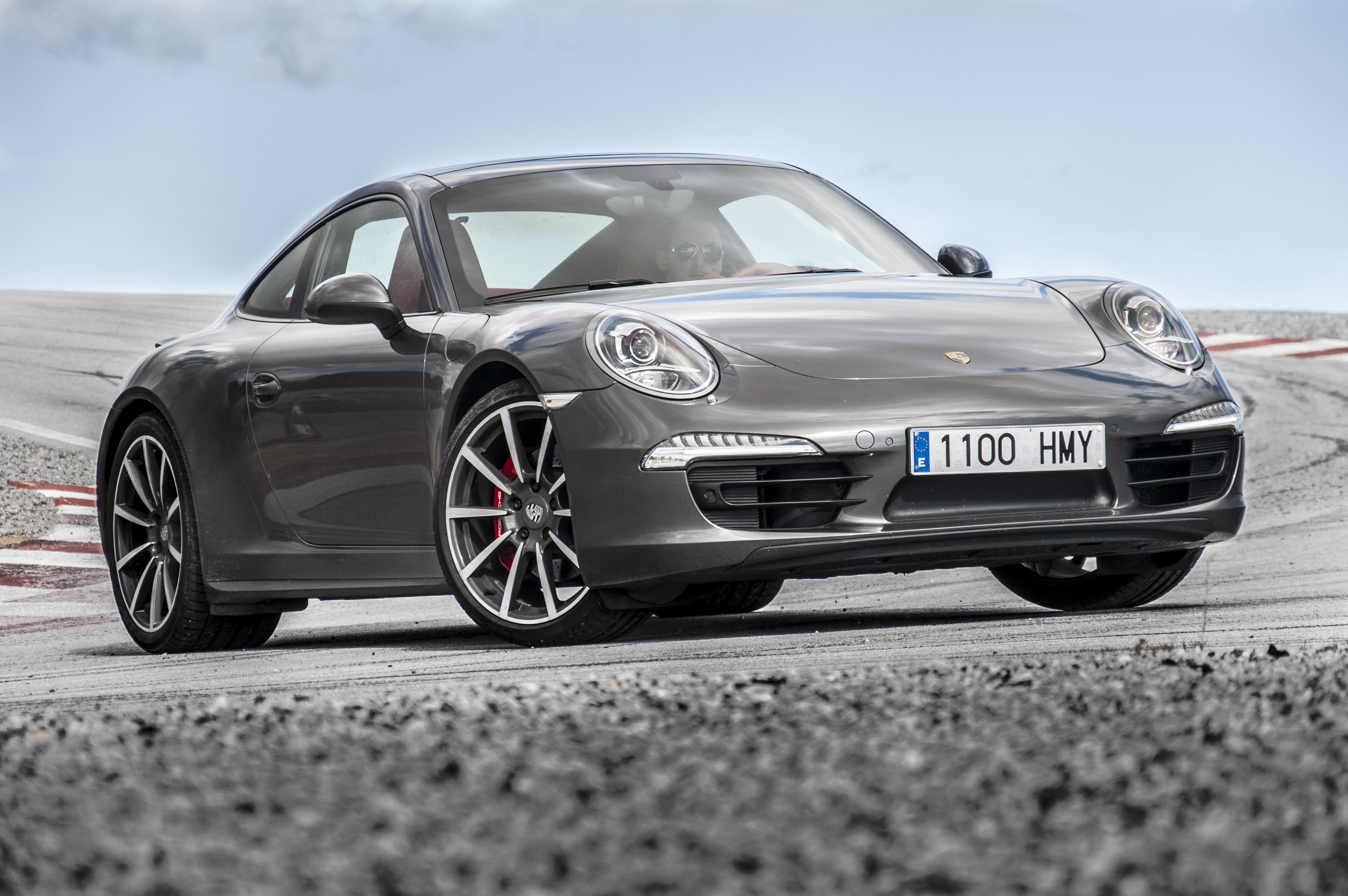
The Porsche 911 GT3 is a special version of the Porsche 911 sports car that is built for racing and high-performance driving. It has a more powerful engine and better handling compared to regular models.
The Porsche 911 GT3 is a high-performance variant of the iconic Porsche 911 sports car, known for its track-focused design and powerful naturally aspirated engine. It features enhancements in aerodynamics, suspension, and weight reduction, making it a favorite among driving enthusiasts.
"He drove in Formula One and was sort of of that era considered the wild man."
Formula One is a top-level car racing series where teams compete in fast cars on different tracks. It's known for its exciting races and cutting-edge technology.
Formula One is the highest class of single-seater auto racing, governed by the Fédération Internationale de l'Automobile (FIA). It features a series of races known as Grands Prix, held on various circuits around the world, and is known for its high-speed competition and advanced technology.
"He's since become sort of the long-time Toyota Gazoo Racing sports car driver."
Toyota Gazoo Racing is Toyota's racing team that works on fast cars and competes in different racing events. They help make Toyota cars better by testing them in races.
Toyota Gazoo Racing is the motorsport division of Toyota, responsible for developing performance-oriented vehicles and participating in various racing series, including endurance racing and rallying. They focus on enhancing the driving experience and vehicle performance through motorsport.
"He's won Le Mans with Toyota, what, like 100 times?"
Le Mans is a famous car race in France that lasts for 24 hours. Teams try to drive the farthest distance in that time, making it a test of speed and how well the cars hold up.
Le Mans refers to the 24 Hours of Le Mans, an endurance race held annually in France. It is one of the most prestigious automobile races in the world, where teams compete to cover the greatest distance in 24 hours, testing both speed and durability of the vehicles.
Japanese Super Formula is a top racing series in Japan where drivers race fast single-seater cars on different tracks. It's a popular series for drivers aiming to get into Formula One.
Japanese Super Formula is a premier single-seater racing series in Japan, featuring high-performance cars that compete on various circuits. It is known for its competitive nature and serves as a stepping stone for drivers aspiring to reach Formula One.
"He just tested the Haas F1 car again for whatever reason. And that's all because of his connection to Toyota Gazoo Racing, of which he's now, in addition to all that, he's the team principal."
Formula 1 is a popular type of car racing where specially designed cars compete in races called Grands Prix. It's known for its speed and advanced technology.
Formula 1 is the highest class of international auto racing for single-seater formula racing cars. It features a series of races known as Grands Prix, held on various circuits around the world.
"He just tested the Haas F1 car again for whatever reason. And that's all because of his connection to Toyota Gazoo Racing, of which he's now, in addition to all that, he's the team principal."
The Haas F1 car is a race car used in Formula 1, which is a top-level racing series. It's built to be very fast and follows specific rules to compete against other teams.
The Haas F1 car is a racing car used by the Haas F1 Team in the Formula 1 World Championship. It is designed specifically for high-performance racing and adheres to strict regulations set by the FIA.
"Delivering food to the Yakuza. And seeing ghosts. So he really went for it."
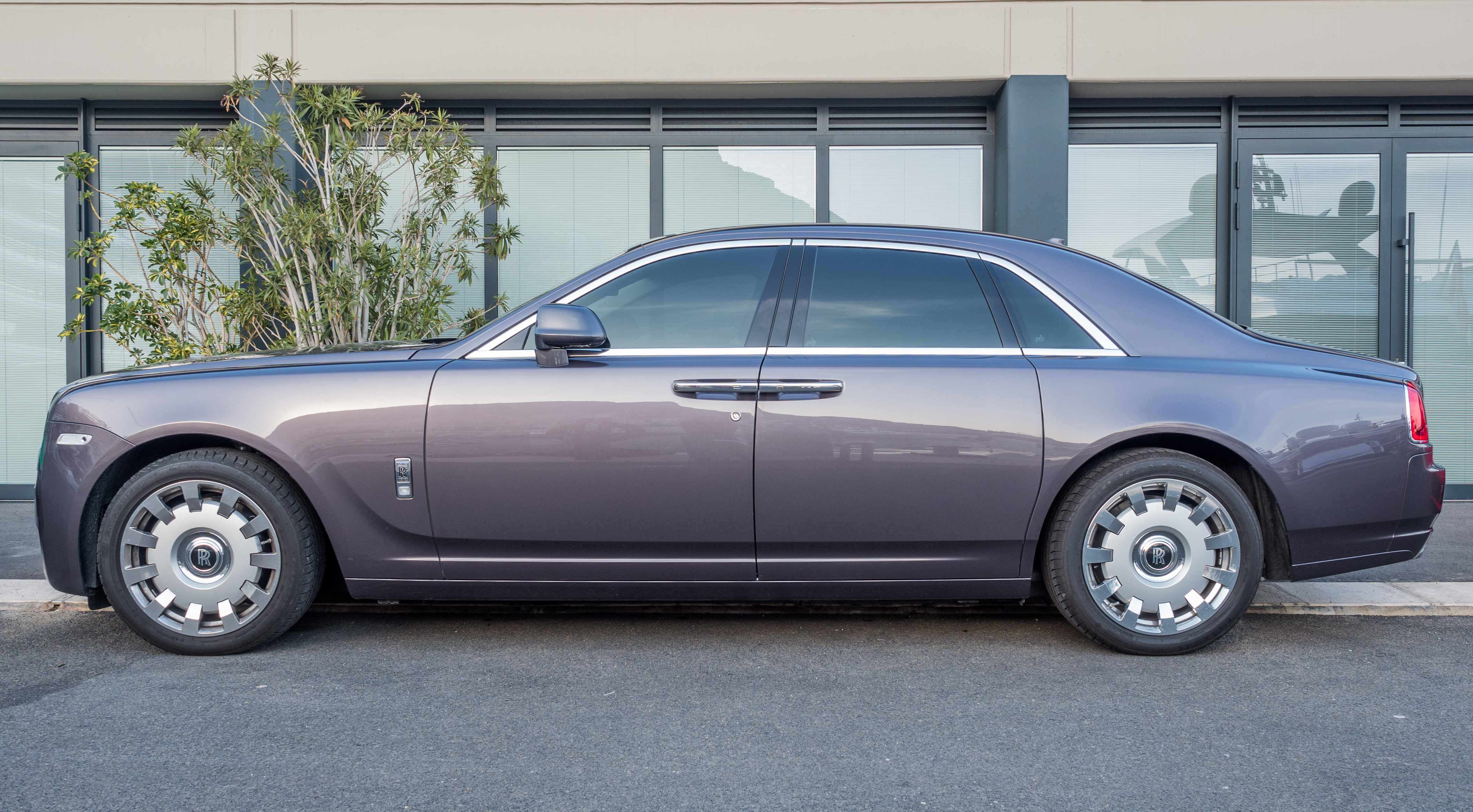
The Rolls-Royce Ghost is a very fancy car that is known for being extremely luxurious and comfortable. It's like a mobile palace, built for people who want the best of the best when it comes to cars.
The Rolls-Royce Ghost is a luxury sedan that epitomizes opulence and craftsmanship, representing the pinnacle of automotive luxury. With its powerful V12 engine and bespoke interior options, the Ghost is designed for those who seek the ultimate in comfort and prestige, making it a frequent choice among the wealthy and influential.
"...In IMSA, it's quite special because we have the pit garage already. And we need to set up inside pit garage, right?"
IMSA is a group that organizes car racing events, especially for sports cars. They have different types of races and cars, making it a popular racing series in North America.
IMSA stands for the International Motor Sports Association, which is known for organizing sports car racing events in North America. It features various classes of racing, including prototypes and GT cars, and is recognized for its competitive atmosphere and technical regulations.
"do you watch drive to survive? The Netflix show?"
Drive to Survive is a Netflix show that gives viewers a behind-the-scenes look at Formula One racing. It shows the lives of the drivers and teams during the racing season.
Drive to Survive is a Netflix documentary series that provides an inside look at the Formula One racing world. It follows teams and drivers throughout the season, showcasing the drama and challenges they face both on and off the track.
NASCAR is a type of car racing that takes place mainly in the United States, where cars that look like regular cars race on circular tracks. It's very popular and has a lot of fans.
NASCAR, or the National Association for Stock Car Auto Racing, is a popular motorsport in the United States, known for its stock car racing series. It features races on oval tracks and has a distinct culture and fan base, different from Formula One.
"it's when the Aiton Senna had a crash and he passed away."
Ayrton Senna was a famous race car driver from Brazil who won many championships in Formula One. He is remembered for his talent and sadly died in a racing accident.
Ayrton Senna was a Brazilian racing driver who is widely regarded as one of the greatest Formula One drivers of all time. He won three World Championships and is remembered for his exceptional skill and tragic death during a race in 1994.
"It's called the Formula 2 Toyota. Is it like a Formula Renault?"
Formula 2 is a type of car racing that uses smaller cars than Formula 1. It's a way for drivers to gain experience before moving up to the more famous and powerful Formula 1 races.
Formula 2 is a class of single-seater auto racing that serves as a stepping stone to Formula 1. It features smaller, less powerful cars compared to Formula 1, allowing drivers to develop their skills in a competitive environment.
Formula Renault is another type of car racing that uses smaller cars than Formula 2. It's designed to help new drivers learn and improve their racing skills.
Formula Renault is a category of single-seater racing that is often used as a training ground for young drivers aspiring to reach higher levels of motorsport, including Formula 1. The cars are smaller and less powerful than those in Formula 2.
"...but at the same time they were the Honda racing school as well. Yeah, that's the one Sato went to."
Honda is a car company from Japan that makes many types of vehicles, including cars and motorcycles. They are also known for their involvement in racing.
Honda is a well-known Japanese automotive manufacturer that produces a wide range of vehicles, including cars, motorcycles, and power equipment. They are also involved in motorsports and have a rich history in racing.
"When you first did Formula Toyota, was it Formula Toyota?"
Formula Toyota is a type of racing where drivers compete in small, single-seat cars. It's designed for beginners to learn how to race and improve their driving skills.
Formula Toyota is a single-seater racing series that serves as an entry-level platform for drivers looking to progress in motorsport. It emphasizes skill development in a controlled environment, often using identical cars to ensure a level playing field.
An H-pattern is how the gear stick is set up in a manual car. It looks like the letter 'H' and helps drivers know how to shift gears properly.
An H-pattern refers to the layout of a manual transmission gear shifter, where the gears are arranged in an 'H' shape. This design allows drivers to easily shift between gears by moving the shifter in a specific pattern.
Formula 3 is another type of car racing that helps drivers get ready for even bigger competitions like Formula 1. It's known for being very competitive and is where many famous drivers start their careers.
Formula 3 is a category of open-wheel racing that is considered a crucial step for drivers aspiring to compete in Formula 1. It features a high level of competition and is often seen as a training ground for future stars of motorsport.
"As you're doing these formula races, you are a Toyota junior factory driver essentially. Yep. And you're going against guys like Vettel or whoever who aren't factory backed."
Formula races are a type of car racing where specially designed cars compete on tracks. They are known for being very fast and using advanced technology.
Formula races refer to a category of single-seater auto racing, with specific regulations governing the cars, such as Formula 1 and Formula E. These races are known for their high speeds and advanced technology.
"As you're doing these formula races, you are a Toyota junior factory driver essentially. Yep."
A factory driver is a race car driver who works directly for a car company, using their cars in races. They get special support and resources from the company.
A factory driver is a professional racer who is employed by a car manufacturer to promote and develop their vehicles in motorsports. They often have access to the latest technology and support from the manufacturer.
Spa is a well-known race track in Belgium where many car races, including Formula 1, take place. It's famous for its difficult turns and beautiful scenery.
Spa refers to the Circuit de Spa-Francorchamps, a famous racing track in Belgium known for its challenging layout and elevation changes. It's a popular venue for Formula 1 and other racing series.
"You do end up doing a little more F1 with the Caterham program. Was that a disaster?"
Caterham is a car company that makes small, lightweight sports cars. They are known for their simple and fun-to-drive designs.
Caterham is a British manufacturer known for its lightweight sports cars, particularly the Caterham Seven, which is a modern interpretation of the classic Lotus Seven. The company has also been involved in motorsport, including Formula One.
F1 stands for Formula 1, which is a very popular and fast type of car racing. It features special cars that are designed for speed and performance on race tracks.
F1, or Formula 1, is the highest class of single-seater auto racing, known for its fast cars, advanced technology, and prestigious races held globally.
"... hearing about the LMP1? Yeah, back to, you know, Toyota Super Formula team. And of course we start to connect t..."
The Toyota Supra is a fast and sporty car that many people love because it looks cool and drives really well. It's popular among car enthusiasts who enjoy modifying it to make it even faster.
The Toyota Supra is a high-performance sports car that has gained a cult following since its introduction in the 1970s. Known for its powerful engines and agile handling, the Supra is often celebrated for its tuning potential and has become a staple in car culture, particularly in motorsports and street racing.
"...when we had that LMP1 with more than 1,000 horsepower, with four-wheel drive anytime, insane."
Horsepower is a way to measure how powerful an engine is. More horsepower usually means a car can go faster and accelerate better.
Horsepower is a unit of measurement for power, commonly used to describe the output of engines. It indicates how much work an engine can perform over time, with higher horsepower typically translating to better performance.
"...when we had that LMP1 with more than 1,000 horsepower, with four-wheel drive anytime, insane."
Four-wheel drive means that all four wheels of a car get power from the engine, which helps with traction and control, especially on rough or slippery surfaces.
Four-wheel drive (4WD) is a drivetrain system that provides power to all four wheels of a vehicle simultaneously, enhancing traction and stability, especially in challenging driving conditions. It is commonly used in off-road and performance vehicles.
"But I think mainly, I think we practiced like pit speed or something like that. Yeah, like the car."
Pit speed is how fast a car can go when it's in the area where drivers stop to refuel or change tires during a race. It's important to keep it slow to avoid accidents.
Pit speed refers to the maximum speed a car is allowed to travel in the pit lane during a race. This is crucial for safety and to ensure that teams can work on cars without the risk of accidents.
"There's no pit limiter. We had a pit limiter stuff."
A pit limiter is a tool that helps drivers keep their speed slow when they're in the area where they stop during a race. It makes sure they don't go too fast and stay safe.
A pit limiter is a feature in racing cars that automatically restricts the car's speed to the designated limit in the pit lane. This helps drivers comply with safety regulations without needing to manually control their speed.
"...if they call you tonight and say, you're going to go run Darlington. Yeah, I don't know where Darlington. It's a very, very hard oval."
Darlington is a well-known racetrack in the U.S. It's famous for being difficult to drive on because of its unique shape and turns, making it a challenging place for race car drivers.
Darlington is a famous oval racetrack located in South Carolina, known for its unique shape and challenging turns. It's often referred to as 'The Lady in Black' due to its black asphalt surface and the difficulty it presents to drivers.
Select text to request an explanation
Delivery boy for the Yakuza.
Brothel Dordasher.
And my one-time GT3 rival.
Camui Kobayashi.
If you could, do you have a nickname, by the way?
No, Camui.
It's Camui.
OK.
If you could describe this dinner we just had in one word,
what would it be?
Unreal.
Unreal?
Why Unreal?
Well, what I know in the United States, obviously,
say, very well-organized.
You know what I mean?
I see.
They're very well-organized.
No, you guys are very well-organized.
He's sound like us.
But he's being mad at his s***, honestly.
But, oh, here it is.
This is not podcast praise.
And now for Dinner with Racers, presented by Continental
Tire with your hosts, Ryan Eversley and Sean Heckman.
And welcome to Dinner with Racers.
I am Sean Heckman.
I'm Ryan Eversley.
And we are sitting here in a Johnny Rocket in Hollywood,
California celebrating how many years of this show, Ryan?
Too many years, Sean.
We've been doing this for 10 years.
That's right.
We've been doing this for 10 years.
You know who was president when we were doing this, Ryan?
I don't.
Don't give me hope.
I don't think we can say anything anymore.
Don't give me hope.
But, yeah.
So 10 years of doing this, all because of great fans
like you, and especially sponsors like Continental Tire.
And if you've been with us for the latest drop
of our regular Dinner with Racers show,
you've heard some great guests.
But you want to hear a badass?
This is probably one of the most exciting ones
we've had in a long time, because we got Kamui Kobayashi.
Kamui Kobayashi?
What?
One of the most badass racers in all of the world.
Yeah.
Arguably one of the best Japanese drivers in history.
Yeah.
And let me just interrupt real quick,
because to give a little tiny backstory on this,
we don't know much about this show.
We don't know what we were getting.
We literally didn't know if he was going to be fluent
in English to the point of like,
yeah, I can understand where you want me to go with this.
We didn't know if we were going to get a PR,
like I got 30 minutes.
I mean, we just did not know what we had.
And we were both blown away so much so that
when we were driving here today to do this hosting,
we were talking about how much we enjoyed this episode.
Yeah, exactly.
It's always nice when you're wildly surprised
with how well it goes.
Yeah.
So, yeah.
Kamui Kobayashi, if you're not as familiar with his career,
like I just said, he's one of the best Japanese drivers
in history.
He drove in Formula One and was sort of of that era
considered the wild man.
Yeah.
And he's since become sort of the long-time Toyota
Gazoo Racing sports car driver.
He's won Le Mans with Toyota, what, like 100 times?
I think 102 times.
103 times.
Yeah, yeah.
He still drives in Japanese super formula.
There's their big open-wheel championship.
He just tested the Haas F1 car again for whatever reason.
And that's all because of his connection
to Toyota Gazoo Racing, of which he's now,
in addition to all that, he's the team principal.
Yeah, on the hypercar program.
And like I said, we did not know we were getting
and we had a blast.
In fact, this year when people had been asking me
at the track link, who have you had on,
I've told them confidentially that Kamui Kobayashi came on
and some of the things that he talked about with us
were like, what video game really got him started
in racing?
A one-of-a-kind at go-kart beginning.
Delivering food to the Yakuza.
And seeing ghosts.
So he really went for it.
And we had such a good time with him
that honestly, I would revisit this podcast myself
just because I had so much fun.
We went to Stonewood Grill, which I believe
it was pouring rain outside.
It was really rough.
And I had a steak, I believe it was a fillet
with a side of asparagus.
Yeah, and I, of course, at Stonewood Grill,
the very nice semi-upscale restaurant
had a chicken sandwich.
Yeah, of course.
Now, one of the things that makes this show possible
is the fans.
And because of the fans being so great,
we thought it'd be a cool idea to start a Patreon.
So if you go to patreon.com forward slash DWR show,
you can join up with our dinner club.
We had a couple of levels there that you can sign up for.
And effectively, we're doing some extra content
behind the scenes stories, extra stories about the guests
that didn't make the edit, as well as race previews,
race reviews, and kind of like a monthly catch up
between you and I, which has been a lot of fun
because we ended up just BSing and just having
a good time with it.
So please check us out on patreon.com forward slash DWR
show.
And speaking of fans and being so supportive,
who of those fans been supporting, Sean?
Well, I think it would be our sponsor, Ryan.
That's correct.
They've been supporting Continental Tire.
Hashtag dinner with Conti.
Now, it seems like I keep saying this hashtag,
but you know what, Ryan, it's for a reason
I don't feel bad about it.
Nope.
Continental Tire has made it very clear to us
that trackable metrics is a very big part
of our sponsorship moving forward.
If you're on Instagram and you buy a Continental Tire,
you buy any sort of Continental product,
you even just see something that makes you want
to take a photo that reminds you of our show.
Tag Continental Tire at that, but also use the hashtag
dinner with Conti, hashtag dinner with Conti.
That tells Continental Tire that you're engaged
with us, what they do with us matters,
and that you're a big fan of what we do.
Or if you're not so much a social media person,
the other thing you can do is go to dinnerwithracers.com
or our Instagram account and click on the links
that we have to Continental Tire,
because those are very specific links
that tells Continental Tire that we're the ones
who sent you.
So go on dinnerwithracers.com or Instagram,
check out our Continental links that we have there
because that goes a huge, huge way towards telling them
that what we do is effective.
Now, Kamui Kobayashi is an awesome driver.
You know who else is an awesome driver?
Ryan Eversly, Andy Lowly.
I'll never fight these.
Spencer Pumpelly.
None other than...
Okay, all right, all right.
Give me one more.
Marco Sorenson.
No, no, I don't even know who that is.
Shane Van Guisbergen.
Shane Van Guisbergen drove us this year.
You know, the guy that likes Wendy's and nugs?
Yo, we need to stop for some Wendy's saucy nugs.
Yeah, okay.
Sure.
Shane Van Guisbergen.
Thanks, man.
Thanks for your enthusiasm.
Now, please listen to the amazing Kamui Kobayashi.
Meow.
All right, we're going to start in five, four, three, two.
What's going on?
How are you?
Hey, how's it going?
Look at this guy.
He's got all black.
I like it.
It's chic.
It's good.
It's good.
Sean.
Hey, nice to meet you.
Hey, Ryan.
Nice to meet you.
Cheers.
So, put this on.
We jump right to it.
Yeah.
All right.
Radio check.
Good.
Good.
Cool.
That's good.
That's good.
That's good.
Yeah.
How far are you from here?
10 minutes.
Oh, okay.
Yeah.
I understand the truck.
You're saying, oh, at the truck?
Yeah, sure.
I'll go home.
Yeah.
Okay.
All right.
That's nice.
How do you like, how does motor home life compare to what you do in other series?
Well, I think it's pretty good, to be honest.
It's a very good, close to the truck.
Yeah.
Obviously, I think just, you know, a little bit, you know, struggling to get food.
Oh, yeah.
Sure.
Sure.
Yeah.
And the motor home.
Yeah.
Copy.
Do you have a door dash?
Oh, yeah.
Okay.
We're looking off of that.
Got you.
Okay.
How do you do WECD stay at the tracks?
We stay in the hotel.
No, it's not that good.
And we have, you know, in the European race, I think we have the kind of the trailer
that I think we could stay.
Yeah.
And especially Le Mans, I think we have kind of facilities at the bridge.
Yeah.
Which are quite comfortable, to be honest.
Okay.
I think the problem is, I think when we come into Austin and Brazil, sometimes Japan, Japan
is okay.
Yeah.
We have buildings.
But I think U.S. and obviously, yeah, Brazil is a bit trouble for us because we don't have
a trailer.
Oh, I see.
And yeah, we have just container, obviously.
That shifts back and forth.
Yeah.
Yeah.
Yeah.
So hotels it is.
Well, I mean, you could sleep in a cargo chair trailer.
Well, it's too hot.
Oh, I see.
That's fair.
Yeah.
We are racing in the Austin.
It's around August, end of August.
Oh, so that's a big metal container.
So it's like, it's really hot there.
Yeah.
It's like 108 degrees.
Exactly.
Yeah.
Yeah.
Now you're now, you're now managing the team.
Yep.
So do you have to worry about like the hotel costs and things like that?
Yeah, a little bit.
But obviously, we can't do anything.
And we can't find the magic solution, to be honest.
Okay.
So, you know, what we need, what we need at the end of the day.
We need to pay and we have to find the budget.
Obviously, I think your inflation is getting like every year.
Yeah.
Like insane, the price up obviously is not only the hotel.
It's shipment cost and the flight, everything, you know, even the catering team to hire
them.
Obviously, like, you know, it's cost like more than 50% compared to previous year,
for example.
Yeah, of course.
It's just going up.
Yeah.
It's crazy amount.
Yeah.
Until, until you started doing the management.
Yeah.
I mean, driver, I think we just complain to be honest.
Yeah.
Exactly right.
Yeah.
That's all you do.
Yeah.
Well, if you're good at it, you know, you stick to it.
Yeah.
Yeah.
So, honestly, I think I'm complaining as a driver of the same size.
I'm like, I knew the budget problem.
You know, it's like, yeah.
It's a bit concerned.
It used to be I was mentioning, but I'm just quiet.
I don't know.
You just, you just play both.
Yeah.
I can say anything.
Yeah.
When you come to do a race in IMSA, are you looking, does the team manager part of your brain look
around it?
Like, what about that?
Or that's pretty smart?
No, no.
Is it because we're nowhere near as good?
Yeah.
I mean, you know, honestly, I think we have a completely different racing, you know,
the culture in the behind European races and the United States, for example.
It's a pit box, obviously.
Yeah.
In IMSA, it's quite special because we have the pit garage already.
Right.
And we need to set up inside pit garage, right?
Right.
So, basically, the garage is where you do everything, whereas we have a box for it.
Yeah.
IMSA is nothing just concrete wall.
Yeah.
They have to set up their own.
Yeah.
So, obviously, we have completely different systems.
Two different setups.
Yeah.
Exactly.
So, it's like, I would say it's different, to be honest.
Yeah.
But, you know, if you consider that which one is better, I would say, I think, more healthy
side, it's IMSA style, to be honest.
You like it?
Yeah.
I mean, because you don't need the, you know, the truck to have a built the proper pit box
because, for example, like Luma, I think they are investing right now.
The huge amount of investment to build the garage.
Because once you get building old, I think they have to change it.
Yeah.
And these damn teams like Toyota keep making it fancier.
Exactly.
Yeah, right.
You know, they are spending a lot of money, but in the U.S., obviously, you don't need
to spend 100 years.
Well, nothing, you know?
Yeah.
Yeah.
Because it's on you.
Exactly.
Yeah.
But as a team, I think it's not like cost crazy amount and they can use quite a couple
of years.
Yeah.
To this setup and they don't cost like crazy amount, right?
Right.
You know, when you rebuild the building, it's obviously they are spending like
20, 30 million.
Right?
Yeah.
You know, for the team.
Doesn't make the racing better.
It's different.
And whatever the place you go, you can race.
Right.
Even when you consider like racing in Long Beach, for example, there's nothing
no pit garage.
Yeah.
But obviously they can race because they don't need it.
Yeah.
Yeah.
Do you normally do things like this?
Not much.
No, that's okay.
Well, we're on it.
We really appreciate you doing it.
We have a very, very supportive fan base.
Jordan and Ricky have been on the show quite a bit.
Okay.
Yeah.
In the ATP field, I'd say by this point.
Yeah.
But we just did one of these with Paul de Resta two days ago.
Okay.
So I would say yesterday they all blur together.
Yeah.
So you and Paul are by far the most modern F1 drivers that we've had on the
show because we don't get a lot of those in the United States.
Yeah.
I'd say you're notorious in this country and I don't know if you're
aware of this, but in this country, the fan base loves you because you
made F1 exciting.
Okay.
For the first time in a while.
Crazy.
Yeah.
Are you aware of that?
No.
Okay.
Well, I think my time in the Formula One, which is I think in the United
States was not as popular.
Not as popular.
Right.
Sure.
Sure.
So it's like, I was not really noticed that, to be honest.
Yeah.
Because even I can't say where they broadcast in the Formula
One on my time because it was like 2010, 11, 12.
Yeah.
It was probably like a speed channel.
Yeah.
Exactly.
Speed channel is pay TV, right?
Yeah.
It's cable.
Yeah.
So when we were racing in the Cota, obviously, it was quite empty at
that time, right?
Yeah.
So, you know.
If there was drive to survive when you were there, how do you think they would
make you look?
I would say very experienced driver.
To be honest.
Yeah.
Yeah.
Because I think my time is obviously, I think who was in my, I think like
Paul, same.
Yeah.
To be honest, I think we joined like 2009, end of 2009.
Yeah.
I think I started Formula One.
Yeah.
Paul was starting like 2010 maybe.
Right.
But if it was, if you were on drive to, do you watch drive to survive?
The Netflix show?
Honestly, I'm very happy now.
I'm doing the sports car championship right now.
Yeah.
Yeah.
I never thought about it.
Okay.
But yeah, I think it would be good in one side.
Yeah.
Because obviously you are more popular.
Yeah.
Yeah.
And once you become popular.
Yeah.
I would say I think you can do a lot of business in the future.
Exactly.
Oh, I see.
Using the celebrity.
Yeah.
Yeah.
You know, the motorsports obviously.
Sure.
Like for example, Ricardo.
Yeah.
Right.
Yeah.
Daniel, I think he's doing pretty well.
Yeah.
As a whole brand.
Yeah.
Exactly.
Yeah.
I think when you consider, I think there's opportunity.
Yeah.
But obviously my time was not really.
Not so much.
Yeah.
Considering that.
Yeah.
But I think still I'm quite proud because at that time in Formula
One, I think that sounds great.
Yeah.
I think racing wise, I think I would say I think we don't know
who's going to win each races at that time still.
Yeah.
Yeah.
Yeah.
You know, I would say right now, I think who's going to win the race.
Obviously, I think the Ferrari and the Red Bull and the McLaren.
Yeah.
That's it.
Yeah.
Last year when you look, most race won by the Max, right?
Yes.
Right.
Right.
So, you know, at that time, I think there's maybe six, seven contenders could possibly
win the race.
Yeah.
Sure.
Right.
Sure.
And at that time, I think driver can make something different, right?
Sure.
Well, you made it exciting.
That's for sure.
Yeah.
Made exciting that I should make more results to be honest.
Sure.
All right.
Well, our show is, we talk about racing, but we also like to know about the
person.
Yeah.
So, you know, a lot of American fans know you for obviously what you've
done recently.
Yeah.
Jordan's team made the Toyota program Crazy Man of Formula One.
Yeah.
But how did this start for you?
Because your father was not in racing at all.
No, not at all.
Your dad?
I just wanted to be a race car driver.
I think when I was watching the TV, I think that I had like paid TV in my
home.
Yeah.
When I was kids.
Yeah.
Obviously, I think, you know, we have just 20-hour, 365 days, you know,
showing like some of the motorsports.
I think we see a lot of time in like overall race, obviously.
Yeah.
And I don't know exactly what that race was.
Yeah.
But I think kind of, I think United States TV channel, I think one of the
company was signed up.
And I think this paid TV was, you know, showing all the time.
Okay.
And obviously, I think this was my, you know, a company dream that I want to be
a race car driver one day.
So, you decide on TV?
Yeah.
Yeah.
But obviously, my father has nothing to say about the motorsports.
There's no knowledge.
And always my father say that I was too young to race.
Sure.
Obviously, you know, I think I was asking to my dad like five or six years
old.
And he's not a race fan.
Yeah.
Not a race fan.
But I wouldn't be, I wouldn't drive the car.
Yeah.
But my father always keeps saying that you're too young.
But one day, I think when I was like eight years old, I say that on the
TV, I was younger than my kids.
I think I was eight years old.
But that time, maybe six years old guys, a race car driving on the TV.
Oh, so you see this.
Yeah, I see this.
And I just note the mobile phone number of this, you know, the place where I
can able to drive.
Okay.
Like a little go-kart.
Yeah, exactly.
And then, you know, I bring this note to my father that can you call this
car.
I got all the information for it.
Here you go, dad.
Can you call.
Yeah.
And my dad bring me there for rental car.
Yeah.
Your dad ran a sushi restaurant?
Yeah, exactly.
Yeah.
And I'm going to get butchered.
Yeah.
Amagasaki?
Yes.
Is that the name of the city?
Yeah.
Very good.
So, but like your mom didn't like racing.
Your dad didn't like racing.
This is just something you saw on TV for the go-karts.
Yeah.
I saw he doesn't like them.
My family doesn't like them.
But I think they have no interest.
Yeah, sure.
You know, and we have no motorsport culture.
Yeah.
My father doesn't have the car at home.
Oh, really?
Yeah.
Wow.
Okay.
So, it's like a bit special at that time.
Yeah.
Was it a very congested city?
No.
It's opposite.
It's quite public.
Okay.
But I think I would say it's a little bit the way of place.
We have, my place is obviously, we have a lot of young Japanese mafia.
Oh.
Yakuza?
Yes.
Oh, fine.
Very popular place.
Wow.
So, Magasaki is huge for Yakuza.
Yeah.
There's a lot of nightclub around.
Okay.
And, yeah, obviously I was like in the center of this town, obviously.
Yeah.
Very center.
It's in the, full of neon.
Okay.
And do you, when you live in the city, like, do you just know who's part of mafia and
who is not?
And you just know, don't talk to him?
Yeah.
I mean, obviously, I knew that my friend of that is obviously the part of this.
Okay.
Many of the people.
Oh.
So, you know people?
Yeah.
I know.
I know the people quite well.
Wow.
Because I grow up there, you know, yeah.
So, if I, if Ryan, when Ryan races on Friday, if he has a driver that he doesn't like, can
you, can you?
No, they would not do anything.
You can't do that?
Okay.
They would not do anything.
I mean, it's not like that, to be honest, you know.
No.
But, don't ruin it.
Yeah.
I think it's more local.
I've seen some movies.
I'm pretty sure it's like that.
Yeah.
But it's funny when I was young, I think before I'm going to go with my dad,
like 10 years old.
I was eating, you know, close to my home with my dad at the Chinese restaurant there.
Uh-huh.
When I was eating, you know, the bullet through the door.
A bullet get through the door.
And I think like three feet of my leg passed this bullet.
Holy s***.
Yeah.
This is just where you lived.
Yes.
Wow.
Okay.
You're like, you lived in the Compton of Japan.
Yeah.
Yeah.
It's quite well, but I think in Japan it's quite popular.
You lived in the Mob City.
That's quite well praised.
Wow.
Okay.
You lived in the Mob.
Yeah.
Exactly.
Holy s***.
You know, when I was young, when I was 16 years old, I got my scooter license.
Uh-huh.
And I was helping my dad rest his restaurant because we do delivery sushi.
Okay.
Okay.
Yeah.
Yeah.
Because I got license, so I helped him.
Uh-huh.
Yeah.
And sometimes, you know, I had to go to a place like, you know, I would say,
How do I say?
For the radius.
Oh, like a brothel?
Yeah.
Oh, wow.
Okay.
Now, is it like a strip club?
No, not a proper place.
Yeah.
So I was 16 years old.
That's a proper place.
I had to deliver sushi.
Yeah.
And you know, it's normally, I thought, I put in the reception, I drop it, I get money,
obviously not because I had to keep cash from the customer.
Uh-huh.
Right?
Who's in a room?
Yeah.
The room number.
Yeah.
I had to knock them.
Yeah.
They come with naked.
Yeah.
Yeah.
Like this.
So you're 16 years old.
Your dad's running a mob restaurant.
Yeah.
And you're, you're literally delivering food to the whorehouse.
Yeah.
Yeah.
Getting, yeah.
This is not the podcast I thought we were getting.
No, but I'm so happy.
I'm very excited.
This is amazing.
Thank you.
Yeah.
Um, are you delivering to the customer or to the girls?
No, customer.
Customer.
Okay.
Oh, wow.
Okay.
So if you're...
Yeah.
Awesome.
So how big is your dad's...
Does he still do it?
Does he still have the...
No, no.
My dad is actually...
I think he passed away like four or five years ago.
Okay.
Yeah.
So obviously he stopped the restaurant.
Yeah.
But you remember, I think it was like 1990 or something like that.
We had a huge earthquake in Japan.
Oh, earthquake.
Yeah.
Right.
Yeah.
In 1998?
Yeah.
I don't remember exactly which year.
Was it the Kobe?
Yeah, it was Kobe.
Okay.
Oh, right.
Kobe was 95.
Yeah.
Something like that.
Yeah.
Right.
So obviously I think we had...
My father at that time, I had like five, six restaurants around that area.
Oh, okay.
So he's doing pretty well.
Yeah.
So I think my father did pretty well at that time.
But obviously I think we lost like three restaurants at that time.
Oh, from the Kobe?
Yeah.
Bad.
Bad.
Wow.
Okay.
So how big are these restaurants?
Like in terms...
Like are they the size of this room we're in?
No.
We don't need the huge size of the restaurant.
But delivery.
But delivery was actually quite huge.
Yeah.
And you know, I think the sushi train.
Oh, the sushi train?
Yeah, sushi train is coming from that time.
Uh-huh.
And I think coming from our area.
Okay.
Oh, so your city was it?
Because I think the sushi train getting popular around our area.
Obviously in Tokyo wasn't arriving there.
Okay.
And my father was considering.
And there was an offer of the franchising, you know, to do that.
But obviously my father refused it.
But I think if he takes this offer, I think actually I think this restaurant becomes huge.
Yeah, right.
Right.
Because yeah, so this is...
Yeah.
Interesting.
Well, he still did okay.
Now, you're allergic to fish?
Used to be.
Oh, wait.
But now...
That's what?
But now I like it.
Wait, how are you allergic and not allergic?
Would it make you sick or you just didn't like it?
You know, I think the people are able to change.
I mean, it's like allergy is obviously I think something...
It's coming from the mental.
Okay.
I'd say.
Yeah.
It's quite well.
So, but when your dad still had restaurants, you didn't eat it?
I can't eat.
No.
As a teenager, you couldn't eat it.
Yeah, I can't eat because...
Right.
You nearly need to call the ambulance.
It's that bad.
Right.
And now you're okay?
I'm okay.
I have no problem at all.
Yeah.
But yeah, at that time I had a huge problem.
How long ago did you realize you could eat it?
Since I moved to Italy, I mean, so when I was like 16 years old...
Oh, okay.
To Italy and when I came back to Japan, of course I had dinner, you know, like meeting
and, you know...
Sure.
When you come back from Italy, for example, I think many people are considering bringing
instead to a steakhouse, they bring to a sushi restaurant, right?
Yeah, sure.
And there's no solution.
You know, I had to eat.
Yeah, right.
Oh, I see.
Yeah, okay.
And, you know, when I took this sushi, wow, this is good sushi.
Okay.
What I was taking when I was young, you know.
Yeah, right, right.
Yeah.
That's funny.
And yeah, I think taste looks good and I started everything and I don't have
any problem.
Maybe it's your dad's cooking.
Yeah.
Maybe your dad's cooking.
No, obviously I think what we found is not coming from sushi, obviously.
I think we were eating something different.
Yeah.
And then I had the shrimps.
Shrimps makes the problem for me.
Oh, so shellfish.
Yeah.
Oh, right.
Yeah.
Interesting.
So when you're, so basically your teenager, you're doing deliveries.
Yeah.
So in a scooter, you're going around...
Not teenager, but 16, yeah.
16.
16.
Yeah.
Do you think that's what made you a crazy driver?
No.
No.
I'm good, yeah.
Okay.
I was good, yeah.
Yeah.
I was quick on anyone by two times.
Yeah, I believe it.
If they hire me, it's like they hire two guys.
Because you're just that fast.
You're just that fast.
Because I don't respect traffic light.
So my point remains, yeah.
Okay.
It's just a language barrier, but you're saying the same thing.
Yeah.
What did your mom do?
She sometimes helped the restaurant.
Okay.
But she wasn't really involved.
Yeah.
And do you have brothers or sisters?
Yeah.
I had an older brother and a younger sister.
And did they help with the restaurant as well?
No.
Only me.
Only you.
What did they do?
My father, my dad, my brother is like...
He's an indoor.
He's always stay at home.
Oh.
Okay.
Okay.
Yeah.
Yeah.
Don't do anything?
No.
He's just...
Must be nice, yeah.
Study, but obviously he...
Was a full-time student.
Somehow in the high school.
Yeah.
So he didn't actually finish the high school as well.
Yeah.
Yeah.
What about now?
What does he do now?
I don't know.
I don't...
I don't have contact.
Interesting.
Okay.
Was there a falling out?
No.
Just don't care about your brother.
Yeah.
I mean...
I don't know.
It's just...
No, like...
Life respects.
Yeah.
And we don't really...
Sure.
Yeah.
Yeah.
Okay.
What about your sister?
She says young.
They haven't used younger than me.
Oh, okay.
Yeah.
28.
So she's a 27.
Oh, okay.
Yeah.
What does she do now?
She's working the TV company.
Oh, okay.
Cool.
Cool.
Yeah.
Real job.
Yeah.
Real job.
I don't know what she's doing exactly.
Sure.
Yeah.
Sure.
Sure.
So you go to the go-kart...
I guess...
Was it like a rental go-kart place that you went with your dad?
Yep.
Yep.
And so you go and you drive and...
Does it go well the first time or did you...?
Accessory corner.
I destroyed the car.
Honestly.
I believe you.
You're like, I'm ready for this.
Yeah.
I have no knowledge.
Bring that suitee over.
And I just played Mario Kart.
Yeah.
Okay, cool.
And Mario Kart...
Yeah.
You never break.
No.
Right?
You're hopping and you...
You just made my...
You just make drifting and you make the corner without any break.
Right?
You just made my godson so happy.
Yeah.
You know, I saw that I can do it in real life.
Yeah.
So I tried to get the corner everything flat.
Okay.
Since I'm a pit-out.
Do you have any banana peels with you?
No, it's okay.
I didn't have any.
I didn't have anything.
But I just thought I can go flat out every corner.
And I end up three corners.
Yeah.
Three corners on the out lap?
Yeah.
It was cold tires.
Yeah.
It was cold tires.
Yeah.
I mean, it doesn't matter.
Red shells.
The red shells.
You can go flat out.
You know what I mean?
And a career with Peter Saber's like, sign him up.
Yeah, exactly.
Yeah.
Okay.
So how does...
How does your crashing in three turns lead to it becoming a good go kart racer?
And then I learned it.
Okay.
I learned the brake, how I brake.
After three corners.
Yeah.
Okay.
Yeah.
And yeah.
Same day.
You know, I think this rental car shop owner was really angry.
Yeah.
Really angry.
How old were you?
Like 10 years old, you said?
No, eight years old.
Eight years old.
Wow.
Okay.
You just destroyed a go kart.
Yeah.
Destroyed after three corners.
Very angry.
He said he don't rent a go kart to me.
Yeah.
But we negotiate.
Okay.
I learned how to brake.
And then he give me opportunity.
Yeah.
Okay.
And I did, you know, probably I finished like 10 laps, something like that.
Yeah.
Right.
Because this time I was like ticket, you need to buy in advance the ticket.
Yeah.
So only 10 laps allowed.
Yeah.
So I bought like 10 tickets and it's done.
And we come back a week after we went again.
I think we did like three months like that.
Okay.
And your dad is taking you?
Yeah.
Okay.
I think, yeah, I was keep saying I like it.
Yeah.
Yeah.
And obviously I think he give me opportunity to buy the go kart.
The go kart track owner?
Yeah.
Okay.
Yeah.
And how is your dad with this?
You like it?
No, not really at that time.
Yeah.
But I was like a bit crazy on that already at that point, you know.
That ends up, yeah.
Yeah.
Believe this.
Yeah.
And he, my father say that I need something you need to find.
You're right.
Right.
To focus.
Okay.
So like you need a hobby or something?
Yeah.
Something, you know.
Yeah.
Were you, so when you were eight, were you like a bad student who like couldn't focus?
Yeah.
Bad grades?
Yeah.
Yeah.
Yeah.
So it's not bad late or something like just, it's so lazy.
Yeah.
Oh, you were lazy.
Yeah.
Like your brother.
Yeah.
What about that?
I'm opposite.
I'm very active.
Okay.
Right.
But not with like school.
Yeah.
So like even the school, you know, somehow I found the bicycle.
I'm taking the bicycle to get there.
Yeah.
You know, sometimes I'm going to school.
There's the garbage car, you know.
In the morning normally the garbage, the pickup car.
Yeah.
I'm taking this one to the school.
You're like grabbing onto it?
Yeah.
I understand.
So you're on a bike, grabbing a garbage truck.
No, no.
At that time, if I don't take the bike.
Right.
Okay.
I take the garbage car.
You just grab on.
Grab on.
Yeah.
And you're live in the streaming.
Yeah.
Like in movies.
Like in Indiana Jones.
Yeah.
Like that.
So the word we would use here would be reckless.
So at ten you are very reckless.
A free spirit.
A free spirit.
Exactly.
None of this adds up in your career.
Yeah.
It doesn't exactly matter.
Yeah.
Yeah.
You don't get in trouble.
Yeah.
Because you're doing crazy things.
Yeah.
So your dad needs to find a way.
Yeah.
Okay.
So what are the crazy things that you do?
Many.
Such as?
A lot.
So over here if you get in trouble for doing something dumb, you get grounded.
So what I'm like four or five years old already, I'm going to the game center alone.
Oh, like an arcade?
Yeah, arcade game center.
They're like a Resuka game.
Mm-hmm.
I don't have money at all.
But I'm going every day there.
That's what I do.
What are you stealing?
Taking steering wheel.
Watching the TV.
I'm doing like I'm racing the car.
Oh, you're just following it.
Yeah, yeah.
Oh, just sitting there.
Yeah, yeah, yeah, yeah.
That's it all the day.
Yeah, still be fun.
At four.
Yeah.
Coming back at like 7 a.m. alone.
Just sitting alone.
Because my father had never been there at home with my mom as well.
Because the restaurant closed like 9 o'clock.
Okay.
And I think they normally come back 10 o'clock, 10 p.m.
So they didn't even know you left.
Yeah, exactly.
Yeah.
I was looking out to play video games at the arcade.
Nice.
Okay.
Do you remember anything from that game?
Or is it just too long ago?
Do you remember the car?
His name is Daytona.
No way.
Was it Daytona USA?
Yeah, exactly.
Oh, wow.
That's crazy.
Where we are now.
Yeah, exactly.
How cool is that?
Yeah.
That's why I'm so excited to always come into Daytona, you know?
Dude, that's so cool.
And you know the color of the Daytona.
You know when you come into the Daytona Boulevard or something.
Boulevard, yeah, right, right.
You know the bridge?
Yes.
Yeah.
This is exactly what we see in the Daytona USA, right?
Right, right.
The smile on your face is, that's so awesome.
That is amazing.
Yeah.
So XF1 driver Kamui Kobayashi gets his start playing Daytona USA.
Yeah.
And then going to a rental car track.
And crashing.
Well, I'm sweet.
Hey, Mario Kart.
That's not his fault.
He was led to believe.
Yeah, I think Mario Kart has a problem.
Yeah.
We should run the break there.
Yeah, right.
We don't need a break.
The sim wasn't realistic.
Yeah, Mario Kart sim.
Yeah.
So many people to get into racing now have to spend a lot of money
and they have to get their own big go kart.
Yeah.
You know, and like a trailer and all that.
And rarely do you find somebody that played Mario Kart,
Daytona USA, and then did rental carts to get the bug going.
And also family is a lot of it.
And it sounds like your dad didn't know anything, didn't care.
Didn't care.
Nothing.
Yeah.
Very cool.
When you were on TV, when you were a kid, what was the racing?
Was it like anything with Formula One?
A car?
Anything.
Definitely it was not Formula One.
Not Formula One.
When I start go kart, even I have no idea what is it,
Formula One or F1.
Wow.
So what was it?
NASCAR?
I didn't know that.
I knew that driver.
Racer driver.
Yeah, right.
It's called Japan Racer.
Yeah, right.
That's it.
Yeah.
Wow.
This is what I knew.
This is where I started.
Yeah.
And the first time I understand the Formula One,
it's when the Aiton Senna had a crash and he passed away.
Oh, 94.
And that time, obviously I was go kart track
and everybody saying Senna, Senna, Senna.
Right?
Yeah.
Who was this?
Yeah.
F1 driver.
What is F1?
What's that?
Yeah.
This is where I start.
Wow.
Okay.
So what was there, when you would see it on TV,
was there a kind of racing that you did like before?
No.
Anything.
Anything.
Whatever you saw on TV.
I like it.
You just like it.
It was cool.
Okay.
So as you're getting older and you know you want to do this,
do you start to follow, then do you start watching F1?
A little bit, yeah.
Yeah.
But obviously I think in Japan, I think it's broadcasting
in the midnight because it's the Japanese time.
Yeah.
So obviously it's huge difference.
Yeah.
Yeah.
And we can watch it on the on time.
So obviously, you know, we don't really know exactly
what a Formula One is.
Sure.
Yeah.
So you would have to like have a tape recorder
and the whole thing.
Yeah.
Yeah.
Cool.
So you buy a used go kart from the go kart track.
Yeah.
It's probably been very beaten up.
How do you start getting in like the leagues?
Well, I think after this bar in the go kart,
we knew that we have local races.
Okay.
Like proper track.
Yeah, proper races.
So after like three, four months of practice.
Yeah.
I think already fast races, I think I start to get to podium,
you know.
Oh.
Okay.
With that, with that go kart you buy?
Yeah.
Go kart, yeah.
Oh, wow.
Okay.
And obviously we don't have any mechanic because my go kart team
is obviously very well.
Mm hmm.
They don't want to give any support from the team
to provide the good go kart.
Oh, okay.
Okay.
Always they say, you have to do and the father have to help.
Okay.
Yes.
You have to do it by your sleight of it.
The rules don't allow it.
It's not loose.
It's just a policy of the go kart team.
Oh, okay.
Very strange.
Yeah.
Yeah, it is.
Because there was some Japanese professional driver in this team
in the past and I think they did the opposite development.
Okay.
So they provide everything.
Full team and everything.
Yeah.
Yeah.
And obviously they found this is not good.
And to me, they did the opposite completely.
Right.
They made you do everything.
Yeah.
Yeah.
Did that help you?
I think so.
Yeah.
Yeah.
And they built the go kart completely.
Yeah.
And my father did everything in the engine maintenance as well.
To clutch maintenance, engine maintenance, as in my dad.
Yeah.
And obviously we won the championship after, I think year after.
Okay.
So I started nine, my debut race.
And I think 10 years old already won the championship
on the local race.
Mm-hmm.
So we went to the Japanese, you know, all the local race
winner coming to the one event.
Like a national.
In the final national race.
Yeah.
Yeah.
And actually I won this national champion already
in the two years old.
And I step up to, you know, the adult category
and I won everything, most of the championship.
And when you go into the big go kart, and obviously I think
they knew that I don't have a huge budget with my family.
So I already got quite a lot of sponsors.
For example, when you go to like high grip tire,
we had quite a lot of Japanese manufacturer
and the Dunlop and the Bridgestone, right?
Right, with the tires, yeah.
So already Bridgestone provided me the free tires.
Okay, yeah.
Well, because you're winning a lot.
Because I'm winning a lot.
Yeah, yeah.
And when I was, yeah, in terms of chassis,
we had Yamaha, you know, the Yamaha.
Yeah, like a KT-1.
Yeah, they have the chassis as well.
Oh, interesting.
Yeah.
So they provide this for free.
So you're already factory.
Exactly.
Now, they don't say the complete factory,
they just provide support.
Yeah, exactly.
Provide go kart for two-stream for season.
Yeah, right.
Yeah.
And then engine fees paid by the one of the sponsors.
And obviously, as in my father,
I only paid the hotel.
Like the entry fee.
And yeah, the fee of the entry.
Yeah.
Travel.
Okay, so your equipment is basically coming,
everybody's giving you your equipment
and it's good equipment.
Yeah, free equipment.
Yeah, exactly.
But it's also pretty good.
Yeah.
It's good equipment.
When you're probably like 11, 12,
you're starting to win locally,
then you start winning nationally.
Do you start to realize that this could be a profession
for you, or is it still just fun and...
Still very far.
Yeah, still very far.
What kind of job did you think you would have,
if not driving?
No idea.
No idea.
Yakuza.
No, definitely not.
No idea, yeah.
You could run a brothel or a restaurant.
Maybe, yeah.
Or scooter rental.
You know a lot about scooters.
Yeah, yeah, yeah.
Could you have run a brothel?
I don't think so.
Nothing.
Too gross.
Yeah, I got you.
It's going to be hard.
Too much drama.
Especially, I think,
once you get an adult,
I think even more,
I consider it's going to be more challenging.
Yeah.
No patience for that.
Yeah.
So how do you make the transition
from go-karts into single-seaters?
Yeah, so when I was like 14 years,
because I, you know,
I was winning all the championship,
14 years old as well,
but 14 years old,
there was Toyota,
the Formula 1 announcement,
and they needed the driver,
so we have the audition.
So you had 14 years to be like a junior.
Yeah, exactly.
So they invited me
to go into the audition school.
And obviously I took this opportunity.
So only when I was 14 years old,
were you kind with Toyota?
That's awesome.
Wow, 14 years old.
Yeah, 10 years.
10 years?
Was it a 10-year contract?
Yeah.
They owned you.
Wow.
Okay.
So Lewis Hamilton,
same as having that with McLaren
when he was in go-karts.
Yeah, exactly.
But 10 years at 14.
Still, I can drive a race car
because at that time in Japan,
only 18 years old,
you were able to race.
Oh, wow.
But because we won most races,
even including adults.
In go-karts.
In go-karts.
You beat a bunch of adults, sure.
In the Japanese Federation,
obviously they made a special regulation
to be able to race 16 years old
if you win the championship
or if you are top three
in the championship in the go-karts.
So we were fast or second
of the license holder.
Okay.
And then, yeah, I think 16,
we started racing in Japan.
It's called the Formula 2 Toyota.
Okay.
Is it like a Formula Renault?
Like small?
Yeah, a bit smaller
than Formula Renault
because after that I went for a Renault.
Oh, I see.
Okay.
When they give you a 10-year contract,
does it have steps along the way
or do they just say,
10 years we own and we'll figure it out?
Yeah, exactly.
But if I don't success...
Goodbye.
Yeah, you have to win to keep it.
Yeah.
Okay, so it's 10 years for them
or it could be five minutes for you.
If I make success...
Yes.
...or they could just pop.
Wait, so if you had no success
after two years,
would you not be allowed to drive
or could you break the contract?
No, I can break the contract on my side.
Right.
They can break the contract themselves.
Right, but could they just sort of ignore you, I guess?
Like in other words,
like they could say,
we're not doing anything with you
and now you just can't drive.
Good thing you're from the city you're from.
Yeah.
Yeah, he knows people.
He knows people.
I think I was quite
a very special situation
because obviously I had
this driver audition when I was 14,
but at the same time
they were the Honda racing school as well.
Yeah, that's the one Sato went to.
Yeah, exactly.
Actually Honda offered me
to go into this school
when I was 15 years old.
Wow.
But I already had the Toyota contract.
Right.
So Honda asked for free
to go into the school.
Yeah.
But obviously Toyota refused that
so I couldn't get this opportunity.
How old were other people
with that contract?
I'll say.
Were there other 14-year-olds?
I think 14, 15, 16.
Okay.
So they had a bunch of them.
How many people got contracts roughly?
Every year, two.
Oh, okay.
Wow.
Okay, then if you're getting picked
it's pretty special.
Is there anybody from that time
still here?
Yeah.
For example, Kazuki.
Yeah.
He's been, I think,
when I was 14, he was 16.
Okay.
I went to audition together.
I got to this audition.
I selected, but he wasn't selected
and that's a year.
Yeah.
But he returned year after
and he selected.
Sure.
Yeah.
He did okay.
Yeah.
So 14, you're already set?
Not really set.
Yeah.
But before that age, did you,
before that contract, did you even think
this could be a career?
No.
Yeah.
I think that was quite far.
Sure.
From what?
Yeah, just go for it.
All right.
I think I could do,
because I think go car,
I think even you don't need to do
nothing special,
but you could be able to drive fast
and you can make a winning race.
But obviously, I think when I jump
in this open-wheel car,
I knew that it's going to be,
it's completely different.
And I see, I can really drive fast
because when I was go car,
I would have to think like
you made the car faster, right?
But in the race car,
obviously because by the way,
you had to drive precisely.
Oh, so in a go car,
you feel you could throw it.
Yeah, you can do everything.
You could throw the car around
in a car at your stop.
You know what I mean?
Yeah.
Okay.
But a race car is completely different.
Right.
When you first did Formula Toyota,
was it Formula Toyota?
Yeah.
You hadn't driven street cars.
You hadn't driven anything.
No, nothing.
So you'd never been in any sort of car before.
Exactly.
And all you know is a 200-pound go car.
Yeah.
So you start,
you get the Toyota 10-year contract.
You're doing...
Formula Toyota.
Formula Toyota, how does that go?
Do you...
I finished second championship.
Actually, I broke an engine in the last race.
I was reading championship,
but I broke an engine by mistake.
No, there was a mechanical problem.
No, by mistake, you know.
Oh, you blew it.
You messed up the top shifting.
Okay, so it was an H-pattern.
Yeah.
Okay, okay.
Because it wouldn't have been Toyota's fault.
No.
No.
Never, never.
Yeah, there it is.
But also, at this point, are you 15?
Well, 16.
But you're 16, never driven a car.
No.
That's a lot, too.
Yeah.
Yeah.
Okay.
And you said you finished second.
Yeah.
So you're actually running pretty hard.
Yeah.
It's not like you're running around in the back
trying to figure it out.
Yeah.
And then you said you moved to Europe
Yep.
Where'd you move?
Italy.
And how was that?
First off, I'd like to say that your English is much better
than we expected because we've never met you.
Yeah.
And so we were like, who knows how this is going to go?
Yeah.
But very good.
Very good.
How was your English at that point?
No idea.
How was your Italian at that point?
Italian, no idea.
Okay.
And zero.
Yeah.
Any, I can't speak any language.
Okay.
Only Japanese.
Yeah.
But they sent to Italy for whatever reason.
Did you have a translator?
No.
Holy s**t.
Okay.
They just give me this small dictionary.
What was it?
What was the city?
Pichenza.
It's where the Prima is.
Oh, so it's for Prima.
I went to Prima.
It was Prima for Formula Renault?
Yep.
Okay.
So I don't know where Prima, the city, but is it like...
Pichenza.
Is it...
Is it small?
Very small.
So rural.
Wait, wait, wait.
Countryside.
Where was Felipe Nasser?
Felipe was no different.
Clam.
Oh, okay.
He was like Prima.
So we did one of these with him, and he was talking about how he's basically like living in the
shop on the weekends.
I think he was a different team, but I think he was a quite similar place.
Okay.
So they send you over to Italy.
You don't speak Italian?
No.
Where did you live?
It's near the team.
Okay.
And in the middle of Norway.
Like a s**t.
The apartment, nice apartment?
It's a Reusens Hotel.
Oh, okay.
So the apartment is okay.
Yeah, yeah.
But it says no laundry.
Oh.
And the kitchen was...
It's not really...
But you had a kitchen.
It's like an extended...
You can use it.
It's an extended stay s**t hotel.
Yeah.
Got it in a small town.
Yeah.
And of course, I think that time, we don't have internet.
Oh, right.
Yeah.
Yeah.
Yeah.
I'm different generation.
Yeah, just old enough.
Yeah.
Right.
Because this was like 2004.
2004.
Or 2004.
Maybe, yeah.
Early 2000s.
Yeah.
So you have computer, you can have internet.
You almost won your first ever season of car racing.
You almost won a championship.
Yeah.
You blew up the engine.
Yeah.
Any other names?
Kazuki was there.
Kazuki won the race.
Oh, so you lost the championship.
Okay.
Well, you both did okay.
Yeah.
Yeah.
Formula Renault with...
You're living in an extended stay hotel, but it's not very nice hotel.
No.
No.
How are you doing your laundry?
You had to go to the laundry.
Okay.
Your own.
Yeah.
You live with it because it's a small city, right?
Very small.
Very small.
So how are you getting food?
You have a shopping mall beside you.
Okay.
So you can go get something.
And you have laundry.
So that's great now.
So you go there.
So your life is over there in the mall.
Exactly.
And now, are they paying you living expenses?
No.
So how are you affording your family?
Obviously, you get sponsor.
Yeah.
And yeah, this sponsor fee, I think you can live enough.
Okay.
I mean, you don't need to spend a lot of money.
Sure.
To living, you know?
Yeah.
Toyota wasn't paying for this.
No.
Okay.
Okay.
So then what would you do every day?
Like, would you go to the shop?
So they hire the fitness trainer every day.
And they had to go to English school every day.
Yeah.
I think this is the day.
And the rest of the time, I'm going to the team.
Yeah.
You talk with the engineer.
That's it.
Would you say they Toyota or Prima for the English school?
Well, I think Toyota paid it.
Okay.
Yeah.
Yeah.
But so Prima, so Toyota understood the value of you having to learn English.
I think this is kind of the driver development program.
So it's not only me.
Sure.
They were like six drivers.
Okay.
So like Nakajima is doing the same thing.
He was in Japan.
So I have to come to Europe, but he was in Japan.
Okay.
But anybody in this program?
I was three, four in three Japanese.
I see.
Yeah.
They all have to go to English school.
Yeah.
And a trainer.
Yeah.
I see.
Formula Renault as well.
Like you, from what it says on the internet, you win everything.
No, no.
Formula three, I didn't win.
Pretty close.
Okay.
So how would you describe your path to Formula One?
Well, I think I'd say there's good side.
I was in that good field and was a very competitive driver around at that time.
So I was in championship Formula Renault, but I only, I think the Formula Renault, I think
I was quite a success.
Step up to Formula Three, I moved to Paris at that time.
Obviously, my teammate, already the first year of the battle.
And Paul, the rest, yeah.
And Guido.
Guido, Bande Garde.
Yeah.
Right.
This four was in the teammate.
All very good drivers.
Yeah.
So this was teammate.
Bande, the Hukenburg, me and Grazian and Tom Dillman was teammate.
Tom Dillman, yeah.
He was very good.
Yeah.
All top names.
All very good drivers.
You know, what I mean.
Yeah.
Was a good running and very competitive.
Now, the traditional open wheel, we talk about this a lot on the show, but the traditional
open wheel attitude from Europe is to hate your teammate, to beat them because it's
the same equipment.
Yeah.
Did you have that?
No.
Because Japan, I don't know what it's like.
I have no right culture that we fight each other's teammates.
Right.
I just quiet.
So that's not the culture for you?
No.
Yeah.
And I don't give a s**t to be honest.
My man, I like that.
To anyone.
Could you sense that they were being that way towards you?
No.
I just doesn't like to involve too much, you know, because European drivers, obviously
as in they bring the family and, you know, they are egging, egging each other, you know.
Okay.
With the family and they are fighting with family, between the family.
And it's like, I have no family.
Never came to my family to race.
So I don't like alone all the time.
Right.
I had a physio beside me, but, you know, I have a different, completely different
way to racing there.
So if you're basically being raised by tutors, you know, to learn how to be an adult
or to be out in the world, but also you're going to the shop every day.
Yeah.
And then you're going racing.
Yeah.
When I was in your 60s, 17, something like that.
When I was 17, I was pretty close-minded on food.
Like, I didn't try a lot of different stuff.
How were you about this?
Because now you're living in a country.
I don't really mind.
Okay.
I mean, if I can survive, it's okay.
I mean, I think in the summer, I have like, in Europe race, obviously
in the August, we have a break.
Summer break, right?
Even the race.
So they send me in the UK for learning English.
So you have to go to every day English school.
You set up the, you know, kind of group, that community.
You can hang out somewhere.
And it was actually quite good because I spent like three weeks.
Actually, it's a good memory, but obviously one week.
So when I sleep in UK, it's in the middle of London.
It's the center of London, obviously.
Yeah, in the UK, in the summertime, it's actually quite, you know, warm
but it's not really crazy warm.
So obviously they don't have air conditioning, right?
Right, yeah.
So everybody's sleeping in the open door in the evening.
So in the morning, just beside me, but I think the other student,
very, very nice couple was living and obviously they knocked on my door
and they came me, can I borrow the phone?
Mobile phone.
Why?
Because there's someone still wallet and everything, you know,
in the middle of the night.
Because the door was open?
Yep.
Yeah, wow.
And then, okay, but yeah, I have a phone.
No problem.
Okay.
Use it.
And after, you know, they go into the country.
I don't know exactly where it was.
And I finished the phone, closed the door, I come back.
I was thinking, where's my wallet?
Oh, no.
Actually I lost my wallet.
I mean, someone stole my wallet as well.
Yeah, because all these windows are open.
Exactly.
Yeah.
So I was alone.
There was no one.
I knew.
No wallet?
Yes.
No phone.
No money.
No food.
Just going to the English school every day.
Normally I went by the metro, you know, to underground.
Yeah, right.
It was like a sick station.
Sure.
But underground.
I don't have any money to take in the underground.
Subway.
Yeah, yeah, yeah.
Subway, yeah.
Obviously, yeah, one week I lived without any food.
So you didn't eat?
No.
Still I made a survive.
You didn't want to ask anybody for help?
Was that a pride thing or just didn't know?
I just say, well, I can't ask.
But I tried to survive for one week without food.
Wait, were you just challenging yourself?
Like you could have asked me.
No, I want to do it.
Yeah, yeah, yeah.
I can train, you know.
Right.
Because you're insane.
Yeah, I mean, at the end of the day, I think.
You're a little crazy.
Yeah.
If people nearly died, what do you do?
You know?
So you try to survive.
Whatever, you know, happening.
It's like a reality show.
Yeah, okay.
It became a game.
It's okay.
I mean, it's going to survive.
So it wasn't that you couldn't have found ways to do this.
You challenged yourself.
I think I could find a way for sure.
Yeah, but you didn't want to.
But I say, it's okay.
I will manage it.
Yeah.
And I could do my own manage it.
Yeah.
This adds up.
Yeah, right.
Yeah.
Okay.
I mean, I feel like it was quite a good experience to be honest because
I mean, this time, for example, when you're eating, you always feel hungry,
right?
But I think we are actually eating too much for the life.
Honestly.
Yeah, no, for sure.
I think.
What do you mean?
Yeah.
Yes.
No, honestly.
We're eating too much.
When you eat too much and when you need it, when you decide to eating a lot,
obviously, I think you need more energy to digest.
And actually you are more tired.
And I feel like, because I'm getting old, still I'm racing driver.
You are not old.
And I had to be.
Yeah, but I mean, as a driver, you know, it's like a little bit you have to take care
about your body.
Right.
And when I walk that on this way, obviously I found out I think we were eating too
much.
I see.
And actually I feel like now I'm taking care a lot of my body.
And obviously I feel like I'm getting younger than a couple of years ago.
Really?
Yeah.
I feel.
Interesting.
So how often do you eat now?
I like, for example, I can eat.
Sure.
But I don't eat everything, you know?
Yeah.
Because I think amount of the food, it's huge for the plate.
Yeah.
As I stare at chips with blue cheese.
No, honestly, I mean, this is really what I feel.
Yeah, sure.
I think it's going to be, it's making the problem to people because I think
at the end of the day, we are living not for food, for eating, right?
We are living for something to provide or walking or making some.
Yeah.
It should be energy to feed the system.
Exactly.
Exactly.
But we are opposite.
We are eating too much.
And we need energy to digest.
And you can walk.
And it's doing opposite.
Yeah.
So how many meals during a day?
Do you eat once?
Do you eat two meals?
Or you just eat small amounts?
I can eat small amounts.
And I can eat one meal per day.
Yeah.
Honestly.
It's no problem.
But I think at the end of the day, I think time when you eat is most important.
So sometimes I'm eating like five o'clock.
And that's it.
Yes.
Two to three p.m. normally for me.
Yeah.
So if you are going to one per meal, one day per meal, one day.
One meal per day.
One meal.
Yeah.
I do like three o'clock.
Yeah.
That's it.
But you started this because you didn't have a wallet for a week
when you're 17 years old in London.
Yep.
And you learned.
Yep.
It's fasting.
Yeah.
Exactly.
Yeah.
Fasting.
He's like, I looked great.
Jesse, you don't have food.
I looked great.
Yeah.
Jesse, you have water.
Top water.
Yeah.
In the UK.
In the UK.
Brilliant.
Yeah.
As you're doing these formula races, you are a Toyota junior factory driver essentially.
Yep.
And you're going against guys like Vettel or whoever who aren't factory backed.
Are you getting any sense that your equipment is tip top because you're getting Toyota backing?
Yeah.
No.
Top.
Okay.
Very good.
Yeah.
It's okay.
Yeah.
Very good team.
In the end of the day, I think learning process.
Mm-hmm.
But I can see that.
Of course, if we could win championship, it would be good.
But you already did that.
You know, I think that's the end.
I think Paul won the championship.
And we were using Mercedes engine.
And he was a Mercedes junior.
Right.
Oh.
Yeah.
Paul Deresta beats you.
Yeah.
Vettel was a Red Bull junior.
Yeah.
Yeah.
I'm in the Toyota.
Toyota.
I knew that already.
But I don't mind.
Right.
Right.
Again, you do your best.
And if you don't success, you don't success.
Sure.
But Lisa, I think you have a good teammate.
You can run.
And then, you know, I think I've run Spirit there.
Yeah.
So through the mid-2000s, you're doing Formula Renault, Formula 3.
This whole time, do you think you're going to be Toyota F1?
No.
You still don't think so.
Why not?
Formula 1 is too far.
Still.
Yeah.
OK.
When was your first Formula 1 test?
It was like 18.
When you were 18, the first test.
Yeah.
So in 06, you didn't think that Formula 1 was a possibility?
I think no.
No.
19, I think maybe.
But in 2007, you were named as a test driver for Toyota F1.
Toyota F1.
Yeah.
So does that come with the test?
Or is that kind of just a role?
Like what does that mean?
Yeah.
Because I knew that in the Formula 3, only it's quite challenging.
And even Formula 2 as well, also it's not easy, I knew.
Yeah.
So if I don't success in the result, I think there will be no chance,
because always Toyota remind me that if you don't win a championship,
there will be no future.
Very simple.
Yeah.
Very clear.
That's why it's going to be very challenging, you know,
the aim ahead, myself.
So Toyota puts out a statement, you're now test driver.
Yep.
Was this real?
Did they make you a test driver?
Or more to make people happy?
I think there was a reserved driver as well, Adamon, you know.
I think Frank Montagny, Zonta as well, maybe at that time.
Yeah.
There was a proper test driver as well, to be honest,
and a reserved driver.
But I was like part of the department driver,
and I do, if I have opportunity, I did a test.
And I think what I did most of the time was,
I think, develop the simulator.
Sim driving.
Okay.
And at that time, I think where the teams developed the simulator,
and nobody had a special knowledge of the simulator.
And obviously, Toyota hired most of the experienced driver,
because at that time, I think, Yaon and Lyle Schumacher
was the race driver.
And they can develop the simulator,
because they are sick with the simulator.
Oh, it makes it, they have trouble with it.
Yeah, it makes sense.
I did most of the development on the simulator,
because I'm young, I can complain.
You start like 8 o'clock in the morning,
you finish 7 p.m. every day.
Just playing, but how was it compared?
I was okay, but just, I was exhausting in the night,
because it's not physically dead,
but it's just mentally you are completely exhausted there.
How similar was it to Mario Kart?
Man, it's Mario Kart.
I mean, I'd say this time Gran Turismo is incredible.
Really?
Because how difficult to develop the one, you know,
race car game.
Oh, because you're basically developing a game,
when you're out there.
Man, it's so difficult.
So today, for us, for like an F1 team,
for a simulator to be good,
it has to be just like the real car.
Did you get to drive much of the real car to compare?
This is the target.
That's the goal.
So you have to aim that.
So there's a, you know, during development.
But if you're the, because if you are the young driver
who hasn't driven the real car, how do you know?
I had driven, that's why I have driven the Formula 1.
For the sim.
To develop the simulator.
Okay.
Yeah, obviously.
When you did your first test, was it like a full circuit
or was it straight line testing?
I went to Spa.
Jesus.
Good luck, kid.
And on the wet.
This is the most dangerous track.
Everything about your career is adding up.
Just fearless.
And a huge traction control,
which I never driven a huge traction control, you know.
My last career.
When you get oversteer, I turn and complete the other side.
I went oversteer.
Jesus.
Wow.
What a traction control.
Why did I do that?
Yeah.
Yeah.
And you were 19 in your first F1 test.
Yeah, I think, yeah.
Wow.
And were you doing an F3?
Wow, yeah.
I think F3, yeah.
It was a big jump.
It was a big change.
So even when you're test driving, doing all the simulator work,
you still don't think you're going to Formula One?
No, I'm part of it.
But everybody say, well, if you don't win championship,
you will be not able to drive.
OK.
I'll say, OK.
I don't know how it is.
It's going to hurt.
Yeah.
And because you're not winning a championship in F3,
you think you're done.
No, yeah, already.
But I have got opportunities in the F2,
GP2 at that time.
Yeah.
Last year, I think quite decent.
Second year, I think I was quite ready to win the championship.
F2.
So I did all the tests and the best lap time.
So I was pretty confident.
Fast racing in Barcelona.
Because of the winter test, you have a test engine.
You got a new engine for the fast races.
You know what happened?
Out lap, you brought up the engine.
Oh, wow.
So you start no practice.
This time, no age patterns.
Yeah, no practice.
OK.
You just try to qualify.
With no practice.
With no practice.
OK.
Anyway, you know the track.
Should be OK.
Yeah.
Just like that.
Qualified 20.
Yeah, right.
OK.
What's going on?
Yeah.
And we found out, yeah, I mean, obviously the season,
obviously there's the crazy different power.
Right.
Not as advertised.
So that only I expect is going to be very challenging season.
Yeah.
Now, you said that Toyota basically says to move up,
you need to win the championship.
Yeah.
But you did like a couple of years in some of these championships.
Was it like first year is a learning year?
Yeah.
Second year is the fight year.
Yeah.
So at least they give you that.
Exactly.
Yeah, like it's not one and done because I figured out
idiot, which would be really hard to do.
And also, yeah, I was going to say,
which is what's happening nowadays with a lot of these guys.
Yeah.
So you actually do get a Formula 1 chance.
Yeah.
Actually, I think I would not success in the X2
because I won the championship in Asia.
But I was disaster on the European Championship
as I'm finishing like P6 or P7 championship.
I don't remember exactly.
So there's no chance to stay in Europe anymore.
This is our topics, which talking with Toyota guys.
So I was pretty ready to return to Japan.
But obviously, there is less drive off the Toyota
and the crash in Suzuka.
And actually, I knew that from his crash,
he was not able to race next week in Brazil.
This is Timo Glock.
Yeah.
Yeah, so Timo Glock, so basically, you're the reserve
driver, probably not realistic to think you're going
to drive the car.
No.
Timo Glock has a huge crash in Suzuka.
Next race, he's not doing very well from this.
Yeah.
I mean, actually, he cancelled this event
because he crashed in the FP1.
No.
Obviously.
Yeah.
So, no, I think he got sick.
FP1, so Friday he got sick.
So he had a full rest day.
So I did a practice only in the FP1.
And then I think he came back on the FP3
in the Saturday morning.
And actually, he was still sick, but he said
he should be OK.
Right.
And he crashed.
Oh, OK.
But he's not well.
Yeah.
Obviously.
And I knew that from his crash, he cannot race
the week after in San Paolo.
So, actually, I haven't driven Formula 1 for a while
because I did this Suzuka, the FP1, only wet,
but not dry.
Nice.
Yeah.
And I think I drove this Formula 1, obviously,
February because of the winter test.
Yes, it's been a minute.
I did it.
Suzuka was, no, I think October.
So, I have no driving eight months Formula 1.
Right.
And the cars changed, cars developed, not the same car.
Yeah.
So I was in Japan for the event in Formula 1.
Formula is a family there?
No.
No family was there?
No.
Of course not.
They don't give a s**t.
Ever?
Well, wait, do you not want them there?
No, I think we don't really speak with father.
You didn't?
No, I didn't speak with father.
Oh, why not?
Nothing.
You just don't?
Why I need to speak?
Is that normal for your Japanese culture?
That's quite normal.
Even you talk to Kazuki saying.
Really?
Yeah.
Like, I see you.
Yeah.
Different culture.
Yeah, right.
Well, like, Tsukuma would live in India.
So Tsukuma would live in Indianapolis for like eight months.
Yeah.
Wife, kid in Japan, never sees him.
Yeah.
That's just different culture.
Yeah, exactly.
Yeah.
Okay.
But anyway, you're very, so FB1 haven't driven the car ever in eight months?
Eight months.
Eight months.
And I drove in the wet.
Right.
And suddenly he crashed.
And yeah, I think a week after, after this injury, Toyota, one of the, I think, big boss
was reaching me out and I had to go to Brazil.
Obviously.
So, of course I've never been to Brazil.
I have no idea what Sampa is.
So I went there.
First time on the practice on the after street up, my neck is gone.
And I was thinking like, what?
It's going to be challenging week.
After street up, I realized.
But yeah, after that, everything, I talked to the other driver.
I remember my first race in Brazil.
My neck is gone.
After street up.
You are unlucky.
Because Brazil is obviously one of the hardest for the neck.
Long, long, anti-cropped.
Anti-cropped, right?
Yeah, right.
I didn't know this.
But I think still I did quite good.
I finished like P9 or P8.
Yeah, points.
No, at that time.
There was no point of that.
I think point from P8.
Oh, okay.
Yeah, still.
That was not a point.
But still, at top 10.
That's pretty good.
And your neck held on.
Yeah.
Yeah.
The next day couldn't.
Yeah, exactly.
Still, still good.
Yeah.
So now you're officially a Formula One driver.
No.
You've done the race.
Still not.
Well, you did one race.
Yeah, only one race.
But it was a result of the driver.
I knew that.
Sure, but officially you were a Formula One driver for a day.
And most recent Japanese one.
Yeah, exactly.
In a while.
Yeah.
Did you think that maybe you had a chance to stay with Toyota Formula One the next year?
No, but still we have a lot more racing in Abu Dhabi.
Yeah.
So we went to Abu Dhabi as well.
Because we are not sure if I'm going or not.
Okay.
Because it depends on Timo.
Yeah.
Okay.
Yeah, I think they decide to, I'm going to drive in Abu Dhabi in the last races.
Okay, I think this is going to be, I think, last race for myself.
Because,
Sure.
Swanson.
Yeah, because they didn't tell me that the Formula One, they're leaving Formula One.
But still, I'm a result of the driver.
And just I say, I will try to enjoy myself.
Okay, so regardless of their program, you think you're done.
They're not going to bring you back.
Okay.
Still.
No belief.
But of course, if I make success, maybe the opportunity.
Yeah.
Of course.
Yeah.
We never know.
Yeah.
So just enjoy it.
Anyway, it could be last race of Formula One.
Yeah.
Or it could be I have brilliant future.
Let's enjoy.
And actually I made a really good races on my second racing in Formula One.
I think, I think strategy went quite right.
And I think I managed it well.
Obviously, I think we said like hard compound.
And we took the one-stop strategy.
And obviously I knew that one-stop strategy taking, I think head of me was Kimi.
And he was taking one-stop strategy.
So, to take best optimize of the strategy, I should take the leader of the one-stop
strategy.
So I took him at start.
So I become the one-stop strategy leader.
Yeah.
Right.
And I was good, quite good pace in generally with this hard compound.
Because very consistent, no tired egg.
And just keep going.
Right.
And when I was driving in this first thing, my engineer said,
You are fighting on the podium.
Really?
Yeah.
Wow.
Sounds good.
This is easy.
Yeah.
And then I think I did good thing in the first thing.
I turned the soft tire and the rest of 20 laps.
Obviously, it didn't really improve the pace.
I mean, it was okay, but it didn't really improve.
And in the end, I ended up like P5 or P6.
But still in the point.
Yeah.
And Toyota F1, that car wasn't any better than that.
No.
And especially, I think Yarno was behind me without any problem.
Okay.
So you beat Yarno truly who at that point had done,
Yeah, who'd done F1 for about 30 years at this point.
Yeah, exactly.
And at the end of the day, I think, yeah, I did pretty well, right?
And I thought maybe I could have opportunity for next year.
Yeah, absolutely.
And then after this Abu Dhabi, you're back to Germany.
Yeah.
And they say, we're meeting on Tuesday.
Okay.
Okay.
I went to Germany in Cologne.
And you think you're going to sign for a new season?
Yes.
Yes.
I was so excited.
I was so happy.
Yeah, yeah.
Sunshine, even the weather was a disaster in Germany.
Yeah.
I feel like sunshine that day.
Yeah, yeah.
Right.
You went and made a meeting there.
You were sitting on the table.
Everybody not smiling.
Oh, right away.
Very serious.
Yeah, this is bad.
Okay.
This is no good.
What's going on?
And obviously, I think they say, okay, they will pull out from the moment.
Okay.
When?
Already.
It's over.
It's over.
What do you think now?
The last race.
Wow.
Wow.
So, which means I lost the job.
Yeah, right.
For now.
Yes.
Contract is over.
Yeah.
All right.
So, I was ready to going back to Japan.
Yeah, absolutely.
Right.
Yeah, yeah.
Had it, by this point, was it already public?
Like, at least they tell you before the meeting?
Yeah, I think so.
I think the day after this meeting, I think they had published this announcement the
day after.
Oh, so like one day before, if they tell the world, they tell you.
And your career is over in your head.
Do you think you're done?
Did you think you would have opportunities in Japan with no sponsorship?
Like, super formula, super GT?
Yeah, I think that's, that's, could be a possibility, yes.
Yeah.
That's why I was ready to go back to Japan.
Okay.
Yeah.
I mean, you just finished some of the points in your second F1 race.
Yeah.
You should be in, yeah.
Yeah.
That's a valuable thing to have.
Yeah.
What I, what I haven't heard from you really, and I don't mean this negatively,
you don't seem like, wow, by the F1 experience.
Like, you're like, yeah, and then I did F1.
It was very.
Yeah.
Yeah.
It was.
It's okay.
I mean, it's.
Well, I mean, you did say you wanted to enjoy it because it could be the last time,
but you weren't like, man, I couldn't believe I got to do this.
Yeah.
I mean, I think, honestly, I think, you know, you, you, you finish two times
in top 10, especially in second race, I think you're fighting on the podium.
You know, you feel you can fight there.
But I knew that if we want to be in the Formula One, it's not your racing skill.
It's not only you make your life there.
You need luck.
You need the opportunity.
You need it to be in the right moment.
When you right window, right timing, right car, right moment.
This is what you need to be in the Formula One.
Like so many things out of your control.
Exactly.
Exactly.
So to be eighth place with eighth place car does not interest you,
even though it's Formula One.
Yeah, because you want to win.
You want to win.
Yeah.
So you'd rather win in another series than be 10th place in Formula One,
just to be in Formula One.
Yeah.
But yeah, I think I was not like super emotional at that time.
Sure.
Okay.
Maybe I was too young, like 22, 23 years old at that time.
Say, okay, I was thinking what I'm going to do.
Well, you could still be a delivery driver.
Yeah.
Exactly.
Very good delivery driver.
You could be like a getaway driver for the Yakuza.
Yeah, that's the same.
Yeah.
Plenty of cash.
Yeah.
Yeah.
Yeah, but you know, at the end of the day, I think,
I think a week, I was still in Europe.
I was just chilling a little bit, you know.
Just trying to figure out what to do.
I tried to enjoy a little bit the rest of the time in Europe,
maybe in the life in Europe, whatever.
And then I think one of the manager called me that,
maybe you have an opportunity in the Formula One.
You know what?
What do you mean?
And Peter Szabo was calling him and his interest.
And we had a meeting with him.
Okay.
It's a salvage point.
Yeah.
Okay.
We go there?
It's a salvage point.
Yeah, you're like, all right.
So I did that.
All right.
No, there.
And then we speak and he said, I'm interested.
I want to take you.
Can I sign now?
Yes, of course.
What?
You know, like this paper, we signed it.
It's not a napkin.
It's dark.
Nothing.
Yeah.
That's it.
Are you always like this?
Are you this calm all the time?
Yeah.
Like even when things are bad?
Yeah.
Really?
Yes.
Even the race car, I think I'm very calm.
Well, you did tell us a story about a bullet flying by you in a restaurant once.
And it was very like, yeah.
Yeah.
I was like this.
Okay.
I was lucky.
Lucky now to hit my leg because I have to go to the race car.
Like even if they're not a championship team, like Salber is one of the biggest histories
in Formula One.
Yep.
You don't care.
No.
I was happy because I still have an opportunity in the Formula One.
Okay.
But yeah, I mean, still, you know, my next challenge would be there's not any support from Toyota
like that.
Right.
Right.
Right.
So I need to...
You're on your own.
You know, survive my own.
Yeah.
Everything organized by myself.
Oh, I see.
So you have to do a lot of it.
So it's gonna heading like a huge, you know, organization program for me.
Yeah.
Do they need sponsorship?
No.
Okay.
You have to take care of yourself.
Yeah.
I mean, I had to hire the manager.
You know, I had to take care of the things how I organize my living, you know.
Right.
You didn't have a manager until that point because Toyota was handling...
Exactly.
Was Salber paying you well or...?
Yeah.
I think there's some problem initially.
You know, I mean, he didn't... he paid.
He paid actually.
But still, I didn't breach the Toyota contract somehow.
Wait.
You did...
You breached the Toyota contract?
No, I can't.
You can't...
Okay.
So the Formula One is gone but the contract's still there.
Gotcha.
Yeah.
So that's the problem.
Yeah.
How do you get out of that?
We ended up having to pay.
You had to buy yourself out of your contract.
Okay.
I took two years to breach my contract with Toyota.
You paid for two years?
I paid quite a good amount to Toyota for two years.
So for the next two years, you are paying them in installments?
And still I had to hire the manager and everything.
Yeah.
You know what I mean?
Yeah.
Every month or every year, you write a check to Toyota so that you're allowed to go race
somewhere else.
And the salary money, is it more than that?
Are you still...
I make the money a little bit.
Sure, yeah.
But still, I had to pay...
Yeah, right.
The living and the... for the managing.
Did Toyota offer you something else instead?
Like, hey, come drive Japanese GT.
No, I think this was very complex because...
Yeah.
Because when they pull out from Formula One, this Germany, the company was like a little
bit independent.
The Cologne Toyota 4.
Yeah.
Yeah.
So this Toyota headquarter is in Japan.
They pull out.
And they are a little bit, you know, okay.
And this is the Cologne base.
Maybe we'll be close or something like that.
They are discussing.
So was the Cologne like a different company that Toyota...
They become a little bit part of it.
And as they start to do their own project work with the rest of the people there.
Right.
But a separate group.
Yeah.
And they need the financial money.
That's why they use me.
So they take your money?
Yes.
I see.
So you funded the sports car program?
You started a few years ago.
I wonder you're in charge.
Yeah.
You paid for it.
Yeah, yeah.
Yeah, obviously.
No, I got another bad contract.
I can't leave.
Okay.
So...
Wow.
So while you're like big Sabra F1 driver, you're still not really making much money.
Yeah.
Because you have help, but you're still writing checks back to Toyota.
But I mean, to be honest, they're fair enough.
I mean, they're the both me.
They paid for you.
I understand.
Yes.
It's just misunderstanding was when they pull out.
I thought they released me.
Yeah, right.
And they did.
Yeah.
But still...
How did you find out that you were not released?
Because it's contract.
But like...
And when I say that I want to break the contract.
And I thought I'm going to come in camp.
No, you have to pay.
Like this.
Okay.
But like...
Okay, thank you.
Did they tell you?
Like, did they hear you're going to go to stop?
And they're like, will you still owe us money?
Yeah, and you have to pay.
Yeah.
This is what they say.
Yeah.
Okay.
Wow.
So I'll be not like Beach.
Yeah, yeah.
It's clear.
Well, I haven't heard you say anything about money so far.
So it doesn't sound like that's why you race.
You know, like you didn't have money in England for a week.
Okay.
I'll make it work.
But it still stings when you're paying someone else for you to go do something for
someone else.
And you're in Formula One.
Yeah.
Right.
You've made it.
Yeah.
You're supposed to get a jet now.
Yeah.
Right.
Yeah.
Yeah.
Yeah.
I mean, in the end of the day, I think when you are a junior driver, you don't need
to think anything about this.
But when you become an independent driver, in the end of the day, you have to manage
yourself in time of financial to hire good people.
Yeah.
Well, this is what Ryan means.
When you're in Formula One, that's when you're supposed to make money so you can retire
later.
Exactly.
And you're not making money.
So that's why you're 38 and still driving.
Yes.
Yeah.
It's a small man.
Yeah.
Well, I think you can say to Jensen as well, he's driving.
Yeah, right.
Yeah, that's fair.
He's got kids.
I think he did okay.
That's why.
Yeah, right.
He's got a better than kids.
The kids are expensive, right?
Right.
Yeah.
That's true.
Yeah.
Idiot.
Los Angeles.
Yeah.
Los Angeles.
I think that's why he needed to walk.
Good old Pelosi.
Yeah.
Yeah.
We do the same thing, Jensen.
We live in the same street.
So we don't need to talk too much about racing, but Formula One, your reputation was crazy,
man.
You were very good at passing.
You would pass like four cars at once.
Do you like that reputation?
No.
You don't like that reputation.
Why not?
No.
Of course.
It's the best.
You don't even win.
Oh, okay.
You don't even win.
So the fact that you're not already up front upset you to begin with.
Yeah.
Okay.
All right.
But I think our car was obviously not so great in the qualifier, you know.
And then I think we were good in the car with the tyres.
And that's why this is the only way to score in point at that time.
But the only thing I think for our car was our budget.
Obviously, scoring point is actually quite good.
So I think actually we made quite good season with Zawa, that's for you.
Obviously, your success is mainly from WEC and stuff like that.
But when you look back, when you're done driving and you look at what she did, will you be more
proud of WEC and Le Mans or will you be proud of the Formula One?
I think I'm generally proud of being still racing this time, you know.
Right.
Because you think 38 is old?
Yeah.
38, it's like still, I feel, I'm not like really slow down, you know.
I still perform pretty well at this age.
Yeah.
And I feel quite happy about this, you know.
To being on the top at this age and with this championship because now especially in
the hypercar, there's a lot of experienced driver, a lot of young guys with good potential.
But still, I'm on the top group, so I'm pretty happy.
You're doing very well.
Yeah.
For this.
And now I'm in part of the management as well.
So I had like extra work compared to other drivers.
But still, it doesn't matter.
I made pretty well as a driver.
And yeah, I think working quite balanced in terms of management and driving as well.
And still, people believe me that they allowed me to drive like this time Cadillac as well.
So I'm quite happy.
Yeah, absolutely.
Absolutely.
When you were in Formula One, did you ever go out with other drivers?
Do you ever have fun parties?
No.
No fun?
Never?
Well, I think we went, we meet in the party, you know, obviously in the night.
Okay.
You would hang out with, you know, Perez or you would hang out with other drivers?
Like was there a good friend?
No, I think Checo was different because he had a lot of Mexican friends.
They do their own party, you know.
So he kept his own group.
They go crazy with Tequila.
So they love their Tequila?
No, because the driver had a Tequila sponsor, Cuervo.
Yeah, right.
So we finished the race.
If you make good races, jump out of the car, you come back to the hospitality.
Yeah.
The first thing is what do you need?
You have to shoot Tequila.
You have to.
You have to.
That's the rule.
How do you like Tequila?
I like it.
I like it.
I like it.
But yeah, that was quite tough because you're thirsty.
Oh, yeah.
And first things, you take the Tequila.
Yeah.
After this Tequila, one or two shots.
You change everything and you start meeting.
Your meeting was a little bit, you know, like, wow.
Yeah.
Normally it shouldn't be like one, two Tequila, it shouldn't be a little bit.
Wait, so you're, you come out of the car dehydrated.
Yeah.
Straight to Tequila.
Yeah.
And then debrief.
That's awesome.
If it goes well.
If it goes well.
Yeah.
Do you get very red?
No.
You don't get red?
No.
But, you know, you feel it a little bit.
Yeah.
Sure.
Yeah.
Do you feel it in your time there?
Like that getting into it, yelling at each other, anything like that?
For example, Lubin.
So I think when I overtook, he was on the radio.
He was really pissed off.
Okay.
Somehow.
Well, yeah.
He pissed off.
And I say, next race, I met him.
I say, sorry, maybe you were pissed off a little bit, you know, somehow.
No, come on.
No, Oli.
This is, this is, this is show.
No, Oli.
Yeah.
Yeah.
He's like, I'll just save it some face.
That's nice.
Yeah.
That's nice.
Yeah.
You think the best?
Yeah.
You have to get the experience.
But we have to do this because I had to show, because team walking to, to pain him, you know,
he had to be emotional.
He has to look like he's mad, even though he understands.
Yeah.
So actually, I was very impressed about, you know, his, you know, the way he thinks.
Promote himself.
Yeah.
Yeah.
Wow.
That's right.
Yeah.
You know, it's not like emotion by the people.
It's general.
Mm-hmm.
How he make the spectator exciting.
Yeah.
How the team involved on this challenge.
Right.
I think this was right.
Yeah.
Yeah.
That's pretty smart.
Mm-hmm.
This is what I say.
So I never forget about this.
So how was, how was the dating life of an F1 driver?
Like, was it hard to meet girls?
Very hard.
Very hardly.
Why is that?
Too busy?
You're a Formula One driver.
Very hard.
Too busy?
Yeah.
Too busy.
At the end of the day, I think, you know, I think at the end of the day, what do you expect
in the form?
Who come into the Formula One?
She's not that bad.
You know what I mean?
Yeah.
She's looking for a driver now.
Yeah.
Oh, I see.
You know what I mean?
A racer chaser.
Yeah.
Yeah.
It's not like real life.
Okay.
Right.
They're the wrong reason they're rare.
Yeah.
Yeah.
Okay.
So you didn't have a lot of fun?
No, really.
I was like, he didn't say that.
Yeah.
I enjoyed it to be honest.
I enjoyed being like a celebrity party and it's like nice, but unreal for me.
Sure.
Oh, because you just think everything is fake.
Yeah, it's fake.
Yeah.
I understand.
Because it wasn't a club.
There's a, it's kind of where the restaurant, they put the red carpet, they put some blue
lights, but DJ stuff, and they're doing everything, you know?
And obviously this is fake.
It's not a club.
It's not a club.
You know, I like, yeah.
Honestly, I think it's nice, but at the end of the day, I think I feel like it's a small
community.
Yeah.
The food is attending there.
Yeah.
Every time, once you understand, it's the same people.
Right.
Yeah.
Because it's a limited access.
Yeah, absolutely.
Yeah.
So eventually you're just hanging out with the same people all the time.
It's like, all right.
It's not that much longer.
Yeah.
Yeah.
Got it.
How many people do you think you were introduced to, like celebrities from different countries
that you had no clue who they were?
No clue.
Yeah.
Yeah.
It's not that common.
Like this is the...
I end up bad every time when I went to crop.
You end up what?
I end up bad when I finish to crop every time.
I don't remember.
Oh.
Drunk.
Drunk.
Yeah.
Yeah.
Copy.
But no, just like at PR events, like at the racetrack where they're like, hi, this is the
actor from...
No, we don't have mud there.
Really?
Yeah.
That's time.
Yeah.
Yeah.
Yeah.
But my time was not really.
Yeah.
Just maybe I had a linking park.
Oh, cool.
Yeah, that's awesome.
Yeah.
Then did you know who they were?
Yeah.
One of the guys designed my helmet.
That's right.
I remember that.
Yeah.
I remember that now.
That's cool.
That's awesome.
Yeah.
That's cool.
Yeah.
When Sauber stops, how did that happen?
It's like, how did they tell you?
Well, I think they...
I took the option, so I think I did three years.
But obviously, they knew that they had a financial problem.
And I knew that they're going to struggle.
They want to keep me, but obviously, the financial reason, they can take me.
They can't afford it.
Yeah.
Yeah.
I was afraid enough to be honest.
So you weren't mad.
Thanks for the three years.
Yeah.
And yeah, I would just try to get those opportunities.
Did they...
It sounds like they approach you honestly.
Yeah.
Like they just tell you this is the problem.
Yeah.
I knew that.
Yeah.
That's very cool.
And I mean, I had a huge respect with Sauber.
And of course, I think they try to do the best out of it with sponsoring everything.
But of course, I think Formula One, at that time, is not as much as the current situation
because currently, I think there's a big deal with sponsors and everything.
And there's a budget gap as well.
So, you know, I think it's quite easy to handle right now in the Formula One,
to be honest.
And that time, I think, was not much popular right now.
Having sponsors is hard.
I think one of the Ferrari was spending like 500, 600 million per year.
Right.
We are just spending like 100 million.
Just 100 million.
Yeah.
Just 100 million.
But I mean, 600 to 600.
That's insane.
It's insane.
It's huge differently, you know?
Yeah.
Yeah.
If you look at pictures from the Sauber when you raced it, it's like pretty blank.
Yeah.
Yeah.
And now every F1 car...
There's no logo.
Yeah.
Right.
Right.
Right.
And now every F1 car is covered.
Every F1, though, you did get a podium.
And probably the most fairytale place for you to happen.
Yeah.
In Japan.
How was that for you?
It was very nice.
Very emotional.
But I think definitely we had the opportunity, a couple of races to get, you know, a podium
at least.
But obviously, you know, we haven't got this chance.
And then finally, yeah, I took the podium on my home races, which is, I think,
I was very lucky, you know?
Because I knew that that's going to be the last chance because our car was very good on the
high-speed corner.
But if once you go slow corner, that's terrible.
Yeah.
So that's why I think we knew that it was going to be the last shot.
And if it doesn't success, we're done.
Yeah.
Were you nervous?
Yeah.
Guys, I somehow believe that.
Yeah.
Right.
And again, you get the podium in Japan, first and only podium in Formula One.
Your family nowhere to be seen.
My dad was there.
Oh, they were there.
My dad showed up for that one.
How nice.
Okay.
And then while on the podium, the entire crowd is chanting your name.
Yeah.
Yeah.
Like I was winning.
Yeah.
Right.
Yeah.
Yeah.
Now, you said several times that you only want to win, but did that feel like a win
with the home crowd and everybody?
No, I think I had a huge appreciation.
To be honest.
Okay.
At the Formula One, that's not really popular, in general.
But we still have the record of the spectator number in Suzuka, I think.
Oh, from that year?
Yeah.
That's cool.
Now, when you say quite emotional, do you tear up?
No.
Have you ever?
No.
You've never cried?
No, never.
So far, never cried.
Never hit your hammer or something?
No.
Never.
Okay.
I never threw the helmet.
Nothing.
Nothing.
This is why you're so good.
You're just so goddamn calm.
Yeah, because nothing bothers you.
Yeah.
Like the Ice Man of Formula One Drivers.
Yes.
Yeah.
No.
You do end up doing a little more F1 with the Caterham program.
Was that a disaster?
Which one?
The Caterham.
Caterham, yeah.
Yeah.
Yeah, pretty much, yeah.
So between Salber and going to Caterham, you do Ferrari and GT racing.
At this point, do you think this is your career now?
Well, I think they were saying, I think I can be a Ferrari deserved driver and something
that's true.
Yeah, so they have a chance.
Of course, if I stay quiet and if I stay nicely there.
So this was for F1 potential?
Yes.
Okay.
That makes sense.
Yeah, but obviously there's no commitment like in terms of this kind of situation
because everybody wants to be a Ferrari driver.
If there's one special heroes coming, I think they will take over my seat as well if I have
a potential.
So yeah, I think at the end of the day, I was not sure.
And they say, okay, you have opportunity next year.
You have opportunity next year and you'll never have happened.
This is my feeling.
That's why I decided to move somewhere different with the Caterham.
Obviously, Ferrari was unhappy, but still, at the end of the day, I had to decide
my future and I had to take risks.
Yeah, I think if I stay for Ferrari, I don't know what's going to happen, but we never know.
But you knew the F1 wasn't going to happen.
When in the Caterham program, do you realize it's a bad idea?
After two races.
Oh, that far?
Okay.
It wasn't like first test?
Like, oh, f**k.
No, no, no, no.
I saw the car.
The car was like, no way.
But still, you know, team owner sold the team during the second race already.
And I didn't know.
Oh, wow.
That's a bad sign.
Yeah.
Okay.
When do you start hearing about the LMP1?
Yeah, back to, you know, Toyota Super Formula team.
And of course we start to connect to the Toyota again.
Yeah.
So even though you had to write them checks, the relationship was still okay?
Yeah, it's okay.
This was in Germany and we were working with Toyota Japan.
So we start to working on game.
And obviously I think they start to say, are you interested in the work?
And say, yeah, why not?
Yeah.
Why not?
Yeah.
The best prototype program in the world.
Yeah.
Yeah.
But I knew that what is working, it wasn't.
That time I think it was quite challenging.
Because only Audi and Toyota were there.
Porsche was not there.
But I knew that Porsche is coming back.
Yeah.
And I saw that it's going to be maybe potentially good for this championship.
That's why I said, yeah, I want to try here.
And they invited me for the test.
But obviously when I come back to this Germany, you know, in Toyota, they were not so easy.
Because even when I listen to Toyota and Formula 1, it's like, okay, welcome.
It's not like that.
We were selection with many drivers.
Oh, so you know guarantee.
And if we were not fast enough, we would not take it out.
You still had to shoot out for it basically.
Yeah, I did.
Oh, I would not have thought that.
Yeah.
Wow.
Again.
Toyota notoriously always has a Japanese driver in the car, which I absolutely love.
No, that's the only one.
Kazuki was the only driver.
And there's two cars.
So one car was a bunch of Europeans.
Yeah.
Yeah.
Wankers.
Not a Wonka.
He's a good driver.
Yeah, right.
But it's not like you came back and it's like, oh, okay.
We have a Japanese XF1 driver.
Clearly he gets the opportunity.
You actually had to earn it.
What did they make you do?
Testing.
Testing.
Yeah.
We had a shoe driver there around, you know.
Oh, okay.
So it was a shootout.
Not only me.
There's a shoe driver.
Proper.
Giant bearing.
Some butt.
Oh, yes.
Yeah.
Sandberg.
So basically it was like you drove, they drove, and then they decided from there.
Yeah.
So shootout is, we call that a shootout.
Yeah.
Where it's, yeah.
But actually I think I did a quickest.
Yeah.
Of the, even the regular driver.
Sure.
Fastest.
In the evening.
Yeah.
And everybody said, ah, you shortcut the truck.
No.
Say you cheated?
No.
Right.
That is funny.
Yeah.
That's awesome.
Yeah.
So I think they selected me.
Yeah.
But funny.
Still, I cannot be less driver.
You have to be a reserved driver for one year.
Why?
Oh, you have to sit on the bench?
Why?
You're like an F1 driver who has won everything.
Yeah.
Yeah.
You're good at this.
No good.
No good.
You went on to have the track record at Le Mans.
Yeah.
Right.
But Nakajima had the race seat.
Yes.
Why him and not you if you're so fast?
Who knows.
You don't know.
Yeah.
It's because you were too calm.
To go to Sauber.
Yeah.
Yeah.
I started from zero.
Yeah.
Right.
Scratch, really.
Right.
To be honest.
Wow.
Winning Le Mans, the pinnacle of sports car racing, did that mean anything to you?
You know, honestly, I think I'm very, very, very happy being the endurance race now.
You know what I found is when you consider the Formula X win race, you decide to qualify
results 90%.
Okay.
So where you qualify, you're probably going to finish around there.
And in the endurance races, where you finish qualify is not really matter where you are.
But how you build, how you're managing yourself, how you're walking with a team, how you're
walking with a teammate.
In the end, I found a new racing life in there.
So you like the racing part.
Yeah.
I mean, I start to enjoy walking with people in there.
Yeah.
Because in the Formula 1, obviously, you're fighting with people, you know, only.
But endurance races are opposite.
How you're united with the teammates and how you're united with the team, how
you organize everything.
I think this is completely different.
And actually, I found this is really nice.
You prefer the collaboration.
I mean, I start to enjoy.
And then, yeah, I think in the...
I still hear.
Yeah, you're still doing it.
Yeah, you've done okay.
All right.
So we don't...
Like, you can look your results up online.
We don't need to talk for LMP1.
Yeah, yeah.
Do you have a favorite race?
I mean, Le Mans is obviously very popular.
But do you have a favorite moment from your LMP1?
I think always good being there.
I have to say when we had that LMP1 with more than 1,000 horsepower,
with four-wheel drive anytime, insane.
Yeah.
And that's from that one driver.
This is insane.
I think I have to say the more than Formula 1, to be honest.
Yeah, that's really impressive.
So, obviously, you had a successful LMP1 career.
You're currently the WC Toyota manager for the team.
But you also do NASCAR races every now and then.
Yeah.
This was my little bit dream, you know?
Okay.
I think what I watched in my race was oval.
Uh-huh.
And something, I think, definitely NASCAR.
It's not cup car, maybe.
But something that oval race.
Oh, you wanted to do an oval race?
No, no, when I watched it on TV first time.
Oh, when you were a kid?
This is where I inspired in my...
Okay, so, like...
I don't...
Right, so, like...
I don't know.
So, like, six-year-old Kewi Kobayashi watching TV.
Watching TV.
You see oval racing.
You're like, I want to do that.
Yeah.
And your first racing experience, Daytona USA.
Yes.
Right?
So, this is what you wanted to do.
Yeah.
Okay.
So, how does this get put together?
Yeah, how does this happen?
Quite funny.
But, yeah, I think that I had actually an offer from...
not Toyota, from other manufacturer.
Oh, I see.
Okay.
In the beginning, the NASCAR.
For a road course?
Yes.
Okay.
And then I asked Japan to allow me to drive a different manufacturer.
They say yes.
But Toyota USA doesn't allow me race with other manufacturers.
So, you had an opportunity to do something with someone else?
Yes.
In NASCAR.
But Toyota USA says no, no, no.
Wow.
Because I have no contract with Toyota United States, right?
I see.
So, they have no any permission to say no.
Right?
I see.
Okay.
To me.
Right.
So, I say, okay.
Then if you say no, you have to give me opportunities with Toyota.
Yeah.
Right?
So, you demanded this.
Yes.
Okay.
And now I had to sign in the cup of hour.
And if you don't say it right now, I will sign with other.
Oh, so you kind of really put it to them.
Wow.
I give pressure.
That's a miacuzzi.
Yeah.
That's right.
Yeah.
All right.
Your old town came back.
Yeah.
Yes, okay.
We do.
Okay.
So, we will not sign with other one.
Yeah.
Now, the first time you drive a NASCAR cup car, was it at the race track?
Like at the race?
Yeah, the race track, yeah.
Did you do any testing?
No, like a little test, like one, two hour, that's it.
Like at another track?
Yeah.
Okay.
That's it.
Yeah, yeah.
But I think mainly, I think we practiced like pit speed or something like that.
Yeah, like the car.
There's no pit limiter.
We had a pit limiter stuff.
Oh, right, NASCAR stuff.
Yeah, yeah.
So, it was like, wow.
Yeah.
It's a different culture.
Sure.
Yes, it is.
Yes, it is.
And we even would have a data logo.
Yeah, right, right.
Right.
Wow.
I was shocked.
You did it in the new car, right?
Yeah.
It was the first year of the new car?
Yeah.
Yeah.
You don't know how good you had it.
Yeah.
With the first time you do a lap in that car, what was your thought?
I'm driving boat.
Yeah.
I was sure.
Yeah.
What about the acceleration?
Yeah.
Acceleration is okay, but I mean, traction is quite well.
Terrible.
Yeah.
Like what?
I have a wheel or not?
No, I was questioning myself.
I can't do this.
Wow.
What happened?
You know, I found traction was very poor on this car.
Yes, for everybody.
All NASCAR or your team?
No, no, no.
All NASCAR.
Yeah.
Yeah.
Especially Kibiru, you see.
Yeah.
Yeah.
And your first race is Indianapolis.
Different kind of track.
Yeah.
I think you got our good friend hit you very hard in the rear.
Oh, yeah.
Yeah, yeah.
I think from Japan to United States on the break.
That's how deep he was.
Yeah.
Andy.
Yeah.
Well, I think this is the race, right?
Yeah.
Did you enjoy it?
I enjoyed.
I mean, I knew that it's going to be challenging, but at least being there and I'm very proud
joining this NASCAR in the Capsis, you know, I think there's no easy being there.
And being there as part of this family, it has to be proud and then definitely I enjoy.
And being there, I can make success.
I think we're very lucky, but still I would not be able to really commit in the NASCAR
anyway, you know.
So I knew that.
So it's kind of like challenging and get an experience, running something.
And it's many things I've run, to be honest, from NASCAR.
It's not like from the car, but how they organize it in terms of the NASCAR championship.
It's a lot of running, to be honest.
Yeah.
Yeah, it's incredible.
What did you think of the way those guys race throughout the entire event?
I don't know.
Yeah.
But this is how they race.
Yeah.
The end.
Yeah, different race.
Yeah.
And they show they're able all the time, you know.
Yeah.
They don't like hit a little bit.
No.
Hit a little bit.
No.
Boom.
Yeah.
Hit big time.
Yeah.
Yeah.
So if you hit, you have to send properly.
You have to end it.
You have to end it.
Yeah.
So did you learn?
Did you start sending people?
No, I never.
Oh, you gotta get you there.
No.
I need to get more experience.
Okay.
Yeah.
I still try to be nice.
And I knew that I'm not fighting for a championship.
Right.
Yeah, sure.
So if you don't succeed and qualify, you're done.
Right.
Obviously.
Yeah.
How do you like having a spotter?
I don't have a spotter anyway in the Imuzo.
That's true.
Yeah.
So I'm okay.
That was no different.
Yeah.
So how do we get you on an oval?
Oval would be challenging, to be honest.
I didn't simulate on the oval.
Yeah.
You know, you thought, oh, it's going to be easy.
Easy, easy, easy.
You're getting there.
Nearly 110.
Oh, you get there.
You shunt it all the time.
You know?
Right.
Just 110.
You're either slow or in the oval.
You're managing the control.
Yeah.
Yeah.
It's a bit challenging.
Yeah.
So for sure, I think you need to have experience.
Yeah.
At least.
So, but if they call you, if they call you tonight and say,
you're going to go run Darlington.
Yeah, I don't know where Darlington.
It's a very, very hard oval.
Very hard oval.
Will you go do it?
Yeah.
Good.
I'm a race car driver.
Yeah.
Yeah.
I don't, whatever you say.
Yeah.
Even I will do the dart race as well.
You know, the dart.
Like a rally.
Like a midget, you know, like.
Oh, a midget race.
Yeah.
I want to do it.
Oh, dirt.
Yeah.
Yeah.
I was there.
That's amazing.
Yeah.
Yeah.
Yeah.
Well, TRD has a big presence.
Yeah.
It is.
Yeah.
I went there to walk.
So a couple of years ago, you did the GTD Pro class.
Yeah, with Ferrari.
With Lexus.
Oh, yeah.
In the image hospital.
Yeah.
That's what's different.
Yeah.
He had an injury.
The jack.
Great injury.
Yeah.
And just they call me last minutes.
Yeah.
And I had to catch a flight and just went there.
It's Canada.
I've never been there, you know, actually.
I mean, I did in Montreal.
Sure, but never at Mossport.
Yeah.
What did you think of that track?
Well, it's quite challenging.
Yeah.
But yeah, I had to round it, actually, because I have done anything there.
Oh, no.
Yeah.
Yeah.
Yeah, because just they call me last minutes.
Uh-huh.
Yeah.
Had you driven Lexus before?
Nope.
Never.
First time.
Yeah.
Yeah.
We did great.
I did okay.
I mean, because the bang had a crash in the practice.
Yeah.
That's right.
So I lost one practice session.
Yeah.
So I think I just did a 20 lap.
Yeah.
With first time car on the GT3, the Lexus, first time track, and I did the race.
Right.
It was challenging.
But I was okay.
Do you remember who you raced around?
So you and I fought for about 20 laps.
Really?
At the end, I was in a purple NSX.
Oh, yeah.
I saw.
I remember.
And Brian Sellers was in a BMW behind me.
Yeah.
You got by him and then you were behind me.
And I knew it was you.
Yeah.
And you're an XF1 driver.
So they **** me.
And the Lexus is good, you know.
And we weren't in the same class, but we're battling, you know.
And they told me on the radio, they're like, if you guys catch up to the, because you
were in GTD Pro, I think, and I'm in GTD.
They're like, if you guys catch up to those guys, we want to let that car go because
you're fighting a different battle.
Yeah.
But they also said, but if that doesn't happen, keep him back there.
Because it's Kumui Kobayashi.
And so it was a highlight for me to get to race against you.
And then that night, I saw I was racing for Honda.
My boss was like, that was Kumui Kobayashi out there.
I was like, I know.
I think I try once up to get you.
Yeah.
Going into three.
Going into three.
Just straight to the apex.
You son of a bitch.
Yes.
Because if we get together, I'm going for a ride.
I think we kissed a little bit.
I think a little bit.
Yeah.
Yeah.
But we, we, we went finished.
Yeah.
I just, you know, it was, yeah.
But yeah.
You stuffed it.
Wait.
That was like a proper lunge.
And I'm like, oh, the one person who's notorious for being good at this.
And a couple of times you just like, just like show and nose in there.
I was like, no, no.
Yeah.
That one time was scary, but this is fine.
But anyways, it was honestly an honor to get to race against you.
Thank you.
And I know it's your first time there in that car and everything.
And I've been there a million times, but it was still pretty cool for me.
Yeah.
Thank you.
Cheers.
So you never heard of us before.
Didn't know anything about this.
What did you think you were coming to do?
Did you know it was going to be eating and talking?
It's something like what I understand.
Yeah.
But yeah, normally I think when you do podcast normally in the studio.
Yeah, right.
Yeah.
By silent.
Yeah.
Yeah.
But we are complete opposite.
Yeah.
So we're sitting here January 21st.
You're racing in the Rolex 24 hour this weekend.
Yep.
You are in a very good program.
How do you think you're going to do?
Well, I think it's possible.
I think thanks for this opportunity to get lucky in the winter.
I think especially when he got me, I think a very good opportunity.
First time in 2019, he called me.
At that time, I don't remember who is Wenter.
You didn't know.
Right, right.
Yeah.
He has a history of getting big names that you think.
Yeah.
He called me in the middle of the night in Japan in the middle of the night, like one o'clock.
Yeah.
I'm Wenter.
Okay.
I'm running there.
And?
Yeah.
I'm running there.
Even the championship, there was a DPI.
Okay.
It's Canada.
Okay.
Yeah.
Yeah.
And he offered me.
Yeah.
I want to do.
I remember there's Konika Minotaka.
Yeah, right.
Yeah.
That's why he said Konika Minotaka.
Oh, okay.
I remember.
Yeah.
And he offered me and I started joining.
We won the Daytona 2020 twice.
Right.
Yeah.
Yeah.
Then I think I started to have an opportunity driving this United States championship.
Yeah.
So I won the action express, obviously, because they won the Acura.
Yeah.
And you can't drive that.
Yeah.
I can drive.
When tried to push, but obviously Acura doesn't help me.
Obviously, unfortunately.
Oh, Acura didn't want you.
Yeah.
Acura doesn't want me.
Oh, that's stupid.
That's.
This is what's.
That's on them.
Yeah.
That's bad.
That's bad.
That's bad.
That's bad.
That's bad.
That's bad.
That's bad.
Anyway.
And then I think, yeah, I moved to action express for two years.
Yeah.
I'm very proud of driving his private team as well.
Yeah.
And in the end, he got me opportunity to ask as well because he, because I drove in the
image and I just keep saying that.
Please, please.
Well, I know.
Your radio was Chad Canals.
Yes.
Who like, did you know how big name I know how important he is?
Yeah.
He was like, explaining a lot of stuff.
Yeah.
Yeah.
I mean, honestly, I think if I could drive like Hendrik would be great.
But obviously, I think that's big team.
Yeah.
It's a Chevy as well.
So it's like, there's no chance.
But still, you know, whatever reason driving NASCAR is like dreams.
Yeah.
Absolutely.
Many drivers.
Yeah.
Yeah.
So, you know, I think starting this, all the things is coming from the way.
So I had a huge respect for this opportunity.
Everything was he made it.
And I still, you know, he back to the Cadac.
So he called me straight away.
You know, he gave me this opportunity.
Yeah.
Yeah.
I think it's not easy.
Always in Daytona.
But as you know, I think this is wrong races.
And then, you know, we had to be very calm and many things happening.
And we have a very good driver lineup.
Yeah.
So, you know, we do our best and we see how we are so far.
I think we are a bit struggling.
But yeah, I think race is wrong.
It's Wayne Taylor racing.
They're so good.
Kobayashi, I think you guys will be okay.
So your first year when Jordan, when he wants to make the videos.
Are you like whatever or do you just go with it?
Yeah.
Because you trust him.
Yeah.
I understand.
You know, I think Jordan.
Yeah.
One guy I think who can really trust is Jordan.
Yeah.
I think.
He's like something if he do funny.
Yeah.
He's focusing true commitment for funny.
Yeah.
Yeah.
He's serious.
He's really serious.
Yeah.
This is Jordan.
Yeah.
Is that no compromise?
Yes.
Yeah.
Right.
He's excellent.
So when he offered me like, can you do this?
It's good guys.
And a good one.
Okay.
Yeah.
Let me know what you need.
And just do it.
Yeah.
When you drove with Jimmy Johnson, did you know how big a name he was?
Of course I know.
Yeah.
Yeah.
How did you think he did?
But you know, as you know, from NASCAR to come into the sports car, whatever,
in NASCAR I understand that the cornering speed of the DPI and you know,
the NASCAR is way too different.
Yeah.
I understand it's going to be challenging for him.
But still I'm very, you know, when I'm walking with him,
he is challenging because with his age, driving this DPI, it's not easy.
Yeah.
Because DPI, I remember, the sky is fast.
Yeah.
A lot of grip.
And I think for him it's not easy.
Right.
Yeah.
But yeah, I mean, I mean, kind of like part of his dream that he won't win the race in
like sports car and I tried my best.
Obviously, the fast shot in Daytona, I think we obviously finished in second
whereas we are nearly catching up the lead.
And in the end, I think we end up like three seconds missing to win the racing
with Acura.
Yeah.
Damn.
Nearly I made it.
Yeah.
Right.
Yeah.
Have you ever tested an Indy car that we don't know about?
No.
The DTM?
Never.
Oh, yeah, I drove.
BMW.
Oh, okay.
Like old DTM or GT3?
No, the old one.
The old one.
Oh, great.
Yeah.
How'd it go?
It was actually quite good because we did a dream race.
So we did a super GT in Japanese car under the DTM event.
Yeah.
That's right.
Yeah.
And when DTM came to Japan in Fuji, obviously I was Toyota driver.
Uh-huh.
But BMW offered me to do BMW in this race.
And Toyota was okay?
Yeah.
Toyota said, okay.
Why not?
Cool.
Yeah.
Because I was not racing the super GT.
Yeah.
I was only racing the WEC.
Yeah.
Right.
And they said, okay.
Sure.
And I know the guys there in BMW.
So they offered me.
I said, okay, let's enjoy.
Yeah.
And obviously I finished like P4.
Mm-hmm.
I was like, I never driven GT.
Yeah.
Right.
Okay.
Yeah.
That's cool.
Yeah.
That's okay.
I'm finished.
Yeah.
Yeah.
Request an explanation for:
3 cars
3 cars featured
Request an Explanation
Heard something you'd like explained? We'll add it to this episode.
Sign in to request explanations for terms you heard.
Want to learn more?
Browse our glossary for plain-English explanations of automotive terms, jargon, and concepts.
See something that's not quite right? Our annotations are AI-generated and can sometimes miss the mark.
Click the flag icon on any annotation to suggest a correction.