Corey Kruseman, a legendary dirt track racer and coach, shares his journey from a young racer to running the Kruseman's Sprint Car Racing School. The episode dives into his experiences, including his time racing with notable figures like Tony Stewart and his unique stories from the track. Listeners will enjoy anecdotes about his career, the challenges of dirt racing, and insights into coaching aspiring drivers. The conversation also touches on the evolution of racing sponsorships and the importance of community in the sport.
Cory Kruseman is another dirt racing legend. Part of the 1990’s/2000’s pack racing against names like Tony Stewart and JJ Yeley, Corey has won the Chili Bowl twice, multiple sprint championships, ultimately claiming his place in the Sprint Car Hall of Fame. Today, Corey is most known for having the lone dirt oval racing school […]
"Two-time Chili Bowl champion, multiple titles within USAC and the SCRA. He's in the Sprint Car Hall of Fame."
The Chili Bowl is a famous race that happens every year in Oklahoma. It's a big deal for drivers who race small cars called midgets, and many talented racers compete there.
The Chili Bowl is a prestigious indoor midget car racing event held annually in Tulsa, Oklahoma. It attracts top drivers from various racing disciplines and is known for its competitive atmosphere and large field of participants.
"Two-time Chili Bowl champion, multiple titles within USAC and the SCRA. He's in the Sprint Car Hall of Fame."
USAC stands for United States Auto Club, which is a group that organizes and oversees different types of car races in the U.S. They help make sure the races are fair and safe.
The United States Auto Club (USAC) is a sanctioning body for various types of auto racing in the United States, including midget car racing and sprint car racing. It organizes events and maintains rules for fair competition.
"He's in the Sprint Car Hall of Fame. And then he also drove IRL NASCAR Truck Series."
The Sprint Car Hall of Fame is a place that celebrates the best sprint car racers and people who have helped the sport. It's like a museum for sprint car racing history.
The Sprint Car Hall of Fame honors the achievements of drivers, owners, and contributors to the sport of sprint car racing. It recognizes individuals who have made significant impacts in the racing community.
"And then he also drove IRL NASCAR Truck Series. I mean, he's been around."
IRL stands for Indy Racing League, which used to be a big organization for open-wheel car racing in America. They are known for organizing races like the famous Indianapolis 500.
The Indy Racing League (IRL) was a sanctioning body for open-wheel racing in the United States, primarily known for the IndyCar Series. It was established to promote American open-wheel racing and has since merged with other organizations.
"And then he also drove IRL NASCAR Truck Series. I mean, he's been around."
The NASCAR Truck Series is a racing series where drivers compete in pickup trucks. It's part of NASCAR, which is a popular racing organization in the U.S.
The NASCAR Truck Series is a professional motorsport series in the United States featuring pickup trucks. It is part of the National Association for Stock Car Auto Racing (NASCAR) and showcases both veteran and up-and-coming drivers.
"I'm a road racing guy, and I like world of outlaws and sprint cars."
Road racing is a type of car racing that takes place on paved roads or tracks. Drivers race against each other to see who can complete the course the fastest.
Road racing refers to a form of motorsport where cars compete on paved roads or tracks, often featuring a combination of speed and technical driving skills. It includes various formats, from endurance races to sprint events.
World of Outlaws is a popular racing series in the U.S. that features fast cars racing on dirt tracks. It's famous for its exciting events and talented drivers.
The World of Outlaws is a premier series of dirt track racing events in the United States, featuring sprint cars and late models. It is known for its high-speed competition and skilled drivers.
Sprint cars are a type of race car that is very fast and light. They race on short tracks and have big wings on top to help them go faster.
Sprint cars are high-powered racing vehicles designed for short, fast races on dirt or paved tracks. They are characterized by their lightweight construction and large wings for downforce.
"...longtime sports car racing family, buddy of mine..."
Sports car racing is a type of racing where fast, two-seater cars compete against each other on tracks. These cars are built for speed and handling.
Sports car racing involves racing vehicles that are designed for high performance and agility, typically featuring two seats and a focus on speed and handling. It is a popular form of motorsport with various series and events worldwide.
"two Sprint car teams, two Silver Crown teams. He's given back to the sport."
Silver Crown cars are a kind of racing car that are bigger and heavier than sprint cars. They can race on different types of tracks, including dirt and pavement.
Silver Crown is a type of open-wheel racing series sanctioned by USAC that features larger, heavier cars compared to sprint cars. They race on both dirt and paved tracks and are known for their unique design and performance.
"...we ended up buying a Honda shop. I mean, all these things happened."
Honda is a popular car brand from Japan. They make many types of vehicles, including cars and motorcycles, known for being dependable and efficient.
Honda is a well-known Japanese automotive manufacturer, famous for producing reliable cars and motorcycles. They are particularly recognized for models like the Civic and Accord.
"...and runs Keith Coons Motorsports. So we became best friends."
Keith Coons Motorsports is a racing team that builds and races cars, especially in a type of racing called midget car racing. They help new drivers learn and compete.
Keith Coons Motorsports is a racing team known for competing in various forms of motorsport, particularly in midget car racing. The team has a reputation for developing competitive race cars and nurturing young talent in the sport.
"...I win my sixth race in a three quarter midget out here in the USAC West Coast..."
Midget cars are small racing cars that are very fast and light. They are built to race on short tracks and can be very exciting to watch.
Midget cars are small, lightweight racing vehicles designed for high-speed competition on short tracks. They typically feature a powerful engine and are known for their agility and speed in racing events.
Term
TQ
"...I was racing a TQ."
TQ stands for TQ Midget, which is a type of racing car that is a bit bigger than regular midget cars. They are built for racing on small tracks and are very fast.
TQ, or TQ Midget, refers to a type of racing car that is slightly larger than traditional midget cars and is designed for specific racing events. They are known for their speed and maneuverability on short tracks.
"100%. That is all three quarter midgets now. So then at the end of 93, or mid 93,"
The MG Midget is a small, classic sports car that was made in the 1960s and 70s. It's loved by many for being fun to drive and easy to handle, making it a popular choice for people who enjoy vintage cars.
The MG Midget is a small, affordable sports car produced by MG from 1961 to 1979, celebrated for its lightweight design and engaging driving experience. It holds significance as a classic British roadster, appealing to enthusiasts for its simplicity and charm.
"...I'm broke and I can't race anymore. My three quarter midget..."
A three quarter midget is a small race car for kids, usually used in racing competitions for younger drivers. They are smaller than regular midget cars and help young racers learn the sport.
A three quarter midget is a small, lightweight racing car designed for young drivers, typically between the ages of 8 and 16. They are smaller than full-size midgets and are often used in entry-level racing.
"Oh, OK, that's a lot of power. Yeah, so it goes from a motorcycle engine to 800 horsepower sprint car motor."
Horsepower tells you how powerful an engine is. The higher the horsepower, the faster and more powerful the car can be.
Horsepower is a unit of measurement for power, commonly used to quantify the output of engines. In automotive terms, it indicates how much work an engine can perform over time, affecting acceleration and top speed.
"Yeah, so that's all we had in Southern California. What size? 410."
410 cubic inches is a way to measure how big an engine is. Bigger engines can usually produce more power, which helps the car go faster.
410 cubic inches refers to the engine displacement of a sprint car engine, which is a measure of the total volume of all the cylinders in the engine. This size is typical for high-performance sprint car engines, allowing for greater power output.
"...to race three-quarter midgets over there, a deal that I had already put together. It was like the little midget Grand Prix or something."
Midget racing involves small race cars that are built for speed. They race on smaller tracks and are known for being very fast and agile.
Midget racing is a form of auto racing that features small, lightweight cars known as midgets. These cars are designed for high-speed racing on short tracks and are popular in various racing circuits, particularly in the United States.
"And then, see, I did a couple NASCAR truck races. We ended up in the chili bulls kind of going on in this background, right?"
NASCAR truck races involve racing pickup trucks on tracks. It's a popular form of motorsport in the U.S. where drivers compete to see who can finish the race the fastest.
NASCAR truck races are a series of stock car racing events featuring modified pickup trucks. They are part of the National Association for Stock Car Auto Racing (NASCAR) and are known for their competitive nature and unique vehicle specifications.
Eldora is a well-known racetrack in Ohio where different types of car races happen, including midget races. It's famous for its dirt surface and exciting events.
Eldora Speedway is a famous dirt track located in Rossburg, Ohio, known for hosting various types of racing events, including midget races, sprint car races, and the World 100, a prestigious late model race. It is a popular venue among dirt track racing enthusiasts.
Midget racing is a form of car racing that uses small cars that are lighter and faster. They race on smaller tracks, and the cars are built to be very agile and quick.
A midget race refers to a type of auto racing that features small, lightweight cars known as midget cars. These cars are typically powered by high-revving engines and are designed for short track racing, often on dirt or paved oval tracks.
"...it goes through the steering wheel. So there's a three spoke steering wheel, right? So every time the front wheels hit..."
A three spoke steering wheel has three bars that connect the outer circle to the middle part where you hold it. It's often seen in sporty cars and helps drivers have better control.
A three spoke steering wheel is a type of steering wheel that has three distinct spokes connecting the outer rim to the center hub. This design is often found in sports cars and performance vehicles, providing a sporty aesthetic and sometimes improved grip.
"We have a really big race at Daytona in January. What's it called? The Daytona 24 hour."
The Daytona 24 Hour is a famous car race that lasts for 24 hours. It takes place on a big track in Daytona, Florida, where different types of race cars compete to see who can go the longest distance in that time.
The Daytona 24 Hour is a prestigious endurance race held annually at the Daytona International Speedway in Florida. It is part of the IMSA WeatherTech SportsCar Championship and features various classes of sports cars competing over a 24-hour period.
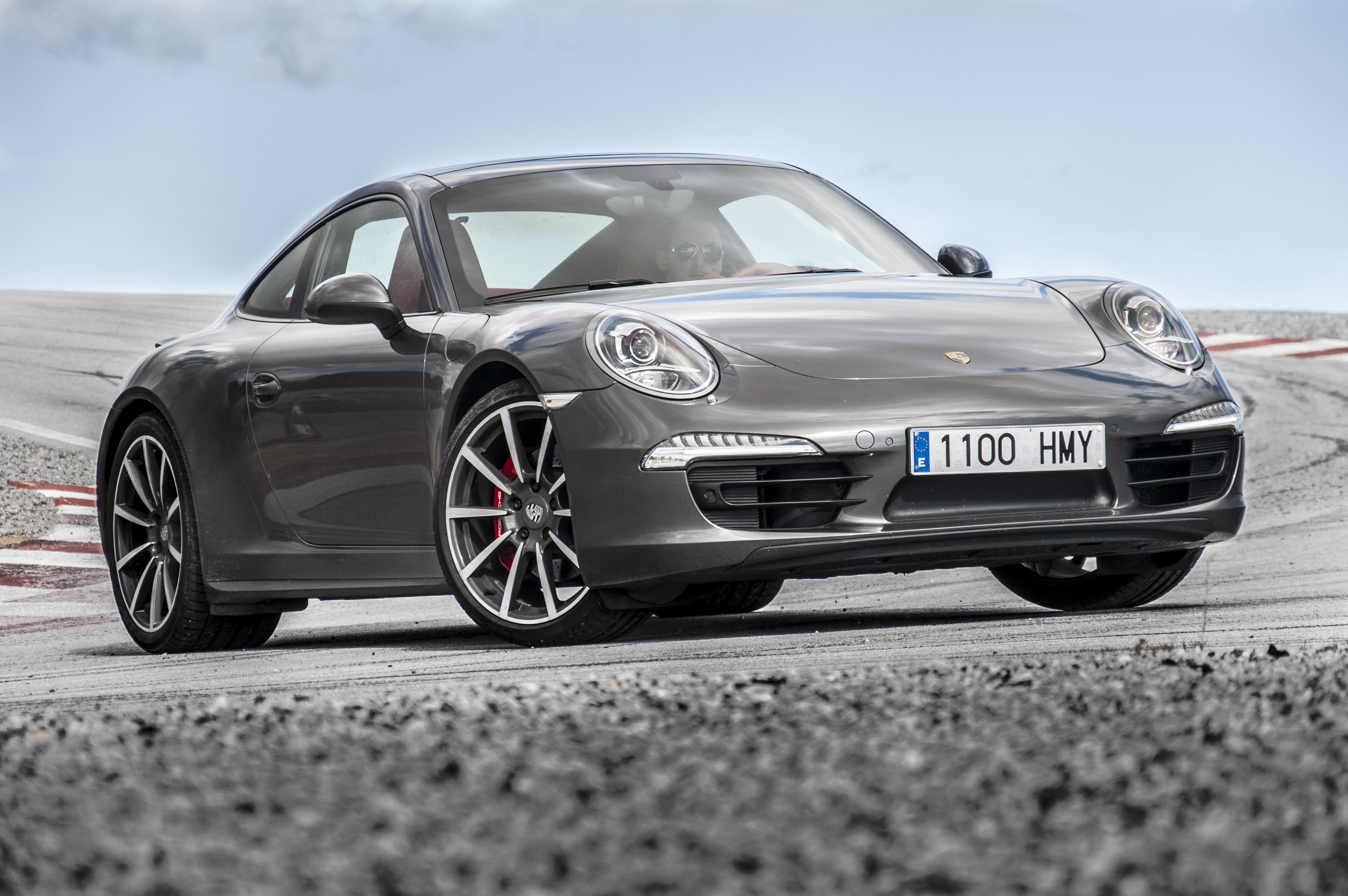
"...ontact on the bottom of the page when they write 911. That one always kind of alarms me."
The Porsche 911 is a famous sports car that has been around for a long time, known for being fast and fun to drive. People talk about it because it's considered one of the best sports cars ever made, with a unique shape and powerful engine.
The Porsche 911 is a high-performance sports car that has been in production since 1964, known for its distinctive design and rear-engine layout. It is significant in automotive history for its engineering excellence and has a dedicated fan base, often discussed for its performance and iconic status in the sports car world.
Select text to request an explanation
So our fourth or fifth pet pig owner.
Yeah.
Australia's most hated sprint car driver.
And Paul Newman's racing coach.
Corey Kruseman, if you could describe this lunch we just
had in one word, what would it be?
Free lunch.
OK, that's two words, but it is technically correct.
There are no free lunches.
I think we just got a day at the school.
Yes, yes, there it is.
There it is.
And now for Dinner with Racers, presented
by Continental Tire.
With your hosts, Ryan Eversly and Sean Heckman.
Please hold your radio.
Oh, it's Paul.
I've been driving very angry.
This is the sound of a driver on the radio during a race.
What do you think I should go ahead and change?
No, no, no, no, no, no, no, no, no, no, no.
And welcome to yet another Dinner with Racers.
I am Sean Heckman.
And I am Ryan Eversly.
And we've been doing this, Ryan, for 10 years.
That's correct.
10 years.
So we're having a little celebratory lunch
at Johnny Rockets in Hollywood, California.
It has nothing to do with circumstance
that we just happened to be here because we're
working on a different project.
It worked out.
So we're celebrating 10 years, 10 years of Dinner with Racers.
And we're doing it with a bunch of our traditional podcasts.
But we like to cover a lot of different territory.
And I think we both get a little excited when
we get dirt racers because it's such a different discipline
and one that we have so much respect for.
So we were finally able to get Corey Kruseman, who
I was excited about.
And yeah, yeah, we got Corey Kruseman, right?
Yeah, Corey's a legend of the dirt track scene.
He's driven it all.
And he comes very highly regarded.
In fact, Patrick Long was one of the first people
to tell us that we got to get with him because he helped him
learn how to do the dirt track stuff,
as well as guys like Chris Dyson who
have gone over there and do things like that.
So we were on our way up to Laguna Seca
because we were both doing the Amsterdam Race Week in there.
And so we stopped on the way and able to sit down with him
and have lunch.
Exactly.
So just a little bit of background.
He's sort of that same 1990s era of guys
like Tony Stewart and JJ Ailey and stuff
like that in terms of success on the dirt track scene.
Two-time Chili Bowl champion, multiple titles within USAC
and the SCRA.
He's in the Sprint Car Hall of Fame.
And then he also drove IRL NASCAR Truck Series.
I mean, he's been around.
But he's most notably today runs what's officially known
as the Kruseman's Sprint Car Racing School
in Ventura, California.
So just like going to a Skip Barber or any
of the racing schools out there,
there is the only real game in town
that we know about for dirt track racing
is the Kruseman's Sprint Car Racing School
in Ventura, California.
Not too far from me, a very legendary track.
And when we looked into what that school is all about,
it's actually really, really cool,
which you'll hear about all in the episode.
Yeah.
Now, some of the stories you're going
to hear about are things like flipping like 1,000 times.
Lots of Tony Stewart stories.
And realizing Sprint Car driving doesn't come naturally
to everyone.
They're like firemen.
Believe it or not.
So all of these stories converged
at a fun little sports grill that he recommended
called Crony's Sports Grill.
That's with C in Ventura, California.
Wasn't sure what we were walking into.
Actually, the staff there was awesome.
Yeah, they were killer.
And I think he had a couple of pieces
of like his Sprint Car on the wall.
And not coincidentally, because we were there before him.
But they had racer TV on.
The TVs outside where we're sitting.
And so that was pretty cool.
But I had a Buffalo Chicken Wrap.
I had a chicken sandwich.
I think you actually did.
I did.
I think you actually did a lot.
I really did.
And yeah, it was a nice meal.
But you know what else is nice?
I think funding that with sponsorship is pretty nice.
Yes, it sure is.
And the way we got to eat lunch is
because those fine folks over at Continental Tire
were able to pick up the check for us.
Do you want to do the thing?
No.
OK, but I have 10 years of ways to make you do it.
No, you don't.
Continental Tire.
Ah.
Did you use an old clip?
Yeah, I don't know.
I got a button.
I got a Ryan Says Continental button.
I call it the RICO.
No.
The RICO Boo.
The RICO Boo.
You know, speaking of other things that don't make sense,
we have a Patreon now.
We do.
So if you go to patreon.com.com.
slash DWR show, you can become a member of Dinner with Racers.
We have a couple different tiers of membership.
But the most notable one is called the Dinner Club.
And the Dinner Club gives you all kinds of access.
Behind the scenes stories tells you
about some of our upcoming guests.
Ryan and I do sort of a monthly show
where we talk about old stories.
We tell you about the podcast we just did.
We give our fans opportunities to ask questions of the guests,
which you'll hear in a bunch of our episodes.
And it's just sort of a good time and one
that you and I have gone through.
Really, really appreciate it.
So it's a one of a kind deal that we encourage everyone
to be a part of.
But you know what?
Even if you're not, the show is free.
You know why, Ryan?
Because a continental tire.
Hashtag, dinner with Conti.
Dinner with Conti, Ryan.
Why do we keep saying hashtag dinner with Conti?
Because Continental is tracking that hashtag
on Instagram as well as other apps.
So if you're going to use your social media account
to kind of give us a little bit of love,
it really helps and goes a long way.
If you can use the hashtag dinner with Conti,
they are actively looking for that
to see what's going on out there.
And if we are worth partnering with,
which we are because of the support from you guys,
another way you can support us,
you can go to dinnerwithracers.com
or our Instagram account at DWR show.
We have trackable links put up there
that you can click on and that shows Continental
that you are looking at them through us.
And that goes a very long way
with keeping this show on the road
for possibly another 10 years.
You know what also brings value?
Pro-driving.
Pro-drivers?
Yeah, pro-drivers.
Driving us around the country for free.
Who drove us to Laguna Seca?
Oh, that, driving us to Laguna Seca
was Shane Van Gizburg of New Zealand.
Be quiet back there.
I got the flight of the cone quotes on.
Take it away, Corey Krisman.
Meow.
All right, we're going to start in five, four, three, two.
What's going on?
How are you?
Ah, you're not that bad.
Hey, Sean, great to meet you.
Hey, man, I'm Ryan.
Nice to meet you.
So I live in Pasadena, so I'm not too far,
but Pasadena is just far enough from Ventura
to not really be, to not necessarily share restaurants
or something like this.
Is this a Ventura staple?
It is.
It is.
This is the first one of six.
Oh, maybe.
I think it's on the back of it either.
But yeah, it's kind of a cool restaurant.
It's got a cool little vibe.
It started as half of this.
I don't know, 90.
I'm going to throw a number out like 90.
You were saying 1990 when it started.
Yeah, so I bought my first house just down the street
about the same time they opened.
Me and my wife at the time came down here to have lunch
just to give it a whirl.
And the guy brought back, we ate, it was good.
Guy brought back my bill and gave me too much money.
I counted it and I said, put it back in there
and I said, hey, you might want to recount this.
And the guy said, no, it's good.
And I was like, well, I know it comes out of their tips.
Yeah, right, right.
So I said, hey, you know, I don't want to be a jerk,
but why don't you recount it?
So he took it back and comes back and he's like,
I gave you more money than you started with.
And I says, yeah.
I says, you did.
He goes, most people don't do that.
He says, I'm the owner.
My name's Chuck.
And I says, nice to meet you.
So we kind of introduced ourselves, talked about what we do.
You know, I asked what we did, race cars,
and he kind of excited about that.
And so they started sponsoring.
Yeah, so it turned out to be, you know.
That was the first sponsorship ever built on honesty.
No kidding, right?
A good deed, a good deed, right?
So yeah, it worked out to be a pretty good deal.
And then, you know, you become kind of family around here.
You need a bunch of people.
So, but yeah, you're right.
Pasadena here, it, I always say it's a divider.
And everybody says, where are you from?
I say Southern California,
because I really do.
It's so much easier to say that.
It is, you know.
And I think that mountain right there is kind of the divider.
But what I like about it is we get this stuff, a fog.
Oh, right now I hear you.
Everybody hates fog, you know.
Well, I grew up in the Bay Area, so I understand you're like,
it kind of keeps things nice and temperate.
I love it, you know, shorts and a sweatshirt.
It was a fantastic attire for me.
Is that like the Ventura look?
It really is, yeah.
Usually flip flops, but I burned my feet in car racing.
So, you know, not much flip flops for me, but yeah.
It's really cool to come here and be able to hang out.
And what I do like is the onshore breeze blows the fog
right back the direction to LA.
So, it comes right up to that mountain range
and blows right back over.
So, we don't ever get, you know, red skies.
The only thing we get red is the sunset.
So, I love it.
Yeah, not a bad deal.
Yeah, so the first thing I'm thinking now is like,
the move should be, go find like a local sports bar
that's owned locally, if you're a racer,
and give them too much money back.
Right?
If you gave them like a $10 extra on the back
and they think they made the mistake,
there's your intro.
This also might work with hitting on a woman.
You have a lot of waiters or waiters.
Fair game, right?
Yeah, fair game.
Exactly.
Sorry, sweetheart, I think you gave me too much money.
Yeah, fair.
You're nice.
Yeah, it's the Corey Crewsman way.
Don't we wish there was an easy way to get into racing
or get people involved, right?
Right.
You know, so I have a race car driving school as well.
Yeah.
I don't know how much you knew or know and stuff, but you know,
that's the question I get.
So, the first time I heard your name,
because admittedly, I'm a road racing guy,
and I like world of outlaws and sprint cars.
But I'm from Atlanta, and my dad's English and a sports car
guy.
He's a crew chief and stuff.
So, not really on the radar other than what
I would watch on Thursday Night Thunder or just out
of interest, but no one in my family is like,
you should watch this stuff.
So, I hear your name every now and then,
but the first time it was actually told to me,
you need to go do this, was Chris Dyson.
So, Chris Dyson, longtime sports car racing family,
buddy of mine, he and I were racing against each other in 2015.
He was in a Bentley, and I was in an Acura.
And we were at Middle High, and I think it was raining
or something, but he's like, you got to go
to the Cruzman School, because I did that,
and that's how he started doing like chili bullen things.
He's like, I think you'd really take to it and really like it.
And it's just like life's gotten in the way.
But it's something that Chris, and I actually reached out to him,
like, hey, we're going to have lunch with him today.
He's like, dude, I love that guy.
But he loved it so much that he's always pushing it now.
And that's coming from a guy that's done sports cars
and prototypes and open-wheel stuff,
and not at all a dirt background.
He's turned into my best salesman, you know?
I mean, and like you said, a great friend.
He's one of those guys you meet him
and your friends forever, as well as with his dad.
That's verbatim what he said about you.
Yeah, yeah, so it, I mean, the part that I like
is he came out, I mean, not an easy trip from New York to here.
I don't know, came out 30, 40 times.
Right, right, yeah.
And was doing red eyes and all this crazy stuff,
and came out, enjoyed it, got his family out here.
Now he is a USAC car owner.
Right, right.
He owns two Sprint car teams, two Silver Crown teams.
He's given back to the sport.
Yeah, that's all from starting at the school.
All from starting at the school.
So, yeah, so, you know, with a school,
it's cool to get such people.
And the biggest question is, you know,
you've been doing this a long time.
I've been doing it a long time.
You know, we've all, how getting sponsorship
has changed so much.
Yeah, right.
You know, I mean, you saw the travel,
it used to be your friends, they could afford it.
Yeah, right.
You know what I mean?
And you worked hard, you did some training,
whatever it was, you know, people felt sorry for you.
Yeah, right.
You know, there was a lot of all of that.
Now, and then it kind of went to business to business.
And now it's like, I really don't have any answer.
It is, 100%.
Yeah, right.
It has brought a lot of friendships,
a lot of experience as well.
Just to meet different people,
get to do cool things like this.
You know, I've got to go up in airplanes.
I've got to go do a lot of neat stuff
because of the people you meet.
People share passions.
Absolutely.
You know, we have a mixture of fans,
but I would say most of our fans are sort of on the
road racing side of the stock car.
So let's back it up a step.
I think you're a first sort of real California guy.
I've always gotten the impression it's a different scene here
than if you grew up in the Midwest.
100%.
So tell me about the young Corey Crewsman.
You grew up in Ventura.
Yeah, so life was pretty simple.
Mom and Dad got divorced when I was young.
Probably seven at 10.
Mom met new man, shows up in my life,
and he was an AMA flat track motorcycle racer.
Okay, cool.
It was three times.
It was like around 1980.
This would have been right on the dot.
Right about 70, into 79.
So his name was Ron Crewsman.
And so we met him instantly, fell in love.
It was like, wow, this guy's really cool.
Yeah, he rode dirt bikes, had scars.
Yeah, right, right, right.
This guy's the real deal.
And just the things he taught me was really, really cool.
And so he brought home, like in the next four months
that they got together.
We moved in with each other and I lived with my mom.
So I would say probably eight months later,
he shows up with a three-quarter midget.
Oh, not a bike.
Nope, decided it was time to get off bikes
because he had so much injury.
Oh, and what is so safer?
Yeah, much safer.
Well, I wondered if mom was not into flat track for you.
No, so that was like, his flat track career
was probably over 10 years before they started dating.
Not a lot of longevity in flat track, yeah.
Yeah, so he worked at the motorcycle shop.
He was a sales manager.
And in 1980, it was like they got together.
He comes home with a three-quarter midget.
We ended up buying a Honda shop.
I mean, all these things happened.
And it was like, man, this is the coolest thing
in the world for me.
I'm like, this is great.
The summers, I'm working an Honda shop.
I've never, ever been to a car race day of my life.
I don't even know if I saw him on TV.
It was a kind of stick and ball, but not big at it.
It was more of a BMX bike.
Had a dirt bike.
So when all that happened, we decided
he was going to race three-quarter midget, so I was helping.
And they've decided I needed a day.
So the next day on Sunday, we rode motorcycles.
So I started racing motorcycles at a very amateur level.
Did that up until about 84, but I'd work with my stepdad.
Basically got to help clean the car.
Normal kid stuff, right? 100%.
Beginning of 1984, first race of the season,
we go down in the safer thing that we're racing now,
a three-quarter midget, and my dad gets killed.
And I'm like, holy s***.
So everything washes away.
Here we decide to go from bikes to cars.
And to me, this guy was like evil-can-evil to me.
It was just mythical.
It was kind of the impression that I had.
11 years old?
I would have been just turning, I was 13,
so I would have been turning 14.
So junior high, and a lot of things go through your head.
Obviously, mom's like, we're not going back racing.
Of course not.
We're done with that.
We're going to start doing other stuff.
So we bought some jet skis and started doing that scene
for, I don't know, four or five months.
But every time we went jet skiing, who do you call?
You call your friends from the races and say, hey, let's go.
So in 1980, one of the first people
I met at the racetrack was a kid by the name of Jay Drake.
Nether, Sprint Car champion that has won USAC titles
and runs Keith Coons Motorsports.
So we became best friends.
And they were kind of to the point
where, hey, Jay doesn't have anybody hanging out at the races.
So they would stop and pick me up, take me to the races.
Mom was against it.
But you go do your thing.
Eventually, another year goes by.
And at about 15, I get a go kart.
And we start racing go karts.
So we're kind of doing the local deal here at Ventura,
racing dirt oval go karts.
Back in the day, PJ Jones, Page Jones, Petter Gons.
It was like the real scene back then.
It was really cool.
So we'd do a little bit of payment stuff.
Didn't really care for it.
But we did it because we could maybe race two nights.
Yeah, right.
Some more stuff.
Yeah.
And then kind of got out of it for a while.
Kind of like was, OK, got into high school, met girls.
And other distractions.
Yeah, mini trucks.
Right?
In California, a mini truck deal was a big scene.
So everybody went down that road.
So I decided, hey, I'm going to start a car club
and all this other.
So did that for a couple of years.
And decided one day, kind of done with this,
want to get back into racing, tried to pool a bunch of money.
And family helped me.
And I bought my first three-quarter midget.
OK, very important question.
What was the name of the car club?
California Illusions.
Oh, wow.
There you go.
Waves.
Tell me that was in Chrome on the window.
I wish it was.
I wish it was.
And what did it have?
It had palm trees and waves.
And yeah, other than that, it was pretty hip.
But it's fun because most truck clubs
were like in the 10, 12 trucks, I think, in one year.
We were up in the 100.
Oh, Jesus Christ.
Yeah, it was like, OK.
Filling up parking lots.
Yes, it's turning into an unmanageable job.
It was 16 years old.
Just trying to enjoy my car.
Yeah, right.
So your stepdad's last name was Cruzman.
It was.
So it wasn't your last name by birth.
So where did this change come from?
So I got, you know, when we started racing,
everybody knew me as Cruzman's kid.
So one of the days I came home when we were talking about it,
I started getting birthday checks to Corey Cruzman.
So you've been going back to the three quarter minutes?
Yes, yeah.
So when all that happened, he adopted me then.
So that's when we made the lane.
I'm sorry.
Legally?
Legally, yes.
Oh, wow.
Yeah, OK.
Yeah, so my name is Corey Cruzman.
What was going on with your actual dad at that point?
Like, were you guys still tight?
So no, it was kind of a lot of drama in there.
And it was not any of his brought on.
My mom actually had just kind of really drove a spike.
And I was scared of him for a long time.
Now me and him are best friends.
Oh, cool.
And I talk to him on a daily basis.
So there was a lot of turmoil on there
that got ugly for a while.
But at that time then, you know, got my first three
quarter midget and went home, started working on it.
By that time, mom kind of was dating again.
And she was dating a guy by the name of Harlan Willis.
Harlan Willis comes in to be a big key of my life here.
And he kind of helps me with a TQ on basically which ends
the front, which ends the back, because I have no clue.
It's like we're learning a lot.
But I win my sixth race in a three quarter
midget out here in the USAC West Coast
three quarter midget division.
So we raced that for about four years.
And Harlan kind of was racing his own stuff kind of helping me.
He was racing a sprint car.
I was racing a TQ.
So we'd never go to each other's race
unless we had a night off.
But during the week, you'd answer questions and stuff.
So I guess it was about 1993.
He called me up one day and he said, actually,
let me back up a week.
So in 1993, my girlfriend at the time, I looked at her
and I said, well, we're done.
I go, you know, I've got every credit card maxed out,
you know, and I've got all the way down
to a Montgomery Ward's credit card maxed out.
I go, I can't do it anymore.
I'm like, I just I can't do it.
You know, I says it's time to give up the dream.
It's time to figure out what we're working folks
and figure out how to get a better job.
And so about two weeks later, I get a phone call from Harlan.
And Harlan says, hey, what are you doing?
And I says, I'm just working in the garage.
He's like, why don't you come down and need a hand.
So come down to the shop.
And he says, why don't you jump in the car and fire it for me?
He's never asked me to fire this race car.
And I'm like, you're going to let me fire your car.
And he says, yeah, yeah.
Are you still mom's guy at this point?
No, by this time, mom and him, I'm sorry.
They lasted probably a year, mom and Harlan and Harlan
has moved on now.
Sorry to back you up a step.
Your credit cards are maxed out, is that because you've,
at this point, gone back to pursuing racing?
Yeah, yeah, he's trying to make it work.
So yeah, let me rephrase.
So Harlan came in and started helping me
with the three quarter midget with advice and stuff.
When you're a teenager.
So that would have been 89, 1090.
So in 1990, he left.
And then in 91, 92, 93-ish, we raced full time that whole time.
So you're out of high school pursuing the dream of being
a spring car driver.
100%.
That is all three quarter midgets now.
So then at the end of 93, or mid 93,
is when I'm like, OK, I'm broke and I can't race anymore.
My three quarter midget.
I get a phone call from Harlan Willis,
which says, why don't you come fire up my sprint car?
Go down, fire his sprint car for the first time.
It was uninducturated.
That's a bit of a step up from a three quarter
midget to get into a sprint car.
Yes, by about three levels.
Oh, OK, that's a lot of power.
Yeah, so it goes from a motorcycle engine
to 800 horsepower sprint car motor.
Oh, OK.
Yeah, yeah, so a much bigger car, much bigger, yeah.
What size?
410.
Oh, you went right in the big category.
Yeah, so that's all we had in Southern California.
Oh, you didn't have like the three-way.
Oh, we had, yeah, yeah, yeah, yeah.
We only had 410 non-wing sprint cars in Southern California.
OK.
Eventually, 360 sprint cars came to California,
but not until probably 2000.
So you went from three quarter midget to the top.
Motorcycle engines to the craziest thing you could drive.
100%.
So I went down, fired it up, and he says,
what are you doing tomorrow night?
And I said, nothing.
He goes, I want you to race tomorrow night.
So it was the last race of the season.
I am freaking out, and I'm like, absolutely.
So I show up in the next morning.
I wash the truck.
I wash the trailer.
I make sure everything's perfect.
We drive up there.
And I got all worked.
We had to run a rookie flag back then, right?
So I was really mandated back then, you know, at that level.
So started dead last and everything,
made it to the main event.
I think there was 34 cars.
So I mean, we made progress.
Yeah, so got all the way up to 10th, got a flat tire.
But he was happy about it.
Yeah, the first time out, you made the main.
Yeah, right, right.
So we decided to put the next season together,
which would be 1994, would be my first full-time season.
We go to a racetrack in Phoenix called Manzanita Speedway,
which is a big five-eighth mile, big fast, right?
And he's like, you know what?
We're just going to skip this one.
I'm begging him.
No, no, no.
Take me there.
Take me there.
So first lap, we go out.
We were sixth quick.
Second lap, I flung it right through the guardrail.
Sorry.
Broke my shoulder, bent the car.
So it was like, OK.
And I slated to go to Paris, France in 10 weeks, no, six weeks
to race three-quarter midgets over there, a deal
that I had already put together.
It was like the little midget Grand Prix or something.
So a guy ended up buying all of our cars.
So I was able to pay my credit cards off.
I owed $14,000 in credit card debt.
I sold my race car for $14,500.
Nice.
So it was like, OK.
Beer money.
So I was able to go to Paris to race it.
And I think we won like 12 out of 14 races over there.
Yeah.
So shoulder just barely to where I could get it up
on the steering wheel.
Harlan's duct tape on my hand to it.
And Harlan and I, he went with me,
so I got to take a crew chief with me.
So the two of us hung out over there, came back,
put the sprint car together, and ended up winning.
The really weird deal about the whole story
is my dad got killed in El Centro, California on March 3.
My very first sprint car race that I won
was my sixth sprint car race, which
was on March 3 10 years to the day at the same racetrack.
Oh, wow.
And I've never been back to the racetrack in that 10 years.
So just a storybook, just one of the steals
that probably doesn't happen very often.
But it was fortunate enough to happen to me.
So I started a career with Harlan.
And I think I'm the winningest sprint car racer
and a non-winged sprint car racer in Southern California.
If you add the divisions together,
I think they told me that it was 222 main event wins,
not counting go-karts, not counting
any of the little stuff, but real divisions,
professional divisions.
By the time you're racing at that level,
he's not attached to your mother.
Given everything that happened to the family, where's mom?
So mom's got a boyfriend.
She comes every so often.
Let's see if that again, she's been freaking out.
She's not screaming at him.
No, nothing, no issues whatsoever.
Yeah, by that time, I'm a big boy.
And if she was going to go, she got to treat it right.
And obviously knows what it means to me.
Yeah, of course.
And we raced together for nine years.
Harlan and I, we won the World Championship together.
We won an SCRA title, which was the big series out here.
Right.
No USAC was out here at that time, so only in midgets.
We won a lot of the really big stuff together.
I think we won 18 out of 20 races at Paris in one season.
That's cool.
It was, yeah.
So I mean, we set a lot of records.
We did a lot of neat stuff together.
And then started dabbling in the trucks,
did some NASCAR trucks stuff.
And then, see, I did a couple NASCAR truck races.
We ended up in the chili bulls kind of going
on in this background, right?
So I'm racing a midget for a guy by the name of Andy Bondiou.
Andy Bondiou is a car owner that was really unique.
He was very creative.
He read the rule book and saw everything
that they said you couldn't do and figured it out, right?
So I was probably in one of the best cars.
So, you know, if we back up now, I kind of told you
some of the Sprint car career.
And that gets me up to about the time
I'm going to step into Tony Stewart's ride.
So now we'll back up again and we'll go up
at the midget side of the tree.
And by doing that, so in 94 was my first Sprint car full time.
And I started opening up some eyes.
Andy Bondiou probably had the nicest midget at that time.
So he approached me about running for him.
In the midget, on the off nights,
I wasn't running Sprint cars.
So I think we won like six out of the first seven races
that we ran, just kind of locally around Southern California,
a little bit of Arizona.
Then we ended up going to the Midwest,
running the Belleville swing.
So we went back, we did some Nebraska stuff.
We won the Pepsi Nationals.
We went to Belleville.
We ended up going and putting a deal together
to go run the Forecrown, which is at Eldora.
Now that Forecrown is a midget race,
a Sprint car race, a Silver crown.
And then that fourth division changes a lot.
Now it's winged Sprint cars.
At that time, I think it was late models or something.
But we ended up in Harlan Sprint car.
Very first time we've ever been there.
Never been on track that big.
I was sixth quick in the midget,
sixth quick in the Sprint car.
I led 16 laps in the Sprint car.
Blistered a right rear tire.
Tony Stewart passed it to me, I run second.
Midget, same thing, six quick.
Go out, lead the feature, lap 16, blow the motor up.
So we drive home from there to race in Mojave.
Bondio meets me to get the midget.
The next week, we run the Sacramento mile
in Sacramento, California.
So this is 94.
And so he gets the car all fixed up.
We drive up to Sacramento the following week
and I flip, which you guys probably see.
Whoa, we see each other, yeah, yeah, yeah, yeah, yeah.
Believe it or not.
15 times.
Yeah, so people know me for so, you know,
either winning some big race or they know me
because of this big crash, right?
Racers flip, yeah.
And it was the one that, you know,
I don't remember it still to this day.
I could tell you everything happened,
but I can tell you because I've heard it a hundred times
from everybody else's story, right?
But basically if you look up Corey Kruseman Clash
on YouTube, yeah, it's basically,
there's like, you know, mid 90s amateur video
of a couple of people getting sideways on a restart
and you just climb over this and 15 rolls.
And it's, to have that kind of momentum is pretty impressive,
but what'll happen from this?
You know, when you go back and you look at that video,
it's coming to the green flag, but it's on a mile.
We're already running a hundred miles an hour.
You know, it's kind of crazy when you think about it,
how can somebody flip coming to a green flag
as far as I did, right?
But that's the bad thing about midgets
is they build momentum.
And, you know, so obviously it knocked me out.
Both arms come out of the cage.
As a result of being knocked out, you just did it.
A hundred percent, yeah, yeah.
So we weren't arm restraints.
And at that time, you know,
we're still learning about safety as we still are today.
And what it did is it slid my arm,
my sleeves up on my, on my suit.
Yeah, yeah, yeah, yeah.
So basically it was like having no arm restraints, right?
So, with that, yeah, with that being said.
Because basically your arms go out of,
from an audio standpoint,
your arms went out of the roll bar.
Correct.
So that roll bar then crushes your arms as it flips.
So if you look at it, you know,
it looks like I'm giving the,
like you just kicked a touchdown.
Yeah.
Both arms, both arms are straight up in the air.
And what's funny is that lands on my left arm
three or four times.
My right arm goes back in the car,
but what it does is it goes through the steering wheel.
So there's a three spoke steering wheel, right?
So every time the front wheels hit,
steering wheel winds a different direction.
And the, and the right arm,
the one that went through the steering wheel
is the one that got the worst.
So it broke both bones in two places.
So there's four fractures.
Jesus Christ.
It broke every metacarpal in my hand.
Luckily I was at UC Davis.
Yeah, right.
Got a basal skull fracture.
Yeah, I know this very well.
Yeah, so didn't know about basal skull fractures.
Yeah.
But from what I understand,
I'm very lucky to be walking.
Absolutely not.
Yeah.
Yeah, yeah.
I think it's in a 1% range.
Yeah, yeah.
So, so plates, pins told me I would never use my hand again,
but not somebody gives up and had a lot of drive,
especially back when you're younger.
And won my first race three months later,
back in a race car.
So it was, it was just one of them deals, you know.
The never give up has always been there.
That was taught to me, you know, in family,
but you know, you have a passion
and that speaks well more than anything, I believe, right?
So I'd like to tell you that there's no effect
from it still today, but we both know that's not true.
Yeah, well, not gonna head into it alone.
But weird question.
Do you think you're lucky that you don't remember it?
I think it's probably a good thing.
Yeah.
Yeah, you know, I think fear, every race car driver
you talk to, you ever get scared,
the first thing they say is no.
Well, they're all lying to you, you know,
because there's no human being on planet Earth
that doesn't get scared of something.
And if you-
In an open wheel car going 150 miles an hour
on the 300 dirt track, yeah, yeah.
And it's not just you.
It's the other 19 that are out there, right?
And, you know, and I tell people all the time that, you know,
scared is just a word that we use.
We could put that into so many other phrases
that most drivers would say, yeah, absolutely,
you get butterflies or do you get, you know, nervous?
Or, you know, but, and if you don't,
if you didn't get it, I don't think you'd come back.
You know what I mean?
I think that's what's bringing us.
That's part of it.
Yeah, 100% the drive.
I mean, you feel that every time you put a helmet on, right?
It's like, oh, you know,
or you'll go stand at the edge of the racetrack
and watch a car go by and qualify.
And then you'll go, holy s***, that goes by fast.
Yeah, right.
And you're like, I can't do that.
There's no way I could do that.
You know what I mean?
I'm going back to the pit, you know?
And then three minutes later,
you're out there doing the same thing.
And you're like, man, I gave up so much in that corner.
You know?
Exactly.
Yeah, so.
That's right.
The brain just, you know,
that's what keeps you coming back.
And, you know, so yeah, it's probably a good thing.
I do remember the hospital, you know,
when you start coming to and, you know,
which was probably a week of it.
I do remember the stories and then, you know,
I did have a nurse that came in
and this was probably the shocking point of it all.
And the thing that stood out the most is, you know,
you got three or four needles in the arm
that are pumping medicine and whatnot in there.
And the lady tripped over my IV.
And when she did, it ripped every needle out of that arm.
And I told you, that day I knew I was alive.
I feel everything.
I like it.
That's the trauma you remember of the crash.
Yeah.
So yeah, it was, you know, one of those things that,
you know, you like to forget, but at the same time,
there's some other stuff.
Wait, so if you see a wall coming,
you're not imagining like being in a cast for six months.
Yeah, no.
You're imagining like you're getting ripped out of your arm.
Yeah, right?
Copy that.
But yeah, so I mean, you know,
obviously we got that fixed and meat fixed
and Bondio went in and built a new car.
And then we decided to start running chili bull stuff.
Right?
No, we went to chili bull.
I think we ended up going the third time
as the first one I won.
So first year we went, got crashed out
on the first lap of the feature.
Don't even remember it might have been 100% my fault.
I don't even remember what happened,
but got into a crash, knocked the front end out of it.
I think it was me and Sammy got together to be honest with you.
The next year I ran second to Dan Boris
and then the third year I won it.
And then the fourth year, I didn't go back.
I got my first offer to go down under to Australia.
How do you guess Ryan said that?
And I was like, you know, hey, this might not have happened again.
This is, yeah.
You gotta go, you gotta go.
So, so I go to Australia.
I had no idea that pissed the chili bull people off.
Yeah.
No, tomorrow.
Not just the fans, but them on.
Yeah, right.
For people that don't know,
I know the dirt stuff is much.
So chili bulls in January.
Correct.
And it is like the big event
that a thousand different Sprint car drivers
and major car drivers come out.
But it's the only thing going on.
It's the only thing going on in the sport, exactly.
Because it's indoor and it's a whole bit.
But Australia opens up their season basically
during our winter.
And so it's not uncommon for a bunch of Americans
to go out and do this Australian tour
because one of the weather's awesome.
And it seems like they want the Americans
to go out there and race.
So typically the Australians have opened it up
a little bit more, but they used to bring
the top three Americans and or the top three Americans
to Australia and or New Zealand.
So if they can get, yep.
So they will try to get the top three wing,
top three non wing, top three midget,
which over there is called a speed car.
I see.
In New Zealand, they're now called midget.
So that year was the first year chili bull was really growing.
You know, at that time we were getting 300 cars,
which everybody's like, oh, that's it now.
You know.
Still a lot around the tiny, tiny track.
So we won the chili bull that year.
So 2001, we didn't go back.
Oh, so the reigning champion doesn't come back.
Correct.
And that really pissed the awesome people.
So you retired on top.
So they put Lefler in it.
Okay.
So the year that I went to Australia the first year,
we went down and we ran second, third.
We didn't do very good.
Ended up putting a deal to go back the following year.
But now with knowing how important chili bull is
to not just the racer, but to racing in the US
and the racing even in Australia, New Zealand,
that's where they started flying us home.
So then they would put a deal together
and that's where it all started, to be honest with you.
So they would fly us down for a week to two weeks
in Australia, New Zealand.
Then they would fly us back for a week for chili bull,
right back on an airplane and fly back to New Zealand.
So I think I did that 14 years in a row.
So it really was a lot of fun.
Sounds brutal.
It sounds fun.
And one of my best memories in racing,
honestly comes from when I was a kid
and my dad was racing the three quarter midgets,
he dabbled a little in sprint cars,
not a very quality sprint car ran in the back.
So we'd go sit in the Grand Sands and have fun kids,
doing kids stuff.
And one of the days that after the race,
as I'd go running across the start, finish line
and the winner would be parked right there in the infield
and Leland McSpatten was who won.
And I just kind of stopped and looked at him like,
you know, mesmerized by him and he gave me the trophy.
He's like, here, you know?
That's so cool.
And I'm like, oh, you got to be kidding me, you know?
So by the time I get to my dad's pit
and I got this trophy, he's like, where'd you get that?
You know?
Put that back.
Are you doing your normal sh** or what, you know?
So I'm like, no, you gave it to me, you know?
So Leland and I started, you know,
became really good friends later on in my career.
And he really became a coach to me
through this chili bull stuff.
That was the car he used to run.
And he won the chili bull in it as well.
So he became a mentor to me.
And then that put in my head that, you know,
trophies are something that collect dust.
And you could change somebody else's life by giving them.
So I never kept trophies.
So I only kept chili bull trophies.
I kept the world championship.
Yeah, the big ones.
The majors.
I've got out of 200.
Because you have so many.
I was very fortunate.
But I probably got 30, 35 at my house, you know, of 222.
So, you know, but I remember going to Australia
the second year, which would have been 2002.
And I won the title.
So over there is different than it is here in the States.
To win the championship here, it starts at race one.
We get points.
Race two, race three, race four.
The guy at the very end of it has the most points
is your champion.
And that's rightly so.
That's how we're raised.
That's how it should be.
They just give it to Joey Logano.
Over there, it's one race.
So you show up.
They do give it to Joey Logano.
They show up.
It's one race.
Everybody shows up.
It's called the title.
And they didn't allow anybody outside of Australia
to run it, fairly so.
So this 2002.
Because they won somebody who ran the whole season.
I think they wanted it to be in their own.
They want to see Australia number one on the car.
So it wasn't.
Don't really want to stick up the show.
Yeah, right.
So they opened it up.
Same team flies me down.
There's a couple other Americans down there.
And we ended up winning the whole deal.
So we're Australia one, right?
And down there, there's 6,000 people in the grandstands.
We're right now.
We're pulling 1,000 in the grandstands on a Saturday night.
So it's really a fan favorite, a big deal.
So we do our ceremony.
And the trophy is probably a good 4 and 1 1 1 1 foot tall.
And I'm carrying it off the racetrack.
And I spot little guy up against the fence.
And the fence ends, I don't know, another 20 feet.
And that's where we go into the pits.
So I'm going to get to this kid.
And I'm going to tell him, hey, buddy, if you want to meet me
down here, I've got something for you.
So we get close enough just to the point
that I can speak to him.
And I said, hey, buddy, and about the time
I get that out of my mouth, he gives me the bird, like no
tomorrow.
And this kid cannot be more than five years old.
I mean, he is belly button high to me.
And I'm like, are you kidding me?
And right next to him is an older lady.
I'm assuming a grandma.
And I looked at her and she says, F you, you yank, go home.
And I'm like, I was going to give you, right?
So I ended up giving it to some little girl.
Little girl showed up later.
So there's ones you win.
There's ones you give away.
And there's ones like that that you just can't make it up.
OK, is that a general sentiment or is that just this one kid?
Like the Australians kind of resent this?
No, just this one area.
I mean, the one thing that I found in more New Zealand
than Australia, so here in Southern California,
when you come into our town, we say, hey,
if you ever stop by, give us a ring there.
And that basically means let us know you're here.
Thanks.
Good to see you.
Good talk to you.
See you later.
You know what I mean?
Southern California, that is a normal thing.
Inventure it.
Since Sierra Nalaya is fake as s***.
I love it.
That's the difference.
Yeah, yeah.
So then you get to the Midwest of the United States,
and they say, yeah, give us a ring,
then you guys go to dinner maybe, or you go to lunch, right?
I mean, they're more forgiving.
They're more, you know, they make an effort.
In New Zealand, you run into them.
And basically, it's like, what are you doing tomorrow?
And we're like, oh, we're going to go river rafting.
And the guy goes, do you know where you're going?
And we're like, no, never been there, but we got a map.
Oh, don't worry about it.
Give me a minute.
It comes back and he's like, all right,
I'll pick you up at your hotel at 7 o'clock.
We're driving you down there.
We're going to eat at my buddy Joe's.
When we get done there, we'll finish up the day.
Then Martha, when we get home, she's going to cook dinner.
I mean, they just, they open up and they take care of you.
But they really want to be around how we talk.
They want to be around just our mannerisms.
They want to be Americans, you know?
And it's really awesome.
But you do run into those batches of people
that get careless, you know?
So every time, I mean, I went 14 years.
I loved it.
I loved it, you know?
And I say, if I could ever, if I was ever to leave Ventura
to move, you know, that didn't bring me
into a racing community here locally, a racetrack or something.
Auckland, New Zealand would be the area that I would like to end up.
That's cool. Yeah. Yeah.
It's very high on my list too.
I've never been, but like everybody that's talked about it,
it sounds like it's amazing.
It's phenomenal. Yeah.
It's Ventura weather, you know?
I mean, it's 70 degrees.
The racing any different?
Um, as far as like when you get to the track,
like culturally, is it a different thing in terms of like,
you don't race this way or you do race this way?
Or, you know, you know,
Zealand has really copied the states and it used to be
where we could go down there and sell a car, right?
So basically what the promoter works a deal out with you
on the amount of money you get to people, you can take your own car
or you can go down and drive for somebody.
It's up to you.
You still get that.
You race against the lumps up, right?
But then we found if you take your own car,
you can sell your car down there.
As long as you bring something back that's similar to a race car.
Yeah, they're not going to know the customs.
They know they don't know what it I've brought back.
Writing lumbars I brought back.
I remember the last thing we brought back was some dune buggy looking thing
that we picked it up in customs and LA drove straight to the dump.
This was over 10 years ago.
Yeah. Yeah. 100 percent.
Carnet. Yeah. Yeah.
Now, Ryan and I, when we do carnets for video gear,
yeah, we're always on the up and up.
Very, very clear.
Allegedly. Yeah.
I just feel like you're supposed to say that.
But no, so racing down there is really, I mean, they've stepped it up.
I want to say when they show up, they're dressed like they work for Pinsky.
Oh, so you say, step it up is in more so than 100 percent.
They really are into how they look and their equipment is superior.
I mean, their cars are fantastic, you know,
and they work twice as hard to get it because they got to pay customs.
Yeah, right now.
Now more tariffs, right?
So, but yeah, with it.
So it's arguably a bigger scene down.
I think it is. I really do.
They put five, six thousand people in the grandstands every Saturday night
that they race, but they don't race against each other.
Sure. So there's not a racetrack in here in Pennsylvania.
There's not a racetrack here.
They're all at this one, then they're all at this one, and then they're all right.
And they have betting on on cool.
I feel we need that. Yeah, I do.
I think it'd help us a ton. Absolutely.
We need the next thing we need.
It needs to be a new appeal beyond just still watch cars.
100 percent.
We were talking about how we're getting sponsorship dollars.
Right. We've already burned through the energy drink stuff.
We've already burned.
Now we're burning through, you know, broadcast, you know, pay per view.
You know, what's the next?
What's the next thing that's going to dump money to us, right?
Betting in sprint racing makes a lot of sense.
I think it's fantastic.
Yeah, absolutely.
You know, and they're dabbling with draft kings, right?
I mean, you can't.
But it's blocked in California, so we can't do it in California.
Yeah, exactly.
So your phone, you can't do it off your phone, you know.
So, yeah, I figured that after I put a thousand bucks into an account.
You know, yeah, with the car counts, you guys still can get.
Yeah, that would make a lot of sense. Right. Right.
So we're getting on this outside of California.
We'll change it. Yeah, 100 percent, 100 percent.
So at what point do you start the direction of driving an Indy car?
Boy, that would have been.
I want to say I ran it about 2001, if I recall.
Yeah.
So I ended up with a sponsor, met him through the driving school.
OK, so at this point, you're already doing your your cruise driving school.
Yeah, I started that in 99 and 2001.
IRL was very much a lot of old track guys, sprint car guys were going over there.
100 percent.
So so if you remember when they did the announcement about the IRL,
Tony George got up and told everybody what it's going to do.
He used three names and his three names that he said,
we want to make it to the likings of our local heroes
that run sprint cars can get to the next step.
And it was Corey Krisman, J Drake and Dave Darlin.
Yeah, right. Yeah.
And those three, all of us got a test.
I was the only one that got a race.
Yeah, right.
And I was the only one that came up with the money.
Yeah, so there was nothing.
And and I ran for PDM, right?
Paul Diatlovich and Paul's a great guy and he had great people working on the car.
But it was a small organization.
It was a low budget team, you know.
And at that time, it was like, well, let's this is what we got.
Let's go try it.
Right. And so I ended up with a sponsor
that supported me.
He paid for a lot of the truck stuff.
Agerman was the name of the company and they were soil amendments.
So we put a deal together.
John Menard helped us a ton.
And basically what we did is it was a business to business.
We're a big strawberry area out here.
And and the strawberries come in a clear plastic box, right?
When you buy them, the lid pops off, pops on blueberries coming up.
And we used strawberry seeds, some of agarman soil dirt,
and then went into that box, a little package of strawberry seeds on the top.
So it was a starter kit for you to grow your own strawberries.
That was your activation.
And we put those into Menard's.
Yeah. Oh, cool. And, you know, X amount went to agarman.
Oh, yeah. Back to B to B.
And there you go.
And that's how we raised the money to do our truck races and and or our
Indy car. Yeah. And it was where are we going to find our best
right money coming back to the business side of it?
So we did two truck races.
Then we went and did the Indy car deal.
Then we came back and did two more truck races.
And then by that time, there was some embezzlement, unfortunately,
in one of the players inside of their business.
And he couldn't help me anymore for real.
Yeah, that happened.
It was unavailable.
Yeah, but I don't.
I mean, we talk about this a bit in the sport in our show with people that champion.
You know, so in other words, like when somebody spends money or does something
in the sport, very rarely does anybody have to do anything.
So yeah, John Menard bought X amount of these starter kits
to help fund your race team.
And he did this sort of as a business case to have these in Menard stores.
Yeah. If it wasn't Corey Kruseman in an Indy program,
do you think he would have been as likely to buy that?
Like it's just very.
It was just if it just made very down, very down in other words,
one has an Indy car thing attached to it to help somebody.
One is just pure business play only.
Right. He's probably less likely to do the business.
I would say 99% because it was going back to something he loved.
Yeah, exactly.
And so, you know, and how many times did he do that?
Yeah, one of my points.
So and I say that not just to praise John Menard, but to make it clear
that like very rarely is a business spend related to racing ever related
to just pure business.
Yeah, right. Yeah.
So we got to be nice to the John Menard and the and the Marcus Lomonas
is of the world, even if we don't mean because they're they're trying.
They don't have to be here. No, 100 percent. 100 percent.
Yeah. So first time you did you get to test the thing before you raced it?
Yeah. So it once again, you know, it's always everything's linked to a weird story.
Right. So Vegas is where we were going to go to test who did I have?
I had Johnny Rutherford came out because IRL has to bring you, you know,
somebody. So Diatlov, it shows up with a car.
It's going to be Greg Delansky, another wingspring car driver at the time
from Minnesota myself.
And we are going to split the day.
I want to say that day was 50 grand for us to test.
So 25 each and that gets us our license, etc., etc.
So we get there and we leave here, get there late the night before
wake up at the racetrack seven o'clock the next morning.
Just like we're told, it's so cold.
We can't go run because now this is in your guys's world, not my world.
And I'm like, yeah, so we wait and we wait and we wait and they're like,
well, Delansky's not here yet.
So they're trying to call him and trying to call him and trying to call him.
He never even made the flight.
He never got his money put together, but never called them to say anything.
Yeah, right. So now it's like they come to me and they're like,
well, you kind of going to get lucky because you're here and you came up with it.
We're going to go ahead.
We're still even though they collectively only had half.
Exactly. Exactly.
So that that did say a lot about Paul to me, you know, and and even IRL at that time
because, you know, they still had to pay their guys to come out there and that stuff.
So when that happened, we waited and OK, it's time to to run your test.
So we get in the car and, you know, basically they say this is what we're going to do.
We're going to go out and we're going to run first gear, second gear.
You're going to get into third gear.
It has fourth and fifth gear at that time.
But we're going to stay first through third.
Yeah. Just bring it up to speed.
Slowly. Exactly.
You know, there's there's dots painted out there for references for their driving school.
They're they're not bad dots.
And so I'm like, OK, so I go out and the biggest thing I remember is it drops off the jacks.
And when it does it about knocks the wind out.
Oh, right. Yeah. And I'm like, holy.
If nobody's ever experienced that, I mean, it's like somebody pulling a barstool out
from underneath your right.
So markably stiffer than what you 100 percent.
So so we get out there and I don't know about lap 10.
The thing starts pushing in the you know, in one and two.
You're like third gear in third gear.
So I'm I'm like, OK, just say, guys, you know, just want to bring up that, you know,
things got a little bit of push. Full tilt.
Yeah. And and I'm flat.
But it should be flat track.
I would think. Yeah. And yeah.
And third, it'll be fine.
No matter what. Right. Yeah.
Bristol's five.
So I I came in and and said, you know, hey, what what would you think?
They tell you that they're testing your mind.
They're testing your capability of the car.
You know, it's all this stuff that they want to see what you have to say.
Sure. So helmets off.
I'm talking to Johnny Rutherford and Paul Diatlovich is on the other side.
And they said, so what do you think?
I go, I'm I'm having fun.
I said, I came on, said the thing got a little bit of a push, but it kind of went away.
I said, you know, I just moved my entry up just a little bit.
Yeah. And everything kind of got better.
And he said, OK, I says he goes, well, anything else you want to add?
I go, no, I think I'm ready to go to get up to speed.
And he goes, well, how fast do you want to go?
And I'm like, however fast I can. Yeah.
And he he says, well, the lap seven, you were at two or three.
Yeah. And I'm like, really?
It felt like 50, 55 miles an hour.
And he says, no, you were at.
So I'm like, well, I mean, I feel completely comfortable.
Right. Right. So we got to do two more sessions.
I think we did another 20 lap and then another 10 lap.
And it's 50 laps was what it was.
So in a matter of an hour, we're completely done with the test
and never got out of the car in between the sessions.
So it was a lot of fun.
So then California Speedway was coming and we couldn't get the dollars
and stuff to put together.
Fontana for your first race.
Probably was a blessing.
Yeah. Right. So and now it was coming up with money on you.
Was it PDM? Was it all of you guys working together?
Well, they gave us a price.
I want to say, yeah, PDM did.
I want to say the race was 50 and I think we ended up settling at 40
because at the last minute, that's about what I could get.
They're effectively running a customer deal.
So it's on you to figure it out.
100 percent. OK. Yeah.
Yeah. Arriving race program.
Yeah. You know, for a lack of. Yeah.
So we don't do that in Amsterdam.
Yeah. Yeah.
So we put together Texas Motor Speedway last race of the year
and I'm going blank on the guy's name that ran IRL at the time.
Barnhart, Brian Barnhart.
So we make the announcement.
We're going to come run Texas Motor Speedway two weeks at a time.
And Brian Barnhart says, no, cause pop the elevator.
It says, no, you're not bringing him to Texas.
And he says, what do you mean?
He goes, we he's got his license.
He's done everything you've asked him to do.
He's got the sponsorship.
He's got this. He's got that.
And he says, it's a last points race championship day.
We're not bringing a rookie out and letting a rookie run
because we're not going to take a chance on the most.
Let's also the most dangerous Indy car track they run at.
All right. So get a phone call from Robin Miller later that day.
Nice. There we go.
And he says, cruiser says, hey, Robin, how are you?
He goes, I'm getting ready to have a filled day.
Fill me in. So this is probably my friend, butter.
Yeah. Right. So.
So, you know, tell them everything that we did,
everything that we tried, everything that you know.
And again, you're one of the three names that was mentioned in the press
releasing. These are the guys we're going to give the opportunity to.
And you know how I learned that is from Robin Miller.
So. So Robin had a filled day with it.
And that's how they said it's going to be him.
And yet they're not letting 100 percent.
Yeah. I mean, he got on anything and everything that would he could.
Robin Miller did.
Yes. Lead your game.
And they're not letting that get 100 percent in about four days later.
We got the approval to be able to go run it because of Robin Miller.
Yeah. He really went to bat for me.
And, you know, and basically, I mean,
yeah, it's probably where I should have started.
No, but where is the best? Where is the best?
And the bottom line is you got the funding, which is so hard to do.
You take in new race. 100 percent.
So by the time that it seemed like everything got approved,
we ended up getting in my motor home, leaving here and pulling in at like two
a.m. and we were in the car at 11 a.m. the next day.
That's how late the clearance.
Yeah, that's that's about what it was.
So it and, you know, I mean, once again,
Rutherford vouched for me, right?
You know, everybody was right.
Yeah. Rick Mears put words in for me.
It's because, you know, Rick watched me as a kid.
So, yeah, so we ended up going there.
We went out and we I think we went to
we in the draft, we were the same speed as the top guys, you know,
when we qualified were three mile an hour off just because our car, right?
I mean, you're flat all the way around.
And we went through, I don't know, two rounds of pit stops.
And so it ended up, you know, Gearbox went out and, you know,
I got a trophy from Paul, you know, a couple of months later,
he welded all the gears together and sent them to me alone in the car.
100 percent. But, you know, I didn't do anything wrong.
I didn't, you know, make any mistakes.
You know, I at least felt like I held our badge up first for hard racers
and people that with the last name that you could pronounce.
And, you know, you know, and then it's, you know, I mean, I appreciate that.
You know, it's so hard, you know, I mean, especially in what you're doing,
you know what I mean, the in this road race background things,
but this road race background is so tough.
So season finale, arguably the most dangerous oval track
you can race at for that kind of car.
Did they do that drivers meeting thing where they call out the rookie
without calling out the rookie?
No, really, like some people might be new here.
Yeah, no, none of that.
You know what? I really think Barnhart was under.
Kind of, yeah, you know, under the needle at that point, right?
Because, you know, I don't care if you're, you know, Roger Pinsky or,
you know, who you are, I'm sure you're paying attention
to anything else happening in the sport, you know, and and I think our case
was pretty correct, you know what I mean?
Yeah. So I don't think that I don't think there was a leg to stand on there.
So I think he was very sincere.
He did come over and, you know, beginning and was he the was he the problem?
Do you think that when it started with Barnhart, the legit block wasn't
somebody behind him? No, I think it was him. Yeah.
Yeah, I think it was him just because, you know, it was an eye of this
and an eye of that.
And he did come to the pit, you know, before and said, you know,
hey, if we have any issues with, you know, you off the pace or something
like that, I'm going to have to make a move or something.
Yeah, right. And I said, hey, you got to do what you got to do.
But, you know, I says, you know, you're trying.
Yeah, you know, I know that ain't nobody going to come to my school
and say, hey, I've got, you know, sick grand to come to your school
and you're not going to give him a chance. You know what I mean?
Absolutely. Yeah. Yeah.
The I'm not sure on the timing of this, but some of the people that they did end up
Yeah, I think
court-crisis and winning in all Australia.
Yeah. Yeah.
And then there's a Dr. Jack Miller, their shock to Jack Miller, the dentist.
Yeah. Yeah.
And even like they're good guys that did the same resume, like Greg Ray didn't
do your on that level.
So I'm curious because, like, you know, you did do the IndyCar race,
you did a couple of truck things, but none of this ever really was sort of
the next adventure for you.
No, but it wasn't I'm curious why you think this is the case in the sense
that it was an interesting era where, you know, so in the 1990s, you know,
racing, especially here in Ventura became a big deal with the ESPN stuff
that had come into town with Thursday Night Thunder.
Obviously, this is, you know, not far from where we are right now.
So this is your era and, you know, and then that IndyCar, NASCAR era
of bringing guys out of USAC and World of Outlaws, you know,
Jeff Gordon was a little bit before your time, but Tony Stewart, J.J. Galey.
These were all the guys who were, you know, we were looking to this level of racing.
Why do you think in your case it wasn't as easy for you to just immediately
get some sort of cup development thing?
One, I think being here on the West Coast hurt me a little bit.
Yeah. So I just put two truck races together at the end of the year
previous, had the first two truck races slated for the next year, thinking, OK,
this is what I'm going to do now.
And not liking it, not enjoying it, not really caring for it.
In a, I was, that was at first when Thor Motor Sports started running
their second truck. OK.
When we went to test, we didn't even have two carburetors, you know,
now they got what, four complete cars, right?
And they run really well and they're winning championships and all that stuff.
Krafton was still the staple, you know, already, right?
But they were like the first time that I got to test the truck was
at Irwindale, which is a half mile.
Right. And you and I thought you'd done a lot of pavement.
So even a hundred percent at that time, I had very little.
Yeah. And I got a carburetor for Daytona on it.
And the things just like, you know, it's like a pig.
So then Matt comes and, you know, he shows up at one o'clock.
Well, I've already got 80 laps and they go, well, once you go get in it
and run and he goes out and runs, you know, maybe a tenth quicker.
And they're like, well, is the truck close?
He goes, what is it got motor wise?
And, you know, he's like, it's a pig.
He goes, he goes, well, it's got.
And he's like, that's got the Daytona carburetor on it.
Yeah, yeah. In other words, way underpowered.
Yeah. It was basically a restricted engine.
So they swap the carburetors.
OK. So we take an hour break and he tutors me and we come back and all of a sudden
now we're seven tenths quicker.
And it's like, oh, now the thing wants to spin out.
Now the thing wants to go.
Right. So now it's more fun.
But it really kind of put a bad taste in my mouth of, OK, just keep paying us.
And we're going to keep letting you drive. Yeah.
Right. Yeah. OK.
We're just running around because it wasn't like this was a, hey,
we know you from seeing you on TV.
Exactly. You are here.
No, they're some rich kid. Exactly.
All the people working on it know who I am. Right.
The guys that are owning this stuff don't have a clue.
You know, they they just know Dean with her at, you know, so.
So that year we go to Chili Bowl two thousand and three.
I'm guessing I think Stuart or no, he must have been.
I think I drove for Stuart and four and five two thousand, four, two thousand,
two or one or two Stuart, one and two.
OK, so oh, two.
I ran sack and our third to him to to a Matt Chili Bowl.
OK, so we were sitting in the after the race,
we're sitting and doing the press release stuff.
And, you know, they put the three top guys in the front and then they
all the presses here and they do, I don't know,
30 minutes of drilling questions and stuff.
And so they announced just everybody that Mopar
just put up a million dollar to win Sprint Car Race.
And they weren't sure if it was going to be a million to win.
If it was going to be a million dollars spread across,
it was going to be at El Dora and they set the dates,
but they just didn't know the format yet.
So me and Stuart been friends for a lot of years.
So Stuart came out here when we were racing three quarter midgets.
So it would have been like in the 90, 91 era,
didn't have a dime to his name, you know,
came out here with the Potter family, ended up getting rained out.
They're flying home because now we lost a weekend.
Well, Stuart rode in the back of the truck on the way out here.
So he doesn't have a place to stay, nothing.
So he stays with me because I live in Ventura.
That's how we met.
And then Jay Drake lived down the street.
So he split between us and we went and hustled pool tables and for,
you know, until we'd get kicked out of the pub, you know,
when they figured out we were only 14, 15, 19, you know,
we were not old enough to drink. Right.
So there there might be a T want to trip in there as well.
But so, so, you know, we've always been really good friends and racing.
But so they announced this Mopart race and Stuart wins.
And he's like, are you going to fill the car for that?
And they just announced that JJ Yaley was going to come drive
for Tony Stewart full time the next year, starting to TSR.
And so somebody says, well, you and Chrisman are buddies.
Why don't you put Chrisman in a car?
And he goes, ah, maybe I could.
I go, oh, you cheap ass.
Why don't you commit right now?
You got all these people right here.
We get some great press right now. Yeah.
And he's like, shut up.
I go, no, if you were a real friend, you'd put me in a car all next year.
Let me come back there and live it all right nationally.
Chili Bull Press Conference at the Chili Bull Press Conference.
And he just won. He's like, thank you.
And so he's like, he's like,
they he's kicking me under the table and he goes, shut up, Chrisman.
I'm like, hey, I do not have a ride.
I quit my ride.
I am rideless and I'm trying to go to Indiana, you know,
so he kicks me under the table and he goes, we'll talk after this.
If you drop it, you know, so I'm like, all right.
So I've given him enough, you know, so so I leave there
or we leave the press conference and, you know, he's got a line from here
to Pasadena, Sidenotigraphs, and I got a line from here to the back of the truck.
So I get done a little before him.
And so I go down there.
I don't know, two o'clock in the morning.
We're still in the building at Chili Bull.
We go up in the front of his trailer and he's like,
are you serious? You don't have a ride for next year.
I says, no, I don't.
I says, I got a guy that will run me in the Midwest.
It's a three car team. You take care of your own car.
He buys the parts.
I'm really afraid of what I got myself into.
You know, he's like, all right, let's work on it.
He goes, I know I can fund it.
I know that I can do everything.
What I don't know is a truck and trailer.
And I'm like, OK.
He goes, and I don't have another 400 grand to drop on another one
because I just bought Yaeli's. Yeah, right.
And I says, OK, so are you saying if I come up with a truck and trailer,
we got a deal?
And he goes, I'm not saying that yet,
but that's the only thing holding us back.
I says, well, I leave for New Zealand in 48 hours.
So in 48 hours, we put together me coming to TSR
and starting TSR, me and Yaeli, right?
And at that time, it was very unorganized.
Yaeli had a shop.
Corey had a shop.
George Snyder had a shop for the silver car instead of consolidating us.
We all had our own shops.
Yeah.
So I ended up getting a quick change, a bleeder company, the Potter family,
to come on and and support in a truck and trailer.
Yeah, we leased a truck and trailer for the year.
And that's what put together Tony Stewart racing.
Yeah. So we started Tony Stewart racing that year.
So Yaeli that year had already been back there now, three years racing,
spring cars, midgets, silver crown in all of the best stuff.
And that's when he won the Triple Crown.
So then he went to Cup World, right.
Well, actually went to IndyCar World right after that and ran that until his
mouth kind of got him in a little bit of trouble.
Love JJ to death, right?
We're really good friends.
So, you know, so we did the IndyCar deal.
And that, you know, was when I was trying to dabble with it.
And I'm like, I love racing spring cars.
Financially, is there a bigger cane for me to go run IndyCar or to go run Nascar?
If I could get over the hurdle.
Yes. Right.
But getting to the top of the hurdle, I just can't do it.
I can't get there.
Between your PDM and then your Thor test.
It's like you just had such a bad experience that you're like,
I'm never going to get the good 100 percent.
Yeah. And it wasn't like I came from a pavement background.
Sure. You know, and in order to get good rides in good cars, you know,
Kyle Larson, it looks different because we see him on TV.
Anybody and everybody's going to fire their every week driver or their son
to put Kyle Larson. Absolutely.
But they're not going to do that for you.
So if you want to be in a good sprint car, you have to make a year long
commitment to go run 70 races.
Yes. OK. So now that leaves another series you could go run.
There's maybe four or five conflicting nights.
But if you want a top notch there, so you got to commit to that, you know,
and I'm running 122 races a year at this time.
And I'm like, all right, I'm living in a motor home.
I've got, you know, the school that's starting it up.
You know, I've got the school here. I fly in. I do the school.
I'm like, I've got everything I've dreamed for.
Yeah. And we're family life at this point.
So just had a little girl.
Oh, yeah. Right. 2001. Right.
Was married up until, I don't know, about 70 years ago.
Married high school sweetheart, you know, raised, raised my daughter
until she was 18 and we divorced.
So me and my daughter are best friends.
That's cool. You know, I get to be in her life all the time still.
So, I mean, I don't think I'd go back and change any of it.
Yeah, sure.
I mean, you would like to win some stuff differently.
You would like to there's there's two races.
I would really like to get back that I screwed up on the last lap.
Or I sure, you know, I mean, chili boy, the 2002, you said Stuart one.
So 2003, I won it in 2004.
So 2002, Stuart ran one.
I ran third, 2003.
I ran second, 2004.
I wanted again, 2005.
I ran out of fuel with three laps to go.
Damn. Yeah.
So, I mean, I had a really good bird, but that one stung.
Yeah, for sure.
Just this is just me curious.
Do you run out of fuel in in sprint races
because you simply miscalculate how many yellows you're going to have?
Because yellow laps don't count.
So you're essentially extending your run.
Midget and sprint cars are different.
OK, so no, as far as we're thought process.
So midget, we put as little in as we can because of weight.
Because they're so light. Yeah, they're so small.
OK, so when we say that when we ran out there,
that was just a miscalculation.
So it wasn't some.
We use it as an area out of your control.
We have a really bitching way of checking fuel
and how much fuels in the car and stuff.
Here it comes.
It's a wooden stick about this long.
Yeah, yeah. Right.
And then we put a gallon in, we put it in,
and we put a ring on it, right?
And we put it a gallon in, we put two rings.
Yeah, yeah. We have a gallon.
There's three rings.
So do you know when you're growing up
and your dad marks your height on the wall?
There you go.
So then we take that stick, right?
Well, we marked it in that fuel cell when it was brand new.
Should work on that one, right?
It's the same. That one should be the same, right?
Yeah. Oh, you're not even checking.
Yeah, that's our technology is really good
because that stick is a dollar.
Yeah, right.
You know?
Right. So yeah, it was just a straight up miscalculation.
That one just a screw up there.
Now, in a Sprint car race,
they usually will put a time limit on it.
Not some will do a lap.
Some will do a time.
So green flag and yellow flag combined.
Some of them will put like 40 minutes.
Oh, I didn't know that.
And it's just gotten to where
it's not we burn.
Well, we do burn so much fuel,
but we spit so much fuel out of it.
Yeah. So we return fuel.
So a carbureted car, an injected car, a little different, right?
So we run the fuel into the motor, the motor burns it
and the way it goes.
We have a return line that goes back to the tank to pull it back.
Right. So most cars, you you diagnose rich or lean
on how much fuel goes to the engine.
Yeah. The way we do that is not by shutting the spigot
higher or lower going to the car.
It's on the return side of it, right?
So so if we screw something up on one of our bypasses,
now all of a sudden it just burns it and now we've got.
So we've gotten to where we used to have two returns.
Now we've gotten to three.
Some guys are going back to two.
And we all want to run the fuel cell wise.
It's not just carrying five more gallons.
It's much higher in the car.
You know, so there's a lot of scenarios to it,
but running out of fuel is not and nobody has an excuse for it.
What I've been to plenty drivers meeting so the official will say,
it's going to be 30 laps.
We are not stopping for any reason for fuel.
If you don't put enough fuel in it, that's your fault.
He says, I can drive around that racetrack
and make all the laps necessary tonight.
I might not go as fast as you,
but I know that I can put enough fuel in my car to go around.
Right. So you it's your it's a you problem.
Right. So sure.
How do you argue that? It's a clear. Yeah, you know what I mean.
Yeah, sure. Interesting.
So, yeah, it's a it's a little different for both cars.
But yeah. So where in the process of all this
has the idea of a school come up?
And I was racing in the Midwest.
So running full time here on the West Coast for Harlan Willis.
Doing car detailing during the week.
It'll make money.
So you still had a real job. So, yeah, 100 percent.
So that's one thing I never gave up.
I only gave it up for two years
when I was running for Tony Stewart of having a real job.
Wait, with all the you've won all the titles,
all the Australian racing, 100 percent, two years in your whole career,
you didn't have some side hustle. 100 percent.
And I still had I had the driving school going at that time.
Yeah. And the side hustle wasn't some luxurious like storage.
You are washing cars. 100 percent.
Yeah. So, yeah. And yeah, it, you know, I mean,
costs a lot where we live, but, you know, it's it's not not a sport
that's sustainable of, you know, making you something to,
you know, be able to to not work.
You can only fall back to your car washing.
There you go. There you go.
And probably need to get back into shape, you know,
keep telling my girlfriend round is a shape. It's just not the shape.
But yeah, so the driving school kind of came around.
I just had landed in LAX.
I was in the Midwest racing for Keith Coons
when he was starting sprint cars. Yeah.
So Keith Coons started at his own sprint car team
before he even started midget stuff. OK.
Before the whole arriving race programs and all that stuff.
Keith used to go hire the best
sprint car driver and win races.
And so I drove for him two, three years. Yeah.
He could only run about 20 races a year.
So he would work around my schedule
so we could go around sprint weeks and all the big stuff.
We want a lot of big, big races together.
Keith is a very intelligent individual and setting up a race car.
Yeah. So I was back there racing, fly home.
And usually for a race here, landed in LAX.
I get a phone call from Jim Naylor,
which is the owner of Ventura Raceway.
We did a thing with him. OK.
So great individual.
And he calls me and he says, hey, I need a favor.
And I'm like, what? He goes, where are you at?
I go, I just landed in California,
headed home to spend a couple of days with the girls.
And he's like, is there any way you can come to the track for an hour?
Thirty minutes. I need you to come.
And I'm like, man, I don't get that much time at home.
You know, and he's like, I'll I'll do whatever you need.
And I'm like, what are you up against?
He goes, I got a guy here. He's going to kill himself.
I'm not going to get paid.
So I said, OK, I'll stop by for a while.
Was he doing was this an open tester?
Was there some form of school that he was already?
Nope, just an open media.
Some guy wanted to rent the track and come out and run in a sprint car.
In a sprint car. OK.
So I get there and, you know,
both front wheels are pointed different directions.
There's no way the guy's going to drive the car.
So so the guy was a nice guy.
He was fun. He was so I spent, I don't know, two hours with him
and got him going pretty good.
You know, and so Naylor says to me, says,
why don't you do this?
Why don't you think about starting a school?
He goes, you have a knack of talking to people,
getting them to understand, explaining them in some silly way of how they
understand they don't feel put back.
And I'm like, OK, so you want me to go buy a $60,000 race car
and then just go put some Joe Schmoe in it.
I go, that's the dumbest thing I've ever heard in my life.
And he goes, think about it.
He goes, you could make a living doing it, you know?
Nobody else has got one.
That time, Jimmy Sills had one.
He was the only one in the nation that was advertised, right?
So I'm like, OK, so I got on the phone
and next week kind of got my wheels turning.
And I was like, all right, I'll call Sanders.
He builds, you know, wheels and these parts.
And he's like, whatever you need, I'll help you.
So the only thing I'm up against now is a motor.
So find a motor, you know, build my first race car for about 12 grand.
Because this has to be perfect.
This has to be my mileage, right?
So so I built it and we started the school in 99.
And at that time, we were it was very simple.
It was one car.
We take six students at a time, you know?
And you put them in and man, someone crashed, you know, everybody jumped in
and helped fix it. Hopefully I had the part, you know?
Right. Right. And then I don't know, maybe four years into it,
we were up to like four cars and I built a two seated sprint car.
Yeah. And about five, six years ago, I decided to downsize when I hit 27 cars.
Oh, OK.
I'm going to say from four.
And yeah, so downsized back down to four sprint cars.
Oh, so now you're back down to that.
Yep. And I have five midgets.
Yeah. So I don't do school with the midgets, but we still do arrive and race.
We do arrive and drive. Yeah. Right.
So like that, by the way.
So here at Ventura, sprint cars, twenty five hundred midgets, forty five hundred.
To race to race. Oh, so come out, you do a school.
Yeah. Don't tell me that ever again.
By the way, that's not far from where I live.
Yeah. So, you know, it's very a race weekend.
That's so we only race one day, right?
So it's a Saturday night.
So you show up here at Ventura time scheduled a little different.
Drivers meetings usually like at two forty five in the afternoon.
Your practice is about three thirty.
It's, I don't know, five laps.
And then you get a run of heat rice and then main event.
Yeah. So the thing that I like.
I was so much better not knowing that.
Is forty five years of age and older in the sprint car division.
They have what's called a senior division. Nice.
Same exact race car. You just made it worse.
If your name's Sean, you get a hundred horse power extra.
I'm like, God damn it.
And the good thing is, so, you know,
Jim Naylor, obviously, and I have been very close.
So when dad got killed, didn't have a father figure really at the time.
You know, I still had my real dad that, you know, we were kind of putting things together.
When when I got in trouble or I did something wrong,
I had two or three people I had to go answer to.
Harlan Willis was one of them.
Jim Naylor was one of them.
So when I did something stupid at school, Jim Naylor.
So he's always looked out for me.
He's always done a great job.
And he's raised so many of these kids that have grown up at his racetrack, you know.
But yeah, really, I owe it to him.
He's the one that got behind me and and and helped me build it.
And and I've kept it there.
And and we've we started the senior division together.
We've started so many other divisions at the racetrack because of,
you know, a vision that I could go out and see at a different racetrack
that I could bring to him or a vision that he saw that we could go test it at a school day.
You know, and it's like, OK, let's work together on making Ventura better.
Right. So he's definitely a man that has put a lot of his life into racing.
Yeah, and for a lot of people. Right.
So, yeah, it it growing up here was not a bad thing.
So before we get into the racers who come to the school,
what are you on like a general public of who's attracted to this?
Like, who shows up for this kind of stuff?
Really will blow you away.
So we have four different levels of classes, right?
So let's call it a bucket list class, 40 laps in a half day kind of deal.
So everything we try to schedule everything two and a half to three hours.
OK, OK, so it's hard to get the bucket list class to last that long.
It's it's 40 laps. Right.
So they're they're part of a bachelor week and they're doing this.
I want to have to go shoot guns 100 percent.
Right. So so we we have maybe a two hour window there.
So we go from a 40 lap class.
You can start at any level because we're going to start teaching you to an 80 lap level.
That's more of the guy sitting in the grandstand says, man,
always wanted to drive one of these.
You know, I want to do more than just fire it up and get some vibrations.
I want to actually be able to try to slide the car. Right.
So that's an 80 lap course. OK.
And we're still under a thousand bucks. Right.
So it's a 75. Now we get to an advanced class.
So an advanced course is somebody now that wants races, something wants to get into racing,
wants to better themselves. OK, it's 1400 bucks, 150 laps.
Right. So we break it down into five sessions.
Then we do a two day course, which is same thing.
We do the first of the advanced class in that day.
Typically go to dinner that night, questions and talk about racing.
Next day you come back and it's you and you and an instructor one on one.
Oh, nice. For another 150 laps.
So you're you got, you know, the repetitive.
And so the customers are our two biggest classes are today or our smallest class.
Right. So our smallest class is, you know, a group of guys coming from New Zealand
that are going to Knoxville Nationals, they fly in.
They're going to spend a week here.
They're going to hit that. And then the two day class.
People will fly in.
I got a guy coming into race this weekend owns a tequila company, Baja Billy, Billy.
Billy Sikila. Right.
So I got another guy that just started with me
three weeks ago at a school going to come into our next school and next array.
Arriving race program started a company called Cock Lube.
And it is exactly as it sounds.
Oh, it actually is.
It is got a picture of a rooster, a chicken, cartoon chicken.
And he's got a hold of it by the neck.
And it is a performance cream of some sort.
And but if you don't throw that out there, I mean, it's like performance lubricant.
Yeah, 100 percent.
And I was wondering what the next is a funding source for motorsport.
And there you go. And it gets better.
Yeah, he's a road racer.
Right. Oh, so he races a radical.
Oh, like in Vegas. Absolutely.
I don't know anything about them.
But well, the next step would be like joining with a guy like Ryan.
And we're going to have a race with the Cock Lube guy.
Yeah, yeah. So, yeah, I thought to me, I just talked to him last night.
But basically the dream team of marketing.
And I literally work with.
It sounds like I'm going to have to make an introduction.
We'll give you a cut.
So, but that's how the customer, you know, basically him and a group of guys
showed up a month ago, took a school, got addicted, you know, one of four guys.
And now they sign up as a customer and I'll probably, you know, do a year with them.
Right. I've worked at the Panage Racing School for seven years.
I did a year with Skip Arbor as well.
So I've done like the instructing side of that stuff.
And like they offer insurance for like all of that stuff.
Is that something similar for you guys?
So we do in the school.
Yeah, right. Yeah, that's yeah.
Yeah. And the school we do the same same principles.
Yeah. You know, it's it's actually reasonable.
Sean, stop. I got to stop.
I got to put the needle down.
And this isn't for show, by the way.
Like, I actually am very curious.
But go on. It's actually reasonable.
I think the insurance is like $80 to purchase and the deductible is 4500.
Damn it, Corey.
So it's, you know, I mean, the whole idea, like I try to tell people
99% of the people take the insurance.
Yeah, right. It's the smartest.
Yeah, 80 bucks.
You know, and like I try to explain to people,
my job is to stop you before the fence.
Quarter mile, I'm in the infield.
Another instructor's in the infield.
You know, usually, you know, when stuff's going wrong before it goes wrong.
Right. But does that does that stop it?
No, I mean, we had one, you know,
try to knock the concrete down just a couple of weeks ago.
Right. You know, and the concrete hasn't lost yet.
Yeah, it's undefeated.
So in terms of actual racer clientele versus like a tourist
or somebody that's just coming for a vacation,
what are some of the names that like we might know that have come through your
school at the beginning?
Brian Deegan was a big one.
Yeah, yeah, yeah, yeah.
So Brian actually came through the school and I ended up
coaching him for probably six years.
OK, yeah. And short course offer up.
Yeah, because you do a lot of not not just dirt racing, like dirt ovals,
I should say coaching, right? Right.
Yeah, like the pro truck stuff.
Yeah. So actually, when I was winding down,
so I ended up getting coming down with auto immune disease
called Sjogren's disease. Oh, all right.
It's in the lupus family.
OK. And basically, my digestive system does not belong in my body.
Sweet. So as we're sitting here, you know,
my body's fighting itself to shut it down and disposed.
Right. So some days is good, some days is bad, right?
And I swore up and down, I never owned a race car.
Then I got to the point where I had too many race cars.
Yeah, yeah.
And so then, you know, I learned that I could start selling sponsorship.
So I quit racing for people, started racing for myself.
And then I learned I could start doing arriving race programs.
Yes. And then I could show up at the racetrack and say, look, you can drive
this one, this one, this one, this one, this one. It doesn't matter to me.
Yeah. You know, you can drive the same car I'm driving
and turned it into a business. Yeah.
Then it got to the point where I wasn't my health was really not so good.
From this.
From showgirls. Yeah. Right.
So I decided then to go back to driving for people.
So I ran the last, I don't know, maybe two, two and a half years from Mark Presley.
Famous car from here in Southern California.
And in that time frame, Deegan was about the time Deegan came to me
and I worked with him and actually took him to Chili Bull.
They ran for me. At that point, Brian Deegan is like a massive motorcycle rider.
Super cross guy, but not a racing guy, not a car guy.
Hundred percent. So he had done a late model race here or there.
He had kind of a Riven drive type program.
And then he just started into the truck series and in the off road,
it was called the Lucas Oil off road racing.
So he kept hitting me up to come to one and come to one.
And so eventually we got time to do it, went down the hand of me headset and
got to talk to him. Well, I'd already coached him, I don't know, 20 days.
You know, so our talk was like us talking.
So they handed me a headset.
Well, I end up talking to him and telling him how we're going to pass the guy.
We ended up giving the guy a slight job on the last lap and we were in the race,
which is his first pro two race. Oh, when?
So, you know, everybody goes bananas.
And so then we put a deal together for him to hire me to basically coach
and and spot for him on these on these trucks on the truck side.
You have so recent short course, right?
And then so then, you know, I was working for him.
We won a lot of races together.
I think we won seven championships together.
So, you know, the winning is in that bloodline for sure.
Right. So what brought him out here, though?
To the school, just trying to get better, just the sliding.
And somebody told him about it, about me.
So so, yeah, he came out.
We did Paul Newman, probably seven, eight times.
Every time he would bring somebody else.
Yeah, such as this young champ,
car driver he had with him, Sebastian Bordeaux.
Yeah, those who came out together.
Yeah, Sebastian, Demada had a boy.
I mean, the list goes on and on of the names that he brought.
Yeah, just just for them to have fun.
Like this wasn't like you're going to be a better road racer.
No, this was they were at Long Beach Grand Prix.
Yeah. And this is something to do tonight.
Yeah. So yeah.
So let's say Long Beach Grand Prix was Friday, Saturday, Sunday
or Thursday, Friday, Saturday, Sunday, Thursday.
You know, they'd get called and set it up two weeks at a time.
Yeah, they would land the helicopter in the center of the infield
of into a raceway, which is a quarter mile.
Yeah, that's the same size as the running track at your school.
And we would be driving a race car around a four million dollar
helicopter parked in the center of the race track.
And before the biggest second biggest race of the year.
Yeah, yeah, and I remember standing there and and Newman walks up
and he says he hands me a hundred dollar bill.
And he says, just in case anybody asked, I was the fastest.
Yeah, yes, sir, you were.
Yes, you were.
So, you know, so he brought probably, you know, he probably brought
seven different drivers out.
That's so cool.
You know, I had, let's see, Custer.
Cole Custer. Yeah, I ran him.
And are these guys coming out to get better novelty or a little bit of both?
So Cole came out.
All of them come out to work on sliding.
Yeah, all want to worry about.
Technica, when the car gets loose, what do we do?
Because that's our world.
It's logic that if you can slide and dirt to the level that you need to,
that you're going to be more comfortable being a little sideways on pavement.
Just the recovery.
Yeah, just the recovery.
So, you know, helps you with the like he was talking about the stock car.
Being able to slide it and understand because most things that you're taught
on asphalt as soon as it does this, weren't trouble.
So when the hands do this the first time, this is the second thing.
Yeah, yeah, instead of like letting it change.
Yeah, the way I explain it is I learned it on my recent 100 percent.
The way I try to explain it is if you walk on a tightrope, right?
That's your rear tires.
Your rear tires are on the on the tightrope.
Yes.
Your front tires are the bar that you're balancing with.
That's right right now.
So you don't ever take that bar and go like this.
Yeah, you know what I mean?
It is all very subtle.
Yeah.
And it's what you do with the rear tires and that's moderation.
Right. Right.
So you don't lift.
You don't get more into everything as a feather and a balance.
Right. So it so Custer actually came to the school.
We did arrive and race program with him signed up for a season.
We won the championship with him running.
I've had disciplines from IndyCar Formula One.
Right. I've had NASCAR monster trucks.
You know, it I don't treat customer like a customer.
I treat you like this.
You know, so a lot of people are like, you didn't know that was Patrick Long
brought McDreamy.
Yeah, you know, I mean, put him under a different name.
He got there and everybody's like, oh, my gosh.
And I'm like, yeah, Patrick Long.
And they're like, no, no.
He's right there.
They're like, that's McDreamy.
I'm like, who's McDreamy?
You know, and I'm like, so once I found out who it was,
I called my wife at the time and said, get my daughter, you know.
Yeah, right. I mean, we've done stuff with Reese Witherspoon.
We've done, you know, I mean, it's cool.
Some movie stars there.
But yeah, it it it's it's varied from, you know, but it is like I do say
when you get NASCAR guys, they're the best ones that say,
and please don't tell anybody I came here or that's funny.
Well, it's out of right now.
Yeah, yeah, yeah.
He was terrible.
And just know all the other you're you're doing, you're recently
appointed as the USAC director of West Coast Operations.
We know you sack with obviously dirt stuff, but you sacks all over
the place in terms of where they're at.
So what does that mean?
West Coast Operations means a lot.
You know, right now, the sport of Sprint car racing and midget racing
is hurting in Southern California.
There's too many things to do.
It's it's a lot.
You know, Kevin Miller brought me and he's been Kevin Miller.
And his head.
He's that guy.
Kevin Miller's president of USAC.
OK. Kevin Miller was the president or head of Mopar.
When I went to Tony Stewart racing, our main sponsor was Mopar.
So we've been friends for a lot of years and anytime stuff would start
going sideways, they need help or something out here on the West Coast.
He usually would call me because of our friendship and I'd help them
try to locate the right people, the right connections.
So got a phone call.
We've been working, I don't know, three months on this deal of trying
to help with the midget division and or Sprint division.
And he says, you know what, we need helping everything.
How about we just kind of get you to oversee everything?
So I was like, OK, you know, obviously it's another job.
It's another X amount of hours a week and a lot more than I expected.
I'm only about two months into the deal.
So what is my job?
My job's a lot. My job is to figure out, you know, is a promoter happy?
What do we need to do to make the promoter?
What's the promoter's perfect scenario?
And how can we accomplish as much of it as we can?
What's the racers?
What is how do we combine those two?
Something we've lost in racing is racers working on themselves, right?
So racers don't market themselves.
So they think that USAC should do it.
They think that, you know, they're whoever they race for should do it.
So different for them. So is it crazy?
No, it is not. It is exactly the same.
No, yeah, yeah.
You know, I we can walk through the pits on a local Saturday night.
Nobody even has a hero card, right?
And and now half of them have t-shirts for sale.
But now they all go by a t-shirt trailer or a van and park it out front
and try to sell t-shirts.
And I'm like, OK, so you sold some t-shirts because you bought a
$50,000 van, right?
We used to sell them for out of the back of the trailer, you know,
and that got them down where they were with the race car.
And they got a touch and feel and said.
And so things have just changed so much.
And and I love to hear your opinion on flow and broadcast
because everybody has such a different opinion of what they're doing.
I think in one sense, they're helping save a ton of it.
And in one sense, they might be hurting some of it.
I do think that everything has a correlation of how it works and why it works,
right? But if we can run 40 races in a year,
you're not going to get a fan to go to 40 races a year.
Yeah, right. Right.
Because that is too much, right?
So, you know, unless they are Aunt, Uncle, Mom, Dad,
you know, something of that or they got money invested in it,
they're going to do other things in life, right?
And even car owners, misracists, you know what I mean?
So that is one of the big things that I see.
It's just reteaching and getting everybody to work together.
That's what I want to bring to the sport.
Now, can that be done? I don't know.
You know, we had a race saying you're saying your version of racing
is very divided with people's opinions.
All right.
We we had a race Saturday night.
OK, I just bought the racetrack.
Santa Maria Speedway. OK.
The racetrack has been fighting closure with the city
for the last four years.
So now a new guy's come in.
He's repainted the grandstands.
He's brought in new chairs, new seating for probably 800 people
repainted the facility on the back straightaway,
brought shipping containers in, stacked them up on top of the wall.
So a concrete wall, 40 foot shipping container, another 40 foot shipping container,
the whole length of the back straightaway, painted it.
And that's now all billboards.
Yeah, smart. Right.
It's done a ton of stuff to it.
So we get there.
He got new clay, right?
Everybody always liked new clay.
Where's new clay come from?
I've never seen him make dirt clay.
You know what I mean?
Right.
I don't think way too much for clay.
Who's this guy?
Yeah. So funny enough, same as clay.
So that so they got new clay in and they brought it in
and they busted their butts to make everything right.
Well, old dirt, new dirt didn't get along right.
So it's now what you do.
Yep. And it's now rough. OK.
So we look down, we get there and we pull out a couple of rocks
that are about the size of our head, pick them up.
And I'm like, OK, we're going to have an issue.
New dirt, no races yet.
This is opening coming out weekend for them.
And one of our racers walks out, finds a rock,
complains about it rightly.
So we haven't even fired a car yet.
Actually, I don't know. Is that dangerous to have?
Very, very right.
So tires throw them not only in the grandstands, but at us.
So you got a rock going 100 this way.
Solid car. So you say rock, 100 percent.
Yeah, yeah, it's a piece of concrete with rock in it.
Oh, yeah, that's going to kill some.
Yeah. So so we have a driver's meeting
and drivers meeting make sure that we say, look,
we're going to go out and we're going to run.
We're going to wheel pack, which is slow packing
and getting the track to be smooth.
Yeah. If we start seeing these things like Easter eggs,
we're going to call it time out.
We're going to ask everybody in the pits to go out there
for 10 minutes and pick up rocks.
Yeah, right. None of us want to do it.
Yeah. Or we could go home now.
So we just got a guy.
We're losing racetracks every day.
This racetrack was gone.
We got a guy to invest all his money into it.
Right. Look at how bitching the place is.
We could take 10 minutes and help this guy
and us have a racetrack. Yeah.
Or we could bitch about it and not do it.
Yeah, right. And you know, half the people were like,
we're not going to go. Not my problem.
We shouldn't have to pick up rocks.
We got to get our cars ready.
We got to do this. We got to.
So so luckily we go out and we will pack
and every one of those rocks disappeared.
Right. Like it pushed it down in the dirt.
Yeah. I couldn't believe it.
Yeah. Right. Yeah.
Well, when we get ready to fire the cars,
so before we know the rock situations handled,
they go to test the lights.
We have a yellow, green and red light in each corner.
Right. The lights don't work.
All this stuff should be tested at, you know,
one o'clock in the afternoon.
Yeah. Right. Should be tested the week before.
Well, they added a practice day of the Sunday prior.
Previous. Yeah.
So five days previous, it worked.
Now all of a sudden it doesn't work.
Well, where they put those containers in and the wall,
the tractor had pushed dirt up and it pinched the wires.
Right. Right. Right.
So now I got a corner worker in one end with flags
and I got lights working in the other end.
We're now, we're behind schedule.
He's got 2,000 people in the Grand Sands,
which I haven't seen more than 800 people all year
in a Grand Sands. Right.
So we're hitting a home run.
We got to make this work.
You know what I mean?
And sometimes you got to call that audible.
Yep. But it's, you know, and we talk,
and the only guy that's happy is the guy at one.
He loves a place. Everybody else is pissed off.
Because, well, when we got here, there was rocks.
Well, did any rocks hit you?
Did they take you out to there?
They don't know.
Well, then we didn't have lights.
Well, how about you just ran second?
So there was a lot of, you know, that stuff.
And it's like, I just don't know that we're going to change that.
Yeah.
You're saying the agendas are so self-centered
and so self-serving that it's going to implode the sport?
Right?
I feel that this instant gratification world
is hurting everything else.
Yes, it is.
But it's only in Sprint Cars we see that.
Yeah, yeah, yeah.
So, yeah.
No, that's a...
Does somebody want to splinter off and start their own rival series?
Yeah, I mean, I think it's, yeah.
It's Independent Racing League?
Oh, right, right, right, right, right.
Yeah, yeah, yeah, yeah.
But so we do a pass along question on the show.
So each guest, you know, will pass one on from the prior.
We don't know who our next one's going to be.
So we'll probably ask you to come up with a generic question for anybody.
But yesterday we sat down with a guy named Matt Farah.
He's more of an automotive journalist than a racer,
but he's got one of the biggest podcasts in car history,
like Joe Rogan goes on to show and stuff like that.
And he had a question for you.
Number one is, can he have a go at your school?
And then he said, when you see a Sprint Car,
like you personally or an expert sees a Sprint Car rolling,
how many rolls into it is it where they should be concerned for safety?
Like if you see something rolls five times, you're like, oh, dude, that guy's...
Yeah, it could be the first, you know.
So as far as the school, yes.
We're talking about you guys.
Yeah, yeah, yeah, yeah, yeah.
Yeah, no problem.
So yeah, watching a Sprint Car crash, let's see, where do you start to worry?
I don't really think it has anything to do with the amount of times
that it flips.
I think it's the thing that concerns you is how it flips.
So, you know, a barrel roll versus an end to end versus a cage hit in the ground.
So the things that we don't like is flat landings, right?
So the things by watching if the first flip and it lands flat on the frame rails
is immediately that's a concern.
And or the most common that we see is either cage to the actual
K-rail concrete or cage to cage is the next one.
Outside of barrel rolls and it going end over end,
it's usually just dissipating energy.
So yeah, as long as you're knocked out and in something that I'm going to
disagree until the day I die, everybody is starting to teach people to let go of
the steering wheel and grab your seat belts.
I'm hanging on to the steering wheel and I'm holding it for everything it's got.
Our steering box goes from here to here, right?
And I don't know any cars that we race that go to here and to here, right?
So to be able to make a triangle out of your body and be able to tuck yourself,
I would much rather destroy the steering wheel.
I don't care if it turns or it does.
There's so much stuff to break in between.
But letting go and we've all crashed.
I've never crashed in with, oh wait, let me grab my seat belts.
When my seat belts are tight enough, I can't get ahold of them.
You know what I mean?
Yeah.
Or if you're a real racer, you drive it until it crashes.
Yeah, yeah, yeah.
You're not like, oh shit, if I think, yeah, right?
So it's, you know, so yeah, I think it's more of how it flips versus the amount of flips.
If that makes any sense.
It absolutely does.
So our next guest, we don't know who it'll be.
It'll be somebody from the motorsports world.
But for reference sake, we don't only interview drivers.
We do media members, mechanics, crew chiefs, sometimes just journalists in general.
So if you could think of any random question to ask another racer, what would it be?
I don't know how I will word it, but it will be and you can help me with the wording of it.
If you were to go back to the very beginning of your career and you had your dreams and your hopes,
what would be the biggest thing that you have succeeded at?
And what would be the biggest thing that you would tell somebody at that age
to be better at to get to where you are in your career?
Have you ever owned an exotic animal?
It's a really long pause.
I guess I'm trying to think of what an exotic animal would be.
Something other than a dog or a cat.
So being married for 30 years, she was an animal person.
We had an animal person.
She had a lot of weird animals.
We had ferrets.
We had a little porcupine looking guy, Hedgehog.
We've had numerous lizards from the ones that do the thing that comes out to the
Jurassic Park to the cool one with the tongue that gets crickets, but a lot of turtles.
My daughter still has a turtle.
What's the turtle's name?
I think it's Leland.
Yeah, so I guess we've had some.
I'm a dog person.
Was never an animal person myself until about five, six years ago, just because of travel.
So now I got two retrievers that loved to death.
Oh, you know what?
Pig, that's what it would be.
I did.
I had a potbelly pig.
A lot of people have known me for potbelly pig.
I've actually had two of them and lived in the city.
And a potbelly pig is illegal to live in the city.
You can't have a hooved animal.
Come on.
I don't know if it's disease or if they're worried people are going to have cows in their
backyard.
Sure.
Sure.
Right.
So yeah, I did have a potbelly pig.
Illegally.
The first one showed up.
A friend dropped it off and was like, okay, this thing's cute.
It's this big and pick it up at Squeal.
But you taught it to sit.
I mean, everything that you taught is gone.
They're smart.
Things are really smart.
Mario, are they?
Yeah.
So then the second one, I found the breeder I wanted.
So the second one I had was named Pickles.
First one was Petunia, second one was Pickles, which just put him down about a year ago now.
Okay.
And was a shop pick.
So yeah, and would come out and steal tools.
And I mean, great attitude.
And probably when I figure out where I'm going to settle down and live, I'll probably have
another one.
Okay.
Yeah, they're a good animal.
Good animal.
So we have a club membership, some super, super fans that are part of our whole exclusive
thing.
They get to know who we have ahead of time.
And we allow a fan question.
So we have a fan named Cameron with a K.
And I swear to God, I'm not choosing this question for selfish reasons, but I am.
When are you going to let, this is Cameron's question, not ours.
When are you going to let Ryan and I drive in the school?
End of this year?
End of this year.
All right.
Yeah.
Okay.
So that's when this comes out.
So we're going to need probably, how's October?
Here's the thing.
We have a really big race at Daytona in January.
What's it called?
The Daytona 24 hour.
And I need my extremities to work.
Couple months ago.
And I know me.
So typically what happens, right?
We'll see how good I do my job.
I got this.
He didn't?
Yep.
So typically what happens is I do schools, we're closed in January and we close in August.
January is chili bull month, right?
Because it seems three weeks of getting cars there, racing, getting cars, blah, blah, blah.
And then I got to give my guys a couple of days of rest before they got to the school.
And then we closed down in August because of the fare.
Basically, it's me getting the days are hard.
So it's a Monday and a Tuesday is when it would be.
Weekends, it's too hard with everything else.
So it'd be a Monday, Tuesday.
And then what I would do is say, probably it'd be a Tuesday.
Well, it don't matter.
Either the Monday or the Tuesdays are usually slower.
So what I would do is just say come a little bit later.
So like I'll do the school at 9 and 11, get you guys there at noon.
I'll go re-prep the racetrack.
And then that way.
That was way too real.
Thanks, Cameron.
Yeah, Cameron, you just killed us.
That way we got something cool.
Yeah, yeah, yeah, yeah.
I could have ended this before.
Yeah, right, yeah, exactly right, yeah.
All right, so well, I had a joke follow up, but now that's real.
So you had enough students come through.
So I pay my rate, I pay my insurance.
What is the thing that's going to come out of my mouth?
And you can take a minute to think about it.
But what is the thing that's going to come out of my mouth
that you're going to go, oh, this guy's going to be a problem?
Well, usually everybody's a no at all when they get there.
For sure.
That's a problem.
And it's anything from, my worst are go-karts.
You know, I race go-karts or I'm a drag racer.
Those are the two that we don't like to hear.
OK.
Because go-kart, you're on the throttle all the time.
Same thing with, you know, recreational go-karts.
Not like a real car.
Yeah, right.
So no, even a real car.
They're on the because they're on the gas so much
because of the momentum.
So they drive a go-kart's never done.
And then it's more, it's this, this, this, this, you know.
So it's a lot of heavies.
So our throttle pedal moves three and a quarter inches.
You're going to be lucky to use three quarters of an inch.
And I'm not saying it's because you don't have any experience.
I'm saying mean because car weighs a thousand pounds.
It's not a quarter mile dirt.
Yeah, you're not going to get the rough.
We just can't get the grip.
Yeah, right.
You never got a chance to do it.
So really, the thing that scares us the most probably is,
I don't know, there's been a lot of good stuff.
You know, when they fill paper work out
and they get to emergency contact
on the bottom of the page when they write 911.
That one always kind of alarms me.
Yeah, yeah, yeah, that's actually what my parents tell me right.
They're like, don't call us.
But, you know, I would say it's usually something
it has to do with cockiness or confidence.
Yeah, yeah, that's the tell.
And usually you can tell in the first 10 minutes of the school
on what your customer is going to be
and where you're going to put them in the lineup.
Right.
So, you know, the water truck is kryptonite.
OK, so I go out and I water the racetrack.
Water, racetrack's got to be water.
So what happens is the racetrack goes from slippery to grip.
Yeah.
To dry to slippery.
Yeah, right.
And once we get to this slippery,
I can't get it back to here.
Right.
So in this range, we have to water and do that cycle.
So the guy that's the out of control driver
usually ends up with this racetrack
because it takes all of it away from him.
Yeah, right.
You kill his confidence early.
Yep, you have to go kryptonite.
So, and it's usually the guy that's talking a mile in a minute.
OK, so if we show up and you give me the water truck run.
Everybody's going to get it once.
Yeah, right.
But if it's all you're getting.
Yeah, yeah, yeah.
If that's all I get.
Because what it's doing is it's answering the question
that he brought up earlier about this much of living
on the edge of grip.
Yeah, yeah, yeah.
Because the water is going to make the car do everything
it doesn't want to do.
Yeah, right, right.
So it makes you quit worrying about going fast.
Yeah.
And make it live in that range.
Yeah, right, right, right.
So yeah, that's the biggest thing.
Yeah.
What's the dumbest student experience that comes to mind?
There's a couple.
Yeah.
We were six months in.
I had one car.
And if you've been to Ventura Raceway, what you have.
Yeah.
Race track is an oval.
The exit of the racetrack is at the end of the back straightway.
Entrance is on the front straightway.
So we were standing in the infield.
We teach from the infield.
We never go off the racetrack.
Right, yeah.
So at the end of the exit, there's a concrete wall
that rolls around the outside.
And that's where we parked the truck and the trailer
and all that stuff.
Right, yeah.
So we had the fire department.
The local fire department came down, did a fundraiser,
did a bunch of stuff, donated a bunch of it
to the fire department.
We were raising money, right?
Trying to help give back.
And I had a guy, a fireman, drive out of the exit gate
at about 80 mile an hour, about three foot off the ground
because of the bank.
Because of the bank.
Luckily, the billboards go that high.
Four wheels hit the billboard.
Holy s***.
So when the car goes out of my view,
all I can see is through his legs at the top of his head.
And I can see like his shoelaces, right?
At about 80.
Jesus Christ.
And I'm thinking to myself, I'm out of business.
Right, right.
Because my only race car, at the end of that concrete,
is my truck and my trailer.
Right, right, right.
We're done, right?
At least it's all the collateral going off the lawsuit.
Luckily, all the firemen are here, you know.
Right, right.
And I mean, I think my jaw dropped.
I turned, I looked at who was helping me.
And we're like, oh, we take off running.
And about that time,
he comes driving back onto the racetrack onto the entrance.
He had somehow got it to come down on all four tires
and drove out there back onto the racetrack.
And I'm like, well, let's stop and talk about it.
Well, we're ahead.
Yeah.
And so that was probably the one that,
out of all of them that I remember the most, you know.
The thoughts going through your head as you see the thing
flying through the air must have been like, well, that's it.
Yeah, I was like, this is a short run.
Yeah, that's it.
Never listened to Jim Naylor.
Yeah, right, 100%.
Right.
But yeah, there's been, like I tell everybody,
the crashes that happen Saturday night
don't happen to the school.
The stuff that happens to the school is s***.
You would never think you'll ever see in your life.
Same in road racing, you know, just some of the dumbest things.
Well, so with our show,
you know, we have people from all walks of life in the sport,
but we always sort of like to finish off with the legacy question
of like, you know, people are listening to you on a run
where they've listened to sports car guys
and Indy car team owners and journalists.
What would you want to sort of take away
from somebody listening to this episode
in terms of what they learned?
I would say the biggest thing that I would
would push to people listening and or people that want to get
into the sport is let your dream be your dream.
Your dream doesn't always have to be racing the Indy 500
or the Daytona 500.
Just be the best at what you're doing and make it,
make what you're doing fun
and something you're going to enjoy
because we're not guaranteed tomorrow.
So I would say, you know,
I've won a lot of big races and midgets and sprint cars
that I know about,
that a lot of people will never know what they even are
that mean something to me.
So who do I have to impress as myself?
Well, let's say with that continental got the check.
Request an explanation for:
2 cars
2 cars featured
Request an Explanation
Heard something you'd like explained? We'll add it to this episode.
Sign in to request explanations for terms you heard.
Want to learn more?
Browse our glossary for plain-English explanations of automotive terms, jargon, and concepts.
See something that's not quite right? Our annotations are AI-generated and can sometimes miss the mark.
Click the flag icon on any annotation to suggest a correction.